This is the last of a four part series based on the talks that I gave at a ladies retreat last weekend. You can find the other three here, here, and here. Although I was speaking to women, the contents of this post apply equally well to men.
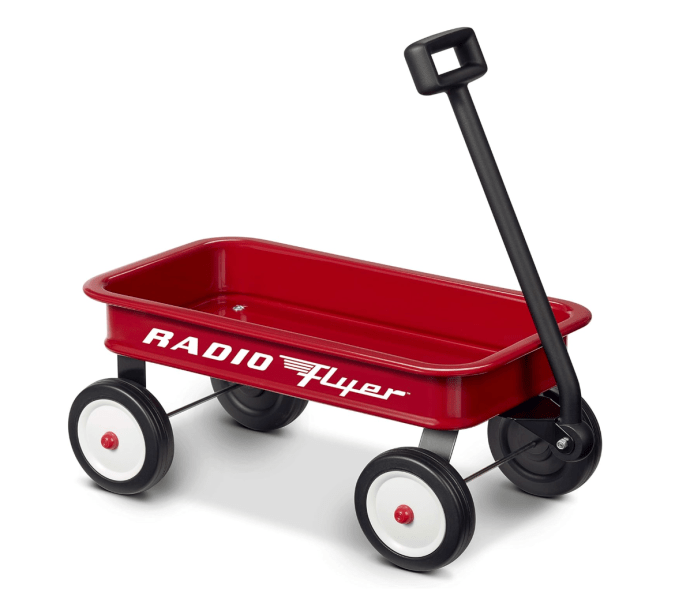
In her book entitled Present Over Perfect, author Shauna Niequist describes what she calls “Leaving behind frantic for a simpler, more soulful way of living.” I especially loved this quote. “It’s like I was pulling a little red wagon, and as I pulled it along, I filled it so full that I could hardly keep pulling. That red wagon was my life, and the weight of pulling it was destroying me. I was aware that I was missing the very things I so badly longed for: connection, meaning, peace. But there was something that kept driving me forward – a set of beliefs and instincts that kept me pushing, pushing, pushing even as I was longing to rest.”
Do you ever feel that way? If so, are there some things in your little red wagon that maybe need to be taken out and put aside? Things that are taking up too much space in your life? Too much time or too much energy?
Take a moment to visualize Jesus in the flesh visiting your home, looking at your calendar, and watching how you spend your time. What would He say? He told Martha that she was worried and upset about many things, but that only one thing was needed. (Luke 10:38-42) What would he point to in your life? Where would he say, “That doesn’t need to consume so much of your time. You don’t need to devote so much energy to that.” I’m pretty sure He would tell me that I shouldn’t spend so much time scrolling on social media. Would he say to you, “You’re trying too hard. You expect too much of yourself. Come sit at my feet and listen to me.”
Choosing presence over perfection is a matter of establishing priorities and setting boundaries. Like a cross, a Christian’s priorities should focus on a vertical relationship with God first, followed by horizontal relationships with family and community.
While the amount of time we spend on certain activities is often an indicator of what our priorities are, that isn’t always the case. Our number 1 priority should always be our relationship with God, but it’s highly unlikely that we’ll ever spend more time praying and reading the Bible than we do working, keeping house, or caring for our families. God knows if you are home with little children and barely get any quiet time to spend with Him. He knows if you work long hours to help provide for your family, but He also knows when we put busyness or selfish pleasures above time with Him. If we want to have a productive, balanced, and purposeful life, we need to put Him first. So, the very first thing that we need to put into our little red wagons is our relationship with God.
For those of us who are married, our marriage relationship should be our second priority. That goes into our wagon next. A strong marriage is the foundation of the family unit and provides stability and emotional security for both partners as well as their children. It’s very easy for us to get so caught up in all the other aspects of our busy lives that we end up neglecting our marriages and the results can be disastrous. For those of you who are still young, intentionally spending time with your spouse and nurturing your marriage relationship is also an important investment in your future. Children grow up and leave home, but marriage is intended to last a lifetime. Failing to prioritize the marriage while the kids are young often makes it difficult to reconnect later in life.
After our relationships with God and spouse comes family. When we have children at home, they require a great deal of our time, energy, and attention, so family goes into our wagon next. When our children grow up and leave home, although they’re still in our hearts, they no longer need to ride in our little red wagons. It’s time for them to start pulling their own wagons. Around that time though, we sometimes need to prioritize elderly parents who’re no longer able to pull their own wagons without help.
Following God, marriage, and family come things like home, career, service in the church and the community, as well as self-care which I plan to write a separate post about sometime soon. As the seasons of our lives change, what we carry in our wagons continues to change. For many people, retirement removes a very heavy load and sometimes leaves them wondering what to fill their wagon with next. This is a time when service in the church or the community as well as other personal interests can begin to take up more space and we can pursue passions that we might not have had time and energy for when we were working and raising families. At any time, however, it’s very easy for our little wagons to become dangerously overloaded, so we also need to learn to establish boundaries.
Healthy boundaries are the limits we set to protect our time, energy, and emotional well-being. They’re not walls that shut people out. Instead, they’re more like property lines that say this is who I am, this is what I need, and this is what I can do. They protect your capacity to love and serve well and are necessary for creating a flourishing, purposeful life that honours God.
As Christians, striving to honour God in all we do, it can be very difficult to set boundaries on our time and our energy because we know that we’re supposed to be loving and sacrificial, and we might fear being seen as selfish and unloving. In reality though, boundaries aren’t selfish. They are wise acts of stewardship that allow us to avoid burnout and enable us to give from a place of abundance. It’s very easy to fall into the trap of giving too much and losing sight of what we need in order to thrive.
When we establish healthy boundaries, we protect our mental, emotional, and spiritual health; we prioritize what truly matters and what aligns with our God-given purpose; and we also model self-respect, teaching others how to treat us. We keep our little red wagons from becoming so full that we can no longer push or pull them.
Setting appropriate boundaries means accepting the fact that we all have limits; that we aren’t perfect, that we can’t be and do everything for everybody all the time. It involves identifying what drains you and what fills you up and deciding what, if anything, you need to release in order to create space for the things that matter most. It means communicating limits clearly and being consistent about enforcing them. It means accepting the fact that just because you’re able to do something doesn’t mean you have to do it or that you should.
Setting boundaries involves learning to say no. When you never say no, you become the person that everyone comes to for everything and your little red wagon quickly becomes overloaded. Sometimes we even need to say no to good things because trying to do too many good things soon becomes a bad thing as it leads to stress and burnout. There’s no prize for being perfect, but there is a price to pay for trying.
Declining an invitation or saying no to a request can be surprisingly difficult, especially if you’re afraid of disappointing someone or worry that they’ll hold it against you, but sometimes it’s essential and it does get easier with practice. Learning how to say no without feeling guilty is one of the most important and most freeing lessons that I’ve learned in life, one that I wish I had learned much sooner.
One of the most important things to learn about saying no is that you don’t owe anyone an explanation or an apology. You can simply say no without giving a reason. It’s important to be polite, but firm, saying something like “I’m sorry, but I won’t be able to do that.” or “I’m flattered to be asked, but I’ll have to say no.”
One of the best strategies that I’ve adopted is not giving an immediate response to most requests. There are rare occasions when I will give an answer on the spot, but that doesn’t happen very often. I usually ask for time to check my calendar and think about an opportunity or a request before giving a definite answer.
Of course, we don’t want to become the person who always says no. There are times when yes is the right answer. Sometimes God is opening a new door or calling us to a new challenge. It might even be one that involves stepping outside our comfort zone, but taking time to give an answer that we’ve thought about keeps us from becoming over committed. It could be that our wagon is already full and in order to say yes and add something new, we have to look at what we can take out, what we can say no to.
I want to end this series by sharing something that popped up on my Facebook feed while I was preparing this talk. Unfortunately, it sometimes takes a major shake-up to jar us into rearranging our priorities and realizing what’s most important in life. This was posted by a fellow cancer patient, but I don’t know who originally wrote it.
Before cancer, I cared more about the little things…
The things that don’t really matter.
The messy house.
The to-do list.
What people thought of me.
I thought those things were important.

After cancer… everything shifted.
Now I care more about the moments.
The quiet mornings.
The people I love.
The time I get to be here.

The little things I used to stress over…
don’t feel so big anymore.
Because when your life is shaken,
you realize what actually matters.
And it’s not perfection.
It’s not control.
It’s presence.
It’s faith.
It’s gratitude for one more day.


This has been a thought provoking series. Thanks for writing it. – Jeannine
You’re welcome!
Pingback: What is self-care? | Following Augustine