Sitting at His feet

I ended yesterday’s post with a question. How can we, like Mary of Bethany, sit at the feet of Jesus and learn from Him? (Luke 10:38-42) Today, I will try to answer that question by sharing a slightly edited version of the remainder of the first talk that I gave at a ladies retreat on Saturday. Again, although I was speaking to women, what I’m sharing applies to both men and women.
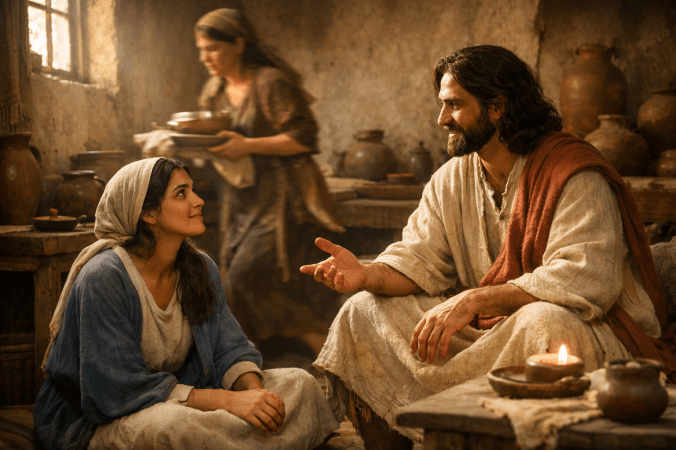
A.W. Tozer, a prominent 20th century pastor, author, and editor, said that “God can be known satisfactorily only as we devote time to Him” but how do we do that? I want to look at three answers to that question: Scripture, prayer, and community. There’s no one size fits all, perfect way to spend time with Jesus, but these three components are vital parts of a life with Him.

Let’s start with the Word of God. The Bible is so much more than just an ancient text. It’s filled with timeless truths and profoundly practical principles that are just as applicable today as they were when they were written thousands of years ago. The world in which we live has changed, but the principles are eternal.

There are many different ways to incorporate Scripture into our daily lives. Although there’s nothing inherently wrong with them, I’m not actually a big fan of read through the Bible in one year plans. You start off in Genesis with the stories of creation, Adam and Eve, Noah’s ark, Abraham, Isaac, Jacob, and Joseph. Exciting stories that keep you reading. Then you move into Exodus and read about God saving His people from slavery in Egypt, but after that comes Leviticus, a book about laws, rituals, sacrifices, and priestly duties. Perhaps you push through that only to find that Numbers is aptly named as the first few chapters detail a census counting the entire Israelite population by clan and family. By this point many people with great intentions get bogged down and give up. If that’s been you, you were probably left feeling frustrated and guilty, as if you’d failed at something important.

I really like something that our pastor said in his sermon several weeks ago. “The Bible isn’t a book to get through, it’s a book to get through to you.” 

If you do decide to read through the entire Bible from start to finish, doing it in one year might not be a manageable goal for you. That requires reading more than three chapters a day. Instead, if that’s more than you can realistically see yourself doing, try taking smaller, more manageable bites and really focusing on what you read. So what if it takes three or four years or even longer to finish? It’s not a race!

An option that I prefer for reading from Genesis through to Revelation is a chronological Bible that rearranges the text into the order that the events occurred historically, rather than the traditional order that we’re used to. It makes so much more sense to me that way. Many of the most commonly used versions are available in this format, but regardless of how you decide to incorporate Scripture into your daily life, make sure you choose a translation that you find easy to understand.

Instead of reading through the entire Bible, there are many other ways to incorporate Scripture into your busy days. There are, of course, print and online devotionals that provide short, daily readings and small portions of Scripture. Listening to an audio Bible is another great option that can be done almost anywhere.

Psalm 119:11 says, I have stored up your word in my heart.” Regardless of how we do that, our goal must be more than surface knowledge. Instead, we need to allow the truth of God’s Word to sink deep into our hearts and shape our lives. We need to be like Mary sitting at Jesus’ feet. I suspect that she hung on every word He said. I don’t think she was daydreaming. Her mind wasn’t wandering and she wasn’t dwelling on the next thing on her to-do list.

God knows what season of life each one of us is in. He knows that the amount of time that we’re able to carve out for Him will vary at different times in our lives. We just need to make sure that we’re giving Him quality time. Whether you read three chapters a day or just a few verses, It’s very easy to fall into the trap of simply performing another duty, something else to check off on your to-do list. Don’t just skim over what you read, take time to really think about what it’s saying to you.

While Scripture is God speaking to us, prayer is us in conversation with Him. It’s how we stay close to Him. Jesus often withdrew to desolate, quiet places to pray. If He, the Son of God, needed solitude with the Father, how much more do we?

While a place of solitude sounds great, that might not be realistic for you in the season of life that you’re in right now. I go into my den and close the door for a time of prayer every morning, but I realize that being retired, I’m speaking from a position of privilege. That hasn’t always been the case. My den used to be a child’s bedroom and in those days, mornings certainly didn’t look like they do now. They were a hectic rush of making sure that everyone was dressed, fed, and ready to leave for school on time. During the 18 years that I taught in the next little town down the highway, my prayer time was in the vehicle on the way to school and back. I also remember praying in the bath when that was my only alone time. The point isn’t isolation though, it’s presence. It’s sitting at the feet of Jesus whenever and wherever works best for you at this point in your life.

In 1 Thessalonians 5:17-18, Paul gives us a clear and challenging command, Pray without ceasing, give thanks in all circumstances; for this is God’s will for you in Jesus Christ.” He doesn’t describe a prayer time, but a prayer life, an ongoing conversation with our Lord. Intentionally setting aside a specific time and place to pray each day is an important spiritual practice, but we can also pray anytime, anywhere. Praying isn’t just speaking though, it’s slowing down, listening, sitting with God, and letting Him speak into the never-ending noise. It’s a relationship, not a request line and it isn’t something to be squeezed into the edges of life.

Also, our love for God isn’t measured by how perfect our prayers sound. If Jesus is our friend, as Scripture tells us He is, and as He was to Mary and her sister, Martha, then we can talk to Him as we would to anyone else. We can tell Him anything. If it’s important to you, it’s important to God. Whether it’s praying for an open parking space or an end to the war in Ukraine, there’s nothing too big or too small to talk to Him about.

Although making Scripture and prayer part of our daily lives are usually solitary activities, God didn’t design us to live the Christian life alone. It’s a group project, not a solo event. We can’t be all that He designed us to be without community. We don’t have what it takes to thrive on our own. We need each other’s gifts and each other’s presence. When we walk with others whose lives are aligned with the Word of God, they challenge us, encourage us, and help us see what we can’t see on our own. We need people who will remind us of what’s true when we falter, who will pray when we can’t find the words, who will walk beside us when we feel like we can’t go on. That requires more than simply doing church together on Sunday mornings. It means getting to know one another on a deeper level. That’s one of the benefits of being part of a small group Bible study.

In John 15:4, Jesus said, Abide in me, as I also abide in you.” He didn’t say visit occasionally or check in when it’s convenient. He didn’t say, see you next Sunday! He said abide, remain, sit at my feet.

I’m going to conclude with a slightly altered version of an illustration from the book, Living by the Word, by Seth M. Jones:

Abiding is like tending a fire in winter. You don’t just light it once and walk away expecting the warmth to last. You return to it. You feed it. You guard it from going out. Your presence is required. Prayer, scripture, and community are three of the logs we lay on that fire. Without them, our love for God cools into embers, but with them it burns bright, steady, and strong.

In my next post, I plan to share from the second talk that I gave on Saturday on the theme, Present Over Perfect.


Lessons from Mary and Martha

I was the speaker at a ladies retreat at our church yesterday. Although a late spring snowstorm kept a few women away, those of us who were able to be there had a wonderful time. Our theme was Present Over Perfect and I was given two Scripture passages to speak from. A lot of work went into preparing what I was going to say, so I’d like to share some of it with a broader audience. I’ll do a bit of editing and I’ll break it down into several posts as I doubt you’d want to read it all in one go. Please keep in mind that I was speaking to women, but I think there are principles here that apply to both men and women.

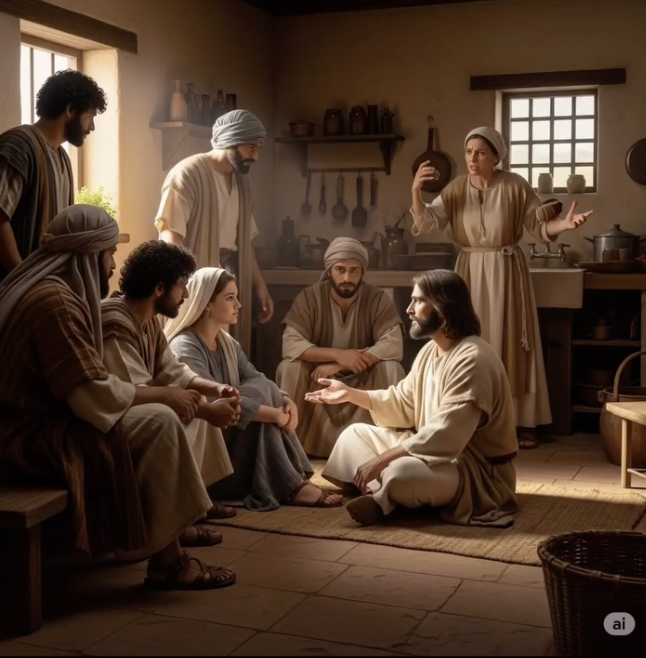
Have you ever felt overwhelmed trying to prepare a special meal for a dozen or more guests? Perhaps it was Christmas or Easter and you wanted everything to be just right. That was likely the case with Martha of Bethany. The story is just five verses in Luke chapter 10.

As Jesus and his disciples were on their way, he came to a village where a woman named Martha opened her home to him. She had a sister called Mary, who sat at the Lord’s feet listening to what he said. But Martha was distracted by all the preparations that had to be made. She came to him and asked, “Lord, don’t you care that my sister has left me to do the work by myself? Tell her to help me!”

“Martha, Martha,” the Lord answered, “you are worried and upset about many things, but few things are needed—or indeed only one. Mary has chosen what is better, and it will not be taken away from her.”

This wasn’t just any ordinary gathering. At the centre of the guests was Jesus himself. Martha knew Him as Messiah. She called Him Lord. No wonder she wanted everything to be perfect!

There’s a lot more going on here than meets the eye though, so let’s try to step into the story and look more closely at what’s happening. Luke doesn’t actually tell us that Martha was preparing a meal, although I think it’s safe to assume that she probably was. He simply says that she was “distracted by all the preparations that had to be made”. That could mean a lot of things. On occasion, Jesus was known to spend the night with Mary, Martha, and their brother Lazarus, so perhaps she was also preparing for overnight guests.

Keep in mind that this took place approximately 2000 years ago, in a time and place very different from our own. In order to correctly understand Scripture, it’s always important to be aware of the time, the place, and the culture that we’re reading about. In first-century Judea, there were no telephones. Martha likely had little or no warning that company was coming, no time to prepare in advance. In that time, cooking was a labor-intensive task. Meals were prepared from scratch using basic tools, locally sourced ingredients, and open-fire cooking. Martha didn’t have an instant pot, an air fryer, a microwave, or an electric oven. No wonder she was frazzled!

When this story is taught, I always feel bad for Martha. I think she often gets a bad rap. She was, in fact, doing exactly what would have been expected of her. In her culture, food preparation and serving in the home were exclusively the role the woman. Martha’s mistake was not in the work that she was doing, but in the fact that she allowed anxiety and frustration to steal her peace. Her mistake was in trying to be the perfect hostess instead of being present for her guests and especially in allowing her desire for perfection to rob her of time with Jesus.

I’m sure that most of us can identify with Martha. Like her, our lives are busy. We feel the weight of what needs to get done and there always seems to be more to do. In a culture that exalts multitasking and a “we-can-do-it-all” mentality, we too can become frustrated and overwhelmed. We get tangled up in our never ending to-do lists. Like Martha, it’s very easy for us to become “distracted” and “worried about many things”. Like her, we might find it hard to step away from the busyness of our lives to sit at the feet of Jesus.

So, what could Martha have done differently? What can we do differently? I don’t know what was on the menu at Martha’s house that day, but perhaps she was trying too hard. Perhaps she was going for perfection instead of good enough. Do we do that? Do you? Do we feel that our house has to look perfect before we can invite someone in? Do we plan an elaborate menu when our guests might be just as happy with a simple meal and a less stressed hostess?

We do know from both this story and other mentions of Martha in Scripture, that she was a close friend of Jesus. In fact, if she hadn’t been, I don’t think she would have spoken to Him the way she did. She was ticked off and she let Him know it! She was clearly angry with Mary for not helping her with the work that needed to be done, but I think she was also annoyed with Jesus for allowing it and she didn’t try to hide her feelings.

Perhaps in this way, Martha is a good example for us. Praying when we’re anxious, afraid, frustrated, or even angry with God is not only acceptable, it’s actually a good thing to do. Bringing our honest, raw emotions to Him is much healthier than bottling them up. Like Martha, it’s okay for us to say, “Lord, don’t you care?” God has all the time in the world to listen and He can handle our anger, our frustration, and our pain. Expressing those feelings is actually a sign that we truly trust Him with our full selves.

But what about Mary? Why wasn’t she helping her sister? It wasn’t unreasonable in that culture for Martha to expect Mary to be helping her serve their guests. In fact, that’s what everyone present would have expected of her; everyone except Jesus, that is.

Without understanding the cultural context, we might totally miss the significance of Mary sitting at the feet of Jesus. According to Jewish tradition, it was only men who would sit at the feet of a rabbi to learn from him. Sitting at his feet in this manner would identify a man as one of the rabbi’s disciples.

I don’t know about you, but I used to think of Martha as being the strong, dominant sister and Mary, the quiet, possibly subservient one, but that’s not actually the Mary we see here. She takes a bold and courageous stance when she chooses to join the men at Jesus’ feet. This would have been shocking to some and probably an embarrassment to her family. Mary, a woman in a male-dominated world, was breaking the social rules of her time. She was being totally counter-cultural.

In affirming her choice and telling Martha that Mary had chosen what was better, Jesus wasn’t just telling her to calm down or suggesting that she should come and sit at His feet with her sister. In a patriarchal society where men led and women followed, where men sat at the feet of a rabbi and women served, He was throwing a socially acceptable custom on its head. He was recognizing women as disciples and full-fledged members of the kingdom of God on equal footing with men.

Have you ever heard a message or read a devotional based on today’s story that asked, “Are you a Mary or a Martha?” Did it leave you feeling guilty because it seemed obvious that the answer should be that you’re a Mary, but in reality you know that you’re more like Martha, caught up in the busyness of serving others and finding it hard to make time for Jesus?

I’m here to tell you that that’s an unfair question! This isn’t an either-or situation. True disciples, male and female, are called to be both Mary and Martha, to sit and to serve, to have the heart of Mary and the hands of Martha. This story isn’t about “good vs. bad”. It’s about establishing right priorities. Mary wasn’t avoiding work, she was prioritizing presence.

So how do we do that? We can’t ignore the fact that Jesus told Martha that by sitting at His feet and listening to His teachings, Mary chose what was best, but how do we do that? That will be the topic of my next post, so I hope you’ll come back for more tomorrow!

Returning to the stage again!

It’s been almost two weeks since I last published a blog post, but what a busy and fun two weeks it has been! After a hiatus of several years, I returned to the stage last year for our community theatre group’s very first musical. That’s all it took for me to realize how much I still loved performing, so when auditions for this year’s production were announced, I read the script and decided to try out.

Gramercy Ghost, a comedy by John Cecil Holm, was originally published in 1951. It’s the story of a young woman, Nancy Willard, who inherits the ghost of Nathanial Coombes, a young and handsome Revolutionary soldier who was ambushed and killed in 1776 and is now doomed to an earth-bound existence because he failed at his mission to deliver a vital message. Much hilarity arises when Nancy is the only person who can see and communicate with him. Adding to the fun for me was the fact that both Nancy and Nathaniel were played by former students of mine!

I specifically asked for a small part in this year’s play as I’m not sure that I could memorize the vast number of lines that I was once able to. I was absolutely delighted to be given the role of Augusta Ames, a somewhat ditzy lawyer who appears in just one scene early in the show. Our local newspaper, in their very positive review, described my role this way… “Elaine DeBock is hilarious as the solicitor; it’s not a big part, but she makes the most of it.”

This was not the first time I played the part of a lady lawyer. You can read about the last time in this post. It was also during that show that I first tried my hand at prompting and discovered that I really enjoyed it, so as soon as I came offstage this time, I took over that role for the remainder of each performance.

Over the past two weekends, we entertained three dinner theatre audiences followed by a matinee showing yesterday afternoon. Coming to the end of a production is always bittersweet. This afternoon we got together one last time to tear down the set, pack away our costumes and props, and clean the community hall.

One of the aspects of theatre that I have always loved is the costuming, especially when we’re doing a period play. As soon as I was assigned my part, I started researching 1950s fashions and hairstyles. Although our group has a large collection of costume pieces, I couldn’t find exactly what I wanted there, but a couple of visits to our local second-hand store were all I needed to put together my costume.

I also started growing out my hair so that I could attempt to replicate a 1950s hairdo. Using this photo of actress, Dianne Foster, as my inspiration, I practiced until I was able to manage a fairly good imitation.

Here I am after our last performance.

Now that the play is over, I have an appointment for a much needed haircut later this week!

A love of acting seems to run in our family. All three of our kids thoroughly enjoyed being part of the high school drama club when they were growing up and this Thursday, we’ll be in the audience watching one of our teenage granddaughters onstage!

How far would you go for a party?

This weekend I did something I never imagined that I would do. I flew all the way to Vancouver for a party! I left Friday morning and was back home again by supper time on Sunday! It was a whirlwind trip, but I’m so glad I went.

It was over ten years ago that I wrote this post about my older brother. More than a decade before the measles vaccine became available, Donald, an infant at the time, suffered irreversible brain damage due to encephalitis, a severe, often fatal, complication of measles. Although my parents were told that they should put him in an institution, they refused and we grew up together. He has, however, been in care all of his adult life. Since 1981, before the Community Living Society that now provides residential and personalized community-based support to individuals throughout Vancouver and the Lower Mainland of BC, came into existence, Trudy M has been one of Donald’s primary caregivers. After 43 years with CLS and even longer with Donald, Saturday’s party was a well-earned celebration of Trudy’s retirement. How could I not be there?

Over the years, Trudy has become family. Mom and Dad adored her and as I said when asked to say a few words on behalf of our family at the party, four of us became siblings by birth, she became our sibling through hard work and dedication.

The only reason that I had considered not going to the party and the reason that my stay in Vancouver was so short was the fact that this is the beginning of what we in my community theatre group call “hell week”. This Friday is opening night of our latest play and it’s all hands on deck to ensure that we’re ready to entertain our audiences. Thankfully, our director is also a close personal friend who knew how important it was to me to be able to slip away for Trudy’s party.

Although I was in Vancouver for less than 48 hours and in spite of the fact that it was a damp, drizzly weekend, I arrived in the city on Friday in time to watch one of my grandsons play a game of rugby. That was particularly meaningful to me because he attends and was playing for the same high school that I attended 60 years ago!

My sister and I also fit in a long walk on Saturday morning. Coming from Alberta where we still have sub zero temperatures and lots of snow, we enjoyed the humidity and the signs of spring that we won’t see here for awhile yet.

International Women’s Day 2026

March 8 is International Women’s Day and this year’s theme is one that I’m very passionate about. Give to Gain is a worldwide call to lend our support to the advancement of girls and women in the ongoing struggle for gender equality. As individuals, giving support can mean calling out stereotypes, challenging discrimination, questioning bias, celebrating women’s success, and much more.

Give to Gain can also be financial and, although there are many great organizations to choose from, I’m going to highlight two of them for your consideration. I’ve mentioned the first one many times before. Kiva is a global non-profit organization that facilitates microloans to underserved entrepreneurs around the world. With as little as $25, you can help fund one of these loans. As the borrower repays their loan, the money is returned to your Kiva account to be lent again. This is truly a gift that keeps on giving! Although Kiva lends to both men and women, 84.8% of the loans that were disbursed in 2025 went to women. This is partially due to a strategic focus on combating systemic financial inequality. Also, it has been shown that money in the hands of women tends to have a much greater impact on the welfare of their families and communities. When mothers are given the resources to provide for their families, children go to school and when children go to school, change occurs. Kiva’s International Women’s Day goal is to fully fund 5000 loans to women this week!

CARE is another organization that puts women and girls at the centre of all they do because they know that we can’t overcome poverty until all people have equal rights and equal opportunities. CARE Canada supports 50 projects and initiatives in 35 countries, working across four main pillars: her health, her safety, her livelihood, and emergency response. Every donation made to CARE during the month of March will be matched by corporate sponsors, so this would be a good time to double your impact. 

While the plight of women is much greater in many other parts of the world, we mustn’t forget that we have yet to achieve equality here in North America. As of early 2025 in Canada, women held nearly half of all jobs (47.4%), but a 13% gender wage gap continued to persist. In other words, women earned 87¢ for every dollar earned by a man. In addition, women are underrepresented in leadership, holding only 36.4% of managerial roles and less than 29% of senior management and legislative positions. Women in Canada are more likely than men to live in homes that fall below acceptable housing standards. Women are five times more likely than men to be victims of reported sexual assault. Roughly 30% of all women in Canada over the age of 15 report having been sexually assaulted at least once. Human trafficking is happening right now in communities across Canada and over 90% of the victims are women and girls. The list of inequalities goes on, but what can we do this International Women’s Day to make a difference? How can we Give to Gain in these situations?   


We can give our voice to these issues advocating for policy change by writing to local or national leaders and pushing for legislation that addresses gender inequality, such as closing the gender pay gap or combating gender-based violence. We can call out gender bias every time we see, hear or witness it, actively challenging stereotypes, discrimination, and misogyny. We can include men in discussions about gender equality and emphasize the importance of working together to achieve positive change. We can give our time to local organizations that specifically help women, such as shelters for survivors of domestic violence or mentorship programs for young girls. 

As Gloria Steinem once said, “The story of women’s struggle for equality belongs to no single feminist nor to any one organization but to the collective efforts of all who care about human rights.”

Schedules, rhythms, and writing

I’ve been thinking a lot about schedules and rhythms since reading this post and watching this video earlier in the week. A schedule, as you’re already no doubt aware, is a detailed, clock and calendar-based plan with set times for tasks, activities, and events. A rhythm, on the other hand, is more flexible and better accommodates spontaneity while still maintaining some structure and routine. 

When I was teaching school, my life was very scheduled. Days were ruled by the clock and the bell. One of the greatest joys of retirement has been more freedom and flexibility. I attend church at the same time every Sunday morning and during the winter months I lead a ladies Bible study at 10 o’clock on Tuesday mornings and I bowl at 9:30 AM on Wednesdays. Other than that, unless I have a medical appointment, I’m not tied to a schedule. There is, however, a rhythm to my days.

I usually get up sometime between 7:00 and 8:00. Five days a week, from Monday to Friday, I spend about 20 minutes exercising before I leave the bedroom. Once I’m dressed for the day, I move to my den where I spend some time in prayer. Next, it’s time for breakfast and then I sit down at my computer with a cup of green tea. I read and respond to emails and messages, then read the news. I’m not really a morning person, but this rhythm or routine allows me to move into my day with ease. As I often tell hubby, mornings are meant to be approached gradually! 

Although there’s less structure to the rest of my day, I usually do laundry on Tuesdays and Fridays and edit Kiva loans on Thursday mornings. We generally eat lunch between noon and 1:00 and I like to have supper on the table not later than 6:30. 

I’ve learned that there’s one thing I can’t schedule or plan with any predictability and that’s writing. For some time now, I’ve been trying to publish a blog post every Friday. Even though those posts are often written earlier in the week, I’m still finding that that feels too rigid and doesn’t always work for me. I don’t want to simply write and publish because it’s on my schedule or something that I feel I have to do. Instead, I want to write when I have something worth saying. That might be once a week, but sometimes it’s more often and sometimes less.

When I introduced my weekly Fashion Friday feature in March 2016, I was looking for a way to ensure that I wrote and published something on a regular basis, especially during those times when there wasn’t a lot else going on to write about. I’m actually amazed that it went on for as long as it did before I started to run out of ideas! Over the years, the fashion blogs that I’ve followed have either fizzled out or gone commercial, becoming what I call shopping blogs, basically advertising arms for the companies that sponsor them. Most of the bloggers that I continue to follow have a wider focus. Fashion is just one of the topics that they write about and that’s what I visualize for the future of Following Augustine. I plan to continue blogging indefinitely and I hope to include a fashion post from time to time, but I’m no longer going to try to schedule a post every Friday. I need to allow myself more flexibility. 

If you aren’t already a subscriber and want to ensure that you continue to see my posts, simply enter your email in the space provided in the column on the right and click on “Sign me up!” You will receive an email each time a new post is published. Please be assured that WordPress has a strict privacy policy and does not sell, rent, or trade personal information, including email addresses, to third parties for marketing purposes.

I’m curious about your thoughts about schedules and rhythms. Is your life more schedule oriented or does the idea of living by rhythm appeal to you? Please let me know in the comment section. 


Saying yes to the unexpected

From time to time over the years, I have experienced the joy that comes from saying yes to the unexpected. While it’s easy to stay within what’s predictable and familiar, saying yes often requires us to step out of our comfort zone and stretches us as a person.

In mid December, I received an email from the president of CNETS (the Canadian Neuroendocrine Tumour Society) asking me if I would be interested in sharing my patient story at a pharmaceutical company gathering in Kananaskis on January 20th. While I seldom give an immediate response to an unexpected request, preferring to give myself time to think about it first, I knew right away that this was something I wanted to do. Since there was nothing on our calendar to prevent me from saying yes and since we could also combine it with a weekend visit with our daughter’s family on the way, I sent off a quick reply saying yes to this unexpected opportunity. I will admit that the location in the beautiful Rocky Mountains of southwest Alberta was an added incentive!

The event was held in the Black Diamond Club, an exclusive “hotel within a hotel” at the Pomeroy Kananaskis Mountain Lodge, and we were provided with one night’s luxury accommodation there. Here’s the beautiful view from the window of our room early Tuesday morning.

The group that I would be speaking to on Tuesday was made up of approximately 20 individuals from across the country plus a member of the company’s legal counsel from the US. We were invited to have dinner with them on Monday evening and by the time we’d spent a couple of very relaxing hours over a delicious meal together, I felt so comfortable with them that any nervousness I might have felt about sharing my story had completely evaporated. They have an unwritten rule that when they assemble in person they don’t discuss politics or religion, probably very wise considering the state of the world that we live in today. Instead, conversation around the table ranged from families to food to travel and a variety of other topics. After dinner, hubby and I relaxed in the outdoor hot tub before retiring for the night.

The following morning my story was very well received. As the producers of a generic version of a medication that is commonly used by neuroendocrine patients, they wanted to hear about my journey to diagnosis, my treatments, and what it has been like living with NETS (neuroendocrine cancer), as well as what tools or support services might be helpful to the NETS community. I was impressed by the fact that  they were very interested in learning about the disease from the patient’s perspective. There were audible gasps and even a few tears, but also moments of laughter as they hung on every word. My half hour talk was followed by a question and answer period during which they asked some very insightful questions and expressed their appreciation for all that I shared.

Once again, saying yes to the unexpected was a very rewarding experience and one that I’d be happy to repeat. When we take a chance and step into the unknown, we have the opportunity to make new connections, discover new strengths, and open ourselves up to unexpected rewards. I believe in embracing life and living it to the fullest, so I hope to have more opportunities to say yes to the unexpected!

Struggling with social media

I’ve written about my love/hate relationship with Facebook before. Looking back, I can’t believe it’s been 10 years since I wrote that post and here I am once again feeling the same sort of frustration that I felt back then although for somewhat different reasons.

With over 3 billion active users, Facebook continues to be the world’s most popular social media platform, but it’s driving me crazy! I originally joined to connect with people who were important to me. I miss the days when my feed was filled with their photos and status updates. Now every time I look at Facebook, I see endless posts about the horrors happening south of our border, the vocal minority who want our province to separate from Canada, and the latest well-known evangelical Christian to admit to sexual sin, as well as numerous AI generated stories that may or may not contain elements of truth. I swear that my blood pressure climbs every time I scroll! Apparently, social media algorithms think these are the things I want to see, but they are not! I read local, national, and world news on several sites of my own choosing every day. I don’t need to see it on social media.

In the past, I found that I could clean up my newsfeed by hiding or blocking the sources of posts that I didn’t want to see. I’m still trying to do that, but it doesn’t seem to work as well as it once did. For every source that I block, several more appear. There seems to be no end of them!

So what’s the answer? What would happen if I just stepped away? Would I lose friendships? Would I miss something important? I know that I would lose the one connection that I still have with a number of acquaintances around the world and I would miss that, but is it worth it? That’s the decision that I’m struggling with. As long as I didn’t completely delete my Facebook account, I’d still be able to use Messenger to chat with those that I’m more closely connected with and I do want to continue linking my blog posts to Facebook as that’s where many of you find them and comment on them.

There are, of course, numerous other social media platforms, but none of them gobble up the time or cause me the frustration that Facebook does. I do have an Instagram account, but I mainly use it to look at what a few others have posted and seldom post anything myself. I also use WhatsApp to chat with a limited number of individuals and, although I’m no longer part of the professional world, I do have a LinkedIn account.

How would you describe your relationship with social media? Do you find it as frustrating as I do? How do you handle that?

For now, I’m going to continue attempting to curate my Facebook feed by unfollowing or blocking sites that frustrate me and I’m also going to try to set limits on how much time I spend on social media. Perhaps that will help.

Paper or digital?

There was a time when I wrote everything by hand. As a university student in the early 1970s, while most of my peers were cranking out essays on manual or electric typewriters, every paper that I submitted was handwritten. It wasn’t because I didn’t know how to type. My mother had insisted that typing was a skill that every girl should have, so I had taken typing classes in high school. I just preferred to write by hand. My early freelance articles were handwritten, but I typed a final copy for submission because  that was required by most publications. Then came computers and the ease of word processing. I made the transition to writing on a keyboard and never looked back.

There are, however, some areas where I have intentionally hung onto vestiges of the past.

In a world where it seems that we’re constantly glued to screens, I still prefer a physical, paper calendar that gives me a visual overview of upcoming appointments and events. One hangs on our kitchen wall and I carry a smaller version in my purse.

I also use a simple paper planner where I write my daily to-do list. Putting pen to paper and actually writing down my intentions and placing them where I will see them multiple times throughout the day keeps me focused on accomplishing them and there’s something deeply satisfying about crossing off each item as it’s completed. Unlike digital alerts that disappear once they’re completed, a handwritten paper planner also provides a record of tasks completed and gives me a greater sense of accomplishment. Ultimately though, the best calendar or planner is the one that a person will use consistently and for me, that’s paper.

Then there’s books. When we travel, I absolutely love the convenience of the e-reader that my daughter gave me for Christmas a couple of years ago, but at home I still prefer to immerse myself in the pages of an actual, physical book.

What about you? Have you completely joined the digital world or are you like me, still a little bit old-school?

One word for 2026

At the beginning of each new year, I like to choose one word to inspire or guide me throughout the year ahead as well as a scripture verse to go along with it. For the past two years, my word was hope, a word that continues to inspire me to hold fast to a God who is who He says He is and can do what He says He will do.

Although I often find myself pondering what my new word should be during the final days of December, I’ve known since late summer or early fall what my one word for 2026 would be.

Joy!

The New Oxford American Dictionary defines joy as “a feeling of great pleasure and happiness” but joy is much more than that. Joy is a choice. It’s a a deep, enduring contentment that isn’t dependent on circumstances.  It’s a deeper emotion than happiness and often comes from having a sense of purpose or from meaningful relationships with other people. Happiness is fleeting, but joy sees beauty even during trying times. My goal this year is to be intentional about looking for moments of joy each day.

There were many Bible verses that I could have chosen to go along with my one word for 2026, but I settled on Romans 15:13 because it so beautifully ties this year’s word with my last one.

May the God of hope fill you with all joy and peace as you trust in him, so that you may overflow with hope by the power of the Holy Spirit.”

Have you chosen a word for 2026? I’d love to know what it is.