9 signs that I might be 70 going on 40

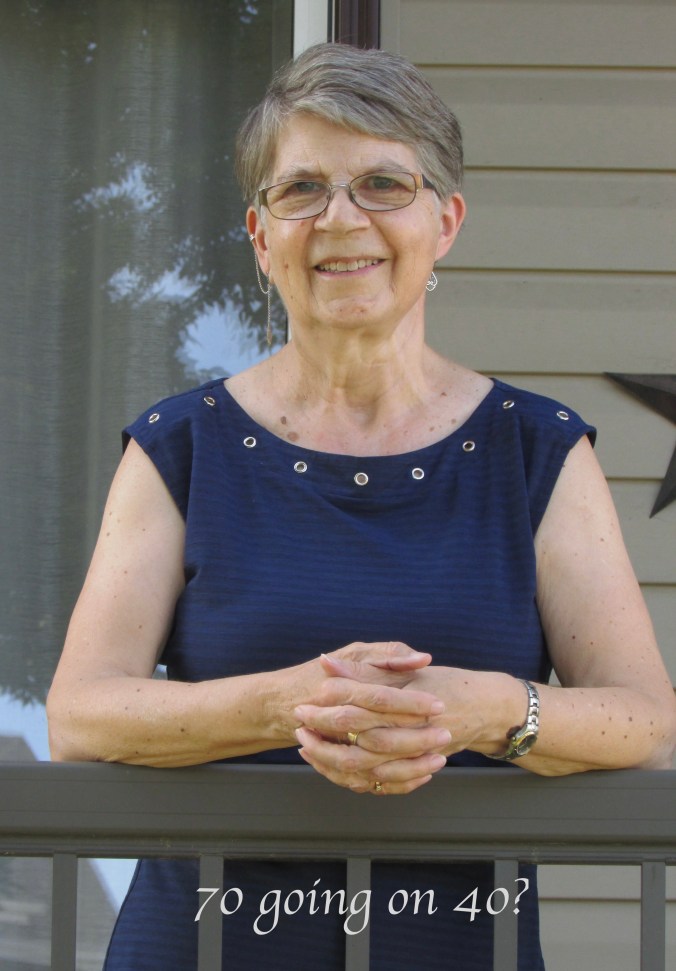
Earlier this week, I played a round of golf with a group of younger women who were astounded to learn that I’m over 70. That got me thinking about a recent post by one of my favourite bloggers, Pamela Lutrell of Over 50 Feeling 40. Pam, who is the same age as I am, shared a very interesting article, 9 signs you’re 70 going on 40 — without even trying by Avery White, and then wrote a self evaluation based on the author’s 9 points. Today, I thought I’d do likewise.

I want to preface my personal evaluation by saying that I’m not interested in trying to look younger than I am. I love the introduction to White’s article… “There’s something magnetic about people who’ve crossed into their 70s but still radiate the spark, wit, and energy of someone thirty years younger. They’re not desperately clinging to youth or chasing trends — they’re just… alive. Fully, authentically alive. And they don’t even seem to be trying.” That’s definitely something I aspire to.
So let’s see how I’m doing.

1. You keep learning just for the thrill of it.

I think I’m doing very well in this category. I consider myself a lifelong learner with a love of reading and a passion for research. 50 years ago, I was that odd student in university who loved researching and writing papers and I haven’t really changed.

We live in an ever changing world, but even in my 70s, I try to keep up with new technology. Like Esther of the Old Testament, I believe that I was born “for such a time as this” and that it behooves me to learn to use the tools of today (although I do have to call on my more tech savvy offspring for help from time to time!)

2. You move because it feels good—not to punish yourself.

Again, I’d give myself an excellent mark in this area. I exercise for about 20 minutes before I leave the bedroom Monday to Friday mornings and I’m striving to walk at least 5 days a week, which reminds me that I’m very thankful to each one of you who has contributed to my Hoofing It fundraiser for neuroendocrine cancer research! I also enjoy bowling during the winter and hiking, kayaking, and playing golf in the summer.

I exercise, not because I’m trying to look younger or to achieve a perfect body, but simply because it feels good and because I believe in the old adage “use it or lose it”.

3. You don’t obsess over your age.

I really don’t. In fact, I’m proud of my age. When I was diagnosed with cancer 12 years ago, I had no expectation that I’d reach my 70s, so I’m just very thankful to be here. My age doesn’t define me and for the most part, it doesn’t limit me although I do get a bit frustrated when I can’t hit a golf ball as far as I used to!

4. You say yes more than no.

I’m not sure that I actually agree with this one. As I wrote in this post earlier this month, it’s okay to say no and to be able to do so without feeling guilty. I like to be spontaneous and I do say yes to lots of things, but I also know my limits and try not to overdo.

5. You have friends of all ages.

This has always been true of me, but these days most of my friends are younger than me, some as young as my own children. Sadly, some of my more elderly friends have passed away in recent years.

6. You laugh easily—especially at yourself.

I don’t know about laughter being the best medicine, but apparently it really is good for our health. According to the Mayo Clinic, one of my first go-tos for all things medical, “When it comes to relieving stress, more giggles and guffaws are just what the doctor ordered.” Knowing that, I admit that I probably don’t laugh as much as I should, but I’m definitely able to laugh at myself. Worrying less about what other people think is one of the benefits of aging for most of us and I certainly don’t embarrass as easily as I did when I was younger.

7. You still chase new goals—even small ones.

I think this fits well with #1, being a lifelong learner. I am always ready to try something new and while I don’t have a written bucket list, there are certainly a few things in the back of my mind that I haven’t done yet.

8. You don’t over-nostalgize.

I definitely do not live in the past. Parts of it are much too painful and dwelling there would rob me of joy. Instead, while trying to learn from the mistakes of the past, I try to live in the present and look forward to the future.

9. You make people feel seen.

As an introvert, this final point is one where I might give myself a failing mark, but it’s something that I’ve been consciously working on. Wherever I happen to be, I try to notice the people around me. Sometimes I simply smile as I pass by, but I’ve started to look for opportunities to offer a genuine compliment or an encouraging word. This is especially true when I’m in the cancer clinic where I know that people are often feeling stressed or overwhelmed and really need to feel seen.

Whether you’re in your 70s or not, do you recognize yourself in any of these points? One of Avery White’s final thoughts wraps up the topic perfectly. “The truest kind of agelessness comes from your mindset, your curiosity, your willingness to stay engaged — with people, with ideas, with life itself.”
18 years of retirement!

With the school year coming to an end this week, hubby and I have been retired for 18 years. 18 years! How is that even possible? That’s the same length of time that I taught at Lougheed School, a small prairie school that closed a couple of years later due to declining enrolment. Perhaps it says something about our chosen career that 18 years of teaching seemed like a very long time while the past 18 have flown by!

When I reflect on all that we’ve experienced in the past 18 years, I realize how full and how rewarding they have been. Retirement has included fulfilling long held dreams like teaching English in Japan and later, China. One might argue that that wasn’t really retirement. After all, we were employed and we earned a paycheque, but it wasn’t really about the work or the money. Those were simply what allowed us to be there. It was all about adventure; about living shoulder to shoulder with the people of another land and learning about their culture. It was about traveling to other locations in Asia during our holiday breaks. We also spent one summer on the Pacific island of Saipan serving as short term missionaries.

Living with cancer for the past 12 years has curtailed our ability to spend extended periods of time outside the country and the pandemic kept us home for a couple of years, but tourist travel has also been a big part of our retirement years. We’ve visited Mexico six times, ziplined over the rainforest in Costa Rica, toured Israel, and visited several European countries as well as nine Canadian provinces, one territory, and numerous US states.

Speaking of retirement, my father always said that there were no end of things that one could do as long as they didn’t need to be paid to do them and we have certainly found that to be true. Volunteering in various capacities in our church, our community, online, and most recently in a far and distant land, has helped give meaning to our retirement years.

Retirement has brought some unexpected surprises. Learning to operate a tractor and a combine definitely wasn’t part of this city bred girl’s retirement plan, but several years of helping a friend at seeding time and harvest gave me more joy than I could ever have imagined.

Since we retired, our family has grown to include eight grandchildren who have made our lives so much richer. In fact, that’s why this post is a day later than I’d originally planned. We visited three of them earlier this week and now another three are visiting us. As much as I love to write, going on adventures and playing games with the grandkids and late night cuddles and chats with one who has trouble sleeping are far more important than anything I could ever post on here.

To say that our retirement years have been rich would be an understatement. I’m incredibly thankful that, in spite of our health challenges, we have been able to experience so much. As time flies by I sense an urgency to continue seeing and doing as much as we can while we’re still able, but I don’t see us slowing down anytime soon, so here’s to a few more years of purposeful and productive retirement!

All packed and ready to go!

We’re packed and ready to set off on our next big adventure, but I don’t remember ever having so much trouble deciding what to put in a suitcase! I pondered for a long time and even tried on several different combinations before finally settling on what I would take. Looking back at my packing review from our 2019 trip to Europe helped. Interestingly, a few of the same pieces are going with me again this time! I also thought about what would be culturally appropriate and, of course, I considered the weather. 

Due to the sensitive nature of the area and the ministry that we’ll be involved in, I’ll only be able to share the tourist parts of our trip on the blog, but according to weather forecasts for the various locations that we’ll be travelling to, it looks like daytime temperatures will mostly be in the mid to high 20s C (75 to 85ºF). I suspect that some, but not all, of the facilities that we’ll spend time in will be air conditioned, so we need to be prepared for that as well.  

Although we’re leaving home today, we don’t actually fly out until Monday. Over the weekend, hubby and I will be attending a national neuroendocrine cancer patient conference in Calgary where I’ll be sharing my patient story tomorrow afternoon. That complicated the packing process somewhat because we’ll be wearing things at the conference that we won’t be taking overseas with us. When the conference is over, we’ll spend Sunday night at our daughter’s and then leave our vehicle with her. That meant that I could also pack a separate tote bag to leave there while we’re gone. I just have to make sure that everything is in the right place when we leave for the airport!  

I expect to have internet access most of the time that we’re away and hope to squeeze in time to update the blog from time to time, so come along and travel with us! 

Celebrating wellness

In 2021, Alberta Blue Cross launched the Faces of Wellness program to celebrate Albertans who are champions of wellness in their communities whether by making positive lifestyle changes, promoting a health-related cause, making the most of life while living with a chronic condition, standing up for mental health, or being a role model for others. I was completely unaware of the program until early last fall when I saw a post about how to apply or nominate someone else for the 2024 award. The deadline to enter hadn’t passed yet, so I thought “why not?” It would be another opportunity to educate someone about neuroendocrine cancer even if it was only the contest judges.

The application process involved writing a detailed story outlining the individual’s wellness experience, how they embraced the courage to overcome, and examples of how they live a life of wellness and regularly encourage others to do the same. I wasn’t sure how I could accomplish all that in the limited space that was allowed, but after writing a longer version and then seriously editing it, this is what I came up with.

Eleven years ago, I was diagnosed with stage 4 neuroendocrine cancer (NET), a disease that even my family doctor had never heard of. For several years, I had been experiencing symptoms similar to those of several more common conditions and my slow-growing cancer was initially misdiagnosed as gastritis.

My cancer isn’t curable, but ongoing treatment keeps it from growing and spreading. Since my NET diagnosis, routine scans detected 2 unrelated cancers which were removed surgically. More recently, I was also diagnosed with type 2 diabetes.

In spite of all this, I am thriving! I’m not dying of cancer, I’m living with it. Wellness is about more than physical health. Spiritual, emotional, and social well-being are equally important. I have a strong faith and supportive family and friends who make the journey easier. A positive attitude won’t cure my cancer, but it certainly makes living with it easier.

Maintaining wellness involves actively practicing healthy habits. Eating well and being physically active are vital. I’m almost 72, but I exercise 5 days a week and love nothing more than paddling my kayak, going for a hike, or playing a round of golf.

From the beginning of my NET journey, it has been my mission to educate people in my community and elsewhere about the disease. I’m actively involved in patient advocacy as a member of the Advocacy Advisory Board to the Canadian Neuroendocrine Tumour Society. I’m involved in initiatives to try to make the patient experience better for all of us including those who have not yet been diagnosed. It’s not uncommon for people to experience symptoms for 5 to 7 years before receiving a correct diagnosis. That needs to change! Neuroendocrine cancer is the fastest growing class of cancer worldwide, but it’s not well-known in the medical world. That, too, needs to change! I’m passionate about making a difference by being a voice for change.

I sent off my submission and hardly gave it another thought until sometime in December when I received an email informing me that I had been chosen as a runner-up and would be receiving a $25 Atmosphere gift card in the mail once the Canadian postal strike came to an end. Apparently this is a face of wellness!

And so now, for those of you who have been following my wellness journey, an update. February was a month of tests, scans, and appointments. I was supposed to meet with my specialist on Wednesday to discuss the results of many of those tests including a CT scan that was done the week before. That appointment had to be postponed, however, because the scan results weren’t available yet and let me tell you, scanxiety (scan + anxiety) is real! I had already seen the results of the other tests online and most of them were good, but there was one that concerned me and made me wonder if the cancer was beginning to grow or spread again. Thankfully, the scan results finally showed up online at 10 o’clock last night! While I don’t understand all of the medical jargon and will have to wait for the specialist to interpret some of it, the final statement was clear, “No evidence of progressive disease from November.” In other words, nothing has changed since my last scan three months ago!

Over the past month, I’ve also learned that my A1C (3 month blood sugar level) continues to be stable (with medication), my blood pressure is excellent (also with medication), and my bone density has not deteriorated over the past two years. This is all very good news and, in spite of having cancer, I’m feeling pretty blessed to be a face of wellness!

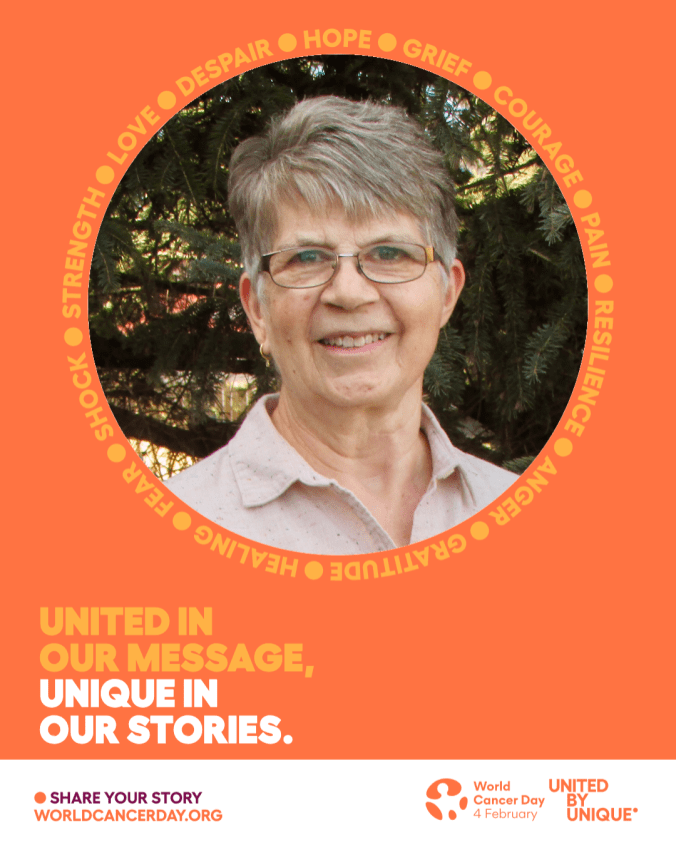
World Cancer Day 2025: United by Unique

February 4 is World Cancer Day. There are more than 200 different kinds of cancer and every patient’s experience is different. That’s why the new World Cancer Day theme, United by Unique, resonates so strongly with me. While each of our stories is unique, we are united in our message and in our desire to raise awareness and see progress made in fighting this dreadful disease. 

The emphasis of the 3-year United by Unique campaign that kicks off today will be people-centred care. Behind every diagnosis lies a unique human story. These are stories of grief, pain, healing, resilience, love and so much more. A people-centred approach to care that listens to patients’ stories and fully responds to each individual’s unique needs with compassion and empathy will lead to the best possible outcomes.  

People living with cancer don’t always feel heard, seen, or understood. They are often bewildered, feeling isolated and voiceless at a time when they’re also learning to navigate an unfamiliar and confusing health care system and dealing with the emotional highs and lows of cancer diagnosis, treatment, or recovery. That’s why the first year of this campaign will focus on telling our unique stories.

I feel very fortunate to receive my cancer care at the Cross Cancer Institute in Edmonton, Alberta, Canada, a facility where it is common practice to look beyond the patient to the person as a whole and to consider the impact of their cancer on all aspects of their life. When I go for appointments, I’m routinely handed a clipboard with a questionnaire that delves into not only the physical symptoms that I might be experiencing, but also the psychosocial ones. The CCI offers a wide range of supportive services that go far beyond the patient’s physical well-being. The health care team there includes professionals in psychology, social work, spiritual care, nursing, and psychiatry and available services include individual, couple, and family counselling; professionally-led support groups; and practical supports for financial and other basic needs. While the need for these supports has not been part of my unique story thus far, I’m glad to know that they’re available should I ever need them and I wish that that was true for patients everywhere.  

I have been invited to share my unique patient story at a Canadian Neuroendocrine Tumour Society (CNETS) conference in May. The big challenge is going to be condensing the approximately 20 years from initial symptoms to present day into a 10 minute talk that educates, encourages, and inspires those in attendance, especially those who are in the early days of their journey and who need to know that it’s possible to live long and live well in spite of their diagnosis. 

United in our goals, unique in our needs.

A post-holiday update

Christmas has come and gone and the decorations are all put away. Christmas itself was a quiet one for hubby and I this year. It was just the two of us on Christmas morning, but we were joined by another couple later in the day for turkey dinner with all the trimmings. Then, two days later, the house was full with two of our grown children, their spouses, and six of our eight grandchildren here for the weekend! Every bed was taken as well as a couple of air mattresses and we managed to squeeze all twelve of us around the table at mealtime. Board games and trips to the tobogganing hill were enjoyed and it was a delight to see the cousins having so much fun together. But…

As grandchildren often do, one or two of them came with coughs and runny noses and Gram managed to catch one heck of a cold! Thankfully, the symptoms didn’t appear until after everyone left, but I was under the weather for several days. I’m finally on the mend, no longer depending on decongestants to breathe and although the cough still lingers, I don’t feel like I’m hacking up a lung. I’d normally say that I don’t feel my age, but this cold drained me of energy and definitely left me feeling old. Hopefully that’s just temporary! 

Speaking of age, we’re celebrating this guy today.

461882364_10161552605720915_2029796687439930519_n

It’s hubby’s 75th birthday today, definitely a milestone! It will be another quiet celebration though. At one point, I had thought about inviting friends in to celebrate with us, but between sickness and a house that’s gradually being stripped bare in preparation for upcoming renovations, that’s not happening.  

We’re in the process of emptying closets, clearing off shelves and countertops, and moving everything except our large pieces of furniture into the basement. Walls will be painted, ancient carpets replaced with wood flooring, baseboards and trim replaced, interior doors repainted, and the front door replaced. While the work is being done, we plan to be out of the way, but more about that later. 

I will be blogging from time to time over the next few weeks, but I’m not sure if there will be any fashion posts. I do have a couple of ideas rattling around in my brain, but right now my clothes are all over the place and I’m not sure what I’ll be able to pull together. Do stay tuned though!

How to look put together every day

logo-by-samIt’s late in the day and I still haven’t written today’s Fashion Friday post, so this is going to be a quick one. We spent two days in the city this week attending medical appointments so that’s my excuse for not being better prepared. The good news is that the lab work and CT scans that I’ve had done over the past couple of weeks showed that my cancer is stable! That’s a word that I wasn’t sure I was ever going to hear again, so of course, I’m delighted. We’ll redo all the tests in three months time, but for now I can put that on the back burner and get on with other things.

We may not always feel as if we have it all together, but we can always look as though we do and how we look affects how we feel. Today I’m going to share 14 tips on how to look put together every single day regardless of age or occasion.

  1. Start by taking care of yourself. Regular exercise, a healthy diet, and adequate sleep go a long way toward looking and feeling your best.
  2. Get a good, low maintenance haircut.
  3. Good grooming is key. Develop a good skin care routine, make sure your hair is neat and clean, practice good dental hygiene, and don’t neglect nail care.
  4. Make sure your clothes are clean.
  5. Don’t wear wrinkled clothes (with the exception of linen which is supposed to be wrinkled). You might want to invest in a hand-held steamer for quick touch ups.
  6. Ensure that your clothing fits well.
  7. Invest in good basics. Shop within your means, but buy the best quality that you can afford.
  8. Use a fabric shaver to remove pilling from knitwear.
  9. Find the colour palette that works best for you.
  10. Make sure your footwear is clean and in good condition.
  11. Accessorize, but don’t overdo.
  12. Use makeup strategically. Again, don’t overdo.
  13. Practice good posture.
  14. And finally, wear a smile!

These tips might seem obvious, but you don’t have to look far to see women who ignore them, especially at this busy, sometimes frenzied time of year. Do you have any other tips to add to the list?

Book of the month – September 2024

Hope for the Best, Plan for the Rest

Dr. Sammy Winemaker and Dr. Hsien Seow

Screenshot 2024-09-09 at 11.49.03 AMBeing diagnosed with a life-changing illness can be completely overwhelming. In Hope for the Best, Plan for the Rest, Drs. Sammy Winemaker and Hsien Seow offer a valuable guide to help patients and families deal with their new reality. Combining their decades of palliative care research and experience caring for seriously ill patients and harnessing the advice of thousands of patients, they offer 7 keys for navigating a life-changing diagnosis. With real-life stories, tips, and exercises, these compassionate experts empower patients with practical tools to help them successfully navigate the health care system with knowledge and confidence.

The 7 Keys:

  1. Walk Two Roads. Hope for the best, and plan for the rest. Toggle between being realistic and being hopeful.
  2. Zoom Out. Understand the big picture of your illness and what might lie ahead.
  3. Know Your Style. Review your past patterns for insights into how you will journey through your illness. Identify your coping strategies and your ways of processing information.
  4. Customize Your Order. Communicate your wishes, values, and beliefs to help tailor your care plan to your preferences.
  5. Anticipate Ripple Effects. Recognize that those caring for you will also need to be supported.
  6. Connect the Dots. Play a central role in coordinating your care (or identify someone who can).
  7. Invite Yourself. Speak up. Initiate conversations about what to expect and advocate for yourself.

These 7 keys are not steps or stages to be followed in a particular order, but are meant to be blended together and used as needed. After devoting one chapter to each of the keys, the writers wrap up with a chapter entitled Putting It All Together and then two final chapters that deal in more detail with the late and end stages of disease and the actual process of dying. They caution their readers to read those two chapters only if they feel comfortable doing so. The book would be a complete and helpful tool without them, but personally I found both chapters informative and reassuring.

This book, published in 2023, wasn’t available ten years earlier when I received my first cancer diagnosis. Looking back, I think that over time I implemented most of the keys either intuitively or through bits and pieces of advice that I received along the way, but how much better it would have been to have a book like this one to guide my way. It’s a book about hope (my one word for 2024) in the face of uncertainty. It’s about living well, being fully informed, and getting the best care available. It’s about being a whole person and not just a patient. It’s a call for patient-led, patient-centred health care.

Another cancerversary!

Eleven years ago today I was told that I had stage 4 colon cancer. Thankfully, a biopsy proved that diagnosis inaccurate or I probably wouldn’t be here to tell you about it today. According to the Canadian Cancer Society, the 5-year survival rate for colon cancer that has spread from its original location to distant parts of the body is 11%.

What I do have is neuroendocrine cancer (NETS), a slow-growing cancer that originated in my colon, more specifically in the cecum which is part of the colon. By the time it was diagnosed, I had been experiencing vague symptoms for several years. In fact, I was told that I’d probably had it for 7 to 10 years. At diagnosis, it had already spread to lymph nodes and my liver. Accurate stats and information about survival rates aren’t as readily available for neuroendocrine cancer because it isn’t as well-known or well-documented as many of the more common varieties, but I don’t really need to know those numbers. I just need to know how I’m doing right now and I found that out last week.

In response to my oncologist’s, “How are you?” as he entered the examining room, I replied, “I’m good.” Glancing at the notes in his hand, he enthusiastically responded, “Yes, yes you are!”

I wasn’t as exuberant about the results of the previous week’s CT scan as he appeared to be. I had hoped to hear that March’s TheraSphere treatment had completely annihilated the largest tumour on my liver. In fact, it had only shrunk by about 20%. The doctor hastened to remind me that shrinkage is always a good thing. That, combined with the facts that I’m not experiencing any symptoms and that the scan also showed “no progression of disease” is actually very good news!

I’ll have another CT and more lab work done in November, but in the meantime I’ve got lots of living to do. In addition to the many ways that I’ve found to stay active and busy in retirement, I’ve also become more active in patient advocacy over the past year. As a member of the CNETS (Canadian Neuroendocrine Tumour Society) Advocacy Advisory Board, I’m working with other patients and caregivers from across the country to try to increase awareness of our disease, shorten the pathway to diagnosis, advocate for equal access to treatment for patients across the country, and promote research into newer and better treatments. I’m also involved in meetings with a group of patients and health professionals around the world as part of an initiative by Ipsen, the pharmaceutical company that produces the medication that I’m injected with every 28 days, to try to improve the patient experience.

That reminds me of another recent change. Hubby is now giving me that monthly injection which frees us up to take it with us when we travel instead of having to be at home to wait for the nurse’s visit. A cancer diagnosis is life changing for a partner or caregiver as well as for the patient, so this is really his cancerversary too. We aren’t doing anything special to celebrate, but we’re thankful for another year of relatively good health; another year of life!

Ribbon Symbol

The notebook

No, I’m not talking about Nicholas Sparks’ debut novel or the award winning movie adaptation. I’m talking about an actual notebook.

Some of the very best advice that I received in the early days following my first cancer diagnosis almost eleven years ago was given to me by a medical technician administering an unrelated bone density test. “Get yourself a notebook,” she told me. “One of those ones with several sections where you can keep track of different things. Take it to your appointments with you and write things down.” It sounded like good advice, so as soon as I left the clinic I headed over to Walmart and found exactly what I needed, a Five Star 5-subject notebook.

IMG_7130

There’s a section where I record tests, procedures, and treatments; another one for consultations; and one where I keep a record of the injections that I receive every 28 days… when, where, who administered it, and any reaction that I might have. There’s also a section where I record some of my test results. I have access to those online at MyAHS Connect, but there are a couple of tests that are done regularly that I like to keep a written record of so that I can easily note trends. Finally, there’s a section where I write down questions to ask at my next appointment. More than one of my doctors has commented that they wish more of their patients would do that.

IMG_7132

Not only is my notebook separated into sections, but each divider has a pocket front and back. Those have been great for storing business cards, handouts, consent forms, vaccination records, a family medical history, and my personal directive. One pocket also holds two very important lists; my current medication list and a list of my past surgeries, all fourteen of them. Unless you spend a lot of time seeing doctors, you probably have no idea how often I’ve needed those two lists; how many times I’ve been handed a clipboard and asked to fill out forms that require me to list all my medications and past surgeries. Without those lists, I’d be stumped. What year did I have my gall bladder out? What’s the name of that blood pressure med and what dose do I take? With my notebook in hand, all that information is at my fingertips.

IMG_7134

Thankfully, the notebook has a strong plastic cover and a stiff cardboard back. Without those, I doubt that it would have lasted all these years. After all, I’m sure it’s been to at least 150 appointments with me!

If you or anyone you know is ever diagnosed with a serious or chronic health condition, I’d definitely recommend getting a notebook. It really has made my journey easier.

IMG_7137