The last ten

When I sat down to write this evening, my initial plan had been to start working on this Friday’s fashion post, but something else has been weighing on my mind and I decided to go in that direction instead. I’ve written about the Christian and social media before, but tonight that’s where I found myself going again.

I’ve been using Facebook since December 2007. We were about to leave for a year-long teaching assignment in Japan and our daughter insisted that I had to have Facebook as a way of staying in touch. In fact, she actually created my account and chose my first password and profile picture! She was right. In those days, Facebook was a great way to connect with friends and family. We enjoyed exchanging news and posting photos of our families and our daily lives. I even reconnected with a few people that I had completely lost touch with over the years.

Over time, however, Facebook has morphed into something very different than it was in those early days. I don’t mind the proliferation of ads on my Newsfeed because I realize that very little in life is free and someone has to pay for this platform. No, it’s not the ads that bother me, it’s the negativity, the anger, and the misinformation. Gone are the days when people annoyed one another or flirted with one another by “poking” each other on Facebook. Now, many use social media to lash out at one another or to hurl insults at those who disagree with them. Instead of sharing our lives, we try to prove each other wrong.

So, what does the Christian do? Can we be salt and light on social media or would we be better to avoid it altogether? These were the questions that I was wrestling with in late January when I learned of a free 10-day challenge called Instagram for Jesus. Offered by an online women’s ministry called Well-Watered Women, the challenge is simply a series of 10 short emails designed to help users of Facebook, Instagram, Twitter, or TikTok examine their motives for using social media and the potential that it holds, as well as set life-giving boundaries. If this sounds like something that might be of interest to you, check it out and sign up here.

If I had to choose the one thing that impacted me most from the 10 short messages, it was this recommendation from Day 8, “Scroll through your last ten posts, and ask yourself what a follower would know about you through those images and words. Consider opportunities to shift that understanding to a clearer image of what it means to walk as a sinner saved by grace.” Even if you’re not a Christ-follower, that first sentence is worth considering. What do your last ten posts tell the world about you? Is that the image you want to portray? If you are a believer, is this how you’re called to represent Christ to the world? If not, what are you going to do about it? For me, the simple practice of looking at my last ten posts, which I’ve been doing from time to time since completing the challenge in February, has been an excellent way to ensure that I’m being the kind of online presence that I want to be. 

Shot of an unrecognizable young woman working on her laptop at home

International Women’s Day 2021

images

Today is International Women’s Day. It saddens me that we should even need to set aside a day to focus on women’s rights, to remind the world that women deserve equality. It was never meant to be this way. 

I’ve been focusing a lot on what the Bible has to say about womanhood in recent weeks as I’ve started leading a ladies Bible study on women of the Bible. The very first statement about women in the Bible comes in the first chapter of Genesis. Verses 27-31 say: 

So God created mankind in his own image, in the image of God he created them; male and female he created them. God blessed them and said to them, “Be fruitful and increase in number; fill the earth and subdue it. Rule over the fish in the sea and the birds in the sky and over every living creature that moves on the ground.” Then God said, “I give you every seed-bearing plant on the face of the whole earth and every tree that has fruit with seed in it. They will be yours for food. And to all the beasts of the earth and all the birds in the sky and all the creatures that move along the ground—everything that has the breath of life in it—I give every green plant for food.” And it was so. God saw all that he had made, and it was very good. 

Do you see what I see? First of all, we’re told that God created men and women in His own image! Both were meant to be His image bearers. Second, He gave both of them dominion over and responsibility for His creation. It was a joint assignment. God did not give men dominion over women! That was never His intention. And finally, God saw all that He had made, and it was very good. His plan was equality for men and women and it was very good

In chapter 2 of Genesis we’re given a more detailed creation story. Verse 18 says, “The Lord God said, “It is not good for the man to be alone. I will make a helper suitable for him.” The King James Version of the Bible uses the words help meet to describe the woman’s role. “Meet” is an archaic adjective meaning suitable or proper, so the phrase simply means a suitable helper. Perhaps this is where the idea that men should dominate came from, but that was never God’s intent. In the original language, the word translated as helper or help meet was ezer. Ezer is a word that appears 21 times in the Old Testament; twice in Genesis for the woman, 3 times for nations to whom Israel appealed for military aid, and 16 times to refer to God as Israel’s helper, their shield and defence. It was used consistently in a military context. That hardly brings to mind a meek or subservient helper! Perhaps strong helper would be a better translation. 

Sadly, God’s plan for a partnership between men and women didn’t play out in human history. It didn’t take long for the relationship to deteriorate to the point where women were simply possessions of their fathers or husbands, barely a step above their livestock. Their primary role was to serve the men in their lives and to produce sons to carry on their husband’s family line. 

These may be radical thoughts for a woman who attends a patriarchal church, but I’ve always been a bit of a rebel and women’s issues have been a passion of mine for a very long time. The reality is that we need to do much more than set aside one day a year to draw attention to the plight of women worldwide. It is something that needs to be addressed 365 days of the year! 

As long as there are places on this planet where parents sell their daughters because they can’t afford to feed them, where girls walk an average of 6 kilometres a day to collect clean water for their households, where they are denied education, where they are forced to undergo female genital mutilation and/or forced into child marriage, we must do more than celebrate the social, economic, cultural, and political achievements of women on International Women’s Day. It’s easy to turn a blind eye to the atrocities inflicted on women in foreign lands when they aren’t happening in our own backyard, but there are women living in abject poverty in Canada, the United States, and other developed countries. Objectifying and exploiting women is still alive and well in our culture. Violence against women is still prevalent. Human trafficking happens in our own neighbourhoods.  

Though the situation may have improved over the years, women have yet to achieve equality in the workplace. As a current example, women are at the forefront of the battle against Covid-19 as front-line and health sector workers, scientists, doctors and caregivers, yet according to a UN report, they get paid 11 percent less globally than their male counterparts!  

What, then, can we do to press for progress for women? First of all, we need to educate ourselves, to look beyond our comfortable lives and become aware of what the issues are and which reputable organizations are working to change them. If you’re serious about wanting to have an impact on the lives of women around the world, I would suggest that you begin by reading Half the Sky: Turning Oppression into Opportunity for Women Worldwide, by Pulitzer Prize winning journalists Nicholas D. Kristof and Sheryl WuDunn. This book was a life changer for me. Kristof and WuDunn are upfront and clear; they hope to recruit their readers to get involved, to become a part of a movement to emancipate and empower women by helping provide the economic resources that can help transform their lives.  Half the Sky not only inspires the reader to get involved, it gives many suggestions how.

It was after reading Half the Sky that I began making micro loans to women in third world countries through Kiva, the world’s first online micro-lending platform. It’s one small step, but it’s something I can do. Kiva is a non-profit organization that allows a person to lend as little as $25 to a specific low-income entrepreneur in one of 77 countries around the world. When a loan is repaid, the money can be withdrawn or used to fund a new loan. I choose to lend to women with children at home. All too often, money in the hands of men goes to alcohol and prostitution but in the hands of women, it nurtures children, feeds families and promotes education.

It’s International Women’s Day. What will you do? 

Banner-image-8

One Word for 2021

For the past few years I’ve chosen one word to inspire or guide me in the coming year as well as a scripture verse to go along with it. There’s actually a whole #OneWord365 movement on the internet urging members to choose a word to focus on every day, all year long; a word that sums up who they want to be or how they want to live.

My one word for 2020 was Bold. I wanted the boldness of the early disciples who shared their faith in spite of great opposition. I wanted the courage to confront injustice and stand up for the downtrodden. I wanted to boldly speak up for what I believed in or knew to be true. That led me to my one word for 2021.

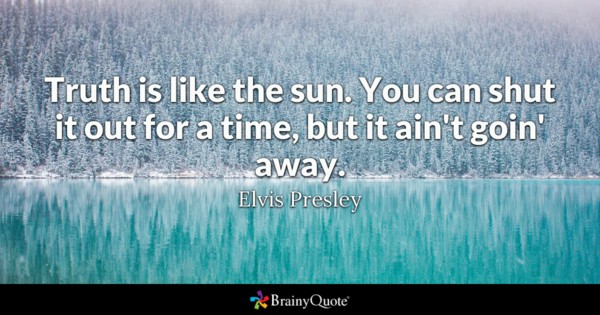
Truth

The dictionary defines truth as that which is in accordance with fact or reality.

There seems to be very little of that going around these days! In fact, fake news, propaganda, and false information seem to spread faster than Covid-19! I have an insatiable desire to grow in wisdom, knowledge, and understanding; to know the truth about anything that affects my life. Perhaps it’s simply a reaction to having been the victim of lies and deception in the past, but I abhor falsehood of any kind.   

When I see something online that I’m unsure about or that doesn’t sound right to me, I check the facts and, in accordance with my desire to speak the truth with boldness, I often post my findings in the form of a comment or a link. This hasn’t always been popular. In fact, one acquaintance called me the “resident fact checker” in an online discussion. She clearly didn’t mean it as a compliment, but I fail to see how seeking and speaking the truth could be anything but good! Thankfully, others have expressed appreciation either online or in person and I’ve even been approached a couple of times by people looking for help in checking the validity of something they’ve read or been told. 

We live in a day of relativism; the idea that you can have your truth and I can have mine. That isn’t actually truth at all; that’s belief or opinion. Unfortunately, belief doesn’t create fact. Truth is independent of belief. Being able to discern between fact and opinion, between news and editorial, between truth and belief, is a very important skill.  American politician, sociologist, and diplomat, Daniel Patrick Moynihan, was quoted as saying, “Everyone is entitled to his own opinion, but not his own facts.” 

Accepting that absolute truth exists is an essential foundation of Christianity. God was very clear in the Bible that what He revealed was truth. In John 14:6, Jesus declared, “I am the way and the truth and the life. No one comes to the Father except through me.” That’s either true or it isn’t. It can’t be true for some and not for others. 

There are many other Bible verses about truth, so choosing one to accompany my one word for 2021 was challenging. I finally settled on 2 Timothy 2:15, “Do your best to present yourself to God as one approved, a worker who does not need to be ashamed and who correctly handles the word of truth.”

That’s what I want to focus on in 2021, correctly handling the truth. Not just Biblical truth, but all truth. 

Have you ever chosen a word to inspire or guide you in a new year? What would your word for 2021 be?

truth

The Four

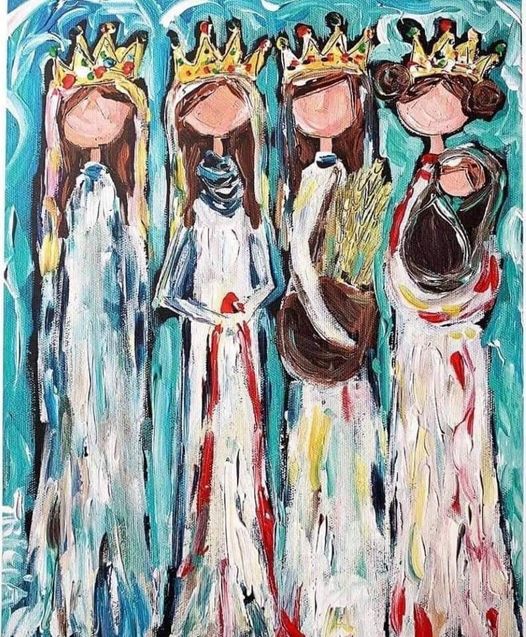
Occasionally a piece of art speaks to my heart. That was certainly true of The Four by American artist, Tricia Robinson, when I saw it for the first time yesterday. 

The Four - Tricia Robinson art

No, I wasn’t in an art gallery! Covid restrictions continue to keep me locked up at home. I actually saw the painting on Facebook! It was the vibrant colours and the simplicity of the figures that first caught my attention, but the artist’s description gave it much deeper meaning.

These four women: Tamar, Rahab, Ruth and Bathsheba have something in common. They are grandmothers in Jesus’ family tree! Grandmothers! Some had affairs, were prostitutes, lied and were truly not the starry eyed perfect princesses.

But God chose them, used them…. These four broken women. 

And that’s why I gave them crowns. A symbol of grace and love from our Creator and Redeemer.

Christian author, Ann Voskamp, wrote this on her blog

Four broken ­women—​­
women who felt like outsiders,
like ­has-​­beens,
like ­never-​­beens.

Women who were weary
of being taken advantage of, 

of being unnoticed
and uncherished
and unappreciated;

women who didn’t fit in, 
who didn’t know how to keep going, 
what to believe, 
where to ­go—​­
women who had thought about giving up.

And Jesus claims exactly these who are
wandering
and wondering
and wounded
and worn out as
His.

These four women can be found in the pages of the Old Testament and all are part of the genealogy of Jesus found in the first chapter of the book of Matthew. Widowed at a young age and rejected by her second husband who also suffered an early death, Tamar, was left husbandless and without children. In her culture that made her worthless. Taking matters into her own hands, through an act of deception, she bore twin sons by her father-in-law who later admitted that “she is more righteous than I.” After Israel’s 40 years of wandering in the wilderness, spies were sent into the land of Canaan and found lodging with a prostitute named Rahab. After risking her life to hide them, Rahab asked that her life and the lives of her family be spared when the Israelites invaded. In the painting, she can be seen holding the scarlet cord that she was told to tie in the window of her home to mark it. Everyone inside the house would be spared. Another young widow, Ruth, left her homeland and her pagan gods to follow her aging mother-in-law back to her homeland where she would be a foreigner and an object of curiosity. She worked tirelessly gleaning in the fields at harvest time to provide for them until she was noticed by the landowner and became his wife. She eventually became the great grandmother of King David. Bathsheba suffered untold grief when the king, in an attempt to cover up an act of lust that resulted in an unplanned pregnancy, arranged to have her first husband murdered and then took her as his own wife. I can only imagine how much worse her grief became when the child of that union died. Her second son became the great King Solomon.

Yes, these were imperfect, broken women; women who’s lives didn’t go the way of little girls’ dreams, but they are also women who were cherished by God. I can identify. When I saw the painting and understood it’s meaning, I wanted to order a print to hang in my den, my room of prayer. Unfortunately, the artist doesn’t ship to Canada, so I will have to be satisfied with having it on my computer desktop where I can look at it often and be reminded that though, I too, am somewhat flawed and have been damaged by the trials of life, I am a beloved daughter of the one true God!

Where do you find comfort?

If there was ever a time in most of our lives when we craved comfort, this is probably it. The combination of the upcoming holiday season + a worldwide pandemic is bound to be stressful. For many of us, the shorter, darker days of winter add to our feelings of disquiet. It’s a universal human trait to seek comfort when life becomes difficult, but where do we find that comfort? What do we turn to?

You’ve probably heard people refer to their “Quarantine 15”. In a poll of more than 1,000 WebMD readers, nearly half of the women and almost one-quarter of the men said that they had gained weight since March. This trend is no surprise. Food is one of the most common sources of comfort that people turn to in times of stress. There’s even a physiological reason for this. Chronic or ongoing stress causes the body to produce higher levels of the stress hormone, cortisol, which in turn triggers cravings for salty, sweet, or fried foods; foods that produce a burst of energy and pleasure.

Thankfully, this hasn’t been an issue for me. In fact, in times of distress I tend to lose my appetite. One of my main go tos for comfort is a cup of hot tea which is known to lower stress hormones. Since I drink my tea black, it has the added benefit of being calorie free.

tea-mugs-250x250

Soaking in a hot bath is another favourite source of comfort for me. There’s something about being surrounded by liquid warmth that soothes away anxiety and restores a sense of peace. Perhaps it’s reminiscent of returning to the womb! 

What are some other ways that you can comfort yourself, especially if you’re trying to avoid stress eating? Here are a few suggestions, but I’d love to hear your ideas in the comment section. 

  • Exercise. This one might be challenging if gyms and recreational facilities are closed in your area, but it goes hand in hand with the next suggestion. 
  • Spend time outdoors. 
  • Listen to music.
  • Do something creative… paint, sketch, knit, crochet, sew, embroider… the options are almost endless.
  • Keep a gratitude journal.
  • Practice mindfulness. Focus on whatever you’re doing at the moment. Notice the sights, sounds, and scents that surround you. 
  • Escape into fiction. Watch a movie or read a book. 
  • Work on a jigsaw, crossword, or sudoku puzzle.
  • Savour the routines in your life. If life seems chaotic, work on establishing some routines and focus on the comfort that you receive from that first cup of coffee in the morning, a regular devotional or prayer time, a few minutes of quiet reading or contemplation after work.  

We are living in tumultuous times and there seems to be no end in sight. We can’t see the big picture and have no idea how all this is going to work out for us individually or globally, but there is One who does know. Ultimately, true comfort is to be found in faith in God. Scripture is full of words of comfort. 

2 Corinthians 1-3-4

What is freedom?

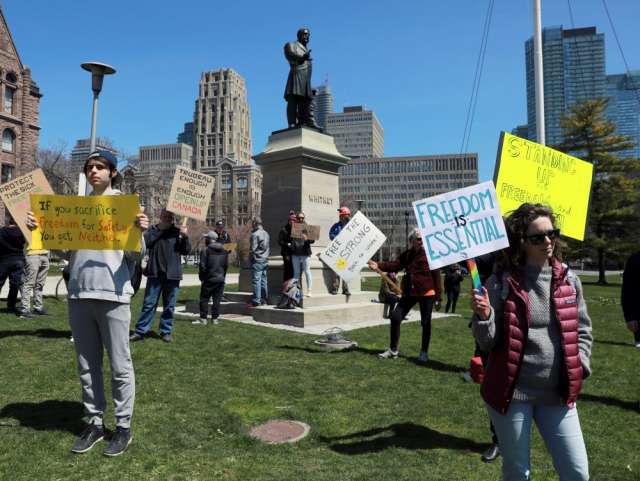
As the restrictions imposed by Covid-19 drag on, I’m seeing more and more on social media from people who are convinced that this is all a nefarious plot to permanently rob us of our rights and freedoms. These are people who, like me, have lived privileged lives; people who have no idea what true lack of freedom looks or feels like.

The Guardian 2

photo: The Guardian

In 1991, when the Soviet Union collapsed and the iron curtain ceased to exist, Eastern Europeans jubilantly celebrated the freedom that they had long been denied. Sadly, however, some of the first “freedoms” to be exercised in these formerly communist countries were indulgence in pornography, prostitution, drugs, and organized crime. So what is freedom? According to many, it seems to be the right to do whatever I want, whenever I want, to whomever I want. How incredibly self-indulgent!

Freedom means many things to many people. It may mean having the opportunity to vote for the ideas, people, or parties that best represent our views. It may mean being able to freely express our ideas and opinions without fear of reprisal. To some it may mean being free of debt and having the financial wherewithal to buy whatever they want. To others it may simply mean being able to live without constant fear of violence or persecution.

Is being told to social distance or to wear a mask to enter certain businesses really robbing anyone of these rights and freedoms? Are temporary school closures and having to worship online instead of in person really endangering society as we know it? I hardly think so!

During the current pandemic, those of us who are willing to temporarily give up some of our freedoms for the good of the community and who dare to suggest that others ought to do the same run the risk of being labelled socialist. That’s an insult that’s commonly hurled about by those who fear that their freedoms are being forever taken from them. I pay it little mind, however, as they clearly aren’t political scientists!

The Bible has a lot to say about freedom. In fact, it’s one of the central themes of the entire Word. John 8:32 tells us that “the truth will set you free” and later, in John 14:6, Jesus says, “I am the way and the truth and the life.” True freedom is found in relationship with Him.

This freedom is both freedom from and freedom to. Freedom from the things of this world that enslave us: earthly desires for wealth, success, and status; jealousy and envy; lust and perversion; rivalry and hatred. Freedom to be everything that we were designed to be, to do what we were made to do, and to serve God by serving others. Galatians 5:13-14 sums it up this way, “You, my brothers and sisters, were called to be free. But do not use your freedom to indulge the flesh; rather, serve one another humbly in love. For the entire law is fulfilled in keeping this one command: ‘Love your neighbour as yourself.'”

So how does this apply to Covid-19? Like true Biblical freedom, our political and social freedoms are also responsibilities. They don’t exist so that we can do whatever we want, whenever we want, to whomever we want. They exist for the good of the whole. Freedom provides opportunity and reason to serve whether by delivering groceries to doorsteps, making phone calls to ensure that neighbours and friends are faring well, sewing masks, or simply practicing social distancing and keeping our school and church doors closed until the threat of spreading the virus has lessened.

I don’t hide behind rose coloured glasses nor do I blindly believe that everything that our political leaders do is for our good, but I also don’t believe that Covid-19 is an evil plot to permanently rob us of our rights and freedoms!

National Post

photo: National Post

At least these ones are social distancing!


Fear and Covid-19

Yesterday’s post generated a very lengthy discussion on Facebook. As the conversation went on it became very clear that the Covid-19 pandemic has resulted in a great deal of fear. I found it very interesting that people were not expressing fear of the disease itself. No one talked about being afraid of succumbing to the virus or even of loved ones getting sick. Instead, they expressed fear that a vaccine, once discovered, will be forced on people against their will, fear that churches, now closed, might not be allowed to reopen, fear of economic collapse, and fear that our personal freedoms are being eroded and that we’re headed down the same road as Nazi Germany. It seems to me that what people are really afraid of is change, the unknown, what life will look like when this is all over.

Some of the fears that were expressed in yesterday’s conversation may seem pretty far-fetched, but I don’t want to make light of anyone’s fears. Fear is real and it can be debilitating. It feeds upon itself and it isn’t necessarily logical or realistic. After all, the author of fear is the great deceiver himself. The Bible calls him Satan.

I once preached an entire sermon on living without fear, but in a nutshell, the antidote to fear is trust. When we put our trust in our jobs, our institutions, our relationships, our rights and freedoms, what happens when those things are stripped away? That’s what we’re finding out now.

Our devotional this morning came from Proverbs 16. The second half of verse 20 jumped out at me like a flashing neon light… “blessed is he that trusts in the Lord.” When everything in life is like shifting sand, He is the one and only constant. Total trust in God is the only true remedy for fear.

The Bible is full of admonitions not to fear.

Have I not commanded you? Be strong and courageous. Do not be terrified; do not be discouraged, for the Lord your God will be with you wherever you go.  Joshua 1:9

So do not fear, for I am with you; do not be dismayed, for I am your God. I will strengthen you and help you; I will uphold you with my righteous right hand.  Isaiah 41:10

In these uncertain times, when trusting in the things that we usually depend on fails us, we need to trust in the only One who knows what the final outcome will be, the One who will still be with us when Covid-19 is a distant memory.

The Bible also tells us that “perfect love drives out fear” (1 John 4:18). As human beings, we may not be capable of perfect love, but we are certainly capable of reaching out to others in love even while we social distance. While the circumstances surrounding the Covid-19 pandemic have resulted in fear for many, they have also brought out the best in others. Whether it be singing and waving signs outside the windows of a long term care centre, dropping fresh baking on a neighbour’s doorstep, picking up and delivering groceries for someone who is self-isolating, planning a drive by birthday parade for a child who can’t have a traditional party, or just taking the time to pick up the phone and call someone who’s living alone, people are finding creative ways to reach out in love. Maybe, hopefully, this world will actually be a kinder place when this is over!

So if you’re feeling afraid, don’t just hunker down with your fear and let it fester. Trust in God and reach out in love. And if you’re truly feeling overcome, please reach out and ask for help.

Why is it so hard?

As I’ve seen the news about pastors, like Rev. Tony Spell in Louisiana, who are insisting on their “right” to hold Easter services in spite of the Covid-19 pandemic, I have to ask why is it so hard to obey stay-at-home orders that have been put in place to protect the lives of the vulnerable; the very people that churches profess to care about? Why is it so hard?

I fully understand people wanting to be with family and to take part in their traditional Easter celebrations. I’d love to be with my kids and grandkids too, but I’ve been pondering why we do what we do and why we think we need to. Nowhere in scripture are we commanded to gather together for Easter (other than the instruction not to give up meeting together in Hebrews 10:25 which, thankfully, we’re able to do virtually) or given any instructions about how to celebrate the resurrection. These are manmade traditions. Perhaps a quiet, at home Easter without all those extras is not a bad thing. Perhaps it’s a time for us to reflect in a more intentional way on the real meaning of the event which is not bunnies, eggs, and chocolate. It isn’t even necessarily going to church!

I’m not saying that there’s anything wrong with the ways we usually celebrate Easter, but just this once, it’s okay to do things differently. In fact, we need to do things differently! As the church, we need to be obedient to the Word of God which tells us in several places to obey those in positions of authority over us. Romans 13:1 tells us, “Let every person be subject to the governing authorities. For there is no authority except from God, and those that exist have been instituted by God.” Regardless of what people like Rev. Spell proclaim, we are called to obey those who put the current social distancing regulations in place! Why is that so hard?

I’m reminded of the two Easters that we spent in non Christian countries. In Japan, we did attend a Christian church and celebrated Easter there, but outside the walls of the church, there was no recognition of Easter at all. In China, where we weren’t part of any Christian organization, I’ll always remember that we went out for dinner with a couple of our college students on Easter Sunday and ate roast duck and bullfrog! Not frog’s legs, the whole frog! It was delicious, but I digress! At the end of that day, I wrote this and I think it applies as well to our current situation as it did then.

“Easter isn’t really about what we eat or who we spend the day with. Whether we’re with family around a table laden with ham and all the trimmings or in a shopping mall in China eating bullfrog, as Christians, Easter is at the centre of who we are and what we believe.”


Coping with the new normal

I was supposed to be in the city this afternoon for an appointment with Dr W concerning cancer #3 which is located in my thyroid. Unfortunately, due to the ongoing Covid-19 pandemic, that didn’t happen. Clinic visits are being restricted to only the most urgent cases while people like myself are required to make do with a phone call from the doctor. Had I been in the office, Dr W would have done an ultrasound to determine whether or not there has been any change to my thyroid since I last saw him six months ago. We both agreed that that would have been the best scenario. If I was able to have an ultrasound done in the community where I live, we might have gone with that option, but the closest place that I could do that would be the hospital located an hour away. Since we both know that a hospital is a higher risk location than his clinic would be, we agreed that that wouldn’t be a good choice. Instead, we wait. We wait until the Covid-19 threat passes and I’m able to see him in his office again. He’s predicting June or July, but no one knows for sure. We wait and we pray that the cancer doesn’t grow or spread; that the additional two or three months doesn’t make a difference.

I was also planning to stop into the University Hospital dental clinic this afternoon to pick up a supply of the fluoride gel that I use once a day to protect my teeth from harmful effects of the radiation that I received after cancer #2 was surgically removed.  Thankfully, though, that can be sent to me by mail.

As we enter the fourth week since our province declared a state of emergency and services began to shut down, we’ve all experienced many changes. Most, like accessing my fluoride, have been fairly simple to deal with, while others, like not being able to see Dr W and have my scheduled ultrasound, are more challenging and may have serious long term effects.

Thankfully, for retirees like hubby and I, the impact of Covid-19 has thus far been easier to bear than it has been for many others. We don’t have a business to close, jobs to lose, or children to teach at home. Nevertheless, the novelty of staying home 24/7 wears pretty thin and many of the frustrations that go along with the current situation affect us all. In light of this, I thought I’d share a few things that are helping me deal with our new normal.

Routine.  I like routine at the best of times, but it’s even more important in times of uncertainty. This doesn’t mean that I can’t be flexible or spontaneous, but having some structure to my day really helps keep me on an even keel.

Adequate sleep.  I try to go to bed at night and get up in the morning at about the same time each day. That takes a bit of self-discipline. I tend to be a night owl and I could easily stay up way too late, but I know that I function best if I get about 8 hours of sleep a night. Thankfully, in spite of the fact that I’ve had a couple of nights where odd dreams that probably indicate an elevated stress level have kept me from sleeping well, most nights have not been like that and I feel well rested.

Exercise.  I’m very fortunate that, unlike many people who are finding it difficult to exercise because their gyms have closed, I have everything I need here at home. Monday to Friday my day begins with a 25 minute exercise routine that focuses on core strength, flexibility, and balance. Our basement gym consists of a treadmill, two weight benches, and a large assortment of free weights. Three afternoons a week find me down there lifting weights and on the alternate days, I either walk on the treadmill or outdoors. Sunday is usually a day of rest.

Healthy diet.  If anything, we’ve been eating better than ever since the beginning of this pandemic because I’ve been a little more intentional about meal planning. That started three weeks ago when we visited five grocery stores in one afternoon and found their meat departments almost empty! Thankfully, the shortage didn’t last and I’ve since been able to add enough to the freezer to last us quite awhile. We keep very little unhealthy snack food in the house, so even with many more hours at home, we haven’t been tempted to fill up on junk food.

Spiritual nourishment.  Prayer and Bible reading are regular parts of my daily routine that help keep me balanced. We’ve been missing the opportunity to meet in person on Sunday mornings, but we’ve been enjoying church online.

News, but not too much!  I don’t want to live with my head buried in the sand, but at the same time, I don’t want to become obsessed with every detail of what’s going on. I’ve continued my habit of reading the news after breakfast every morning. We subscribe to one newspaper online. I check the world, national, and local news each day, but I very seldom read editorials. For the past couple of weeks, I’ve been watching our provincial Chief Medical Officer of Health give her daily Covid-19 update each afternoon online, but I don’t watch TV news.

Connection.  Staying in touch with friends and family by phone and online has been a vital part of staying sane. I enjoyed a lovely visit with a group of girlfriends via Zoom one evening last week and we’ve also enjoyed chats with several of our grandchildren.

Purpose.  It think one of the key ingredients to coping throughout the ups and downs of life and perhaps more than ever right now is having a sense of purpose. In addition to the usual day to day activities like meal preparation and exercising, I’ve been cleaning and reorganizing the kitchen cabinets and I’ve been using Duolingo to learn Spanish! Of course, there’s also the blog! Writing it and connecting with all of you gives me so much pleasure!

The one thing that I’d like to be doing more of these days is getting outdoors, but we seem to trapped in a never ending winter. Our snow is usually gone by the end of March, but not so this year. There’s lots of sunshine in the forecast though and our daytime temperatures are beginning to inch up over 0ºC (32ºF), so perhaps this too shall pass just as we know the pandemic will.

IMG_0911

So, my friends, how are you coping? What are some things that are helping you get through these most unusual times?


Kintsugi… broken made beautiful

product-jpeg-500x500

“We have this treasure in jars of clay to show that this all-surpassing power is from God and not from us.”   2 Corinthians 4:7

When I read this verse in my morning devotions today, my mind went in several different directions. It immediately brought to mind a couple of verses from the Old Testament book of Isaiah.

“You, Lord, are our Father. We are the clay, you are the potter; we are all the work of your hand.”   Isaiah 64:8

and

Shall what is formed say to the one who formed it, ‘You did not make me’? Can the pot say to the potter, ‘You know nothing’”?   Isaiah 29:16

We are all vessels shaped by God’s hands for His purpose, not our own.

Next, my mind went to the value of a clay pot. Many are plain on the outside and made for ordinary everyday purposes. They might not look like they have much value, but from earliest times people the world over have survived in the harshest of circumstances because they had simple clay pots to carry life giving water. We ought to be like those jars carrying life to those around us.

women-providing-water_

Finally, I was reminded of the centuries old Japanese art of kintsugi. or “golden joinery.” Life is hard and sometimes our jars of clay are chipped, cracked, or broken, but God is not only the potter; he is also the master of kintsugi!

daa394a7fdce830f2628ee54246ee38b

Kintsugi is a method of repairing broken pottery using lacquer mixed with gold, silver or platinum. Rather than trying to hide the brokenness, it becomes part of the beauty of the piece. The process often enhances the value of the item as each mended piece is completely unique.

In a similar manner, when we bring our brokenness to God, He doesn’t reject or discard us. Instead, where we see only ugliness, he sees potential and the possibility of creating something new and beautiful. He takes our broken pieces and carefully puts them back together so that even though the cracks and scars might still be visible, they become part of our beauty. Through His loving grace and mercy, he forgives our failures and heals our hurts. When His gold fills our cracks, we are made stronger and more beautiful and His power and glory are seen in us. We simply need to put our broken lives into the hands of the master of kintsugi and trust Him to put us back together!

bowl-1