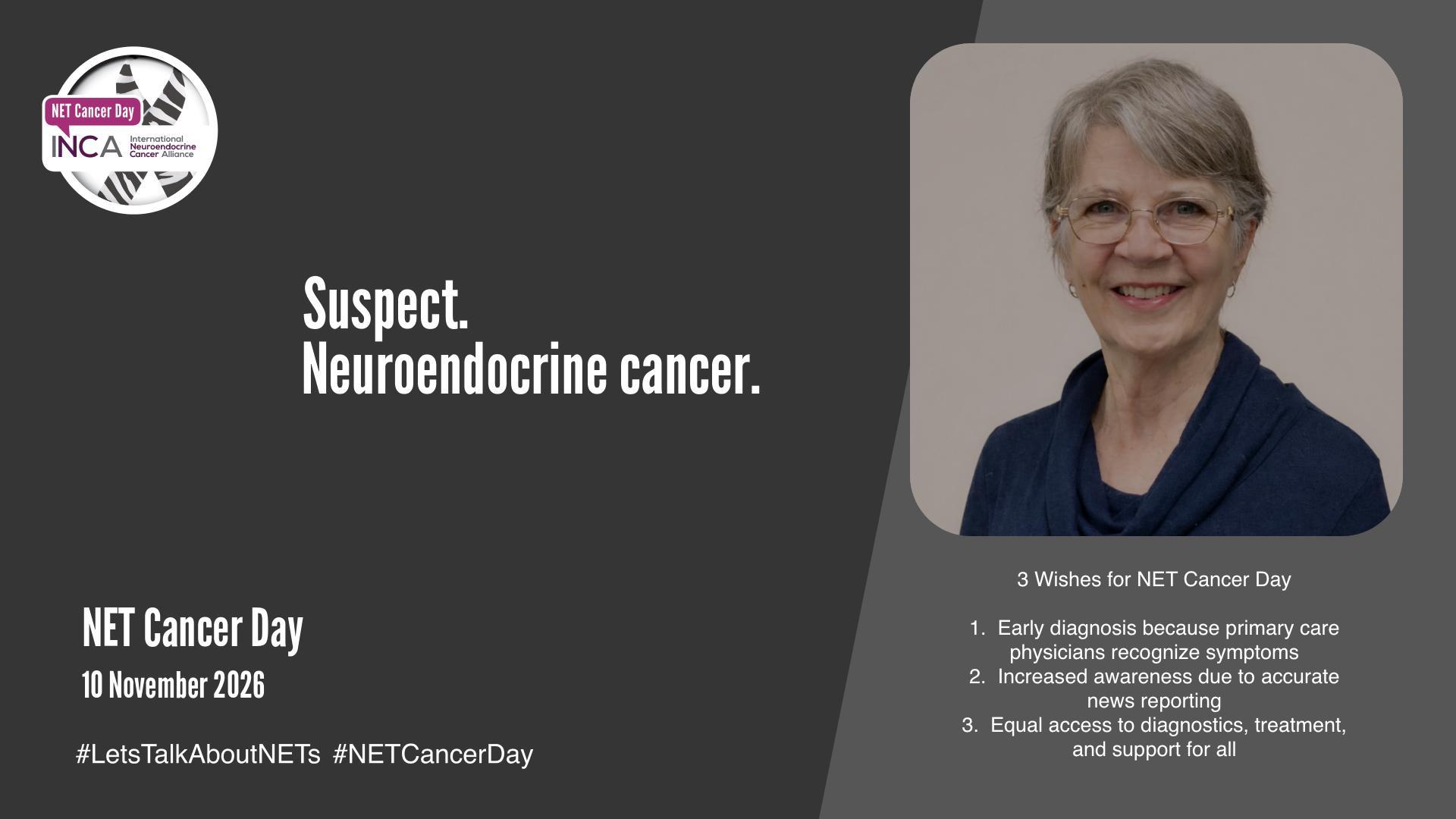
When I was first diagnosed with neuroendocrine (NET) cancer in 2013, it was considered a rare disease. That’s no longer the case. As the fastest growing class of cancer worldwide, it’s no longer rare, but sadly, it’s still not well known and it’s often overlooked.
As a patient, an advocate, and a support group leader, I have 3 wishes on this World NET Cancer Day.
Neuroendocrine cancer is an uncommon disease with common symptoms. Many health care professionals have never seen a case and know little or nothing about it. In order to achieve early, correct diagnosis for every patient, I wish that every primary care physician knew and understood the symptoms of this complex disease. When they are presented with stomach pain, it makes sense for them to suspect gastritis (inflammation of the stomach lining), but we also need them to wonder if it could be neuroendocrine cancer. When the stomach pain is accompanied by severe diarrhea, irritable bowel syndrome is a definite possibility, but we also need the doctor to be aware that it could be NET cancer. When a woman complains of facial flushing, rather than simply assuming that it’s due to menopause, we need her doctor to ask himself if it could be NETS. Depending on the location of the primary tumour, other symptoms may include nausea and vomiting, rapid heartbeat, anxiety, skin rash, shortness of breath or wheezing, lack of appetite, unexplained weight loss and/or lack of energy. I wish that every health care professional knew this.
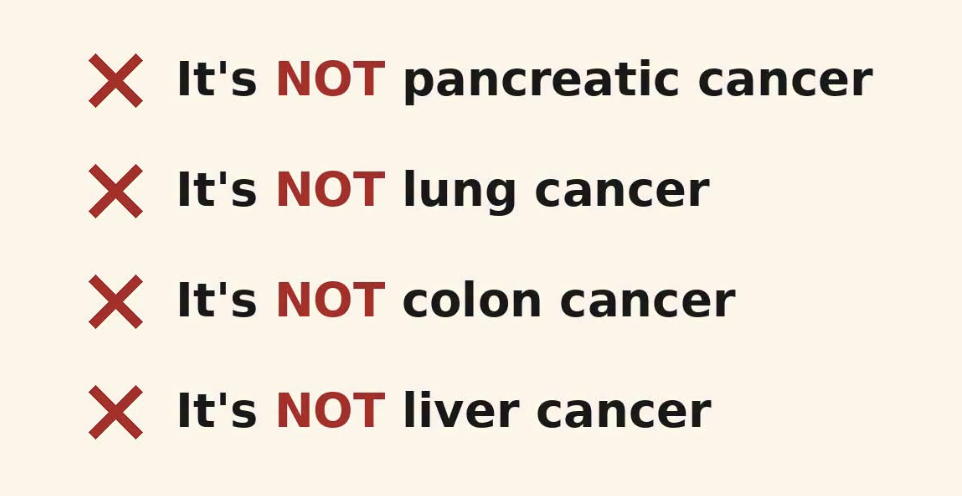
When reporting on individuals with NET cancer, I wish that the news media would get it right. I wish they knew what NETS is NOT. That would help a lot in increasing awareness of this disease. Neuroendocrine tumours are cancers that start in neuroendocrine cells, hormone producing cells found in many locations throughout the body. This cancer can develop in almost any organ but it most commonly occurs in the gastrointestinal tract, pancreas, or lungs. It very often metastasizes to the liver. Here’s the part that people often misunderstand and that the news almost always gets wrong… a NET in the colon is NOT colon cancer, a NET in the lung is NOT lung cancer, a NET in the pancreas is NOT pancreatic cancer, a NET in the liver is NOT liver cancer. In spite of what was reported, Steve Jobs and Aretha Franklin did NOT die of pancreatic cancer. They both died of neuroendocrine cancer.
Thirdly, I wish that patients across Canada and around the world had equal access to diagnostics, treatment, and support. I’m fortunate to live two and a half hours away from one of Canada’s leading cancer care centres which has a multi-disciplinary team dedicated to providing comprehensive and up-to-date NET cancer care. Many, even within my own country, are not so fortunate.
And now, on a personal note, I’ll share a NET cancer wish that came true for me recently. A little over two and a half years ago, I had a radioembolization to destroy a neuroendocrine tumour on my liver. Almost a year ago, I had an ablation to burn off another one. Ever since the embolization, I’ve been going for a CT scan every three months. I wondered if that would ever change. The results of the last couple of scans looked really good though, so at my last follow-up appointment I asked my oncologist if he thought I’d ever be able to go longer between scans. I suggested maybe four or five months. He looked at the radiologist’s report again and said, let’s do six this time! That was definitely a wish come true! I don’t have another CT scan until March and right now that feels almost like a holiday!