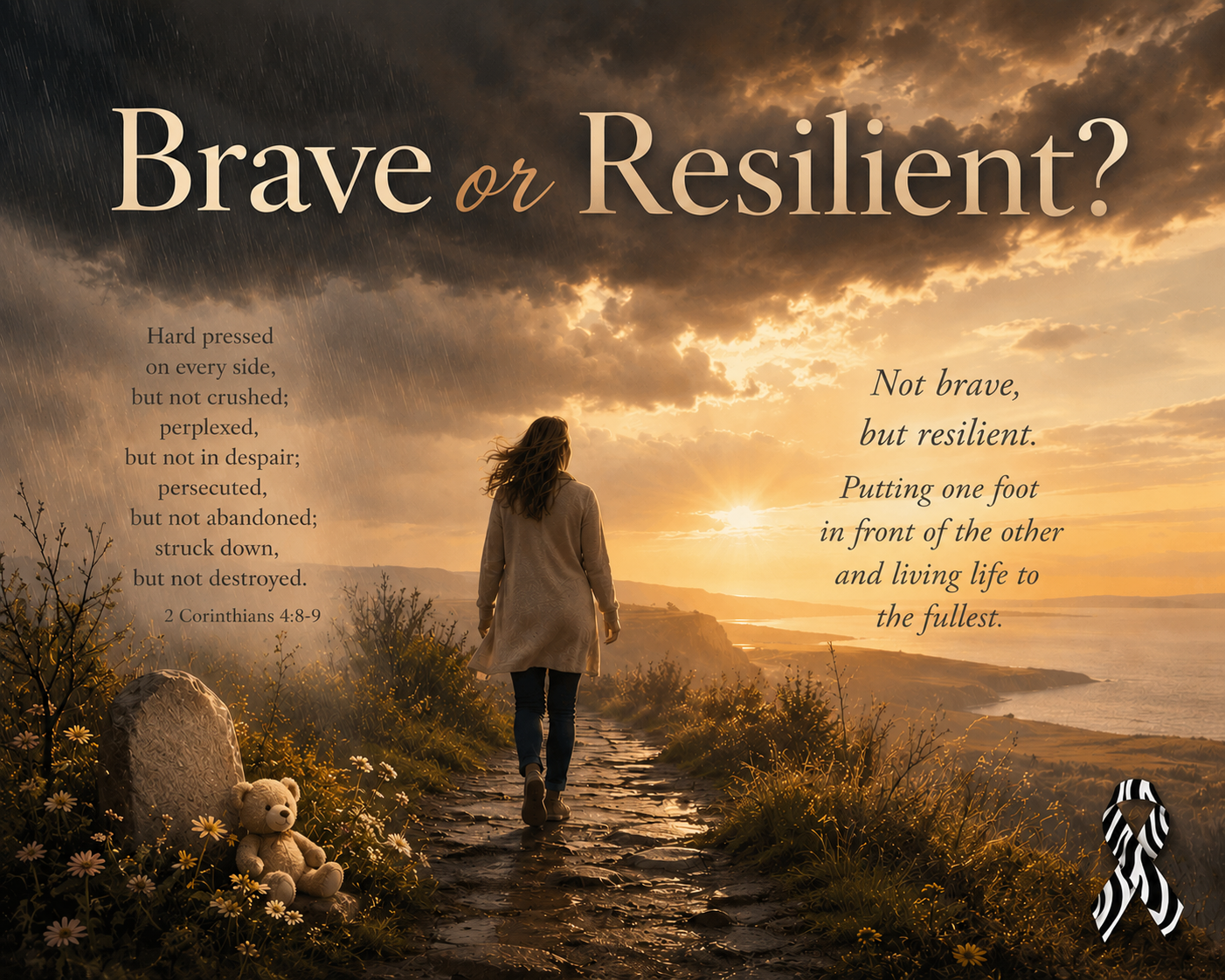
Brave or resilient?

As a cancer patient, I’ve often been told that I’m brave. I know that people mean well, but that descriptor has never sat very well with me. To me, brave is the firefighter who enters a burning building to save lives or the person who jumps into deep water to rescue someone in danger of drowning. Bravery is defined as the mental strength to face danger, fear, or difficulty. It’s often impulsive or heroic. That doesn’t describe me or my thirteen year journey with neuroendocrine cancer.

Recently, a person whose opinion I value highly told me, “You’re so resilient!” and that word rang true to me. Resilience is a long-term process best described as the ability to endure, adapt, and survive adversity and recover from difficult experiences.

Those who know me well know that I’m a self-professed word nerd. Words matter to me. For more than a decade, the word stable, as in “no evidence of new or progressive disease” which was the final line on my latest CT scan report, has been a favourite word of mine. Now resilient has become another favourite!

So, how does a person build resilience? Becoming resilient is a lifelong process, not a one-time event. Life is rarely easy for anyone. Most of us experience a variety of difficult and upsetting events and circumstances over our lifetimes and I’m certainly no exception. Long before I was diagnosed with cancer, I endured a series of other tragedies and traumas, including the loss of a preschool daughter to leukemia. In each case, I chose to keep putting one foot in front of the other and living life to the fullest extent possible. That wasn’t easy, it wasn’t brave, and I couldn’t have done it alone, but it did help prepare me for life with an incurable cancer. I learned to accept circumstances that I couldn’t change and I also learned to depend on the God who loves me and who promised to take care of me.

In 2 Corinthians 4:89, the apostle Paul, who suffered many hardships, wrote “We are hard pressed on every side, but not crushed; perplexed, but not in despair; persecuted, but not abandoned; struck down, but not destroyed.” That’s resilience!

What is self-care?

This is a post that’s been rattling around in my head since I spoke at the ladies retreat at our church in April. I mentioned self-care in my afternoon talk that day, but I wanted to develop the idea more fully here.

First of all, I want to be very clear about what self-care isn’t. Self-care is not selfish! In fact, it’s essential. It helps us stay strong and healthy physically, mentally, and emotionally so that we’re able to handle the stresses of daily life and be there for others.

Self-care needs to be intentional. It’s much more than just a bubble bath or even a one-time spa escape, although those are wonderful ways to relax! Self-care involves making lifestyle choices that nurture body, mind, and spirit. It includes getting enough sleep, eating a nourishing diet, getting regular exercise, and seeking medical care when it’s needed. Self-care isn’t always glamorous or fun, but going to the dentist, starting a new exercise program, or choosing a reasonable bedtime are all ways of investing in your overall well-being.  

There’s much more to self-care than just taking care of our physical bodies though. As holistic beings self-care needs to address every aspect of our well-being. We need to make choices that also help us live well mentally, emotionally, and spiritually.

There’s no one-size-fits-all when it comes to self-care, but there are some common factors. We’re fundamentally wired to be social beings. Close connections with other people are essential to our well-being. We need to make time to connect with family and friends, but most of us, especially those of us who are introverts, also need alone time. Like many things in life, it’s about finding the correct balance; balance that works for you and is good for your well-being.

Emotional self-care means taking care of your feelings; your inner wellness. It means means recognizing, understanding, and managing (not suppressing) your emotions. It includes actively challenging negative self-talk as well as knowing your limits and setting appropriate boundaries. It also involves taking time to relax. That might mean escaping into a good book, watching a favourite show, engaging in an enjoyable hobby, or spending time in nature. Pursuing fulfilling and meaningful activities that give your life meaning and purpose are also essential to emotional wellness.

I would be remiss if I didn’t also mention soul-care. Although there’s overlap between how we take care of our emotional and spiritual selves, soul-care also involves specific faith or tradition based practices that nurture our relationship with our Creator and allow Him to fill us. This might include scripture reading, prayer, meditation, or journalling as well as being part of a community that provides encouragement and accountability.

As strange as it might sound, one of the most spiritual things that we can do for ourselves is rest. That’s why God introduced the idea of Sabbath. There’s a big difference between being “tired” and being “depleted.” If we’re simply tired, a nap can solve the problem, but when we’re “depleted,” we need something more. So, if you find yourself feeling overworked, overwhelmed and over stressed this is your invitation to slow down and focus on how you might better engage in self-care. Quality self-care has been shown to improve mental health, enhance self-esteem and self-worth, increase optimism, and lessen symptoms of anxiety and depression. It can also help build resilience so you’re better equipped to handle life’s many stressors and challenges.