North to Alaska!

I love trip planning and we tend to be independent travellers, so we don’t have much experience with organized tours and luxury cruises. In fact, with the exception of a three day river cruise in China in 2013, our recent Alaska cruise was our first.

I grew up on the BC coast and the ocean has always been my happy place, so in spite of the fact that it was very different from our usual kind of travel, this trip was something that had been on my unwritten bucket list for a long time. We chose Princess Cruises for two reasons. First, it’s reputed to be one of the more relaxed, laid-back cruise lines and secondly, they offered exactly what we wanted, a 7 day Inside Passage cruise departing from Vancouver on August 12, fitting perfectly with our other reasons for being in Vancouver. 

With 3500+ people on board (passengers and crew), swimming pools, theatres, multiple restaurants and bars, a spa, and a casino, the Grand Princess was really a floating resort.
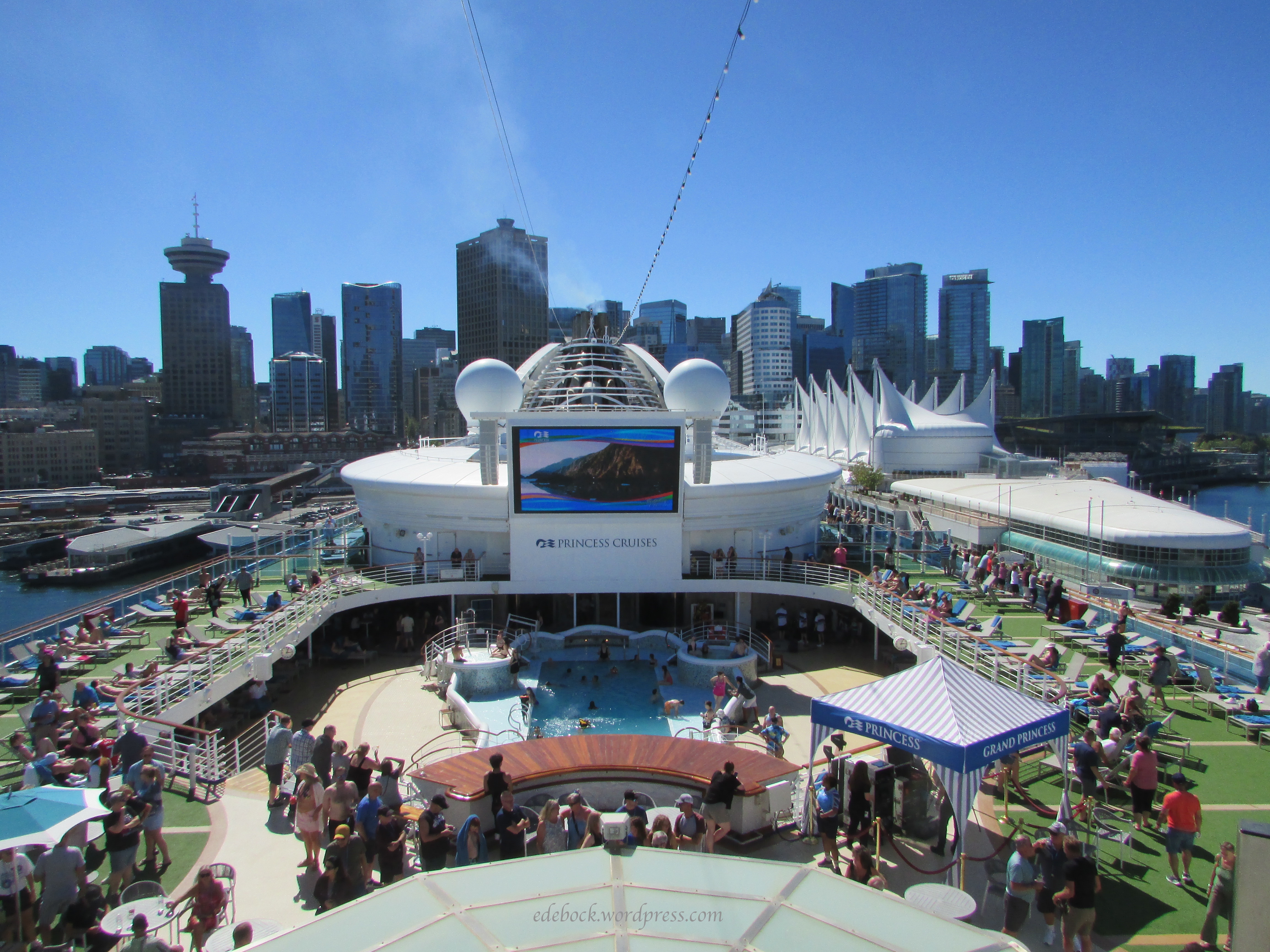
We sailed under the Lions Gate Bridge and out of the Vancouver harbour on a stunningly beautiful afternoon.

Mount Baker, approximately 140 km (87 miles) to the south in the state of Washington, was clearly visible looming over the city skyline.

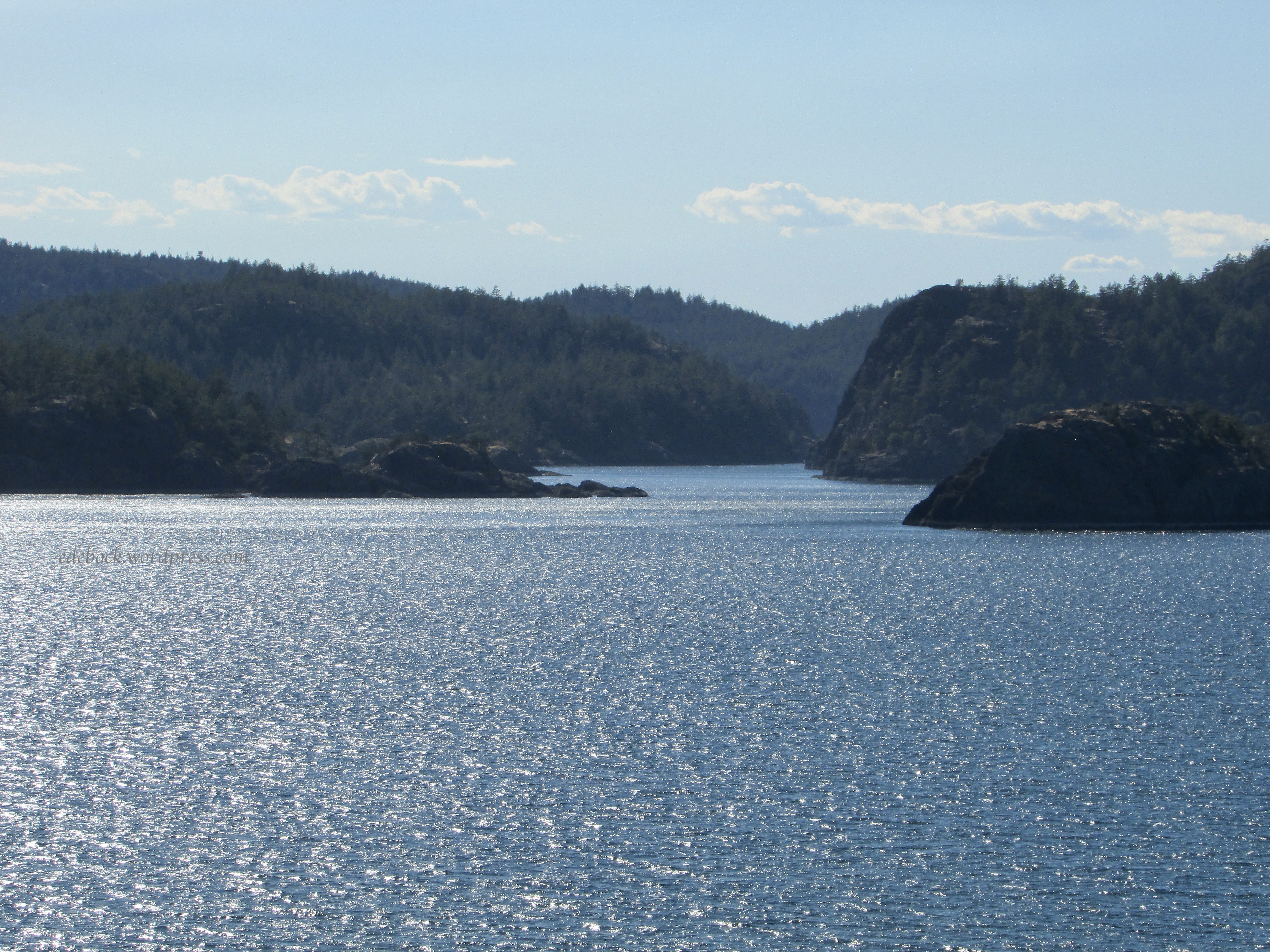
It was the beautiful coastal views, enjoyed from the solitude of our stateroom balcony, that thrilled my heart the most though.
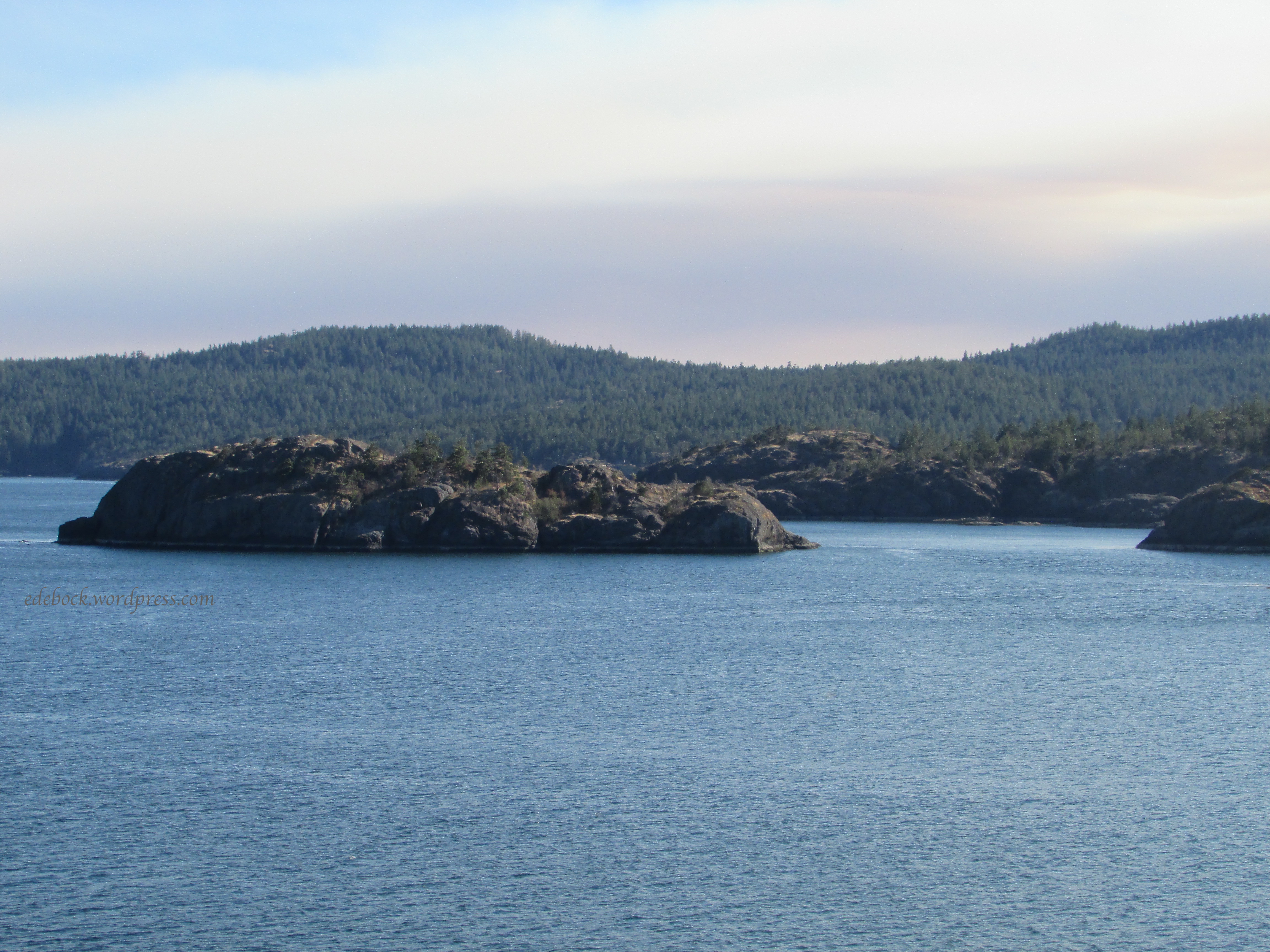
There’s a vast array of activities to take part in on board a cruise ship. We enjoyed attending sessions with award-winning author and photographer, Nick Jans, and retired Alaska forest ranger, Pete Griffin. Although we tried our luck at the cheapest slot machines in the casino, we didn’t spend much time there and didn’t come away any wealthier! The evening shows in the Princess Theatre were superb and rather than spending time in the bars, we chose to sip wine on our balcony while enjoying the scenery.

The food was excellent and, of course, I loved the fact that I didn’t have to cook for the whole week! We chose to eat breakfast and lunch at the ship’s buffet and dinner in the dining rooms where we ordered from excellent and varied menus. While there were many other options, I love seafood and what better place to enjoy it than on the ocean? I even tried a couple of kinds of fish that I hadn’t tasted before. As a diabetic, my favourite part was the fact that there were sugar-free desserts available at every meal! I definitely indulged and the bathroom scale tells me that I gained five pounds. I’m hoping that all the walking that I’m doing as part of my Hoofing It fundraiser for neuroendocrine cancer research will wear it off.

Typically, a 7 day cruise includes two formal nights when passengers are encouraged to dress up. I wasn’t sure how we’d deal with those. I’d seen packing lists that included tuxedos and evening gowns, but we don’t own such things and considering how challenging it was to pack for this three part trip, I had no intention of hauling hubby’s suit along with us. I did pack a couple of simple dresses for myself and dress pants, a dress shirt, and a tie for him. As it turns out, we had nothing to worry about. While a few people did dress more formally, even in the dining rooms most weren’t dressed any fancier than we were.

August is one of Alaska’s rainiest months and the weather can be quite chilly, so packing lists also included warm sweaters, insulated jackets, and rain gear. While we were happy to have warm clothing to bundle up in while viewing a tidewater glacier and looking for whales (we only caught glimpses at a distance) and we did have rain at one of our ports of call, we mostly enjoyed good weather.

Our cruise included stops at Juneau, Skagway, and Ketchikan, and a side trip up Endicott Arm to see Dawes Glacier, but I’ll write about those in a separate post.
Last day in Germany

Today was our last day in Germany. As much as I’ve enjoyed the last week, I’m tired with a capital T and I’m ready to go home. Even though it was just over three weeks, it seems like forever ago that we set out on this big adventure.

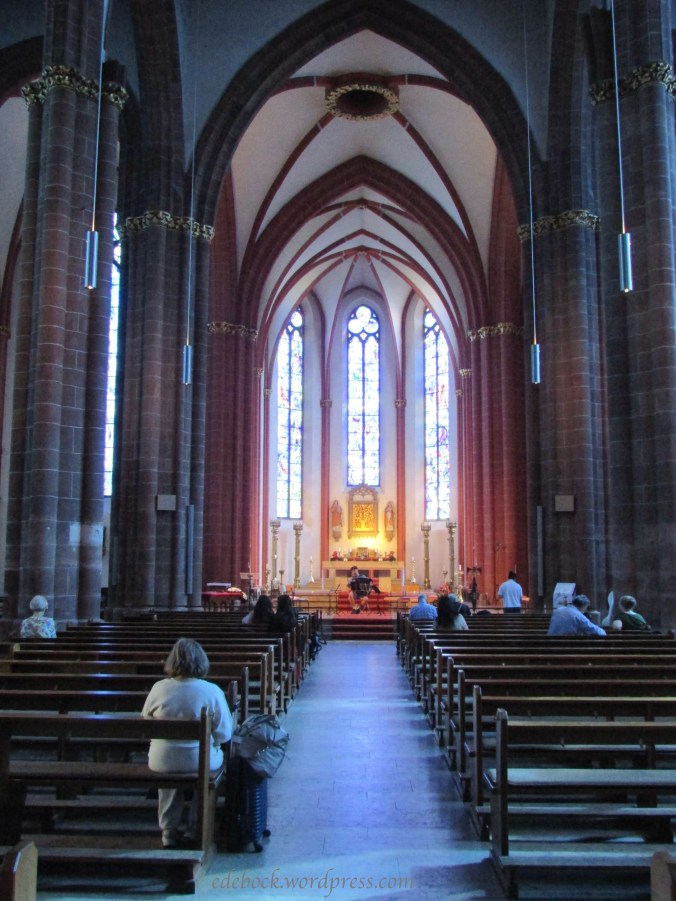
We walked a lot again today, but at a very leisurely pace. It was 31ºC (88ºF) this afternoon and we had plenty of time to see Mainzer Alstadt, the old town centre of Mainz. There are many historic churches throughout the city, but three stand out and are worth a mention here. Because of the narrow, crowded streets, it isn’t always easy to get good photos of the exteriors, but I’ll share the interiors of the two that we were in today.

St. Stephan’s is located high on a hill overlooking the old town. We arrived just as the doors were being opened and were delighted to find a musical performance happening inside. The acoustics, as is true in so many of these old stone churches, were amazing.

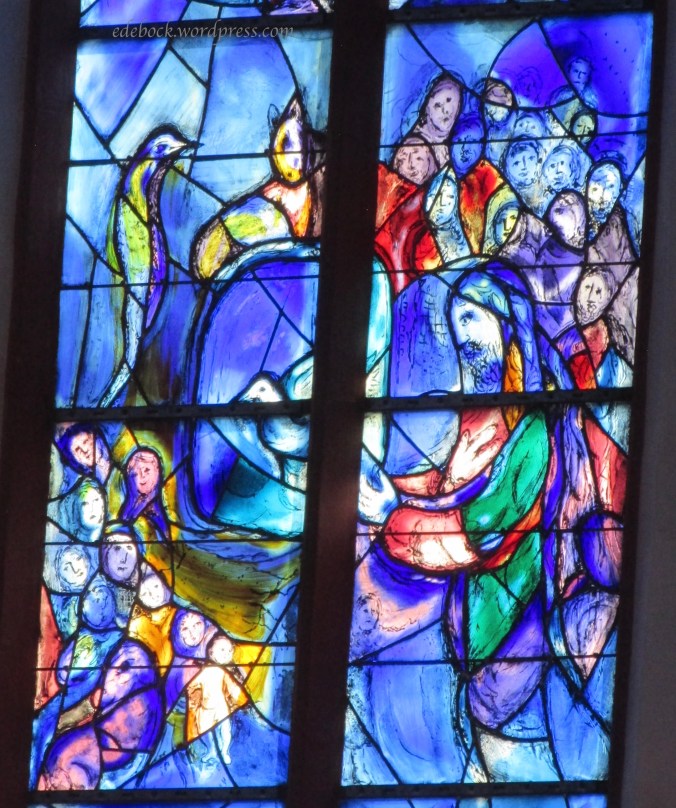
St.Stephan’s is known for it’s brilliant blue stain glass windows created by Jewish artist Marc Chagall (1887 – 1985). They cast a mystical light throughout the interior of the church and reminded me of flowing water.

Only the three long panels at the front of the church contain figures like these ones.

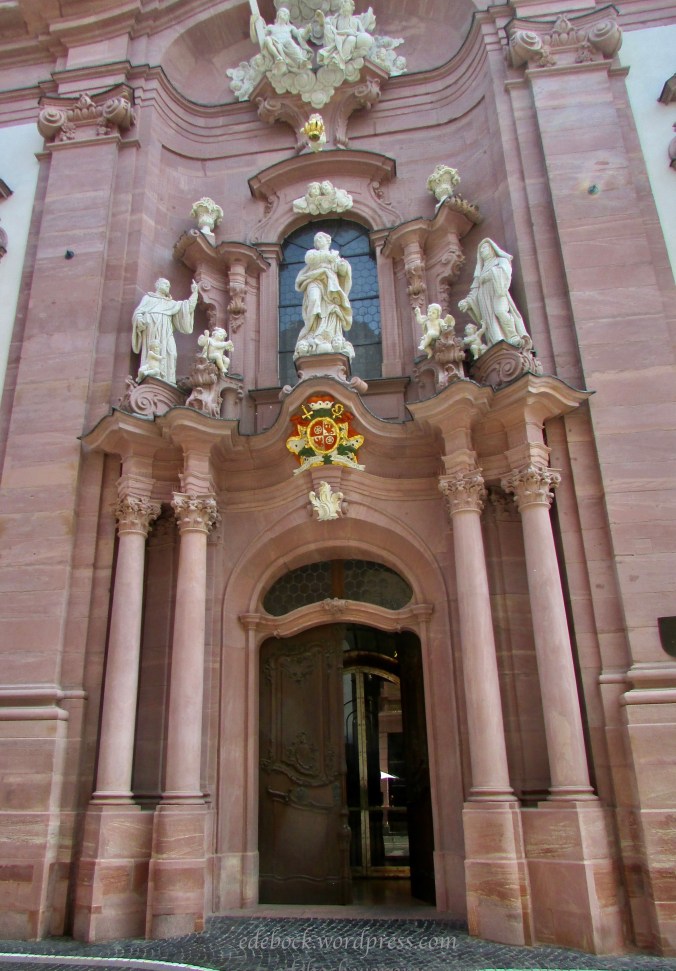
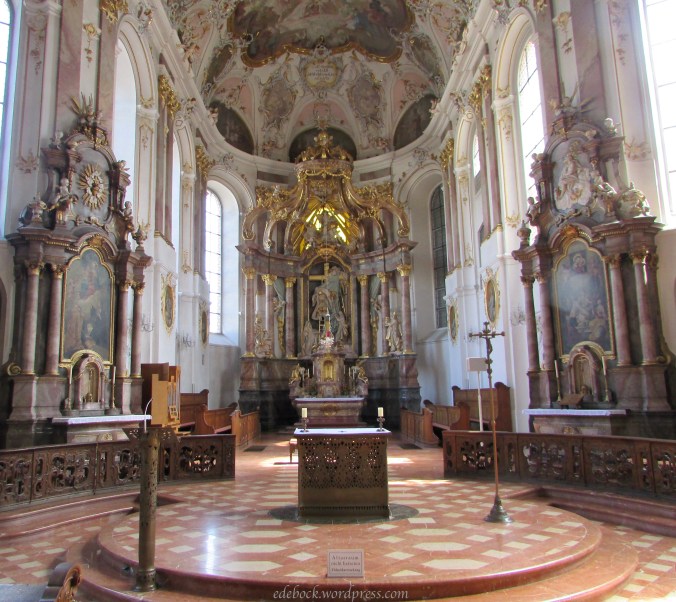
Even though my blog takes it’s name from one of my ancestors, not St. Augustine, the church that bears his name was something I had to see. St. Augustine Church is tucked into a narrow pedestrian street.

The inside is absolutely spectacular. I have trouble wrapping my head around so much money being spent on a place of worship in a world where people go hungry, but at the same time, I can’t help but appreciate the beauty.

By far the most imposing structure in the old section of Mainz is the enormous St. Martin’s Cathedral. Photos simply don’t capture how massive the 1000 year old structure is.

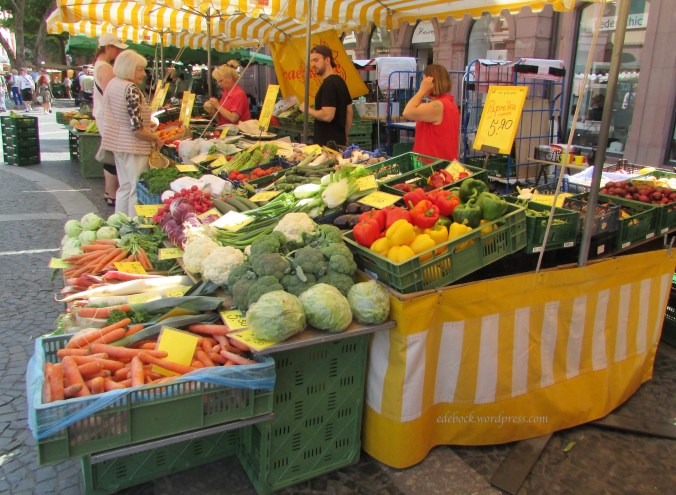
Friday is market day in the main square next to the cathedral and if I lived in Mainz, this is where I’d be doing my weekly grocery shop. Fruit, vegetables, cheese, meat, baked goods, eggs, honey, wine, and even flowers can all be found in the giant outdoor market. It reminded me of shopping in Mexico and in China when we lived there.

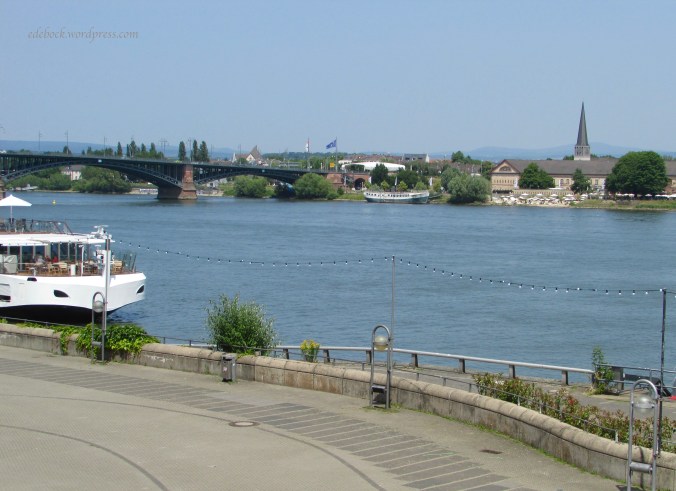
After our stroll around the old town and through the market, we returned to the nearby river and walked along the promenade again.

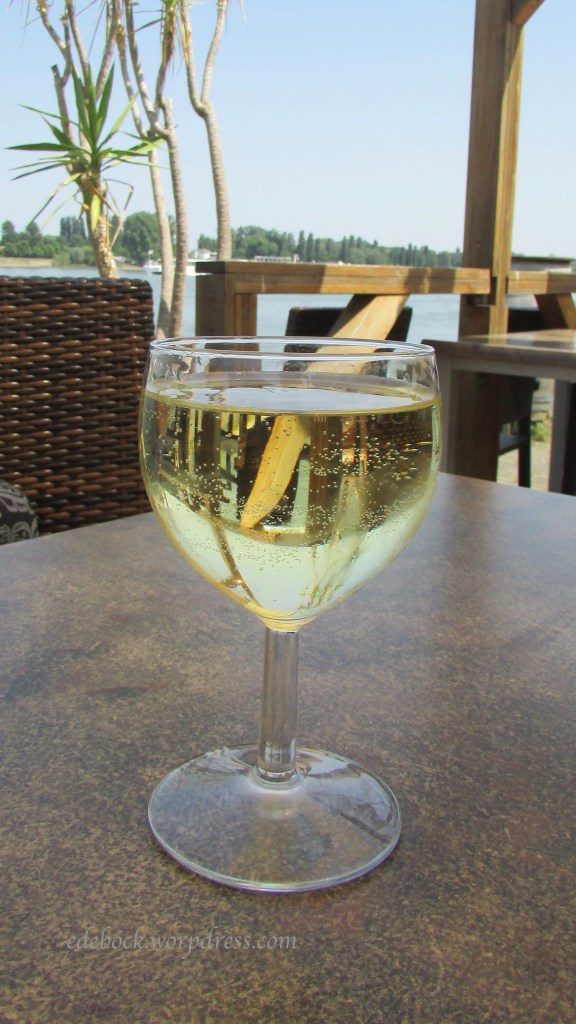
Embedded in the largest wine-growing region in Germany, Mainz is known as the country’s wine capital, so we ended our self-guided tour with a glass of wine by the Rhine!

Now our suitcases are packed and we’re ready to leave. We’ll catch a train to the Frankfurt airport early tomorrow morning and fly out at noon. The blog will probably be silent for a few days while I recover from jet lag and get back into routine, but we have more travel plans for later this summer , so don’t go away!

We made it to Mainz!

We had a bit of misadventure on the way to our final destination for this trip this morning. We were supposed to change trains in Ludwigshafen, but somehow missed our stop. We were the only passengers to get off at the next stop, a small deserted station with no one on duty to provide assistance. Thankfully, a kind gentleman who spoke perfect English (a rare thing in this part of Germany) happened to be passing by and stopped to ask if we needed help. Since we knew that we’d be too late getting back to Ludwigshafen to make our connection to Mainz, he suggested that we go back two more stops to Mannheim, a much bigger centre where we’d have a better chance of catching a different train to Mainz. That worked perfectly and we were only about an hour later arriving than originally planned. In the words of Shakespeare, “all’s well that ends well!”

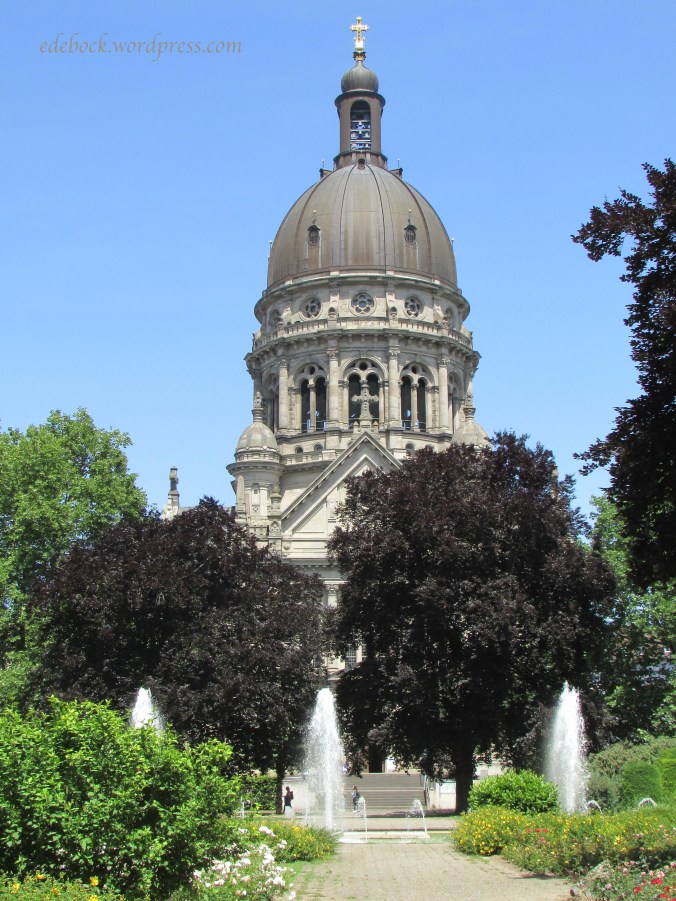
Our hotel here in Mainz is directly across from the train station. After checking in, we walked about 15 minutes to the riverfront promenade. On the way, we passed Christuskirche (Christ Church), a prominent Protestant landmark. Built between 1897 and 1903, it was destroyed during World War II, and rebuilt between 1952 and 1954.

After walking the riverfront promenade and dipping our feet in the Rhine River, we headed for the Gutenberg Museum.

We haven’t spent a lot of time in museums on this trip, but one that is devoted to the history of books, printing, and writing captured my interest and I was particularly interested in seeing the Gutenberg Bibles. The Gutenberg Bible was the first European book published on a printing press using moveable metal type. Only 49 of the approximately 180 that were printed right here in Mainz in the mid 1400s have survived and the museum owns two of them. Well, technically, one and a half. The huge Bibles were printed in two volumes, Old Testament and New Testament. Previously owned by the British Baronet Shuckburgh, the complete two-volume Bible was added to the museum’s collection in 1978. The second Bible, which was previously owned by the Solms-Laubach family, is incomplete, with only the second volume surviving.

The Bibles were only printed in black ink as two or more colours would have been too expensive and time-consuming. Spaces for coloured ornamentation were left empty and the books handed over to an illumination workshop. As a result, each surviving edition is different in its ornamentation.

Heidelberg Castle and the Philosopher’s Walk

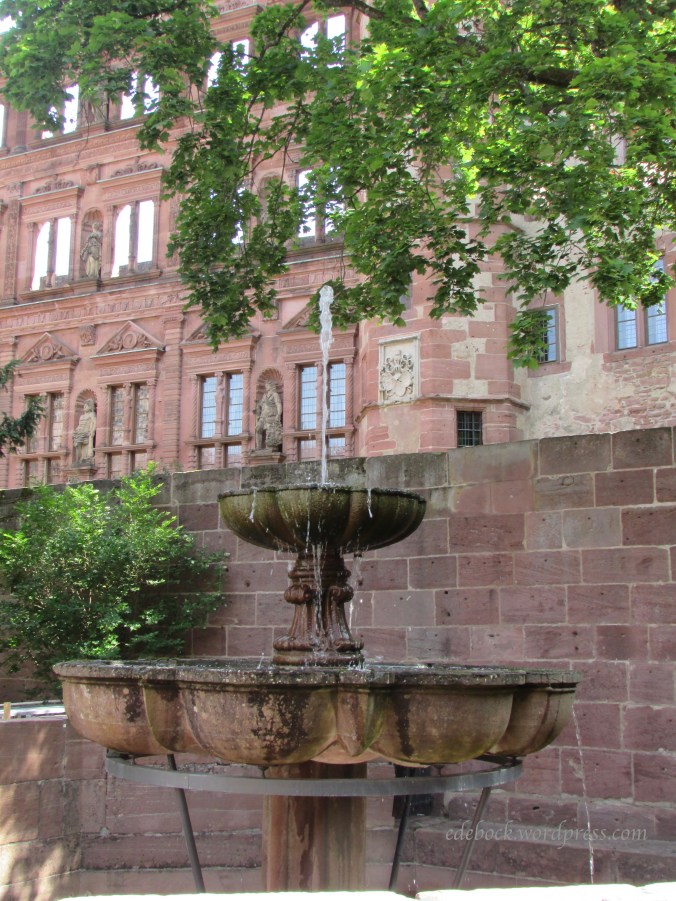
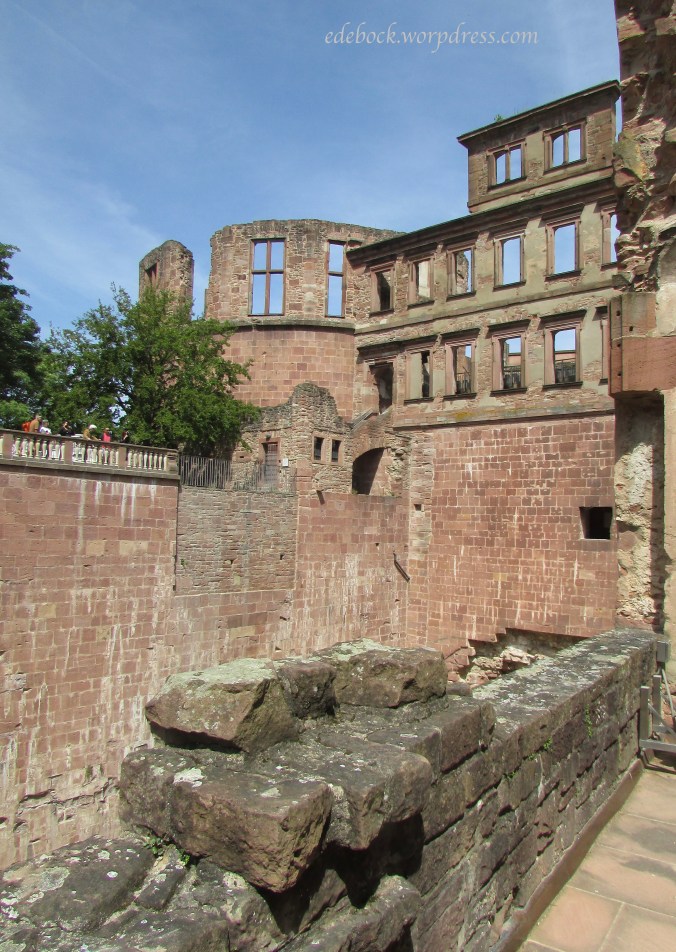
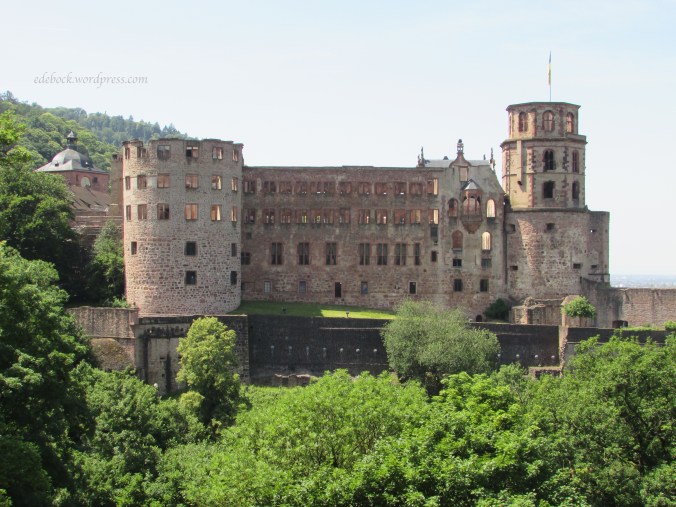
Every year, the ruins of Heidelberg Castle attract approximately one million visitors from around the world making it by far the most visited site in the area. This morning, we caught a bus in front of our hotel and then rode the funicular up the north side of Königstuhl hill to the imposing structure that overlooks the city’s Old Town. An hour long English tour with a delightful and extremely knowledgeable guide was an excellent way to begin exploring the site. He managed to fit hundreds of years of history into a very short time!

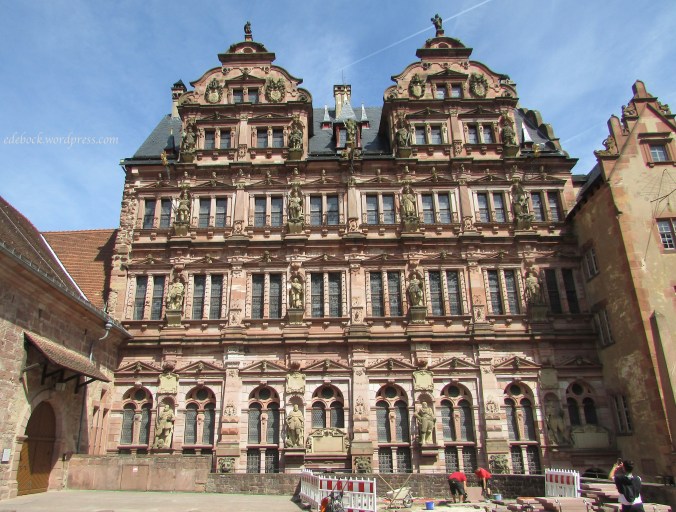
The earliest castle structure dated back to the 13th century, but in the 1600s when it became home to Prince-Elector Friedrich V and his wife, Elizabeth Stuart, daughter of King James I of England, it underwent major expansion and became one of the grandest palaces of the Renaissance period. In the late 17th century, it was repeatedly attacked and severely damaged by the French. Later, the local populace began to rebuild it, but in 1794, two devastating lightning strikes caused further damage and the once majestic residence was almost completely burned out. Citizens of Heidelberg used stones from the ruins to build their homes until Count Charles de Graimberg began an effort in 1800 to conserve what remained. Had he not done that, there might not be much left for visitors to enjoy today!  

In addition to all that he added to the castle, Friedrich V commissioned a great garden to be built on the hillside above the castle. Gunpowder was used to carve out terraces to accommodate ornamental flower beds, labyrinths, pergolas, and water features. While the gardens were never completed, the area provides visitors today with amazing views of the castle and the town below. 

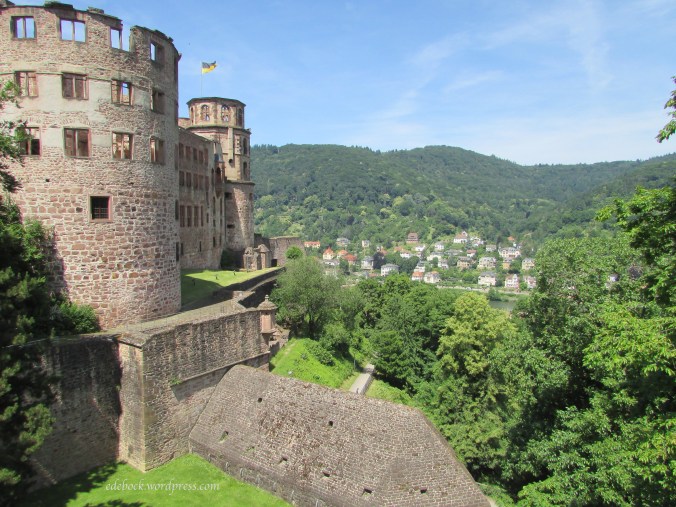
A walk on the once fortified wall in front of the castle also offers spectacular views of the Old Town. The prominent building in the top left quadrant of the second photo is the Church of the Holy Spirit. Constructed between 1398 and 1441, it’s still in use today over 600 years later!

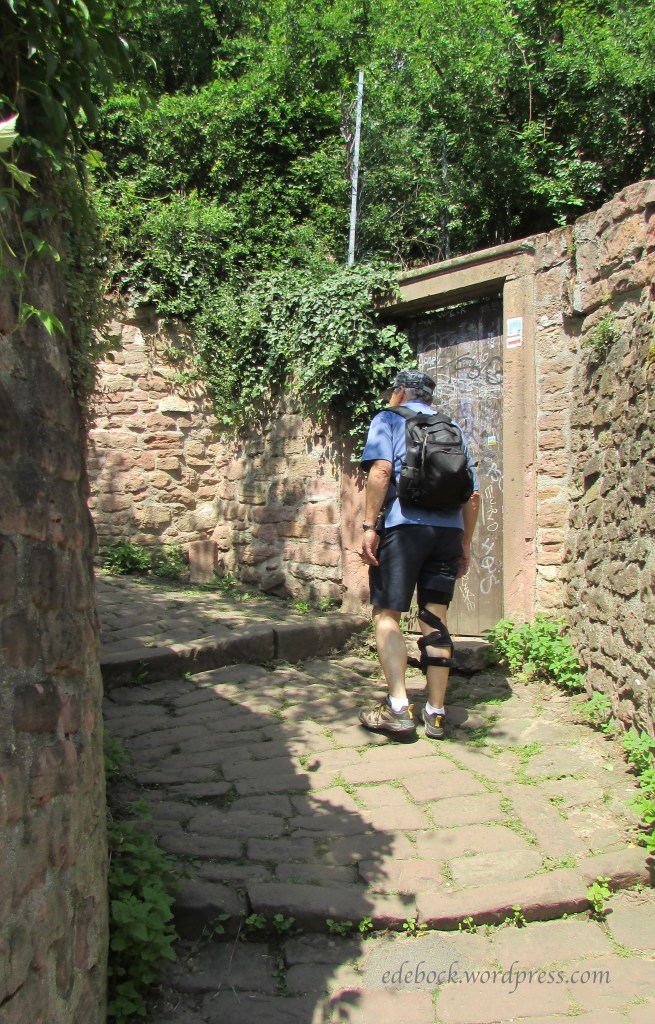
After exploring the castle and its grounds, we took the funicular back down the hill and walked through town to the Old Bridge. Hubby wasn’t too keen about climbing the steep hillside on the other side of the river to the Philosopher’s Walk, given that name during the 18th century because of the many Heidelberg professors and philosophers who enjoyed the path for its solitude, natural beauty, and great views. Perhaps I should have listened to him, but it was on my list of things to do in Heidelberg and I didn’t want to miss it. Although I’d been warned, the climb was longer and steeper than I had imagined! Once we reached the path, we only walked a fairly short segment of it, but the views of the river and the town below were worth it. 

Exploring Old Heidelberg

My first impression of Heidelberg was that it’s cleaner and quieter than Frankfurt. It’s also much smaller. There’s less English on signs, maps, and menus which makes me wish I’d managed to keep up my high school German! It’s also much more historically authentic because, unlike Frankfurt, it was almost completely spared during World War II. Since it wasn’t an industrial centre or a transport hub, it wasn’t a target for Allied bombing.

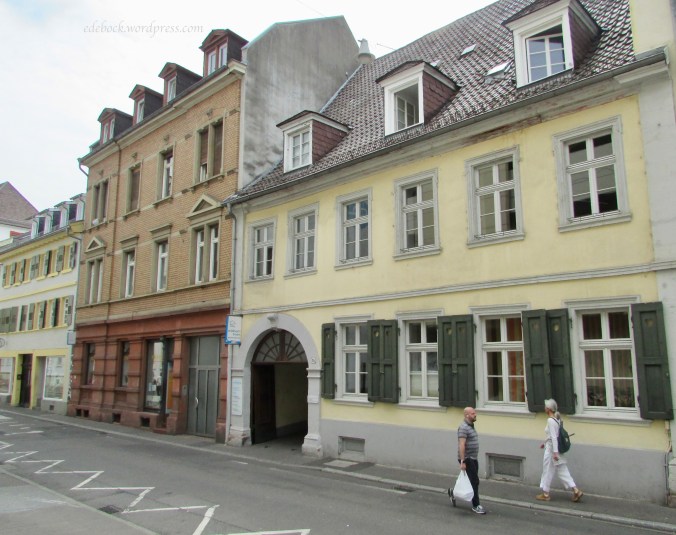
We arrived by train shortly before noon yesterday, dropped our suitcases at our hotel, and headed for the Altstadt (Old Town) where we enjoyed wandering the narrow streets.

We saw several ancient churches including St. Peter’s, the oldest church in the city. Parts of the tower date back to the 12th century.

The Alstadt is also home to Heidelberg University, the oldest university in Germany. The building on the right in the next photo is the University Museum.

One building of particular interest is the former student prison, used to detain unruly students from 1778 to 1914! Part of the stone interior is now a shop selling university t-shirts, hats, and other memorabilia.

The imposing Rathaus, or City Hall, with the fountain of Hercules in front, overlooks Market Square and has appeared as it does today since 1701.

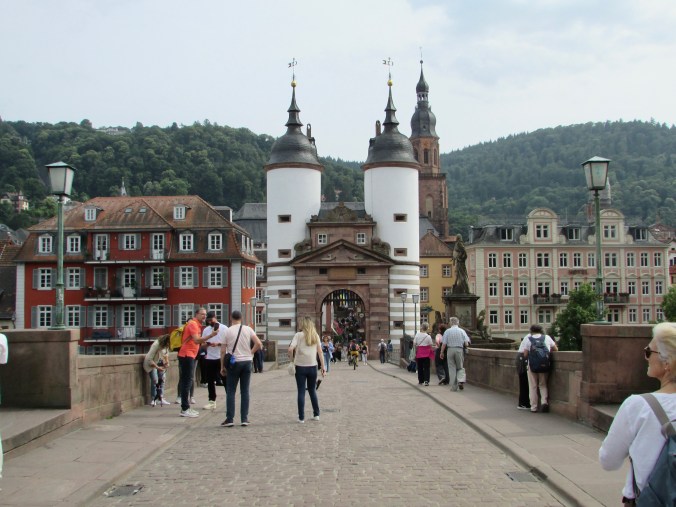
A short walk from the Market Square took us to the Old Bridge across the Neckar River.

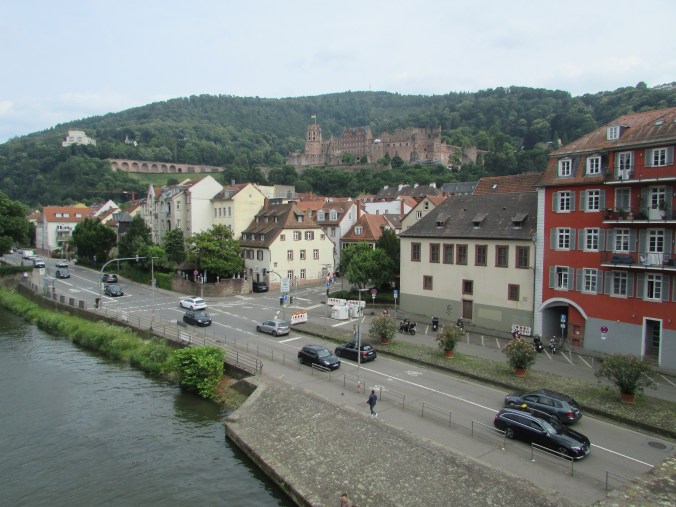
The bridge offers a great view of Heidelberg Castle on the hillside above town. We’ll be exploring that today!

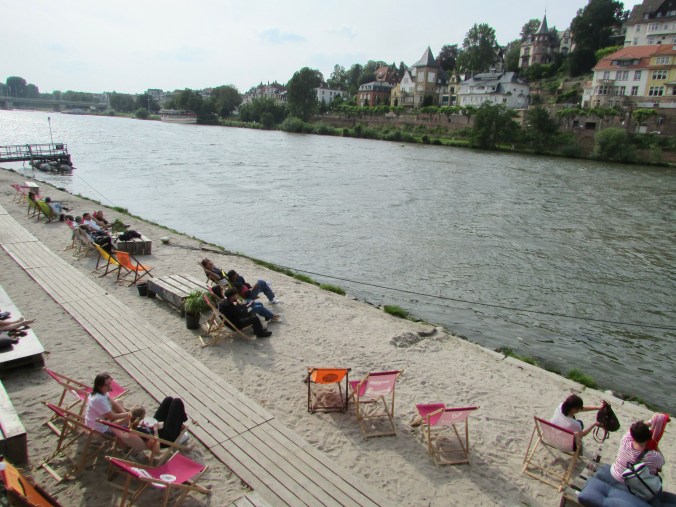
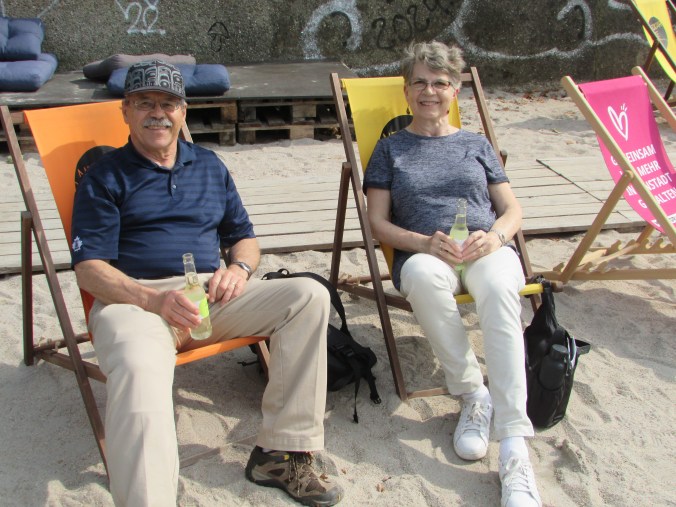
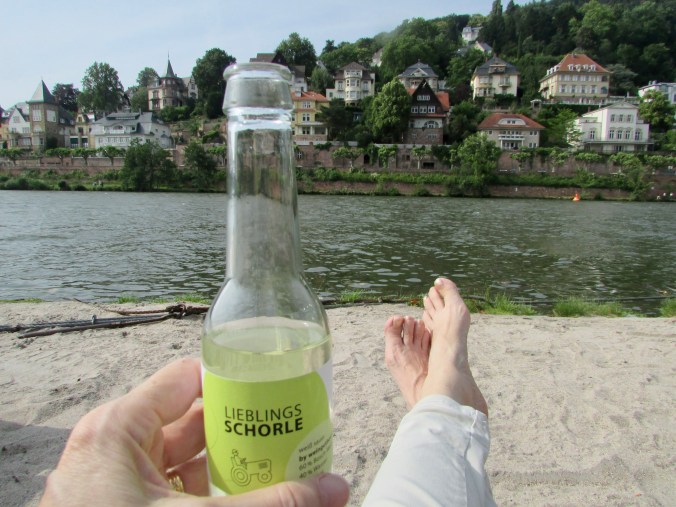
Walking  back along the river toward our hotel, we discovered a bit of serendipity. Looking over the balustrade, we spotted a short stretch of white sand complete with beach chairs and a kiosk selling beverages. Our tired feet took us down the stairs to investigate further and we ended up taking a wonderful and unexpected break there!

I can’t begin to imagine how many miles we’ve put on these feet over the past few days, but they were very happy to take a break! We’ve always said that walking is the best way to see a city and it’s moments like this one that we’d miss if we always depended on transit to get around.

We are going to take a bus to the castle this morning though as it would involve retracing a lot of the steps that we took yesterday and our legs could use the rest!

Frankfurt Am Main

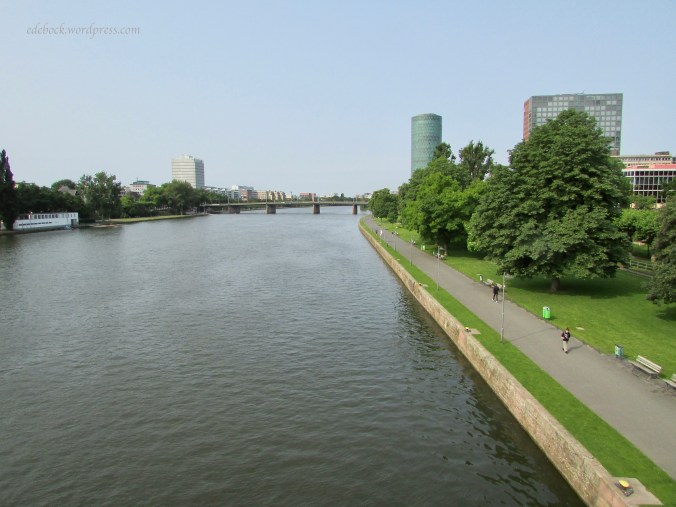
Although we commonly refer to it as Frankfurt, the city’s full name is Frankfurt Am Main which means “Frankfurt on the Main” (pronounced mine). The Main River, the longest tributary of the Rhine, figured prominently in our day today.

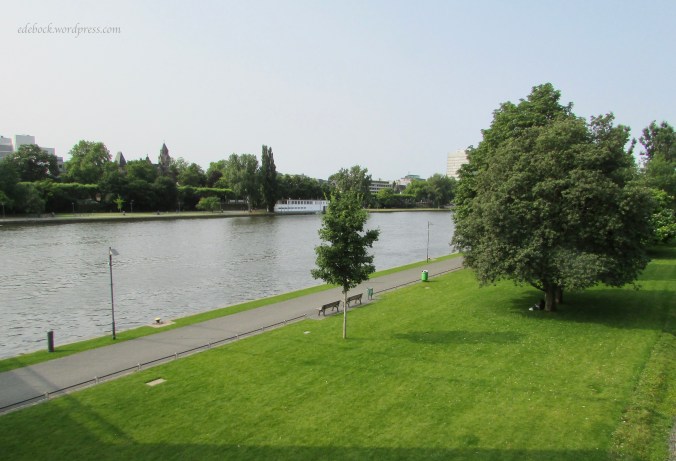
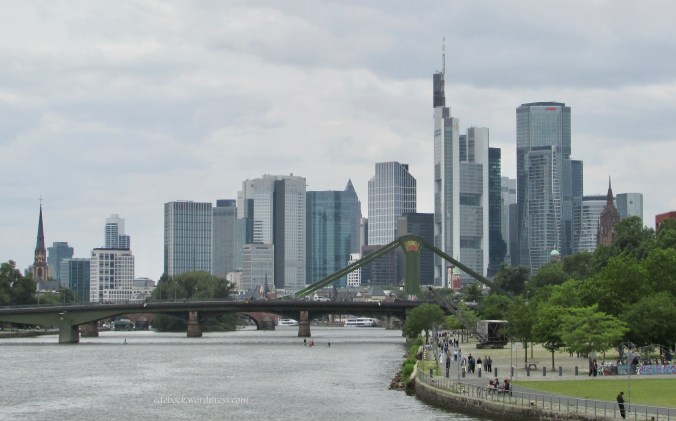
We love the way that the city has preserved green spaces along both sides of the river and we’ve spent some time walking by the water each day since our arrival.

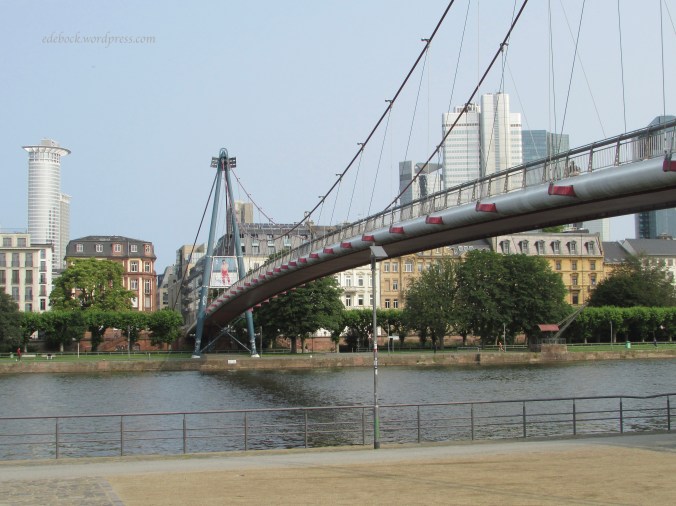
This morning, we walked about a kilometre from our hotel to Hobeinsteg, a suspension bridge built in 1990 that is one of two footbridges that span the river.

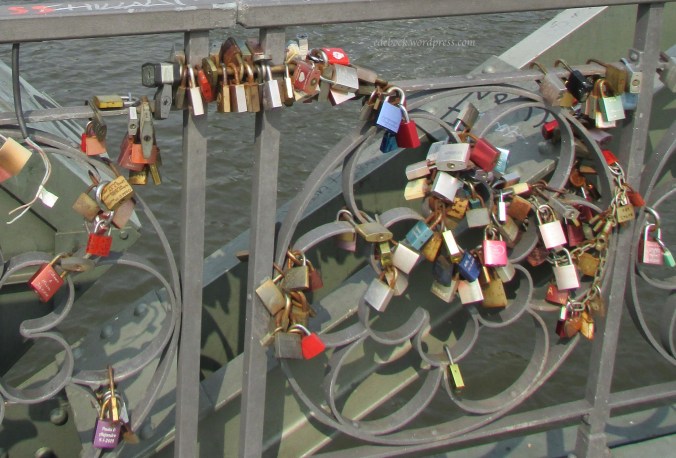
After crossing, we enjoyed a leisurely stroll along the south side of the river eventually crossing back over on Eiserner Steg, the other much older pedestrian bridge that is famous for the thousands of locks of love that adorn its iron rails.

We had hoped to spend some time in Kleinmarkthalle, a huge indoor market featuring more than 60 stalls selling fruit, vegetables, meat, fish, cheese, baked goods, and international delicacies, but when we arrived, we discovered that it was closed. That’s when we realized that today is a holiday in Germany! It wasn’t until we returned to the hotel and I checked online that we learned that it’s Whit Monday or Pentecost Monday which is celebrated the day after Pentecost.

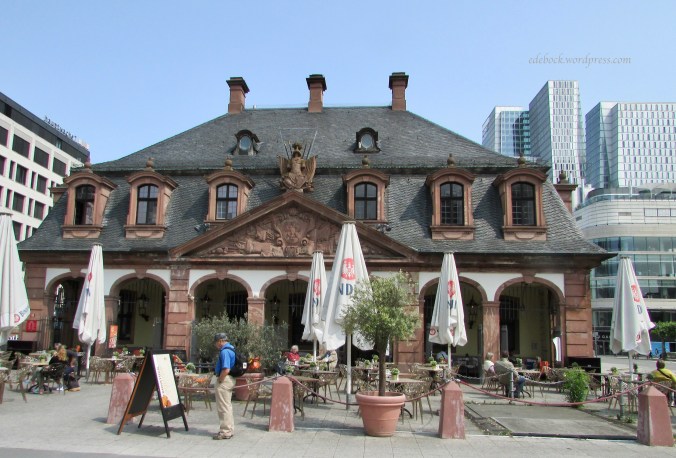
Since we couldn’t visit the market, we took a look at our tourist information to find out what else of interest might be in the area and discovered that Hauptwache was less than half a kilometre away. Built in 1730 as Frankfurt’s main guardhouse or police station, the baroque-style building is now a popular café where we enjoyed lunch at an outdoor table in the sun.

Walking just a little further, we spotted something that absolutely had to be checked out. I almost expected to see Rapunzel at one of the tower windows!

Upon investingating, we discovered that the 47 metre (154 feet) high Eschenheimer Turm, erected in the early 1400s, was the northern tower of the wall that surrounded the then fortified town of Frankfurt Am Main.
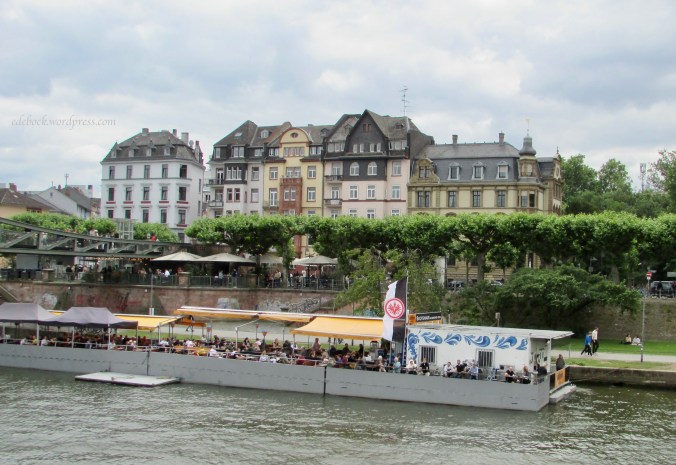
Returning to the river, we embarked on a 100 minute cruise with the Primus Line. After all the walking we’ve been doing, it was very nice to sit and watch the city glide by.

Exploring Frankfurt

Our time in ministry came to an end late Friday night and we headed for the nearest airport almost immediately afterward. Saying goodbye was hard, but flights in and out of that part of the world all seem to go at bizarre hours of the night. We arrived in Frankfurt, Germany early Saturday morning tired in mind and body, but buoyed in spirit by all that we had been experiencing.
Since we had to fly through Frankfurt, it only made sense to the wanderer in me to spend some time exploring a bit of Germany before we head for home. After making our way through passport control, grabbing a quick breakfast at the airport, and figuring out how to catch the train into the city, we located our hotel just around the corner from the central station. As it was several hours before our room would be ready, we left our two little suitcases (yes, we’re traveling carry-on only again) in a locker in the lobby and set off on foot to explore our surroundings.

Approximately 25% of Frankfurt’s population are immigrants who don’t hold a German passport and another 10% are naturalized German citizens. Along with recent refugees from Ukraine, the city is home to a vast number of Syrian asylum seekers as well as expats from many other locations around the world. The multi-cultural nature of the city was clearly evident as we explored the area near our hotel. In fact, we had a hard time finding a traditional German meal!

Later, we walked some more to see the Old Opera House which was constructed during the 19th century, destroyed during World War II, and rebuilt in 1981.

After a good night’s sleep and a hearty breakfast in a restaurant in the corner of the train station, our feet hit the pavement again and we headed for historic Alstadt (Old Town) about 1.6 km (1 mile) from our hotel. It was a cool, cloudy day with occasional light showers, so my photos aren’t as clear and bright as they might otherwise have been, but I took almost 100 and will share just a few of them here.

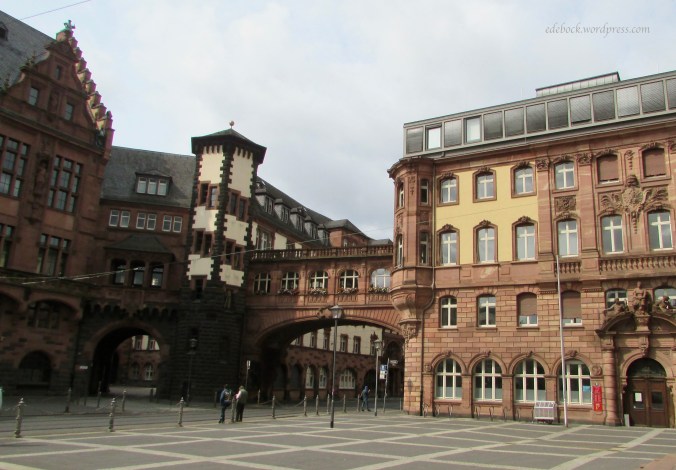
We entered the area through the arched bridge that connects the north and south buildings that make up the Altes Rathaus or Old Town Hall.

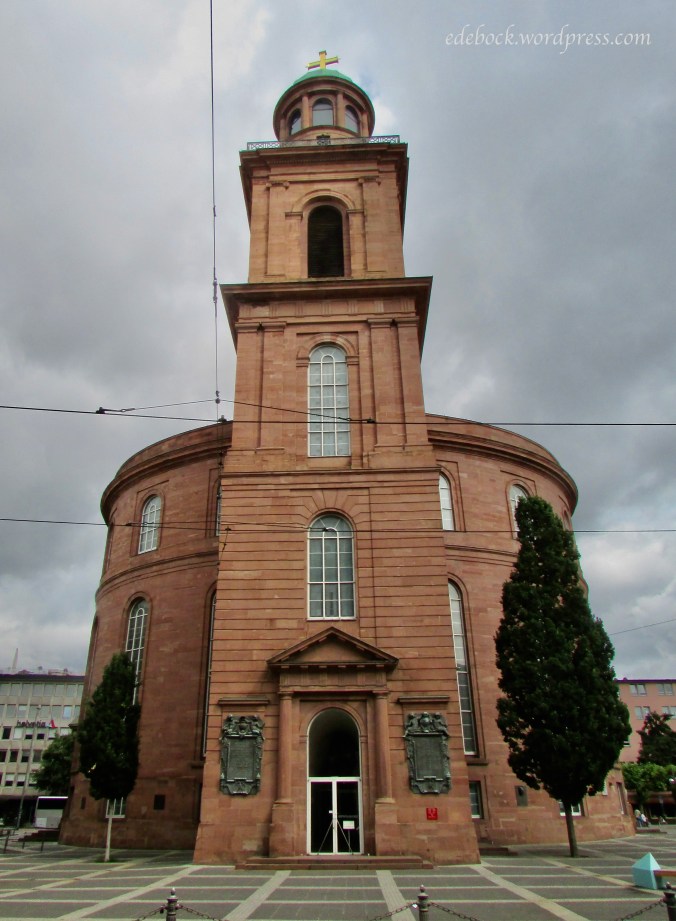
St. Paul’s Church, consecrated in 1833, was the seat of the first freely elected German parliament and is now used by the City of Frankfurt as a special events venue.

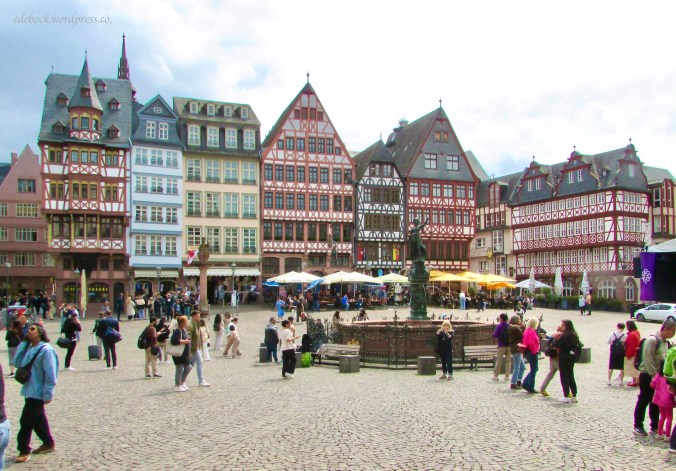
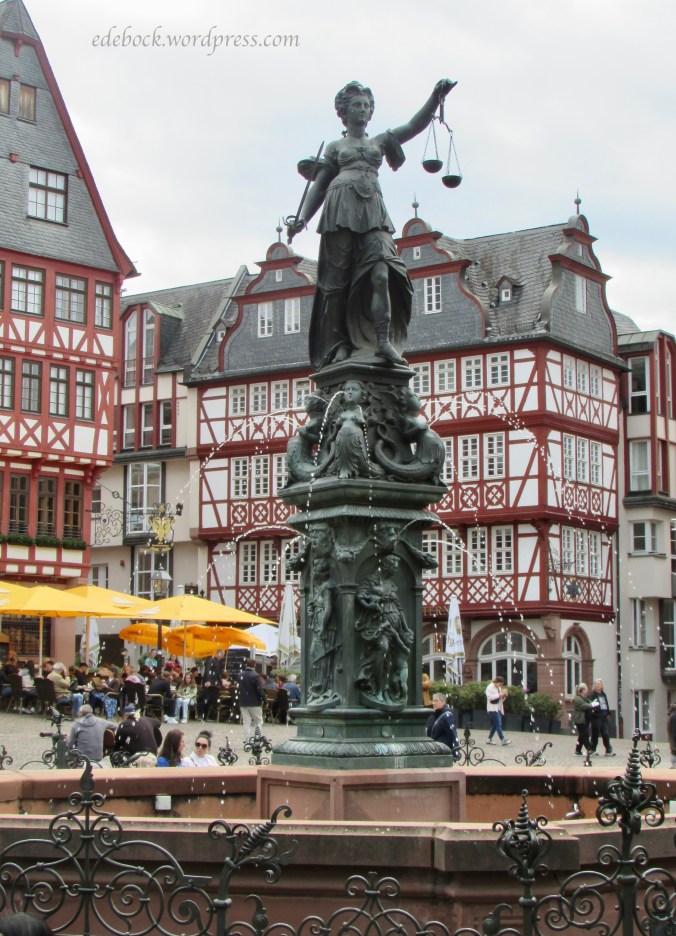
A two minute walk took us to colourful Römerberg Square, a post war reconstruction of the old city plaza that was used for hundreds of years to hold markets, fairs, tournaments, festivals, and even executions.

The Fountain of Justice stands at the centre of the square.

With its three gabled roof, the 15th century Town Hall or Römer dominates one side of the square.

Römerberg Square is also home to a monument that might be easily overlooked by many visitors as they focus on the colourful historic buildings surrounding them. Set into the pavement, the large memorial plaque reads “At this place on May 10, 1933 National Socialist students burnt books by authors, scientists and publicists.” Records show that these Nazi sympathizers burned more than 25,000 books that were deemed to be “un-German.” A quote by German-Jewish writer Heinrich Heine stating, “That was just the beginning. Where one burns books, in the end, people are burnt as well.” encircles the memorial.

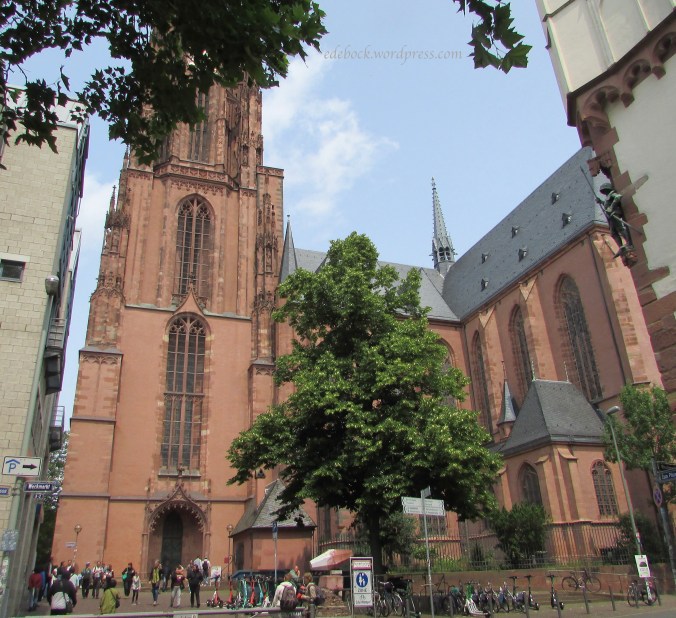
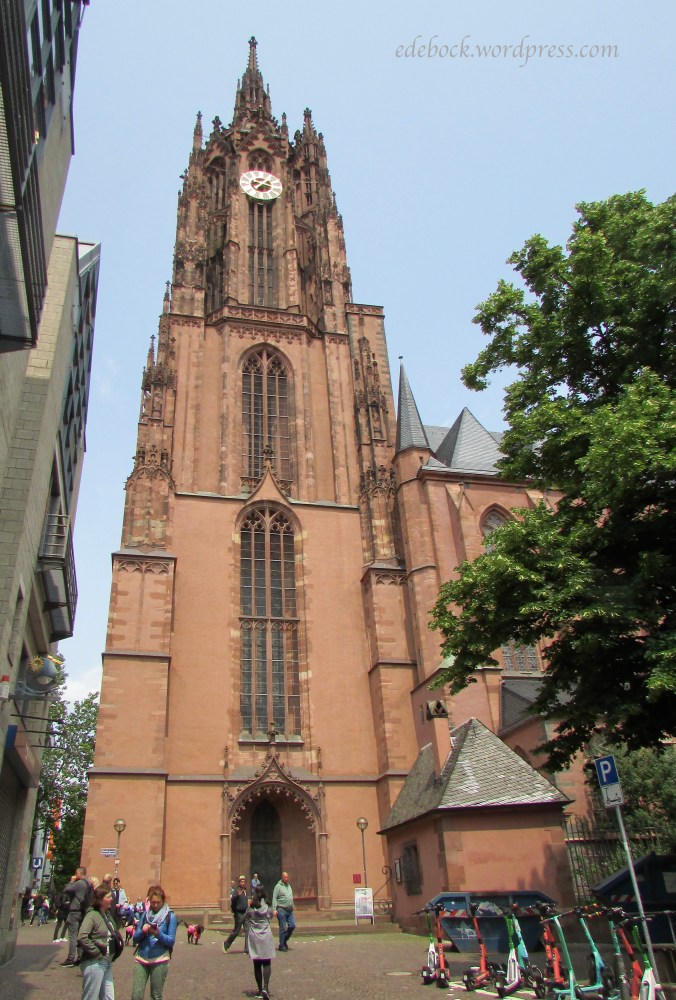
Nearby, the gothic style Frankfurt Cathedral, dedicated to St. Bartholomew, is the largest religious building in the city. It’s so big, in fact, that I couldn’t find a good vantage point to fit it all in a photo!

The 95 metre (312 feet) tall cathedral tower is by far the most magnificent part of the structure.

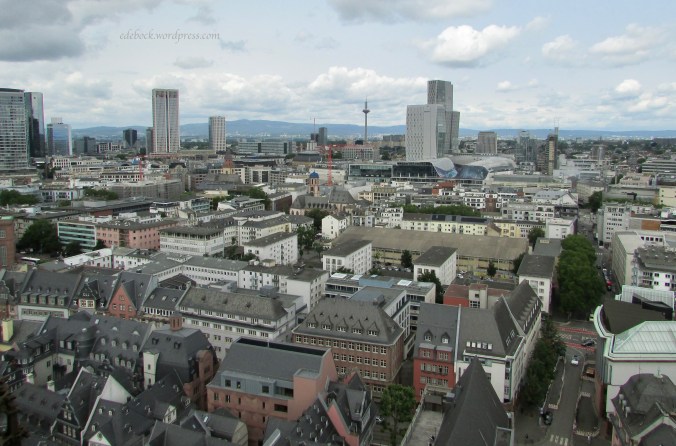
328 stairs took us to the top for some spectacular views of the city! Is it any wonder that our legs are telling us that they’ve been overworked?

Now I’d best get some sleep as we intend to put on many more miles tomorrow!

Geghard Monastery

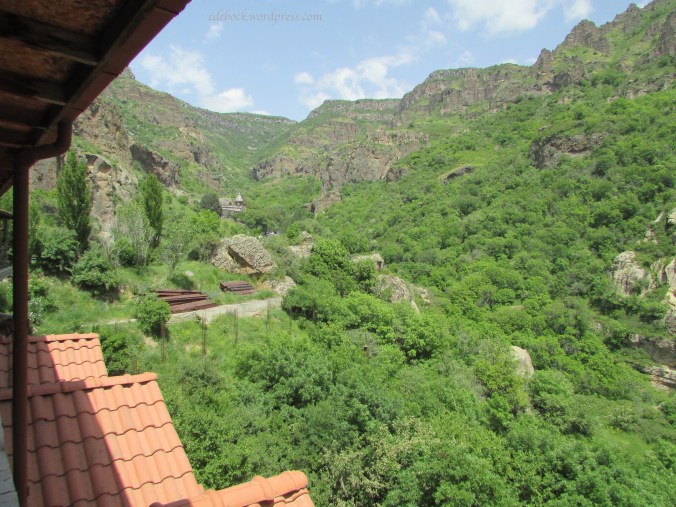
Geghard Monastery, declared a World Heritage Site in 2000, is nestled into the dramatic Azat River Gorge, approximately 35 km (22 miles) east of Yerevan, the capital city of Armenia. Can you spot it in this photo taken from the open air restaurant where we stopped for a delicious lunch.

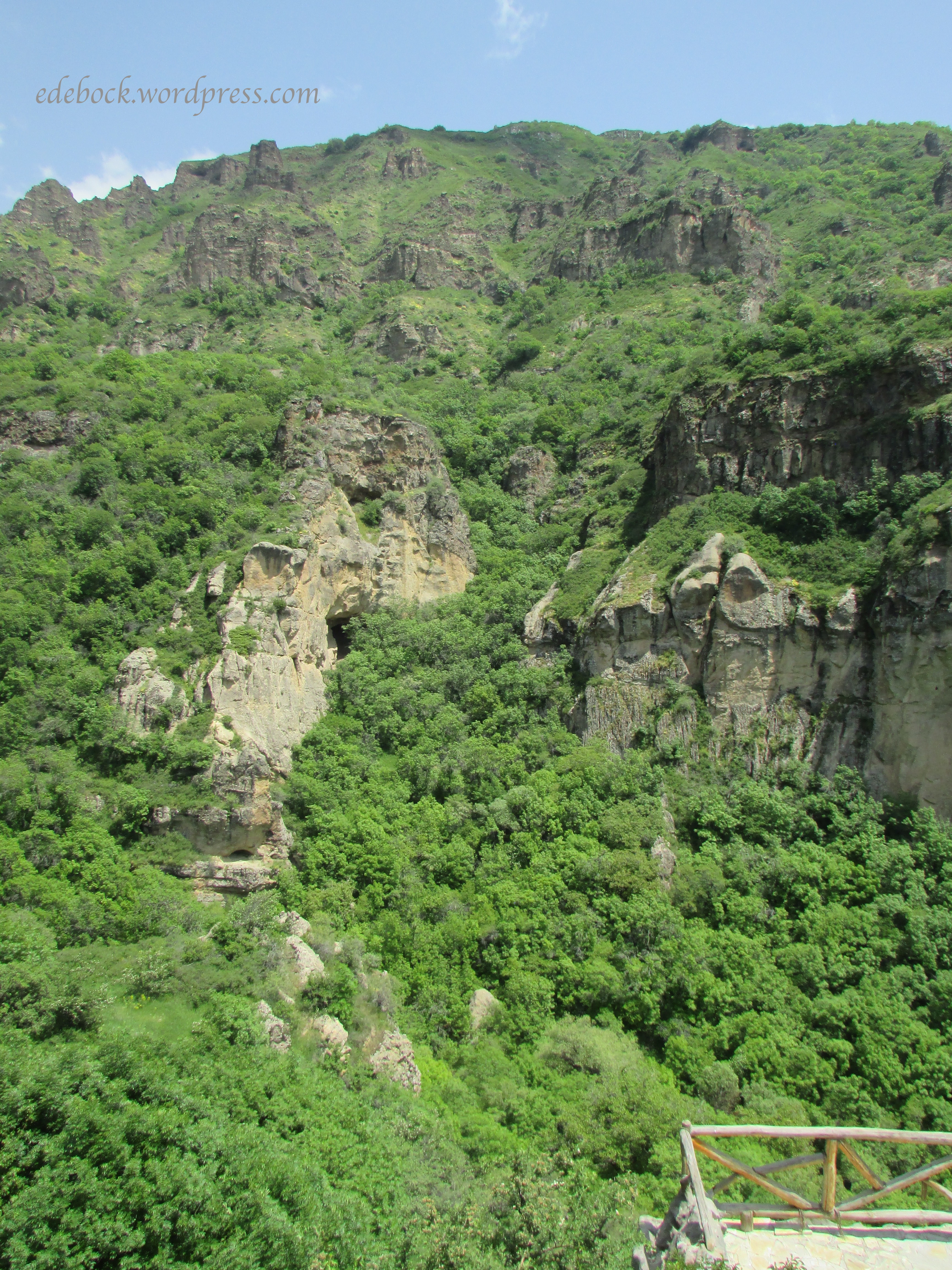
Here’s a closer look.

Views of the gorge from the restaurant were absolutely spectacular. We could hear the river in the bottom of the canyon, but lush growth obscured our view of it.

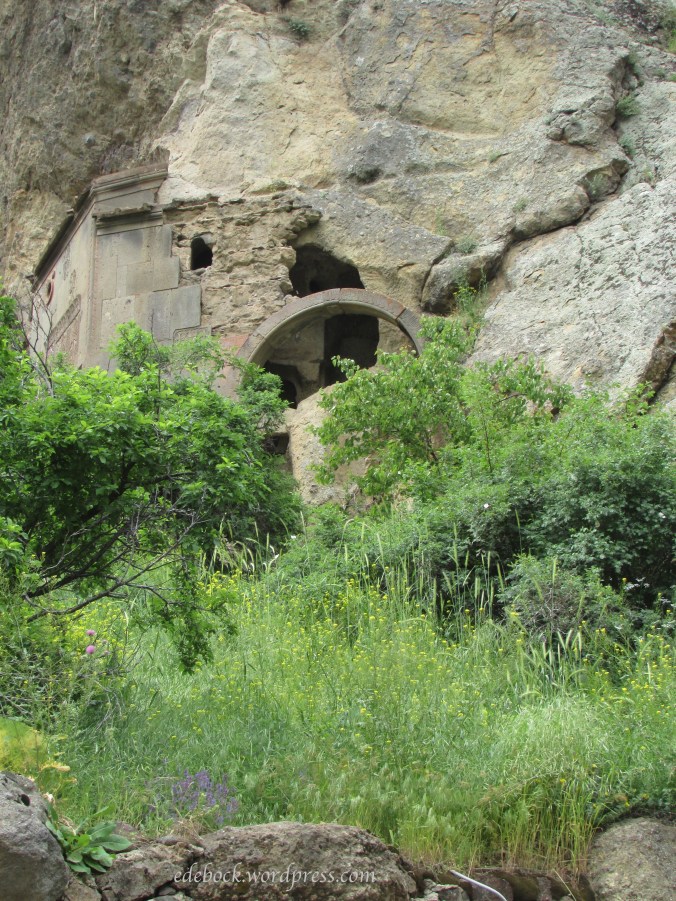
One of the oldest Christian monasteries in the world, Geghard is one of the country’s most visited tourist destinations. It is believed to have been founded in the 4th century by Saint Gregory the Illuminator, following Armenia’s adoption of Christianity in 301 AD. Until the 13th century, the monastery consisted of churches, chapels, and chambers cut into the rock. 

The main cathedral was built during the 13th century and is an exceptionally well-preserved example of medieval Armenian architecture. The entire complex blends seamlessly into the surrounding mountainous terrain.  

Geghard Monastery was an important spiritual and cultural hub during the Middle Ages housing numerous monks and scholars. It also became a destination for pilgrimages because it was believed that the spear that pierced the side of Christ during His crucifixion was stored there for a period of time. Geghard means “spear” or “spearhead” in Armenian. 

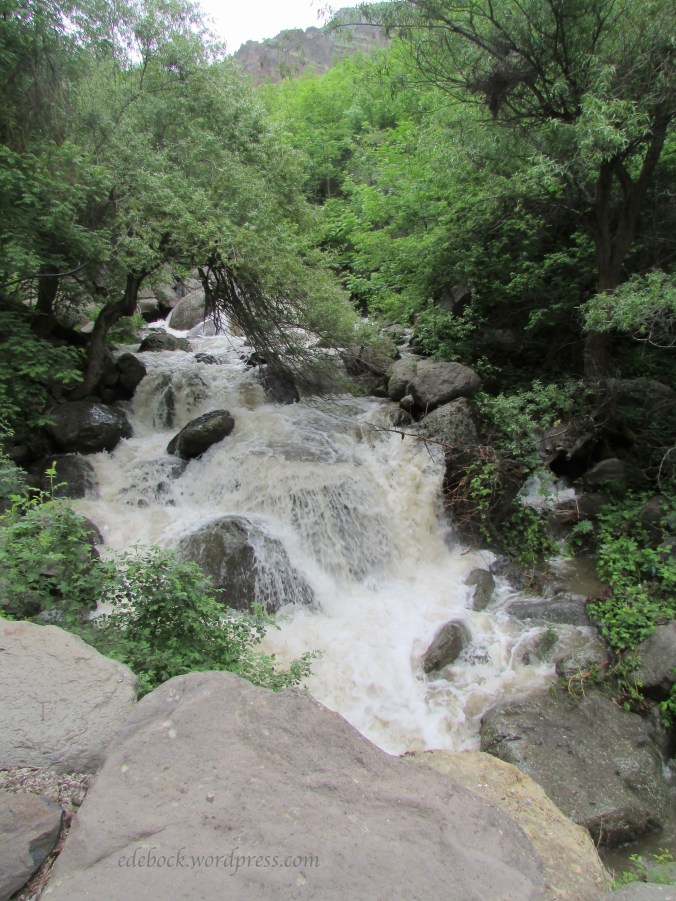
A unique feature of monastery is a spring flowing from the rock inside the church. Believed to be holy water, it has worn a groove into the rocky floor over many hundreds of years. Outside, a very short walk from the main church takes one to a stream tumbling down the rocky mountainside. 

Tomorrow we depart for an undisclosed location where we will engage in the ministry that is the main reason for this trip. The blog will continue when we complete that work and resume travelling as tourists. 

Exploring Puebla’s Centro Historico

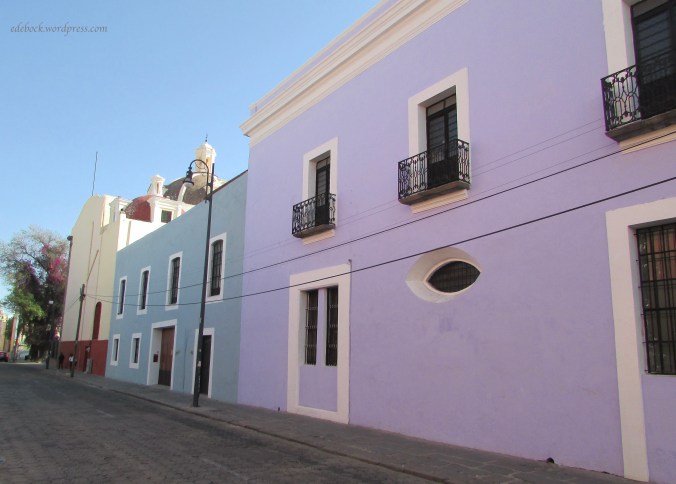
With friends who are permanent residents of Mexico, hubby and I spent a couple of days this past week enjoying the colourful Centro Historico district of Puebla, the country’s fifth largest city by population.  Come take a walk with me as I share some of what we saw.

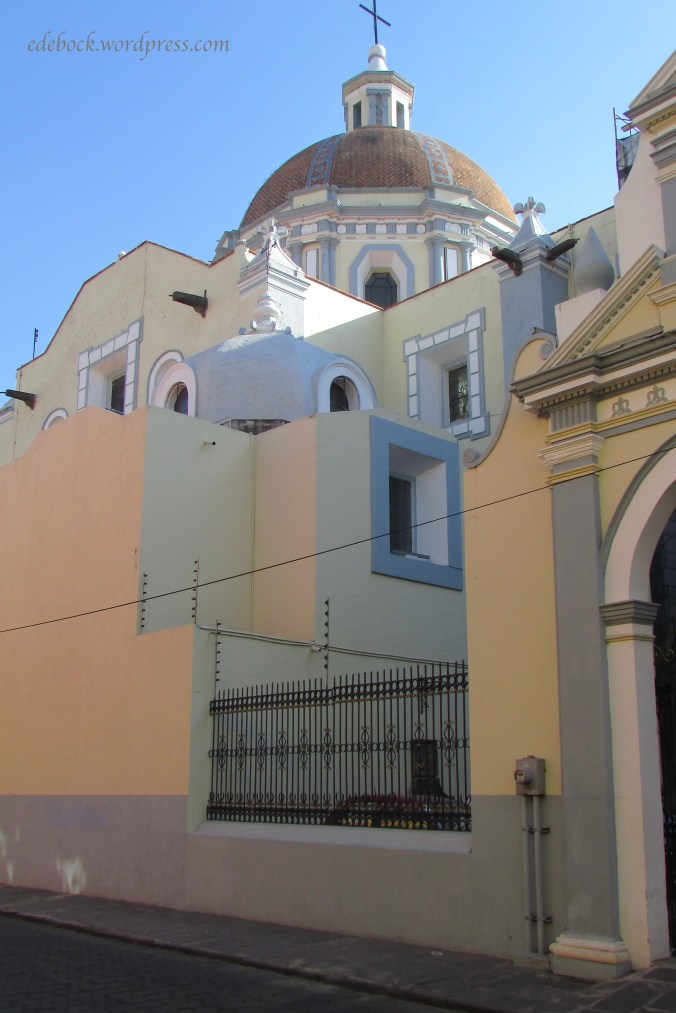
Everywhere I turned, I was amazed by the architecture. Look at all the interesting shapes!

Tiles, or azulejos, are used to decorate many buildings inside and out.

And beautifully carved wooden doors add to the beauty of many buildings.

Of course, flowers in January add to that beauty!

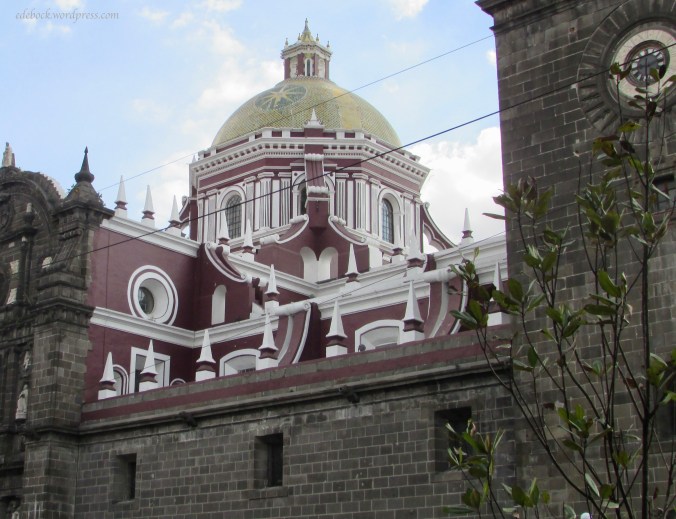
The impressive 16th-century Catedral de Puebla occupies an entire city block in the centre of the district.  

Across the avenue to one side of the cathedral is the Biblioteca Palafoxiana. Founded in 1646, it is recognized by UNESCO as the first and oldest public library in the Americas. It has more than 45,000 books and manuscripts, ranging from the 15th to the 20th century.

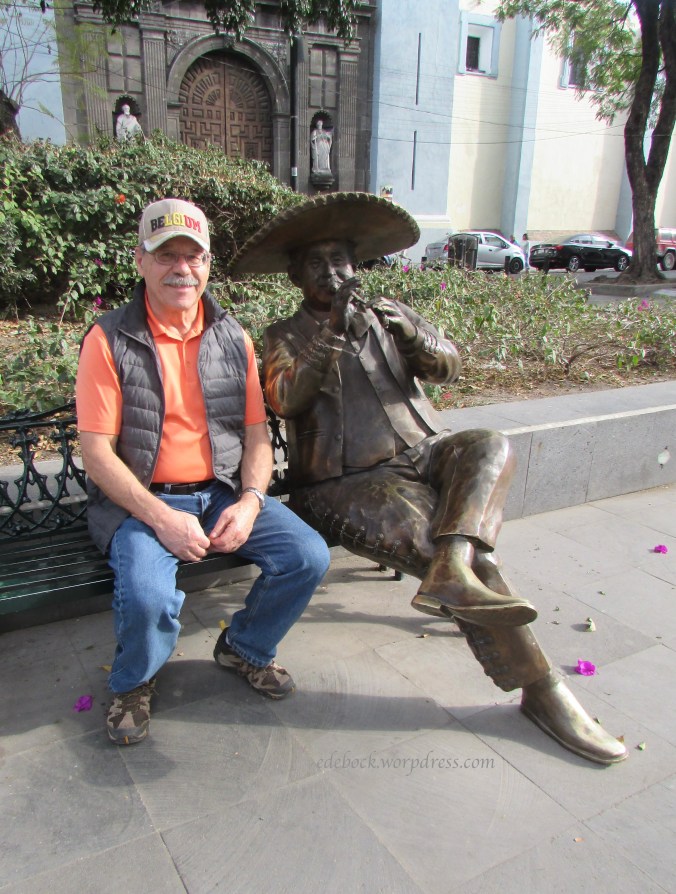
This is just a taste of what there is to be seen and experienced in the historic centre of Puebla. There is, of course, the zócalo, a public square/park that’s found in the centre of almost every Mexican city or town, as well as several other parks. Hubby made a friend in one of the smaller ones! 

There are also upscale eateries and small “hole in the wall” places that serve delicious Mexican dishes as well as many, many shops and market stalls.

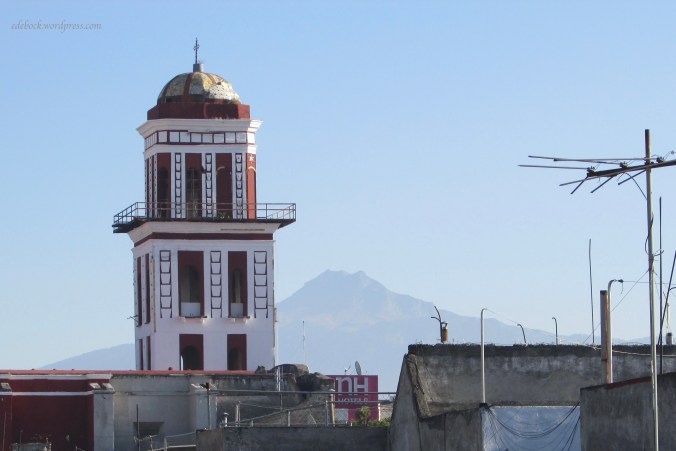
And finally, that’s a view from the rooftop patio of our Airbnb. That’s Popocatépetl (El Popo) in the background, the 18,000-foot-high active volcano that stands about 70 km (45 miles) from Puebla.


Old Montreal and the solar eclipse

The conference that I attended in Montreal last weekend ended late Sunday afternoon. Realizing that making it to the airport in time for a return flight to Edmonton that evening would be tight, another Alberta patient and I arranged to stay over and fly home the following evening. That gave us most of Monday to do some sightseeing.

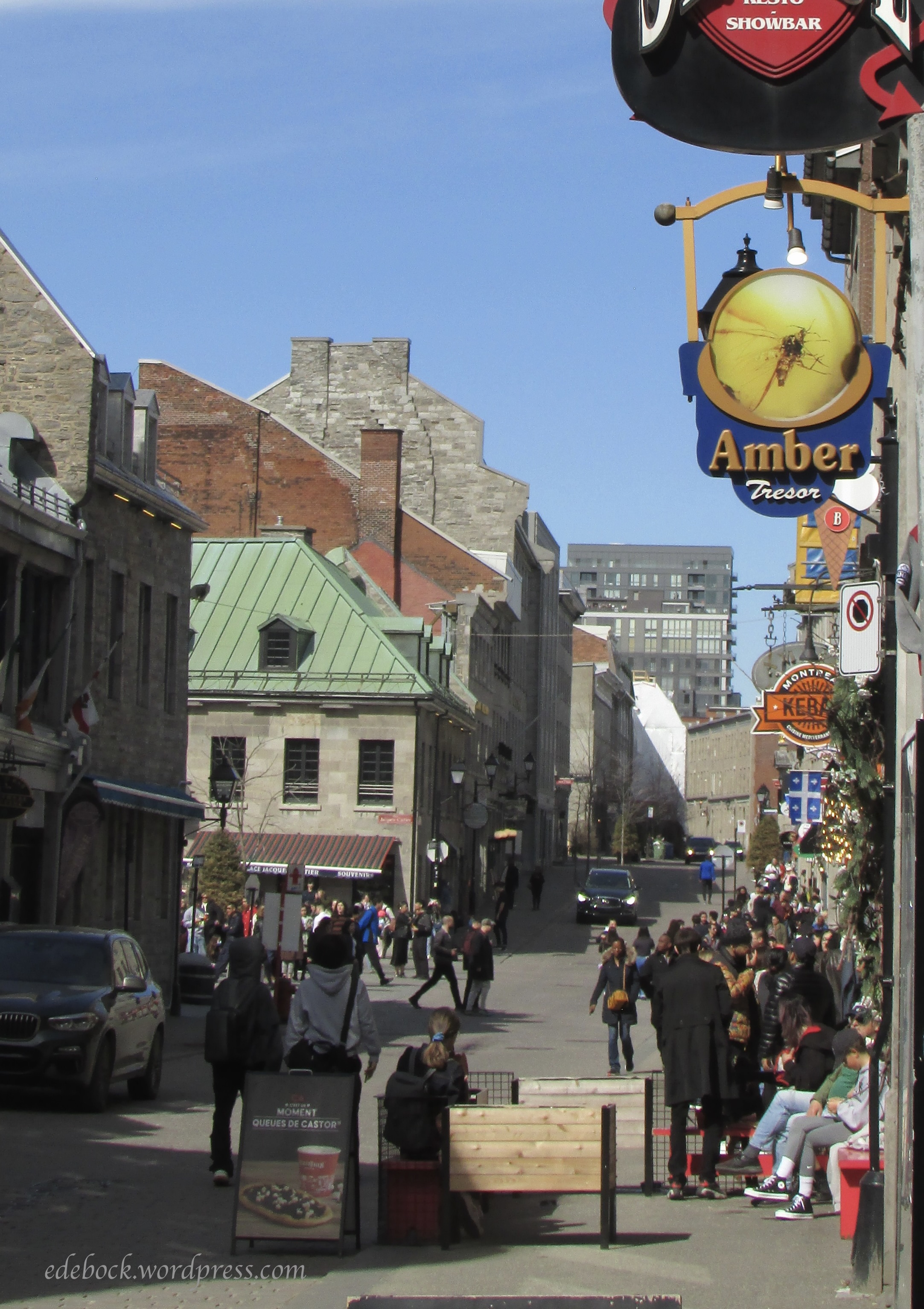
The last time I was in Montreal was over 20 years ago, but Amber had never been and I knew right away that I wanted to show her Old Montreal. Our first stop would be the majestic Notre-Dame Basilica which was built between 1824 and 1829. Since it was located just 1.5 km from our hotel and the weather was gorgeous, we set off on foot. 

IMG_6755

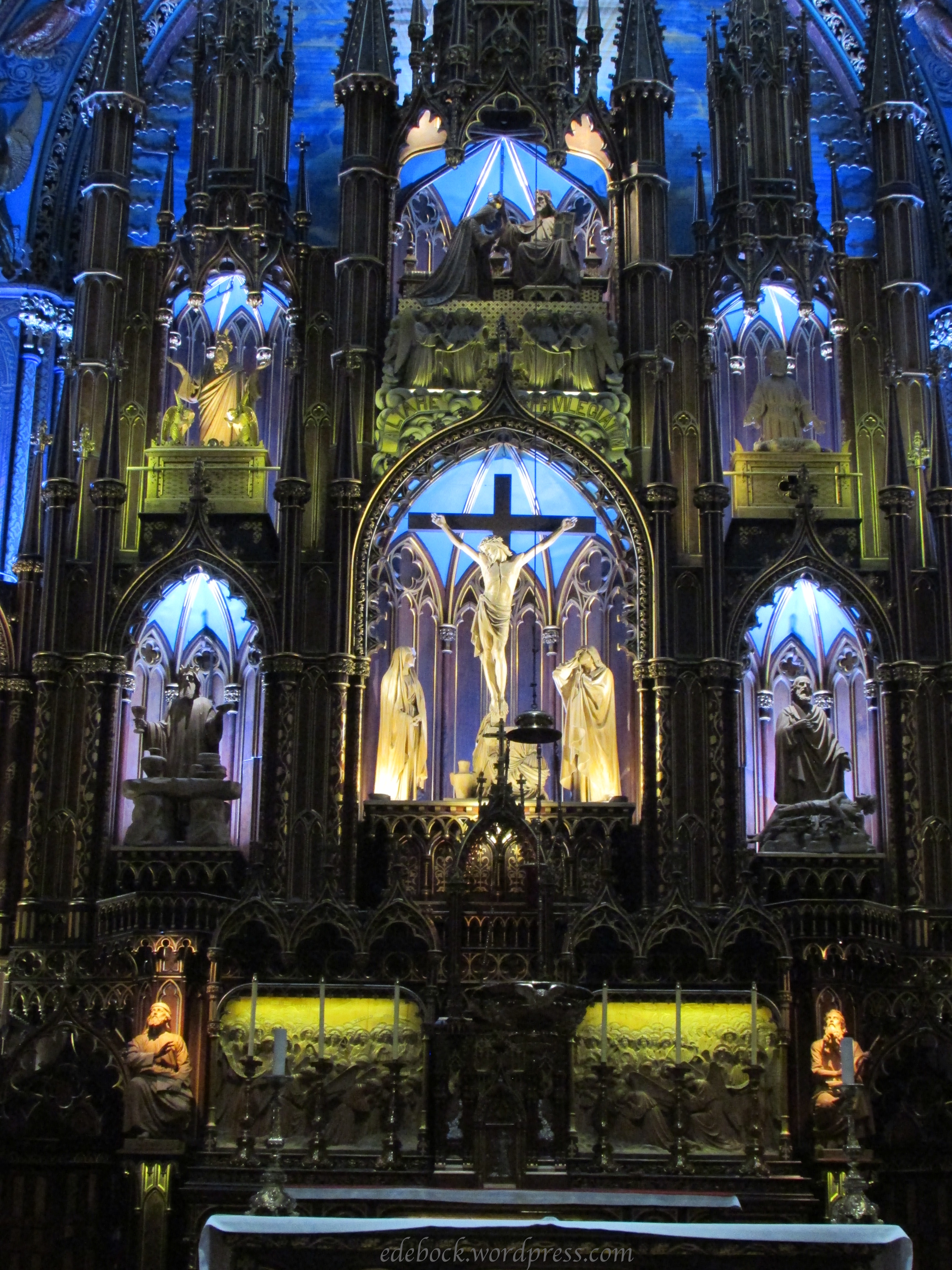
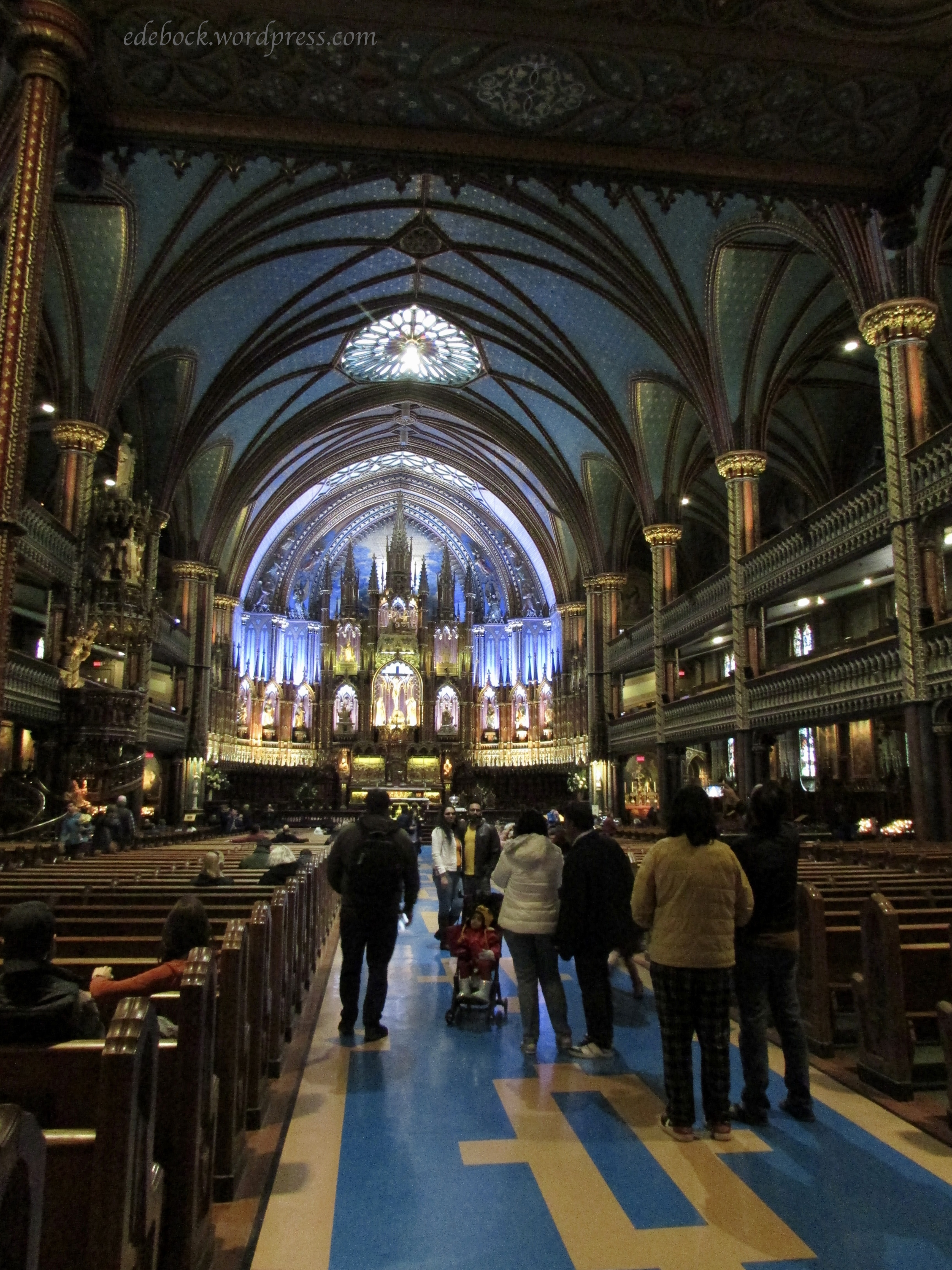
The exterior of the church is undergoing major restoration that isn’t expected to be finished until approximately 2040, but the interior is truly a sight to behold. I think a person could take 100 photos and not even begin to capture every detail! Here is just a taste of what we saw. 

IMG_6759

IMG_6763

IMG_6764

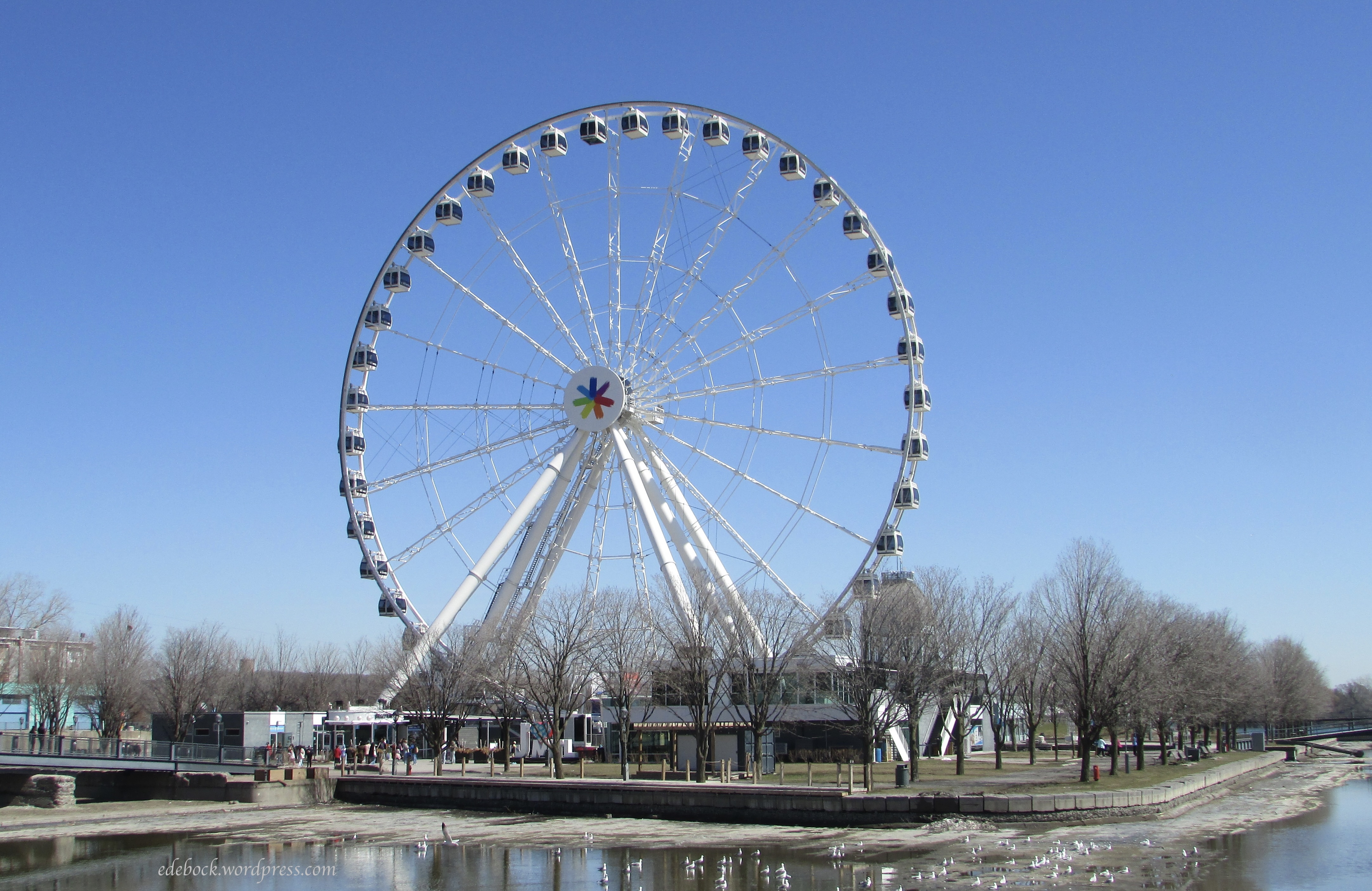
Our next destination was the Old Port and La Grande Roue de Montreal, a 60 metre high ferris wheel, the tallest of its kind in Canada. We knew that the sky was going to darken later in the day due to the highly anticipated solar eclipse, so we wanted to ride the ferris wheel early and enjoy the views of Old Montreal and beyond in full daylight.  

IMG_6771

IMG_6776

IMG_6778

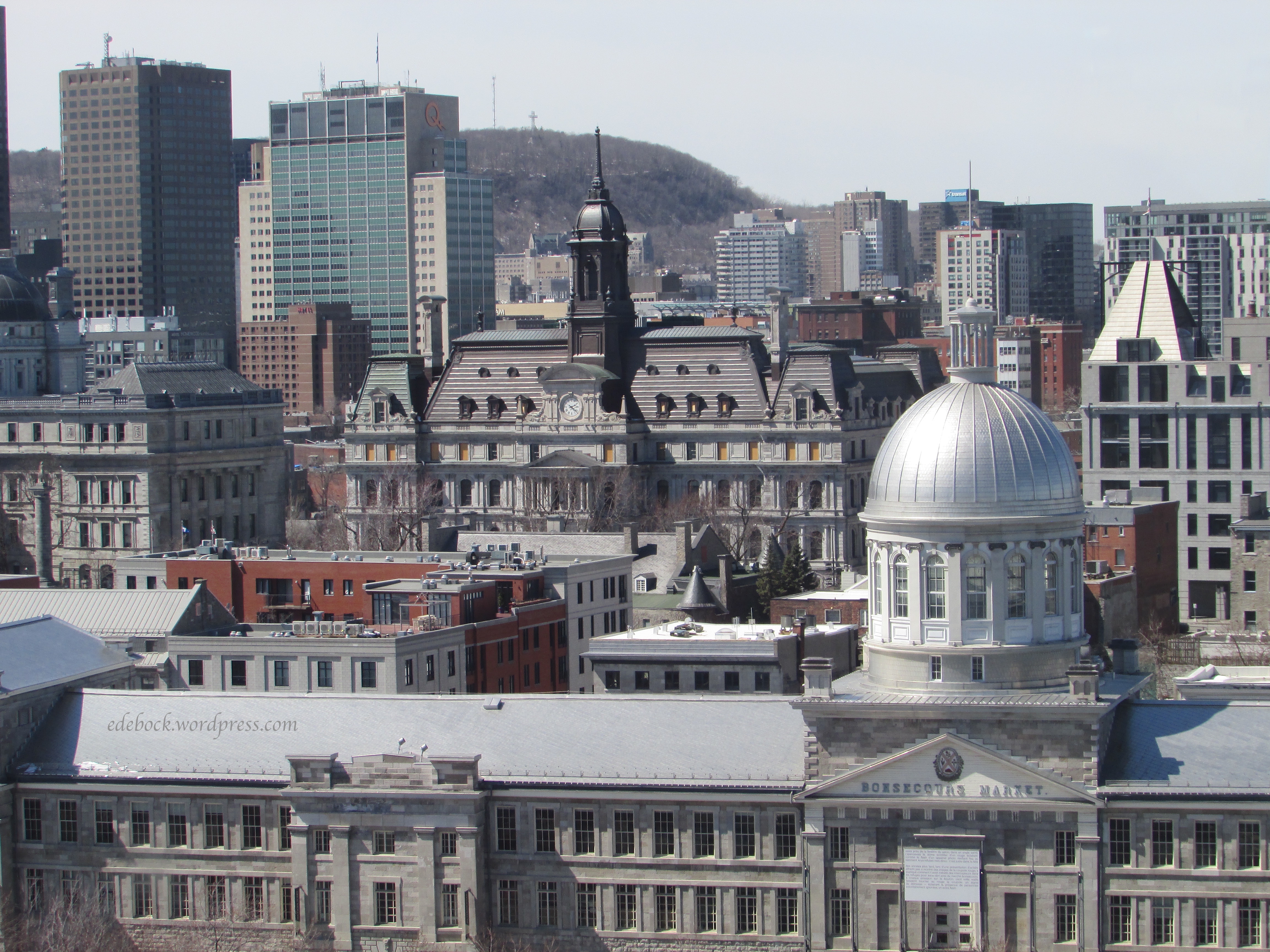
In the next photo, you can see Bonsecours Market in the foreground and Mont Royal with its 33 metre high cross overlooking the city in the background. After our ride, we wandered through the many boutiques in Bonsecours Market. 

IMG_6777

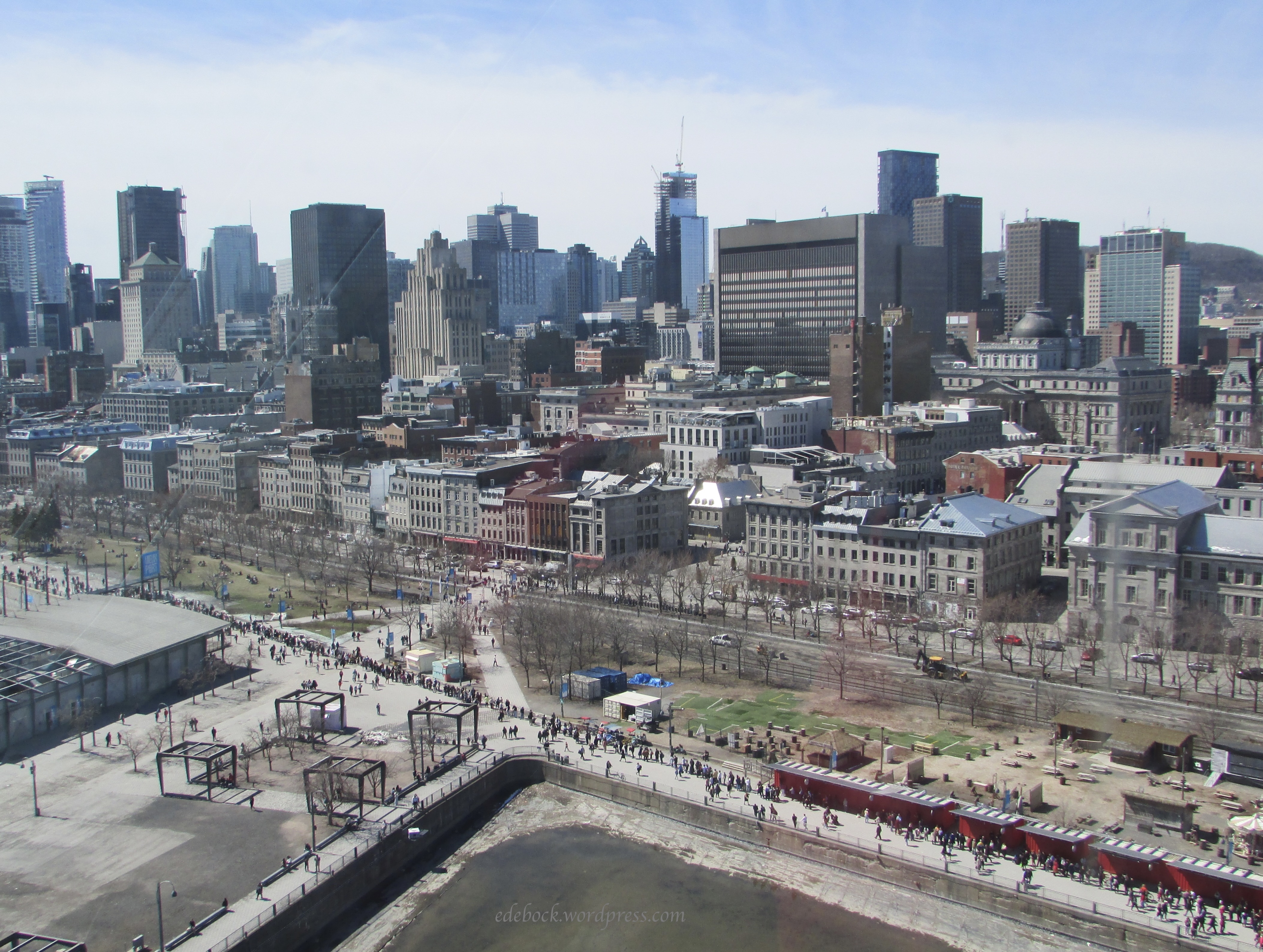
If you look closely at the following photo, you will see a long lineup of people stretching the entire width of the photo. That’s just a fraction of the crowd who were lined up to get solar eclipse glasses that were being given away free! Thankfully, there was no line up waiting to ride the ferris wheel. Each gondola can carry up to 8 people, but we had one to ourselves!  

IMG_6774

Before going to Montreal, even though I knew that the city was in the path of the total eclipse, I had little interest in actually seeing it. In fact, I had thought that we might just sit it out in a coffee shop somewhere, but Amber was having no part of that! She was determined that we see it and, in retrospect, I’m so glad she was. There was, however, no way that we were going to waste our limited time in Montreal standing in that endless line to get the necessary glasses. On our way to the ferris wheel we had stopped into a couple of shops to see if we could buy some, but those that had had them were completely sold out. Then, just as we approached the area where people were lining up to get the free glasses, we encountered a young man selling them for $5 apiece! Perfect!

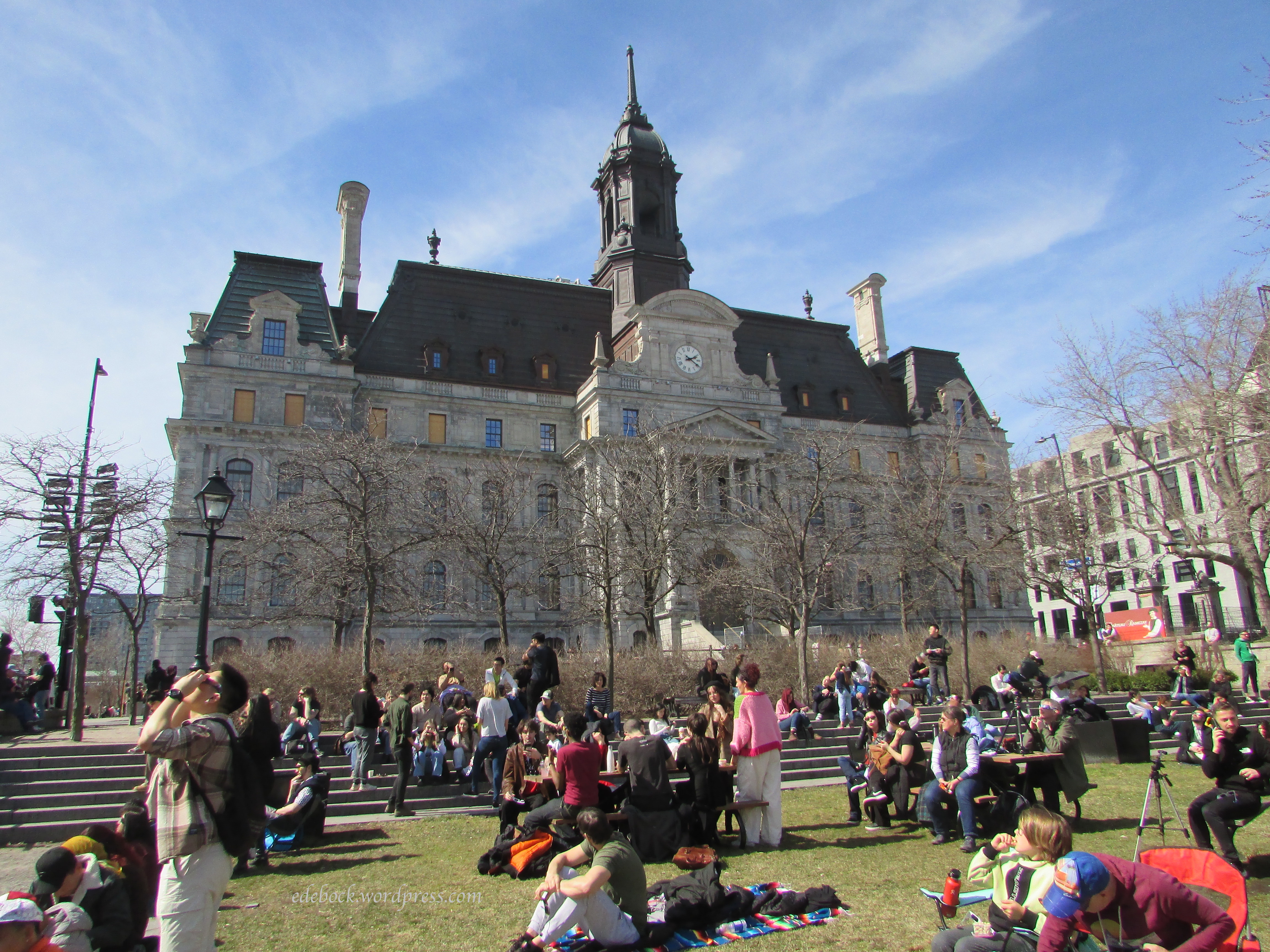
After stopping for lunch in a lovely little Italian restaurant housed in a building where Charles Dickens apparently wrote notes for A Tale of Two Cities while visiting Montreal in 1842, we wandered the streets of Old Montreal and began taking glimpses through our eclipse glasses as the moon began to block the sun and the light started to fade. Crowds of people were gathering everywhere! 

IMG_6783

IMG_6786

IMG_6792

IMG_6793

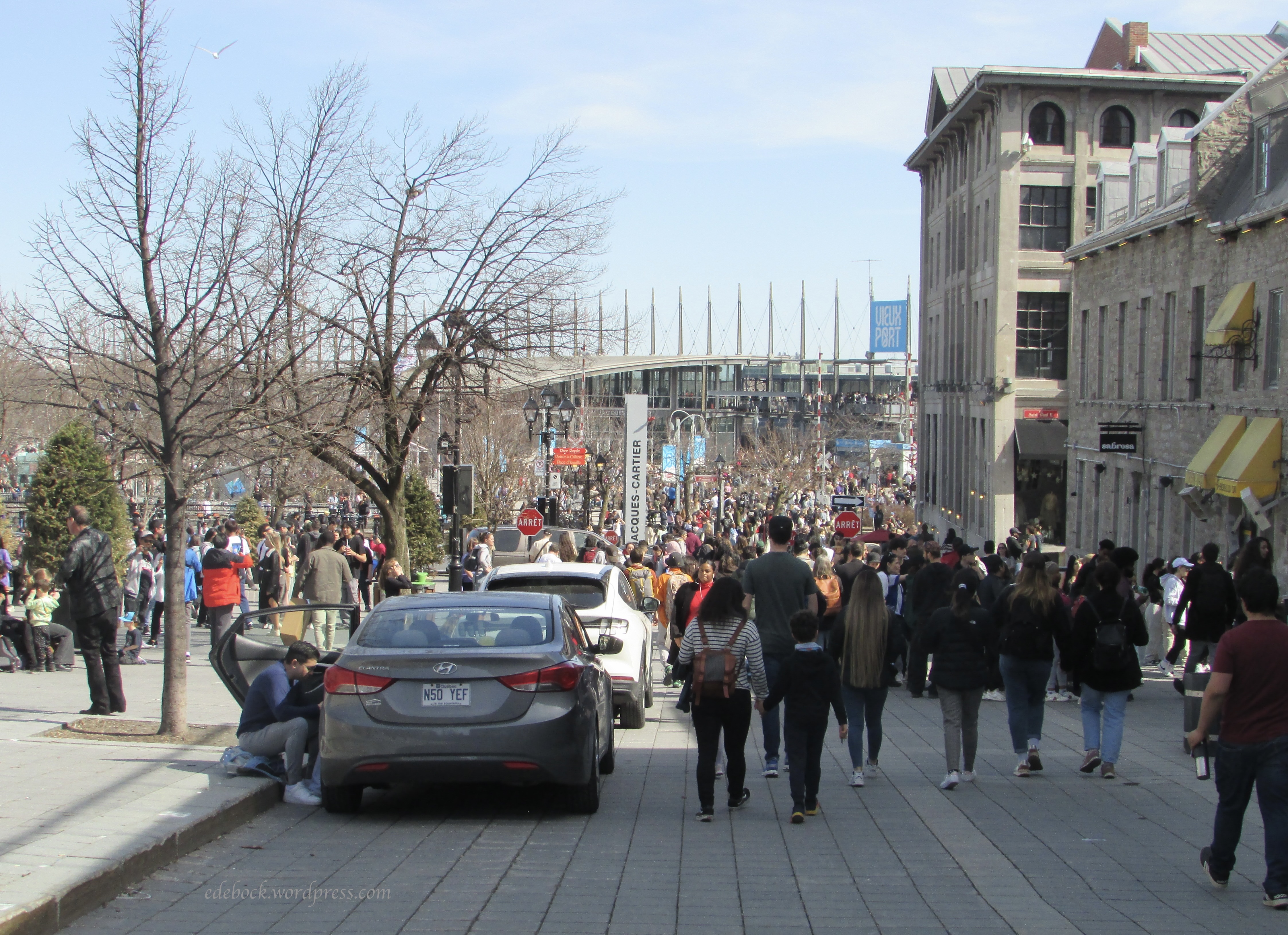
We were on cobblestoned Rue Saint-Paul, the oldest street in Montreal, as the clock approached 3:26 pm, the time of the total eclipse. 

IMG_6797

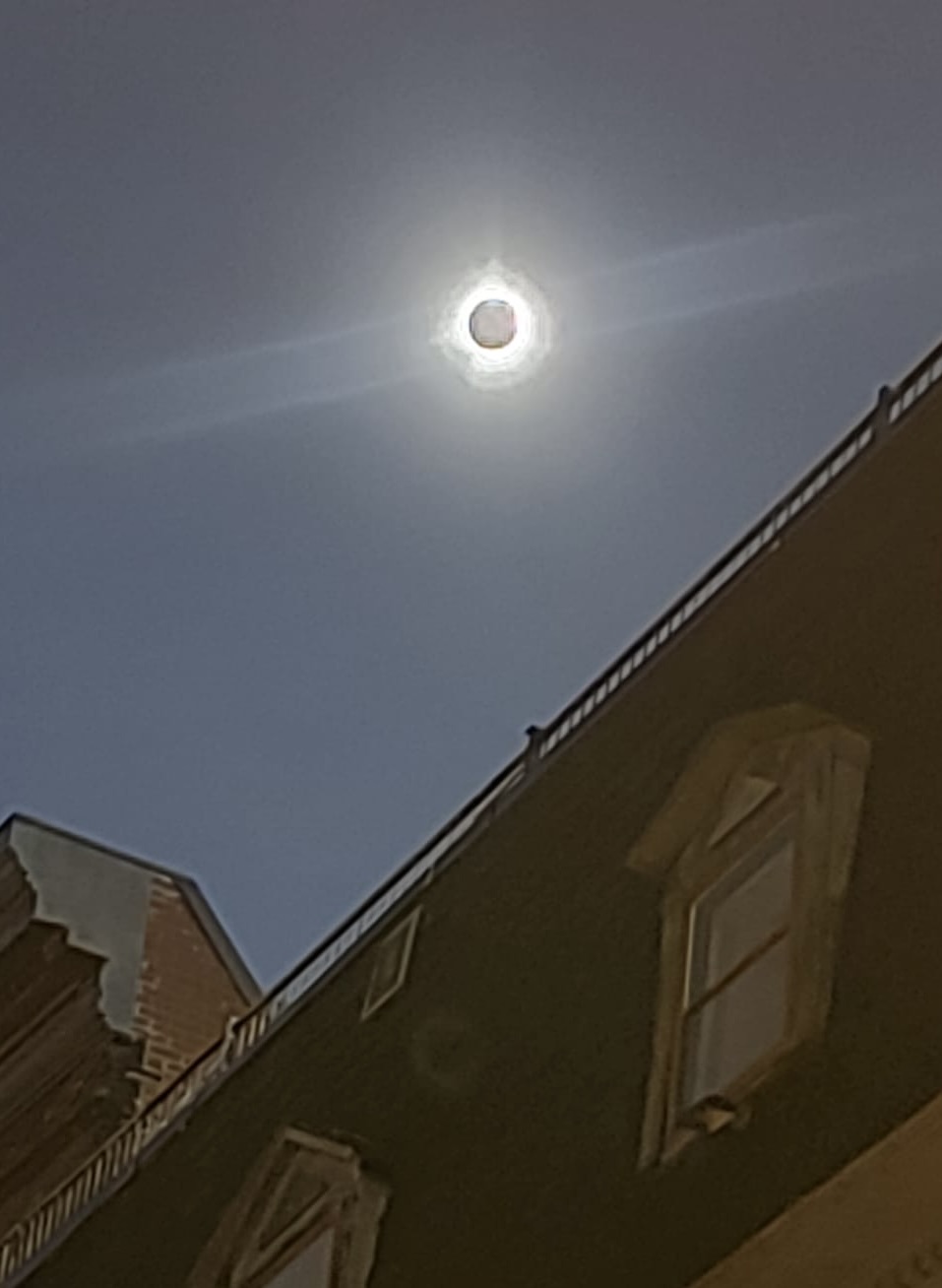
Though the light was odd, with less than 10 minutes to go, it really didn’t look like it was going to get completely dark. Then, within minutes, the sky darkened and the streetlights came on! 

IMG_20240408_152604659

IMG_20240408_152610679

IMG_20240408_152617034

When the moment arrived, the moon covered the sun completely and for a very short time, we could look at the halo with the naked eye. A cheer erupted from the many thousands of people gathered throughout the area! We tried to get pictures, but the best we could do was this one that Amber took on her phone. 

WhatsApp Image 2024-04-08 at 16.44.00

In less than two minutes, the excitement was over. The sun began to emerge again and the sky became light very quickly. Amber and I made our way back toward our hotel where we picked up our luggage and caught a taxi to the airport. We had walked 8 km, had a once in a lifetime experience, and made some amazing memories!