Living my cancer life out loud

This post was inspired by an interesting discussion that took place awhile ago on one of the online neuroendocrine cancer patient groups that I’m a member of. It started with a younger patient asking for advice about when to tell the person she was going on a first date with about her cancer. I was surprised to learn that most of the patients who responded to her question had told very few people outside their immediate families about their diagnosis. I’m quite the opposite. Though I’m naturally an introvert, I’ve been living my cancer journey out loud since the very first day I heard that fateful C word!

In the summer of 2013, when my doctor called and told me that I had cancer, I’m sure that I was in shock. One of the first things I did was sit down and make a list of who I needed to call and then I started. I called our pastor, several close friends, and of course, our family. Just three days later, I wrote the blog post that shared my diagnosis with the rest of the world. At that time, we didn’t even know what kind of cancer I had. I shared that news a couple of weeks later in this post.

Why? Why did I choose to share my diagnosis so openly?

Learning that you have cancer is overwhelming and I knew that this wasn’t something I could handle on my own. As a Christian, my first instinct was to call the people I knew would pray for me. Without realizing it, I was beginning to build an invaluable support system that would make the journey so much easier.

There were two reasons for sharing my diagnosis on the blog. Writing helps me process things and boy did I need to process! Since I’d already been blogging for several years, that seemed like the logical place to start writing about what I was going through. Secondly, posting updates on the blog was an easy way to communicate what was happening with our large extended family and with friends who are literally spread around the world. It meant that I didn’t have to repeat myself over and over again which would have been mentally and emotionally exhausting.

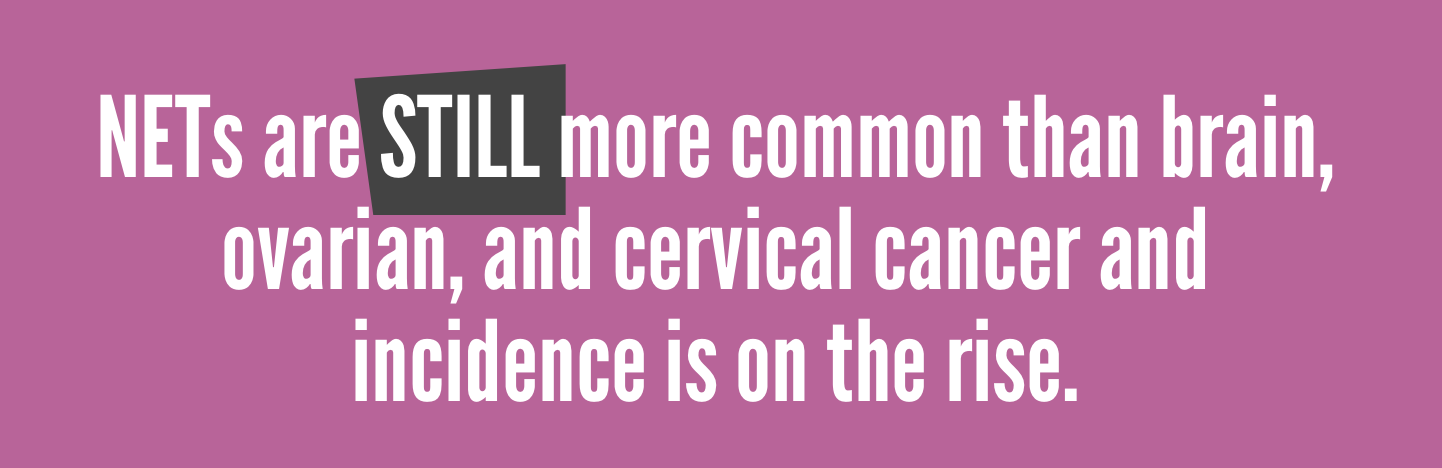
As time went by, however, sharing my journey openly and online also became a way to educate people about neuroendocrine cancer. Ten years ago, NETS was considered a rare cancer, but the number of people diagnosed with this type of tumour has been increasing over the years and it’s no longer fair to say that it’s rare. Sadly, however, it’s still not well-known, so education and advocacy are extremely important. Like any other cancer, early detection means more likelihood of successful treatment and long-term survival. Family doctors need to know that when a patient presents with symptoms such as abdominal pain, diarrhea, shortness of breath, wheezing, heart palpitations, high blood pressure, and/or flushing, neuroendocrine cancer is a possibility. Patients need to know that when their symptoms persist after a more common diagnosis is made, they need to persevere until they get a correct one. It could be NETS. Patients with neuroendocrine cancer, particularly the newly diagnosed, need to know that there is hope. More research is needed to find better treatments and ultimately a cure. Until these things happens, I’ll continue living my cancer life out loud!

Ribbon Symbol

Role reversal

It’s been quite awhile since my last health update on here, so for those of you who follow our cancer journeys, I thought it was about time for another one. I say journeys because you may remember that, in addition to my cancers, hubby was diagnosed with prostate cancer last summer. Fast forward eight and a half months and as of this week, he no longer has a prostate and as far as we know, he no longer has cancer!

Surgical removal of the prostate, in spite of the fact that it has some negative effects, is thought to be the best choice for long-term survival, but when we saw the urologist in August, he warned us that many specialists consider 70 to be the upper age for performing that surgery. At 73, Richard is otherwise in excellent health and physical condition, so he was referred to a specialist who does robotic prostate surgery, the most advanced treatment option available, with the hope that he would agree to do the procedure. Had he not, there were several other options that we would have had to consider.

On October 31, after the appointment was delayed by a few weeks due to us both having Covid, we finally met with the surgeon. He had clearly reviewed Richard’s case and had absolutely no qualms about performing the surgery on someone in his physical condition. As Dr D said, we could easily look around his waiting room and see men a decade younger than Richard who weren’t in the shape he was in and who would be much higher risk. We were told at that appointment that the wait time for surgery would be five to six months.

Almost five months later, we arrived at the hospital in Edmonton at 5:30 a.m. on Monday and by noon Richard was in the recovery room with no prostate and hopefully no cancer. After one night in hospital, he was released the following day and I suddenly went from patient to caregiver! Total role reversal!

Over the nine and a half years since my first cancer diagnosis, Richard has stood by me and provided excellent care when I’ve needed it. He’s accompanied me to countless specialist appointments and seen me through numerous scans, two major surgeries, 30 radiation treatments, and 14 PRRT treatments. Now it was my turn and I wondered how I would do! Thankfully, he’s been a model patient and things have been going well so far.

The biggest challenge facing us when we got home was the fact that he has a catheter which won’t come out until April 6. The first evening, as we figured out how to change from day bag to night bag (including cleaning the day bag and tubing for the next day’s use), we were both all thumbs. Once we figured everything out though, he’s been able to manage it with minimal assistance from me. A bigger challenge for me might come when our snow finally melts and I’m suddenly in charge of the early spring yard work that Richard usually takes care of! He has very clear instructions not to do any heavy lifting, snow shovelling, or lawn mowing for six weeks. At that point, we’ll also see the surgeon for a follow-up appointment. It’s then that we’ll receive the pathology report and know for sure that he’s cancer free.

And what about my cancer journey? Since early December, I’ve had a CT scan and three different PET scans. Two of those were part of a study. All four scans agreed… no change; no growth or spread. As far as we can tell, my neuroendocrine cancer (NETS) continues to be stable. We’re somewhat puzzled by the fact that a couple of markers in my blood and urine that are specific to NETS have been climbing, but since I’m having absolutely no symptoms, we’ll simply continue to monitor those with more frequent testing. Last week I had my annual check up with the wonderful surgeon who removed both of my other cancers and the good news is that there is no sign of recurrence of either one of those. This is as close as I’ll ever get to a clean bill of health, so I’m in good shape for my present role of caregiver instead of patient!

Stronger Together text with arrow. Corona virus - staying at home print.

Mostly good news

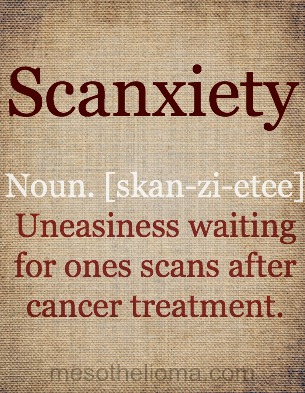
For the past couple of weeks, I’ve been riding a roller coaster that is known in the cancer world as scanxiety (scan + anxiety = scanxiety). 

scanxiety

Over the 9+ years since my stage 4 neuroendocrine cancer (NETS) was diagnosed, I’ve had more scans of various kinds than I want to count. The morning after each of my 12 radioactive PRRT treatments I had an octreotide scan to determine whether or not my tumours had grown or spread since the previous treatment. Any scanxiety that I experienced back then was short-lived because I met with the doctor immediately after the scan to review the results. Not so with the CT scans that I’ve had at 6 month, and more recently 9 month, intervals since completing my treatments in June of 2019. After each of those, I’ve had to wait about a week to find out the results. A week can feel like a very long time if you’re riding the scanxiety roller coaster, but because I’ve been doing so well for so long, that hasn’t usually been a big problem for me. 

This time was different. About three weeks prior to each scan, I have a whole battery of lab tests. The results of those are available to me online, so before I even had the CT scan, I knew that something might be amiss. Two markers that are of particular significance for NETS patients are chromogranin A in the blood and 5-HIAA (5-hydroxyindoleacetic acid) in the urine. Both had been gradually climbing and were now flagged as being higher than the normal range. That’s when the roller coaster ride began! 

360_F_141399140_3bi2tLZvTs4ek3a81nu6aSkeNc8pjsNd

In my lowest moments, I was sure that cancer was rapidly spreading throughout my body, but I did what I’ve done before in times like this. I called on a dozen godly women who share my belief in the power of prayer and asked them to pray. The ride was smoother after that. I still knew that something might be wrong, but I felt more at peace. I’d be a liar if I said that I wasn’t anxious at all, but I didn’t dwell in the low spots any longer. I also focused on one of my favourite passages from scripture, Philippians 4:6-7. 

Do not be anxious about anything, but in every situation, by prayer and petition, with thanksgiving, present your requests to God. And the peace of God, which transcends all understanding, will guard your hearts and your minds in Christ Jesus.

By the time the doctor phoned today for our follow-up appointment (saving us a 5 hour round trip to the city) I truly did feel at peace about whatever it was that she was about to tell me. She gave me the good news first. Nothing of concern appeared on the scans. In fact, a tumour in a lymph node that had been there since diagnosis in 2013 has completely disappeared! That’s amazing news, especially considering how long it’s been since I had my last treatment. I don’t think anyone expected that the PRRT would still be resulting in shrinkage of tumours three and a half years later. The good news was somewhat overshadowed though by the fact that those elevated levels in my blood and urine still indicated that something is happening. So what happens next? 

I’m going to be going for a Gallium-68 dotatate PET scan sometime in January. This newer imaging technique is similar to the octreotide scans that I’ve had in the past, but much more sensitive. It will be able to pick up even the tiniest growths that might have been overlooked on the conventional CT scan. The results of that will dictate what the next steps will be, but for now I’m not going to worry about it. I’m determined not to climb back on that roller coaster. Instead, I’m going to focus on having an enjoyable Christmas!

The scan did reveal something totally unrelated to my cancer. Apparently, I now have a 1.3 cm Thornwaldt cyst lurking in my head! This is a rare, benign growth that develops in the nasopharynx, above the soft palate and behind the nose. If it continues to grow or becomes infected, it has the potential to start causing things like headaches, postnasal drip, blockage of the eustachian tubes, and/or halitosis. If that occurs, it can be drained or removed surgically. I’ll cross that bridge if and when I get there. For now, it’s just one more thing to add to my long list of weird and not so weird diagnoses! 

NET Cancer Day 2022

ncd-logo-newOnce again, today is Worldwide NET Cancer Day, a day set aside to increase awareness of neuroendocrine (NET) cancers and to promote improved diagnostics, treatments, information, care and research. As a patient who has been living with this cancer for the past nine years, this is, of course, very close to my heart.


Once again this year, we are urging people to

Know the symptoms.

Push for diagnosis. 

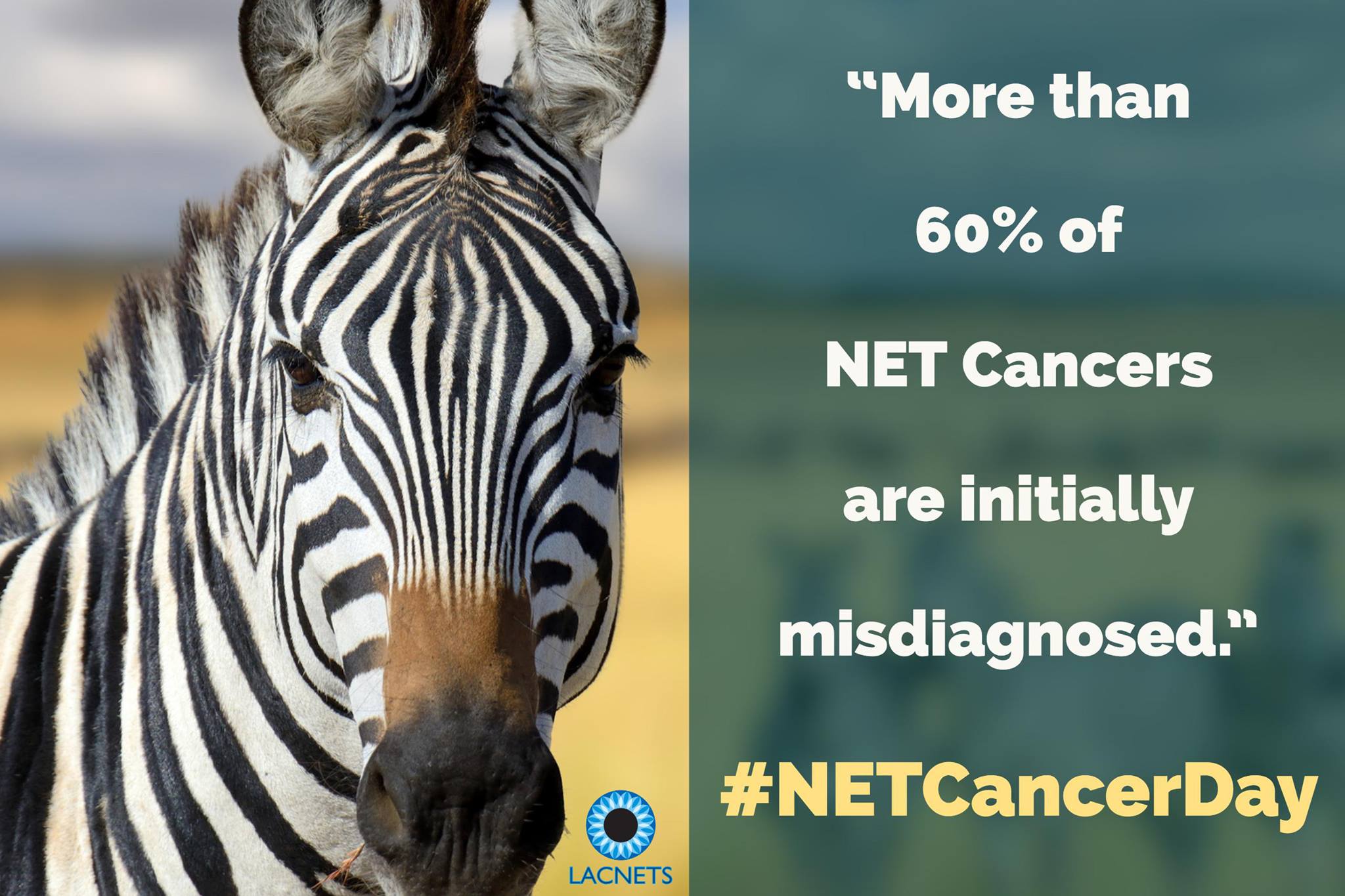
Less than 30% of neuroendocrine cancer patients receive a correct diagnosis the first time they reach out for help. In fact, it often takes five to ten years from onset of symptoms to correct diagnosis. During that time, of course, the cancer quietly spreads.

Screen Shot 2022-11-10 at 9.46.22 AM

Here are some facts about neuroendocrine cancer:

  • NETs are a unique group of cancers that arise from neuroendocrine cells and can be found in many organs of the body.
  • NETs generally affect people over the age of 50, but not always.
  • Symptoms of NETs vary and are often non-specific due to their ability to secrete an excess of different hormones.
  • Symptoms depend on the organ where the tumour is located and may include abdominal pain, diarrhea, nausea and vomiting, weight loss, skin flushing, chest pain, coughing, wheezing, shortness of breath, and/or back pain. 
  • As a distinct class of tumours, NETs require specialized tests and treatments.
  • NETs are often found unexpectedly during unrelated medical procedures or imaging tests.
  • NETs are the second most common cancer of the digestive tract.
  • Gastrointestinal NETs are often found in the appendix, colon, and rectum, but can also affect the stomach and small intestine.
  • Lung NETs comprise 20 to 25% of all invasive lung tumours.
  • The incidence and prevalence of pancreatic NETs (the form of neuroendocrine cancer that claimed the lives of Steve Jobs and Aretha Franklin) have been steadily increasing over time and now comprise about 7% of all pancreatic cancers.
  • Merkel Cell Carcinoma, a rare skin cancer, is a form of neuroendocrine cancer.

One of the most important things I’ve learned since my diagnosis is how important it is to advocate for yourself. Know your body. Know what’s normal for you. Pay attention when something feels off. Take note of unusual symptoms and talk to your doctor as soon as possible. If you don’t get the answers you’re looking for, PUSH! Don’t give up.

Thankfully, at this point, my cancer is stable. Constant surveillance is important though, so I’ll be having CT scans and other tests again next month. In the meantime, since hubby’s diagnosis with prostate cancer this summer, my health has temporarily taken a back seat. Now that his name is on the five to six month waiting list for robotic prostate surgery, we’re breathing a sigh of relief and getting on with life. Though there is no cure for me, I continue to trust that I’m not dying of NETs, I’m living with it! 

Another diagnosis, another pill

No, it’s not another cancer this time!

Seven years ago, I was diagnosed as pre diabetic. I managed to control it with diet alone until recently when I gradually slipped into the diabetic range. Though I’d originally hoped that this would never happen, it comes as no real surprise. In some ways, I’m not a usual candidate for diabetes. I’ve never been overweight, I’m not a smoker, and I ate a healthy diet and exercised regularly long before the pre diabetes diagnosis. In addition to a family history of diabetes, however, the injection of Sandostatin that I receive every 28 days for my neuroendocrine cancer (NETS) can suppress the release of insulin and cause elevated blood glucose levels. With those two strikes against me, I’ve now reached the stage where I need medication and my doctor has prescribed Metformin, the most common treatment for type 2 diabetes. I’m also going to be meeting with a dietician to find out if there are ways that I can further tweak my diet.

If there’s one good thing about having NETS, it’s the fact that the regular surveillance that it requires brings other health issues to light before they become as serious as they might otherwise. Typical symptoms of type 2 diabetes include increased thirst, frequent urination, increased hunger, unintended weight loss, fatigue, blurred vision, slow-healing sores, and frequent infections. I have experienced none of these. If it wasn’t for the regular blood tests that I undergo because of my cancer, I likely wouldn’t have known that I was pre diabetic seven years ago and without the dietary changes that I made back then, I probably would have reached the diabetes threshold much sooner. Looking for silver linings helps me maintain a positive attitude!

I don’t share these health updates to garner sympathy. In spite of cancer, diabetes, and several other health concerns, I continue to enjoy excellent quality of life. Hopefully, with the help of medication, excellent health care practitioners, and healthy lifestyle choices, that will continue for a long time yet!

post_1-1

What I wore for a walk by the sea

Logo by SamWhether you like to read about travel or fashion, there’s something in today’s post for you. I seldom write “what I wore” posts, but I figured that that was the best way to squeeze in a Fashion Friday post this week!
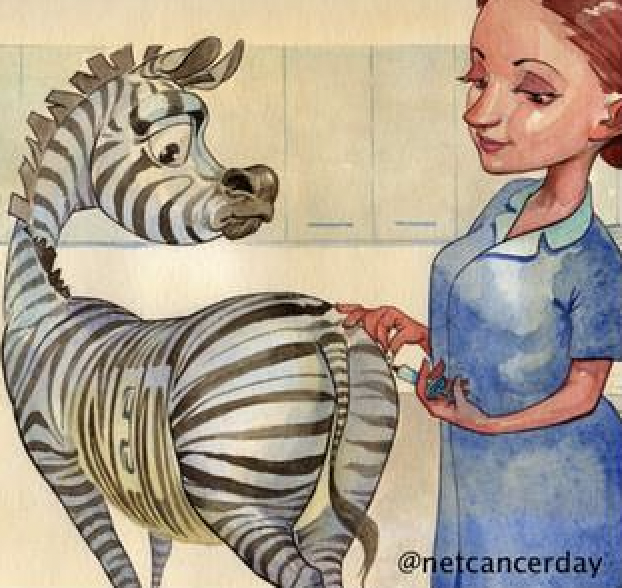
For the past eight and a half years, since being diagnosed with neuroendocrine cancer, I’ve had an injection of Sandostatin every 28 days. Until two months ago, a nurse came to the house to administer theScreen Shot 2022-04-06 at 9.35.43 PM jab, but that service has been discontinued. Now, I get my monthly injection at my doctor’s office, but I can still easily arrange to have it done anywhere in Canada. Yesterday’s appointment, for injection #110, was at a clinic in West Vancouver.

One end of the popular 1.7 km West Vancouver Centennial Seawalk is just 3 blocks from the clinic. The weather was beautiful, so as soon as I was done, we went for a walk.

IMG_3688 2

Along the way, we saw a couple of harbour seals poking their heads out of the water some distance offshore and this long-legged heron standing guard closer in.

IMG_3689

At the end of the Seawalk, we made an unexpected discovery, The Beach House restaurant. The restaurant’s beachfront patio opened for the season yesterday and we were the first to sit at our table for two overlooking the shore. The service was impeccable and the food delicious!

IMG_3695

IMG_3696

And now for what I wore…

IMG_3701

IMG_3704 2

Everything I’m wearing has been in my wardrobe for quite awhile. The olive chinos were purchased almost two years ago at Mark’s. They’re a nice alternative to jeans and perfect weight for spring and fall. I’ve had the short-sleeved animal print top from Laura for so long that I don’t actually remember when I bought it. In spite of the fact that it’s been in my closet for a long time, I haven’t actually worn it a lot, but it’s been coming out more often lately. I added the anorak from Reitmans to my spring/fall wardrobe three years ago. It’s wind and rain resistant making it a perfect jacket to wear here at the coast, but it gets lots of use at home too. My white leather sneakers, also from Mark’s, are two years old and still like new. They’re super comfortable for long walks like yesterday’s.

IMG_3707

Though you can’t see it in the previous two photos, I wore my Shirttail Cardigan from cabi under the jacket. Layering is key to staying warm at this time of year. The sweater is over five years old and still going strong. It has been an absolute workhorse in my wardrobe and has appeared on the blog many times before. I don’t know what I’ll do if it ever wears out!

Before I go, did you notice my new Fashion Friday logo? It was designed especially for me by my 12-year-old grandson, Sam! He’s one of the young artists in our family. Thank you, Sam!

One less cancer!

It’s been several months since I wrote an update about my health which is usually a good thing because it means that there’s been nothing new to report. This week saw something very big happen though! Before I get into that, let me begin with a bit of history for those who are new to the blog.

In the early fall of 2013, I was diagnosed with neuroendocrine cancer (NETS) which is incurable, but often treatable. Exactly seven months later, a second completely unrelated cancer was found in a my left parotid (saliva) gland. Treatment on the first cancer was halted while that one was removed surgically and followed up with thirty radiation treatments. Once I’d had time to heal from that, treatment on the first cancer resumed. I entered a clinical trial that involved 12 radioisotope treatments (PRRT) over a period of approximately five years. Each of these treatments left me highly radioactive for a week, but I responded well and there was some shrinkage of my tumours. In the fall of 2018, toward the end of that regimen, scans detected something suspicious in my thyroid gland which eventually proved to be yet another unrelated cancer. Since only a small percentage of papillary thyroid cancers are aggressive in nature, the decision at that time was to watch and wait. My body had been through enough and we could afford to give it time to heal before deciding how to address this latest discovery.

Skipping ahead three years to last fall, my neuroendocrine cancer continued to be stable. In fact, 20 months after my last PRRT treatment, I was still experiencing some decrease in tumour size. I was feeling great and able to live a normal, active life. Though there had been no change to the thyroid cancer, we decided that the time had come to remove it rather than taking a chance on allowing it to begin growing or spreading.

Then began the long wait due to Covid hospitalizations delaying surgeries! Finally, on Thursday morning, the same amazing surgeon who did my previous neck surgery removed my thyroid. I woke up very early that morning with two distinctly different kinds of cancer and a few hours later I had only one again! It’s taking awhile for the reality of that to truly sink in.

After an overnight stay in the hospital, I’m home and feeling remarkably well considering. I’ve needed nothing more than Tylenol for pain which is such a blessing as heavy duty pain killers make me nauseous. My neck feels a bit like someone held me in a headlock for an extended period of time which is probably pretty similar to what happened during the 3.5 hours of surgery! I have a very husky voice as the result of some difficulties with the breathing tube, but that should gradually heal over the next couple of weeks. I had a super good sleep last night and now I’m just going to lean back and take it easy for a few days! During the first week of March, I’ll be back in the city for a follow up appointment with the surgeon as well as CT scans to check on the neuroendocrine cancer. In the meantime, I’m just rejoicing over having one less cancer!

1479468594421-V9D5BEZF2RTMCO558E0E

NET Cancer Day 2021

ncd-logo-new

Once again, today is Worldwide NET Cancer Day, a day set aside to increase awareness of neuroendocrine (NET) cancers and to promote improved diagnostics, treatments, information, care and research.

The theme of this year’s campaign is

Know the symptoms.

Push for diagnosis. 

Less than 30% of neuroendocrine cancer patients receive a correct diagnosis the first time they reach out for help. In fact, it often takes five to ten years from onset of symptoms to correct diagnosis. During that time, of course, the cancer quietly spreads. Thankfully, compared to many other cancers, NETS is slow growing, but like many of my fellow patients, I was Stage 4 at diagnosis. This means that my cancer had already spread from its origin to distant parts of my body. At this point, 8 years after diagnosis, treatment has halted it’s progress and resulted in some shrinkage, but there is no cure.

Know the symptoms. 

23213264_715559725308228_7678779028864335896_o

Once considered rare, neuroendocrine cancer is actually the fastest growing class of cancers worldwide. Unfortunately, many health care professionals have never seen a case and know little or nothing about this complex disease. In order to achieve early, correct diagnosis for every patient, we need every primary care physician to know and recognize the symptoms. When they are presented with stomach pain, it makes sense for them to suspect gastritis (inflammation of the stomach lining), but we also need them to wonder if it could be neuroendocrine cancer. When the stomach pain is accompanied by severe diarrhea, irritable bowel syndrome is a definite possibility, but we also need the doctor to be aware that it could be NET cancer. When a woman complains of facial flushing, rather than simply assuming that it’s due to menopause, we need her doctor to ask himself if it could be NETS. Depending on the location of the primary tumour, other symptoms may include nausea and vomiting, rapid heartbeat, anxiety, skin rash, shortness of breath or wheezing, lack of appetite, unexplained weight loss and/or lack of energy.

Push for diagnosis. 

Message-5-16_9-Key-Messaging-Infographic

Diagnosing neuroendocrine cancer is complex. In addition to recognizing the symptoms, we need doctors to order the correct laboratory tests and scans. It’s also important for patients to push for correct diagnosis. One of the most important things I’ve learned since my diagnosis is how important it is to advocate for yourself. Know your body. Know what’s normal for you. Pay attention when something feels off. Take note of unusual symptoms and talk to your doctor as soon as possible. If you don’t get the answers you’re looking for, PUSH! Don’t give up. Years before I was finally diagnosed, I remember thinking “at least it’s not cancer” but I was wrong! If I’d pushed for answers then, perhaps it would have been caught much sooner and the outcome might have been very different!

Know the symptoms.

Push for diagnosis. 

When is an accessory not just an accessory?

LogoAccessories are the finishing touches that can take an outfit from drab to dramatic. They also add versatility to your wardrobe enabling you to create many different looks with the same basic outfit. Accessories are also an opportunity to express your personal style, taste, and preferences, but sometimes they are even more than that. Sometimes an accessory has special meaning or significance to the person who wears it. That’s definitely the case with my new hand-crafted zebra pendant!
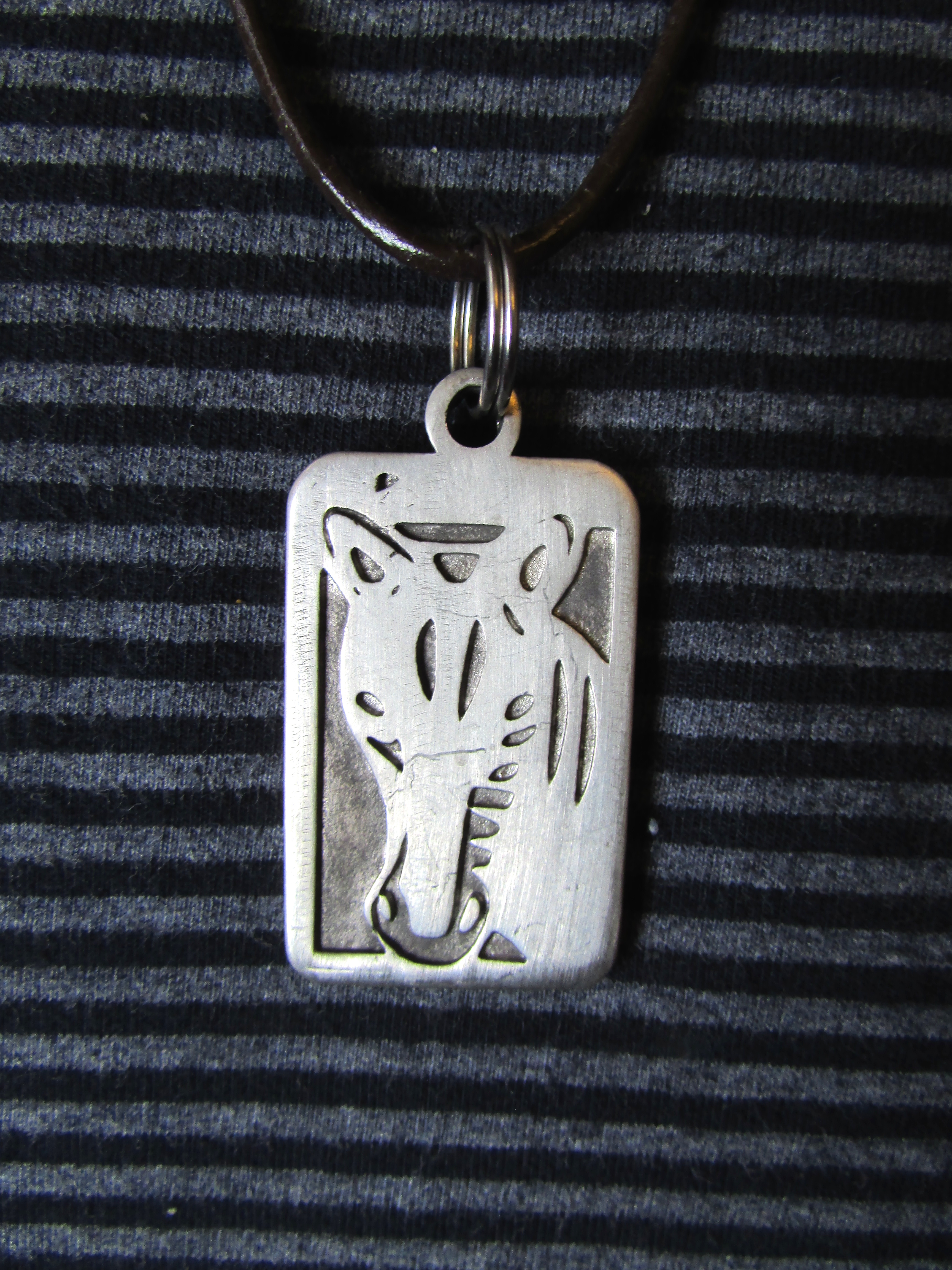

IMG_3007

As many of you are already aware, the zebra is a symbol of neuroendocrine cancer (NETS), the cancer that I’ve been living with for the past eight years. In medical school, doctors are taught “when you hear hoofbeats, think horses, not zebras”. NETS was previously considered rare and therefore, a zebra. However, with increasing awareness and quicker diagnosis, neuroendocrine cancers are proving not to be as rare as once thought. Another reason that the Canadian Neuroendocrine Tumour Society (CNETS) chose and continues to use the zebra as their mascot is the fact that every zebra has its own pattern of stripes. Just as each patient and their needs are unique, no two zebras are exactly alike.

Committed to improving the quality of life and the survival rate for NETS cancer patients across Canada, every year CNETS funds research initiatives that will have a direct and meaningful impact on their lives. As a little-known cancer, it falls upon patients to raise much of the money for this ongoing work.

Screen Shot 2021-09-15 at 2.45.32 PMAl Gillis is a neuroendocrine cancer patient who came up with a unique idea for both increasing awareness and raising funds; a beautiful one-of-a-kind pewter pendant/keyfob featuring the CNETS zebra logo. Made entirely of donated materials and using only volunteer labour, the first distribution sold out in less one day! I was fortunate to nab one of those. Now, a second batch is in stock and going fast. If you’re interested in purchasing one and supporting this important endeavour click here, but don’t hesitate too long or you’ll be waiting for Al and his crew to make more!

You might also be interested in watching this video in which Al demonstrates and explains how the pendants (which can also be used as keyfobs) are made. I found it quite fascinating.

Do you have any accessories that are especially meaningful to you? Please tell us about one or more of them in the comments section below. 


Blogging woes and cancer news

My beloved MacBook Air is getting old; old enough that I’m not able to update to a newer browser. Recently, whenever I opened WordPress to check my stats or work on a post, I received a message telling me that I was using an unsupported browser. Until earlier this week, however, I was able to click through to the appropriate page and work as usual. Then came the fateful day when all that I could open was a blank page with the WordPress logo in the centre!

As I usually do when something goes wrong in my blogging world, I fired off a cry for help to WordPress support and hoped for the best. They’ve never let me down yet, but while I wait to find out what they can or can’t do for me, I’m typing this on my husband’s computer. Not easy! Mine is a Mac, but his is not. The keyboard is a different size and my fingers don’t know what to do. Things jump around when I’m not expecting them to and then there’s the issue of all my photos being on my computer and not knowing how to transfer them to his. With practice, I’m sure these things will get easier, but this is, at best, a very temporary solution! I’m hoping that I don’t have to invest in a new computer right now as mine still does everything else I want it to do, but I have to be able to blog!   

Now, for the other news… 

In mid August, I went through a series of tests and scans, as I do every six months, to determine whether or not there were any changes to my cancers. When the results became available online, I was concerned about a spike in one marker that is particularly significant to neuroendocrine cancer (NETS). Not only had the level increased dramatically, but it was now slightly above the normal range. Knowing that I had to wait several weeks to see the doctor for an explanation, my response was similar to when WordPress quit working. I called for support. I sent out a cry for help to eight godly women asking each of them to pray, not only that my cancer had not grown or spread, but also that I wouldn’t be anxious as I waited for answers. Almost immediately, an unnatural peace descended on me and I was able to go on without undue stress or anxiety. 

“Do not be anxious about anything, but in everything, by prayer and petition, with thanksgiving, present your requests to God. And the peace of God, which transcends all understanding, will guard your hearts and your minds in Christ Jesus.”  Philippians 4:6-7

And now for the really good news… my cancer continues to be stable and the doctor has no concerns! Though the spike in that one marker looked concerning to me, she assured me that it would have to be much higher before it was anything to worry about. Praise the Lord!