HOOFING IT again!

Once again, HOOFING IT, the annual CNETS (Canadian Neuroendocrine Tumour Society) fundraiser for NET cancer research, is up and running. Between June 1st and September 30th, 2026, the Canadian neuroendocrine cancer community will be working together to raise $60,000 to fund research grants! I wasn’t actually planning on participating this year as I really hate asking the same people for money again and again, but then I read about the recipients of last year’s grants and I was reminded just how important this campaign is. Without the research that led to the various treatments that I’ve received over the past 13 years since I was diagnosed with NETs, I probably wouldn’t be here today!

Once the shock of being diagnosed with a little known and poorly understood cancer, for which there is no cure, wore off, it became important to me to do what I could to raise awareness of the disease and to advocate for more research and greater access to improved diagnostics and treatment. I also believe that no one should have to fight cancer alone. That’s why I co-lead the Alberta NET patient support group and why I’m once again HOOFING IT to help raise funds for NET cancer research! 


In addition to raising money to fund much-needed research, the HOOFING IT campaign also encourages participants to be physically active. There is a component to the program that allows us to track a wide range of activities and to earn points for them. Some patients aren’t well enough to engage in physical activity though, so that part of HOOFING IT is entirely optional. Personally, I’m not concerned with tracking my activity or earning points. My goal is to walk or hike at least 5 days a week until the end of September and to raise a minimum of $1300, $100 for each year that I’ve been fighting this cancer.

That’s where you come in! If you’re able, I’m hoping that I can persuade you to visit my fundraising page and make a donation. Charitable donation receipts will be issued for all donations of $20 or more, but no amount is too small! Every cent that is received will be directed to neuroendocrine cancer research. We need to know what causes this disease. We need better diagnostics, more effective treatments, and ultimately, we need to find a cure!

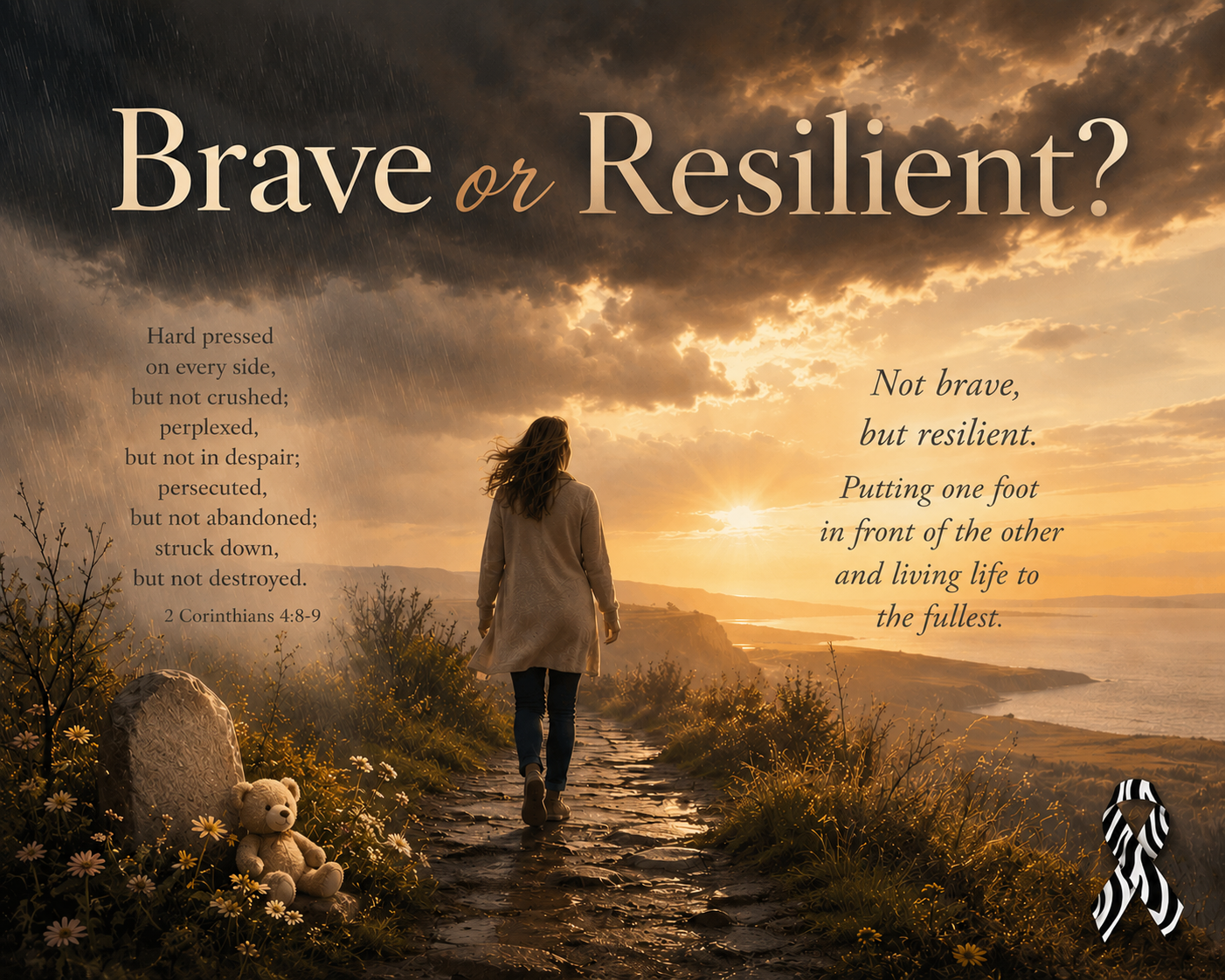
Brave or resilient?

As a cancer patient, I’ve often been told that I’m brave. I know that people mean well, but that descriptor has never sat very well with me. To me, brave is the firefighter who enters a burning building to save lives or the person who jumps into deep water to rescue someone in danger of drowning. Bravery is defined as the mental strength to face danger, fear, or difficulty. It’s often impulsive or heroic. That doesn’t describe me or my thirteen year journey with neuroendocrine cancer.

Recently, a person whose opinion I value highly told me, “You’re so resilient!” and that word rang true to me. Resilience is a long-term process best described as the ability to endure, adapt, and survive adversity and recover from difficult experiences.

Those who know me well know that I’m a self-professed word nerd. Words matter to me. For more than a decade, the word stable, as in “no evidence of new or progressive disease” which was the final line on my latest CT scan report, has been a favourite word of mine. Now resilient has become another favourite!

So, how does a person build resilience? Becoming resilient is a lifelong process, not a one-time event. Life is rarely easy for anyone. Most of us experience a variety of difficult and upsetting events and circumstances over our lifetimes and I’m certainly no exception. Long before I was diagnosed with cancer, I endured a series of other tragedies and traumas, including the loss of a preschool daughter to leukemia. In each case, I chose to keep putting one foot in front of the other and living life to the fullest extent possible. That wasn’t easy, it wasn’t brave, and I couldn’t have done it alone, but it did help prepare me for life with an incurable cancer. I learned to accept circumstances that I couldn’t change and I also learned to depend on the God who loves me and who promised to take care of me.

In 2 Corinthians 4:89, the apostle Paul, who suffered many hardships, wrote “We are hard pressed on every side, but not crushed; perplexed, but not in despair; persecuted, but not abandoned; struck down, but not destroyed.” That’s resilience!

Saying yes to the unexpected

From time to time over the years, I have experienced the joy that comes from saying yes to the unexpected. While it’s easy to stay within what’s predictable and familiar, saying yes often requires us to step out of our comfort zone and stretches us as a person.

In mid December, I received an email from the president of CNETS (the Canadian Neuroendocrine Tumour Society) asking me if I would be interested in sharing my patient story at a pharmaceutical company gathering in Kananaskis on January 20th. While I seldom give an immediate response to an unexpected request, preferring to give myself time to think about it first, I knew right away that this was something I wanted to do. Since there was nothing on our calendar to prevent me from saying yes and since we could also combine it with a weekend visit with our daughter’s family on the way, I sent off a quick reply saying yes to this unexpected opportunity. I will admit that the location in the beautiful Rocky Mountains of southwest Alberta was an added incentive!

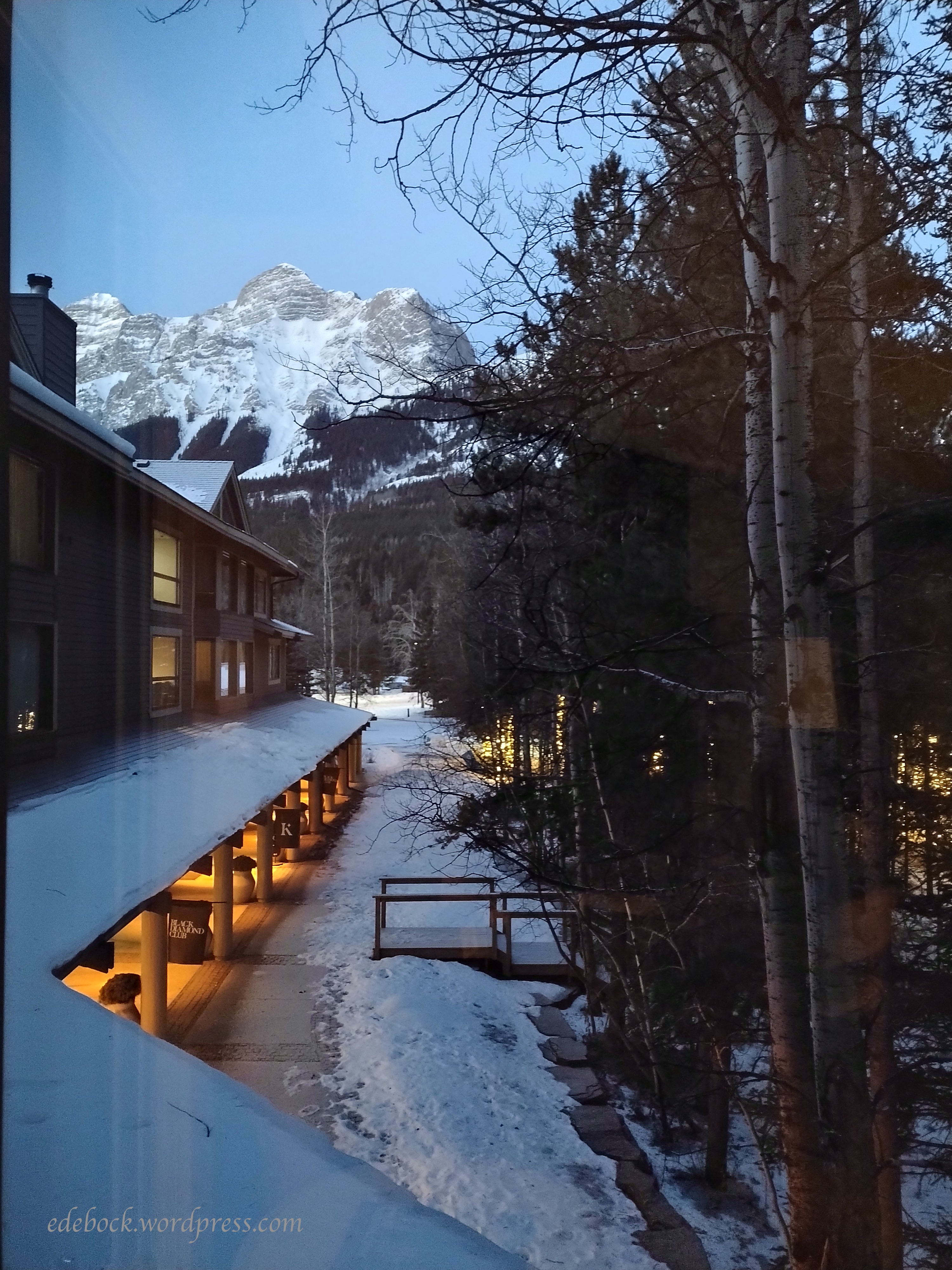
The event was held in the Black Diamond Club, an exclusive “hotel within a hotel” at the Pomeroy Kananaskis Mountain Lodge, and we were provided with one night’s luxury accommodation there. Here’s the beautiful view from the window of our room early Tuesday morning.

The group that I would be speaking to on Tuesday was made up of approximately 20 individuals from across the country plus a member of the company’s legal counsel from the US. We were invited to have dinner with them on Monday evening and by the time we’d spent a couple of very relaxing hours over a delicious meal together, I felt so comfortable with them that any nervousness I might have felt about sharing my story had completely evaporated. They have an unwritten rule that when they assemble in person they don’t discuss politics or religion, probably very wise considering the state of the world that we live in today. Instead, conversation around the table ranged from families to food to travel and a variety of other topics. After dinner, hubby and I relaxed in the outdoor hot tub before retiring for the night.

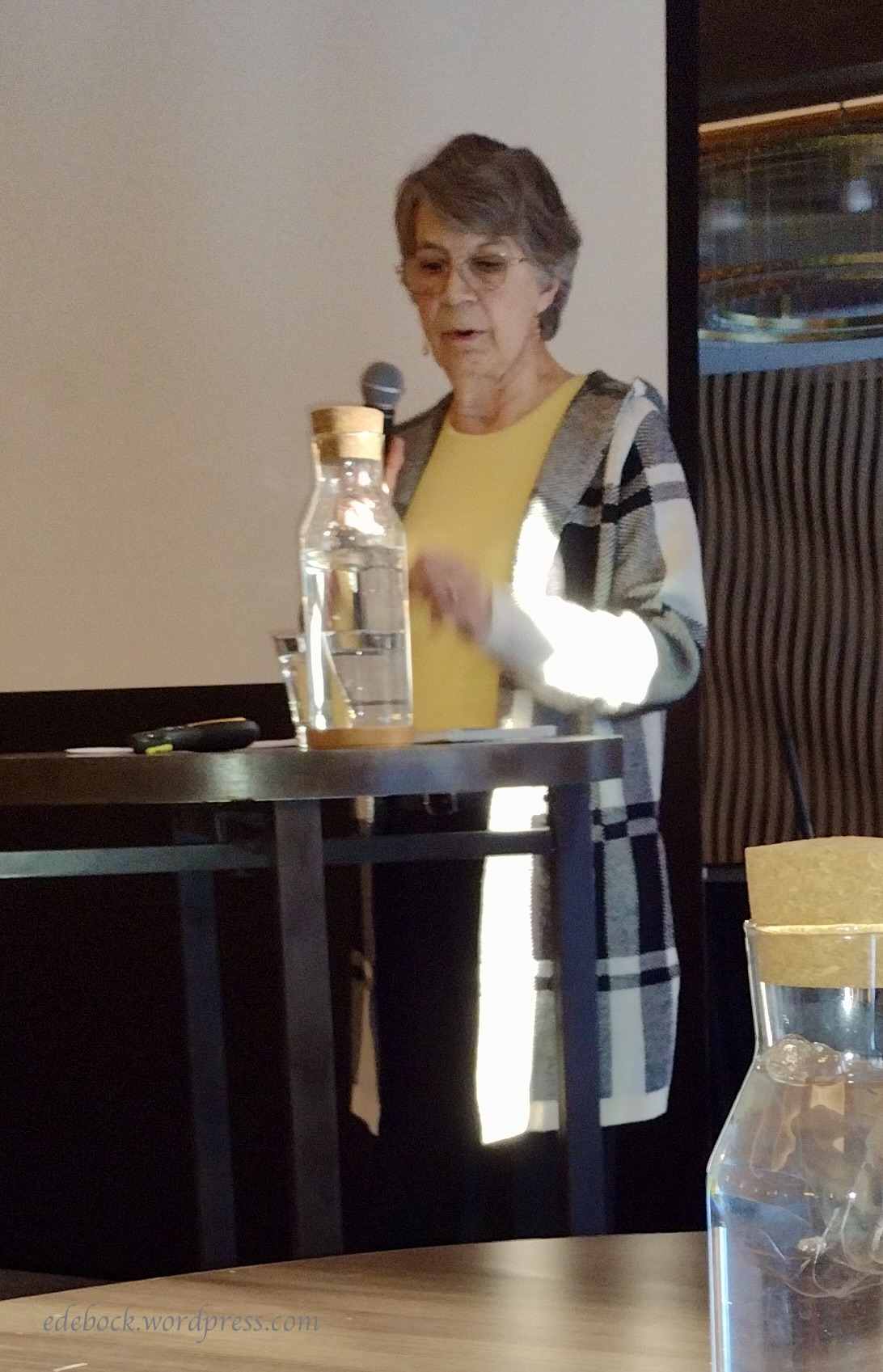
The following morning my story was very well received. As the producers of a generic version of a medication that is commonly used by neuroendocrine patients, they wanted to hear about my journey to diagnosis, my treatments, and what it has been like living with NETS (neuroendocrine cancer), as well as what tools or support services might be helpful to the NETS community. I was impressed by the fact that  they were very interested in learning about the disease from the patient’s perspective. There were audible gasps and even a few tears, but also moments of laughter as they hung on every word. My half hour talk was followed by a question and answer period during which they asked some very insightful questions and expressed their appreciation for all that I shared.

Once again, saying yes to the unexpected was a very rewarding experience and one that I’d be happy to repeat. When we take a chance and step into the unknown, we have the opportunity to make new connections, discover new strengths, and open ourselves up to unexpected rewards. I believe in embracing life and living it to the fullest, so I hope to have more opportunities to say yes to the unexpected!

Keeping Christmas simple

If you came to the blog last Friday looking for a new post and didn’t find one, I apologize. If you could have looked through your screen all the way to our house, you would have seen me curled up on the couch under a soft, cozy blanket that our granddaughter gave me for Christmas a few years ago. Listening carefully, you might have heard hubby in the kitchen trying to rustle up a meal for us even though cooking is not his forté. On Monday of that week, I’d had an ablation to destroy a neuroendocrine tumour on my liver and it took far more out of me than I expected.

In her follow-up report, the specialist described the procedure as a “technically challenging CT guided ablation” and challenging it was! Instead of the 3 hours that I was originally told I’d be at the hospital, I was there for over 15! As often happens with these tightly scheduled appointments, there was a delay in getting started, but it was the location of my tumour that made the procedure such a challenge. It took a very long time for her to place the probe in exactly the right location to fry the tumour. So long, in fact, that I was beginning to think that it wasn’t going to happen.

Yes, you heard that right! Although some sedation was provided to help me relax, I was awake and aware of what was going on throughout the entire procedure. Definitely not fun, but necessary so that I could inhale, exhale, and hold my breath at the right moments to help with the precise placement of the probe.

After it was finally over, we ended up having to stay at the hospital much longer than anticipated because my oxygen level dropped, possibly a reaction to pain medication. Two extremely caring nurses stayed well beyond the end of their shift to monitor and care for me, but late in the evening I was transferred to emergency. It was after midnight by the time my oxygen level was finally back to normal and we were allowed to leave. Thankfully, we were only driving across the city to our son’s place and coming home the following day!

The first few days at home are a bit of a blur. I wasn’t in much pain, but there was brain fog, loss of appetite, and absolute exhaustion. Although hubby did his best in the kitchen and I tried to force myself to eat, I lost seven pounds in less than a week. Once things began to turn around, I started to worry about how we’d possibly be ready to celebrate Christmas in just a month’s time and to beat myself up for not being better prepared in advance.

That’s what today’s post was actually meant to be about… keeping Christmas simple! Somehow, over the years, celebrating the season came to mean trying to do too much too perfectly, but lying on the couch, I had a lot of time to think about what Christmas means to me and which of our traditions matter most. At one point, I turned to hubby and asked if he’d mind very much if we didn’t bother putting up the tree this year. He said he was fine with that, so unless I get a sudden burst of energy and change my mind, it’s going remain in storage. I do plan to do some simple decorating this weekend, beginning with our nativity sets as they represent what this season is really all about. I’ll miss the lights on the tree, but some soft candlelight and a string of tiny twinkling lights will do. 

Christmas wouldn’t be Christmas without my mother’s shortbread and the nuts and bolts that have been a family favourite since I was a child so I’ll be making those, but if I decide that we need more baking than that, I’ll be buying it this year. 

We already simplified Christmas shopping last year by transitioning from purchasing individual gifts for each of our grown children, their spouses, and all eight grandchildren to giving family gifts instead. That’s a new tradition that we plan to continue and I’ve already informed the kids that this year’s gifts might be monetary. Without the pressure of trying to find the perfect gift for each person on our list, we’re enjoying shopping for small stocking stuffers for the son and family who will be hosting us for Christmas this year.    

As I contemplated what I love most about Christmas, I realized that connecting with people is top of the list. In addition to spending a few days with our son’s family over Christmas, we’re planning a mid December visit with our daughter and hers. While my energy level hasn’t returned to normal yet and I’m going to have to be careful not to overdo, I’m also looking forward to a few select events with friends. The first, this evening, will be a ladies Christmas banquet and fashion show in a nearby community. 

While I was lying on the couch last week, my Christmas cactus bloomed. It often produces profusely at this time of year, but this time there was just one blossom! It too, seemed to be saying, “let’s keep things simple this year!” In keeping with that thought, I’m going to be intentional about carving out more time on the couch with my cozy blanket, a hot drink (or maybe a glass of wine), a candle burning, and a Hallmark movie on TV or a book in my lap.   

Image: ChatGPT

 

The great zebra debate

There’s a great debate in neuroendocrine cancer circles over the use of the zebra as our symbol. At one extreme are patients, usually women, who show up at meetings and conferences decked out from head to toe in zebra stripes and who refer to one another as fellow zebras. On the other side of the debate, the world’s best known and most highly revered patient advocate is so opposed to the idea that he doesn’t allow anything zebra on his social media sites. He thinks that it’s an infantile gimmick that trivializes the grave nature of our disease and that it’s actually detrimental as an awareness tool.
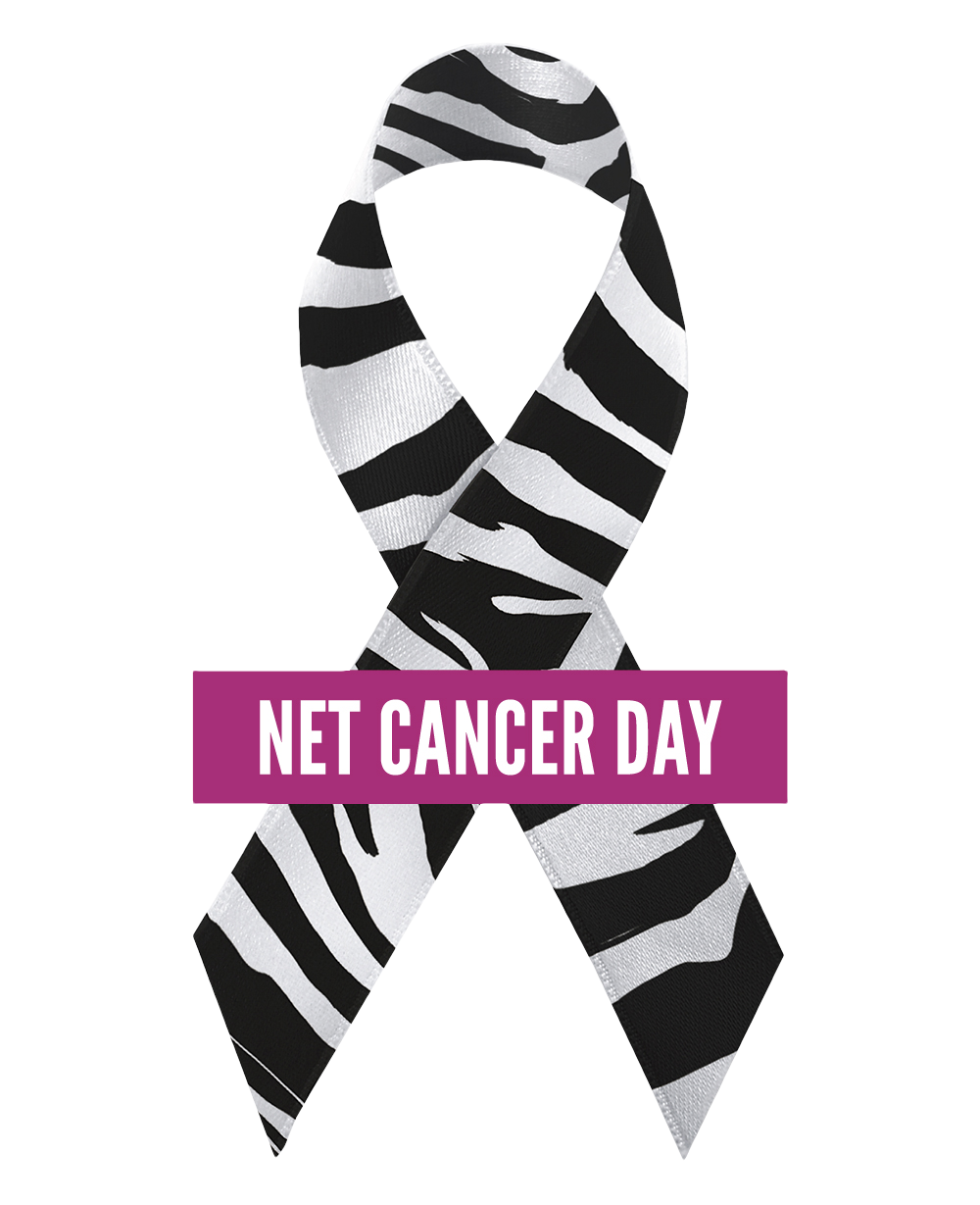
So, how did the zebra become our symbol in the first place? In North America, medical students are taught “when hearing hoofbeats, think of horses, not zebras.” Neuroendocrine tumours (NETS) are very difficult to diagnose. The symptoms are usually vague and similar to more common health problems. Many family doctors have never encountered a NETS patient so when they’re presented with symptoms like stomach pain and diarrhea, they naturally think of things like Irritable Bowel Syndrome, Crohn’s Disease or lactose intolerance. They think of “horses”, not “zebras”.

When it comes to the great zebra debate, I stand somewhere in the middle. I think we need to take advantage of every available opportunity to draw attention to our cause and if that includes zebra stripes, I’m fine with that. After all, branding works. For example, the pink ribbon and the colour itself have become highly recognized symbols of breast cancer. While you’ll never see me wearing zebra stripes from head to toe, partly because I think it looks silly and partly because I don’t look good in black and white, I do have a zebra striped top in cream and brown and on occasion, wearing it has led to a conversation about my cancer.

Although within weeks of learning that I had neuroendocrine cancer, I wrote a blog post entitled I’m a zebra!, I’ve now joined the ranks of those who cringe at being called that. Referring to ourselves as zebras makes it sound like we’re part of an exclusive club or a cult! Zebra refers to a diagnosis, not a person. While I have NET cancer, I am not my disease.

In my advocacy role and as a support group leader, I work with patients on both sides of the great zebra debate. I would really like to know your opinion. Do you think that symbols like the zebra and the striped ribbon can be effective in spreading awareness of a disease? Or do you think that they’re silly and make light of an important topic? Please leave a comment and let me know.

And, in closing, although it has very little to do with today’s topic, I can’t resist sharing the cover of the January 15, 1926 issue of Vogue magazine!

NET Cancer Day 2025

Once again, today is NET Cancer Day. November 10th is a day set aside to increase awareness of neuroendocrine cancer and to promote improved diagnostics, treatments, care, and research, but for those of us who live with the disease, every day is NET Cancer Day.

Here are a few alarming facts that point out why a day like today is vital:

  • Over 90% of all NET patients are incorrectly diagnosed and initially treated for the wrong disease!
  • The average time from onset of symptoms to correct diagnosis often exceeds 5 years!
  • Over 50% of NET patients are already at stage 3 or 4 when diagnosed!
  • Many primary care physicians are unfamiliar with NETS and some still falsely believe that it isn’t even cancer!

These are just some of the reasons that I have become involved in patient advocacy over the past couple of years. Once considered a rare disease, NETS has become the fastest growing class of cancer worldwide. Although the reasons for this aren’t fully understood, it’s likely due to increasing awareness and better diagnostics.

In addition to my role as a member of the CNETS (Canadian Neuroendocrine Tumour Society) Advocacy Advisory Board, I’ve become actively involved in trying to improve the patient experience in a number of other ways. I had the opportunity to participate as a patient representative in an Ipsen project to design an injection toolkit to make the experience easier for patients who are newly prescribed the medication that I receive every 28 days. Ipsen is the pharmaceutical company that produces the drug.

Also, if you’ve been reading my blog you know that I participated in this summer’s CNETS “Hoofing It” fundraiser. With the generous support of many, including some of you who read the blog, we managed to raise over $40,000 for NET cancer research here in Canada. An additional bonus for me was the fact that the “hoofing it” that I committed to as part of this initiative got me out walking almost every day. Now that the campaign is over and the weather has turned cold, daily walking has become a habit and I’ve dusted off the treadmill in the basement so that I can keep it up over the winter!

Another big opportunity came my way earlier this year when I was asked to co-lead the CNETS Alberta patient support group that meets online once a month. This really was a big step for me as I’d never been part of a support group before! Every month I hear stories from patients who were initially misdiagnosed, who feel confused or unheard, whose symptoms have been minimized or dismissed as all in their head, who feel lost trying to navigate the health care system, or who don’t know how to advocate for themselves. More than ever, I’ve come to realize how badly we need to continue raising awareness and promoting better diagnostics, treatments, care, and research. One day a year just isn’t enough!

And now, on a more personal note, you may remember that in my 12 year cancerversary post at the end of August, I mentioned the latest tumour on my liver. A week from today, on November 17th, I’ll be having a CT guided ablation to destroy it. A needle-like probe will be inserted through my abdomen and into the tumour where it will deliver microwave energy to kill the cancer. This is done as a day procedure, but I’ll be required to stay in the city overnight in case of complications. I’m not sure what the recovery will entail, but hopefully I’ll be back on the treadmill before long!


My 12 year cancerversary!

Yesterday was my 12th cancerversary. Twelve years have passed since I heard those dreadful words, “It’s cancer and it has already spread.” At the time, that sounded like a death sentence, but two weeks later we learned that I have neuroendocrine cancer (NETS) which, while not curable, can be treated and usually grows more slowly than most other cancers.

One of the things that I learned early on was how important it is for patients to advocate for themselves. Last Friday proved that point. When I saw my oncologist in mid July to discuss the results of my latest CT scan which showed that a small tumour on my liver had started to grow, he referred me back to the interventional radiology specialist who did my radioembolization in March of last year. He expected that I would hear something within a couple of weeks, but when we returned from our recent trip, more than a month had passed and I’d heard nothing. On Friday morning, I called and left a message asking for confirmation that the referral had been received and, if possible, an update on what was happening. In less than half an hour, I had an appointment to see the doctor during her noon hour on Monday! I can’t help wondering how long I would have had to wait if I hadn’t called.

We actually had to wait quite awhile to see the doctor on Monday because she was tied up in a procedure that took much longer than expected. When we finally got in, she did an ultrasound and wasn’t able to find the tumour. Unfortunately, that doesn’t mean that it isn’t there. It simply means that it’s in a location that isn’t easy to see. After discussing the fact that the tumour is quite small and that I don’t have any symptoms, we decided on a tentative treatment plan, but we aren’t actually going to do anything until after my next CT scan on September 26. This battle is really a balancing act. We don’t want to treat too soon because that can limit what we might be able to do in the future, but we also don’t want to wait too long and let the tumour get too large.

After twelve years of living with this, I’ve become much more comfortable with waiting. Rather than worrying about what might or might not be happening inside me or about what the future might hold, I’m simply going to go on living my best life right now!

Image: Surya Ali Zaidan

If you would like to help, I’m still fundraising for neuroendocrine cancer research. Click here to visit my fundraising page. Although I’m nearing my $1200 goal ($100 for each of the 12 years that I’ve been fighting this disease) the campaign is still far short of what we need to fund research grants for the coming year. We could really use your help!

No one fights cancer alone

My cancer is on the move again and so am I. It’s been 5 years since I last participated in the annual CNETS (Canadian Neuroendocrine Tumour Society) Hoofing It fundraiser and I’m late to the party this year, but I’ve decided to get involved again.

It’s been 12 years since I was diagnosed with stage 4 neuroendocrine cancer (NETs). Once the shock of learning that I had a cancer that I’d never heard of and that I’d be living with it for the rest of my life wore off, it became important to me to do what I could to help raise awareness of this little known disease and to support fundraising efforts for research, better treatments, and patient support. If it wasn’t for the research that organizations like CNETS fund, I probably wouldn’t be here today, so this is definitely something that’s very close to my heart!

I don’t think I’ve mentioned it on the blog before, but several months ago I became co-lead of the CNETS Alberta Patient Support Group that meets online once a month. Every month I hear from patients and caregivers whose lives have been turned upside down by this disease. Some are newly diagnosed and looking for answers. Others have been battling this for longer than I have and some are ready to give up hope.

After 16 months of stability following the radioembolization treatment that I had in March of last year, my cancer is growing again. Another tumour on my liver has started to increase in size and I’m waiting to find out how we’re going to treat it. At this point, my other tumours continue to remain stable and the cancer hasn’t spread to any new locations, but this is definitely beginning to feel a bit like a game of Whack-a-Mole! We haven’t exhausted all the possible treatment options yet, but this new development has reminded me how important it is that research into new treatments continues to move forward.

In past Hoofing It fundraisers, participants kept track of how many kilometres they walked, hiked, biked, or paddled, but not all patients are physically capable of doing those things. This year points are being assigned for a wider variety of physical activities. I’m not concerned about earning points though. My goal is simply to walk or hike at least 5 days a week until the end of September & to raise a minimum of $1200.

The walking part is easy. I was already doing that before we went to Europe, but since arriving home last month, I’ve been a bit lazy. Hopefully participating in this endeavour will provide the motivation I need to keep moving.

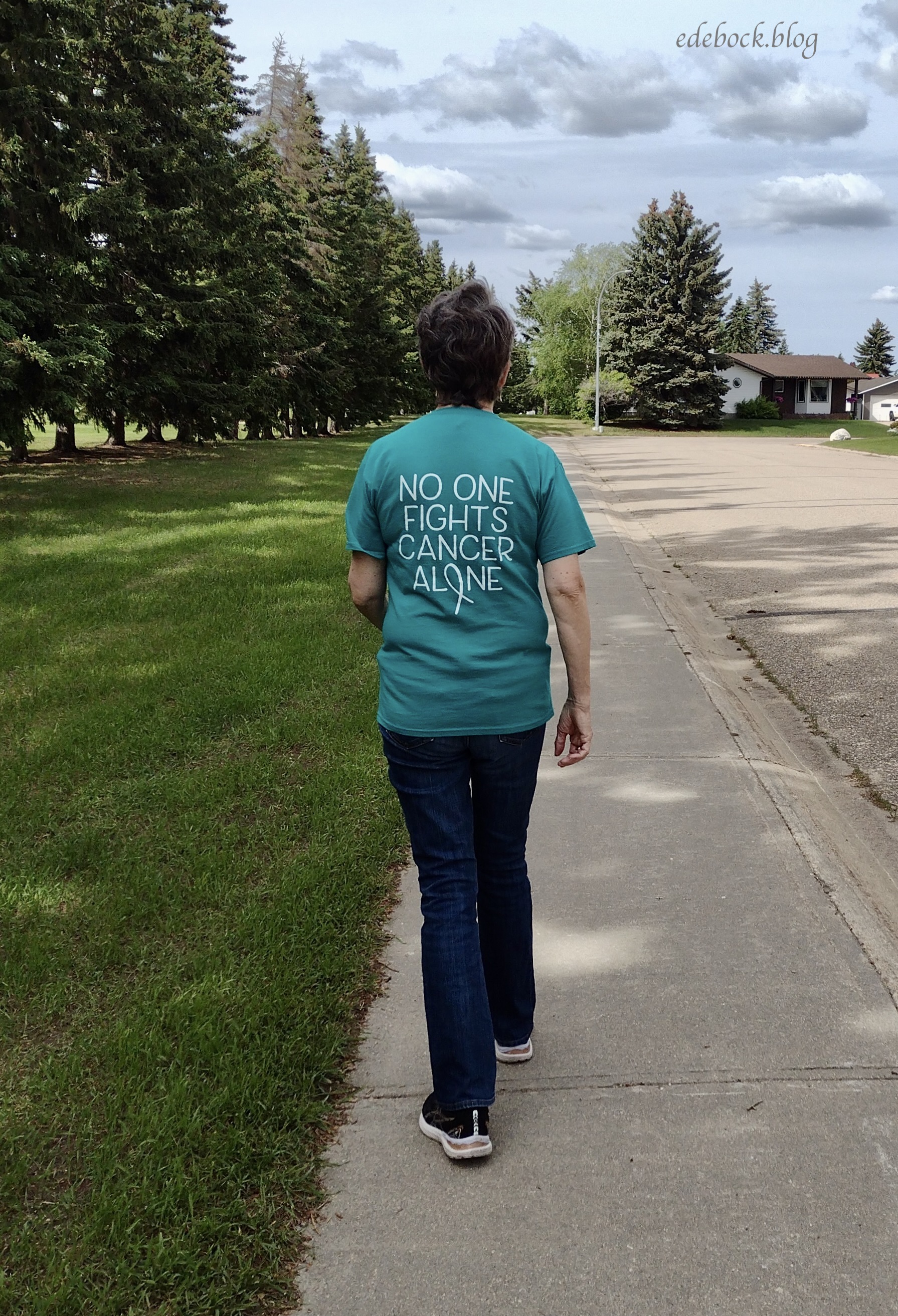
The $1200 is where you come in! As my new t-shirt says, no one fights cancer alone. I’m hoping that I can persuade you to visit my fundraising page here and make a donation. No amount is too small! Every cent received by CNETS during this campaign will go directly to neuroendocrine cancer research. We need to know what causes this disease, we need more and better treatments, and we need to find a cure!

All packed and ready to go!

We’re packed and ready to set off on our next big adventure, but I don’t remember ever having so much trouble deciding what to put in a suitcase! I pondered for a long time and even tried on several different combinations before finally settling on what I would take. Looking back at my packing review from our 2019 trip to Europe helped. Interestingly, a few of the same pieces are going with me again this time! I also thought about what would be culturally appropriate and, of course, I considered the weather. 

Due to the sensitive nature of the area and the ministry that we’ll be involved in, I’ll only be able to share the tourist parts of our trip on the blog, but according to weather forecasts for the various locations that we’ll be travelling to, it looks like daytime temperatures will mostly be in the mid to high 20s C (75 to 85ºF). I suspect that some, but not all, of the facilities that we’ll spend time in will be air conditioned, so we need to be prepared for that as well.  

Although we’re leaving home today, we don’t actually fly out until Monday. Over the weekend, hubby and I will be attending a national neuroendocrine cancer patient conference in Calgary where I’ll be sharing my patient story tomorrow afternoon. That complicated the packing process somewhat because we’ll be wearing things at the conference that we won’t be taking overseas with us. When the conference is over, we’ll spend Sunday night at our daughter’s and then leave our vehicle with her. That meant that I could also pack a separate tote bag to leave there while we’re gone. I just have to make sure that everything is in the right place when we leave for the airport!  

I expect to have internet access most of the time that we’re away and hope to squeeze in time to update the blog from time to time, so come along and travel with us! 

Time for a change

Although there’s been plenty of talk about doing away with daylight savings time here in Alberta, it hasn’t happened yet and I’m glad. Yes, we lost an hour of sleep last Saturday night, but I’m loving the extra hour of daylight every day!

Speaking of time and change, I’ve decided that it’s time for a change here on the blog. I’m finding it more and more difficult to come up with a fashion post every single week. When I introduced Fashion Friday in March 2016, I had no idea how long I’d be able to keep it going. I think 9 years and more than 400 posts has been a pretty good run! If you’re one who follows me for those Friday posts, please don’t panic though! I’m not quitting completely. I still plan to write about fashion, just not as often, and I still plan to publish a post every Friday. Some will be about fashion and some will explore other topics. I do hope you’ll continue to follow along.

So as not to be completely devoid of fashion news today, I do have a couple of things to share. Northern Reflections, one of Canada’s most recognizable fashion brands, has been acquired by Putman Investments, the same company that was responsible for revitalizing a number of other well-known retail brands including Toys “R” Us and Babies “R” Us Canada, Sunrise Records, and UK-based HMV. While customers may see a few changes over the coming months, the company is committed to maintaining approximately 105 stores across Canada. On a similar note, Ricki’s and Cleo, the two Canadian fashion retailers whose demise I previously wrote about here, have also been purchased out of creditor protection by Putman Investments. I definitely look forward to seeing what their revival looks like and I’m very happy that the rescuing company is Canadian!

On a more personal note, I’ll also share a change that took place in my life about a week ago. Considering the fact that I had never even once attended a patient support group meeting, it might seem a bit crazy, but I agreed to become co-lead of the CNETS patient support group here in Alberta! CNETS is the Canadian Neuroendocrine Tumour Society and neuroendocrine is the cancer that I’ve had for over 11 years. When I was first diagnosed back in 2013, support group meetings took place in person in Edmonton, over two hours from my home. Since I already had the support of family, friends, and prayer partners around the world, I really didn’t feel a need to get involved. Like so many other things, with the onset of COVID, the meetings went online and they’ve remained that way since except that there haven’t been very many of them in the past couple of years. The previous leader was feeling burned out and no one had stepped up to take his place. When a fellow member of the CNETS Advocacy Advisory Board who also lives in Alberta asked me to consider joining her as co-lead, I was very hesitant. I don’t need a patient support group, I told myself, but the answer I heard in my heart was “maybe the group needs you”. So here I am, jumping into something brand new. Oh well, just like Daylight Savings Time, change can be a good thing!

Image: Pixabay