Chinos

LogoI finally went clothes shopping this week! To be more truthful, we were in the city for an appointment and I went into one clothing store. Just one!

After weeding several things out of my closet that should never have made the cut when I did my seasonal closet switch last fall, I identified a couple of significant holes in my summer wardrobe. As I mentioned two Friday’s ago, I have lots to wear when the weather is hot, but where we live I need things that are suitable for cooler summer days like the ones we’ve been having recently. One thing that I clearly needed was a couple of pairs of pants that would be warmer than my shorts and capris, but cooler than jeans.

Though I don’t shop for clothes online, the internet is a great place to do some scouting, especially during these days of Covid-19 when I don’t want to spend a lot of time browsing. I’d much prefer to go into a store, buy what I want, and leave again without lingering. When I knew that we’d be going to the city, I checked out the Mark’s website in advance and decided that their chinos might be just what I was looking for. Chinos are a nice middle ground between dress pants and jeans for both men and women.

The first thing I did when I entered the store was check to see if the fitting rooms were open. If I couldn’t try the pants on, there’d be no point in me even looking at them. Thankfully, a limited number of them were in use and there weren’t a lot of customers in the store so I didn’t even have to wait in line.

IMG_1063

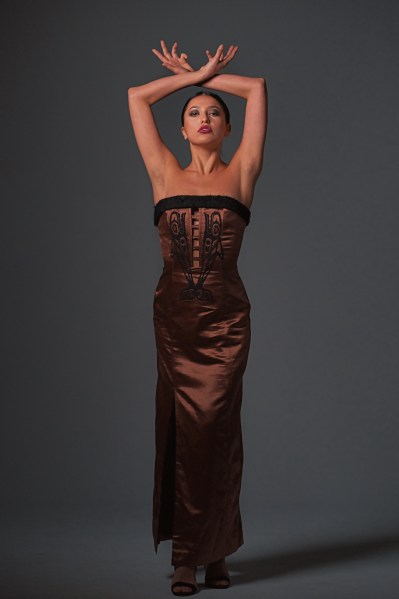
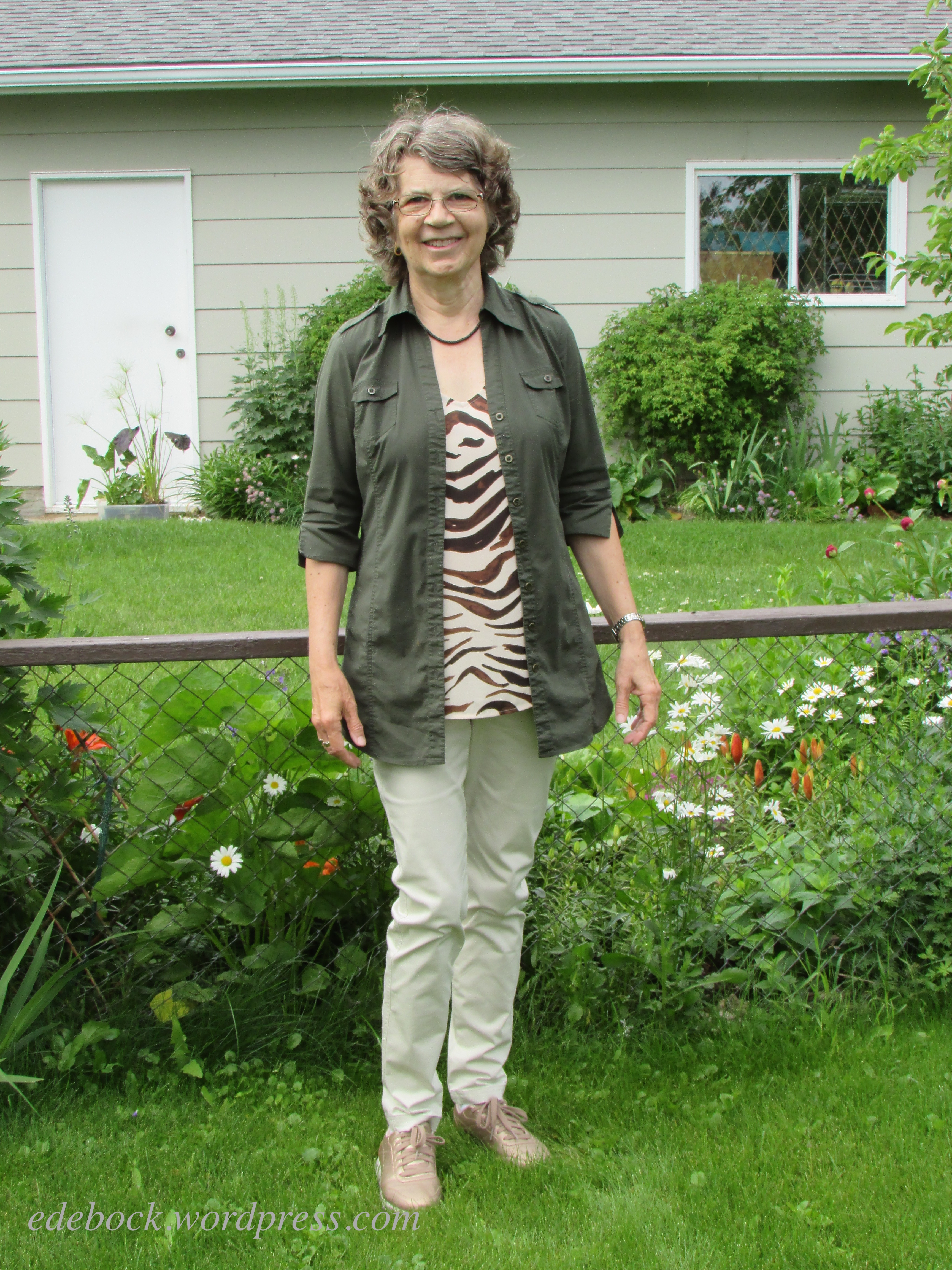
Finding pants that fit well is often a struggle for me, but Mark’s slim-fitting, tapered leg chinos were perfect for my boyish figure. The toughest decision was which of the several colours to choose! I settled on two pairs; one in a light tan called Stone and the other in a dark Olive. Both will be very versatile. I’m showing you the light pair today, but I’m sure that the others will show up on the blog sometime soon. The bottom hem is meant to be rolled to ankle length, but they can also be worn down.

IMG_1054

I didn’t realize until after we’d finished taking the pictures that I’d forgotten to put on any lipstick, so this is my au naturel, at home look! Actually, I’d just got back from having several vials of blood taken at the local hospital, so perhaps I was even a bit paler than usual!

Being a word nerd, I couldn’t help doing a bit of research to find out how chinos got their name and what it actually meant. Apparently, the word was first used to describe khaki coloured military trousers that were worn during the Spanish American war of 1898. They were made from a cotton twill fabric that was sourced from China, so the name came from the fact that Chino is the Spanish word for Chinese. Thankfully, my new pants, which are made of a stretch cotton blend, were not made in China as one of my fashion goals for this year is to avoid buying Chinese products as much as possible. Of course, I have no idea where the fabric came from. As I’ve mentioned before, being a truly ethical shopper is very difficult, but I try.

What is freedom?

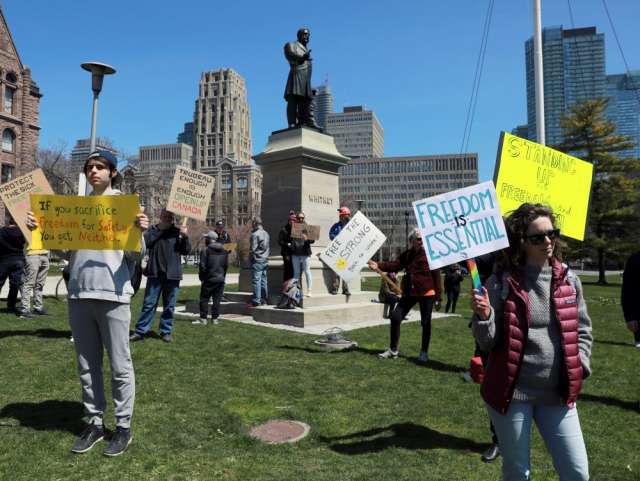
As the restrictions imposed by Covid-19 drag on, I’m seeing more and more on social media from people who are convinced that this is all a nefarious plot to permanently rob us of our rights and freedoms. These are people who, like me, have lived privileged lives; people who have no idea what true lack of freedom looks or feels like.

The Guardian 2

photo: The Guardian

In 1991, when the Soviet Union collapsed and the iron curtain ceased to exist, Eastern Europeans jubilantly celebrated the freedom that they had long been denied. Sadly, however, some of the first “freedoms” to be exercised in these formerly communist countries were indulgence in pornography, prostitution, drugs, and organized crime. So what is freedom? According to many, it seems to be the right to do whatever I want, whenever I want, to whomever I want. How incredibly self-indulgent!

Freedom means many things to many people. It may mean having the opportunity to vote for the ideas, people, or parties that best represent our views. It may mean being able to freely express our ideas and opinions without fear of reprisal. To some it may mean being free of debt and having the financial wherewithal to buy whatever they want. To others it may simply mean being able to live without constant fear of violence or persecution.

Is being told to social distance or to wear a mask to enter certain businesses really robbing anyone of these rights and freedoms? Are temporary school closures and having to worship online instead of in person really endangering society as we know it? I hardly think so!

During the current pandemic, those of us who are willing to temporarily give up some of our freedoms for the good of the community and who dare to suggest that others ought to do the same run the risk of being labelled socialist. That’s an insult that’s commonly hurled about by those who fear that their freedoms are being forever taken from them. I pay it little mind, however, as they clearly aren’t political scientists!

The Bible has a lot to say about freedom. In fact, it’s one of the central themes of the entire Word. John 8:32 tells us that “the truth will set you free” and later, in John 14:6, Jesus says, “I am the way and the truth and the life.” True freedom is found in relationship with Him.

This freedom is both freedom from and freedom to. Freedom from the things of this world that enslave us: earthly desires for wealth, success, and status; jealousy and envy; lust and perversion; rivalry and hatred. Freedom to be everything that we were designed to be, to do what we were made to do, and to serve God by serving others. Galatians 5:13-14 sums it up this way, “You, my brothers and sisters, were called to be free. But do not use your freedom to indulge the flesh; rather, serve one another humbly in love. For the entire law is fulfilled in keeping this one command: ‘Love your neighbour as yourself.'”

So how does this apply to Covid-19? Like true Biblical freedom, our political and social freedoms are also responsibilities. They don’t exist so that we can do whatever we want, whenever we want, to whomever we want. They exist for the good of the whole. Freedom provides opportunity and reason to serve whether by delivering groceries to doorsteps, making phone calls to ensure that neighbours and friends are faring well, sewing masks, or simply practicing social distancing and keeping our school and church doors closed until the threat of spreading the virus has lessened.

I don’t hide behind rose coloured glasses nor do I blindly believe that everything that our political leaders do is for our good, but I also don’t believe that Covid-19 is an evil plot to permanently rob us of our rights and freedoms!

National Post

photo: National Post

At least these ones are social distancing!


DIY winter moisturizing masks

LogoCold, dry winters here on the Canadian prairie are terribly harsh on skin. Awhile ago, my face was beginning to look and feel like parchment! My regular skin care routine simply wasn’t cutting it. I needed more moisture than my daytime lotion and night creme were providing. Being a frugal fashionista (and living where there isn’t a wide array of products to choose from) I looked no further than my kitchen for help!

That’s right! All you need for a do-it-yourself winter moisturizing mask is probably right there in your pantry.

IMG_0812

Unpasteurized honey has been used as a beauty treatment since ancient times, but what makes it such a great skincare ingredient? First of all, honey is a humectant, which means that it attracts and retains moisture. It also contains a number of vitamins and minerals, it’s a potent source of antioxidants, and it’s anti-bacterial.

Mediterranean women have also used olive oil as a moisturizer for centuries. Like honey, it’s loaded with nutrients, is a natural humectant, and is rich in antioxidants.

Cleopatra was renowned throughout history for her radiant skin and stunning beauty. Early records show that she added honey to her milk baths to keep her skin smooth and firm. Olive oil and honey facials were also part of her beauty regime. If these things were good enough for Cleopatra, I thought they must be worth a try!

464192-cleopatra

While either unpasteurized honey or extra virgin olive oil can be used alone, why not try one of these simple recipes for smoother, softer, well hydrated skin?

Exfoliating Mask

When I used this one, my face looked like a glazed doughnut, but it felt wonderful!

  • 1 tablespoon honey
  • 1 teaspoon salt
  • a few drops of olive oil

Mix ingredients together and apply to clean, wet skin in a circular motion. Avoid eye area. Leave on for about 15 minutes. Rinse thoroughly with warm water and follow up with your favourite moisturizer.

Salt has been used as a healing agent for centuries. It tightens, preserves, and acts as an exfoliant, removing stubborn dead skin cells and allowing new and healthy skin to emerge, but be very gentle with this mask as it is quite abrasive.

Gentle Exfoliating Mask

  • 2 teaspoons honey
  • 1 teaspoon baking soda
  • a few drops of olive oil

Mix and use as above.

Moisturizing Mask

This one is my favourite! It’s so simple and soothing.

  • 1 to 1.5 teaspoons honey
  • 1 to 1.5 teaspoons olive oil

Mix ingredients. Apply to clean, damp skin. Leave on for 15 to 20 minutes then rinse thoroughly.

There are many more DIY recipes online that include other ingredients from your kitchen such as oatmeal, egg yolk, yogurt, and cinnamon but all you really need for an effective and inexpensive beauty treatment is olive oil and honey. You can use any of these masks weekly as needed. I used the Exfoliating Mask first and followed it with the Moisturizing Mask a week later. That was a couple of weeks ago and my skin is still thanking me!

It’s all about pockets

LogoHave you ever wondered why women carry purses and men don’t? It’s all about pockets… and history.

Pockets as we know them didn’t come into being until the 17th century. Prior to that time, both men and women wore bags tied to their waists or suspended from belts, a bit like modern day fanny packs. As the world became more urban and criminals more sophisticated, people began to hide these “pockets” under layers of clothing to keep their contents safe from pickpockets.

Victoria and Albert Museum

Woman’s “pockets” – mid 1700s – Victoria and Albert Museum, London

In the late 17th century, pockets began to be permanently sewn into men’s coats, waistcoats, and trousers. Women, however, continued to wear bags hidden beneath their dresses. These were often large and beautifully decorated, but terribly inconvenient. The average 17th century woman wore several layers beneath her billowing skirts. Her pockets would be tied around her waist, between her under-petticoat and her petticoat. In order to access their contents, she essentially had to get undressed! She had ample space to carry a wide variety of personal items in her pockets, but she couldn’t get at them in public!

As styles changed and slimmer, body hugging dresses came into fashion, there was no longer space to hide pouchy bags under a woman’s clothing. Instead, they carried tiny decorative handbags known as reticules that could scarcely hold a handkerchief and a coin.

Later came the suffragettes and other feminist radicals who believed that women should have equal political and financial standing with men. With them came pockets for women! “Plenty of Pockets in Suffragette Suit” read a 1910 New York Times headline. The suit, the piece explained, had seven or eight easy to access pockets.

Fast forward to today. Leggings have no pockets at all and then there are those silly fake pockets in some of my dressier pants. What good is a pocket that isn’t really a pocket at all? Women’s jeans do have pockets, of course, but my husband can easily carry his wallet, keys, some loose change, a comb, some kleenex, and a pocket knife (you can take the boy off the farm, but…) in his jeans pocket while anything larger than a credit card in mine leaves an unsightly and uncomfortable bulge. What’s the difference, you ask? About 4 inches. The front pockets on his jeans are about 7 inches (18 cm) deep while mine are less than half of that! There are women who rail against what they call pocket inequality, but am I willing to give up snug fitting jeans for the convenience of being able to schlep a lot of stuff around in my pockets? Not really. I’ll happily stick to carrying a purse!

What about you? Do you think pocket equality is something women should be fighting for?


The Good Women of China

Do you ever finish reading a book and think that perhaps you should start over and read it again; that there was simply too much to absorb the first time through? The Good Women of China: Hidden Voices was such a book for me, not because it was enjoyable or entertaining, but because it was moving and at the same time very disturbing.

9781400030804

From 1989 to 1997, the author, Xinran, hosted a radio call-in show, “Words on the Night Breeze” during which she invited Chinese women to speak about their lives. Broadcast every evening, the show became famous throughout the country for its unflinching portrayal of what it meant to be a woman in China. From the hundreds of women who phoned in to share their stories of forced marriages, Communist Party indoctrination, persecution and imprisonment, extreme poverty, shocking cruelty, and incredible endurance, Xinran chose fifteen, including her own, to share in the book which was only written after she left China. “At that time in China, I might have gone to prison for writing a book like this.” she wrote in the closing paragraph.

When we lived in China for a short time a few years ago, I remember how shocked some of my college age students were to learn how old I was. They told me that Chinese women my age looked much older. Knowing that life in China had been hard, I wasn’t completely surprised, but I started looking at the elderly women on the street and in the market more closely. I wondered how much older than me they actually were and what their lives had been like. Until I read The Good Women of China, however, could not have imagined what many them probably endured.

Xinran is six years younger than I am. Many of the women she writes about are my contemporaries. Their stories are powerful, gripping, and anguished accounts of inhumane treatment, sexual exploitation, torture, rape, hunger, and death often at the hands of Chairman Mao’s Red Guards during the Cultural Revolution of 1966 to 1976. All the while, I was going to school, starting my career, getting married, and enjoying a life of freedom completely oblivious to what was going on half a world away.

Later, during the 1990s and early 2000s, I had the privilege of being ESL tutor to an elderly Chinese gentleman. Ling Cong Xin, better known as Sunny Ling to his Canadian friends, came to Canada with his wife in 1987 to live with their daughter and her family. After we had been meeting together for quite some time, I tried to convince him that he ought to record his memories and experiences. At first, he was very reluctant to do so, but eventually he asked if I would help and so began one of the most exciting projects that I have ever had the privilege to be involved in. I recall Sunny speaking with contempt about the soldiers of the Imperial Japanese Army forcing women and girls in occupied territories including China to be their sex slaves or “comfort women” before and during World War II, but he never spoke of Chinese girls being repeatedly raped by their own countrymen during the Cultural Revolution. Sunny was a highly educated man who had at one time been an official in the Nationalist government. During the Cultural Revolution, many of China’s intellectuals were imprisoned or, like Sunny, forced to leave the cities and take menial jobs in the countryside. When we reached this point in his story he began to claim that his memory was failing him and our project came to an end. I believe that reliving the memories simply became more than he could bear. Like Xinran, he also expressed a genuine fear that if some of the things he told me about were ever published, the Chinese government might make life difficult for his relatives who still lived in that country. After reading The Good Women of China, I can’t help wishing that Sunny’s wife had spoken English and that I’d also had the opportunity to hear her story.

“These are stories that must be read. The lives of these anonymous women are so moving that when I finished reading their stories I felt my soul had been altered.”    Amy Tan

“Mao said ‘Women hold up half of heaven.’ Sadly, this remarkable book demonstrates that he was wrong. Women in China actually hold up half of hell. Xinran has written the first realistic portrayal of women in China. Read it, and weep.”   Jan Wong

Winter at its best

Winter is not my favourite season, but sometimes it’s spectacularly beautiful here on the Canadian prairie.

IMG_0501

With a houseful of grandchildren for the past week, we were very thankful for sunshine, mild daytime temperatures, and fresh powdery snow that made outdoor activities not only possible, but a great deal of fun.

With shovels and brooms, a skating rink was cleared on a pond just outside town.

IMG_0497

Even the littlest one helped out.

IMG_0498

IMG_0522

IMG_0520

Many hours were spent tobogganing on a hill just three blocks from the house.

By late this morning, most of the family had packed up and left for home. Only our two Vancouver grandsons and their parents remained. If you’ve been following my blog for very long, you may remember how much I enjoy exploring the old abandoned buildings that are scattered across the prairie. Until today, that was a summertime activity, but when I discovered that 8-year-old Nate shares my passion for old abandoned houses, a plan was hatched and off we went to find a few.

Our first stop was an old farmstead a few kilometres from town.

IMG_0577

IMG_0578

IMG_0600

The last time we were there, the old shed was still standing, but not anymore.

When the sun is shining, there’s beauty even in decay.

IMG_0575

Next, we walked down the field to check out the old threshing machine in the edge of the trees.

IMG_0589

IMG_0598

IMG_0591

IMG_0592

IMG_0593

Sharp-eyed Nate spotted this tiny one room house beside the road not far from the old farmstead. I’m sure we’ve driven by it many times without ever noticing it. In the summer it would be completely hidden by leaves on the trees.

IMG_0610

IMG_0604

A little further down the road we spotted another old house that we’d never noticed before. We had to walk across a snowy field of canola stubble to check it out.

IMG_0611

Two stories tall with a cellar below, it would have been quite a place in its day. It’s a very solid structure built of logs overlaid with wooden slats. With doors and windows still intact and shredded curtains hanging in some of the windows, it’s in better shape than many of the old buildings we’ve found. Peeking through the kitchen window we spotted a calendar on the wall dated September 1963. Presumably that’s when it’s last residents moved out. I couldn’t help wondering why they left a sink full of dishes behind! If only these old walls could talk. What stories they would tell!

If winter was always this beautiful and this much fun, I might not mind it so much! The last of the family leaves tomorrow morning though and the forecast is calling for much colder temperatures a week or so from now. We haven’t made any plans for a winter getaway to warmer climes, but it might soon be time to look for a last minute deal!

Corduroy comeback

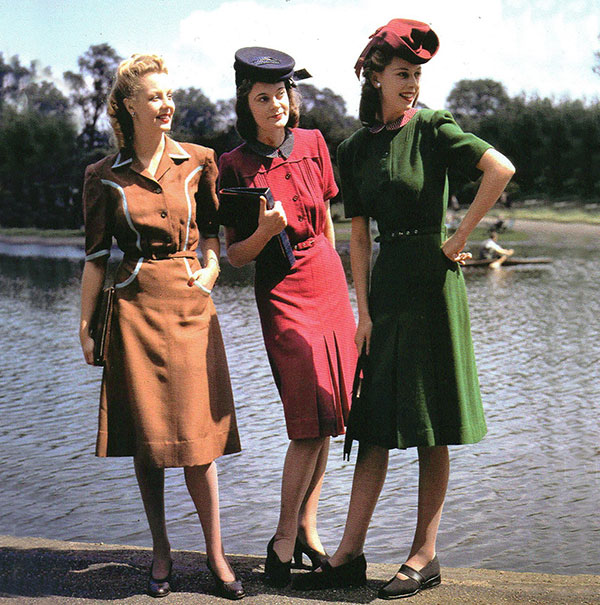
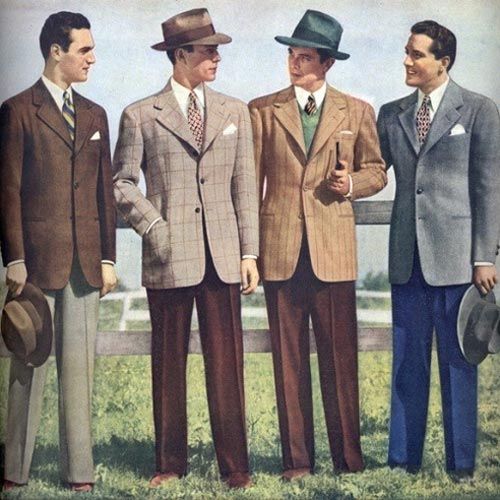
LogoI still remember my favourite corduroy bell bottoms from the 1970s. They were a warm toffee colour with dark brown patch pockets. Though its roots go back to ancient Egypt, corduroy as we know it today has been around since the late 18th century when it first appeared as factory wear in Manchester, England. It remained a working class fabric for the next hundred years before becoming a popular alternative to denim in the 1960s. While its popularity probably peaked in the 1970s, corduroy has never completely disappeared from the fashion world and it has been making a comeback this fall. Pants, skirts, jackets, and even dresses are showing up in this comfortable, easy care fabric.

The only corduroy garment in my present closet is this pair of tan pants.

IMG_0339

Unlike most corduroy, with its characteristic ribs, these are made of uncut corduroy which more closely resembles a very short napped velvet. A traditional five pocket skinny jean style, these cotton pants with just a hint of spandex came from Reitman’s, Canada’s largest womens’ clothing retailer, and are amongst the most comfortable in my closet. The only problem with them is that they’re several years old and beginning to show some wear. Perhaps this season would be a good time to find a replacement. Similar pair here.

IMG_0322

I’m wearing the cords with the Wonder Tee from cabi’s Fall 2019 Collection. You’ve seen the ultra light down vest from Uniqlo here and here and the gold sneakers that I wore all over Europe in May here.


Because you can

We’re nearing the end of another federal election campaign here in Canada. Monday, October 21 is election day, but since we’ll be far from home that day, we plan to vote in the advanced polls tomorrow. That will be Thanksgiving Sunday here in Canada which I think is quite appropriate. I’m very thankful that I live in a democratic country where I have the right, the responsibility, and the privilege to vote.

Sadly, many people don’t seem to feel that way. Voter turnout for the October 2015 federal election was 68.5%, a significant increase from 61.1% in the previous election. In my opinion, that’s still quite disgraceful. What is the matter with people? Why does 30 to 40% of our population fail to cast a ballot? Are we Canadians really that apathetic?

I will vote, if for no other reason than because I can. It’s a privilege that I don’t take lightly. Women before my time fought long and hard so that I could exercise this right. Women like Nellie McClung, well-known advocate and popular speaker on the subject of women’s suffrage in the early 1900s, who said “Our worthy opponents will emphasize the fact that women are the weaker vessel. Well I should think that a woman who cooks for men, washes and bakes and scrubs and sews for her family could stand the extra strain of marking a ballot every four years.”

The United States began allowing women to vote in 1920, after the ratification of the 19th Amendment to their Constitution. Here in Canada, many women voted for the first time the following year, but it wasn’t until much later that all Canadians had the right to vote. Most “people of colour” were prohibited from voting at the provincial and federal level until the late 1940s and it wasn’t until 1960 that every Canadian of age had the right to vote. That’s right! 1960! Prior to that time, aboriginal Canadians were required to give up their treaty rights and renounce their status under the Indian Act in order to qualify for the vote.

On election day, get off your butt and VOTE! Don’t make excuses. Don’t be one of the apathetic masses. Vote, if for no other reason than because you can! Before you vote, however, do your homework. Don’t cast your ballot based on how your parents or your grandparents have always voted and please look beyond social media for direction. Examine the record of those who’ve been leading us, look at the party platforms, and above all, consider the character of those who are vying for leadership positions. The future of our country depends on it!

canada-vote

Ribstones in the rain

On the top of a hill about half an hour northeast of here, is a collection of rocks with a long history and a story to tell. The Viking Ribstones are quartzite boulders carved by the nomadic First Nations people who inhabited the prairie in years gone by. The stones stand as a monument to Old Man Buffalo, the spirit protector of the herds that provided them with food, hides, utensils, tools, and so much more. Grooves carved in the two largest rocks in ancient times are thought to represent the ribcage of the buffalo and circular holes may represent arrow or bullet holes.

IMG_9919

IMG_9918

We weren’t too keen on spending a cool rainy afternoon cooped up in the house with three restless grandchildren who are visiting for the Labour Day weekend and Drew, the oldest, has been wanting to see the Ribstones since he first heard about them, so off we went. Thankfully, the rain was nothing more than a light drizzle as we approached the hill, the highest point for miles around.

IMG_9936

Historically, natives in the area left offerings to Old Man Buffalo at the Ribstones before hunting and after a successful hunt. Today, this is still a sacred and revered site to the First Nations people who continue to visit and leave offerings that include braided sweetgrass, tobacco or cigarettes, and other small trinkets. Five-year-old Simon was naturally curious and wanted to play with some of these objects, but in an attempt to teach him respect for the sacred nature of the place, we explained that it was something like a church and that the objects were similar to what we put in the offering plate at church.

Ribstone sites are very rare and this one has been designated a provincial historic resource. Only nine have been found in Alberta and this one is particularly significant because the stones remain in their original setting.

IMG_9927

Colourful ribbons and prayer cloths hang from the fence enclosing the site and trees in a nearby grove. Some have clearly been there for a long time, while others are newer.

The hilltop is a peaceful spot overlooking fields of grain in every direction. Hopefully the rain will let up and harvest can begin soon.

IMG_9924


Amsterdam by bus, boat, and on foot

Just like the other European cities that we’ve visited, Amsterdam has major museums and galleries, but for our last two days before heading home, we were looking for something more laid back. We spent most of the day yesterday touring the city via Hop On, Hop Off bus and boat. We didn’t hop off a lot. We just took in the sights and got a feel for the city.

Amsterdam is sometimes called “Venice of the North” and actually surpasses Venice for number of canals. In fact, it’s the most watery city in the world with over 100 kilometres of canals and more than 1500 bridges.

IMG_9342

IMG_9346

The tall elegant canal houses with their many different gable styles are so picturesque.

IMG_9357

IMG_9343

Did you notice the beams extending out from some of the gables? Because the houses are so tall and skinny, staircases are steep and narrow. Moving furniture up and down them is often impossible, so the beams have hooks on them and winches are used to lift heavy or bulky objects to the upper storeys. There are very few private canal homes anymore. Most either contain offices or have been divided up into apartments.

Houseboats also line the sides of many of the canals. Some were clearly built as floating homes while others are old canal boats that have been converted for the purpose.

IMG_9450

IMG_9452

Watching canal bridges open to let larger boats through was interesting.

IMG_9394

After yesterday’s tour of the city we enjoyed supper at the very popular Pancake Bakery in what was once a 17th century warehouse owned by the Dutch East India Company. The restaurant is just 300 metres from the Anne Frank House where young Anne, her family, and four other Jewish people were hidden in a secret annex for 25 months before being discovered by the Gestapo on August 4, 1944. Only Otto Frank, Anne’s father, survived the war. Photography is not allowed inside the house, but I would urge anyone who visits Amsterdam to see it for themselves. It’s a sobering, but very worthwhile experience. Just be sure to book your tickets and time slot well in advance.

IMG_9365

In her diary, Anne wrote about hearing the bells of Westerkerk, this nearby church, from the hiding place.

Before arriving in Amsterdam, we learned that there would be a nation wide public transit strike today. Buses, trams, and trains would not be running. As our hotel is some distance from the central part of the city, that presented a challenge. We didn’t want to spend our last day in Europe holed up in our hotel and we knew that taxis are expensive and that waits would be long, so we walked. And walked. And walked! According to Google Maps, we walked approximately 10 km! Fortunately, Amsterdam is flat!

Our main goal was to get to Museum Ons’Lieve Heer Op Solder, also known as Our Lord in the Attic. Built in 1630, it looks like any other canal house from the outside, but inside it contains a hidden secret, a church in the attic! Roman Catholicism and other non Protestant faiths were banned in Amsterdam during the 17th century, so people turned to small house churches hidden from the public eye. The authorities knew that they existed, but looked away. Well-to-do merchant, Jan Hartman, came to Amsterdam from Germany in 1661 and bought not only the canal house on the Oudezijds Voorburgwal, but also the two houses behind it. He had the top floors of the three buildings connected and they became the spectacular attic church. The museum, complete with 17th century furnishings throughout the houses, provides an interesting and thought provoking glimpse into history.

IMG_9425

IMG_9419

We saw some other interesting things on our long walk today. This statue is located just across the road from our hotel. The inscription, “de verdwenen boer” means the missing farmer. As Amsterdam grew during the last century, the city annexed surrounding villages. Families who had been farming here for generations were bought out or had their land expropriated and were forced to move. Children and grandchildren of these displaced farmers had the statue erected as a tribute to them.

IMG_9372

Windmills are almost synonymous with the Netherlands and there are still a few of them in the city. We saw one while on the bus tour yesterday, but I was able to get better photos of this one when we passed by this morning.

IMG_9376

While we enjoyed Amsterdam by bus, boat, and on foot, we didn’t try the most common form of transportation; bicycle. Everyone here seems to ride a bike. In fact, there are more bikes than people in Amsterdam and far more bikes than cars! There are fabulous bike lanes everywhere and there are even traffic lights for bicycles!

IMG_9379