Backroads of Belgium

At nine o’clock on Saturday morning the taxi dropped us off at the Avis car rental office in Bruges, Belgium where we picked up our wheels for the day, a brand new SEAT Ibiza with only 61 km on it!

IMG_9247

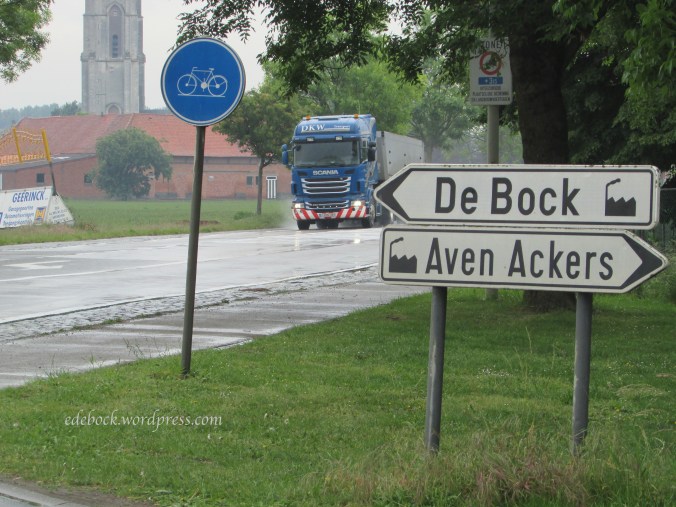
Sticking to smaller highways and backroads, we set off across country to the small community of Verrebroek, not far from Antwerp. It was from Verrebroek that Richard’s great grandfather, Joseph Leopold DeBock, emigrated to America as a young man. Here’s the very first thing we saw when we pulled into town!
IMG_9196

A bit of online research prior to our trip had taught me that there were large De Bock businesses in the area, but unfortunately they’re closed on Saturdays or we would have dropped in to say hello. Interestingly, the North American branches of the family that descended from Joseph Leopold spell DeBock without a space between the e and B while in Belgium it’s spelled with a space. We assume that, as often happened in the past, immigration officials probably made an error in recording Joseph’s surname when he arrived in the country.

We visited the Verrebroek cemetery and found a number of De Bock graves. Clearly, there must be an older cemetery somewhere in the area, but everyone we talked to directed us to the one we visited. One of the oldest graves there belonged to Leopold De Bock who was born in 1883 and died in 1960, no doubt a relative.

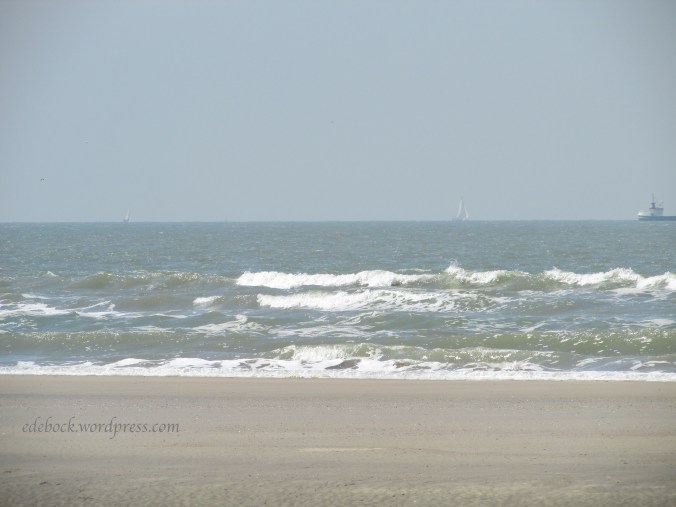
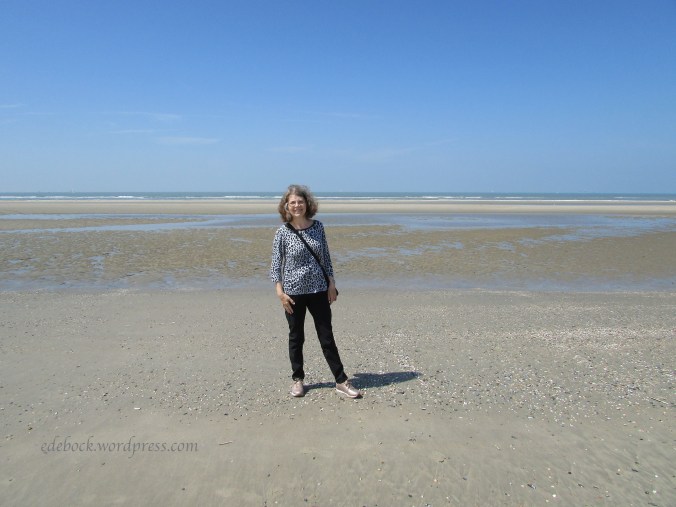
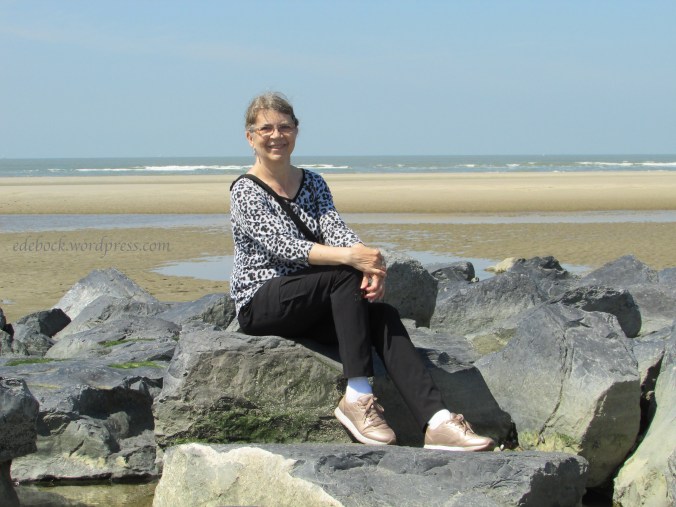
After eating lunch in a little sandwich shop in town, we set off again retracing our path partway back to Bruges and then turning toward the ocean and following the coastline. Just past Zeebrugge, we stopped to spend some time strolling on the wide expanse of sandy beach that seemed to go on forever. This misplaced coastal girl needs a bit of sea air once in awhile!

IMG_9246

IMG_9241

IMG_9238

IMG_9227

IMG_9237

Everywhere we went in Belgium, we saw bright red poppies blowing in the breeze. I took this picture beside the road where we parked when we visited the beach. As I walked the sandy beach trail, I recited bits of John McCrae’s famous poem, In Flanders Fields. Little did I know that within a couple of hours, I’d be standing by his grave!

IMG_9220

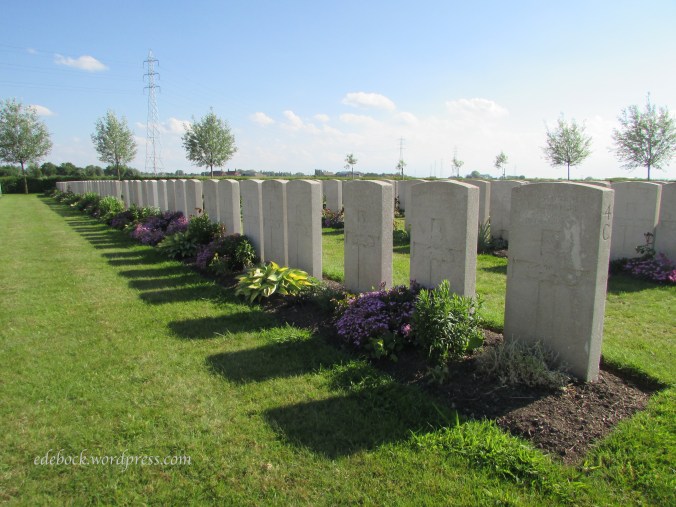
Just past Oostende we turned inland again and headed toward Ypres. Belgium is a beautiful country; a lush coastal plain where we saw sheep, goats, and dairy cattle and small fields in every stage of growth from recently seeded to approaching harvest. The easiest crop for us to recognize was the bright yellow canola in bloom. Belgium hasn’t always been so pastoral though. Our main purpose for visiting Ypres was to see the World War I cemetery there, a sober reminder that the beautiful countryside has been torn by war on more than one occasion. We weren’t sure how to find the cemetery, but suddenly before we reached the town, there it was.

IMG_9288

IMG_9274

IMG_9256

It would take hours to read every headstone and many of them are weathered to the point where it’s difficult to make out the names, but of the ones I read, there were some that stood out to me.

IMG_9295

“A Soldier of the Great War”

Like the other unidentified soldiers in the cemetery, the inscription at the bottom of the headstone says “Known Unto God”. All that is known for sure is that this young man was a member of the 72nd Canadian Infantry Battalion. Whose son was he? Whose brother? Which family was left wondering what had become of their loved one? Where his body lay?

IMG_9271

These three newer headstones stand separately at one side of the cemetery and don’t actually mark graves. They have names on them, but the one on the left says “Known to be buried in this cemetery” across the top and the other two say “Believed to be buried in this cemetery”.

IMG_9277

This one says “Ein Unbekannter Deutscher Krieger” (an unknown German warrior). He was the enemy, but he was also someone’s son, someone’s brother. In death they’re all the same.

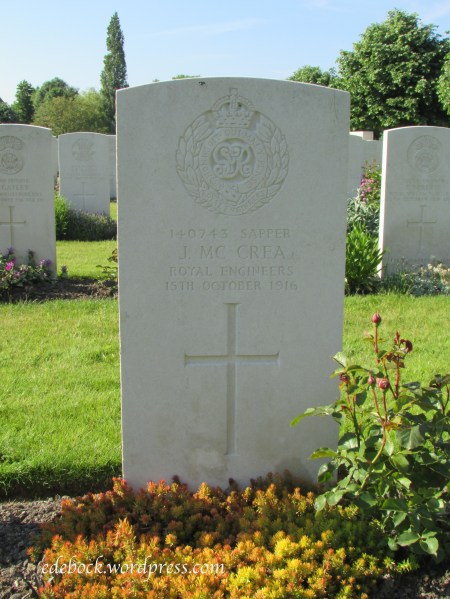
Visiting the cemetery and seeing the graves of so many young men was sobering, but realizing that a kilometre or so down the road, there was another one with more than 1200 more graves in it was overwhelming. This was the Essex Farm cemetery and it was in this vicinity that Doctor John McCrae penned his famous poem while working at the medical station that had been set up there. It was also here that I found his grave.

IMG_9297

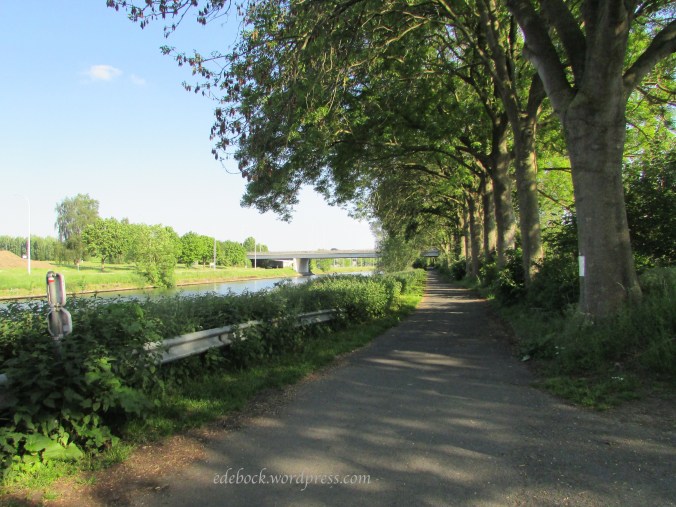
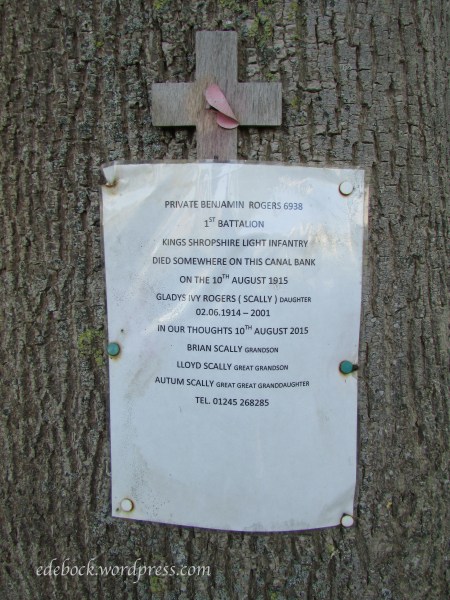
Just over the rise behind the Essex Farm cemetery is this beautiful scene, but notice the white sign on the nearest tree.

IMG_9321

Here’s what it says:

IMG_9318

When we left the second cemetery, we turned back toward Bruges. We returned the car 11 hours and 327.5 km after picking it up. With the help of a paper map and the vehicle’s navigation system which didn’t speak any English, we’d covered a significant portion of Belgium and managed not to get lost!

More of beautiful Bruges

When we set out to explore Bruges after arriving yesterday afternoon, we had the Market Square (Markt) in mind as our goal, but like most of the European cities that we’ve visited, it isn’t laid out on a grid, and even with a tourist map in hand, we got completely turned around! That didn’t matter at all because every time you turn a corner in Bruges, there’s something beautiful to see. We simply wandered the narrow cobblestoned streets with names like Katelijnestaat, Zuidzandstraat, and Zoonekemeers and eventually ended up back at our hotel.

Today, we finally figured out the map and spent several hours strolling at a very leisurely pace. This time we had no problem finding Market Square which is dominated by the 13th century Belfry of Bruges tower. We have no doubt that the view from the top would be astounding, but we decided to forgo the 366 steps it would take to get there and limit our views to ground level.

IMG_9184

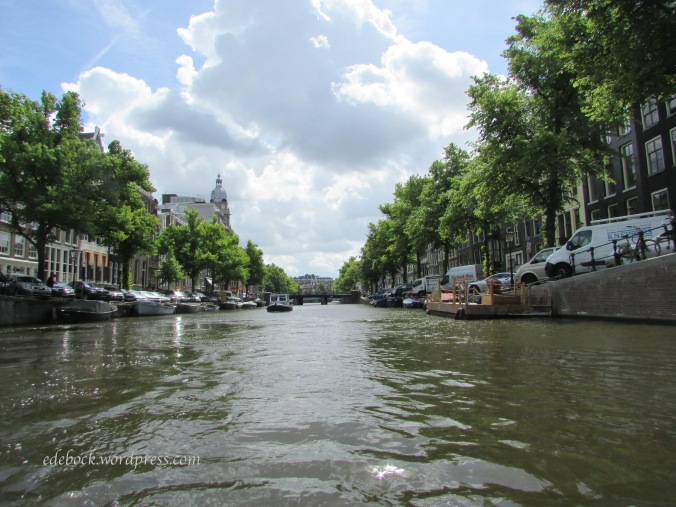
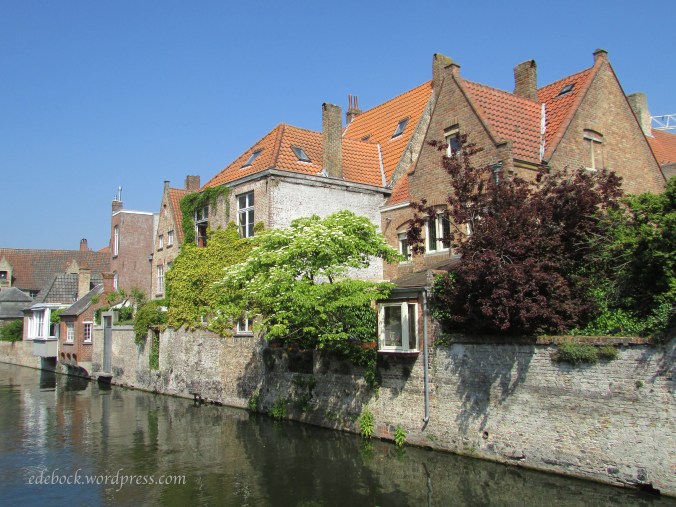
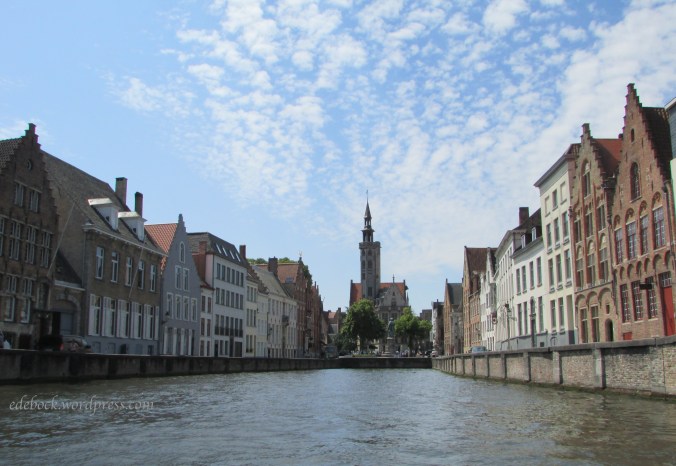
Its many canals add to the beauty and charm of Bruges and we walked along many of them today.

IMG_9108

IMG_9162

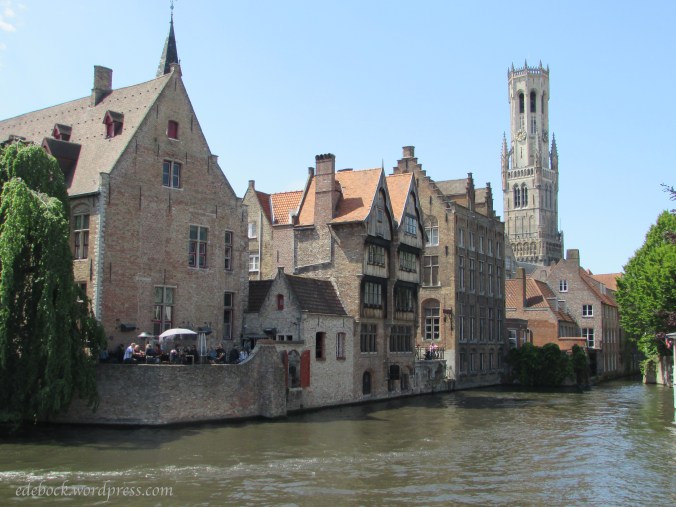
This bend in the canal is known as the Quay of the Rosary (Rozenhoedkaai) and is apparently the most photographed spot in Bruges. Though I can’t deny that it’s lovely with the belfry tower in the background, I think some of the other scenes I’ve photographed rival it for beauty.

As one who loves reflections on water, this spot was one of my absolute favourites.

IMG_9100

A visit to Bruges would be incomplete without taking one of the half hour boat tours of the canals. In addition to seeing this magnificent city from a different angle, the captain’s commentary was informative and interesting.

IMG_9125

IMG_9147

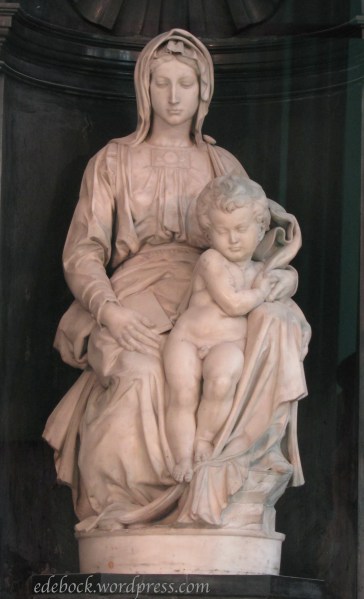
The weather has been absolutely lovely since we arrived here and we’ve had little desire to spend time indoors. I did want to spend a little while in the Church of Our Lady though to see Michelangelo’s magnificent marble carving, Madonna With Child. Created in about 1503, it was the only one of his works that left Italy during the artist’s lifetime when it was brought to Bruges by a wealthy merchant. It was stolen for the first time by the French occupiers in 1794, but later returned after the defeat of Napoleon. It was removed a second time by the Germans toward the end of World War II, but once again it found its way home to Bruges where it is highly treasured.

IMG_9170

Bruges is known for chocolate, beer (there are two local breweries), lace, and the swans that have graced the canals since the 15th century.

Final day in Paris

After two very intensive days visiting the Louvre and the Palace of Versailles, we wanted our final day in Paris to be more laid back and relaxed; a day of exploring a couple of interesting parts of the city and soaking up the ambiance. We had the pleasure of doing some of that with one of my former students who’s been living in Paris for the past five years!

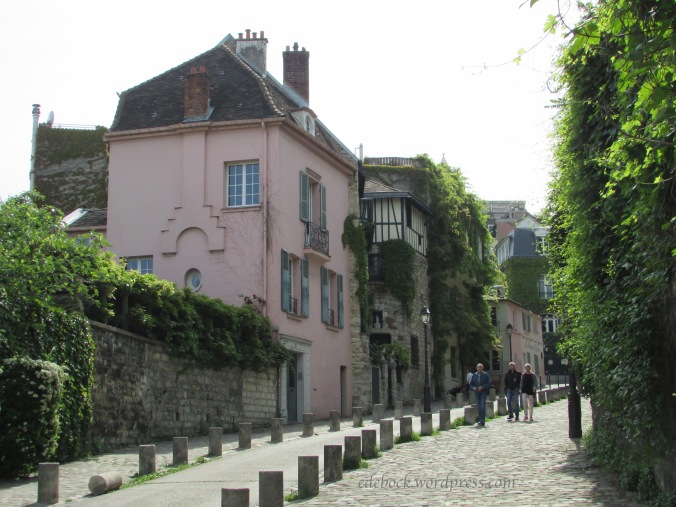
We met Crystal midmorning to tour Montmartre, one of her favourite areas of the city. In the 1870s, Montmartre became a centre of bohemian life inhabited by impoverished artists and poets and visited by Parisians who came for its cabarets, cafes, and dance halls. Today it is officially designated as a historic district with limited development allowed in order to maintain its historic character.

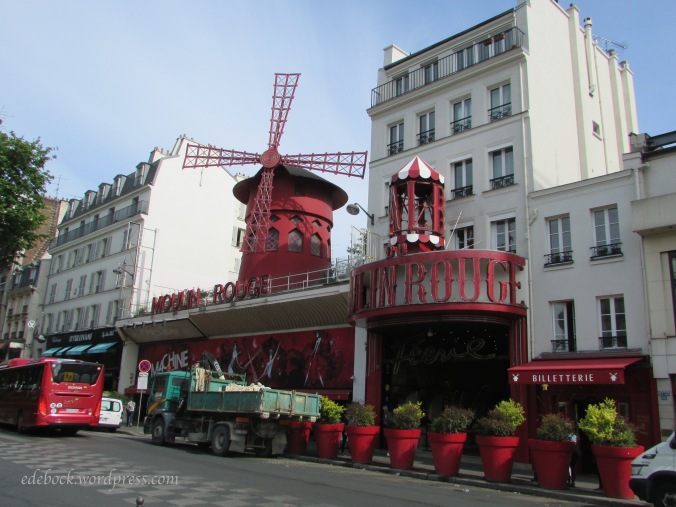
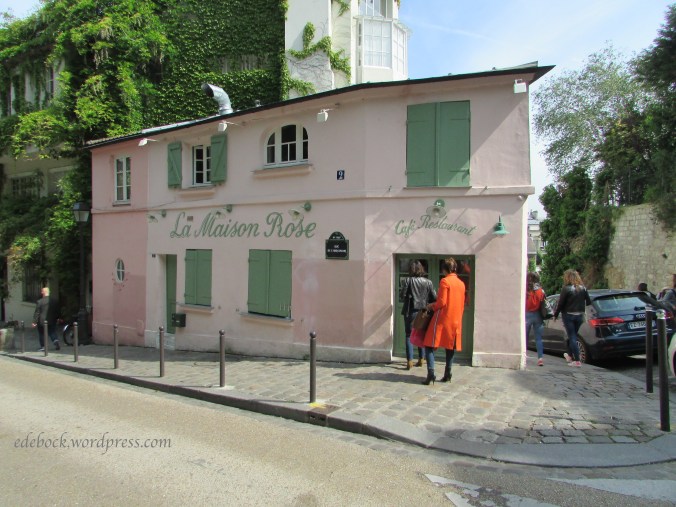
Crystal told us the stories behind a number of the district’s best known establishments like the cabaret, Moulin Rouge, and the little pink restaurant, La Maison Rose, that has been immortalized by many painters over the years.

IMG_8896

IMG_8909

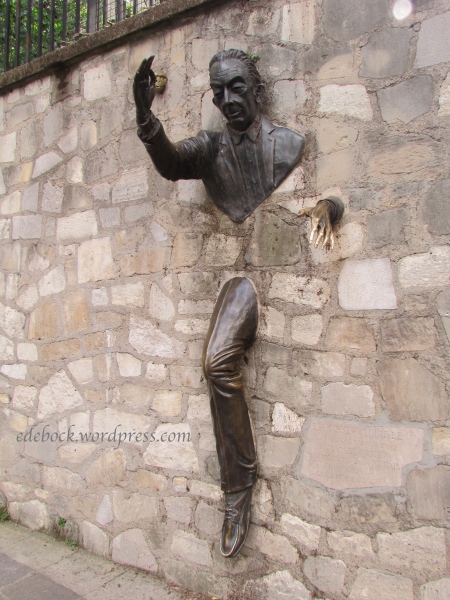
She told us Marcel Aymé’s tale about the man who could walk through walls. You can read an English translation here.

IMG_8902

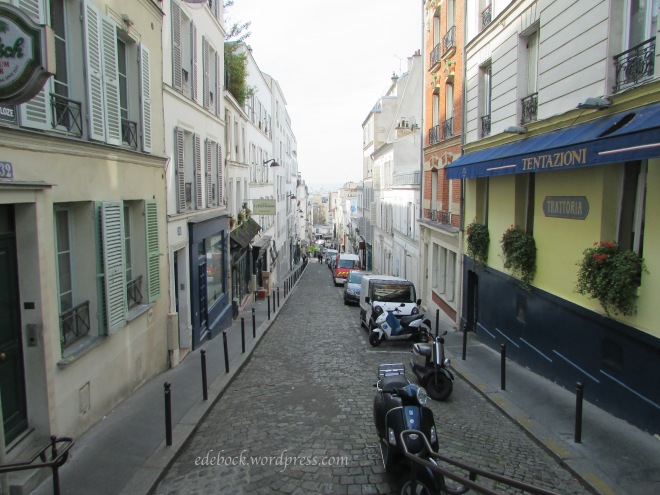
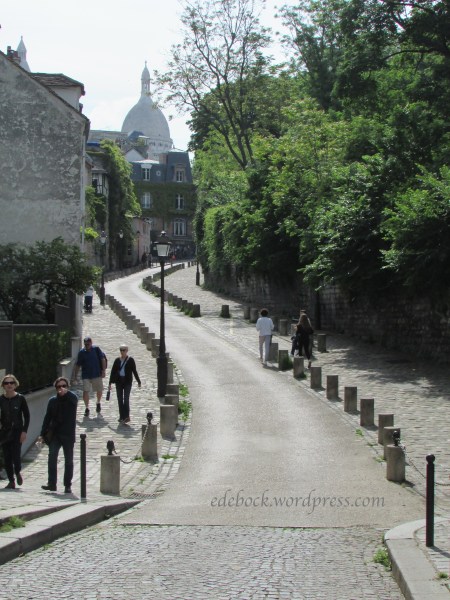
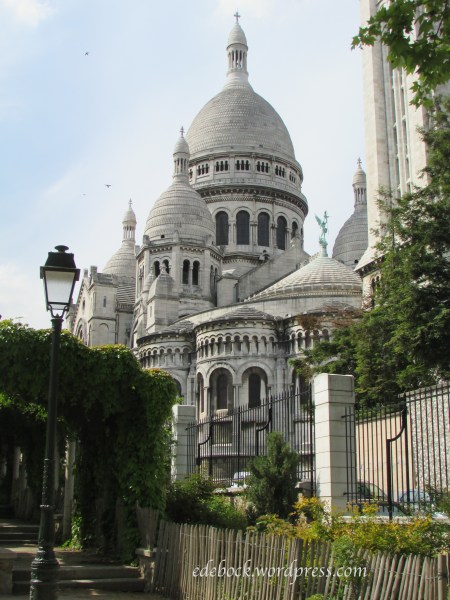
We climbed the steep, narrow cobblestoned streets up the hill that is Montmartre to the beautiful Sacré-Cœur Basilica at the top. Visible from almost anywhere in Paris, it is one of the city’s most famous landmarks.

IMG_8900

IMG_8908

IMG_8906

IMG_8912

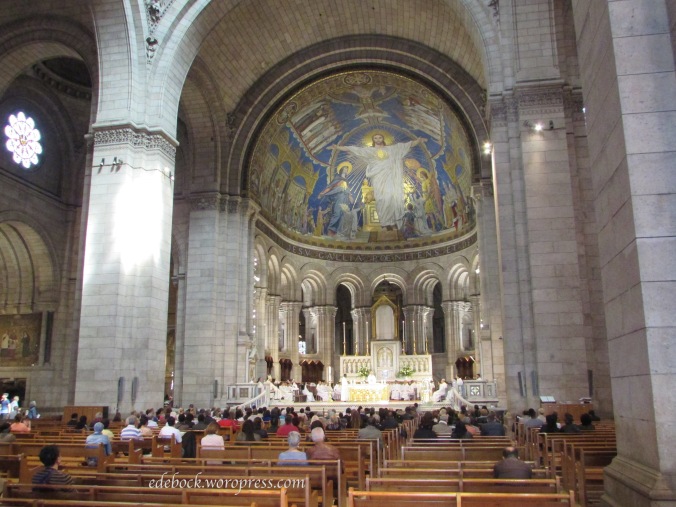
Though there was a service going on inside, tourists were allowed to enter and walk around inside as long as we remained silent and didn’t disturb the worshippers!

IMG_8930

After leaving the church, we enjoyed a lovely lunch at a sidewalk cafe in nearby Place du Tertre, a large open market area where artists worked on portraits, caricatures, and paintings of Paris’ most famous landmarks.

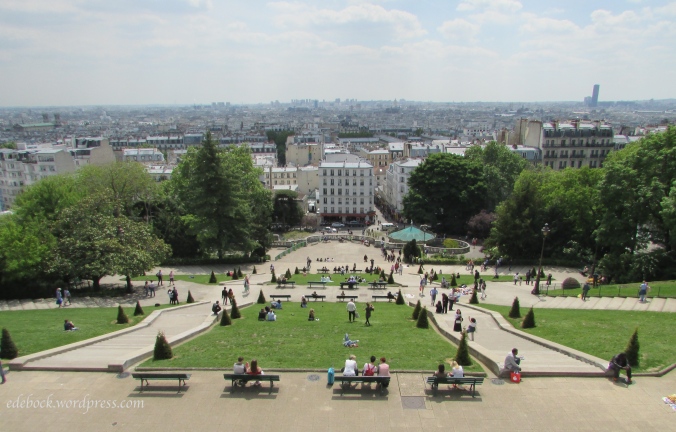
On our way back down the hill, we enjoyed beautiful views of the city like this one from below the Bascilica.

IMG_8939

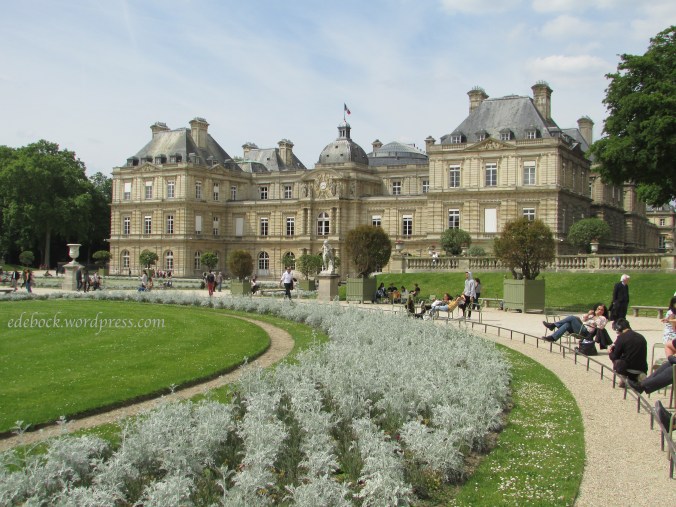
After saying good-bye to Crystal, we took the metro to the Latin Quarter, centre of university life and home to many bookshops and cafes. There we walked to the Luxembourg Gardens where we spent awhile simply sitting in the sunshine. The Luxembourg Palace overlooking the gardens was built between 1615 and 1645 as a royal residence for the mother of King Louis XIII. Today, it houses the French Senate.

IMG_8950

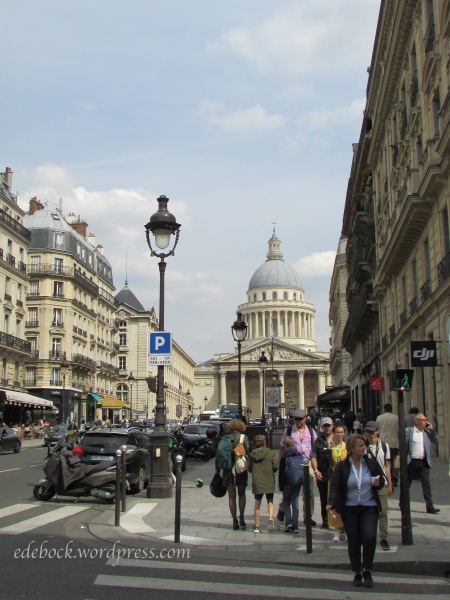
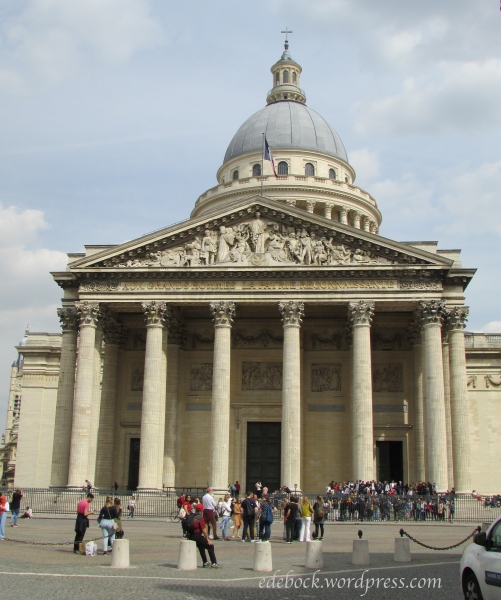
Before returning to our hotel to begin preparing for today’s departure, we stopped briefly at the Pantheon, the final resting place of some of France’s “great men” including Voltaire, Rousseau, and Victor Hugo.

IMG_8956

IMG_8958


Burning the candle at both ends

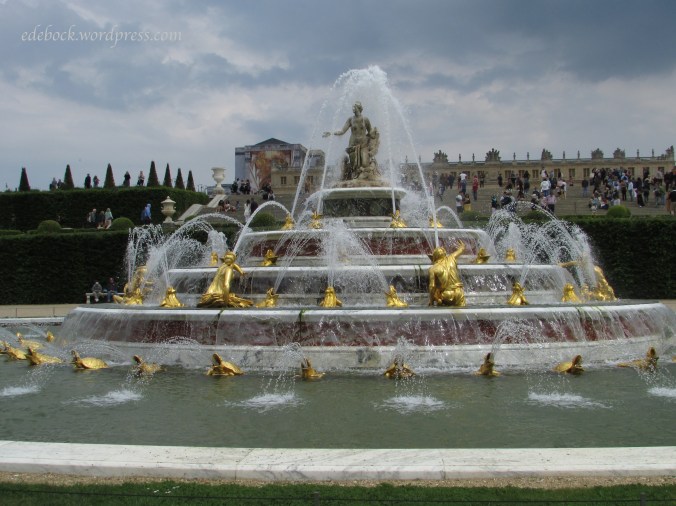
Yesterday morning we got up at 6:30 AM to make our way by train to Versailles in time for our prebooked 10:00 AM entrance time. The Palace of Versailles was the principal royal residence of France from 1682, under Louis XIV, until the start of the French Revolution in 1789, under Louis XVI. The incredible opulence of the place, which is now a UNESCO World Heritage Site, is quite overwhelming! Is it any wonder that the populace rebelled when their royal family were living in such luxury while they struggled to get by?

At this time of year, visiting Versailles on a Tuesday has its pros and cons. It’s definitely one of the busiest days of the week due to the fact that the Musical Fountain Show in the palace garden takes place only on Tuesdays, Saturdays, and Sundays. That’s one of the reasons that we chose to go yesterday.

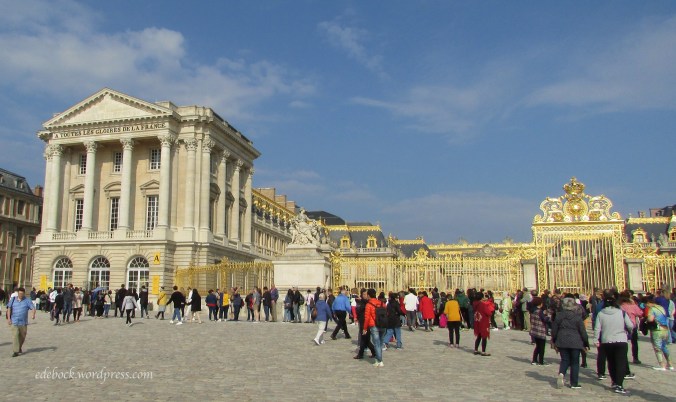
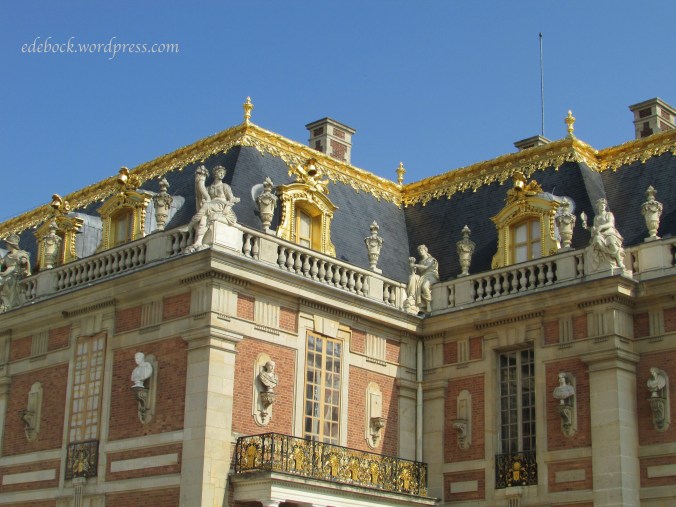
Before we even entered the Palace, we were blown away by the grandiose exterior.

IMG_8748

IMG_8752

IMG_8754

IMG_8756

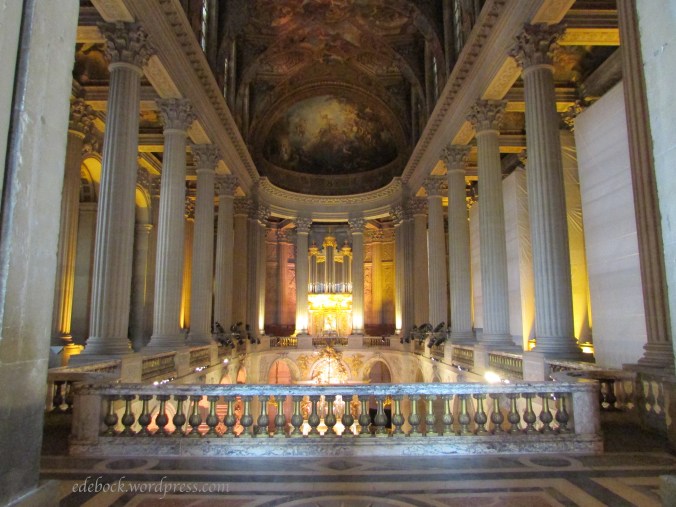
Inside was no different. After spending some time in the first section which focused on the history of the palace, we moved on to the royal apartments. Many of these rooms are now a gallery of portraits and paintings, but we also caught glimpses of how the royal residents lived. We could only peer through the doorway of the two storey royal chapel, but imagine having this in your house!

IMG_8771

Of course, as king and queen, your bedrooms would also be extremely lavish.

IMG_8789

IMG_8803

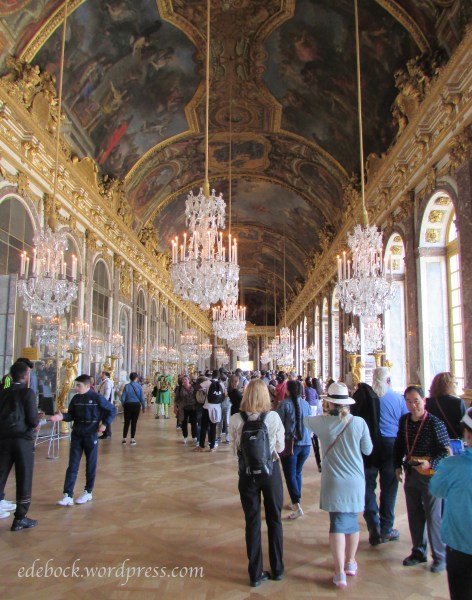
By far the most amazing room is the incredibly ostentatious Hall of Mirrors, clearly a place meant to impress visitors to the royal residence.

IMG_8796

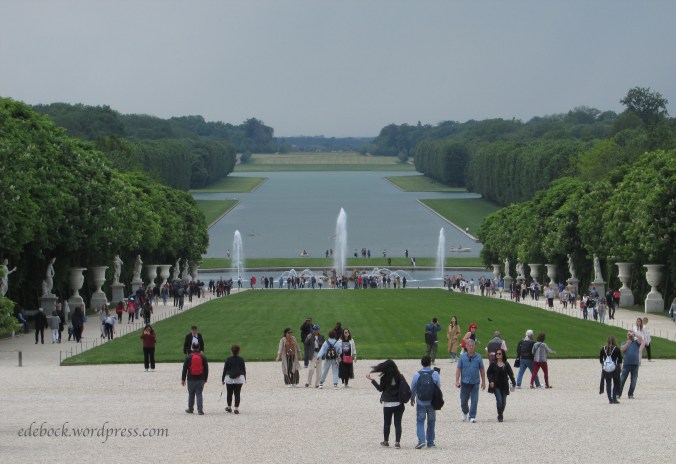
After making our way through the extemely crowded halls of the palace, it was lovely to exit into the gardens, but again, we were amazed by the extravagance. Imagine that this was your backyard and that it extended well beyond what you can see here.

IMG_8849

IMG_8863

IMG_8860

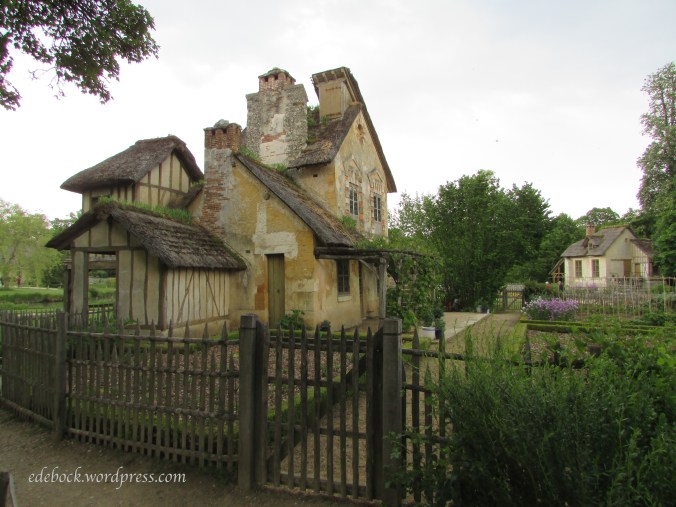
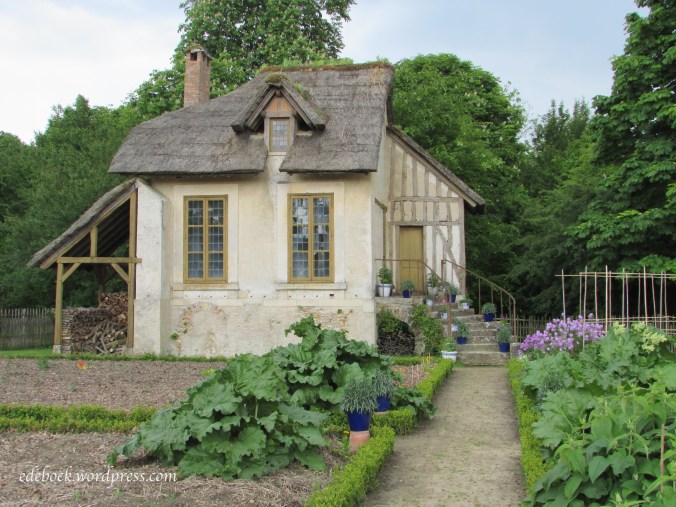
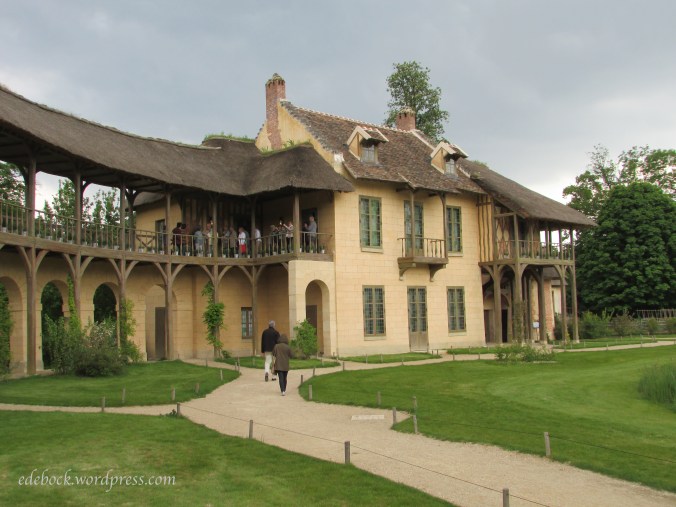
In addition to the palace and the gardens, we also visited the Queen’s Hamlet, a quaint and rustic little village retreat commissioned by Queen Marie Antoinette as a place for her to get away from life at the palace. Apparently she would stroll around her perfect little world in simple peasant garb accompanied by her children totally out of touch with how the rest of the world lived.

IMG_8821

IMG_8826

IMG_8833

IMG_8834

IMG_8835

Nearby there’s also the Grand Trianon, a pink marble palace built as a retreat for King Louis XIV and his mistress.

IMG_8844

After spending most of the day at Versailles, we returned to our hotel and rested awhile before taking an after dark boat cruise on the Seine to see the city lights. Most remarkable was the Eiffel Tower. It sparkles for five minutes on the hour every hour so that was happening as our boat pulled away from the dock at 10:00 PM and again as our cruise ended an hour later. Definitely magical! Even when it’s not sparkling though, it’s something to behold all lit up at night.

IMG_8895


A day at the Louvre

We thought the Uffizi Gallery in Florence was big, but then we visited the Louvre in Paris! In addition to paintings and sculptures, the Louvre also displays historical objects and archeological finds. It contains more than 380 000 objects and 35 000 works of art. Assuming that I’ve done my math correctly, if a person spent one minute looking at each item on display, it would take 24 hours a day for more than nine months to see everything! We were there for five hours. Clearly it was necessary to plan ahead and choose the things we most wanted to see.

Of course, we had to see the Mona Lisa, the most famous painting in the world, but so did everyone else in the Louvre that day! We literally had to fight our way through the crowd of selfie takers to get a glimpse. It was impossible to get a good photo, but you probably already know what it looks like. Like many others, I really wonder what all the fuss is about. There were certainly paintings that I liked better.

Of all the paintings that we saw, the one that impressed me the most didn’t appear on any of the “must see” in the Louvre lists that I saw.

IMG_8645

At first glance, I saw an old man snoozing while a rooster crowed in the background, but then I read the description. I was looking at The Penitent Saint Peter, or The Tears of Saint Peter, painted in the 1620s by Flemish artist, Gerard Seghers, and based on the scriptural account of Peter denying Christ three times before the rooster crowed. I like the simplicity of it, but also the detail. Look at the way Seghers captured the softness of an old man’s hair. And then there are those hands!

IMG_8647

IMG_8650

The Venus de Milo is considered one of history’s most significant sculptures. Again, I’m not really sure why.

My favourite sculpture was the highly acclaimed Winged Victory of Samothrace which was created in ancient Greece in about the second century BC. The flowing drapery conveys a sense of motion as the goddess, Nike, descends onto the prow of a ship in honour of a sea battle won.

IMG_8603

I also liked the Sleeping Faun carved by Edme Bouchardon in the 1700s.

IMG_8691

This is just a tiny sampling of what we saw in the Louvre on Monday, but it must also be said that the building itself, a former royal palace, is a work of art.

IMG_8672

IMG_8613

IMG_8611

My neck is getting stiff from craning to see all the amazing ceilings in the various churches, galleries, and museums we’ve been visiting!

After ensuring that we’d seen everything on my “must see” list, we strolled the length of the Avenue de l’Opera from the Louvre to the Palais Garnier stopping along the way to sip a glass of wine at a sidewalk cafe.

IMG_8743 - Version 2

Oh yes, we are definitely enjoying Paris!

Second day in Paris

Located on the Île de la Cité, just a stone’s throw from Paris’ Notre Dame Cathedral, the Conciergerie served as a royal residence in medieval times and later a prison. That’s where we started our day yesterday.

IMG_8484

I was enthralled by the vast Salle des Gens d”Armes (Hall of the Soldiers). Constructed in 1302, it’s a great example of Gothic architecture.

IMG_8489

IMG_8487

During the French Revolution of the late 1700s and the Reign of Terror that followed, part of the old royal palace held prisoners including Marie Antoinette whose prison cell was later converted into a small chapel in her memory.

IMG_8497

IMG_8498

This painting shows the queen ascending the steps from the Conciergerie to the courtyard where she would be transferred to an open cart pulled by horses that would take her to the guillotine located in the Place de la Revolution, now Place de la Concorde.

IMG_8505

Looking serene today, this was the women’s courtyard. Surrounded by two floors of cramped cells, it was used by the female prisoners to take daytime walks.

IMG_8510

Our visit included Sainte Chapelle, the church built within the palace walls. I thought by now we might be getting tired of churches, but not so. I continue to be amazed by each one that we step into.

IMG_8516

IMG_8519IMG_8522

Absolutely nothing could have prepared me for the sight that greeted me when I reached to top of the narrow winding staircase to the upper chapel.

IMG_8531

If you read my post about our afternoon in Milan, you’ll know that I love stained glass windows. Never in my life could I ever have imagined something like this though! Photos simply can’t capture the magnitude of what surrounded us.

IMG_8535IMG_8550

Later in the day, after eating crepes from a street vendor and treats at a nearby bakery then taking an elevator to the observation deck of the 56 storey Montparnasse Tower for panoramic views of the city, we made our way to Place de la Concorde.


IMG_8577

IMG_8575

It was here that the guillotine stood; here that Marie Antoinette, King Louis XVI, and many others lost their heads. From there, we strolled 2.3 km up the Champs Élysées to the Arc de Triomphe enjoying the Sunday afternoon crowds.

IMG_8581

IMG_8583

First glimpses of Paris

We spent most of Friday on the train traveling from Milan to Paris with a quick stop to change trains in Zurich. Yes, we were in Switzerland, but not for long! It was difficult to get decent photos from the window of the train, but here are a couple that turned out well.

IMG_8365 - Version 2

IMG_8367

By the time we arrived in Paris and found our way to our hotel via the metro, the day was nearly over and we were tired. We enjoyed a delicious dinner at a little restaurant just down the block from our hotel, but our first real glimpses of Paris would wait until we’d had a good night’s sleep!

We spent most of the day yesterday getting an overview of the city and seeing some of its most famous sights via the Big Bus Hop On, Hop Off tour. The commentary was excellent and gave us lots of interesting background information.

We first hopped off close to Notre Dame Cathedral. It’s inaccessible, of course, as a result of the devastating fire of April 15th that left the city in shock. Though it isn’t what it once was and it will likely be several years before restoration is complete and it’s open to the public again, it’s still a very impressive structure.

IMG_8404

IMG_8414

We managed to get ourselves a bit lost and ended up on the wrong side of the river to hop back on our bus, but getting lost just means you have to find yourself again and you might just see something unexpected and interesting along the way! Parisians are friendly and helpful, so it didn’t take long for us to get our bearings and find our way back to the bus stop.

We hopped off again at the Arc de Triomphe, another one of Paris’ most famous monuments and took the obligatory photographs.

IMG_8418

At the Trocadero, just across the Seine from the Eiffel Tower, we left the bus again. After taking in the view we enjoyed lunch at a nearby sidewalk cafe before rejoining the bus tour and continuing on.

IMG_8431

Of course, we had to get off the bus again for more photos closer to the tower!

The Eiffel Tower was built for the 1889 World’s Fair. When it was inaugurated, it was the tallest building in the world. Amazingly, the original plan was to allow it to stand for 20 years and then tear it down! Only the fact that it could be used as a telecommunications tower saved it from destruction. Apparently two and a half million rivets were used in its construction. That’s not at all difficult to believe when you take a close look at it!

IMG_8452

I took the next photo of the church at Les Invalides, Napoleon Bonaparte’s final resting place, from the bus. Its glittering golden dome is an unmissable landmark in the Parisian landscape. I love the sky in this shot!

IMG_8457

We next hopped off the bus at the Palais Garnier, probably the most famous opera house in the world and the setting of Gaston Leroux’s 1910 novel, The Phantom of the Opera.

IMG_8471

Our bus route was altered somewhat yesterday and we were unable to visit a couple of the areas that are usually included because of the “yellow jacket” protesters, so called because of the fluorescent vests that they wear. Yesterday marked six months of weekly protests against President Emmanuel Macron’s policies. We didn’t see any of the protesters or the destruction that they have caused, but we certainly saw a strong police presence when we got close to the parts of the city where they were gathered. For the most part though, Paris seems to be going on with life as usual. Apparently, tourism is down, but there were certainly lots of us hopping off and on the Big Buses yesterday!


Afternoon in Milan

It wasn’t originally part of my plan for us to visit Milan while we were in Italy. I had hoped to book a day of train travel all the way from Florence to Paris, but since that wasn’t possible, we had to overnight somewhere along the way. We didn’t want to take an overnight train as our main reason for choosing to travel by train instead of flying was to see a bit of the countryside.

We arrived in Milan early in the afternoon the day before yesterday and had the rest of the day to experience a bit of the city. Milan is a financial hub as well as a global capital of fashion and design. At first glance, it looks much like any other modern city, but it has a historical side as well.

As soon as we were settled into our guest house near the train station, we jumped on the metro and headed for the Duomo, the Milan Cathedral. Dedicated to the Nativity of St Mary, it is the seat of the Archbishop of Milan. We’ve seen a lot of amazing churches on this trip, but emerging from the metro right in front of the Duomo was definitely another breathtaking moment!

IMG_8221

The sheer immensity of the cavernous interior was amazing. Look at the size of that pillar!

IMG_8224

It was the stained glass windows that most astounded me though. There was no way to truly capture them in photographs. This shows just two of the three enormous panels at the front of the building and there were many more narrower ones along its sides.

IMG_8233

Each section depicts a scene from the Old or New Testament. The ones toward the top are so high up that we couldn’t even see the details in them.

After visiting the interior of the church, we took an elevator to the rooftop which was without question the highlight of our short stay in Milan. We could have saved the price of a ticket and climbed the approximately 250 stairs, but our old knees have had a major workout on this trip and the elevator was worth every cent. It also saved us time which we didn’t have a lot of.

After leaving the Duomo, we walked through the gorgeous and glitzy Galleria Vittorio Emanuele II, a very high end shopping mall. With it’s glass ceiling, the whole place has a light, airy feel.

IMG_8302

The entire floor of the gallery is mosaic and near the centre is the image of a bull. Tradition has it that good luck will come to anyone who places their heel on the bull’s testicles and spins in a circle three times. Of course, I had to place my heel in the indentation that has been worn into the floor in that spot and spin myself around!

IMG_8316

IMG_8315

Our final stop in Milan was Castello Sforzesco, a medieval castle in the middle of a mostly modern city. Built first as a fortress in 1368 and later transformed into a magnificent palace, it now houses many museums. We didn’t have time to enter any of those, but we enjoyed a quick exploration of the grounds.

IMG_8328

IMG_8338

The next morning, we were back on the train on our way to Paris but very glad that we’d had to stop in Milan!


Fabulous Florence

When I started planning this trip, I was undecided about whether or not to include Florence on the itinerary, but I’m very glad I did! We arrived by high speed train from Rome at about noon on Tuesday after sharing our coach with a group of 27 fifth and sixth graders embarking on a four day field trip with two of their teachers. As retired grade school teachers, we felt right at home, but also very glad that we weren’t responsible for all those excited children!

Our guest house in Florence was a short walk from the train station and just off the corner of Piazza del Duomo in the very heart of Florence. Absolutely everything we wanted to see and do was within walking distance, so we were able to pack plenty into our day and a half there.

As soon as we checked in and dropped off our luggage, we headed out to see the Duomo, the Cathedral of Santa Maria del Fiore. The complex is so enormous that it was impossible to squeeze it all into a photo and so ornate that you really need to look at various parts of it close up.

IMG_8211

IMG_7978

IMG_7980

IMG_7981

IMG_7986

Surprisingly, the interior, though beautiful wasn’t as ornate as some of the other churches we’ve visited.

IMG_7989

From the Duomo, we walked a very short distance to Piazza del Signoria in front of the grand Palazzo Vecchio, headquarters of the city government as well as a museum. The highlight here was the replica of Michelangelo’s David standing in the exact spot where the original stood for over 400 years until it was moved into the Accademia Gallery.

IMG_8007

IMG_8011.JPG

Perhaps the most famous sight of all in Florence is the nearby Ponte Vecchio, Florence’s oldest bridge, that has spanned the Arno River since the 12th century! Little jewelry shops line both sides of the interior of the bridge.

IMG_8058

The riverside is lined with fascinating architecture.

IMG_8053IMG_8064

Neither of us are art connoisseurs, but the next day we spent a very enjoyable morning at the Uffizi Gallery, one of the world’s top art museums, taking in its enormous collection of Renaissance masterpieces. After we’d made our way through about one quarter of it, we decided we’d have to pick up the pace or we could easily be there all day! The sculptures were the greatest attraction for me, especially the busts of historical figures. It was amazing to gaze into the faces of long gone heroes of the past like Agrippa on the left and Trajan on the right.

This sculpture representing the martyrdom of St. Lawrence especially intrigued me due to the fact that the artist, Gian Lorenzo Bernini, was only 15 years old when he carved it in the early 1600s! What amazing talent!

IMG_8108

A vast number of the pieces in the Uffizi are of a religious nature, many of them stunning altar pieces like this one.

IMG_8079

Images of the Madonna abound. I was particularly attracted to this one by Botticelli. If you look closely, you can see that the angels on either side of Mary and the Christ child are holding a crown of thorns and crucifixion nails.

IMG_8093

A huge print of this painting by Caravaggio was hanging at the head of our bed in the guest house!

IMG_8132

After leaving the gallery we crossed the river and made the steep climb up to Piazza Michelangelo where the views of the city were absolutely stunning!

IMG_8156

IMG_8170

I could easily spend endless hours wandering the tiny streets of Florence, but a day and a half was enough to capture the highlights.

Final days in Rome

After two very intensive days in Rome, we decided that days three and four should be a bit more laid back and relaxing. We were able to manage that without sacrificing any of the things we most wanted to see and do.

Our third morning was spent exploring Castel Sant’Angelo, originally commissioned by Roman emperor, Hadrian, in the first century AD as a mausoleum to house his remains and those of his descendants. Unlike other Roman monuments, the mausoleum never fell into disrepair. Over the centuries, in addition to serving as a tomb, it has been used as an impregnable fortress, a prison, a magnificent Renaissance dwelling, and now a national museum.

IMG_7837

Beginning in the 14th century, the popes converted it into a castle. It was eventually connected to St. Peter’s Basilica by a covered fortified corridor and the fortress was used as a refuge by Pope Clement VII for several months during a time of siege. It owes its present name to a medieval legend. In the year 590, the Archangel Michael is said to have appeared there before Pope Gregory the Great to announce the end of a plague.

IMG_7846

Once inside, we felt as if we’d taken a huge step back in time.

IMG_7840

IMG_7851

IMG_7852

I loved the statues of the Archangel Michael as a strong warrior. The first one shown here is inside the castle walls and the bronze one is on the pinnacle.

From the top, we had amazing views like this one with St. Peter’s Basilica in the centre.

IMG_7871

We could see that there was a storm moving in though and sure enough, before we got back down to ground level, it hit with a vengeance! We sat under cover and ate our lunch while lightning flashed, thunder rumbled, and rain poured down. Thankfully, it blew over and we were able to wait it out.

Leaving the castle, we made our way across the famed Ponte Sant’Angelo or Bridge of Angels, completed in 134 AD by Emperor Hadrian to span the Tiber and connect the city centre to his newly constructed mausoleum.

IMG_7861

We eventually made our way back to the Church of Sant’Agnese in Agone on Piazza Navona for a free concert. There we listened to two choirs sing entirely a cappella. We couldn’t understand the words, of course, but the acoustics in the 17th century church were amazing and the voices blended beautifully.

We started our final day in Rome at Villa Borghese, a huge public park. It was a peaceful spot away from the usual crowds of tourists, but after wandering a bit, we decided to move on.

IMG_7915

IMG_7926

At nearby Piazza del Popolo we climbed up to the Pincio Terrace for a beautiful view of the piazza and Rome itself.

IMG_7941

A visit to Rome wouldn’t be complete without sitting on the famous Spanish Steps. This 135 step staircase was opened in 1735 to link the Spanish Embassy near the bottom of the steps with the Trinita del Monti, the late Renaissance church at the top. They were made particularly popular by the 1953 movie, Roman Holiday, starring Audrey Hepburn. It was a great place to sit for awhile soaking up the sun, watching the world go by, and treasuring our final moments in Rome.

IMG_7945 - Version 2

IMG_7946

IMG_7952

IMG_7960