Stripes for spring!

LogoI used to write a blog post twice a year about the trends for spring/summer and fall/winter based on the looks that ruled the runways for that season. I’ve quit doing that because they were a lot of work and amongst the women who read this blog, who actually dresses like a runway model? Probably no one! I know I don’t. Real women do, however, want to know how some of those looks translate into the clothes that we’ll actually see in our favourite retailers; things that we would actually wear.

That leads me to one of the biggest trends for the upcoming season… stripes! That’s right, though some of us have been wearing stripes forever, they’re going to be especially popular this season!

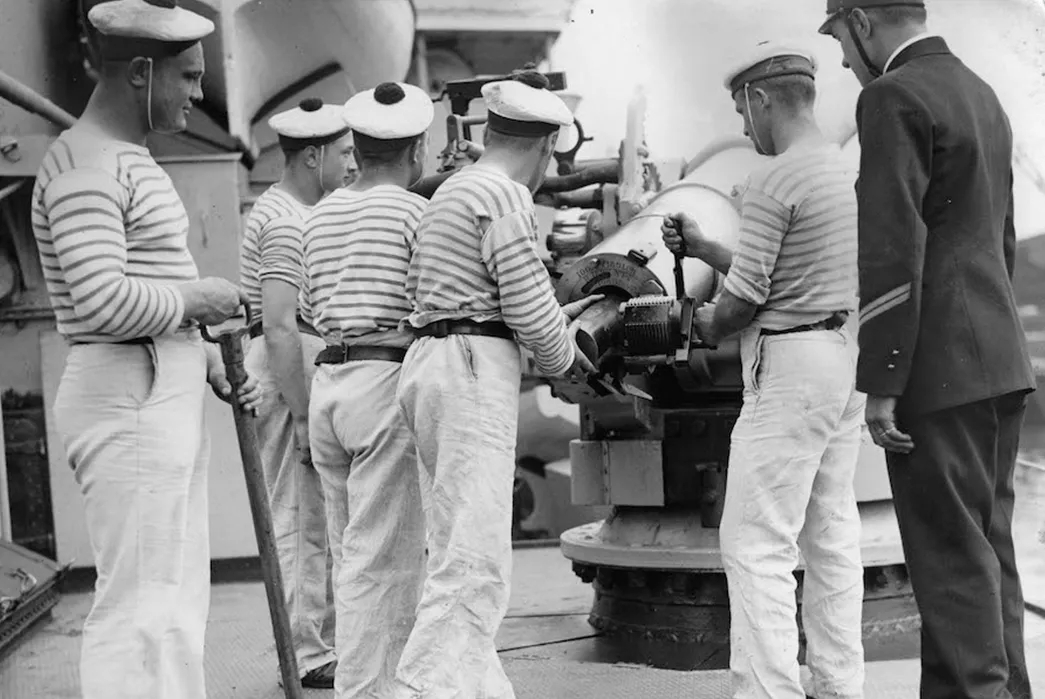
A classic Breton top, first introduced in 1858 as part of the uniform for navy seamen in Northern France, is an easy pattern to wear and a favourite of mine. The original design had long sleeves and featured 21 horizontal stripes, one for each of Napoleon Bonaparte’s victories. Apparently, the distinctive navy and white stripes made it easy for rescuers to spot sailors who fell overboard!

breton-stripes-frances-horizontal-contribution-to-workwear.jpg

Nowadays, Breton striped t-shirts are available in both long and short-sleeved versions and a myriad of colours. Since they never really go out of style and can be worn year round, I’d like to add a couple more to my wardrobe this season while they’re easy to find. I much prefer to shop in person, but I’ve been doing some looking around  online and thought I’d share a bit of what I’ve found with you. Please keep in mind that I’m not affiliated with any of the companies represented here and I don’t benefit in any way if you choose to order something. Since I have readers in wide variety of locations, I’m showing retailers from the UK and US as well as Canada.

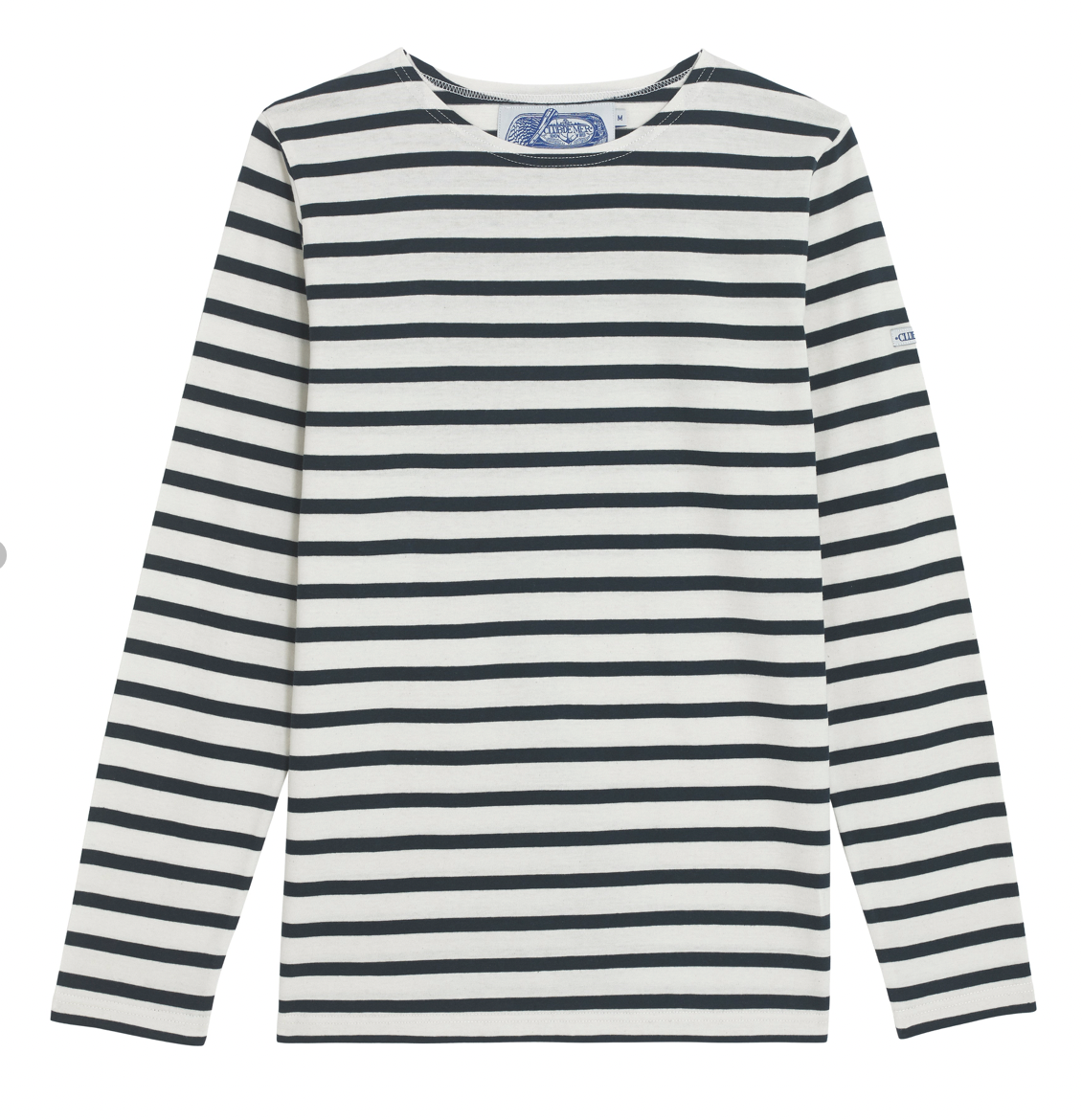
The Original Breton Shirt  –  The Breton Shirt Co

Screen Shot 2022-02-19 at 11.34.06 AM

In addition to the traditional Breton top shown here, The Breton Shirt Co offers a variety of colours and styles.

Striped Oversized Long Sleeve T-shirt  –  Uniqlo

This one is also available in several colours.

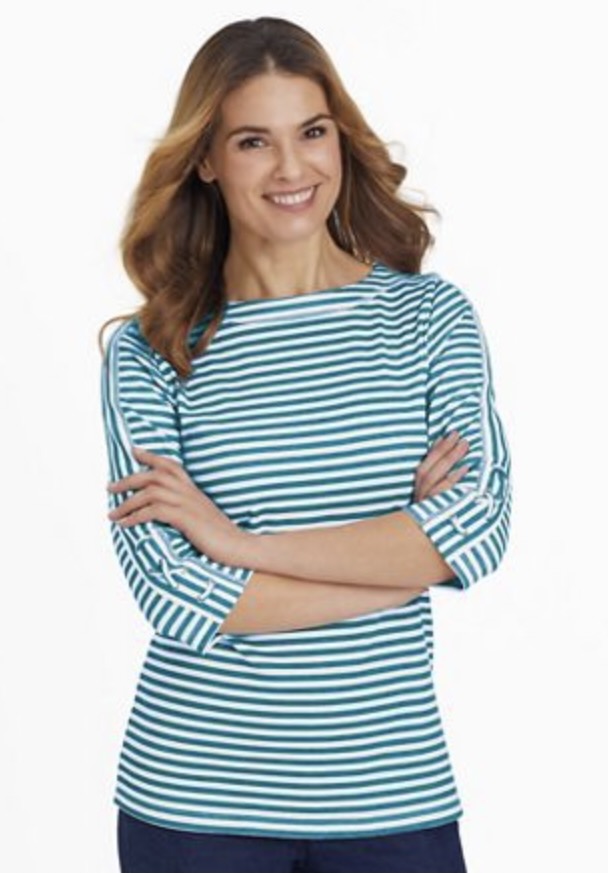
Three-Quarter Sleeve Criss-Cross Sailor Top  – Blair

Screen Shot 2022-02-19 at 12.50.36 PM

I really like the sleeve detail on this one. Though it also comes in a variety of colours, teal is a colour that flatters every skin tone.

This is just a small sampling of the Breton type tees that are available this season, but stripes are not limited to this one style.

Square Neck Button Front Tank  –  Cleo

Stripes aren’t always horizontal!

Prep School Shirt  –  Cabi

This cropped shirt is a cute and casual look for summer.

Washable Linen Pull-On Pants  –  L.L.Bean

These look a lot like pyjamas to me, but they would be light and breezy on a hot summer’s day.

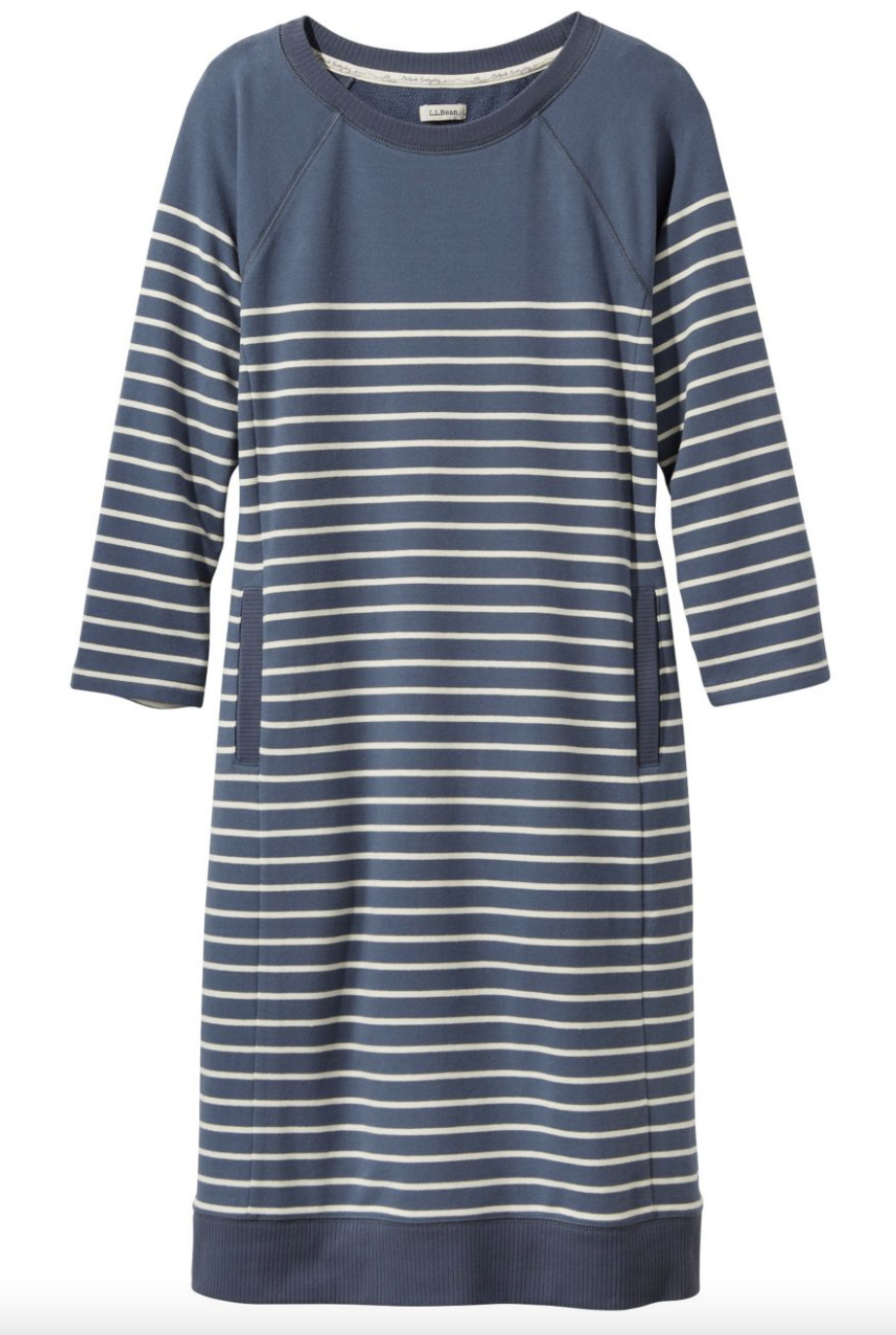
24/7 Sweats, Dress Stripe  –  L.L.Bean

Screen Shot 2022-02-19 at 3.19.38 PM

I had just about finished writing this post when this dress popped up on my Facebook newsfeed. Isn’t it interesting how Facebook knows exactly where we’ve been on the internet? Not always a good thing, but in this case I didn’t mind!

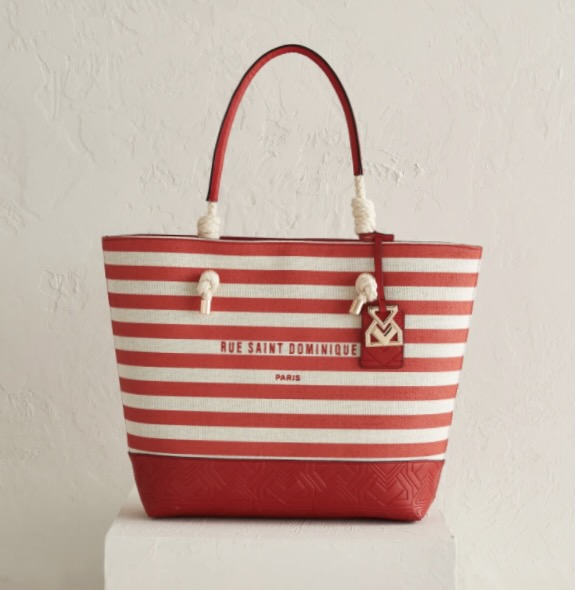
Trend or not, stripes may not be your thing. If that’s the case and you really can’t see yourself wearing any of these, why not add a just a touch of the trend in a scarf or a handbag?

Colour Joy Floral Striped Scarf  –  The Bay

Screen Shot 2022-02-19 at 1.44.27 PM

Stripe Shopper Bag  –  Nordstrom

Screen Shot 2022-02-19 at 1.51.52 PM

We’ve just come through another incredibly cold snap and it looks like winter will be with us for awhile longer, but it’s nice to start thinking about spring and about what we might be wearing when the weather finally does warm up. What about you? Will you be wearing stripes?

I’m a Christian feminist

I’m a Christian feminist. Yes, there is such a thing and no, that f word isn’t an obscenity.

The label may not be a familiar one, but Christian feminism predates well known secular feminists and activists including Simone de Beauvoir, Betty Friedan, and Gloria Steinem. There is, in fact, a long history of Christian women devoting themselves to fighting for the status of women, and the right of women to vote, to own property, and to defend themselves in a court of law against rape and domestic abuse. Women like Nellie McClung who, based on her understanding of God’s intention for creation, together with Emily Murphy, Henrietta Muir Edwards, Irene Parlby and Louise McKinney, launched a legal challenge that would pave the way for women to be declared “persons” under law and to participate equally in all aspects of life in Canada. Thankfully, theirs is a rich tradition of pro-life feminism that continues today.

Within the Christian church, there are two schools of thought regarding the roles of men and women. Complementarians believe that men and women, though equal in worth, are meant to have distinctly different roles. Egalitarians, while agreeing that men and women are equal in worth, believe there should be no gender restrictions on what roles they can fulfill. Marriage and ministry are the primary points of disagreement between the two viewpoints.

When we first married, I was a baby Christian. I tried to be the submissive wife that my husband had been taught was his due simply because he was born with a Y chromosome and an extra appendage. It didn’t work. He wasn’t a good leader and, truth be told, I wasn’t a good follower. All the while, I wondered why God would want me to submit to a sinful man. Then I realized that He didn’t. We were meant to be partners, submitting to one another (Ephesians 5:21) with God as the head of our household.

But what about Ephesians 5:22-24 and Colossians 3:18, verses that exhort wives to submit to their husbands? We can’t simply ignore portions of scripture because they make us uncomfortable or dismiss the parts we don’t like. Sometimes we have to grapple with scripture. We have to understand the context and the time in which the words were written. We have to dig deep and seek to understand the principles being taught and then figure out how to apply them in our time and place.

“It’s dangerous to cherry-pick a few stand-alone verses, particularly when they are used as a weapon to silence and intimidate, effectively benching half the church… We can’t read letters written to specific people with specific situations in mind in a specific context and then apply them, broad-brush, to the whole of humanity or the church or even our own small selves.”  Sarah Bessey, Jesus Feminist

These select verses telling wives to submit to their husbands line up with the Greco-Roman household codes that were part of Pax Romana law at the time and in the place that the apostle Paul was writing his epistles. They were the law of the land at that time and, as in Romans 13:1-2, Paul is telling his readers that “everyone must submit himself to the governing authorities.”

Interestingly, just four verses after Colossians 3:18 instructs women to submit to their husbands, verse 22 tells slaves to obey their earthly masters. While wives must submit is a core teaching in most Christian churches today, no one takes that verse literally and suggests that slavery is actually a godly practice. I jokingly respond that if I have to submit to my husband, I also want my slave!

In addition to slavery, which is never actually prohibited in the Bible, the church has rightfully done away with many Biblical practices including polygamy, the buying and selling of daughters, stoning, the requirement that baby boys be circumcised, and many other ancient practices that were once culturally acceptable. Gender inequality is just one more example of an injustice that we need to let go of.

Nowhere in the Bible does it suggest that any of the gifts of the Spirt, which include teaching, pastoring, prophecy, evangelism and leadership (Romans 12, Ephesians 4, 1 Corinthians 12), are gender specific and yet many Christian churches today exclude women from these roles. Sadly, in spite of the fact that there are numerous examples of women leading, teaching, ministering, and prophesying in scripture, patriarchy is alive and well in many churches today. This is clearly contrary to Acts 2:18 which says “Even on my servants, both men and women, I will pour out my Spirit in those days, and they will prophesy.” Paul himself says in Galatians 3:28 “There is neither Jew nor Greek, slave nor free, male nor female, for you are all one in Christ Jesus.”

I served on the board of our previous church for seven years, but in our present church I would not be allowed to because I’m a woman. I’m okay with me not being on the board, but I’m not okay with half the church being denied full opportunity to use their God-given gifts simply by virtue of being female and I’m not okay with a church board not having the benefit of the female perspective. The very first chapter of the very first book of the Bible makes it abundantly clear that God created male and female in His image and gave THEM dominion over all that He had made.

According to Genesis, God did create Adam first, but He also said, “It is not good for the man to be alone. I will make a helper suitable for him.” The original word translated in English Bibles as helper or helpmeet is ezer, a word used twenty-one times in the Old Testament: twice in Genesis for the woman, three times for nations that Israel appealed to for military aid, and sixteen times for God Himself as Israel’s helper! God created His daughters to be ezers, strong and resourceful partners for His sons. He also makes it clear that in relationship, they are to become one. That’s partnership, not patriarchy! When a woman is held back, hushed up, minimized or lessened in any way, she is not free to walk in the fullness that God intended for her as His image bearer, His ezer.

“When half the church holds back – whether by choice or because we have no choice – everybody loses and our mission suffers setbacks.” Carolyn Custis James, Half the Church

So what do I make of 1 Corinthians 14:35 which says “If they want to inquire about something, they should ask their own husbands at home; for it is disgraceful for a woman to speak in the church.”? Again, if we were to delve into the historical context for this verse, we would find that it was written in direct response to disruptions that were occurring in the Corinthian church at that time. The underlying principle is not that women 2000 years later should be forbidden from speaking in church, but that a church service ought to be orderly, not chaotic, a topic that Paul actually begins to address at the beginning of chapter 11.

And what about 1 Timothy 2:12 “I do not permit a woman to teach or have authority over a man; she must be silent.”? Again, Paul’s restriction was given in the context of a personal letter to Timothy giving advice about a specific issue concerning false teaching that had arisen in the church at Ephesus. There is no suggestion that he was establishing church policy for all time. Neither is there any mention of this in the rest of Paul’s writings or elsewhere in the Bible. As has already been mentioned, there are clear examples elsewhere in scripture of women teaching, prophesying, and taking leadership roles.

So why do I, a Christian feminist, stay in a male-dominated church? First of all, there aren’t a lot of options in our small community. Fortunately, however, there are ways that I can use my spiritual gifts of teaching and faith within the confines of a patriarchal setting and I’ve always been comfortable worshipping with genuine believers who don’t see eye to eye with me on all matters. I also believe that God has placed me behind enemy lines, so to speak, for a reason. Though it likely won’t happen in my lifetime, I can pray for change and speak for justice for the women of the future. I may not be allowed to preach from the pulpit, which I don’t feel called to do anyway, but I can speak the truth, as I know it, when opportunity presents itself and I can certainly preach it from my keyboard!

For further reading on this topic, I highly recommend:

  1. Half the Church: Recapturing God’s Global Vision for Women, Carolyn Custis James
  2. Jesus Feminist: An Invitation to Revisit the Bible’s View of Women, Sarah Bessey
  3. The Making of Biblical Womanhood: How the Subjugation of Women Became Gospel Truth, Beth Allison Barr
  4. A Year of Biblical Womanhood, Rachel Held Evans

This is, of course, a controversial topic. I invite dialogue in the comment section, but I also insist that it remain a safe and respectful place for the expression of differing viewpoints and experiences.


The ancient art of henna

LogoThough I have nothing against them, I’ve never had any desire to have a permanent tattoo. For quite some time, however, I’ve wanted to try the ancient art of henna and I finally had the opportunity when I came across Dinkal Patel‘s booth at a recent community event.

While the use of henna is most often associated with India and Pakistan, it’s origin is difficult to pinpoint. It’s earliest use appears to date back to the Pharaohs of ancient Egypt. Cleopatra, the last reigning queen of that early civilization, is said to have used it to adorn her body and beautify herself.

In modern times, until fairly recently, intricately designed henna tattoos, or mehndi, were predominantly used as part of traditional Indian wedding celebrations. Designs symbolizing good luck, wealth and health are applied to the hands and feet of the bride the night before her wedding. It is believed that the henna will cool the body’s nerve endings and help keep her calm throughout her big day. This custom holds great cultural significance in Hinduism and the symbols that are used are considered sacred.

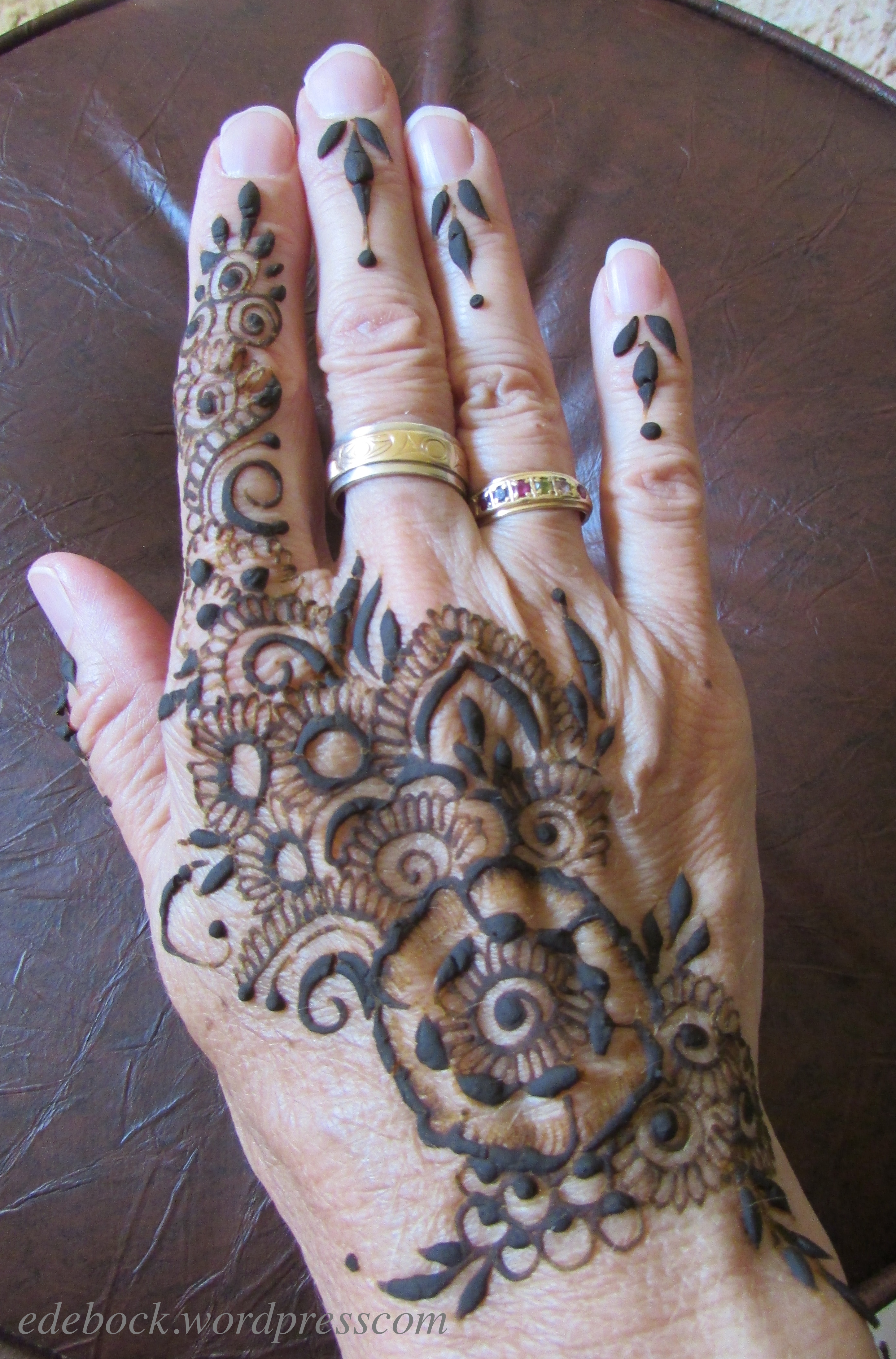
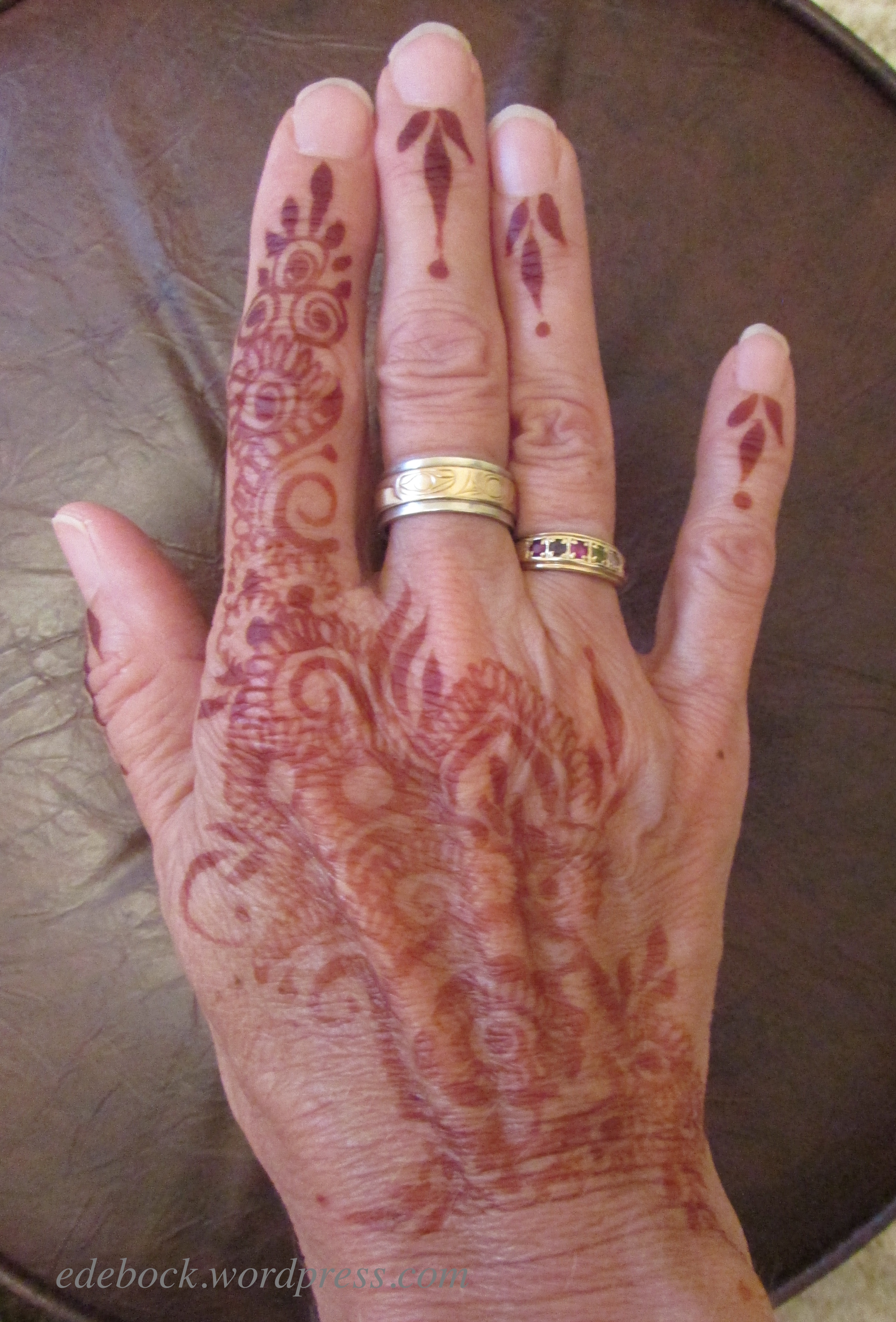
These days, however, henna tattoos have found their way into western culture where they act as a form of body jewelry. Though Dinkal does do bridal henna, the designs that she offered at her booth were more generic. After looking at some of the examples on display, I chose to have a floral design applied to the back of my right hand. I was astonished at how quickly she applied the henna paste. Working completely freehand, she was done in no more than ten minutes and charged only $15!

with dried paste

Dinkal told me to leave the dried paste in place for 2 to 3 hours before removing it. I left it a little longer than that until it began to crumble and fall off. When I removed the remainder, because I didn’t know how henna dye worked, I was hugely disappointed. Most of the design was indistinct and looked like I’d simply spilled something orange on my hand or as hubby said, like I’d scraped my hand on the concrete!

Immediately after removing paste

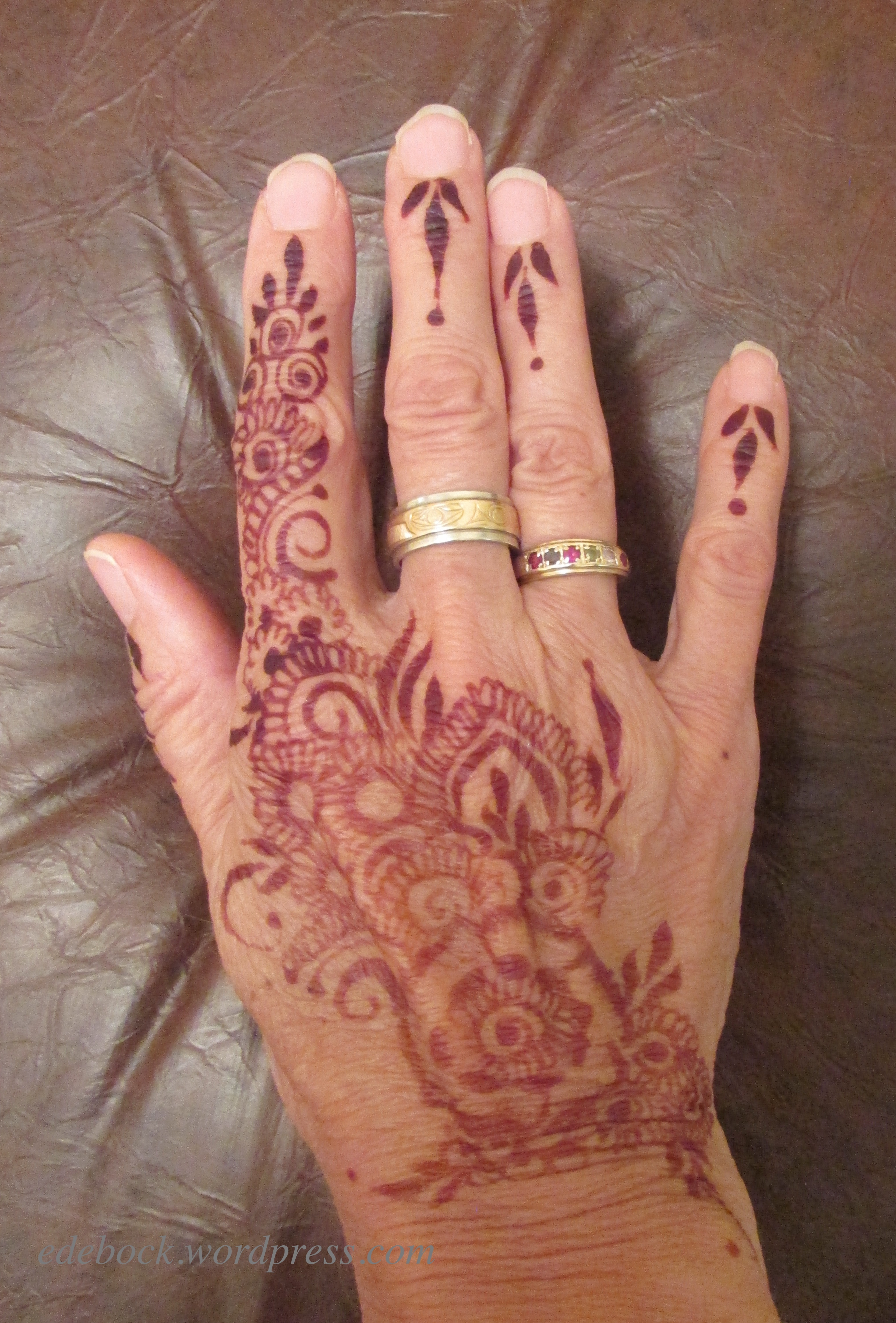
Dinkal had also told me to try to keep the design dry until the next day, so even though it didn’t look like the henna was going to amount to much, I followed her instructions. That’s a little tricky to do when it’s on your right hand, but hubby took over supper making for the day and I kept it out of water. As the evening progressed, I thought perhaps it was beginning to darken, but I chalked that up to wishful thinking or an overactive imagination. Imagine my surprise and delight when I woke up the next morning and this is what I saw!

next morning

The design continued to darken until it looked like this at the end of the following day. I was delighted!

end of day 2

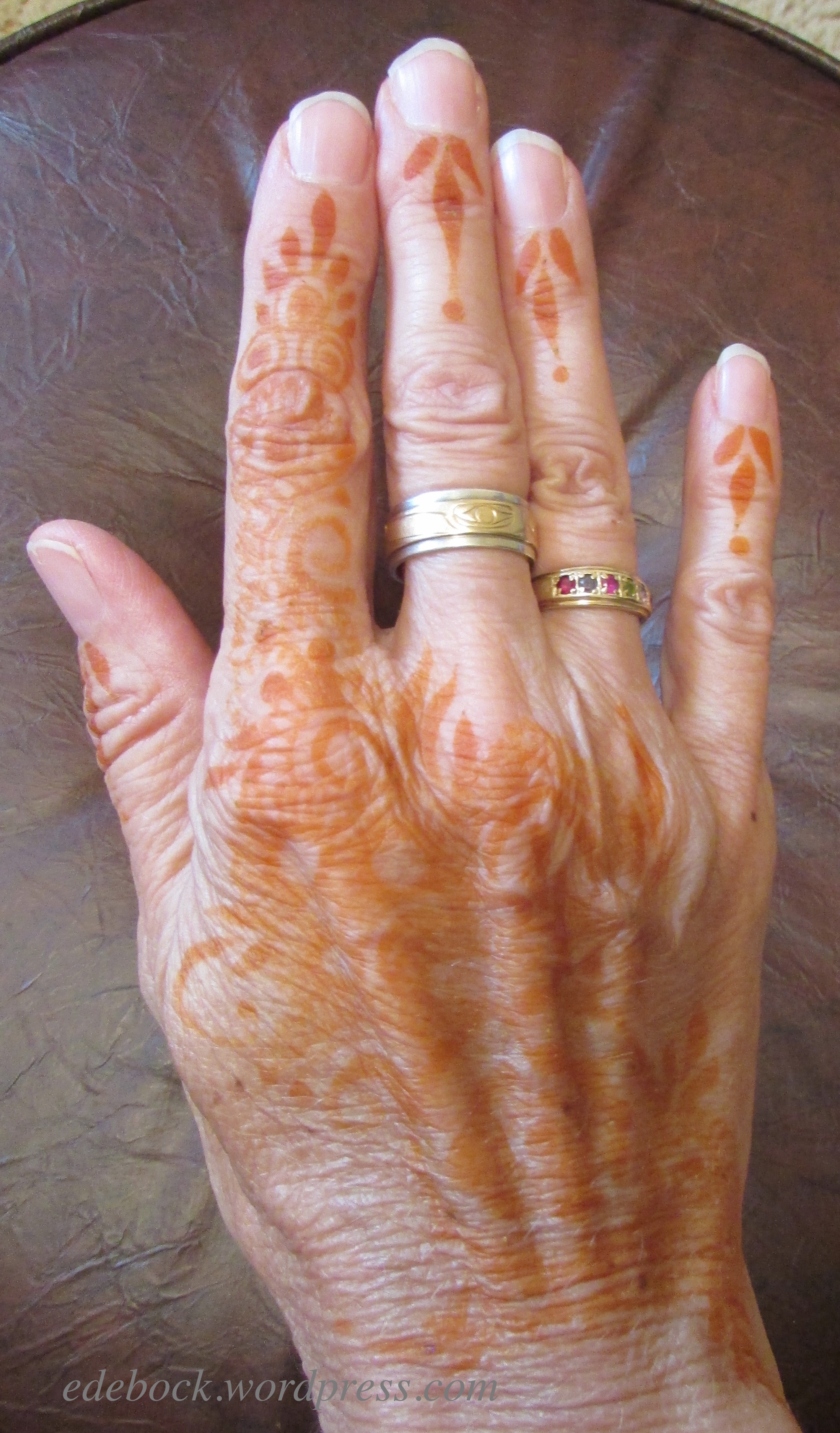
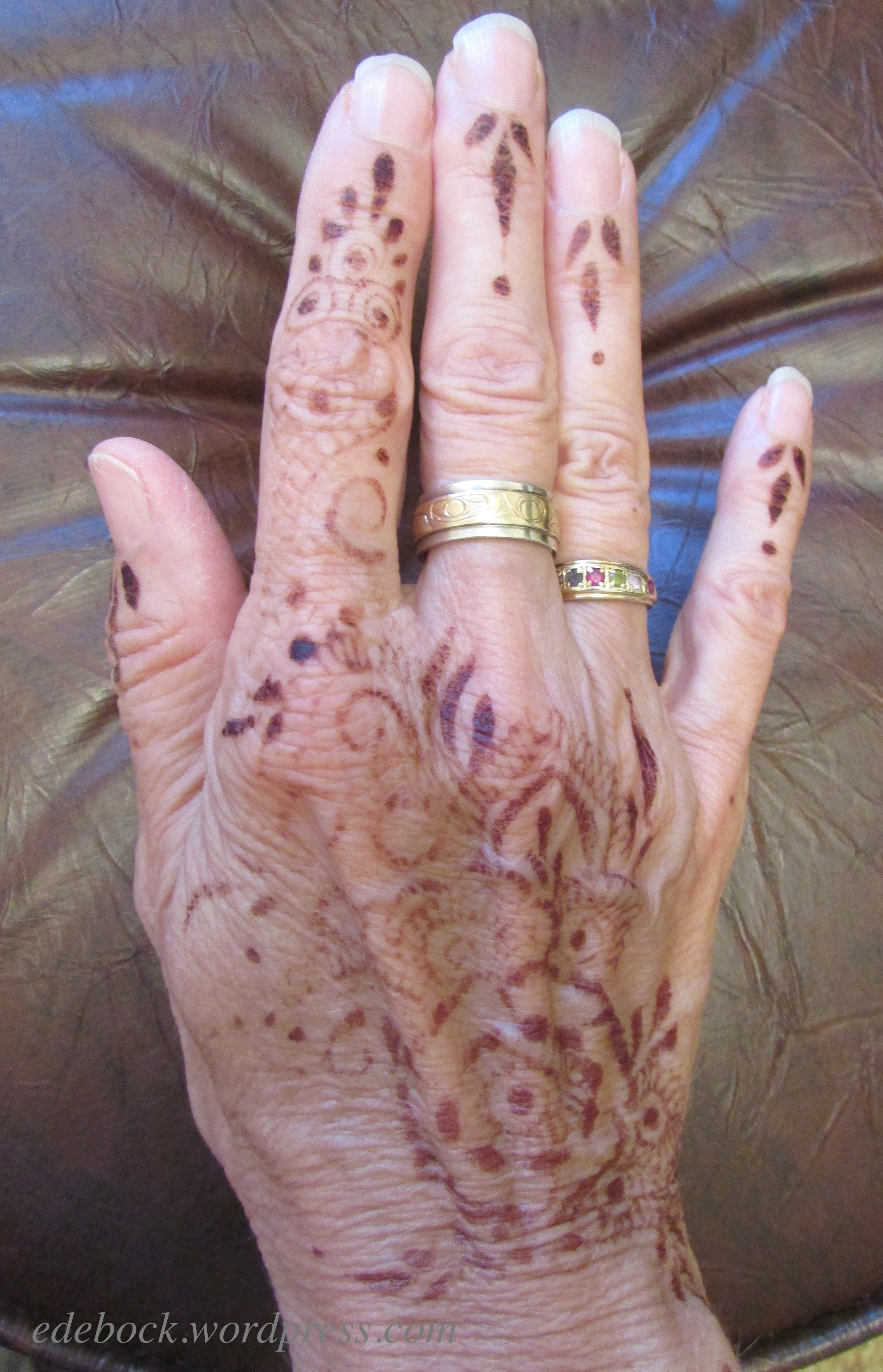
Over the next week or so, had numerous comments and compliments, even from total strangers! The most frequently asked questions were where I’d had it done and how long it would last. Though I’d read that henna tattoos can last from 1 to 4 weeks, Dinkal told me to expect about a week and a half and it appears that she was correct. Here’s how it looked at the end of day 8. Gradually disappearing, but not yet unattractive.

IMG_2994

By yesterday morning, almost two weeks after the henna was applied, only the darkest bits remained. There was no design left on the back of my hand, just a smattering of brown dots. I did some research into how to remove faded henna tattoos and found several different suggestions. The most common ones involved baking soda and lemon juice. Another suggestion that sounded like it would be kinder to my skin involved using either baby oil or coconut oil. I didn’t have either of those on hand, so I decided to try olive oil which, like henna, has been used on skin since ancient times. It’s loaded with nutrients, is a natural humectant, and is rich in antioxidants. I applied it to the back of my hand, left it for 10 minutes, then gently scrubbed it off using a facecloth and hand soap. It worked like a charm! The designs at the ends of my fingers, though faded, still looked okay, so I left them for now.
Next time… and yes, I’m pretty sure there will be a next time… I’d like to try a henna tattoo on my shoulder or forearm. Since my hands are in and out of water constantly, I thinking that perhaps it would last a little longer in one of those locations.

Ferry Point

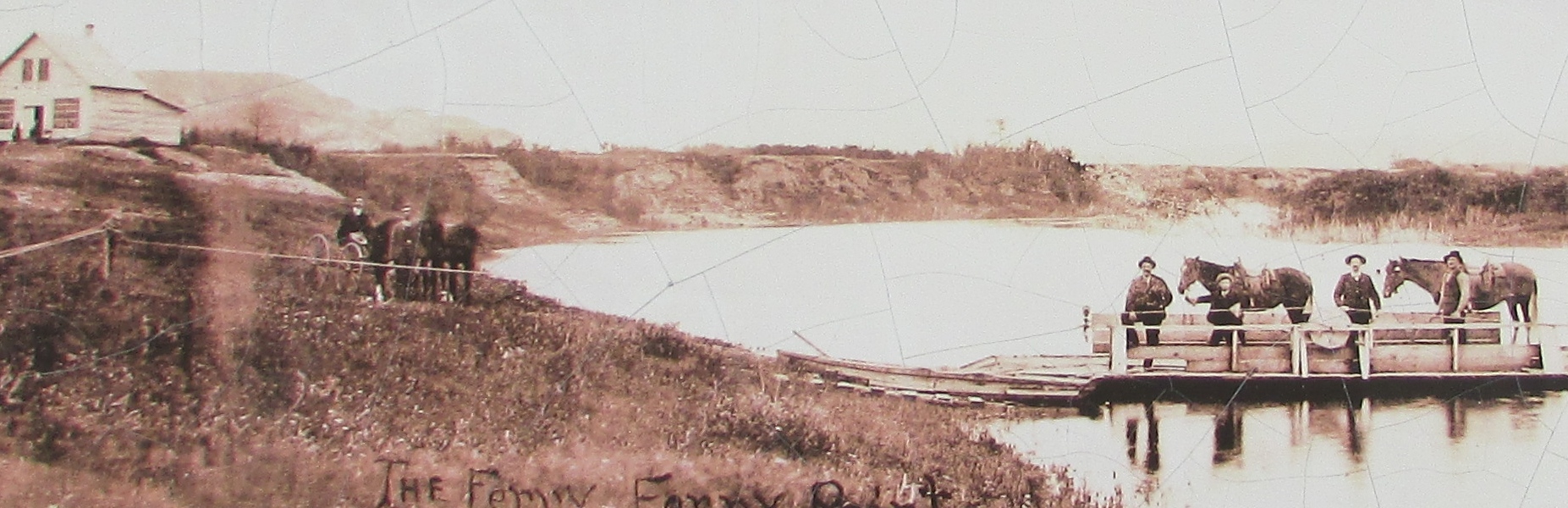
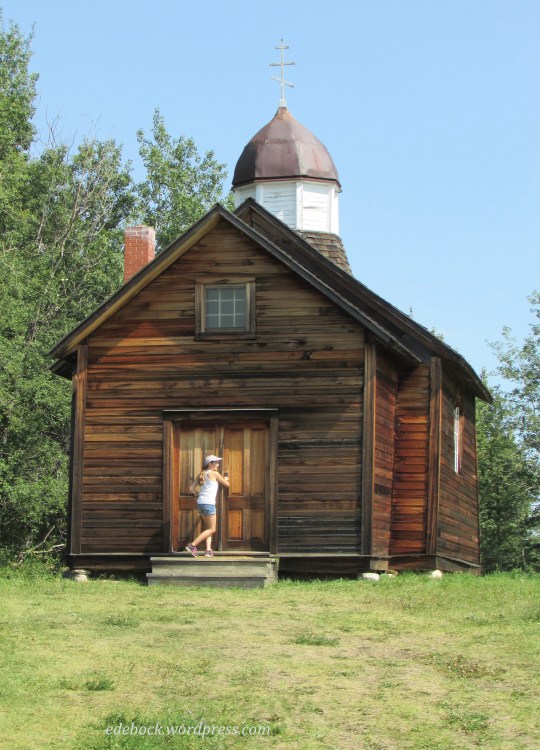
In the very early 1900s small settlements sprang up across the Canadian prairie, but with the coming of the railroad many that weren’t located close to the new railway lines disappeared or were moved. One of these was Ferry Point, so named because of the ferry service that shuttled settlers back and forth across the Battle River at that location from 1902 until 1907 when a bridge was built. 

IMG_2765 - Version 2

Though it was once home to several businesses including a store, a blacksmith shop, a hotel, a pool hall, and a feed mill, the last major building in the community, the Ferry Point Hall, was moved to the nearby town of Rosalind in 1921. Now, there’s nothing there to mark the spot except a small unserviced campground operated by the Ferry Point Historical Society. 

Though it’s less than an hour from here, I had never heard of Ferry Point until last night when I decided to search for a new place to go kayaking. Upon arriving this morning, we discovered that the campground has an excellent spot for launching a canoe or kayak. 

There are many stretches on the Battle River where a person could do an all day or even overnight paddle, but that requires a lot of planning and a second vehicle, something that we don’t have. Instead, our trips on the river are always in and out, back to our starting point. We usually begin by paddling upstream, saving the easier downstream stretch for the return trip when our arms are getting tired. As we made our way upriver, however, we discovered that it was shallow and very weedy as far as we could see. It was a haven for ducks but just about impossible to paddle! 

IMG_2767

After about 15 minutes of tangling the paddles in the weeds and making very little progress, we decided to turn back and try going downstream instead. Though there were still weedy patches, it was much better and we enjoyed a good outing, stopping along the way for a picnic lunch in the boat, and paddling a total of about 7 km.  

IMG_2770

If you’ve followed my blog for very long, you know that I’m fascinated by the old decaying buildings that dot the prairie landscape. Though there are none left at Ferry Point, we passed an old house very close to the road a few kilometres to the north on our way to the campground. On the way home, I asked hubby to stop so that I could take a few photos. One end is leaning precariously and it looks like it could come tumbling down at any moment! 

IMG_2772

IMG_2779

If walls could talk, I always wonder what stories these old houses would tell. Who climbed those corner stairs? What joys and challenges did their lives hold? 

IMG_2776

Today the old house is home only to the flock of pigeon who, surprised by my sudden appearance, flew from the windows when I came close. I was as startled as they were! 

Supernaturals

Supernaturals_11

As many of you are probably aware, Canada has been reeling in recent weeks over the “discovery” of the buried remains of hundreds of children on the grounds of former Indian residential schools across the country. I use the word “discovery” loosely because our Indigenous people have been trying for years to tell us about the horrors that went on behind the walls of these government mandated, church run schools between 1828 and 1996. What shocks me is not the discovery of the bodies, but the fact that there was such widespread ignorance among the Canadian population about this sordid chapter of our history. I had to remind myself that this is something I learned about only through first hand contact with residential school survivors when I lived in the north and through university level studies. I have purposely avoided tackling this issue on the blog because it’s a very complicated one and I don’t want to add to the chatter unless I can do so in a meaningful and restorative way.

Instead, today, I want to introduce Supernaturals, a new culturally focused Indigenous modelling agency launched in Vancouver, B.C. this spring. “Our mission at Supernaturals is to celebrate and make visible Indigenous peoples at a high level in media arts, culture, community, land-based wisdom, and the global market,” says co-founder Joleen Mitton, herself a veteran Nehiyawak (Cree) model and the founder of Vancouver Indigenous Fashion Week.

“Indigenous people are in high demand right now, and we want to be at the forefront of this new wave of cultural awareness supporting our own people in an industry that has traditionally been very difficult to thrive in,” explains Mitton’s partner in the business, Patrick Shannon, a member of the Haida nation and the founder of InnoNative, an Indigenous B.C. based film production company.

Supernaturals’ goals extend beyond modelling. They aim to uplift communities and emerging Indigenous talent through skills development, employment, and healing as well as by addressing the issues of representation, mental health awareness, and poor cultural sensitivity in the modelling world. They provide clients the opportunity to be a part of healthy reconciliation within the media, fashion, and modelling industries.

Supernaturals_7

Supernaturals launched with a roster of 8 models and the group has quickly grown to include 7 more. Well on their way to success, the agency has already landed an interview with Vogue Magazine and a contract with Roots Canada!

Supernaturals_13

eye

Logo

Fashion Friday may be somewhat hit and miss over the next few weeks. After more than a year in virtual lockdown, we are committed to spending lots of time camping and with family this summer. At times, I won’t have access to the internet.

How did pink become a girls’ colour?

pink shoes

Our grandson, Simon, loves the colour pink. He always has. Last week he was so excited to have finally grown into this pair of his sister’s hand-me-down shoes. He proudly wore them to school, but only once. The next morning he sadly told his mother that he would never wear them to school again because he was picked on so badly for wearing “girl” shoes. He’s in grade one. In my opinion, there’s something seriously wrong with a world where a little boy is bullied for wearing his favourite colour to school.

So how did pink become a girls’ colour anyway? It hasn’t always been. Historically, pink was just another colour worn by men and women alike. In many parts of the world, it still is.

In the past, in both Europe and North America, most parents dressed their children, boys and girls, in white dresses until they were about six years old, which was also when they usually had their first haircut. The outfit was practical. White cotton could be bleached and dresses made diaper changes easy.

Franklin-Roosevelt

Franklin Delano Roosevelt, age 2 1/2, wearing a gender neutral outfit.

In the mid 19th century, pastels became popular for babies, but at first they weren’t gender-specific. It wasn’t until just before World War I that pink and blue emerged as indicators of gender, but you might be surprised to learn that, at that time, pink was considered a boys’ colour and blue, a girls’! An article in the June 1918 issue of the trade publication Earnshaw’s Infants’ Department said, “The generally accepted rule is pink for the boys, and blue for the girls. The reason is that pink, being a more decided and stronger color, is more suitable for the boy, while blue, which is more delicate and dainty, is prettier for the girl.”

Babies of the 1940s were the first to be dressed in the sex-specific clothing and colours that we’re familiar with today. The popularity of pink for girls and blue for boys actually waned in the 1960s and 70s during the height of the women’s liberation movement. Parents who felt that dressing their daughters in feminine or stereotypically “girly” clothes might limit their opportunities for success favoured dressing their children in neutral colours and fashions, but by the 1980s, gender oriented children’s clothing was back in style. 

It seems to me, however, that there’s a big discrepancy between what’s deemed acceptable for little boys and little girls. I suspect that many of the girls in Simon’s class wear blue to school. Are they bullied? No! Does anyone question their femininity? Of course not! Then why can’t a little boy wear pink shoes to school without being harassed?

Children aren’t born with prejudices about certain colours. That’s a learned behaviour. I lay the fault at the feet of fathers and grandfathers who were raised with the idea that pink is only for little girls and that a boy should never wear pink. Only when men become bold enough and secure enough in their own masculinity to take back the colour pink will it become just another colour again. Only then will Simon be able to wear his favourite colour without fear of being tormented.

Logo

Has Covid changed how you dress?

LogoMy mother was 17 when WWII broke out on September 1, 1939 and 23 when it ended six years later. I remember her telling me about how fashions changed during the war. Shortages and efforts to conserve precious materials for the war effort brought about shorter hemlines and more streamlined silhouettes in women’s suits and dresses. Decorative elements disappeared, resulting in a more classic style. For men, single-breasted suits replaced double-breasted, lapels narrowed, and trousers were no longer made with cuffs. There were even restrictions on the number of pockets a garment could have. 

WW2-Dresses-1943-Designer-Norman-Hartnell-Photo-James-Jarche

e198b87ca8295ac7b4d3b8cbb23f51c5

With many of the men away at war, women were called upon to replace them in the work force. My mother left school and went to work in a paper mill. Pants became a staple of women working in factories. Once they discovered the comfort and convenience of wearing pants, they were reluctant to give them up when the war ended. This resulted in a permanent change in fashion. I don’t remember my grandmother ever wearing pants, even to work in the garden, but pants were very definitely part of my Mom’s wardrobe for the rest of her life. 

1940s-pants-2 2

Scan

Mom dressed for the mill

Until I started doing research for this post, I didn’t realize that jumpsuits (or boilersuits as they’re called in the UK) which seem to come and go as ladies fashion to this day, had their roots in a very practical item that originated during WWII. Known at that time as a “siren suit”, this one piece garment could be hastily pulled on over pyjamas or a nightgown when the siren blew and the wearer had to escape to an air raid shelter. 

sirn suit

Even Winston Churchill had a siren suit!

Churchill_Romper_Suit_and_Siren_Suit_pinstripe

We aren’t living in wartime, nor do we face the deprivation that our parents and grandparents faced during those difficult days, but the past fourteen months have been a time of unprecedented upheaval and whether we like it or not, Covid will result in cultural change. Fashion is a potent reflection of a period in time and it’s interesting to think about how our current situation is changing how we dress. 

I have one friend who has already been informed that she will continue to work from home even after the pandemic is over and I know of several others who are expecting the same thing. Brands and retailers have seen a huge shift in the kind of clothing that people are purchasing. While many of us simply aren’t shopping at all except for essentials, sales of comfort-wear items, such as sweatpants and leggings, have increased. The question now is whether this turn toward casual, easy-to-wear clothing will persist once life returns to something closer to normal.

Has Covid changed the way you dress? If so, do you think this will be a permanent change? Is there something you look forward to buying and wearing once the pandemic is over? 

More about flats

Screen Shot 2021-03-17 at 10.15.26 AM

What a strange language English is! Take the word flat, for example. In Britain, a flat is what we in North America would call an apartment. Flat can mean smooth and even, without bumps and indentations. It can be a musical note or a piece of stage scenery. We can be flat broke, lie flat on our backs, or turn someone down flat. Today is Fashion Friday, however, so once again we’re talking about shoes, ballet flats in particular. 

LogoThe ballet flat, a timeless, polished, and quietly chic style of footwear, was inspired by the dance slippers worn by ballerinas in France in the mid-18th century. It was French film actress, Brigitte Bardot, who would ultimately transform the ballet slipper into it’s present day form. Once trained as a ballet dancer, Bardot asked French footwear designer, Rose Repetto, to design a pair of flats for her that were as flexible as ballet slippers, but softer and more comfortable. Bardot wore the now-iconic style in her 1956 film, And God Created Woman. 

Fashion trends come and go, but the ballet flat has remained a wardrobe staple for women for nearly 70 years. Other famous fans of the tried-and-true style have included Audrey Hepburn, Rita Hayworth, Jacqueline Kennedy Onassis, Princess Diana, Michelle Obama, and Meghan Markle. 

As I mentioned in last week’s post, with spring comes lighter footwear including the ubiquitous ballet flat. Though these lightweight, flexible, and comfortable shoes are traditionally rounded at the toe, square-toed and pointy pairs can also be found. Apart from highly formal, black tie events, ballet flats are suited to almost any occasion from the office to a party. They are, of course, perfect as part of an everyday casual outfit. I would not, however, suggest wearing them when you plan to do a lot of walking as they don’t provide adequate support for that.

And now for a few styling tips: 

  • Avoid tights and socks. Ballet flats look best over bare feet. 
  • Show some skin. Ballet flats look most flattering when your ankles or lower legs are showing. They look great with dresses, skirts (especially loose, flowy styles), and cropped pants. 
  • Simple ballet flats also look great with skinny jeans or leggings. 
  • If you want to create the illusion of longer legs, choose a simple nude pair. 

IMG_2237

Wearing my blue suede shoes!

What fashion is NOT

LogoI’m noticing a common theme amongst the fashion bloggers that I follow and I completely identify. As the pandemic drags on and on, we’re finding it increasingly difficult to come up with new and interesting content. I refer to Following Augustine as a “lifestyle, travel, and fashion” blog, but when life is mostly stay-at-home, travel has been non-existent for almost a year, and I’ve only shopped for absolute essentials, what do I write about? I’ve been depending on my own closet for most of these weekly fashion features, trying to come up with new ways to wear old pieces, but I’m rapidly running out of ideas!

In preparation for a weekly study that I lead, I’ve spent quite a bit of time lately looking at what the Bible has to say about women, so I’m going to draw on that for today’s post. 1 Peter 3:3-4a says, “Your beauty should not come from outward adornment, such as elaborate hairstyles and the wearing of gold jewelry or fine clothes. Rather, it should be that of your inner self, the unfading beauty of a gentle and quiet spirit.” Does that mean that a Christian woman shouldn’t concern herself with style, dress in fine clothes, wear jewelry, use make-up, or write a fashion blog. Not at all! 

When looking at the Bible for guidance we need to ask ourselves what the timeless principles behind the scriptures are and how we can stay true to them in our day and age. First century Israel was under Roman rule. It was the practice of the upper class Roman women to flaunt their position by wearing elaborate hairstyles adorned with genuine jewels. They intentionally used their clothing and jewelry to set themselves apart from the lower class women. I believe that it was this attitude that the apostle Peter was warning against.  

46777e2aa293da928de45001227531de

Wall painting from the Vila San Marco, Stabiae, 1st century

I’ve written before about the 3Cs, the things I want my wardrobe to say about me. When I look in the mirror, I want what I’m wearing to say classy, confident, and comfortable. I could add to that casual and creative. I do NOT want my wardrobe to say that I think I’m better than anyone else! Fashion is not, or should not be, a competition! 

I actually had no idea where this post was going when I started writing it, but perhaps I’ll just leave you with this thought.

129944384_236449687835181_6603705724580703289_o

Wearable milk?

LogoI learn so much from my readers! The idea for today’s post came from one of my most recent followers, new blogger, Dhwani Ghandi, of Style Green With Dee

The fashion industry is known to be one of the world’s worst polluters. According to the United Nations, it is responsible for producing 20% of global waste-water and 10% of carbon emissions, more than that of international flights and maritime shipping combined. Clearly, there is an urgent need for more sustainable, eco-friendly alternatives. Could milk protein (casein) be one of them? 

The idea isn’t a new one. In fact, fabric made from sour milk was developed as a substitute for wool in resource-starved Italy in the 1930s and was used in many clothing and household items in America and Europe during the ’30s and ’40s. It was far from perfect, however. Chemicals such as formaldehyde were used to strength the fabric and it wasn’t as soft or durable as wool. As a result, it fell into obscurity when less expensive, more resistant synthetic options such as nylon became available. 

Today, milk fibre is once again gaining interest as manufacturers and consumers look for alternatives to synthetic fabrics. Most milk fibres today are blended with the chemical binder acrylonitrile, which is also used to make acrylic, but there are some small producers in Europe who claim that their fabrics are 100% chemical-free. At this point, they have a limited market due to cost. Milk fibre is much more expensive than polyester to produce, but cheaper than other luxury fibres like silk. 

So what is casein or milk fibre fabric like? Apparently, it is glossy and luxurious in appearance, feels much like silk, absorbs moisture well, and is antibacterial and antifungal. It blends well with other fabrics such as cotton, bamboo, and modal. What’s not to like? 

I have to wonder though, if solving one problem would cause or contribute to another. Apparently, the dairy industry worldwide dumps millions of tons of milk every year. It would be wonderful to see that go to good use in fabric production. Would it be enough, however, or would dairy herds have to be increased in order to meet the demand? It takes approximately 15 kg (33 lb) of milk to produce 1 kg (2.2 lb) of milk fibre. The amount of land and water required to raise additional cows, the unethical treatment of factory-farmed animals, and pollution caused by manure entering waterways are all factors that would have to be taken into consideration. And then there are those cow farts putting methane gas into the atmosphere! 

Who knows though? It may be a novel idea now, but maybe someday we’ll all be wearing sour milk!