The impact of the Barbie movie on fashion

Screenshot 2023-08-14 at 11.58.52 AMEver since the Barbie movie, featuring Margot Robbie and Ryan Gosling, was released last month, women and girls of every age (and men too) have been flocking to the theatres dressed in pink. Pink is definitely having a big moment in the fashion world!

Historically, pink was just another colour worn by men and women alike and, in many parts of the world, it still is. In North America, however, it’s been considered a feminine colour since the 1920s when US department stores arbitrarily made the decision that blue would be for boys and pink for girls. Later came an era when pink was thought to be too girly. Women who loved pink weren’t taken seriously and boys who wore pink were accused of being gay. All those stereotypes have been shattered by the Barbie movie phenomenon.

Living where I do, two hours from a major shopping mall, I haven’t been in a clothing store for quite awhile, but a quick look at a few of my favourite Canadian retailers online turned up an amazing array of pink; every shade of pink imaginable, but especially Barbie’s iconic hot pink.

There were casual clothes, of course, like this tank top and wide-legged linen cargo pants from Reitmans.

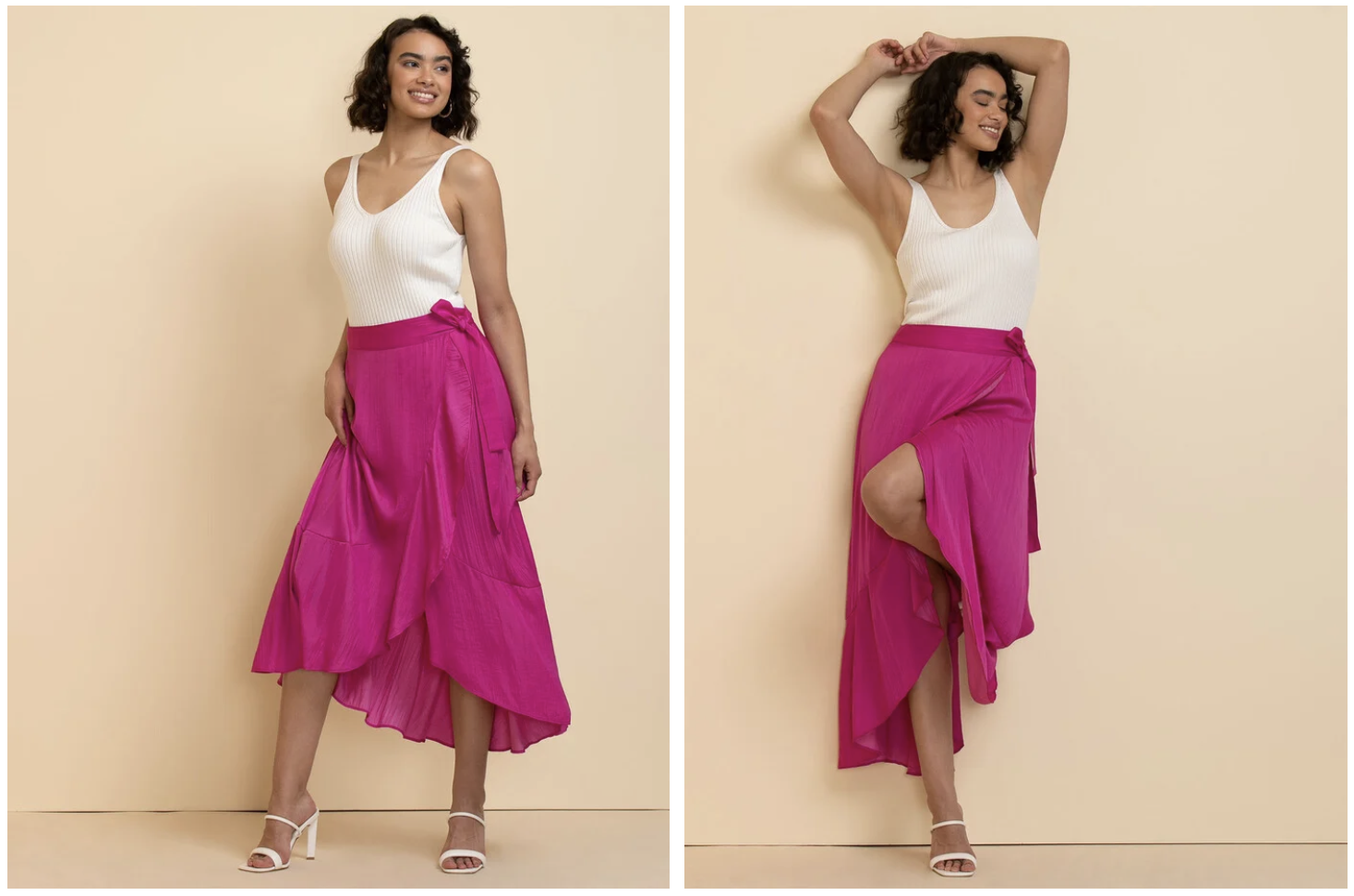
But also dressier pieces like this satin wrap skirt from Ricki’s.

Satin Wrap Skirt Ricki's

And even business appropriate suits and blazers like these from Cleo and Ricki’s.

Cropped Pant Suit Cleo

Single Breasted Blazer Ricki's

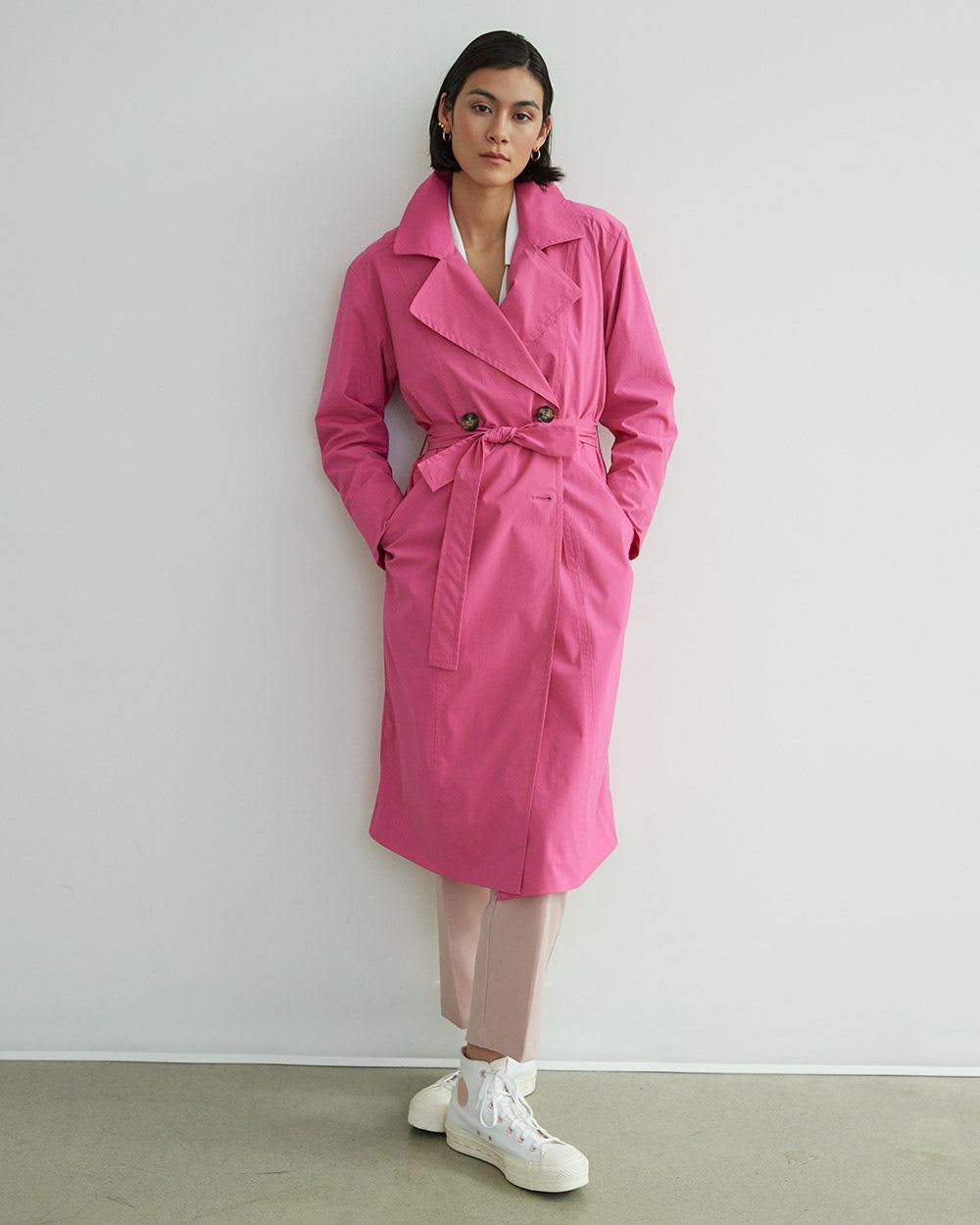
I can imagine Barbie wearing a bright pink trench coat, can’t you? This one’s from Reitmans.

reitmans_464574_669_1

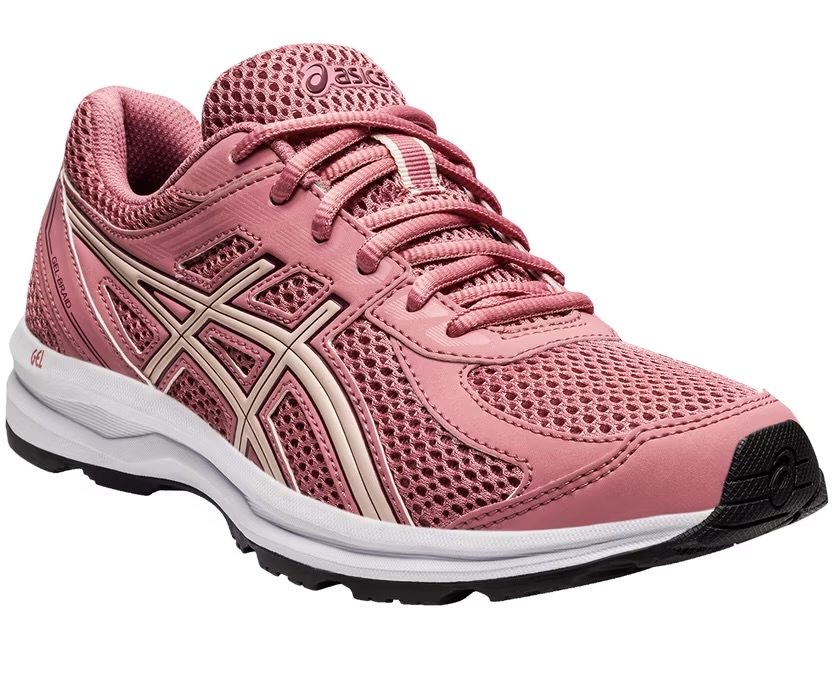
The only pink in my wardrobe is a couple of golf shirts and special bright pink hoodie that I’ve had for many years, but if I was in the market for new walking shoes, I’d definitely consider these Asics from the Marks website!

asics-women-s-gel-braid-running-shoes-pink-eab59c40-67c4-4934-b581-d3cf91ed40d8.png

But, back to the Barbie movie. I haven’t seen it myself and I don’t know that I will, but I did see a trailer that looked like it might be fun. What is it though that is drawing huge crowds to a movie about a doll having an existential crisis and venturing into the real world? Certainly one of the things driving the phenomenon is nostalgia. Women who grew up playing with Barbie can relive a part of their childhood and in many cases, share the experience with their daughters and granddaughters.

I never had a Barbie doll. I was 6 when Mattel officially introduced her to the world on March 9, 1959. Perhaps my mother was a woman before her time, but from the beginning, she didn’t like the unrealistic beauty standards presented by the doll. About that time, she and my father made a trip to the States. There, she bought my little sister a Vogue Ginny doll and me a Jan. Compared to Barbie, with her ridiculously minuscule waist, Jan had some meat on her bones and was definitely more pleasing to my mother’s sensibilities. Somewhat later, my sister and I both received a Tammy doll for Christmas. Tammy was created by the Ideal Toy Company and made her debut in 1962. She was portrayed as an American teenager with a “girl next door” image. Although I didn’t have a Barbie, I did have her younger sister, Skipper, and she was probably my favourite of the three.

Perhaps for girls and women who did grow up with Barbie, her iconic pink evokes not only nostalgia, but a sense of fun and escape to a time when life was more carefree and joyful. That would certainly explain the crowds dressed in pink lining up at the box offices and the influx of pink in clothing stores this summer!

What about you? Did you play with Barbie? Have you seen the movie? If so, did you dress in pink? I’d love to know your thoughts on the movie, the hoopla surrounding it, or the colour pink in general.

Rowley, an Alberta ghost town

We spent several days camping this week and as a result, I don’t have a Fashion Friday post ready for you today. Instead, I’ll share one of the highlights of our short time away from home. After a horrendous storm Monday night, we woke to sunshine on Tuesday morning, but the wind was still much too strong to go golfing or kayaking and we’d already hiked the 6.5 km nature trail around a nearby lake. We didn’t want to spend the day sitting in the trailer though, so what should we do?

Hubby suggested a road trip to Rowley. In its heyday, Rowley, Alberta was an agricultural town of approximately 500 people, but at last count the population was 9. Yes, that’s right, 9 people and perhaps a few stray cats! Apparently, some of the residents don’t really like their hometown being referred to as a ghost town though that’s what it’s usually called. They take pride in the place and have worked hard to preserve the few remaining buildings and to turn it into a tourist destination. Once a month, the community association, made up of residents and people from the surrounding area, host a well-attended pizza and pub night to raise funds to help with the cost of maintenance.

As the ROWLEYWOOD sign at the turnoff on nearby Highway 56 suggests, the movies Legends of the Fall, The Magic of Ordinary Days, and Bye Bye Blues were filmed in the hamlet.

So, come walk with me and I’ll show you around Rowley, Alberta.

The Lion’s Oil Garage, complete with its old style gas pump, is a reconstruction of the building that originally stood on this site.

IMG_5901

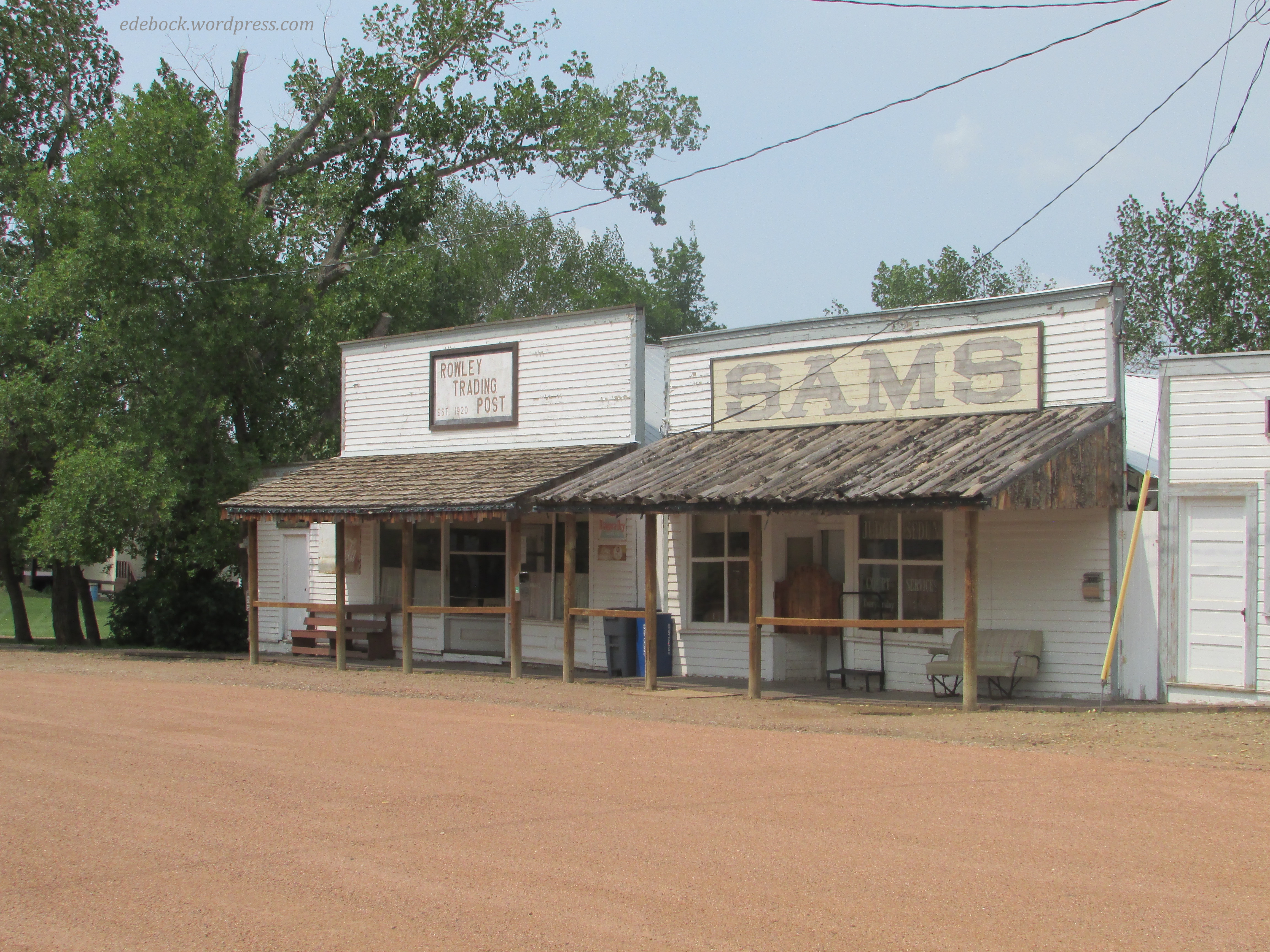
Walking down Main Street past Sams Saloon and the Rowley Trading Post, it’s easy to imagine ourselves transported back in time to the wild west. I could easily picture a couple of horses hitched to the rails and women strolling the boardwalk in old fashioned dresses. Built in 1920, the trading post was where Rowley residents purchased their dry goods and groceries until 1973 when it was the last business in town to close its doors.

IMG_5875

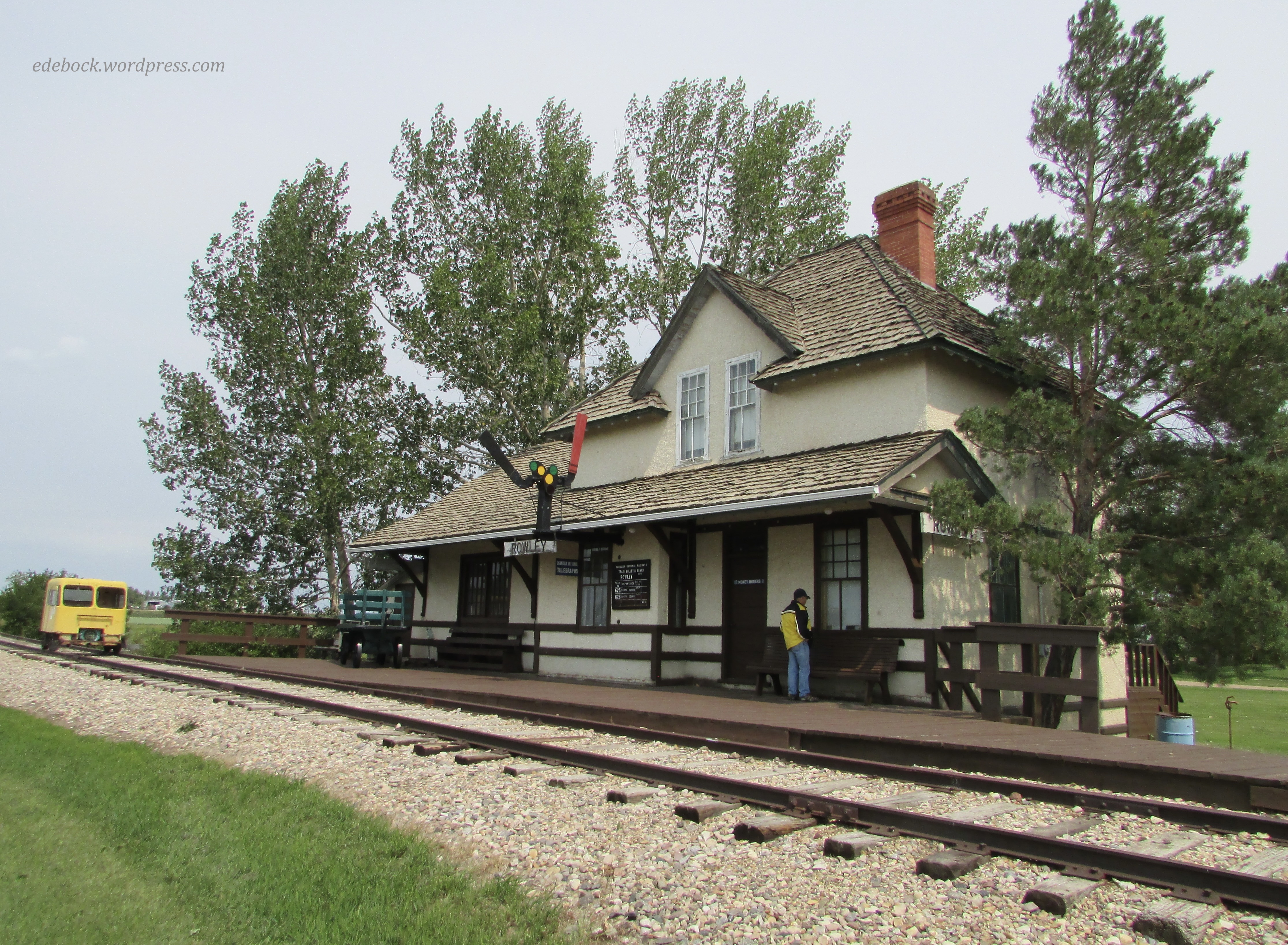
At the end of the street stands the beautifully preserved CNR train station. The station master and his family likely lived upstairs.

IMG_5878

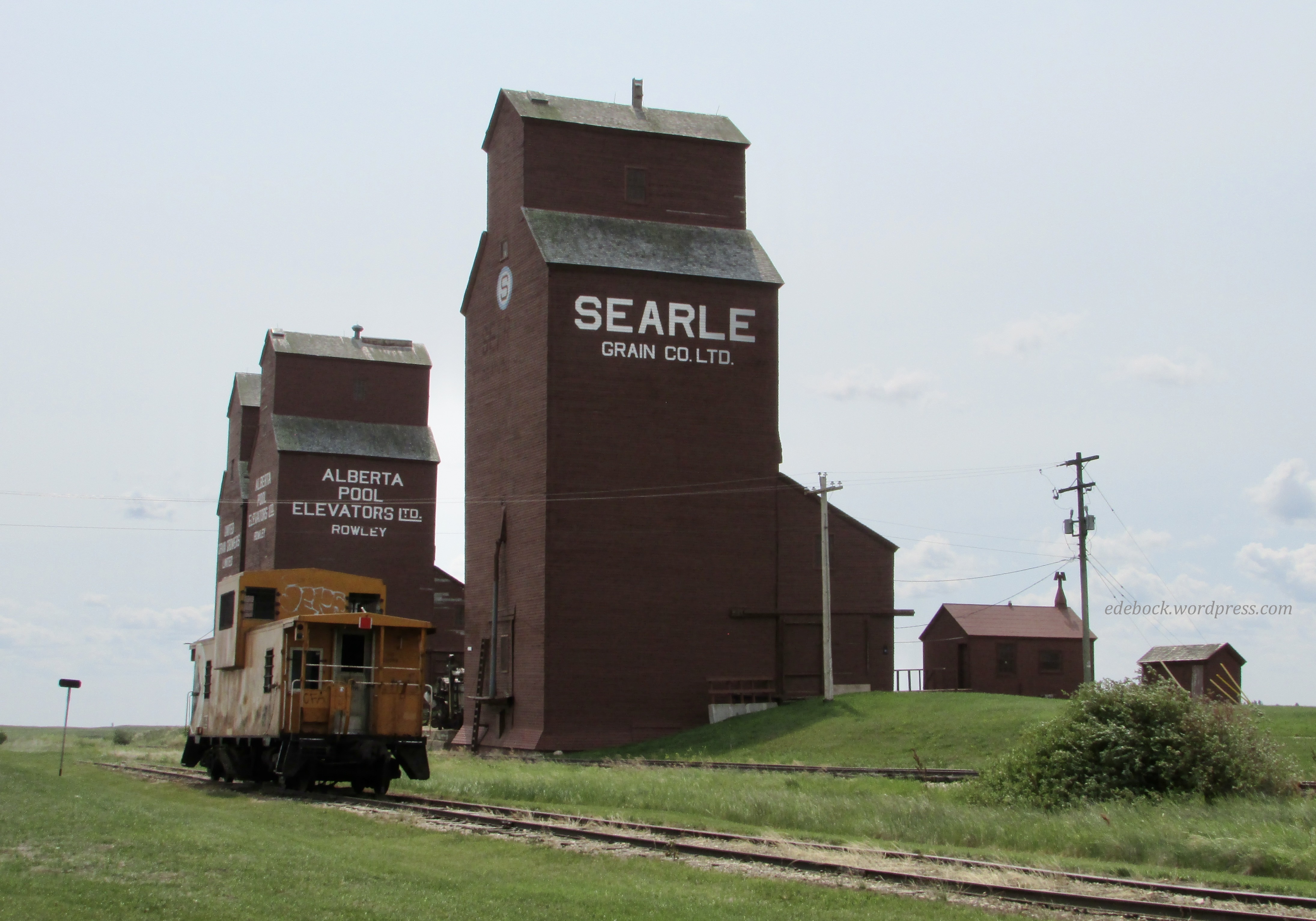
At one time, every little town on the Canadian prairie had its wooden grain elevators, but very few of these stately sentinels remain today.

IMG_5885

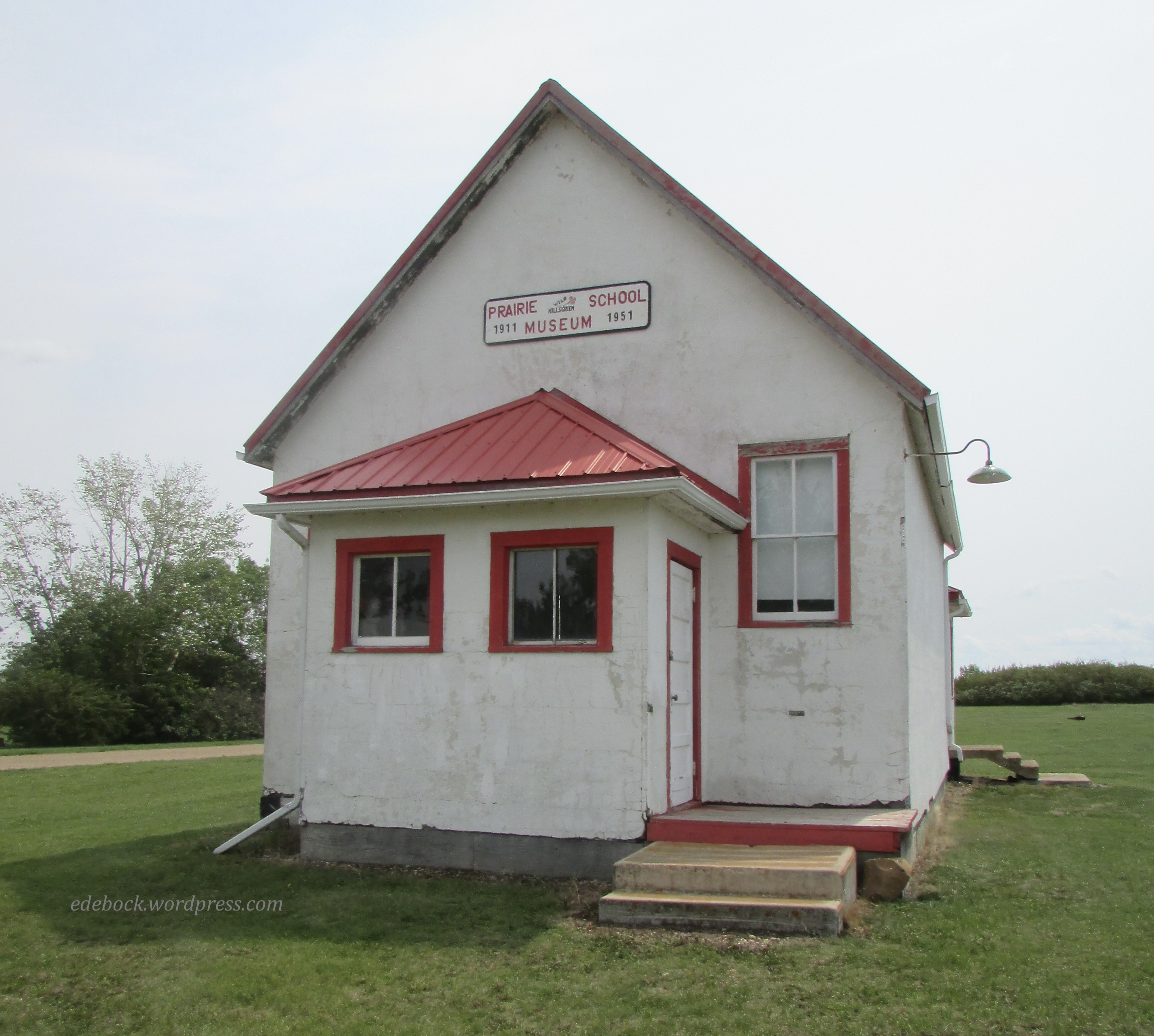
The Prairie School Museum is typical of the one room schoolhouses that dotted the prairie in days gone by. 

IMG_5891

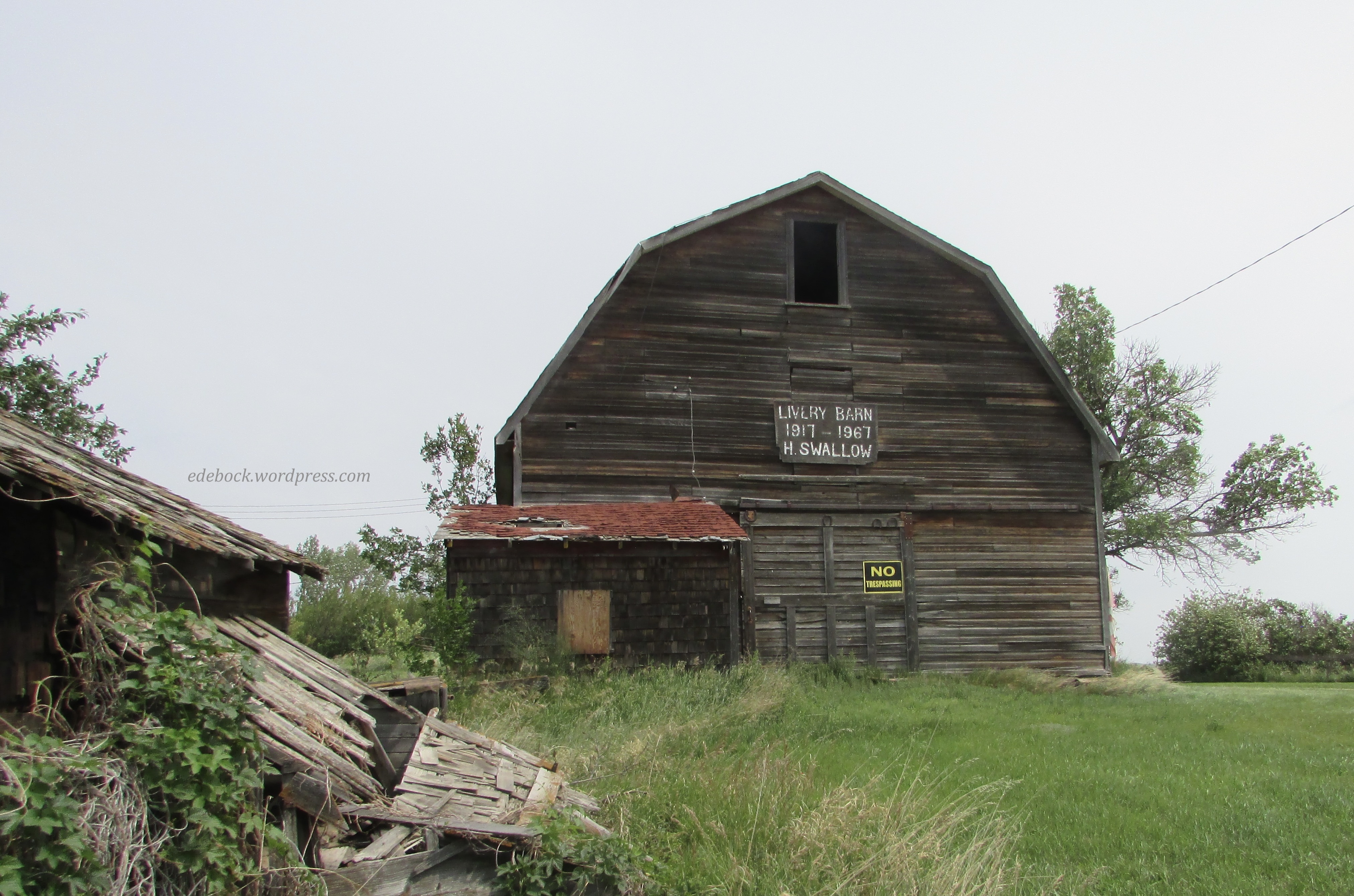
If you came to visit Rowley in the early days, you might have boarded your horse at H. Swallow’s livery barn. While some of the smaller structures around it are falling down, the barn still looks pretty sturdy.

IMG_5894

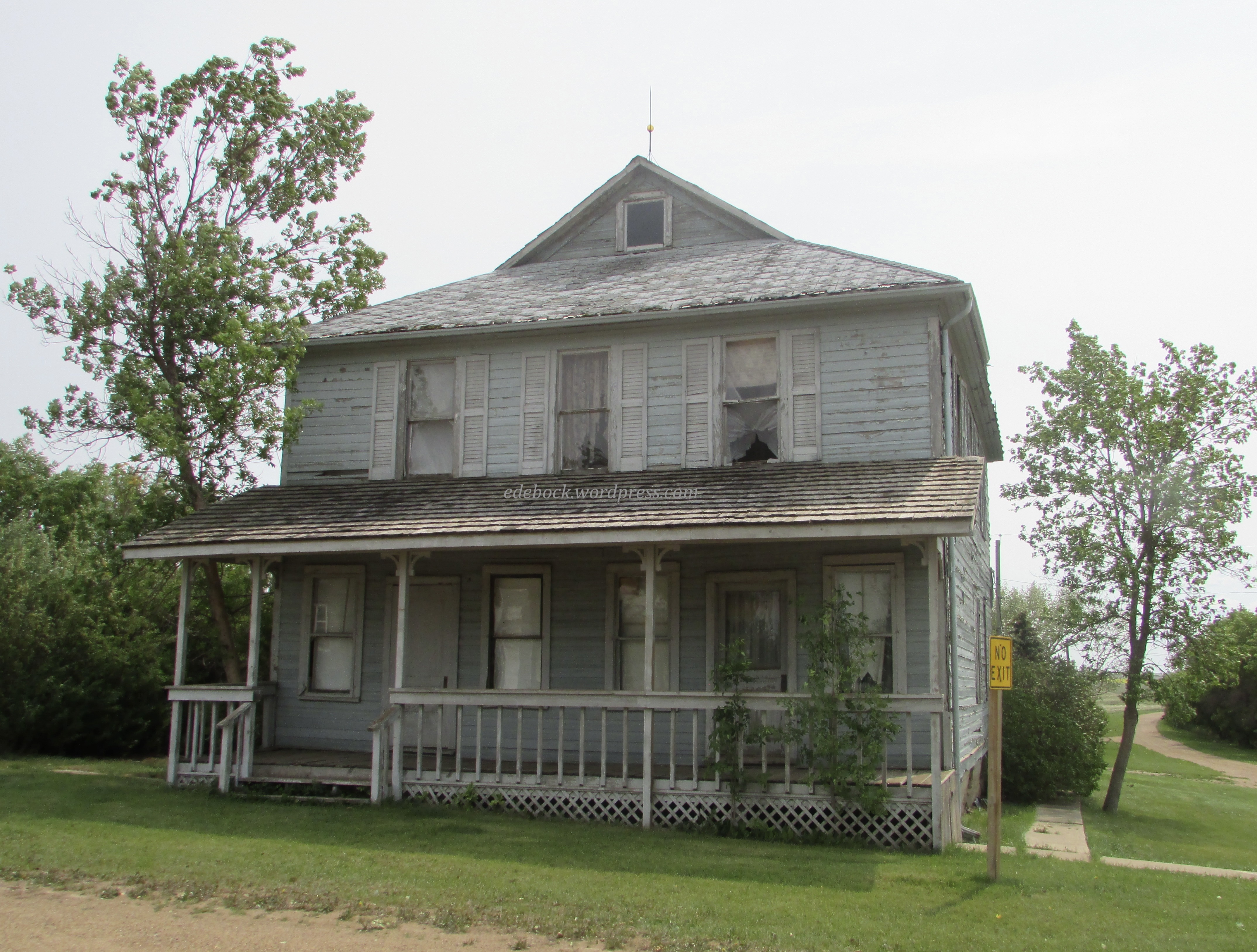
Circling back to the upper end of Main Street, we find this stately old house, weathered by time but still beautiful. Hubby and I thought that perhaps it had once been the town’s hotel, but after doing a bit of research I discovered that it was originally used as a hospital.

IMG_5897

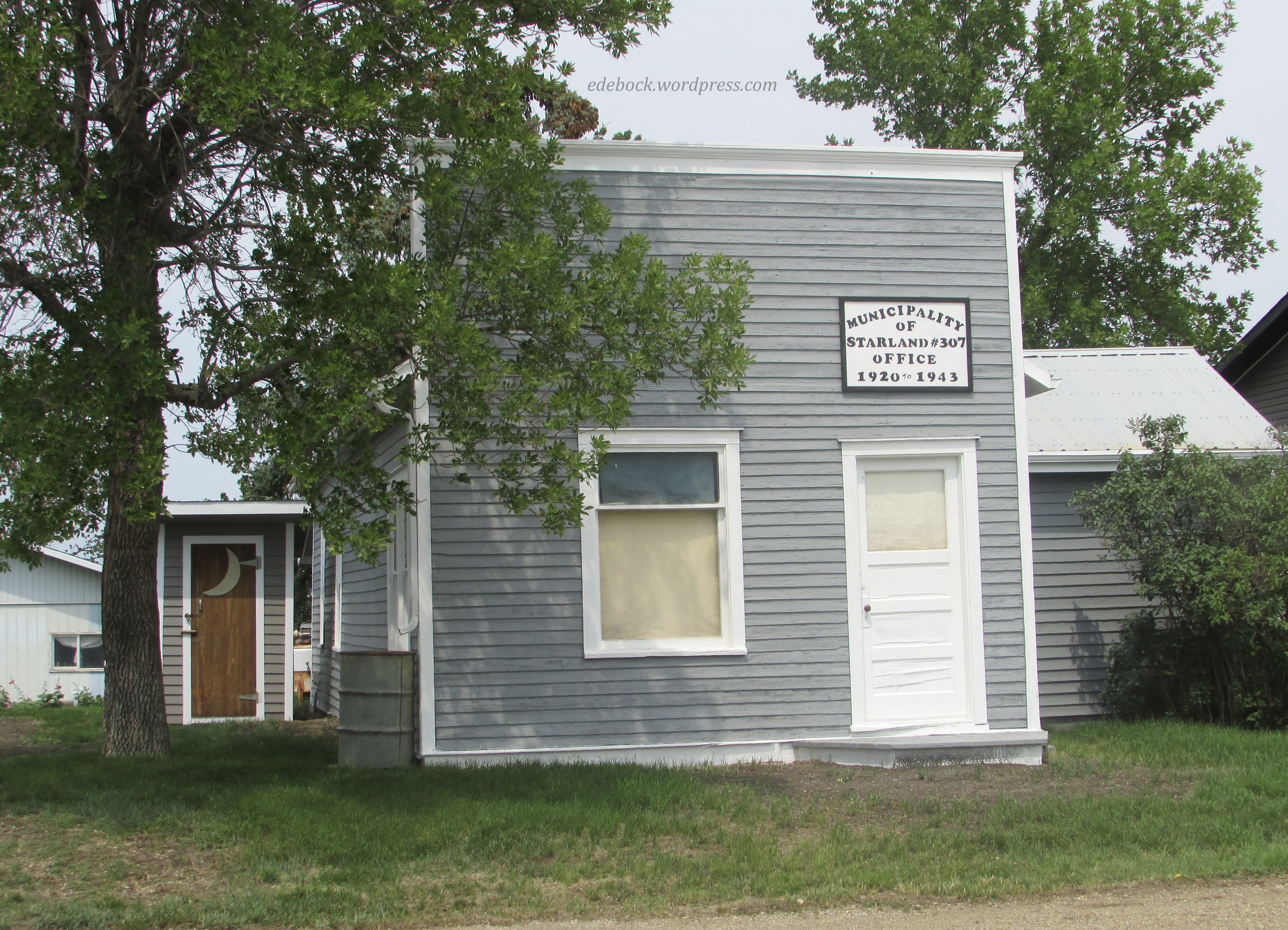
Across the street, the old municipal building has obviously undergone some fairly recent renovation. Though I’m happy to live in the day of indoor plumbing, we thought the backyard biffy was cute.

IMG_5898

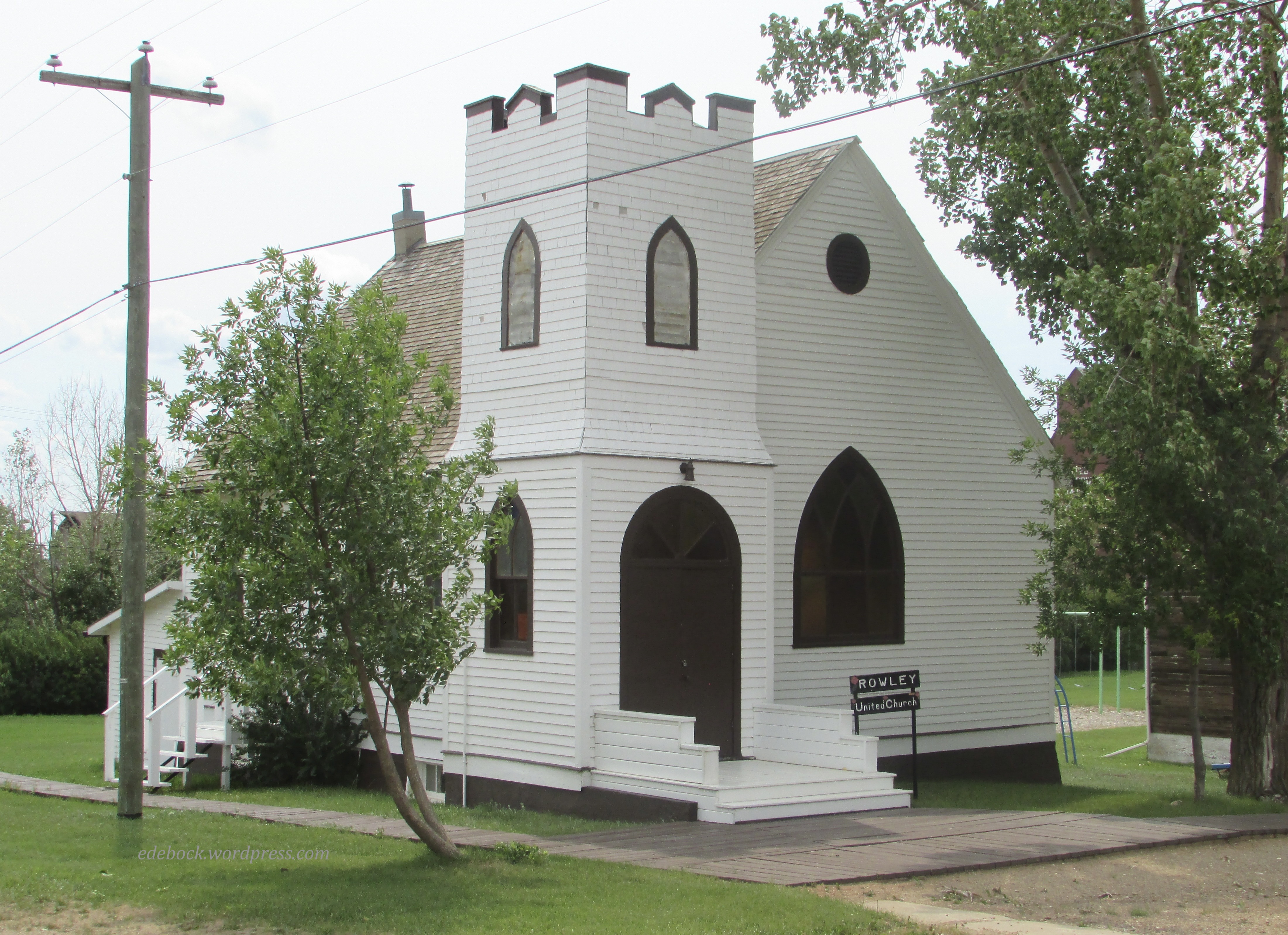
The Rowley United Church remained active until 1969 and continues to be used for the occasional wedding. 

IMG_5899

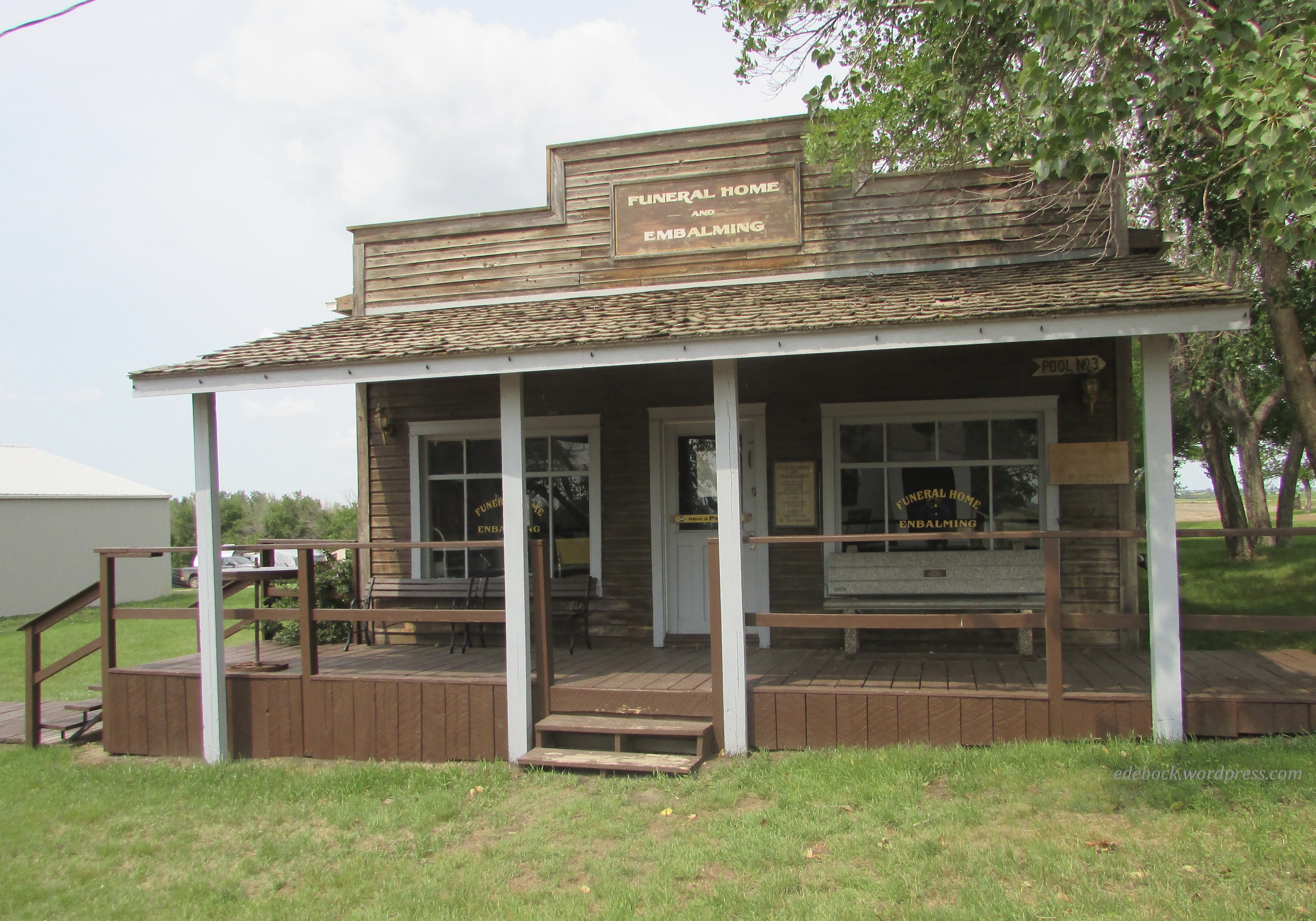
Like at least one other building in Rowley, not shown here, the funeral home across the street from the church was constructed specifically for the filming of the movie, Bye Bye Blues. Afterwards, the residents decided to turn it into a pool hall for their own enjoyment, but kept the front and signage intact. 

When we were there, we had Rowley almost entirely to ourselves and were content to peer through the windows at the artifacts housed inside the buildings, but should you wish to take a closer look, the Rowley community association hires local summer students to give free guided tours inside the buildings Thursday to Monday during July and August. 

Book of the month – May 2023

When it came time to write this month’s book post, I couldn’t decide which of two historical novels I wanted to feature, so I took the easy way out and wrote about them both!

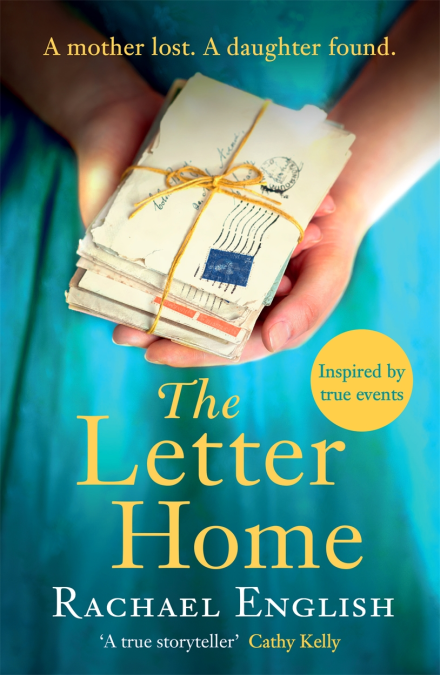
The Letter Home

Rachael English

hbg-title-9781472264701-63.jpgRachael English is a novelist and a presenter on Ireland’s most popular radio programme, Morning Ireland. In her most recent novel, inspired by true events, the lives of three remarkable women are interwoven across time.

While back home in County Clare on Ireland’s west coast, Jessie Daly, whose life has recently fallen apart, agrees to help an old friend research what happened in that area during the terrible famine of the 1840s. Meanwhile in Boston, lawyer Kaitlin Wilson, after suffering a tragedy of her own, decides to research her family history. She knows only that her ancestors left Ireland for Boston in the 19th century. Separated by an ocean, and totally unknown to one another, the two women are drawn into the remarkable story of a brave young mother named Bridget Moloney and the terrible suffering that she and her little daughter, Norah, endured during the famine.

Even on a busy weekend celebrating the birthdays of two of my grandchildren, I had a hard time putting this book down! Perhaps I connected so strongly with the story because I’ve recently been sorting through a box of old family photos, inherited from my mother, and trying to correctly label them before the identities of the people in them are forever lost in the mists of time. Like Jessie and Kaitlin, I’ve taken to the internet to find out more about these ancestors of mine and their lives, but perhaps that should be a story for a different post!

If you enjoy historical fiction or genealogy is your thing, this is definitely a book for you. I enjoyed it so much that I’ve now loaded one of English’s earlier novels, The American Girl, onto my Kindle for future reading.

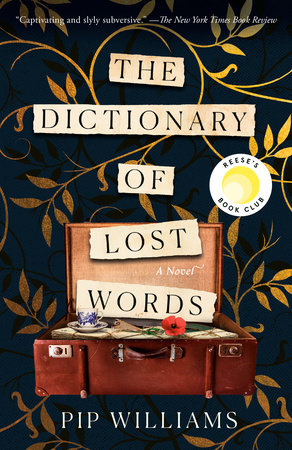
The Dictionary of Lost Words

Pip Williams9781984820747

Knowing that I’m a lover of words and a strong advocate of equal rights for women, my daughter recommended that I read this one. Australian novelist, Pip Williams, masterfully weaves a fictional story into and around the true historical events and people involved in compiling the first edition of the Oxford English Dictionary in the late 1800s and early 1900s.

The only child of a widowed father, Esme spends her early childhood in the Scriptorium, a converted garden shed in Oxford where her father and a team of dedicated lexicographers collect and compile words for the dictionary. From her place under the sorting table she collects stray word slips dropped or discarded by the men and hides them in a small trunk that she labels “The Dictionary of Lost Words”. As she grows up, she begins to realize that not all words are considered appropriate for inclusion in the dictionary, particularly words pertaining to the experiences of women and common folk; words that were considered coarse or vulgar, spoken but not usually written. And so she begins her own collection of words by seeking out the lower-class, less educated people and listening to their everyday speech.

A book about words might sound dreadfully boring to some, but The Book of Lost Words is much more than that. The years during which the Oxford English Dictionary was being compiled coincided with the women’s suffrage movement in England as well as World War I and both have a part to play in the story. More than just a book about words, it’s a book about love, loss, the roles of women, the meaning of service, and a book that asks the important question, whose words matter?

Centro Histórico, Mexico City

We packed a lot into our final day in Mexico. Much of what we saw and experienced was within walking distance of our hotel in the Centro Histórico, the heart of Mexico City. Come walk with me and I’ll show you some of what we saw.

IMG_5433

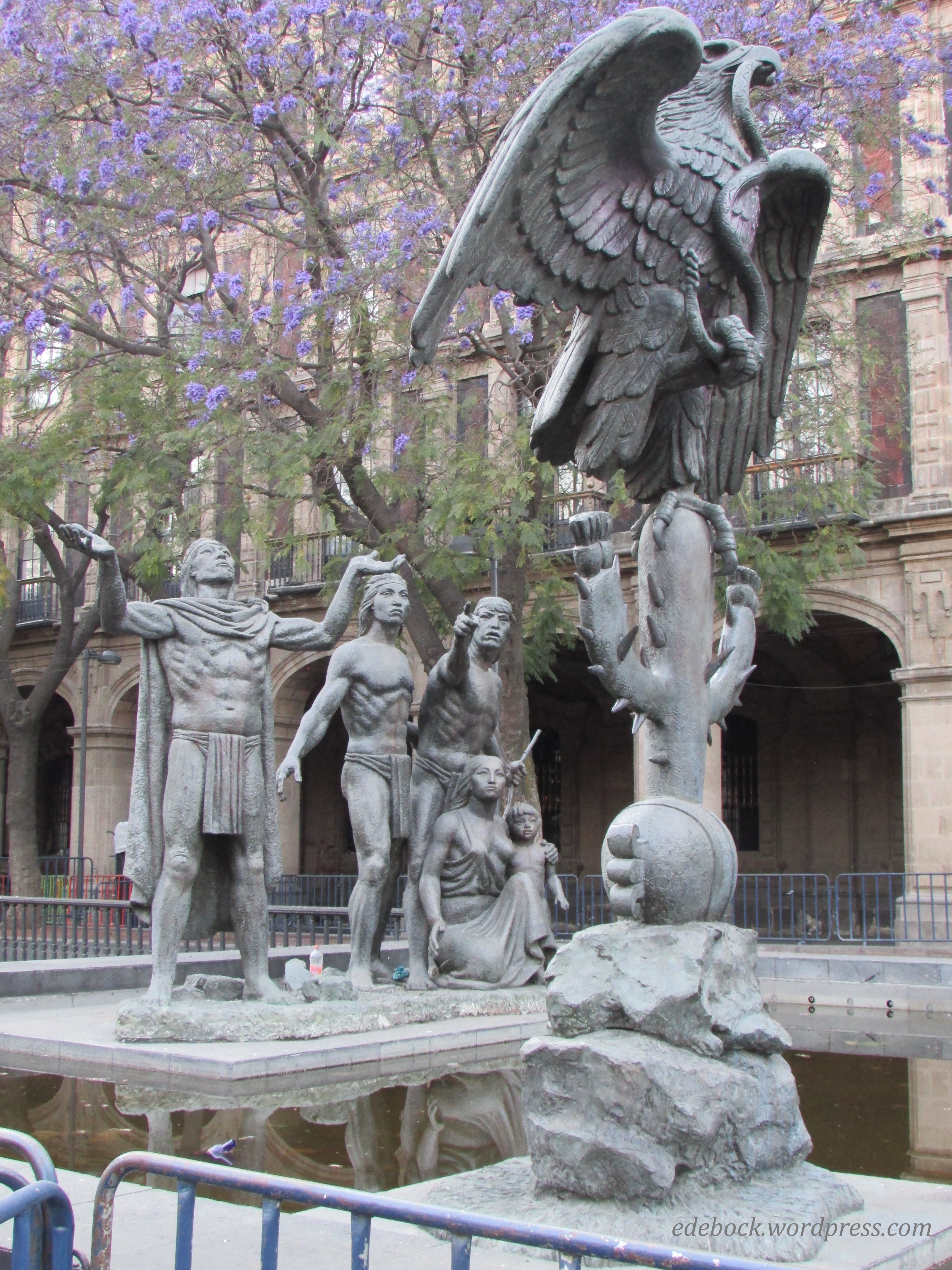
These statues of a wandering group of nomads discovering an eagle perched on a cactus and eating a snake tell the legend of the founding of the Aztec capital, Tenochtitlan. The image of an eagle eating a snake atop a prickly pear cactus also forms part of the coat of arms that is seen in the centre of the Mexican flag. 

Flag-Mexico

Cathedral

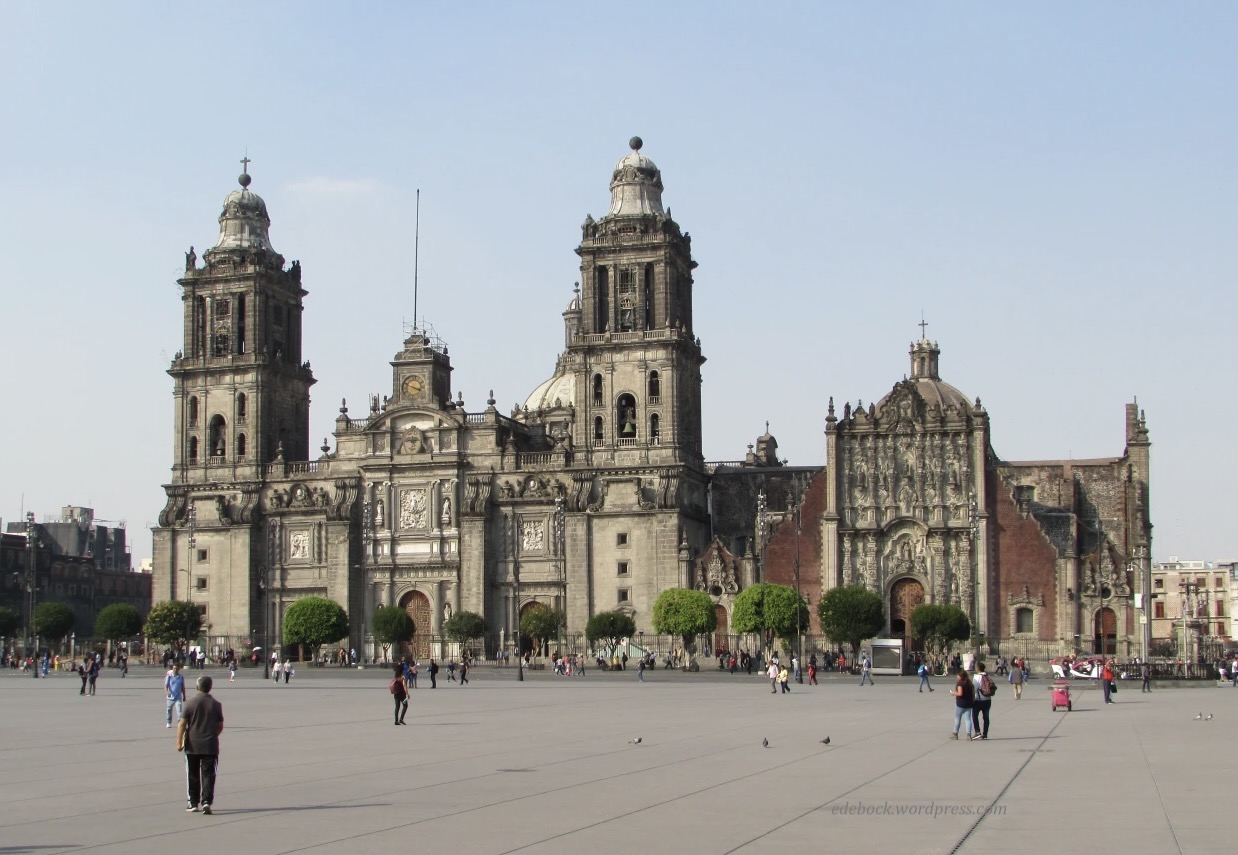
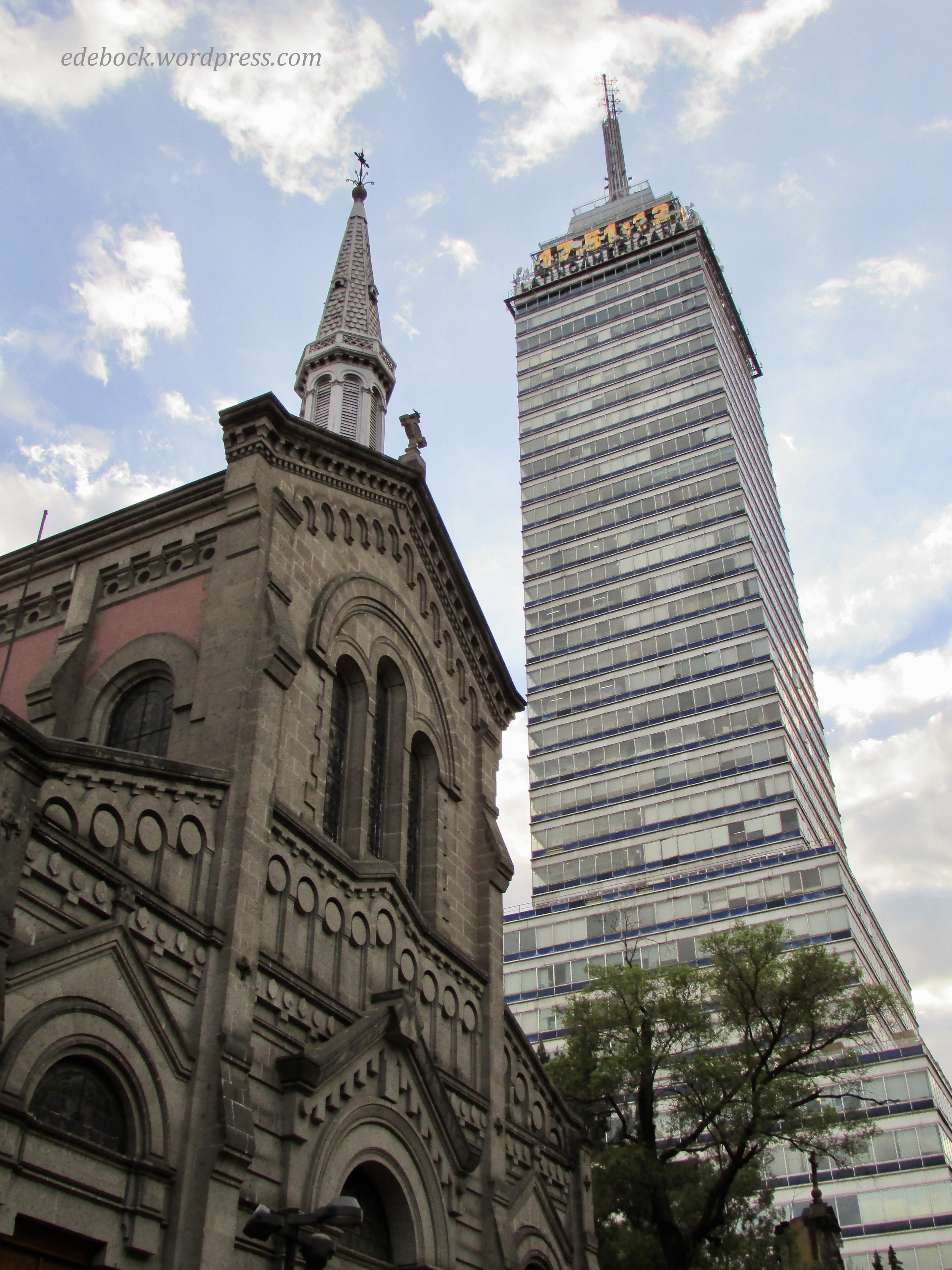
The Metropolitan Cathedral of the Assumption of the Most Blessed Virgin Mary into Heaven, better known as the Catedral Metropolitana, overlooks the Zócalo, a huge city square and is built over what was once part of the Aztec Templo Mayor.

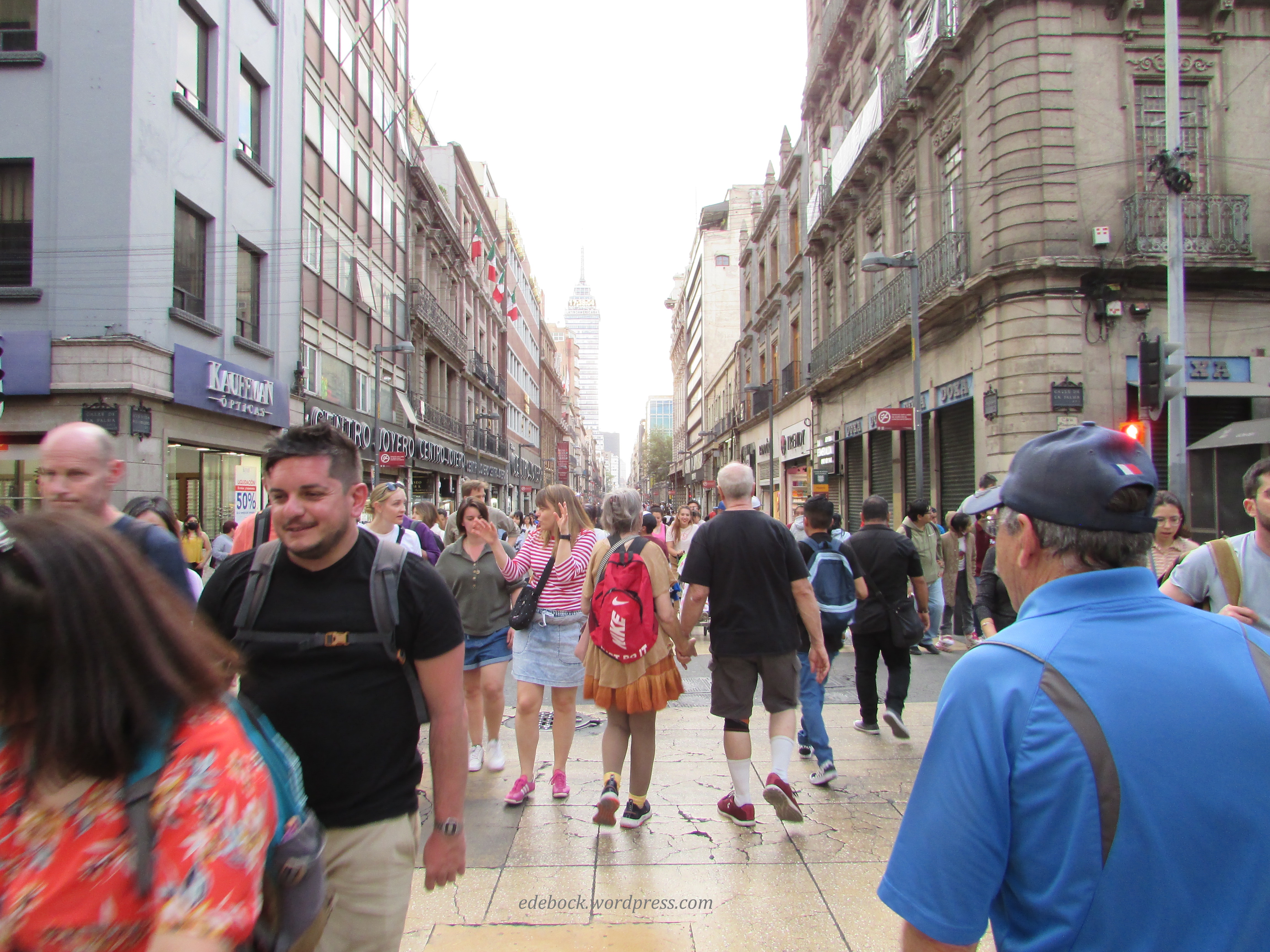
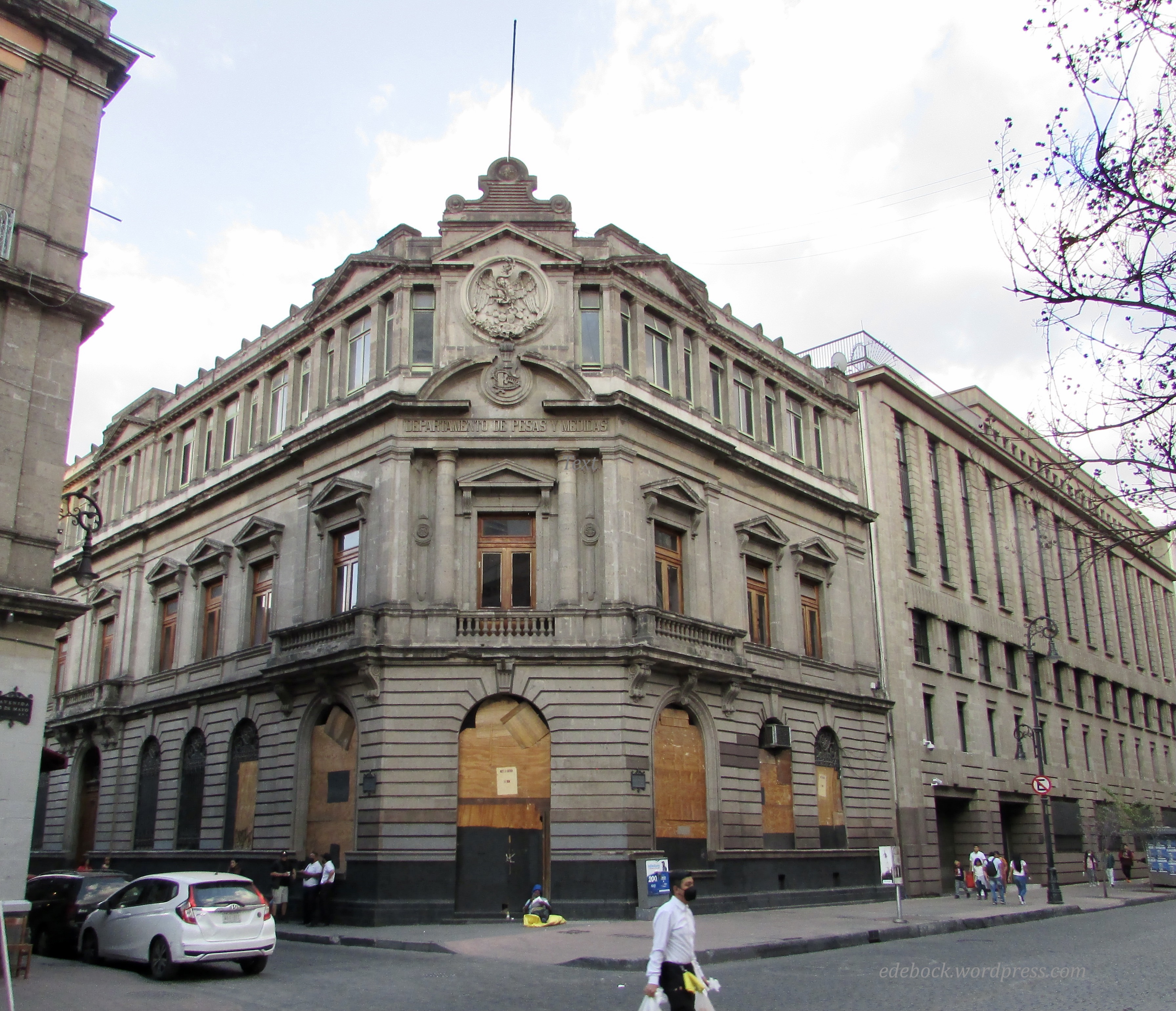
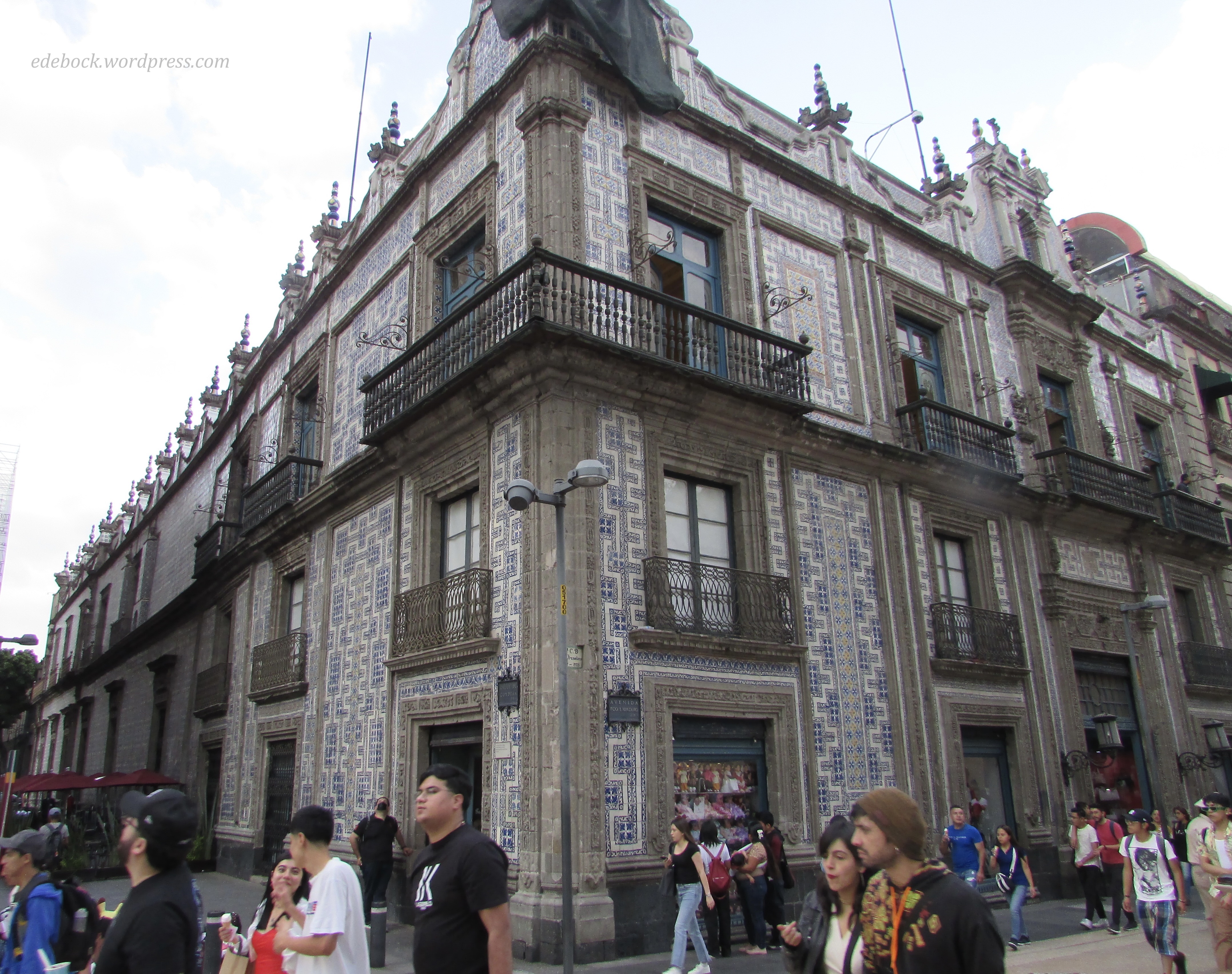
From there, we’ll walk down busy pedestrian-only Avenida Francisco I. Madero which is lined with shops, restaurants, and amazing architecture.

IMG_5325

IMG_5328

IMG_5349

IMG_5330

Here, covered on three sides by blue and white Talavera tiles from Puebla, is the famous Casa de los Azulejos (House of Tiles), an 18th-century Baroque palace built by the Count of the Valle de Orizaba family. 

IMG_5337

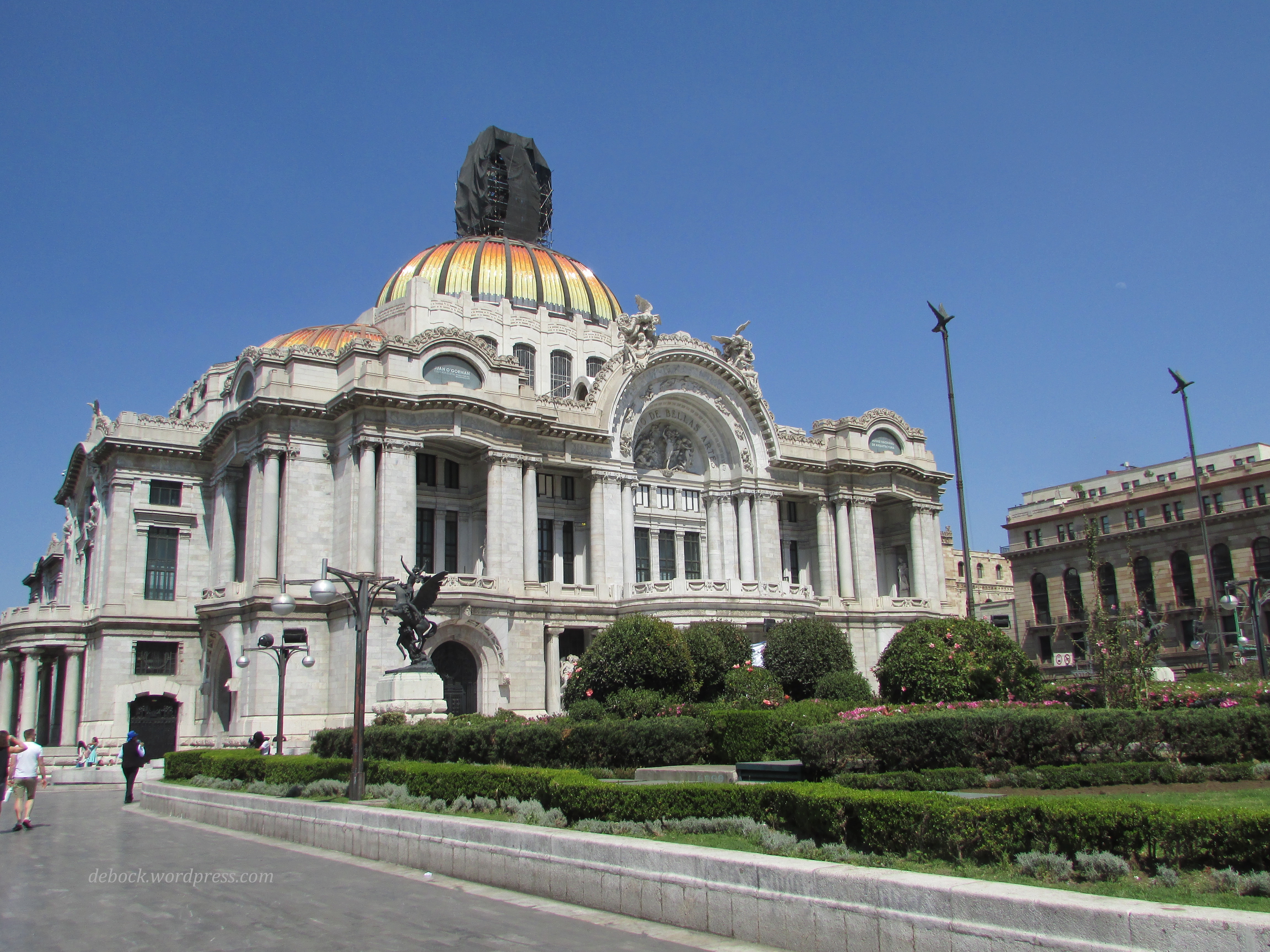
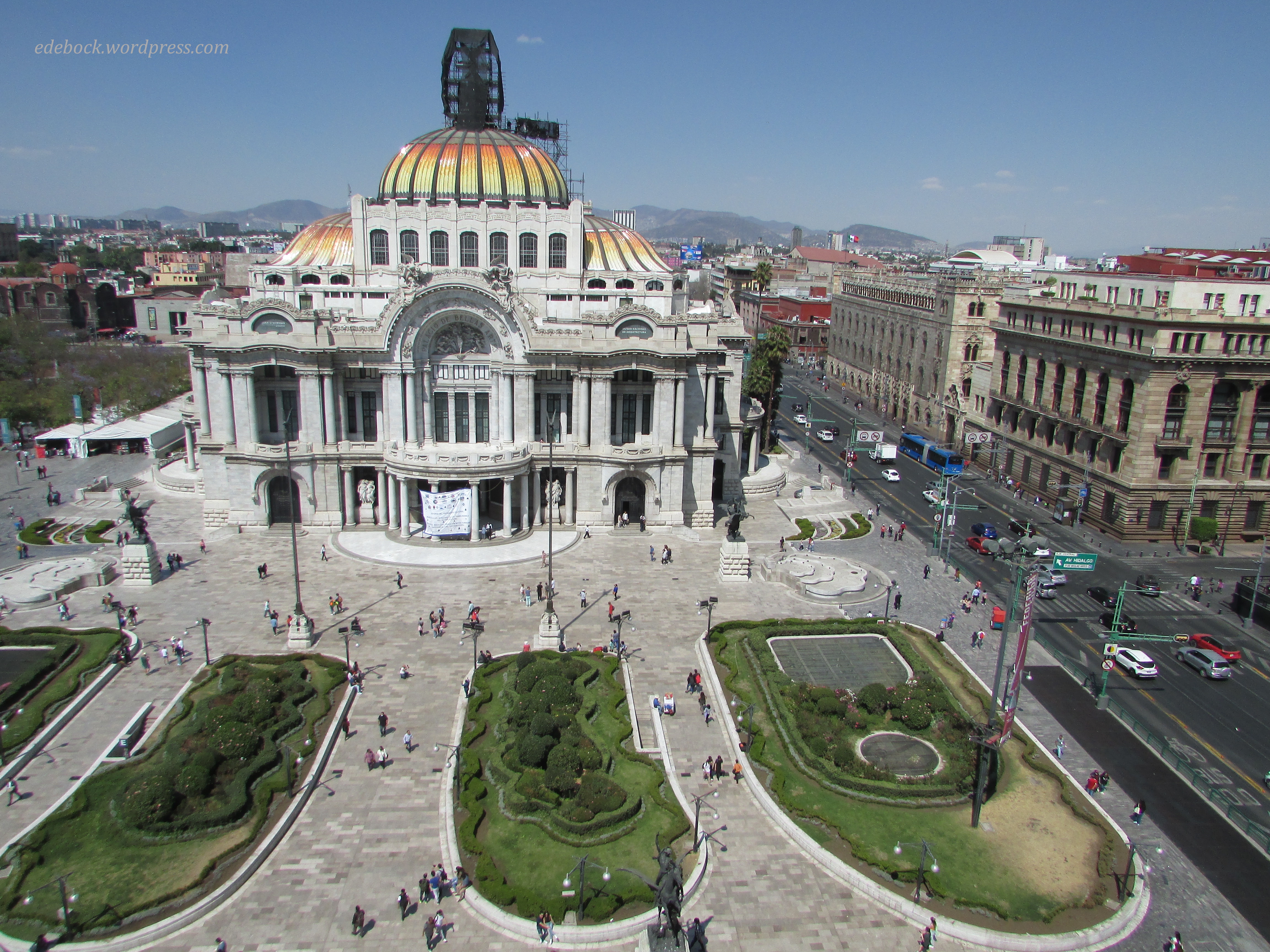
At the end of the pedestrian avenue, we come to the stunning Palacio de Bellas Artes (Palace of Fine Arts), a prominent cultural center that hosts notable events in music, dance, theatre, opera and literature and holds important exhibitions of painting, sculpture and photography. Unfortunately, most museums and cultural centres in Mexico City are closed on Mondays, so we weren’t able to see the inside. Perhaps on our next visit! 

IMG_5394

A patio coffee shop on the eighth floor of the Sears department store (yes, Sears is still alive and well in Mexico) offered spectacular views of the Palacio des Belle Artes and much of the city beyond. 

IMG_5398

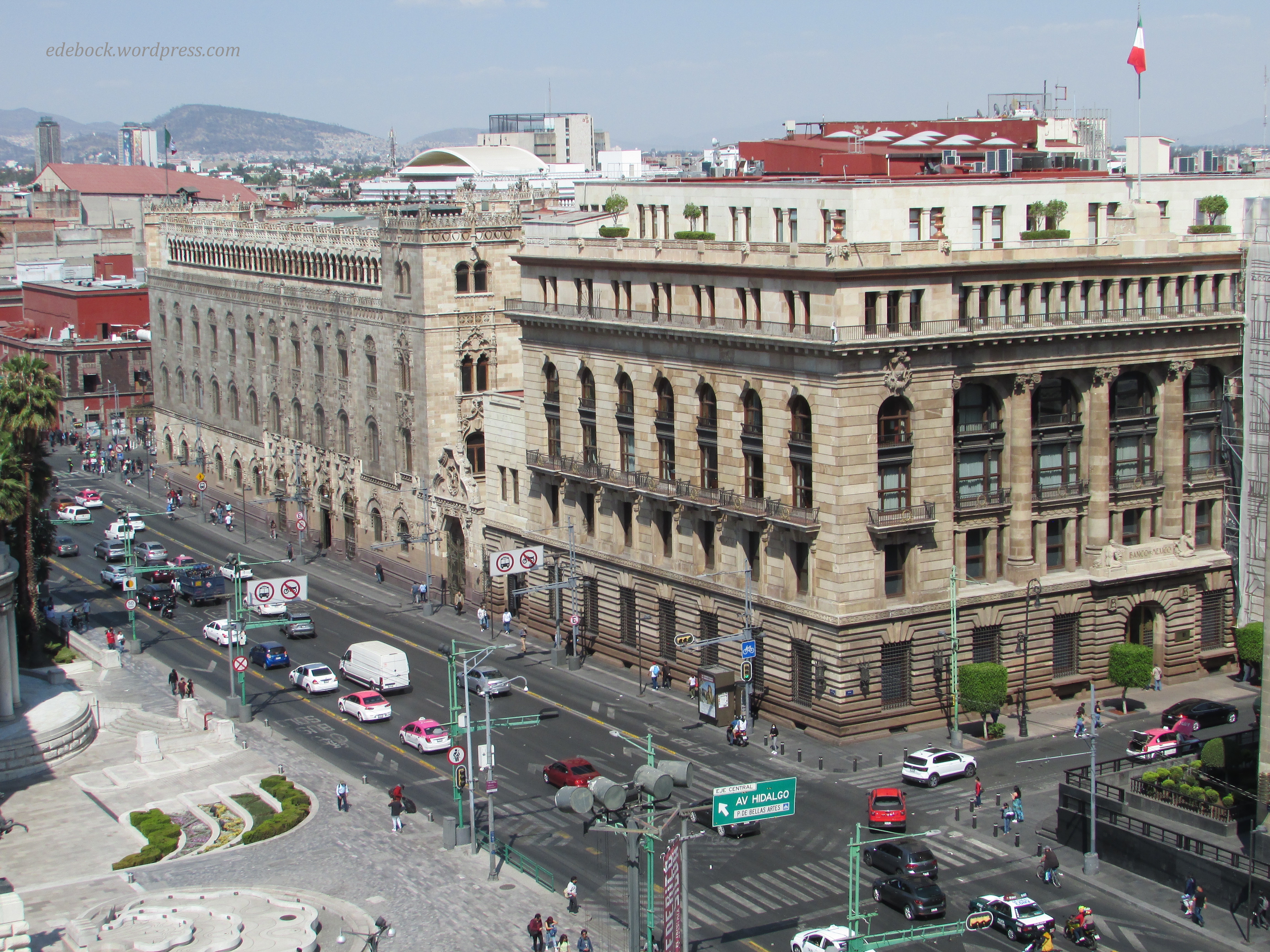
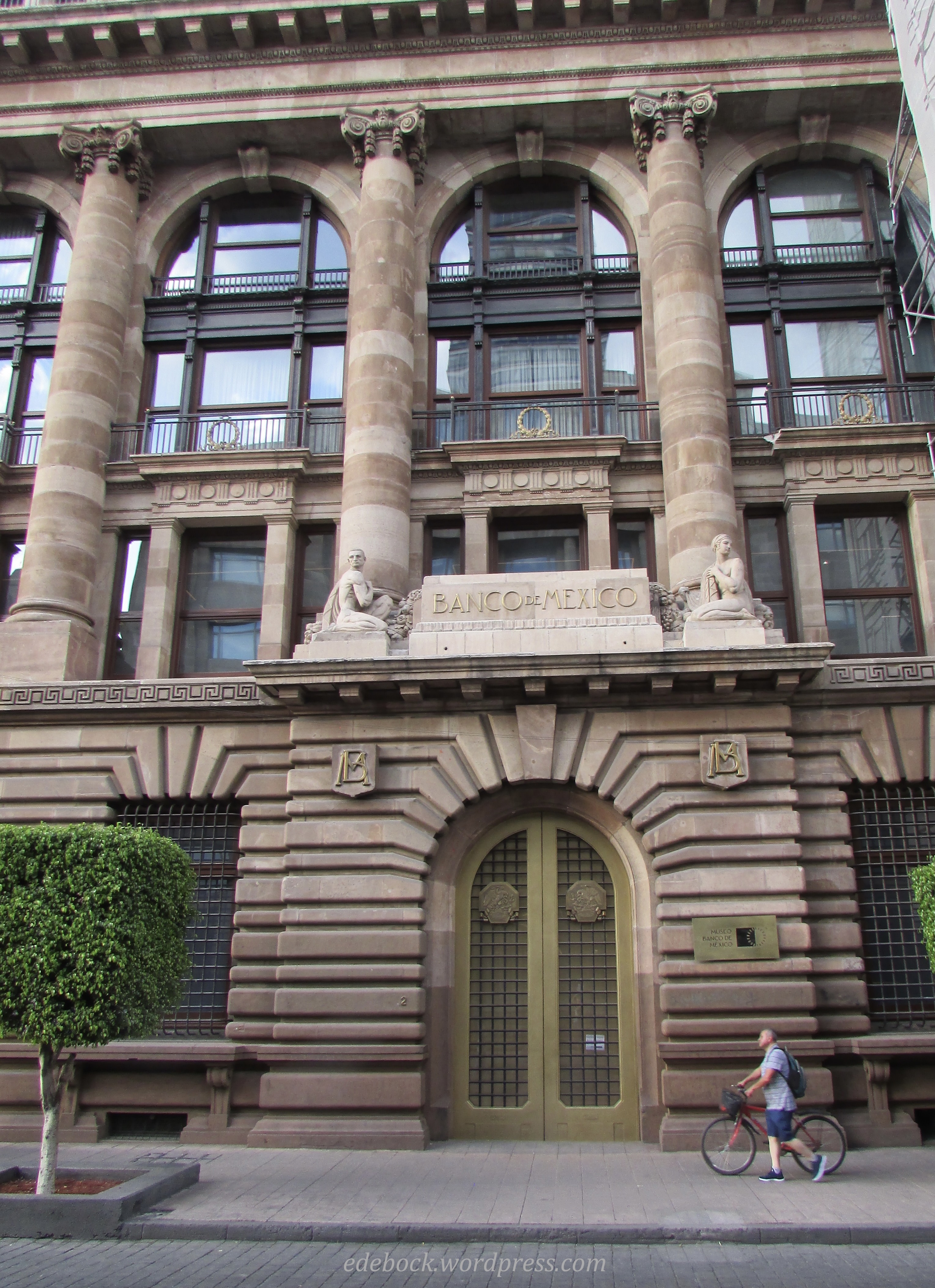
Directly across the street from the Palacio des Belles Artes are the Palacio de Correos (Main Post Office) and Banco de Mexico (Bank of Mexico).

IMG_5399

IMG_5345

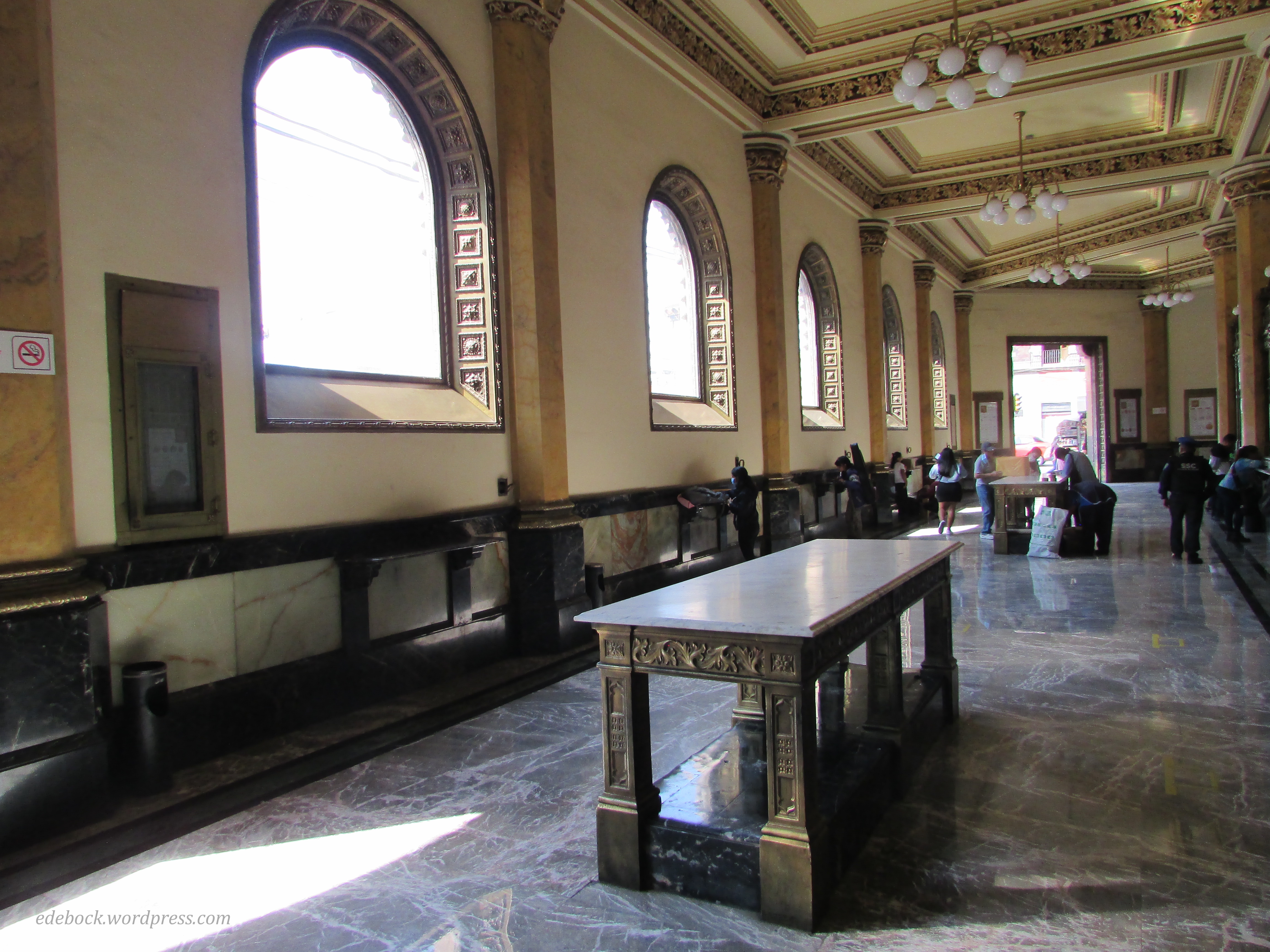
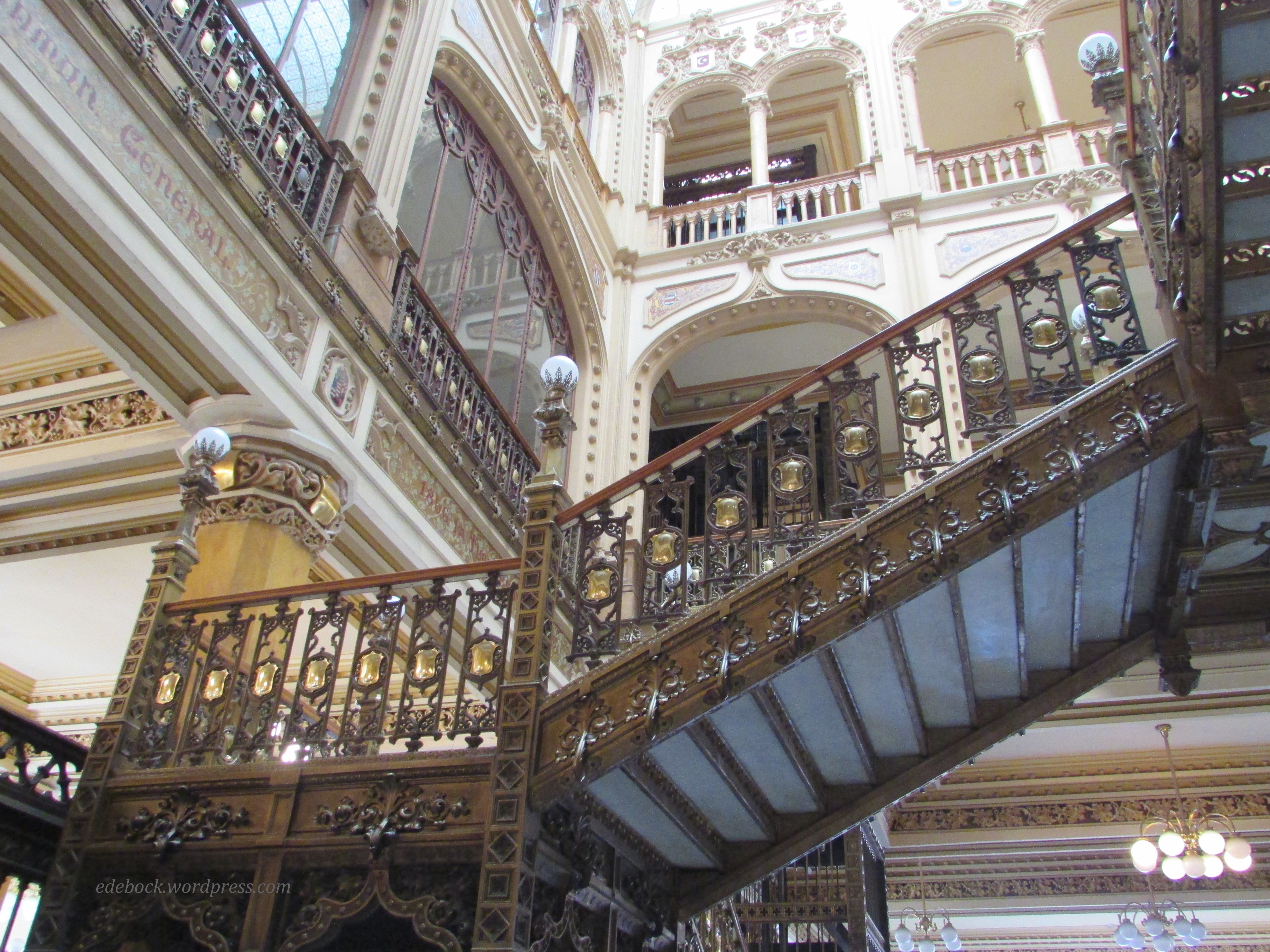
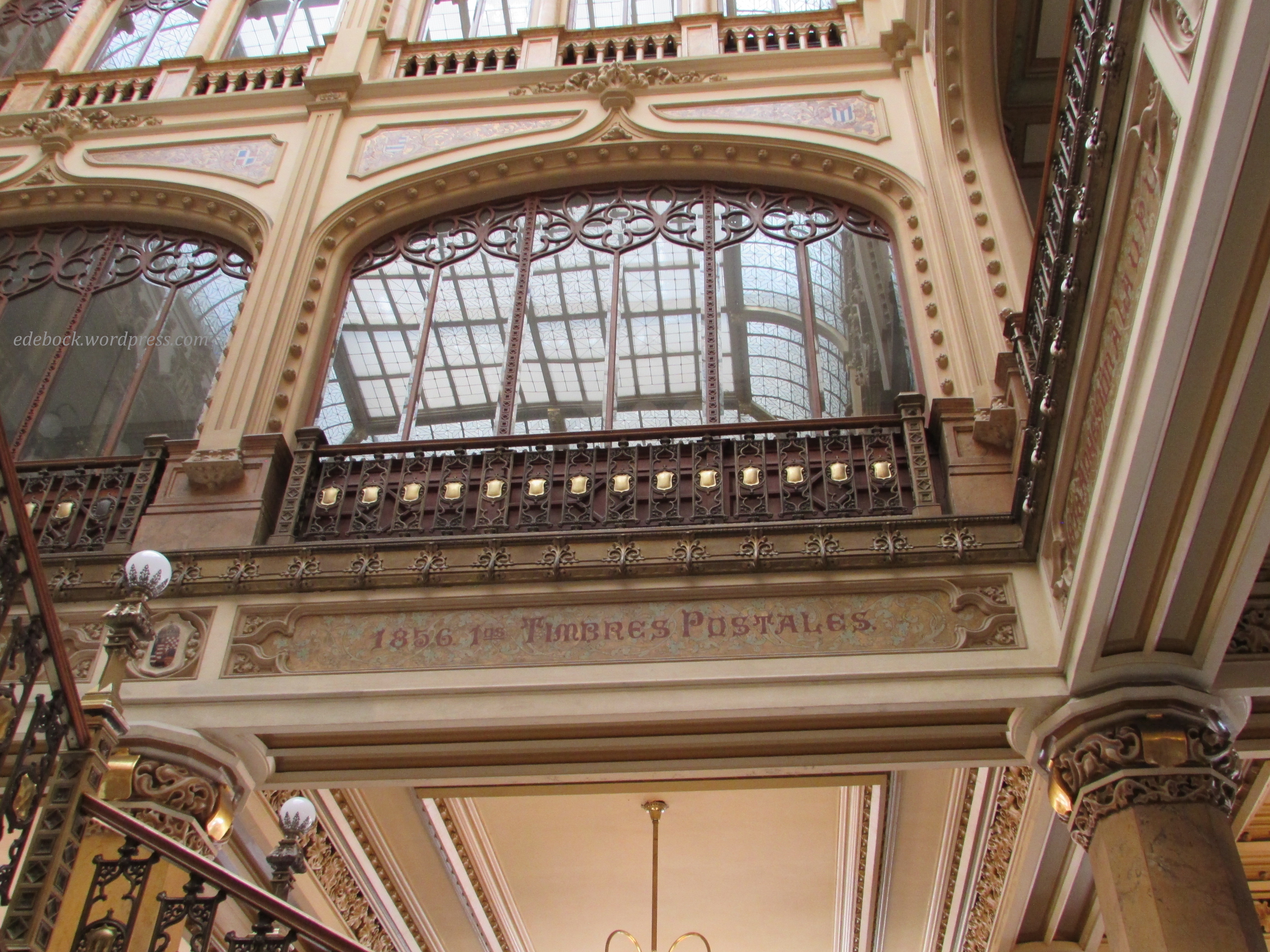
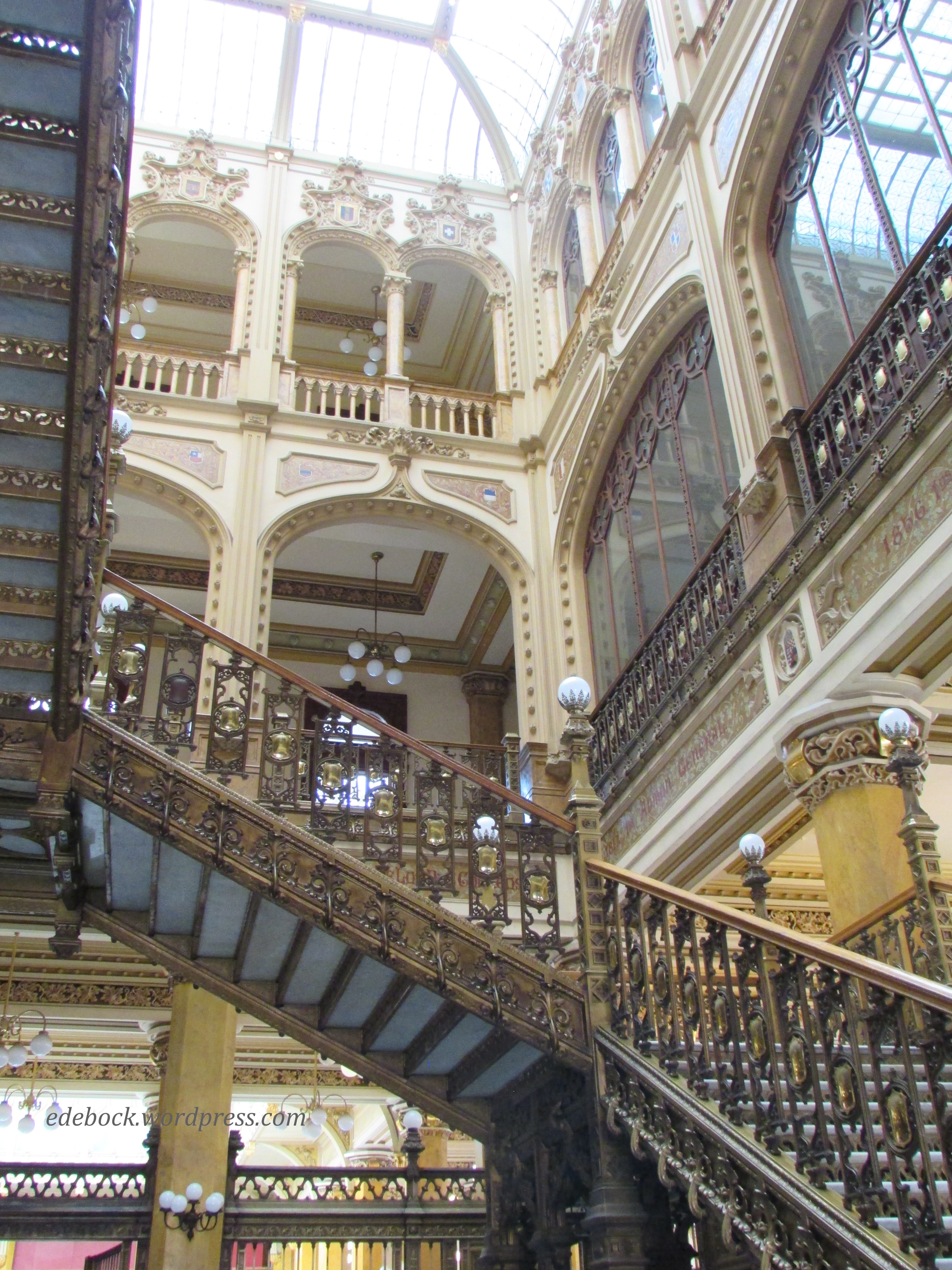
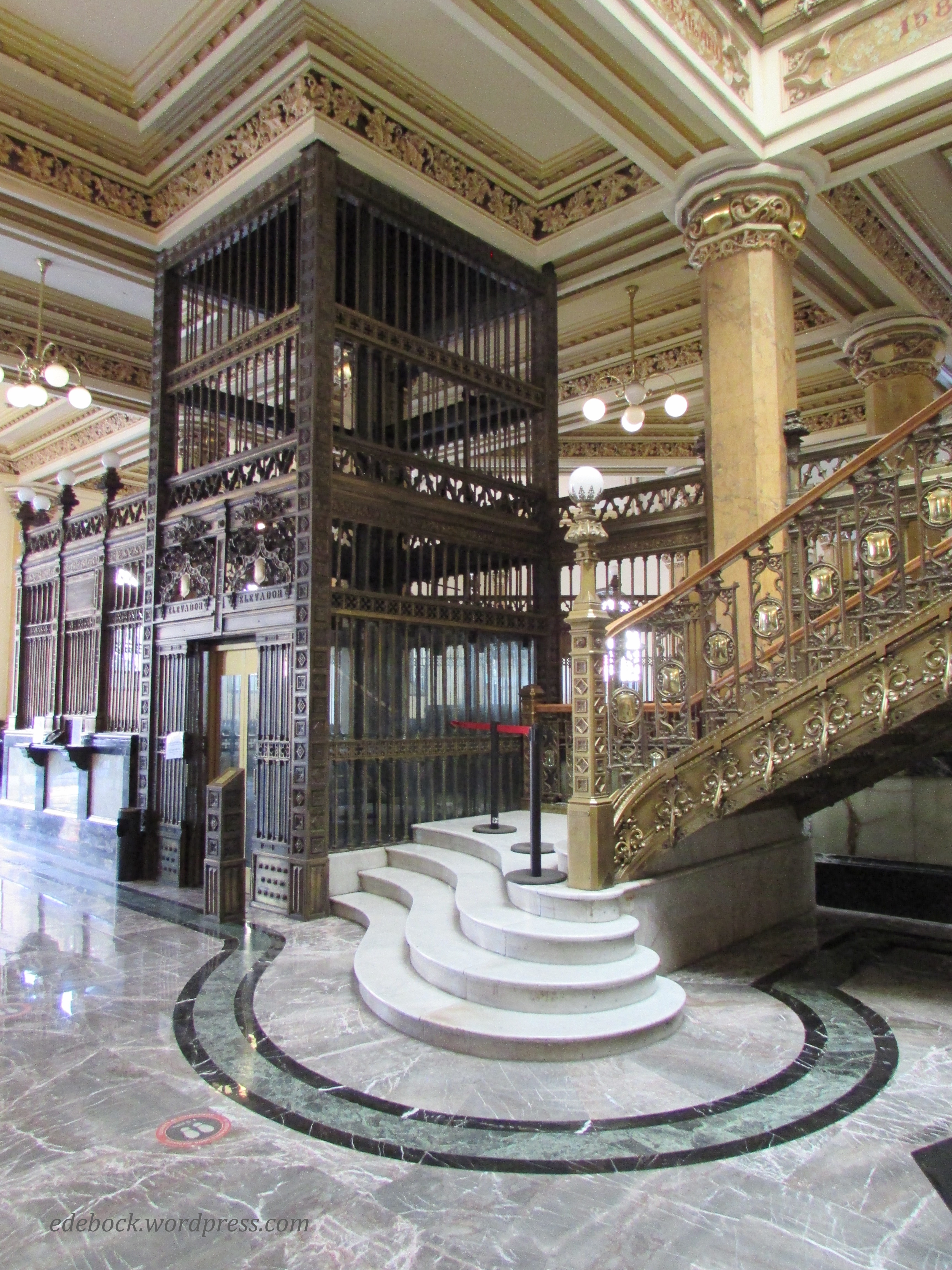
If you’re ever in Mexico City, the interior of the Post Office is definitely a must see! Absolutely stunning, it took five years to build and has been in continuous operation since it opened in 1907.

IMG_5406

IMG_5417

IMG_5416

IMG_5414

IMG_5420

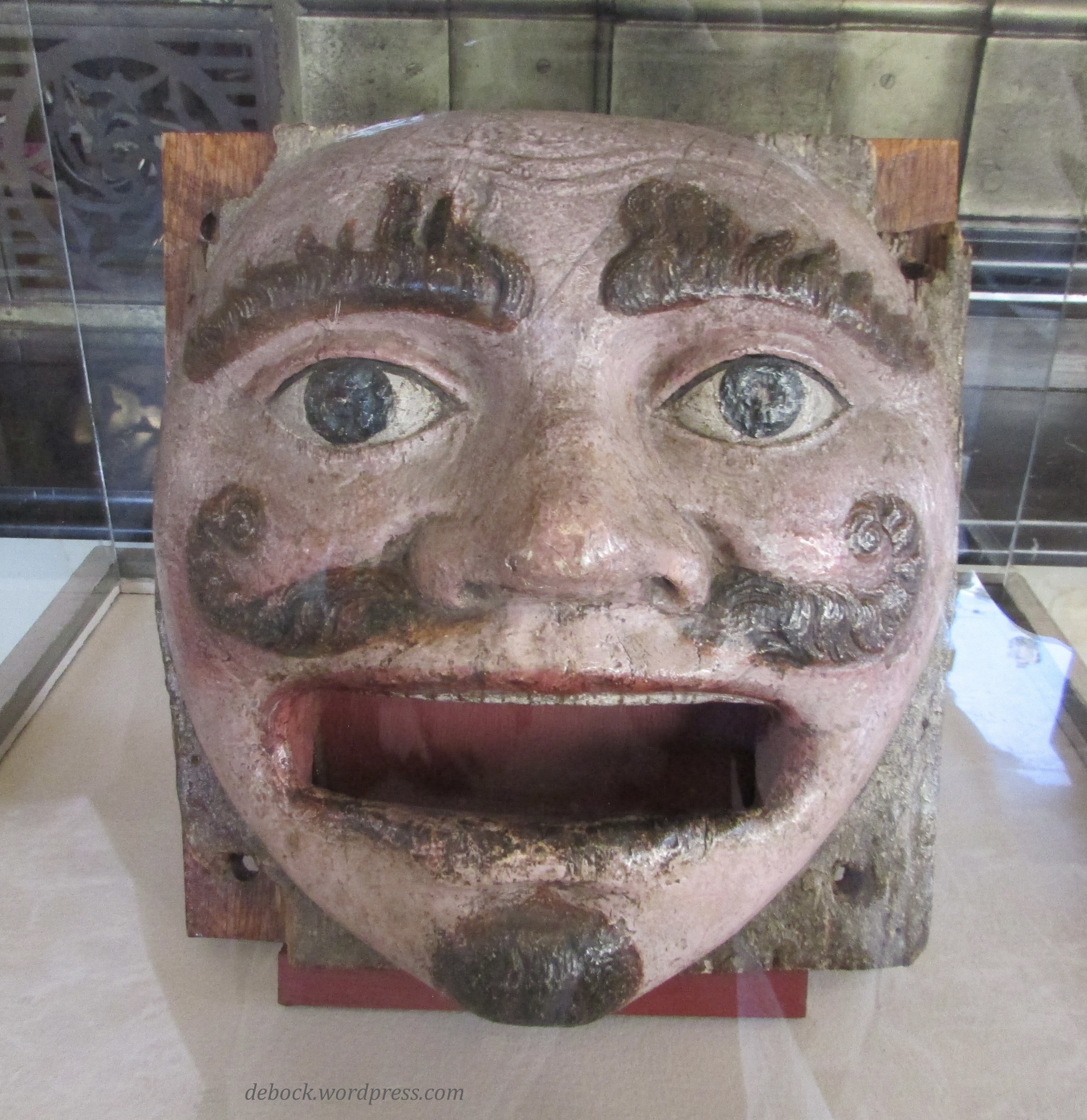
Unfortunately, the antique elevator, though fully operational, wasn’t open to the public. In addition to being an active post office, the building houses a bookstore and a small free museum of postal artifacts. Believe it or not, this handsome fellow is an ancient mailbox! Letters passed through his mouth to be collected and sent to their destination. 

IMG_5425

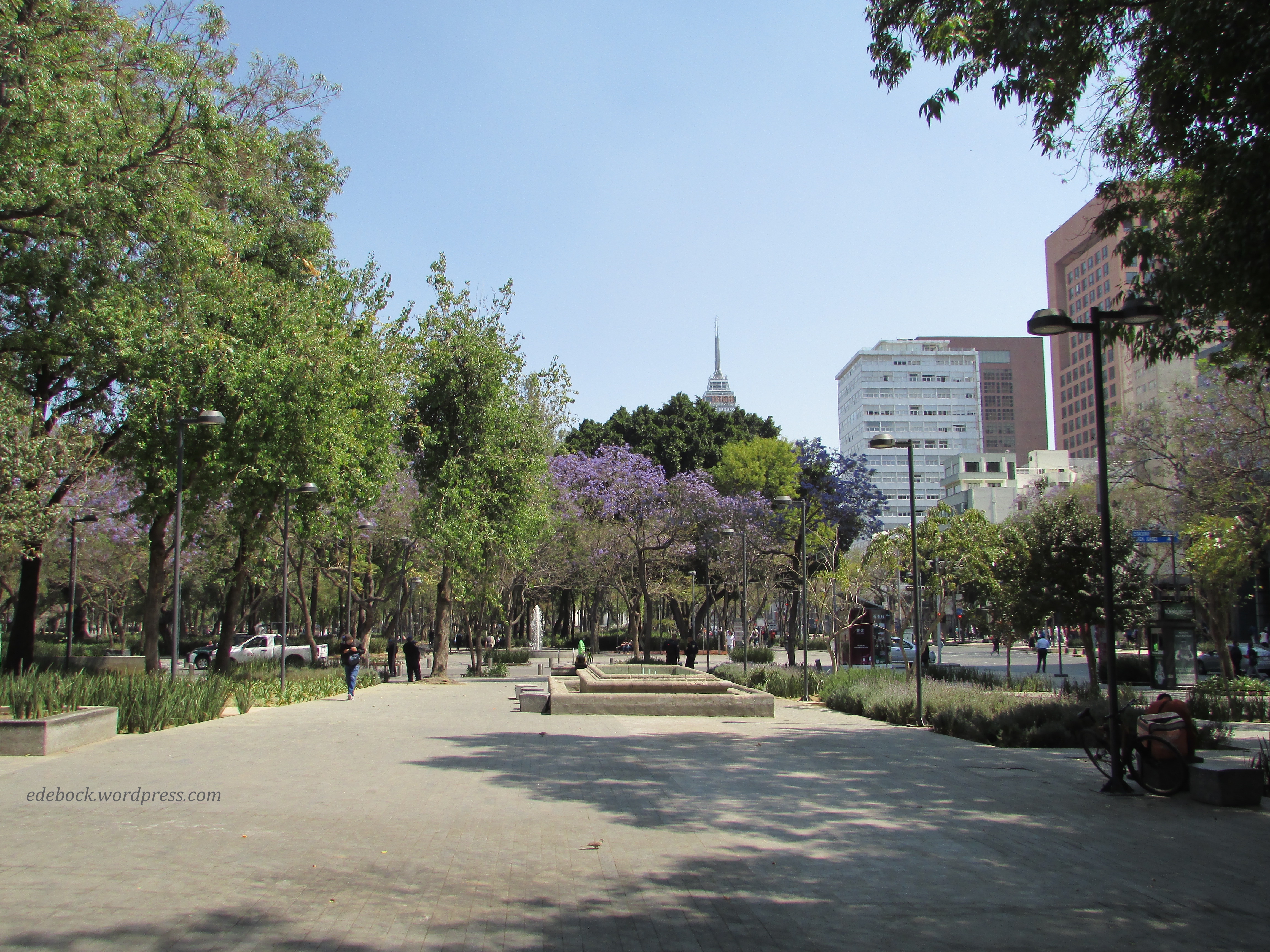
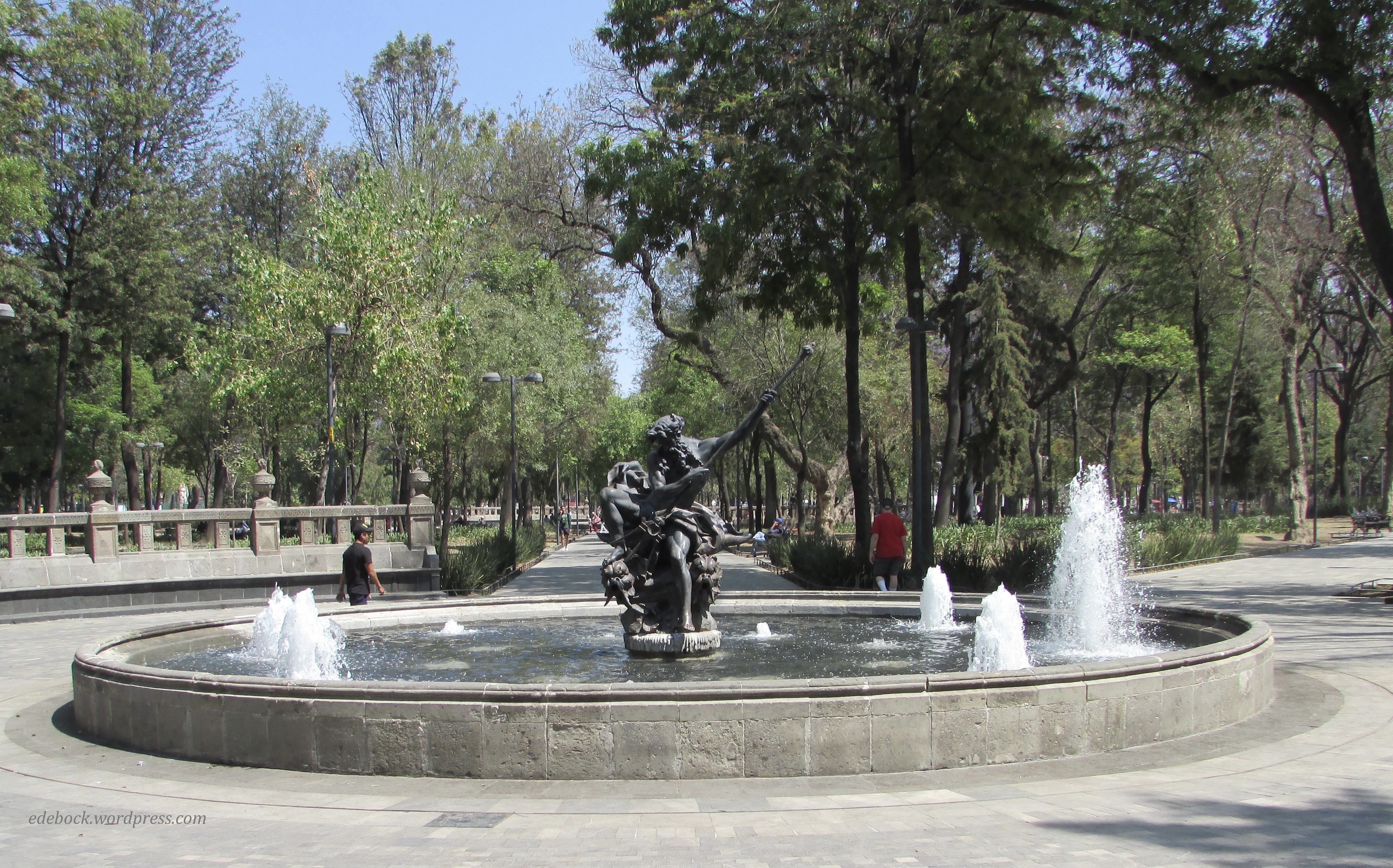
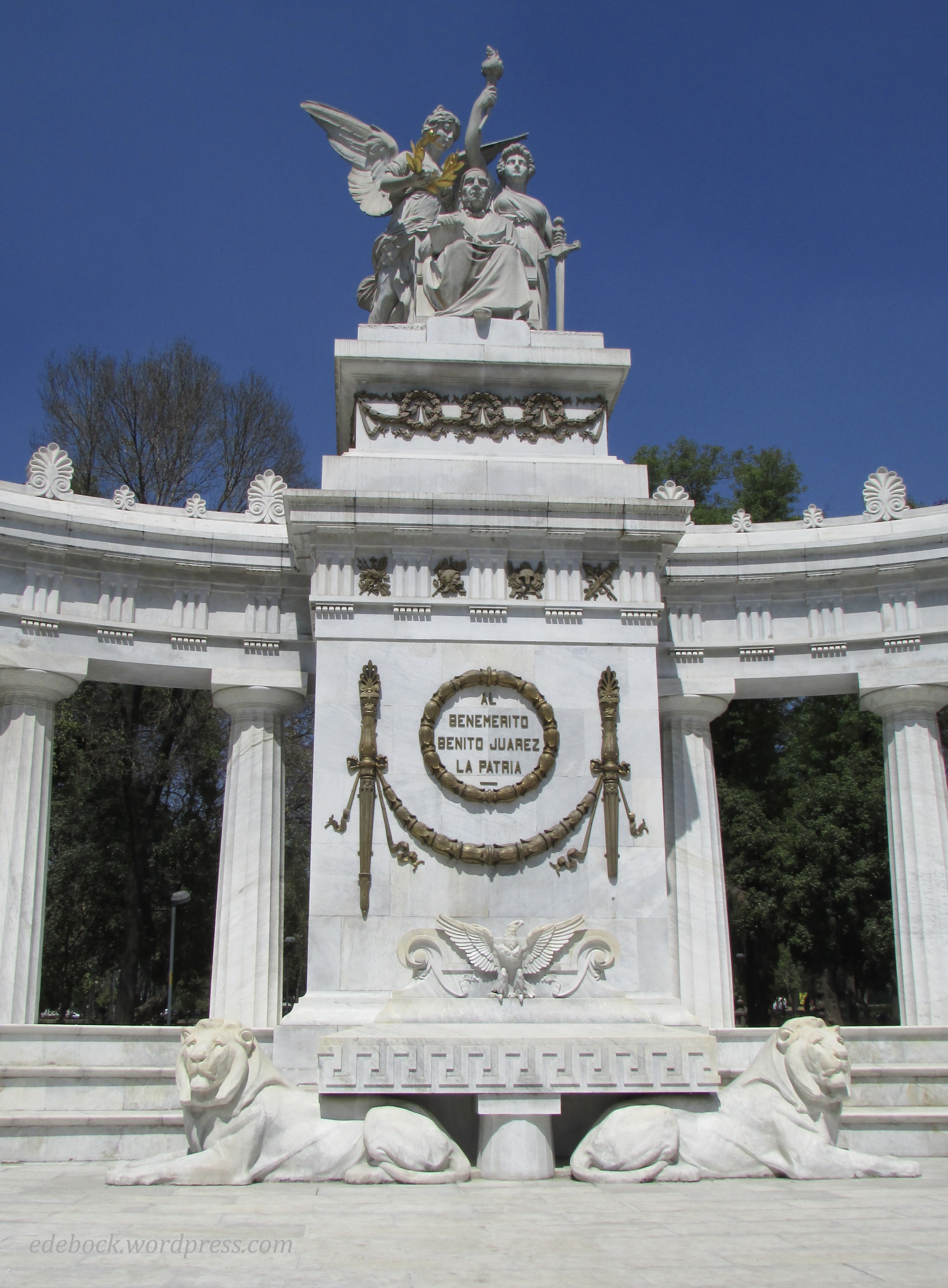
Beyond the Palacio des Belles Artes is beautiful Parque Alameda. What was once an Aztec marketplace is now one of the city’s primary green spaces complete with fountains and statues. Created in 1592, it is the oldest public park in the Americas. 

IMG_5372

IMG_5379

IMG_5381

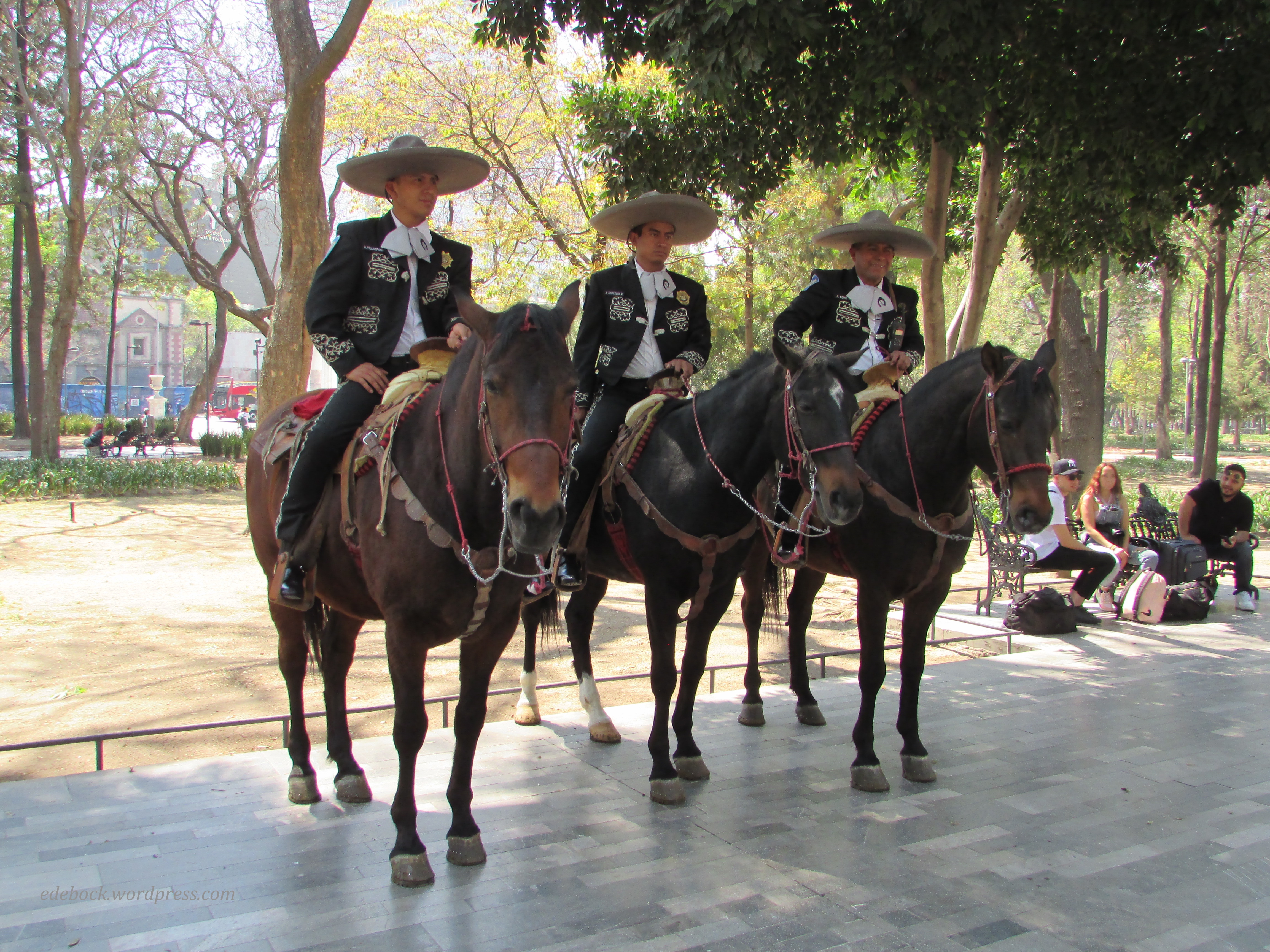
It was in the park that three mounted police officers on horseback donned their sombreros and agreed to have their photo taken. 

IMG_5386

That completes our “walking tour” of Centro Histórico and our most recent trip to Mexico. Now we’re back home in Canada, the land that every Mexican we met referred to as “mucho frio!” (very cold!) I would agree. In fact, I would call it “demasiado frio!” (too cold!).

Templo Mayor, Mexico City

When hubby and I spent half a day in Mexico City four years ago, we glimpsed the ruins of Templo Mayor, the Aztec “Great Temple” from street level, but this time we wanted to get a closer look. Just a ten minute walk from our hotel in the Centro Histórico district, the temple once dominated the central sector of the Aztec capital, Tenochtitlan. Destroyed following the Spanish Conquest, many of its stones were used in the construction of the imposing Metropolitan Cathedral of the Assumption of the Most Blessed Virgin Mary into Heaven. The remainder of the ruins gradually disappeared beneath, first a garbage dump, and later 19th century colonial buildings. It wasn’t until 1978 when electrical workers happened upon an 8-tonne stone-disc carving of the Aztec goddess, Coyolxauhqui,  that the decision was made to demolish those colonial buildings and begin the excavation which continues today. A fenced pathway allows visitors to walk through the site and see close up what remains of the structures that once stood on the site.

IMG_5216

IMG_5215

Amazingly, some pieces, including two giant undulating serpents, have retained some of their original colour through the centuries.

IMG_5217

IMG_5223

Over the years, the Great Temple underwent many changes and expansions. The main platform and part of the stairway of the great pyramid that was constructed during the reign of Moctezuma I from 1440 to 1469 have been conserved.

IMG_5227

Though not as big or as detailed, these stone figures reminded me a bit of the terracotta warriors that we saw in Xian, China.

IMG_5229

Tláloc, the rain god was worshipped by the early Mesoamerican people. This brightly painted chac-mool figure holding a basin was located on the platform of a temple dedicated to Tláloc. Dating back to approximately 1350 AD, it is the oldest piece that has been found at the Great Temple thus far.

IMG_5240

IMG_5252

Making our way around the Templo Mayor complex, we came to what was known as the House of the Eagles.

IMG_5261

This is the best preserved portion of the temple area where we can see the stairways, porticos, and individual rooms.

IMG_5265

IMG_5271

In the next photo, you can see the present day cathedral in the background. At 60 metres high, it is only 15 metres higher than the ancient temple at the time of the conquest in 1521. I’m sure that the circular structure in the foreground had a different purpose in ancient times, but today people toss coins into it and I presume make wishes as they do so. As I tossed my coin into the centre circle, my wish was that I would have the opportunity to return to Mexico again in the future!

IMG_5289

In addition to the ruins, the Templo Mayor complex includes a four storey indoor museum that houses many artifacts found at the site. Unlike the outdoor portion, however, there is no English signage inside and since we were short on time, we only briefly checked out the first floor. I’ll finish this post with a few of the pieces that we saw there.

Beyond King Tut

Our grandchildren are growing up in an entirely different world than we did. That’s evident by the many devices, unheard of when we were growing up or even when their parents were children, that are part of their everyday lives. I was reminded again today of how vastly different their life experiences are from our own.

The tomb of Tutankhamun, boy king of Egypt some 3300 years ago, was discovered in the Valley of the Kings in November 1922. It quickly became the most famous ancient Egyptian discovery of all time. In 1964-65, the first travelling exhibition of a substantial number of Tutankhamun artifacts visited six venues across Canada including the Vancouver Art Gallery. As a seventh grade student, I toured the Tutankhamun Treasures exhibit while on a school field trip.

Screen Shot 2022-12-27 at 5.58.39 PM

We saw 31 fairly small objects that had been removed from the tomb; objects like a gold dagger and sheath and gold rings and amulets found on the mummified body of the king. We were impressed. In our wildest dreams, we couldn’t have imagined the kind of multi-sensory experience that we took two grandsons (grade 6 and 8) to today. National Geographic’s Beyond KING TUT / The Immersive Experience was our Christmas gift from the boys and their parents.

IMG_4963

There were no artifacts on display. Instead, we wound our way through visual galleries learning about the life and times of Tutankhamun who became king of Egypt at the age of nine and ruled until his death just ten years later. Through the power of photography, we joined the archeologists and entered his tomb.

We also learned about the mummification process and ancient Egyptian beliefs about the afterlife.

In the final room, we watched a soaring 23 minute video projection that took us back in time from modern day Egypt to King Tut’s journey to the afterworld. Beyond KING TUT definitely took us beyond the experience of my childhood!

Ukrainian Cultural Heritage Village

IMG_4420

Prior to the recent influx of refugees from Ukraine, Canada was already home to 1.4 million people of Ukrainian descent, the world’s second largest Ukrainian diaspora after Russia. The Ukrainian Cultural Heritage Village, an open-air museum located approximately 50 km east of Edmonton, Alberta uses costumed interpreters to recreate a pioneer settlement and commemorate the lives of Ukrainian Canadian settlers from the years 1899 to 1930.

Like everywhere else, it seems, the Village is short-staffed this summer, but there were still plenty of interactive activities for us to enjoy when we visited with two of our grandchildren earlier this week.

The one room schoolhouse was a favourite. The teacher gave sample lessons in arithmetic, spelling, and grammar. She also checked to make sure our fingernails were clean and suggested that some of us weren’t dressed appropriately for school!

Learning to do laundry the old-fashioned way was also fun for Harlow and Yari.

IMG_4399

At the Provincial Police Post, we put Yari in jail!

IMG_4403

IMG_4404

He also got to help the blacksmith.

IMG_4421

For lunch, we sampled a variety of authentic Ukrainian foods including pyrohy (perogies), holubtsi (cabbage rolls), sausage, borshch (beet soup), and somewhat less authentic, but absolutely delicious, pyrohy poutine!

It wasn’t until later when I looked at my pictures that I realized that I’d taken lots of photos of the kids and almost none of the village’s many buildings!

IMG_4425

In addition to houses, barns, schools, and various places of business that have been moved to the site from communities across central Alberta, there are three churches that are still active places of worship. As such, they aren’t open to the public.

IMG_4406

St. Nicholas Russo-Greek Orthodox Church was built in the rural community of Kiew, Alberta, by Ukrainian settlers from Galicia. The more elaborate St. Vladimir’s Ukrainian Greek Orthodox Church, shown in the first photo above, originally stood in Vegreville. Though we weren’t allowed to enter, we were able to view the very traditional interior, with it’s cross-shaped floor plan, from the open doorway. 

IMG_4423

Although the website suggests 2-3 hours to tour the village, we took significantly longer walking the dusty streets and pathways and exploring virtually every nook and cranny that was open to us. We finished our day with a ride around the village in a horse drawn wagon.

Canadian tuxedo

Are you hooked on Wordle yet? According to the New York Times, over 300,000 people play the online game daily. I confess to being one of them. I also play Hurdle and Canuckle every day. If you’re not Canadian, you might not be familiar with Canuckle. Created by an Ottawa resident, it’s basically Wordle with a Canadian twist. Every word is related to Canada in some way. Yesterday’s word even gave me an idea for today’s fashion post!

Screen Shot 2022-04-21 at 10.11.16 AM

Logo by SamWhat’s so Canadian about denim, you ask? Each day, the Canuckle solution comes with a fun fact that explains the Canadian connection. Yesterday’s explanation said, “The Canadian tuxedo is an outfit consisting of a denim jacket or jean shirt worn with denim jeans, or denim-on-denim.”

The term originated in 1951 when American singer and actor, Bing Crosby, was almost denied entry into a posh Vancouver hotel because he was dressed completely in denim. Hotel management eventually recognized who their famous guest was and made an exception to their dress code allowing him to enter. When Levi Strauss & Co. heard the story, their designers immediately produced a custom made denim tuxedo jacket for Crosby.

bing-crosby-1951 2

In 2014, Levi’s reproduced Bing’s famous outfit with a limited run of 200 Canadian Tuxedo jackets.

jacket-side-by

Fifty years after the Bing Crosby incident, celebrity couple, Britney Spears and Justin Timberlake, created a stir when they attended the 2001 American Music Awards wearing a matching Canadian tuxedo or double denim look. I would agree with those who thought the look was a little over the top!

rs_500x1024-160108075340-634.Britney-Spears-Justin-Timberlake-Double-Denim.jl.010816

But what about ordinary mortals like you and I? Would we, could we, should we wear denim-on-denim? Here are a few ways to style the Canadian tuxedo in case you decide to give it a try.

  • Instead of going full dark or light wash, mix things up with different denim shades. Go darker on top and lighter on the bottom or vice versa.
  • Swap the jeans for a denim skirt.
  • Add some contrast with a white or brightly coloured top under your denim jacket.
  • Keep accessories to a minimum and definitely don’t add denim accessories.
  • Stay away from cowboy boots and cowboy hats. You’re not trying to look like a cowboy caricature. For footwear, try a pair of white sneakers, ballet flats, strappy sandals, or even statement heels.
  • Cropped jean jackets are on trend this year. To give your double denim an up-to-date look, you could even cut off a longer jacket and fray the bottom edge for a DIY distressed look.

And now, here’s my take on the Canadian tuxedo using pieces that have been in my wardrobe for a long time… dark wash jeans, a lighter denim jacket, white sneakers, and since stripes are on trend for spring this year, a black and white striped tee.

IMG_3892

Comfy, casual, and very Canadian!

Salt water and sea air

On our first day in Victoria, we walked approximately 10 km. Today, our last day before heading toward home, we walked at least 7 more!

We woke to a chilly, wet morning. In fact, there was even a bit of snow in the air. Thankfully, however, the forecast promised better things to come. After a leisurely breakfast in our hotel and a little while spent relaxing back in our room, the rain stopped and we headed out. Our first destination this time was the oldest Chinatown in Canada and the second oldest in North America after San Francisco.

IMG_3838

I’m thinking that it must also be one of the smallest. Barely more than two blocks in size, there are a number of authentic Chinese restaurants and businesses, but I was also surprised to see a sushi shop, a schnitzel restaurant, and a taco place! 

Victoria’s Chinatown is perhaps best known for Fan Tan Alley, the narrowest street in Canada. Only 0.9m wide (about 4 feet) at the narrowest point, the alley is filled with boutiques and shops selling clothing, jewelry, music, and other items to both tourists and locals. In its early days, however, it was home to a variety of less savoury places including gambling and opium dens. 

IMG_3837

On Sunday, we walked the beach at Cordova Bay and yesterday we did a harbour tour on one of Victoria’s little green “pickle” boats, so-called because of their colour and shape, but I’m a coastal girl at heart and I wanted a bit more of the sea before heading back to the prairie. 

IMG_3827

After returning from Chinatown, we drove about 20 minutes to Fort Rodd Hill and Fisgard Lighthouse National Historic Sites. Consisting entirely of original structures, Fort Rodd Hill, a west coast artillery fortress on active duty from 1895 to 1956, is one of the world’s best preserved and most complete examples of its kind. The buildings are closed during the week, but the grounds are open and many interpretive signs make it an interesting place to explore. Until our visit, I had never really thought about how vulnerable the Victoria area must have felt after the attack on Pearl Harbour in 1941. By 1944, 17 powerful searchlights clearly lit up the Victoria-Esquimalt harbour area. One of them was housed in this building, camouflaged to look like a fisherman’s hut, complete with a ramp and boat!

IMG_3873

In the background, you can see the Fisgard Lighthouse which was built in 1860 as the first permanent light on the west coast of Canada. Although administered together with Fort Rodd Hill, it is a separate national historic site and there is no historical connection between the two. 

I absolutely love lighthouses, but I won’t subject you to all 24 pictures that I took of this one! I’ll try to restrict myself to just a few favourites. 

IMG_3851

IMG_3856

Though the light has been automatic since 1928, prior to that time it was manned.

IMG_3868

The lighthouse is now connected to land via a manmade causeway, but in those days it stood offshore on a tiny island. The only means of transportation that the lighthouse keeper had was a rowboat like this one. Every item he needed had to be rowed across the bay from Esquimalt. Unfortunately, in 1898, the unoccupied boat was found floating in the bay with just one oar still in it. Joseph Dare, the keeper at that time, had fallen overboard and drowned while trying to retrieve the other oar. Had he been wearing a life jacket, he likely would have survived. 

On the rocky point beyond the lighthouse, we found a pair of the red Adirondack chairs that have been placed in National Parks and Historic Sites across Canada. Of course, we had to sit in them and enjoy the view. 


IMG_3862

After visiting the lighthouse, we walked the long beach in front of Fort Rodd Hill and then returned to the vehicle via a well-kept nature trail. 

IMG_3871

Now that I’ve enjoyed a fix of salt water and sea air, I’m ready to return to the prairie feeling refreshed! 


Which house was it?

On our way to the coast we stopped in Jasper for a few hours to visit my 98-year-old aunt who lives there. When I told her that we were coming to Victoria, she reminded me that she and my mother lived here for a year when they were young children. It was the beginning of the Great Depression and, like so many other men at that time, my grandfather was out of work. His brother had found employment at the paper mill in Powell River, so he went there to apply for a job and then proceeded to build a small house for his young family. In the meantime, my grandmother and her two little girls shared a single room in a boarding house here in Victoria not far from where his parents lived. Curious, I asked Auntie Norma if she remembered what part of the city they lived in. I could hardly believe it when she told me that they lived on Government Street within a block or two of the BC Legislative Building. That’s less than a kilometre from our hotel! 

I decided that when we got to Victoria, we’d go for a walk down Government Street. I didn’t expect to find a trace of what was there 90+ years ago when two little girls walked down the street and across the parking lot behind the Legislative Building on their way to school. I thought I’d find modern apartment or office buildings or perhaps stores and hotels. Instead, I found a street lined with heritage houses! Was one of them the boarding house where Nana, Mom, and Auntie Norma lived? 

IMG_3764

IMG_3755

IMG_3754

I was enthralled as I walked up and down the street taking photos of house after house and wondering if Auntie Norma will recognize one of them when I show her the pictures. Of course, they’ve probably undergone many changes since she was here, but I’m hoping that something looks familiar.  

IMG_3765

IMG_3767

I love the contrast of old and new in this photo…

IMG_3757

Even if Auntie Norma doesn’t recognize any of the houses, this little confectionary should bring back memories. It’s been standing on the corner of Government and Michigan Streets since 1915! 

IMG_3762

This building, now the Rosewood Inn, is located kitty-corner from the little store. Could it have been a boarding house at one time? 

IMG_3753

What must it have been like for my grandmother and her little girls to spend a year sharing a single room in a house full of boarders? Auntie Norma did say that it wasn’t as bad as it sounds. Apparently, the woman who ran the boarding house befriended my grandmother and became like an another grandma to the two little girls while they lived under her roof, but I’m sure that they were all very glad when the little house in Powell River was ready and the family could be together again!