Bet She’an and Harod’s Spring

After three nights at the Sea of Galilee, we bid it farewell and began our journey south toward the Dead Sea. Our first stop was Bet She’an, Israel’s largest archaeological dig. It was here that the bodies of King Saul and his sons were fastened to the wall after their deaths at the hands of the Philistines on nearby Mount Gilboa. (1 Samuel 31)

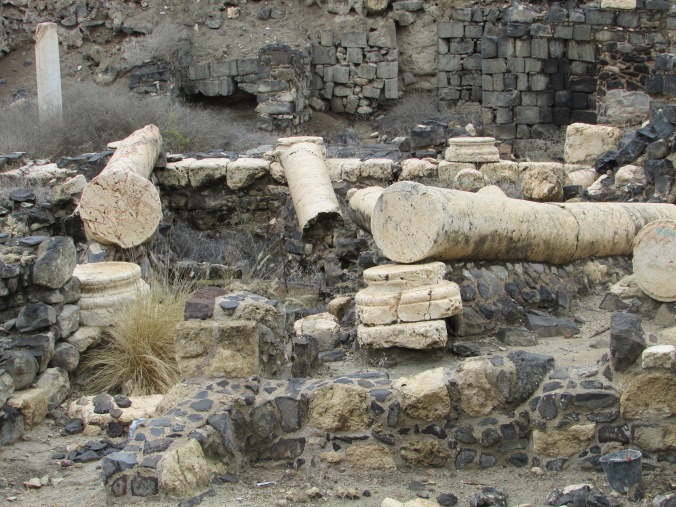
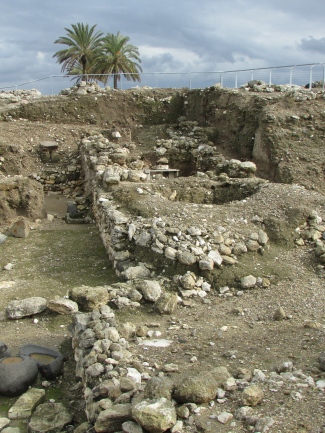
Archeologists are still excavating the ruins of the Roman era city of Jesus’ time that was destroyed by an earthquake in 740 AD. Strategically located at the junction of the Jordan River Valley and the Jezreel Valley, it was one of the ten cities of the Decapolis and would have been on the route that Jesus took whenever he travelled from Galilee to Jerusalem.

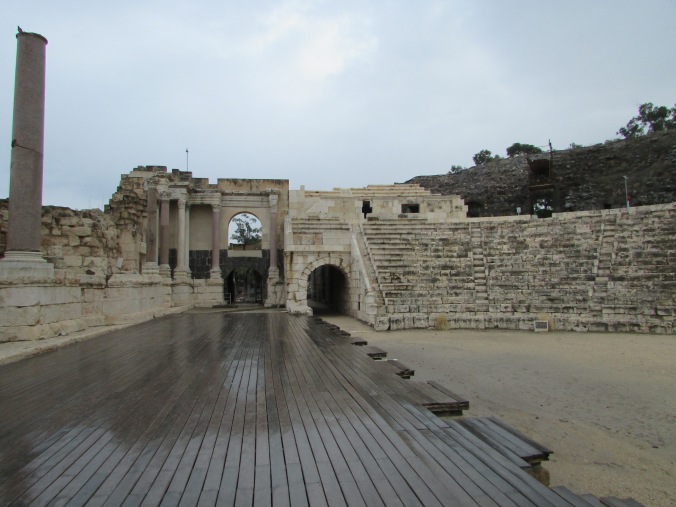
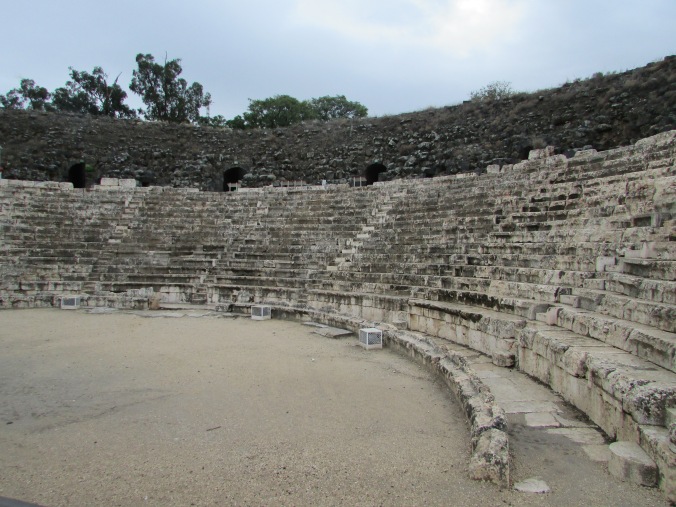
We started our tour at the impressive Roman theatre. The acoustics are so good that when one member of our group stood on stage and sang the rest of us could hear every word from far up in the bleachers.

IMG_0528

IMG_0529

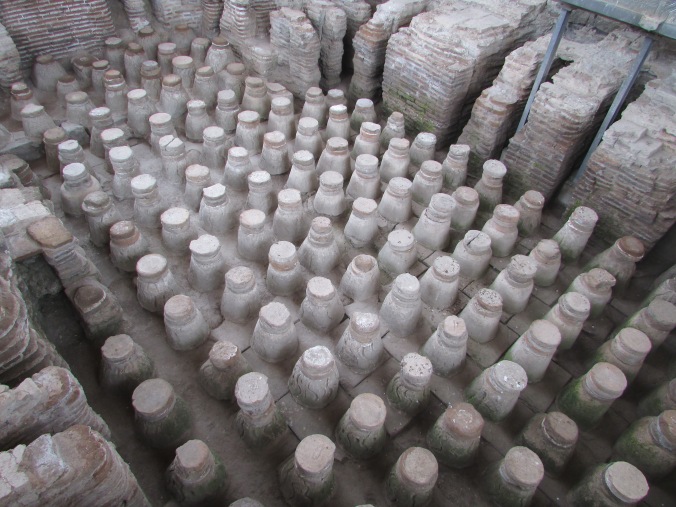
Next we moved on to the extensive bathhouse complex.

IMG_0541

The short pillars in the photo above held the floor of the bath. Hot air piped into the hollow space below the floor heated the water above. As our weather was damp and chilly, we all agreed that a soak in such a bath would have been welcome!

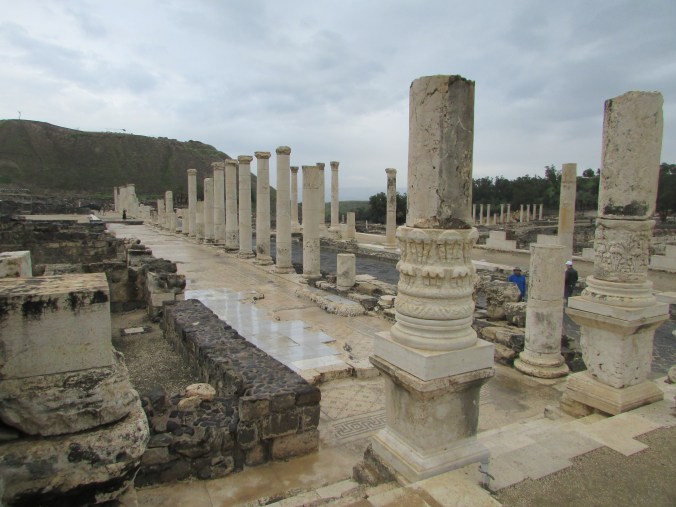
We continued our walk down the stone paved main street. In ancient days, its impressive pillars probably supported a covering over the road.

IMG_0542

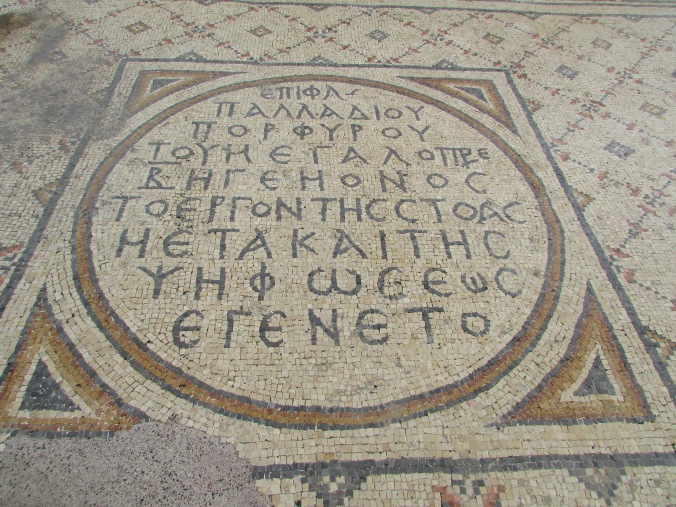
The mosaic pavement of the portico includes this Greek inscription which reads “In the time of Palladius, son of Porphyrus, the most magnificent governor, the work of the stoa together with the mosaic pavement was made.”

IMG_0547

IMG_0551

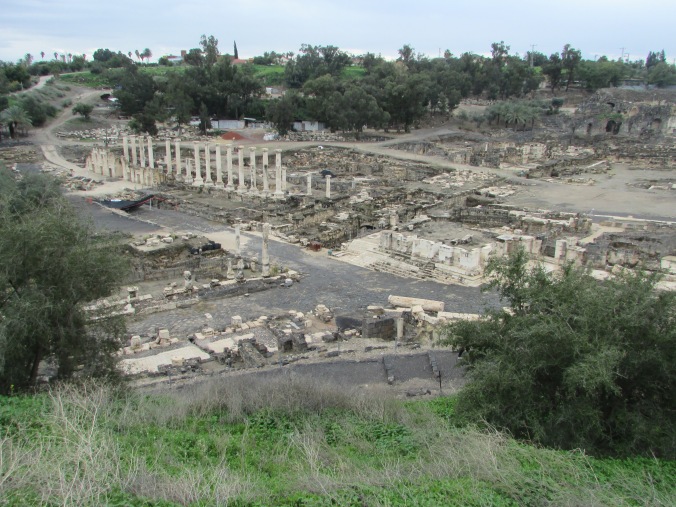
We appreciated the coolness of the day when we climbed the 163 steps to the top of the mound where we saw remains of the hilltop acropolis. From there, we had a spectacular view of the entire site. What was visible was only the downtown portion of the ancient city, however. Most of the residential areas are still under the ground.

IMG_0555

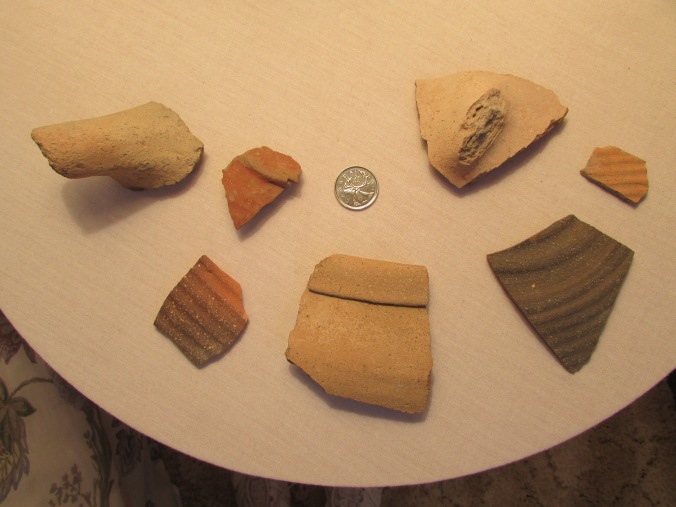
Everywhere we walked, the ground was strewn with tiny bits of pottery. On our way back down the hill, we discovered that recent rains had washed down hundreds of pieces. We immediately became amateur archeologists searching for treasure! Amazingly, we were allowed to take pieces home with us! There are simply so many of them that they are of little value or interest to those who seriously study the site.

IMG_1362

It still astonishes me that I can have in my possession a piece of someone’s kitchenware from a time when people still thought the world was flat! Who was that person? What did she carry in her container? Was she still alive when the earthquake destroyed her city?

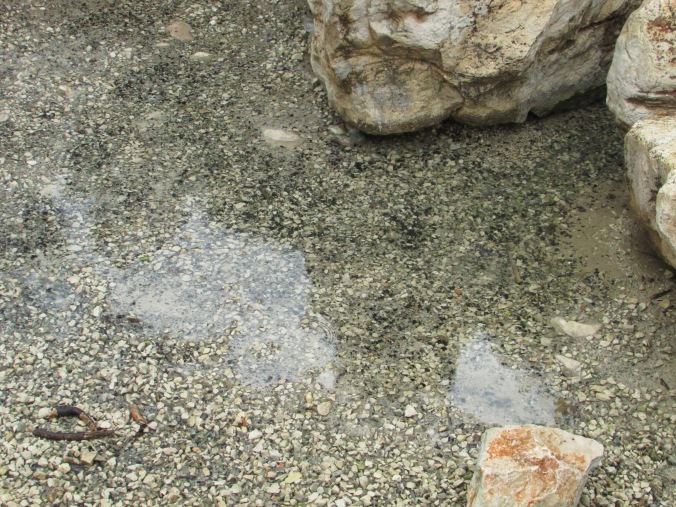
Leaving Bet She’an, we traveled next to Harod’s Spring where God instructed Gideon to reduce the size of his army from 32 000 to 300 and gave him victory over the Midianites. (Judges 7) When they were told to drink from the spring, 300 men lapped water with their hands to their mouths while the rest got down on their knees to drink. These were the ones that God told Gideon to take into battle with him. It was pointed out to us that those who used their hands to scoop up the water would have had their eyes forward, alert to their surroundings, while the others had their heads down. We, too, are admonished to be alert, on guard against Satan’s attacks. (1 Peter 5:8) In spite of recent rains, Harod’s Spring was almost dry, but with a bit of imagination, we could visualize what happened there.

IMG_0573


Tel Dan and Caesarea Philippi

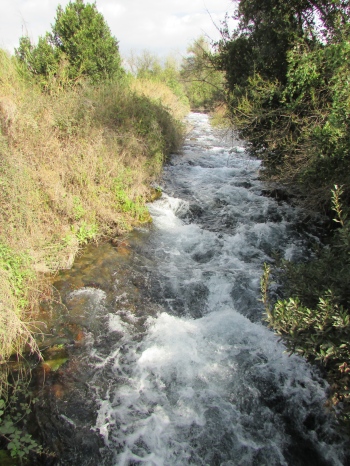
Tel Dan National Park in northern Israel is both a lush nature reserve and a fascinating archeological site. Unlike most of Israel, water is abundant there. It flows from underground springs with amazing force forming one of the main tributaries of the Jordan River.

IMG_0456
The area takes its name from the tribe of Dan who settled there during the 11th century BC after attacking the peaceful and unsuspecting people of the Canaanite city of Laish and burning it to the ground. (Judges 18) The Biblical history of this place goes all the way back to the book of Genesis! It was to here that Abraham and 318 trained men went in pursuit of those who had captured and carried off his nephew, Lot. (Genesis 14:11-16)

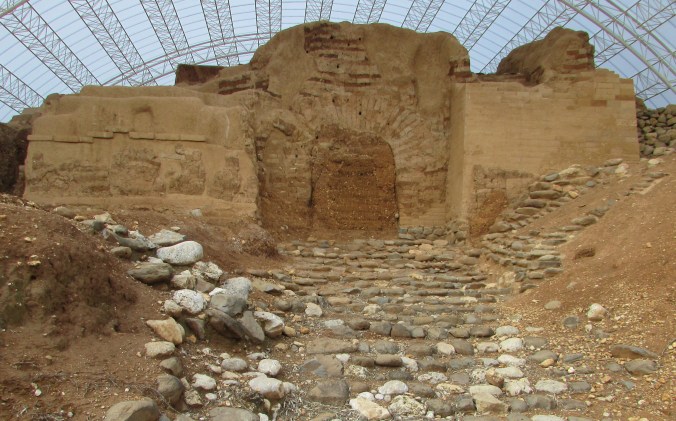
In 1979, the remains of a 7 metre tall gate constructed of sun-dried mud brick on a foundation of large basalt stones was unearthed. Now protected by an enormous canopy, it is the only one of its kind to have survived and is thought to date back to the days of Abraham, nearly 4000 years ago!

IMG_0492 - Version 2

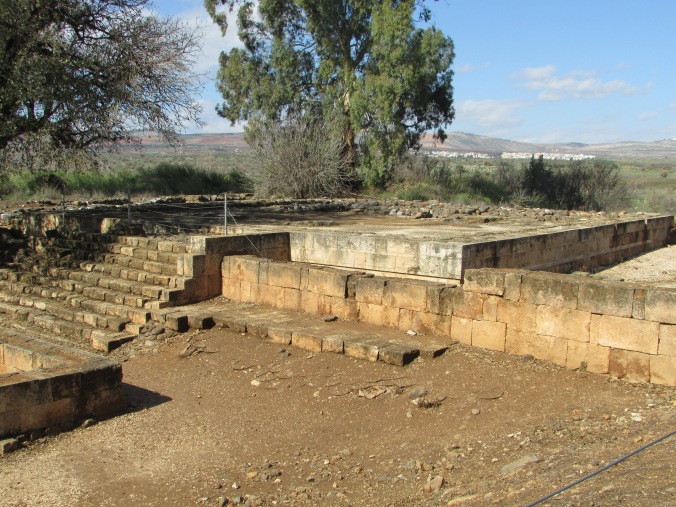
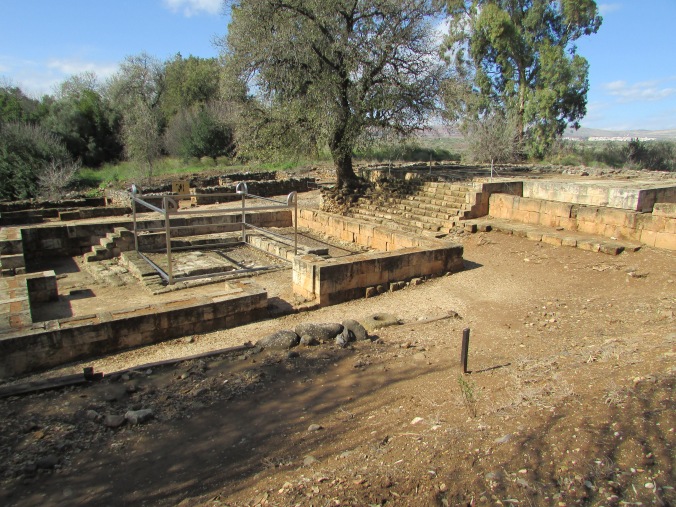
During several decades of excavation under the direction of Professor Avraham Biran of the Institute of Archaeology at Hebrew Union College in Jerusalem, many other significant remains dating back to kings Jeroboam, Ahab and Jeroboam II have been unearthed. Most impressive to me was the site constructed by Jeroboam to house one of the two golden calves that he set up as gods for his people as alternatives to going up to Jerusalem to worship. (1 Kings 12:26-30) I had often read of the “high places” where people of the Old Testament set up their idols, but I had always visualized them as hilltop shrines. In reality, Jeroboam’s high place was simply an elevated platform at the front of his place of worship. Archaeologists think that it was probably roofed.

IMG_0472

Jeroboam’s high place

IMG_0470

The metal frame in front of the high place indicates the size and shape of an altar that would have stood there.

IMG_0464

Probably used for the ritual cleansing of animals before they were sacrificed on the altar.

Another extremely significant find at Tel Dan was the David stone. Inscriptions on the broken slab provided the first historical evidence of the Bible’s King David, proving that he was a genuine historical figure.

From Tel Dan, we moved on to Caesarea Philippi, a historic site of New Testament significance. It was here that the apostle Peter first identified Jesus as Messiah and Christ declared, “On this rock, I will build my church and the gates of Hades will not overcome it.” (Matthew 16:18) It’s often thought that he was referring to Peter as the rock, especially since the name Peter means “rock”, but Peter’s given name was actually Simon meaning “He (God) has heard”. Once we saw the site, another interpretation made complete sense.

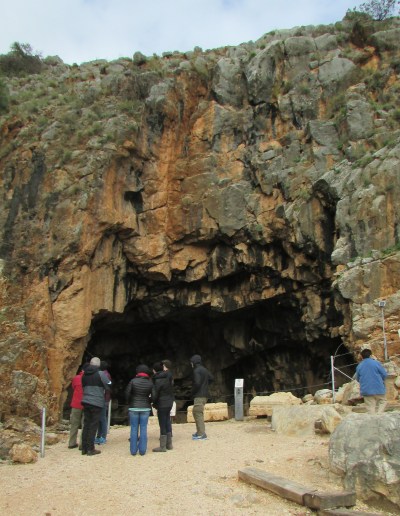
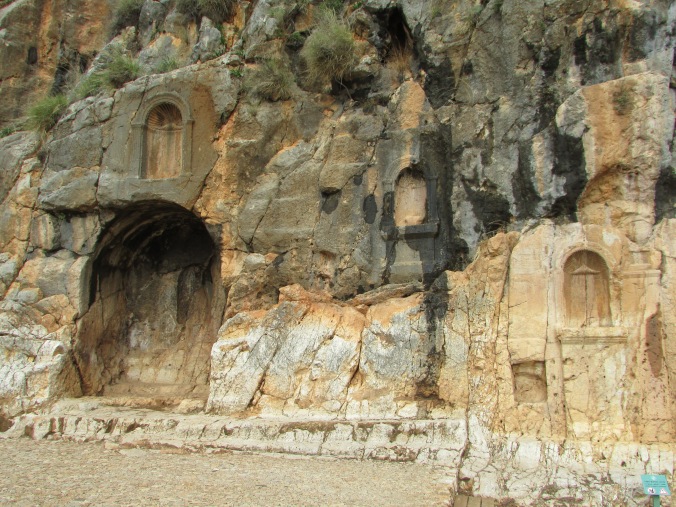
In Jesus’ time, Caesarea Philippi was dedicated to the worship of Pan; god of hunting, of shepherds and flocks, and of the mountain wilds. He was depicted as having the upper body of a man and the hindquarters, legs and horns of a goat. Being a rustic god, Pan was not worshipped in temples, but in natural settings, usually caves or grottoes. Caesarea Philippi was a place steeped in debauchery. Spirits were thought to come and go from the underworld through a giant cave known as “The Gate of Hades”. Adjacent to the cave is a rocky escarpment with a series of niches hewn into it. Statues of Pan were placed in these recesses. Human sacrifices were made by tossing the victims into a sinkhole at the back of the cave. It was in front of this rock that Jesus stood when he made his statement. I believe that it was his intention to establish his church in worldly places, places steeped in idolatry and sin, and even the hideous practices of a place like Caesarea Philippi would not stop him! We, too, are called to take the light of our faith into the dark places of the world.

IMG_0503 - Version 2

The Gate of Hades

IMG_0501

Galilee

The land of Galilee was nothing like I expected it to be. In the past, when I read accounts of Jesus teaching the multitudes and feeding the 5000, I visualized them sitting on grassy slopes. In reality, the rugged hillsides of Galilee are strewn with boulders of black volcanic basalt and I suspect that some of Jesus’ listeners chose to sit on rocks instead of on the ground.

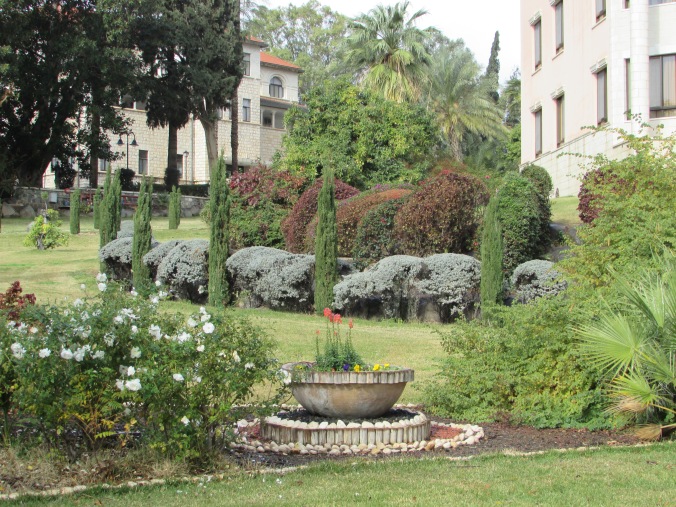
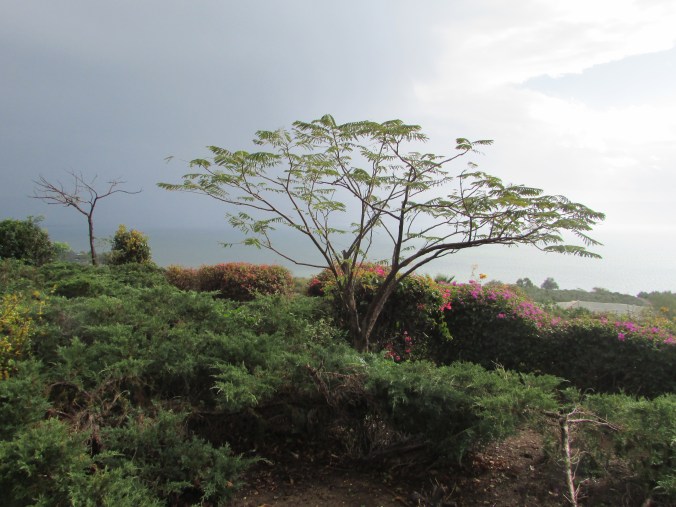
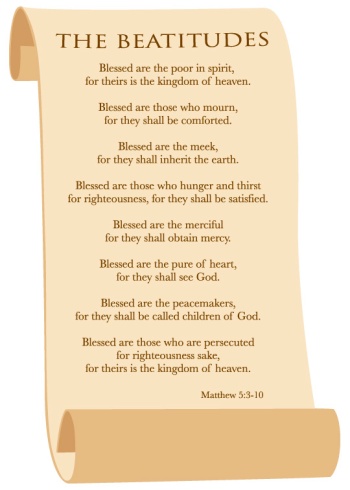
Today, a Catholic monastery surrounded by beautiful grounds is located on the Mount of Beatitudes where Christ delivered his Sermon on the Mount. After a short devotional in the gardens and singing Amazing Grace in the chapel where the acoustics were fabulous, we were sent off to read the sermon on our own. The storm that had been following us ever since our morning boat ride on the Sea of Galilee caught up to us about that time, however, and it was difficult to find a sheltered spot to do our assigned reading. The pages in that part of our travel Bible will probably be forever wrinkled, a reminder of standing in the wind and rain while we read Matthew 5:1-16!

IMG_0331

IMG_0346

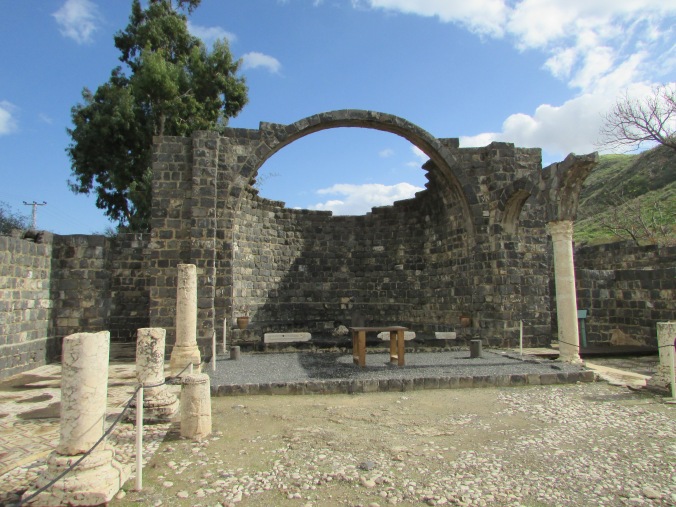
Fortunately, the rain didn’t last long and by the time we reached our next stop at Kurzi, which has been identified as the site where Jesus cast a legion of demons into a herd of swine (Mark 5:1-13), it had stopped. After investigating the remains of the oldest Byzantine church in Israel, we climbed the hillside to the probable location of the tombs mentioned in scripture. Looking down, it was hard to imagine the herd of pigs plunging into the lake and drowning because the water is actually quite a long way off. Remains of wharves have been found at the bottom of the hill, however, where bananas are now cultivated. Clearly the Sea of Galilee was significantly larger in Jesus’ day.

IMG_0355

IMG_0362

This is actually a major concern for Israel today as the Sea of Galilee is the country’s largest fresh water reservoir. Many years of below average rainfall have caused the water level to drop significantly as water is drawn from the lake for irrigation and other uses at a rate faster than it is replenished by nature.

Continuing on around the north end of the lake, we came to the recent excavation of the ancient city of Bethsaida where we walked on a stretch of cobblestone highway some 3000 years old!

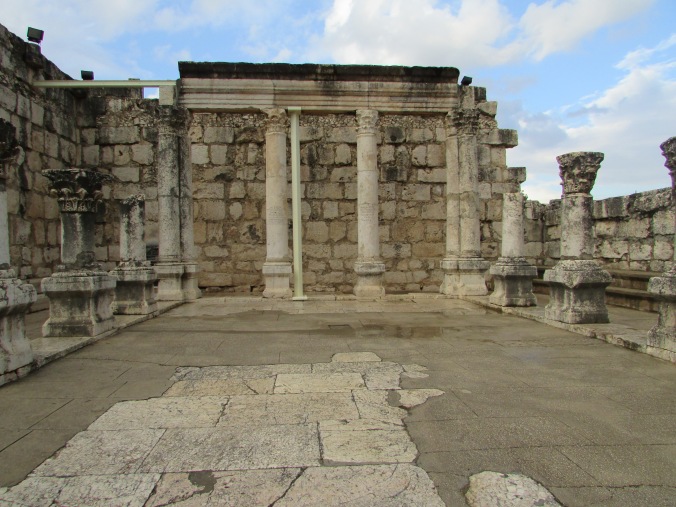
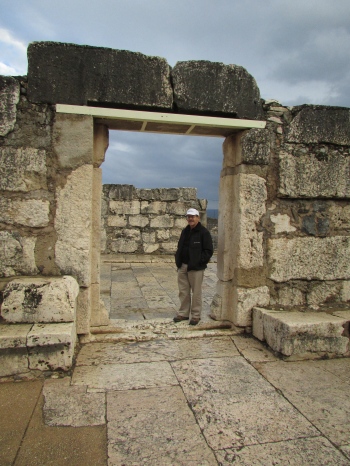
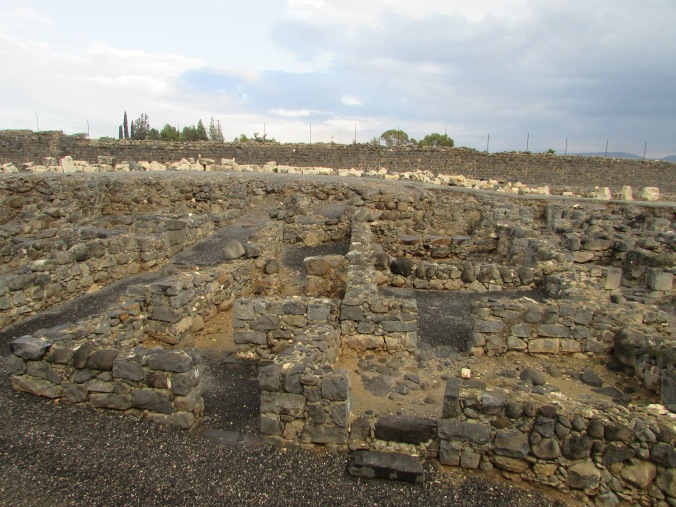
Our last stop of the day was Capernaum which was the centre of Jesus’ Galilean ministry. Here we saw the remnants of a beautiful 4th century synagogue that was built over the remains of the synagogue of Jesus’ day. Surrounding it were the remains of houses and other buildings. It is believed that the home of the apostle Peter, where Jesus is known to have spent a lot of time, lies beneath one of these.

IMG_0415

IMG_0417

IMG_0418

As we returned to our hotel in Tiberias, I felt privileged to have walked so many of the places where our Lord walked, but I also realized that Jesus was not particularly concerned about the places, but about the people who inhabited them. It was a blessing to walk where He walked physically, but how much more we need to walk as He walked spiritually, in humility and obedience, bringing salt and light to a lost and hurting world. (Matthew 5:13-16)

beatitudes

Boats on the Sea of Galilee

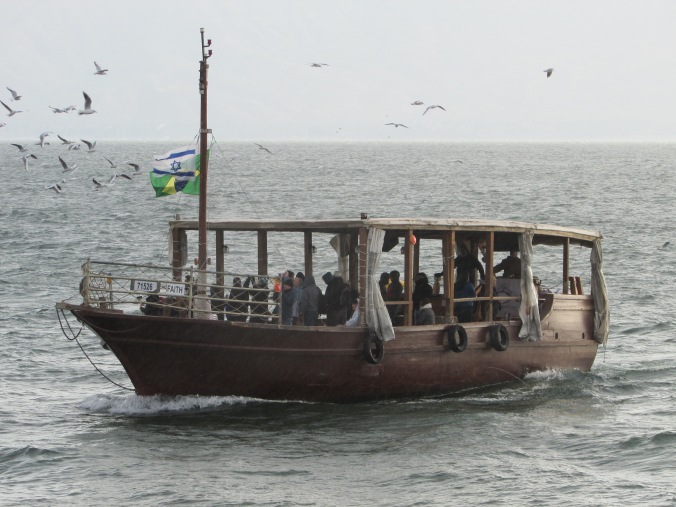
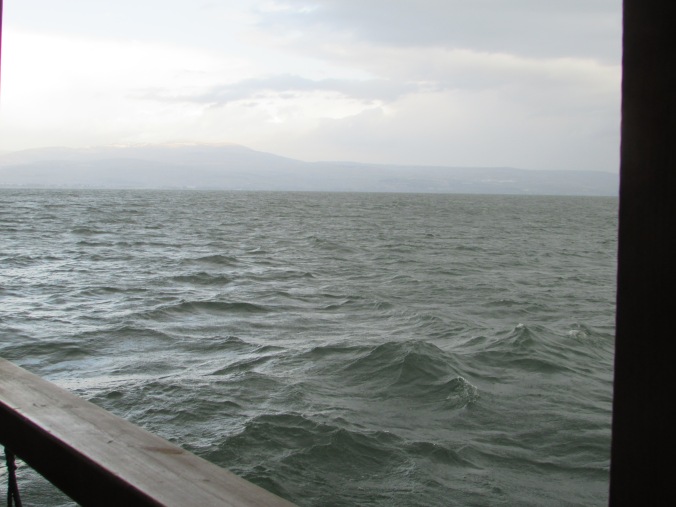
We arrived at our hotel in Tiberias overlooking the Sea of Galilee, or Lake Kinneret, shortly after dark on Saturday, January 24th. Sunday morning began with what was definitely one of the highlights of our pilgrimage to Israel; worshipping on a boat on a stormy Sea of Galilee! The original plan had been to travel by boat to another spot along the lake and have the bus pick us up there, but the water was too rough for that and since Jesus wasn’t there to calm the storm (Matthew 8:23-27), we went out and back to the same spot staying fairly close to shore. The boat was aptly named Faith and we all agreed that it was somehow very fitting that we were buffeted by wind and waves just as Jesus and his disciples had been.

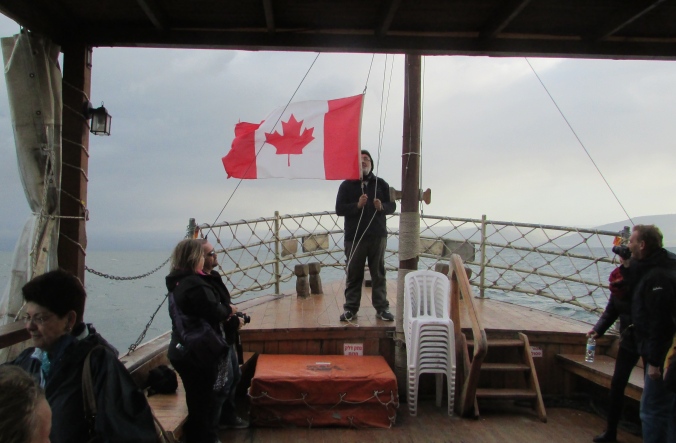
As soon as we put out from shore, the Canadian flag was raised and Captain Daniel Carmel, who is also a Christian singer and songwriter with an amazing testimony, declared the boat temporary Canadian territory and “the warmest spot in Canada today!” My heart was full as we all stood and sang O Canada. After a short devotional, we sang hymns and songs of praise and listened to Captain Daniel sing one of his own songs entitled Jerusalem. It was a very moving experience.

IMG_0299

IMG_0306 - Version 2

IMG_0310

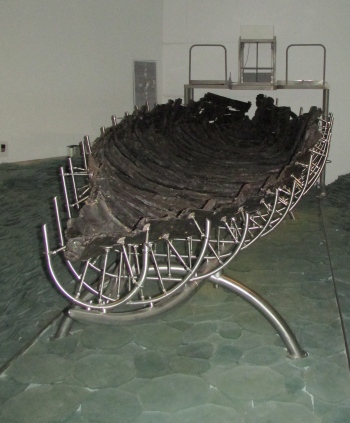
Too soon, we were back on shore and on our way to our next destination, the Jesus Boat Museum on a kibbutz at Ginosar. In 1986, at a time when the water level was particularly low, the remains of a 27 meter long fishing boat from the time of Jesus was discovered in the mud on the northwestern shore of the Sea of Galilee by brothers Moshe and Yuval Lufan. Of tremendous historical importance, it was unearthed by a team of archeologists who took particular care to keep the ancient wood wet so that it wouldn’t dry out and crumble. Encased in expanding foam, it was then floated to a spot where it could be lifted from the water by a crane and moved. It was submerged in a chemical bath for seven years to preserve the wood before it was finally put on display. Though there is no evidence to definitively connect the boat to Jesus or any of his disciples, it is an amazing relic from their day.

IMG_0322 - Version 2

Mount Carmel, Megiddo and Nazareth

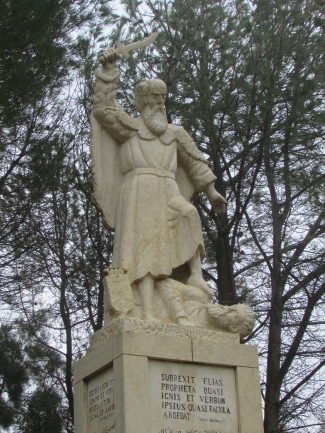
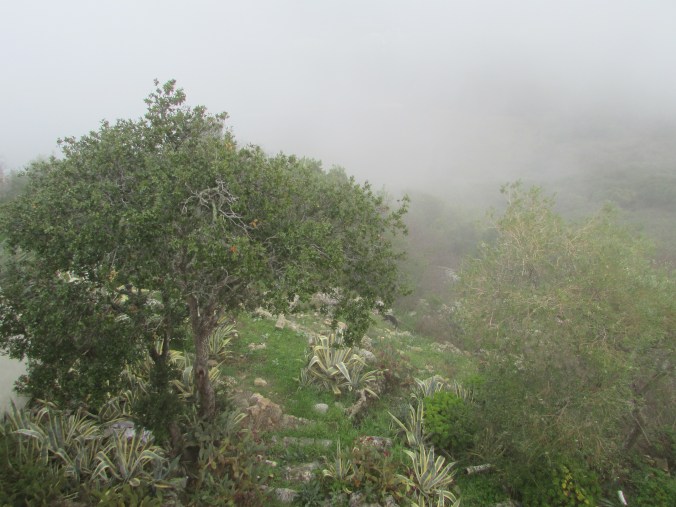
Moving inland toward the Sea of Galilee, we stopped to visit several interesting and very significant sites. The first was Mount Carmel where the prophet Elijah called down the fire of God and defeated the prophets of Baal. (1 Kings 18:19-40) Unfortunately, fog obscured our views of the Kishon Valley below.

IMG_0243

IMG_0244

For most of our time in Israel, the weather was unusually cool and wet even for winter. Warm weather clothing stayed in our suitcases while we dressed in layers to fend off the chill. I was very happy to have taken gloves, a warm hat and an umbrella with me!

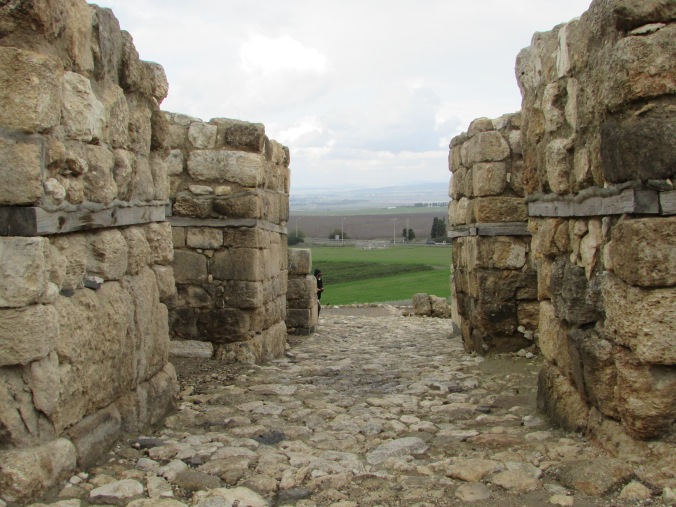
After Mount Carmel, we continued on to Megiddo (Hebrew for Armageddon) where many, many layers of archeological remains going back thousands of years have been excavated. Here, a giant fortress believed to have been built by King Solomon once stood.

IMG_0252

IMG_0258

IMG_0259

At Megiddo, we had the first of several underground experiences. Descending approximately 180 stairs deep into a shaft in the ground, we followed a tunnel that brought water to the fortress from a small spring outside its walls.

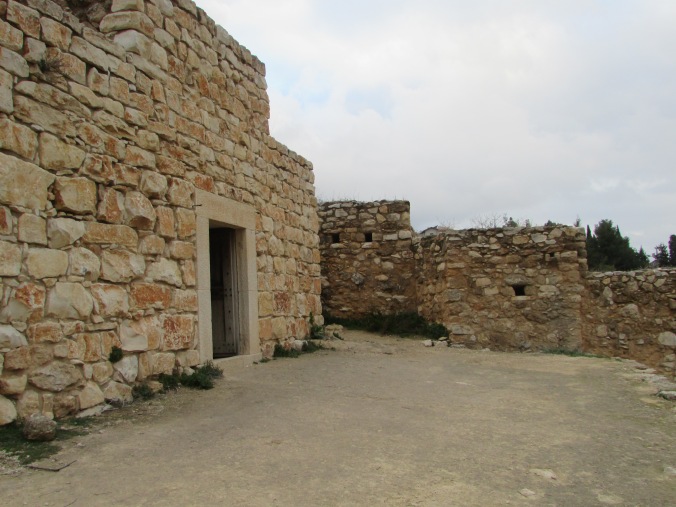
Moving on, our next stop was Nazareth, the childhood home of Christ, where we toured a recreated first century village complete with cultivated terraces and vineyards, an ancient winepress, an operating olive press and a synagogue representing the one where Jesus identified himself to his townspeople as the fulfillment of Isaiah’s prophecy of a coming Messiah. (Luke 4:14-30)

IMG_0274

IMG_0283

IMG_0288

IMG_0287

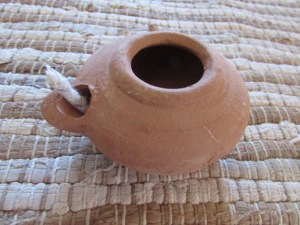
As we left the village, we were each given a tiny oil lamp, a reminder that we are called to be the light of Christ to a lost and hurting world.

IMG_1352

Caesarea by the Sea

IMG_0229 - Version 2

Traveling north from Tel Aviv, we came to Caesarea Martima or Caesarea by the Sea, not to be confused with Caesarea Philippi which we visited a couple of days later. Once an amazing complex overlooking the Mediterranean Sea, Caesarea Martima was one of the great architectural achievements of King Herod the Great. Described as both the greatest builder in Jewish history and a madman who murdered his father-in-law, several of his own wives and two of his sons, it was this same Herod who ordered the massacre of all the baby boys aged two years old and under in Bethlehem and its vicinity after he was outwitted by the wise men who came from the east to visit the baby Jesus. (Matthew 2:1-17)

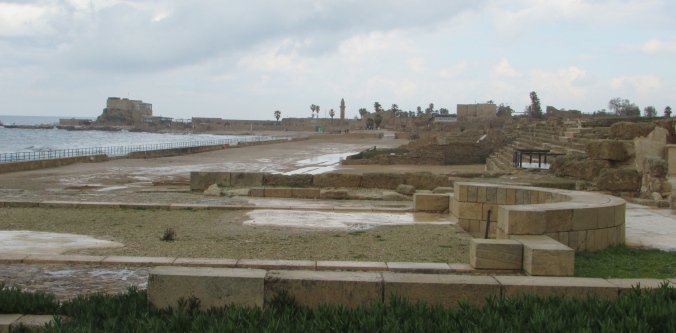
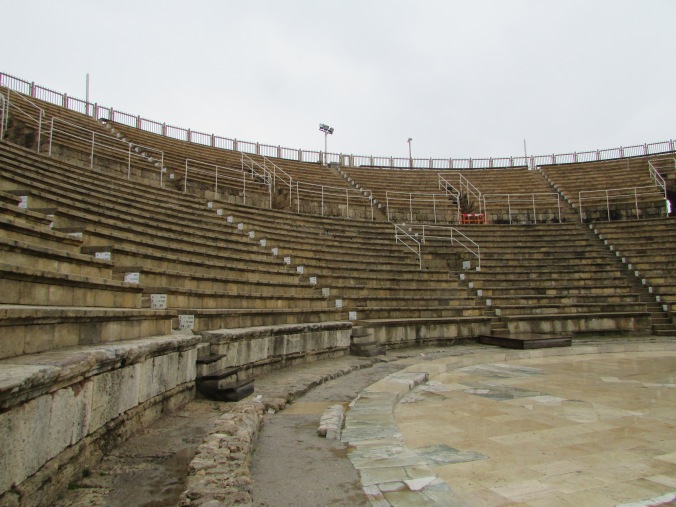
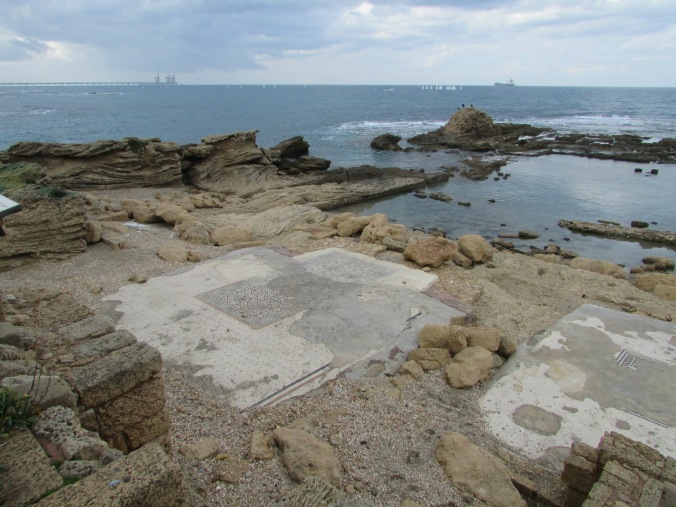
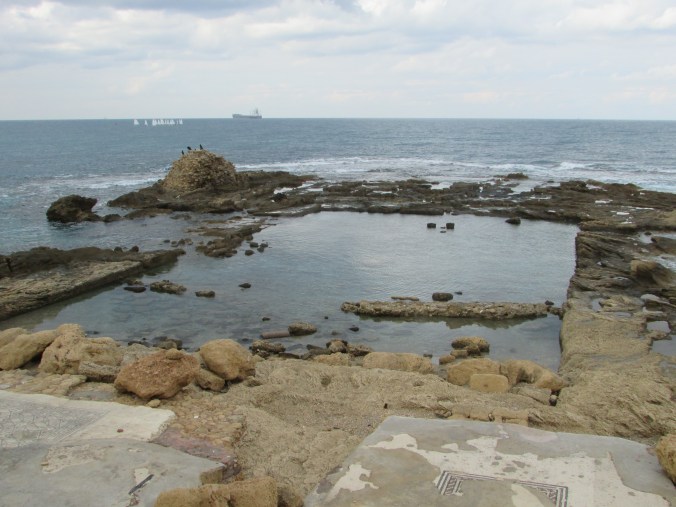
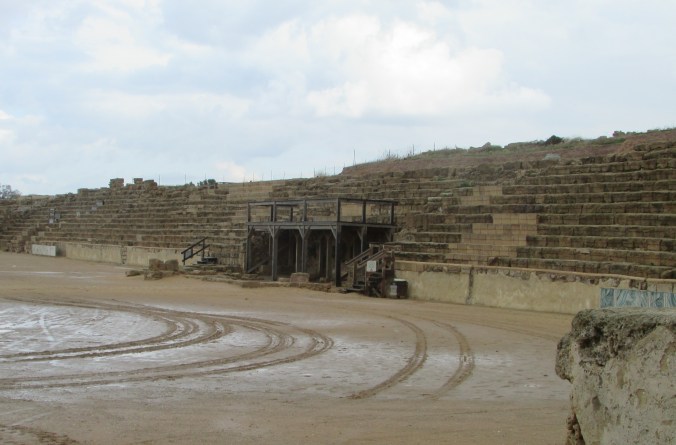
At Caesarea, named after his Roman patron, Caesar Augustus, Herod built himself a magnificent palace, complete with a freshwater pool, on a promontory jutting out into the waters of the Mediterranean. The site also included a harbour that would accommodate 300 ships, a theatre that would seat 3500 and the massive Hippodrome where horse races and other special events were held.

IMG_0195

Theatre

IMG_0219

Remains of Herod’s palace

IMG_0218

The pool

IMG_0219 - Version 2

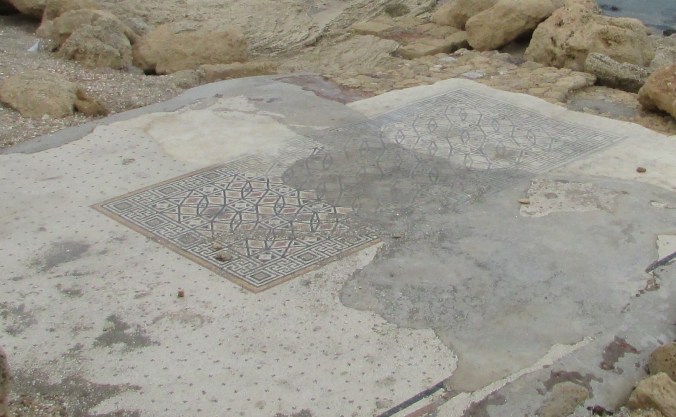
Mosaic floor

IMG_0225 - Version 2

Hippodrome

The Hippodrome originally sat some 10 000 people, but the seating on the sea side is missing. Large sections of it have been found in the sea some distance from their original location. It is thought that they might have been dragged out to sea by a tsunami. A major geological rift runs the entire length of Israel making it an earthquake zone.

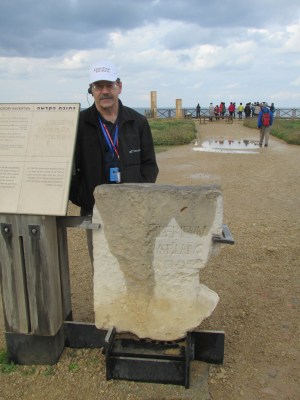
From a Biblical perspective, perhaps the most significant find at Caesarea thus far has been the Pilate stone, a damaged block of engraved limestone with an authentic 1st-century Roman inscription mentioning the name of Pontius Pilate, the Roman governor who sentenced Jesus to death. (Matthew 23:1-25) It provides non-Biblical evidence proving the existence of this man. It is likely that he made his base here at Caesarea Maritima.

IMG_0213

The Pilate stone

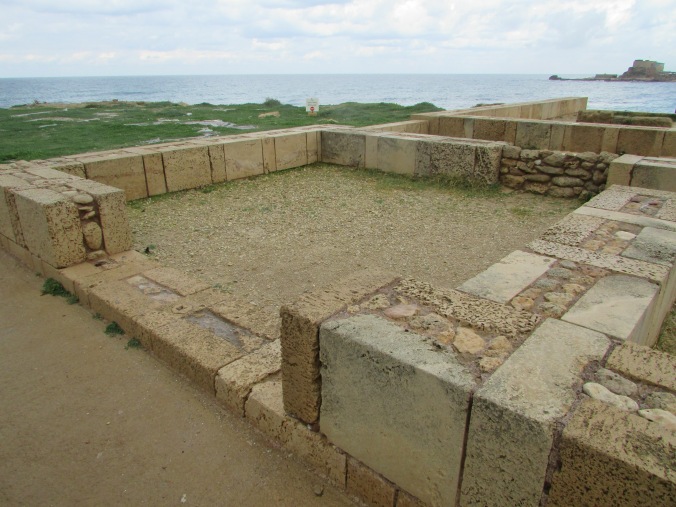
It was also at Caesarea that the apostle Paul was imprisoned for two years while he awaited transfer to Rome. (Acts 23:23-26:32) It may have been in this small room or one just like it that he was held.

IMG_0221

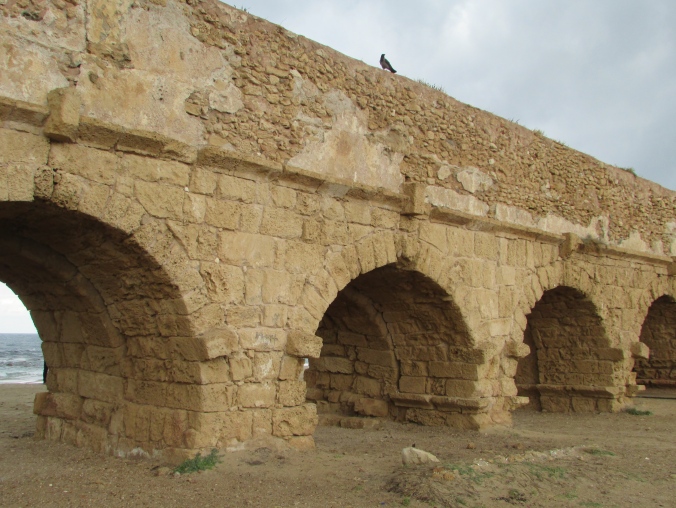
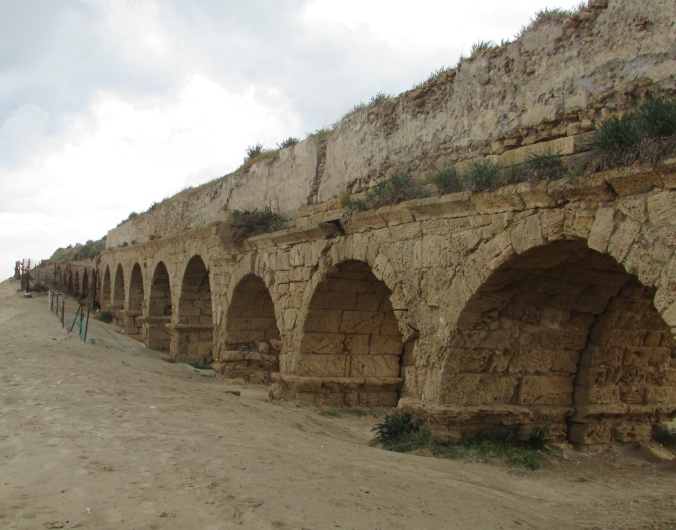
Lack of fresh water at Herod’s complex required it to be brought from springs at the base of Mount Carmel nearly ten miles away. That posed little problem for the great builder, however, who simply had his labourers build an aqueduct. An amazing engineering feat, the aqueduct was built on arches and the gradient carefully measured so that the water would flow by the pull of gravity.

IMG_0237

IMG_0238 - Version 2

Shalom Israel!

As I begin to process and share all that we saw and experienced on our pilgrimage to Israel, I am reminded that there is a fine line between worshipping at a place and worshipping the place itself. There is no holy magic to any of the sites that we visited, but I have no doubt that being there and seeing them with our own eyes will give greater context to scripture as we continue to read and study it; to make it come alive or, as Richard says, to help us see it in 3D. As we traveled the length and breadth of this small country, I think everyone in our group gained a greater appreciation for the land that our Saviour traversed and for the ways in which He used His environment in His teachings.

We arrived in Israel on January 22nd via a direct ten hour flight from Toronto to Tel Aviv. The ultra modern Ben Gurion International Airport, named after the country’s first prime minister, is the world’s gateway to Israel.

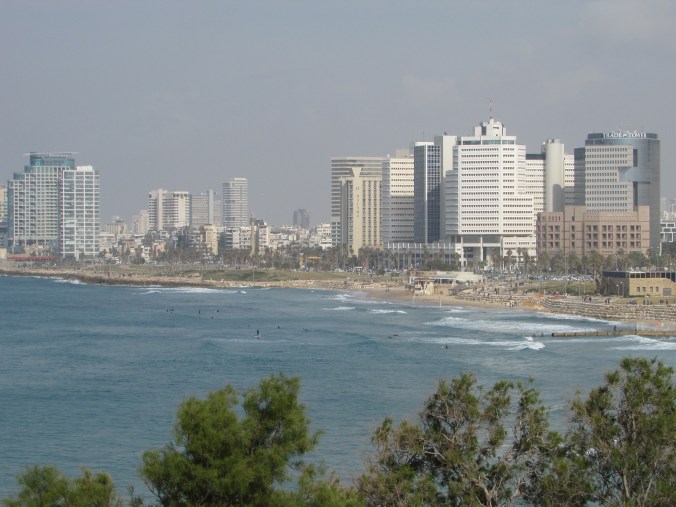
Tel Aviv is a vibrant, modern and very liberal city located on the eastern shore of the Mediterranean Sea. Its next door neighbour is the ancient port city of Jaffa (Joppa). The two cities have grown together to form one metropolitan area with no line of distinction between them.

IMG_0138

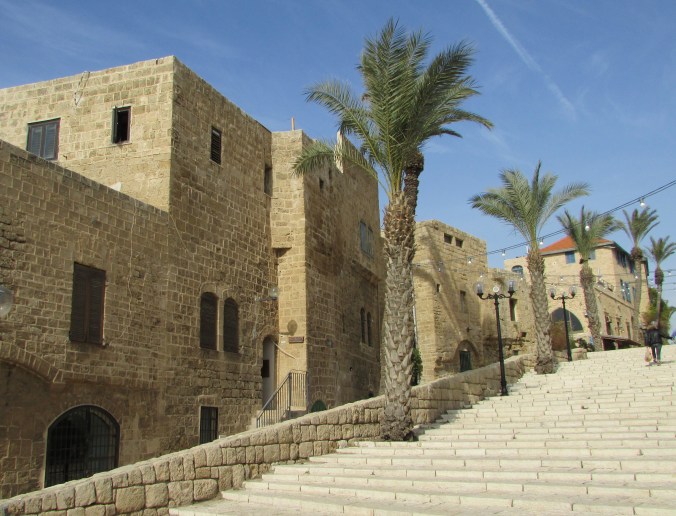
Jaffa is of both Old and New Testament significance. It was here that Jonah boarded a ship headed for Tarshish in an attempt to flee from the mission that the Lord had given him. (Jonah 1:3) Much later, in the book of Acts, we are told that Peter was staying in Joppa with a tanner named Simon when he was summoned by Cornelius, a Roman centurion in Caesarea, to come and share the good news of Christ with him and those who had gathered in his home. (Acts 9:43-10:48) We were reminded that we can choose to be like Jonah and stand in God’s way or like Peter who cooperated with God. (Acts 11:17)

IMG_0128

IMG_0151  IMG_0150

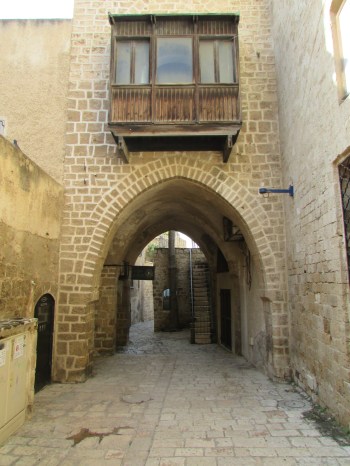
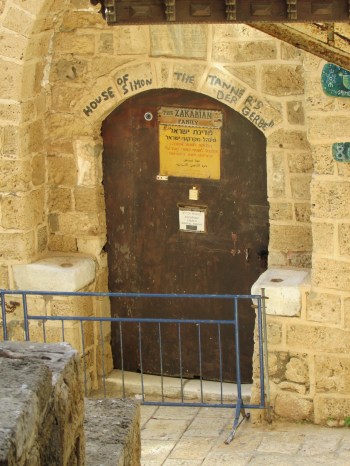
Walking through the narrow stone alleyways of historical Jaffa, we came to the purported house of Simon the Tanner. There we were reminded that there are, in Israel, two types of Biblical sites; those that may be/might be/ are traditionally thought to be the original sites and those that definitely are. Simon’s house clearly falls into the first category. The present house simply doesn’t date back to the first century AD, but it is in the approximate location of the original home.

IMG_0146

Returning to Tel Aviv proper, we spent about an hour exploring the colourful Friday market which reminded Richard and I of similar marketplaces in Korea and Cambodia.

IMG_0160

After checking into the lovely Dan Tel Aviv Hotel where every room has a view of the Mediterranean Sea, Richard and I went for a stroll along the promenade overlooking the rocky shore to a sandy beach where, in spite of the coolness of the day, I shed my shoes and socks, rolled up my pant legs and fulfilled my dream of wading in the Mediterranean Sea!

IMG_0181

IMG_0177


Pilgrimage

If you know me personally or have been reading my blog for very long, you know that my husband and I love to travel and you may not be surprised to learn that we’re busy preparing for another trip. I included a hint to our destination in my last post, but no one guessed where we’re going. Since I’m bursting at the seams with excitement and can hold it in no longer…

Richard and I are leaving Canada on January 21st for a ten day tour of Israel! Although we’ve explored a number of fascinating places over the years, I don’t know if I’ve ever been as excited about a trip as I am about this one. When someone asked me recently if it was a mission trip or a vacation, I wasn’t sure how to answer. It’s definitely not a mission trip, but I hadn’t really been thinking of it as a vacation either. So what is it? Our pastor came up with the perfect term. We’re going on a pilgrimage!

Pilgrimage, a journey undertaken for a religious motive. Although some pilgrims have wandered continuously with no fixed destination, pilgrims more commonly seek a specific place that has been sanctified by association with a divinity or other holy personage. (www.britannica.com)

Knowing that I’m going to stand on Mount Carmel where the prophet Elijah called down the fire of God and the Mount of Beatitudes where Jesus Christ delivered his Sermon on the Mount; enjoy a boat ride on the Sea of Galilee where Jesus calmed the storm and walked on water; float in the Dead Sea; visit Bethlehem, the birthplace of Christ, and Nazareth where he spent his childhood; pray in the Garden of Gethsemane and view the modern city of Jerusalem from the Mount of Olives almost takes my breath away. These are just a few of the highlights of our very busy itinerary!

I’ve prepared differently for this trip than for any other. For me, doing lots of research before a trip is part of the fun of traveling, but this time I’ve done less of that and a lot more spiritual preparation. On Christmas Eve, I started reading through the gospels of Matthew, Mark, Luke and John in my NKJV Chronological Study Bible. Frequently referring to the maps at the back of the book, I jotted down the various locations and what happened at each of them. I’ve read all these accounts many times before, but this is the first time I’ve specifically focused on where things happened and it has really helped tie everything together. I finished that today and will spend the next few days looking at some Old Testament references.

As always, God’s timing is impeccable. My ladies Bible study group recently started doing Beth Moore’s study, Stepping Up, on the Psalms of Ascent (Psalms 120 to 134). In ancient times, Israelite pilgrims sang these psalms as they made their way up to the holy city of Jerusalem for the three great festivals of the Jewish calendar: Passover, the Feast of Weeks and the Feast of Tabernacles. What fitting preparation for my own pilgrimage which will culminate in that very city!

Of course, when people hear where we’re going, some of them think we’re crazy. “Aren’t you afraid?” they ask. No, I can honestly say that I’m not. I’m not naive; I know what’s been happening in that part of the world, but afraid? Not in the slightest. I feel a deep sense of peace knowing that we’ll be as much in the palm of God’s hand in Israel as we are anywhere else on the planet. We are going on a guided tour though. We’ve wandered some pretty sketchy parts of Asia on our own, but I do draw the line at the Middle East. There, I want the safety of a group and a reputable tour company that has sent hundreds of people and brought them all home safely.

We’ll be staying in some pretty nice hotels where Wifi will be available, but this is the trip of a lifetime and I don’t plan to spend it sitting at a keyboard. The blog will be silent while I’m away, but I will have lots to share when we return!

You are what you wear

What we wear affects the way we feel. Have you ever watched a little girl dance and twirl while her pretty skirt swirls around her? Her joy simply overflows. The same is true of we adults. As superficial as it may sound, the right dress or a stunning pair of shoes can be just what a woman needs to give her the confidence to rock an important interview or a boardroom presentation.

Taking care with how you dress also sends a message that you care about yourself. “If I throw on a large, over sized T-shirt and do not fix my hair or makeup, then the message to me and others is that I don’t care or matter,” writes popular fashion blogger, Pam Lutrell.

Over recent years, my interest in fashion has grown and I’ve given more thought to what my clothing says about me, but there’s an even finer way of dressing that is much more important to me.

“As God’s chosen people, holy and dearly loved, clothe yourselves with compassion, kindness, humility, gentleness and patience.” Colossians 3:12 NIV

I’m not in the habit of making New Years resolutions, but I do want my 2016 wardrobe to include:

  • compassion ~ I want my life to exhibit sensitivity and concern for the sufferings or misfortunes of others.
  • kindness ~ I want to treat others with warmth and affection.
  • humility ~ I want to accept myself as I truly am, but not consider myself better than anyone else.
  • gentleness ~ I want to treat others with tenderness and be a calming influence.
  • patience ~ I want to have the grace to accept whatever happens in life without anger or complaint.

By clothing myself in these basic items, I hope to experience the joy of the little girl in the swirling skirt, the confidence of the successful businesswoman and the peace that comes from living in harmony with those around me.

I wish the same for you in the New Year!

Beauty2


Welcome to Canada!

I spent one afternoon last week working as a volunteer in our local second hand store. As I looked around the tiny shop, I couldn’t help noticing how the face of our small community has changed. Like almost every other rural community across the Canadian prairie, the town we raised our children in, just a few short years ago, had one Chinese family running a restaurant. There was also a doctor of East Indian descent who originally hailed from Ghana. That was about it for multiculturalism. The rest of us could trace our ancestry to various parts of Europe, but that’s no longer the case. In the shop that afternoon, there was my friend, Karen, a temporary foreign worker from the Philippines and over there, a young Asian couple. I’m pretty sure they were Korean. Another Korean family lives kitty-corner from me. In the shop, there was also a young Mexican Mennonite man, one of many who have made this area home over the past few years, and two women from one of the nearby Hutterite colonies. I live around the corner from a family from South Africa and another family of newcomers bought the house at the end of our street. The wife is from Honduras and her husband, El Salvador. Yes, our community has changed. It has opened its arms and welcomed the world and I love it!

Now we’re faced with the current refugee crisis and our government’s decision to open our country’s doors to 25 000 Syrians. Sadly, many are responding in ignorance and fear.

There are fears, perhaps even legitimate fears, that terrorists may hide themselves in the masses and infiltrate our peaceful nation and fears that jobs may be lost to these newcomers, but as I watched the news last night and looked into the faces of the sixteen weary Syrians who arrived at the Calgary airport yesterday, I saw people, real people, some with fear in their own eyes. Imagine for a moment what they have been through, what they’ve sacrificed, what they’ve left behind to begin a new life in a new and very strange land. They are not here to make our lives worse, but to make their own lives better and in so doing, they can make our country richer if we give them the opportunity. Who are we, born in Canada through no effort of our own, and benefitting greatly from the hard work and sacrifice of those who came before us, who were themselves newcomers from foreign lands looking for a better life, to close our doors and our hearts to these whose very lives have been torn apart by the atrocities of war? Who do we think we are?

Sadly, I also see racism in the response of some of my fellow Canadians. Canadians like the elderly man working the till at Walmart yesterday, who, during a few moment’s conversation while checking and bagging our purchases, complained bitterly that he’d soon be out of work because “one hundred of those Syrians are coming to Camrose and they’re going to take jobs from all the good people!” Perhaps I should have asked him where his people came from. He certainly didn’t appear to be of First Nations descent!

Much of the fear stems from the fact that these newcomers are Muslims, descendants of Esau, betrayed and robbed of his birthright by his twin brother, our spiritual ancestor, Jacob (Genesis 25-27). They are Muslims, painted with the same brush as the extremists who behead Christians on the beaches of north Africa and who strap explosives to their bodies and blow themselves to smithereens in the public places of Paris, killing and maiming hundreds of innocent bystanders. Are these the Muslims who seek refuge in our country? I don’t think so! That’s like saying that all Chinese Canadians are like Vince Weiguang Li who beheaded a fellow passenger on a Greyhound bus on the way to Winnipeg in July 2008 and ate some of his flesh!

It would be naive to suggest that there won’t be any problems involved in opening our borders to such a huge influx of refugees and I join my voice with others in urging our government to use wisdom and diligence in choosing who will be allowed to come, but how much worse will the problems be if we greet these newcomers with fear and animosity instead of extending a hand of compassion? The government has promised intense and rigorous security checks of each person who arrives in Canada and there is every reason to believe that this current wave of refugees will face the same scrutiny and review as all those who have come before them. For more information on that process, you can go here. Our new Prime Minister has already delayed the December 31 deadline for allowing the 25 000 to enter the country in order to “get it right”. The three families that arrived in Calgary yesterday all escaped war-torn Syria a year ago and have been waiting in Lebanon for permission to come to Canada where they were greeted by family members already living there.

Darren 2

It is the response of some of my fellow Christ-followers that bothers me most of all. Yes, the Christian face of our country is rapidly changing, but if God has called us to reach the lost for Christ, how much easier will it be for us if they come to us? Not many of us can “go and make disciples of all nations” (Matthew 28:19) but we can reach out to the ones who move in next door to us with love and compassion and be the hands of Christ to them. It is not only immigrants of other faiths who are robbing our country of its Christian heritage, it is also those born and raised here who have become so self-sufficient and so self-centred that they see no need for a god of any kind and can only express hatred toward those they don’t understand or agree with.

Darren 3

Photos: Darren Makowichuk/Calgary Sun