Though the Icefield Parkway, the highway between Jasper and Banff in the Canadian Rockies, is only 288 km (179 miles) long, it can easily take all day or longer to travel because there are so many amazing places to see along the way. Come along with us and I’ll show you a few of the places that we stopped on our most recent trip.
Athabasca Falls
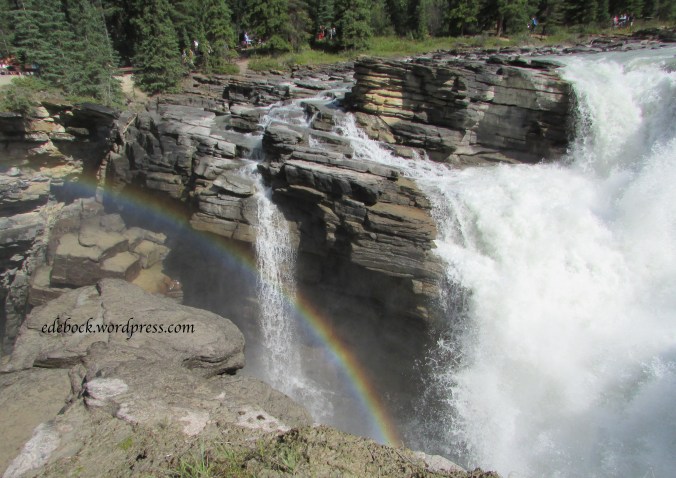
Approximately 30 km (19 miles) south of the town of Jasper, Athabasca Falls is neither the highest or the widest waterfall in the Canadian Rockies but it is thought to be the most powerful. The falls can be safely viewed and photographed from various viewpoints on both sides of the river. The parking lot is on the north side, but be sure to cross the pedestrian bridge and view the falls from the south side as well. The morning that we were there, the sun was in just the right position to create a vibrant rainbow in the gorge below the crest of the falls when viewed from that side.


Sunwapta Falls
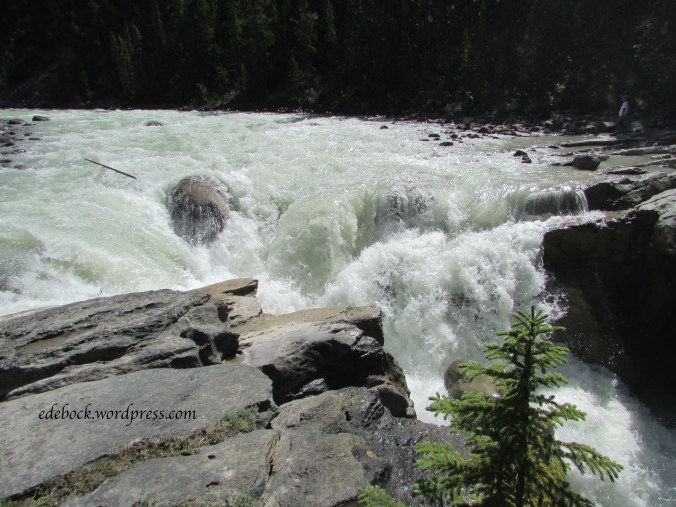
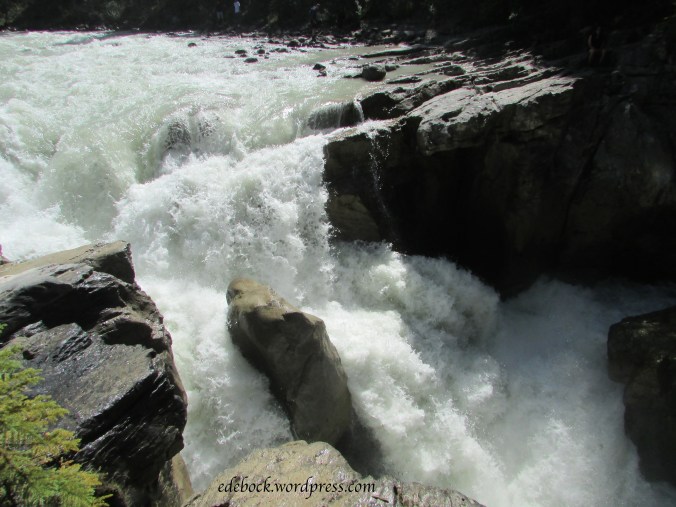
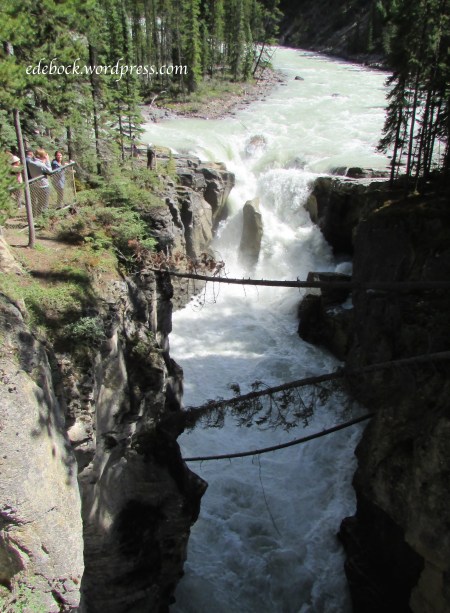
Another 25 km (15.5 miles) down the Icefield Parkway is beautiful Sunwapta Falls. Sunwapta means “turbulent water” in the language of the Stoney First Nations people.
Columbia Icefield
Another 49 km (30 miles) southward brings you to the Columbia Icefield Discovery Centre at the foot of the Athabasca Glacier. Entering the Discovery Centre was like visiting West Edmonton Mall at Christmas time or a Tokyo subway station at rush hour as tourists from around the world crowded in to purchase tickets to the various tours and adventures in the area! If you visit, however, descend the staircase to the lower level where things are a lot quieter. There you will find a fascinating display of historical photos and a diorama that provides an excellent overview of the entire ice field.
Straddling the Continental Divide along the Alberta/British Columbia border as well as Jasper and Banff National Parks, the Columbia Icefield is the largest ice field in the Rocky Mountains and one of the largest non-polar ice fields in the world. Meltwater drains to three oceans – the Atlantic, the Pacific, and the Arctic via three great river systems – the Saskatchewan, the Columbia, and the Athabasca.
The most accessible part of the Columbia Icefield is the Athabasca Glacier. Even though it has receded significantly in recent times, this six kilometre tongue of ice flows to within one kilometre of the Icefield Parkway. During the summer months, adventurous visitors can hike out onto the glacier with a guide or explore it from the comfort of massive all-terrain vehicles. We chose simply to walk up the trail that leads to within metres of the glacier’s edge.
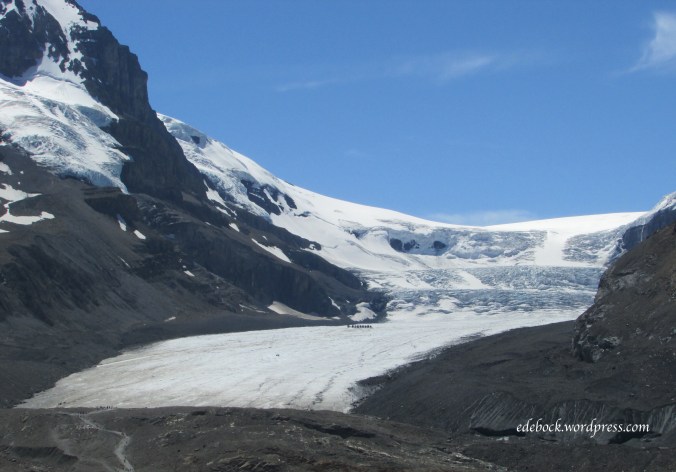
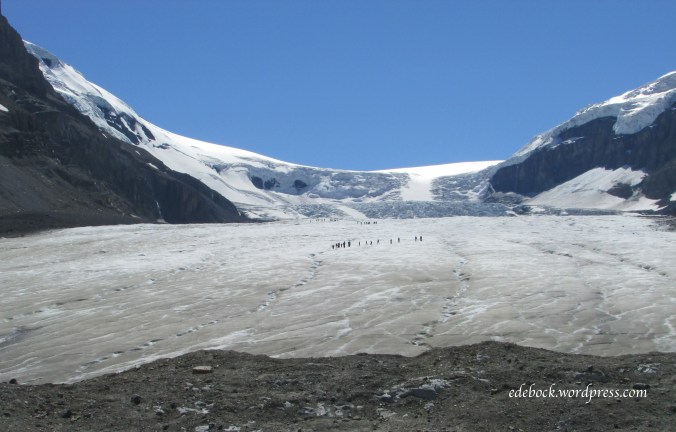
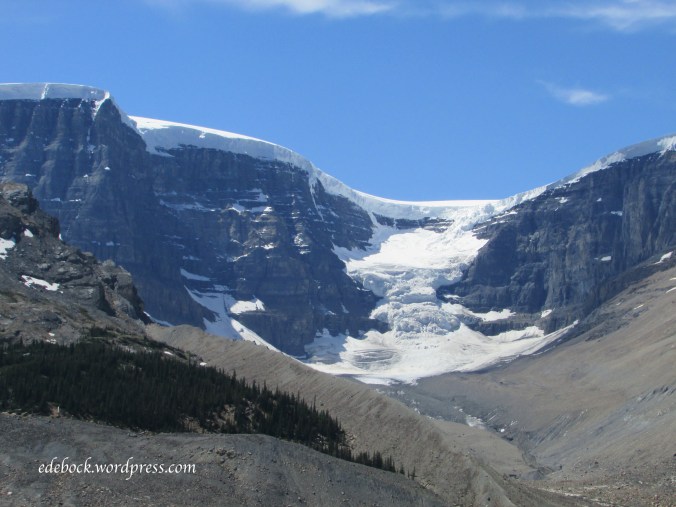
The Athabasca Glacier is only one of many tongues of ice that flow from the massive Columbia Icefield. Right next to it is the Dome Glacier, less accessible, but also impressive. Look at that amazing snow pack atop the ridge! It reminds me of icing on a cake.
Lower Waterfowl Lake
There are numerous glacier-fed lakes along the Icefield Parkway; too many to stop and photograph each one! Lower Waterfowl Lake struck me as one of the most beautiful.
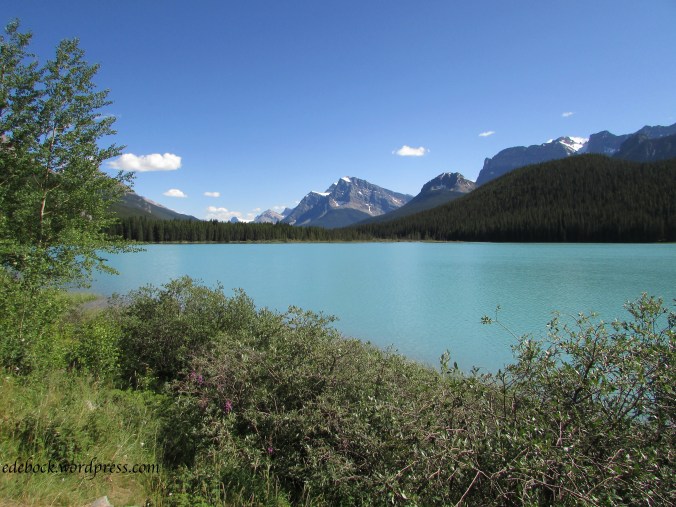
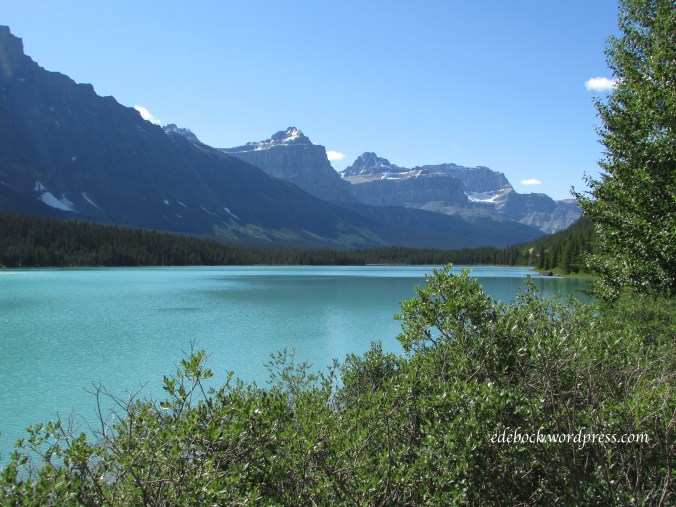
Yes, that truly is the colour of the water! The incredible turquoise colour is the result of glaciers grinding the rock beneath them into a fine powder called rock flour. Meltwater washes this powder into the lakes where it is suspended in the water. These silty waters absorb all the colours of incoming light except the striking turquoise or vivid blue that is reflected back to our eyes.
Lake Louise
If you stopped nowhere else along the Icefield Parkway, world famous Lake Louise is an absolute must! Named for Queen Victoria’s fourth daughter, it is a truly awe-inspiring sight. With Victoria Glacier and an amphitheatre of rugged mountain peaks providing an imposing backdrop, it is a photographer’s delight.


 Following Augustine