If you know me personally or you’ve been reading Following Augustine for a long time, you might recall that my husband and I lived in China for a period of time back in 2013. We lived in the city of Dalian in Liaoning Prefecture and taught English at Liaoning Normal University. It was a wonderful experience and had we not had very elderly parents and very young grandchildren back here in Canada, we probably would have stayed longer.
Over the past few months, I’ve been very happy to notice an increasing number of readers from China finding their way to my blog. If you are one of them, welcome! I’m so glad you’re here!
I have many very fond memories of our time in China. We were fortunate to have the opportunity to travel as tourists to several parts of the country during school breaks and before we returned to Canada, but it was living and experiencing everyday life that we enjoyed the most.
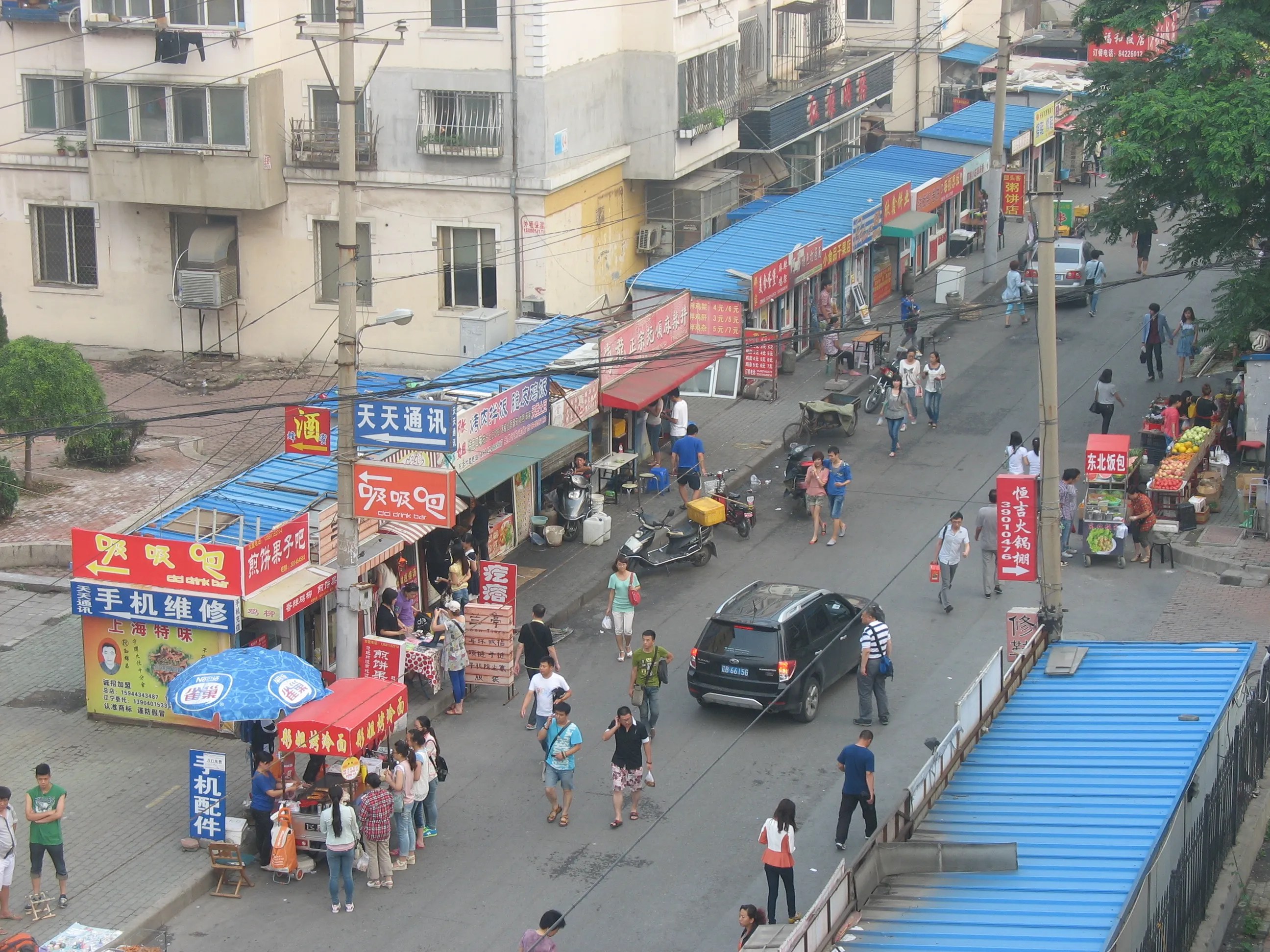
Simply looking out the window of our fifth storey apartment and watching the constant activity on the little street below never failed to fascinate me.
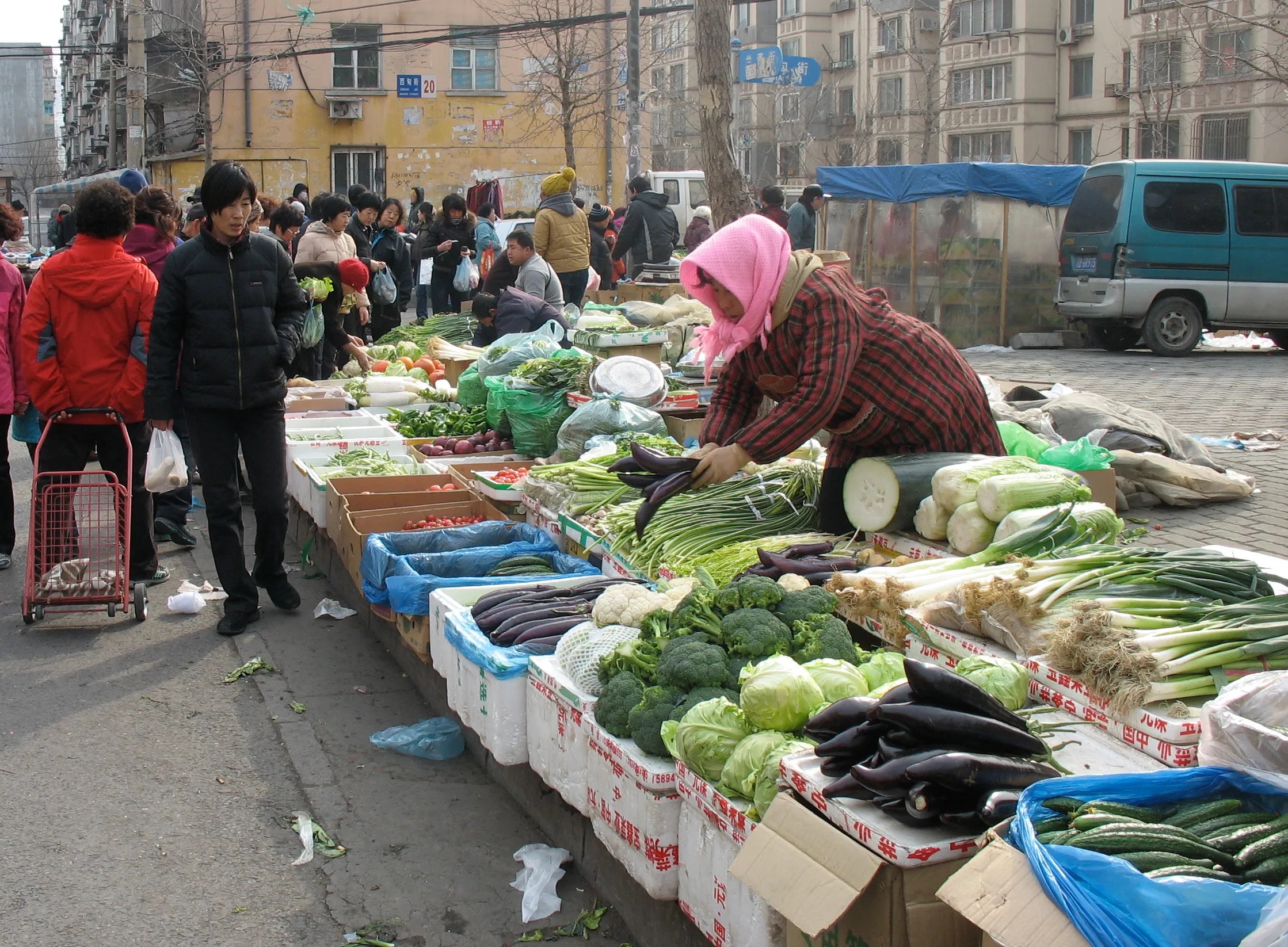
While there was a giant supermarket within easy walking distance, I loved shopping for most of our groceries at the morning street market just around the corner.
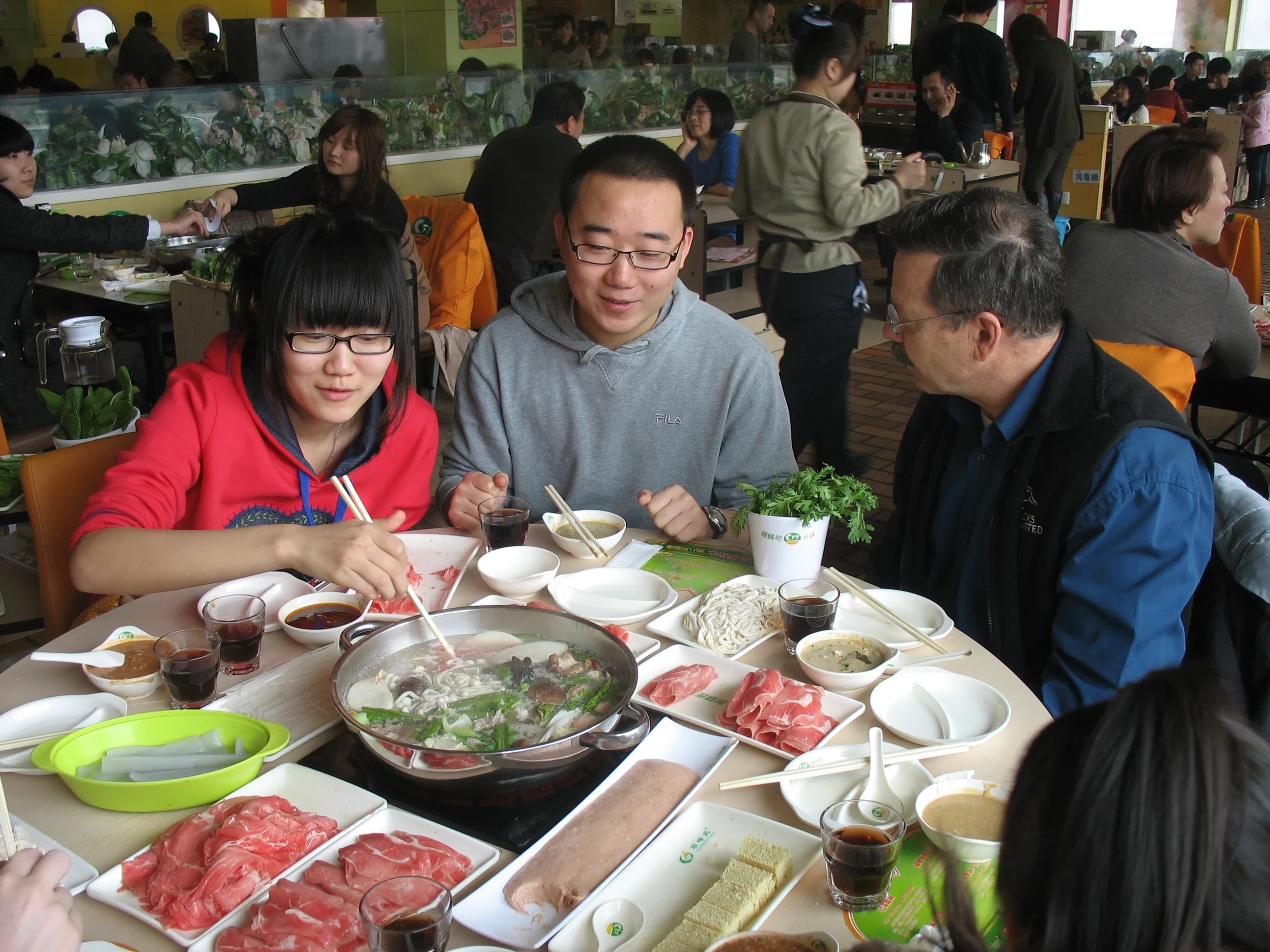
We prepared most of our meals at home, but we also loved eating out. A couple of favourite little restaurants close to home had English menus available, but going out with our students introduced us to many new and unfamiliar foods.
I could go on and on about all the things we saw and experienced, but I’ll just share a couple more memories. If you’re interested in reading more about our time in China, click on “China” under the title “Categories” in the margin to the right if you’re on a computer or below if you’re using your cell phone.
One of my fondest memories will always be the moment I came face to face and hand to paw with a giant panda at the Dalian Forest Zoo.
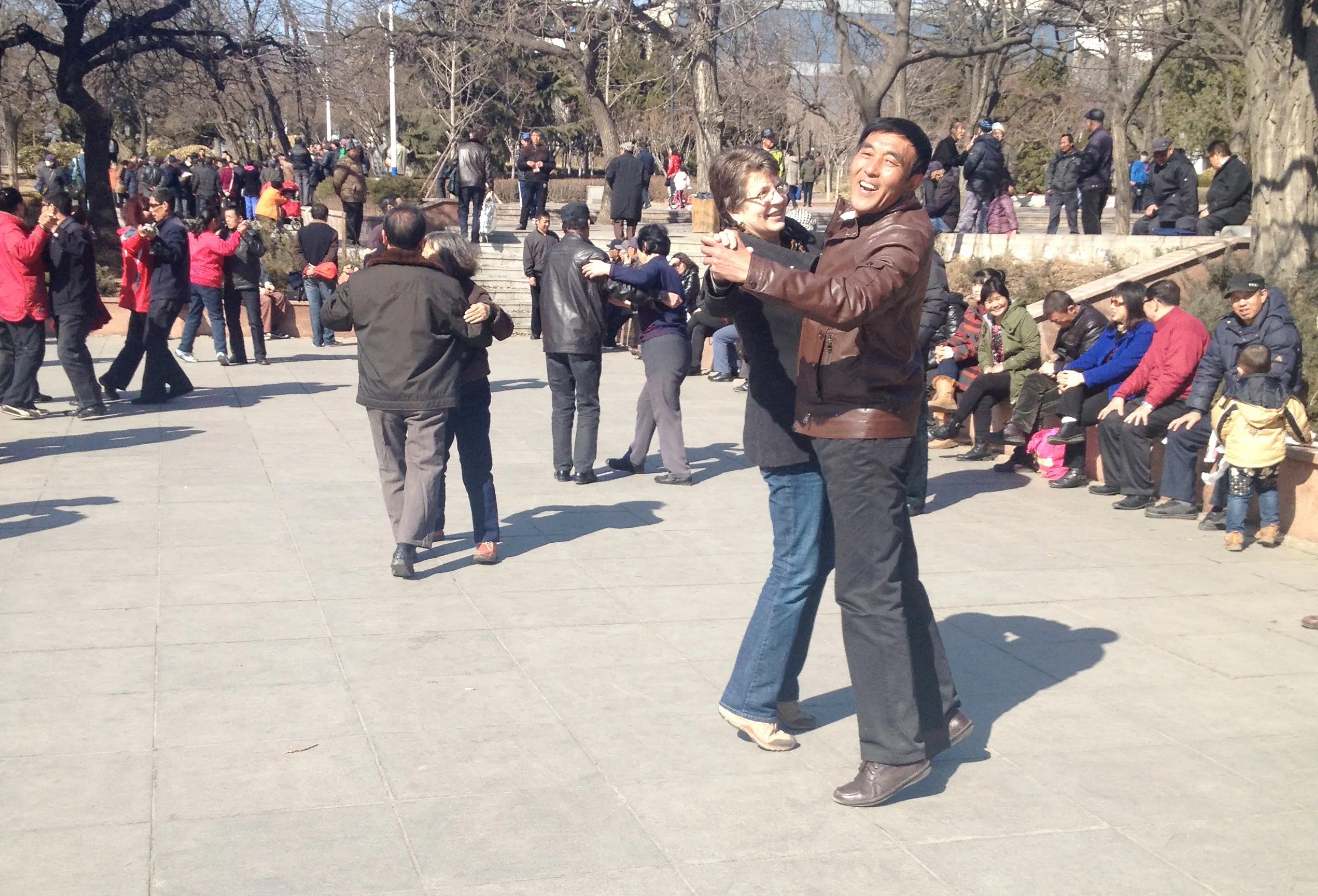
And I will never forget dancing with a stranger on a sunny Sunday afternoon in Zhongshan Park!
If you are reading this from China today, I would love to hear from you! Please leave a comment below or send me an email at debock2@gmail.com.
I’ve always said that our small town is a good place to come home to, so I came home for exactly one week in September before heading to the airport and flying away again! This time. my destination was Ottawa where I spent the weekend attending a CNETS (Canadian Neuroendocrine Tumour Society) conference.
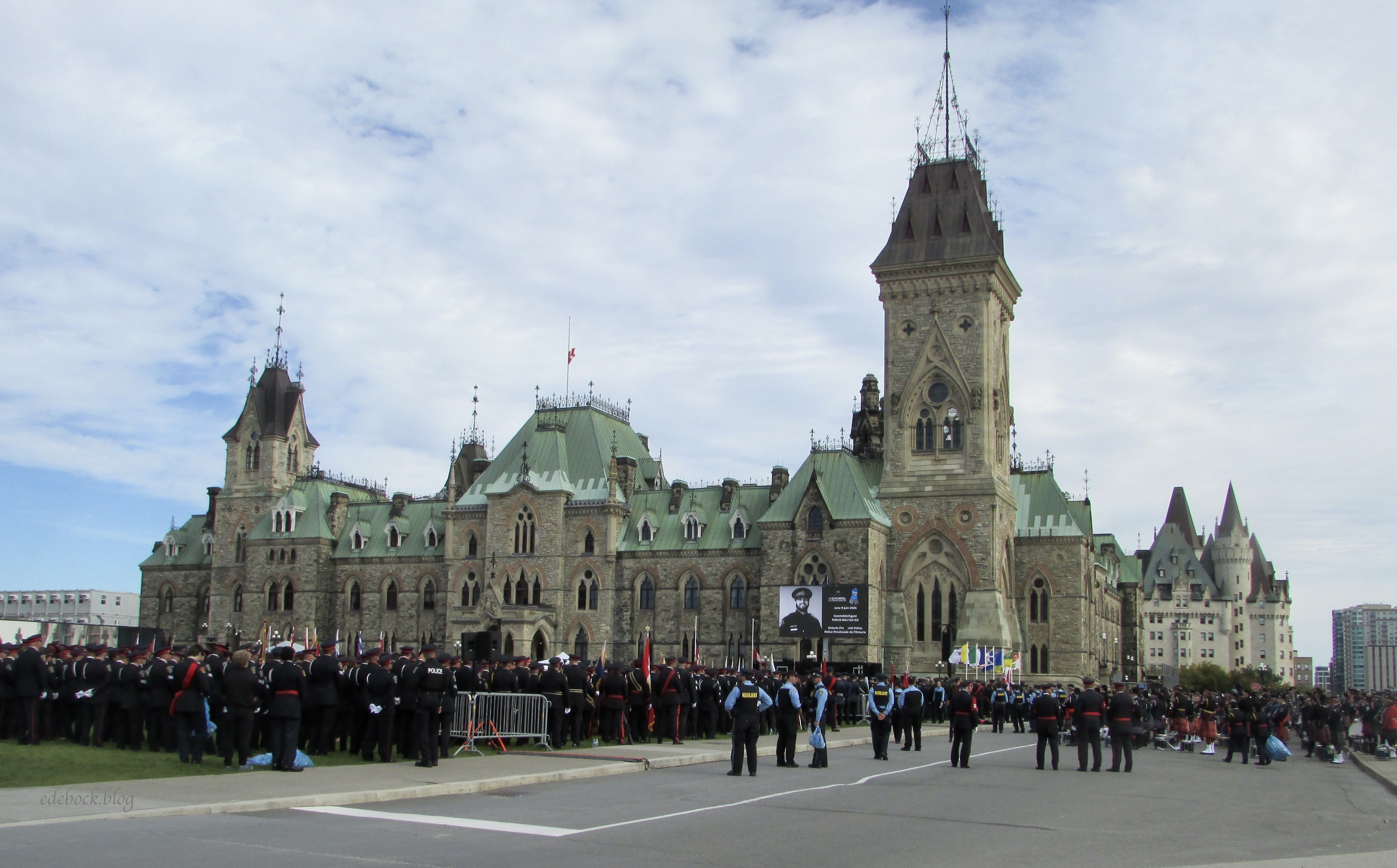
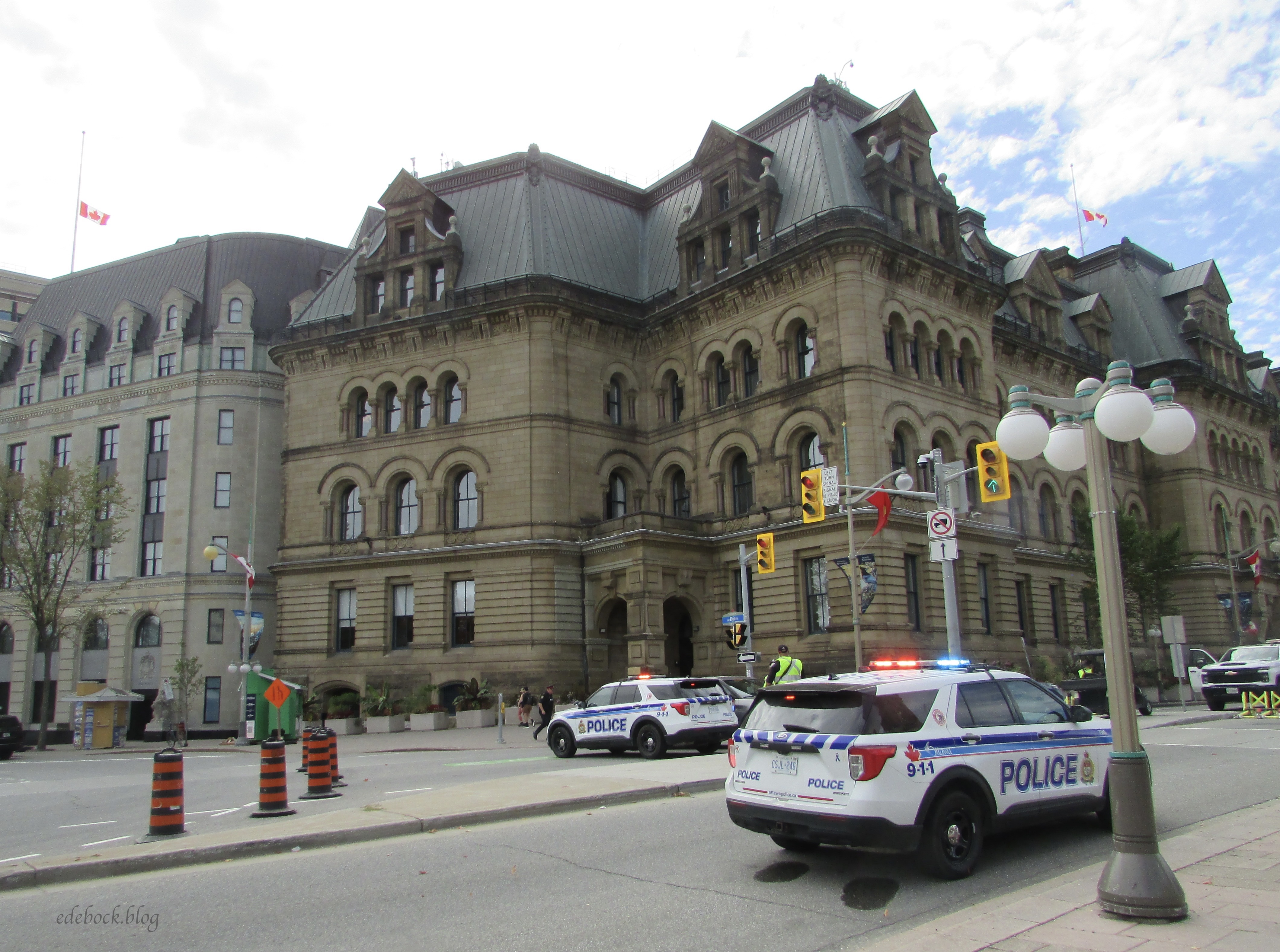
When the conference was over, I spent last Sunday afternoon showing my young Alberta Patient Support Group co-lead some of the sights of Ottawa before she flew back to Alberta. Our hotel was located in the heart of downtown Ottawa, so we set off on foot. As soon as we reached the corner of Wellington Street just a block or two from Parliament Hill, we noticed that the street was closed to vehicle traffic and there were police officers stationed at every corner. Curious, we asked what was happening and discovered that we had happened upon the annual Police Officers’ Memorial commemorating the five Canadian police officers and one correctional services officer who were killed in the line of duty over the past year. That explained the large contingent of police officers from various locations across the country who appeared to have been staying in the same hotel as we were.
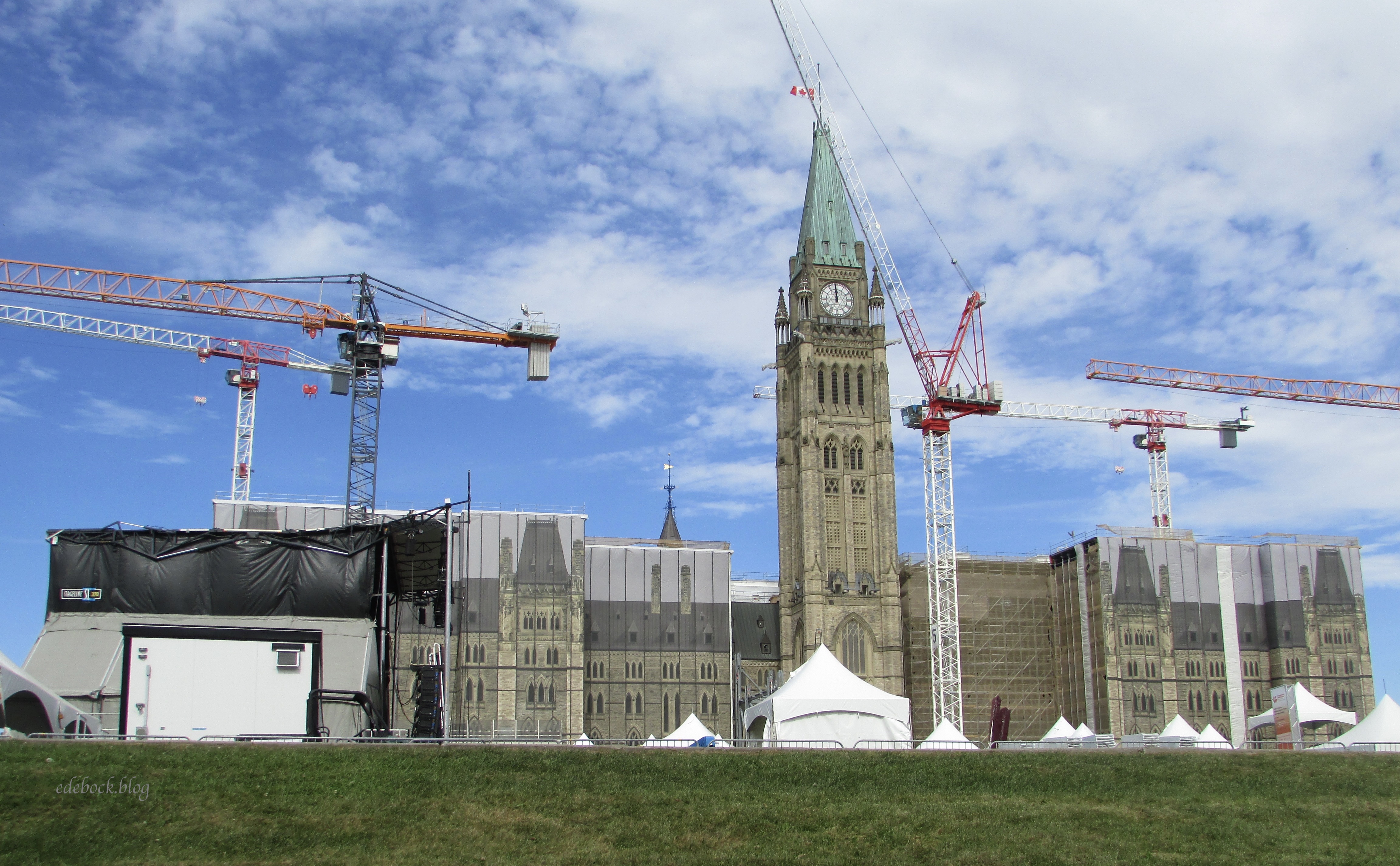
After lingering awhile to pay our respects, we continued on our way. Centre Block, the main building on Parliament Hill which usually houses the House of Commons and the Senate, is undergoing a massive rehabilitation project that started in 2018 and is expected to last until 2031. I liked the fact that the protective enclosures wrapping much of the building while major masonry and structural work takes place is printed with the appearance of the portions that are hidden.
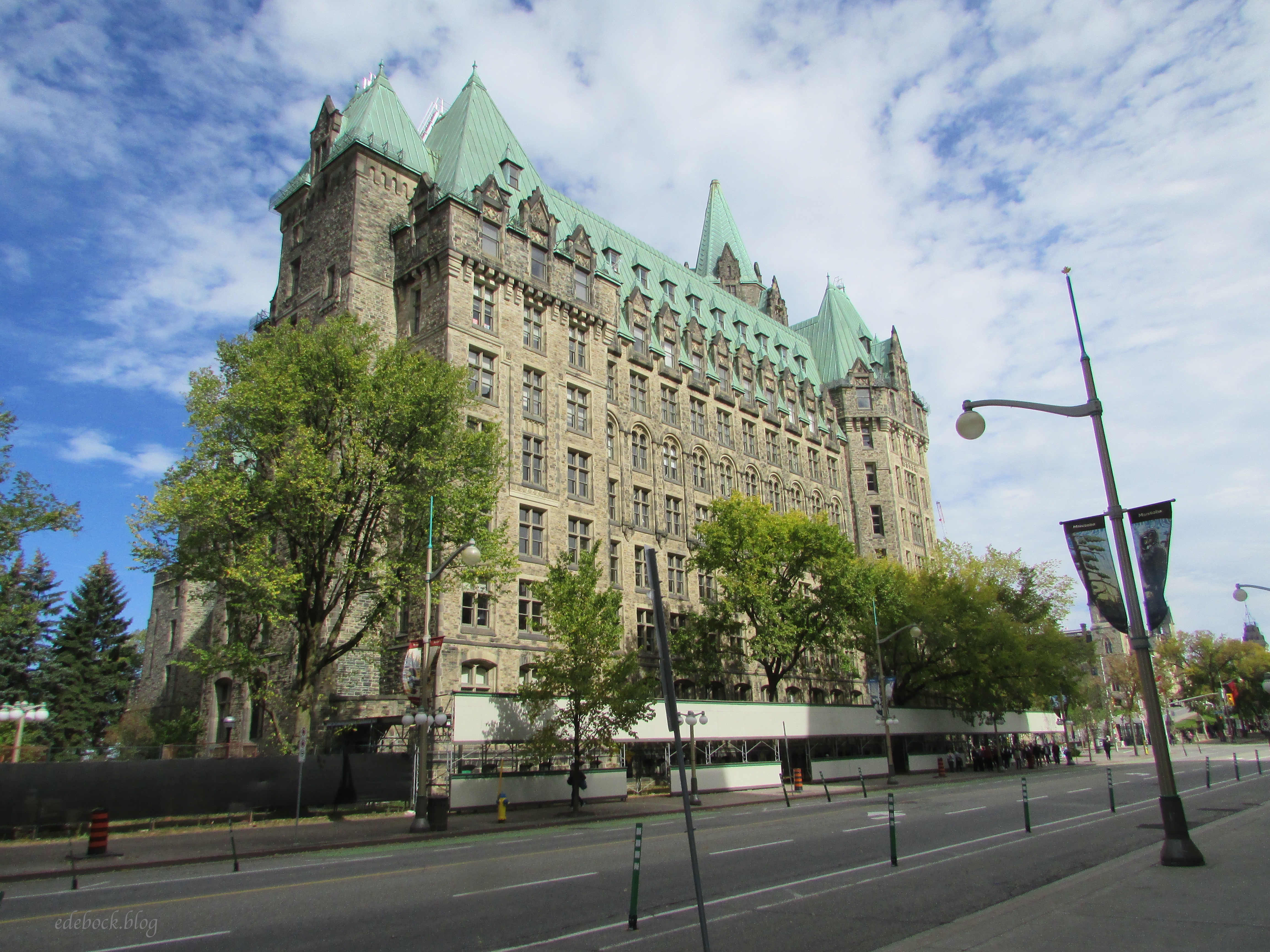
My companion, who had never visited Ottawa before, was visibly impressed by the massive size and the architecture of the buildings on and surrounding Parliament Hill.
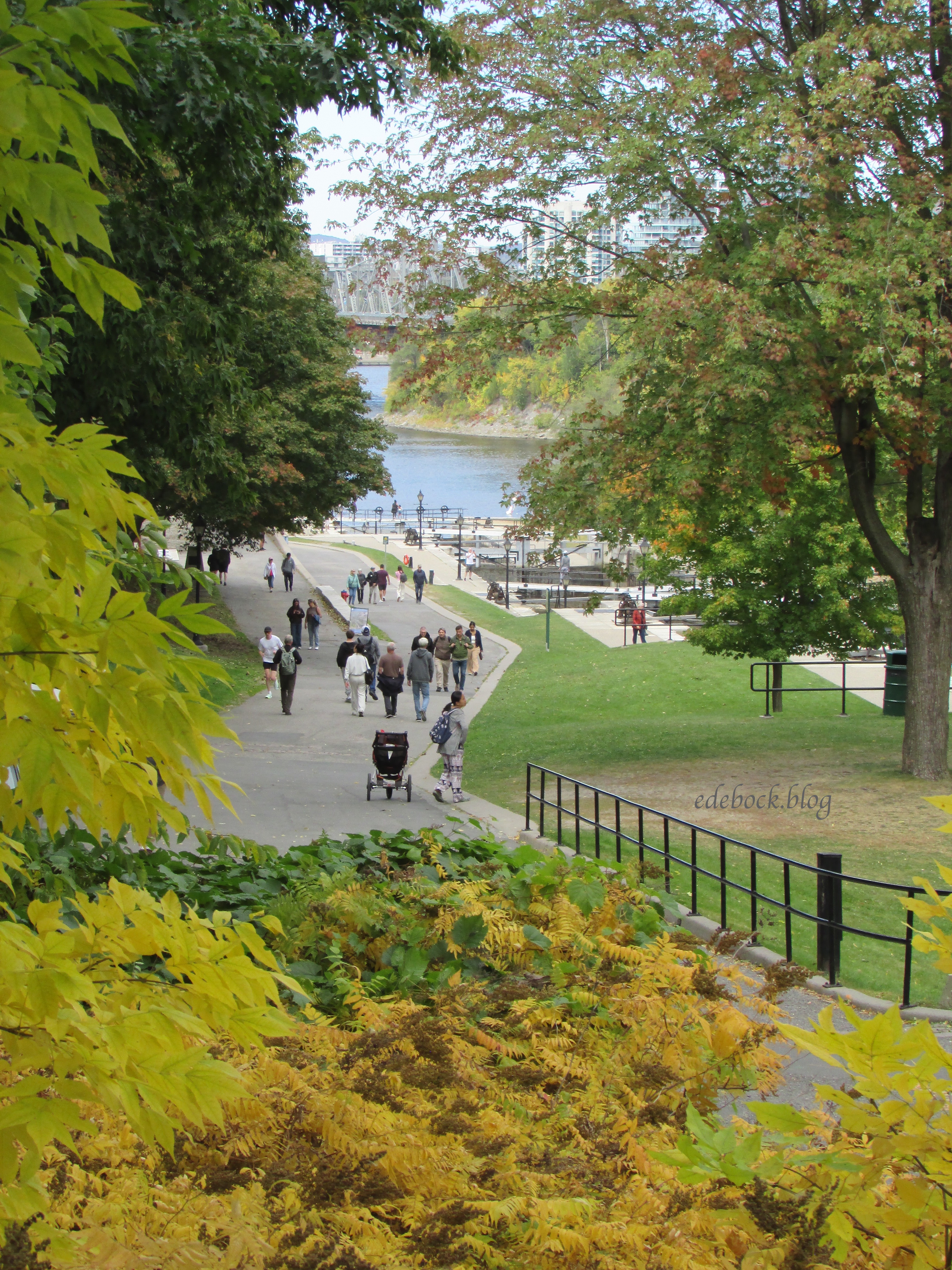
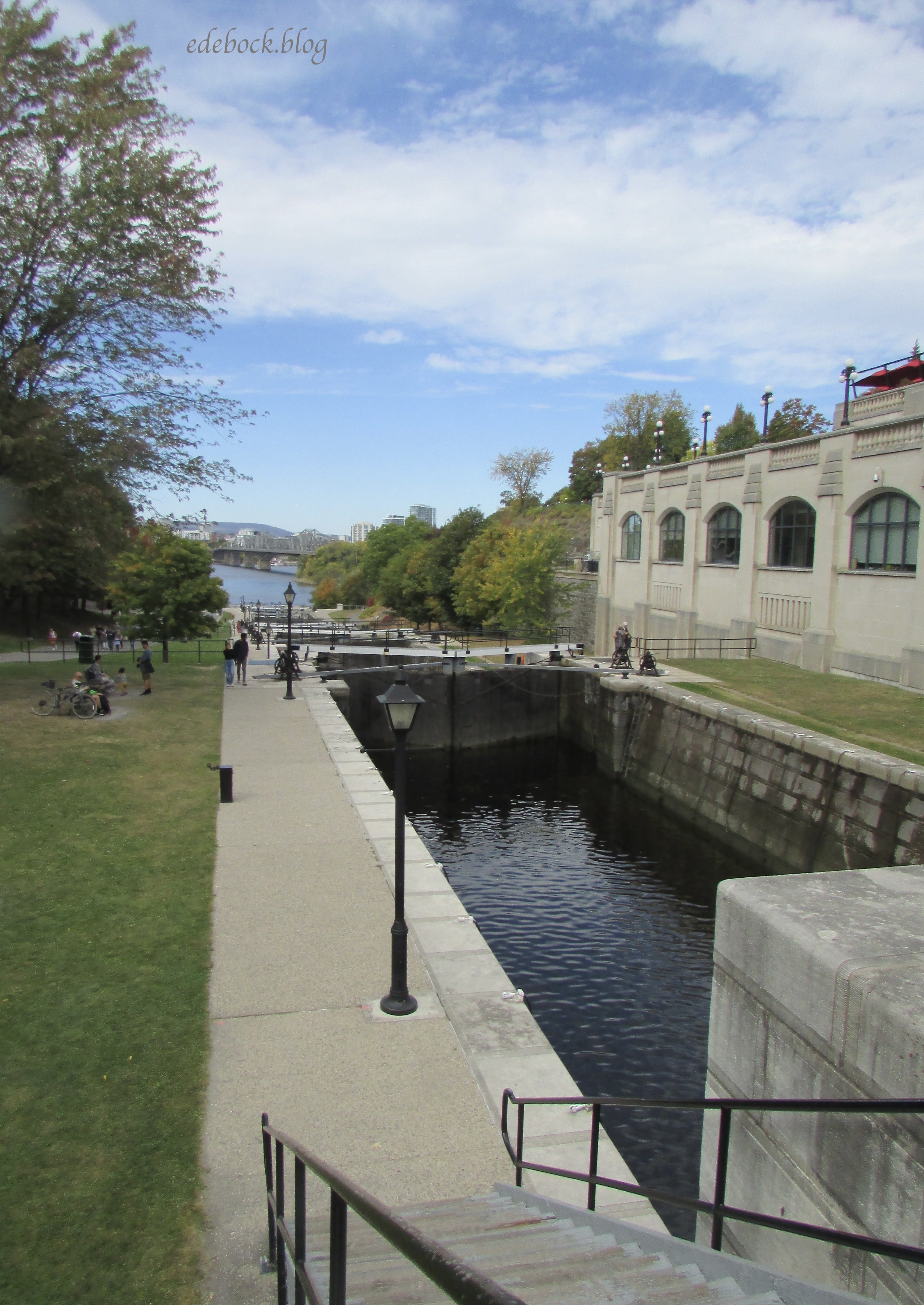
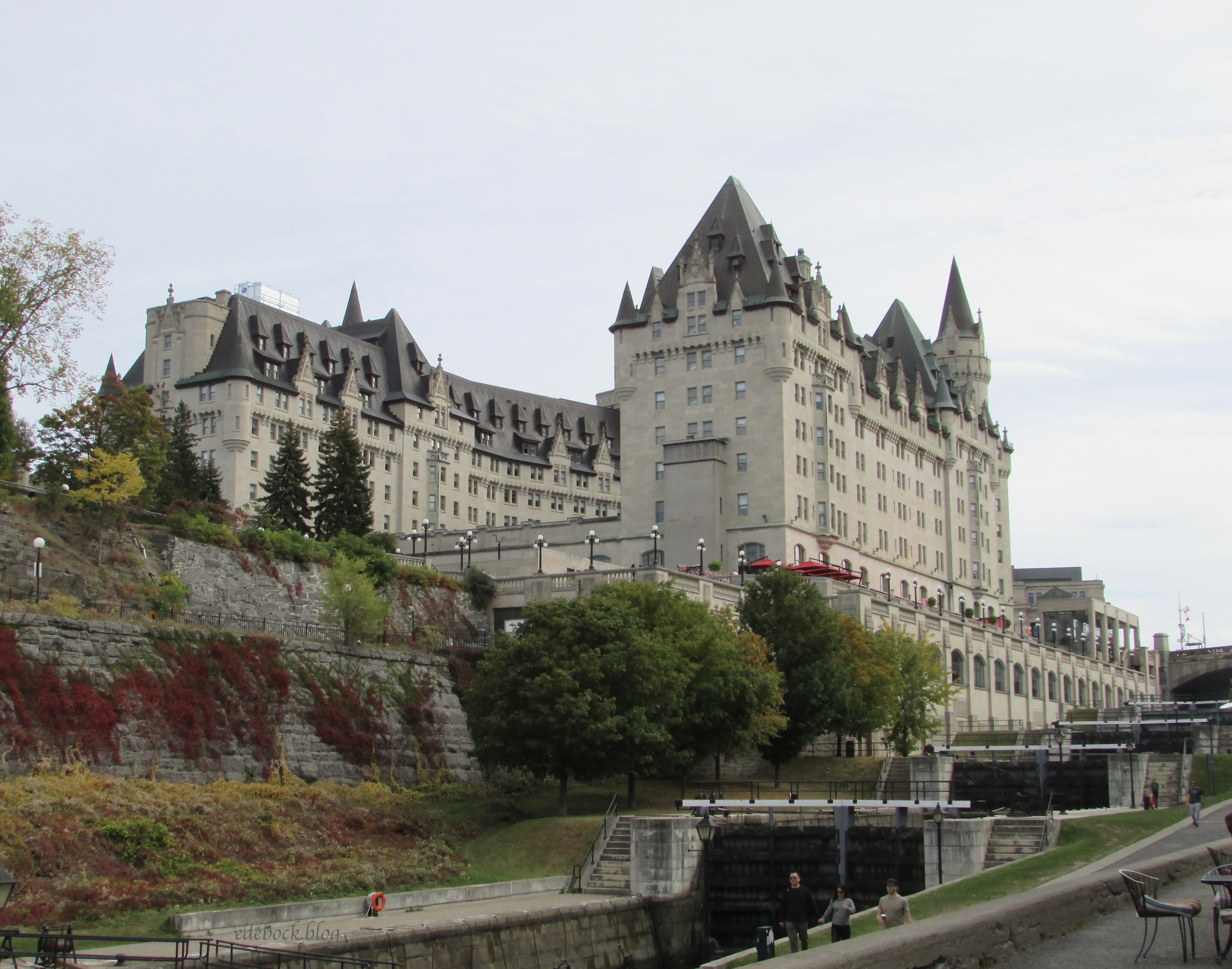
Continuing our walk, we stopped nearby to view the famous flight of eight locks that lower boats from the iconic Rideau Canal down to the Ottawa River. The castle-like Fairmont Château Laurier hotel towers above.
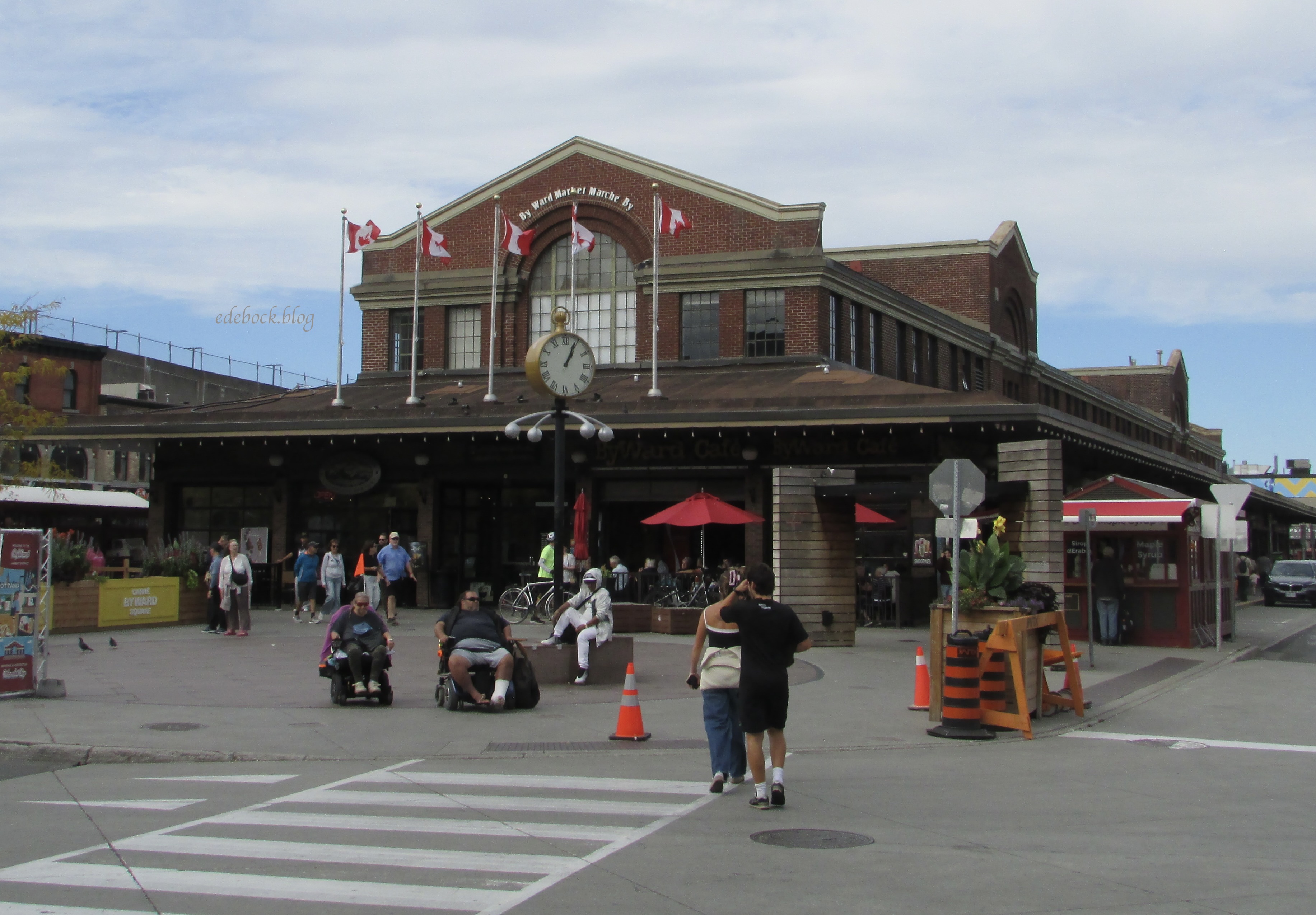
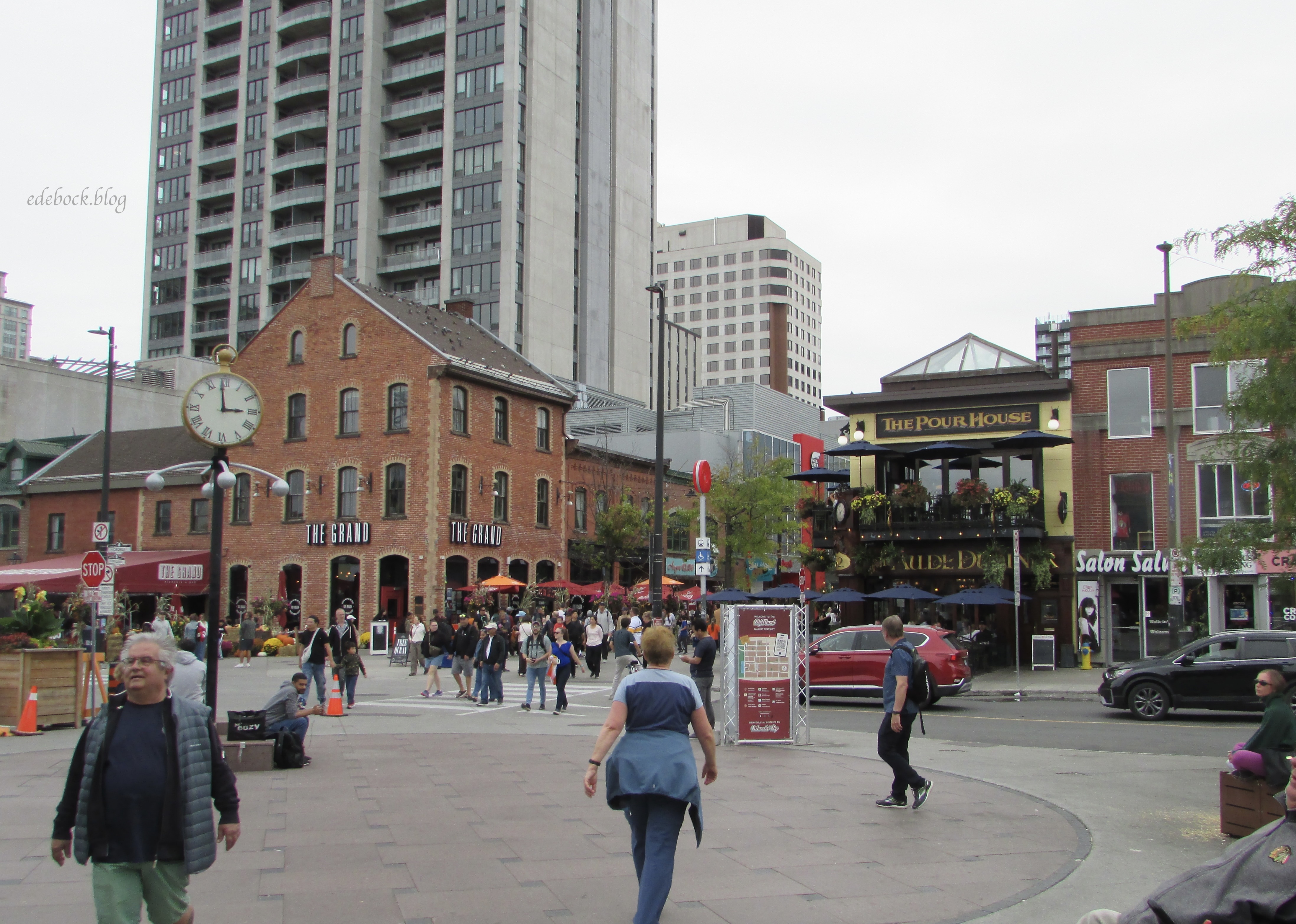
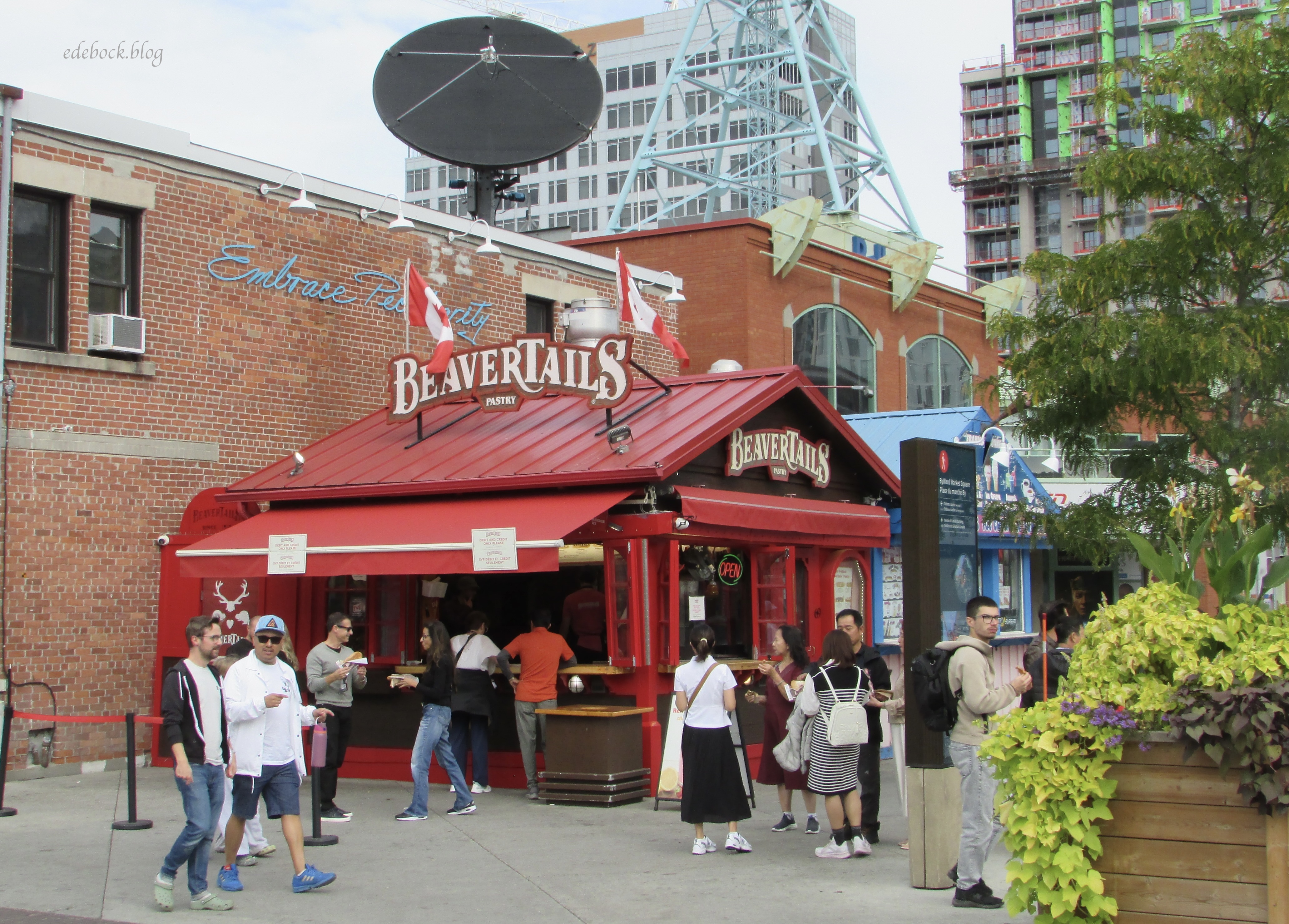
Continuing on, we made our way to the busy ByWard Market district, roughly a four block area that buzzes with shops, eateries and bars. There, we enjoyed lunch on the patio of an Irish pub. Since she is celiac and we’re both diabetic, neither of us indulged in a BeaverTail, the famous Canadian treat made of hand-stretched, deep-fried dough shaped like a beaver’s tail.
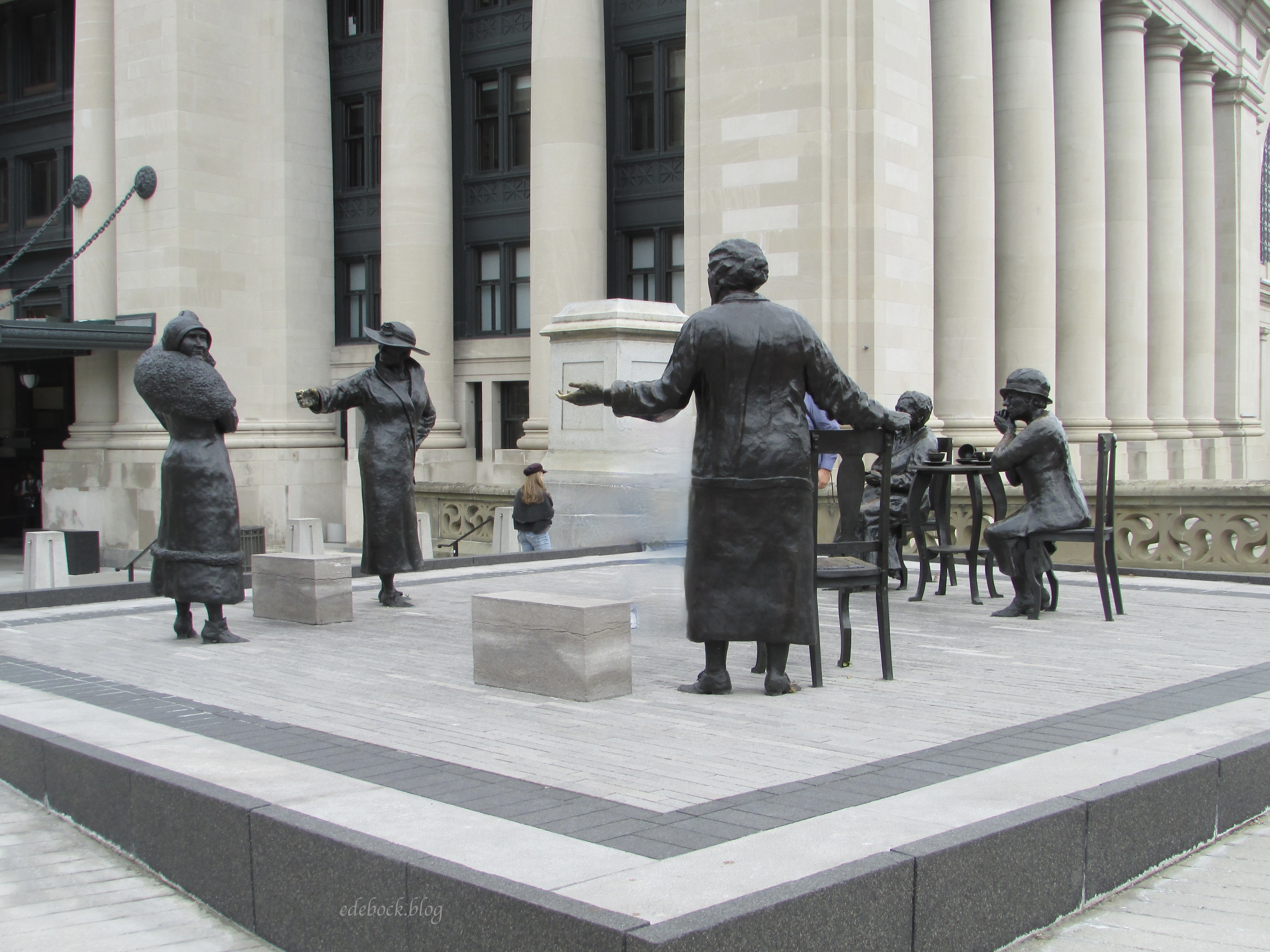
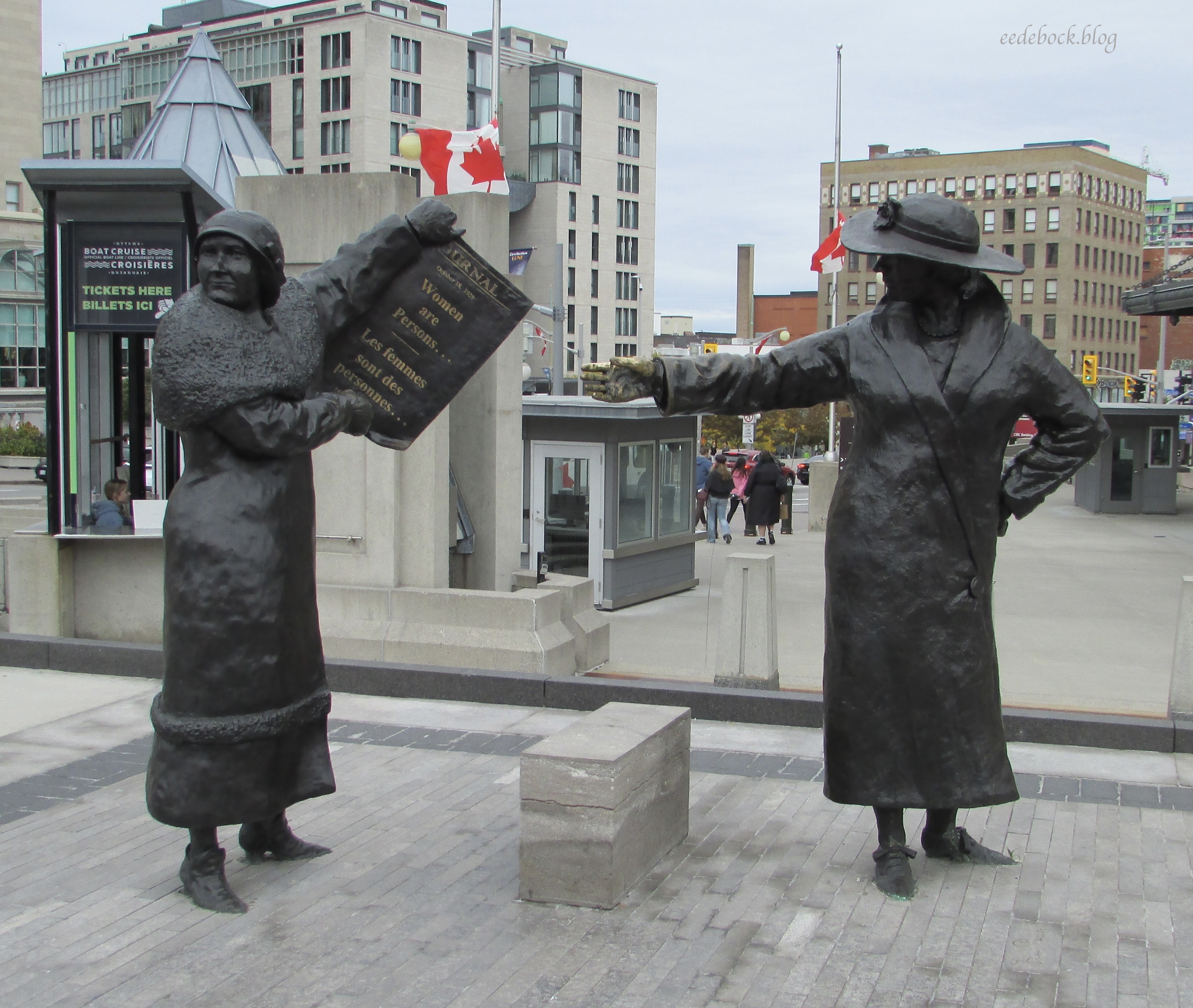
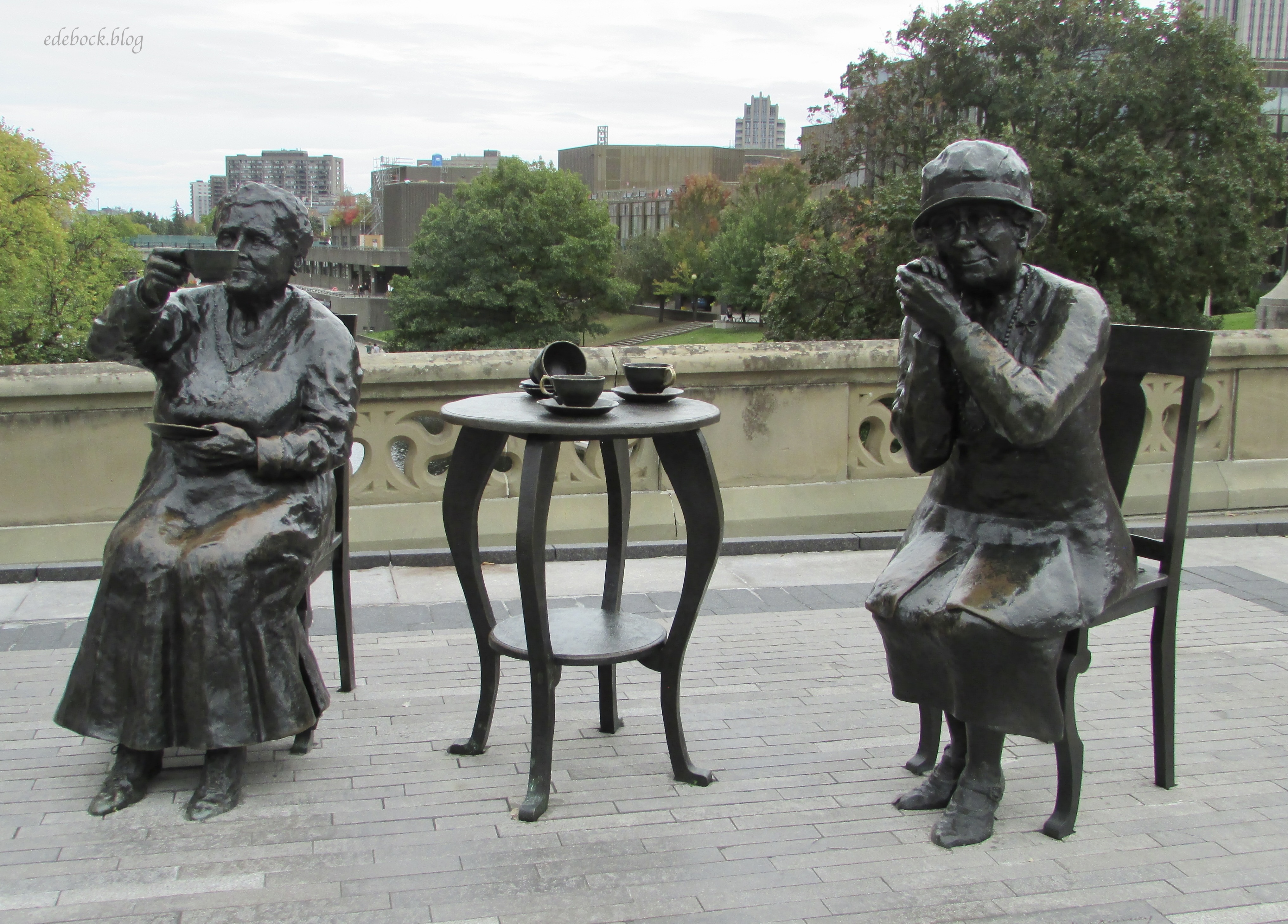
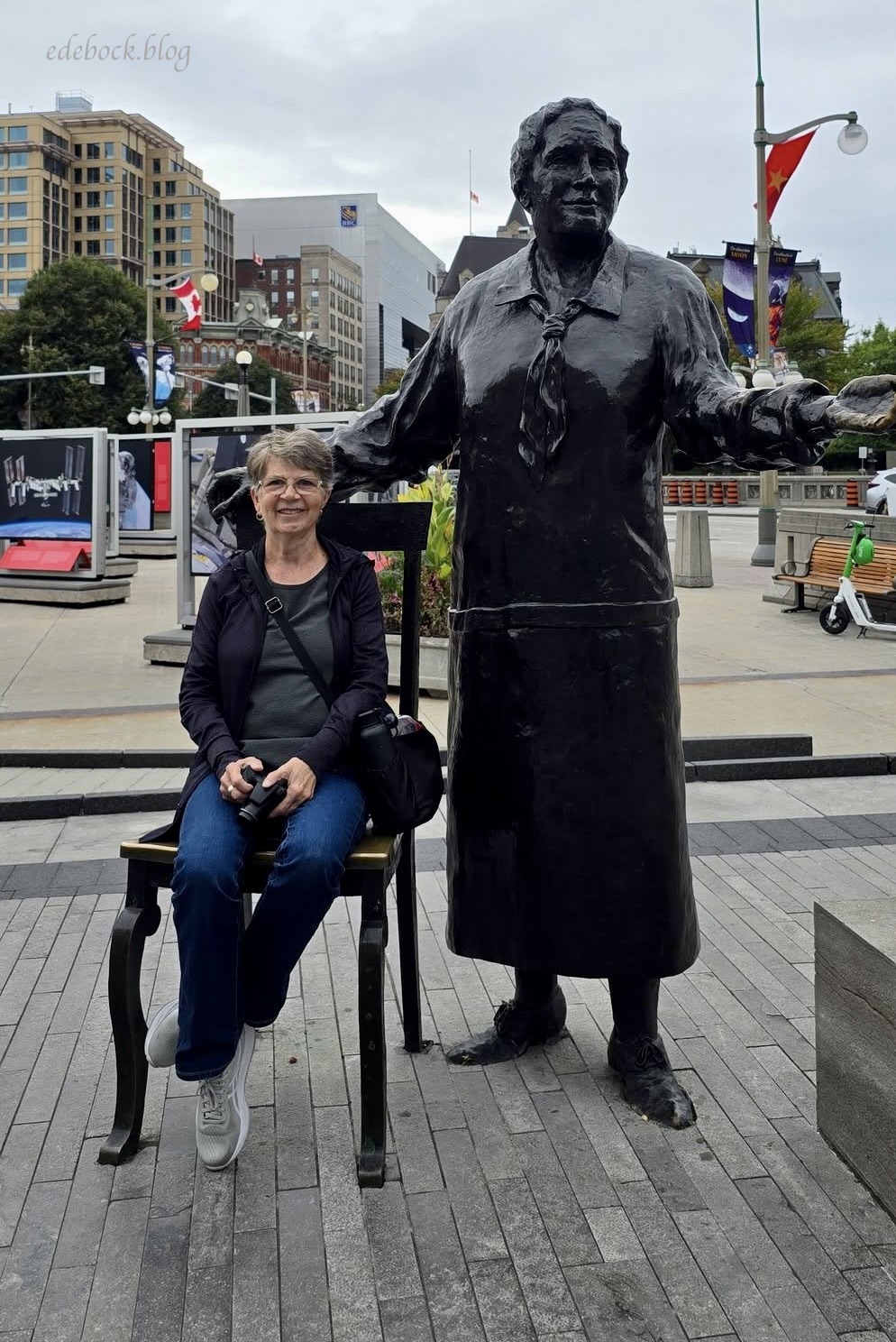
On our way back to the hotel to pick up our luggage, we stopped to look at the Women Are Persons monument that usually sits on Parliament Hill, but which has been relocated for the duration of the renovations. The life-sized, interactive bronze statue depicts the five Alberta suffragists who, in the late 1920s, successfully fought to have women legally recognized as “persons” and eligible to hold public office under Canadian law. The monument depicts Emily Murphy, Nellie McClung, Henrietta Muir Edwards, Louise McKinney, and Irene Parlby as they might have responded when their victory was declared on October 18, 1929.
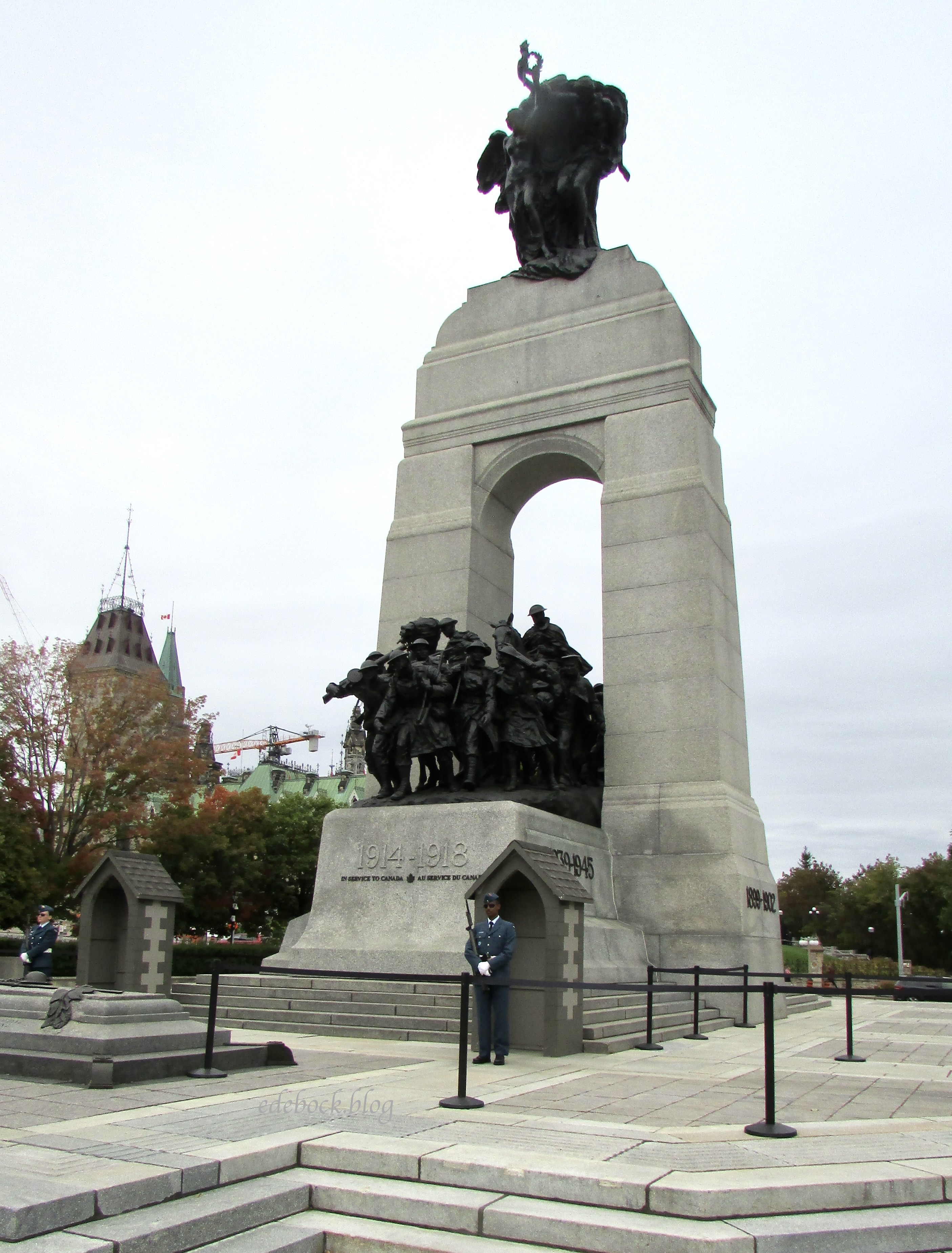
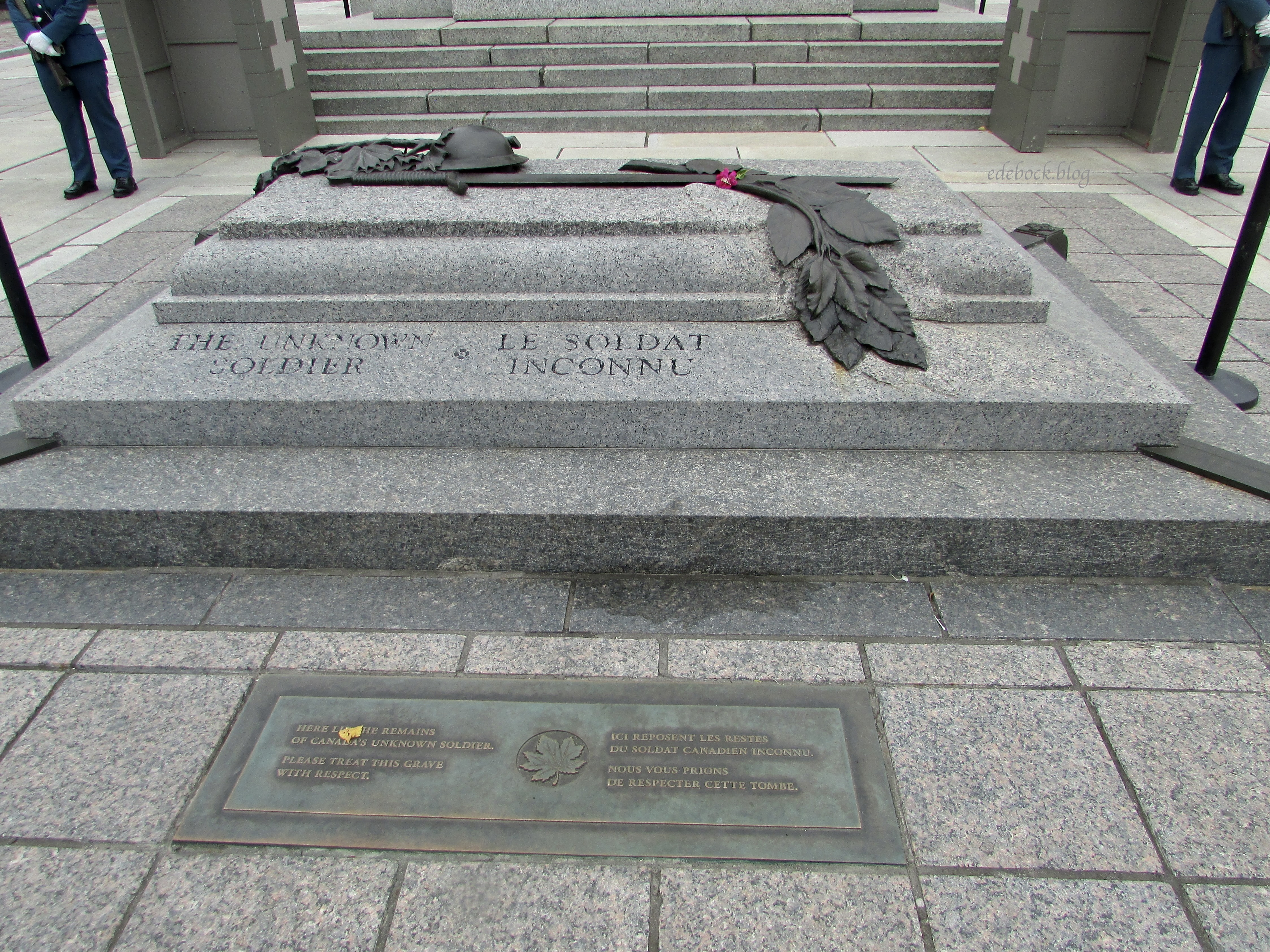
We also stopped at the National War Memorial and paid our respects at the grave of Canada’s unknown soldier.
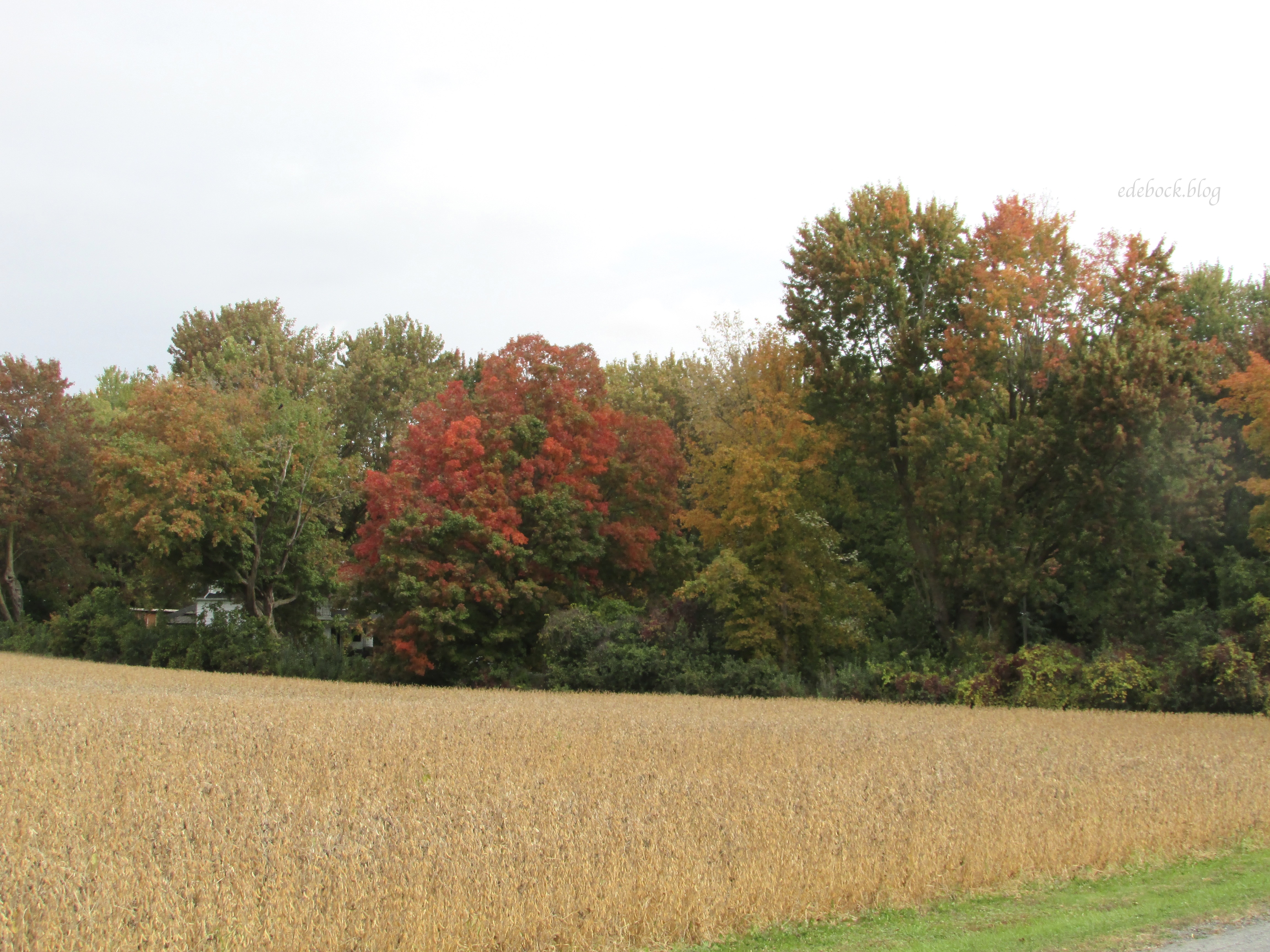
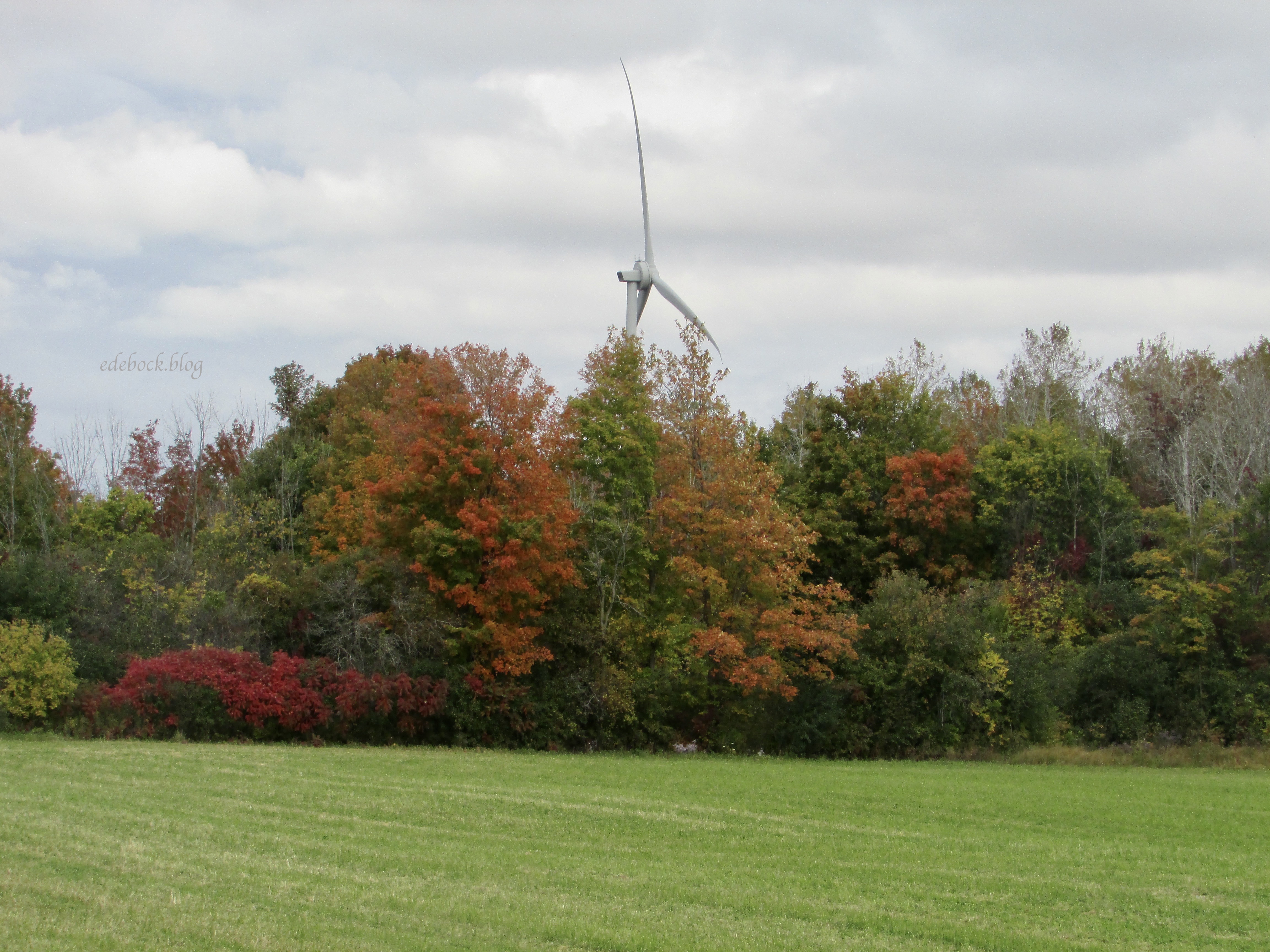
When our mini tour of the national capital was done, rather than flying back to Alberta right away, I picked up a rental car and drove out to the town of Russell, about 40 km southeast of Ottawa, to spend a few relaxing days visiting a friend that I first met 57 years ago when we both lived in Yellowknife, NWT. Although the sun refused to shine while I was there, we enjoyed some lovely drives around the countryside to see the colourful autumn leaves.
As I mentioned at the beginning of this post, our small Alberta town is a good place to come home to, but we still have a couple of shorter, much closer to home trips to make. In spite of the fact that the days are getting shorter and the nights colder, we’re going to take the trailer out one more time before hubby winterizes it and then we’re going to be spending Canadian Thanksgiving with our daughter and her family. After that, maybe I’ll stay home for awhile!
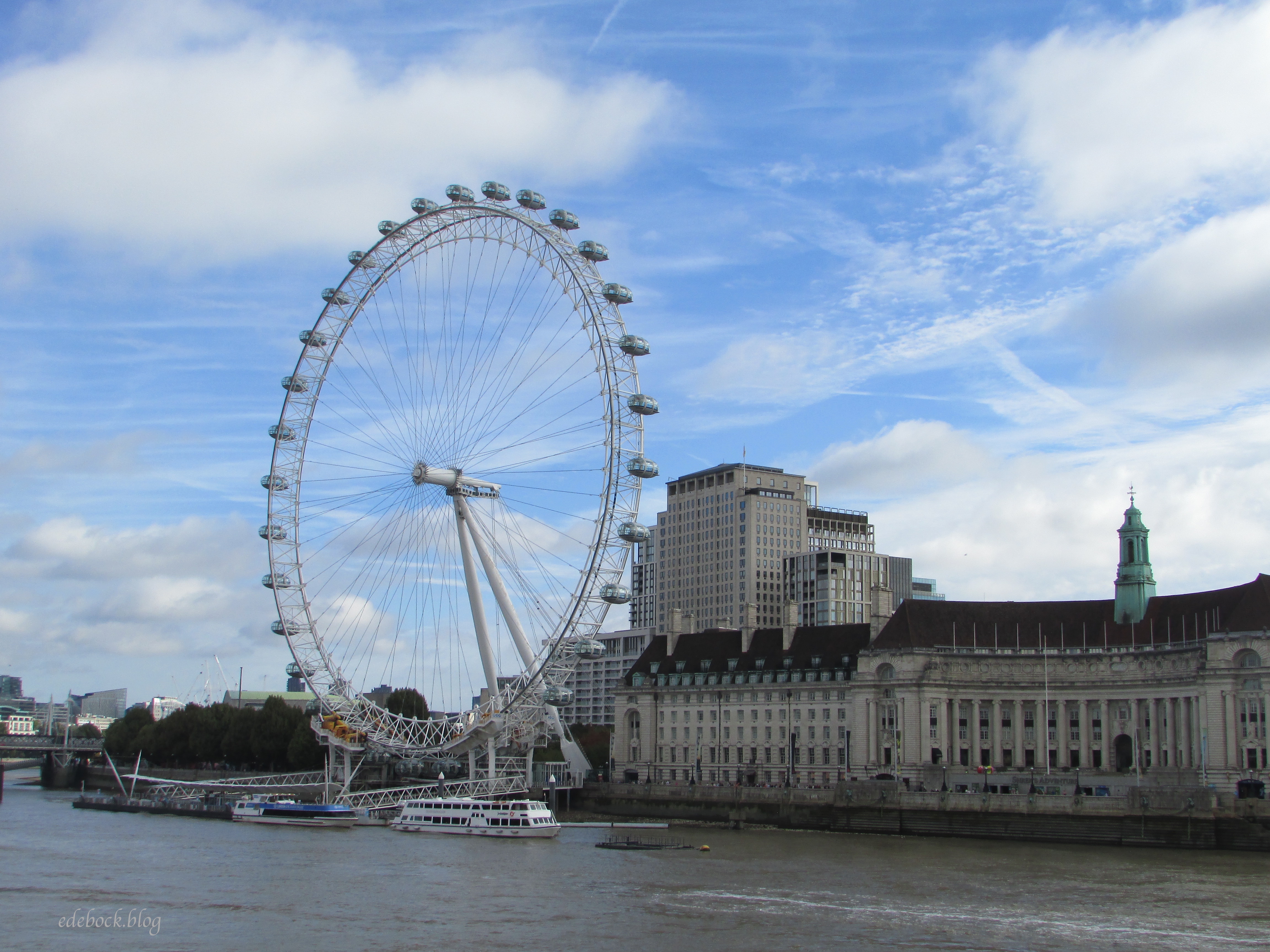
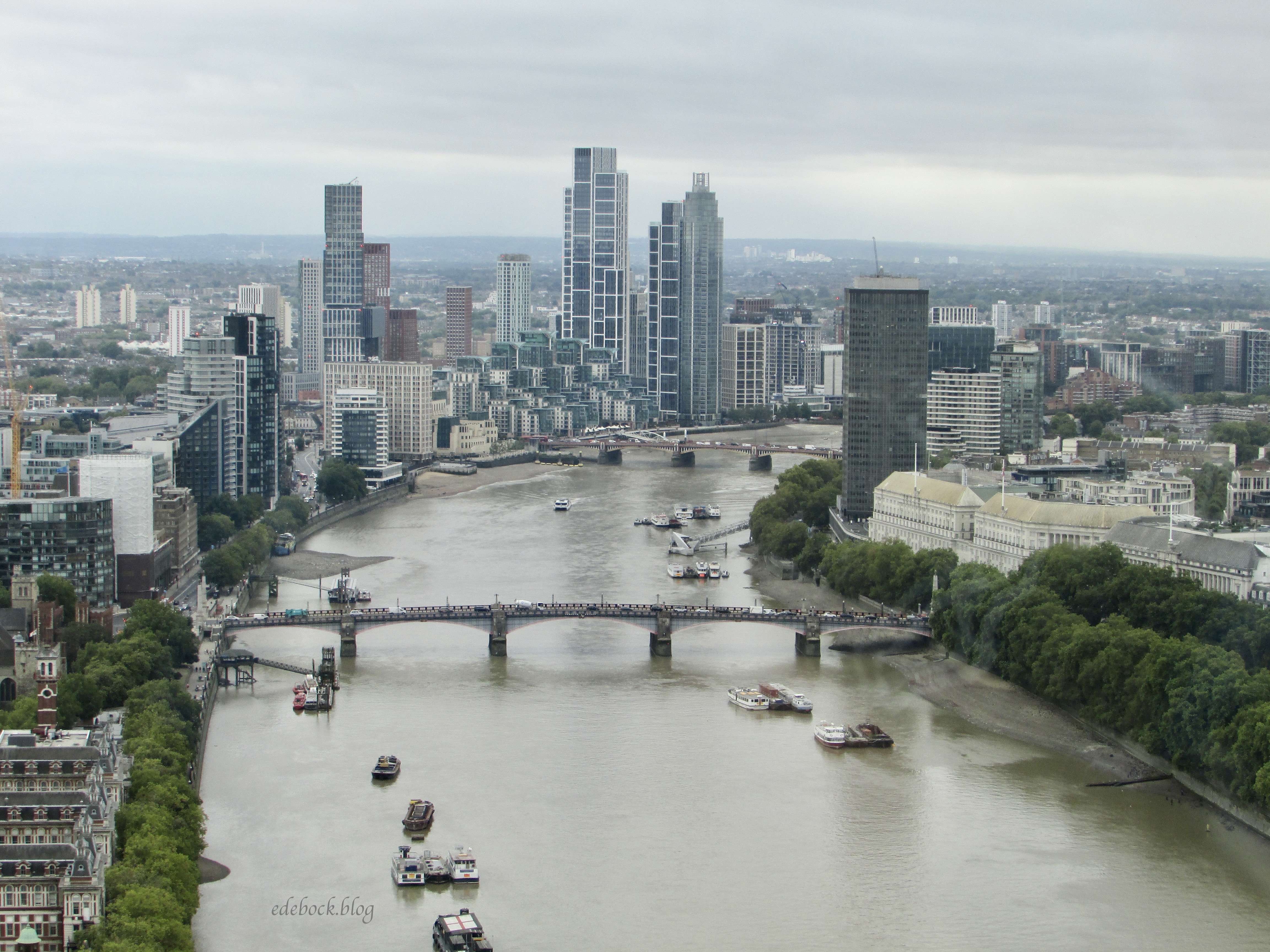
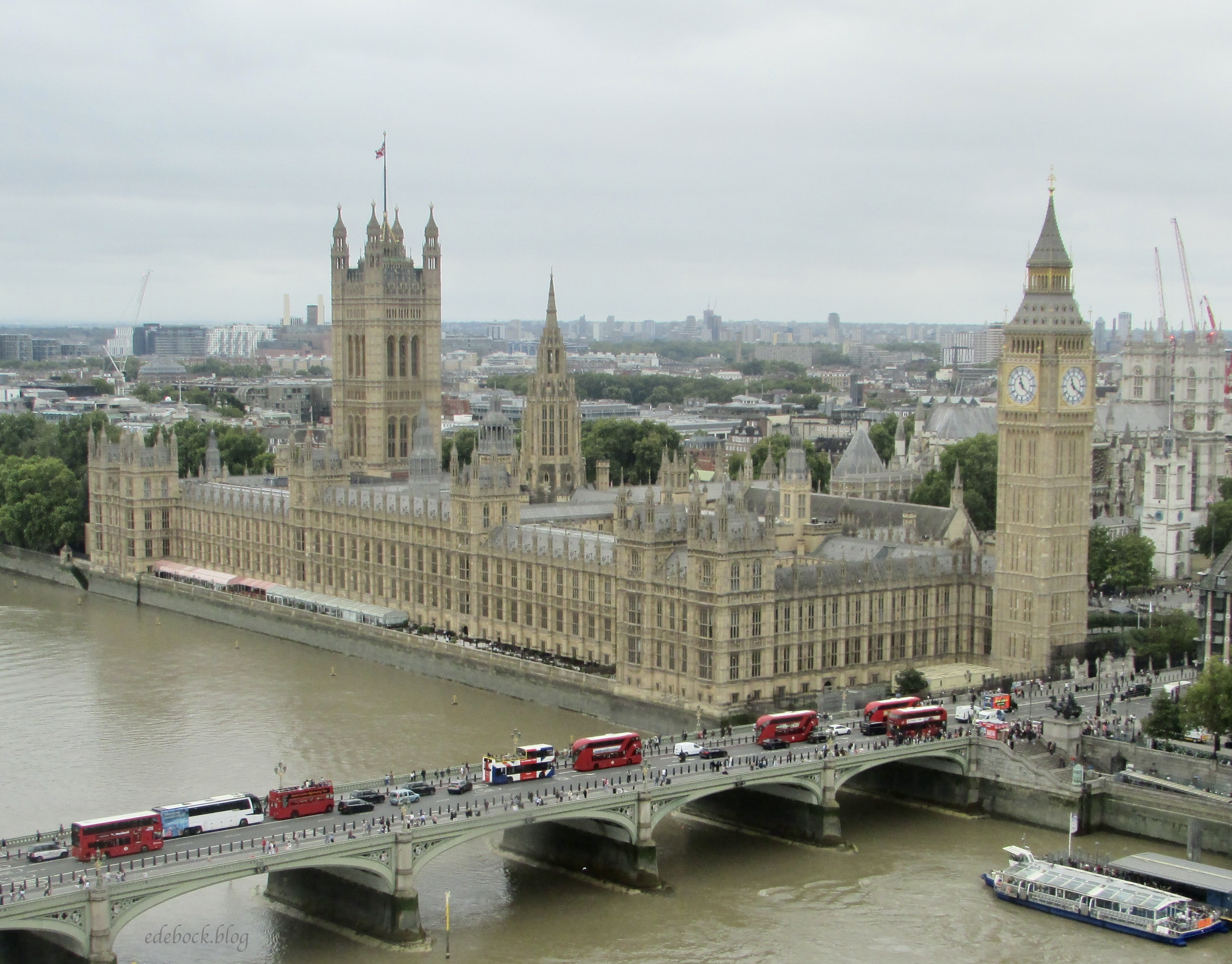
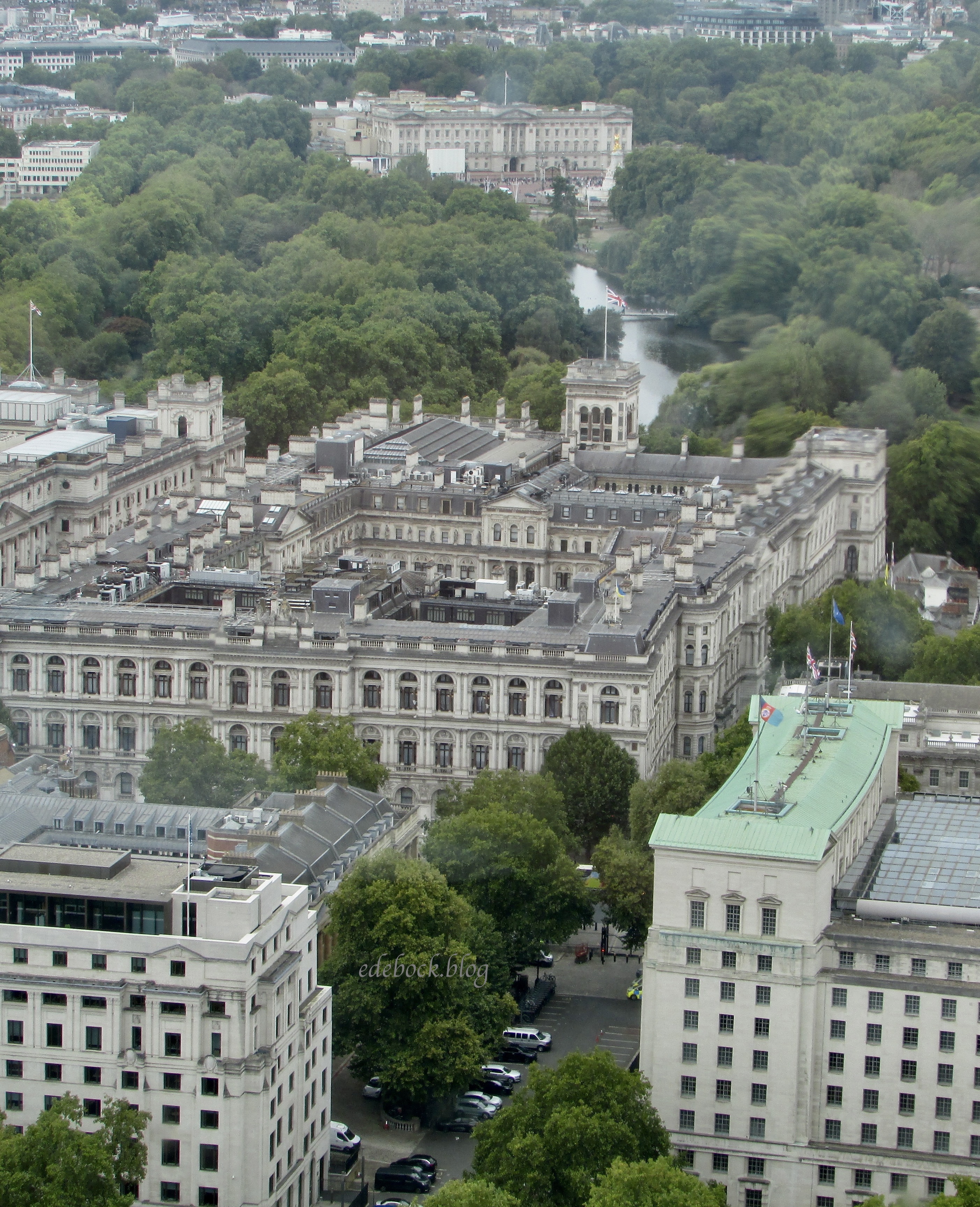
We started our second last day in London with a ride on the London Eye, a 135-meter-tall observation wheel located on the south bank of the River Thames. Each of the 32 pods can hold up to 28 guests, although it was not that crowded yesterday morning. In continuous motion, the wheel moves slowly enough that passengers step on and off while the wheel keeps turning. A full rotation takes approximately 30 minutes and gives passengers an opportunity to enjoy panoramic views of major city landmarks, including Big Ben, the Houses of Parliament, and Buckingham Palace.
In the last picture, that’s Buckingham Palace surrounded by trees near the top of the photo.
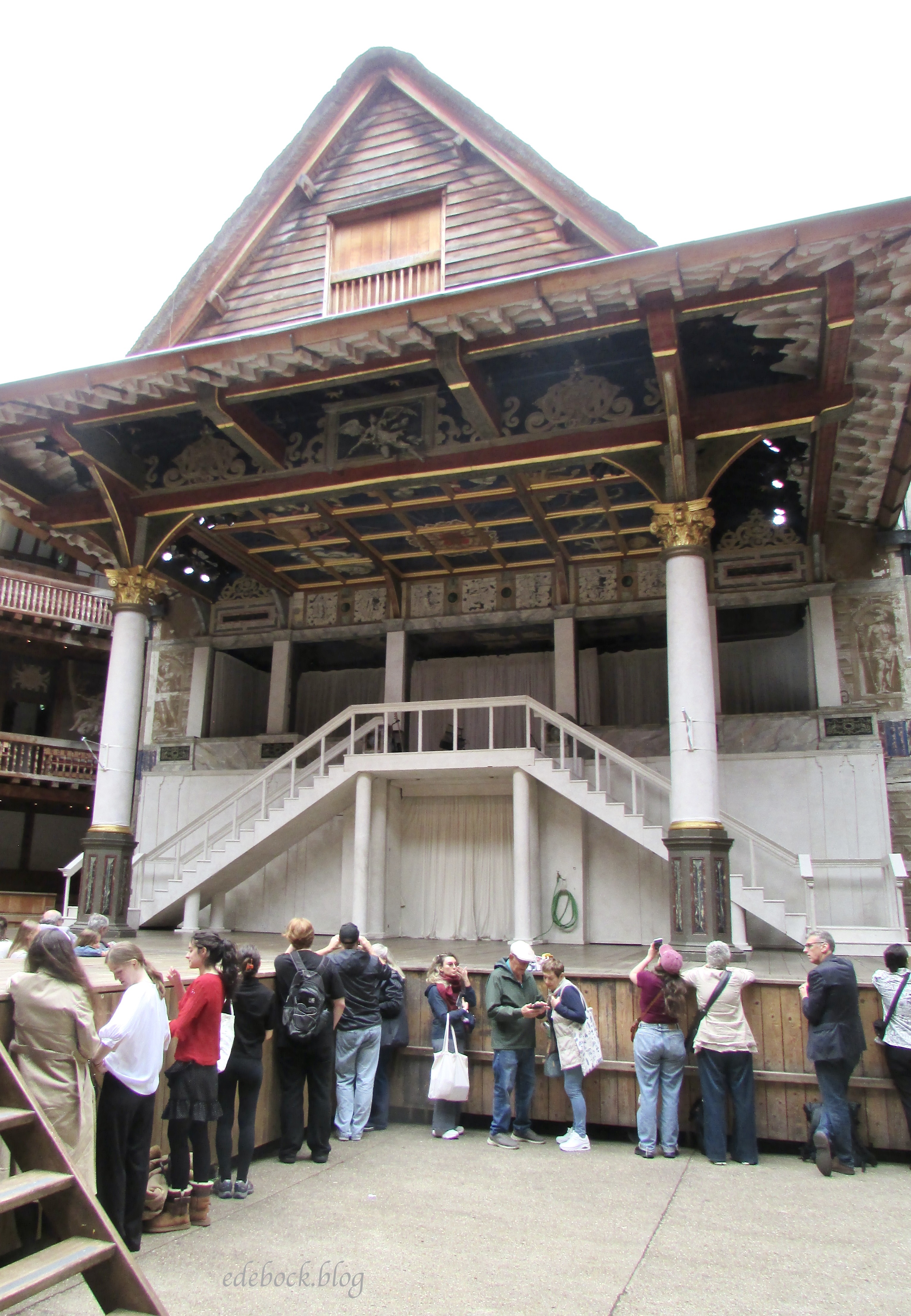
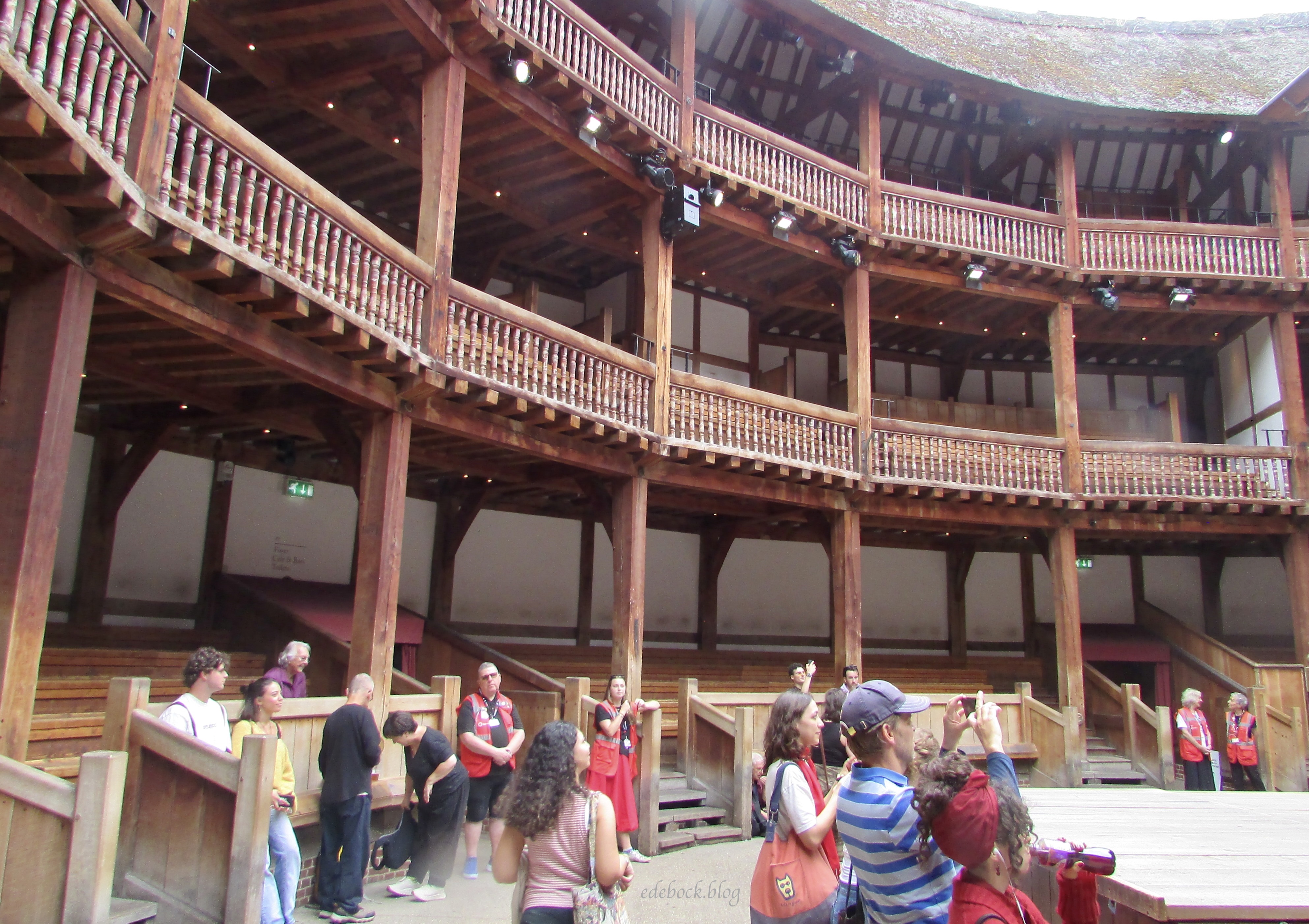
After disembarking from the Eye, we strolled along the Queen’s Walk, a riverside promenade, to the open-air Globe Theatre, a reconstruction of the original Elizabethan playhouse where William Shakespeare staged many of his most iconic masterpieces. There we had tickets to Much Ado About Nothing. The theatre has 870 bench seats on three levels that wrap around the stage, but we were “groundlings”, audience members who stand in the yard directly in front of the stage.
I wasn’t sure how well we’d handle standing for three hours and I think hubby was even more dubious about it than I was, but if you look closely at the last photo, you’ll see that there’s a ledge along the back wall of the yard. We arrived early enough to claim spots there where we could kind of lean/sit and take some of the weight off our tired feet and legs. I’m not sure that the much more expensive wooden gallery seats would have been any more comfortable and as you can see, we were still positioned very close to the stage. While we waited for the show to begin, we enjoyed a great visit with the couple next to us who were retired teachers from Portsmouth on England’s south coast.
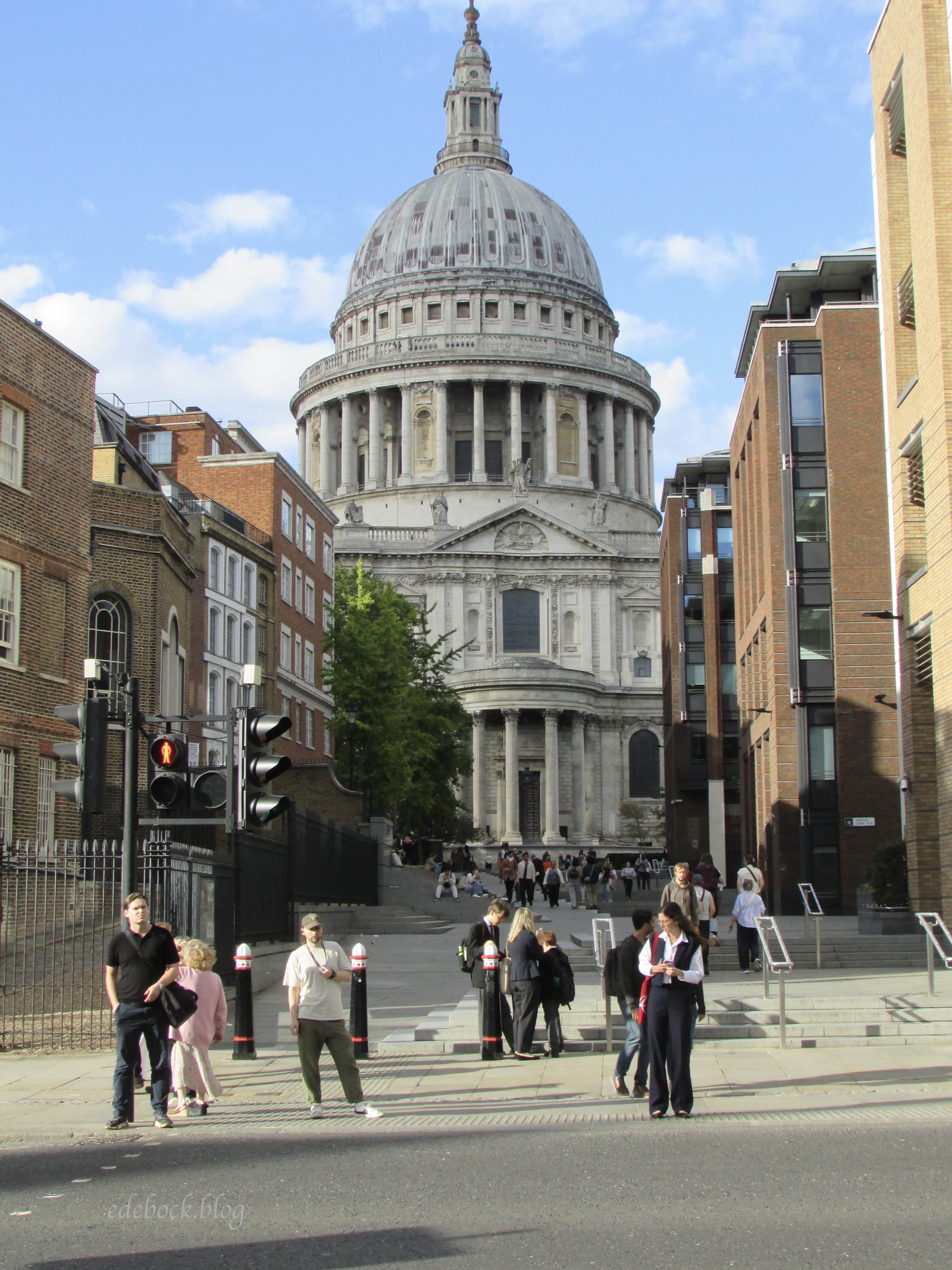
When the play was over, we crossed over the Millennium Bridge, a steel suspension footbridge over the River Thames. St Paul’s Cathedral was directly in front of us and we were heading for the nearby tube station to return to Notting Hill, our home away from home. It was by now, just a few minutes before 5:00 PM and as we passed by the cathedral, I noticed a sign telling us that the Choral Evensong service was about to start. What a great opportunity to see the inside of the enormous church! The service was short, only about half an hour in length, and as in Westminster Abbey on Sunday, we thoroughly enjoyed listening to the pipe organ and the choir. Arriving at last minute as we did, we weren’t seated where we could see the officiants, but we were directly under the massive dome!
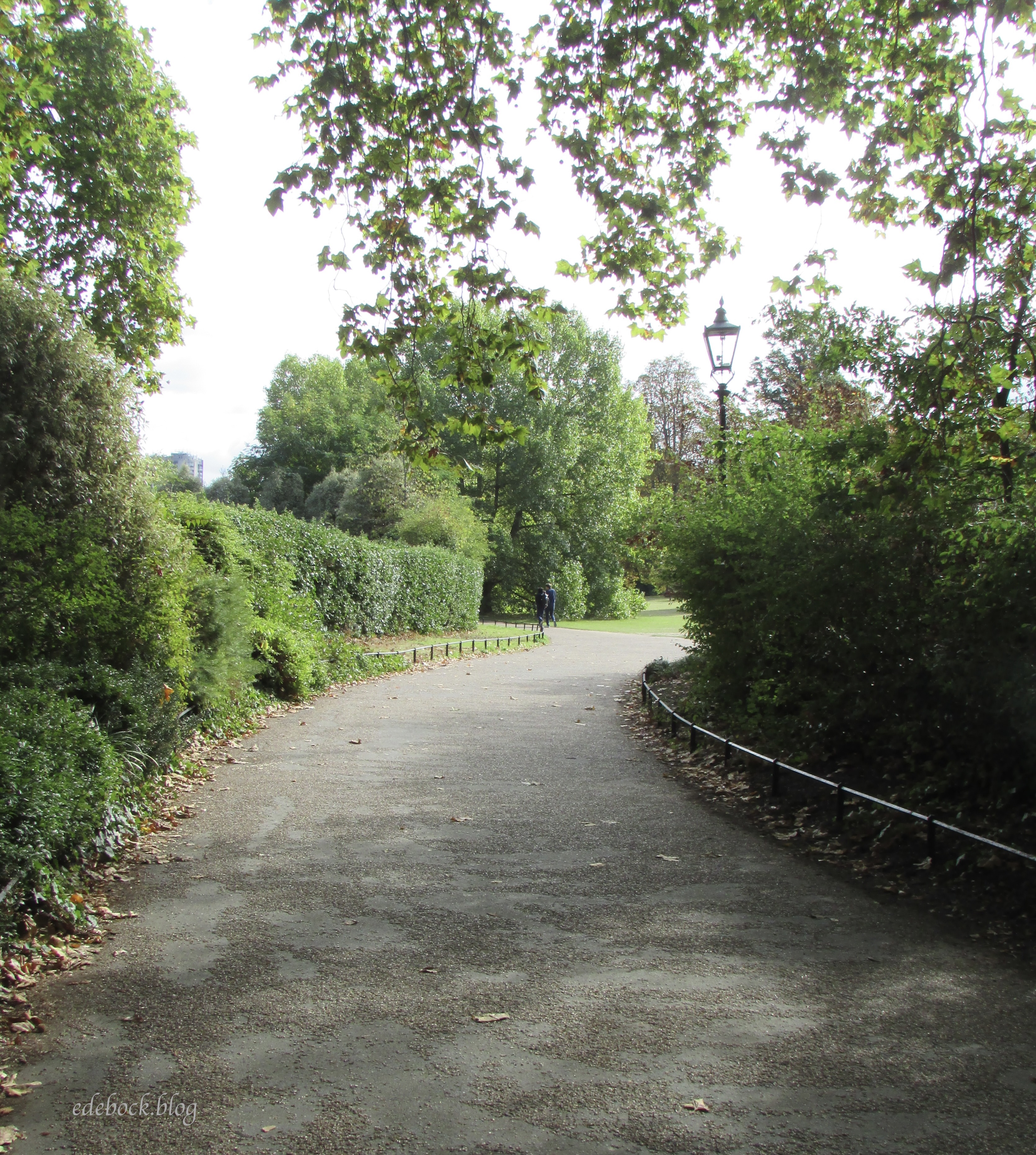
I’ve always said that a trip like this one is really three trips in one; the planning, the trip itself, and the memories that you carry with you after. I enjoy all three parts. I had detailed plans for the first four of our five days in London, but on my itinerary today said “Free day to do anything we missed or return to favourites.” One of the things that I thought we’d do early in our visit, but didn’t find time for, was to explore Kensington Gardens and Hyde Park which are a short walking distance from where we’re staying, so that was first on our agenda for today.
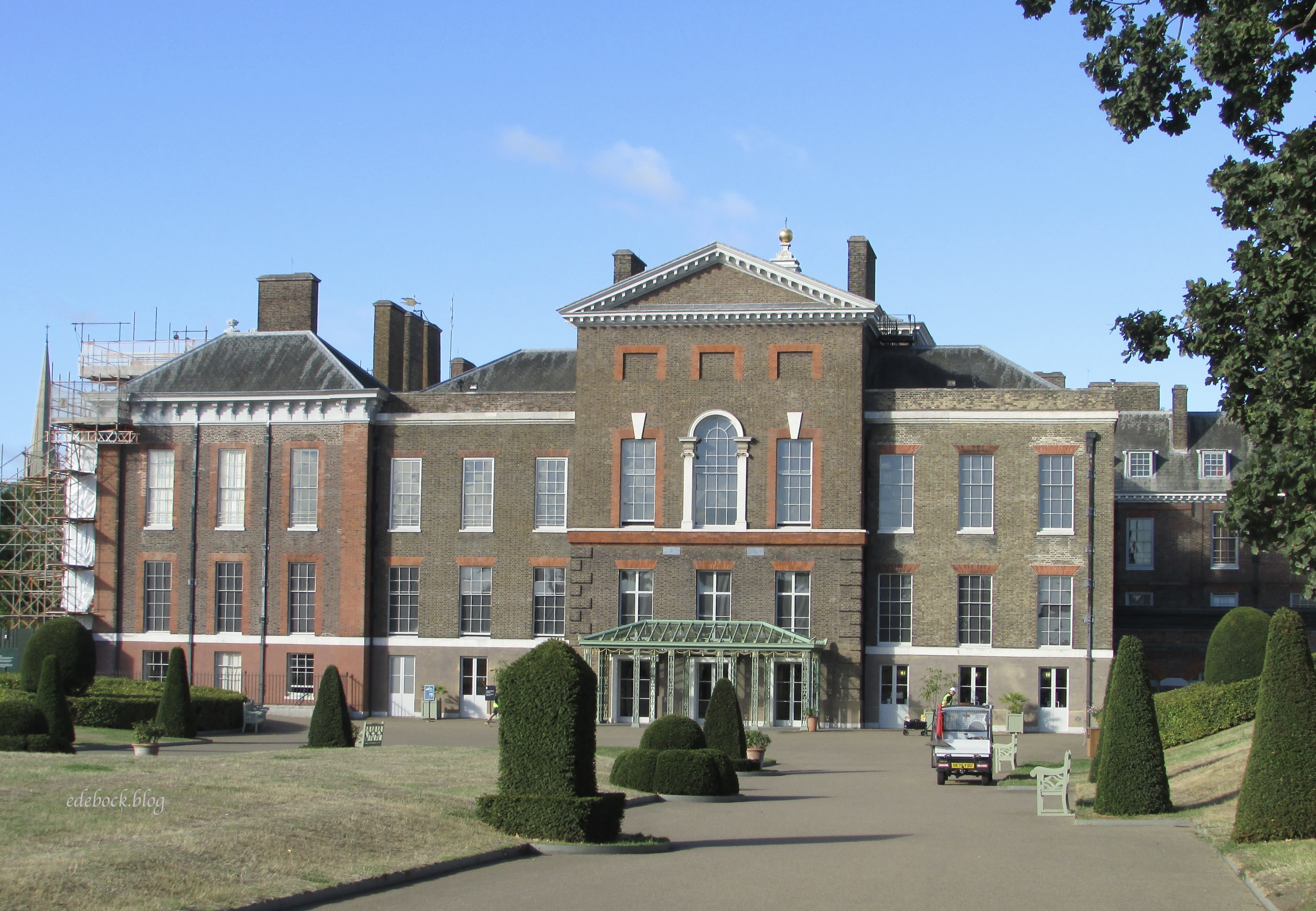
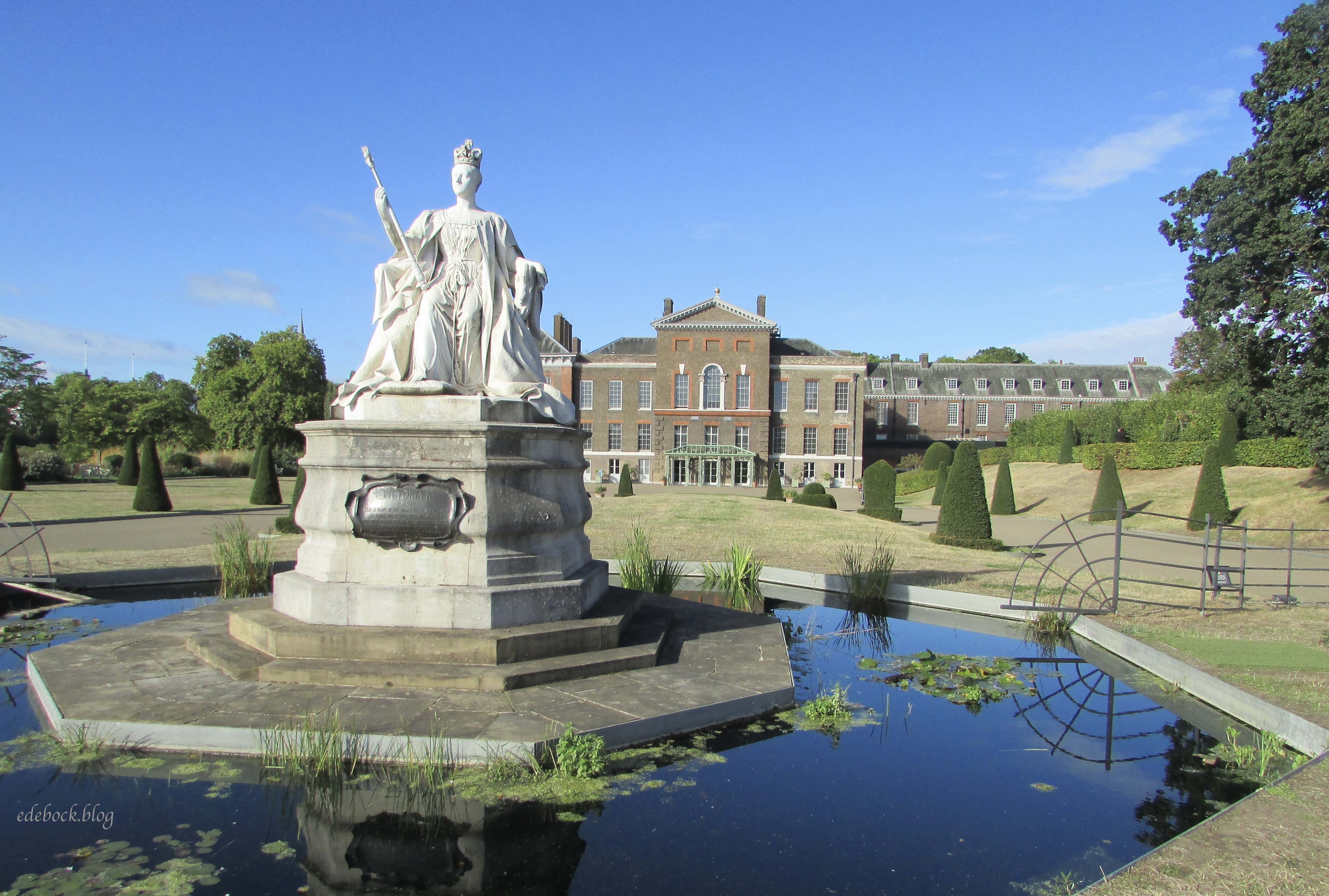
Kensington Palace is a historic royal residence that serves as the official London residence for the Prince and Princess of Wales. It’s where King Charles (then Prince Charles) and Princess Diana lived while married and where she continued to live with their boys after they separated. It’s also where Queen Victoria was born and grew up, hence the statue of her in front.
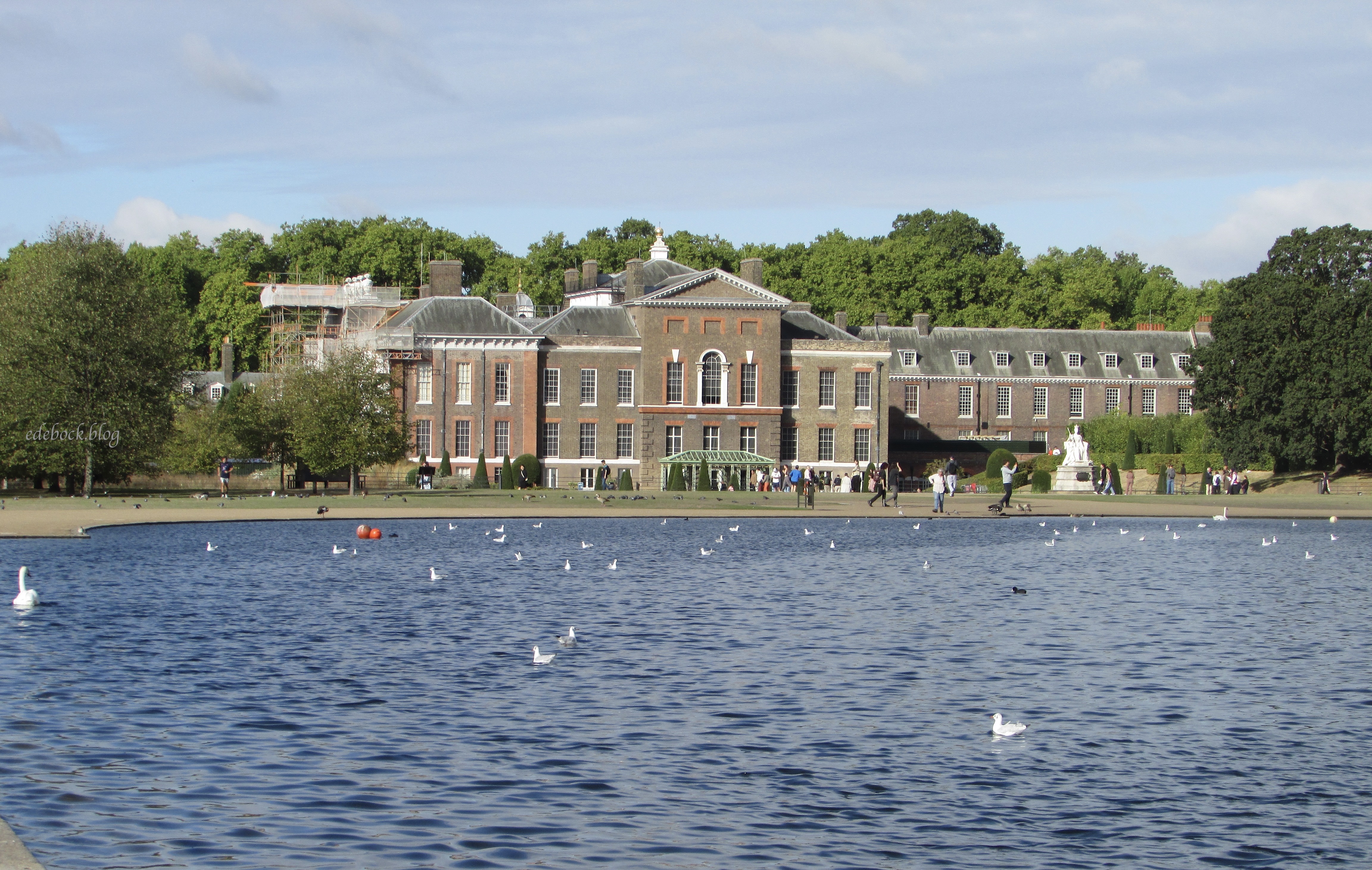
The next photo was taken from across the Round Pond (which is actually rectangular with rounded corners), an ornamental body of water created in the 1720s on the order of King George I, an animal-loving monarch who wanted it to house his pet turtles!
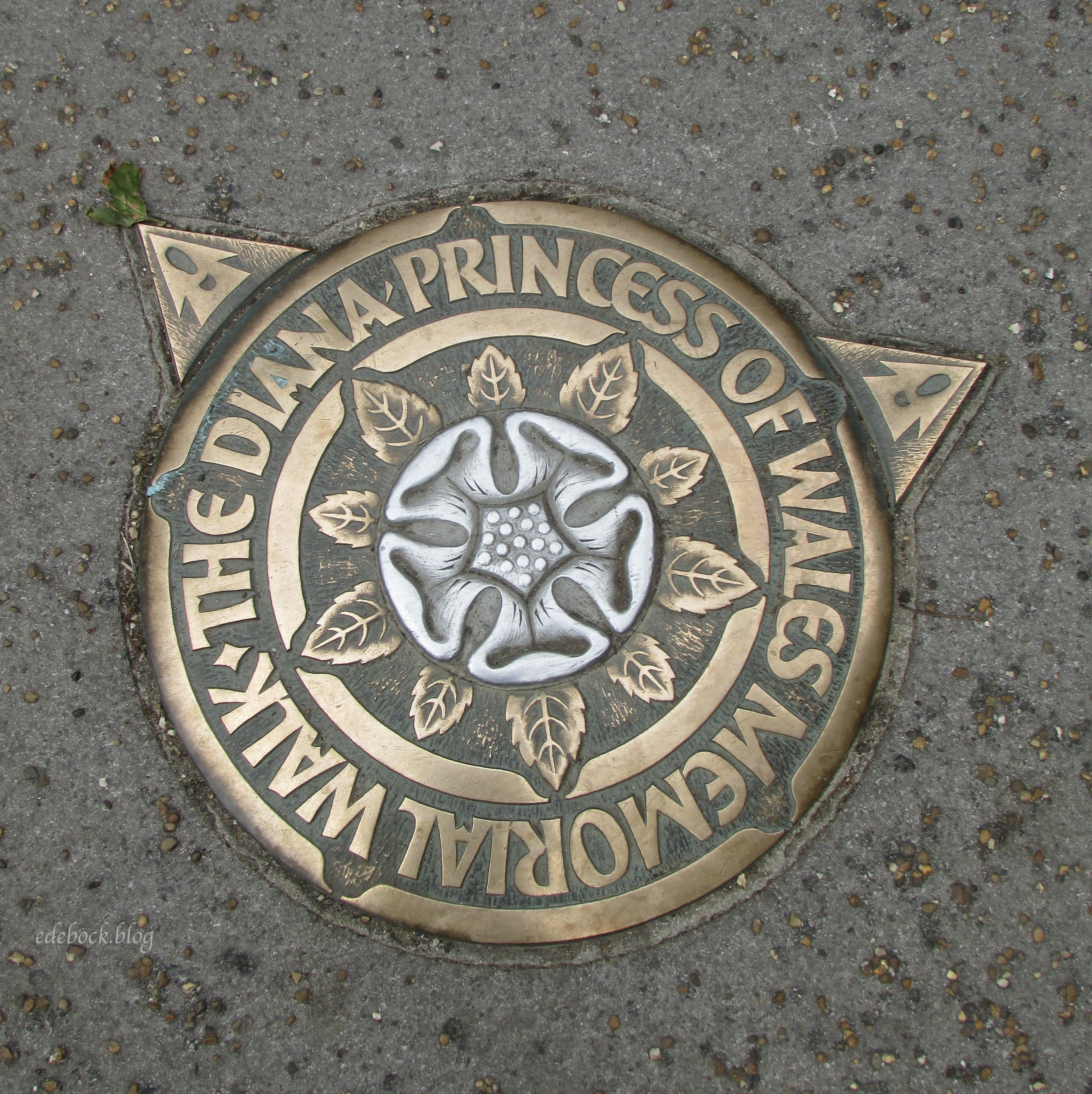
Within Kensington Gardens and adjoining Hyde Park, we walked a portion of The Diana Princess of Wales Memorial Walk, a 7-mile (11 km) circular walking route in central London that guides visitors past historic buildings and scenic parklands associated with the life of Princess Diana.
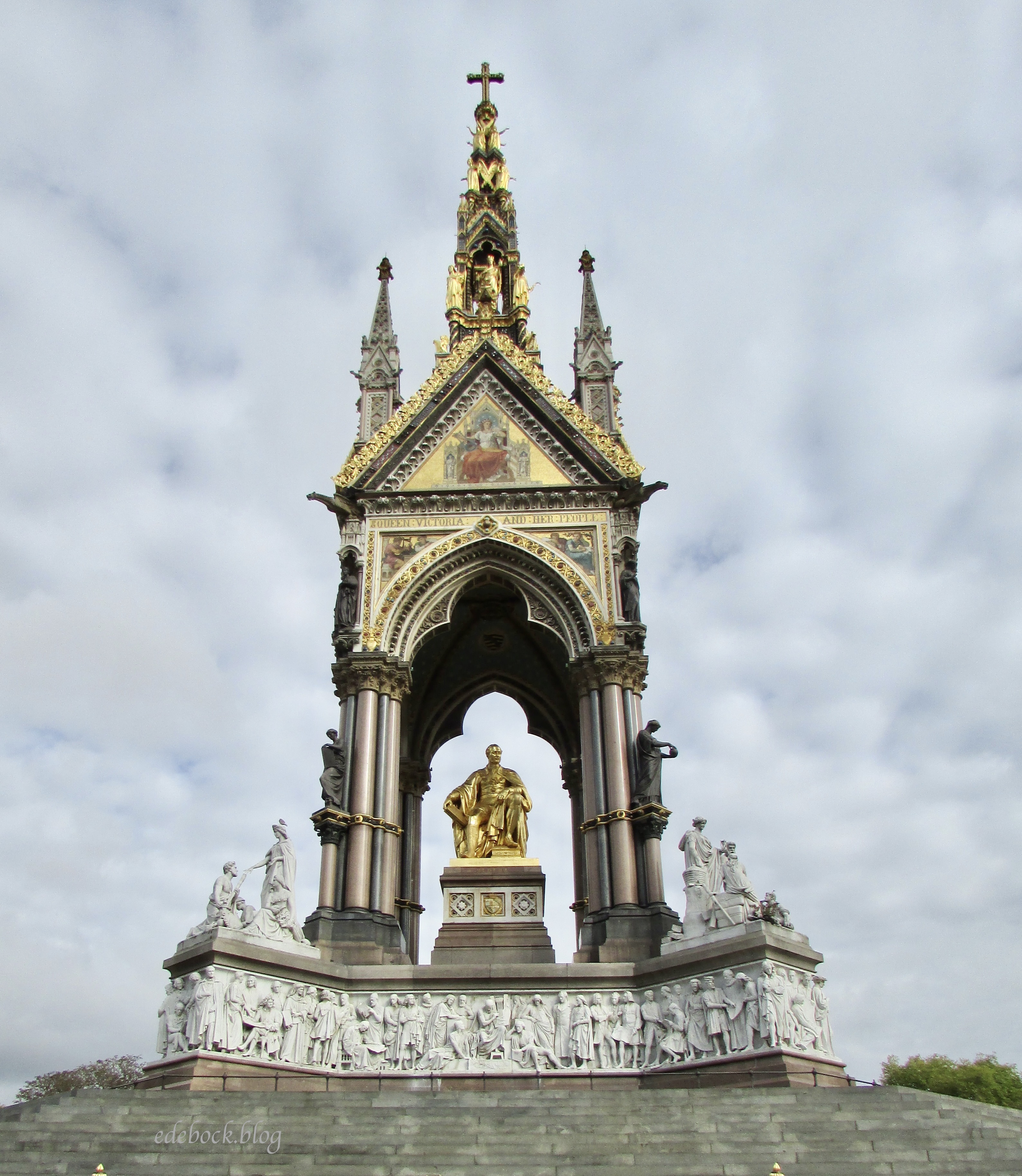
Still in Kensington Gardens, we stopped to admire the enormous and ornate Albert Memorial commissioned by Queen Victoria after the premature death of her beloved husband who was only 42 years old when he died in December 1861.
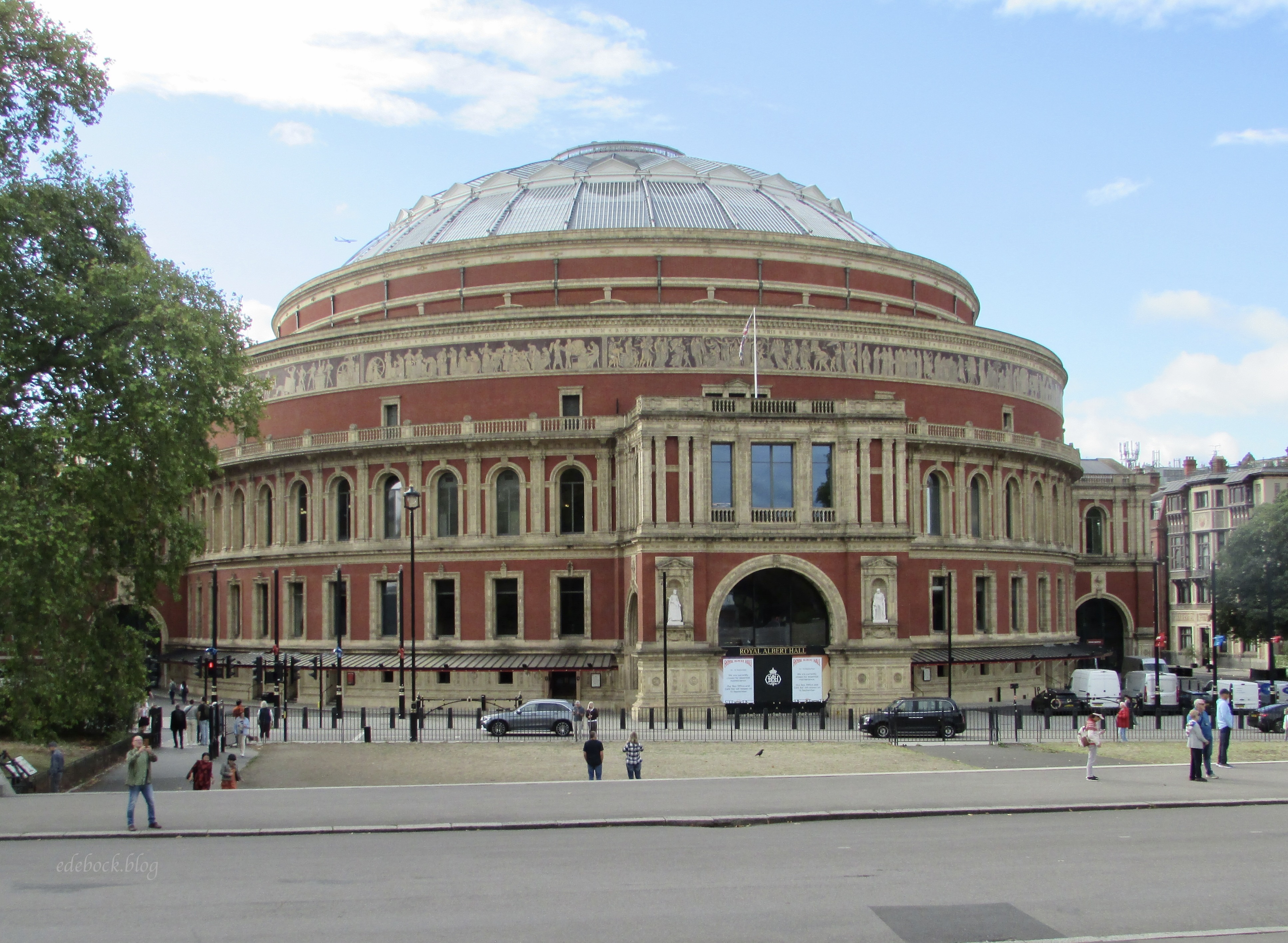
The memorial is located across the road from the Royal Albert Hall, a world famous concert hall opened by Queen Victoria on March 29, 1871 to fulfill her husband’s vision for a central hall dedicated to the arts and sciences.
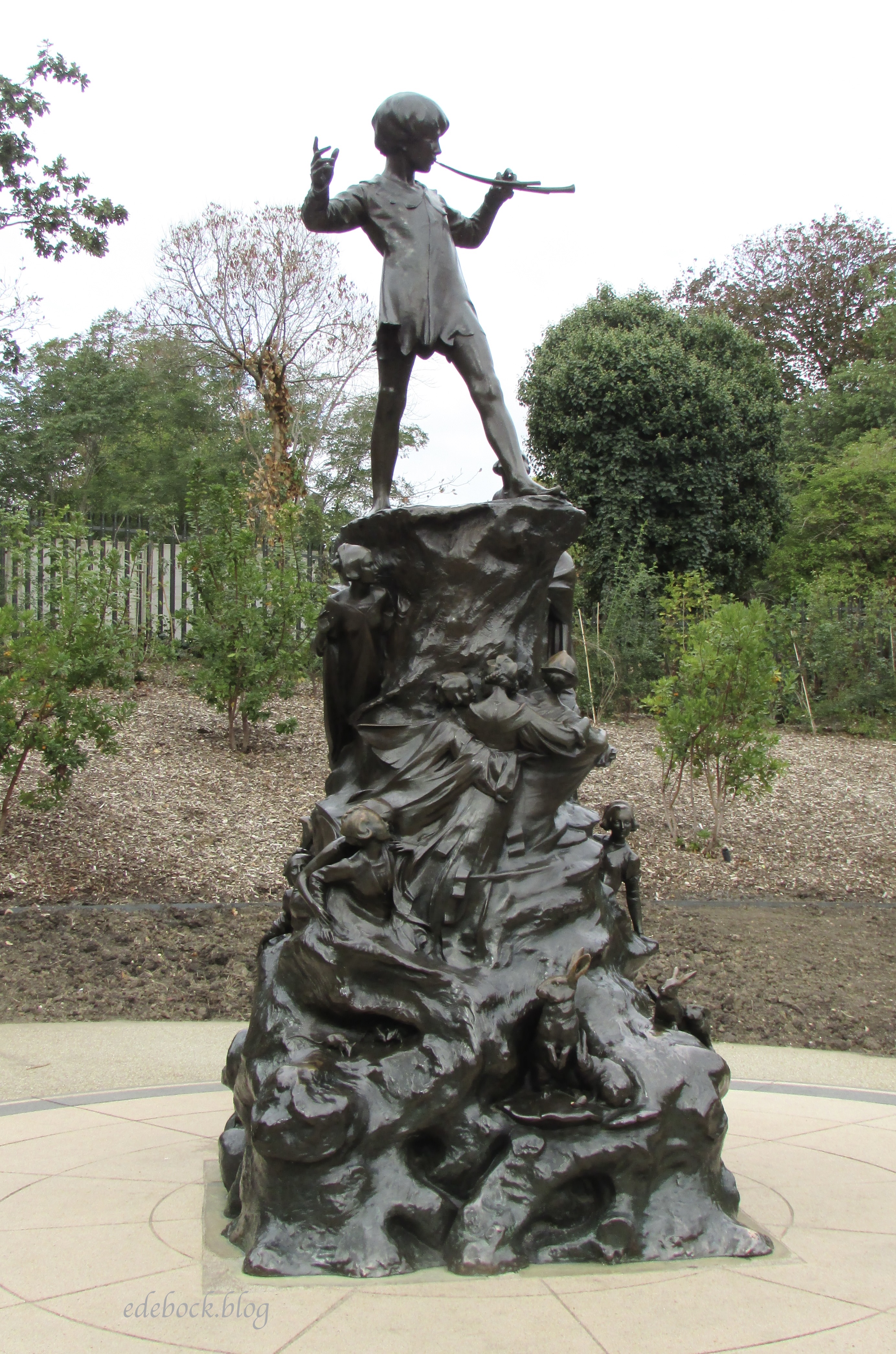
Before leaving Kensington Gardens, I had to locate the Peter Pan statue. Set in Edwardian London, the story of Peter Pan has always had a place in my heart as it was the first movie that I ever saw on the big screen. My mother took me to see it in the Patricia Theatre in Powell River, the town on the BC coast where I was born, when I was about 5 years old.
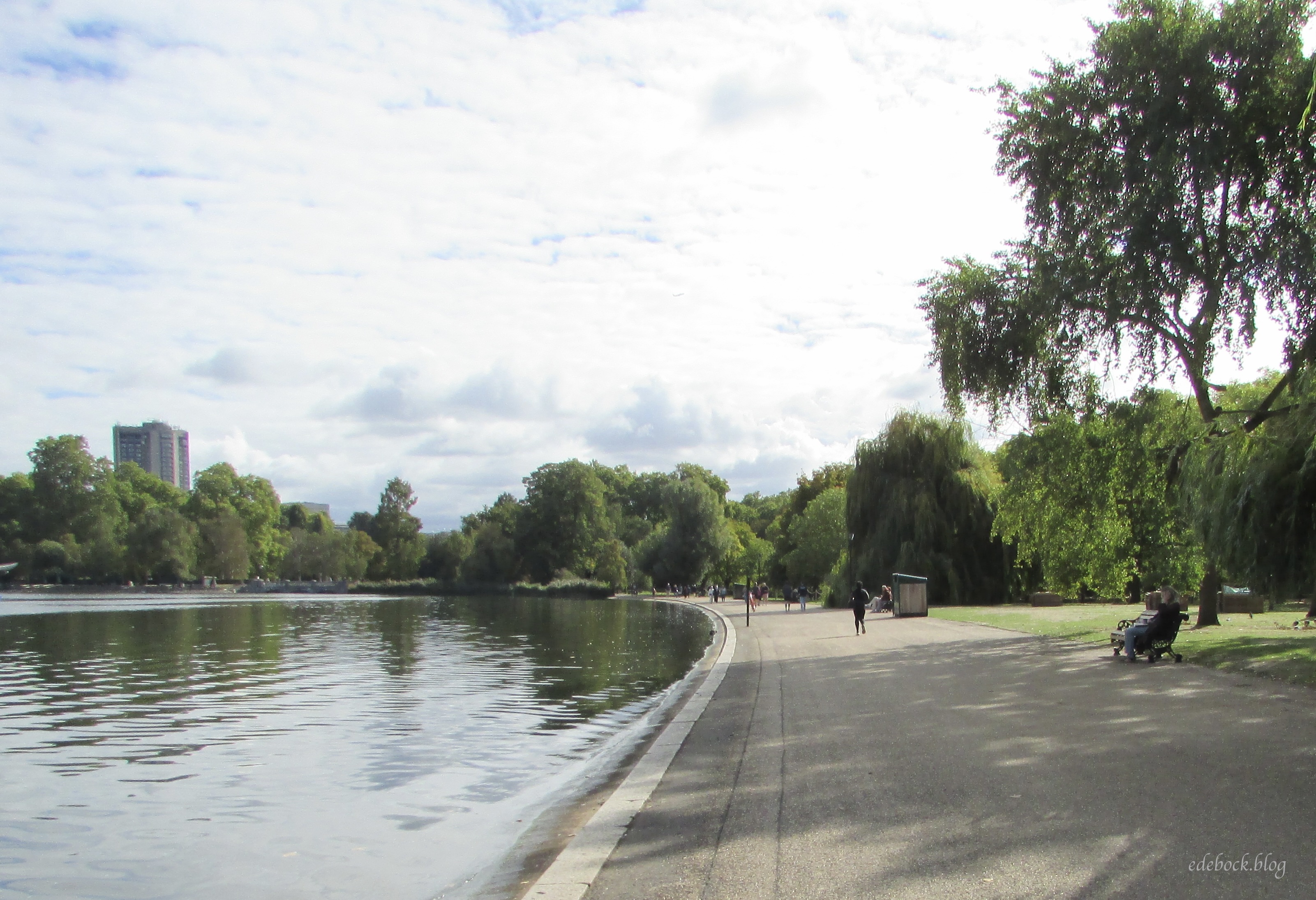
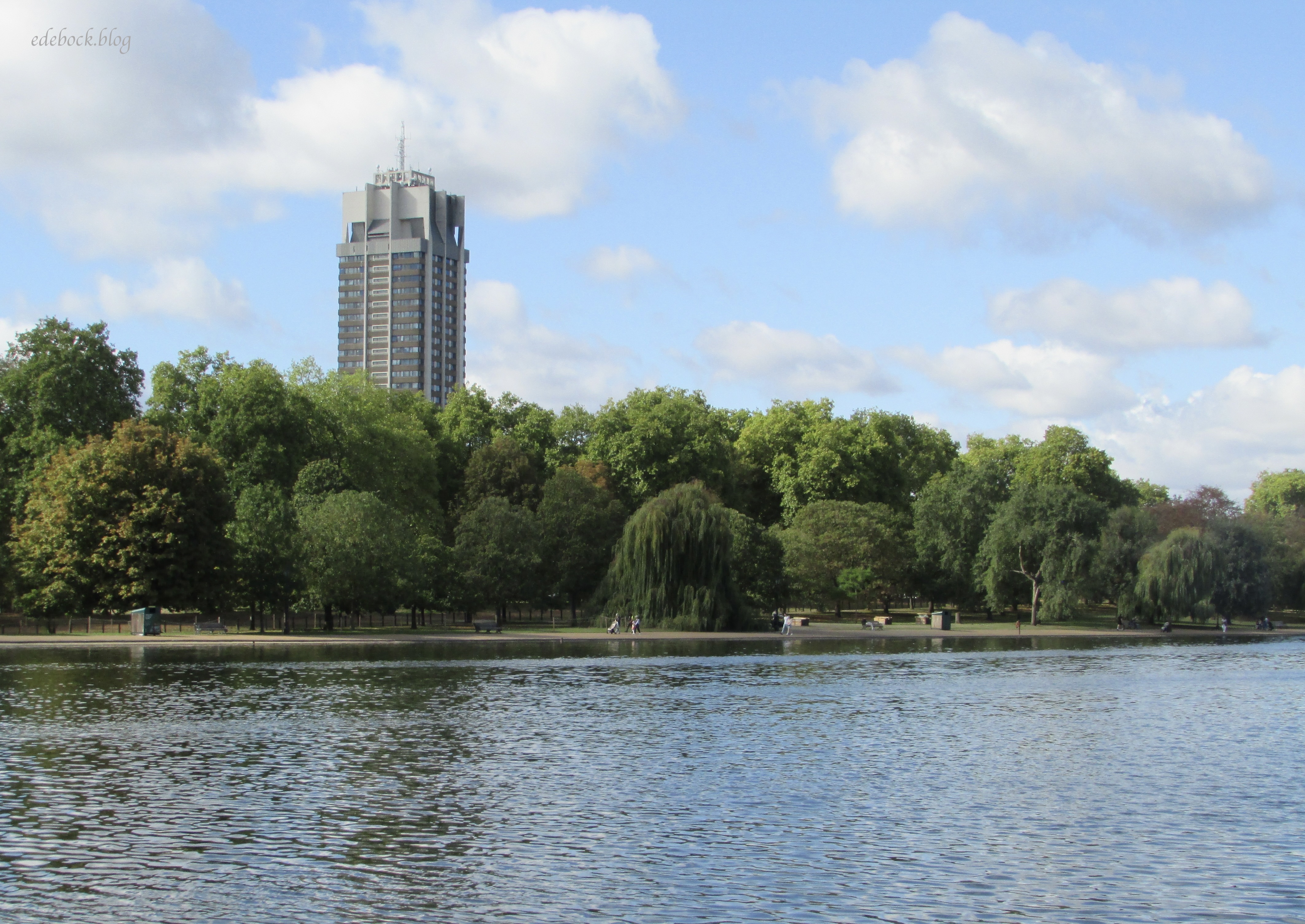
Continuing our walk, we crossed into adjoining Hyde Park, another of London’s eight royal parks and walked along the Serpentine, a 40-acre recreational lake created in 1730 at the behest of Queen Caroline.
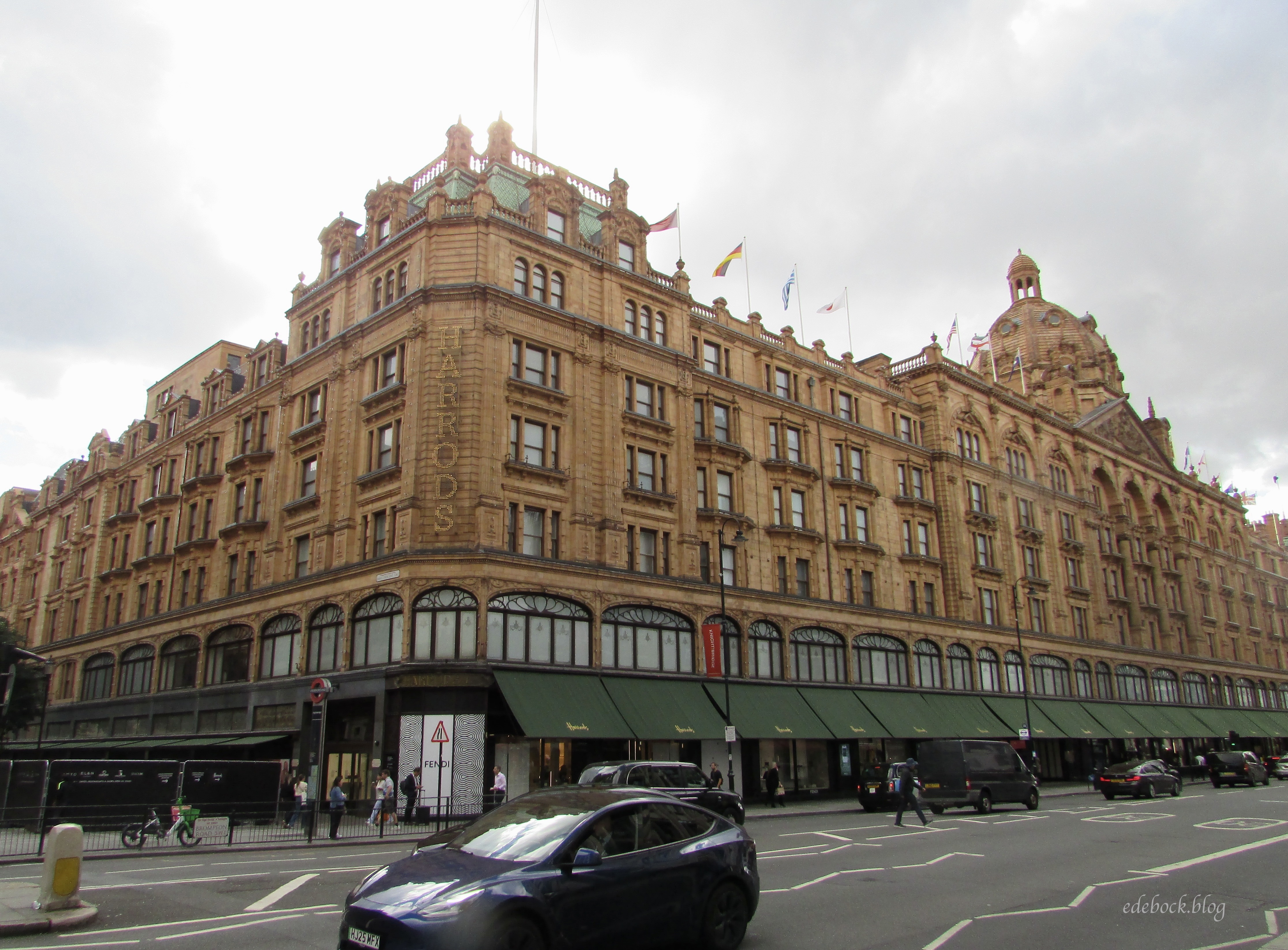
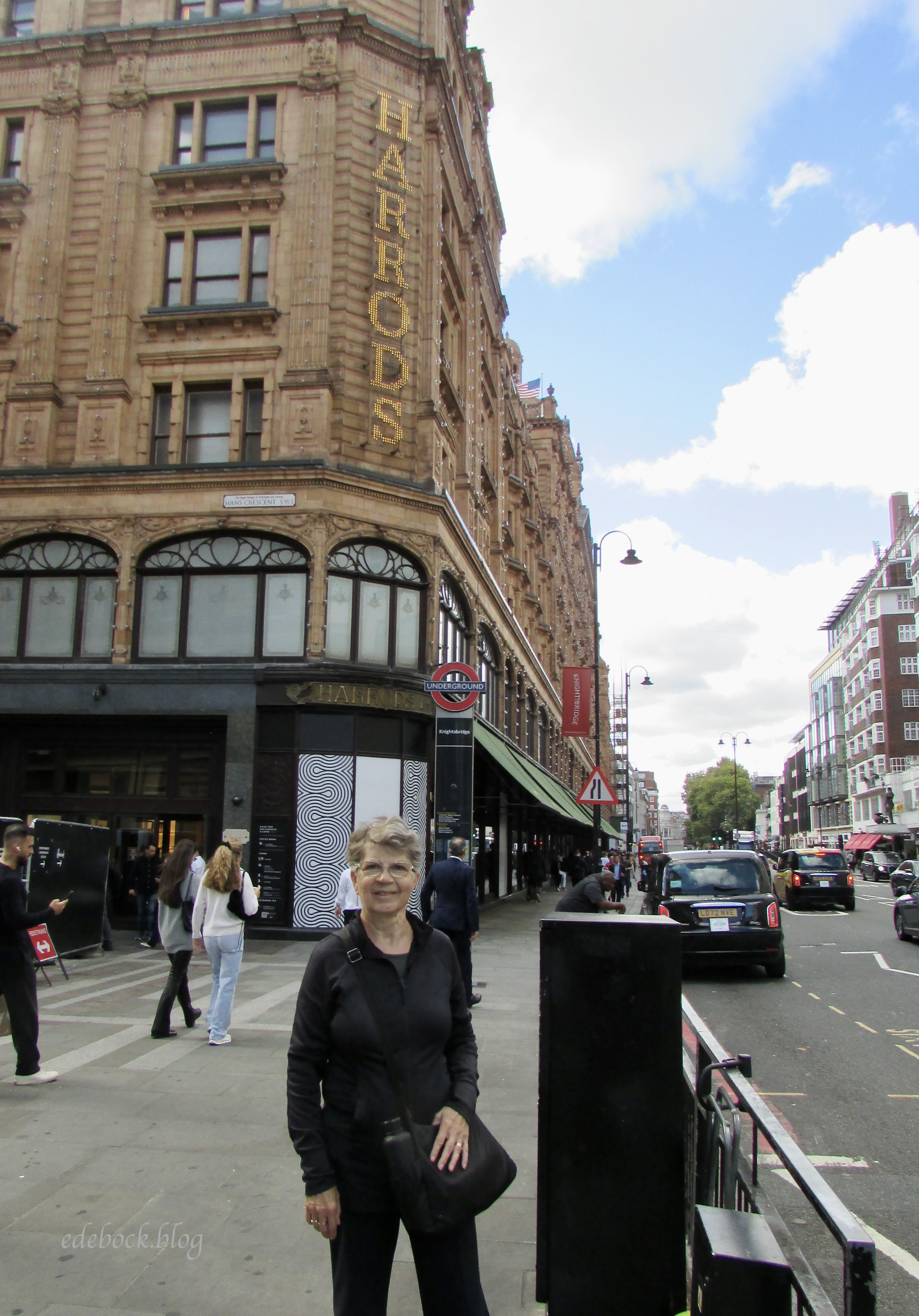
By the time we reached the far end of the Serpentine, we were less than half a mile from Harrods, the world’s most famous luxury department store, so we headed in that direction. After all, what would a visit to London be without stopping in at Harrods? I think the most I could have afforded there was probably a facecloth, but we spent a little while exploring anyway.
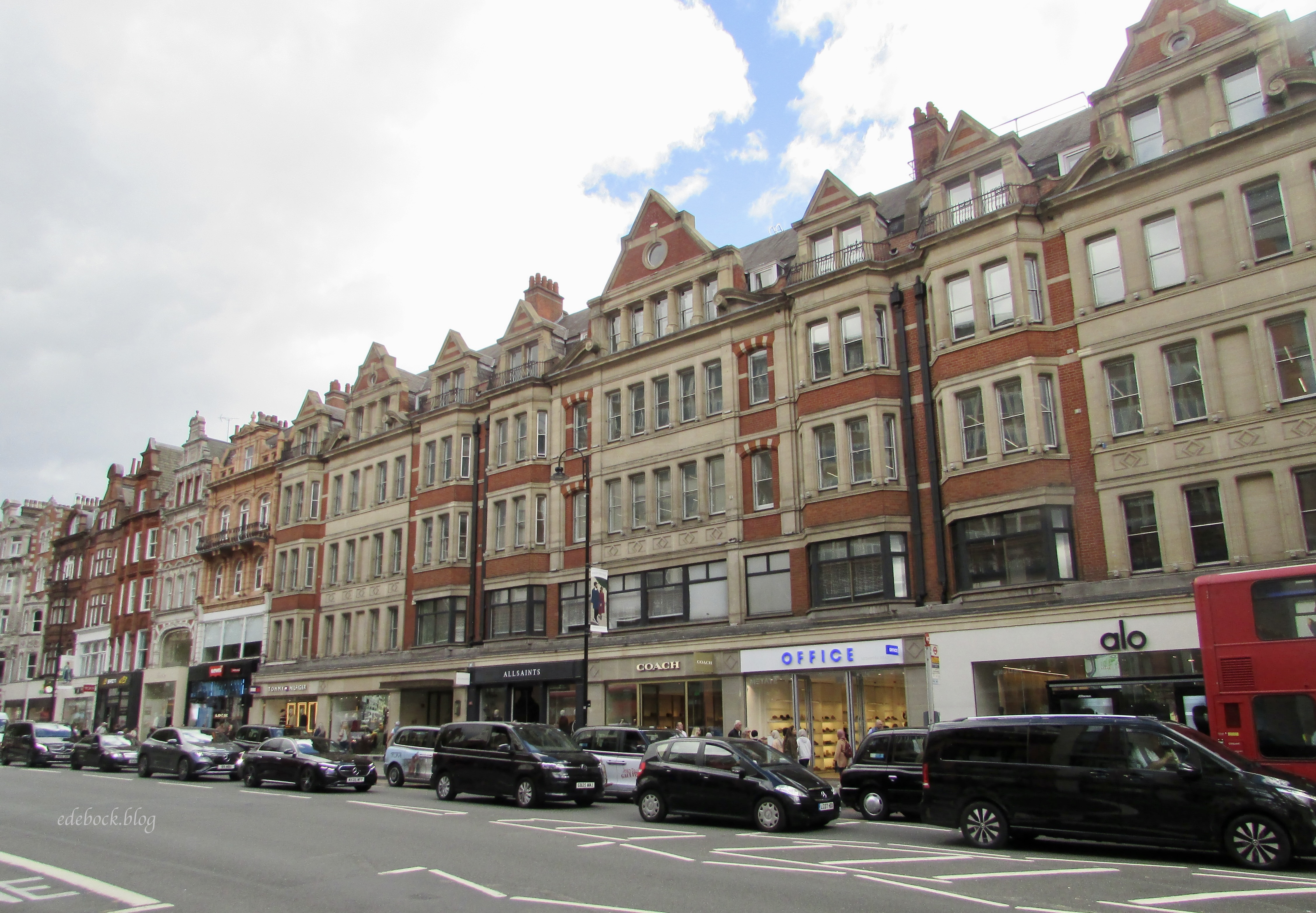
Harrods isn’t the only store on the street though. If you zoom in, you might recognize the signs on some of these smaller ones.
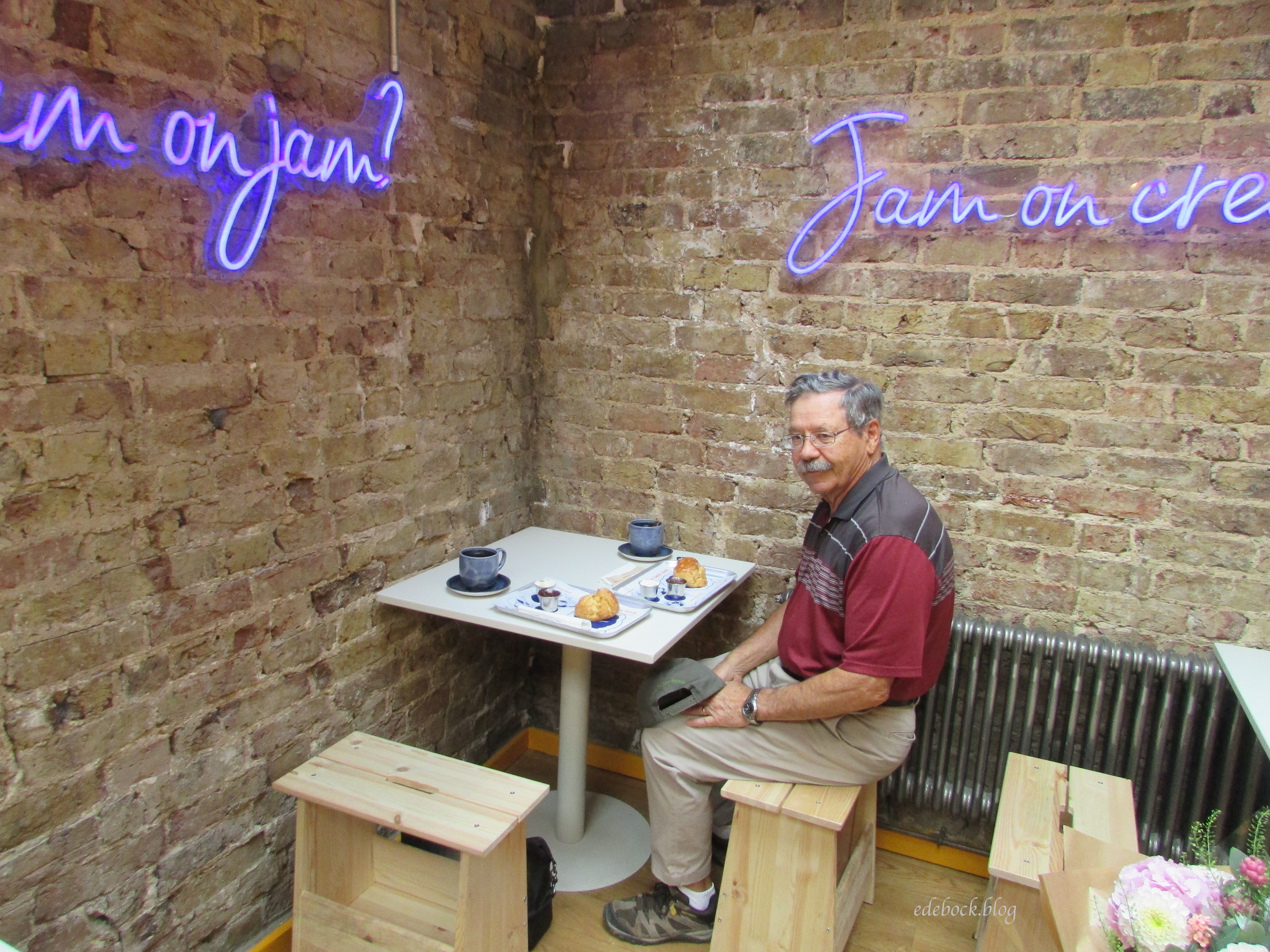
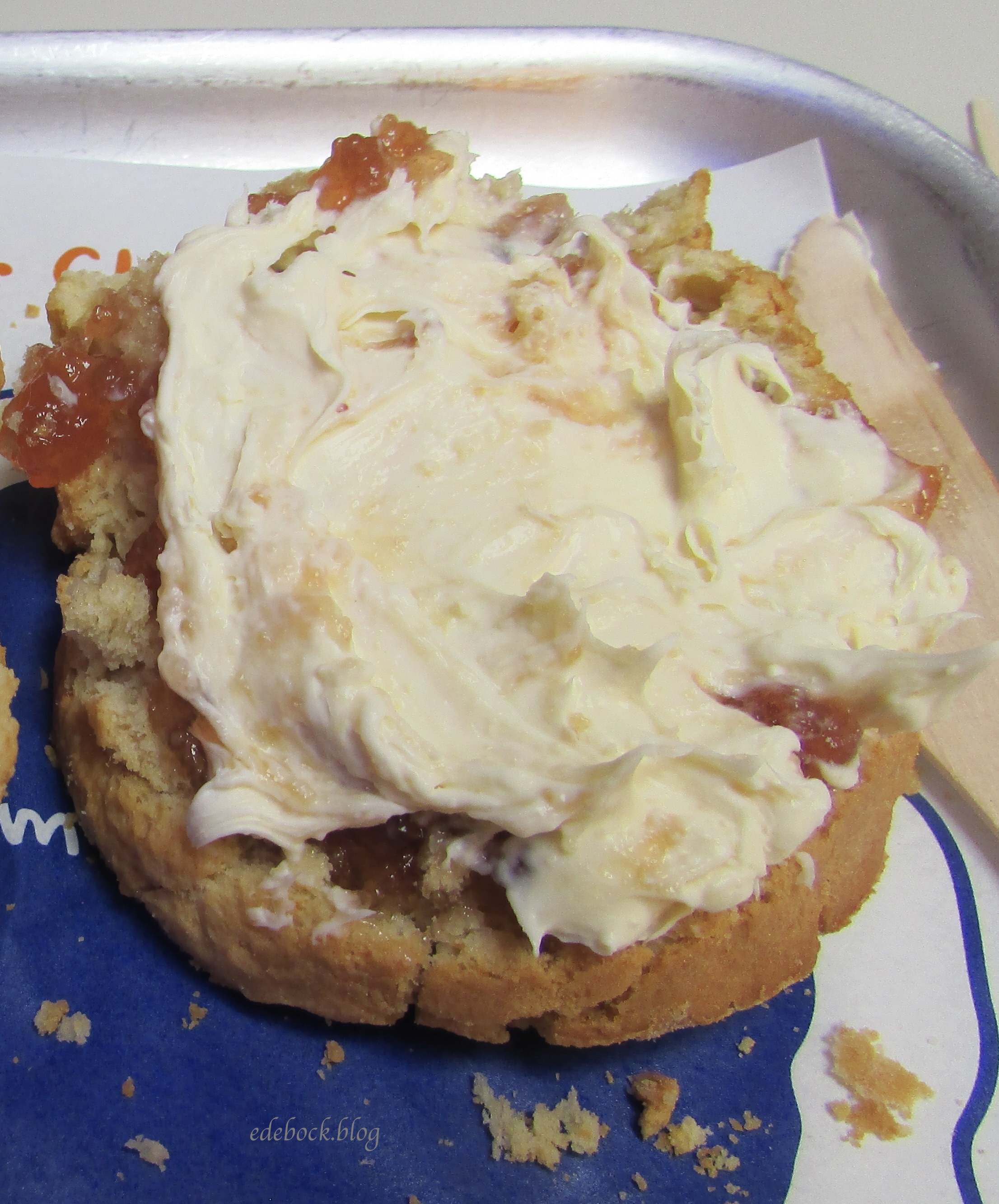
By this time, the fitness app on my phone was telling us that we’d walked more than 11 000 steps already. We found the nearby tube station and headed back to Notting Hill. After relaxing at “home” for awhile, we walked around the block with several destinations in mind. First, even though it meant breaking my diabetic diet, we wanted to try a traditional cream tea. Although it’s served with tea, cream tea isn’t actually tea at all! It’s a light afternoon meal that consists of a large, fresh scone served warm with strawberry jam and clotted cream. To those of us who are unfamiliar with it, clotted cream might sound gross, but it’s actually thick, rich cream made by slowly heating full-fat cow’s milk. The great debate in England is whether you should put the cream on the scone first and then add the jam as the people in Devon do, or put the jam on first followed by the cream as those from Cornwall do. We chose the Cornish method although I’m sure the other would have been just as delicious!
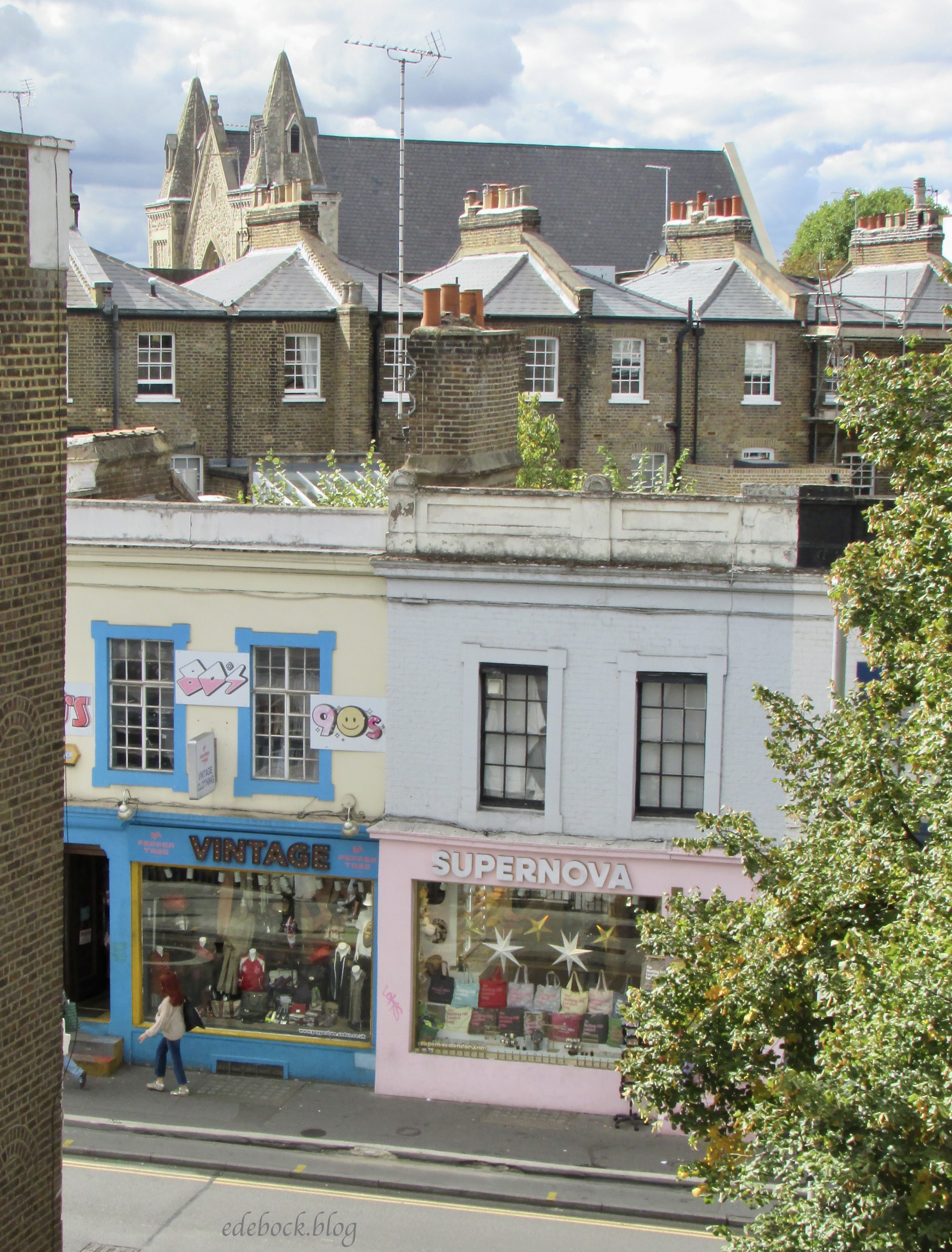
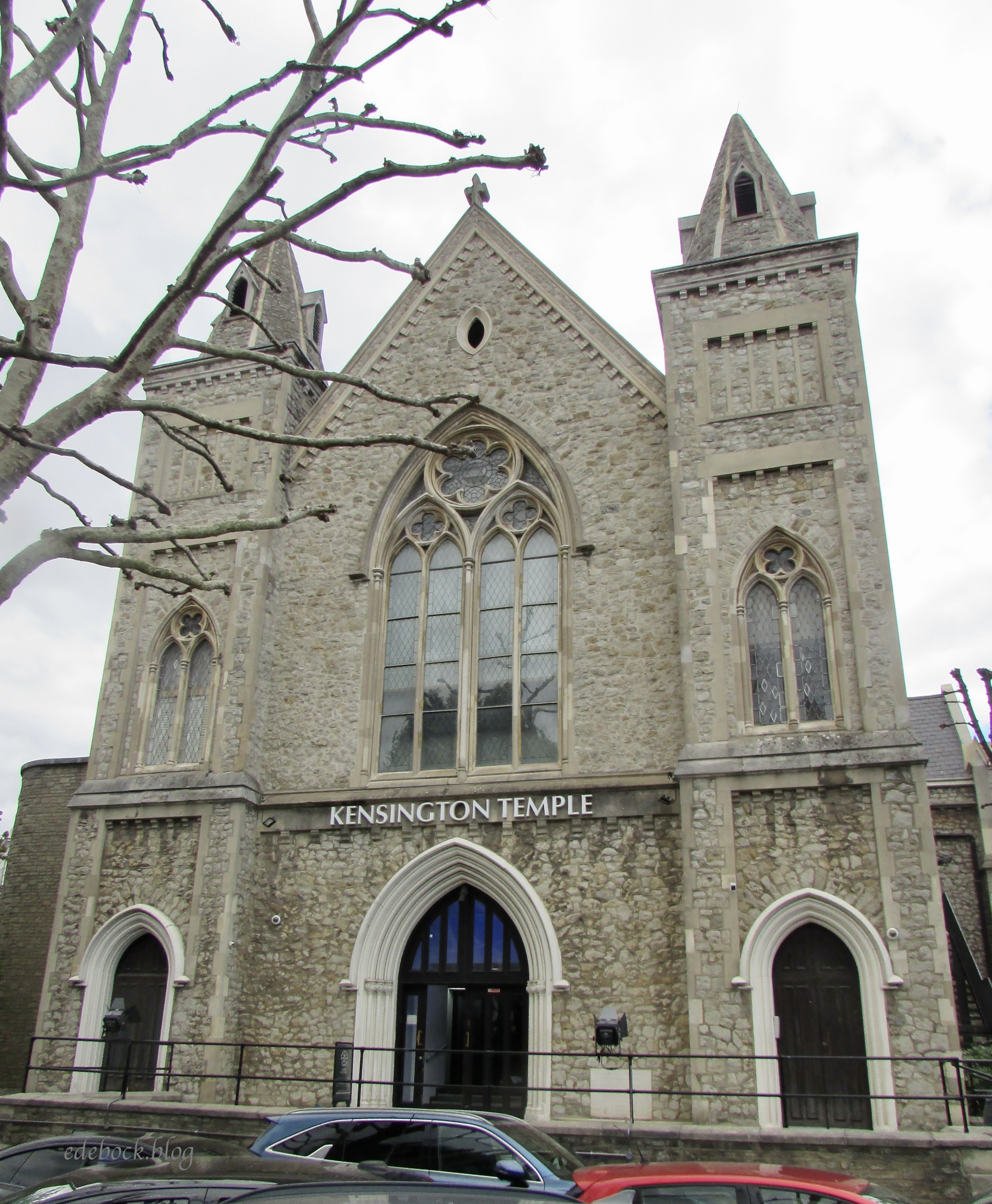
We also stopped at a used bookstore to pick up a book for hubby who’d finished the one he was reading and needed another for the plane tomorrow. There was one other shop that I wanted to visit. This is the view we’ve been looking at out our window ever since we arrived, so of course I had to check out that little vintage store even though I didn’t buy anything. We also wanted to take a closer look at the old stone church that we could see over the rooftops. Although the temple designation made us wonder what it was about, we discovered that it’s actually a Pentecostal church. The building was constructed in 1849.
And that brings our trip to an end! We’ll be on our way to Heathrow Airport very early tomorrow morning and back in Canada before the end of day.
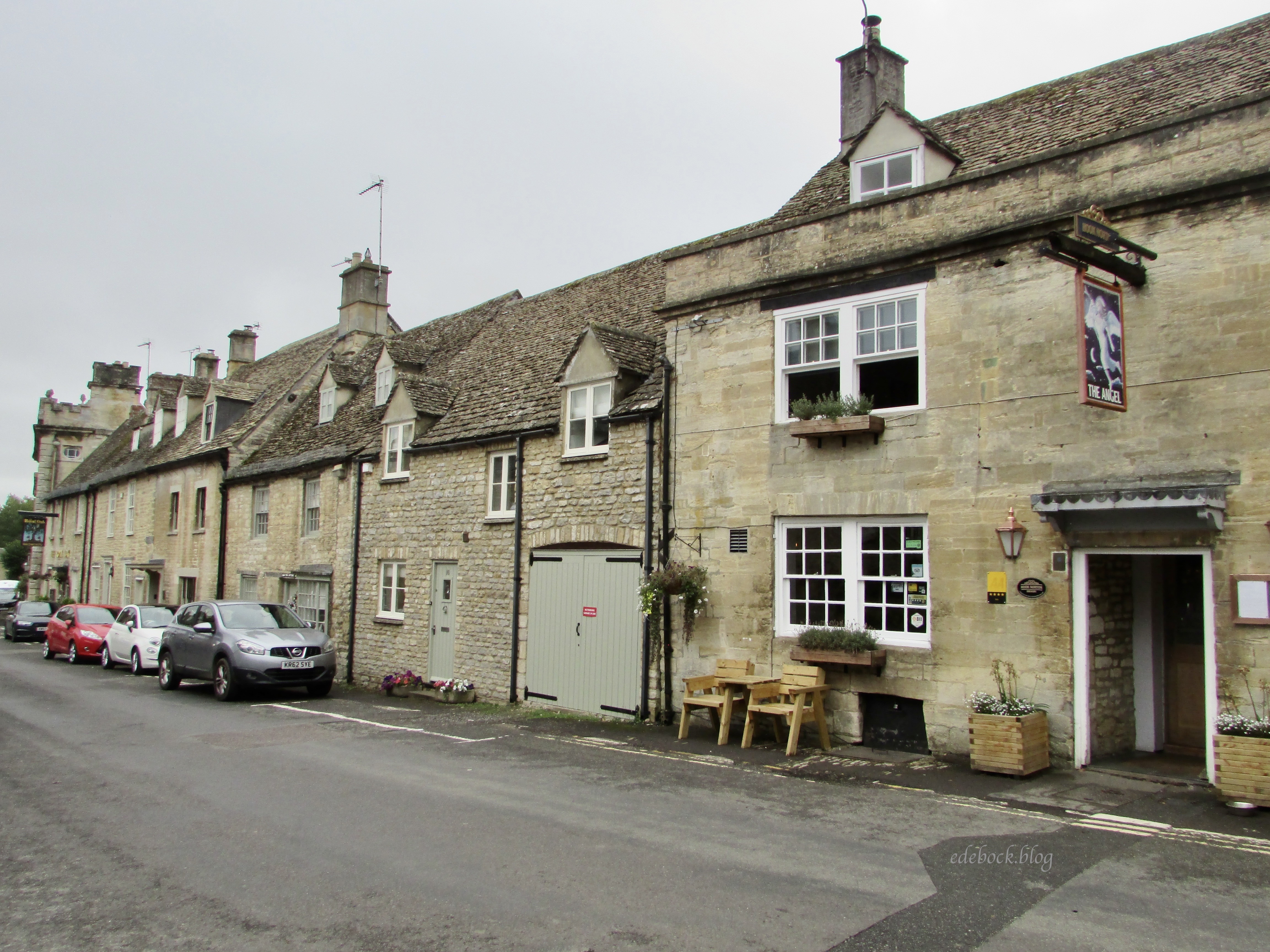
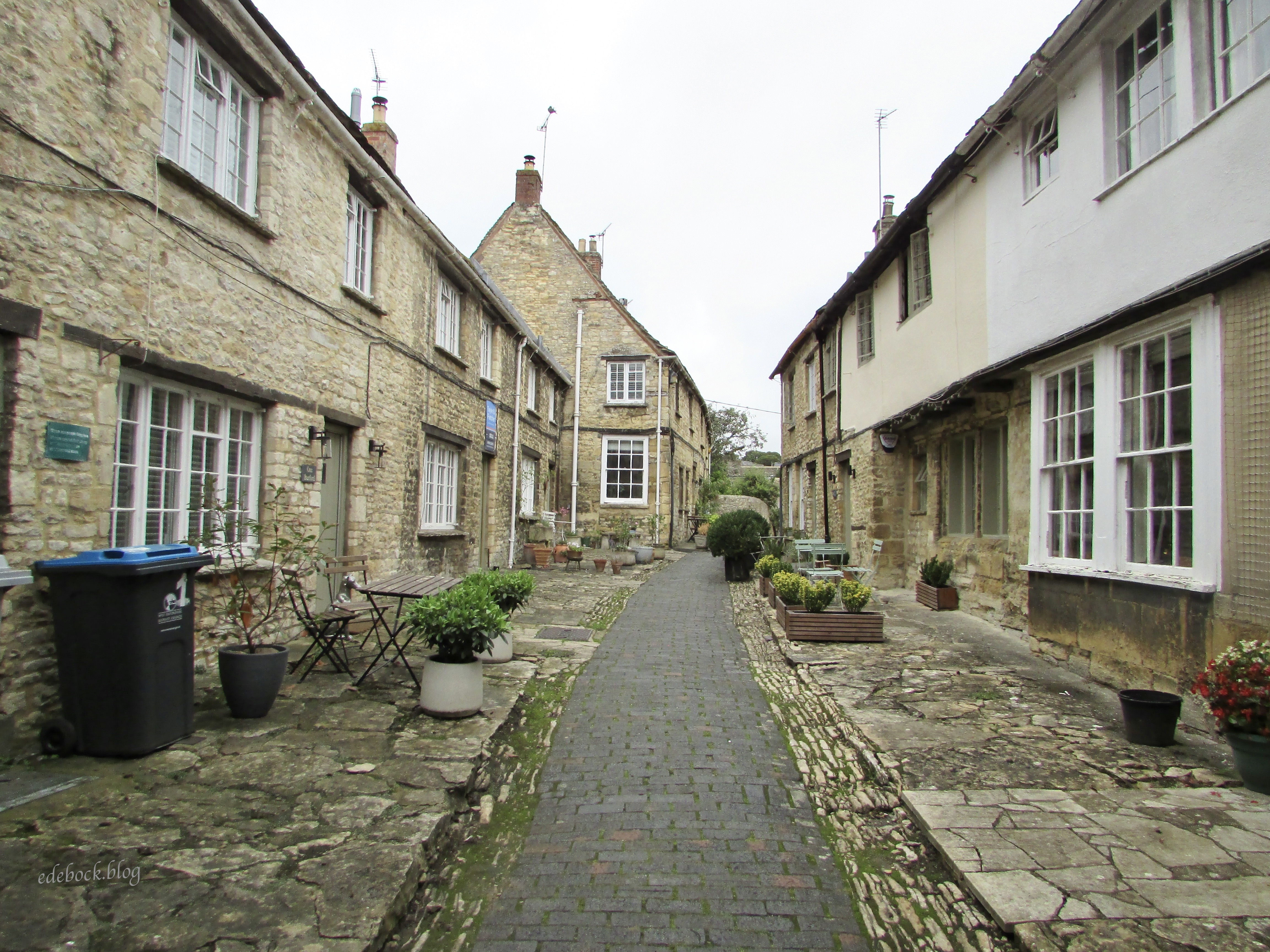
We set off bright and early Monday morning to join this small group tour of four Cotswold villages. It was a delightful day with a driver/guide who was both entertaining and knowledgeable. I took well over 100 photos, but I won’t subject you to all of those!
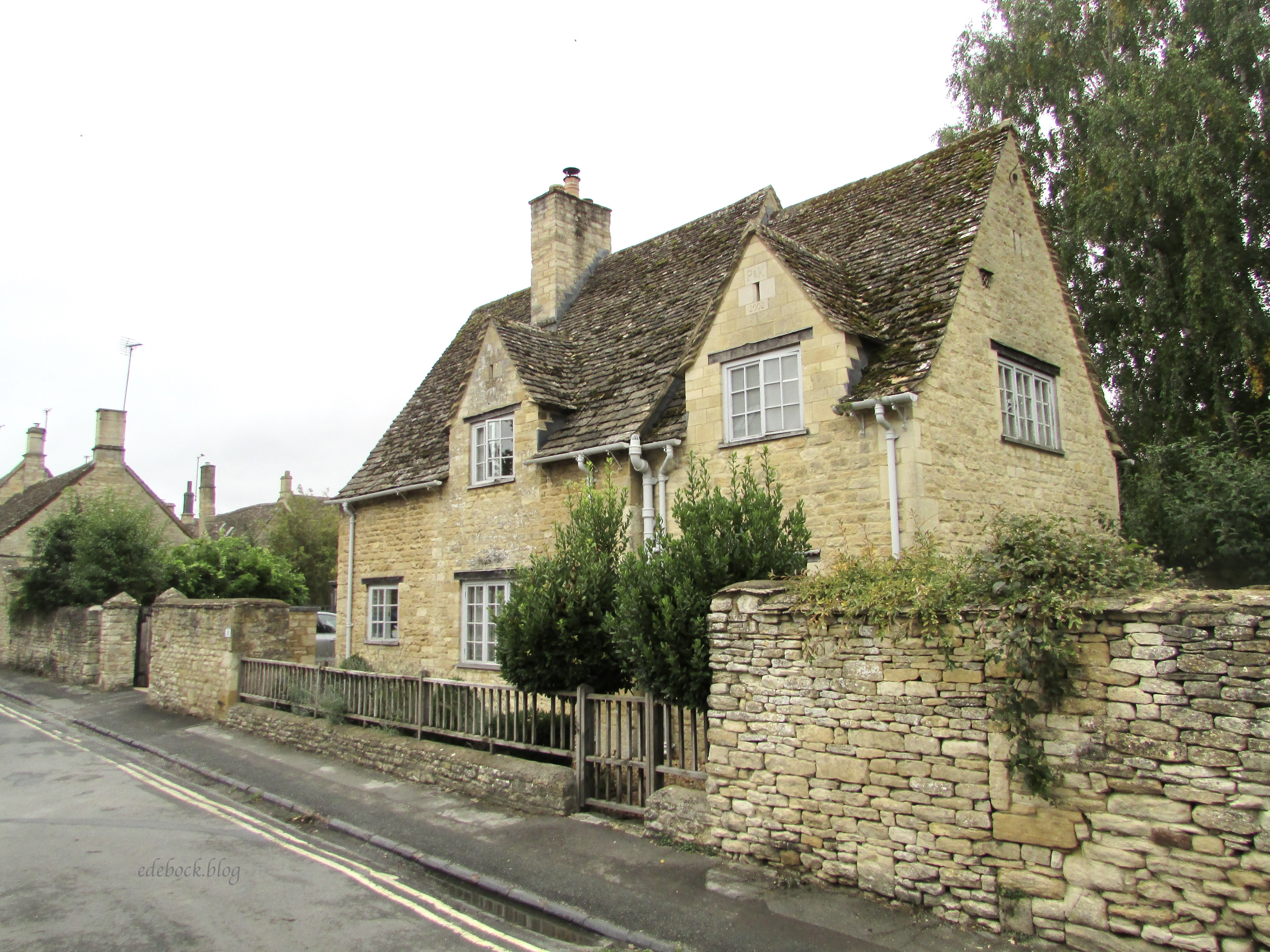
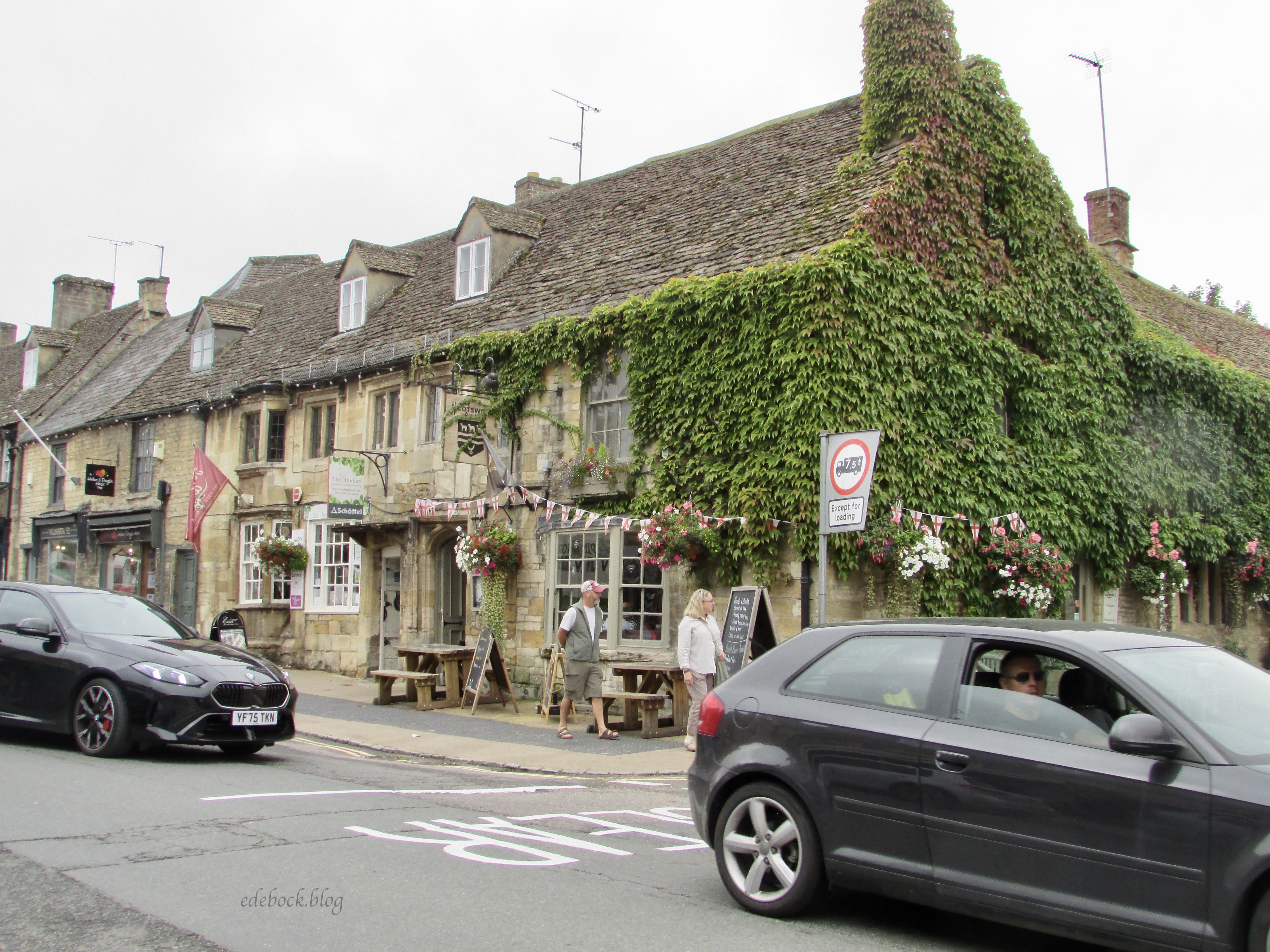
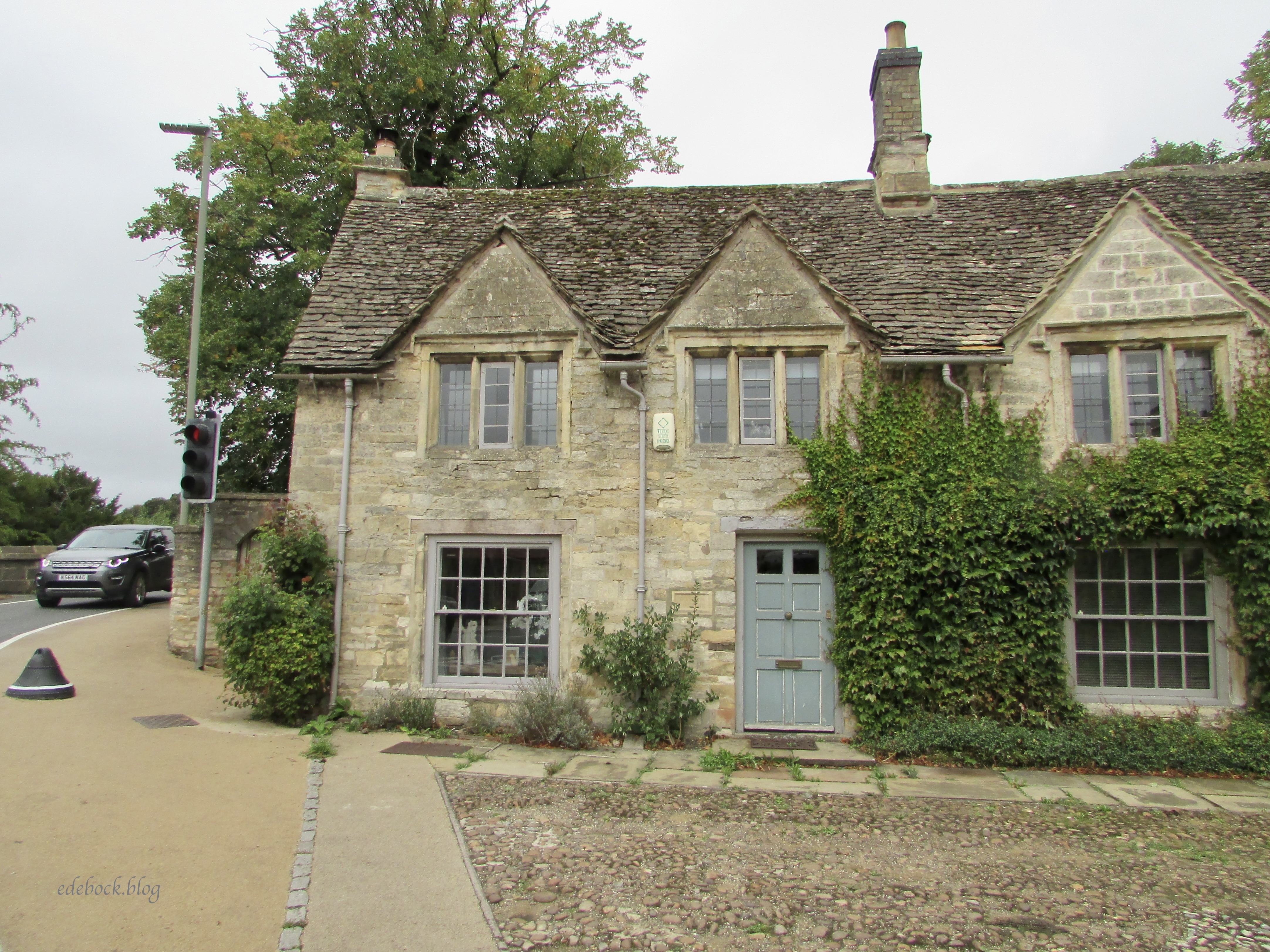
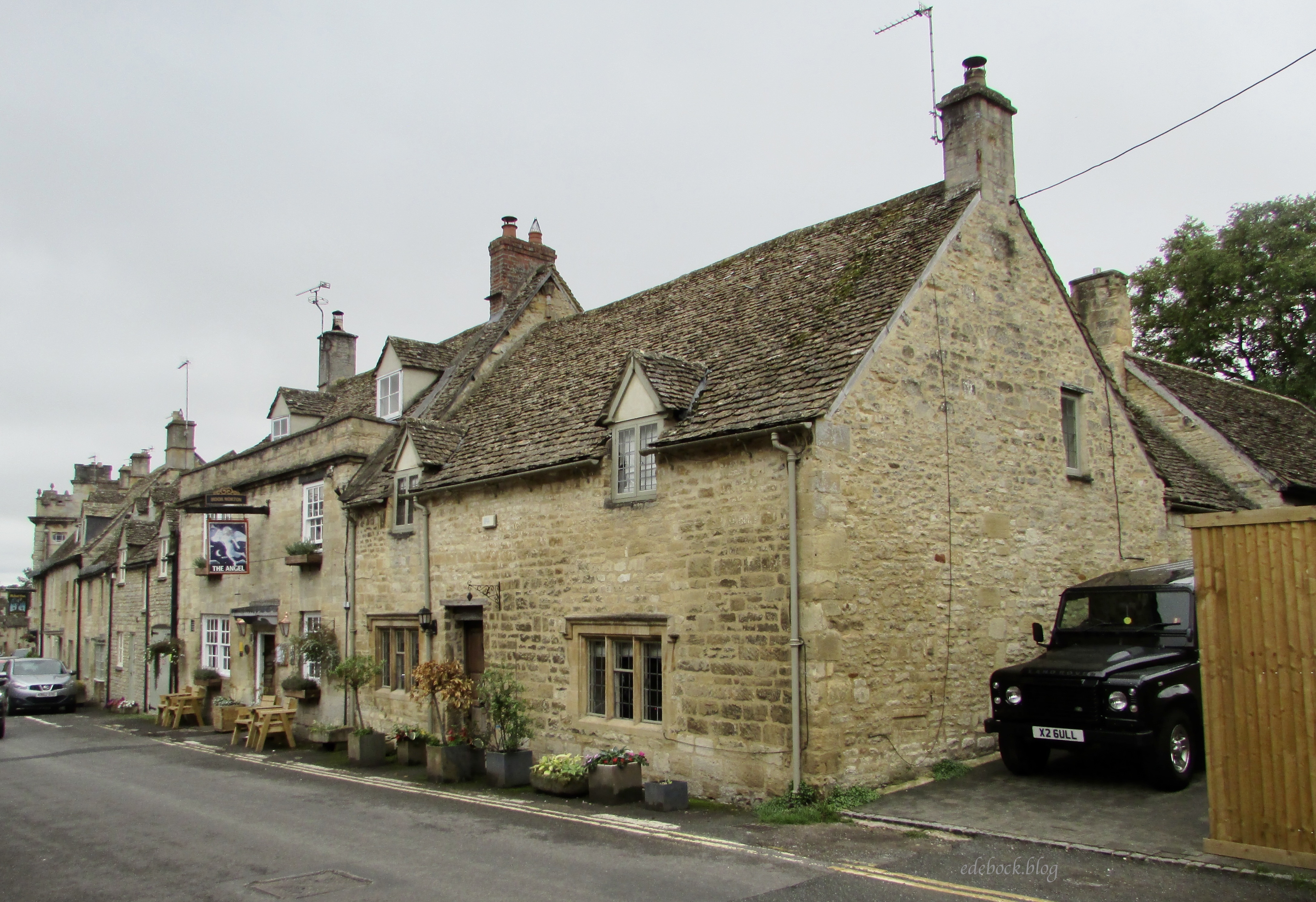
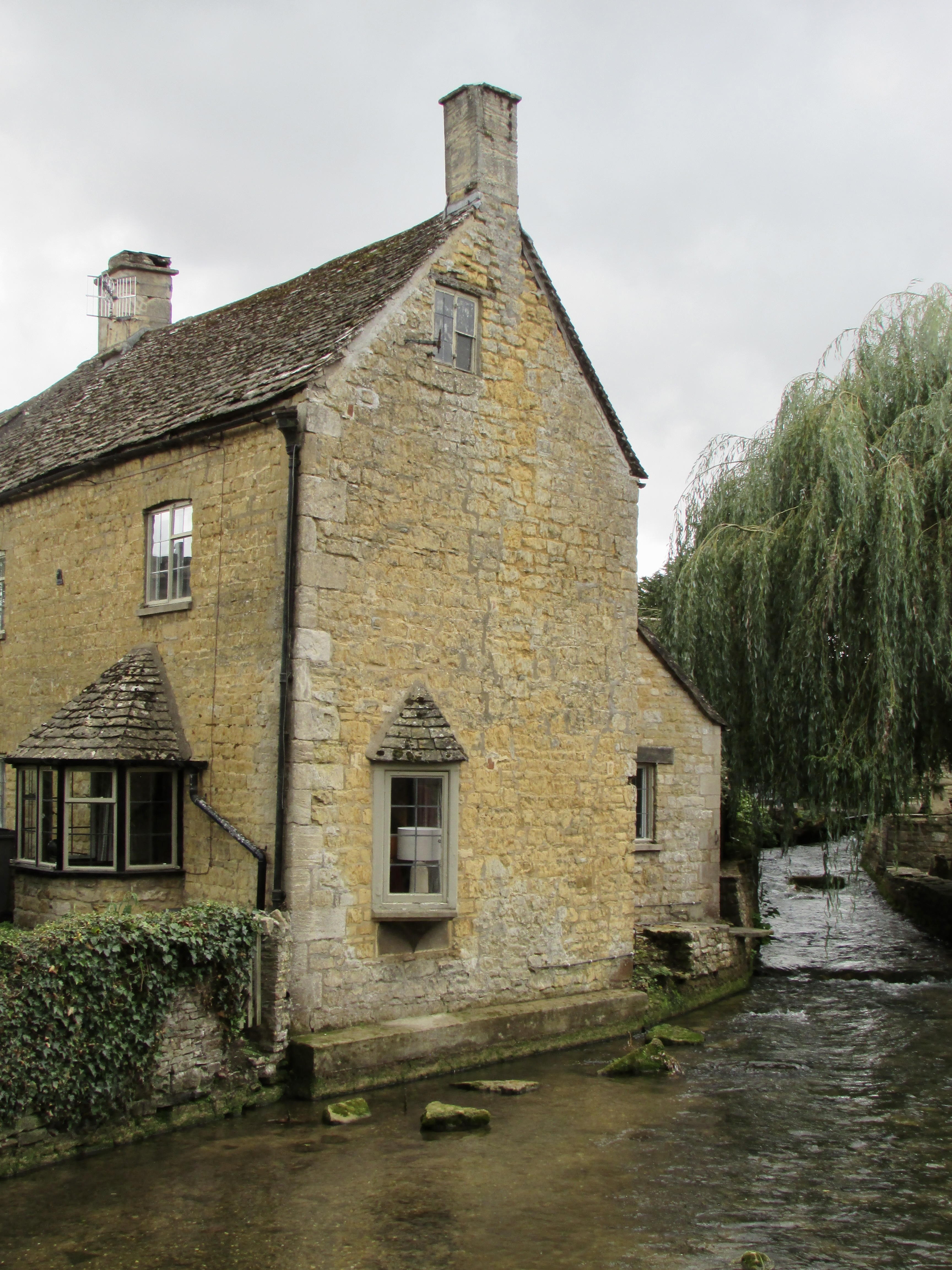
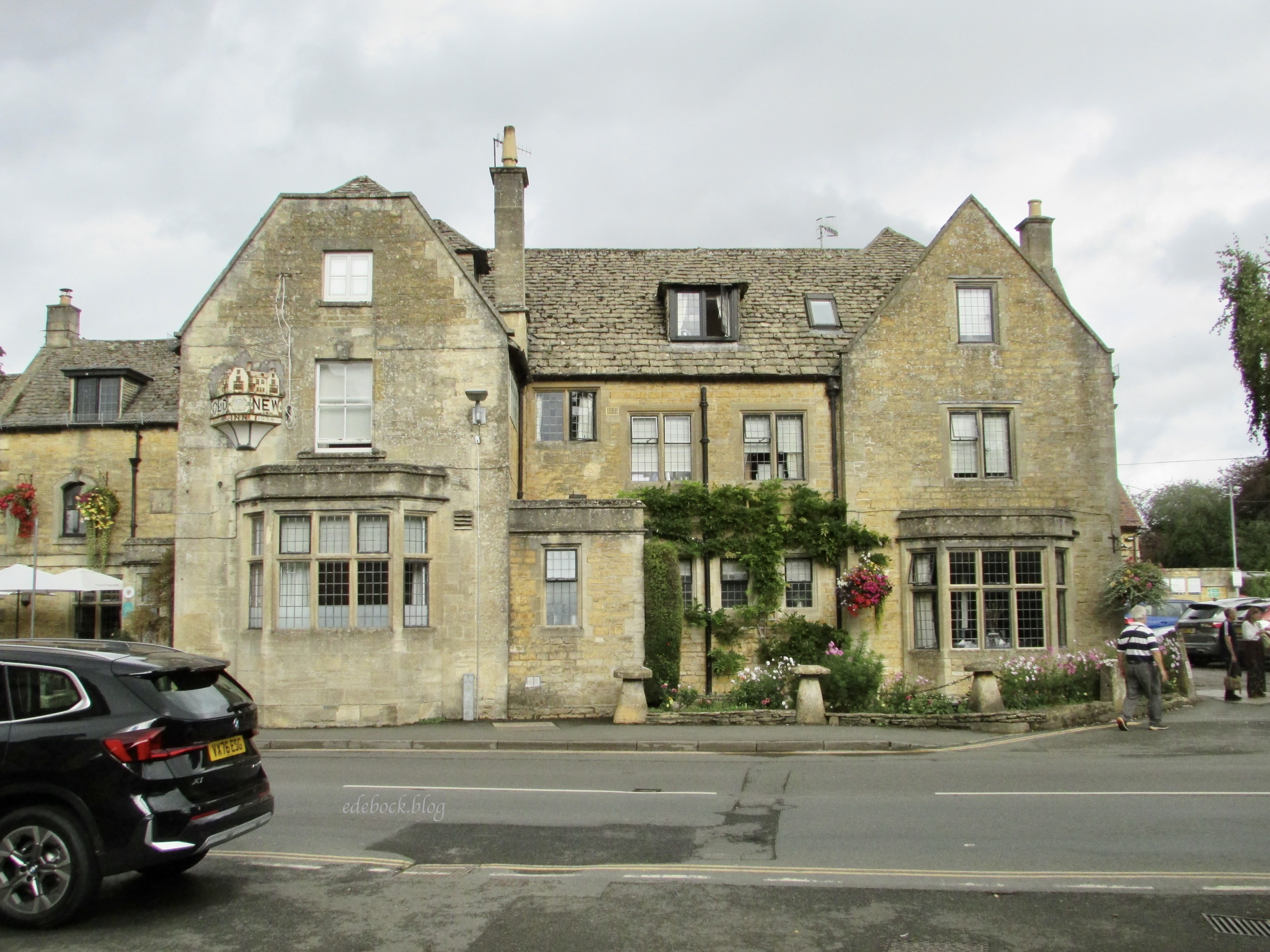
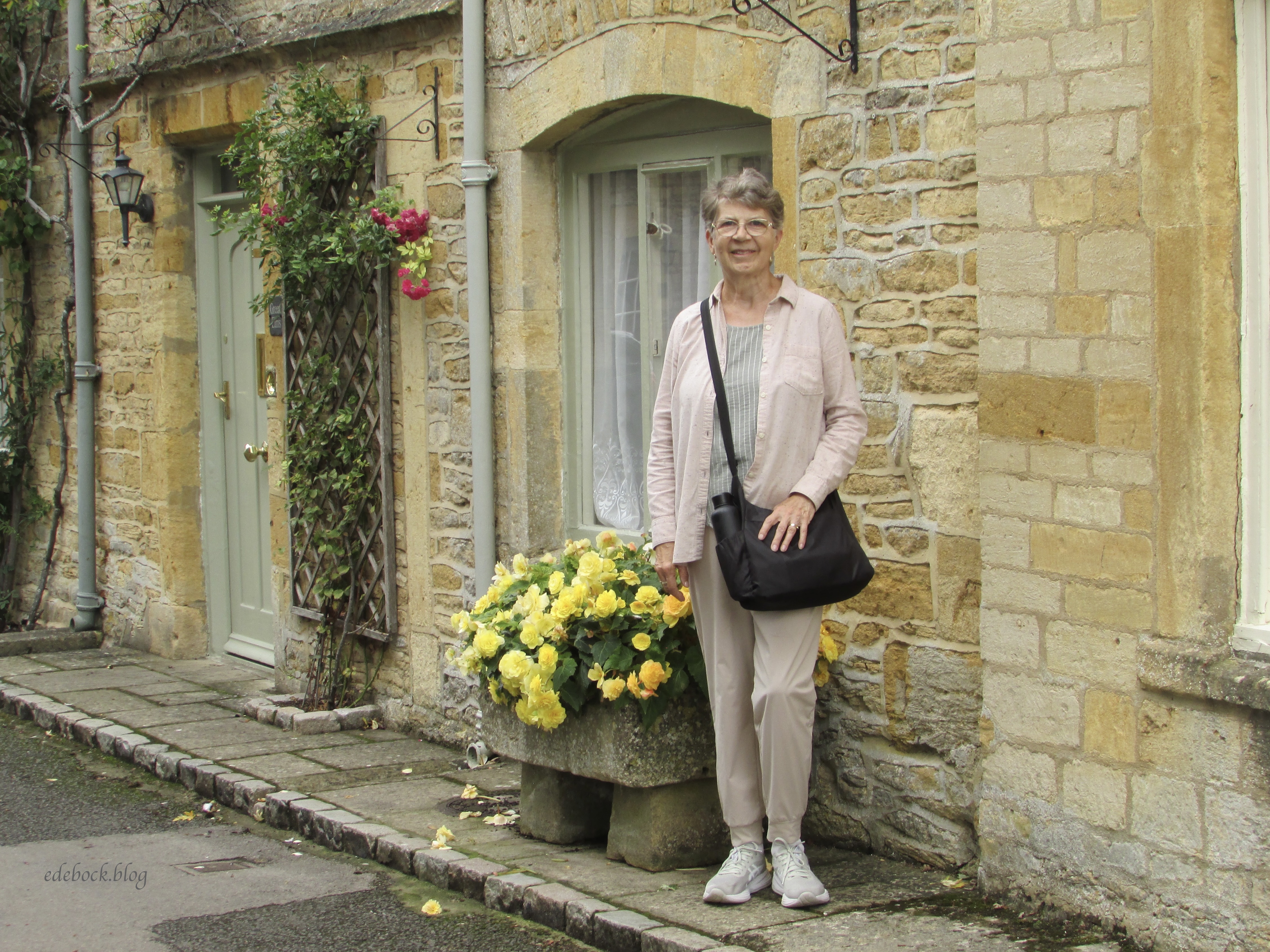
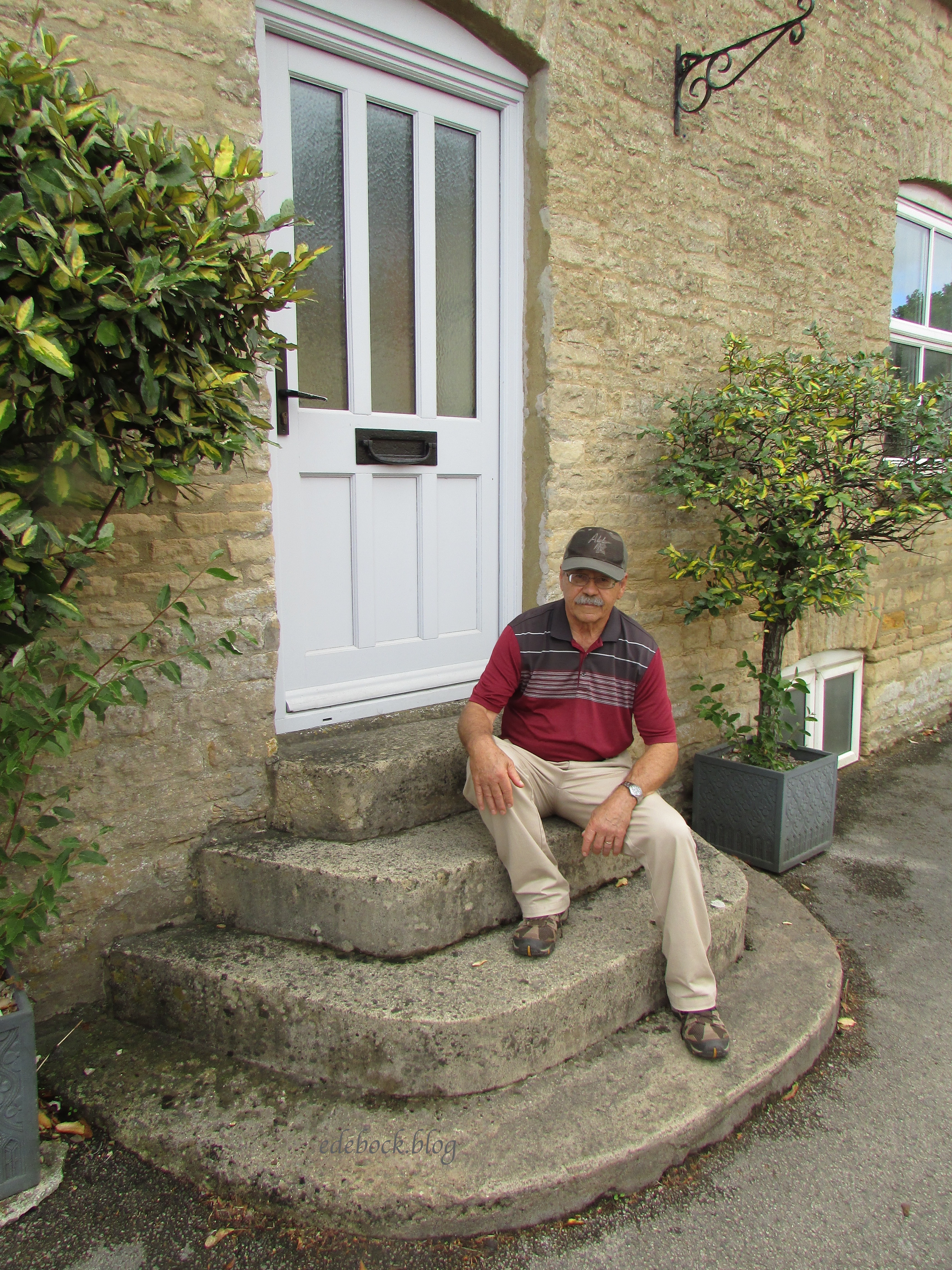
Buildings in the Cotswolds are primarily made from Cotswold Stone, a honey-coloured limestone that is quarried locally. Many of them are more than 1000 years old and new construction is required to fit the historical look.
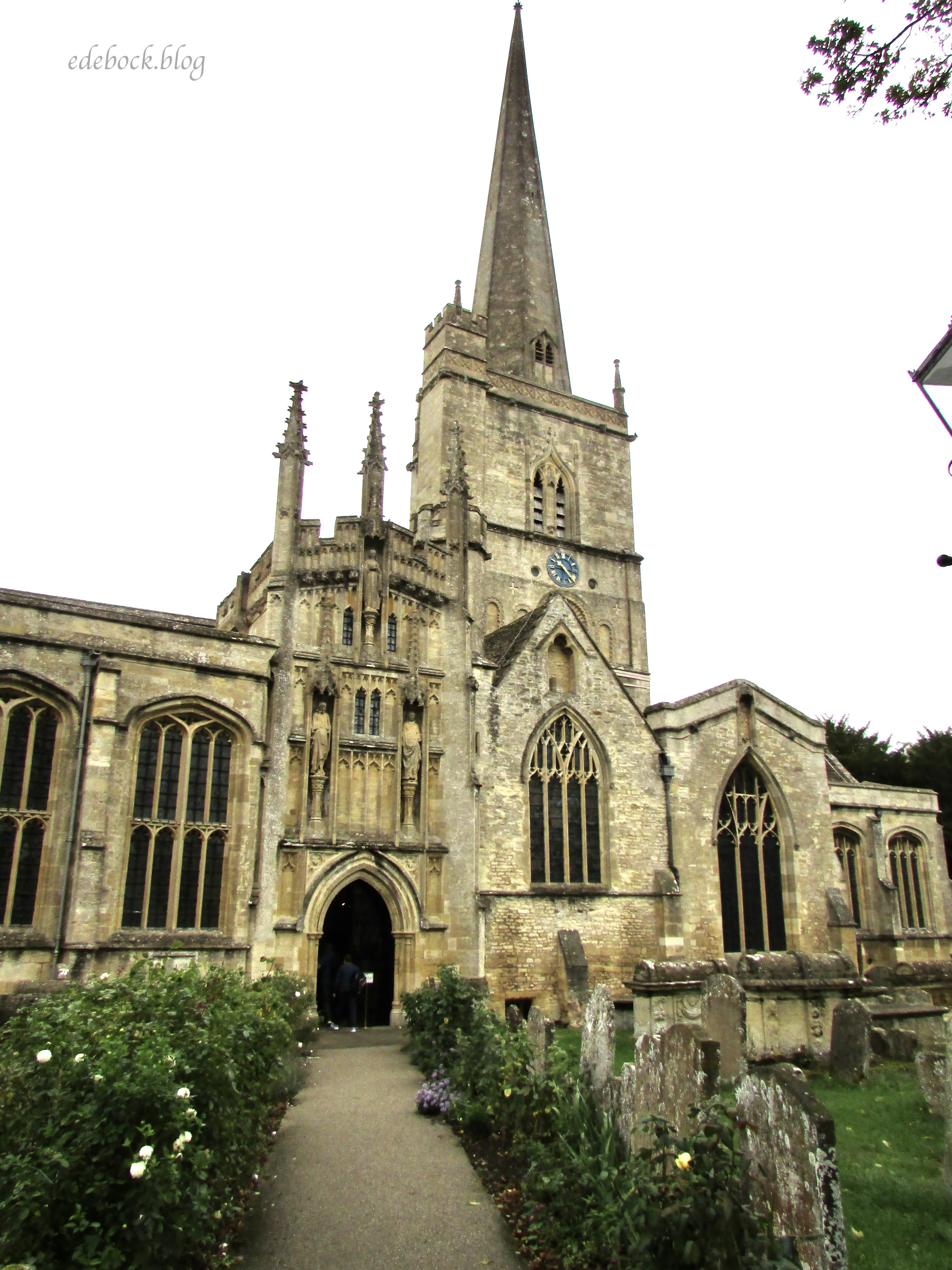
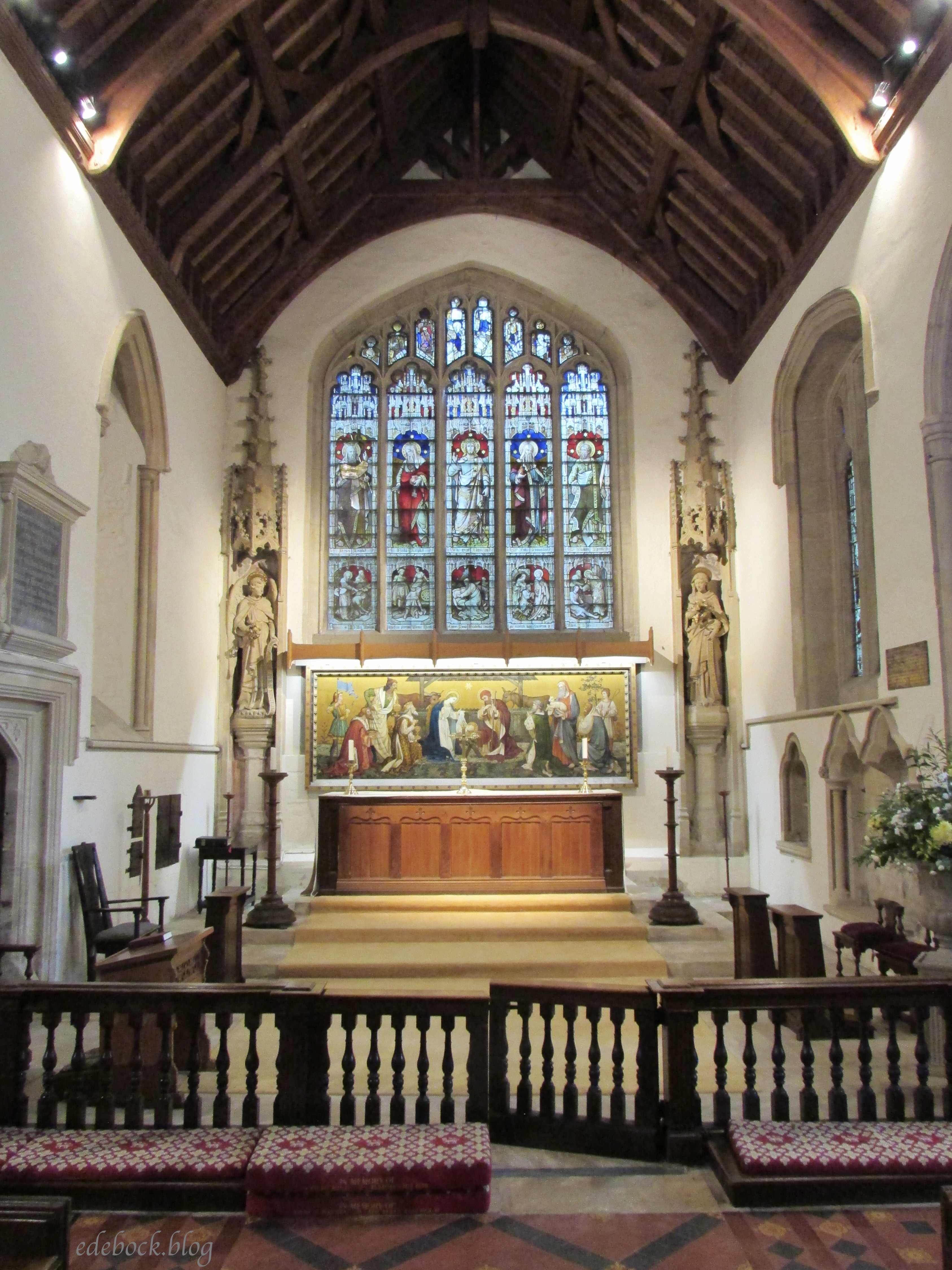
Our first stop was Burford. Known as the gateway to the Cotswolds, Burford has a population of about 1700 people. We started our visit there at St John the Baptist Church, an active evangelical Anglican church where we had the privilege of chatting about the church and the community with a gent who volunteers there.
One of the things that I liked about this particular tour was the fact that our guide gave us lots of information about each village before we arrived and then we were free to explore on our own. Rather than staying only on the main shopping streets, hubby and I also ventured into less touristy spots. So, come explore Burford with us.
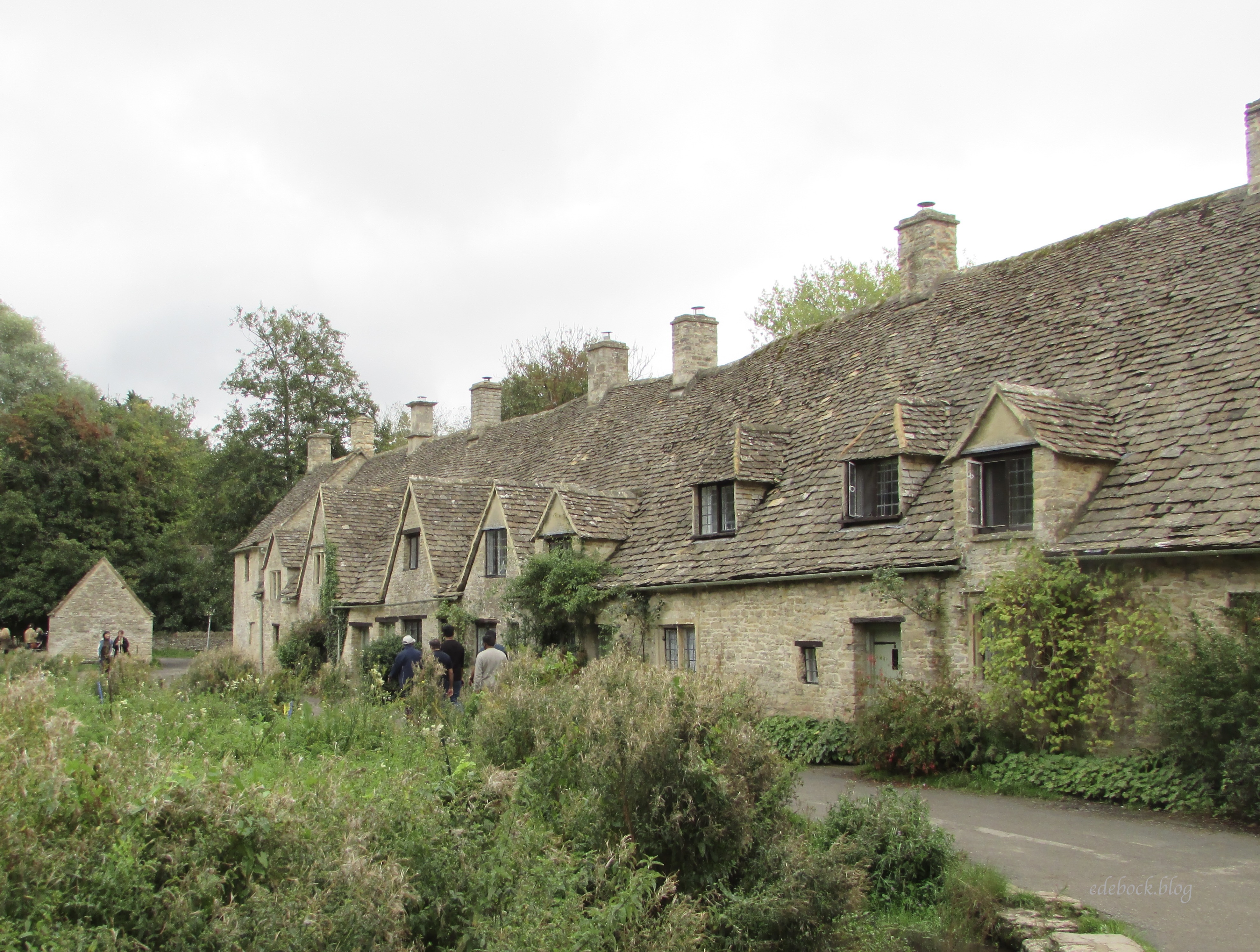
Our next stop was tiny Bibury. Getting there was an adventure. Due to a bridge being closed for maintenance, our driver had to find an alternate route, one he’d never used before! As a result, we traveled some very narrow backroads through idyllic countryside that we wouldn’t have seen otherwise. Bibury was the quietest of the villages that we visited, not full of tourists like the other three. Likely some tours bypassed it because of the bridge closure, but our driver was determined that we not miss it.
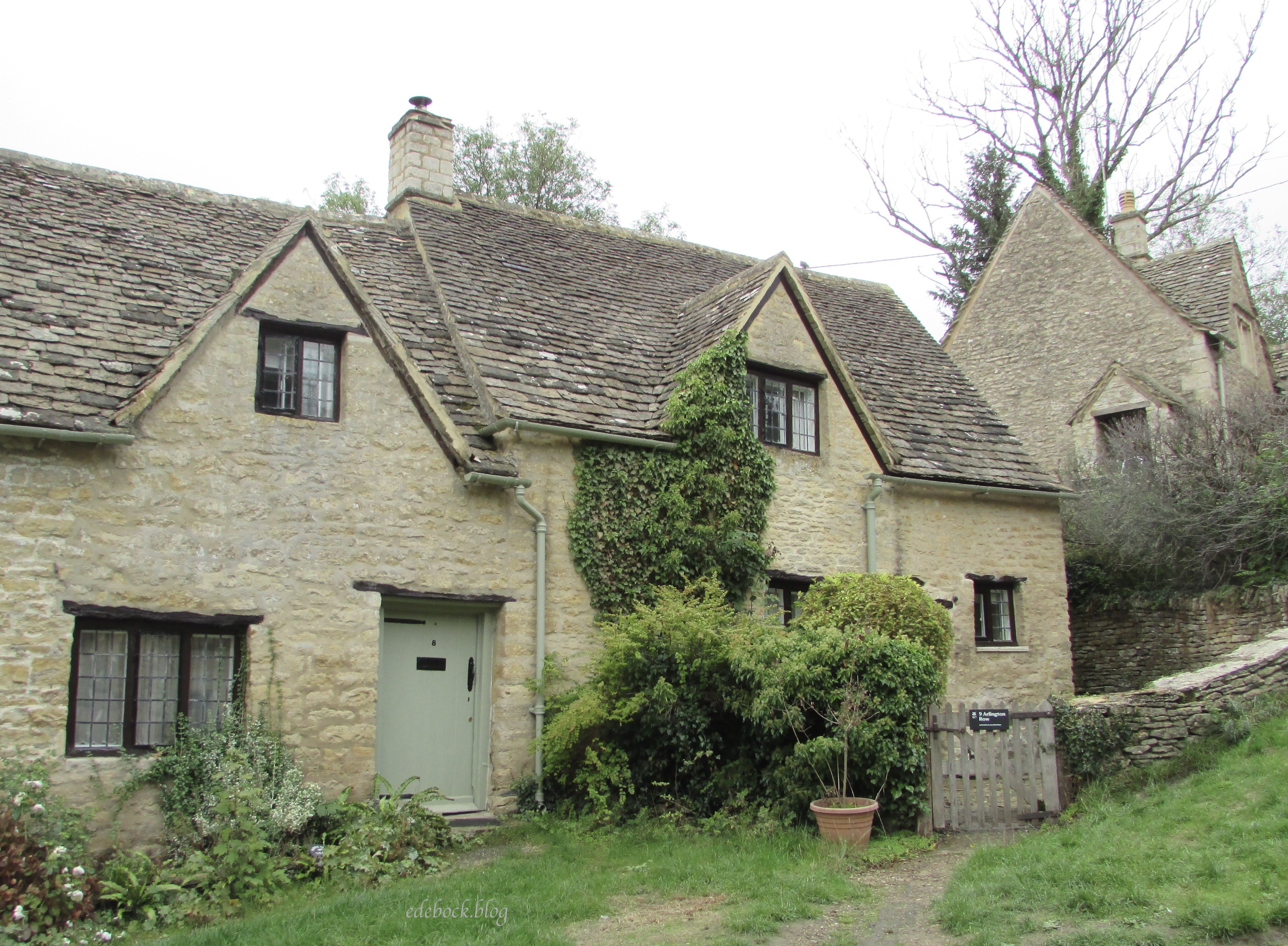
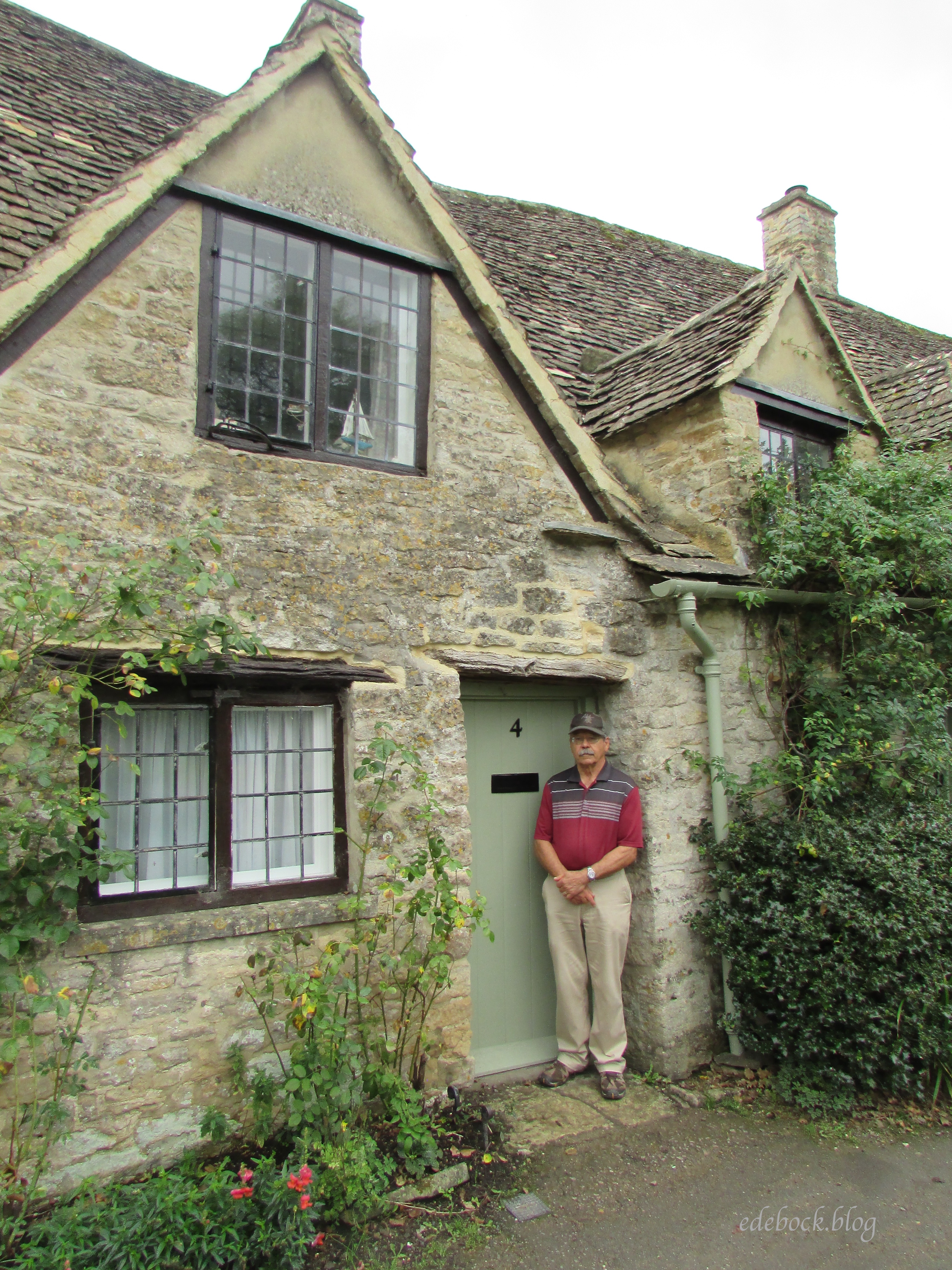
Located on the quiet River Coln, Bibury is famous for Arlington Row, a picturesque row of 17th-century cottages that is one of the most photographed sights in England. These historic buildings started as a wool store in about 1380 and were turned into weavers’ cottages during the 17th century to house handloom weavers who supplied cloth to the nearby Arlington Mill. The main industry in the Cotswolds in the past was the sheep and wool trade.
The doors in these cottages were unusually short, perhaps to retain heat or maybe because people in the medieval period were generally shorter than they are today.
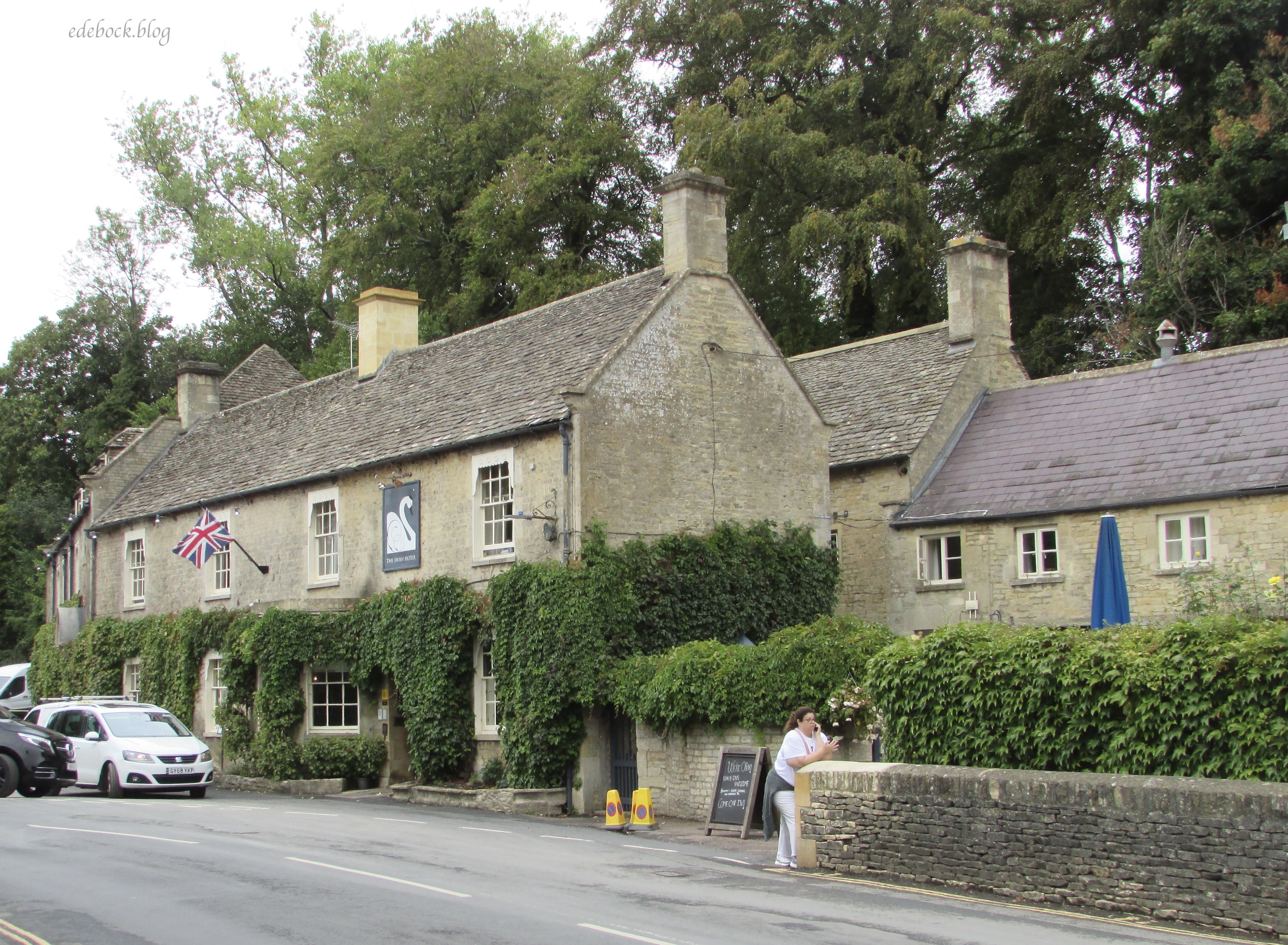
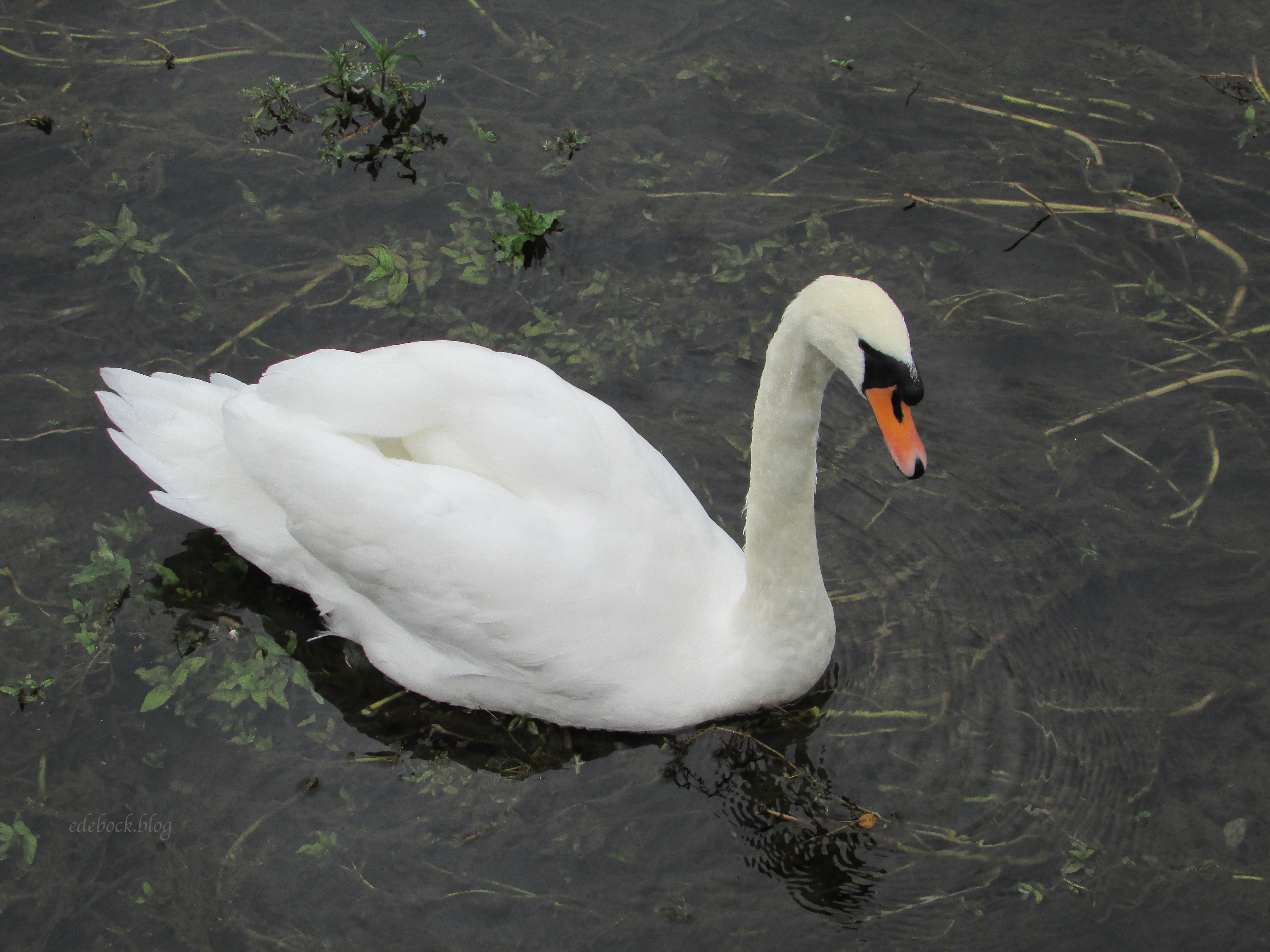
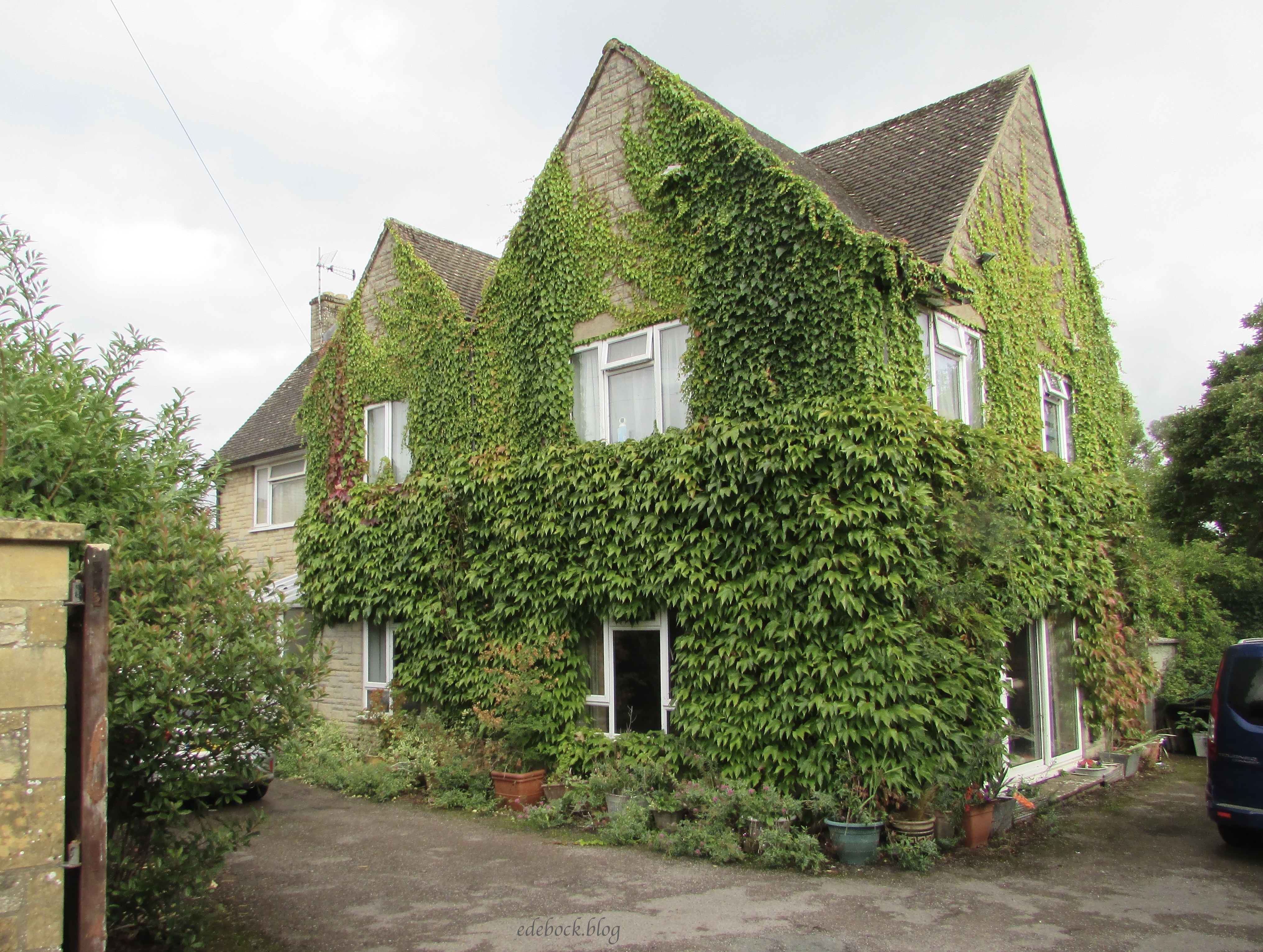
Bibury is also home to The Swan Hotel, an ivy-clad 17th-century coaching inn that is still in use today. Fittingly, a lovely swan posed for us in the reedy edge of the tranquil river just across the road.
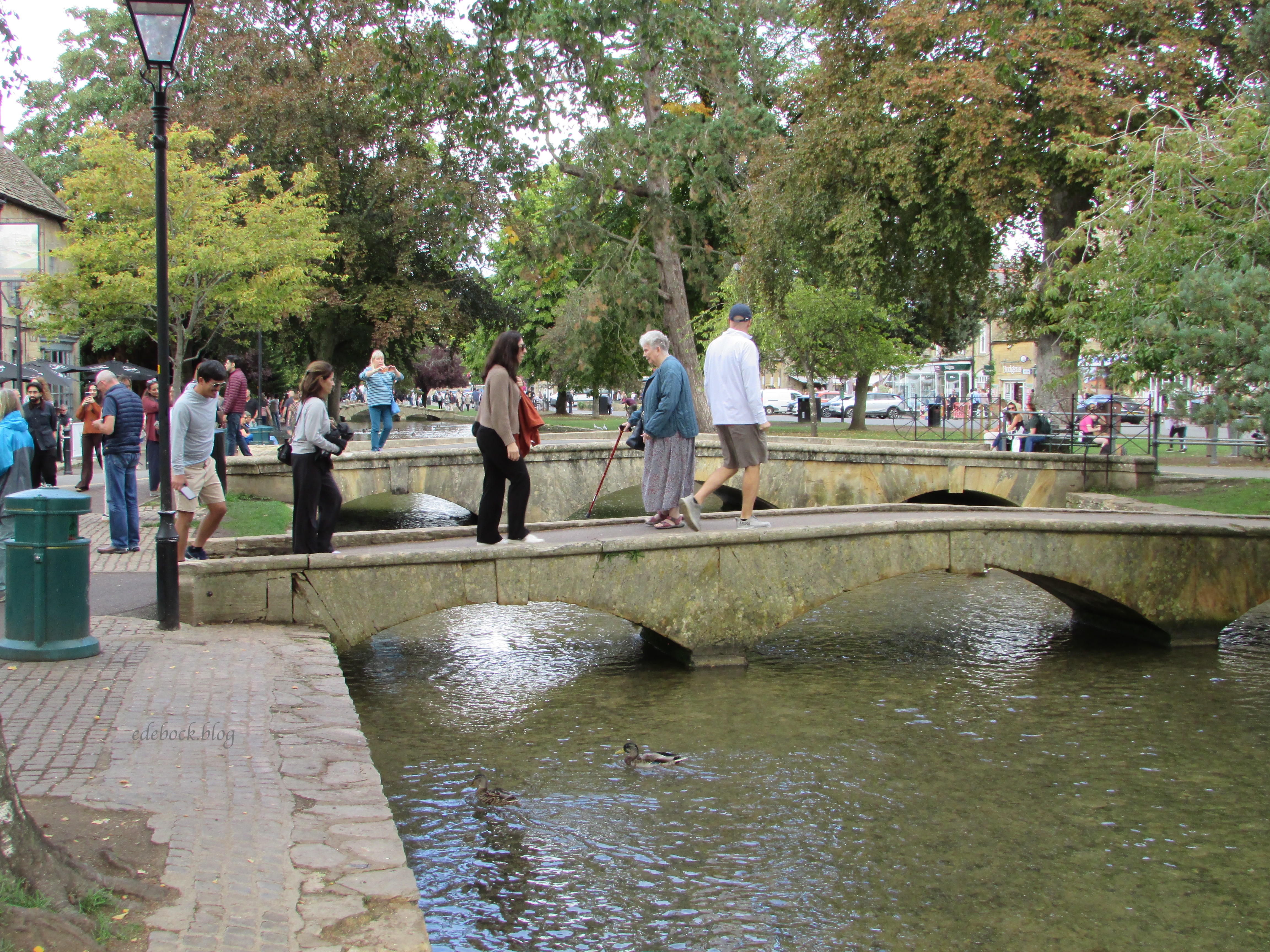
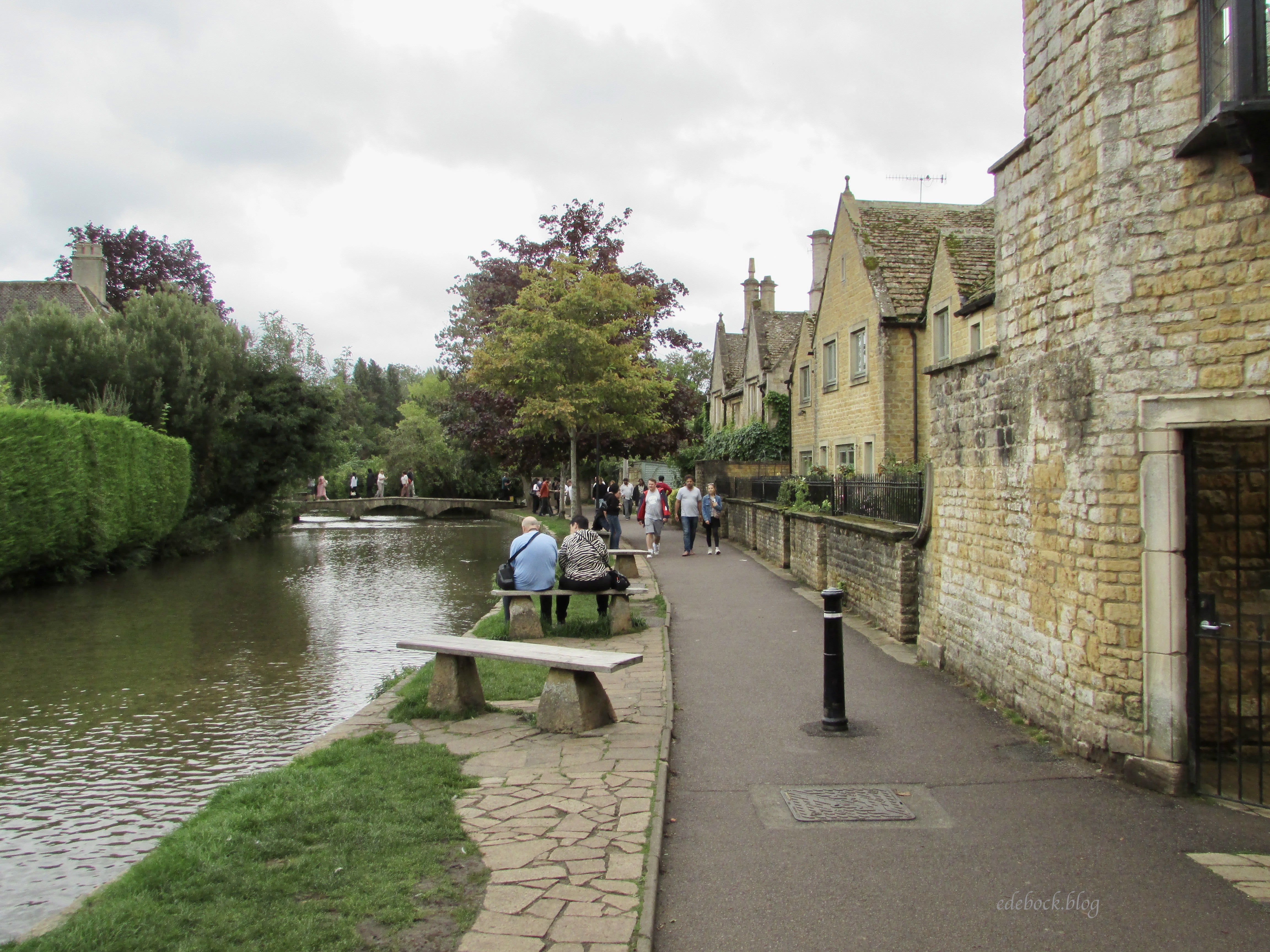
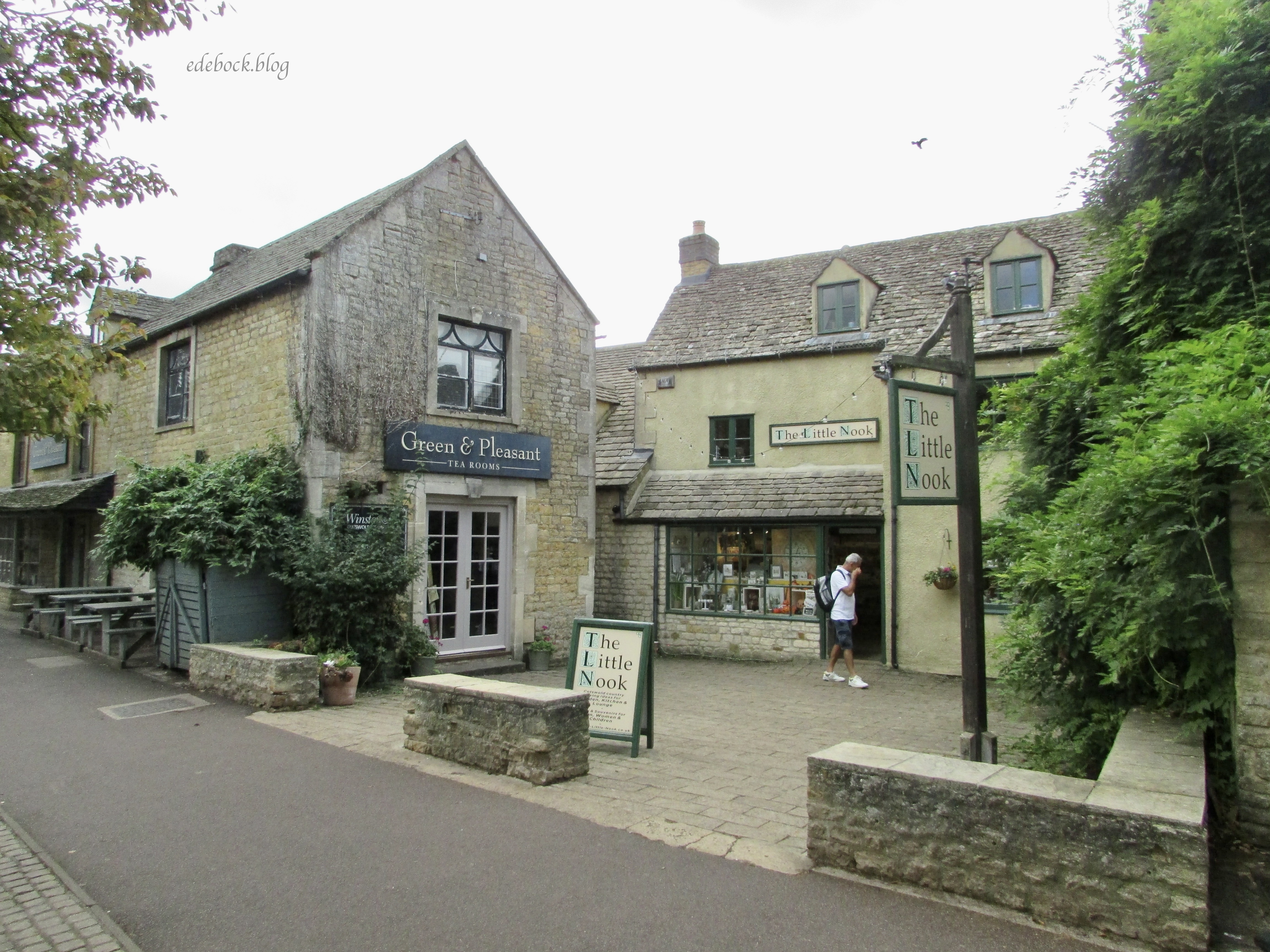
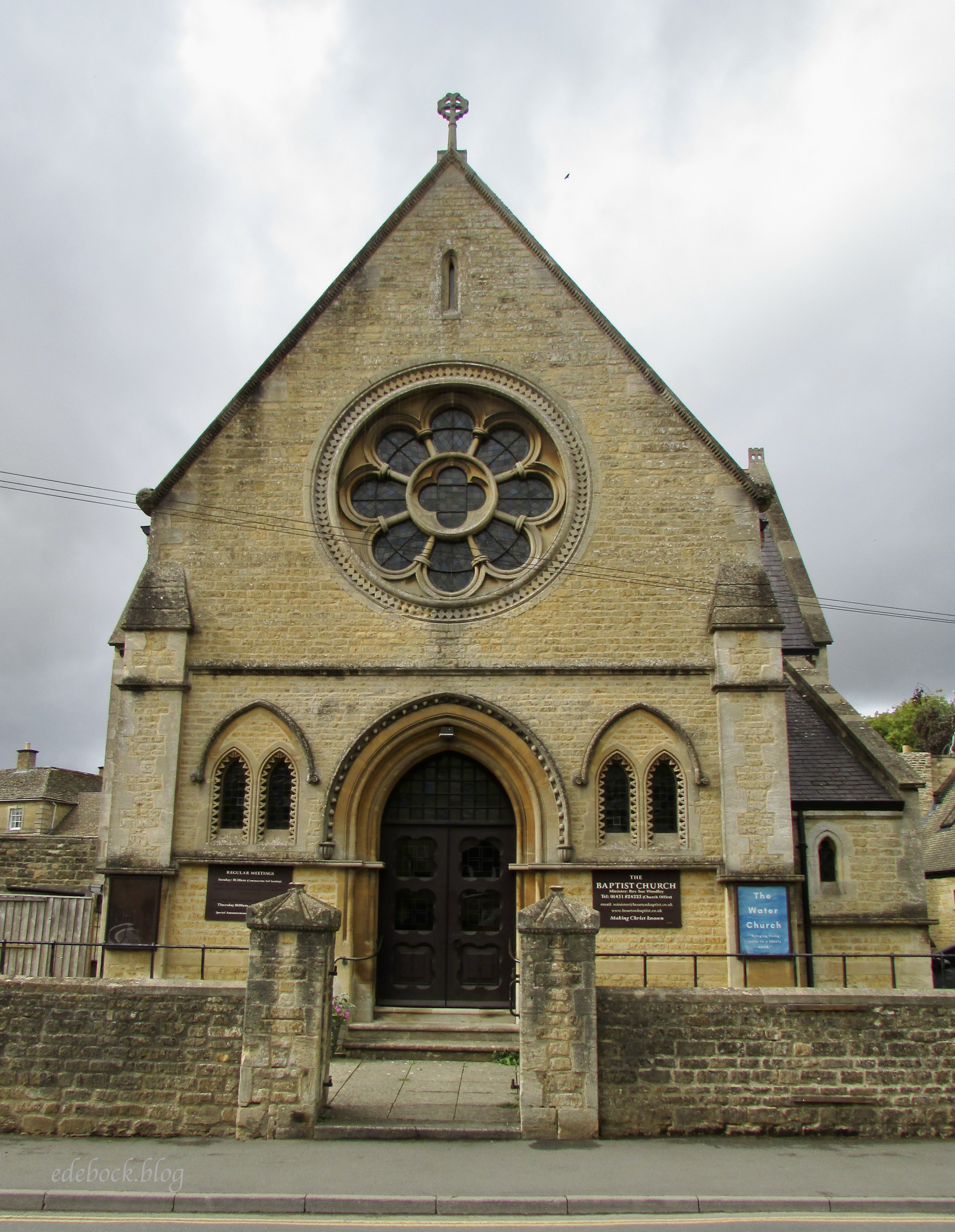
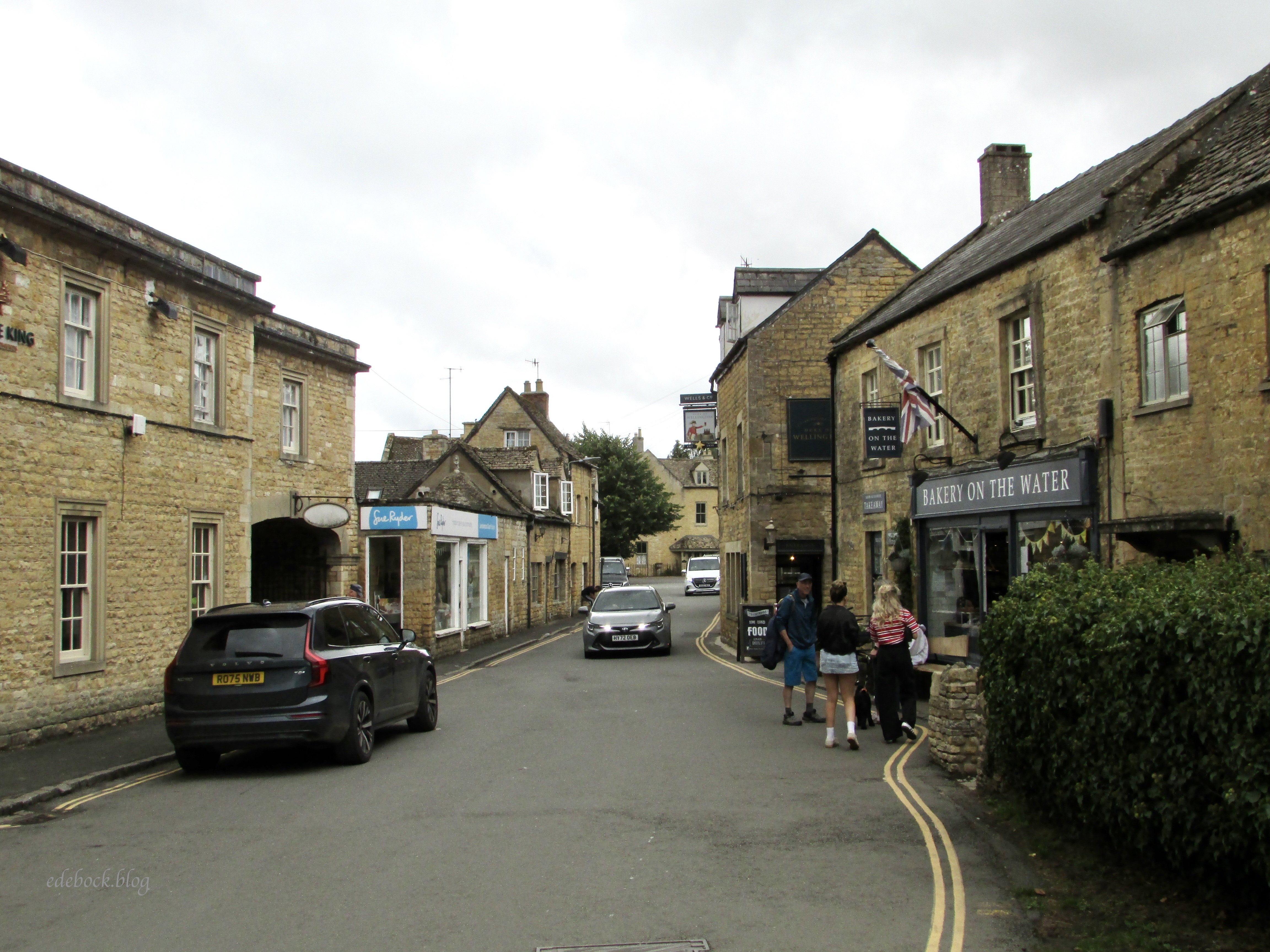
Known as “Venice of the Cotswolds” for the shallow River Windrush running through its centre and spanned by numerous low arched stone bridges, Bourton-on-the-Water was our third and longest stop giving us time to find lunch and eat it by the river. With a population of approximately 4300 people, Bourton-on-the-Water was the biggest and the busiest of the villages that we visited. Come explore with us!
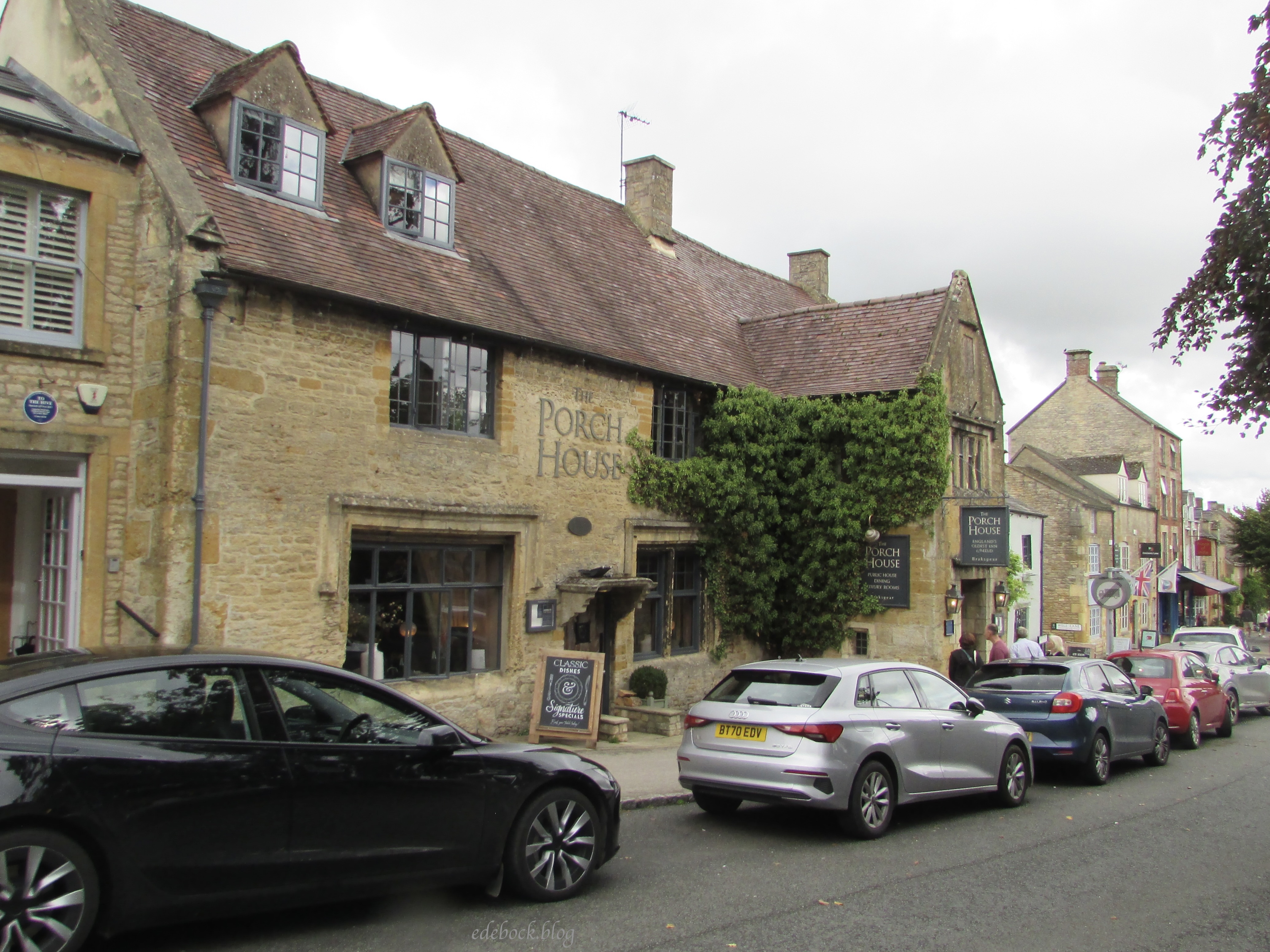
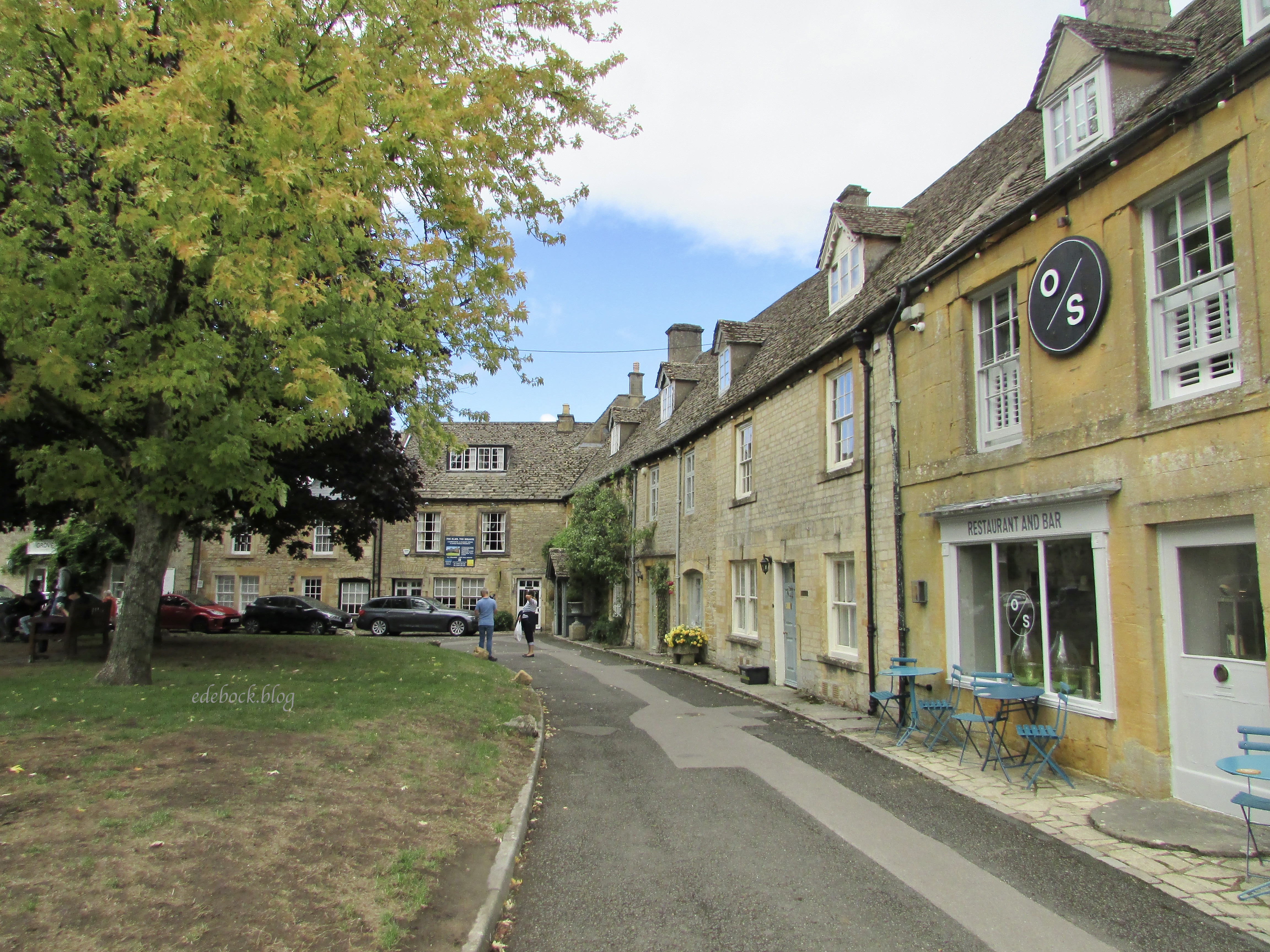
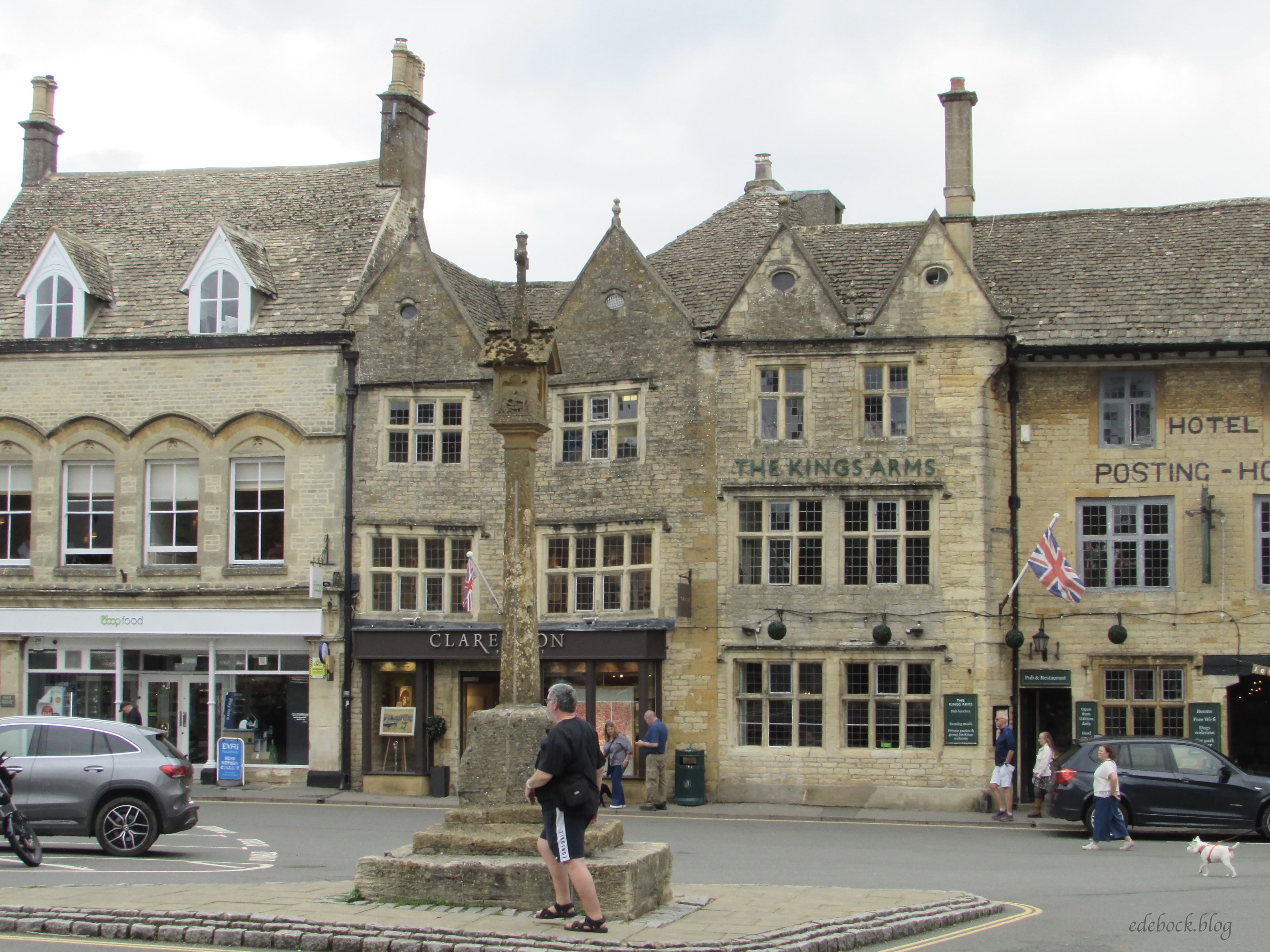
Our final stop was Stow-on-the-Wold, a jumble of inns and antique shops situated around an ancient market square. Stow has been a centre of trade in the Cotswolds for centuries and was the location of the last battle of the English Civil War in 1646. It’s also the location of The Porch House, believed to be England’s oldest pub. Parts of it date back to 947 AD.
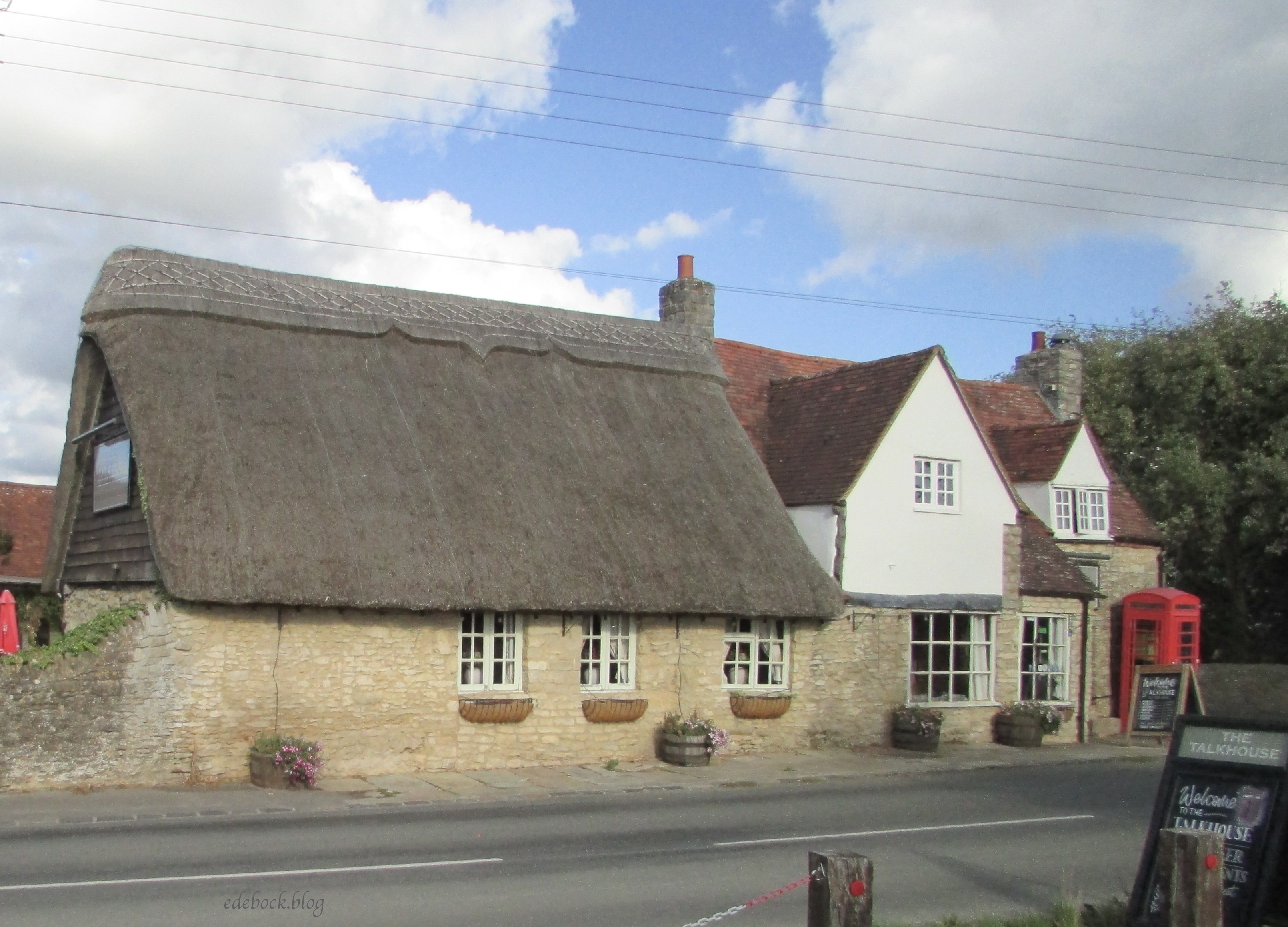
Although most of the roofs in the Cotswolds are made of tiles cut from the Cotswold Stone, there are still a few thatched roofs. Our driver stopped before we left the area so that we could take photos of this one. He also explained that having a thatched roof is very expensive because they have to be replaced every 20 to 25 years and there are very few craftsmen left who do thatching.
Nine and a half hours after boarding the bus, we were back where we started having thoroughly enjoyed a day to remember.
First of all, a big thank you to everyone who wished us a Happy 50th Anniversary on social media after reading yesterday’s post! We definitely felt the love!
Today was another very full day. We woke up to drizzly rain, but it was hard to feel bad about it considering the fact that England has suffered extreme drought this summer and desperately needs the moisture.
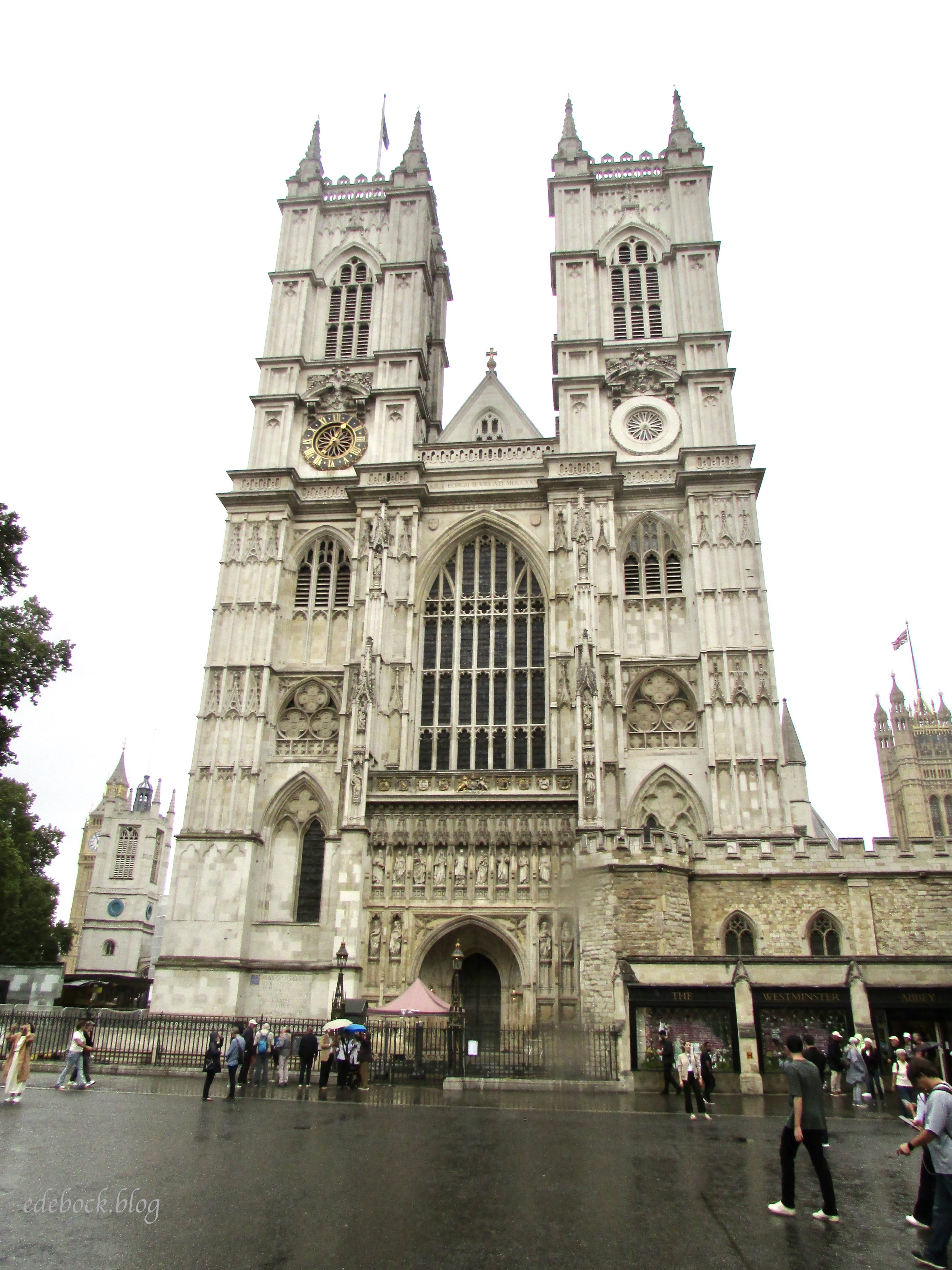
We started our day by attending the 11:15 AM Sung Eucharist service at Westminster Abbey, the historic Gothic church in central London that has hosted every British coronation since 1066. We arrived almost an hour before the service was to begin securing a place near the front of the line and as a result, we ended up sitting in the second row of chairs at the front of the sanctuary! The service was very formal and liturgical, but also very meaningful. Unfortunately, we weren’t allowed to take any pictures inside the church, but photos wouldn’t have captured the sound of the magnificent pipe organ or the voices of the Abbey Choir.
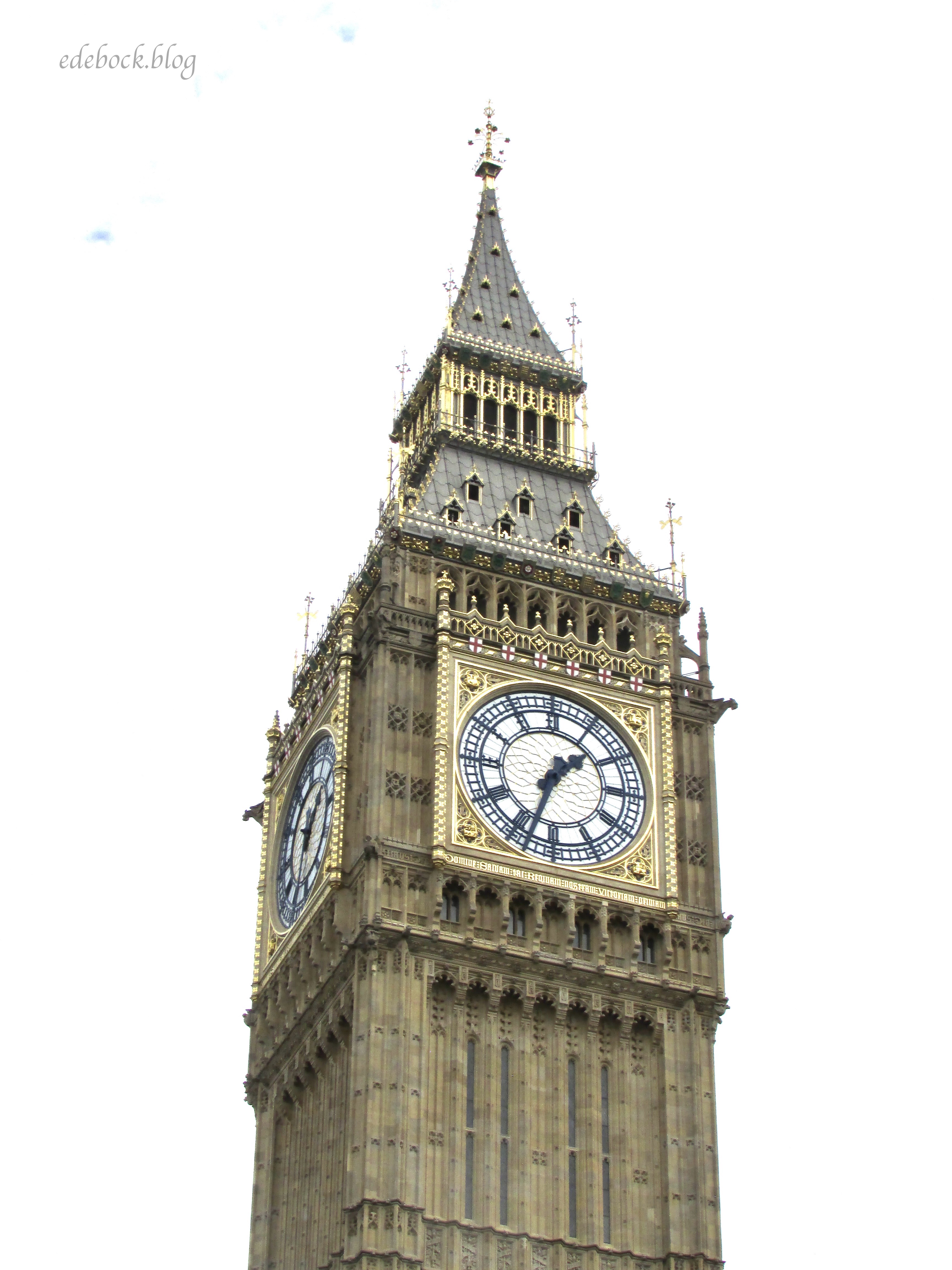
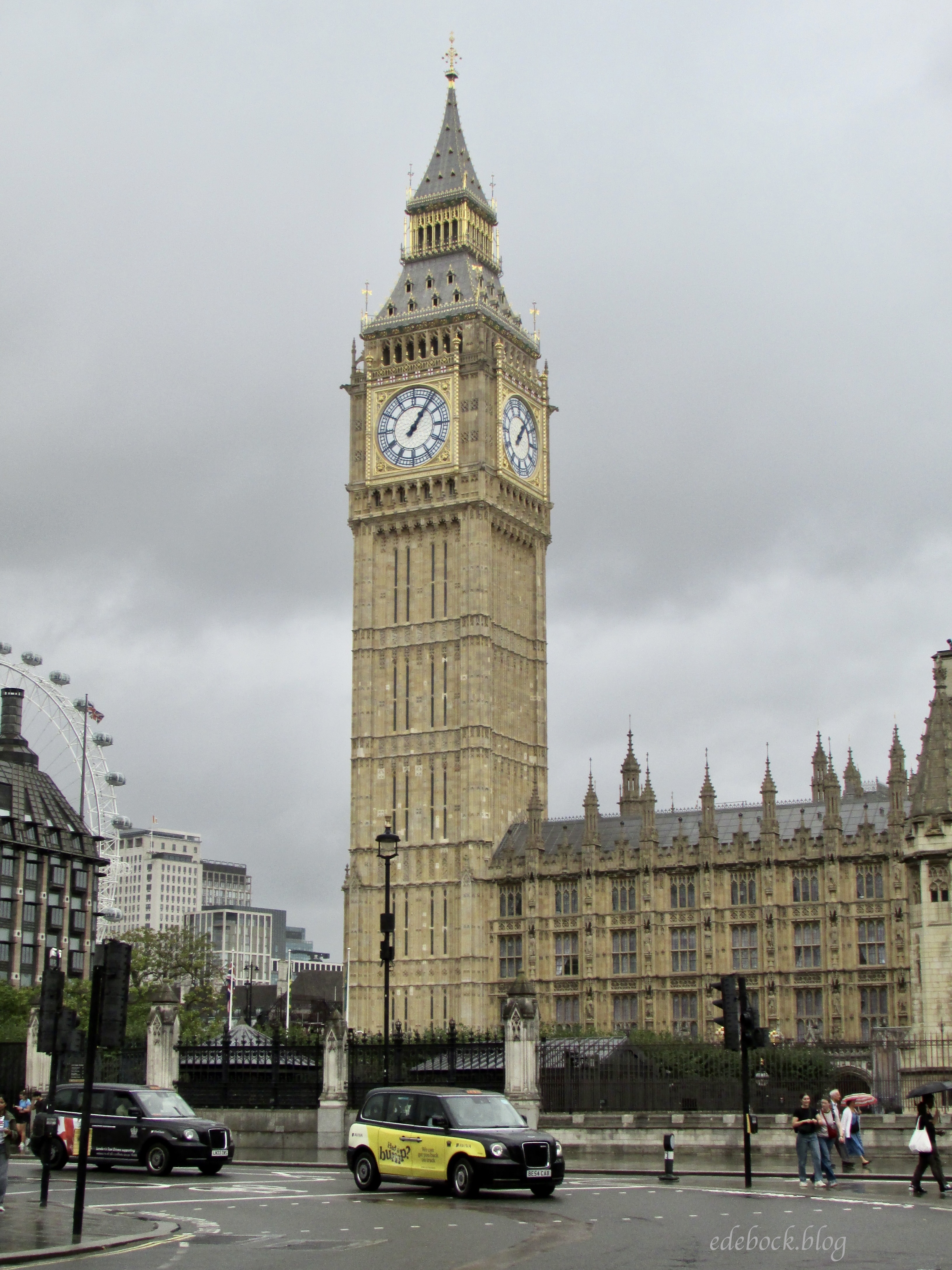
When we exited Westminster station prior to walking the short distance to the abbey, I knew that Big Ben was supposed to be right in front of us, but I didn’t see it at first. Why? Because it was so much bigger than I expected! At 96 metres (approximately 315 feet) it was towering over us and it wasn’t until I looked way up that I realized it was there!
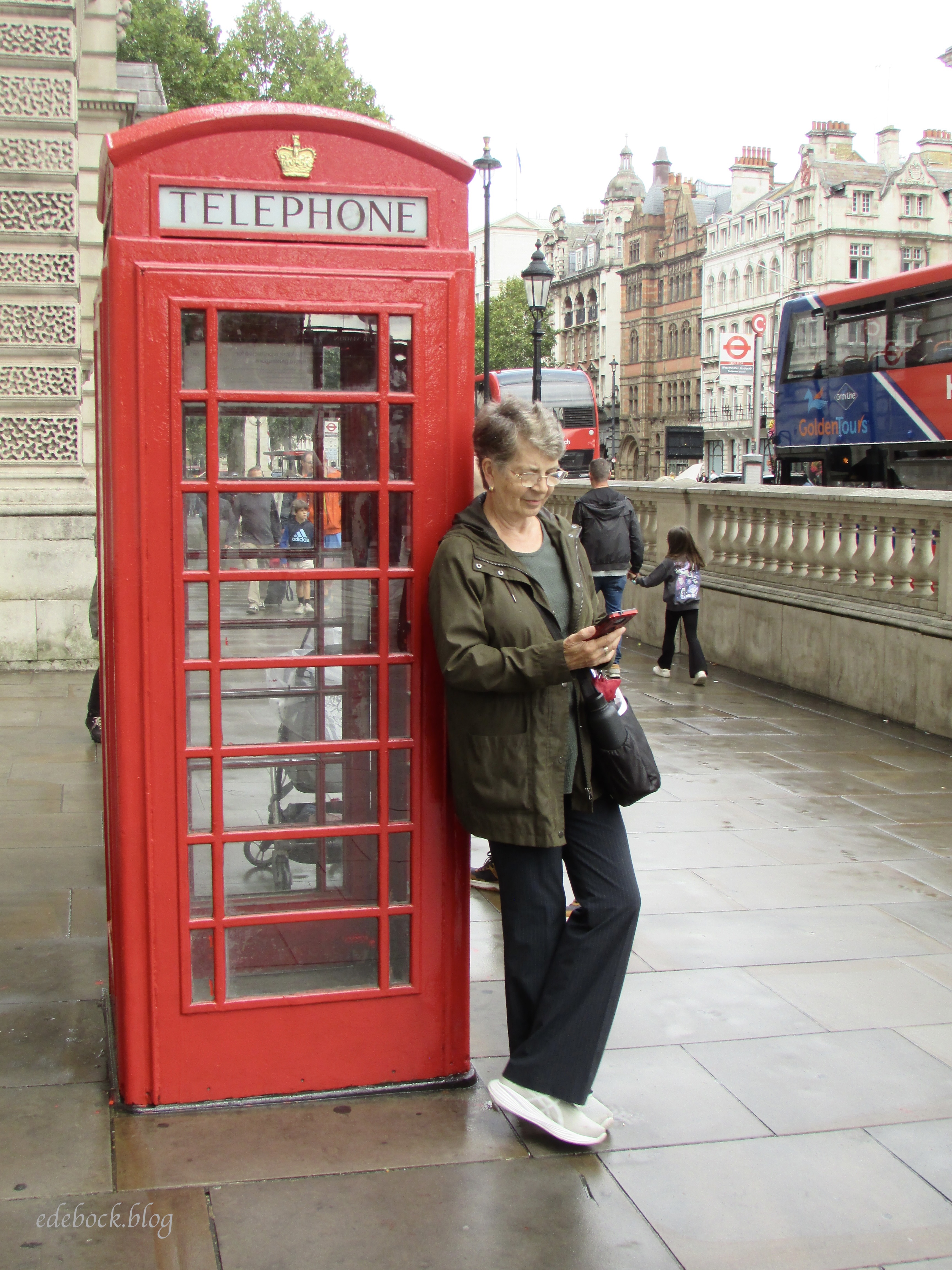
Many of today’s photos didn’t turn out very well because of the gloomy weather, but I decided not to take one that I had planned on. Several of London’s old red phone booths have been strategically placed across the street in such a way that a person can have their photo taken beside one of them with Big Ben in the background. While that would have been a fun picture to have, I wasn’t willing to stand in one of the long lines of people waiting for a turn to take the coveted photo. Instead, we went around the corner where hubby took this one which I think is quite delightful even without Big Ben in the background.
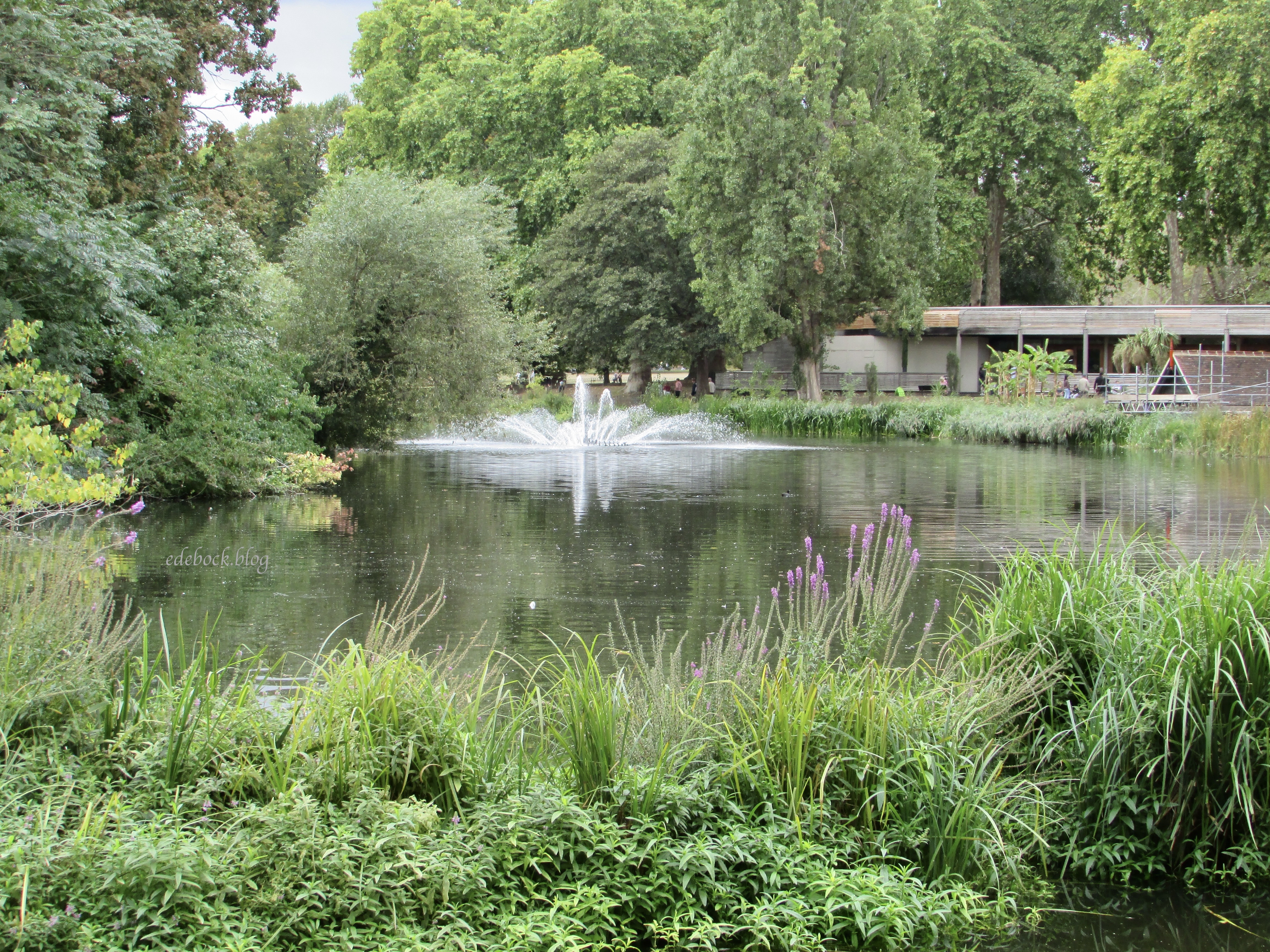
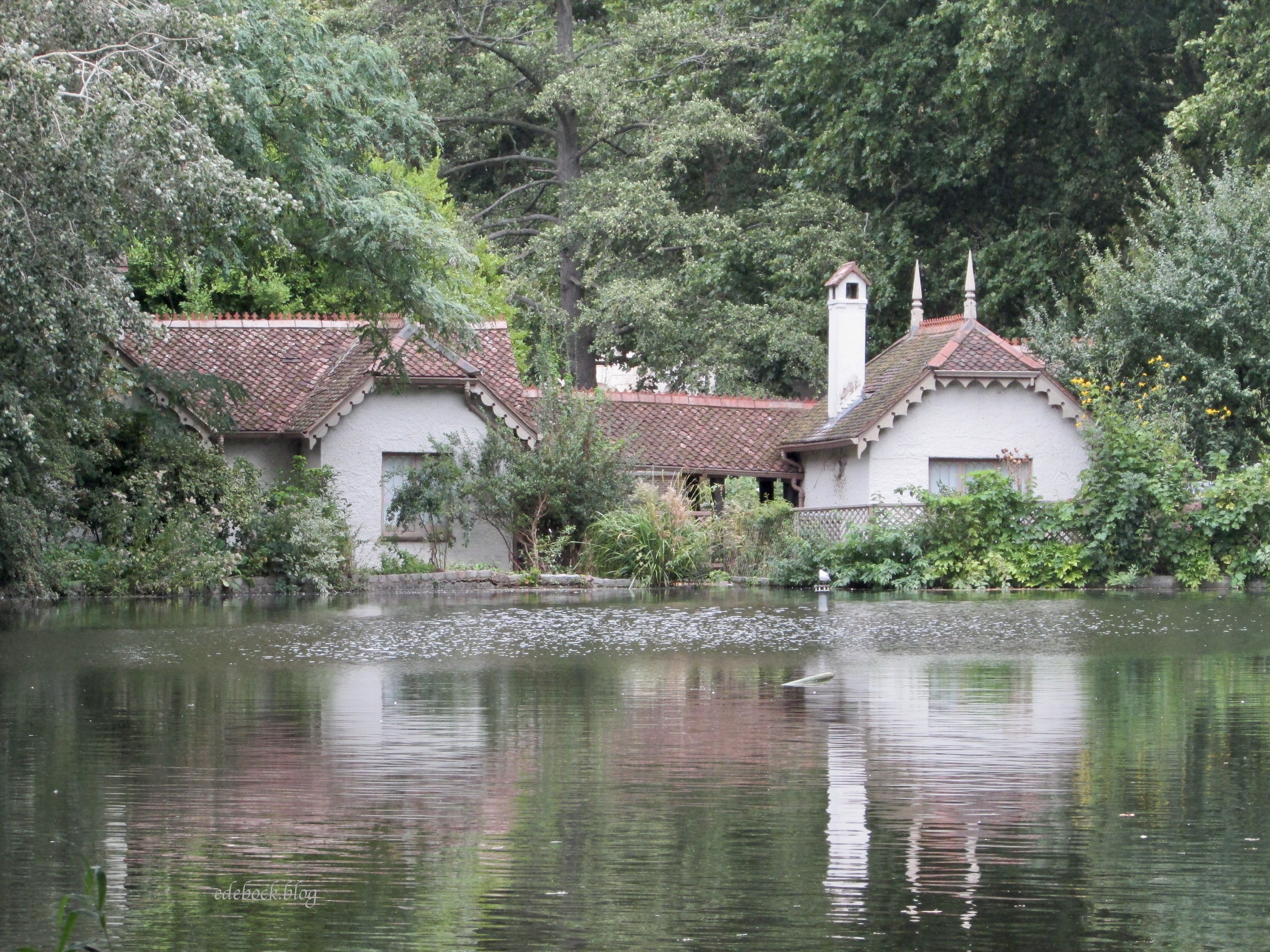
Before long, I was happy to leave that very congested part of the city behind us. We found lunch in a quiet cafe in the corner of nearby St James’s Park, one of London’s eight Royal Parks. We were happy to discover that we were able to walk most of the way to Buckingham Palace through the beautiful and peaceful park.
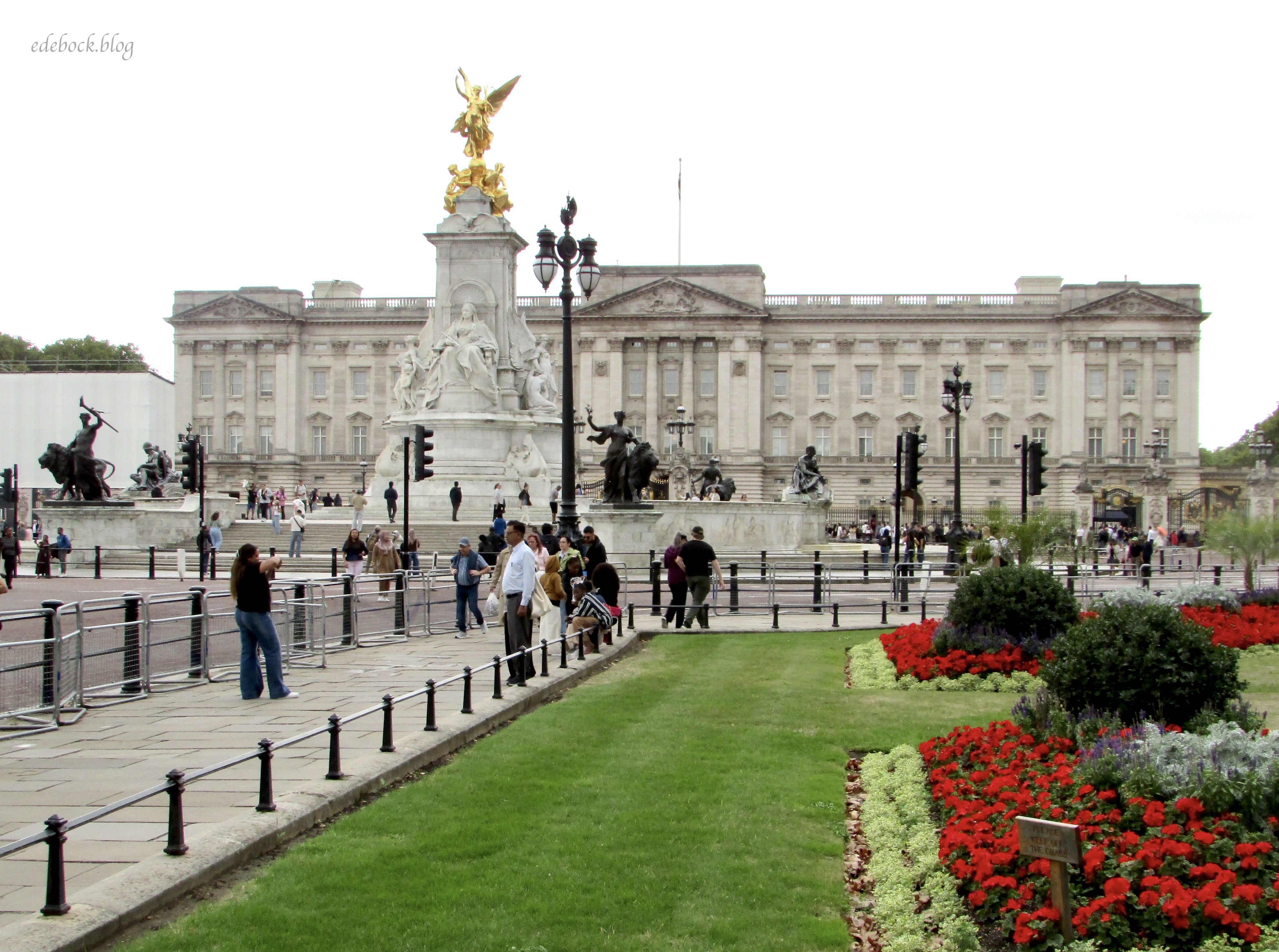
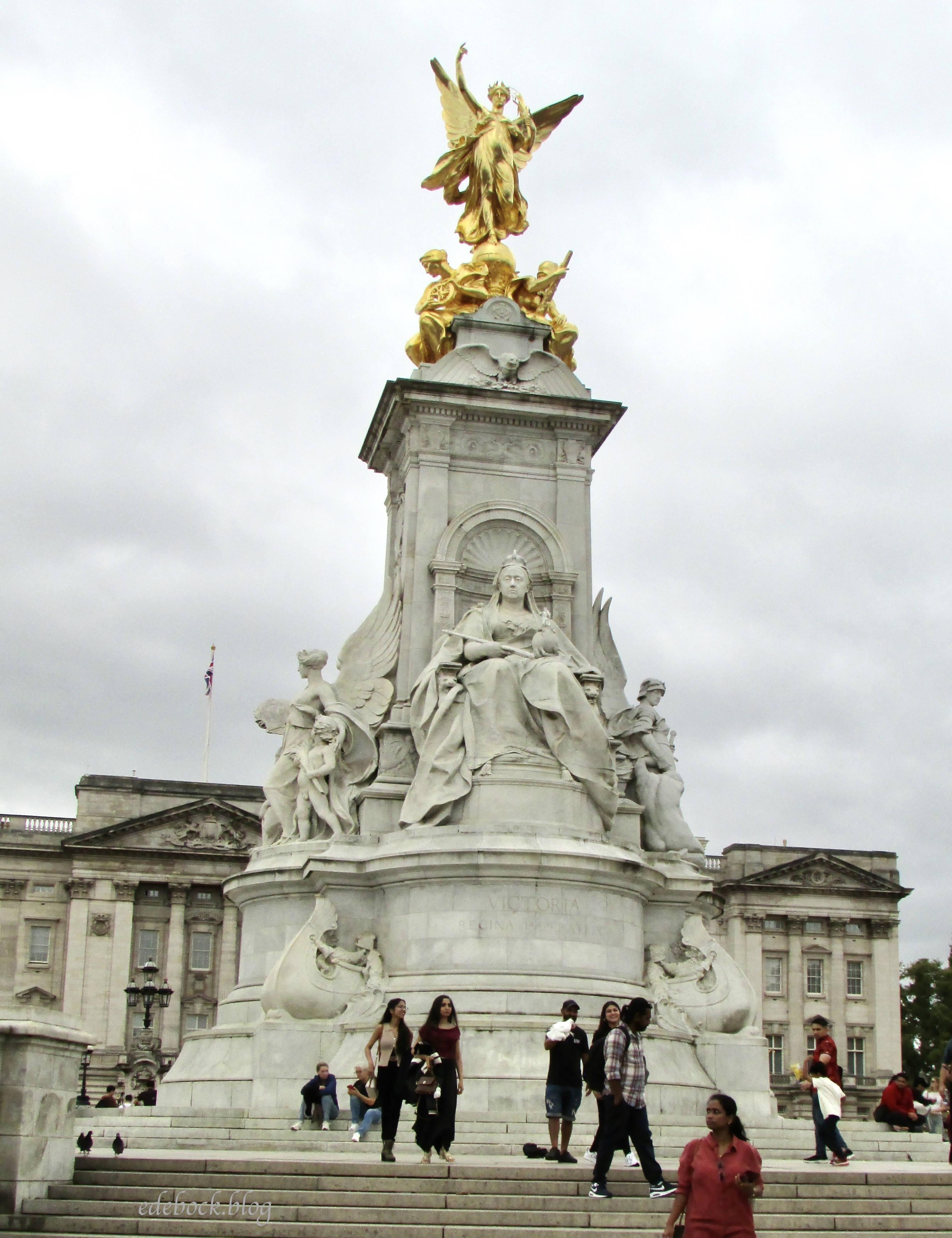
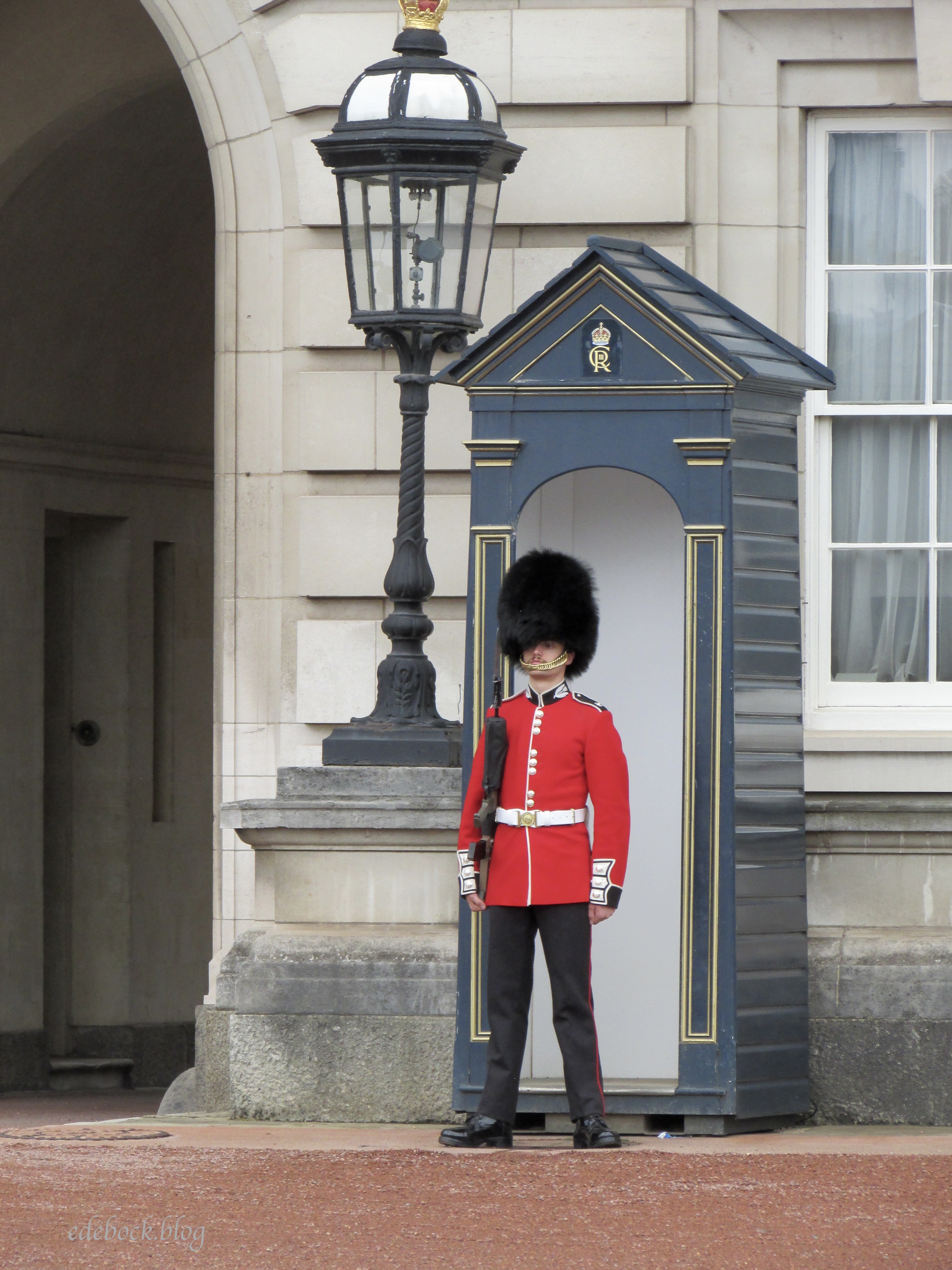
I have to admit that both of us were a bit underwhelmed by Buckingham Palace. The Victoria Monument in front seemed more impressive than the palace itself.
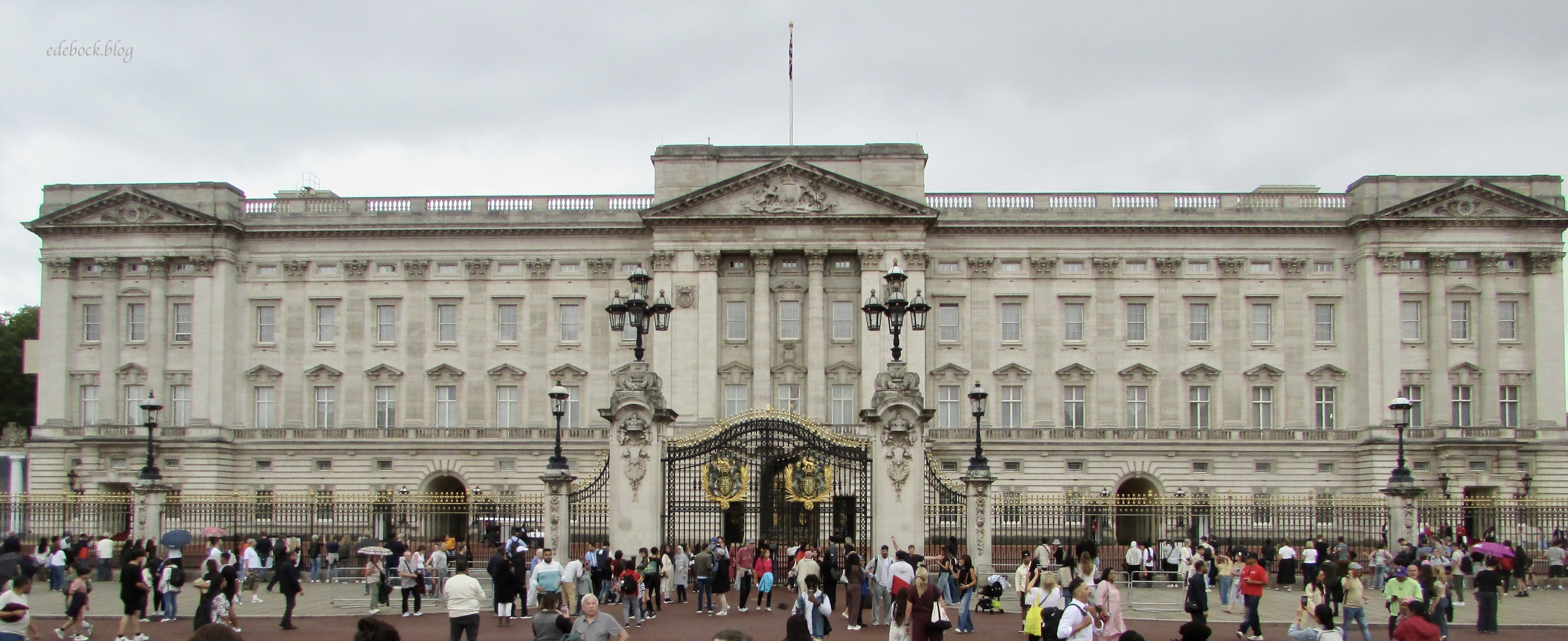
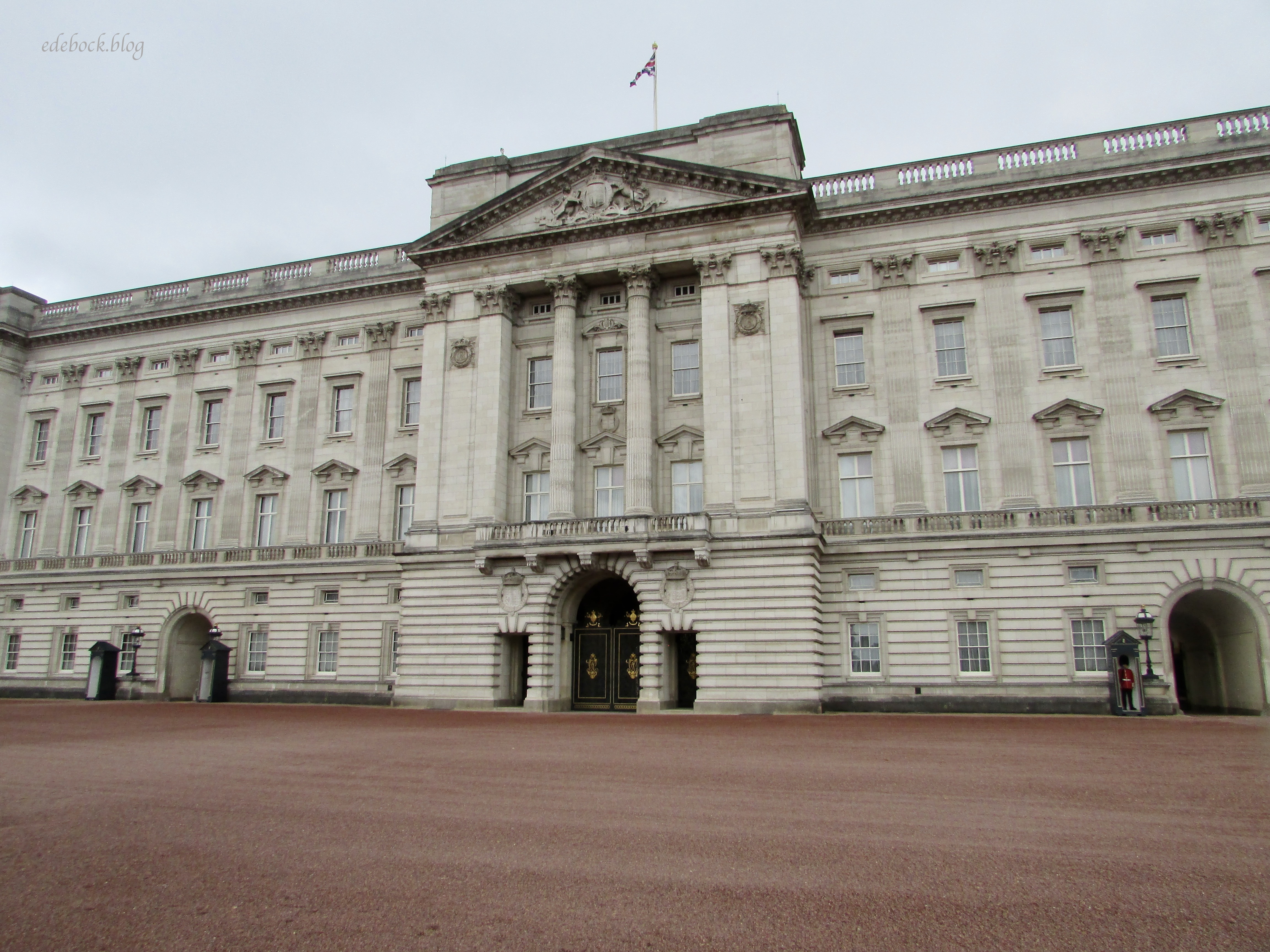
After all the amazing and enormous structures that we’ve seen over the past few days both here and in Istanbul, Buckingham Palace seemed rather plain. Of course, we were viewing it from outside the ornate iron fence and gates that are roughly 50 to 60 metres (160 to 200 feet) from the face of the building. I didn’t realize how big it actually was until I noticed how tiny the two palace guards looked!
I love my zoom lens!
I didn’t quite finish this post last evening as the internet in our little home away from home wasn’t cooperating, so I’ll finish up now…
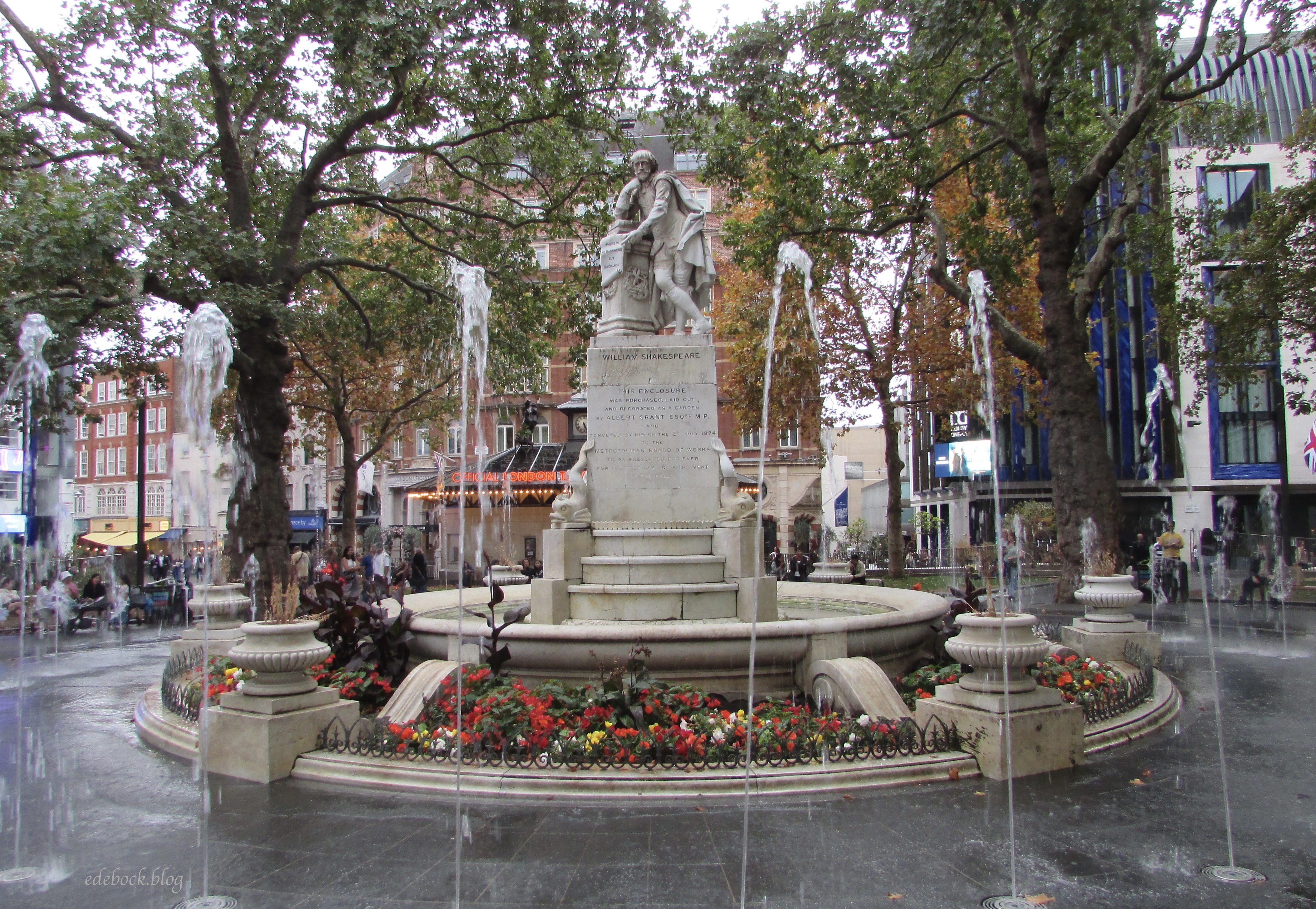
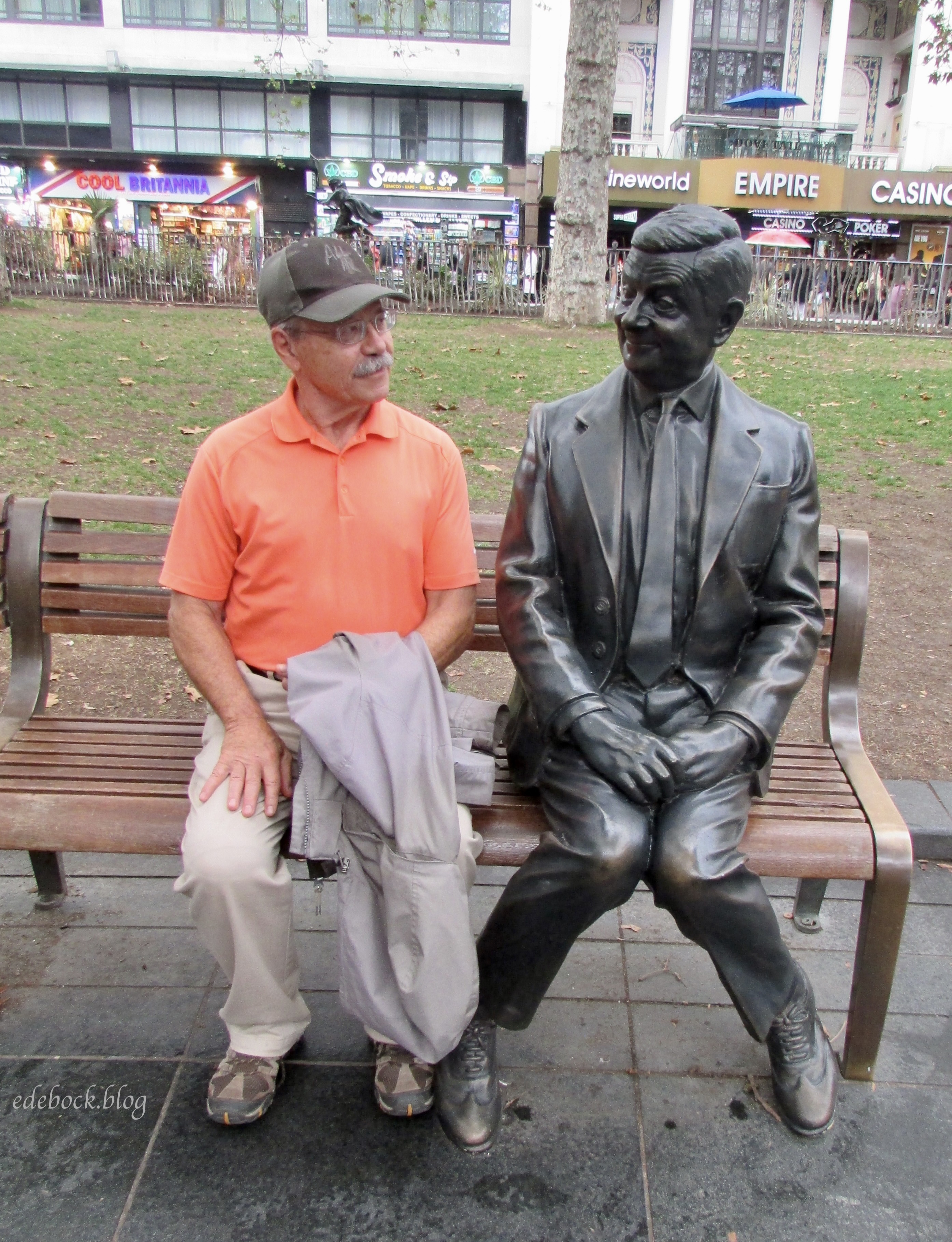
Sometimes it’s the unexpected things that we discover quite by accident while seeing a city on foot that we find the most delightful. That was the case with Leicester Square somewhere between Trafalgar Square and Piccadilly Circus in the middle of London’s entertainment district. With the William Shakespeare statue and fountain as its centrepiece, it was a relaxing spot to stop for a break.
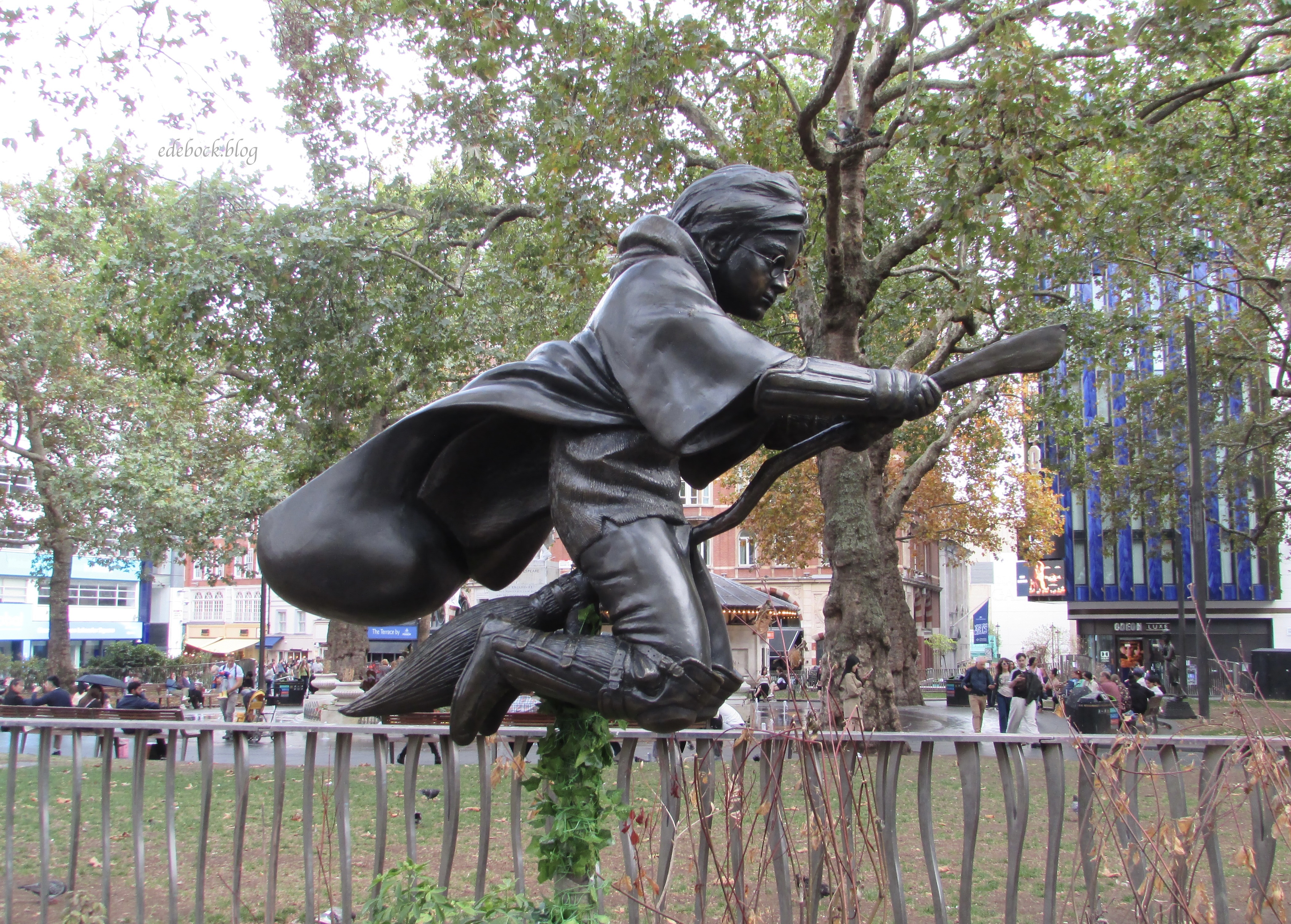
We also met quite a few interesting characters in the square including Harry Potter…
On October 2, Richard and I will have been married for fifty years. 50! Fifty years of ups and downs, joys and sorrows. Seeing and experiencing new places and cultures has long been something that we’ve loved to do together. That’s why about a year ago when I started thinking about how we might celebrate this momentous milestone, it was obvious to me that it needed to involve travel. But where should we go? We considered everything from hiking in the Azores to a cruise down the Nile River, but before we settled on a definite plan, the possibility of another short term mission trip came to our attention. At first, we thought that we’d be returning to Armenia where we served in May/June of last year. Eventually, however, we learned that we’d be going to Istanbul, Türkiye just one month before our big anniversary. We started to look at how we might combine the two into one trip. As a result, here we are on our way home from Istanbul spending five days in London, England celebrating 50 years together a wee bit before the actual anniversary!
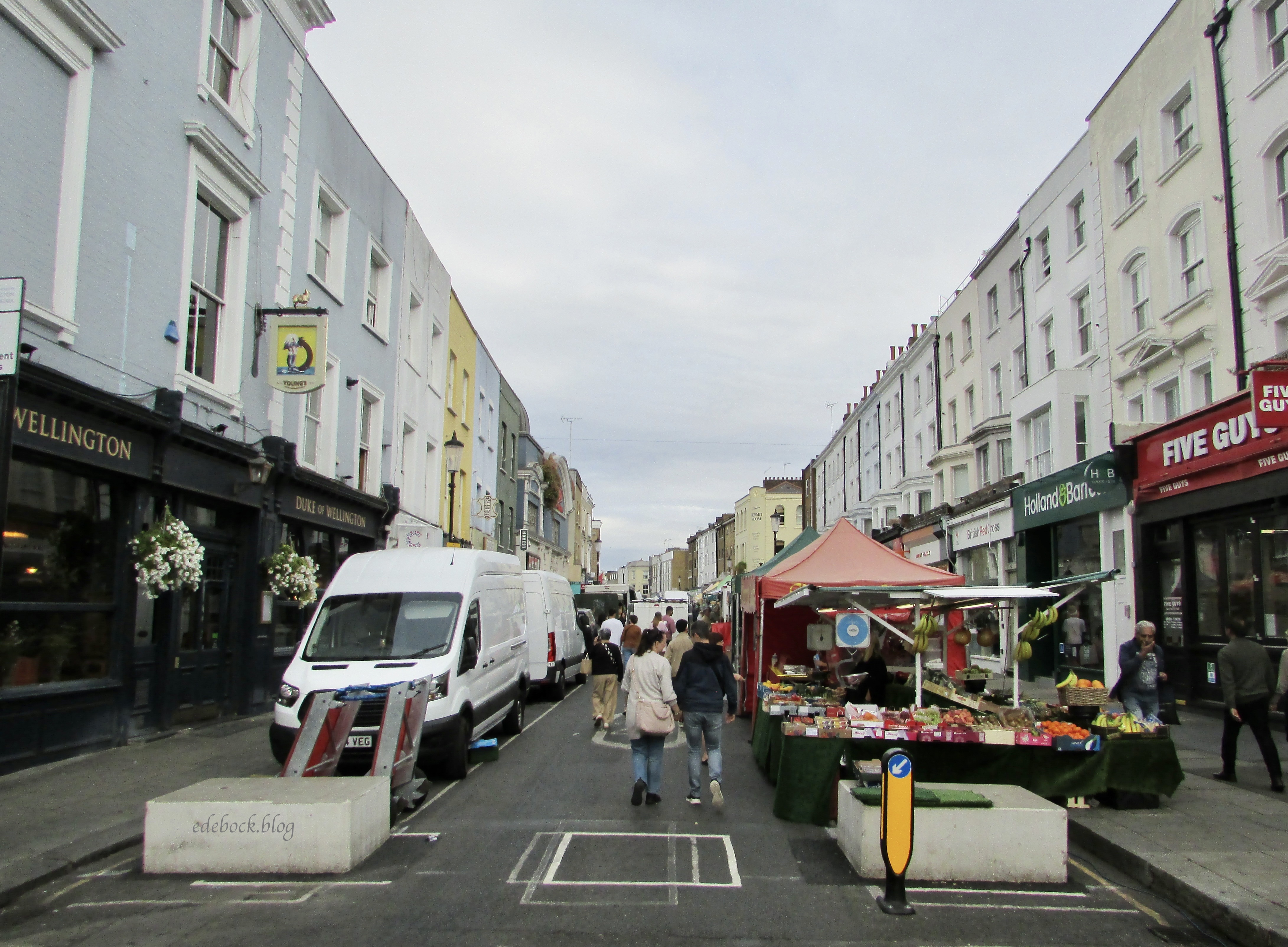
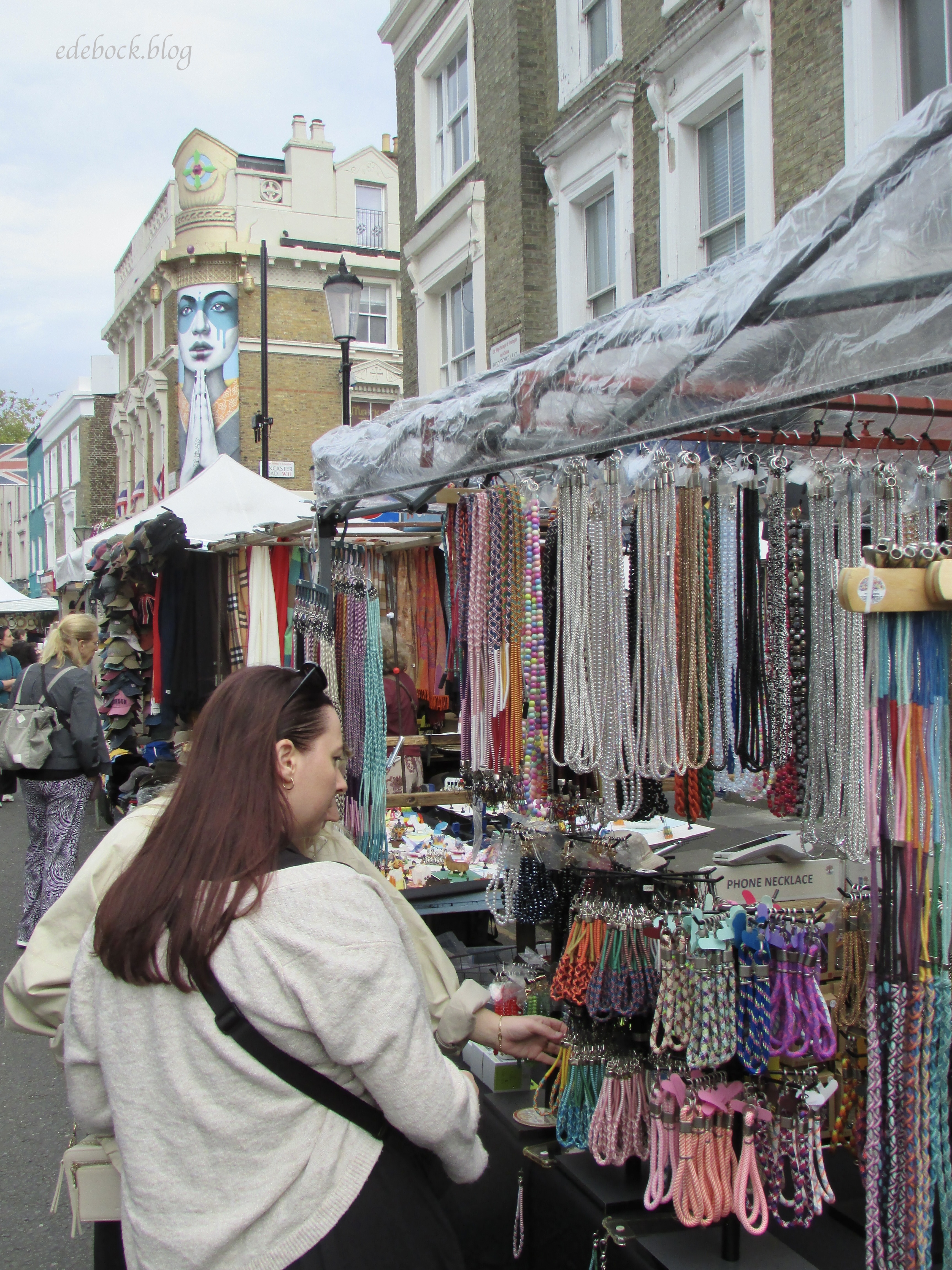
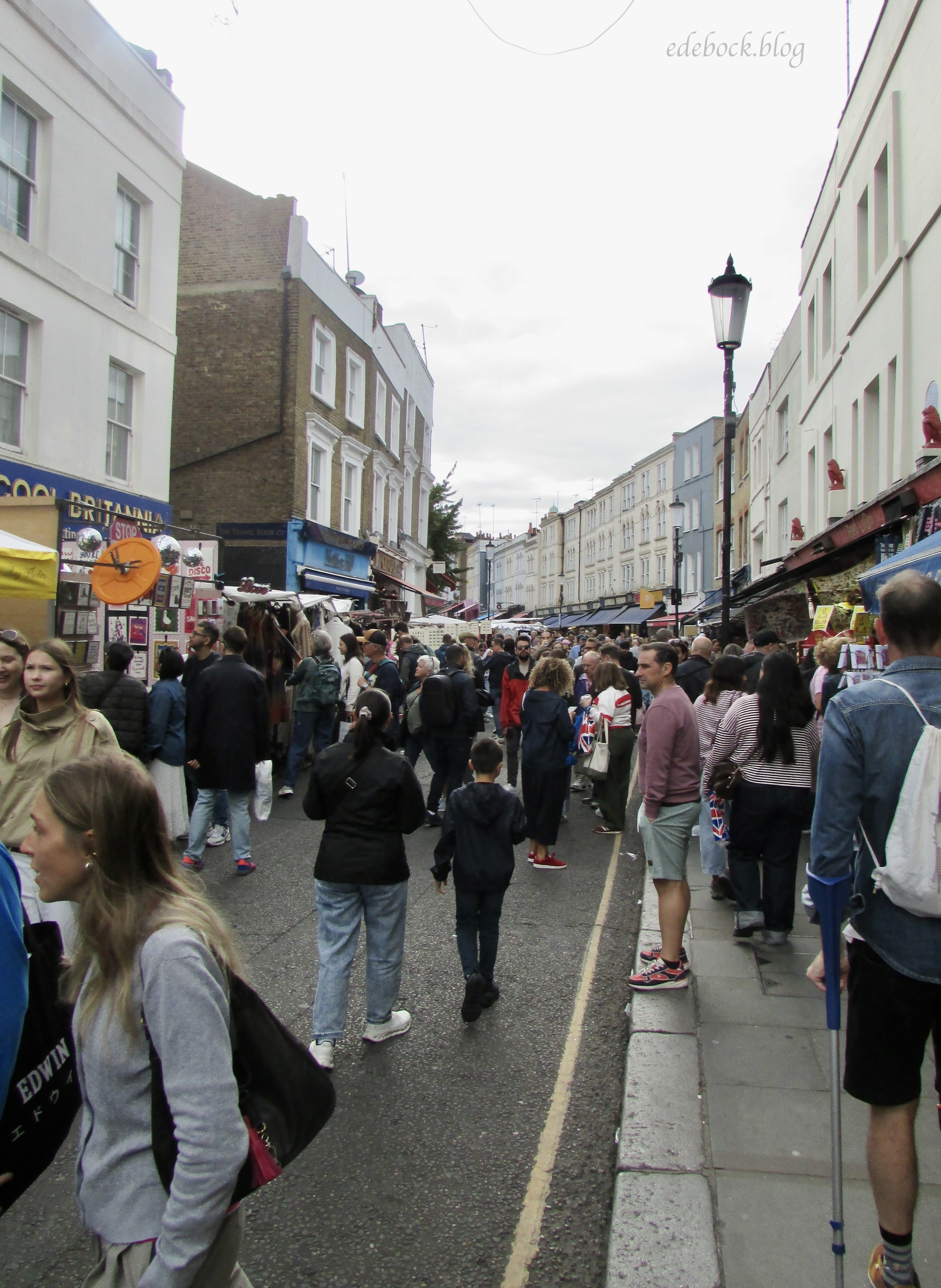
Our home away from home this week is an aparthotel in Notting Hill. After breakfast this morning, we head for Portobello Road Market, less than half a kilometre away. Stretching about a mile along Portobello Road, this is one of the world’s most famous and historical street markets offering antiques and collectables, vintage clothing, jewelry, artwork, fresh fruit and vegetables, a variety of street foods, and much, much more. Saturday is the market’s busiest day and I read that we should plan to arrive early to beat the crowds. That was definitely good advice! When we arrived shortly after 9:00 AM, some of the vendors were still setting up and the street was quiet, but within an hour or so, it was absolutely packed with people.
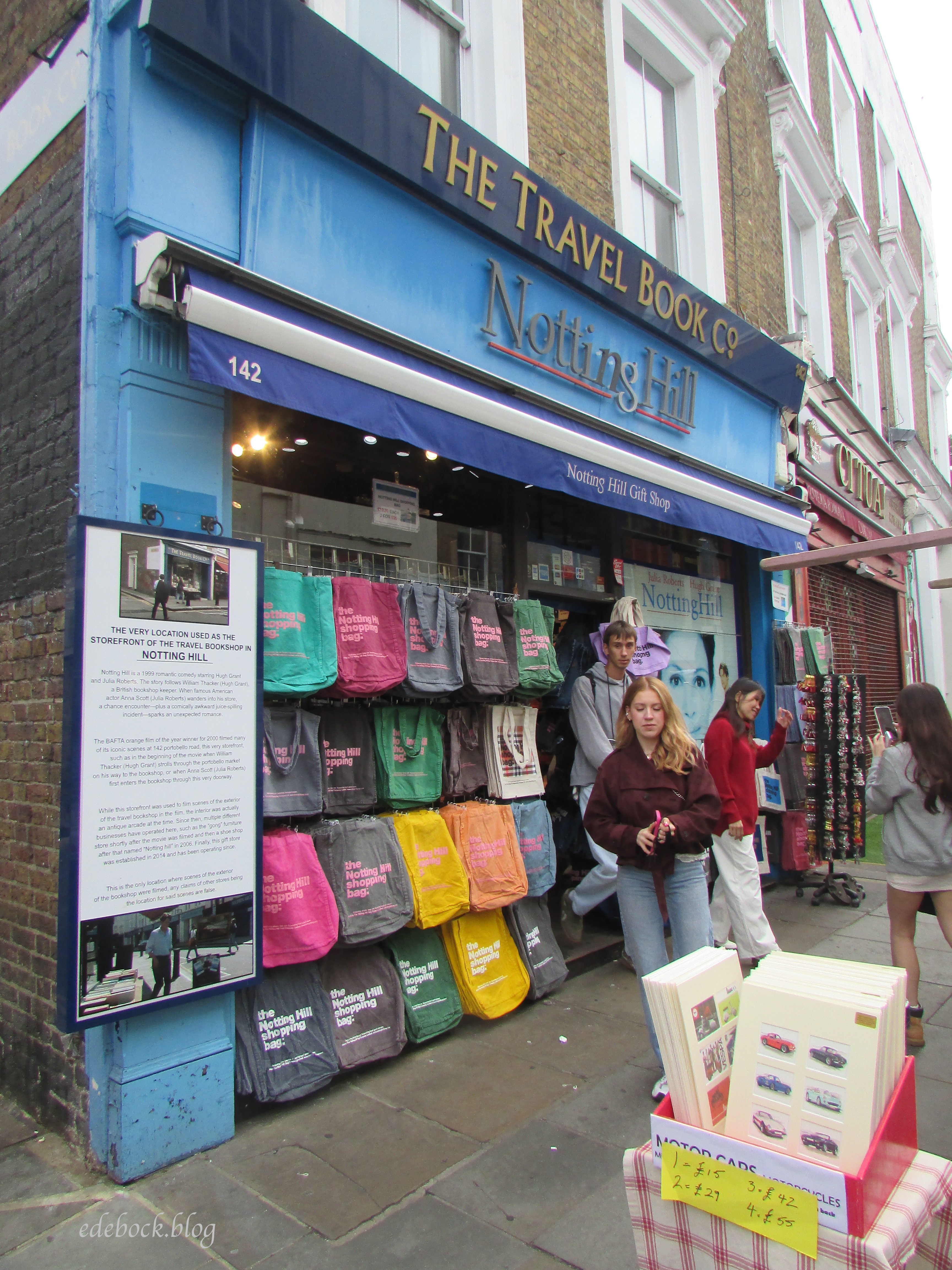
Of course, we had to pop into the souvenir shop that appeared as the fictional Travel Bookshop in the 1999 romatic comedy, Notting Hill, starring Hugh Grant and Julia Roberts.
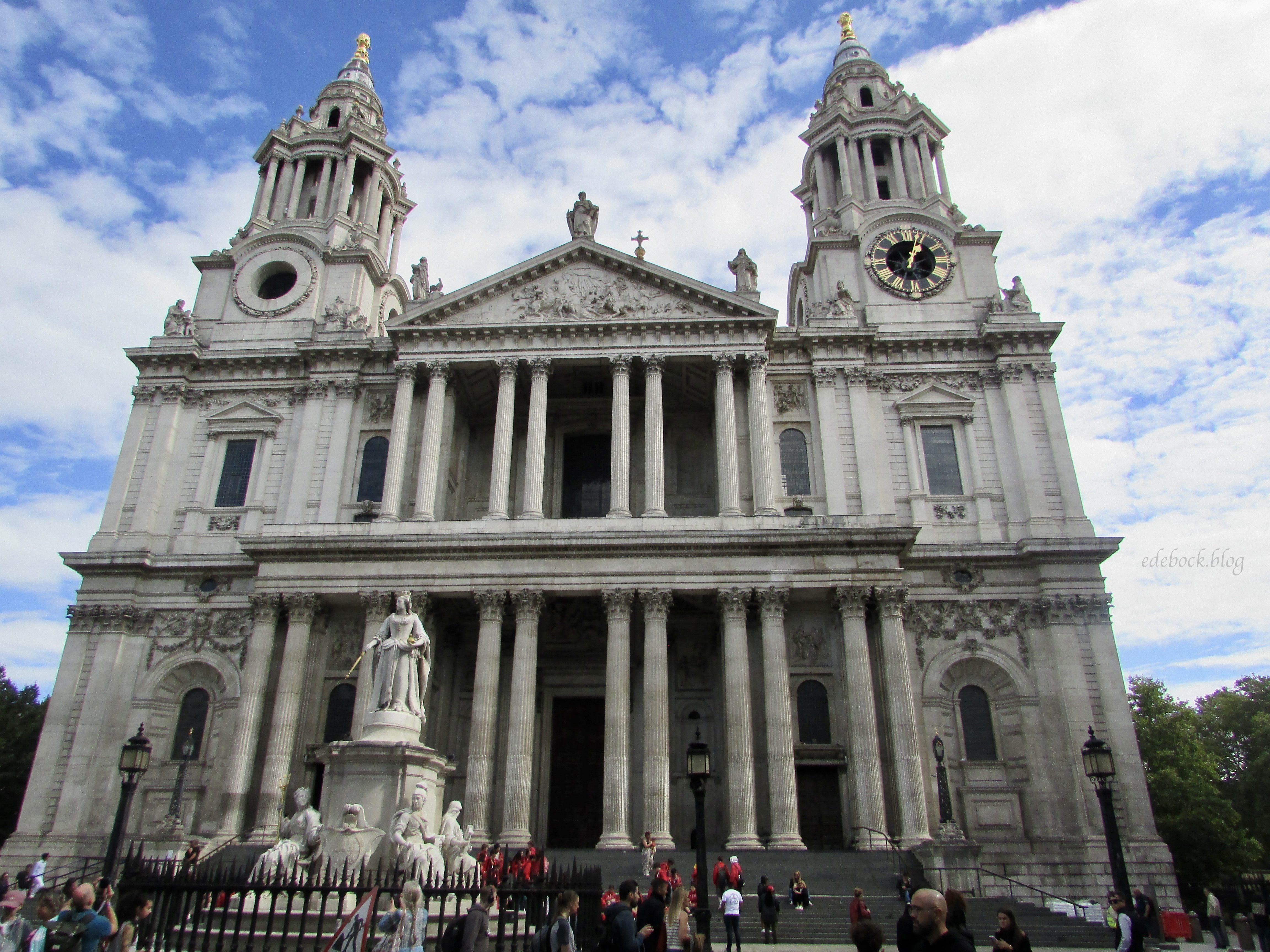
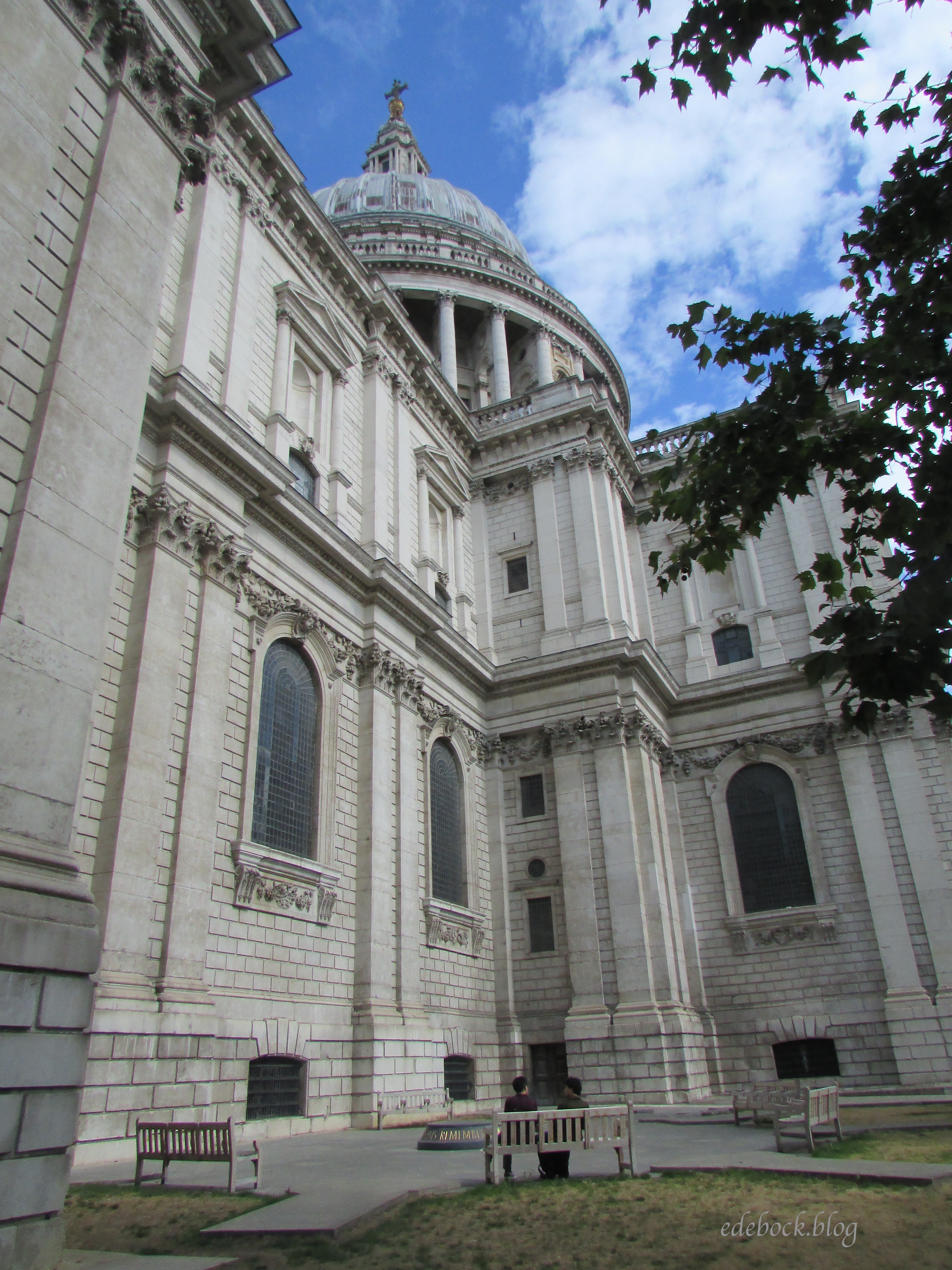
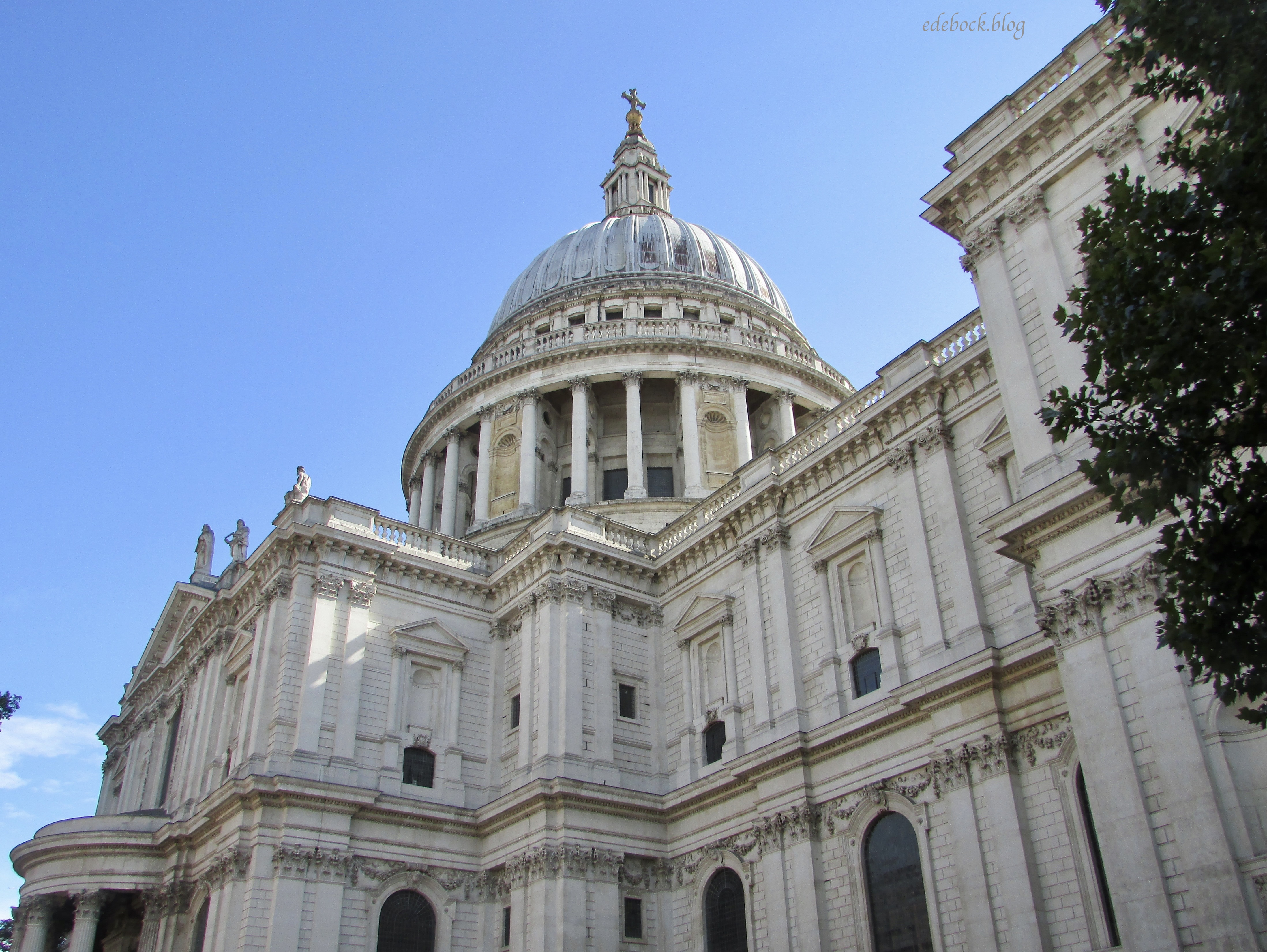
After leaving the market, next on our agenda was our first ride on the “Tube”, the world’s oldest subway system. Our destination was massive St Paul’s Cathedral. The original cathedral was destroyed by the Great Fire of London in 1666. Construction on its replacement started nine years later in 1675 and it was completed in 1710. With its iconic dome, it was the tallest building in London for 250 years. The total height to the top of the cross on the dome is exactly 365 feet. The chief architect, Sir Christopher Wren, intentionally designed it that way to represent each day of the year. Apparently he also wanted there to be a 60 foot high stone pineapple on top of the dome as a symbol of peace, prosperity, and hospitality, but he settled for golden pineapples on top of the two western towers instead!
I was totally blown away by the sheer enormity of St Paul’s. To put it into perspective for those of you back home, the cathedral is significantly bigger than the Alberta Legislature Building in Edmonton!
In 1981, the cathedral hosted the wedding of Prince Charles and Lady Diana and it has been the location of massive state funerals for figures like Sir Winston Churchill and Margaret Thatcher.
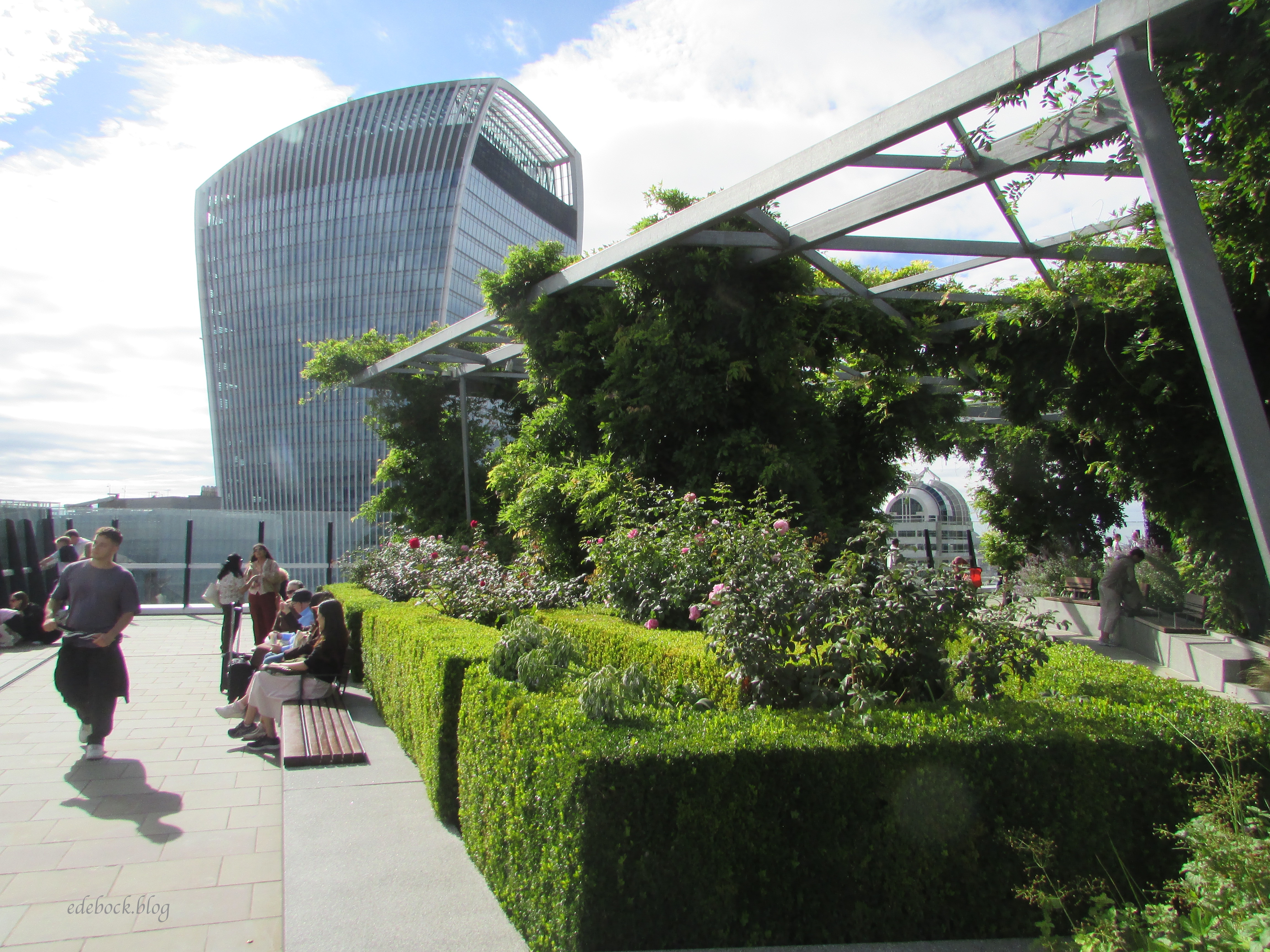
After enjoying coffee and tea in an outdoor cafe next to the cathedral, we walked about a mile to the Garden at 120, a free 15th floor rooftop garden in the heart of London’s financial district that offers 360-degree panoramic views of the city skyline.
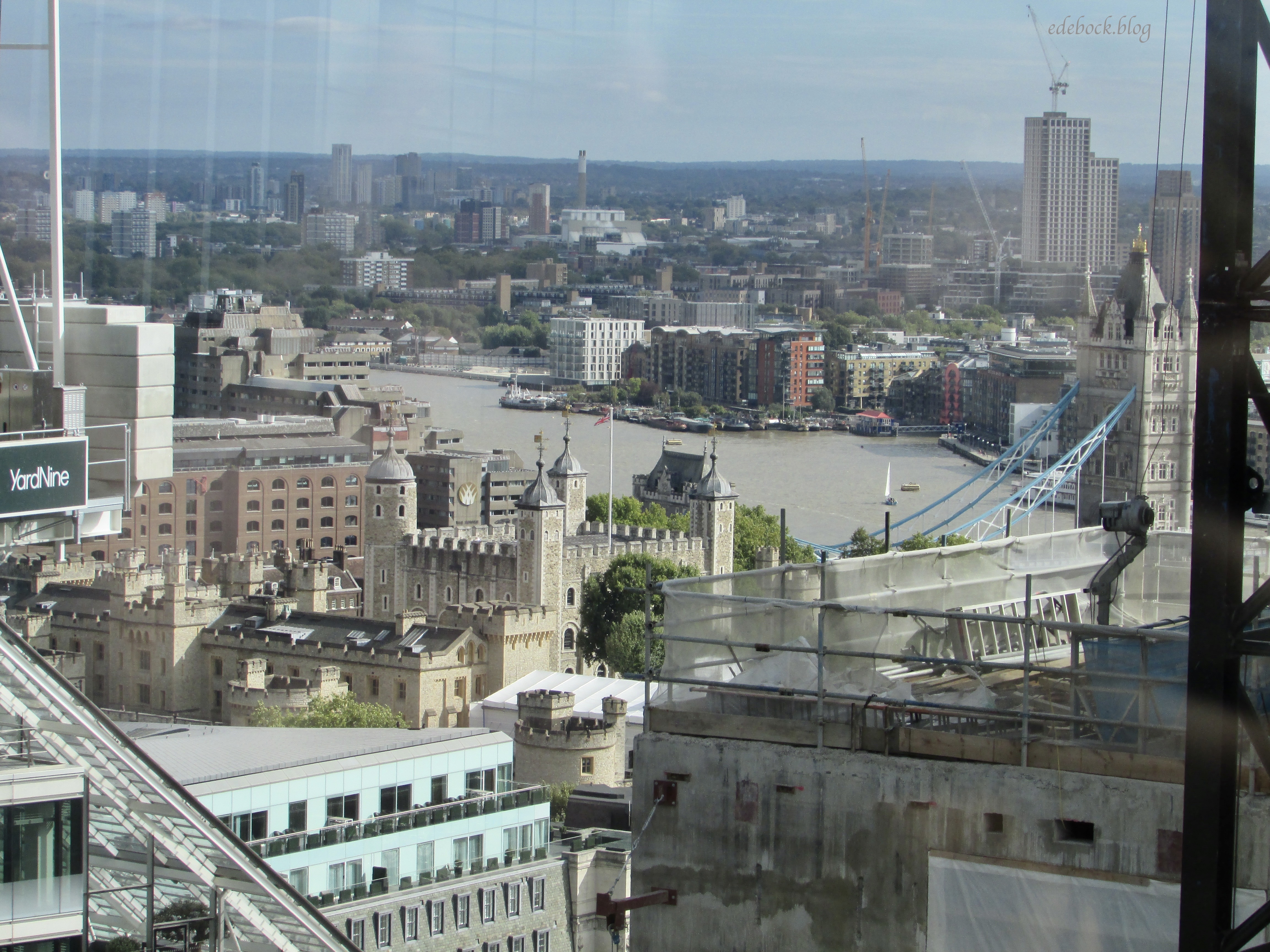
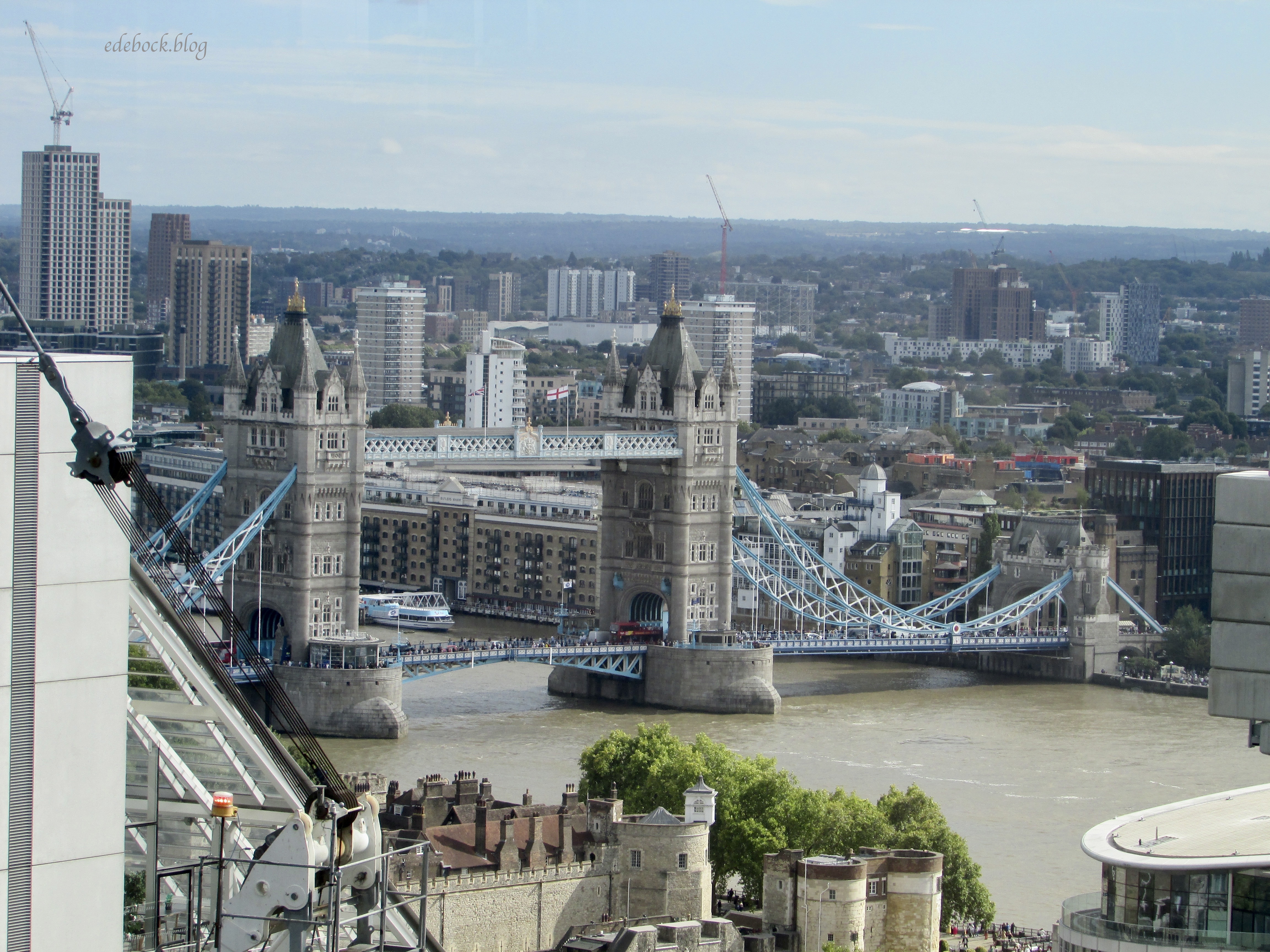
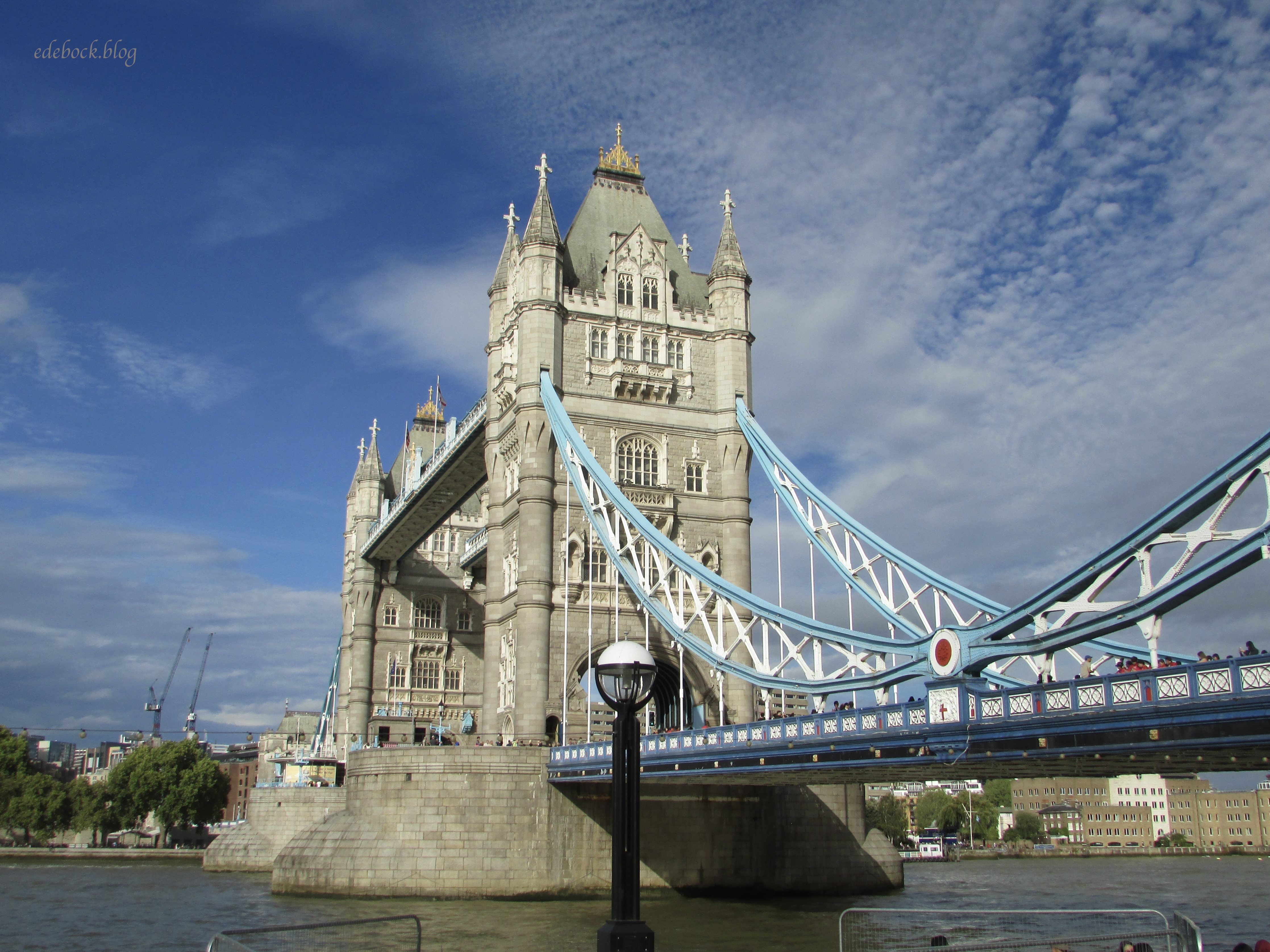
From there, we caught our first glimpses of the River Thames, the Tower of London, and the Tower Bridge.
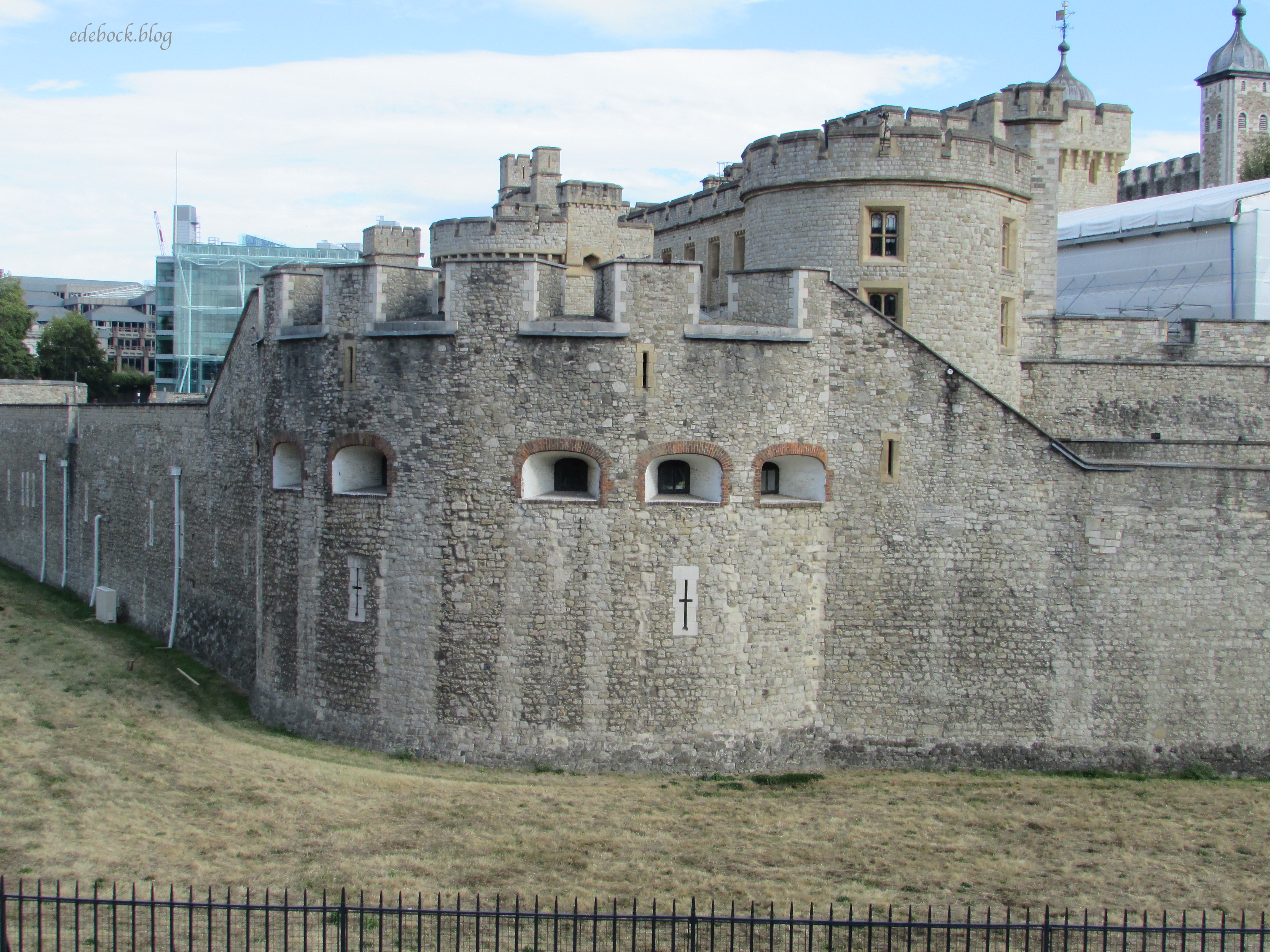
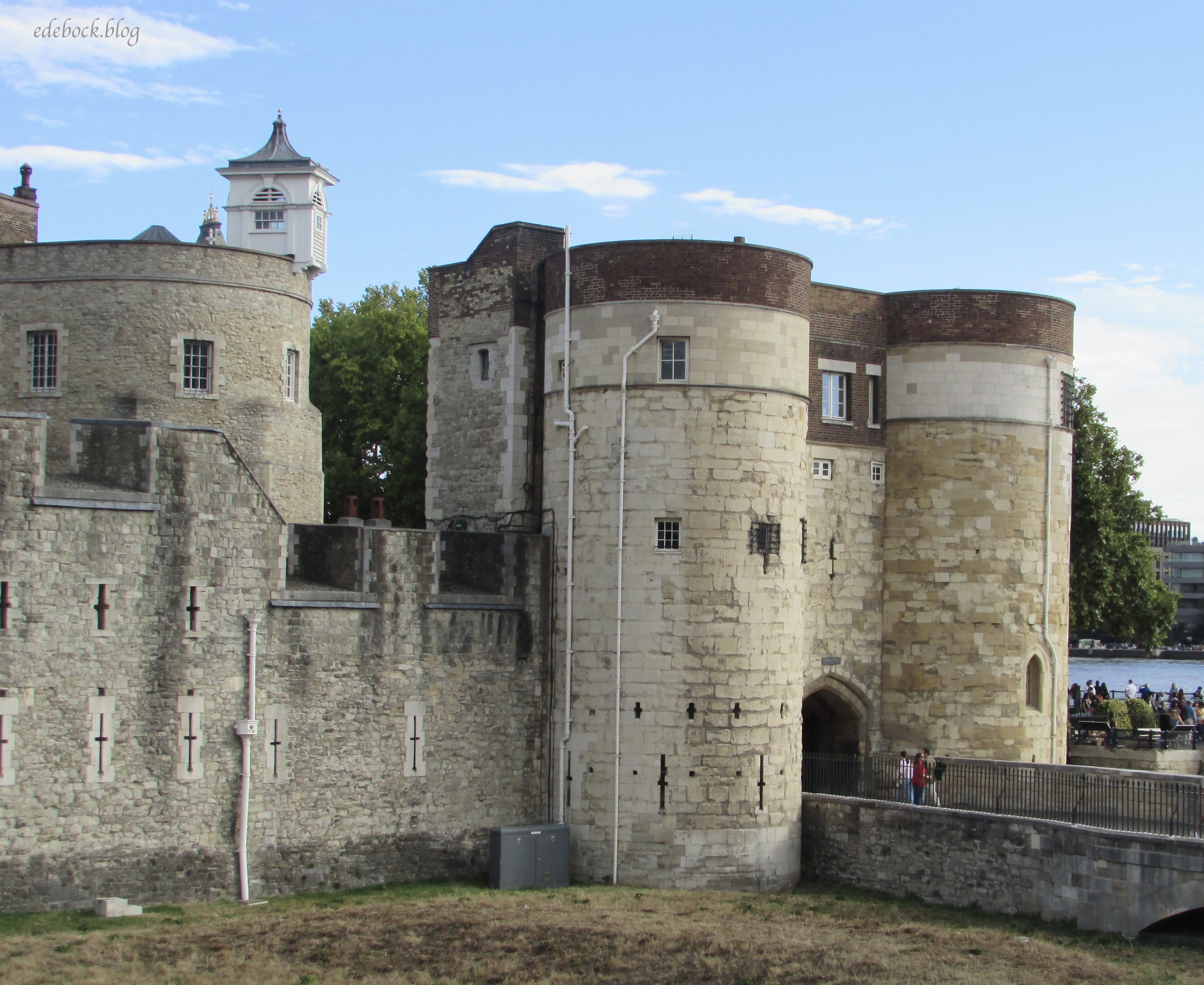
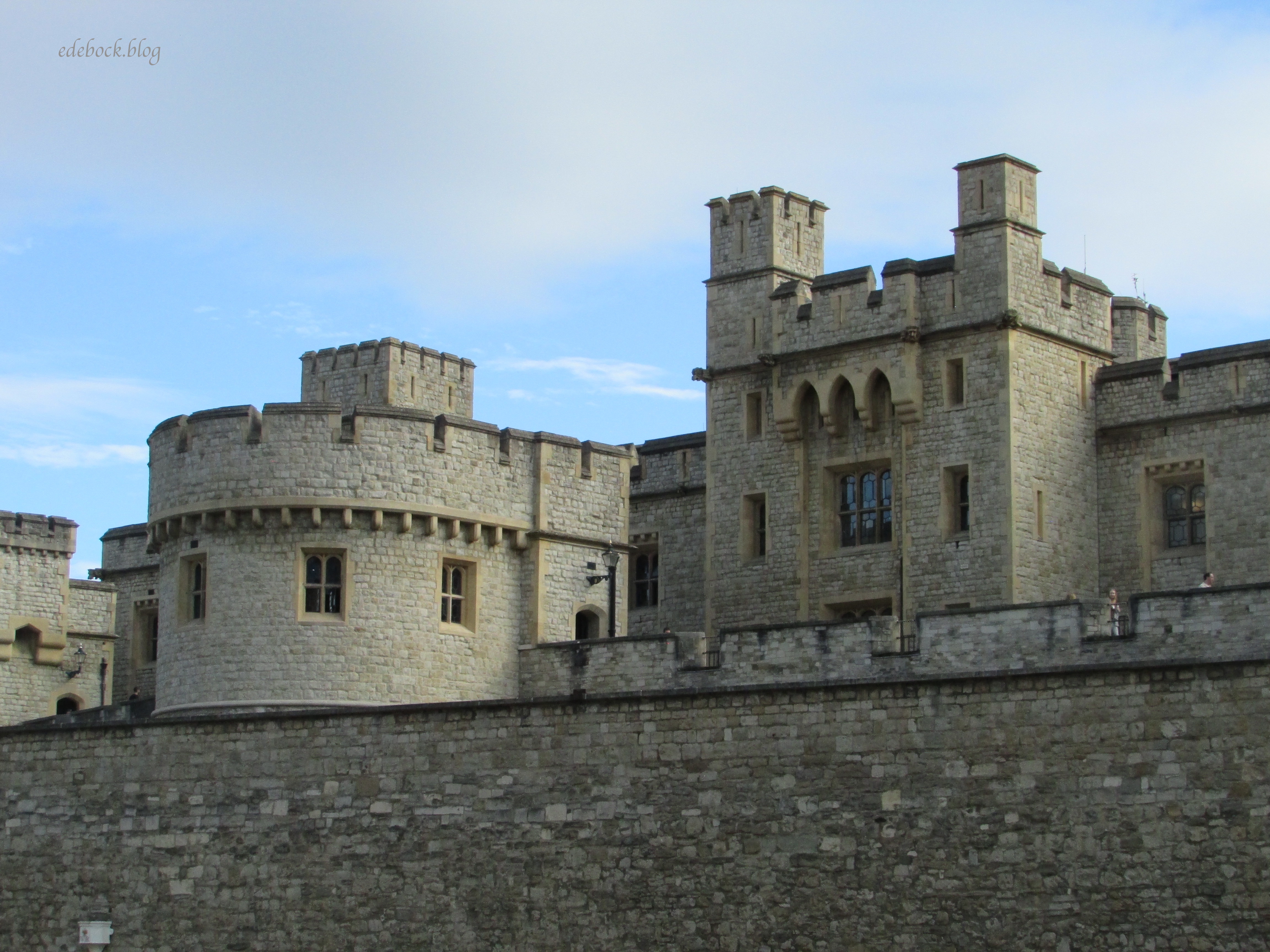
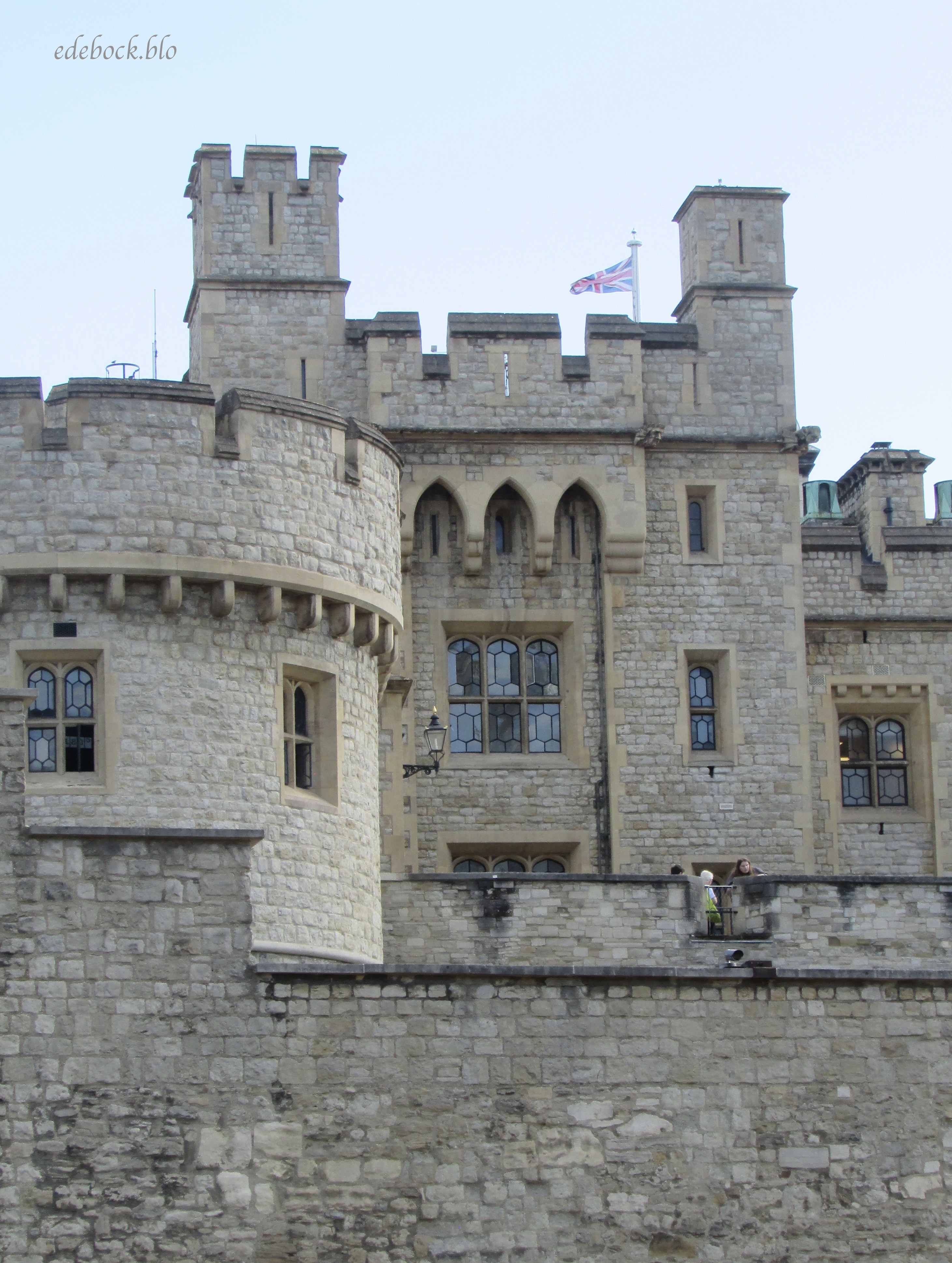
Continuing our walk another half mile or so brought us to the Tower of London. Again, it was much more enormous and not at all what I expected. Named after its first building, the White Tower, which was built by William the Conqueror in the 1070s as a royal fortress, the Tower was also a palace with grand apartments where the king and queen could entertain and conduct business. As at St Paul’s, we chose to walk around and view the Tower from the outside rather than joining a tour that would take us inside.
In 1100, the Tower became an infamous prison where many prisoners including Anne Boleyn, second wife of King Henry VIII, and Sir Thomas More, who refused to recognize Henry’s separation from the Catholic church, were beheaded or hanged. Over its nearly 1000 year history, it has been adapted and repurposed for many different roles even including a zoo or royal menagerie from the 13th century until 1835.
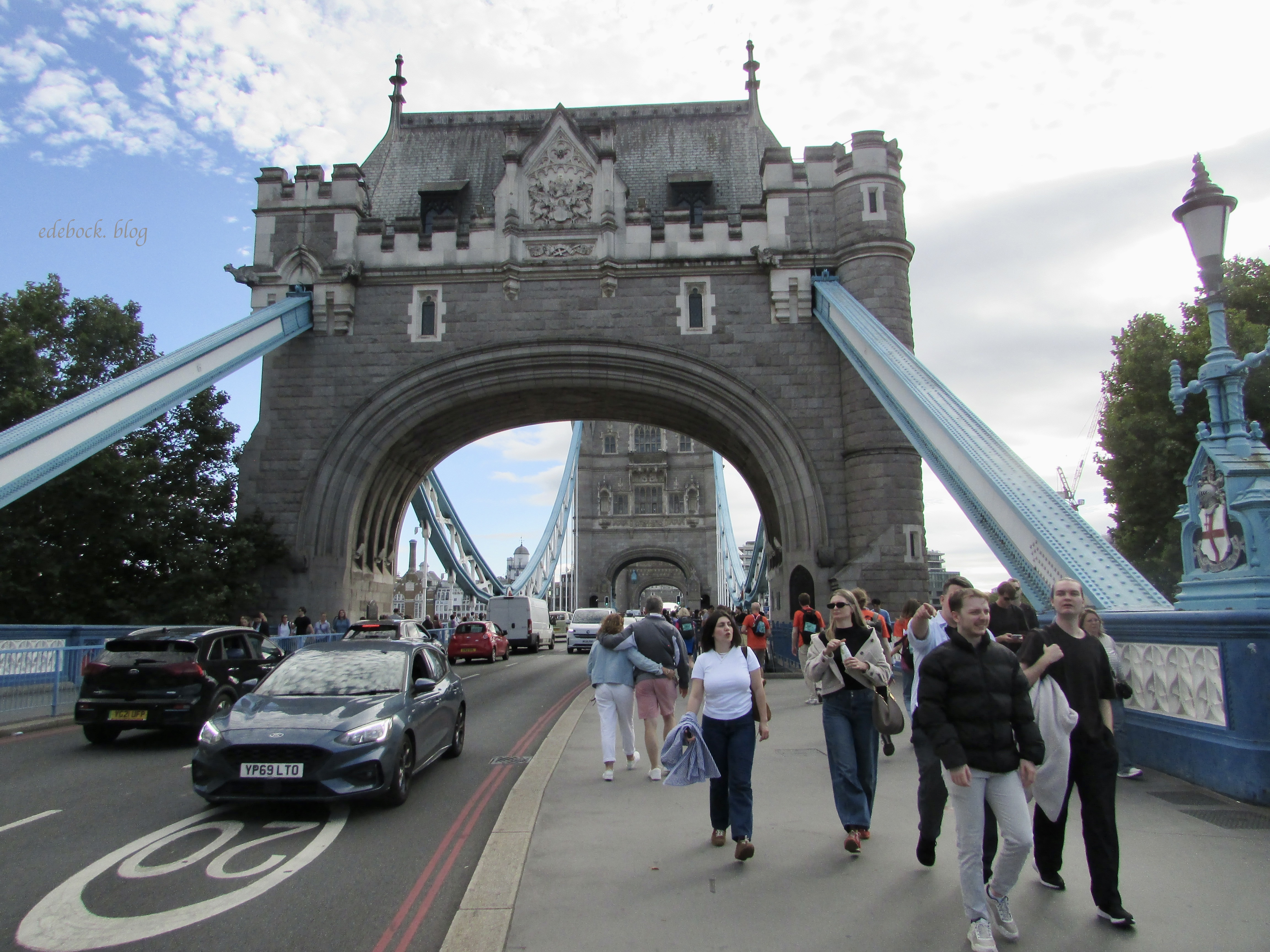
By this time, we had done a lot of walking. Our feet and legs were tired and we had no intention of crossing the Tower Bridge, but suddenly we were there and Richard decided that we really should, so on we went!
From the far side, we made our way to the closest Tube station and headed “home” tired, but happy for all we’d seen and done.
We came to Türkiye (Turkey) on a short term missions trip, but after finishing that assignment and becoming tourists, we’ve fit a lot into less than 48 hours in Istanbul!
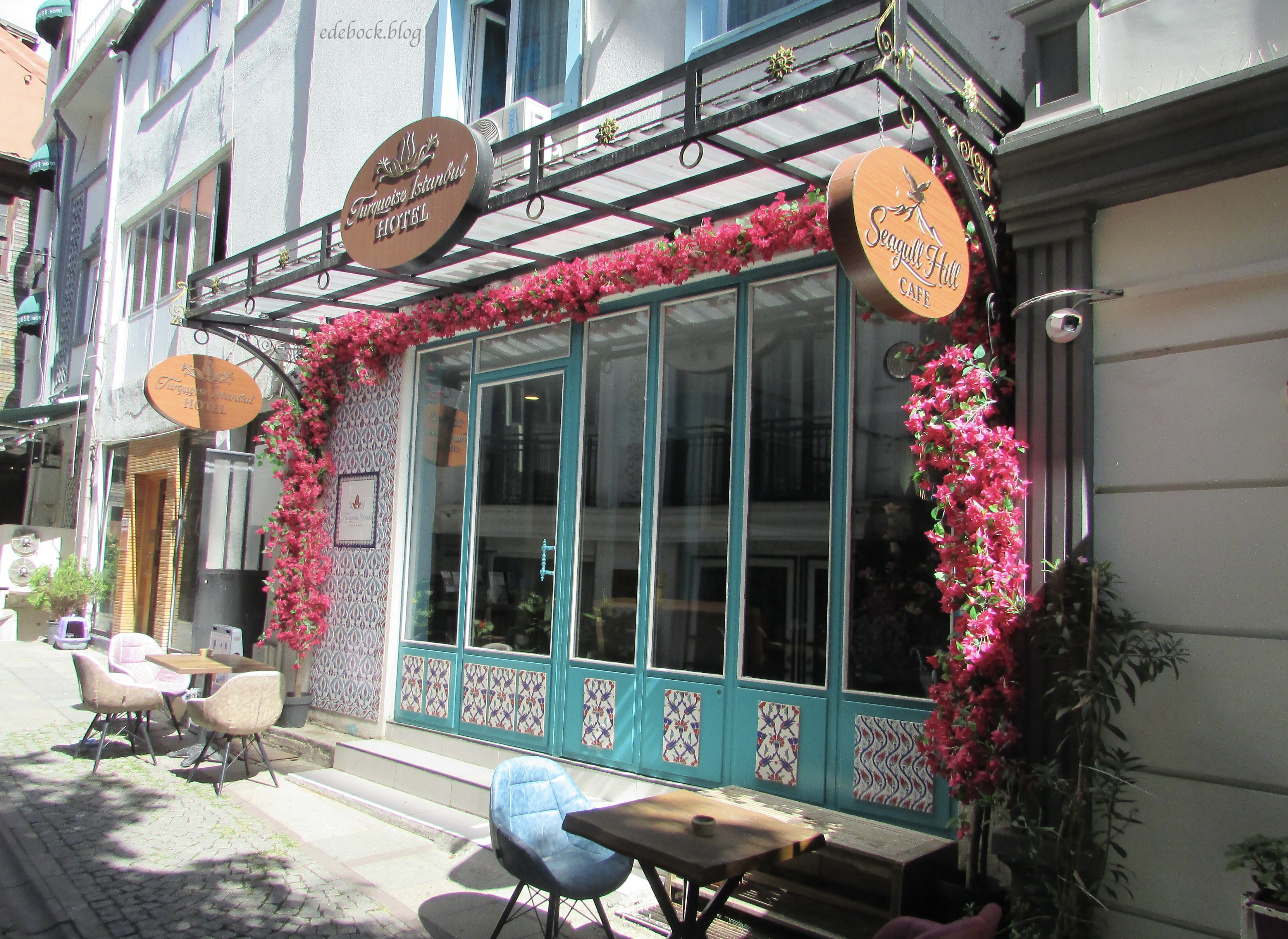
Located in the heart of historic Istanbul, our tiny, family run hotel is tucked into a little alleyway just off a busy street.
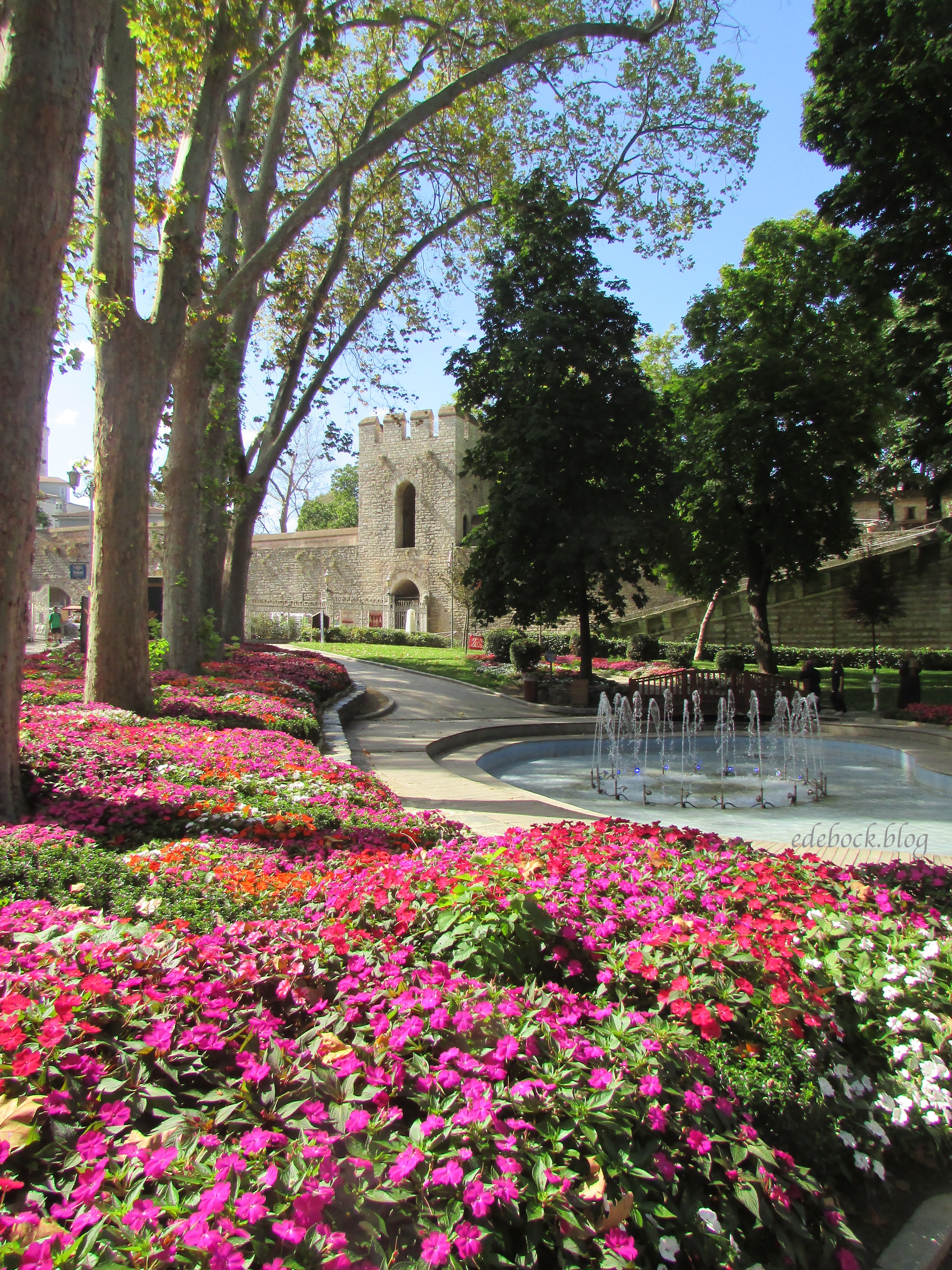
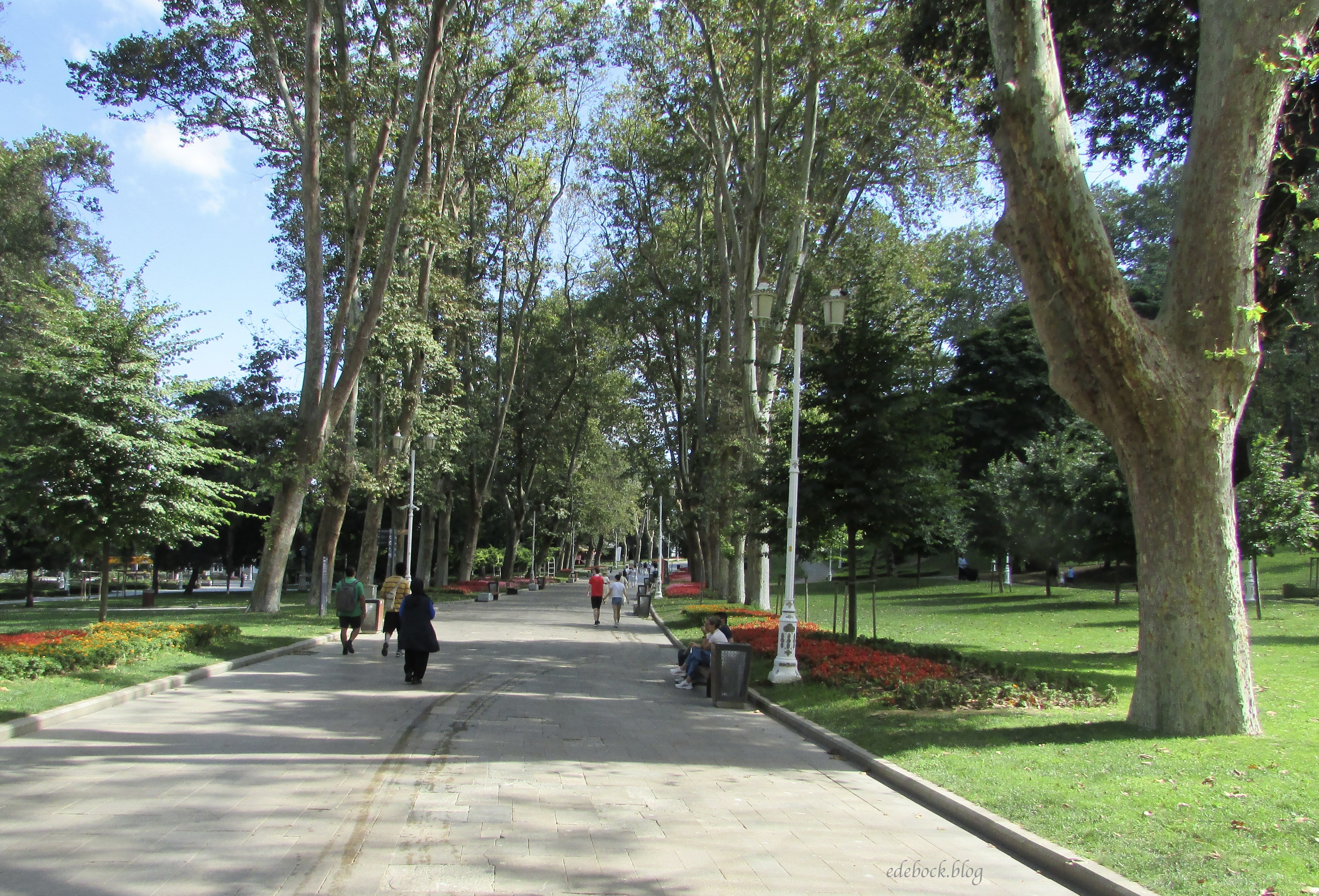
Our window looks out over the street and the entrance to beautiful Gülhane Park. Now a very busy and popular urban park, Gülhane was once the outer garden of nearby Topkapi Palace and only accessible to the royal court.
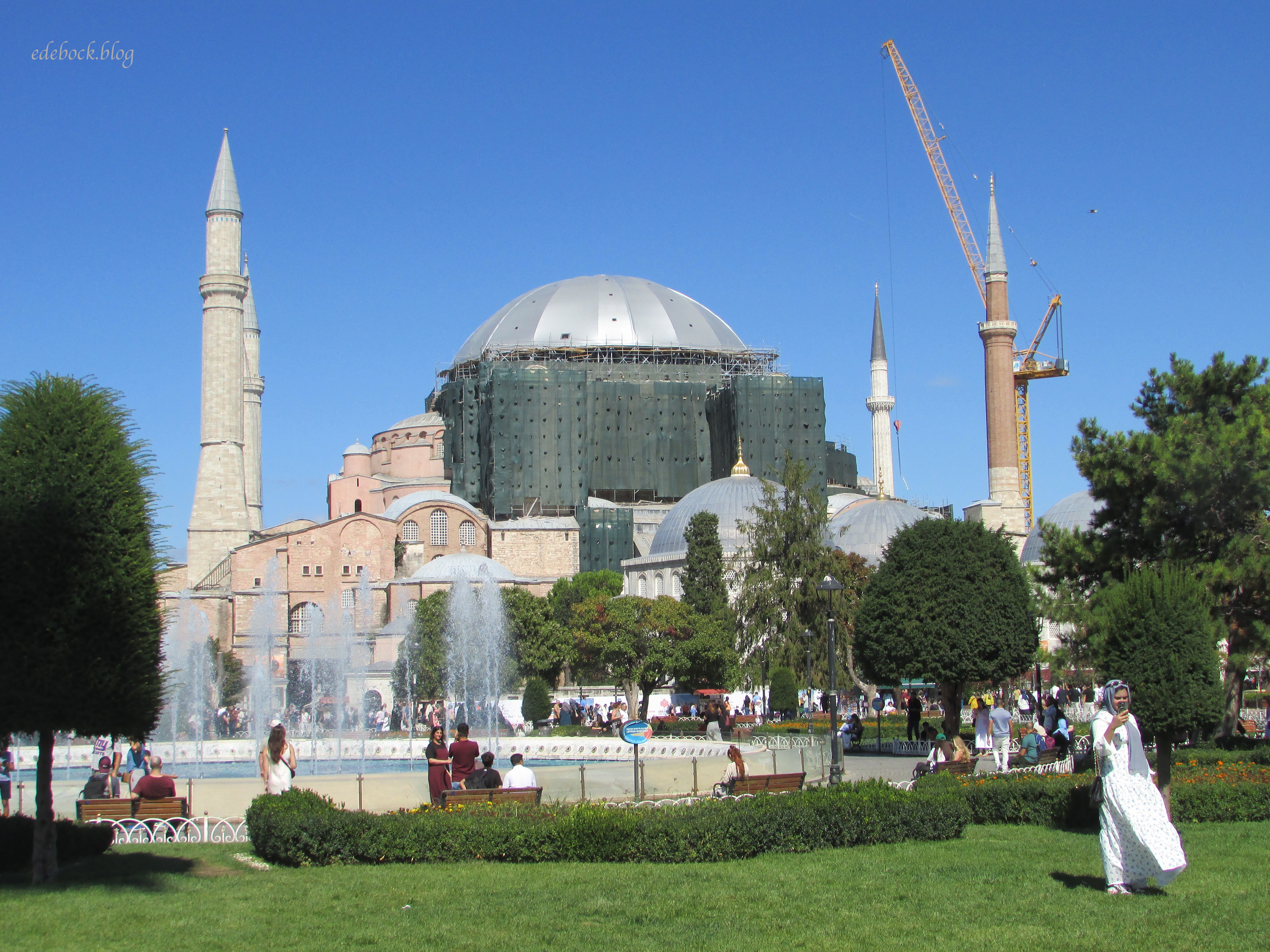
Our hotel is also only a 5 minute walk from the Hagia Sofia Grand Mosque, quite possibly Istanbul’s most famous landmark. Since it’s construction was completed in 537 AD, it has served first as a Christian cathedral, then an Ottoman mosque, a secular museum, and now an active mosque once again. Unfortunately, it’s presently undergoing renovation, so we didn’t get an unobstructed view of it.
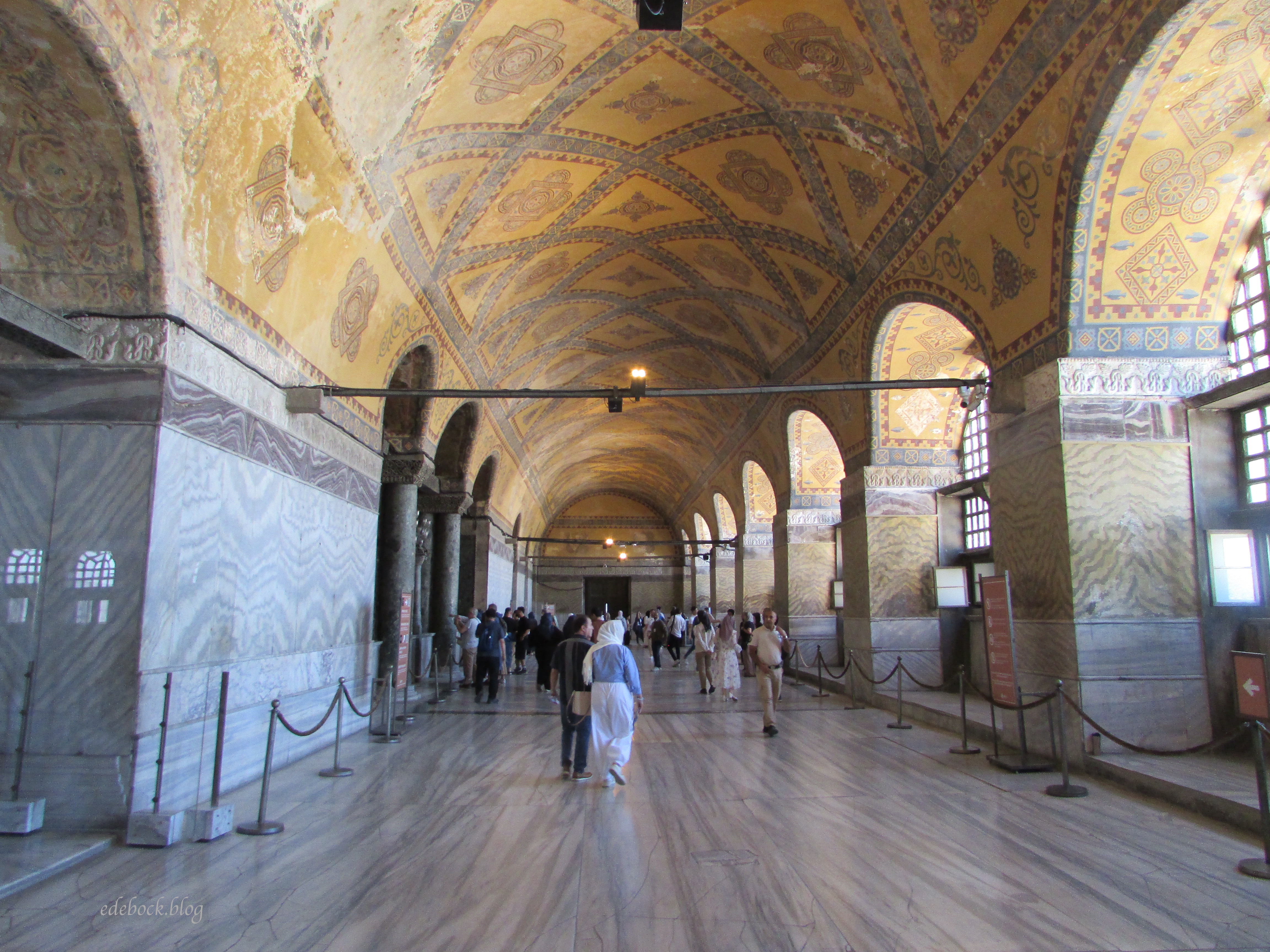
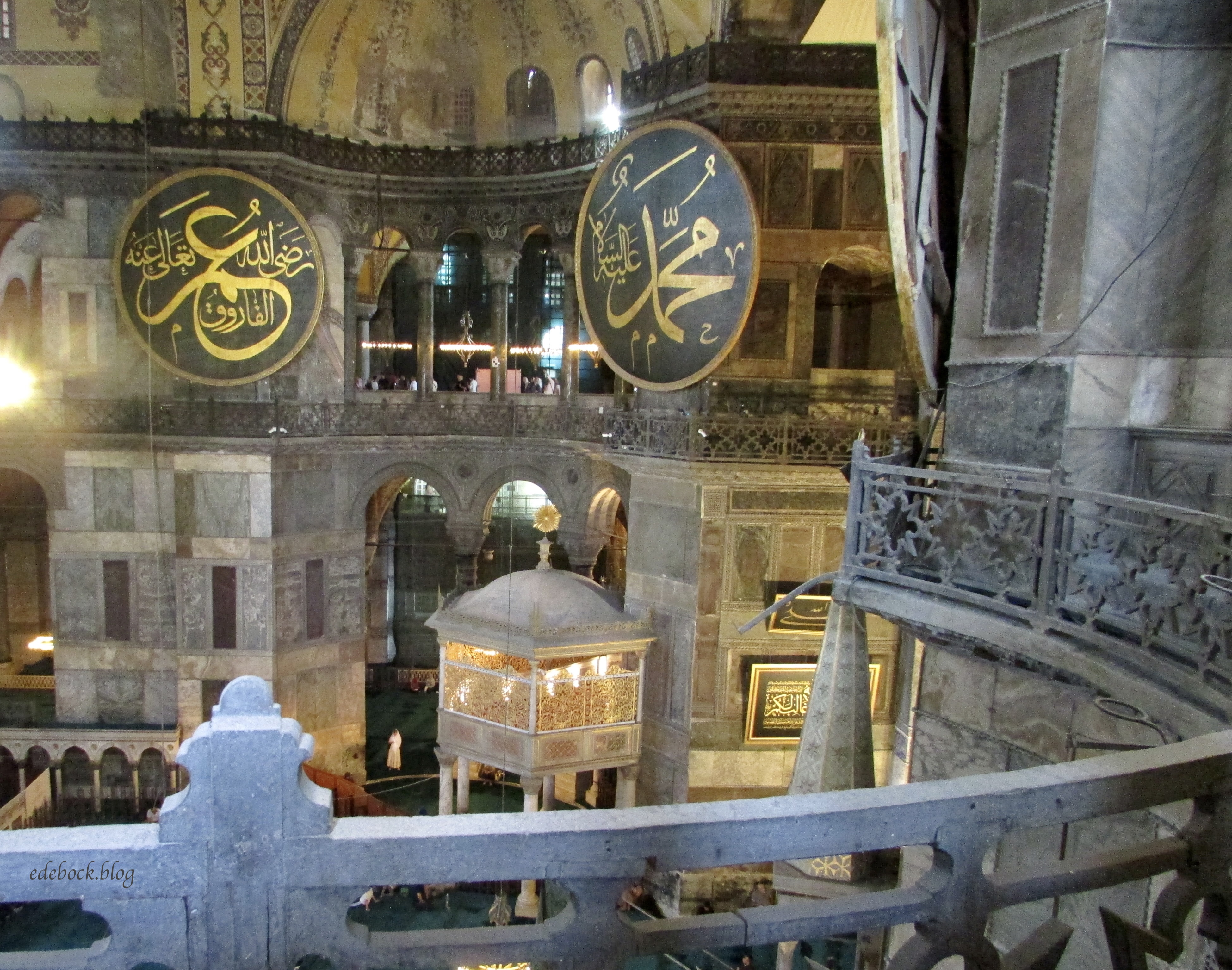
As non Muslims, we couldn’t enter the main worship portion of the mosque, but we did take what we now consider a badly overpriced tour of the portion that’s open to the general public. There is a very strict dress code for all who enter. Men cannot be wearing shorts and women must wear a head scarf and have their shoulders covered.
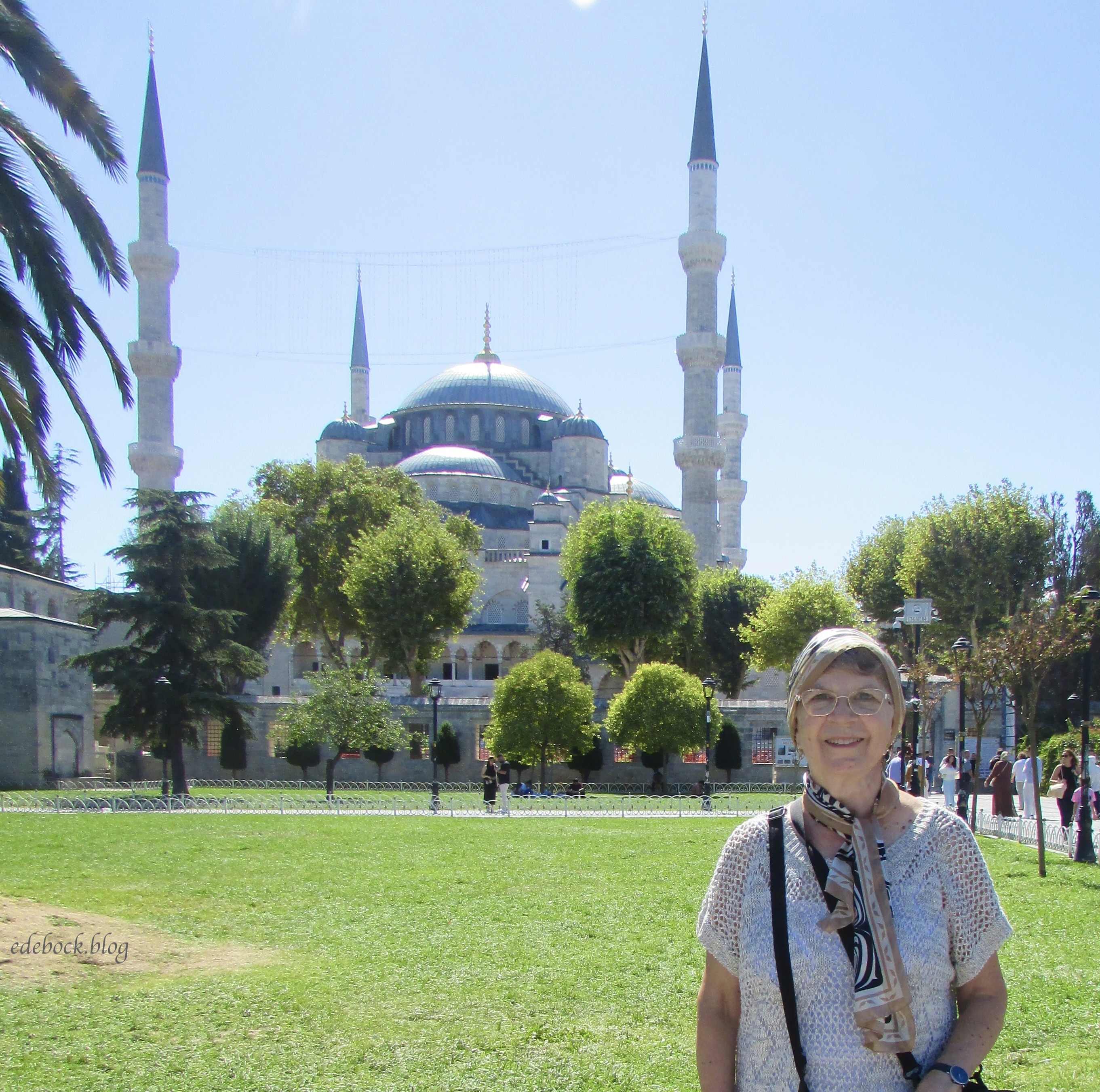
Just across the Sultanahmet Square from the Hagia Sofia is a second beautiful mosque, the Sultan Ahmet Mosque which is more commonly known as the Blue Mosque because of the thousands of blue ceramic tiles that decorate its interior walls.
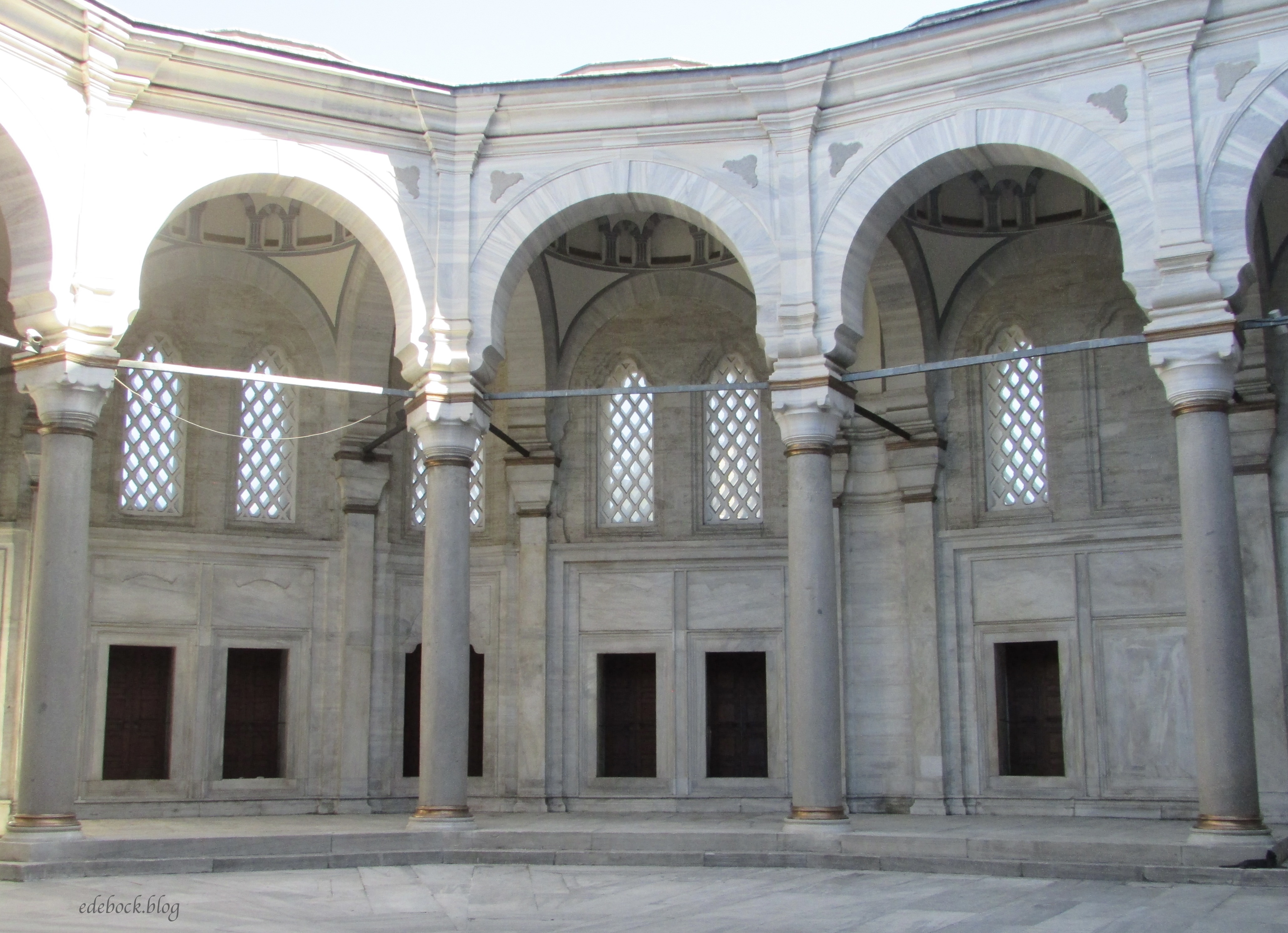
Again, we couldn’t enter the main portion of the mosque which is only open to Muslims, but we were free to wander the outer courtyard.
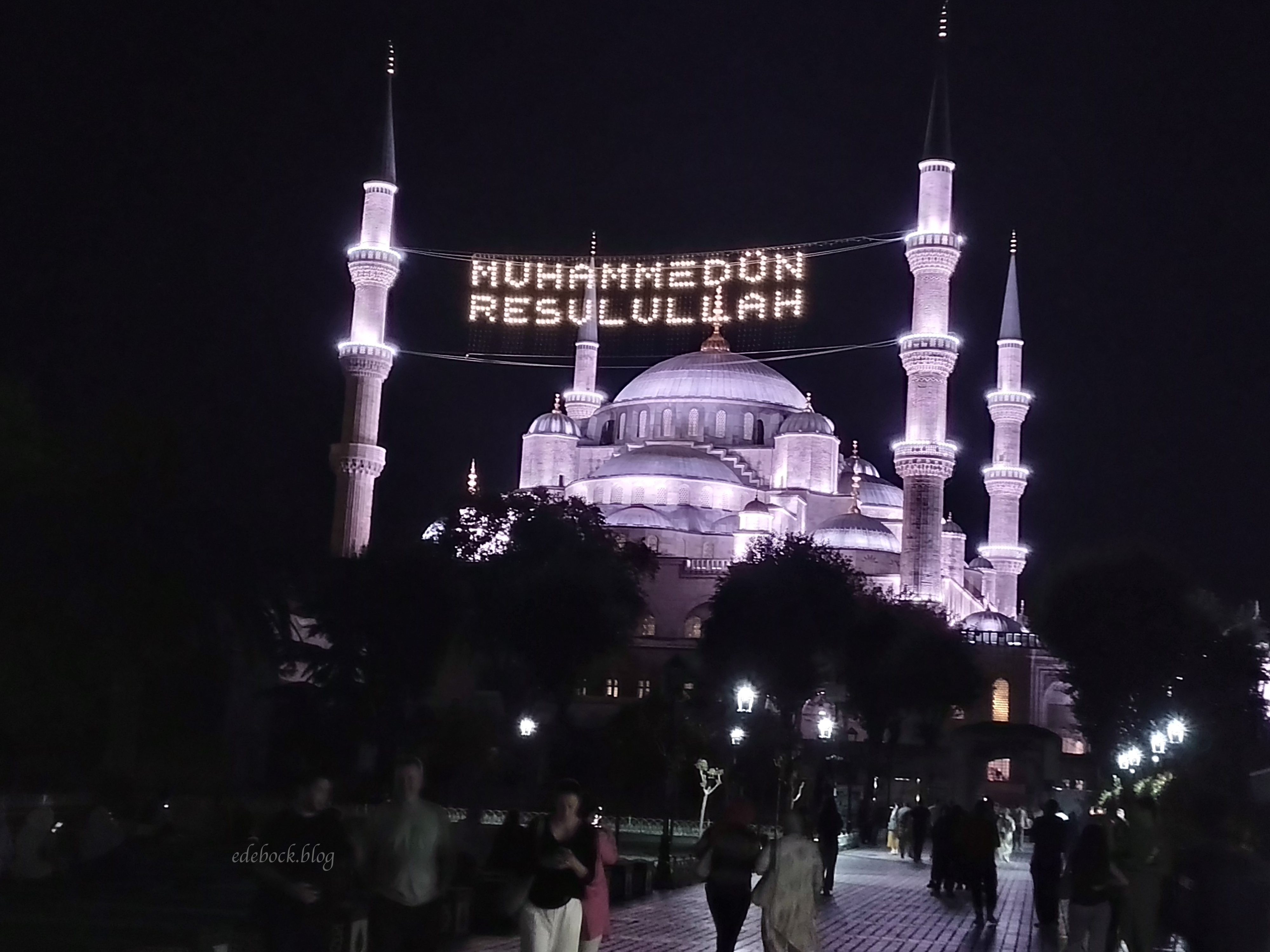
After meeting some of the team that we served with over the past week for supper last night, we returned to Sultanahmet Square to see the Blue Mosque lit up at night. The meaning of the banner is “Muhammad is the messenger of Allah.”
The Hagia Sofia and the Blue Mosque are only two of the more than 3000 mosques spread across the city, so it’s not surprising that wherever we were (including in our hotel room at about 5 o’clock in the morning), we could hear the very loud calls to prayer that ring out from the tall minarets at five different times throughout the day and night!
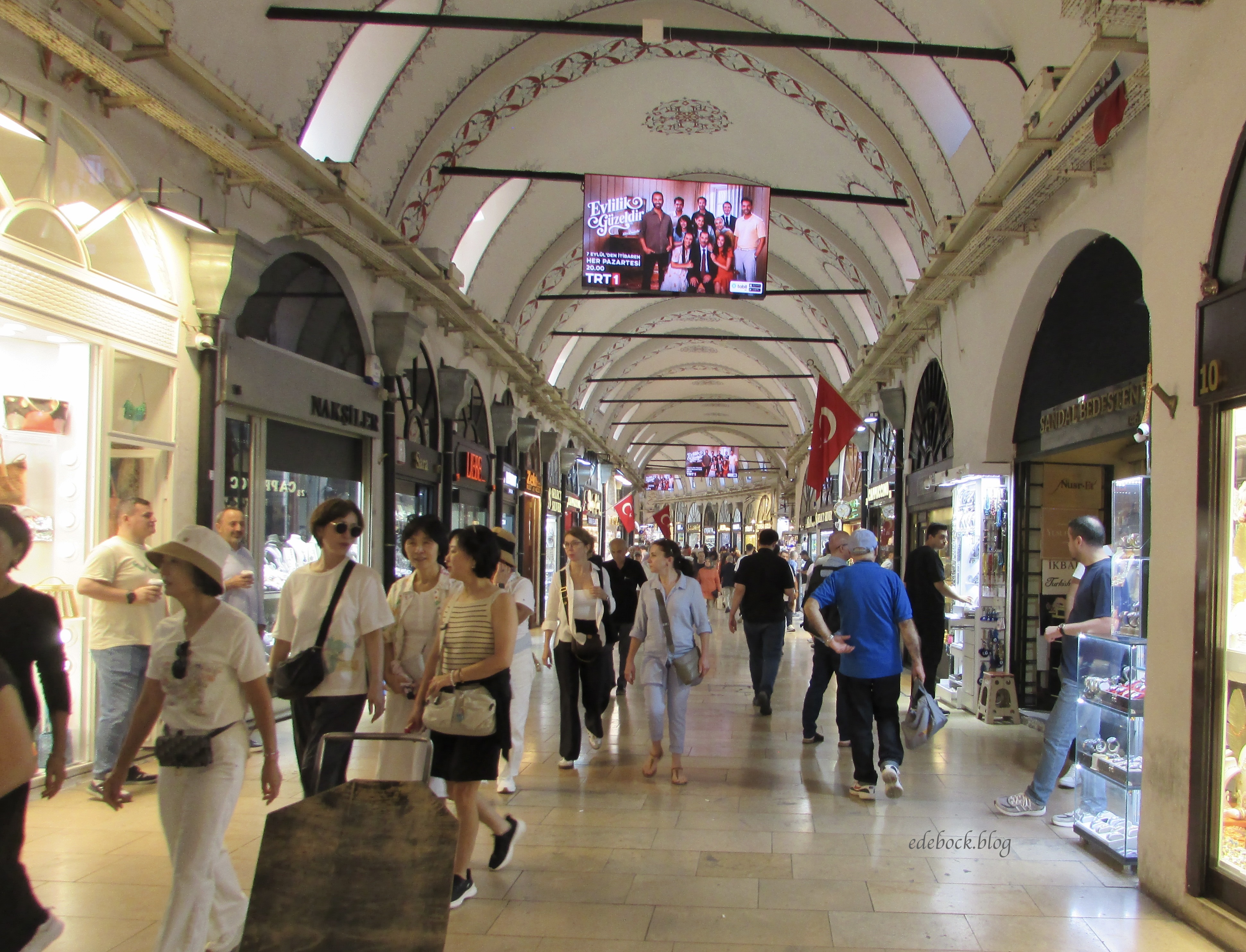
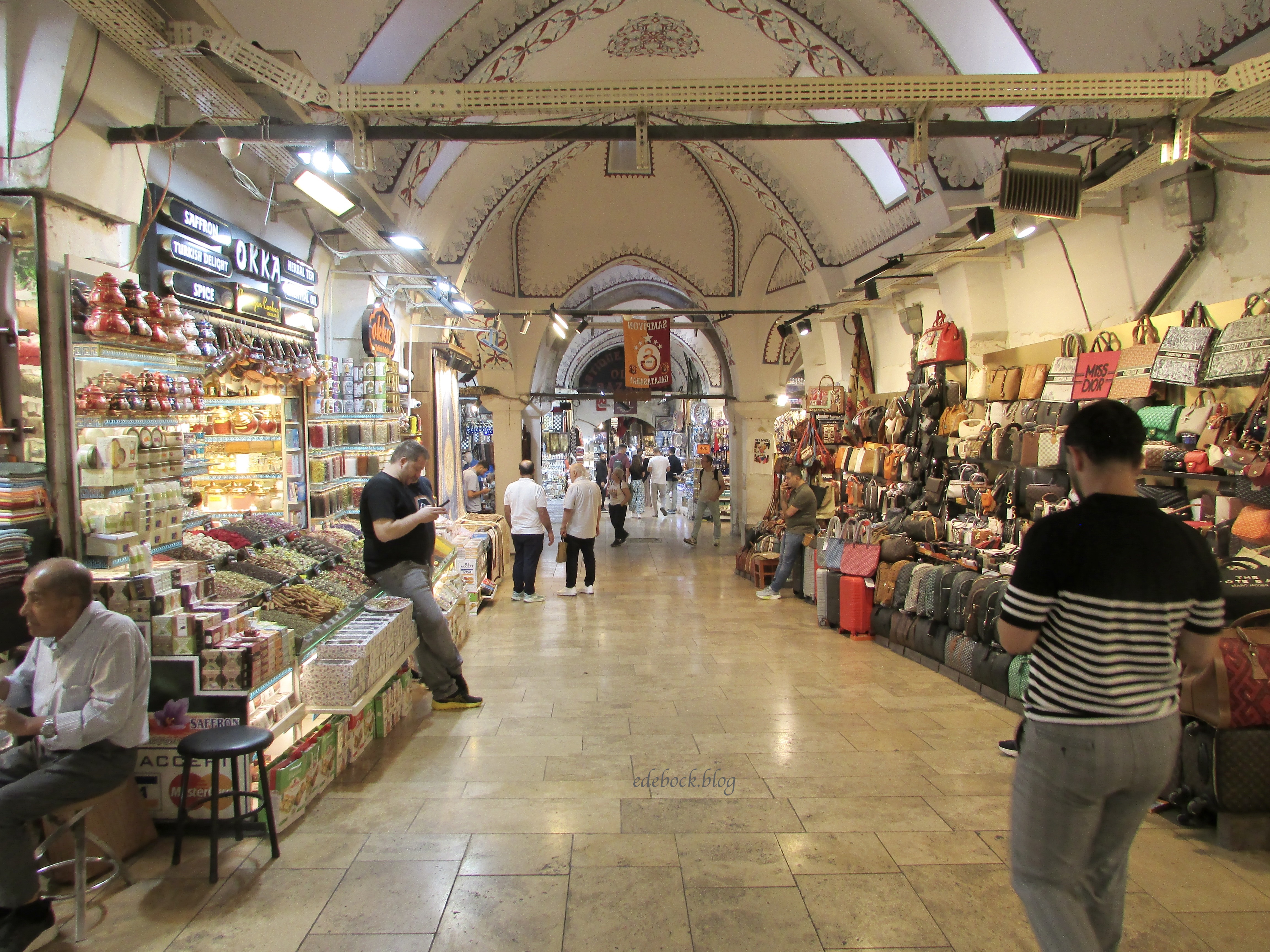
This morning, we walked about a kilometre to the Grand Bazaar, one of the oldest and largest covered markets in the world. Founded in the 15th century shortly after the Ottoman conquest of Constantinople (now Istanbul), it contains over 60 covered streets and nearly 4000 tiny shops selling everything from jewelry to clothes to carpets, leather goods, ceramics, and spices. It was like wandering a ginormous shopping mall.
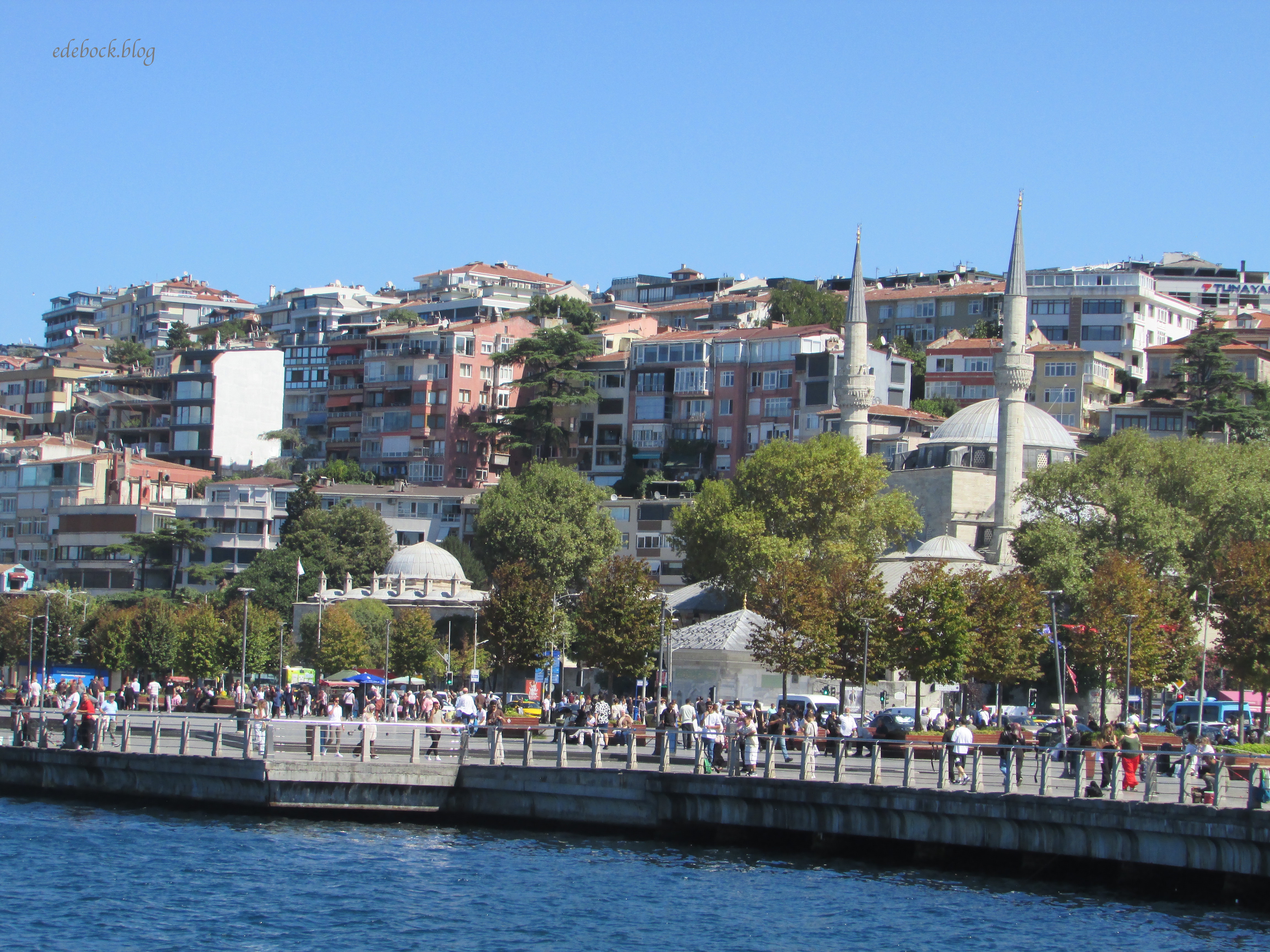
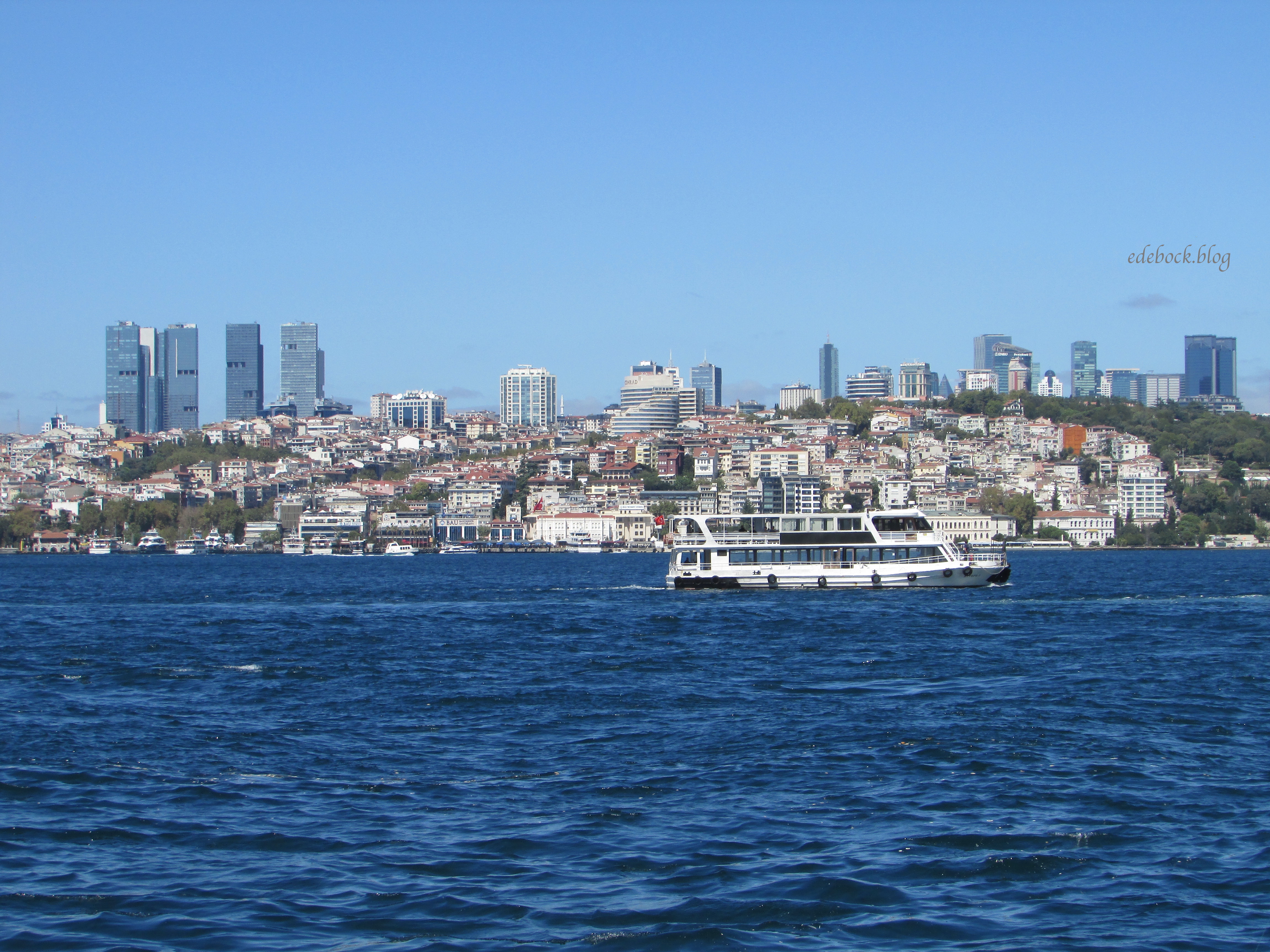
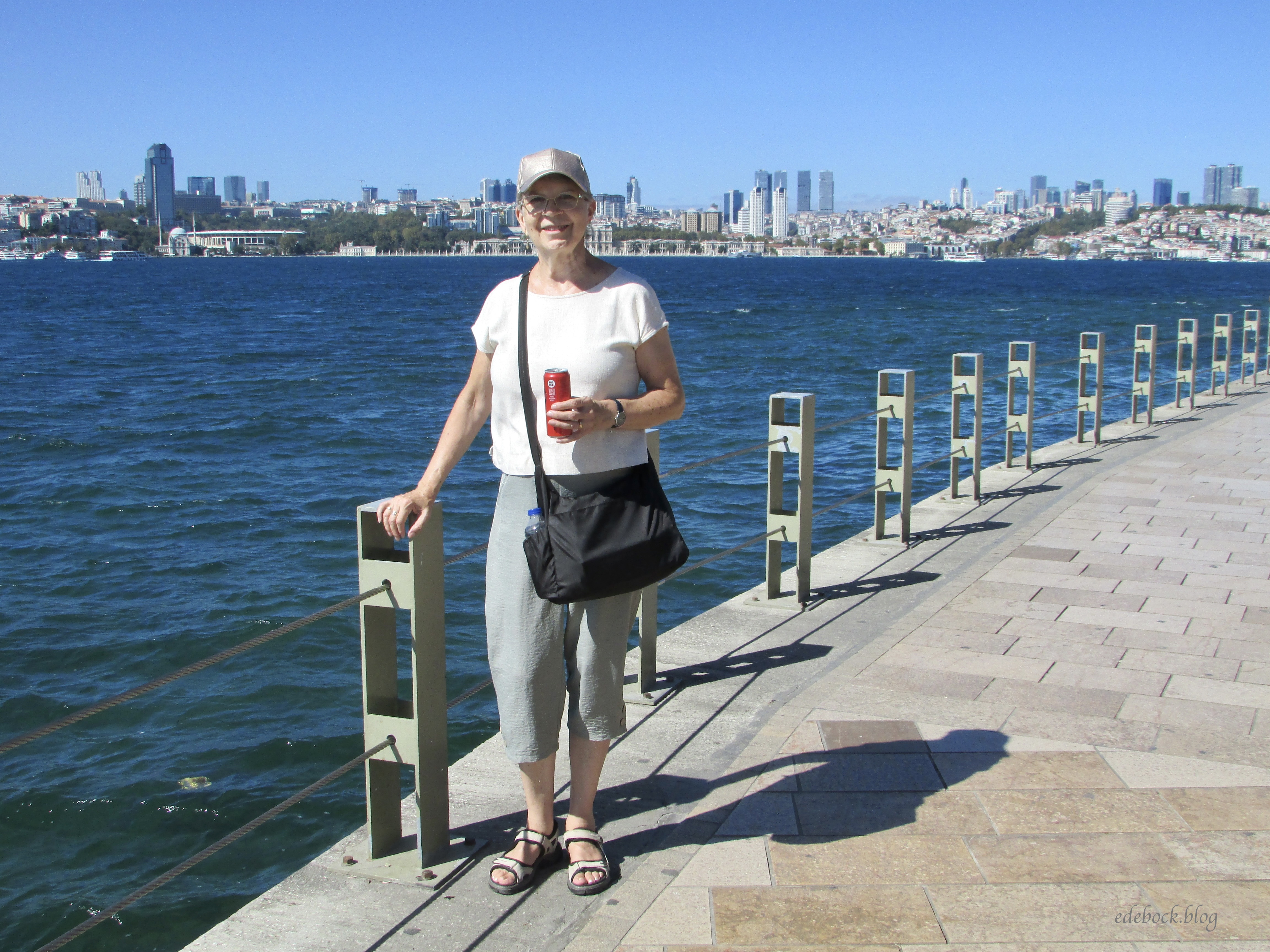
Located on both sides of the Bosphorus, a narrow strait that connects the Black Sea to the Sea of Marmara and separates Europe from Asia, Istanbul is a huge city that is located partially on each continent! About two-thirds of its population live in Europe and the rest reside in Asia. We are staying on the European side, but after leaving the Grand Bazaar today, we made our way to the Asian side via the Marmaray, a commuter rail line that connects the two continents through an underwater tunnel beneath the Bosphorus. There, we strolled the Üsküdar Coast Walkway, a stunning promenade along the shimmering blue water. At the end of the walkway, we found a marina and an open air restaurant where we enjoyed some fish and chips while watching boats of all sizes making their way in and out of the strait.
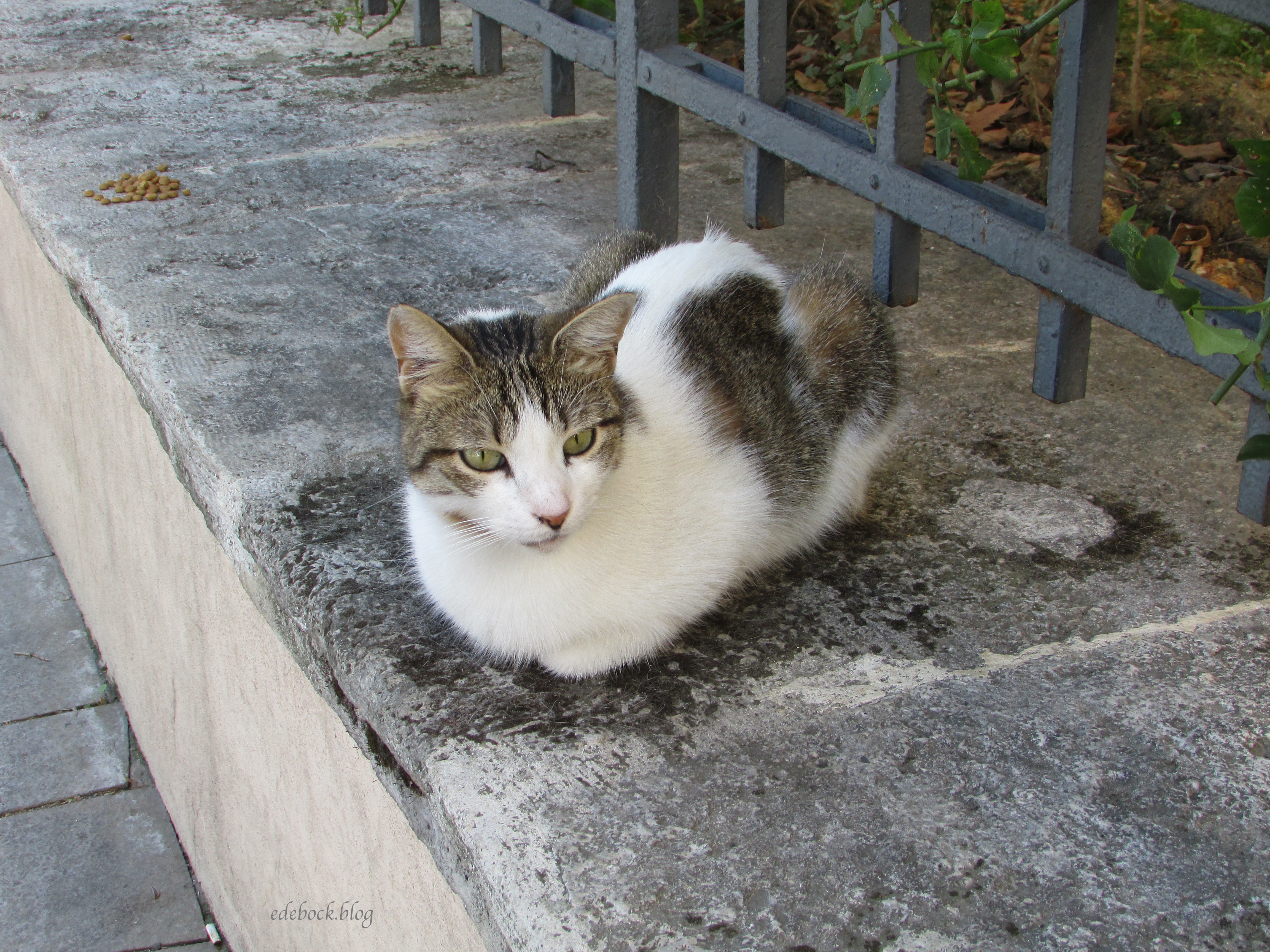
A post about this city wouldn’t be complete without mentioning the cats of Istanbul! An estimated 250 000 street cats live freely and harmoniously alongside the human population of approximately 16 million. Roaming freely through the markets, mosques, cafes, and subway stations, they are treated as community pets rather than strays. Shopkeepers and residents routinely leave out fresh water and food for them.
There’s more that I could say about our brief stay here in Istanbul, but we have a plane to catch in the morning and it’s time to get some sleep!
Over the years that we’ve been together, hubby and I have visited 18 different countries and we’re about to add 2 more to the list, but there are still places closer to home that we haven’t explored. Until the past week, Writing On Stone Provincial Park was one of them.
Straddling the Milk River just north of the Alberta-Montana border, Writing On Stone or Áísínai’pi, which means “it is written” or “it is pictured” is geographically central to the vast area inhabited by the Niitsítapi (Blackfoot) people since time immemorial. For them, it is also a deeply sacred place, a place where they seek the guidance of spirit beings thought to dwell in the hoodoos and nearby hills. Áísínai’pi was declared a UNESCO World Heritage site in 2018 and in order to protect the ancient art on many of the rock faces from vandalism, part of the park is an archaeological preserve closed to the public except by guided tour.
It is impossible to adequately capture the sheer magnitude of the landscape in photos, but here are a few to give you a taste of what you would see if you were to visit.
Writing On Stone has the highest concentration of Indigenous rock art on the Great Plains of North America. We did a two hour Markings of Áísínai’pi tour to view many of these pictographs and petroglyphs. Pictographs are painted on the rock with red ochre, crushed iron ore mixed with animal fat or water. Time and weathering have all but erased these remnants of days gone by.
Although the Blackfoot elders want the rock art to age naturally and no attempt has been made to preserve them, petroglyphs, etched into the stone, have lasted much better. While there is no technique that can accurately date rock art sites, researchers estimate their age based on objects depicted in the artwork as well as by analyzing changes in rock art styles. The next photo shows part of one of the oldest panels in the park.
While the exact meaning of much of the artwork is unknown, much of it was probably ceremonial, created during different rituals like vision quests.
We also hiked the 5 km out-and-back Matapiiksi (Hoodoo) Interpretive Trail and, on a different day, spent a couple of hours wandering our way through the Hoodoo Exploration Area on the hillside between the campground below and the very informative interpretive centre perched on valley’s edge above.
All I could say over and over again was “This is so amazing!”
Hubby and I spent the past four days camping at Cross Lake Provincial Park about three and a half hours northwest of here. Amazingly, in spite of the fact that Alberta has been experiencing near-historic rainfall over the past month, we enjoyed four days of beautiful sunshine and it wasn’t until we were tucked into bed in the trailer last night that the rain began to fall again.
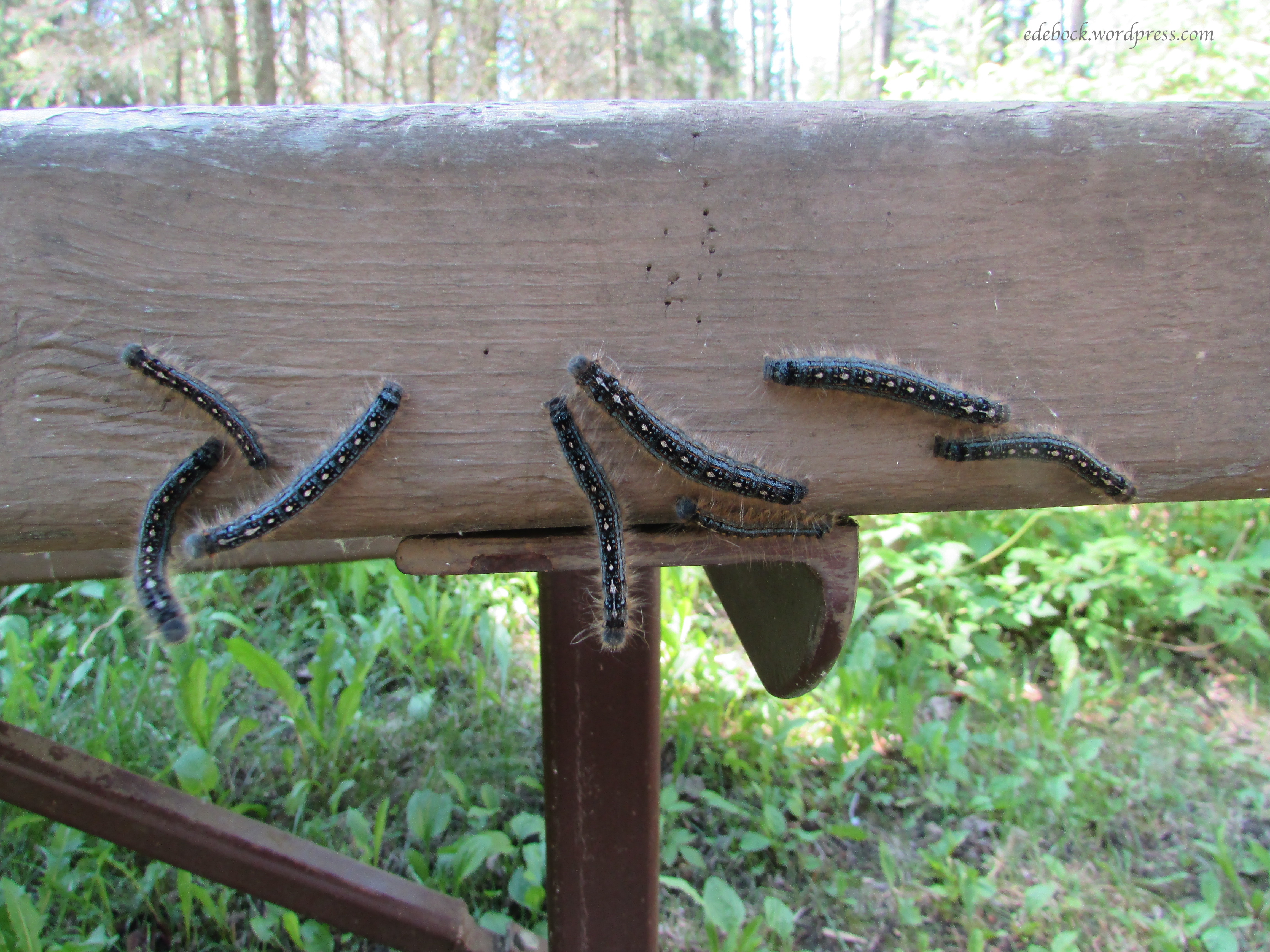
In addition to all the rain, Alberta has also been experiencing a massive infestation of tent caterpillars, a natural phenomenon that peaks every 10 to 12 years. Located in the boreal forest that encompasses almost the entire northern half of the province, the campground was overrun with these hairy little critters.
Although we love to spend most of our time outdoors when we’re camping, we ate our first supper in the trailer to avoid the caterpillars and when we were outside that evening, we literally had to tuck our pants into our socks to keep them from crawling up the inside of our pant legs!
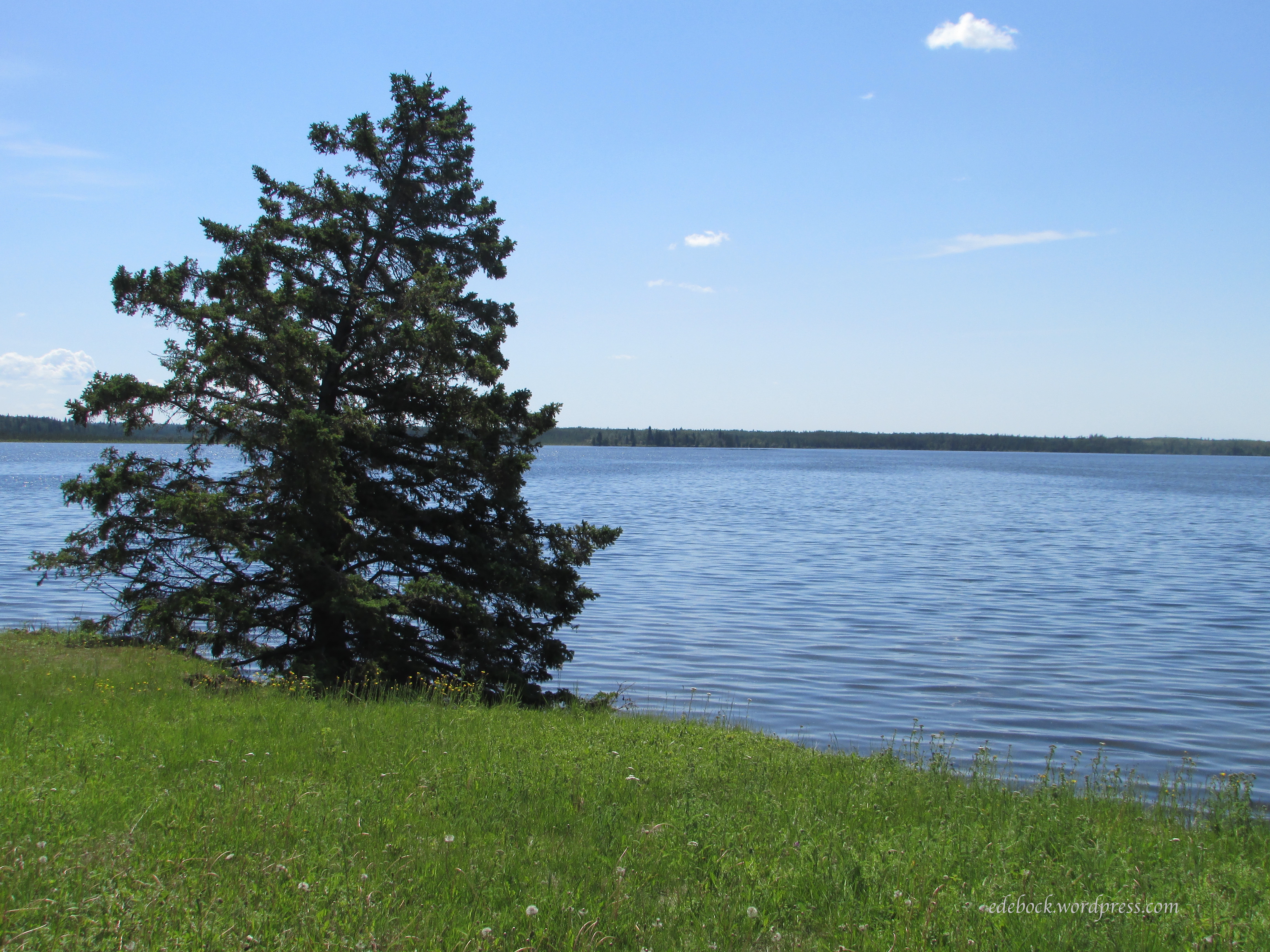
One place where there were no caterpillars was out on the water. The main Cross Lake Provincial Park campground offers 130 lovely powered sites, but across a wide bay and accessible only by foot or by boat, is rustic George’s Point campground with seven tent only sites. For the first of our two kayaking excursions, we packed a lunch and paddled over to George’s Point for a picnic. We were the only ones there and this is the view that we enjoyed.
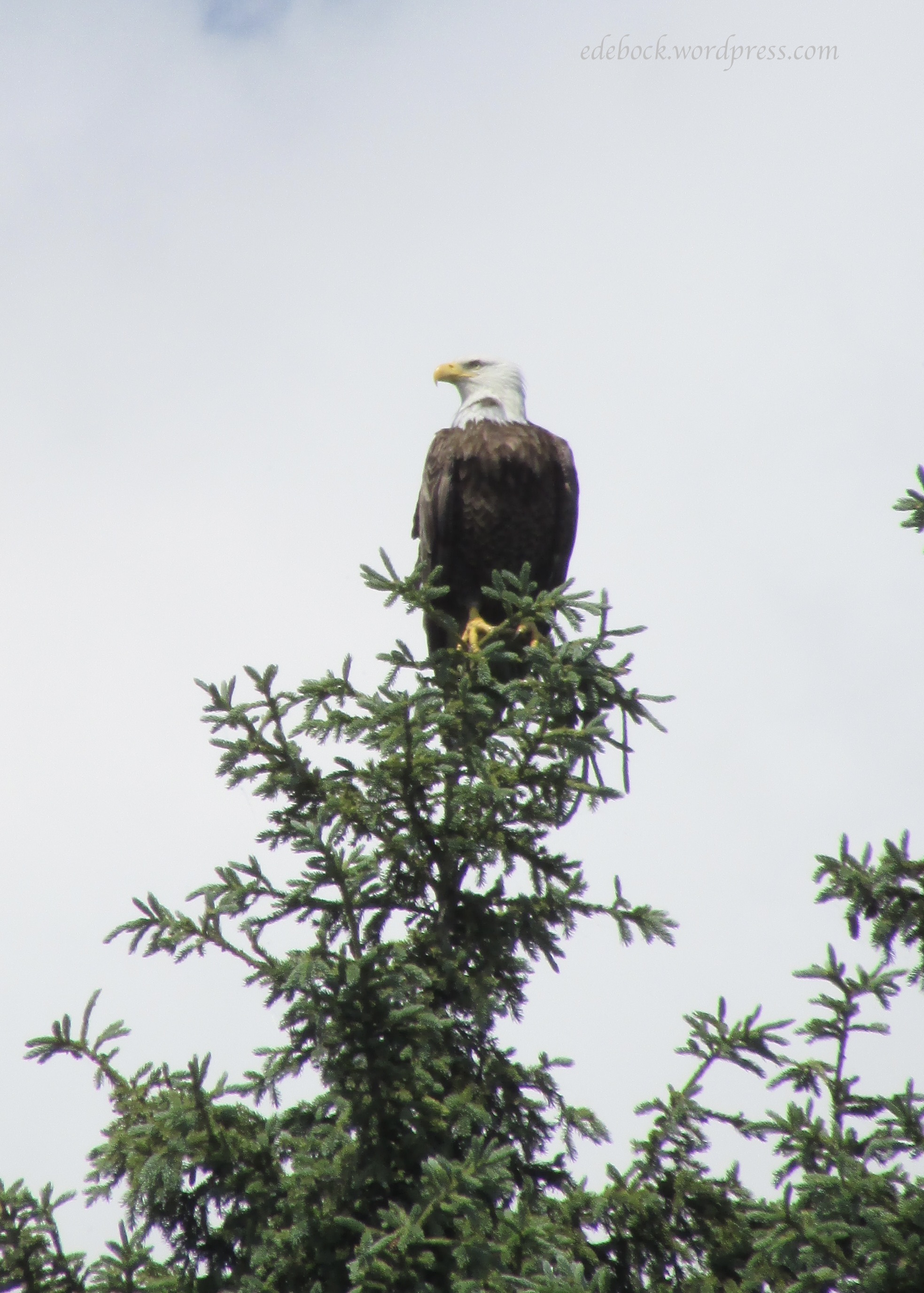
While kayaking, we saw families of ducks and loons as well as gulls and other water birds, but we were especially delighted to spot a bald eagle. There’s no way to keep a kayak perfectly still on the water, so taking good photos, especially those that require zooming in, is extremely challenging. Needless to say, I’m pretty happy with this one…
When we got back to our campsite later that day, it was lierally like walking into a horror movie! Every surface was crawling with caterpillars… thousands and thousands of caterpillars! Thankfully, we’d heard from another camper that there weren’t many of them on the far side of the campground where there were more evergreen trees and less of the deciduous ones that the caterpillars feed on. The campground was far from full, so we asked and were given permission to move. It was a lot of extra work, especially for hubby, but it was definitely worth it. Although there were still a few creepy crawlies, we were able to enjoy the remainder of our stay.
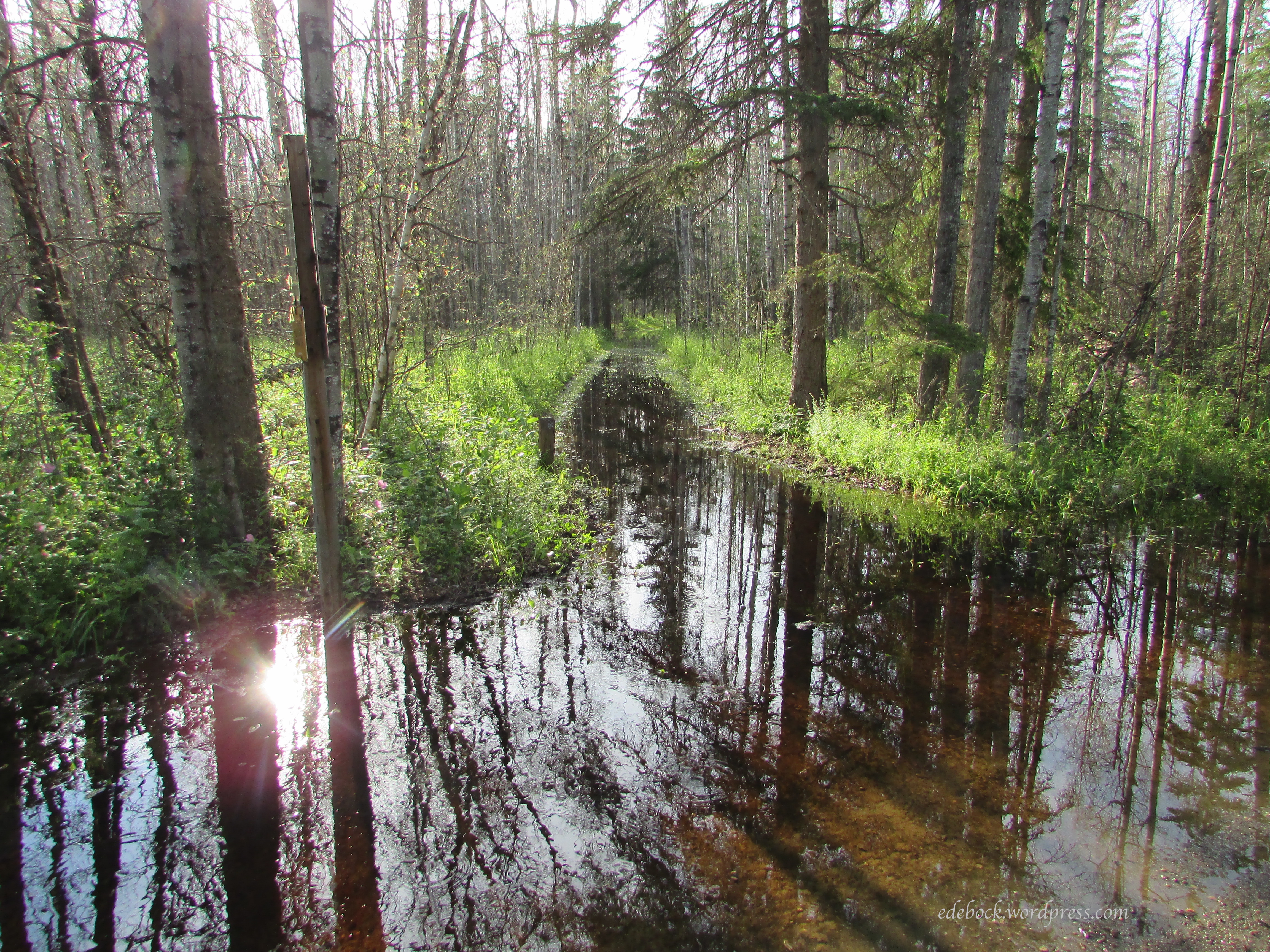
We weren’t able to do as much hiking as we might have as many of the trails looked like this…
Thankfully though, although we had to carefully skirt around a couple of huge puddles, the trail from the campground to French Creek, which flows out of the lake, was passable and we even found the only geocache located in the park while we were on that hike.
Now we’re home and it’s raining again, but at least there are no caterpillars here!
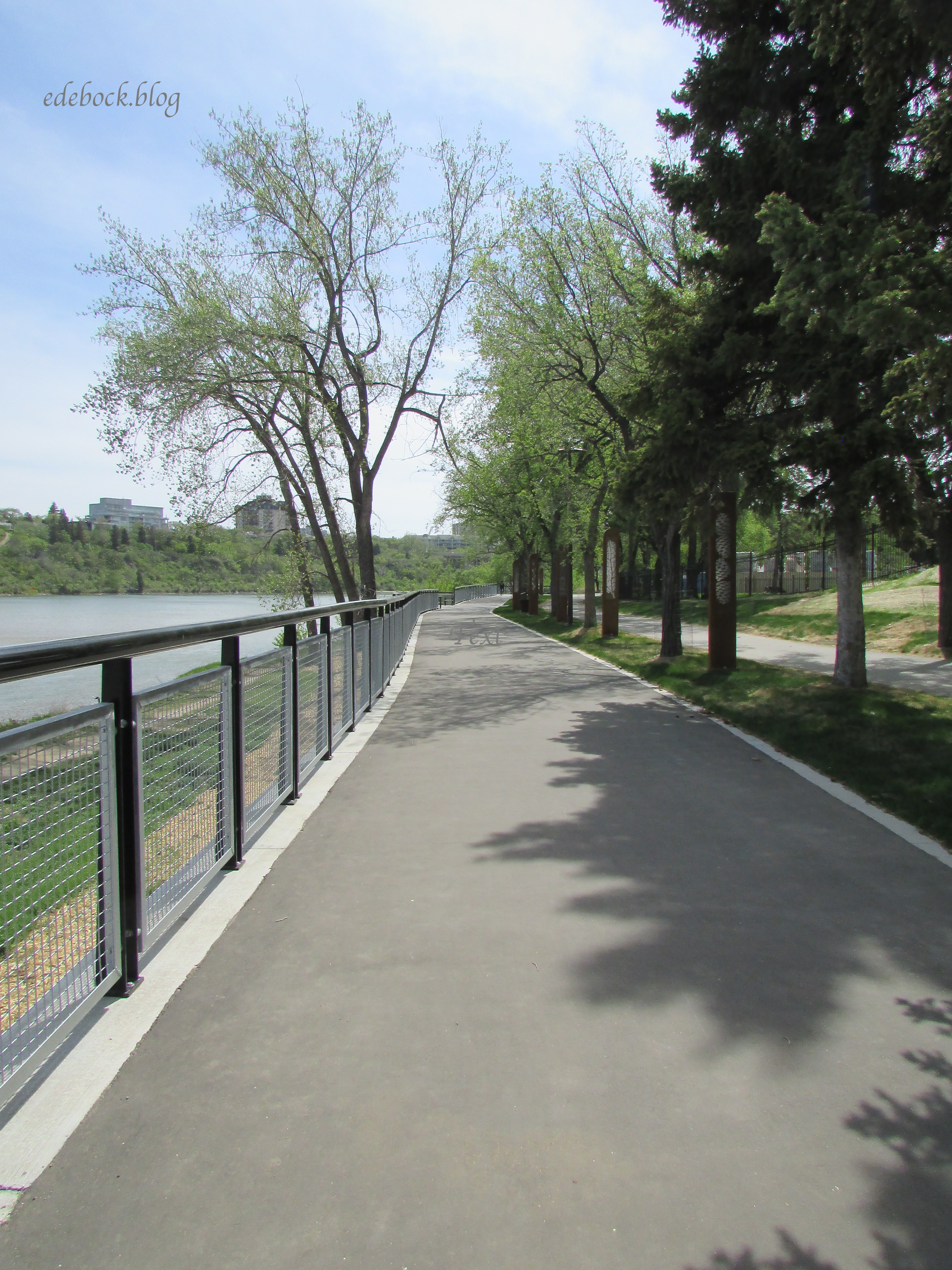
Today I have a little bit of Fashion Friday and a little bit of travel for you all in one short post! Hubby and I spent three days this week representing our church at a denominational conference in Saskatoon, Saskatchewan. While most of our time was spent in meetings, we had some free time to do a bit of exploring on Wednesday afternoon. We decided to spend it walking a small portion of the Meewasin Trail, a scenic multi-use pathway that stretches over 105 km in and around the city, mainly along the South Saskatchewan River.
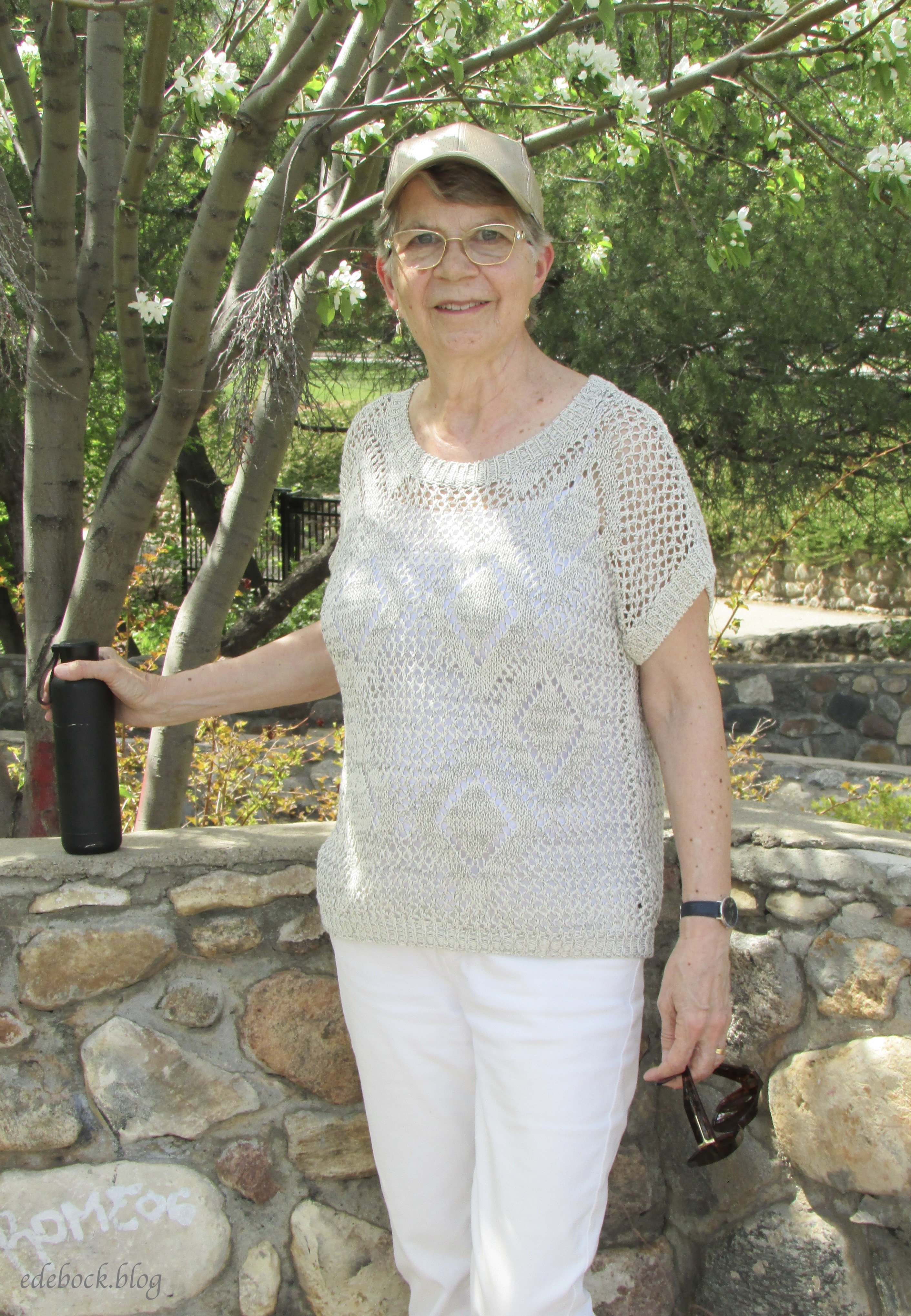
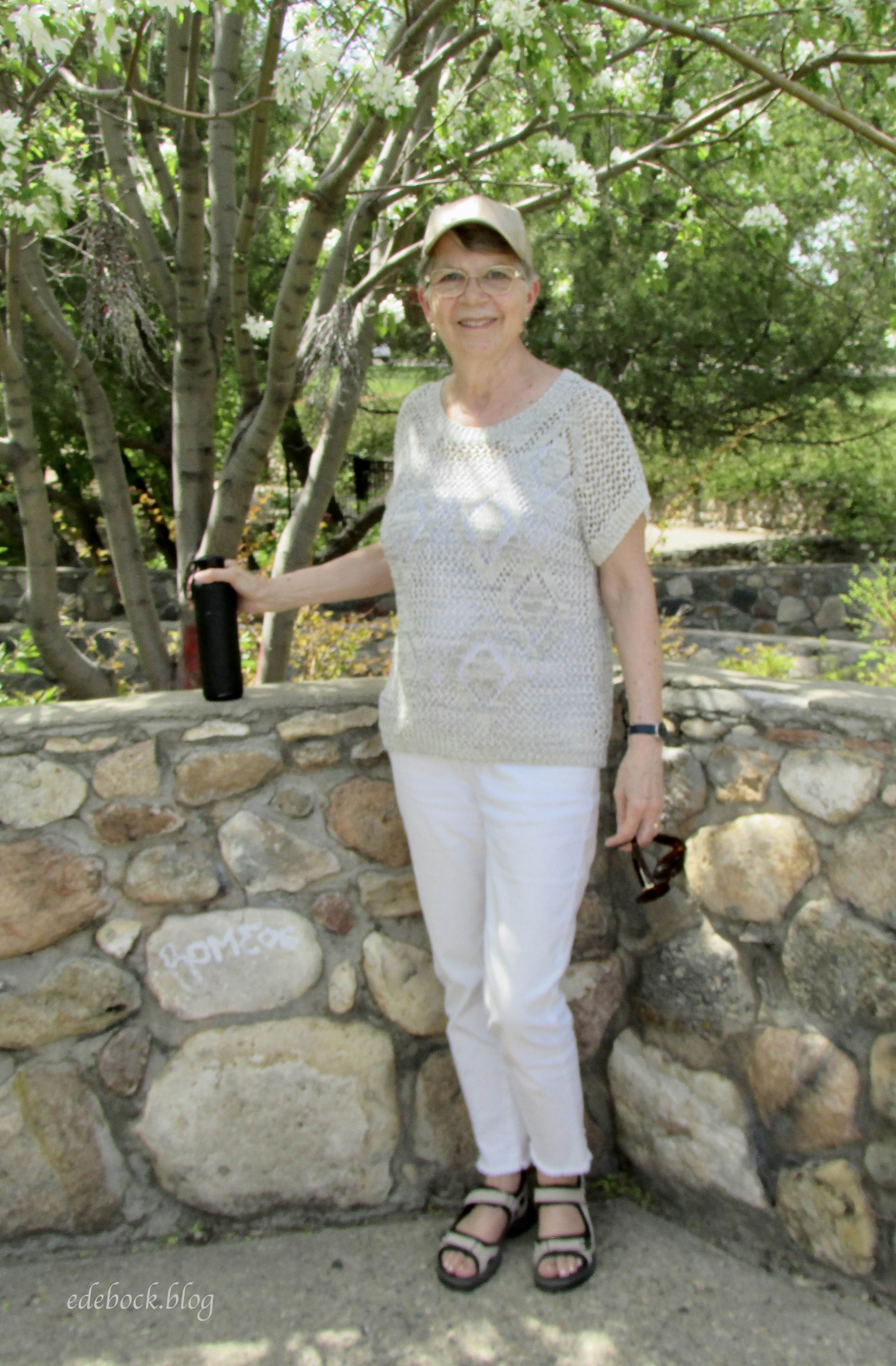
A big question for me was what to wear when I would be spending a significant amount of time in an air-conditioned venue, but also a couple of hours walking outdoors in 32ºC (90ºF) heat!! Here’s what I chose.
The white jeans were a thrift store purchase several summers ago and have appeared on the blog before, but the open-weave crocheted top, worn here over a white cami, is a recent acquisition purchased at a new consignment shop in our area. The sunglasses in my left hand and the hat were very important accessories on such a hot, sunny day and I also wore my Ecco Yucatan walking sandals that provided much needed support as we ended up walking 7 km (4.3 miles) on paved pathways.
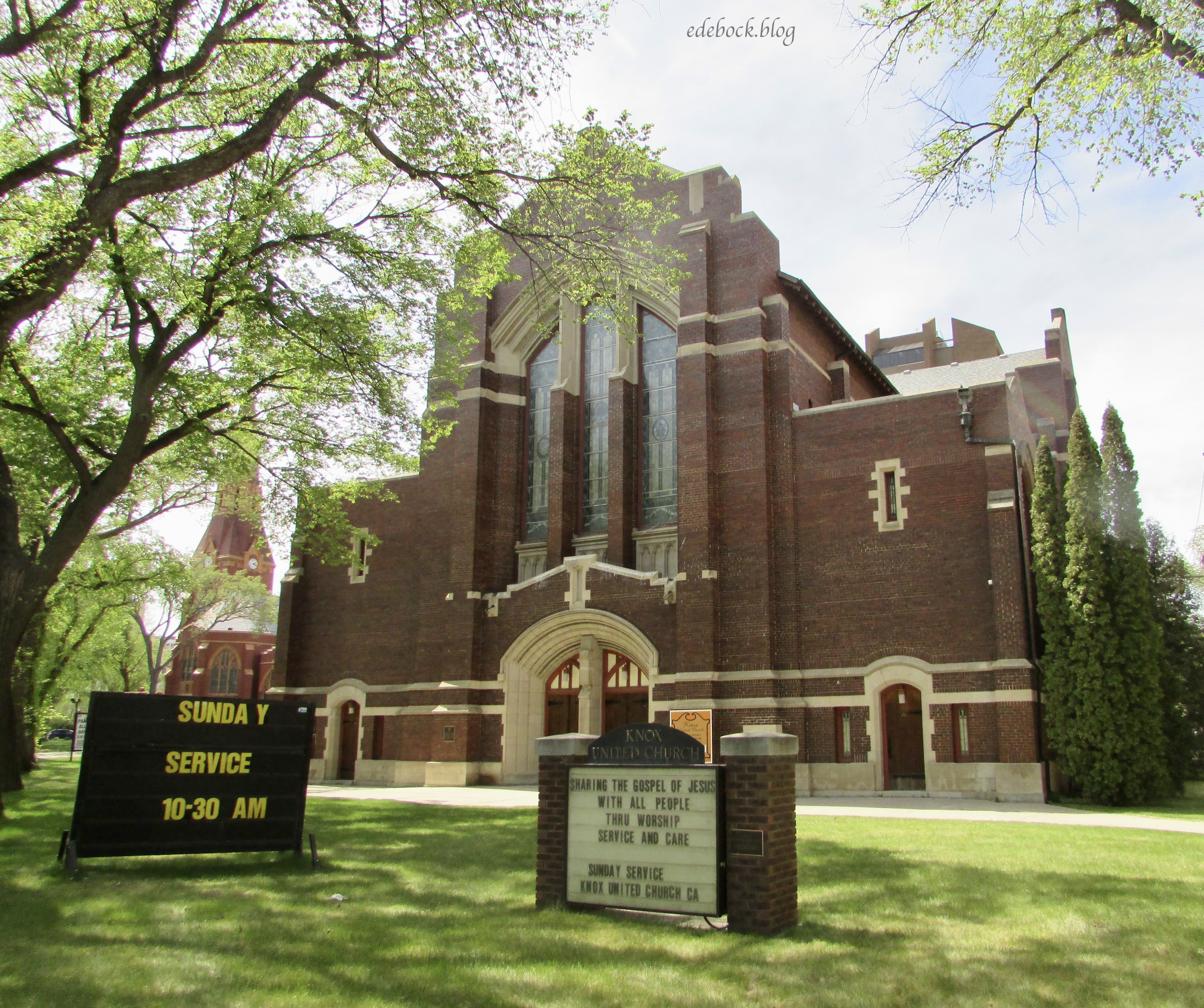
We accessed the trail and started our walk across the street from the historic Knox United Church. Built between 1912 and 1914, it is a designated municipal heritage building.
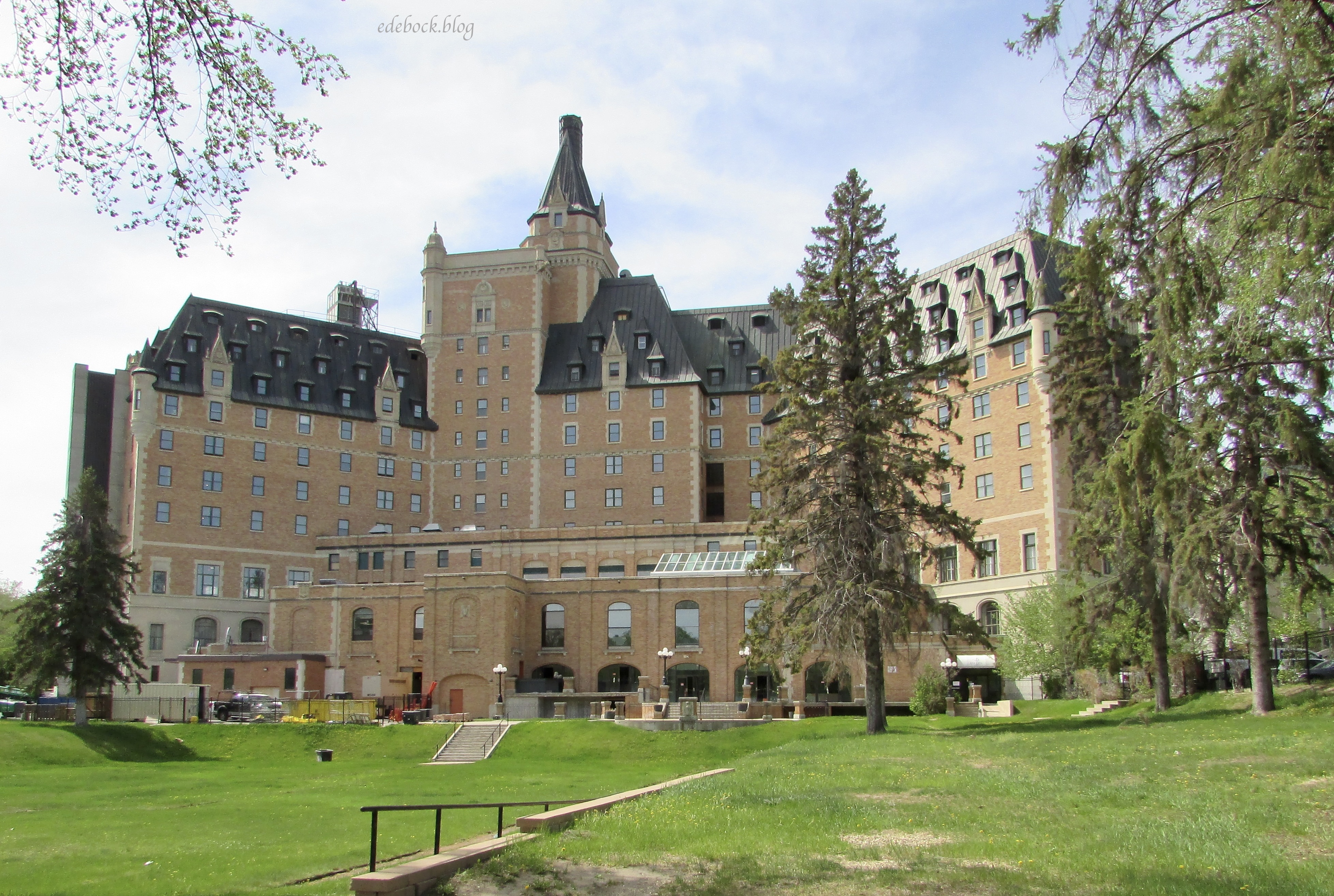
Another historic building along our route was the iconic Bessborough Hotel, Saskatoon’s castle on the river, which is presently closed for major interior renovations.
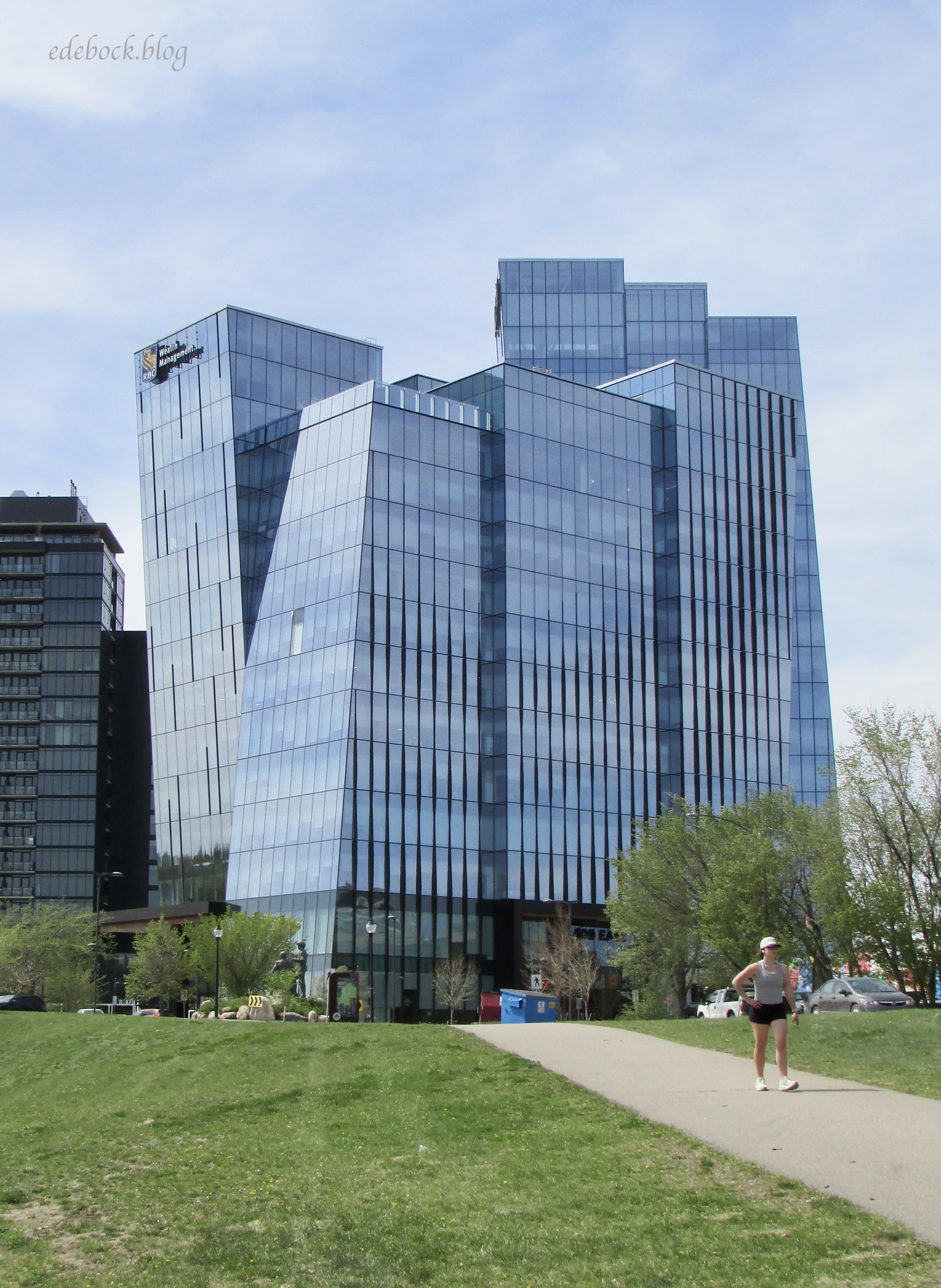
A little further along, we passed some much more modern architecture.
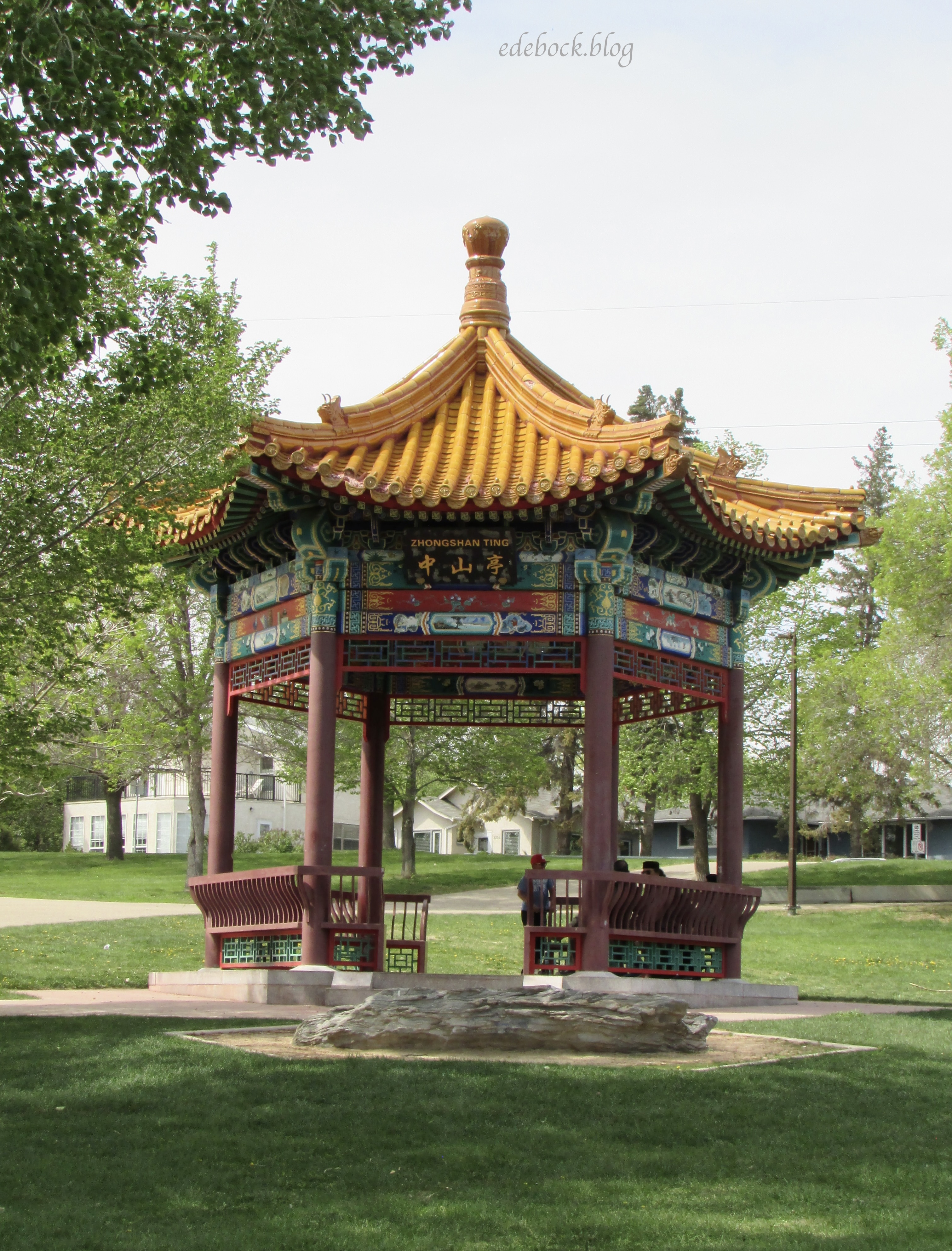
The beautiful Zhongshan Ting pagoda in Victoria Park was donated to the city in 2015 to commemorate the first Chinese immigrants and their contributions to early Saskatoon.
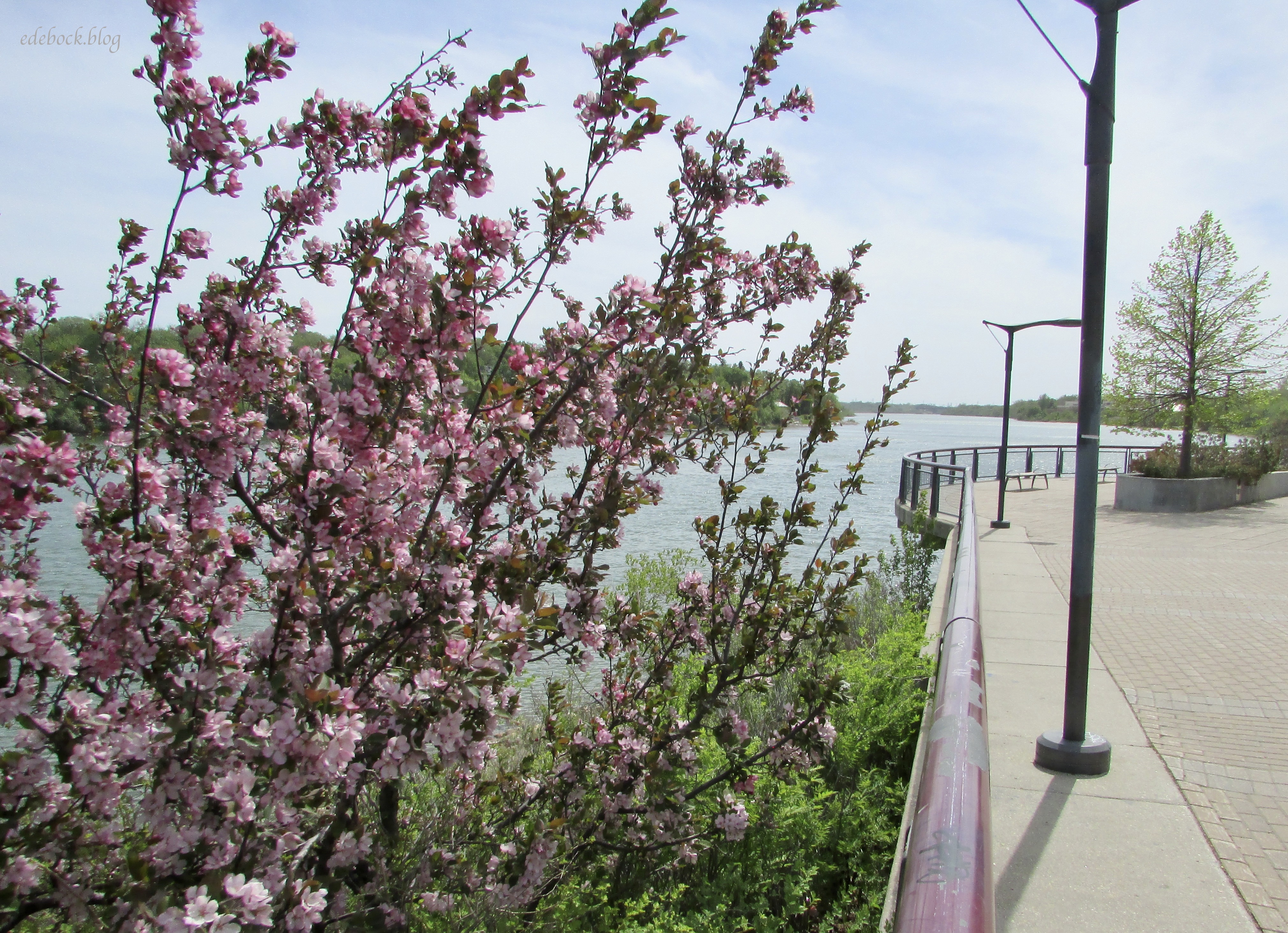
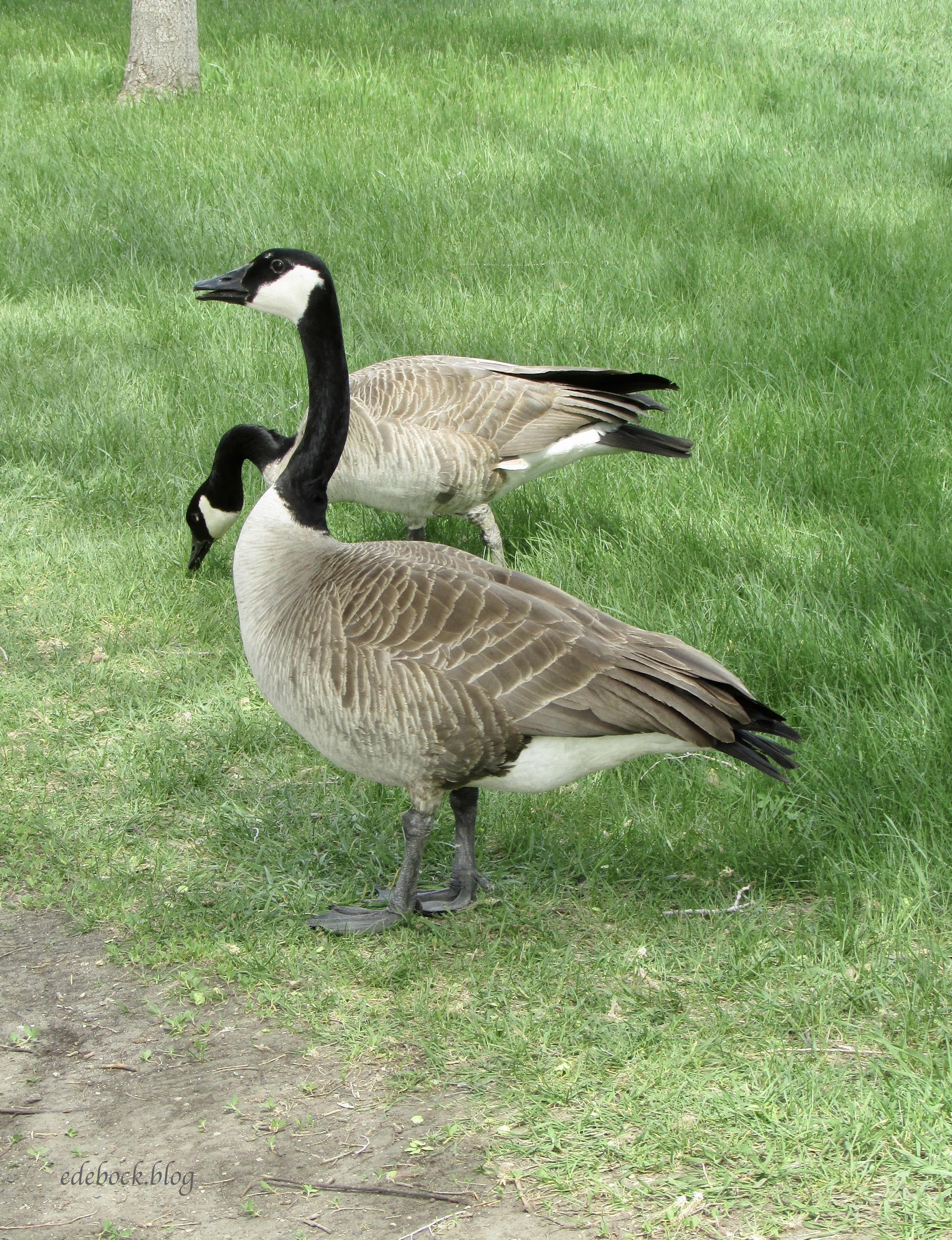
Fragrant blossoms and the presence of many pairs of Canada Geese were signs of the season. This fellow kept a close eye on us as while his partner grazed and we were careful not to annoy him. While these large birds become very comfortable in urban areas, they can also be highly aggressive, especially during their spring breeding and nesting seasons.
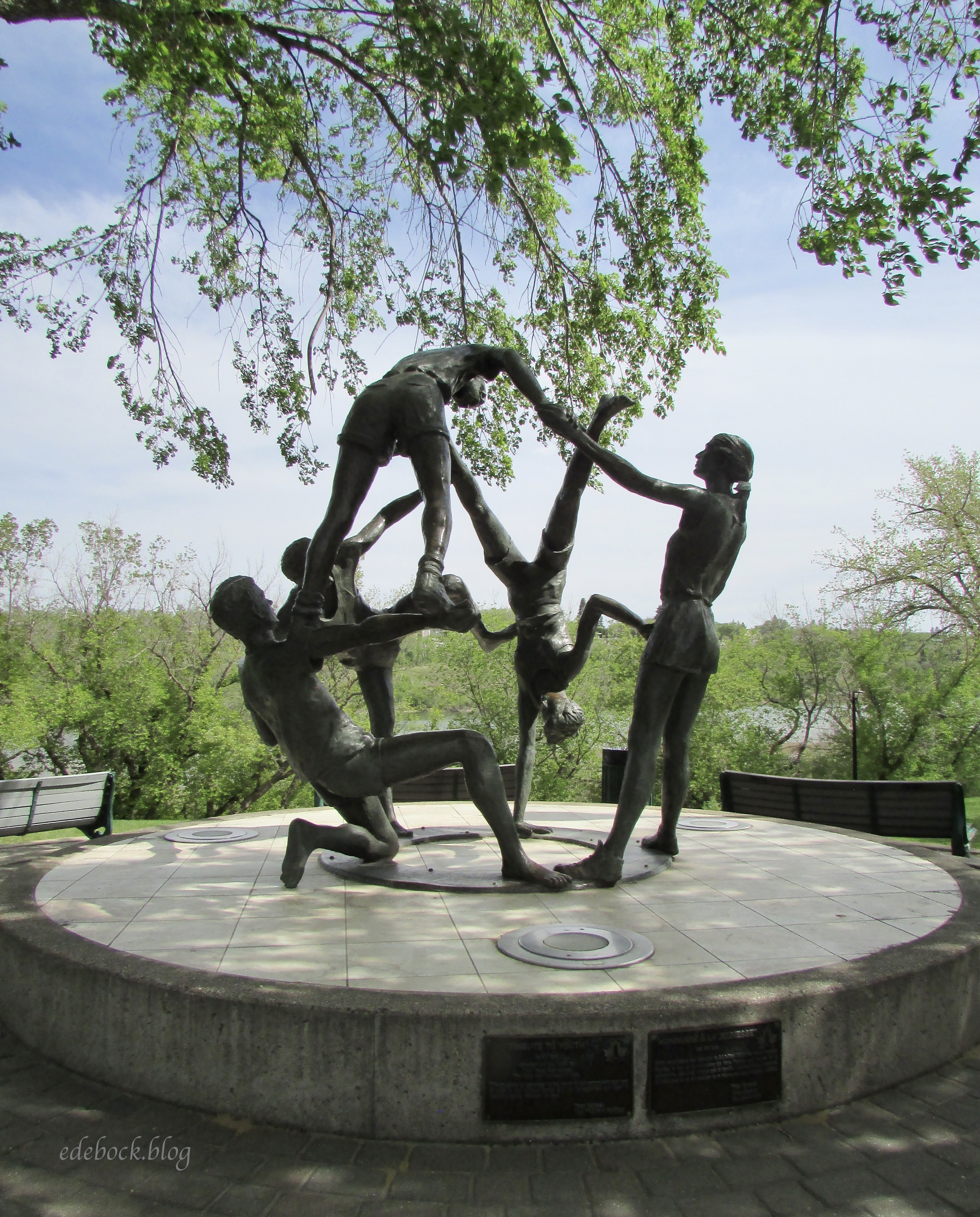
For the last bit of our walk back to the vehicle, we left the riverside and walked along Spadina Crescent. There, we came across one of the most recognized and photographed landmarks in the area, the Tribute to Youth statue. The life-sized bronze sculpture featuring five children with interlocked limbs forms a sphere and captures a sense of childlike play and energy. They definitely appeared to have more energy than I did at the end of our 7 km walk!