Ghost moose

We had an unusual visitor yesterday; a young moose that has been hanging around our neighbourhood for the past few days munching on the plant life.

IMG_4012

Yes, I was actually that close to him! When I first realized that he was there, he was standing just outside our front door snacking on my rose bush.

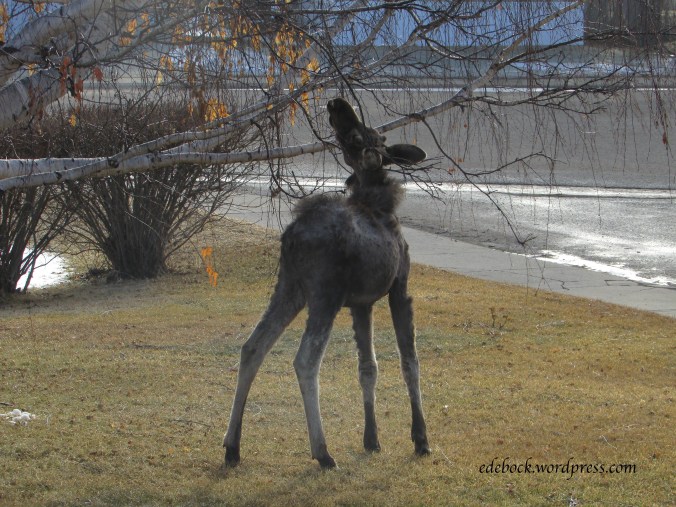
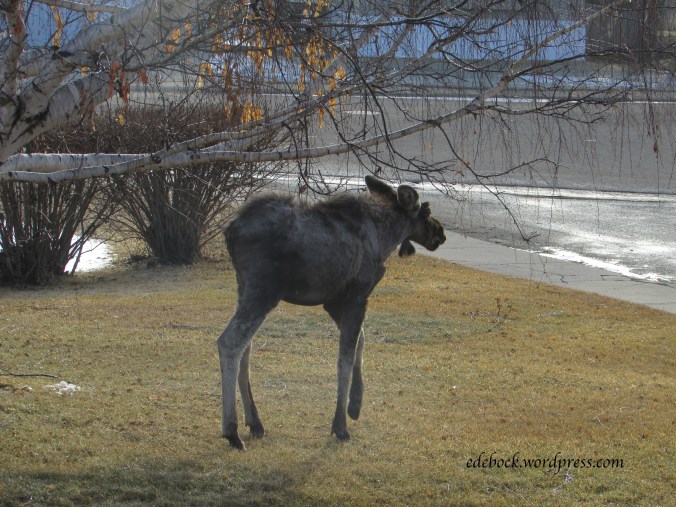
A rather scraggly looking character, he is what is known as a ghost moose. Infested and irritated by ticks, he has rubbed off most of his dark brown hair, exposing his pale undercoat.

IMG_4013

Though I’ve never seen one before, apparently ghost moose are becoming more and more common and are most often spotted in March and April. Biologists blame climate change for ushering in shorter, warmer winters that are conducive to increased tick populations. The tick’s life cycle begins in late fall. Larva cling to plants and climb aboard unsuspecting moose that brush against them, feasting on their warm bodies over the winter months until early spring when they generally drop off and lay their eggs to begin the cycle over again.

A single moose can be host to a staggering number of ticks. I’ve read numbers upwards of 50 000! Thousands of feeding ticks can actually kill a moose! Calves, like this one, are particularly vulnerable. Loss of blood leaves them weak and easy prey for predators. Scratching off large patches of their thick outer coat in an attempt to remove the ticks leads to the loss of body heat and even hypothermia. Some spend more time scratching than foraging for food. Skinny and malnourished, they eventually die of starvation.

Considering that our young visitor has made it through our cold winter and seems to be eating well, I’m hopeful that he will survive, but I also have other concerns for his well-being. He is obviously one of last year’s calves. As such, he’s still a bit young to be wandering about on his own. Moose calves usually stay with their mothers for about a year and a half.

The fact that he’s spending so much time in town is also a major concern. It’s not unusual for us to see a mother moose and her calves in the yard during the winter, especially at night, but they are usually easily spooked, retreating to the trees on the edge of town when startled. This little guy is much too bold. He continued to nonchalantly trim the lower branches of our weeping birch while vehicles passed by just a few feet away. Even a neighbour in a noisy truck stopping to take pictures didn’t deter him.
IMG_4016

Not only is becoming semi domesticated not good for him, but as cute as he is (in his own scraggly way), he poses a danger to people. He’s already big enough to cause serious damage and  if he survives, he’s going to get a LOT bigger. A full grown bull moose can reach a height of up to 2.15 m (7.1 feet) at the shoulder and weigh between 500 and 725 kg (1,102 and 1,598 pounds)!
IMG_4015

Hiking Kejimkujik Seaside

Nova Scotia’s Kejimkujik National Park is actually one park divided into two completely separate areas. Thankfully, locals refer to it as Keji because I’ve had a terrible time getting my tongue around that name! The meaning of the Mi’kmaq name is uncertain, but the park’s official stance is that it means “tired muscles”. Yesterday, we spent several hours hiking the beautiful Seaside portion of the park; 10.7 km in all and I’m proud to say that my muscles are just fine today!

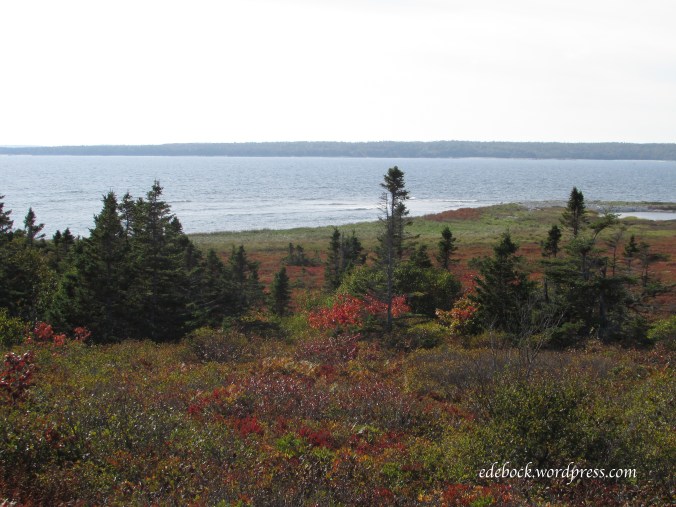
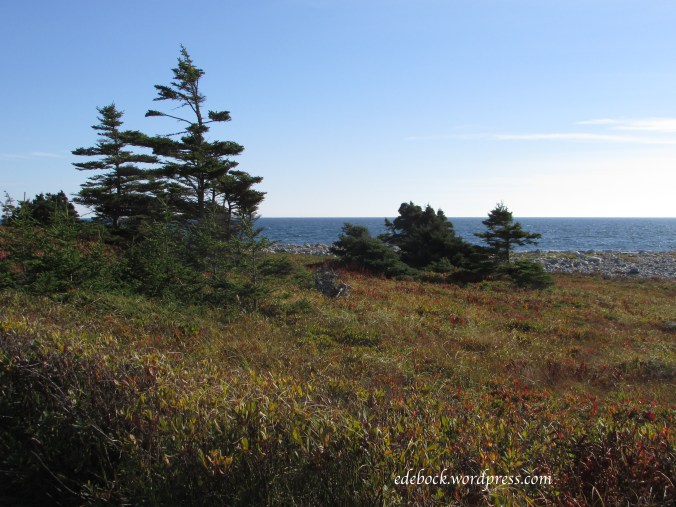
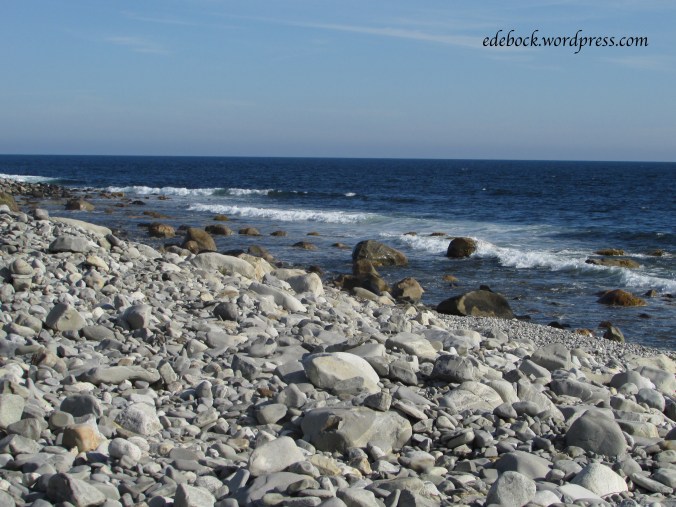
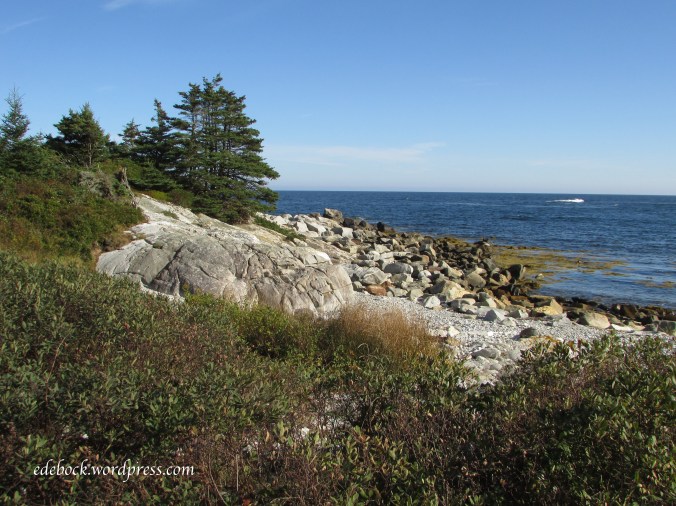
The hiking trails ramble through coastal barrens and bogs, around rocky headlands and along cobbled and sandy beaches offering views that are breathtaking. The trails are well maintained and there’s very little change in elevation, but if you go, you’ll definitely want good footwear for the rocky sections.

Come along on a virtual hike with me.

img_2885

img_2887

img_2890

img_2891

In the past, sheep were grazed on the barrens. Here are the remains of the shepherd’s home; definitely a room with a view!

img_2895

img_2898

img_2903

img_2905

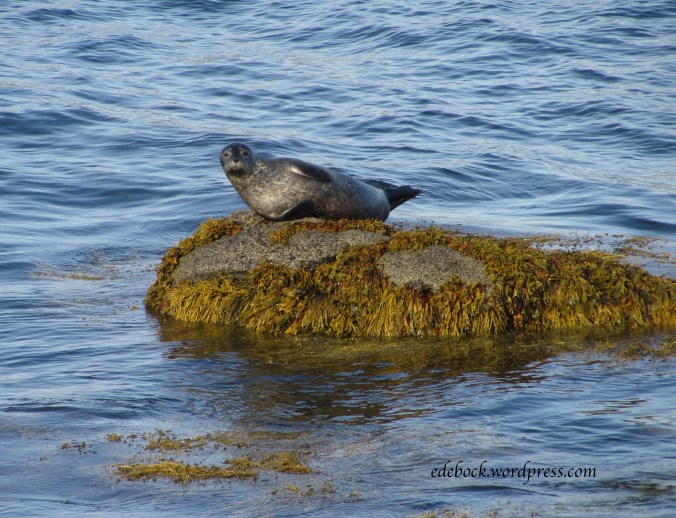
Wildlife share the park with hikers. A sign at the entrance warned that bears have been sighted. Thankfully, we didn’t see any, but there was plenty of scat along the trail. The only wildlife we saw was birds, a squirrel and this harbour seal sunning itself!

img_2908-version-2

img_2915

Fall camping

IMG_5618I’ve always wanted to go camping in the fall; always hoped for just one more outing with the trailer before winter hit. As teachers, it never happened. We were back in the classroom and up to our eyeballs in work by late August or the first week of September. Then, with retirement came several years of helping our friend, Louis, with harvest. I loved being out on the combine, but it meant that there was no time for camping in the fall.

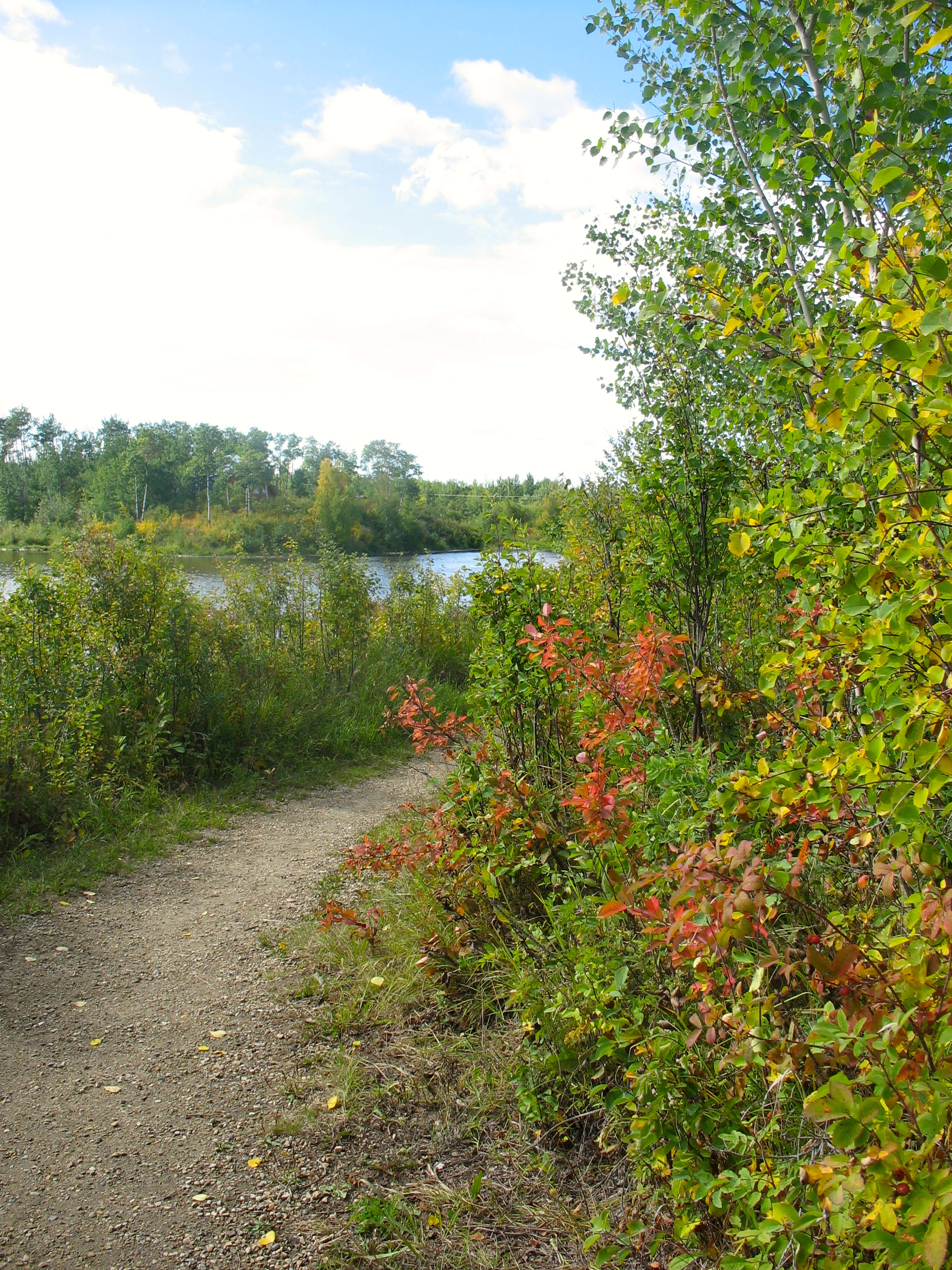
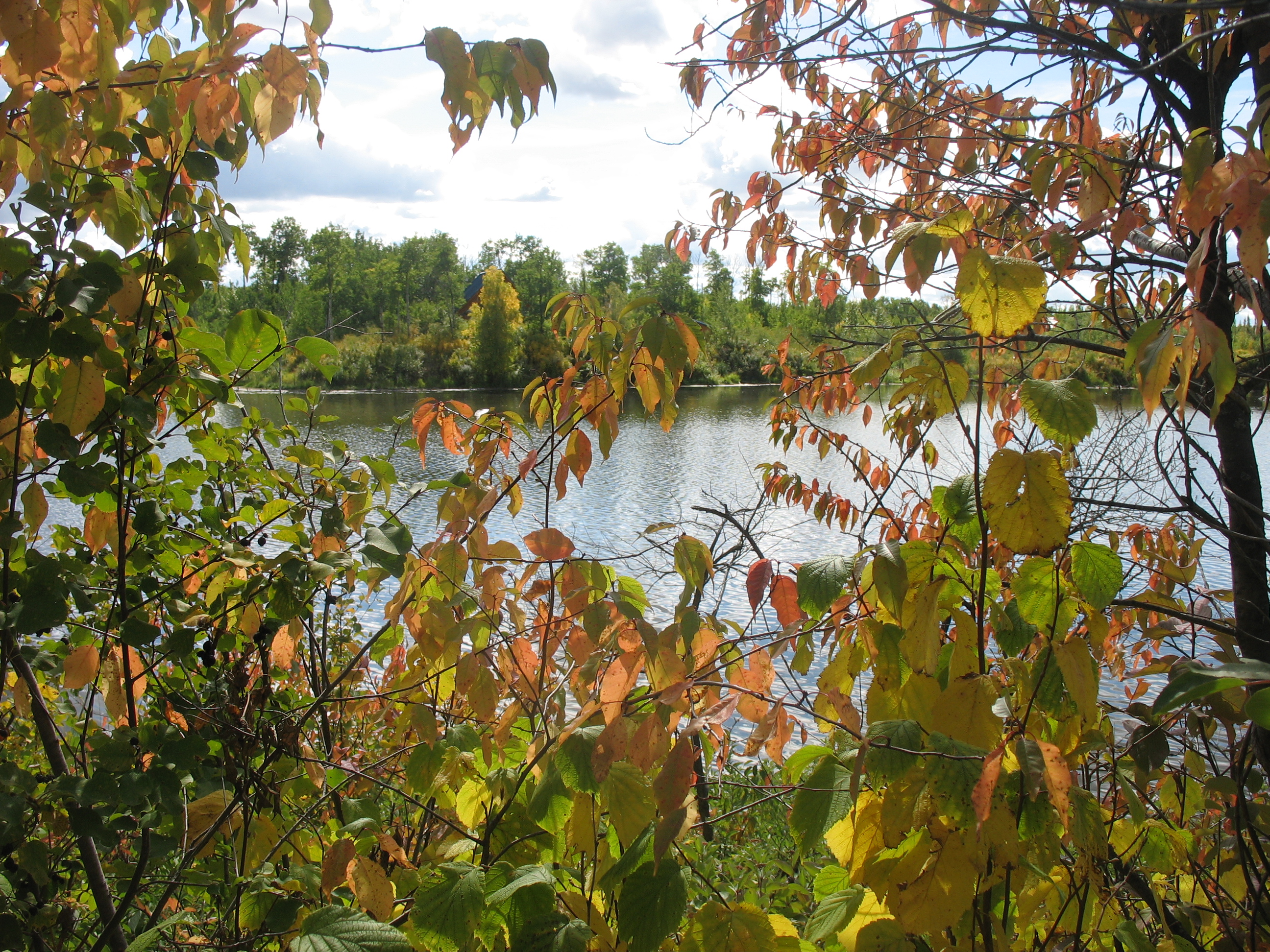
Finally, this year it happened! We packed up the trailer last Wednesday morning and headed for Miquelon Lake Provincial Park, less than an hour and a half from home. Surrounded by the spectacular colours of the season, fall camping was everything I always thought it would be! Though we got caught in the rain while out geocaching on Wednesday afternoon, the clouds soon disappeared and for the remainder of our time the weather was glorious.

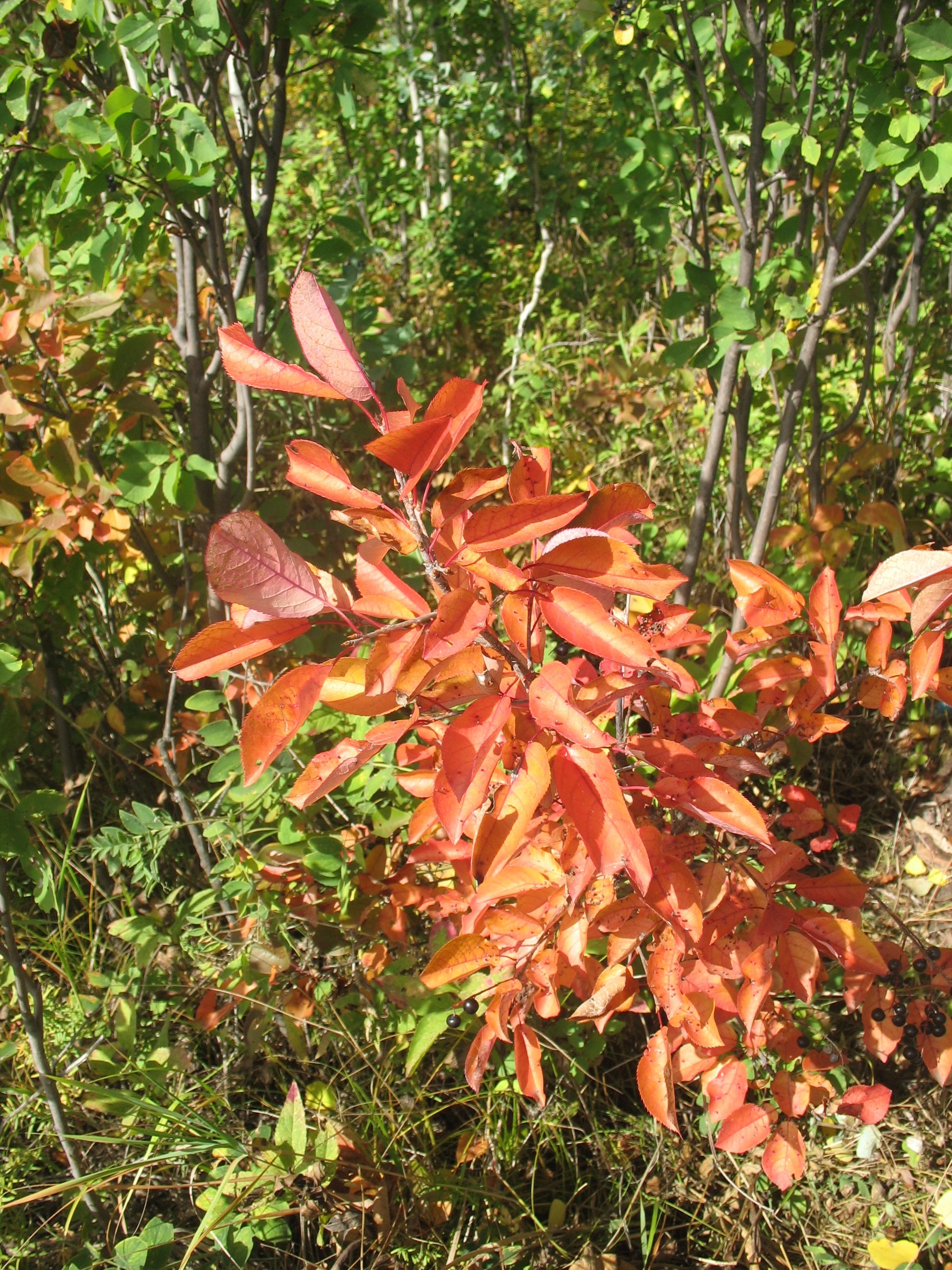
Here in Alberta, we don’t get the wide variety of fall colours that are found in eastern Canada, but everywhere I turned I was surrounded by beauty and I took dozens of pictures!

IMG_5594  IMG_5617

IMG_5633

We found 14 geocaches within the park boundaries, but the highlight of our trip was definitely Friday’s hike. We left the trailhead late in the morning intending to hike 7.3 kilometres, but we’d completed all but 1.5 km of that by the time we stopped to eat lunch! Digging out our trail map, we quickly decided to add what we had originally thought might be a separate hike sometime in the future. In the end, we covered 13.2 km! Considering the fact that just a few months ago, I couldn’t walk more than two km without playing out, I was pretty stoked!

IMG_5608  IMG_5613

IMG_5647

Those of you who’ve been reading my blog for very long know how much we enjoy exploring old abandoned houses that give us glimpses into life in days gone by. Imagine our surprise and delight when Richard spotted an old brick chimney rising out of the bush a short distance from the trail. Of course, we had to take a closer look! Although the girl manning the park office couldn’t give us any information about the house or its original inhabitants, it was easy to see that the two storey structure and its smaller outbuilding must have been there long before the park was established in 1958.

IMG_5663

IMG_5652

IMG_5659

Though we didn’t see any of the larger wildlife, including deer, moose and elk, that live within the park, there was clear evidence of their presence along the trails. Plenty of fresh hoof prints and droppings told us they weren’t far off. What we did see were squirrels, muskrat, tiny frogs, a surprising number of garter snakes and an abundance of water fowl. As Miquelon Lake and the numerous wetland areas within the park are located within two of North America’s migratory flyways, flocks of migrating geese honked their way overhead and settled on the lake each evening.

Miquelon Lake is also part of the Beaver Hills Dark Sky Preserve, an an area that has been established to reduce the glare of artificial light and increase the visibility of the night sky. Each evening, as we sat around the fire in the crisp evening air, darkness settled around us and stars filled the sky. What could be more relaxing?

Dare I hope for one more camping trip before winter arrives?

IMG_5623