Sharing spaces

Big Knife Provincial park, less than an hour from home, has become one of our favourite places to get away from the busyness of life. We’re just back from enjoying three days of peace and quiet there. 72 hours without cell phone or internet. No news. No politics. Just us and nature!

We certainly weren’t alone, however. We shared our camp spot with a very busy pair of yellow-bellied sapsuckers. I’m not an avid bird watcher, but these two piqued my curiosity and I had to do a bit of research as soon as we got home. Here’s what I learned.

The Yellow-bellied Sapsucker is a medium-sized woodpecker that breeds in Canada and the north-northeastern United States. It makes two kinds of holes in trees to harvest sap. Round holes extend deep in the tree and are not enlarged. The sapsucker inserts its bill into the hole to probe for sap. Rectangular holes are shallower, and must be maintained continually for the sap to flow. The sapsucker  laps up the leaking sap and any trapped insects with its specialized, brush-tipped tongue, and eats the cambium of the tree too. New holes usually are made in a line with old holes, or in a new line above the old.

IMG_1040 - Version 2

That’s Mr Sapsucker in my photo. His Missus looks almost the same except her bib is grey instead of red. With thousands of trees in the area, why they chose one in the middle of the campground, I’ll never know, but they were clearly quite comfortable sharing space with us. Apparently, our trailer was in their flight path between this tree and the woods surrounding the campsite, but Mr quickly took to flying directly under our awning even when we were sitting there! Thankfully, there were no collisions as he went back and forth all day long!

We also shared our space with chipmunks and squirrels who checked the site from time to time to see if we’d left anything edible lying around, and a couple of rabbits who just passed on through.

One of the things that we love to do at Big Knife is kayak on the Battle River. Yesterday, we discovered the spot where Big Knife Creek feeds into the river, so of course we had to explore it. The slow moving creek was shallow in spots, but navigable. We went as far as we could (up the creek with a paddle!) until a huge fallen tree blocked our pathway and we had to turn around.

IMG_1042

Pristine, untouched wilderness!

IMG_1047

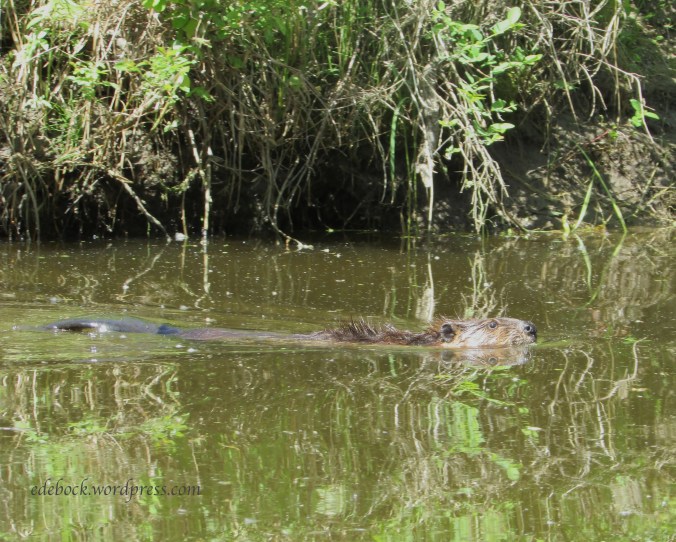
We quickly discovered that even here we weren’t alone. This time we were sharing space with beaver. Lots of beaver! They obviously weren’t as comfortable as the sapsuckers were with the idea of sharing space with us though. As soon as we got anywhere close, tails hit the water with thundering splashes and they disappeared below the surface. I managed to get a picture of this one just before he gave his warning shot and disappeared from sight.
IMG_1049 2

Lone kayaker

IMG_9883

Richard has had a back problem for most of his adult life. Usually when it flares up, it settles down again within a few days, but whatever he did in early July appears to be something different. After weeks of rest, he’s still in pain. When the doctor recently told him no more golf and no kayaking for the rest of the season (we hadn’t even been out in the kayak yet), I was very unhappy! I felt sorry for him, of course. Being inactive is very difficult for him, but I was also sorry for myself! Perhaps that sounds selfish. Maybe it was. After all, I could have shrugged and said, “There’ll always be other summers”, couldn’t I? Not really. I don’t have that luxury. I’m hoping that there will be many more summers, but when you’re walking around with two cancers that aren’t being treated, you really can’t count on next year. You have to live for the moment.

I could golf on my own, but our kayak is a tandem and there it hung in the garage gathering dust. Then I remembered the other kayak; the one we’ve been storing in the back corner of the garage for our son for the past couple of years! It’s so lightweight that I can carry it myself. I could go kayaking after all!

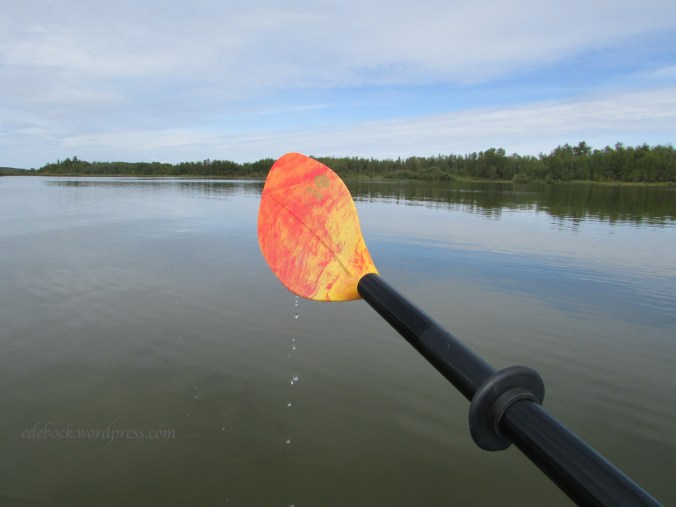
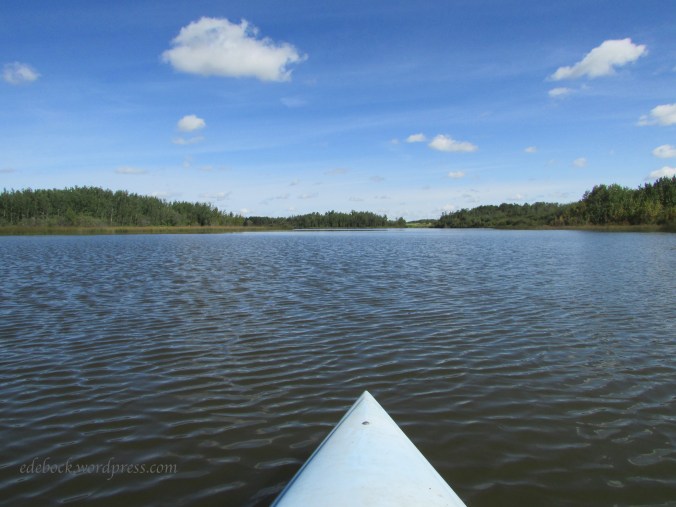
We spent the past four days camping at Camp Lake, less than an hour from home, and I spent many hours out on the water. Sometimes I paddled vigorously, sometimes slowly, and sometimes I simply lifted the paddles out of the water and listened to the silence of solitude.

IMG_9903

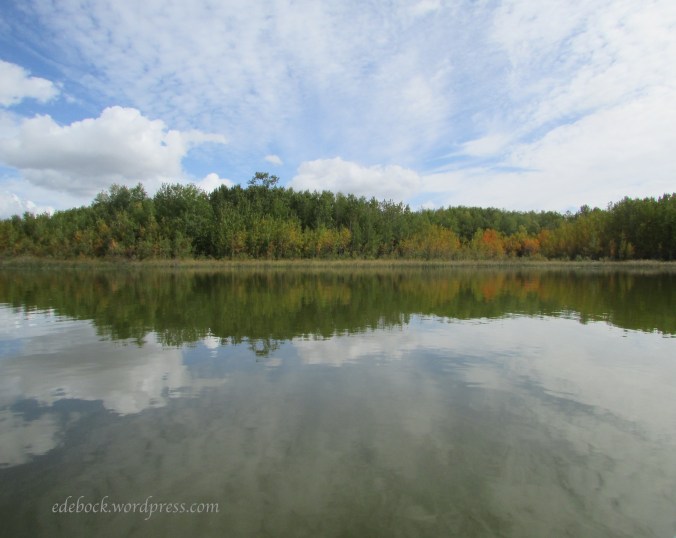
I spent lots of time playing with my camera too. I especially love to capture reflections on water.

IMG_9884

In some places the fall colours were beginning to show.

IMG_9909

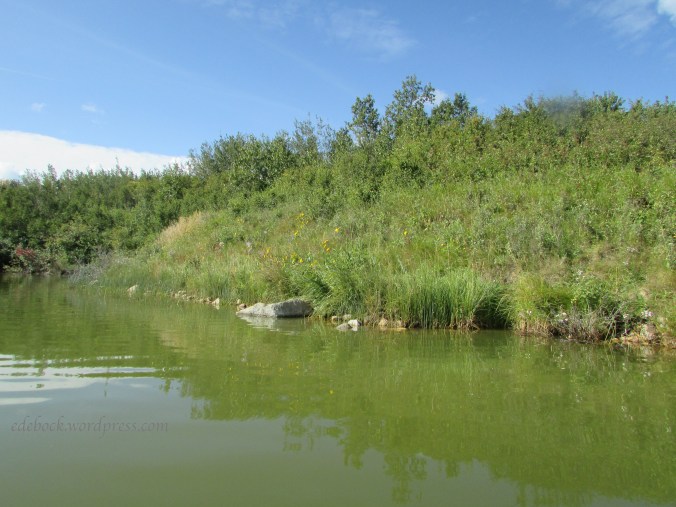
One of the things that I love about kayaking is the chance to see wildlife in their natural habitat. I didn’t see any larger animals this time, but there were many places like this one along the water’s edge where they obviously come down to drink.

IMG_9888

One end of the lake in particular is shallow and edged with reeds and that’s where the action was.

IMG_9880

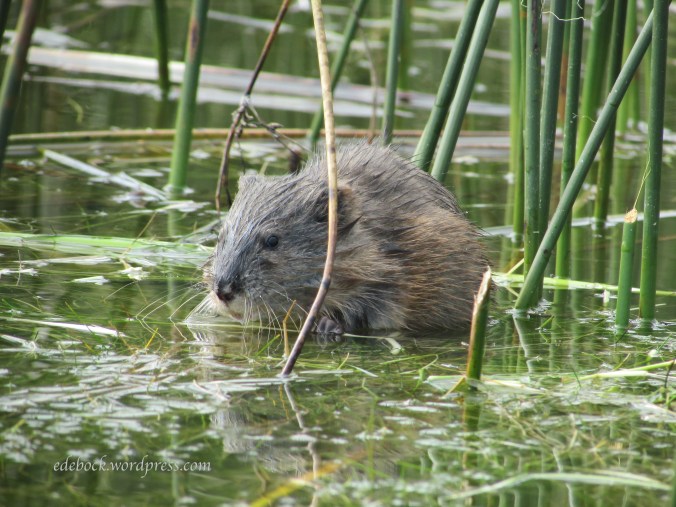
I have no idea how many muskrats make Camp Lake their home, but clearly there are a lot of them! For every photo that I captured, many were missed. Even the ping of my camera turning on was enough to startle them. I learned to cover the speaker with my thumb to muffle the sound as I drifted close to them. I’m not sure who was the most surprised when one furry fellow popped up and swam beside the kayak for a couple of metres! Before I could grab the camera, he noticed me and dove beneath the surface immediately disappearing from sight. It was easier to capture the ones that were out of the water.
IMG_9902

I’m hoping for at least one more lone kayaker outing this year, and I really hope that we’re both well enough to paddle together again next year, but at least this summer didn’t go by without some time on the water.

IMG_9877

IMG_9907

IMG_9913

Drew’s special day

Our grandchildren have been blessed with an abundance of toys, games, and books so when two of them had birthdays this spring, we decided to be creative. Our gift to each of them was a special day on their own with Gram and Grandpa once school was out for the summer. Yesterday was 11-year-old Drew’s day.

IMG_9552

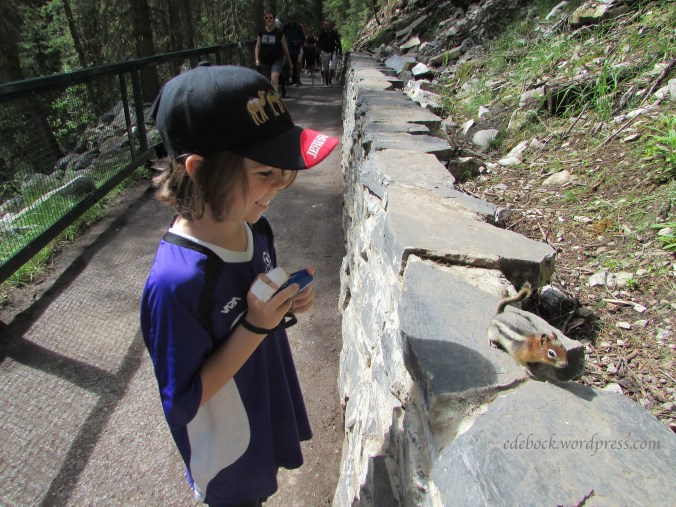
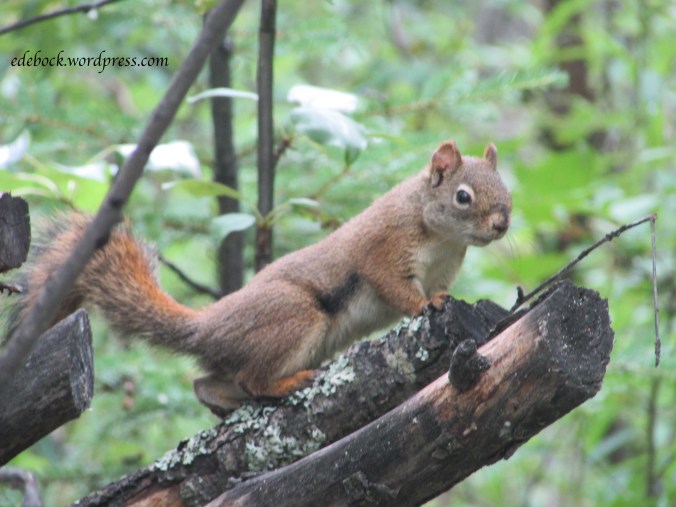
We left his Calgary home early in the morning and headed for Banff National Park where our day started with a hike in beautiful Johnson Canyon. Drew was beyond excited when we spotted a black bear crossing a hillside shortly before we arrived at the trailhead. The bear was too far away to get a good photo, but the entertaining little ground squirrels (like the one shown above) and red squirrels along the trail certainly weren’t!

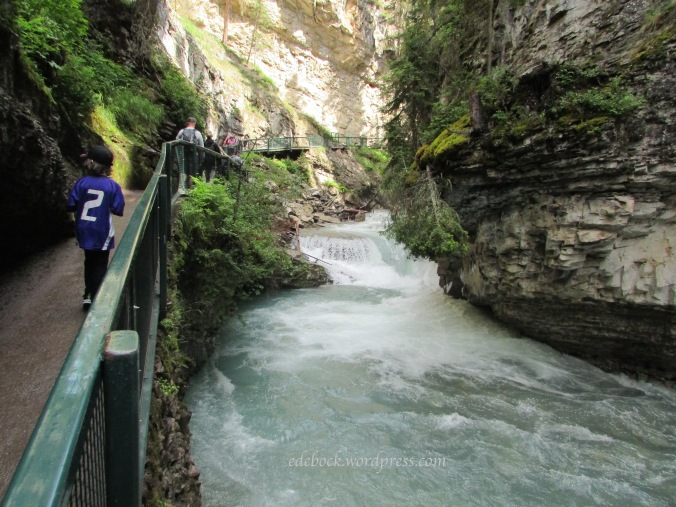
Catwalks affixed to the limestone cliffs make the canyon easily accessible to everyone and the 1.1 km trail to the lower falls involves very little change in elevation.

IMG_9564

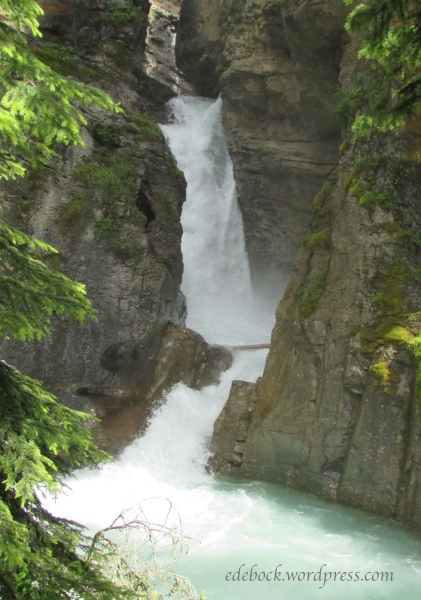
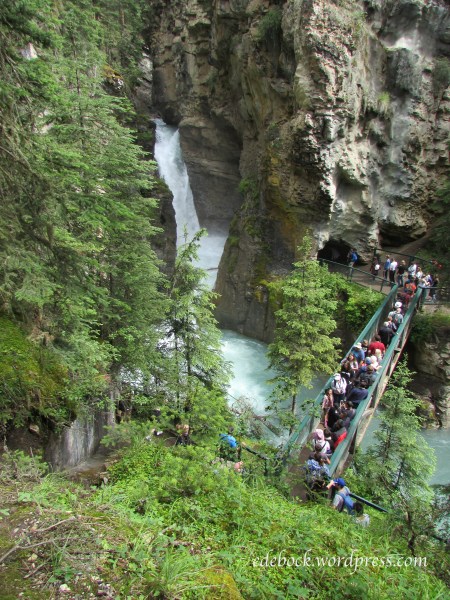
At the lower falls, a bridge crosses the creek allowing both an excellent spot from which to view the falls and access to a water-formed tunnel through the rock to a closer viewing platform.

IMG_9567

IMG_9572

The crowd thinned out a little as we moved on toward the upper falls, another 1.5 km up the trail. Spectacular views continued to surround us as we climbed.

IMG_9575

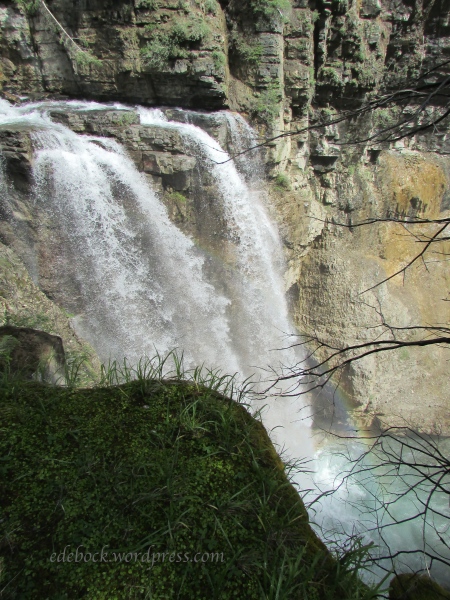
We knew that the water level was much higher than when Richard and I did the same hike almost three years ago, but I didn’t realize how much until I compared photographs. Considering how much rain Alberta has been getting this season, I guess it shouldn’t be surprising.

IMG_2406 - Version 2

August 2016

IMG_9577

July 2019

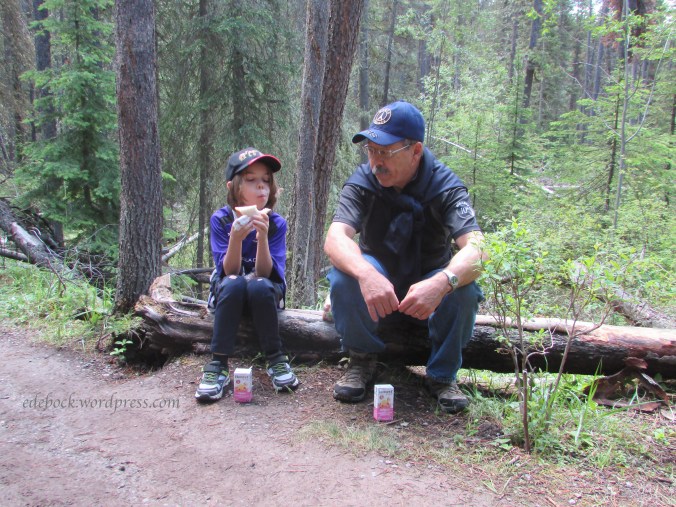
After reaching the spectacular upper falls, we stopped to enjoy our picnic lunch before continuing our adventure.

IMG_9589

IMG_9597

IMG_9599

As we started back down the trail Drew announced, “This is the best birthday present ever!” It was then that I realized that the day was as much a gift to ourselves as it was to him! It definitely filled my heart to overflowing.

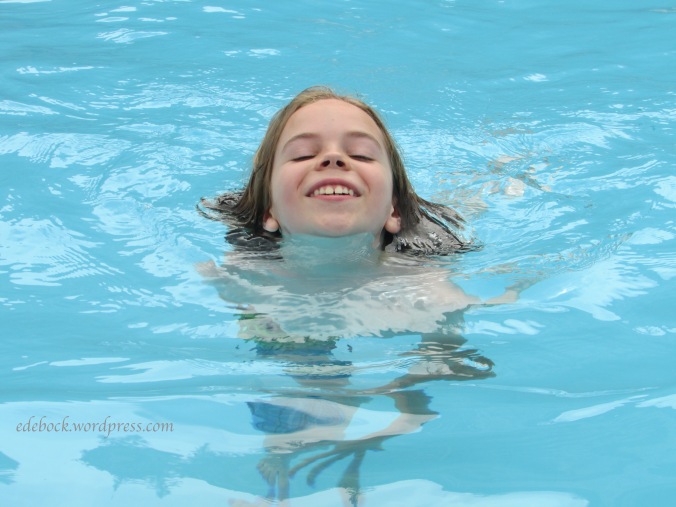
In addition to the hike, Drew had been eagerly looking forward to relaxing in the Banff Upper Hot Springs. I love this photo of his “floating head”!

IMG_9615

IMG_9618

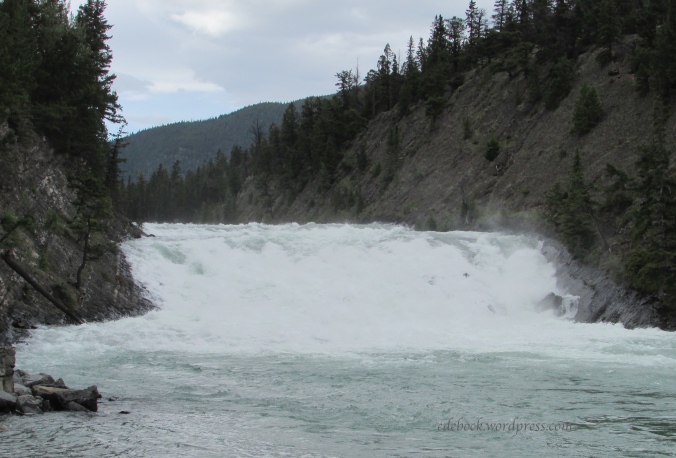
After soaking our tired feet and muscles in the hot pool, we made a quick stop at the Bow Falls Viewpoint then ended our day with a delicious restaurant dinner and a browse through a few gift shops before bringing a very tired boy home!

IMG_9635

Tomorrow we have a completely different agenda planned for his 9-year-old sister’s special day.

Back to school week

I loved seeing all the back to school photos on Facebook earlier this week. Here are three of our littles.

photos: Melaina Graham

The campground attendant at Camp Lake Park near Kinsella, Alberta was happy to take our “what retired teachers do on the first day of school” photo shortly after we arrived there on Tuesday morning!

1st day of school

We had the campground almost entirely to ourselves and we thoroughly enjoyed the solitude. We spent Tuesday to Friday relaxing, reading, going for walks, and exploring the lake by kayak.

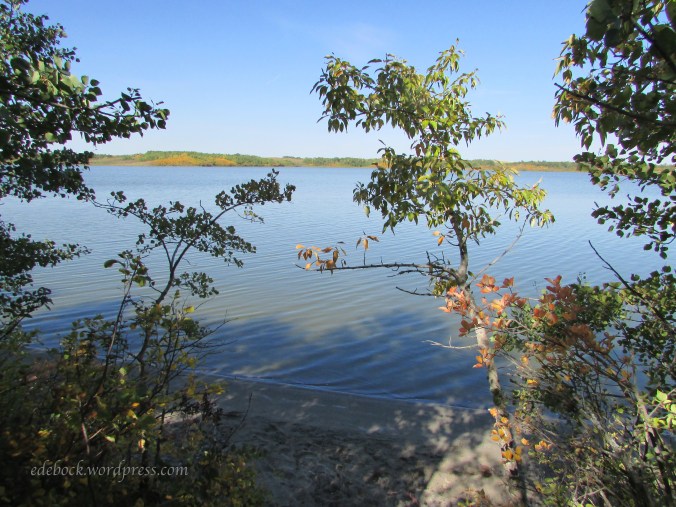
Although the colours of fall aren’t as spectacular here as they are in eastern Canada, I still find them beautiful, especially when they’re reflected on the water.

IMG_6152

IMG_6161

IMG_6165

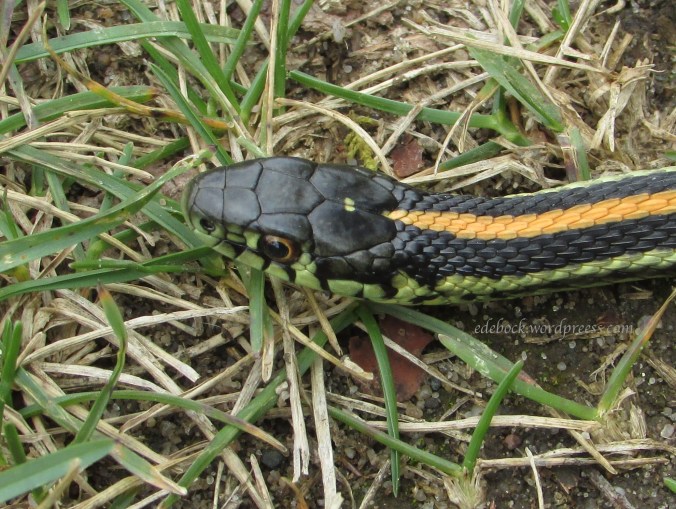
While we were out on one of our walks, we came across this critter sunning itself on the grass.

IMG_6157

It barely flinched even when I got up close and personal with my macro lens.

IMG_6158

Thankfully, it was a harmless garter snake, the only kind common to this area!

This little chipmunk was curious enough to stick around while I snapped a quick picture too.

IMG_6159

We saw plenty of wildlife while we were out on the water. The ducks ignored us unless we got too close, but the Canada Geese set up quite a squawk if they spotted our UFO (unidentified floating object) anywhere in their vicinity! The lake was calm on Tuesday and Wednesday, but there was a strong breeze blowing on Thursday so we stayed close to the sheltered edge of the lake and that’s when we saw the most wildlife. The muskrats and beavers didn’t stay still long enough for me to get any pictures, but these three white-tailed deer watched us approach and only started moving toward the bushes when we got quite close.

IMG_6169

Now we’re home and unpacking the trailer as this was the last time we’ll have it out this year. On Monday it goes to Camrose for repairs as a result of the golf ball sized hail that hit while we were camping at Bottrel on August 1st. The insurance adjuster found a bit more damage than we had noticed initially, but thankfully it wasn’t enough to keep us from being able to use it for the rest of the season!

Strong arms at the ready?

I lift weights every winter to keep in shape, but this past winter I had a more specific goal to spur me on. I wanted to be able to paddle our kayak longer than I could last summer without feeling like my arms were going to fall off! In particular, I wanted to be able to do a five or six hour trip on the North Saskatchewan River this summer. I started lifting earlier in the fall than I usually do and I continued later into the spring. By the time I quit, just before my May 23 cancer treatment, I was lifting more than I had for several years!

No, we haven’t done that kayak trip yet, but over the past three days, I’ve tested out those arms and shoulders and I think I can do it! On Wednesday we played 18 holes of golf in our local seniors tournament. That’s not a big deal, but then on Thursday we paddled the kayak for more than three hours. Last year that would have been more than I could handle and I must admit that by the time we finished, my arms were sore. I went to bed that night wondering if I really could handle the long river trip, but when I woke up the soreness was gone and I golfed another 18 holes!

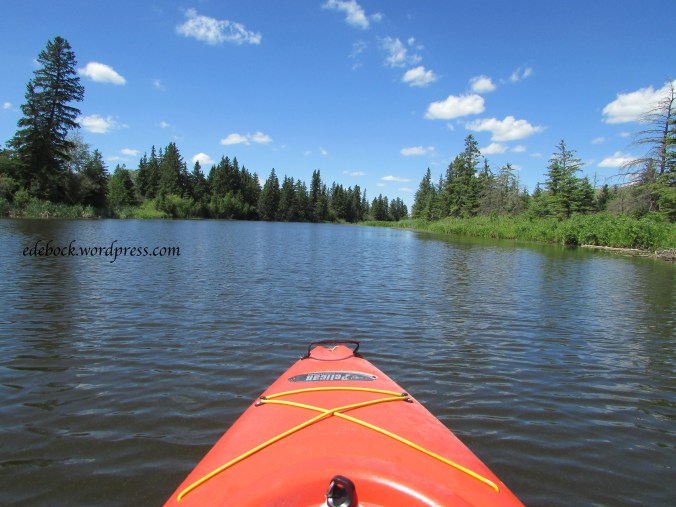
Thursday’s excursion took us back to the Battle River, a tributary of the North Saskatchewan  that meanders through central Alberta and western Saskatchewan. Starting at Big Knife Provincial Park, we paddled upstream for an hour an a half. The river moves slowly, so paddling against the flow isn’t as challenging as it might sound.

Battle River

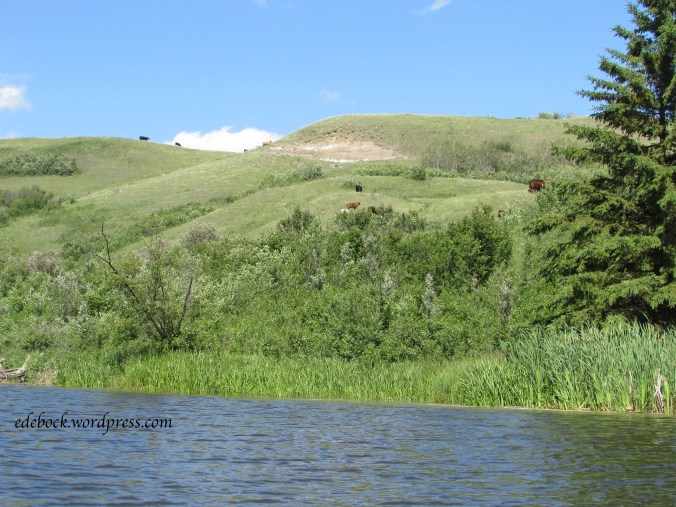
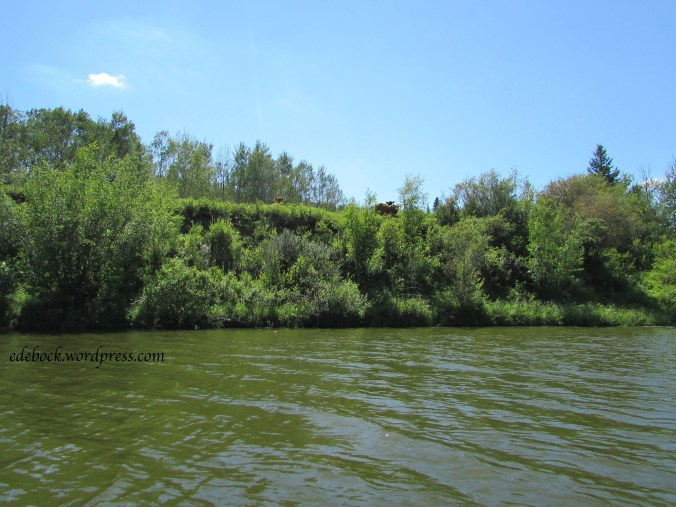
Other than waterfowl, we didn’t see any wildlife, but we were both reminded of Psalm 50:10 when we saw the cows grazing on the grassy hills overlooking parts of the river. “Every animal of the forest is mine, and the cattle on a thousand hills.”

IMG_5949 2

Can you see the curious bovine faces peeking at us in this one?

IMG_5962

Holding the camera still enough in a moving kayak to get crisp photos with the zoom lens is virtually impossible, but I did manage to get this one of a very protective Mama duck and her offspring.

IMG_5958

We really weren’t very close, but she squawked and flapped about in quite a frenzy trying to warn us away from her lone duckling. I’m sure her poor heart was beating faster than any duck’s is meant to and I wished I could reassure her that we were no threat. As if scaring her once wasn’t enough, we met her again in exactly the same spot on our trip back down the river. This time Junior was hidden somewhere in the reeds, but once again she did her best to scare us away.

In spite of the fact that the Battle moves slowly, the trip downstream should have been a bit quicker, but we were bucking a stiff wind much of the way and it took a little longer than we expected. We were glad when the bright yellow buoy marking the location of the Big Knife boat launch came into view!

IMG_5970

There will be more kayaking and more golf before we tackle the North Saskatchewan, but campgrounds with decent wifi are few and far between, so it might be a little while before I can post again. Even this one took hours to put together!


Hidden gems

In addition to world renowned sites like some of the ones in Jasper and Banff National Parks, Canada is home to many hidden gems usually known only to local people. We also found some of those on our recent travels.

After saying good-bye to our son and his family and leaving the mountain parks behind, we spent another week in the nearby foothills where we camped at Bottrel, Alberta with our daughter’s family. There’s actually nothing at Bottrel except a general store and a small unserviced campground, but we heard about it because our son-in-law’s mother lives nearby.

The campground is only 40 minutes from our daughter’s home in northeast Calgary. As soon as we’d set up camp on the bank of the lovely little creek that runs through the campground, we drove into the city to pick up Drew, our oldest grandson, who enjoyed two days of camping with Gram and Grandpa before the rest of the family was able to join us.

One of the things that we wanted to do during that time was introduce Drew to kayaking, but the creek was too small for that and we didn’t know of any lakes in the area. Richard spoke to the storekeeper, who also runs the campground, and learned of a small fishing lake nearby that’s known only to the locals. The highlight of our outing to Winchell Lake was the rare opportunity to watch a loon and her chick close up!

IMG_5018 - Version 2

About 20 minutes from the campground, on our way into Calgary, we had also passed signs for Big Hill Springs Provincial Park. A quick online search revealed that its 2.3 km (1.4 miles) hiking trail with an elevation gain of only 20 metres (66 feet) was popular with young families. Not intending to do the hike until the rest of the family joined us, we decided to take a drive over to the park just to check it out. Drew was so enthusiastic, however, that we ended up hiking the entire trail that day! Of course, as little boys are inclined to do, he put in a few more steps than we did!

IMG_5000

Later in the week, we packed a picnic lunch and returned with the rest of the family. With Drew as our guide, we did the hike again.

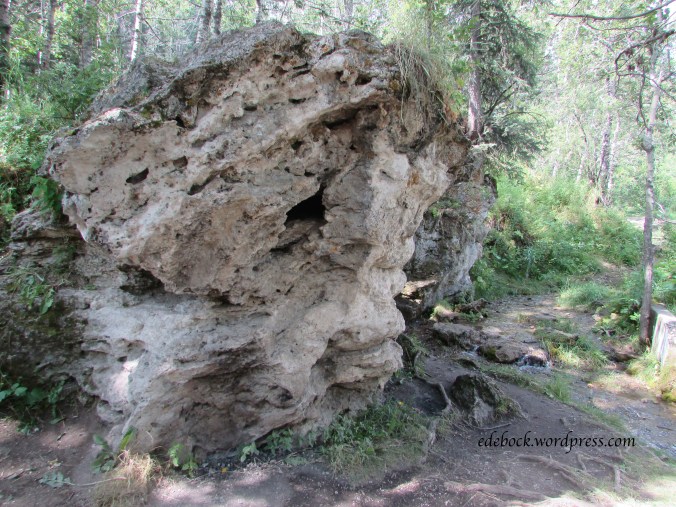
An interesting geological feature in this small park, which is located in a beautiful coulee, are the mounds of unusual rock called tufa (too-fah). Apparently tufa forms when water, rich in calcium and carbonate, emerges from the ground. As it comes to the surface, it releases carbon dioxide into the air and forms outcroppings of calcium carbonate rock.

IMG_5026

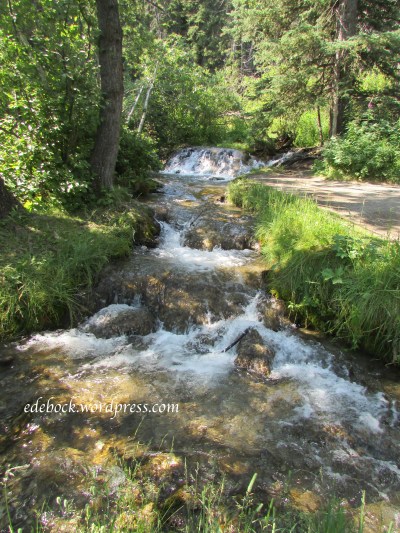
The first part of the hike was particularly pretty following a stream with lots of little waterfalls.

IMG_4998

IMG_4997

IMG_5001

IMG_5039

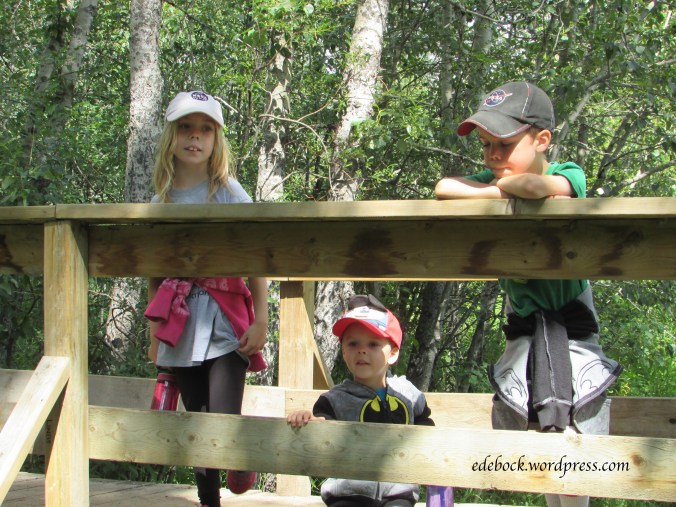
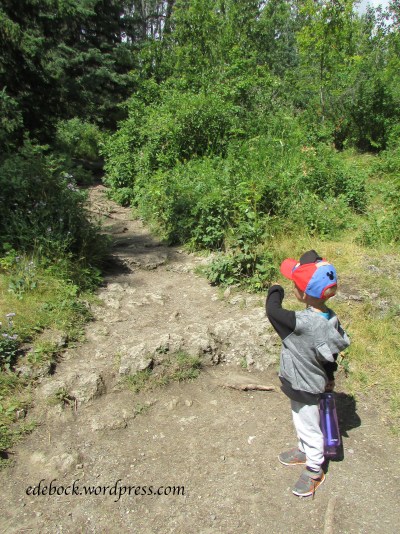
I believe this was 3-year-old Simon’s first hike, but he was very keen to go!

IMG_5035

hiking

Later in the afternoon, back at the campground, the creek was a great place to cool off!

IMG_5066

Stewart, Hyder and a river of ice!

As we travelled south on northwestern BC’s Cassiar Highway, a 65 km (40 mile) side trip took us into the tiny town of Stewart located at the head of the Portland Canal, a narrow salt water fjord approximately 145 km (90 miles) long. The fjord, the fourth longest in the world, forms a natural boundary between Canada and Alaska. Stewart boasts that its deep harbour is Canada’s northernmost ice-free port.

IMG_4702

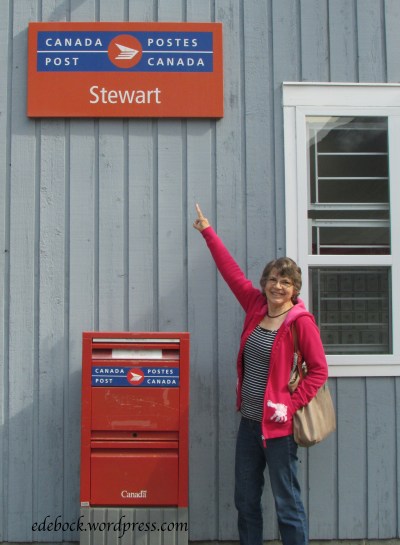
I had to visit this picturesque spot if for no other reason than I was born a Stewart!

IMG_4621 - Version 2

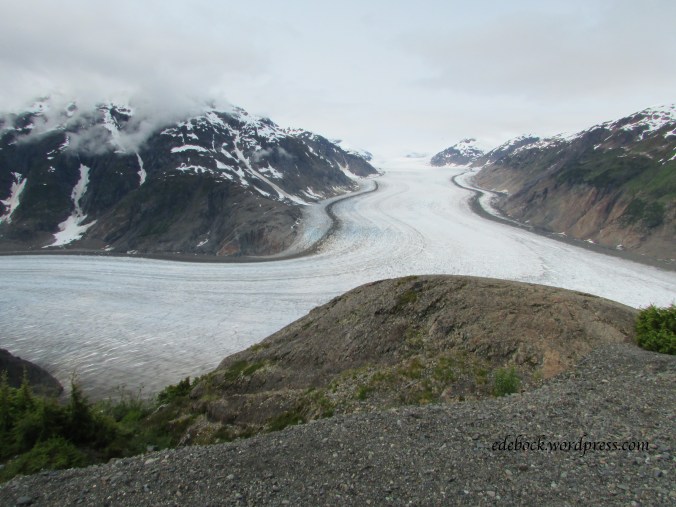
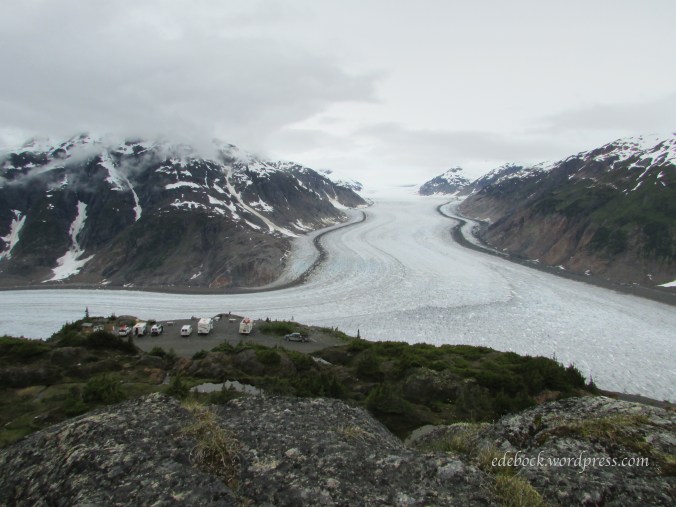
Most tourists come for other reasons though including the Salmon Glacier, the fifth largest glacier in Canada. A self-guided auto tour brochure, available at the Stewart visitor information centre, explains the history and natural surroundings of the area as you drive the 37 km (22.9 miles) to the Summit Viewpoint overlooking the glacier.

Although the Salmon Glacier is located in Canada, accessing it requires crossing the border into Alaska at Hyder, just 3 km (2 miles) from Stewart. If you go, make sure you have your passport with you so you can re-enter Canada after your drive!

IMG_4705

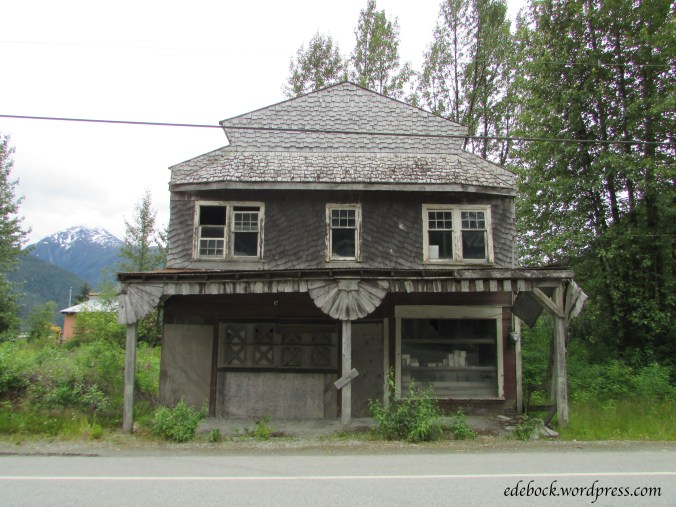
Once a booming mining town, Hyder, with its population of “100 happy Americans” is almost a ghost town. Though there are still a post office, 2 motels and couple of stores, most of its main street is boarded up. This building, a gorgeous reminder of days gone by, was definitely my favourite.

IMG_4699

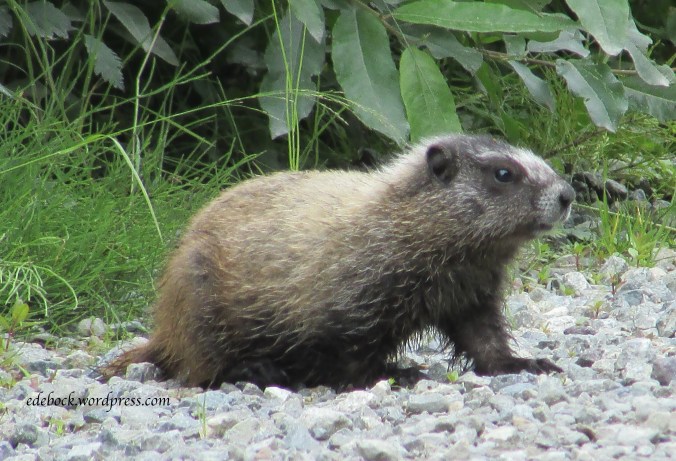
About 6 km (3.7 miles) after leaving Hyder, we stopped at the Fish Creek Wildlife Viewing Area hoping we might be lucky enough to see some of the bears that come to feed at the creek during the annual salmon run from July to September. Though salmon had been spotted further downstream, they hadn’t made it that far yet and there were no bears to be seen. Further up the road, however, we did see several of these little creatures.

IMG_4630

We weren’t sure what they were until we checked with a wildlife officer at the viewing site on our way back down and learned that they are hoary marmots. They seemed completely oblivious to or unconcerned about human traffic. In fact, at one point, three of them engaged in a playful wrestling match in the middle of the road while we and other motorists waited for them to tire and move on! I was able to walk right up to one of them to take pictures!

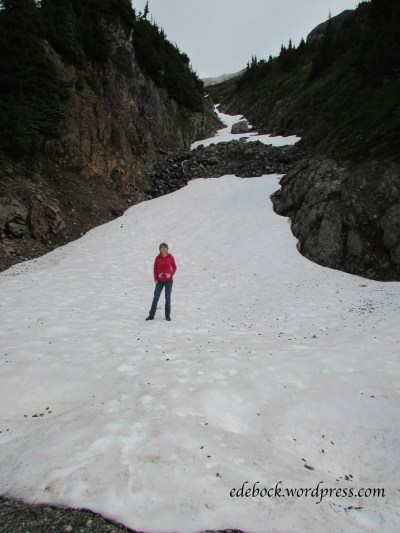
The drive to the glacier, some 4300 feet (1300 metres) above sea level, was almost like climbing a mountain by car! The narrow, bumpy road, unpaved after the Wildlife Viewing Area, clung to the mountainside as we climbed higher and higher. Soon we were passing expanses of snow!

IMG_4654

A little further along, the toe or snout of the glacier came into view.

IMG_4643

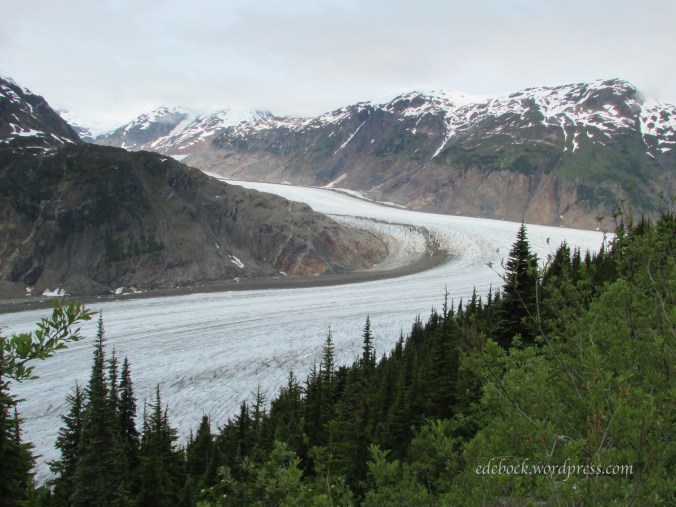
Continuing onward and upward, we enjoyed many views of the enormous river of ice.

IMG_4648

I was still awe struck when we reached the Summit Viewpoint and realized that there was so much more to the glacier than we had been able to see before that.

IMG_4661

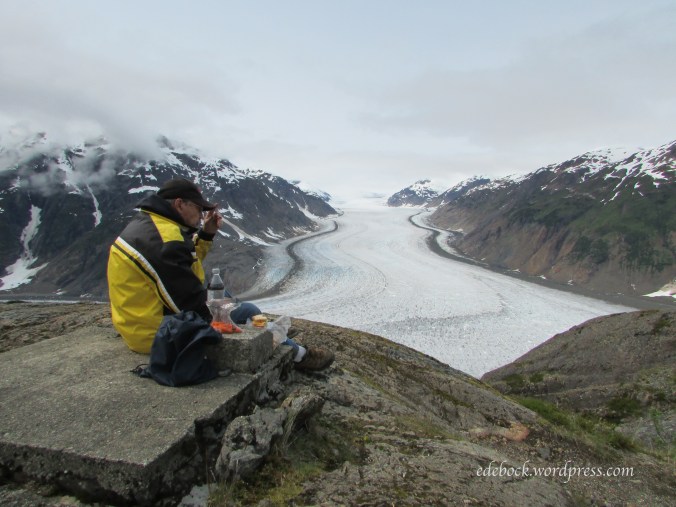
It was chilly, but we ate our lunch overlooking the vast expanse of ice.

IMG_4663

Turning around and noticing the bluff overlooking the parking lot, I realized that it begged to be climbed, so off we went!

IMG_4688

I’m so glad we did. It was an easy scramble and the sights that greeted us were amazing!

IMG_4669

IMG_4674

I think the views of the glacier were even better from the top of the bluff. Looking down on the parking lot and our vehicle on the far left (with our bright red kayak on top) helped put the vastness of the glacier into perspective.

IMG_4682

Kayaking northern Canada’s lakes

I’m so glad we bought our kayak before embarking on this trip! Northern Canada has thousands of gorgeous lakes, many of them easily accessible by road.

Twin Lakes, Yukon

As we drove the Klondike Highway from Whitehorse to Dawson City, we followed the shoreline of Fox Lake for several kilometres. Noting that there was a government campground near the northern end of the lake, we determined to stop there on our way back. When we mentioned that plan to our brother-in-law, Grant, who has spent most of his life living in the Yukon, he suggested that we try the smaller Twin Lakes instead. It was excellent advice!

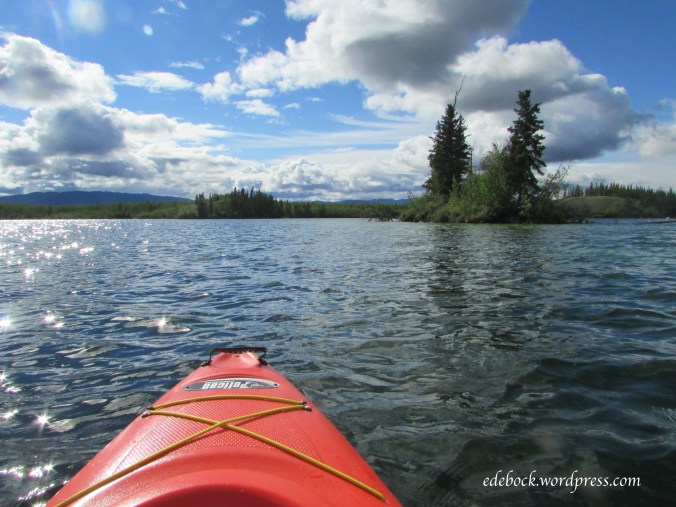
Smaller than Fox Lake, the western Twin, where we camped and paddled until I thought my arms were going to fall off, was so much fun to explore. As you can see in the view from the campground, there were many little islands to paddle around and hidden bays to discover.

IMG_4530

IMG_4515

IMG_4527

As we approached one of the little bays, I heard an enormous splash. We stopped and listened. A second splash followed, much too big to be a fish jumping. It had to be a beaver. Paddling ever so slowly and quietly toward the rippled water, we soon spotted a furry brown head just above the surface. Following at a distance, we watched the beaver until he used his flat tail to signal yet another warning and then slipped out of sight. Just around the next bend, we spotted his home.
IMG_4524

Boya Lake, BC

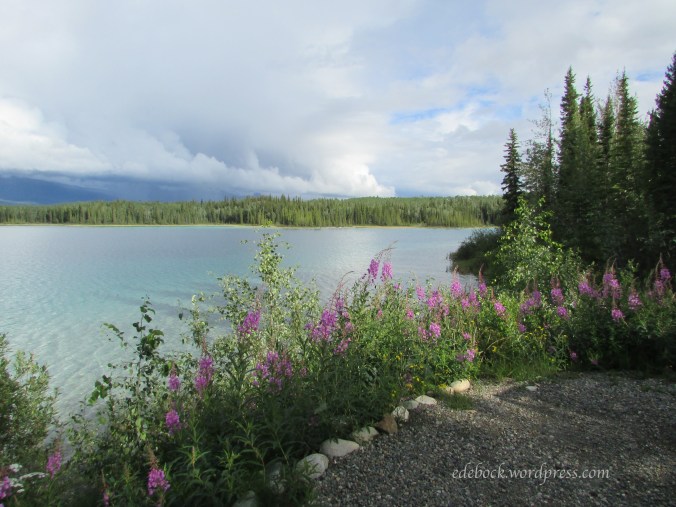
A few days later as we made our way down the Cassiar Highway in northern BC, we stopped to camp at Boya Lake Provincial Park. We lucked out, snagging the most beautiful site in the campground right on the lake front.

IMG_4612

IMG_4596

IMG_4595

Again, paddling this lake was every bit as interesting as Twin Lakes had been. Though we didn’t hear any loud splashes this time, we did spot another beaver. The colours of the crystal clear water, quite shallow in places, was absolutely beautiful!

IMG_4611

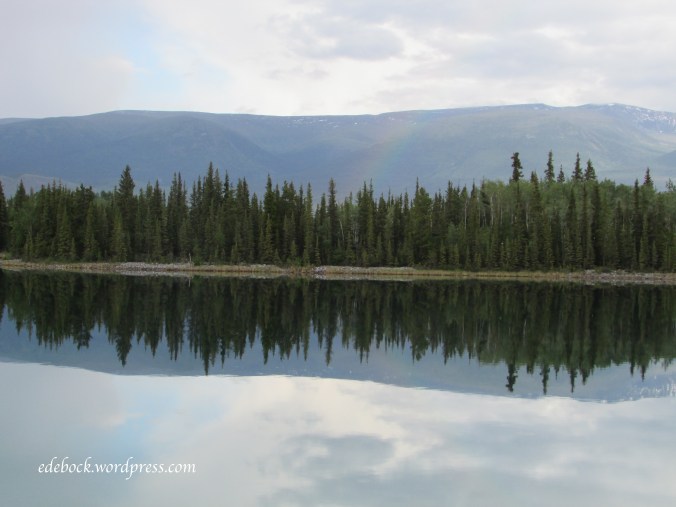
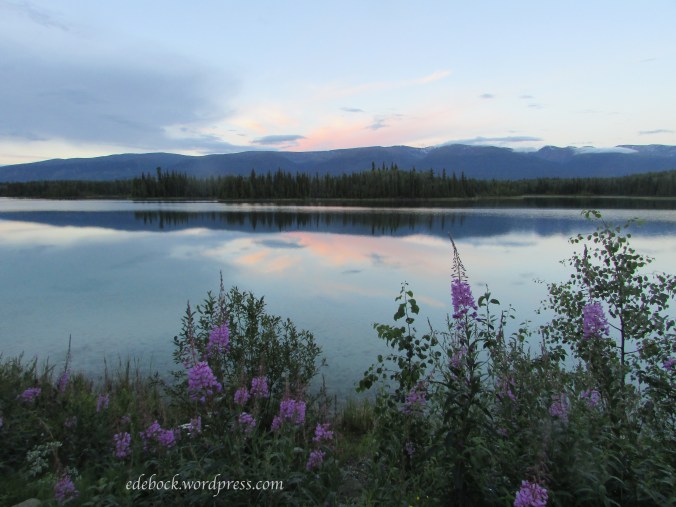
It was the ever changing view from our campsite that was most mesmerizing though. As evening settled in, the water became dead calm and the reflections amazing! I was constantly jumping up to take another photo! Here are just a couple of my favourites.

IMG_4606

IMG_4608

If you decide to travel to the Yukon or northern BC and don’t mind camping without any services, I highly recommend government campgrounds. Located in beautiful spots like Twin Lakes and Boya Lake, they offer spacious treed sites and are meticulously maintained. At just $12/night, the Yukon campgrounds are a steal of a deal. BC parks aren’t far behind at only $20/night.

Don’t get eaten by a bear!

We have never seen as many bears in the wild as on this trip… 18 so far! We’ve even hesitated to go hiking in some areas due to the risk of meeting a bear on the trail. In spite of the sign, we did do the 9th Avenue Trail at Dawson City though.

IMG_4476

The only wildlife we saw was this curious fellow who stopped munching long enough to watch us go by.

IMG_4464

Well, that’s not entirely true. There were also mosquitoes! Lot’s of mosquitoes! We made two errors that a hiker should never make. First, I forgot my water bottle. I filled it and left it sitting on the counter in the trailer. Fortunately, I’d packed some pop for our lunch, so we were able to stay hydrated. Second, we forgot bug spray, a big mistake, especially in the north! The mosquitoes hadn’t been bad in town, so we didn’t didn’t even think about them until we were out in the bush getting bitten. Luckily, it was a cool day and we were wearing long pants and sleeves, so we didn’t get eaten alive.

Back to the bear sign though. Notice that it says, “BE ALERT MAKE NOISE”. I’ve been giving Richard a hard time lately over the fact that throughout our many years of marriage, he hasn’t been a very open communicator. I know that some of you who know him will find that difficult to believe, but it’s true. I also read that talking works better than carrying bear bells as a way to avoid an encounter with the furry beasts. When we read the sign, I told Richard, “Today you’d better talk to me or you might get eaten by a bear!” In fact, I think a new code phrase has been born. From now on, if I think he’s being particularly uncommunicative, all I’ll have to say is, “Don’t get eaten by a bear!” and he should know what I mean!

Anyway, I digress. Back to the hike…

Beginning in 1898 when the population of Dawson City swelled with thousands of people hungry for gold, tents and then log homes were built up the steep hillside behind the present day town. Today, the uppermost avenue is 8th, hence the name of the 9th Avenue Trail that follows the perimeter of the town, but further up the hill. As the gold rush came to an end and the population dwindled, the hillside homes were eventually abandoned, but there are glimpses all along the trail that there were once people living there. The homes were often built on flat platforms with stone retaining walls. Most of these wooden structures are long gone, but a few signs of them can still be seen.

IMG_4462

IMG_4466

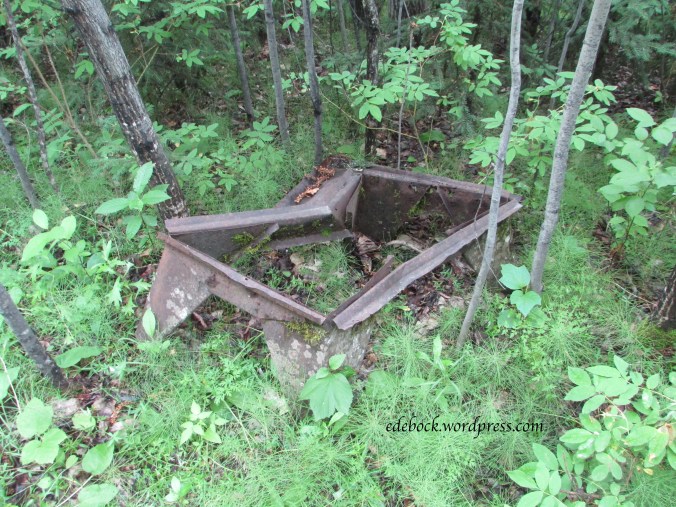
There was no garbage collection in Dawson’s early days. Broken and discarded items were often piled up outside the buildings. Rusty remnants can still be seen along the trail offering archaeologists plenty of information about life in early Dawson.

IMG_4478

I’m not even sure what that was, but the bed springs were obvious. I wonder who slept on them and what their story was?

IMG_4477

The hike was not a long or strenuous one. The 9th Avenue Trail itself is only about 2.5 km in length. We made it a little longer by adding the connecting Crocus Bluff Nature Trail which leads out to a viewing platform perched on a rocky bluff overlooking the highway entering Dawson and the confluence of the Klondike and Yukon Rivers.

IMG_4473

IMG_4470

Ghost moose

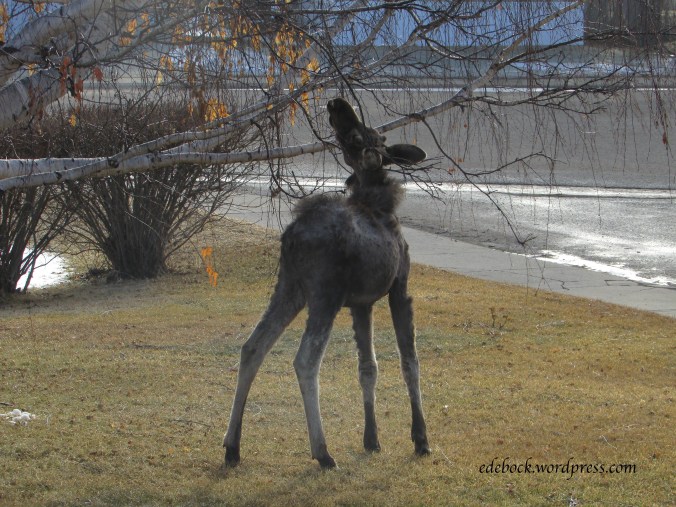
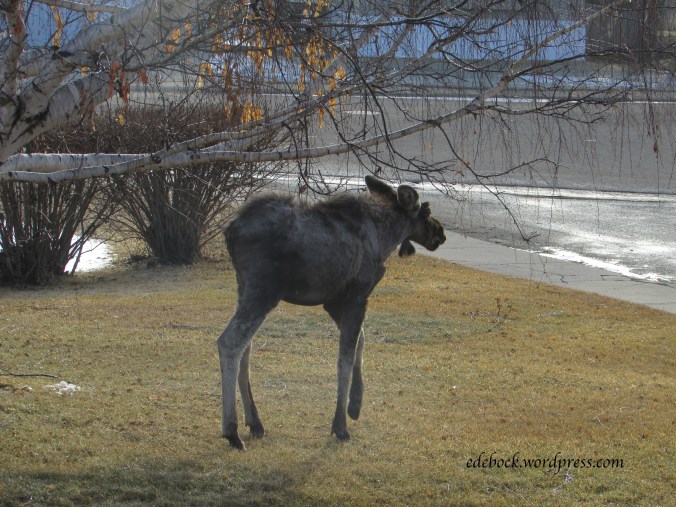
We had an unusual visitor yesterday; a young moose that has been hanging around our neighbourhood for the past few days munching on the plant life.

IMG_4012

Yes, I was actually that close to him! When I first realized that he was there, he was standing just outside our front door snacking on my rose bush.

A rather scraggly looking character, he is what is known as a ghost moose. Infested and irritated by ticks, he has rubbed off most of his dark brown hair, exposing his pale undercoat.
IMG_4013

Though I’ve never seen one before, apparently ghost moose are becoming more and more common and are most often spotted in March and April. Biologists blame climate change for ushering in shorter, warmer winters that are conducive to increased tick populations. The tick’s life cycle begins in late fall. Larva cling to plants and climb aboard unsuspecting moose that brush against them, feasting on their warm bodies over the winter months until early spring when they generally drop off and lay their eggs to begin the cycle over again.

A single moose can be host to a staggering number of ticks. I’ve read numbers upwards of 50 000! Thousands of feeding ticks can actually kill a moose! Calves, like this one, are particularly vulnerable. Loss of blood leaves them weak and easy prey for predators. Scratching off large patches of their thick outer coat in an attempt to remove the ticks leads to the loss of body heat and even hypothermia. Some spend more time scratching than foraging for food. Skinny and malnourished, they eventually die of starvation.

Considering that our young visitor has made it through our cold winter and seems to be eating well, I’m hopeful that he will survive, but I also have other concerns for his well-being. He is obviously one of last year’s calves. As such, he’s still a bit young to be wandering about on his own. Moose calves usually stay with their mothers for about a year and a half.

The fact that he’s spending so much time in town is also a major concern. It’s not unusual for us to see a mother moose and her calves in the yard during the winter, especially at night, but they are usually easily spooked, retreating to the trees on the edge of town when startled. This little guy is much too bold. He continued to nonchalantly trim the lower branches of our weeping birch while vehicles passed by just a few feet away. Even a neighbour in a noisy truck stopping to take pictures didn’t deter him.

IMG_4016

Not only is becoming semi domesticated not good for him, but as cute as he is (in his own scraggly way), he poses a danger to people. He’s already big enough to cause serious damage and  if he survives, he’s going to get a LOT bigger. A full grown bull moose can reach a height of up to 2.15 m (7.1 feet) at the shoulder and weigh between 500 and 725 kg (1,102 and 1,598 pounds)!

IMG_4015