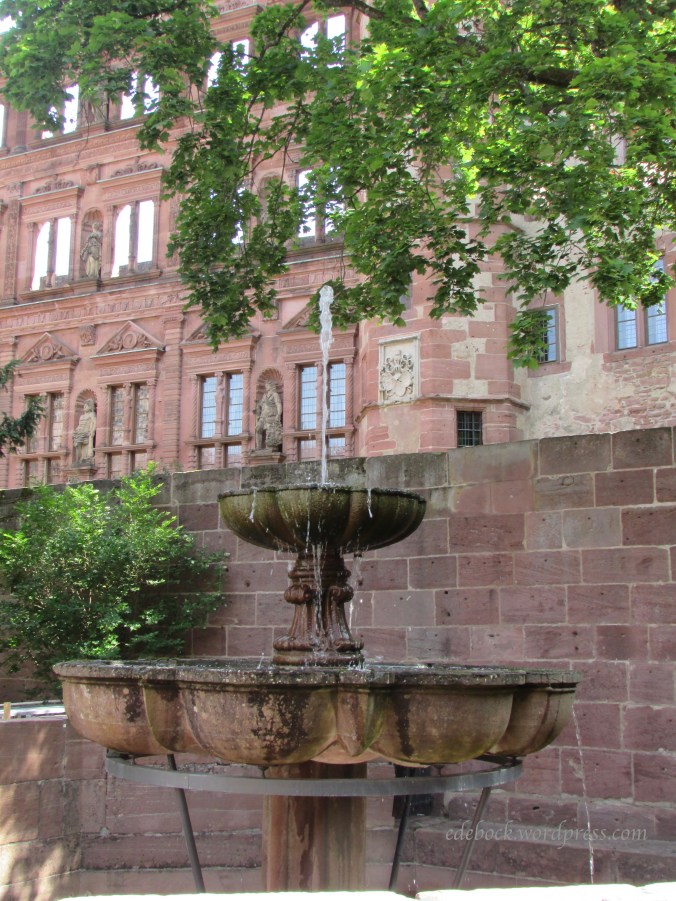
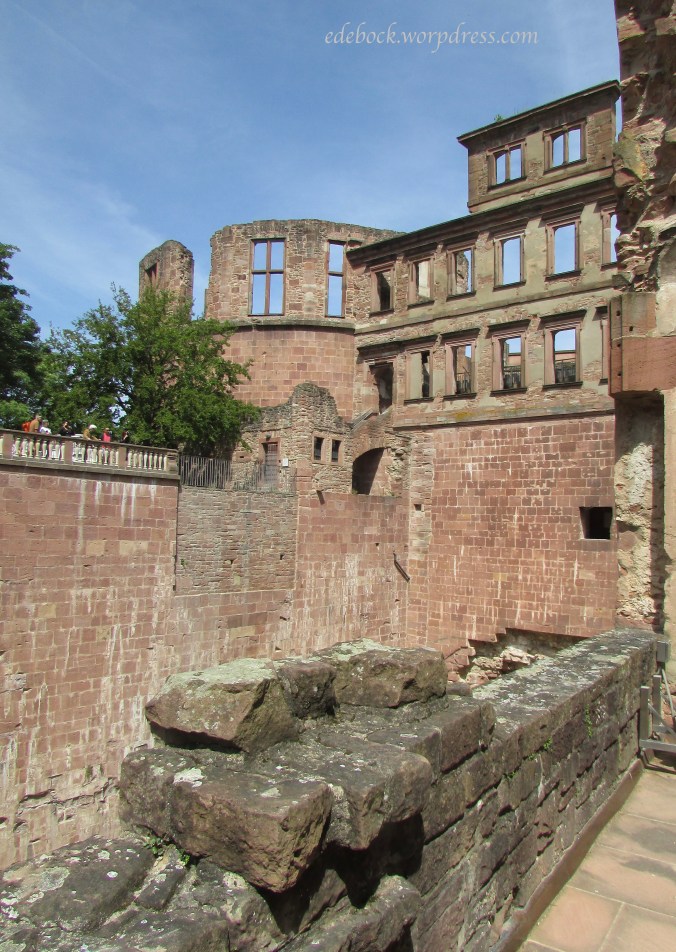
Geghard Monastery

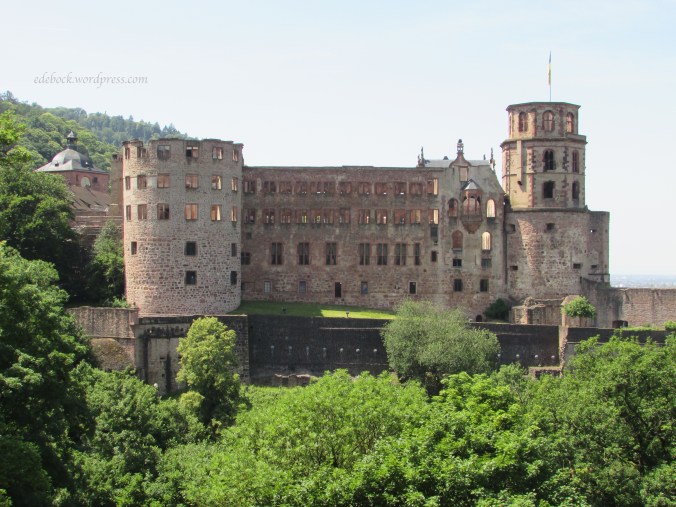
Geghard Monastery, declared a World Heritage Site in 2000, is nestled into the dramatic Azat River Gorge, approximately 35 km (22 miles) east of Yerevan, the capital city of Armenia. Can you spot it in this photo taken from the open air restaurant where we stopped for a delicious lunch.

Here’s a closer look.

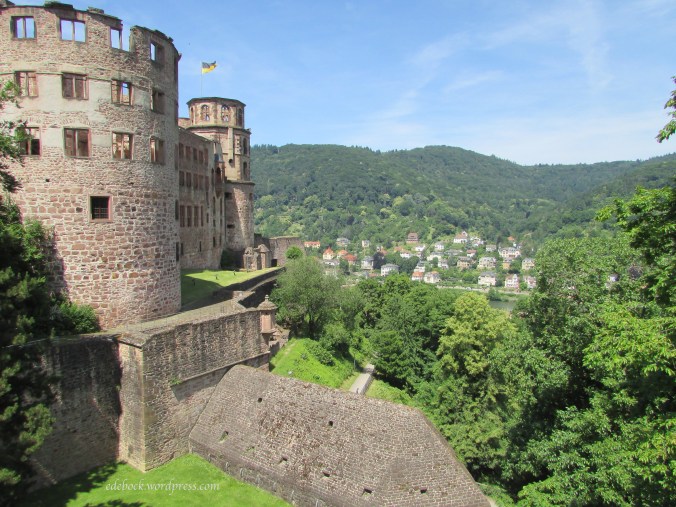
Views of the gorge from the restaurant were absolutely spectacular. We could hear the river in the bottom of the canyon, but lush growth obscured our view of it.

One of the oldest Christian monasteries in the world, Geghard is one of the country’s most visited tourist destinations. It is believed to have been founded in the 4th century by Saint Gregory the Illuminator, following Armenia’s adoption of Christianity in 301 AD. Until the 13th century, the monastery consisted of churches, chapels, and chambers cut into the rock. 

The main cathedral was built during the 13th century and is an exceptionally well-preserved example of medieval Armenian architecture. The entire complex blends seamlessly into the surrounding mountainous terrain.  

Geghard Monastery was an important spiritual and cultural hub during the Middle Ages housing numerous monks and scholars. It also became a destination for pilgrimages because it was believed that the spear that pierced the side of Christ during His crucifixion was stored there for a period of time. Geghard means “spear” or “spearhead” in Armenian. 

A unique feature of monastery is a spring flowing from the rock inside the church. Believed to be holy water, it has worn a groove into the rocky floor over many hundreds of years. Outside, a very short walk from the main church takes one to a stream tumbling down the rocky mountainside. 

Tomorrow we depart for an undisclosed location where we will engage in the ministry that is the main reason for this trip. The blog will continue when we complete that work and resume travelling as tourists. 

Khor Virap: The Birthplace of Armenian Christianity

Although I’m not sleeping particularly well yet, I think I’ve sufficiently recovered from jet lag to begin sharing some of the things we’ve seen since arriving in Armenia.

In 301 AD, Armenia became the first country in the world to officially adopt Christianity and it all started here at Khor Virap, one of the country’s most sacred and visited sites. During the reign of Tiridates III, Saint Gregory the Illuminator (originally known as Grigor Lusavorich) angered the king by refusing to participate in pagan rituals and instead preaching Christianity. The king had him imprisoned in Khor Virap which literally means “deep pit” or “dungeon” in Armenian. There in the depths of the earth, he languished for 13 years, surviving only because of the kindness of a local woman who provided him with food and water. Eventually, when Tiridates fell ill with a form of madness, his sister is said to have had a dream that the imprisoned Gregory could heal him. Pulled from the dark pit, Gregory was washed, dressed and taken to the king where he prayed urgently for his healing. When Tiridates recovered, he became a loyal and dedicated supporter of Christianity and officially declared it the state religion.

A chapel was initially built at Khor Virap in the 5th century and the present St. Astvatsatsin (Holy Mother of God) church was constructed in 1662. The 6 metre (19.7 feet) deep pit where Gregory was held is still present at Khor Virap and tourists can descend into the dungeon on a narrow ladder. While hubby was brave enough to do that, I declined!

Images of Saint Gregory are found both in and outside the church.   


Khor Virap is located on the Ararat plain about a 45 minute drive from Yarevan, the capital city of Armenia. While the monastery was well worth the visit, part of the excitement of being there was looking out across the border between Armenia and Turkey at Mount Ararat where Noah’s ark is said to have come to rest! There are actually two volcanic cones, Greater Ararat on the right and Little Ararat on the left. Greater Ararat, known as the “Holy Mountain” of the Armenian people was actually in Armenia until the 1921 Treaty of Moscow and Kars officially made it part of Turkey following the Turkish-Armenian war of 1920. If you look closely at the photo, you can see the fence that marks the border between the two countries.  

All packed and ready to go!

We’re packed and ready to set off on our next big adventure, but I don’t remember ever having so much trouble deciding what to put in a suitcase! I pondered for a long time and even tried on several different combinations before finally settling on what I would take. Looking back at my packing review from our 2019 trip to Europe helped. Interestingly, a few of the same pieces are going with me again this time! I also thought about what would be culturally appropriate and, of course, I considered the weather. 

Due to the sensitive nature of the area and the ministry that we’ll be involved in, I’ll only be able to share the tourist parts of our trip on the blog, but according to weather forecasts for the various locations that we’ll be travelling to, it looks like daytime temperatures will mostly be in the mid to high 20s C (75 to 85ºF). I suspect that some, but not all, of the facilities that we’ll spend time in will be air conditioned, so we need to be prepared for that as well.  

Although we’re leaving home today, we don’t actually fly out until Monday. Over the weekend, hubby and I will be attending a national neuroendocrine cancer patient conference in Calgary where I’ll be sharing my patient story tomorrow afternoon. That complicated the packing process somewhat because we’ll be wearing things at the conference that we won’t be taking overseas with us. When the conference is over, we’ll spend Sunday night at our daughter’s and then leave our vehicle with her. That meant that I could also pack a separate tote bag to leave there while we’re gone. I just have to make sure that everything is in the right place when we leave for the airport!  

I expect to have internet access most of the time that we’re away and hope to squeeze in time to update the blog from time to time, so come along and travel with us! 

Three trips in one

As a lover of words and written language, I’ve long been a collector of quotes. Three years ago, when I read Between Two Kingdoms: A Memoir of a Life Interrupted by cancer survivor, Suleika Jaouad, I jotted this one down: 

“When we travel, we actually take three trips. There’s the first trip of preparation and anticipation, packing and daydreaming. There’s the trip you’re actually on. And then, there’s the trip you remember. The key is to be present wherever you are right now.”

The concept of three trips in one really resonated with me because in my experience it’s so true! We seldom go on organized tours or use a travel agent because I prefer to do all our travel planning myself. For me, that’s part of the fun of travelling. It’s the trip before the trip. Thankfully, hubby is a great travel companion and he’s almost always happy to go along with whatever I plan.

Here’s another quote that definitely describes us:

While our departure is still a little over a month away, I’m definitely into trip one of our next big travel adventure. Our flights are booked and paid for, accommodations arranged, and necessary visas received. Now, that those essentials have been taken care of, I’m into the fun part which is researching our destinations and planning the things we’ll see and do while we’re there. I’m also starting to think about what I’ll pack.

Where are we going, you ask? I’m not ready to reveal that just yet, but I will tell you that this adventure is part mission trip and part tourist travel. When the time for trip two, the real trip, arrives, I’m sure I’ll have lots to share with you!

Mexico City’s Palacio de Bellas Artes

We’re home from Mexico now, but we’re living in the middle of a construction zone while renovations continue in our house. Considering how much trouble I had just finding a pair of pants to wear our first morning home, I’m nowhere near ready to consider writing a fashion post just yet. I do have one more travel post to share with you though.

After checking into our hotel in Mexico City’s Centro Historico, we made our way to Francisco I. Madero Street, the busy pedestrian street that we have enjoyed on previous visits. Always busy, it was even more crowded than usual on a sunny Sunday afternoon!

Our destination, the Palacio de Bellas Artes (Palace of Fine Arts), was at the far end of the street. Two years ago, we enjoyed this spectacular view of the prominent cultural centre from the balcony of the 8th floor coffee shop in the Sears department store directly across the street.

Unfortunately, on that occasion, the Palacio de Bellas Artes was closed, but this time I was determined to see the inside. It definitely didn’t disappoint. While I enjoyed seeing some of the art work on display, it was the building itself that amazed me!

This photo was taken from the centre of the main floor looking up into the domes.

As far as the art work was concerned, it was the murals by famed Mexican artist, Diego Rivera, that I liked best. The first two panels shown here are part of his Carnival of Mexican Life series.

This one, painted in 1933 is called Russian Revolution or Third International.

I wasn’t able to get a photo of his entire The Man Who Controls The Universe mural partly because of the large tour group standing in front of it, but also because of the sheer magnitude of the piece which was painted specifically for the Palacio de Bellas Artes. It’s actually a replica of the original work which was painted in the lobby of the Rockefeller Center in New York City. The inclusion of Lenin’s face led to the destruction of the controversial piece.

Back outside, we also enjoyed the art on the exterior of the beautiful building.

In addition to the art museum housed in the front portion of the enormous marble structure, the Palacio is also home to Mexico’s largest concert hall. Unfortunately, that part wasn’t open while we were there.

Exploring Puebla’s Centro Historico

With friends who are permanent residents of Mexico, hubby and I spent a couple of days this past week enjoying the colourful Centro Historico district of Puebla, the country’s fifth largest city by population.  Come take a walk with me as I share some of what we saw.

Everywhere I turned, I was amazed by the architecture. Look at all the interesting shapes!

Tiles, or azulejos, are used to decorate many buildings inside and out.

And beautifully carved wooden doors add to the beauty of many buildings.

Of course, flowers in January add to that beauty!

The impressive 16th-century Catedral de Puebla occupies an entire city block in the centre of the district.  

Across the avenue to one side of the cathedral is the Biblioteca Palafoxiana. Founded in 1646, it is recognized by UNESCO as the first and oldest public library in the Americas. It has more than 45,000 books and manuscripts, ranging from the 15th to the 20th century.

This is just a taste of what there is to be seen and experienced in the historic centre of Puebla. There is, of course, the zócalo, a public square/park that’s found in the centre of almost every Mexican city or town, as well as several other parks. Hubby made a friend in one of the smaller ones! 

There are also upscale eateries and small “hole in the wall” places that serve delicious Mexican dishes as well as many, many shops and market stalls.

And finally, that’s a view from the rooftop patio of our Airbnb. That’s Popocatépetl (El Popo) in the background, the 18,000-foot-high active volcano that stands about 70 km (45 miles) from Puebla.


The Great Pyramid of Cholula

Tlachihualtepetl or the Great Pyramid of Cholula, the largest pyramid known to exist in the world today, isn’t in Egypt. It’s actually located in the city of Cholula, just a few kilometres west of Puebla, Mexico. Significantly shorter than Egypt’s Great Pyramid of Giza, it is much wider, covering an area measuring at least 300 by 315 metres. Partially hidden beneath what looks like a natural hill with the beautiful Iglesia de Nuestra Señora de los Remedios (Our Lady of Remedies Church) at the top, it’s actually a huge archaeological site. 

After our visit, the hardest part about writing this post was deciding which and how many of the 80+ photos that I took to include!


Unlike the Egyptian pyramids, the Great Pyramid of Cholula was built in stages beginning in the 3rd century BC and continuing through to the 9th century AD. As the ancient inhabitants of the area built on top of or modified previous structures the pyramid gradually took shape.

The earliest structures on the site were constructed of stones and adobe blocks made of clay, straw, and other plant material mixed with water. These were covered with a layer of stucco made of lime and sand. Over time, of course, the adobe broke down and nature took over. Legend also has it that when news of Spanish invaders arrived in the early 1500s, locals completely camouflaged the pyramid with mud and greenery to save the sacred place from being completely destroyed. What has been excavated and  is visible now is just a fraction of what lies under the hill. Archaeologists have dug about 8 km of tunnels into the pyramid. Unfortunately, the 800 metres that are sometimes open to the public were not when we were there, but what we saw above ground was astounding.  

The different phases of the pyramid were built by ancient Mesoamerican civilizations including the Olmecs, Toltecs and Cholutecs. Though much smaller, this large head reminded me of the colossal Olmec heads dating back to at least 900 BC that we saw in the Museo de Antropología in Xalapa on a previous visit to Mexico in 2019. 

The pyramid is thought to have had deep religious and ceremonial significance to the groups that held it at various times throughout history. Around its base and inside its walls, over 400 skeletons have been found. Disturbingly, many of these were the remains of children thought to have been sacrificed on the altar shown below during times of drought. It was believed that when they died they would carry messages to the rain god pleading for water for their people. 

The interior of this altar contained the remains of two people and the remains of eight others, including children, were found under its base. 

On a lighter note, how would you like to climb these stairs? 

While most of the site is cordoned off and we couldn’t have attempted those stairs if we had wanted to, this flight of 50+ narrow stone steps was accessible, so of course we had to climb them! 


Hanging onto the rope that’s firmly attached to the side, I made my way up. While the views from the ledge at the top were worth the climb, I soon discovered that there isn’t any other way down and wondered how I was going to manage the descent. Inching my way to the edge, I sat down and clinging to the rope, I made my way down on my butt! Thankfully, only hubby and our friends were there as witnesses!

As if that climb wasn’t enough, we also decided to take the steep walkway all the way to the top of the hill to see the church. Recognizing the religious significance of the pyramid mound, the Spanish chose to construct the Catholic church on top of it as a way of replacing the pagan cult of the past. It was constructed between May 1574 and August 1575 and consecrated on March 25, 1629.

On our way up the hill, we followed a procession playing music and carrying an almost life-sized statue of a saint. Gathering just outside the sanctuary, they waited until the priest came out and blessed them with a sprinkling of holy water before they entered the already full church and a service began. At that point, we were able to stand just outside the door and see some of the church’s beautiful interior. 

El Resobado: Coatepec’s historic bakery

On previous visits to Coatepec, I’ve written blog posts about everything from grocery shopping in the open market, to the beautiful murals, to the churches, and the architecture here and here. On our last visit, I wrote this post about a walk around the neighbourhood where we stay with our friends who are permanent residents of Mexico.

Today, on our fourth visit, I found something different to share with you. The traditional wood-fired oven in Panadería “El Resobado” has been burning for over 140 years! 

Stepping through the doorway into the front room of the bakery feels like taking a step back in time. The walls and ceiling are blackened by more than a century of smoke and one is surrounded by the smell freshly baking bread.

Shelves of artisanal breads and other baked products line the walls waiting for their turn in the oven. 

Behind the room where the actual baking takes place, one steps into another room where more shelves hold the baking that’s ready to be sold. 

Of course, we had to sample a few of them!

Until about a year and a half ago, the bakery was open 24 hours a day 7 days a week, but it now opens at 5:00 AM and closes at 11:00 PM. The products are not only sold on-site at El Resobado, but also supply some of the stores in the area. 

My latest thrift store finds

logo-by-samAs you’re no doubt aware by now, I love thrift store shopping. In addition to the fact that it’s a bit like going on a treasure hunt, there are several other advantages. I can afford to pay full price for my clothes, but my opportunities to shop are limited by the fact that I live in a very small rural community. Two small thrift stores are the only places to shop for clothing locally. The cost per wear is, of course, much lower when I buy second-hand and I also like the fact that, in my own small way, I’m helping reduce the enormous impact that the fashion industry has on the environment.

Thrifting can be a great way to add unique pieces or to fill gaps in your wardrobe, but I cringe whenever I see a blogger or a YouTuber bragging about her thrift store “hauls”. Excess of any kind bothers me. A bargain isn’t a bargain unless you’re actually going to use it and I can’t imagine anyone actually wearing everything in some of those hauls. I often leave a thrift store empty-handed, but once in awhile I find something that’s just right for me. Today I’m going to share my last two second-hand finds with you.

IMG_7723

The casual, comfy tunic shirt from Old Navy has been a good addition to my fall wardrobe. The fabric, although 99% cotton, has a linen-like feel and the soft tan with multicoloured flecks throughout works well with my complexion.

When thrift store shopping, you might have to wade through some very outdated pieces to find what you’re looking for, but it’s possible to look up-to-date or even on trend wearing second-hand clothes. For example, brown is one of the hottest fashion colours for fall/winter 2024 and stripes are also on trend. There’s nothing out of date about my latest find which went with me on our recent trip to the coast.

IMG_7704

I probably wouldn’t have bought the sweater new because it was made in China. That’s a personal choice, but one of my fashion shopping goals in recent years has been to avoid buying items, especially new ones, that were made in a country that is so well-known for exploiting it’s factory workers.

IMG_7700

In case you’re wondering, the final two photos were taken in the tiny community of Madiera Park on British Columbia’s Sunshine Coast. The other one was taken yesterday in my own backyard. At 14ºC (57ºF) and sunny, it was unseasonably warm for the first week of November in Alberta, but I’m afraid that we’ll soon be taking all my fashion post photos indoors again!

Historic Powell River Townsite

My hometown of Powell River, BC, was established as a single-industry town in 1910. The mill, the first newsprint manufacturer in western Canada and, for a number of years, the world’s largest, was for many years the town’s primary employer. Built on the hill above the mill, the original Townsite was designated a National Historic District in 1995. It remains remarkably intact with over 400 original buildings still within the compact grid that was commonly used in early planned towns. The majority of those were employee houses. 

I lived in one of those houses for the first two and a half years of my life, but unfortunately, I don’t remember which one. Hubby and I might very well have walked right past it when we took a self-guided tour of the historic Townsite earlier this week. 

Our tour started and ended at the Dr. Henderson House. Saved from demolition and now fully restored, it houses the Townsite Heritage Society. It was the first actual home in the Townsite and was built in 1913 for Dr. Henderson and his family when he was hired as the Powell River Company’s first doctor. 

IMG_7671 Dr. Henderson agreed to come to Powell River on one condition. There had to be a hospital, so St. Luke’s Hospital was built next door to his home. While no longer a hospital, that building is still in use today. 

Our tour took us to 17 of the original buildings, but I won’t bore you with all of them. One that holds a special place in my memory is the Patricia Theatre, the oldest continuously operating movie theatre in Canada. First housed in a tent with a gramophone for music, the “theatre” literally blew down in a storm! The first theatre building was constructed in 1913, but the Patricia moved into the current building in 1928 and has now been operating there for almost 100 years. I attended my very first movie there when my mother took me to see Peter Pan on the big screen. I was about 5 years old. 

IMG_7682

IMG_7678

Another building that holds early memories for me is Dwight Hall. The Powell River Company built the “Grand Old Lady of Walnut Street” in 1927 and named it after Dr. Dwight Brooks, co-founder of the Company. In addition to performance and kitchen facilities, the hall boasted a dance floor that could accommodate 800 people! It’s as grand today as it was then and is still the centre of many community activities. I remember going to Dwight Hall to participate in music festivals with my class from school and on one occasion I stood all alone on the big stage to do a recitation. A couple of women from church had talked me into it and I was terrified. I think I still have the adjudicator’s notes someplace. 

IMG_7685

The fine brick building that currently houses Townsite Brewing was opened as the Federal Building in 1939. Built at a cost of $50 000, it housed the Post Office, Customs and Excise Office, and the Canadian Telegraph operations.

IMG_7683

And lastly, there’s the former Provincial Building, constructed in 1939 at a cost of $20 000. It was home to the BC Police, the courtroom, government agent, relief services, and the jail. Now it’s The Old Courthouse Inn. It boasts eight guest rooms with names like Judges Chambers, Sheriff’s Office, and Old Police Station. Each one is furnished with antiques and collectables.

IMG_7688

No, we didn’t stay there. We had a lovely airbnb suite with an ocean view in the part of Powell River called Westview, but I’m sure that the Townsite’s Old Courthouse Inn would also be a fine place to stay. Perhaps another time!