Dawson City, heart of the Klondike

On August 16, 1896 gold was discovered on Rabbit Creek (later called Bonanza), a tributary of the Klondike River. When news of the strike reached the outside world the following summer, the Klondike gold rush was on! 100 000 people set off for the Klondike and approximately 30 000 of them made it. By the summer of 1898, Dawson City, at the confluence of the Klondike and Yukon Rivers, had become the biggest city north of Seattle and west of Winnipeg!

We thoroughly explored Dawson’s gold rush history on previous visits, but this time we were there for our nephew’s wedding. Richard and his five siblings were all together for the first time since 2012, so much of our time was spent visiting with family.

With a present population of less than 2000 people, however, the town is small and easy to see. Come take a look around with me.

Built by Arizona Charlie Meadows in 1899, in its heyday The Palace Grand Theatre saw everything from vaudeville to silent movies. Eventually, however, it fell into disrepair. In 1992, the then condemned structure was given to Parks Canada by the Klondike Visitors Association and underwent complete renovation. For many years, it was home to the Gaslight Follies, a high energy musical comedy that played nightly from May to September. Sadly, once more in need of refurbishing, the theatre is presently closed again. Plans to have it reopen in time for Canada’s 150th birthday and the 75 anniversary of the building of the Alaska Highway this summer fell through when asbestos was discovered and progress on the project slowed significantly.

IMG_4422

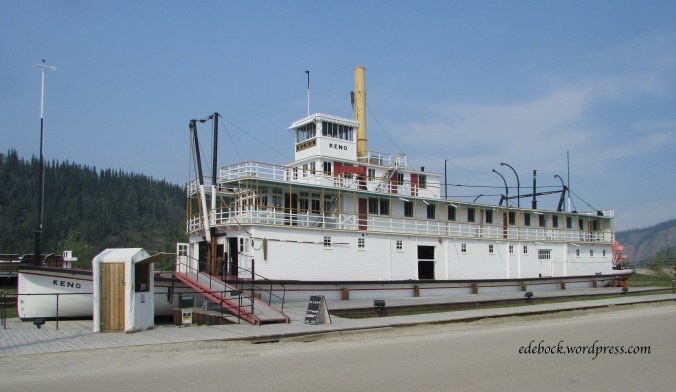
From 1896 to the mid 1950s, more than 250 sternwheelers plied the waters of the Yukon River. At one time, as many as 70 of these majestic riverboats carried passengers and supplies from Whitehorse to Dawson City. Now the stately SS Keno sits on Dawson’s riverbank welcoming visitors to come aboard for a step back in time.
IMG_4444

The streets of Dawson offer a mix of old and new, often side by side.

IMG_4427

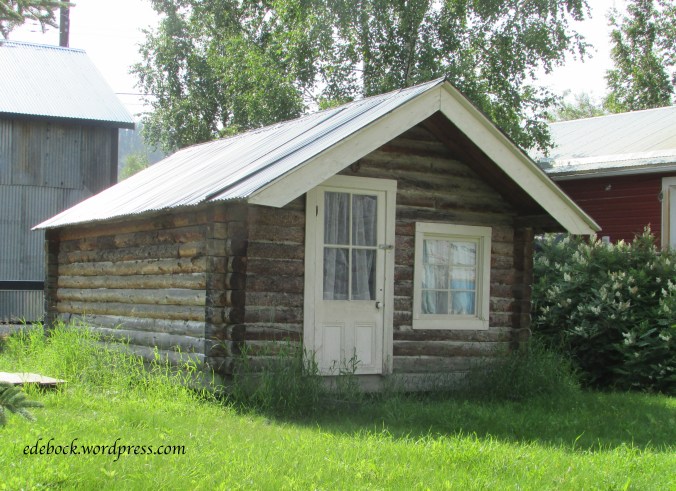
Many buildings remain from Dawson’s early days, some still in use and others reminders of days gone by.
IMG_4426

IMG_4428

IMG_4435

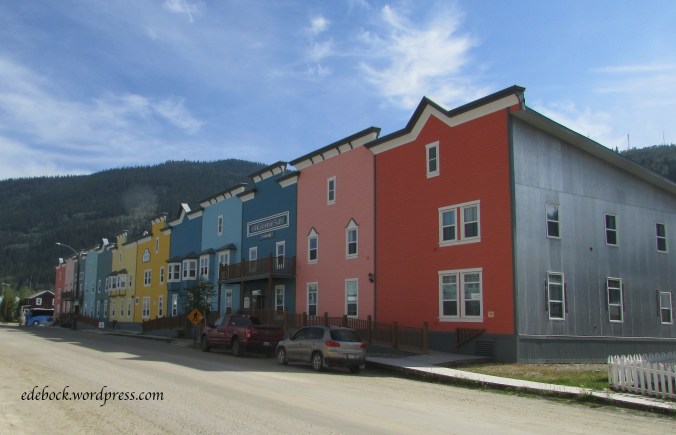
Even modern structures retain the look and character of historic Dawson.

IMG_4424

IMG_4431

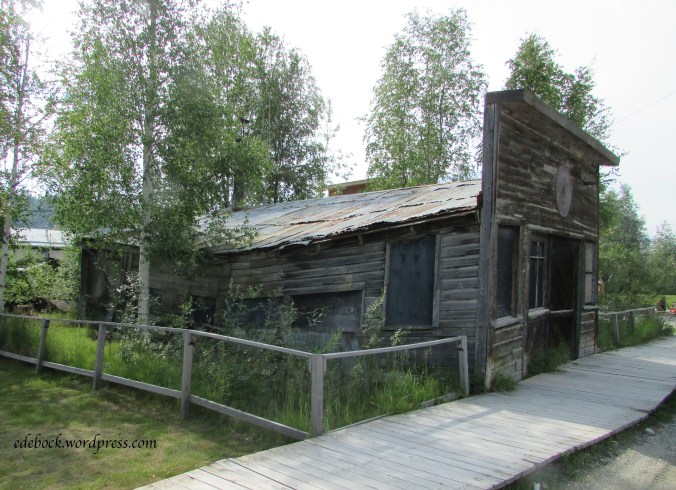
Permafrost, a thick layer of permanently frozen soil below the surface of the ground, underlies this northern community and requires special building techniques to keep it from melting. Old buildings like these ones, hastily constructed during the gold rush, show what happens when the frozen sublayer softens.

IMG_4434

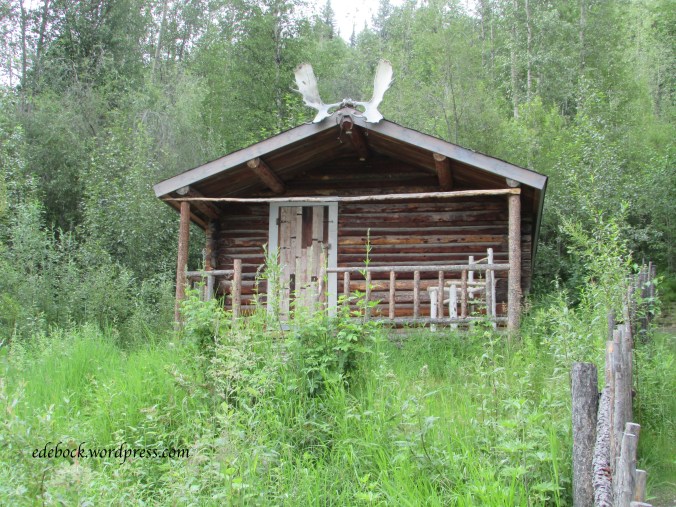
No visit to Dawson would be complete without at least strolling by Robert Service’s cabin. It was here that the poet who penned The Cremation of Sam McGee and numerous other northern tales lived from 1909 to 1912.  A costumed actor playing the role of Robert Service offers readings there every afternoon during the summer months.
IMG_4481

The Cremation of Sam McGee begins with the words “There are strange things done in the midnight sun by the men who moil for gold”. The midnight sun is one of the things that I love best about northern Canada in the summertime. Here’s a photo taken at 11:30 PM. As you can see, the sun has dipped behind the hill overlooking Dawson, but it never gets any darker than this!

IMG_4513

The final stop on our virtual tour of Dawson City, the Commissioner’s Residence, built 1901 as to house the government leader of the newly formed Yukon territory, now has a permanent place in our family history. It was on those steps that our nephew and his beautiful bride were married on Saturday, July 8th!

IMG_4438

Liard River Hotsprings

Finally, internet that works well enough to download photos (albeit slowly) and share some of our past week’s travels with you!

Last week I travelled the Alaska Highway as far as Dawson City, Yukon for the fourth time. The first time was 50 years ago when I was a young teen. The second and third times were in the early 1990s when our own children were young and now we’ve made the trek again, this time to attend our nephew’s wedding.

Every time I’ve travelled this route, Liard River Hotsprings, Canada’s second largest hot springs, located in northeastern BC, has been a highlight of the trip. After a long day’s drive, we arrived at the hot springs around supper time, too late to secure a site in the provincial park campground. Instead, we set up in the overflow area across the highway, had a quick dinner and set off for a soak in the warm water.

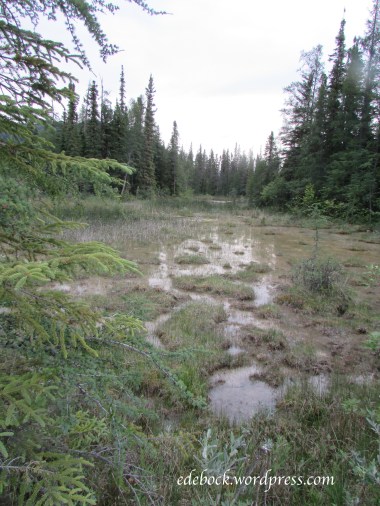
From the campground, a short (0.4 mile/0.6 km) walk leads to the hot pools. The boardwalk trail crosses over a warm water swamp and through a forested area that support a variety of plant life that survives at this latitude only because of the hot springs. The area, where we saw a mother moose and her calf feeding on one of our previous visits, has not changed since I was there the first time.

IMG_4400.jpg

IMG_4369

Ostrich fern and cow-parsnip are two plants that flourish in this warm, rich environment.

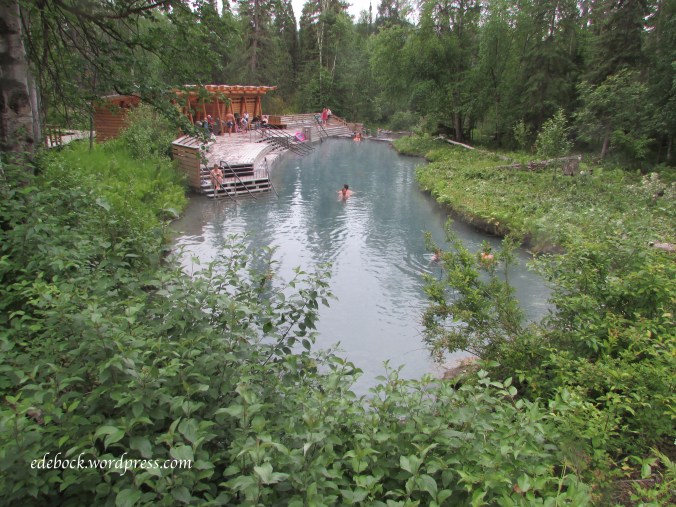
Relaxation seeped into my body as I eased into the water which ranges from 42ºC toward the lower end and 52ºC at the upper end where hot water bubbles out of the ground (108ºF to 126ºF). Though facilities including change rooms, benches, and composting toilets have been added since my first visit, the gravel bottomed hot springs, nestled in the boreal forest, are still very much a part of their natural surroundings.

IMG_4383

IMG_4386

IMG_4375

If you ever travel the Alaska Highway, don’t miss Liard River Hotsprings. You don’t have to stay if that doesn’t fit into your plans. For those who camp, soaking in the springs is included in their campground fees, but day use passes are available for just $5/person.

*If you do go, make sure you remove any silver jewelry before you enter the water! I found out the hard way that it oxidizes it. My pewter pendant was unaffected, but the chain is black!

Packing time again!

LogoIt’s packing time again! I seem to spend a lot of my life packing and unpacking, but I’m definitely not complaining. The gypsy in me can hardly wait to be on the road again!

This time I’m preparing for six weeks in our 24 foot trailer. Much of our time will be spent exploring remote and wilderness areas, but we also have a wedding to attend. We’ll be travelling in Alberta, BC and the Yukon, so weather will likely be quite variable. Closet space is limited and opportunities to do laundry may be few and far between. So, what do I pack? 

First of all, I need to think about what we’re going to be doing. In addition to the wedding, there will probably be a couple of social evenings out when we’re in urban areas. For those, I’ll need outfits that are dressy casual. Much of our time will be spent hiking, kayaking, and sitting around campfires though. Those are times when comfort is of utmost importance and I’m less concerned about what I look like. We might not have many opportunities to use them, but our golf clubs are going with us, so I also need to pack appropriate golfing attire. Our final week will be spent at our church’s district wide family camp, a time of fun and fellowship where I’ll be doing lots of socializing, attending worship services and listening to speakers. The camp is located in a rustic, forested setting on the banks of Alberta’s Little Red Deer River. I don’t want to be overdressed, but I do want to look well put together.

Fellow fashion blogger, Jennifer Connolly, of A Well Styled Life is also spending an extended period of time in her RV right now and she recently wrote this post which contains some great tips. As she points out, layering is always an important key to coping with varying temperatures. I’ll definitely want to be able to add or subtract layers as the days warm up or cool off. I’ll also be following Jennifer’s advice and packing a variety of accessories. They take up very little space and easily add polish to an outfit when that’s what’s needed.

A change of shoes can also give an outfit a lift. That’s one area where I can indulge myself on a trip like this one. When we fly, the number of pairs of shoes I can take is limited by suitcase space, but when we travel with our SUV and trailer, I can fit in many more! I’ll need dressy shoes for the wedding, of course. I was thinking of wearing heels, but after looking at the venue online, I’m guessing that the ceremony will be held on the lawn. If that’s the case, I’ll want to wear flats. There’s nothing worse than sinking in and feeling like you’re aerating the grass with every step! In either case, I’ll be taking a pair of dressy flats as well as a couple of casual pairs. I’ll also pack my rubber boots, my hiking shoes, my golf shoes, one or two pairs of sandals, and some flip flops.

Hats are another important item. I even bought a couple of new ones for this trip, but perhaps I’ll tell you about those in another post.

For much of the time that we’re away, we’ll be without internet access. In the past, I’ve discovered that even when a campground or RV park advertises that it has wifi, service can be extremely unpredictable. As a result, I don’t expect to be able to post very regularly and Fashion Friday may not appear every week. I’ll do my best to share some travel posts, however, and hopefully I can also do as Jennifer did and share a little of what I wear along the way.

Ten years!

retirement-party-ideas-1

image source

At the end of this week, it will be ten years since Richard and I walked out of our Alberta classrooms for the last time and entered a brand new phase called retirement! Where did the time go? It amazes me to think that we’ve been retired for an entire decade already! Over the past few days, I’ve been looking back and marvelling at all the things we’ve done during that time.

I often say once a teacher, always a teacher. We knew that even though we were retiring, our teaching days weren’t entirely behind us. We’d long had a dream of teaching English overseas after we retired and we accomplished that by spending one year in Japan and a semester at a university in China. Those were amazing experiences and we treasure the memories and the friendships that we made! I’ve also spent some time doing online mentoring and we both volunteer with our local literacy program. I meet once a week with two young women, both members of the Old Colony Mennonite community that moved into our area over the past few years. They are fluent in English, but neither of them ever had the opportunity to learn to read or write, even in their own language, so I’ve been teaching them. Richard tutors one of their husbands.

We’ve discovered that there are no end of things to do in retirement, even in a small community like ours. Richard has been serving as the Deputy Director of Emergency Management for our town for the past few years, a volunteer position that involved quite a bit of training. He also serves on our Community Hall board. Because we come and go a lot, we hesitate to commit to too many activities that require us to be present on a regular basis, but we give our local food bank a thorough cleaning once a month and occasionally work a shift at the thrift store that’s operated by three local churches. In addition, we hold positions in our own church and participate in many activities there. Lately I’ve even had to say no to some opportunities because I felt that I was becoming too busy!

Two of our grown children were already married when we retired, but our family has grown over the past decade to include another daughter-in-law and five grandchildren! Though none of them live very close to us, being grandparents is one of the best things about this stage of life and we spend as much time as we can manage with our little ones.

The past decade has brought some surprises, some good and some not so good. We certainly didn’t anticipate becoming seasonal farm labourers, but I believe in living life to the fullest and I’m always ready to try something new. As a result, this city bred girl learned to operate some pretty big machinery and loved it! For several years, I drove tractor in the spring and combine in the fall as we helped a farmer friend with seeding and harvest.

Travel was always part of our retirement plan. During the first few years, we visited nine Canadian provinces and fifteen American states plus Japan, South Korea, Vietnam, Cambodia, Hong Kong, Macau, Saipan and Costa Rica. In 2013, I was diagnosed with a little-known incurable cancer which slowed us down a bit and keeps us from being out of the country for extended periods of time, but since that time, we’ve managed to tour Israel and visit Mexico twice. I’ve also been on a girlfriend trip to Las Vegas and we travel to Vancouver regularly to spend time with family. Last fall, we spent two weeks in Nova Scotia and celebrated our 40th wedding anniversary while we were there.

We continue to stay physically active. Golfing is a summer passion for both of us. We also love to hike and we recently purchased a tandem kayak. During the winter we keep active lifting weights, bowling in the local seniors league, and going to dances.

Writing was always something I always knew I’d return to in retirement. Though I’ve had one magazine article published and I’ve done some freelance editing, it’s blogging that I’m most passionate about these days. I love the opportunity it gives me to interact with my readers. Even my blog has changed over the past decade though. I originally started it to share our Asian experiences with friends and family back home, but I loved writing it and I’ve kept it going ever since. Though I still share travel stories whenever I can, it has morphed into more of a lifestyle blog that includes a weekly fashion post reflecting another interest of mine that grew and developed in my retirement years.

Perhaps that’s been the key to a successful and happy retirement… we’re still learning, growing, and exploring new interests. I am extremely grateful that we were able to retire as early as we did. I’m just now approaching 65, traditionally thought of as retirement age, and Richard is 67, but we’ve already been blessed with ten wonderful years of retirement. We loved our teaching careers, but as we watch our younger colleagues wrap up another school year and see their weary, stress filled faces, we don’t for one moment regret retiring when we did!

What will the next ten years hold, I wonder? Much will depend on my health, but at this point, I’m doing well. With a few restrictions, I’m able to lead a normal and active life. I don’t think we’ll be leaning back in our rocking chairs and putting our feet up anytime soon! There’s still a lot of world to see and new adventures await us!

Hike to Quarry Rock

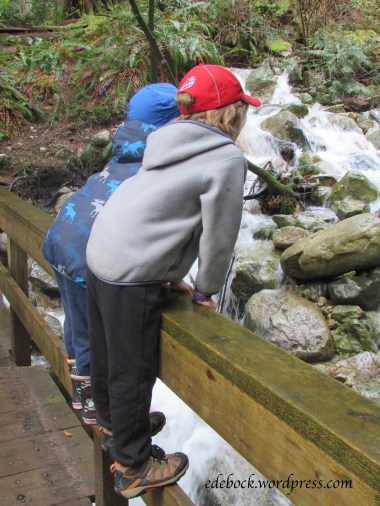
One of the big advantages of living in (or visiting) North Vancouver is the fact that you’re only minutes away from a wide array of beautiful backcountry hiking trails. Our grandsons didn’t have school today due to a teacher professional development day and though it poured rain overnight this morning’s weather looked suitable for an outdoor adventure.

Quarry Rock is a large rocky outcrop overlooking Indian Arm at scenic Deep Cove. Clouds hung low over the cove as we set off on our hike.

IMG_4111

The 3.8 km round trip trail, which is also part of the easternmost section of the much longer Baden Powell Trail, begins with a long stair climb that quickly informed me that after a long winter, during which the treadmill in our basement mostly gathered dust, my legs and my cardiac conditioning are somewhat out of shape. It didn’t help that in my eagerness to get out and onto the trail, I’d forgotten to have my morning cup of tea! Fortunately, the fresh air, the enthusiasm of our young hiking partners, and the wonderful smell of the damp forest were invigorating.

IMG_4114

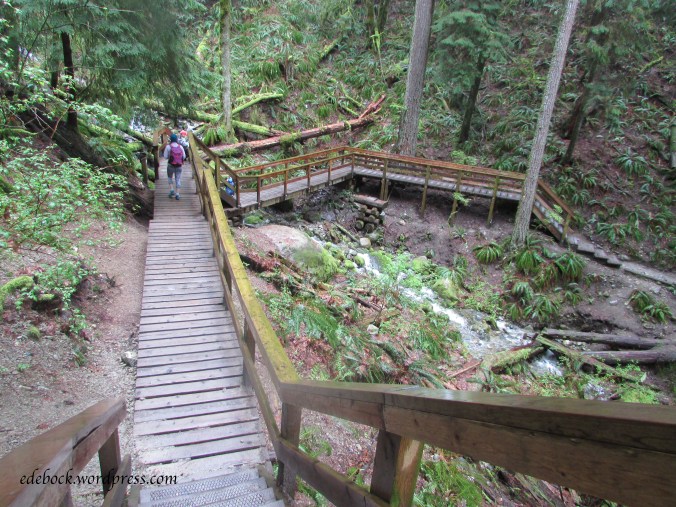
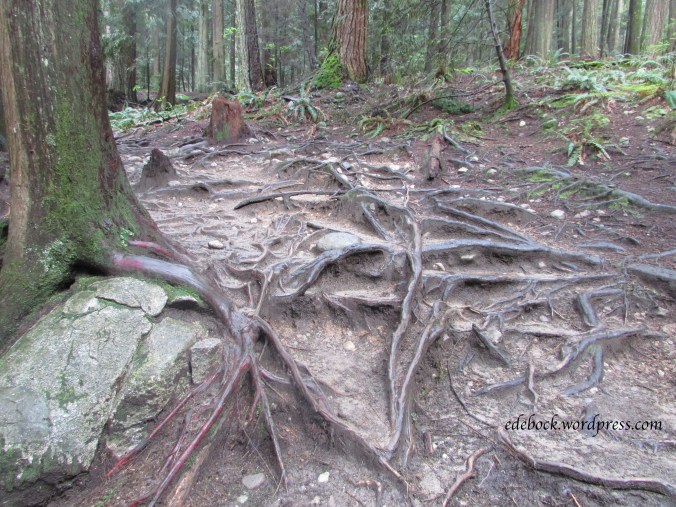
The overall elevation gain on this trail is approximately 100 metres, but there are lots of ups and downs along the way. In addition to many flights of wooden steps, boardwalks and small bridges, much of the trail is a maze of tree roots.

IMG_4130

IMG_4122

IMG_4134

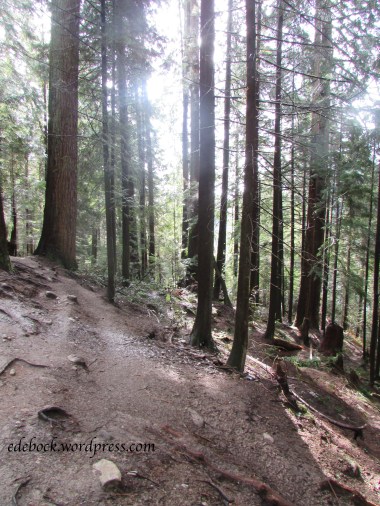
The terrain is typical of North Shore hikes with the trail wending it’s way through densely wooded areas of Douglas fir and hemlock. Morning mist hung in the trees as we set off, but before long the sun began to peek through and we soon started removing layers of clothing.

IMG_4137

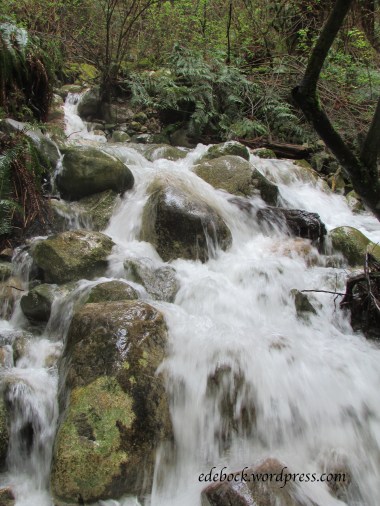
Along the trail, many small creeks filled with spring runoff from the mountains tumble down the hillside in their rush to reach the ocean.

IMG_4120

IMG_4125

IMG_4128

IMG_4132

Eventually the trail climbed up onto solid rock and we walked out onto the bluff where the views were spectacular.

IMG_4150

IMG_4142

IMG_4143

This trail is clearly a popular one. Even on a cool Monday morning, there were lots of hikers out and when we reached Quarry Rock, it was so crowded with people that it was difficult to get good unobstructed photos!


All weather packing

Screen Shot 2017-04-13 at 9.40.56 PM

logoThe geese are back, the gophers have come out of hibernation and tulip sprouts are peeking through the soil in my flower beds. It must be spring, right? Then why is there snow in the forecast? Because I live in Canada, of course!
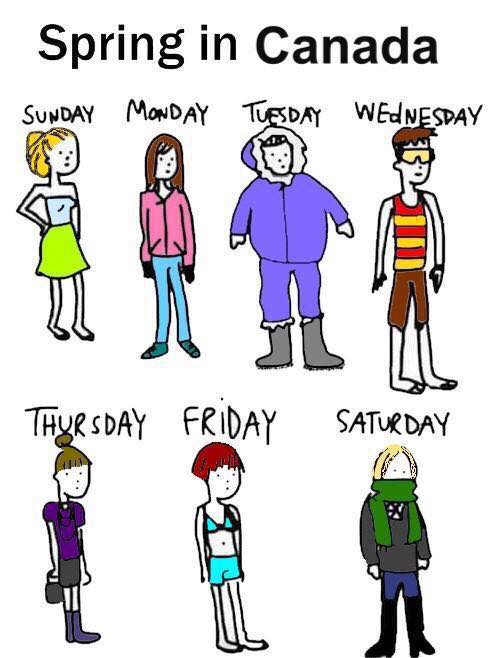
I’m envious of those who live in warmer climes, the lucky ones who have already done their seasonal wardrobe switch, putting away winter wear and bringing out shorts and sandals. I had to laugh when I saw this on Facebook the other day because it’s all too true!

Spring in Canada

My dilemma right now is how to pack for our upcoming trip to Vancouver. The coast can be beautiful at this time of year with sunshine, daffodils and a profusion of cherry blossoms OR it can be chilly and damp. The forecast seems to indicate a bit of both.

The answer, of course, is layers. There will be at least 3 camisoles in my suitcase; black, white and khaki. They take up almost no room and make a good base layer providing extra warmth when days are cool. They can be worn under almost anything. I’ll pack tops that can be worn alone or layered with one of the camis and/or a light sweater.

Pants are trickier. I don’t go anywhere without jeans, but I’ll definitely throw in a couple of pairs of capris in case the weather is warm enough. Since we’ll be spending most of our time visiting family, I won’t need anything too dressy, but I’ll take a basic pair of black dress pants that could be worn to church or out to dinner.

When it comes to outerwear, layers are once again the key. I’ll take a light waterproof, windproof jacket and a fleece hoodie that can be worn individually or doubled up on colder days. A tiny pair of knit gloves tucked into a pocket, a scarf and a compact foldable umbrella will take me on outdoor adventures with my grandsons on even the rainiest days.

As far as footwear is concerned, I’m glad that we’re driving not flying. Since I can’t decide if I’ll need sandals, sneakers, casual flats, dress shoes or rubber boots, I may just take them all!

Dream date

A couple of years ago, when our decades old marriage had hit a particularly low spot, Richard and I decided to be more intentional about incorporating regular dates into our often busy schedule. We’ve been a little lax about that lately which has given me reason to start thinking about what my dream date might look like.

I visualize candlelight, seafood and white wine on a patio overlooking the ocean. After a leisurely meal with gentle waves lapping in the background, we’d walk a moonlit beach with warm sand between our toes.

Alas, I am a coastal girl living on the western Canadian prairie, so unless I’m on vacation, that date is but a dream. I’m delighted, however, to collaborate with Turo, a unique car-sharing company, to suggest a way to ramp up that or any other date and take it to a whole new level. I’m imagining Richard and I arriving for our dinner in a red carpet worthy luxury vehicle, perhaps a Mercedes Benz or a BMW, instead of our trusty SUV. With Turo, that part of the date doesn’t have to be a fantasy!

Perhaps your dream date would be entirely different from mine; maybe something more adventurous and outdoorsy. Turo can help you with that too. With vehicles available in more than 4500 cities across the US, Canada and the UK, you could rent a truck, an SUV or, in some locations, even a Hummer.

I was delighted to learn that Turo operates right here in Alberta. I’ve got my eye on this sporty little Jaguar. Wouldn’t that make date night special?

Jaguar

Disclaimer:  This is not a paid endorsement. Information and image provided by Turo, but the words are my own.

Column of colour

logoColumn dressing begins with a solid base in one colour, usually a neutral. It can be either a top with pants or a top with a skirt. Add accessories and a topper and voila!

Here’s an example from my wardrobe. I wore this to church recently.

IMG_3919

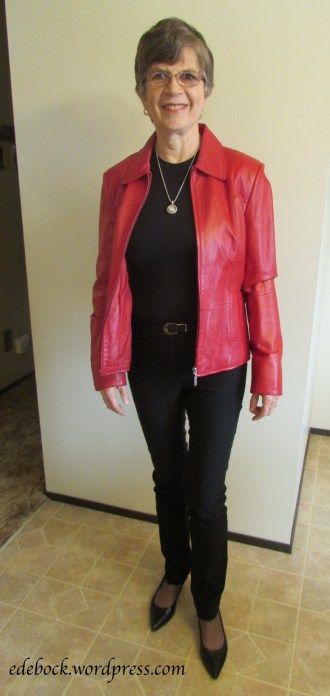
I started with my skinny black pants purchased about a year ago at Dynamite and a stretchy high-necked tank top that I’ve had for years. Though I seldom tuck my tops in, this one is a bit on the short side and tends to ride up if I don’t. A narrow black belt with a black and gold buckle helped keep everything in place. To this basic column, I added tall black boots, a grey mix cardigan and simple jewelry in a gold and silver combo.

By simply exchanging one waterfall cardigan for another less structured one in a colourful silky fabric and the boots for a pair of black pumps, I was ready for a date night with my hubby. We started the evening with dinner at a new restaurant and then went dancing.

IMG_3931

Here’s a third look built on the exact same basic column. This time I styled it with a bright red leather jacket that’s on loan from my sister-in-law, Sue, who thinks I need to add more colour to my wardrobe. For the purpose of this post, I wore the same jewelry for all three photos, but imagine how I could create many different looks by changing my accessories.

IMG_3935

Though it would be boring to dress this way all the time, there are many advantages to creating a column. First of all, it’s easy and who doesn’t like easy? Even better, it’s cost effective. The basic pieces of a column can be worn over and over again in so many different ways making them excellent investment pieces. It creates a long, lean look which is highly sought after by many women and it makes packing, especially for business travel, a dream. Depending on the length of the trip, one or two basic columns with several toppers and a mix of interesting accessories might be all you need!

Seven hours in Vegas

When you travel with Air Miles you don’t always have the choice of the shortest or most direct flights and sometimes that’s okay. When we flew to Mexico on February 9th, we left Calgary at 10:25 AM and after a two hour layover in Houston, arrived in Mexico City at 7:50 PM local time. Yesterday’s return trip was a lot longer, but also much more fun.

It was 5:15 AM when the alarm clock rang in our Mexico City hotel room. Forty-five minutes later we were in a taxi on our way to the airport. After being in the air for four hours and crossing two time zones, we touched down in Las Vegas at noon. Our connecting flight didn’t leave until 7:20 PM. We had seven hours to kill in Vegas!

After claiming our suitcase and passing through US Immigration and Customs in record time, we rechecked the luggage and caught a cab. I had the driver drop us at the Excalibur, close to one end of the famous Las Vegas Strip, where I stayed in November 2014 with the Rav4.

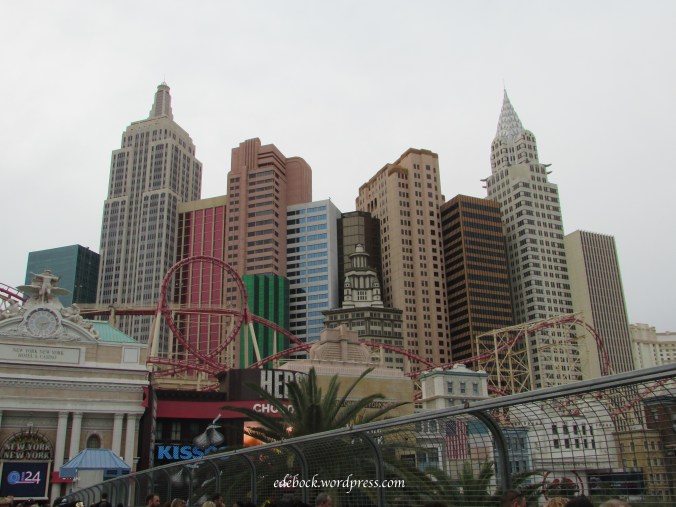
This was Richard’s first taste of Vegas. We started by dropping into the Excalibur’s lobby casino to try out a few of the penny machines. I soon turned my dollar into $2.50, but Richard lost his and it was time to head out and explore Sin City, USA! It was much chillier than my previous visit, but that didn’t seem to put a dent in the happy crowds strolling up and down the Strip enjoying its shops, restaurants and street performers. We joined them, stopping at Tom’s Urban for a late lunch.

img_3888

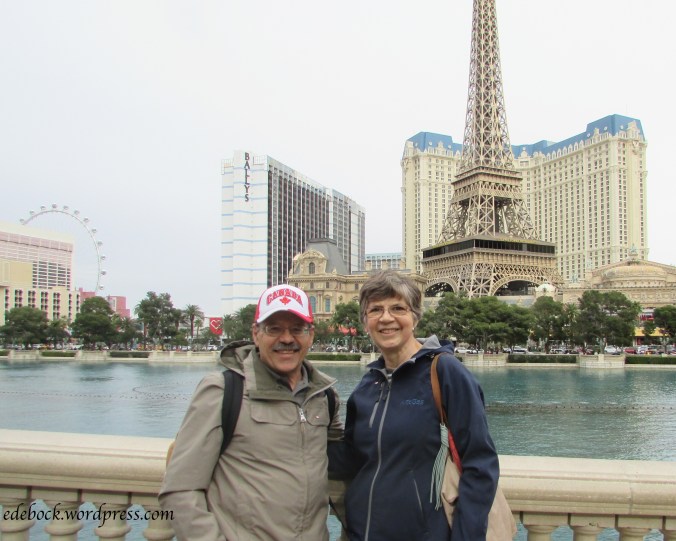
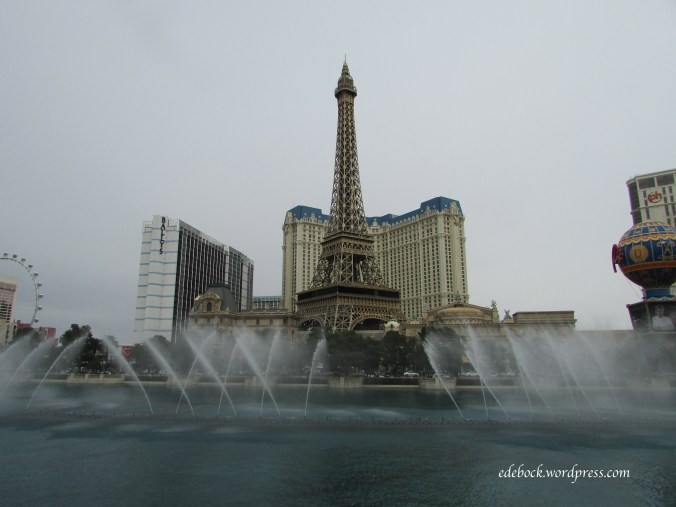
Continuing our walk, we arrived at the Bellagio just in time to watch the famed fountain show and then went inside to see the spectacular Chinese New Year display in the opulent hotel’s conservatory.

img_3890img_3896

Crossing the Strip, we made our way back to the Excalibur where we spent another half hour on the machines before catching a cab back to the airport. Seven hours in Vegas was definitely the best layover we’ve had in all our travels!

img_3898img_3897


Café Finca La Cañada

My Richard is a coffeeholic. Coatepec is known as the coffee capital of Mexico. Visiting a coffee growing operation seemed like a no-brainer.

Through another expat friend, Richard M was able to arrange for us to tour Café Finca La Cañada yesterday. Located just outside of Coatepec, up one of the roughest roads we’ve ever traveled, is the beautiful canyon estate owned by retired University of New Hampshire professor, Clifford J. Wirth, where he has now been producing organic, fair trade coffee for several years.

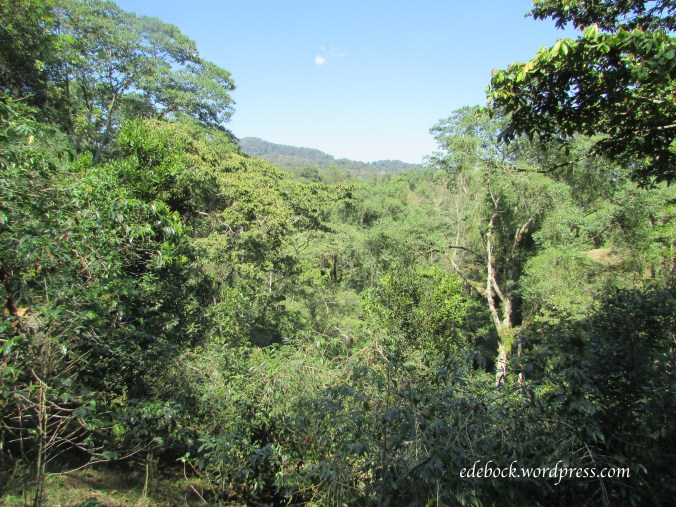
At first glance, the lush valley appears to be wild jungle, but on closer inspection one can see not only coffee trees but macadamia, banana, lemon, orange and tangerine trees growing on the steep hillside.

img_3852

img_3838

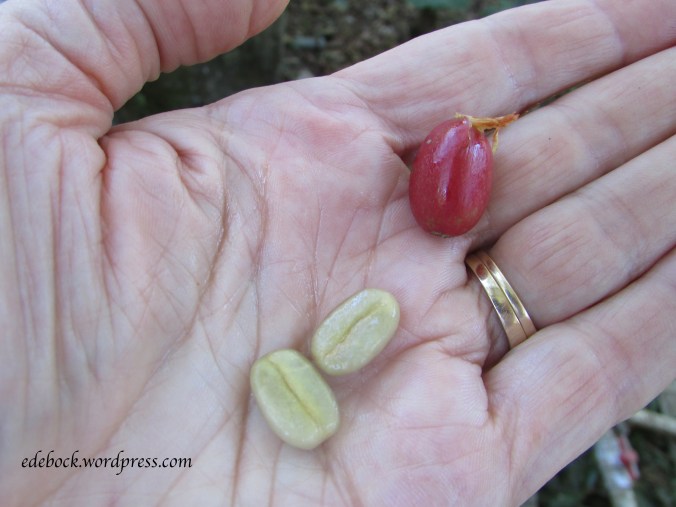
Coffee “cherries” ripening

Cliff started our very enjoyable and informative tour by walking us through the coffee harvesting process. The “cherries” are all hand picked by the Mexican family that works for him and lives on the estate. He explained the two processing methods that can be used, a wet method and a dry method. He uses the wet method. First, the freshly harvested cherries pass through a pulping machine to separate the skin and pulp from the bean.

img_3832

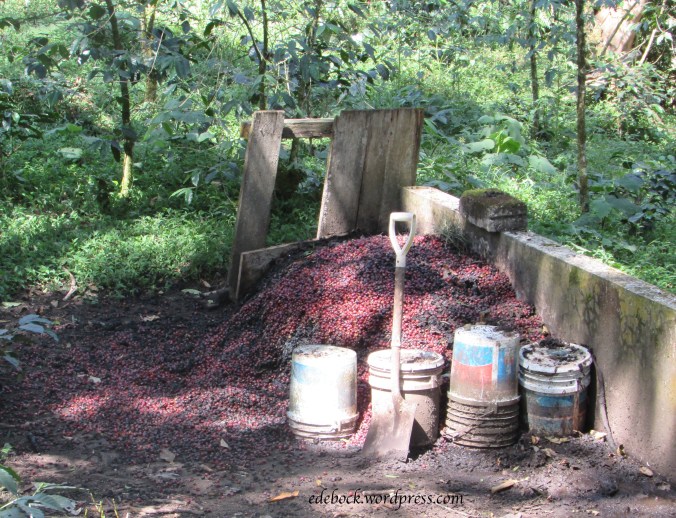
Then the beans are placed in a cement tank of water. The lighter unripe beans float to the top, while the heavier ripe ones sink to the bottom. The husks and unripe beans are  composted.

img_3829

Ripe coffee beans

img_3831

Composting the husks

After separation, the tank is again filled with water and the beans remain there for 3 or 4 days to remove the sweet gluey layer of mucilage that is still attached to the beans. While resting in the tanks, naturally occurring enzymes cause this layer to dissolve. When this process is complete, the beans feel rough to the touch.

img_3840

Drying beans

img_3843

At this point, the beans are placed on outdoor drying racks where they are turned regularly until most of the moisture has been removed. The racks are tented with plastic to protect the drying beans from rain.

Once the beans are ready, they are sent off-site for roasting and packaging. In addition to selling his coffee in a number of local shops, Cliff supplies several hotels and shops in the Cancun area. According to his Facebook page, his coffee is “Cultivated naturally below the tall trees of the Veracruz cloud forest without using agrochemicals, thus protecting the delicate ecosystem of the Suchiapa River, its flora and fauna–particularly the birds that migrate between Mexico, the United States, and Central America. The cultivation and processing methods protect the environment and workers’ welfare.”

Sadly, a fungus called coffee rust, or roya, has swept across Central America in recent years, withering trees and slashing production everywhere. Cliff told us that his trees are slowly dying and the estate now produces only 40% of the coffee that it did before the roya hit. When he took us hiking down into the beautiful canyon, he showed us examples of leaves that have been affected. He is now in the process of planting a new hybrid variety that is resistant to the blight.

I don’t drink coffee anymore because the acid bothers my stomach, but we bought a kilogram to take home and I’ll definitely be tasting it. I’ll just have to be careful to leave most of it for my coffeeholic husband!