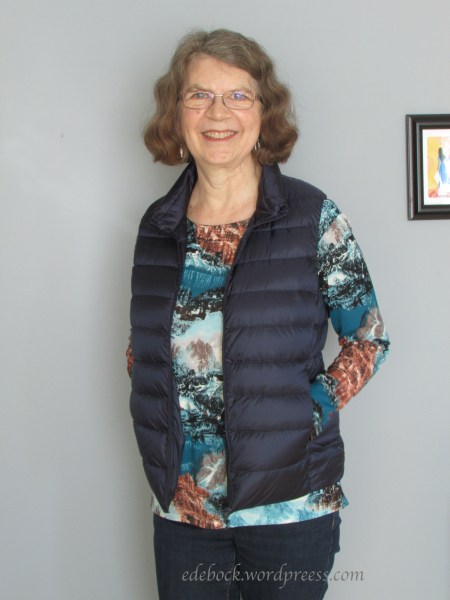
Uniqlo ultra light down vest

LogoI’ve been busy lately planning an upcoming trip. I’m not going to give away any details about our destination just yet, but in addition to going where we’ve never gone before, we’re going to be doing it with carry-on luggage only. I’ve always been pretty good at packing light. I proved that in early 2008 when we left for a full year in Japan with less than what was, at that time, the allowable limit on a plane. This trip, however, is going to take packing light to a whole new level. Three and a half weeks with one teeny, tiny suitcase each!

Though we don’t depart for almost two months, I’m already thinking about what will go into those suitcases. Traveling in the spring, we need to be prepared for varying weather conditions. One of the keys to packing light and yet being prepared for changeable weather has always been layers. Richard, in particular, likes to wear a fleece vest when he’s feeling chilly, but they’re very bulky to pack. The answer? An ultra light down vest from Uniqlo for each of us.

IMG_7155

I don’t really like ordering clothing online. I prefer to see, touch, and try on before I buy, but the closest Uniqlo store is 1300 km away in Vancouver, BC. Since we won’t be there before our big trip, ordering online was our only option. The process was simple and efficient with the package arriving in the mail just eight days after I placed the order.  Unfortunately, however, in spite of the fact that we tried to make sense of the online size charts, Richard’s vest was too small and will need to be returned. While shipping was free and Uniqlo provided a prepaid shipping label for returns, they will deduct a substantial shipping charge from our refund. Uniqlo Canada doesn’t currently offer exchanges for online purchases, so I’ll have to reorder. Unfortunately, the vests were on sale when I initially ordered them, but aren’t any longer. I love Uniqlo clothing, but I do think that their customer service (at least in Canada) could use some improvement.

IMG_7157

In spite of the frustration and extra expense of securing the right size, I think the vests will serve us well. Thin and incredibly lightweight, each comes with it’s own little stuff-sack made of the same water-repellent material as the outer shell. Once in the sack it’s about the size of a 1-litre water bottle and is by no means fully compressed when stored this way. It will easily pop into a day pack or fit amongst the other items in our luggage and add almost nothing to the weight. There’s even a little loop inside the front of the vest to attach the carrying pouch to so it doesn’t get lost.

The vest has zippered pockets in front as well as two inner pockets. There are a vast array of colours to choose from for both men and women. I chose navy, while Richard’s will be dark grey, both neutrals that will coordinate well with most of what we carry in those tiny suitcases. Do remember if you decide to order one that they fit a bit small.

IMG_7163

Stay tuned for more about our upcoming trip and more packing tips in the weeks ahead!

Jeggings and pearls

LogoJeans + Leggings = Jeggings

Early on one of our recent walks around the central core of Coatepec, Mexico a pair of jeggings on a mannequin standing outside one of the many tiny clothing shops caught my eye. These were jeggings with a twist. Not only were they leggings designed to look like tight jeans, but they were studded with imitation pearls. I looked but kept on walking. Later, as we circled around and headed back toward our friends’ house where we were staying, we passed the shop again and this time I couldn’t resist taking a closer look.

Entering the store, I looked around but didn’t see more of the jeggings anywhere. Approaching the clerk, I asked “Hablas Ingles?” (Do you speak English?) and as usual, the response was “No”. Beckoning for her to follow me out front, I pointed to the jeggings. “Grande o pequeño?” I asked. (Large or small?) Though I tend to wear a size medium in most things, that word wasn’t part of my extremely limited Spanish vocabulary yet! “Uno talla,” was the response. (One size) I recognized the word “uno” and that was enough to tell me that this was a one size fits all garment. The clerk took them off the mannequin and I held them up to myself to ensure that they were long enough. They were and my mind was made up. They were coming home with me! It didn’t hurt that the price was only 100 pesos; less than $7 CAD!

With their cozy fleece lining, these jeggings are surprisingly warm. In fact, since returning to Canada, I wore them outside at -27ºC (-17ºF) and didn’t freeze! Granted, I only walked half a block from the grocery store to the post office and back again, but they were plenty adequate for that. It may seem surprising that I was able to buy something this warm in Mexico, but Coatepec is in the highlands where it can get a bit chilly at this time of year. Since their homes aren’t insulated and don’t have central heating the people tend to dress quite warmly.

I strongly believe that leggings are not pants and that they should be worn with tops that are long enough to cover the buttocks and crotch. I’m undecided where these new jeggings are concerned though. Clearly, the pearl studded imitation pockets on the front and the details on the back are meant to be seen.


Screen Shot 2019-02-11 at 6.02.45 PMPearl embellished clothing has been very much on trend for the past year or so. I’ve seen sweaters, dresses, jeans, and even shoes adorned with imitation pearls. One of my favourite fashion bloggers, Josephine of Chic At Any Age, wore this cute pearl studded beret in one of her recent posts.
Adding faux pearls to a garment that you already own would also be a simple DIY project. I’d thought of doing that to a pair of jeans, but now that I have my pearl studded jeggings, I won’t need to!

Historic Mexico City

On Wednesday morning we took a taxi into Xalapa and then a bus back to Mexico City. Arriving at our hotel in the historic centre of the city a few minutes after 3 o’clock, we checked in, dropped our baggage in our room, and headed out to explore our surroundings. We had about four hours before dark to see as much as we possibly could!

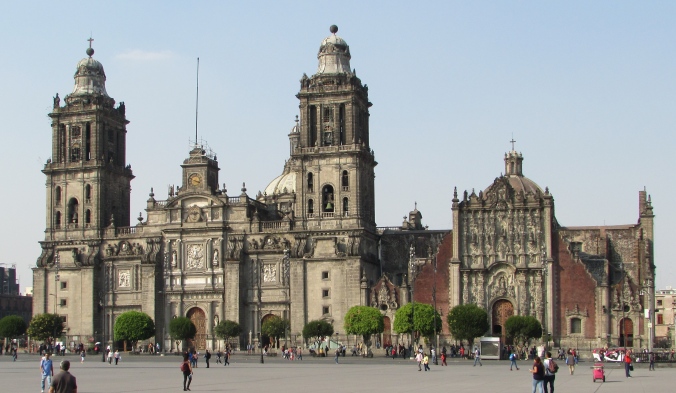
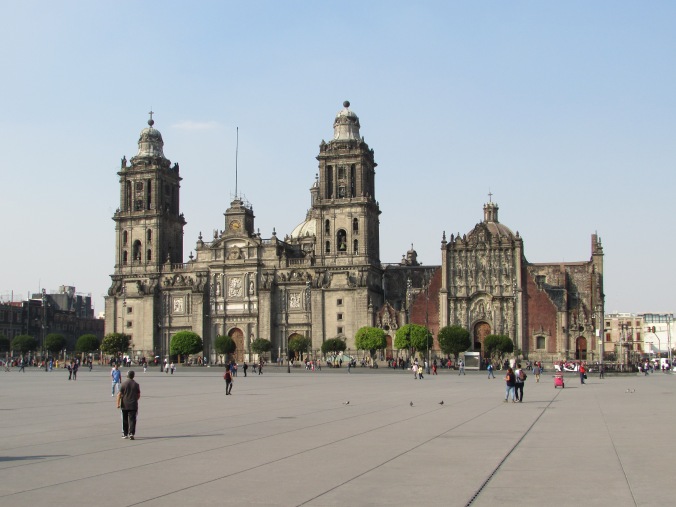
About six blocks north of our hotel, we came across the expansive Plaza de la Constitución. There was a protest of some sort happening just off the south side of the square, but it was the amazing Metropolitan Cathedral (or to give its full name, the Metropolitan Cathedral of the Assumption of the Most Blessed Virgin Mary into Heaven) on the north side of the plaza that completely captured our attention.

IMG_7059

Latin America’s largest and oldest cathedral, the imposing structure is the seat of the Roman Catholic Archdiocese of Mexico and one of the country’s most treasured architectural masterpieces. Built on the site of Templo Mayor, an ancient temple in what was the centre of the Aztec capital of Tenochtitlan, it includes much of the stone from that original structure. Construction of the cathedral, which incorporates several different architectural styles, spanned three centuries from 1573 to 1813! The bell towers house a total of 25 bells, the largest one weighing 13 000 kilograms!

IMG_7059 - Version 2

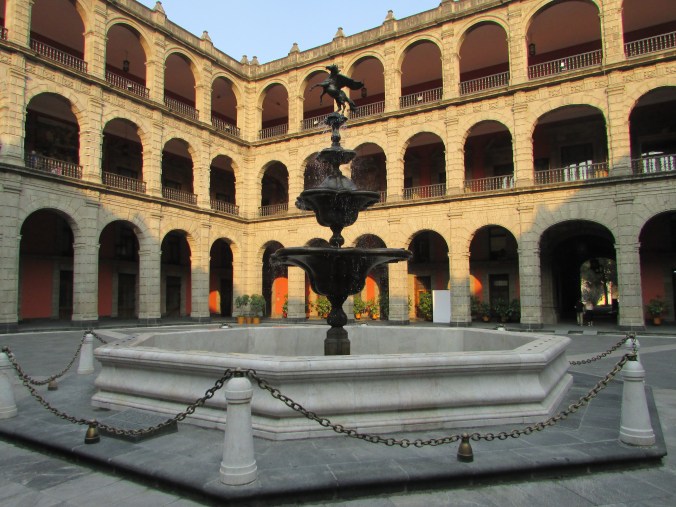
After a quick peek inside the Cathedral, we moved on. The Palacio Nacional, home to the offices of the president of Mexico as well as the federal treasury, is located on the east side of the Plaza de la Constitución. The palace’s main courtyard is surrounded by a three level arcade and has at its centre an enormous fountain topped by an elegant bronze statue of Pegasus, the winged stallion of Greek mythology.

IMG_7102

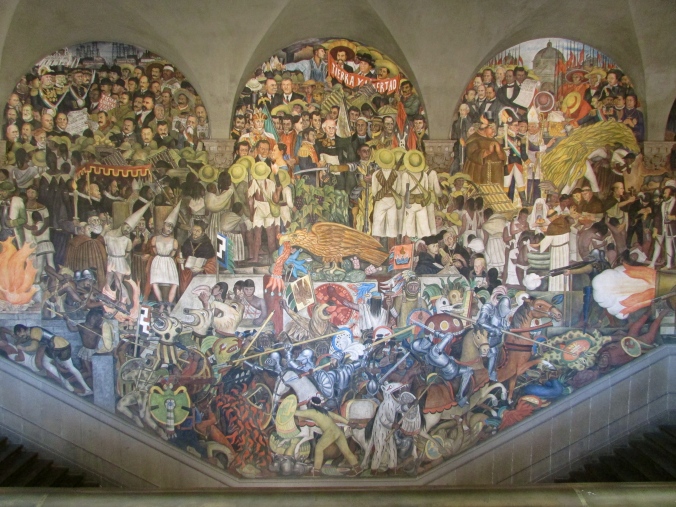
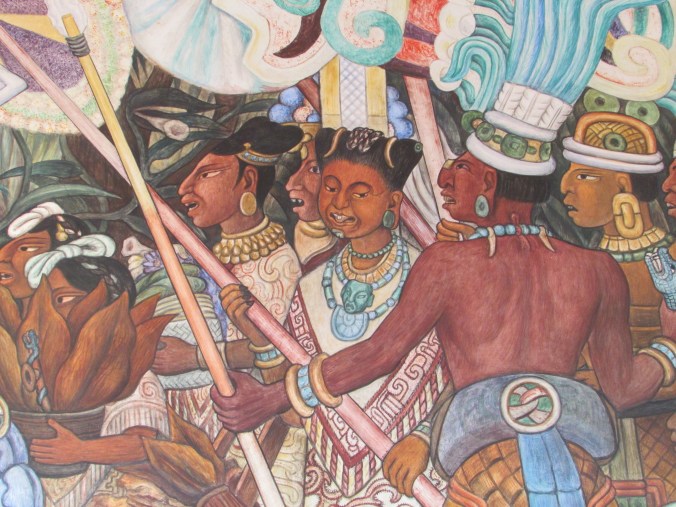
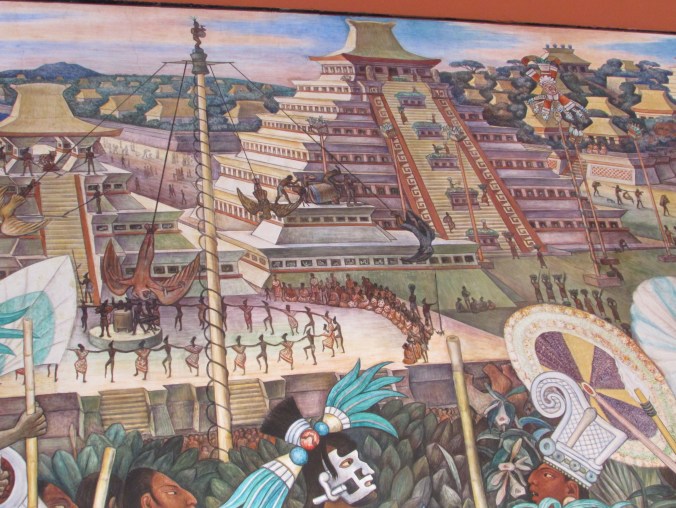
It was the Diego Rivera murals, painted between 1929 and 1951 and depicting the history of Mexico from the Aztec era to the early 20th century that drew us to the Palacio Nacional. The enormous staircase murals, located between the first and second floors, are sometimes compared to an epic poem including the legendary pre-Hispanic past, the Spanish conquest, and the more recent past. Tucked into the mural over the left staircase is an portrait of Rivera’s wife and fellow artist, Frida Kahlo (wearing a green dress and a star necklace).

IMG_7070 2

Nine more murals chronicling indigenous life before the Spanish conquest of Mexico cover the north and east walls of the second level. This series of panels was intended to go all the way around the second storey, but the project was incomplete when Rivera died in 1957.

IMG_7082

IMG_7081

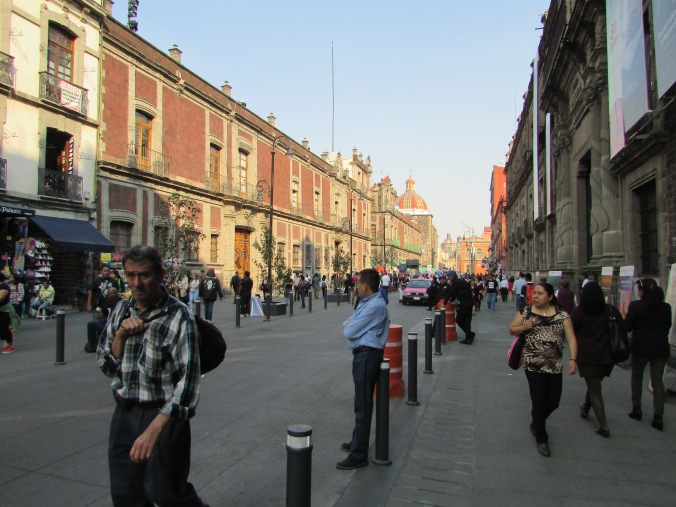
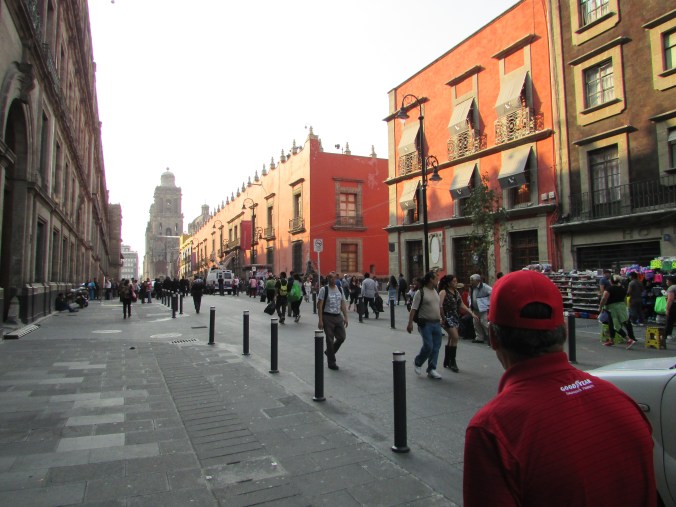
After leaving the Palacio Nacional, we wandered the nearby streets enjoying the sights and sounds of this small part of one of the world’s largest cities.

IMG_7066

IMG_7067

IMG_7112

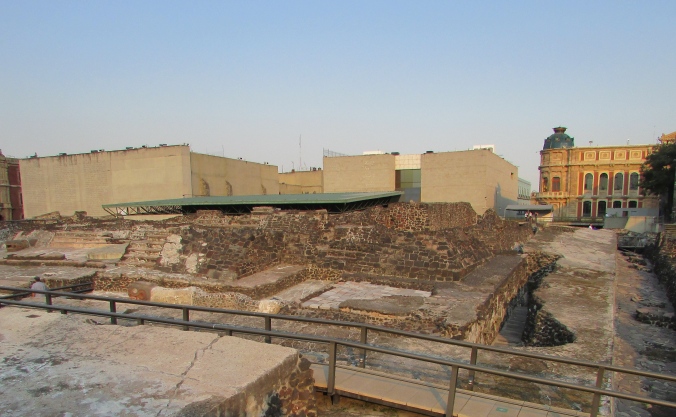
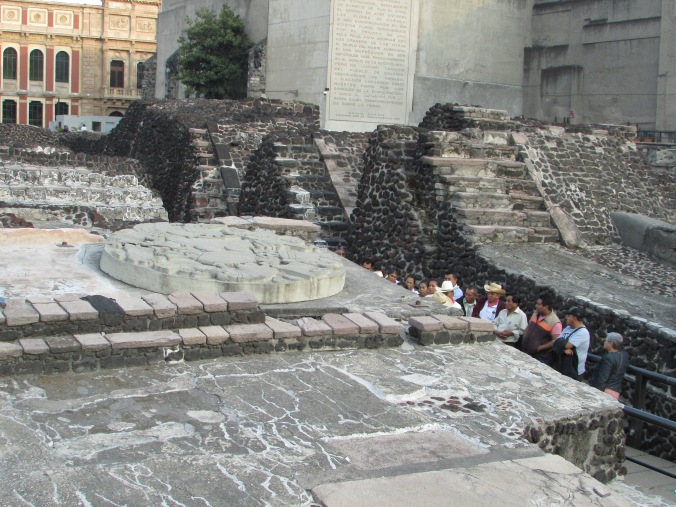
To the north and east of the central plaza, we discovered the remains of a portion of the Templo Mayor that was excavated between 1978 and 1982.

IMG_7106 - Version 2

IMG_7110

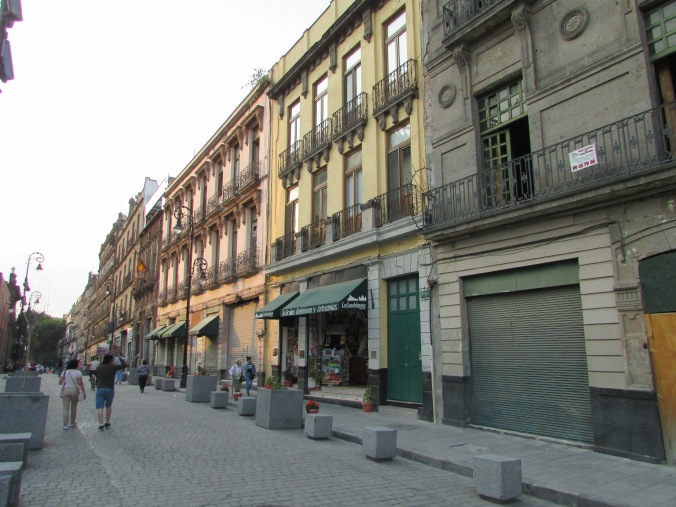
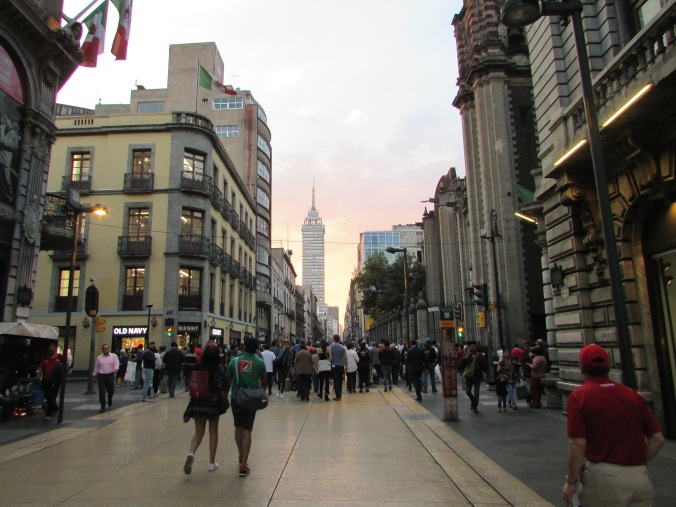
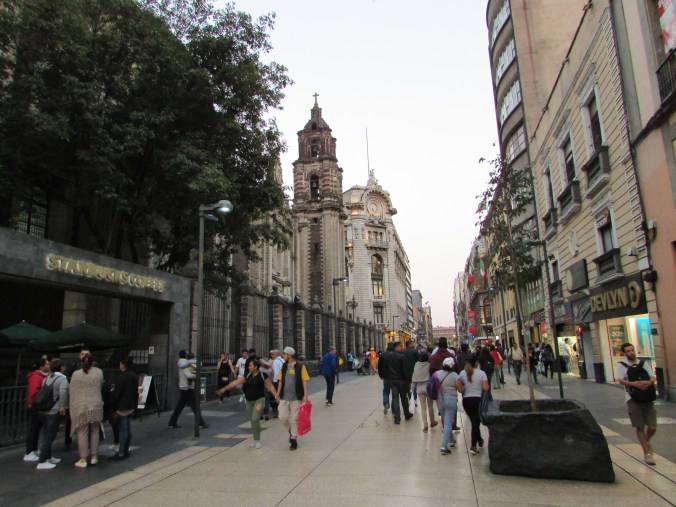
Continuing our walk, we eventually came across a long pedestrian street lined with shops and restaurants that included a number of American chains such as Old Navy, Starbucks, H&M, and Forever 21. Though it was a midweek day at suppertime, the street was full of people. Photos hardly do it justice as without sound they fail to fully capture the festive atmosphere. On one block a young boy played an accordion, on another a trio of men in traditional costume played lively music on stringed instruments, on yet another a boy played guitar and sang. In each case, of course, they had a hat or container out to catch the coins of passersby.

IMG_7116

IMG_7121

We stopped for a quick bite to eat in a tiny Mexican restaurant and dessert from Santa Clara, a Mexican ice cream shop chain. Then as the sun slipped below the tall buildings surrounding us, we headed back toward our hotel. We had to be up very early the following morning to catch our flight home.

And that’s a wrap folks! After a fantastic visit with our friends in Mexico, we’re back home on the frozen Canadian prairie revelling in the memories of another wonderful trip completed.

Churches of Coatepec

Everywhere we go in Coatepec and the surrounding area, the colour and architecture of the churches practically insist that I stop to take photos! Over 90% of the population of the area adheres to the Roman Catholic faith, so Catholic churches are everywhere.

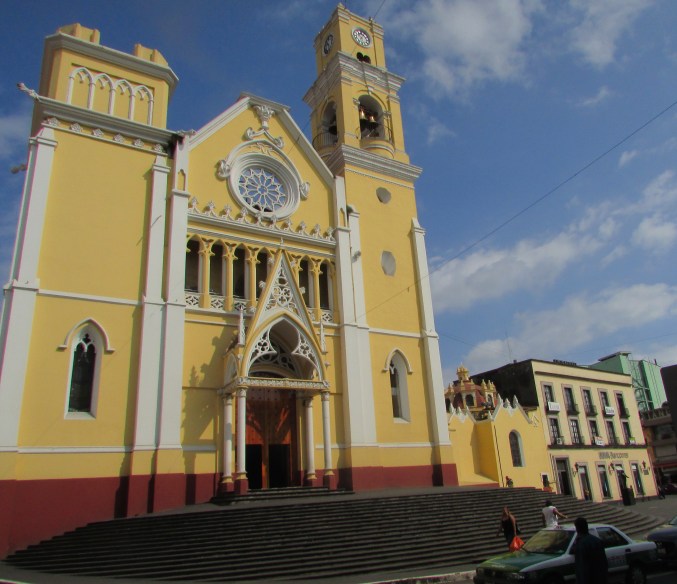
In the nearby city of Xalapa, the Catedral Metropolitana de la Immaculada Concepción, or the Xalapa Cathedral as it is more commonly called, is one of the oldest buildings in the city.

IMG_3649 - Version 2

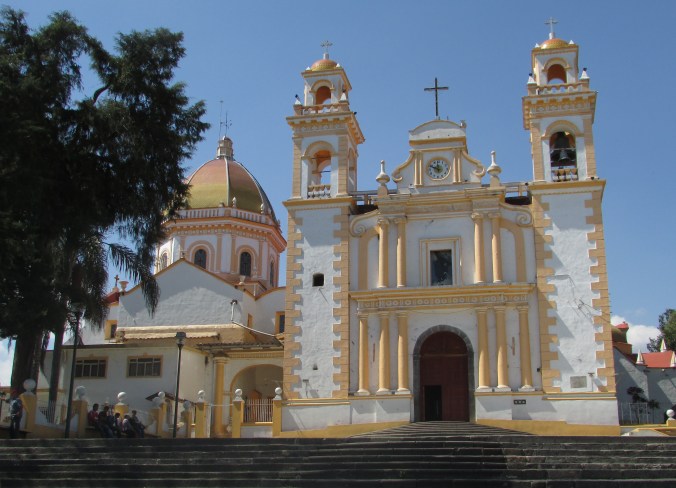
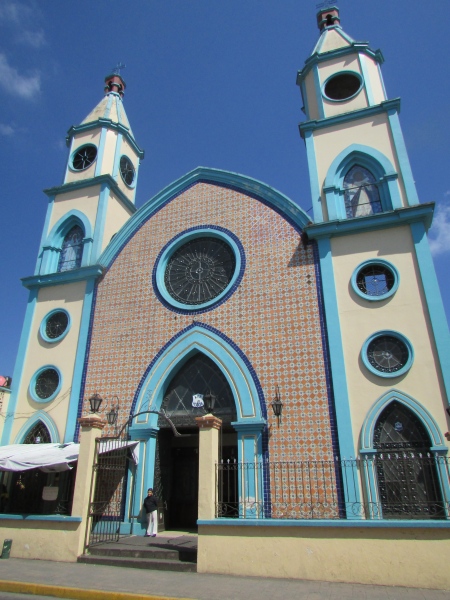
Every small town has churches that are equally spectacular. Santa Maria Magdalena is the patron saint of Xico and the church that bears her name is absolutely stunning.

IMG_3604

A little further away, this beautiful church overlooks the central square in the smaller town of Teocelo.

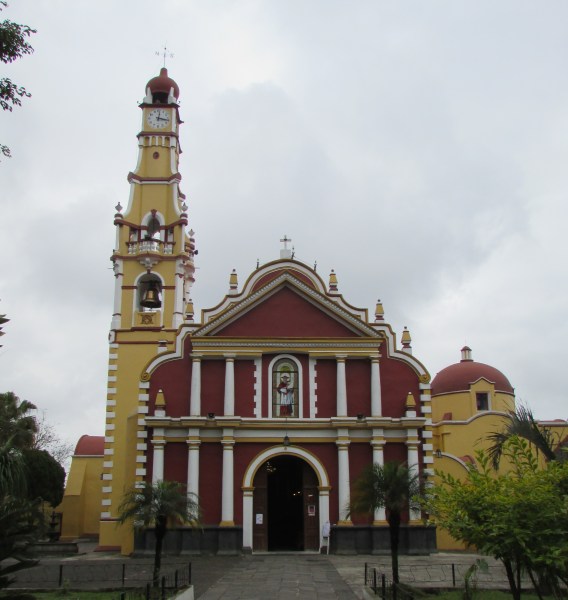
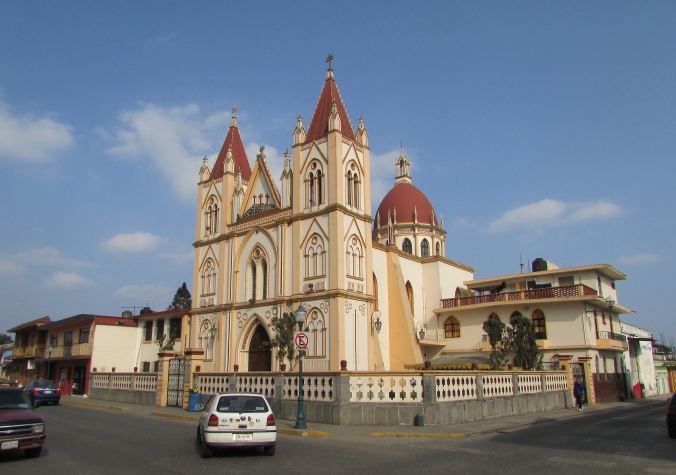
Here in Coatepec, the stately church of San Jéronimo is located in the central core across the street from the Parque de Miguel Hidalgo which is always a happening place.

img_6817

I don’t know the names of the other churches that I’ve stopped to photograph, but there are many!

IMG_3665

IMG_7005

We specifically walked up a steep hill to take a closer look at this one this morning.

IMG_7038

But this is my favourite of all the ones we’ve seen in Coatepec. Not only is the architecture exquisite, but I love the Calvary motif high above the entrance.

IMG_7033

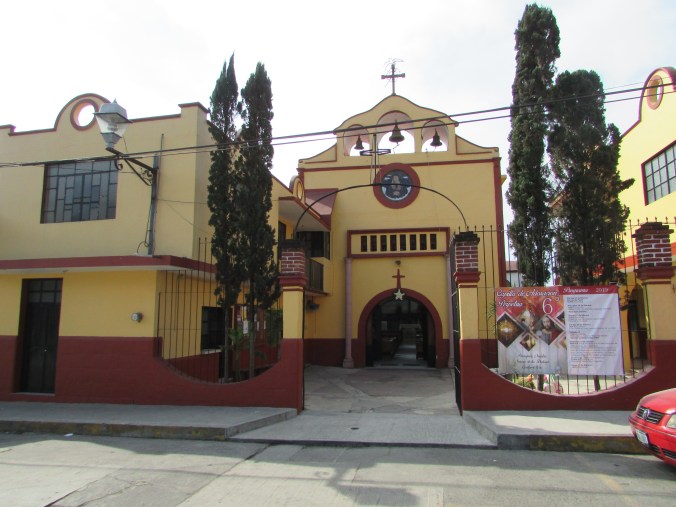
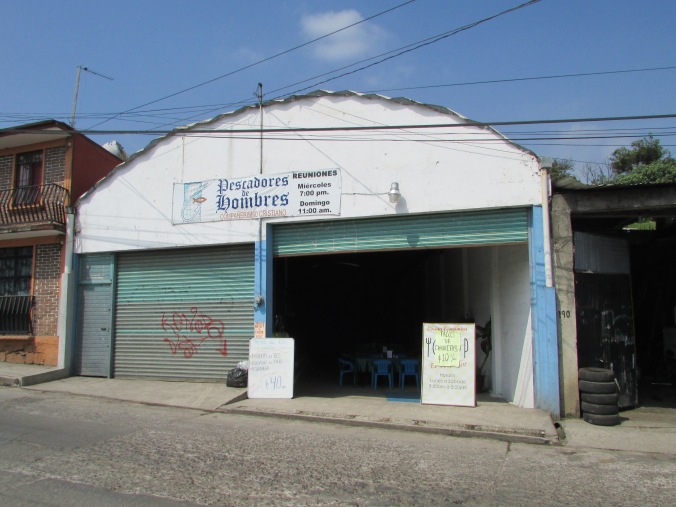
By contrast, less than 10% of the population is evangelical Christian and they meet in much more modest buildings. The Pescadores de Hombres Compañerismo Christiano (Fishers of Men Christian Fellowship) congregation meets in this building a few blocks away from where we’ve been staying.

IMG_7041

A church on Sunday morning and Wednesday evening, it’s a cochina economica (cheap kitchen) the rest of the week where you can buy tacos for 10 pesos (69 cents CAD) apiece.


Hiking in January!

The last time we came to Mexico, we took a taxi about 9 km from Coatepec to the smaller town of Xico where we enjoyed a lovely lunch. Today, we went a little further past Xico and down a very rough cobbled stone road to go hiking. Hiking, in January! What a treat!

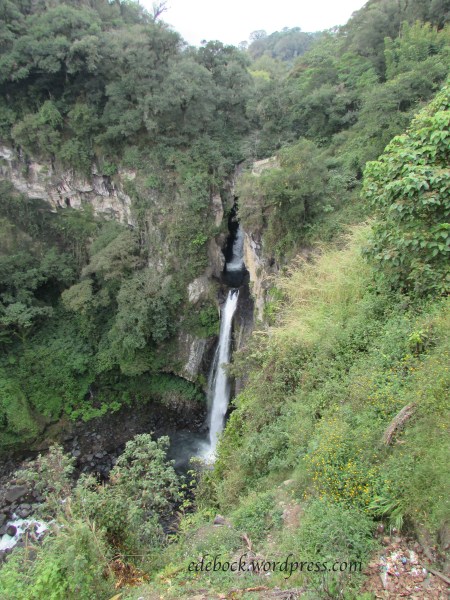
The last time our friends went hiking in the area, they were able to take a trail down to the bottom of Cascado de Texolo, but today that trail appeared to be closed. Instead, we crossed a suspension bridge and took a trail that climbed to a ridge high above the valley.

img_6944

Cascada de Texolo

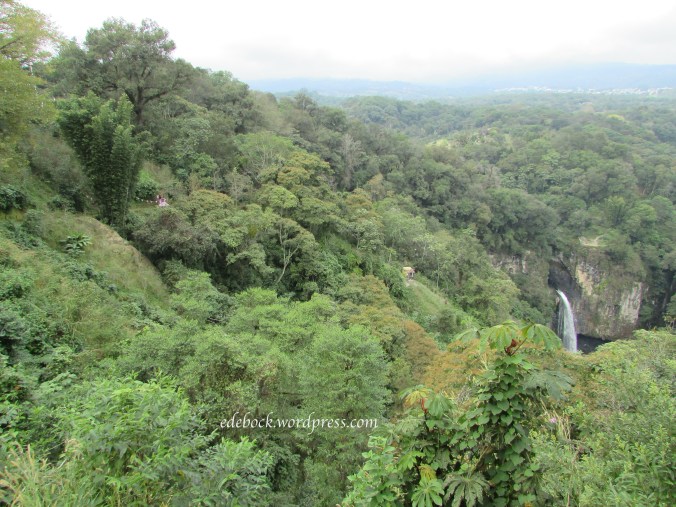
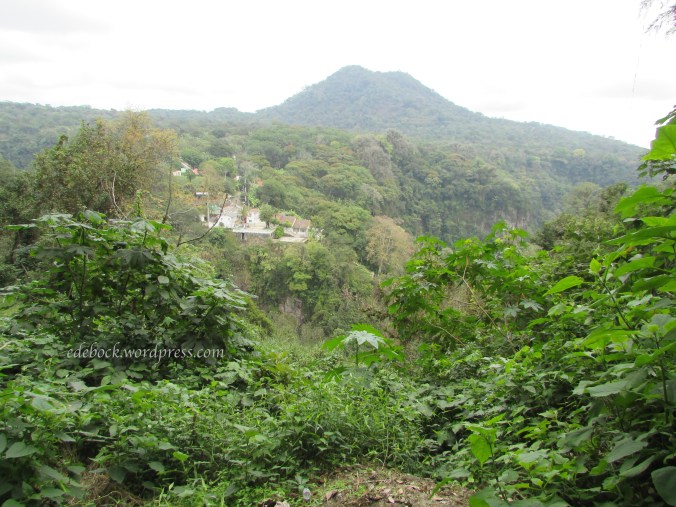
In many ways, the hike reminded me of hikes we’ve done at the BC coast and in the Rocky Mountains except that the plant life was entirely different. Instead of forest, we were hiking through jungle.

img_6972

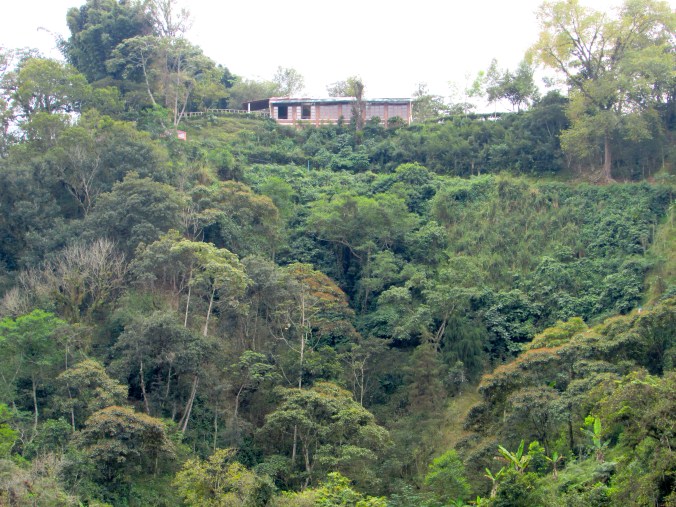
As we climbed higher, we could see a building perched on the edge of the ridge above us. Could it be a restaurant? If it was, we decided, we’d have lunch there.

img_6980

Sure enough, it was and we did! The food was delicious and the view was amazing.

img_6969

img_6967

img_6964

I had to pinch myself and remind myself that it really is January as I enjoyed the brilliant flowers along the trail.

Museo de Antropología de Xalapa

When I registered for my first year of university I intended to take a sociology course, but it was already full. I had to find something else that would fit into my timetable, so I registered for introductory anthropology. The study of human societies and cultures sounded interesting enough, but I didn’t anticipate it capturing my attention to such an extent that I would take as many anthropology courses as I could over the next four years and if money had been no object, I would have gone back to school after earning my education degree to get a second one in anthropology!

When I learned, after our first visit to this part of Mexico, that nearby Xalapa is home to the second largest museum of anthropology in the country, seeing it immediately took first place on my list of things to do on a return visit. With more than 25 000 pieces, the Museo de Antropología de Xalapa, also known as MAX, houses the world’s largest collection of artifacts from the ancient cultures of the Mexican Gulf Coast including the Olmec, the Huastec, and the Totonac.

The most notable amongst these pieces are the colossal Olmec heads that date back to at least 900 BC. That’s hundreds of years before Alexander the Great! Sculpted from huge basalt boulders, 17 of these heads have been discovered to date and 7 of them are housed in the MAX. The heads vary in height from 1.47 to 3.4 metres and weigh between 6 and 50 tons. All of them depict mature men with flat noses and fleshy cheeks.

img_6866

There are also tiny heads like this one depicting a newborn baby.

img_6876

Also Olmec in origin, this 55 cm tall sculpture is thought to depict a priest holding a limp child, either sleeping or dead.

I won’t bore you with all of the 80+ photos that I took today or too many details about ancient culture, but as a lover of anthropology, I was absolutely amazed by the collection.

A few pieces even reminded me of the masks carved by the natives of the Pacific Northwest.

MAX is also noted for a series of small Totonic faces, called “caritas sonrientes” (little smiling faces) in Spanish. The first one shown here makes me laugh!

img_6903

In contrast to the little smiling faces, this poor fellow looks terribly sad.

img_6908

For Mesoamerican people childbirth was considered a form of battle, therefore, women who gave birth were revered as heroes and great warriors. Losses on any battlefield are inevitable, so women who died as a result of childbirth were given the same honour as men who fought and died in conflict. I was very impressed with the sculptures, like this one, representing these women.

img_6910

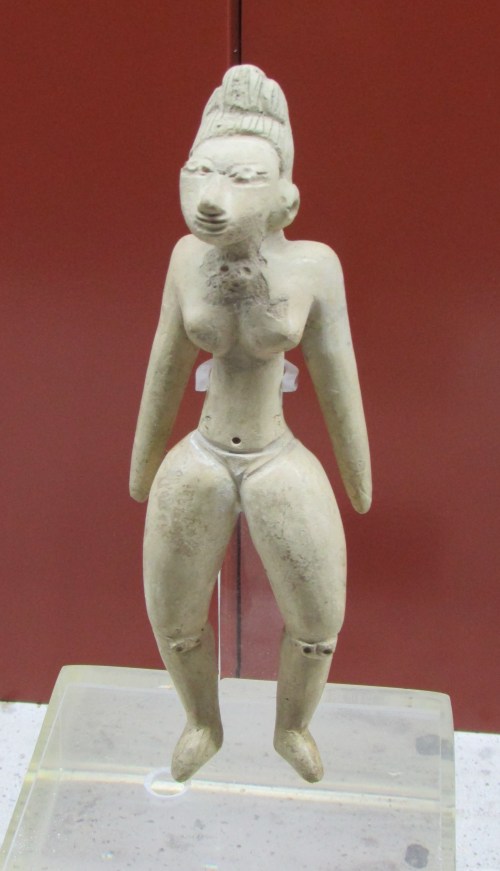
Here’s one of a series of tiny sculptures showing an ancient culture’s concept of the ideal female form; tiny waist, abundant hips, and voluptuous breasts. Clearly, with my boyish figure, I’d have been one of the ugly ones!

img_6922

The colours of Coatepec

The last time we came to Coatepec, Mexico to visit our friends, Richard M and Colleen, I fell in love with the Spanish colonial architecture. On that visit, I wrote a post about the amazing doors and windows, but another thing that stood out to me was the vibrant colours!

img_3579Living in Alberta, we spend the long winter months in a mostly monochromatic world. With the trees bare and the ground covered with snow, we live in shades of black, grey, and white. Perhaps that’s why I’m so drawn to this colourful culture. Today, we spent several hours walking around the central part of town.

Just off one side of Miguel Hidalgo Park is the beautiful San Jerónimo Church.

img_6817

Homes and businesses are equally as colourful. Come walk with me.

img_6833

img_6835

img_6842

img_6848

img_6850

img_6847

img_6852

img_6855

It’s been cloudy and fairly cool since we arrived, but the colours of Coatepec are definitely a welcome respite from our Canadian winter!

Coastal adventure continued

On the west coast of Vancouver Island where we camped over the Thanksgiving weekend, more than half the days in October tend to be rainy ones. When the forecast promised sunshine on Saturday and rain on Sunday, we planned the weekend’s activities accordingly. Saturday morning found us back on the beach walking, playing, and searching for treasures washed up on the shore.

IMG_6336

IMG_6349

Matt and Robin

IMG_6360

Adding to my shell collection

IMG_6364

Sam and his parachute man

Of course, a sandy beach like this one is an open invitation for castle building!

Pacific Rim National Park Reserve is home to numerous hiking trails varying from easy loops of less than 1 km to the rigorous 75 km (46.6 mile) West Coast Trail that takes approximately a week to complete. For Saturday afternoon, we chose the popular Rainforest Trail. Made up of two loops, one on each side of the highway, this scenic 2 km trail took us deep into the forest away from the sound of traffic. The entire trail is a wooden boardwalk that protects the dense undergrowth while allowing hikers to enjoy the magnitude of the towering trees and massive ferns. Though not a difficult hike, there are over 700 stairs along the way!

IMG_6395

IMG_6398

IMG_6384

That’s a very big tree!

Though much of what is seen in the rainforest is huge, sharp eyes can also pick out many smaller things including a wide variety of mushrooms and other fungus. These ones, growing right in the campground were my favourites.
I almost expected to see a forest nymph or a smurf peeking out from beneath one of these!

As anticipated, Sunday was wet and drizzly. We spent the morning visiting the Kwisitis Visitor Centre learning about the history, people, and wildlife of the area. This small, free museum overlooks Wickaninnish Beach and is located on the site of the original Wickaninnish Inn.

IMG_6434

IMG_6430

IMG_6420

Rain or shine, the Pacific Rim National Park Reserve is absolutely stunning!


Coastal adventure

When our trip to Vancouver for my father’s surgery fell so close to Canadian Thanksgiving, our daughter-in-law suggested that we join them for their planned long weekend camping trip to the west coast of Vancouver Island. Not wanting to pull our trailer over the mountains to the coast and pay to take it across to the island on the ferry for just 3 nights of camping, we agreed but only if we could borrow a tent! Tofino in a tent in October? Some people thought we were crazy, but we’re always up for an adventure!
IMG_6369

I think it had been 25 years since the last time I slept in a tent, but we prepared well and were snug and warm in our cozy little cocoon. It wasn’t exactly ‘glamping’, but our air mattress almost filled the little tent and in addition to our sleeping bags, we had extra quilts and blankets for warmth. We even had a little space heater, but we barely used it! When it rained, as it was bound to do, we didn’t even get wet.

IMG_6370.JPG

Early Friday evening, we set up camp at Green Point Campground in the Pacific Rim National Park Reserve. The campground is located on a bluff overlooking Long Beach.

IMG_20181005_174247844

View from our campsite

As soon as we finished setting up camp, our grandsons and I headed for the beach. According to Parks Canada the official length of Long Beach is 16 km (almost 10 miles) but it’s really a series of beaches separated by rocky headlands. When the tide is out, as it was when the boys and I went down, the campground beach is a vast expanse of sand approximately 6.5 km (4 miles) long. “I feel so free!” exclaimed 9 year old Sam as he walked out onto the sand. I know exactly what he meant. It was amazing!

IMG_6323

Most amazing of all though was the spectacular sunset that followed! The sky was ablaze with colour as the sun slipped beneath the surface of the sea.

IMG_6306

IMG_6309

Nate watching a Great Blue Heron

IMG_6321

IMG_6324

Later we drifted off to sleep in our tiny tent listening to the sound of the surf. Ahhh… What bliss!

I’ll share more of our weekend adventure later in the week. In the meantime, I need to get organized for tomorrow morning’s departure. Sadly, the time has come to leave the coast behind and return to Alberta where snow has already fallen several times!

Anniversary on Lonsdale

IMG_6265

In recent years, we’ve been coming to Vancouver at least twice a year. Dividing our time between my very elderly father, my mentally handicapped brother, and our oldest son, his wife, and their two growing boys always seems to be a balancing act. We planned our current trip specifically because my father was having minor surgery last Thursday. Thankfully, that went extremely well and as we did when we were last here in June, I decided that we ought to take a bit of time to enjoy the city. Of course, the fact that today is our 42nd wedding anniversary was also a good reason to do something a bit out of the ordinary!

Though we spent the first few days of this visit staying in one of the guest suites at the assisted living facility in Burnaby where my father lives, we relocated to our son’s home in North Vancouver on the weekend. After walking the boys to school this morning and then having a late breakfast, we headed off to spend a few hours exploring Lower Lonsdale.

With stunning mountain views in one direction and Burrard Inlet in the other, bustling Lonsdale Avenue is main street North Vancouver and Lower Lonsdale is its oldest neighbourhood. There past and present come together in a unique area bursting with shops, restaurants, cafés and pubs. At its heart is Lonsdale Quay.

IMG_6255 - Version 2

Lonsdale Quay Market has an abundance of unique shops and services selling everything from fresh seafood to authentic west coast art to kitchen ware and handmade chocolate. It’s also the northern terminus of the SeaBus, the passenger-only ferry that crosses the inlet and connects the North Shore to downtown Vancouver.

IMG_6248.JPG

After wandering the shops inside the market and enjoying a delicious lunch of fresh fish and chips overlooking the harbour, we made our way outside.

IMG_6253

Public art reflecting the heritage, culture, and environment of the area is found all over the city of North Vancouver. The 100 foot mural “Coastal Energy” on the side of Lonsdale Quay was designed by North Vancouver students in collaboration with local artist, Dennis Creighton.

IMG_6259

After leaving the Quay, we walked a few blocks up one side of Lonsdale Avenue and back down the other checking out a few of the shops and enjoying the character of the place.

IMG_6262

IMG_6264

IMG_6267 - Version 2

IMG_6270

Then, anniversary or not, it was time to return to our real reason for being in Vancouver; time to pick up Dad and take him for a follow up appointment with his doctor. Thankfully, he is doing well!