Doors and windows

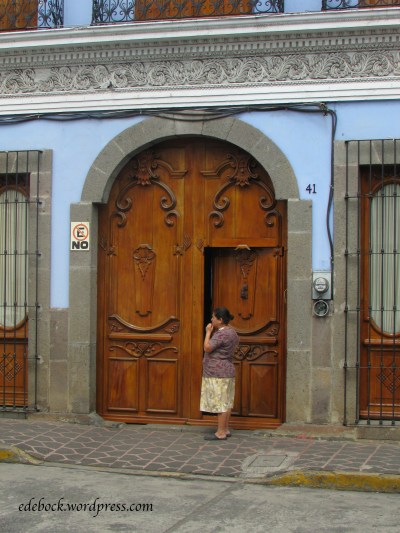
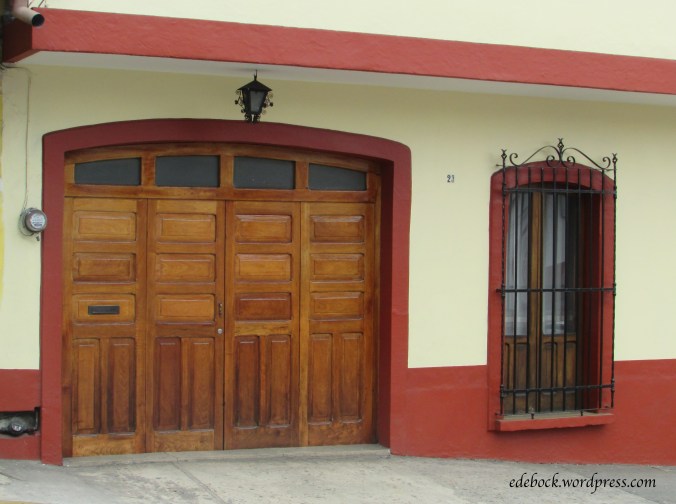
I’m quite madly in love with the architecture here in Coatepec, Mexico. I adore the bright colours, but the doors and windows are most amazing. In the downtown core, many of the businesses have huge, ornately carved wooden doors.

Some have a door within a door. Only one panel actually opens to allow access.

img_3716

img_3721

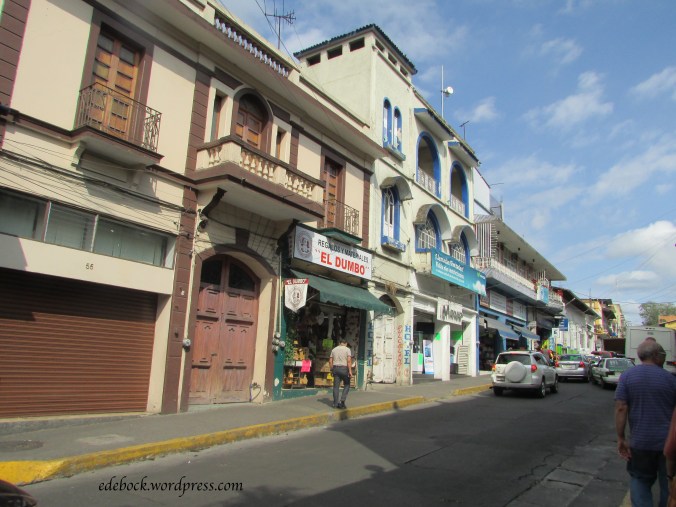
These are some of the windows above that amazing door! The balcony railing is a great example of the beautiful wrought iron work found all over Coatepec.

img_3720

Most windows in both homes and businesses have wrought iron bars for security purposes, but rather than being plain and ugly, they are usually delightfully decorative.

img_3663

Climbing Cerro de las Culebras

Richard M and Colleen use a laundry service here in Coatepec. For approximately $1.40 CAD per 2 kilograms of laundry, you drop it off one morning and pick it up the next afternoon washed, dried and neatly folded! When Colleen and I were on our way to pick up the laundry yesterday she pointed out a green hill in the distance. On top was a bright yellow circular tower of some sort with a cross its side. I immediately wondered if there was a trail leading up to it.

A quick internet search was all it took to discover that Cerro de las Culebras (Snake Hill) and the lookout tower on its top are easily accessible from the centre of town. This morning was warm and sunny, so after a hearty breakfast the four of us set out to find the trailhead and climb to the top. Forty-five minutes later we were at the bottom of a series of steep cobbled steps leading up the hillside.

img_3677

img_3678

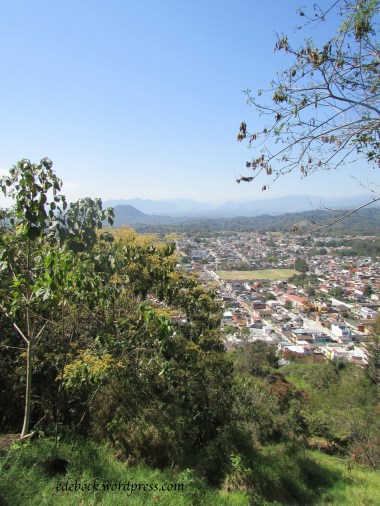
The lush greenery on either side made it a beautiful climb and soon we began to catch glimpses of the town spread out below.

img_3679img_3681

Before we knew it, we were at the top where the lookout tower with a white statue of Christ at its top stands in the middle of a grassy clearing. The views of Coatepec and the surrounding mountains were spectacular. In the distance, we could even see the snow covered peak of Pico de Orizaba, Mexico’s highest mountain and a dormant volcano that last erupted between 1545 and 1566. It is the third highest mountain in North America and the world’s second highest dormant volcano, behind only Kilimanjaro in Africa.

img_3692

img_3690-version-2

img_3686

img_3687-version-2

If you can’t spot Pico De Orizaba in this photo, I’ve circled it in the next one which was taken from the top of the observation tower.

img_3697

img_3701

Hello Xalapa!

We first woke up at 4 o’clock this morning because the house was shaking and the windows rattling. The 4.4 magnitude earthquake with its epicentre beneath the ocean less than 150 km east of here, was not something I had expected to experience during our stay in Mexico. After living for a year in Japan where the earth moves almost every other week, we’re pretty blasé about such things though and soon went back to sleep.

Later in the morning, we took a 20 minute bus ride into Xalapa (pronounced Halapa), a city of approximately 400 000 people that is the capital city of the Mexican state of Veracruz. Xalapa is also known as a centre of arts and culture.

We enjoyed strolling around the central part of the city including Parque Jaurez, one of the city’s most popular attractions. The park, located next to the provincial government building, is home to an amazing dragon play structure; it’s tongue a two sided slide, its body a climbing wall and its tail a rope climbing apparatus. I could imagine my five grandchildren having a blast playing on it.

We also enjoyed the Greek inspired statues of the four muses, especially this one!

img_3641-version-2

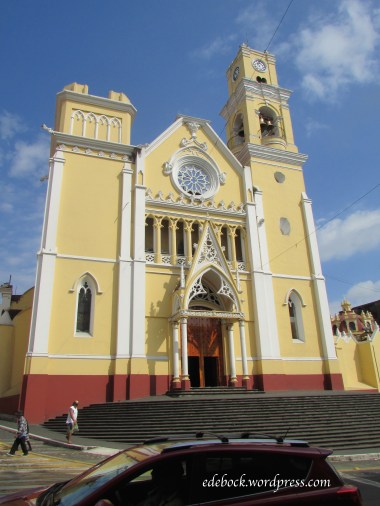
Across the street from the government building stands the impressive Xalapa cathedral, beautiful both inside and out.

img_3648

As we walked the nearby streets stopping into a few little shops, we joked that this one must be part of the empire owned by the newly elected president of a certain country to the north!

img_3654

img_3653

Clearly it was a fun filled morning! After a fabulous lunch in one of Xalapa’s finest restaurants, we returned to Coatepec but we’ll be back in Xalapa on Friday evening to hear the city’s symphony orchestra in concert.

img_3647

img_3662

To Xico for lunch

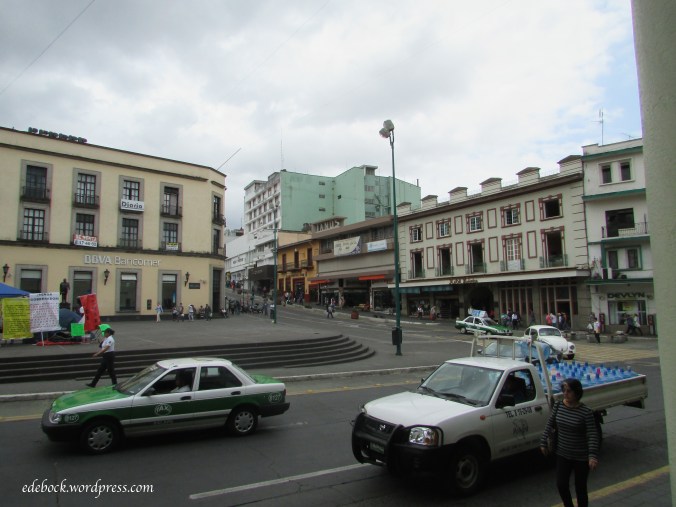
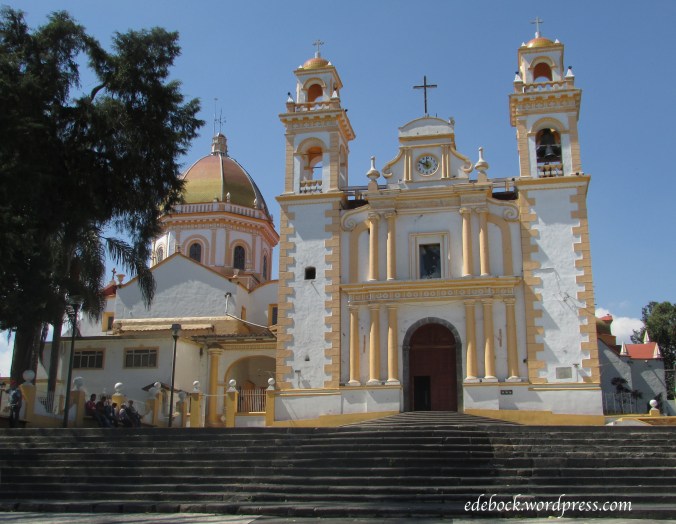
After starting my day with a zumba class, I was ready for a hearty lunch. We caught a taxi in Coatepec and headed for Xico, a smaller town about 9 km away. Here’s the sight that greeted my eye as I stepped out of the car!

img_3604

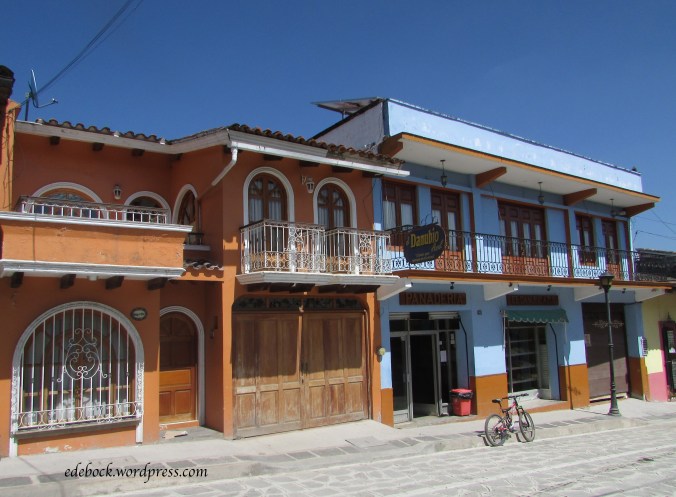
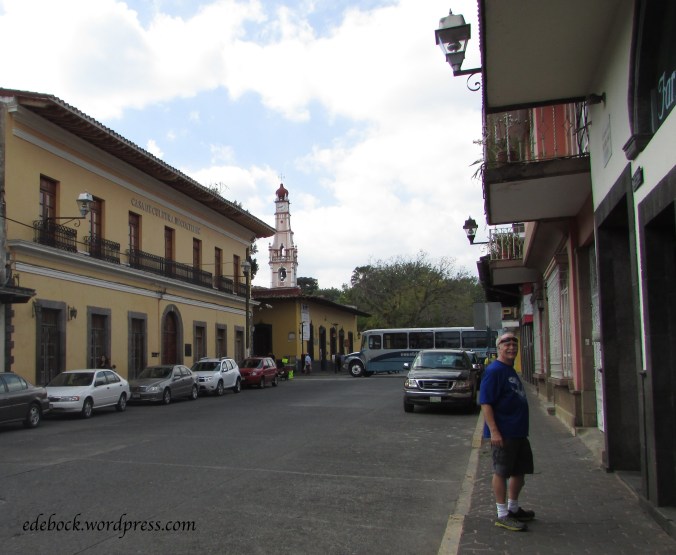
Turning around, we crossed the street and headed down the newly restored pedestrian avenue lined with colourful homes and shops. It felt a bit like a step back in time.

img_3603img_3607img_3622

Toward the end, road construction was still underway.

img_3613

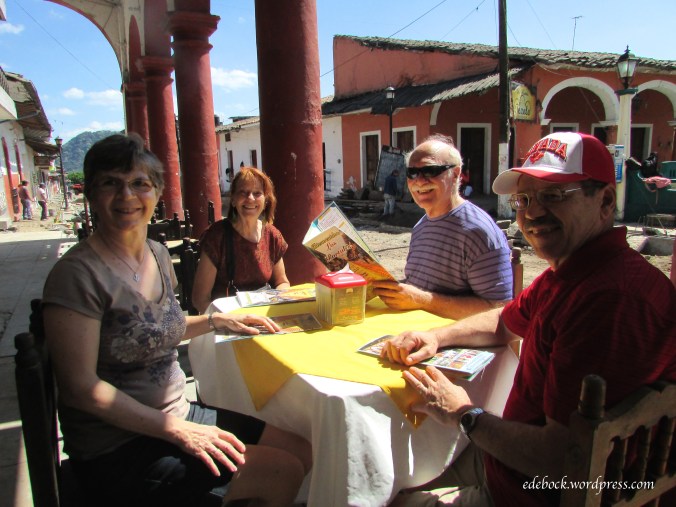
The restaurant that was our destination was located near the end of the street. Fortunately, shortly after we arrived, it was time for the construction crew to take their afternoon siesta. The machines shut down and the workers gathered in the shade across the street from where we sat in the sunshine on the outdoor patio. Again, I had to remind myself that it’s the middle of February!

img_3615

There’s very little English in use in this part of Mexico. Richard M and Colleen function fairly well in Spanish and are able to help us order from the Spanish only menus. There have been a couple of surprises, but they’ve both turned out rather well! On our first morning in Coatepec we went out for breakfast. I thought I’d ordered an omelette, but it was actually fried eggs in a very tasty sauce. Today, I was expecting a shrimp sandwich, but it turned out to be an absolutely delicious omelette! If the surprises continue to be this yummy, I hope there are a few more of them!

Welcome to Coatepec!

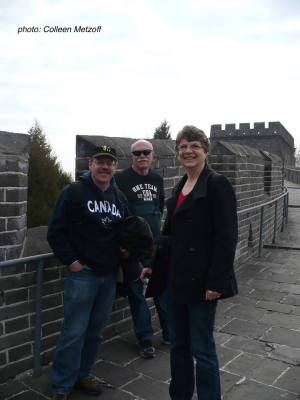
great-wallWhen we climbed the Great Wall of China with fellow Liaoning Normal University English teacher, Richard M, and his wife, Colleen, almost four years ago, we had no idea that someday we’d walk the streets of Coatepec, Mexico with them! Richard and Colleen are now enjoying  retirement in this colourful town of approximately 50 000 people located about 300 km east of Mexico City. We arrived the day before yesterday and after talking until almost one o’clock in the morning, decided that we didn’t have to do all our catching up in one night!

img_3579

After being out and about exploring Coatepec yesterday and then again today, we can easily see why Richard and Colleen love it here! Dressed in shorts and t-shirts, I have to keep reminding myself that it’s still February, but climate isn’t the only reason to like this place.

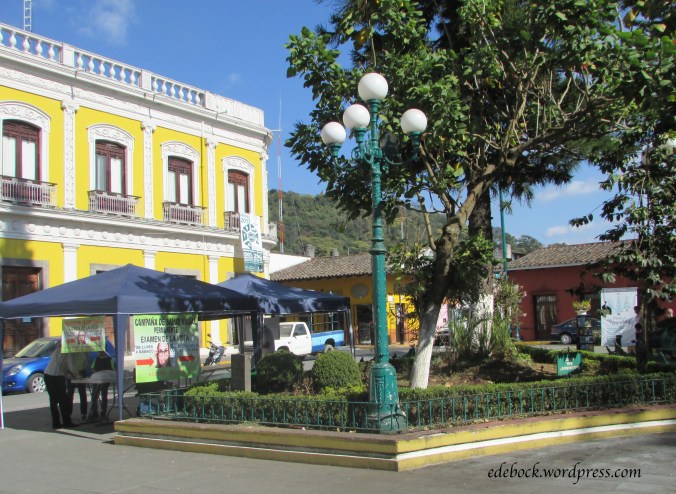
The people are warm, friendly and very welcoming; the food is fresh and delicious; and the architecture is gorgeous. A beautiful park at the centre of town is a vibrant gathering place.

img_3575

Come take a look around with me…

img_3568img_3573img_3588img_3592img_3594img_3597img_3601

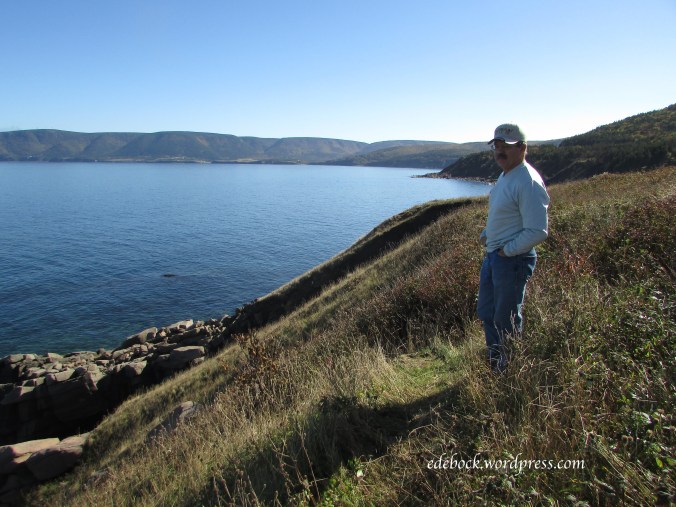
Meat Cove… at the end of the road

When I was young, my father’s desire to get away from it all often led us to the end of little out of the way roads in our home province of British Columbia. As a child, I didn’t always appreciate those trips to nowhere, but they eventually bred in me a yearning to take the road less traveled and see what’s at its end.

On our first weekend in Halifax, a gentleman told us that if we were going to drive the Cabot Trail, we should go into Cape North and then take the little side road to Meat Cove. Looking at the map, I discovered that Meat Cove is the northernmost community in Nova Scotia. A lone gravel road leads to a tiny dot on the map surrounded by nothing but blank space. Of course, we’d have to go!

As is often the case, the journey was as interesting as the destination. Along the way, we missed a turn and first ended up at another small fishing village, picturesque Cape St Lawrence.

img_3091

Back on the right road, the views were spectacular.

img_3121

img_3118

img_3117

img_3094

img_3099

Meat Cove, with a population of 65 people, is a remote fishing village. Apparently, it takes it’s unusual name from the fact that in days gone by, boats would stop there to reload with wild meat. There isn’t actually a lot there; just a dozen or so houses scattered around the area, a guest lodge, a tiny campground clinging to the cliff top high above the cove itself and a small community centre that also serves as a restaurant and an internet access site.

img_3110

img_3103

img_3106

img_3108

As I looked down on the crystal clear water, I was glad that we’d taken the time to drive to the end of the road and when I called my 93 year old father to tell him about it, I could hear the pride in his voice!

Colourful Cabot Trail

Nova Scotia’s Cabot Trail is a scenic roadway measuring 298 km in length that forms a loop around the northern part of Cape Breton Island and passes through Cape Breton Highlands National Park. Prior to this trip, we had driven the Cabot Trail twice before, both times doing the entire loop in one day.

The first time was in 1991. We were traveling with our young children and had the privilege of doing the drive with a colleague who is a native Cape Breton Islander. He was home on summer vacation and acted as our guide for the day. It was bright and sunny and we were awed by the beauty that surrounded us. Stops along the way to enjoy the views, eat a picnic lunch and take a swim made it a long, but very memorable day.

Our second trip around the trail seven years ago was somewhat disappointing. It poured rain much of the way and we crossed the northern highlands in dense fog barely able to see the road let alone anything else! We made very few stops.

This time we spent three days on the trail! We stopped at many viewpoints, or lookoffs as they’re known in Nova Scotia, to soak in the beauty and take a multitude of photos.

img_2962

img_2967

img_3031

That’s the little Hyundai Accent rental that’s been our wheels for this entire trip.

We enjoyed a traditional community breakfast with the locals at the Southwest Margaree Parish Hall and spent a couple of evening hours listening to local musicians in a Cheticamp pub.

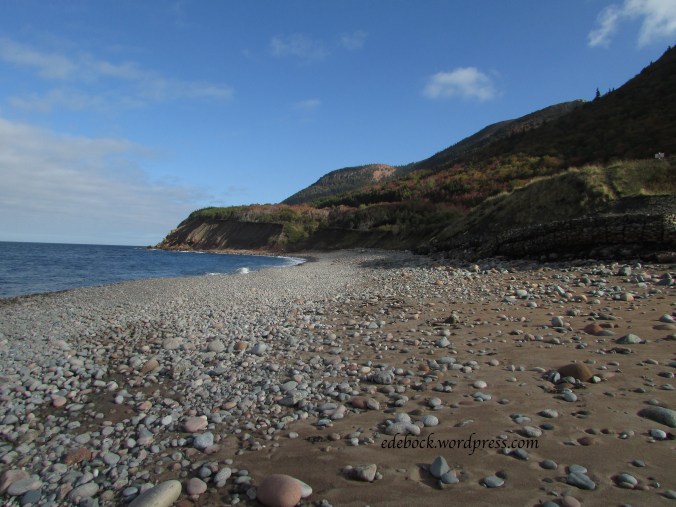
We walked rocky beaches

img_3040

img_3057

img_3061

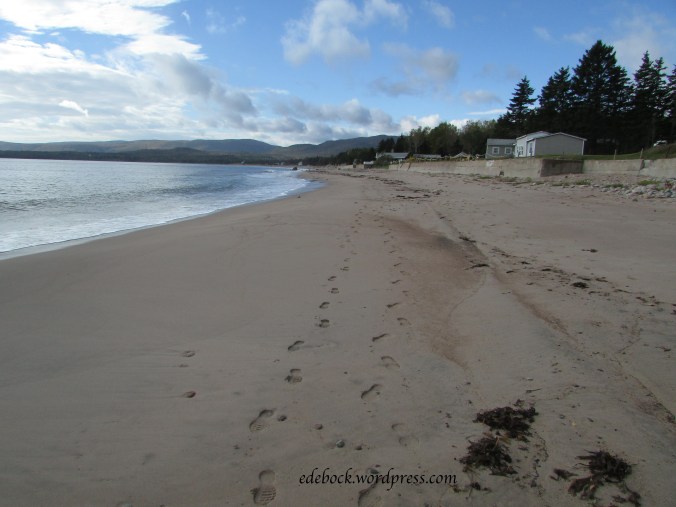
and sandy ones.

img_3166

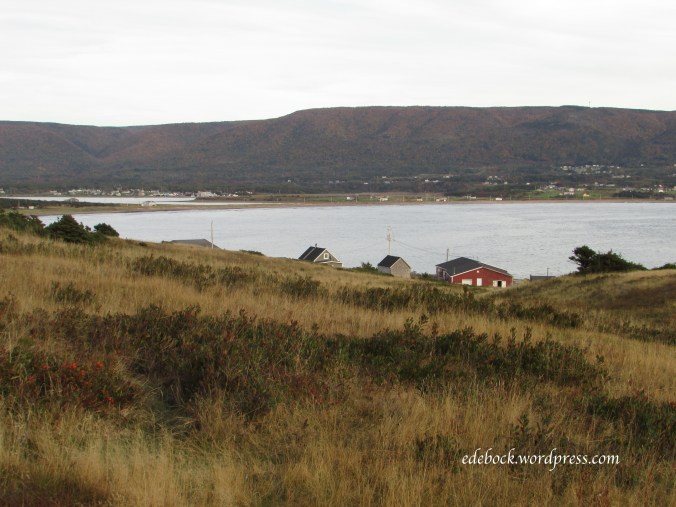
We hiked the Skyline Trail and explored out of the way places like this one near Cheticamp where we stopped to find a geocache.
img_3051

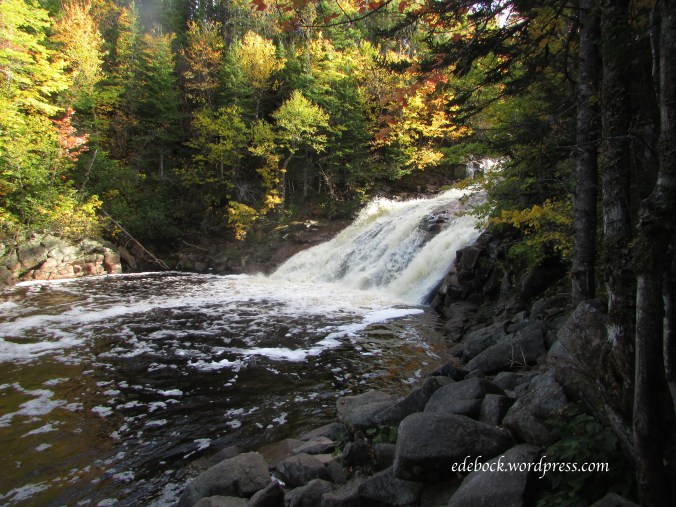
We took side roads to places like Mary Ann Falls
img_3146

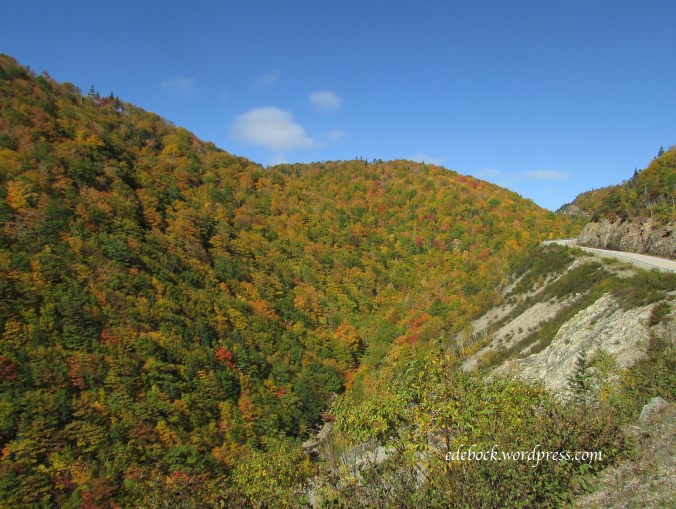
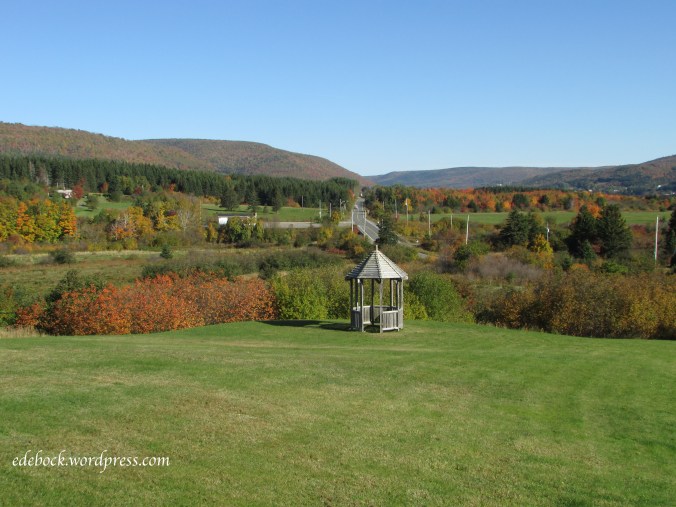
and everywhere we went, we marvelled at the amazing colours.
img_2957

img_3078

img_3087

Yes, the Cabot Trail is beautiful anytime of year, but in autumn it’s absolutely spectacular!

Searching for colour and finding history

img_2873-version-2

We knew from our previous visit with Ronnie and Myrna, the dear pen pal that I inherited from my mother-in-law, that they enjoy sightseeing drives through the lovely countryside around Mahone Bay. Like my own father, however, Ronnie has macular degeneration and is legally blind. He still has some sight, but not enough to drive. When we suggested taking them for a drive to look at the fall colours that Nova Scotia is famous for at this time of year, they jumped at the opportunity and off we went!

img_2788

With Richard behind the wheel and Myrna navigating, we headed inland toward New Ross. Sure enough, though many of the trees were still green, others were aflame. For those of you who are accustomed to the wide range of reds, oranges and golds of autumn, our delight might seem odd, but where we live in Alberta, we don’t experience the same array of colours in the fall. Most of our trees just turn shades of yellow.

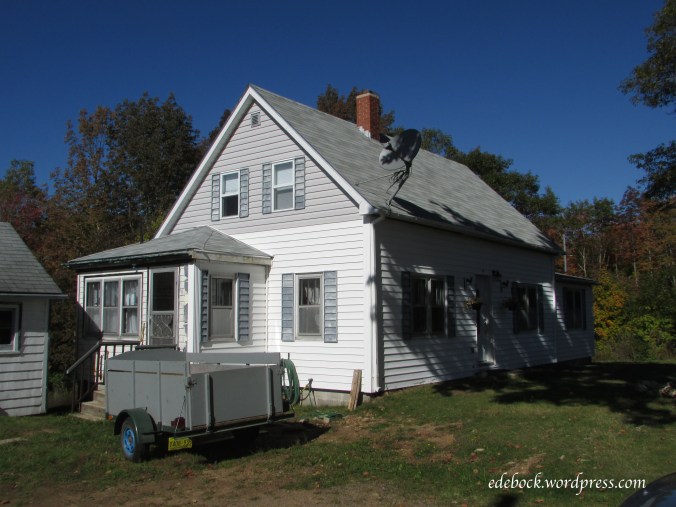
We saw much more than trees, however. Soon Myrna was pointing out the house where she grew up. It was here that she wrote the first letters to my mom-in-law over 75 years ago! Obviously well cared for, it has new shutters, windows and front door since the last time she saw it.

img_2791

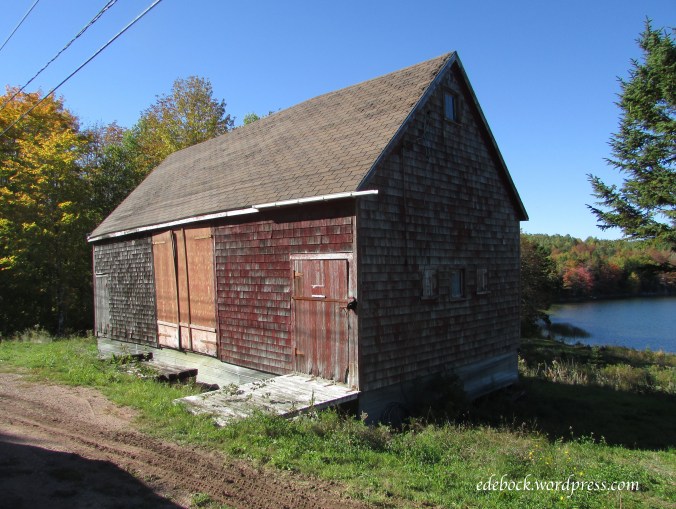
Along the same road, we saw her uncle’s old horse barn

img_2802

and the one room schoolhouse that she attended.

img_2805

At 16 years of age, with a grade 11 education, Myrna became a teacher in a similar school! She taught for five years before she and Ronnie married.

Nova Scotia has been changing before our very eyes with more colour every day. Here are just a few more sights from that day’s drive.

img_2792

Mahone Bay… a little piece of paradise

Though I love to travel, life is really about people, not places. If the weather had been horrible and the view boring, our time with the Hs would still have been wonderful! The relationship between our two families goes back 77 years and we felt so welcome. Add to that the indescribable beauty of Mahone Bay, Nova Scotia and the most amazing fall weather imaginable and I think we’ve been in paradise for the past few days!

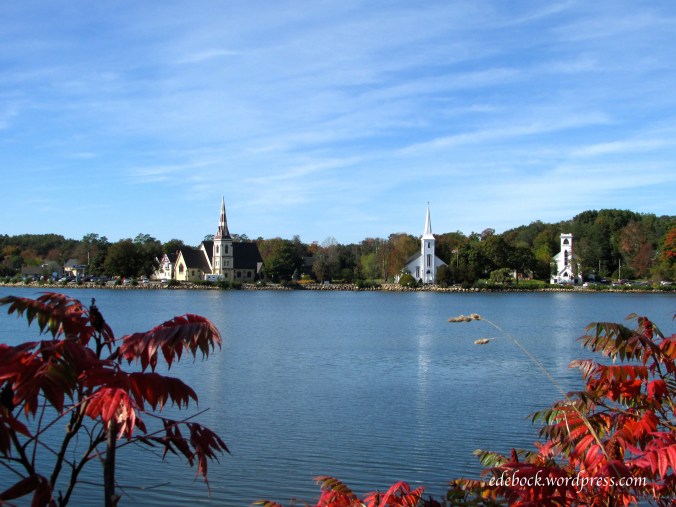
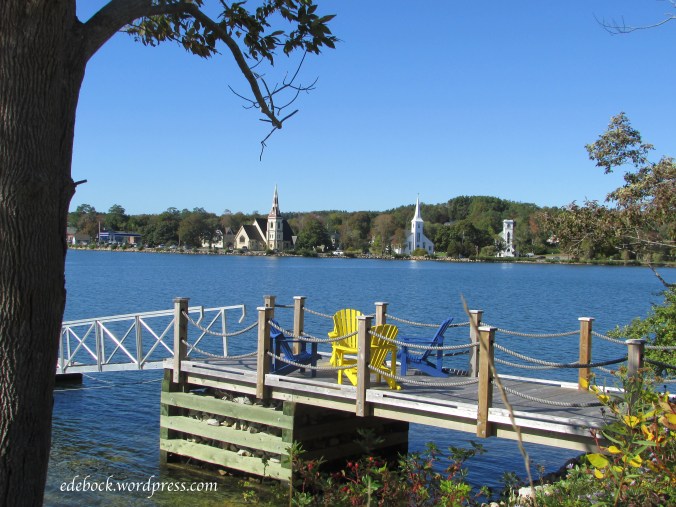
The Hs live at Indian Point, a tiny community on the shore of Mahone Bay about 7 km from the town itself which is best known for the three churches located along the edge of the bay.

img_2820-version-2

img_2728

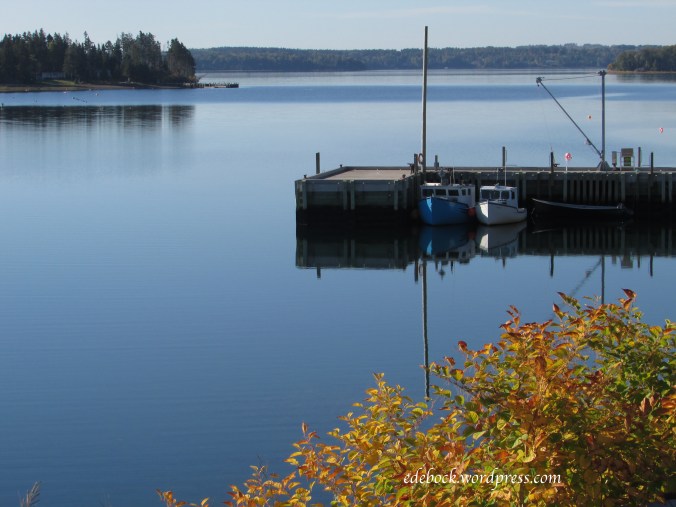
Every morning, we woke up to views like this one.

img_2744

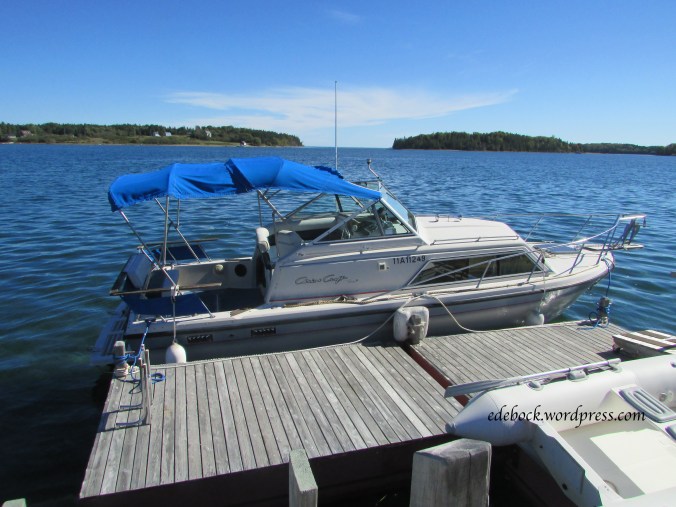
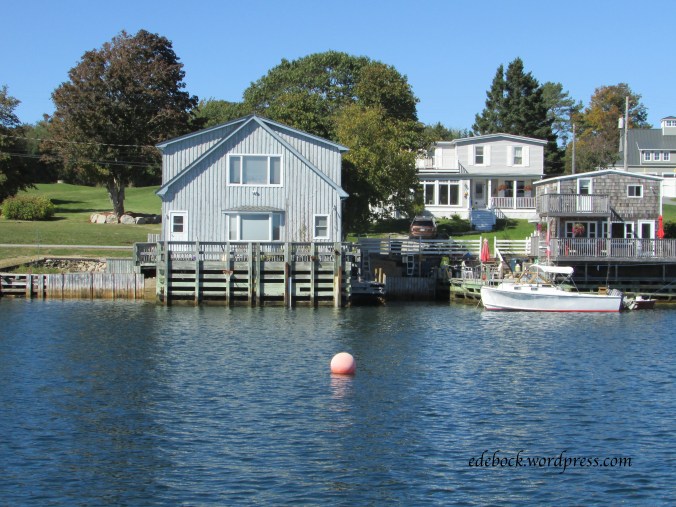
Words aren’t adequate to describe the beauty that surrounded us, so I’m simply going to share a few photos. Several of them were taken from the water while we were out on Lindy H’s boat.

img_2775

This is Ronnie and Myrna H’s house where we spent lots of time visiting.

img_2772

img_2767

img_2730

img_2757

img_2881

Peggy’s Cove

Peggy’s Cove, a quaint fishing village on the eastern shore of St Margaret’s Bay, about 45 km from Halifax, Nova Scotia, is probably one of the best known and most visited locations in Canada. Though we’d been there twice before, we couldn’t resist stopping at this picturesque spot again as we made our way from Halifax to our next destination at Mahone Bay.

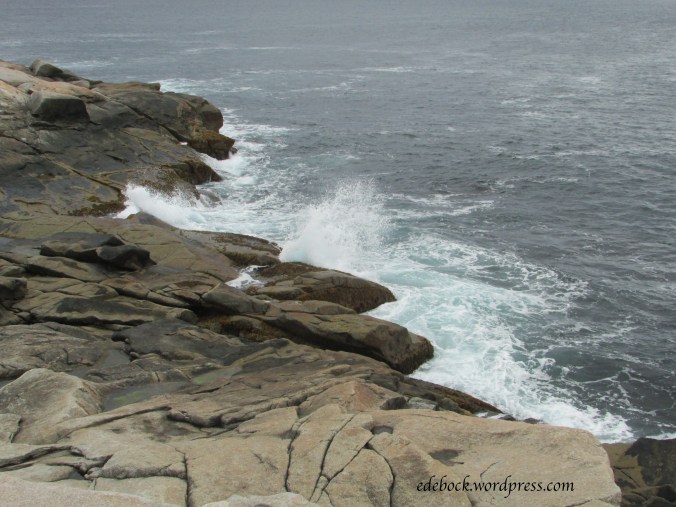
The iconic lighthouse dominates the rocky point overlooking the crashing waves below.

img_2686

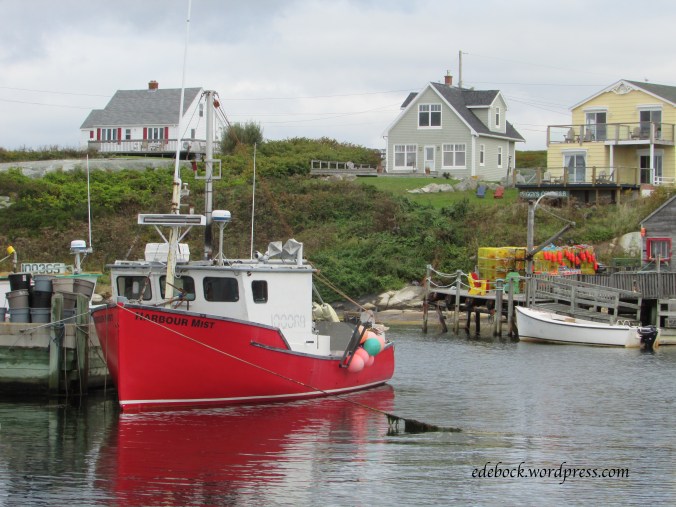
Though it’s the lighthouse that attracts the most tourist attention, I love walking around the village photographing the colourful boats and the houses that cling to the rocks around the cove.

img_2662

img_2665

img_2704

img_2701-version-2

img_2712-version-2

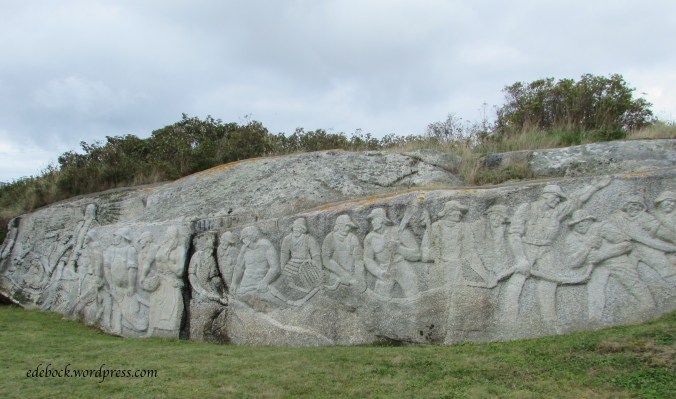
Also of interest is the Fisherman’s Monument carved into a 30 metre granite outcropping by artist, William Edward deGarthe, who emigrated to Canada from Finland in 1926 and settled in Peggy’s Cove in 1955.  The sculpture depicts 32 fishermen, their wives and children, a guardian angel with wings outspread, and the legendary Peggy of Peggy’s Cove.

img_2695