Knouff Lake, British Columbia

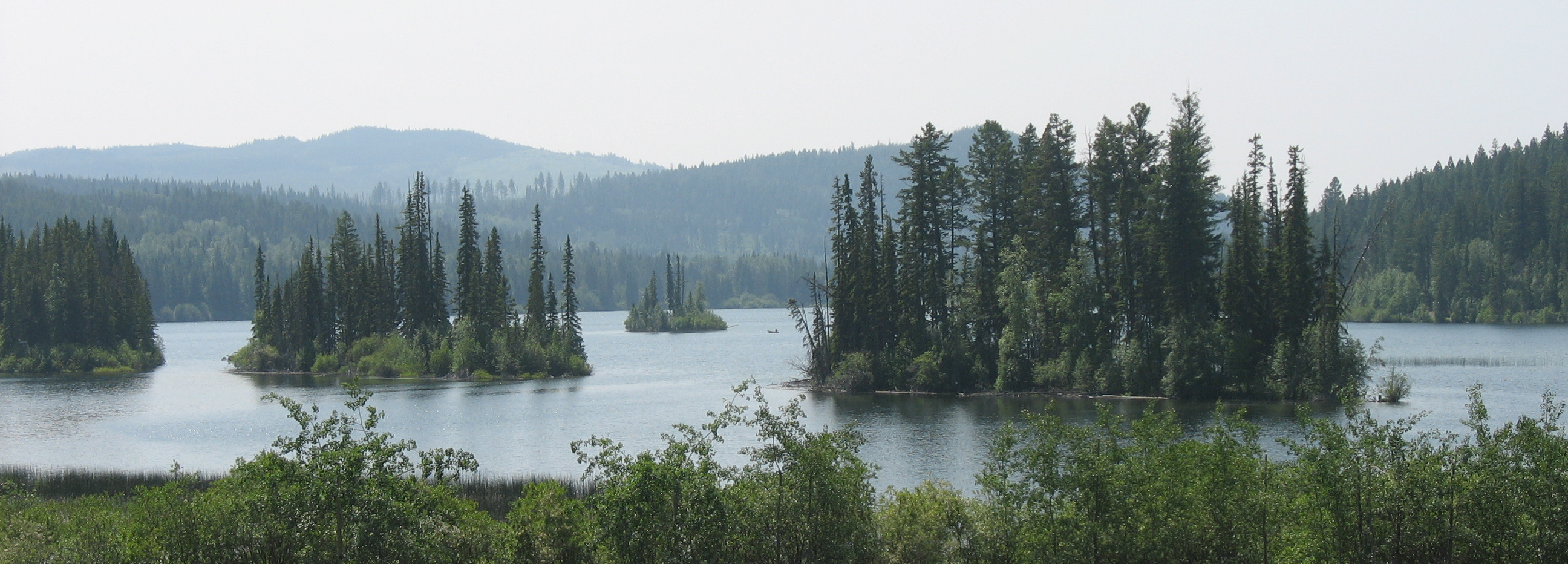
When Richard’s sisters and brothers gathered for our niece’s wedding at Sun Peaks, several of us camped together at beautiful Knouff Lake Resort. Towing our trailers up the long steep climb to the crystal clear lake nestled between the mountains about 3800 feet above sea level was well worth the effort. Established in 1904, this 4-season resort is advertised as one of the oldest fishing camps in B.C. but it is much more. Surrounded by the beauty of nature, it provides a tranquil getaway from the hustle of day to day life. Owners, Don and Gloria Lamberton, went out of their way to make our stay a comfortable and memorable one. They even provided us with a key to the gate so that family could come and go after the usual 10:00 p.m. closing time.
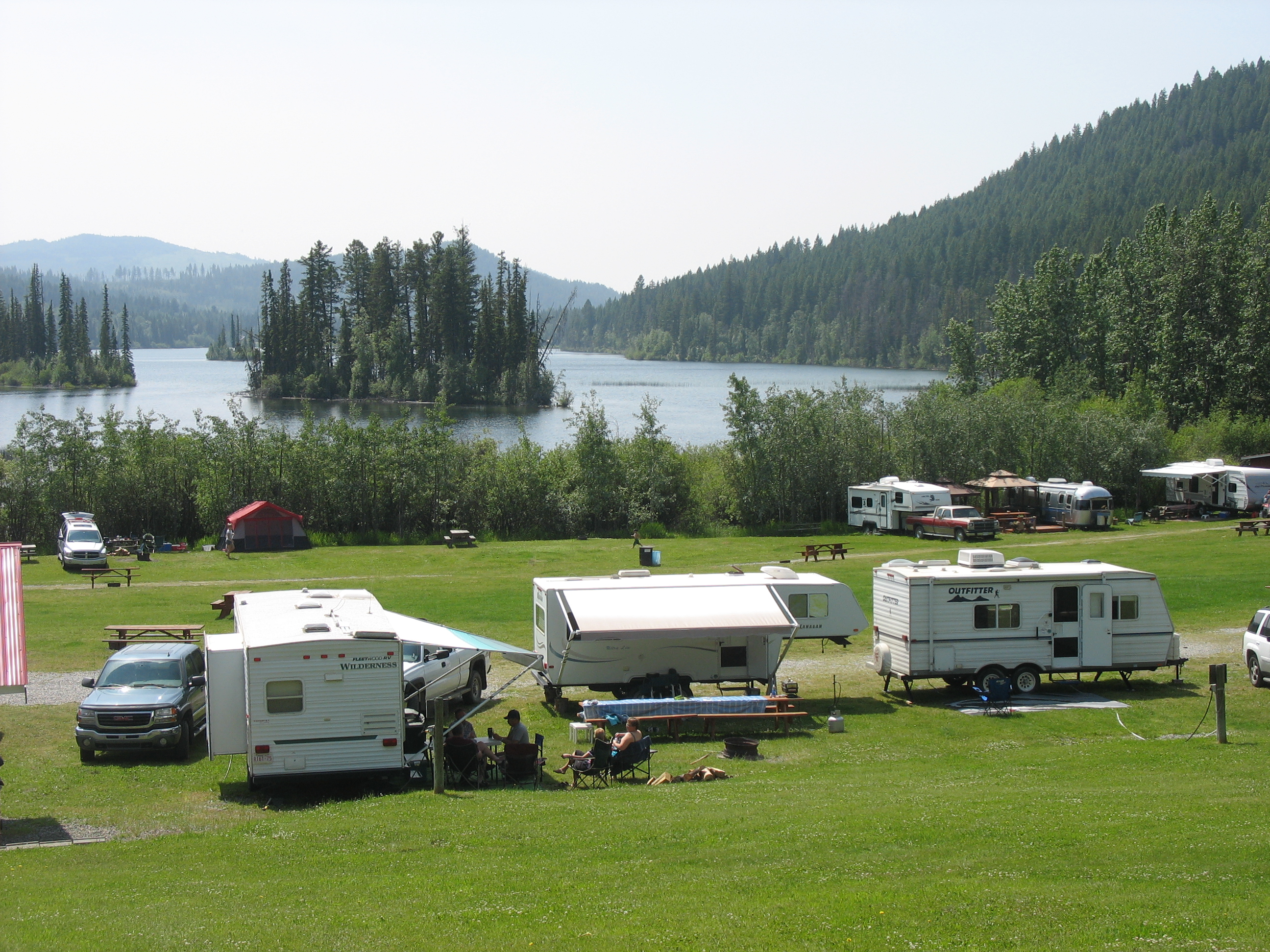
That’s our trailer on the right.

Our sister-in-law, Brenda, is an avid geocacher like us. When I mentioned that I’d seen on the geocaching.com website that there was a cache hidden on one of Knouff Lake’s tiny islands, she was determined that we should find it. Richard’s sister, Sue, was intrigued when she heard us talking about searching for these hidden treasures so the morning after the wedding, she joined us and the three of us set off on an adventure. The husbands, thinking us a bit crazy, stayed in camp.

Though I much prefer the quietness of a canoe, the Lambertons were reluctant to rent one to three prairie chicks so we set out in a big, flat-bottomed rowboat instead. Since I was born a coastal girl and learned to row at the age of 6 or 7, I took the oars and off we went. Sue was a little nervous but I assured her that we’d have to try very hard to capsize that thing on such calm waters. By the time we returned to camp, she’d taken a turn at the oars and what fun we’d had!

As we pulled ashore on Beaver Island, we three women in our 50s and 60s felt like kids on a Tom Sawyeresque adventure. With GPS units in hand, we clambered through the undergrowth and soon found the cache exactly where it was supposed to be.

My sis-in-laws, Sue & Brenda

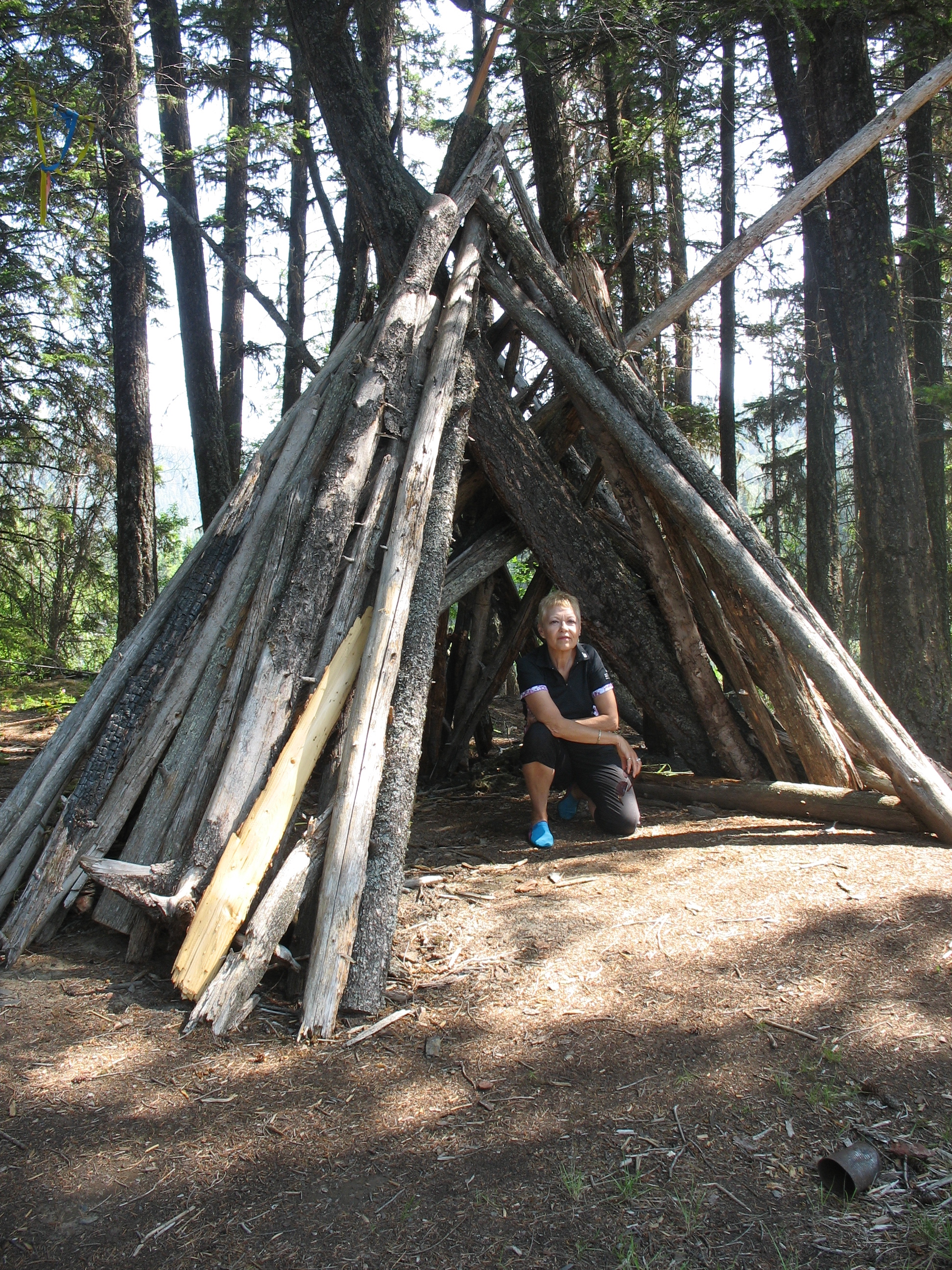
We’d also been told about a memorial on one of the other islands, placed there in memory of an avid fisherman and outdoorsman who hosted an annual fishing derby at the lake each summer until his untimely death in 2009. Before returning to camp we rowed over to check that out and also discovered the skeleton of a teepee standing nearby.
Until Stacey began planning her wedding we were completely unaware that Knouff Lake (also known as Sullivan Lake) even existed but now that we’ve found this hidden gem, we’ll likely be back again. It’s only a short distance off our usual route between home and Vancouver, a trek that we make two or three times a year to visit grandchildren and elderly parents. We don’t often have the trailer with us though so perhaps next time we’ll rent one of the rustic log cabins overlooking the lake.
Wild roses and wetlands

My man had to drive to Wainwright this morning (about an hour northeast of here) to pick up some new tires that he’d ordered for the golf cart. “Why don’t you come with me,” he asked. “We can look for a few geocaches along the way and then have lunch in Wainwright.”

Does that sound like a date to you? It did to me. It also sounded a lot more appealing than weeding the flower beds which was what I probably should have been doing. We’re only home for a few days between trips so there are lots of things that need to be done around here but since retirement means doing what you want to do when you want to do it, I went to Wainwright.
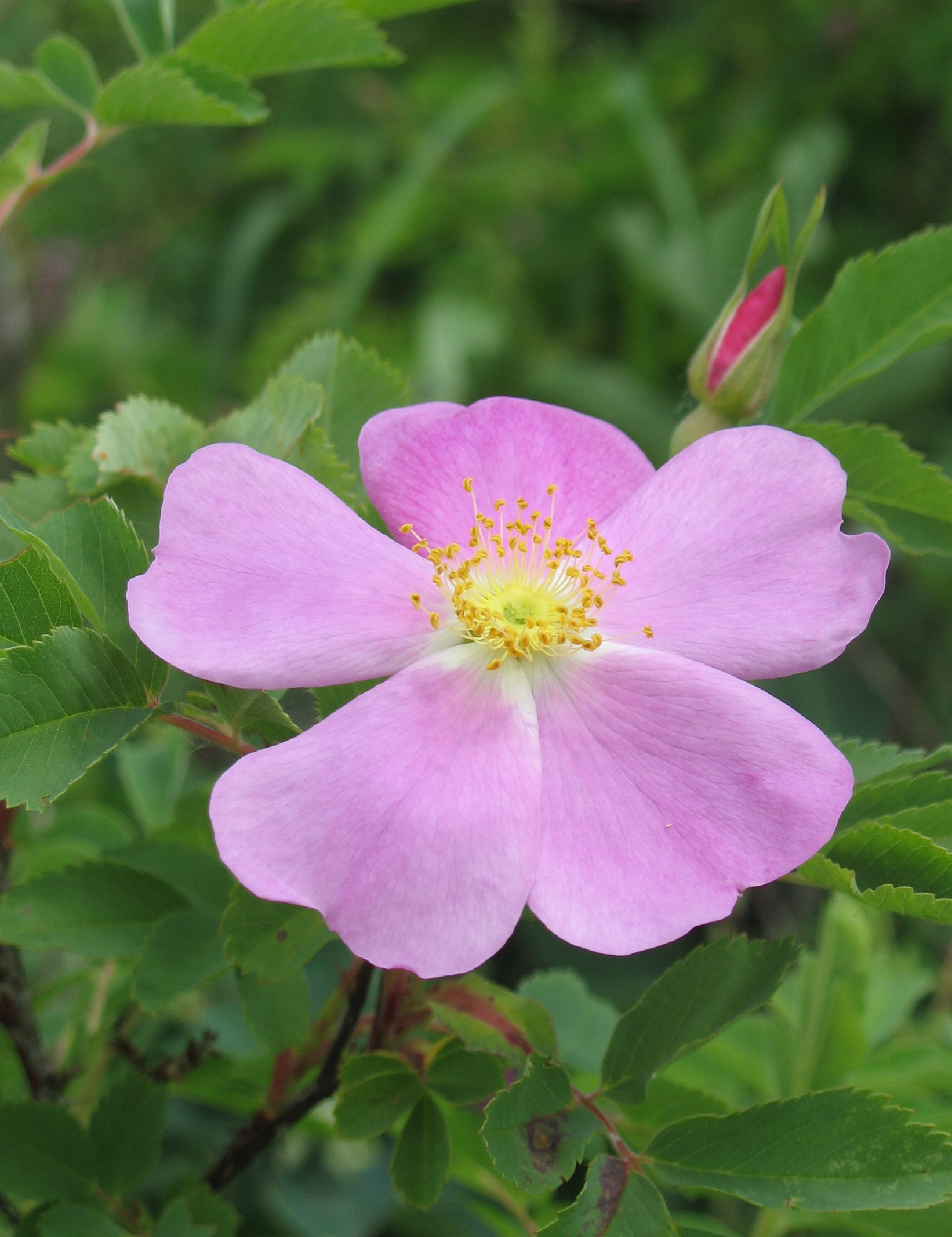
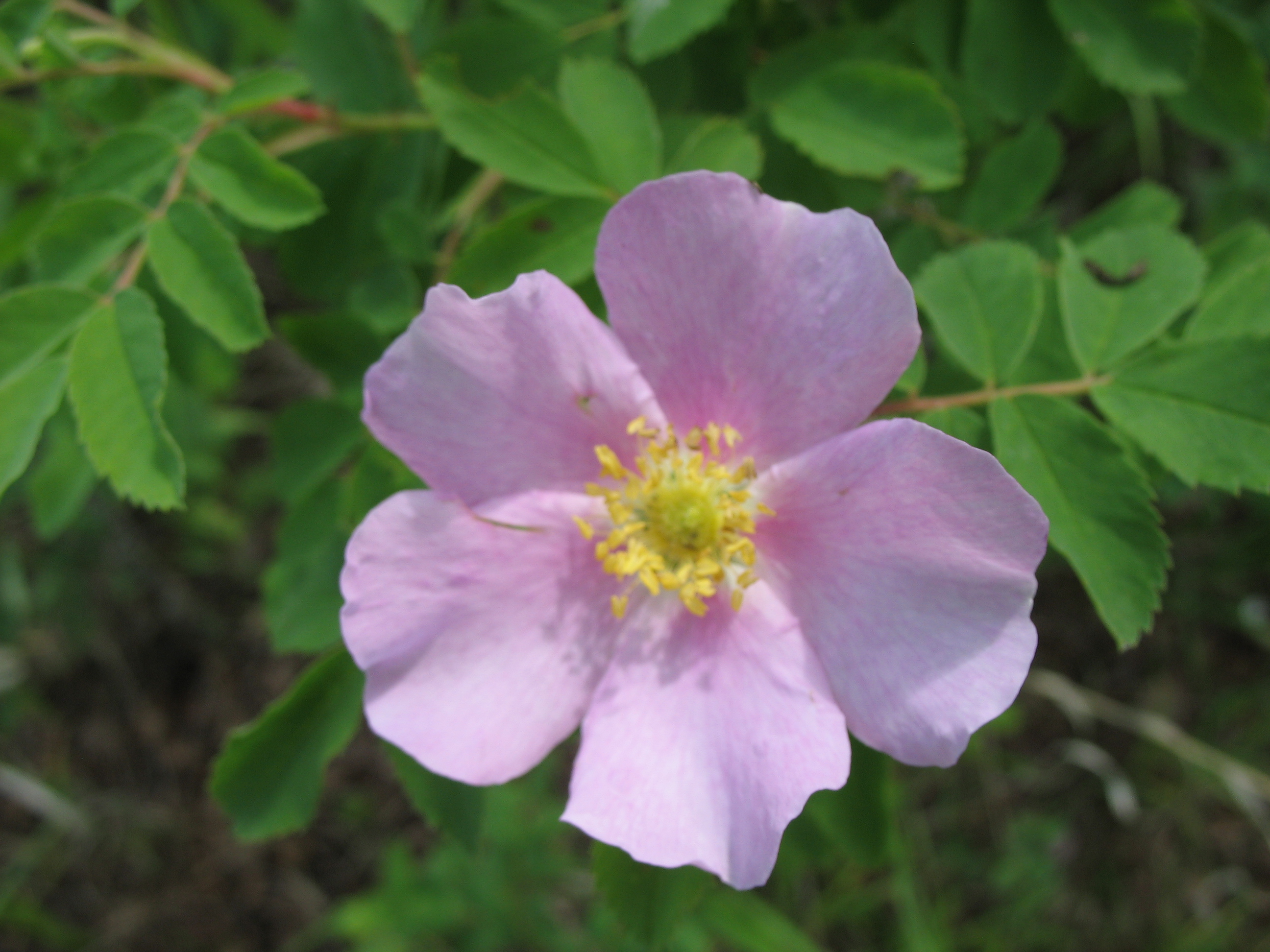
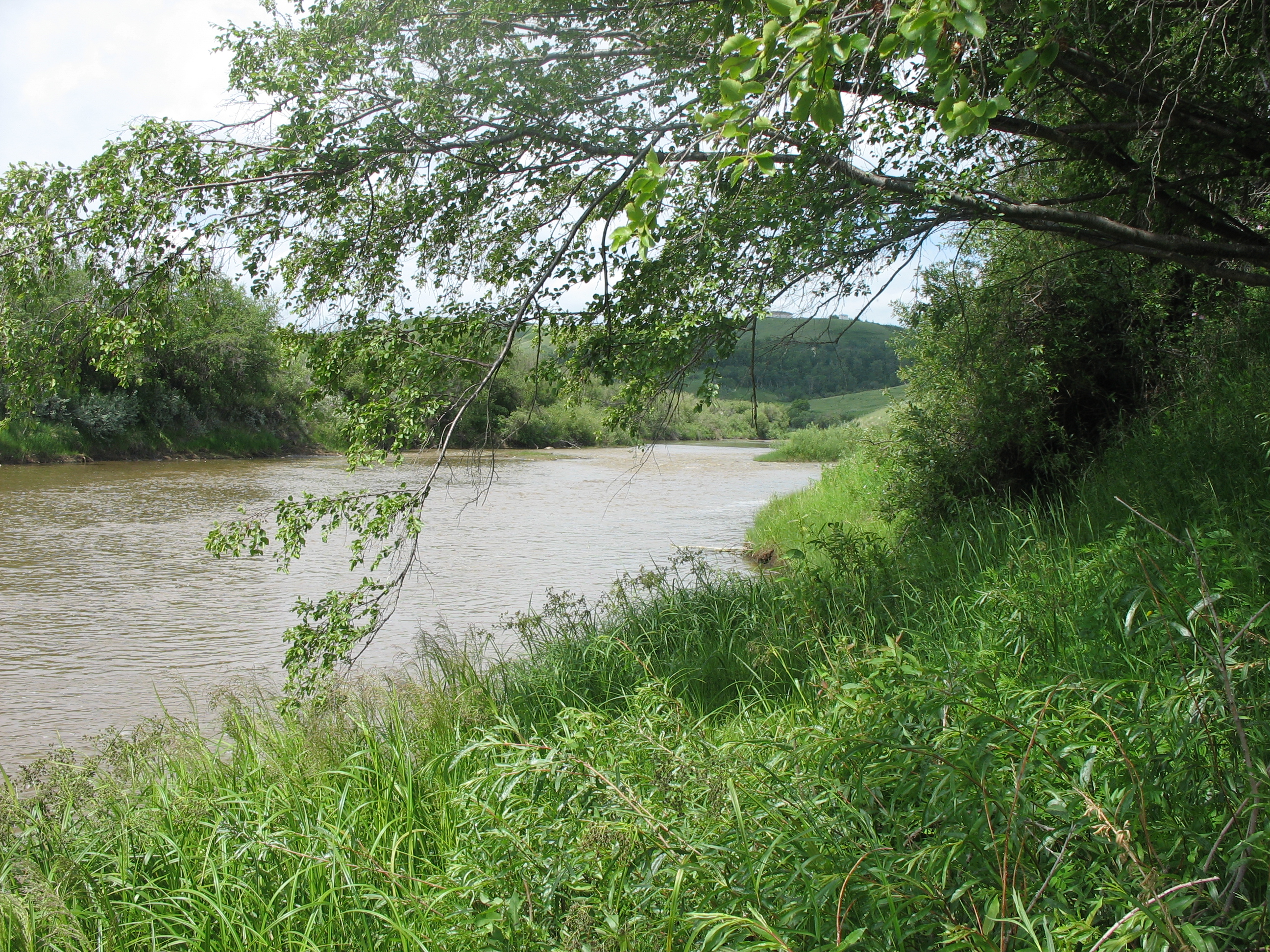
We never did find the cache that was supposed to be hidden in the lilac bushes alongside a rural cemetery but the next one, in a quiet spot overlooking the Battle River, made up for any disappointment we might have felt. The wild rose, Alberta’s provincial flower, is in full bloom at this time of year and as we made the short hike down to the river we were surrounded by them. 

Battle River

I wish I could share their beautiful aroma with you but I don’t have the words to do it justice.


I waded into the bushes and risked being stung to get the next picture and others like it but the ‘sting bugs’, as our grandchildren call them, were much more interested in the flowers than they were in me and I came away unscathed.

The next cache had us treading carefully to keep from getting our feet wet! It was hidden beneath one of the bushes out on the point beyond this lookout tower.


We really should have had our rubber boots on but they’re in the trailer which is in Camrose for a minor repair to a leaky valve on the hot water tank. When it’s ready, Richard will be making another one hour drive in the opposite direction to go get it. Perhaps this time I’ll stay home and get something done around here… or maybe not!

Alex’s yellow lizard

After a busy day planting flower beds and cleaning out our holiday trailer, I suggested that Richard and I spend the evening geocaching. One of the aspects of geocaching that I like best is the trackables; geocaching game pieces that are moved from cache to cache by geocachers like ourselves. These can be travel bugs, tags that are usually attached to other items known as hitchhikers, or geocoins, special coins or medallions created by individuals or groups. Both function in exactly the same way. Each trackable has a unique code that is used to log its movements on geocaching.com as it travels the world and most trackables have a goal or destination set by their owners. Some of them have travelled hundreds of thousands of miles! We have already found several trackables and moved them along.

On our way home from Winnipeg the week before last, we picked up a travel bug from a roadside cache in Manitoba. Alex’s Yellow Lizard began its journey in Minnesota last June. Its destination is Ireland and the owner asked that pictures be taken and posted along the way so that his seven-year-old son could watch his little yellow lizard as it travels around the world.

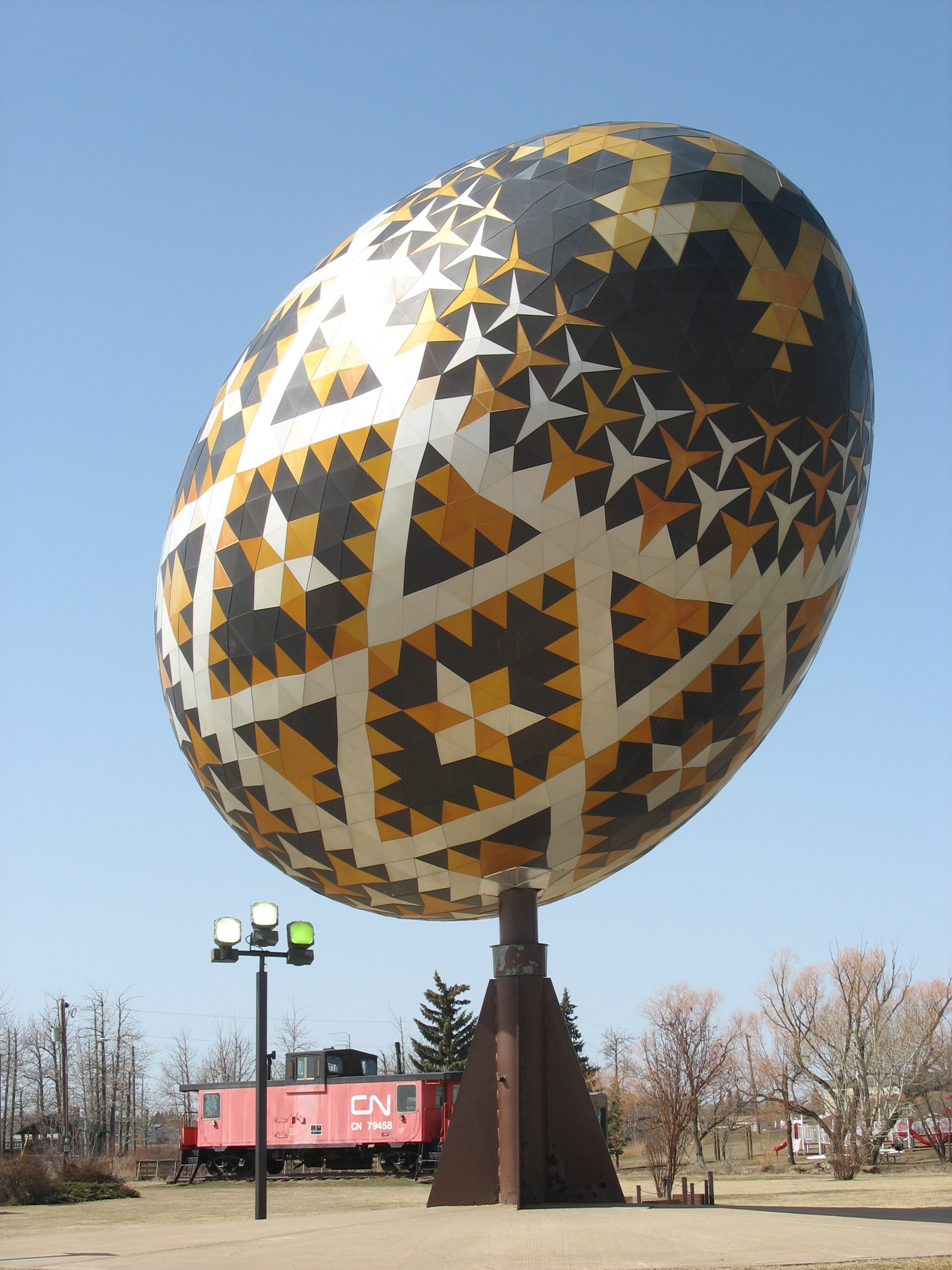
We wanted to find a special and interesting spot to leave Alex’s lizard. My first thought was the  world’s biggest pysanka or Easter egg at Vegreville, Alberta. Surely that would appeal to a seven-year-old boy. Alas, when we visited family in Vegreville last weekend we only had time for a quick search and didn’t find the cache located near the big egg. We’ll have to try again another time.

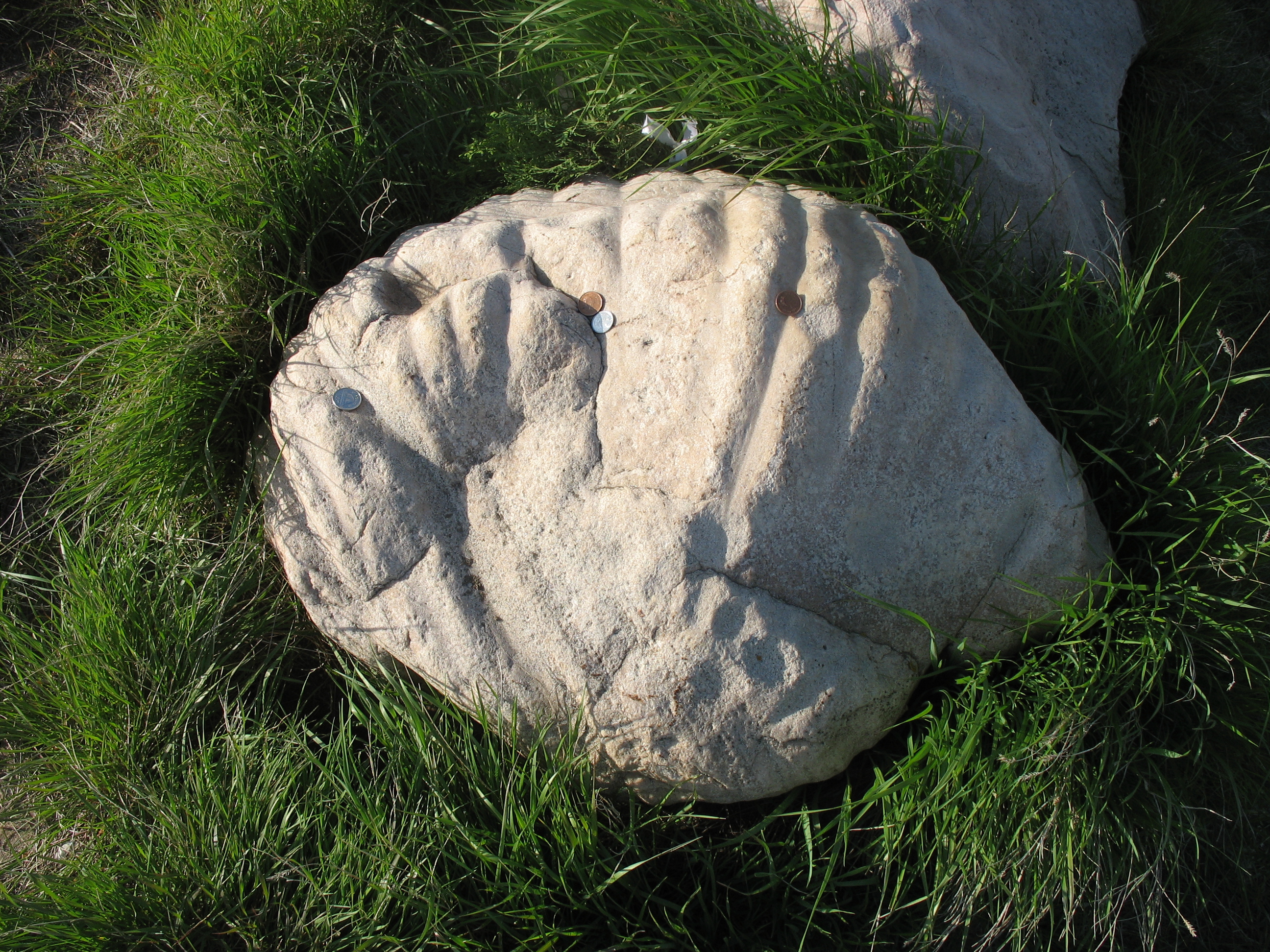
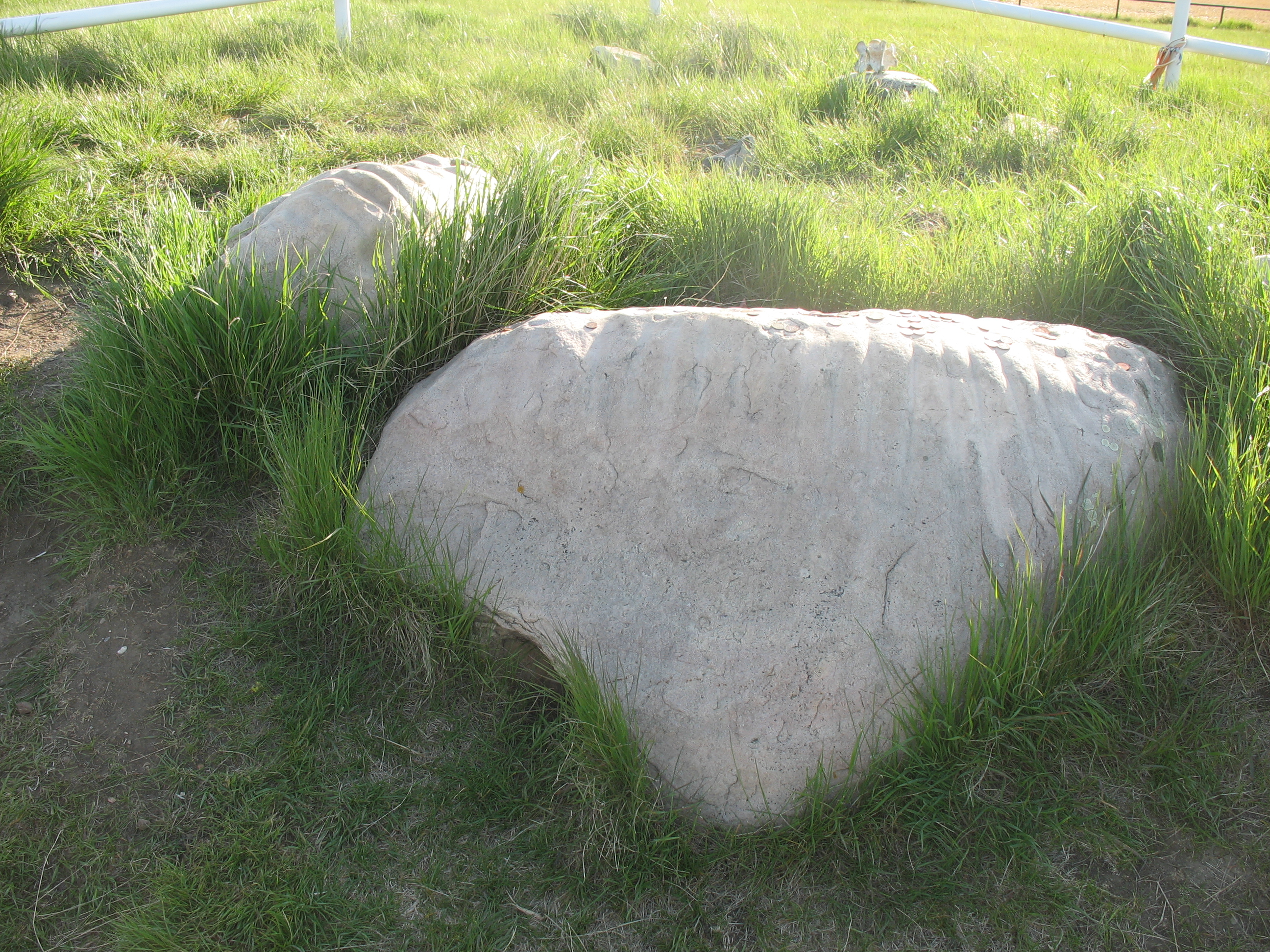
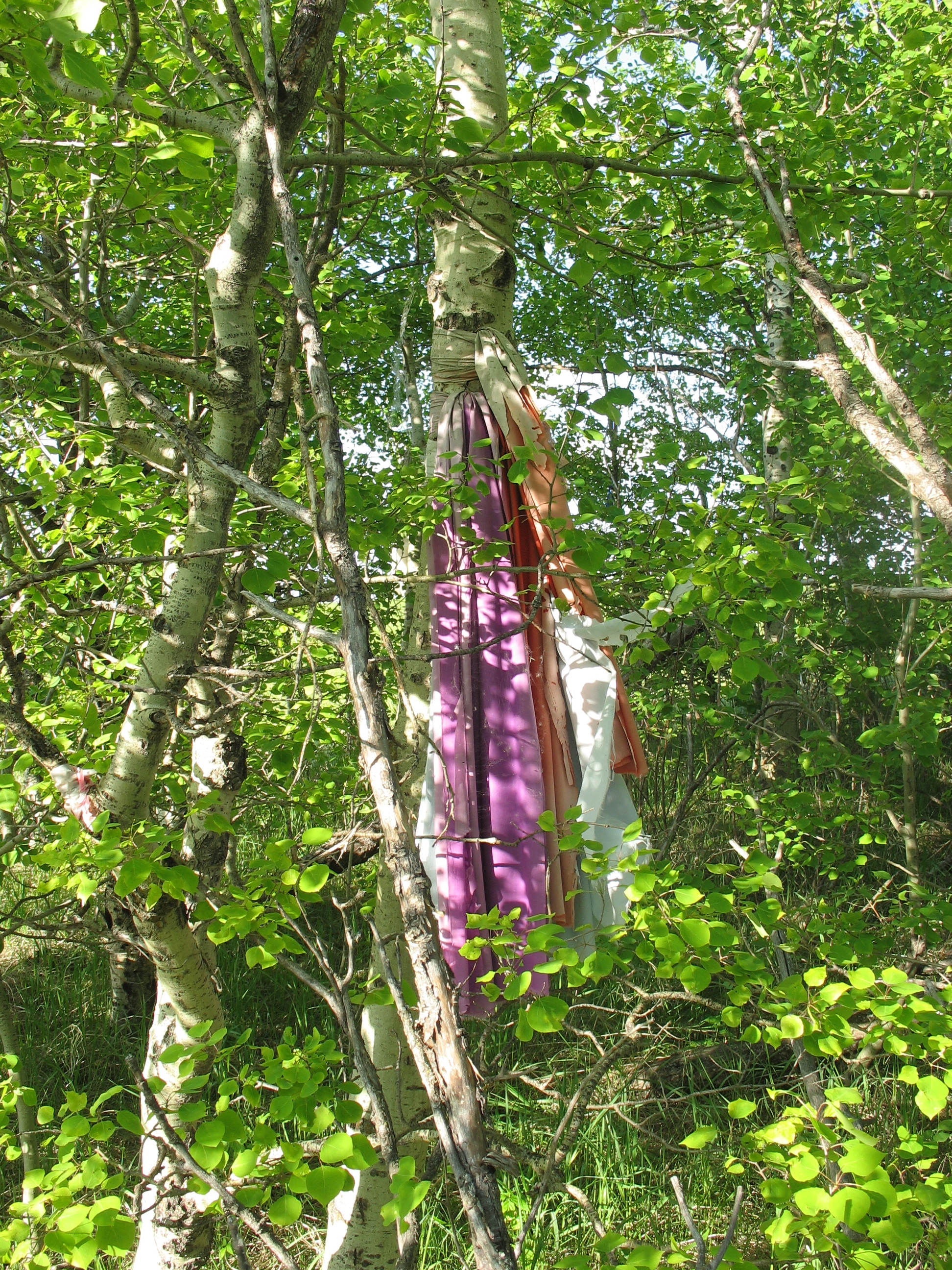
I’m very happy with the spot we finally chose, however; a cache hidden at a native ceremonial site on a high point of land about 24 km north of here. It’s one of nine places in Alberta where ribstone rocks have been found and the only one where the rocks remain in their original location. These rocks, carved by the Indians over 1000 years ago, are thought to depict the ribs of buffalo, the animal that provided for so many of their needs. Local natives still leave offerings of tobacco (cigarettes) and coins there. They have also hung many colourful prayer scarves in the trees at the site. Though I’d been there with a class of students quite a few years ago, Richard had never even heard of the place before. Isn’t it amazing how we can travel the world in search of interesting sights and yet sometimes miss fascinating ones on our own doorstep?

Ribstones

Prayer scarves

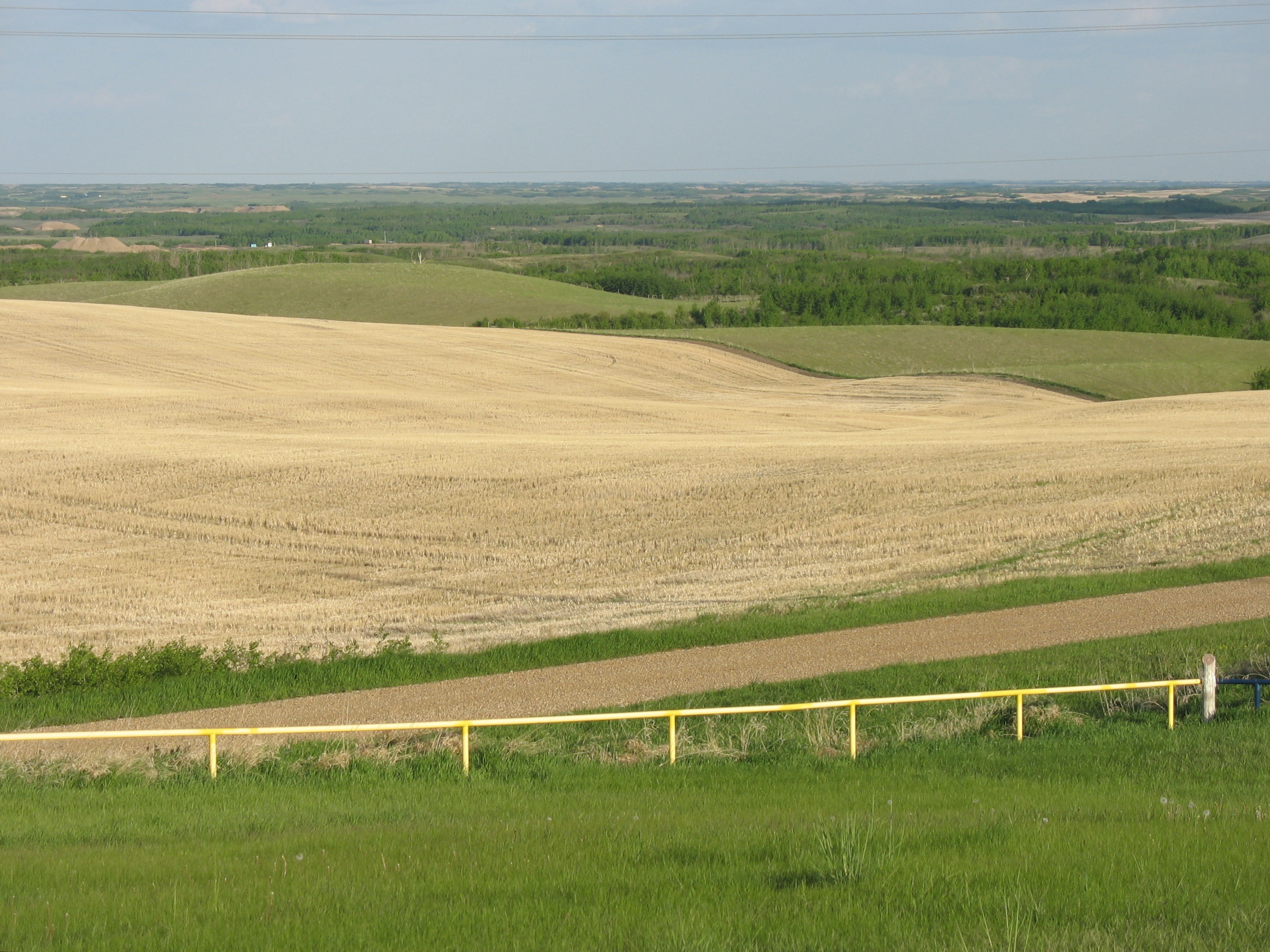
The site was a peaceful spot with a gorgeous view of the surrounding farmland, a perfect place to enjoy a few quiet moments on a sunny spring evening.

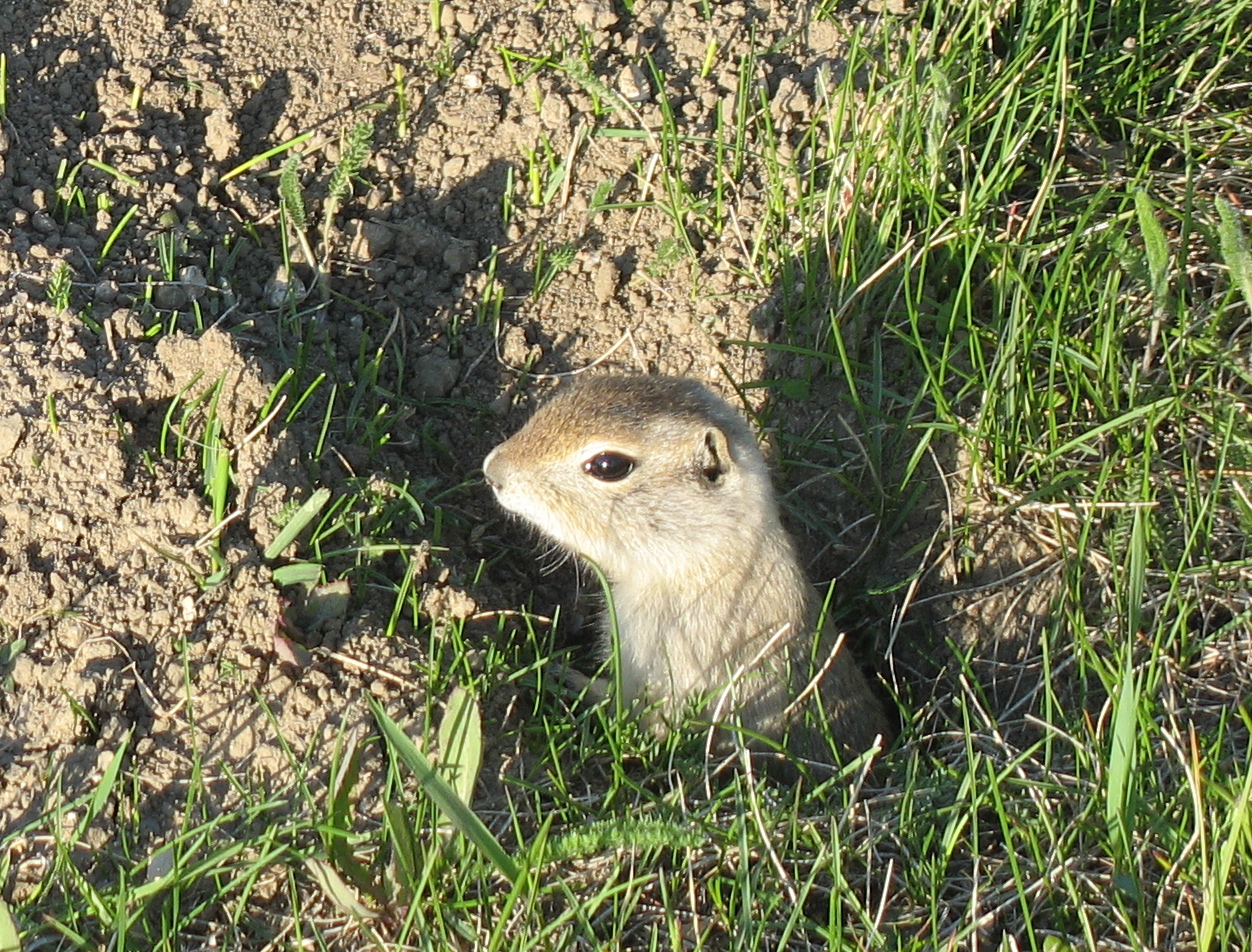
While we stood admiring the scene, this saucy little fellow popped out of his hole almost at our feet and proceeded to chirp at us!

Like Alex’s little lizard, we’ll soon be on the move again, hence the time spent cleaning the trailer today! I’m sure we’ll find plenty of geocaches along the way and hopefully there will be trackables in some of them.

Happy Rocks and Tomahawks

We left Winnipeg yesterday morning and after spending two days on the road, we arrived home a few hours ago. Once again, we stopped to search for geocaches and again, I was surprised at all the interesting and unusual things we saw along the way.

When we passed through the town of Gladstone, Manitoba on our way east I spotted the Happy Rock and immediately thought that there must be a geocache hidden nearby. Sure enough, I checked online and discovered that I was right so we stopped to find it yesterday morning.

Glad stone… happy rock! What a cute idea. Imagine how surprised I was to walk around to the back side of the giant rock and discover two doors. In addition to being a tourist attraction, it houses public bathrooms!

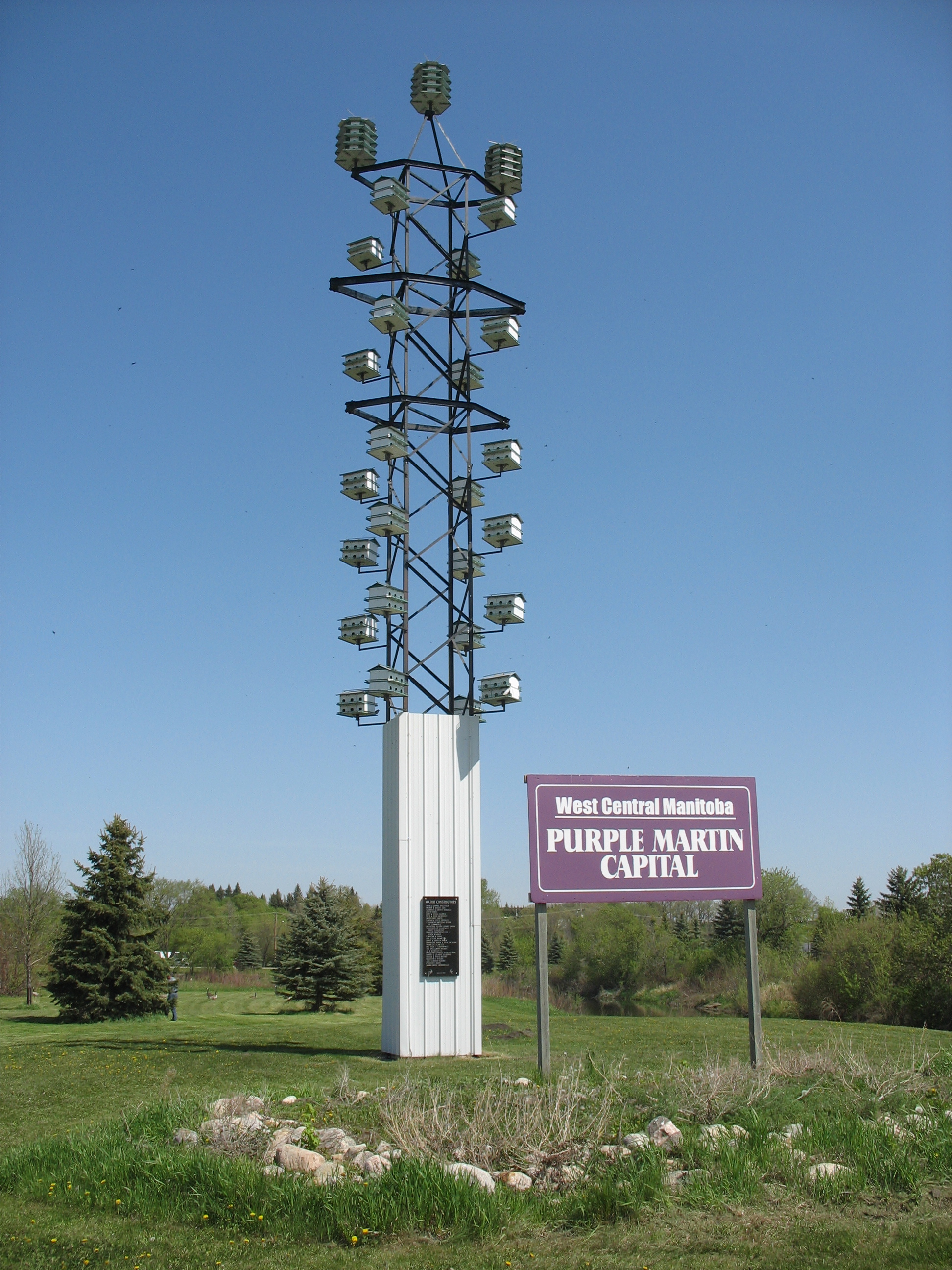
We love the pretty little town of Neepawa and have fond memories of time spent there in the past but we didn’t know that it calls itself the Purple Martin Capital of Western Manitoba until we spotted this unusual tower of birdhouses. There’s a cache hidden in one of the trees nearby.

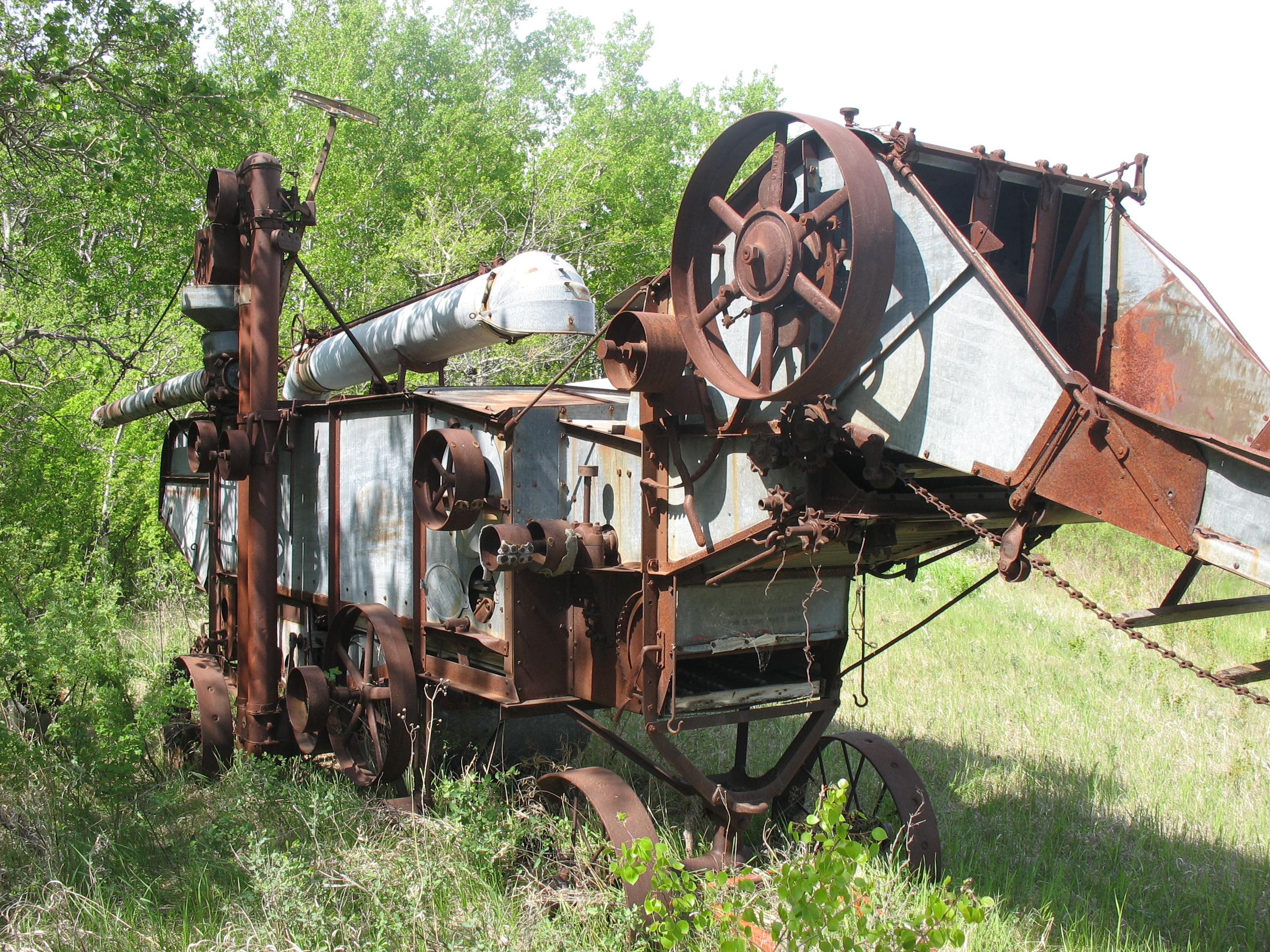
There are antique threshing machines like this one scattered across the prairie and many of them have geocaches hidden in, on or under them. We searched for quite awhile before we found the one that was tucked inside this one.

The Happy Rock is cute but this giant bull, standing outside the tourist information booth at Russell, Manitoba, didn’t do much for me. There was a cache hidden in one of the trees nearby though.

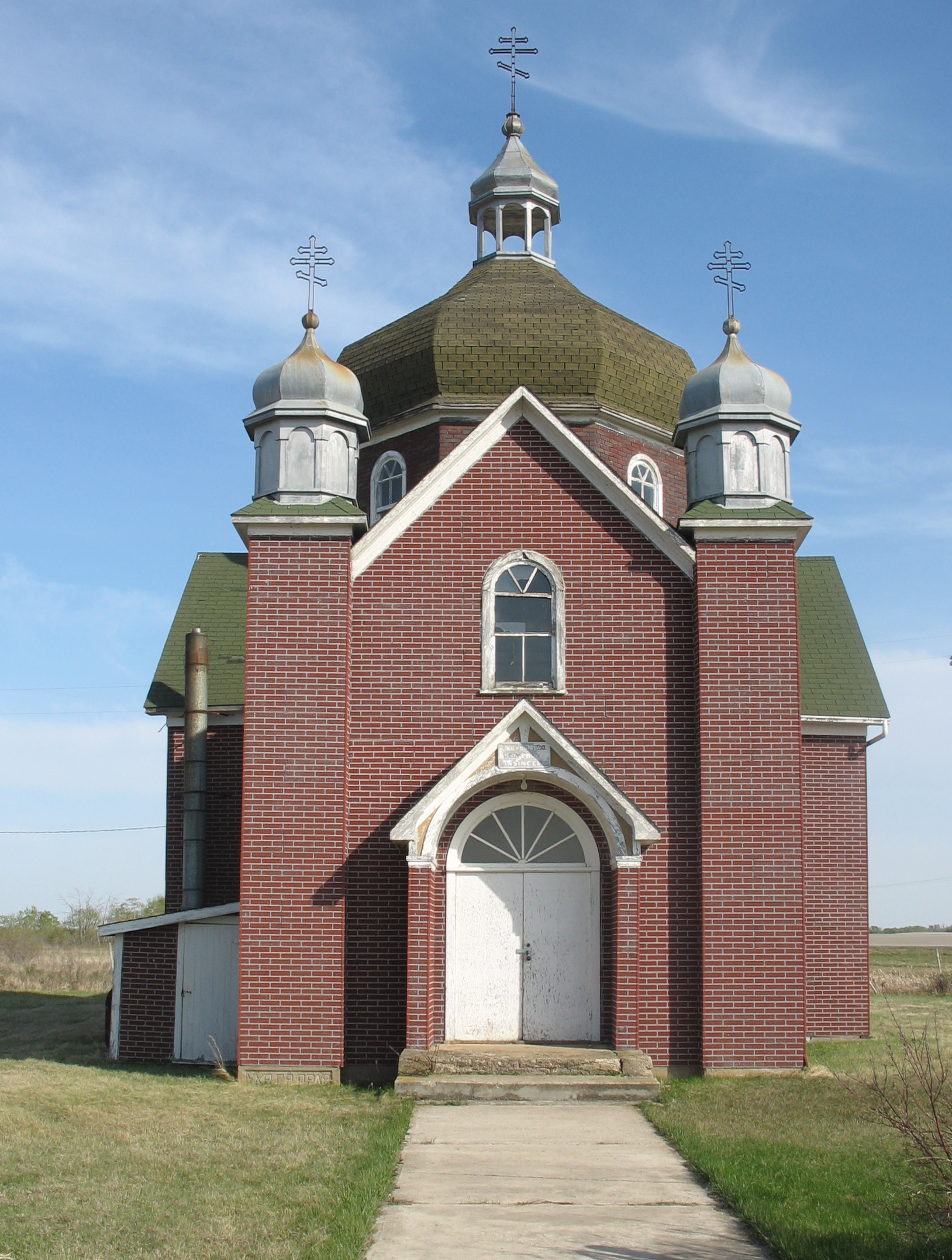
We’ve driven past the quaint little Ukrainian Greek Orthodox church at Insinger, Saskatchewan several times over the years. This time we stopped to take a closer look even though there are no caches hidden there. I really think there should be!

Though we’ve found 86 caches in all since we started hunting for them less than a month ago, we’ve also struck out a few times. This afternoon, we searched the trees around this much larger than life RCMP statue at North Battleford, Saskatchewan to no avail. If the cache was there, we certainly didn’t find it.

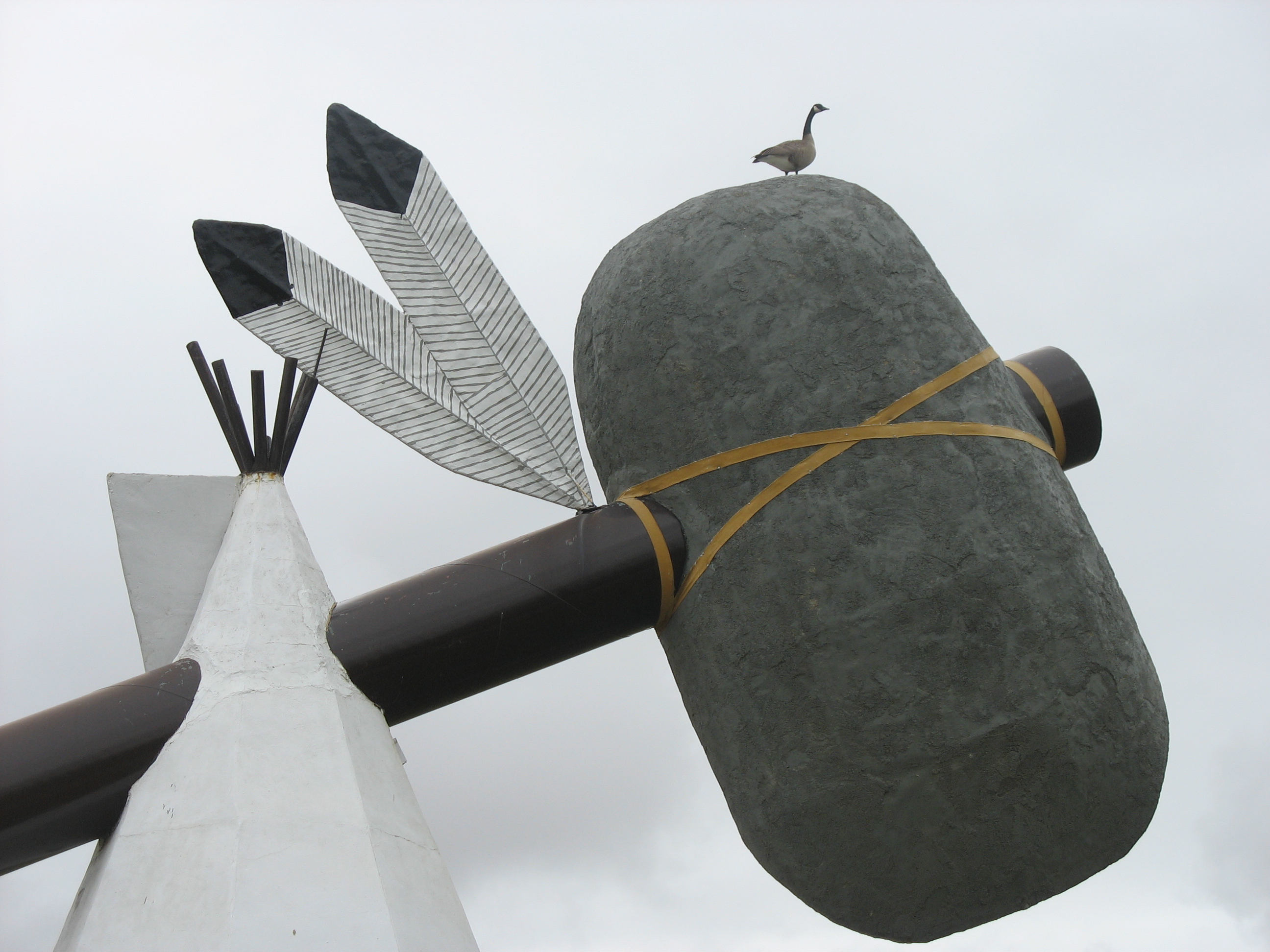
Apparently, there’s a brand new cache hidden near the world’s biggest tomahawk at Cut Knife, Saskatchewan but we couldn’t find that one either. If we had, we would have been the first to find it.

I thought the giant tomahawk was a bit strange until I learned a little of its history. Cut Knife was the site of several Indian uprisings in the 1880s. The Battle of Cut Knife Hill, between the Cree tribe led by Chief Poundmaker and the Northwest Mounted Police ended with the Mounties retreating. Poundmaker, who stopped his warriors from pursuing and ambushing the Mounties, later surrendered to the authorities to help restore peace between the Indians and the settlers. The giant tomahawk, with its 17 metre (57 feet) long handle, commemorates this.

Did you notice the Canada Goose on top of the head of the tomahawk? I didn’t either until it started honking at us! No, it’s not part of the statue. According to the neighbour who came out to chat with us when he noticed us carefully checking under and around the trees between his house and Tomahawk Park, there are seven goslings in the area and this was undoubtedly one of the parents warning us to keep our distance.

Winnipeg walk

While Chrissy attended her first tae kwon do class this morning, I spent a couple of hours exploring downtown Winnipeg with my camera in hand. Located at the confluence of the Red and Assinboine Rivers, Winnipeg is the capital city of Manitoba and Canada’s seventh largest municipality.

The farther east one travels in Canada, the more history there is to be found. French traders built a fort here in 1738. The City of Winnipeg was incorporated 35 years later, long before anyone settled the area of Alberta that we call home.

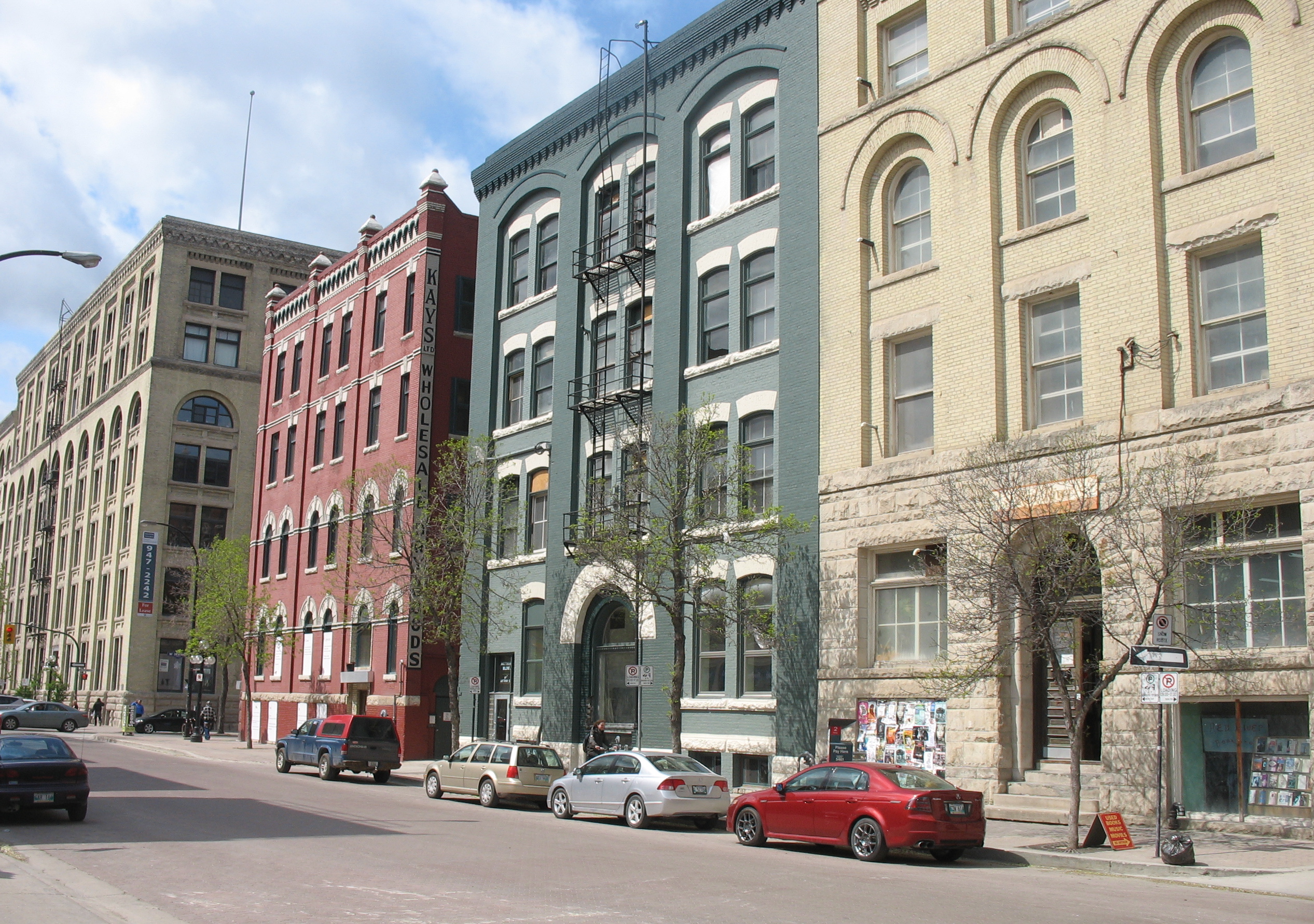
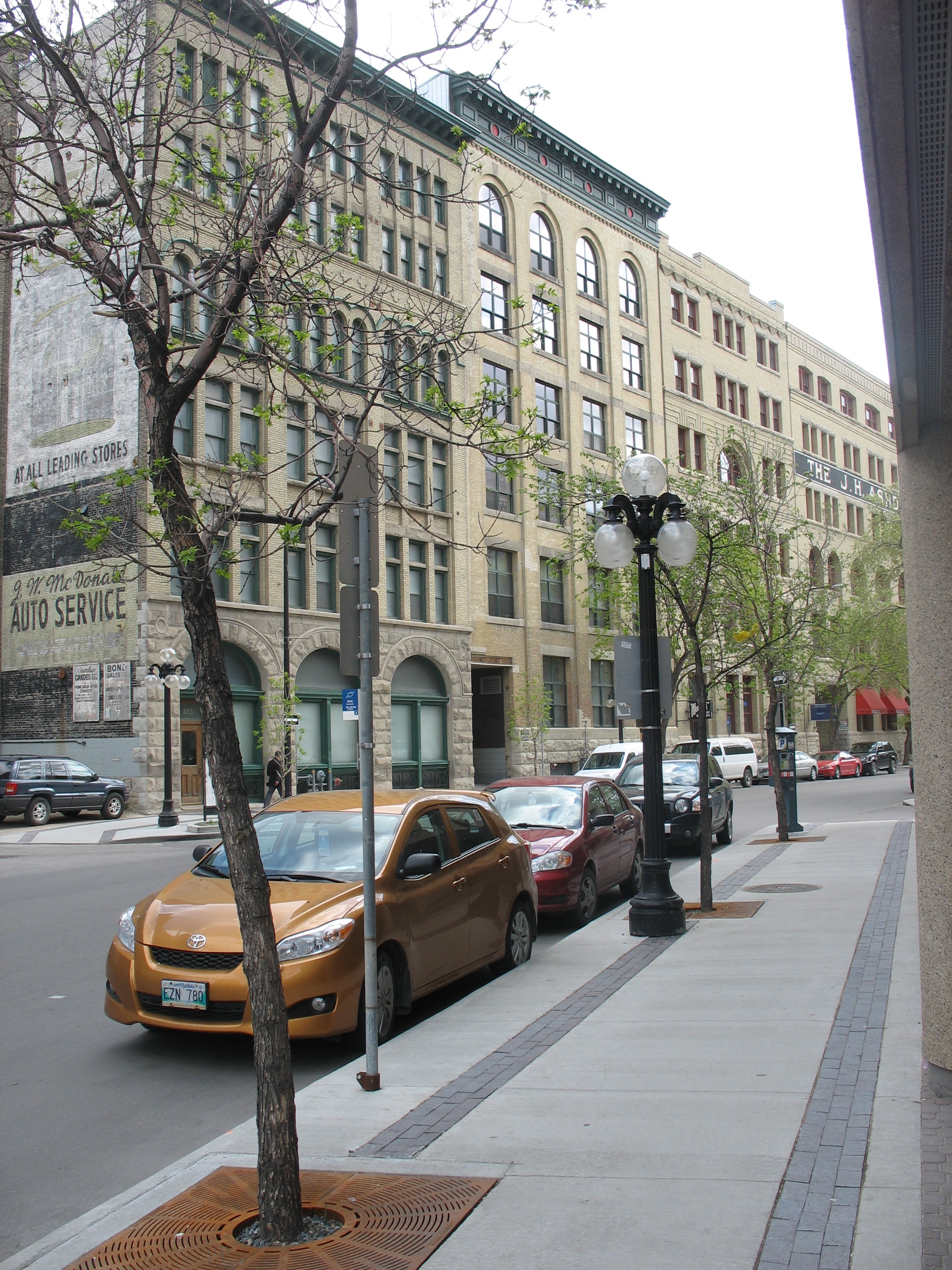
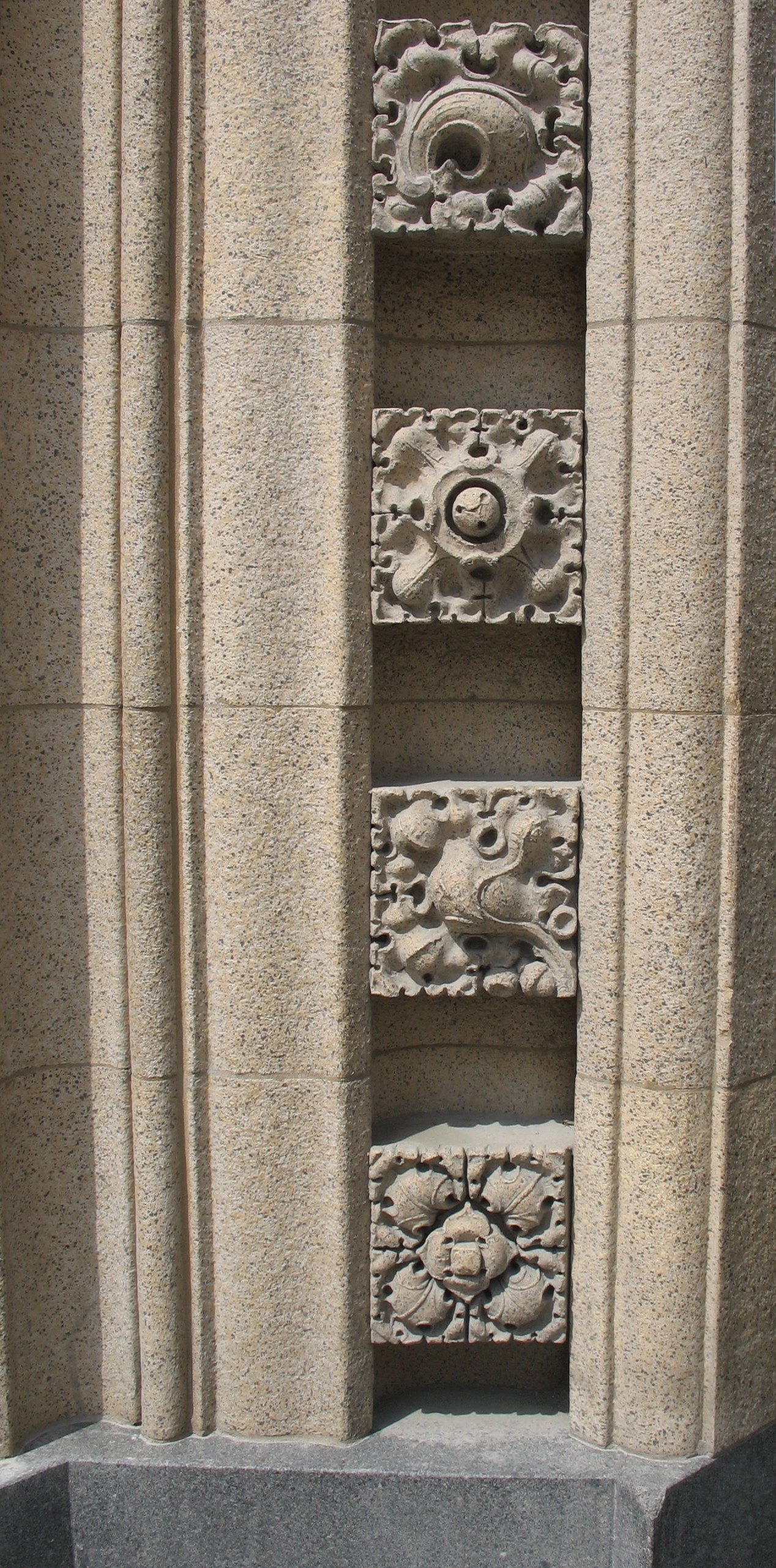
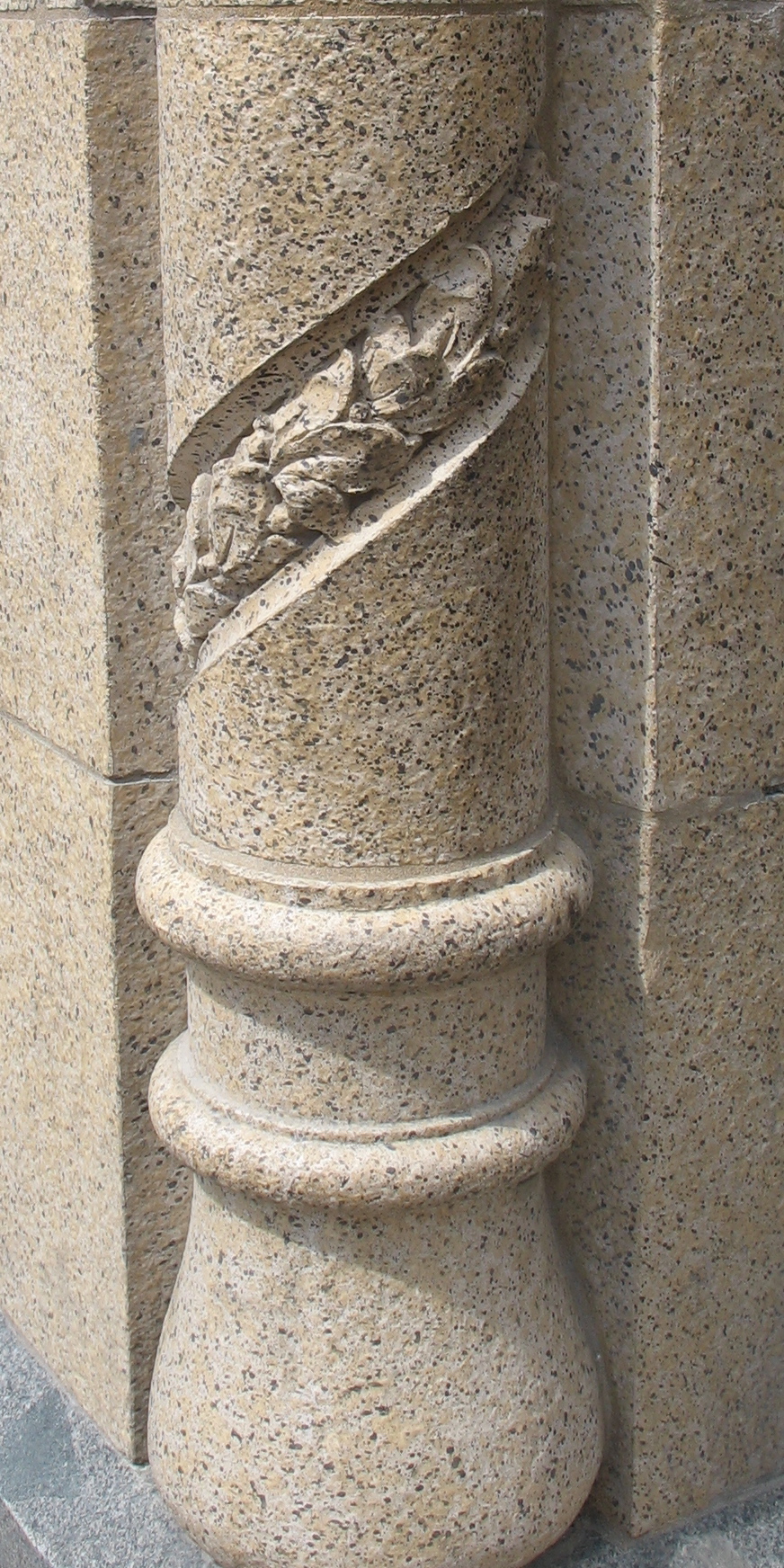
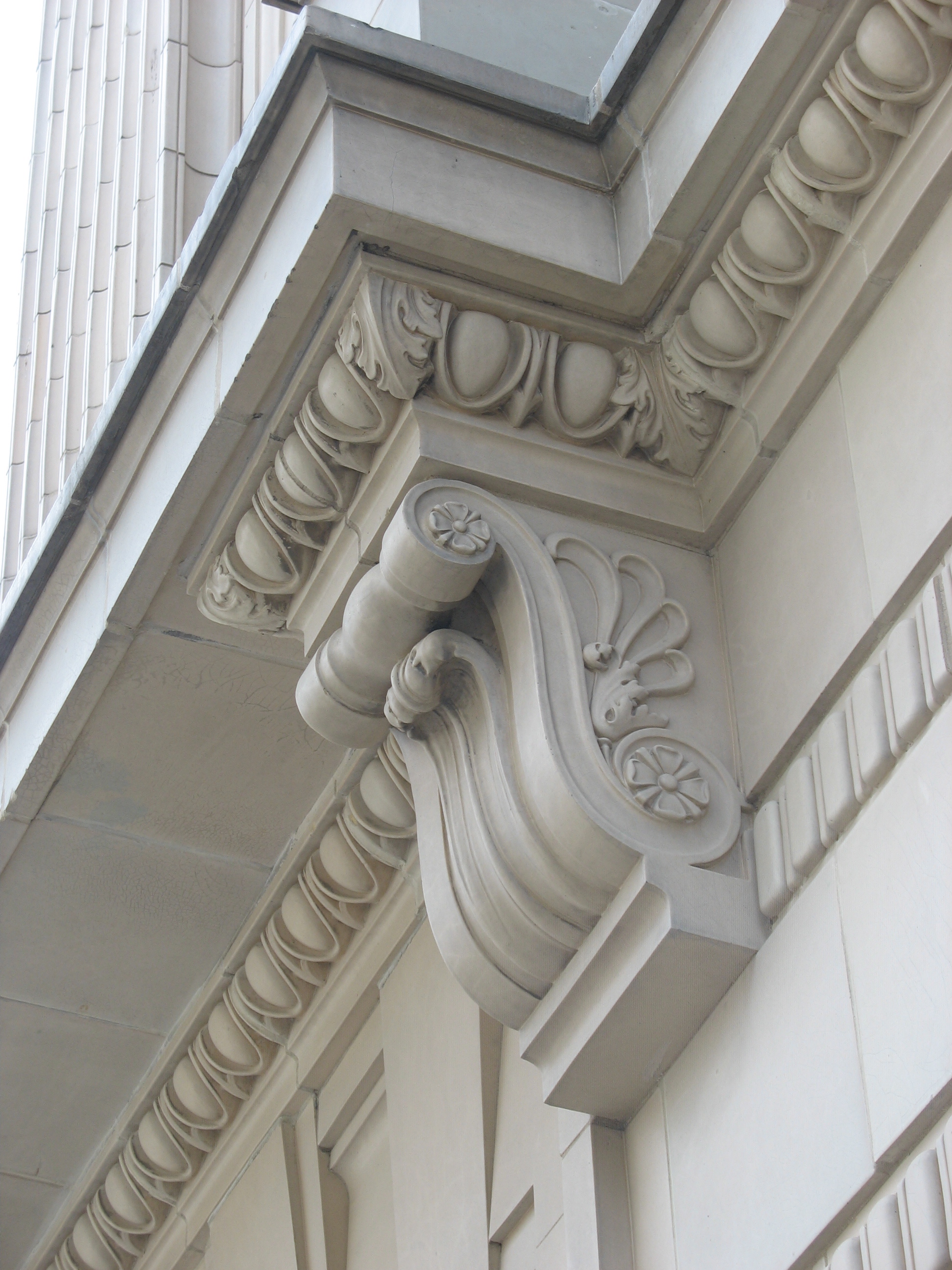
My favourite part of this morning’s walk took me through the Exchange District National Historic Site, one of North America’s most colourful and cosmopolitan neighbourhoods. Home to the city’s arts district as well as fine cultural, dining and retail establishments, it showcases North America’s most extensive collection of turn-of-the-twentieth-century architecture.

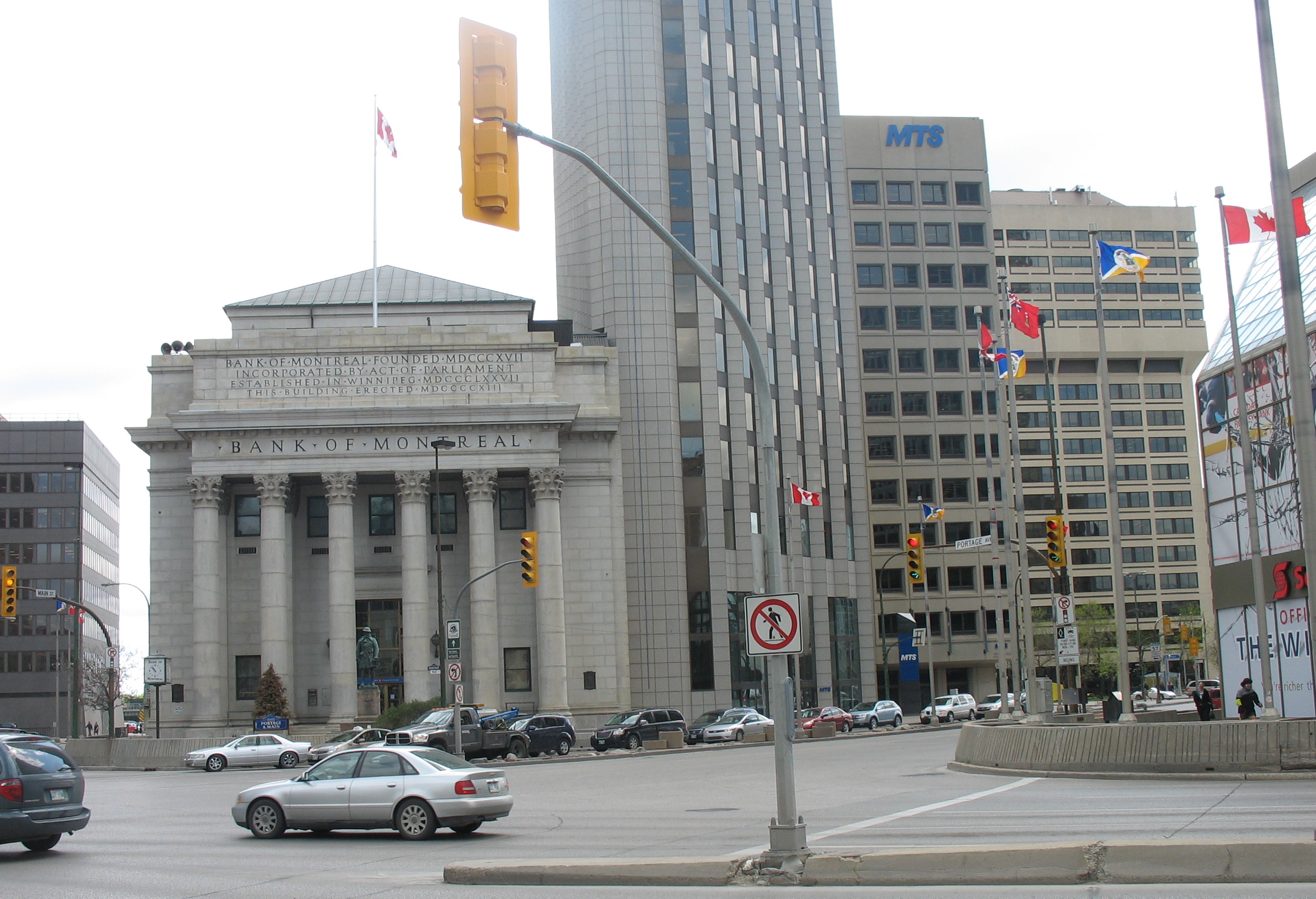
Portage and Main, at the heart of downtown Winnipeg, is perhaps the most famous street corner in Canada. The hub of some of the city’s main transportation routes, it was once the centre of western Canada’s banking industry. The stately Bank of Monteal building, constructed in 1877, stands guard over the intersection.

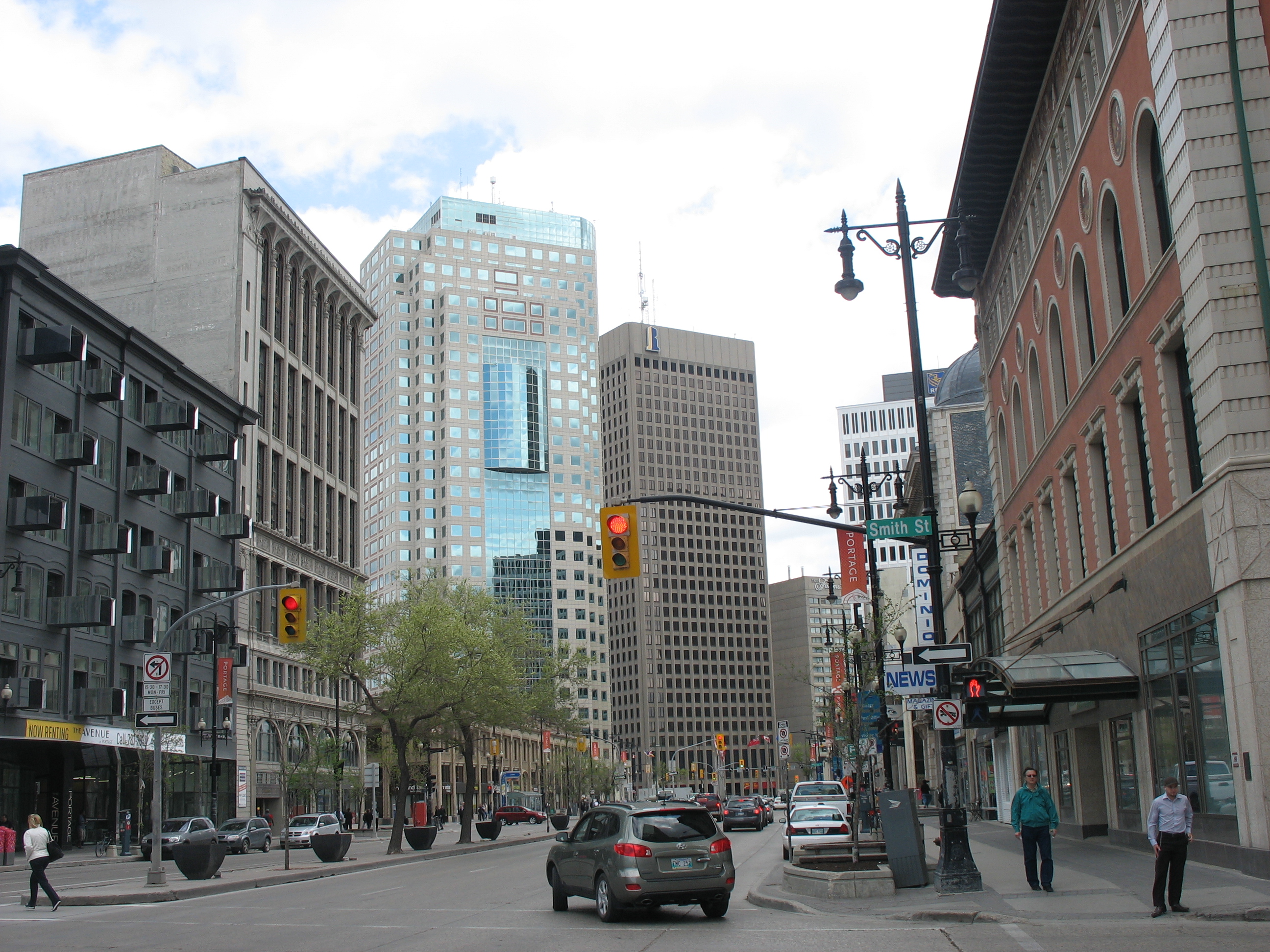
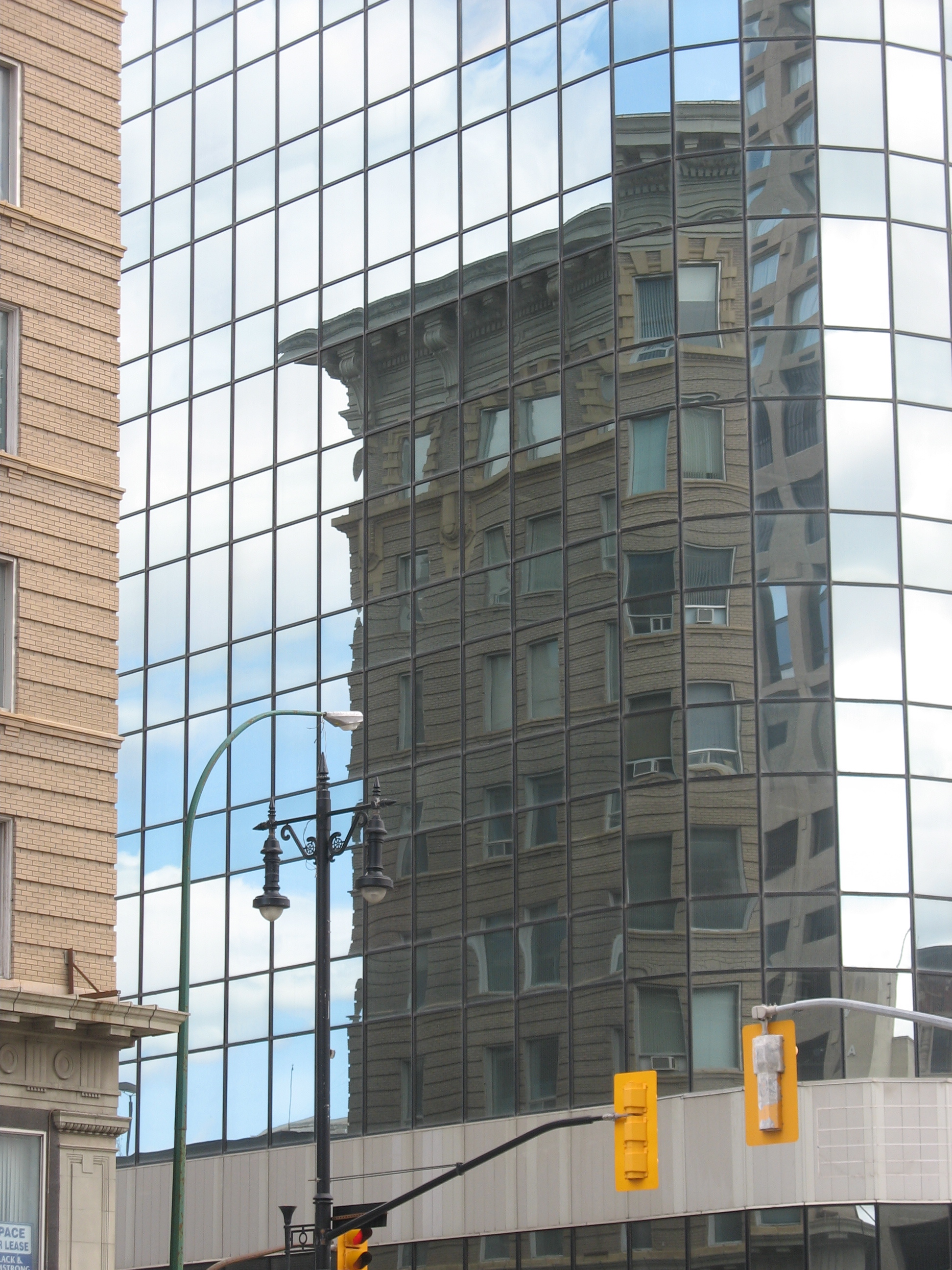
I love the mixture of old architecture and new that I found as I walked Portage Avenue.


Reflections

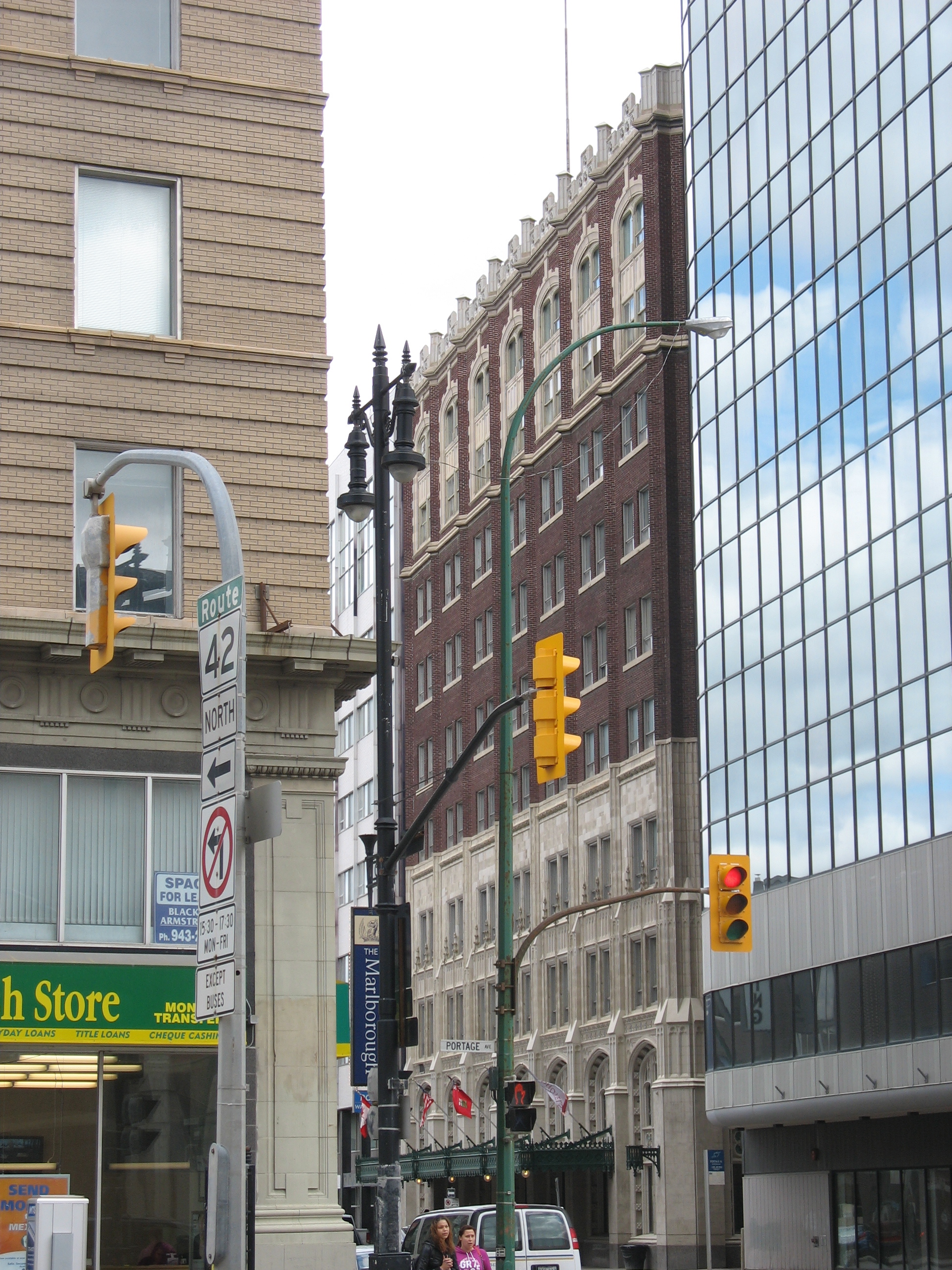
There are so many photos that I’d love to share with you but here are just a few more.

            
Winnipeg may not be one of Canada’s prime tourist destinations, in fact it was the butt of a well-known and rather humourous 2005 Fountain Tire television ad, but it’s definitely worth a visit.

The interesting and the bizarre

We spent most of the past two days on the road driving 1169 kilometres across the Canadian prairie from our home in Alberta to Winnipeg, Manitoba. Originally, we’d planned on doing the entire trip in one very long day but we decided that that would be foolish. After all, we’re retired. We have plenty of time and besides, there are geocaches to be found… lots of them!

We’ve discovered that geocaching gives us reason to stop and look at things that we might otherwise cruise right by. Some are interesting, others quite bizarre.

As many of you know, I love bits from the past. This wagon was no exception. A geocache was hidden nearby.

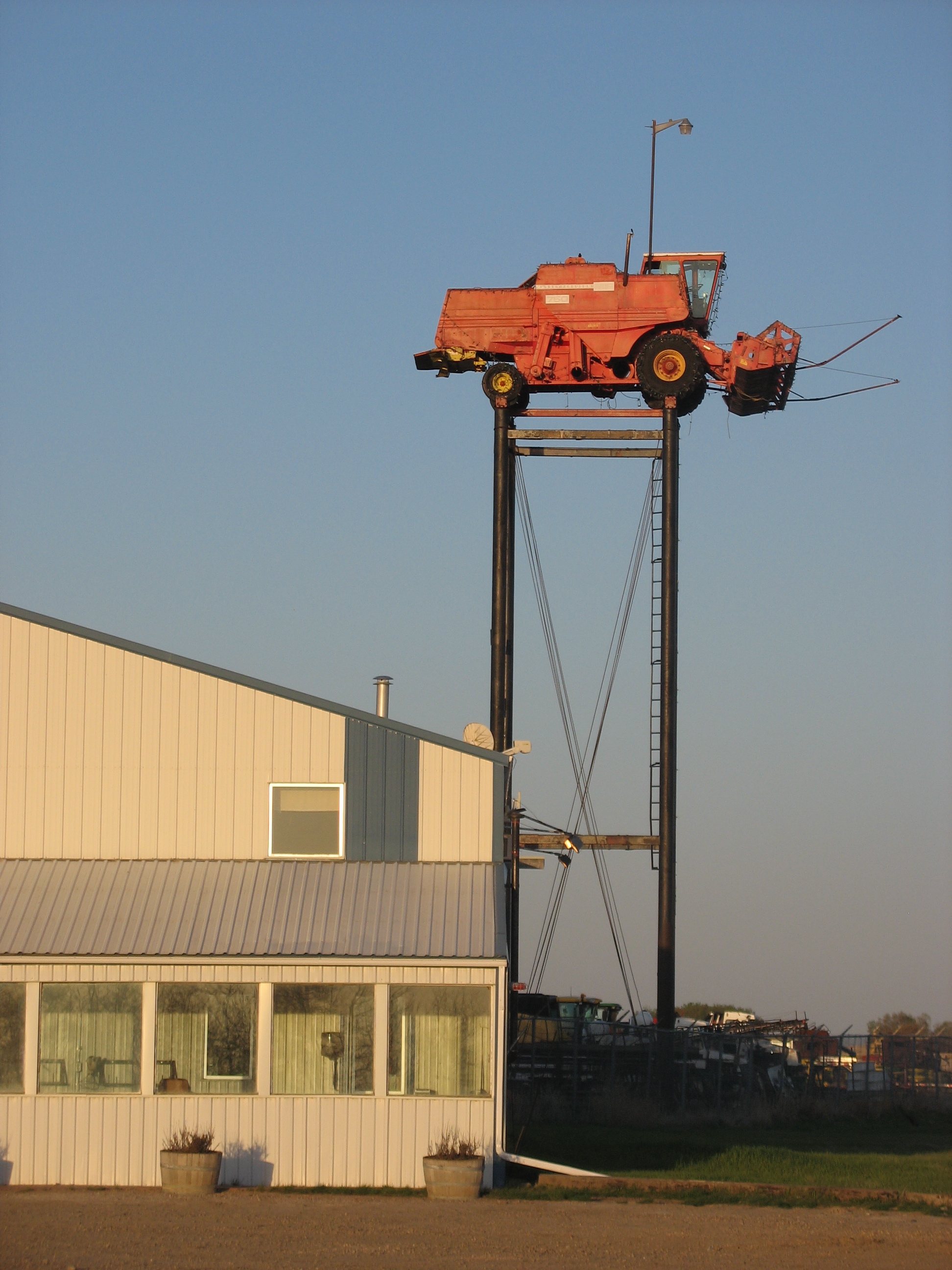
I love farm machinery too, especially combines, but what about one perched high in the sky? Yes, that’s a full sized combine way up there! It kind of reminded me of a giant insect!

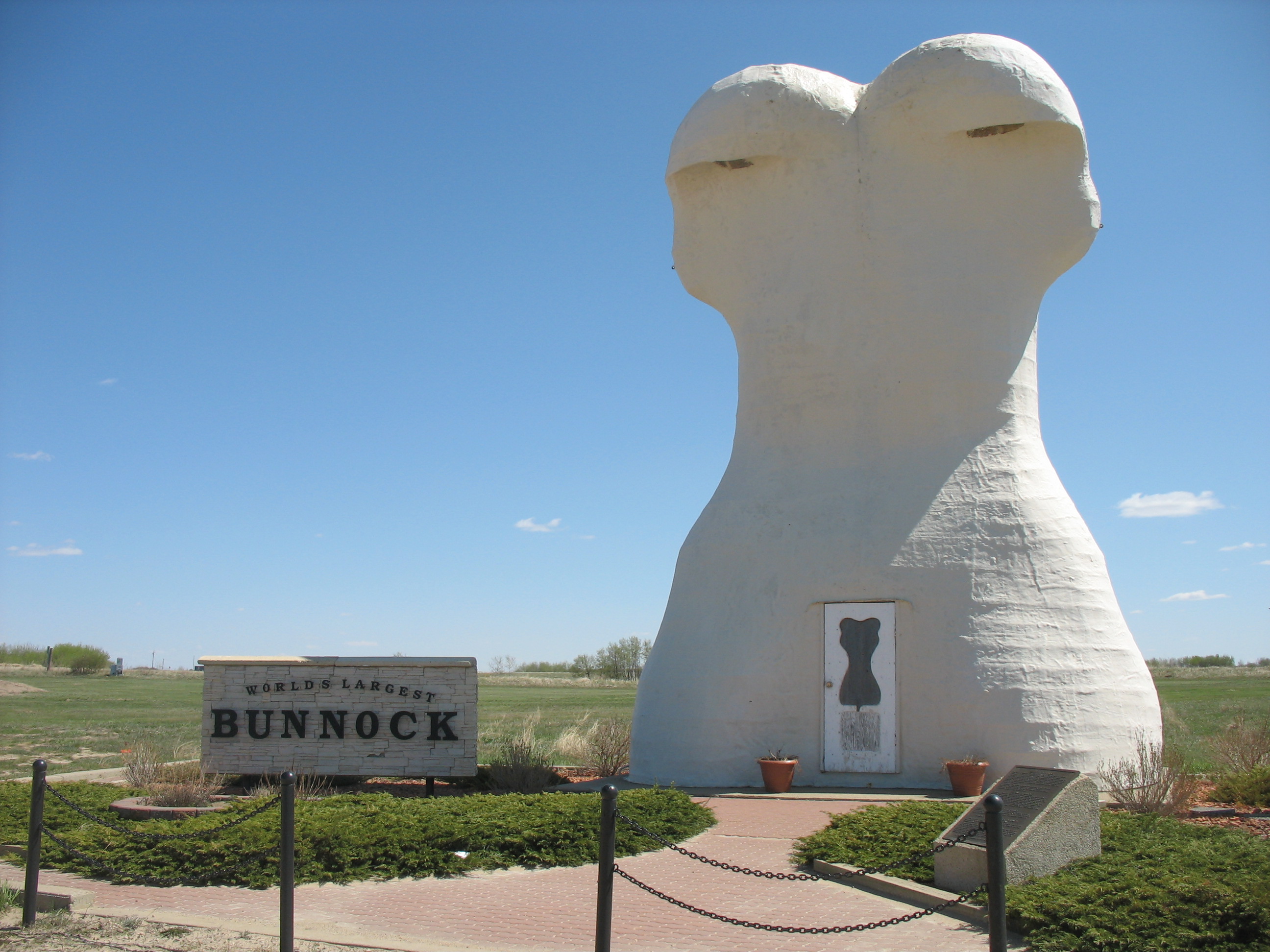
The world’s largest bunnock had to be the most bizarre, however! What’s a bunnock, you ask?

Apparently Bunnock, also known as Glockenspiel or the Game of Bones, was created by Russian soldiers to pass the time while they were stationed in Siberia during the early 19th century. Bunnock was brought to Canada sometime in the early 20th century by Russian and German immigrants, many of whom settled in the province of Saskatchewan. The game pieces were made of horses’ anklebones, something the soldiers apparently had an abundance of! Players set up two parallel rows of bones, each row consisting of two guards and twenty bones. Two teams of four throwers each face off against one another. The object of the game is to knock down the other team’s bones beginning with the guards. The team that knocks down the opposition’s bones first, with the least number of throws, is declared the winner. Apparently the game became highly popular in and around the small town of Macklin, Saskatchewan, now the location of the world’s largest Bunnock. At 32 feet (9.8 m) high, the  giant anklebone constructed of steel pipes, chicken wire and fibreglass also acts as the town’s tourist information booth and yes, there is a geocache hidden close by.

As we crossed the prairies, stopping to view these and other unusual sights along the way, we found 20 geocaches. There are many more waiting to be found on our homeward journey next week!

More pieces of the past

The Alberta prairie is crisscrossed with roads, many of them only a couple of miles apart. After living here for almost 36 years, there are many of them that we’ve never traversed but over the past few days searching for geocaches has taken us down several new ones. We found three more caches yesterday but it’s the pieces of the past that we keep finding that intrigue me even more.

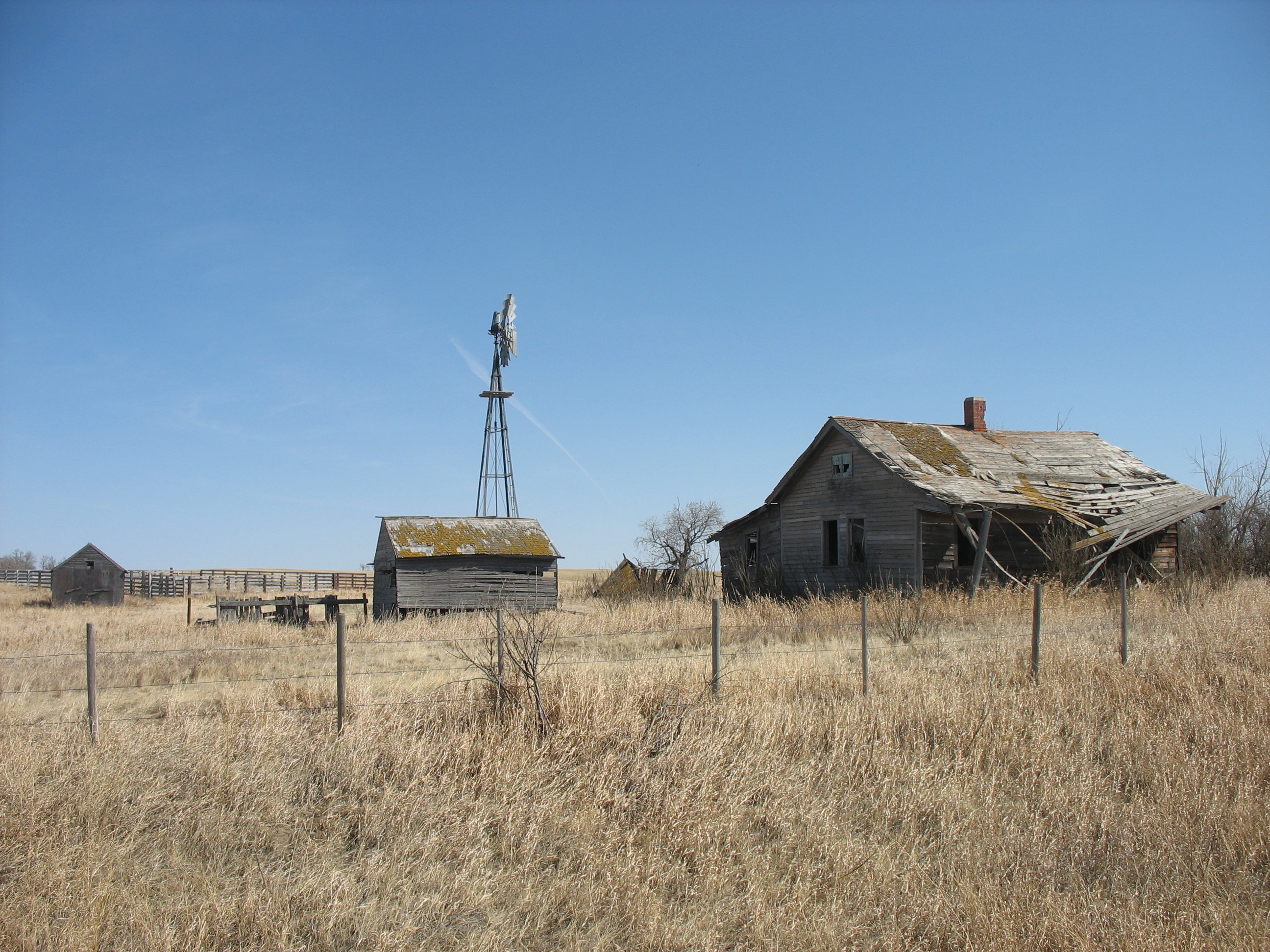
We explored two more old abandoned houses yesterday, neither as majestic as the house on the hill but interesting nonetheless. The first was a very simple structure. Little more than a two storey wooden box with a very steep roof, its main floor was made up of just two rooms. We could see where a very steep staircase once led to the upper floor but it was no longer there; possibly removed to keep intruders like ourselves from falling through the decaying floorboards. Once again, there was nothing left in or around the house to tell the story of the people who once called it home.

The second house finally yielded what I was looking for; signs of human habitation. It was the windmill that first captured our attention. Connected to a pump behind the house, it would have provided water for the family as well as any animals they might have had.

The sign on the fence might have read “No Trespassing” but since we didn’t tear it off (I promise!) and it could just as easily have said “No Hunting”, we climbed the fence and went exploring!

The open door was so inviting. I just had to go inside! Treading carefully to avoid falling into the root cellar below, I made my way from room to room.

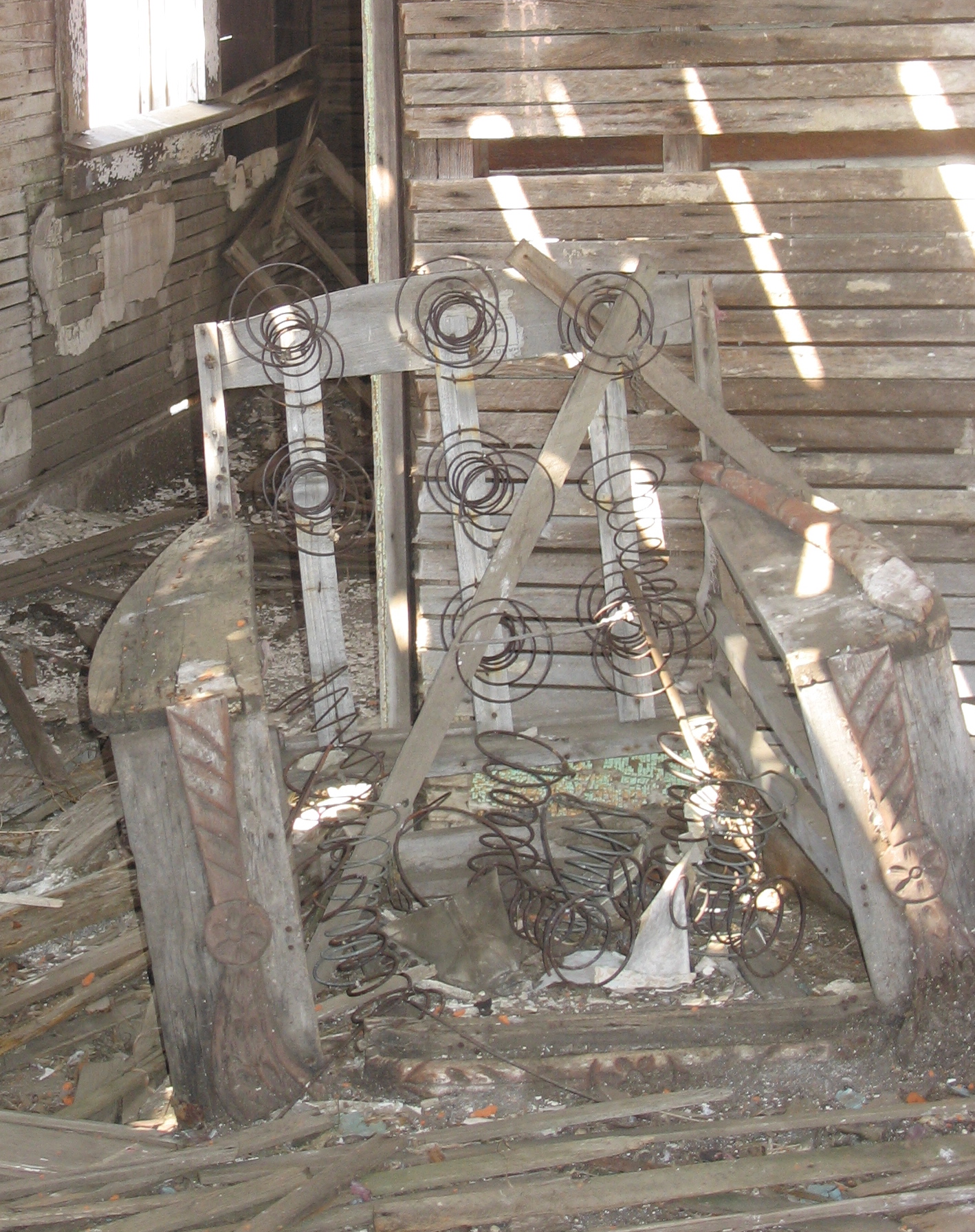
Who sat in the old armchair I wondered. It might have been quite comfortable before the mice did away with all the upholstery and stuffing!

Another skeleton sat in the centre of a different room. Clearly a baby once lived here!

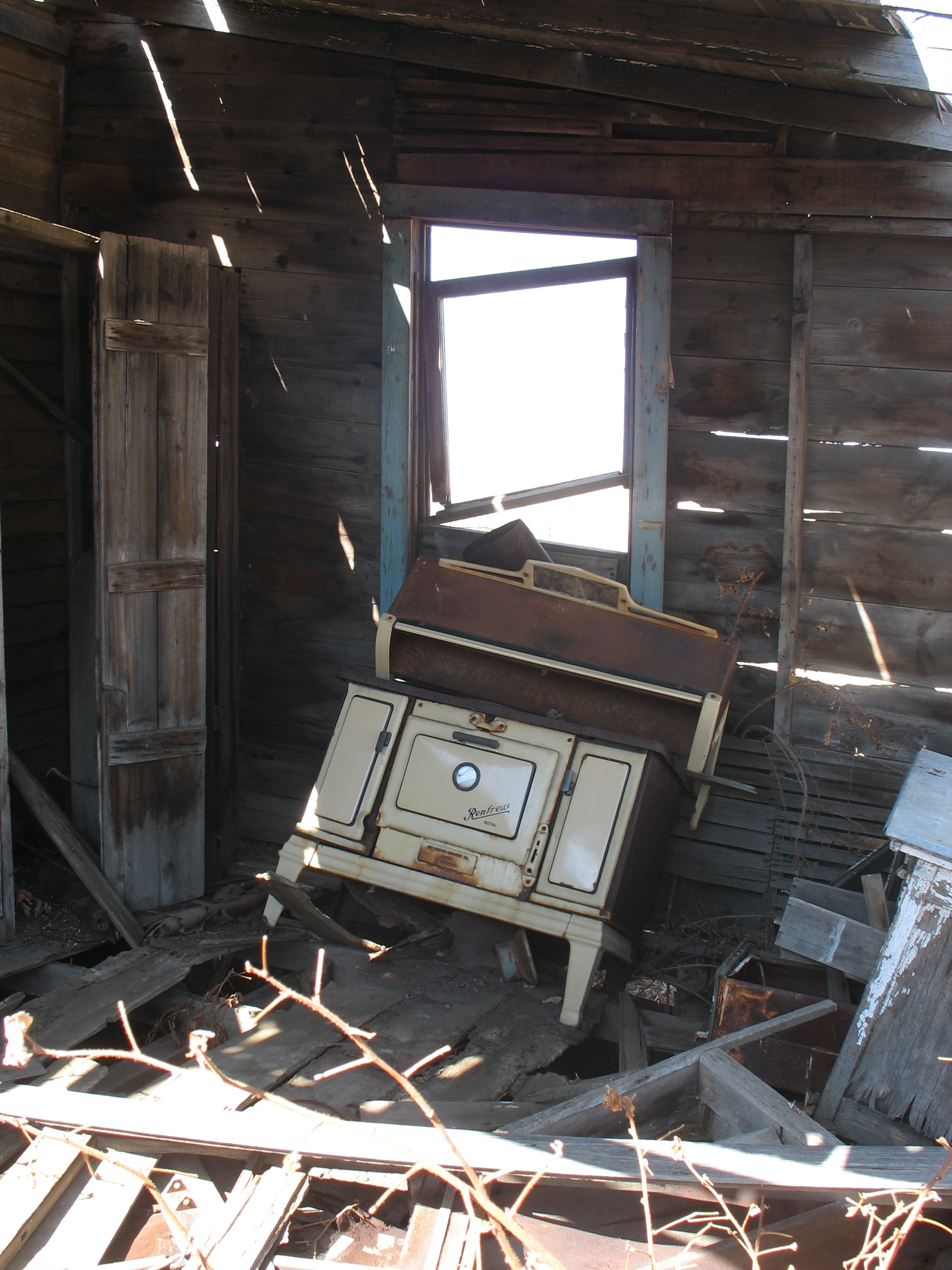
I was surprised to see the old wood stove still there. I would think that an antique collector would like to get their hands on this beauty.

There was also an oil heater to keep the cold Alberta winters at bay.

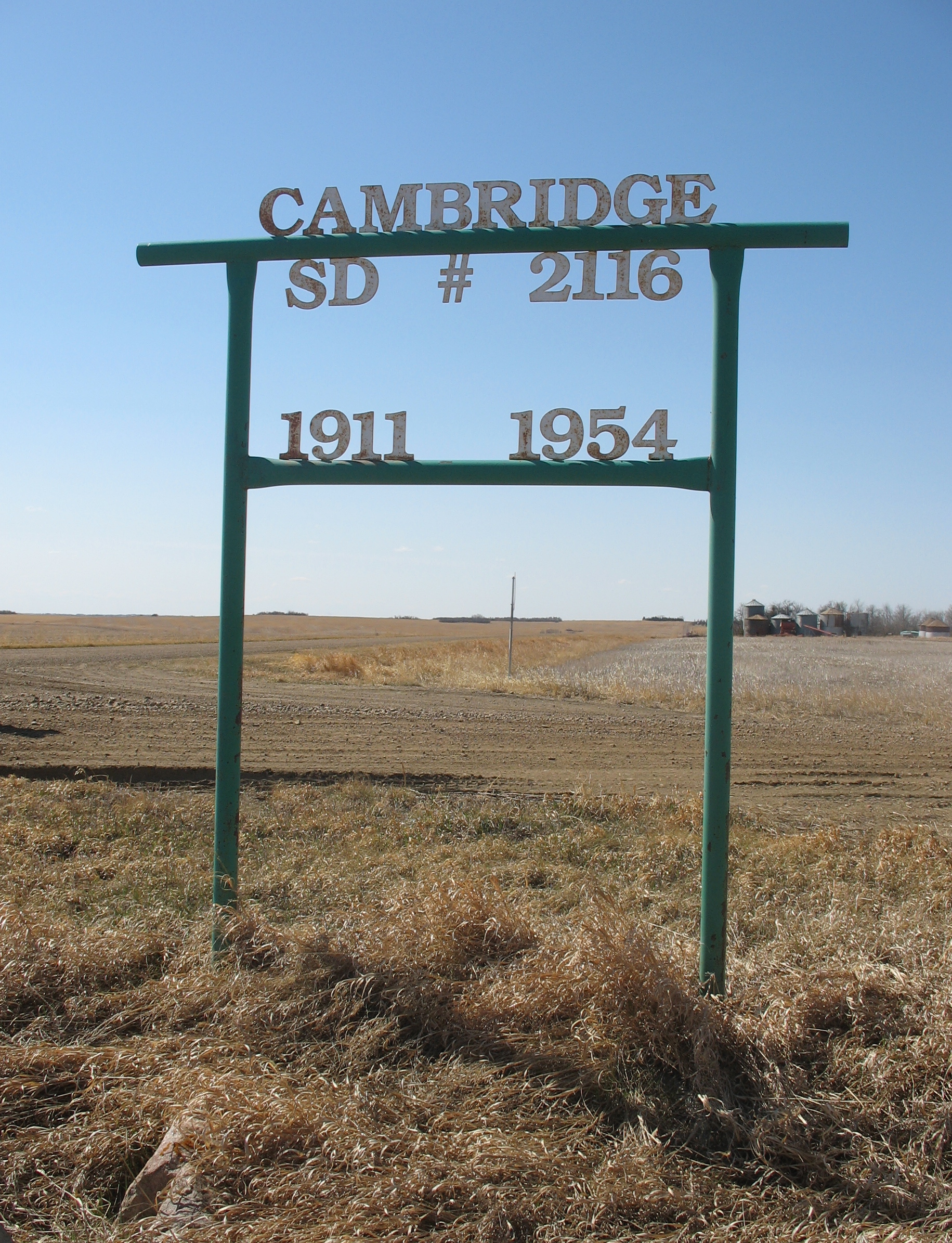
Where there are children, schools are also needed and before the day of school buses the Canadian prairie was dotted with one room schoolhouses. Though many of them are gone, in our area historical markers show where they once stood. We passed a couple of them yesterday and as retired teachers, it was easy to imagine the voices of children from the past playing where farmers now cultivate the land.

Rainforest!

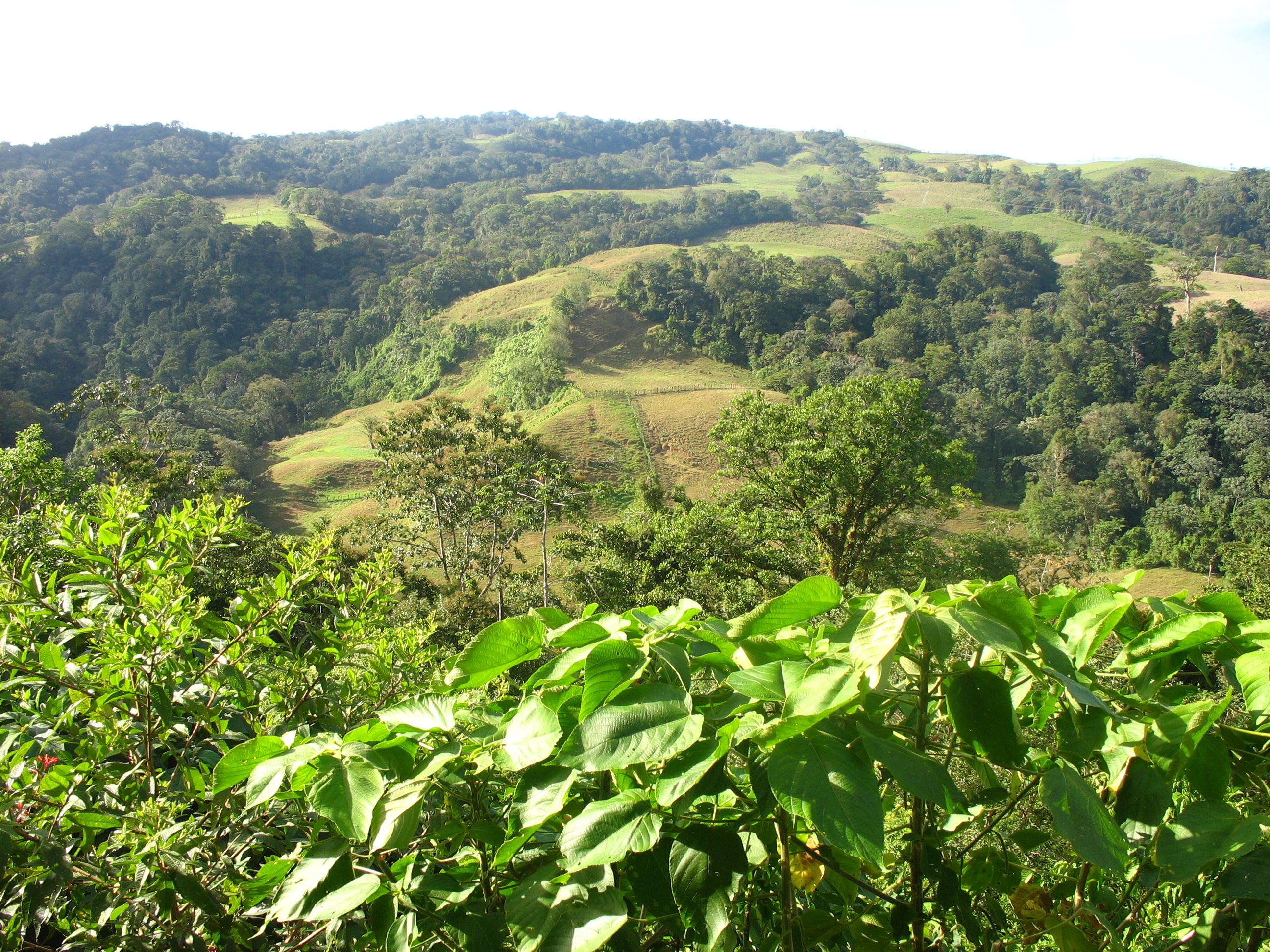
We explored the Costa Rican rainforest from every angle! The views from the back balcony of our little cabin were spectacular.


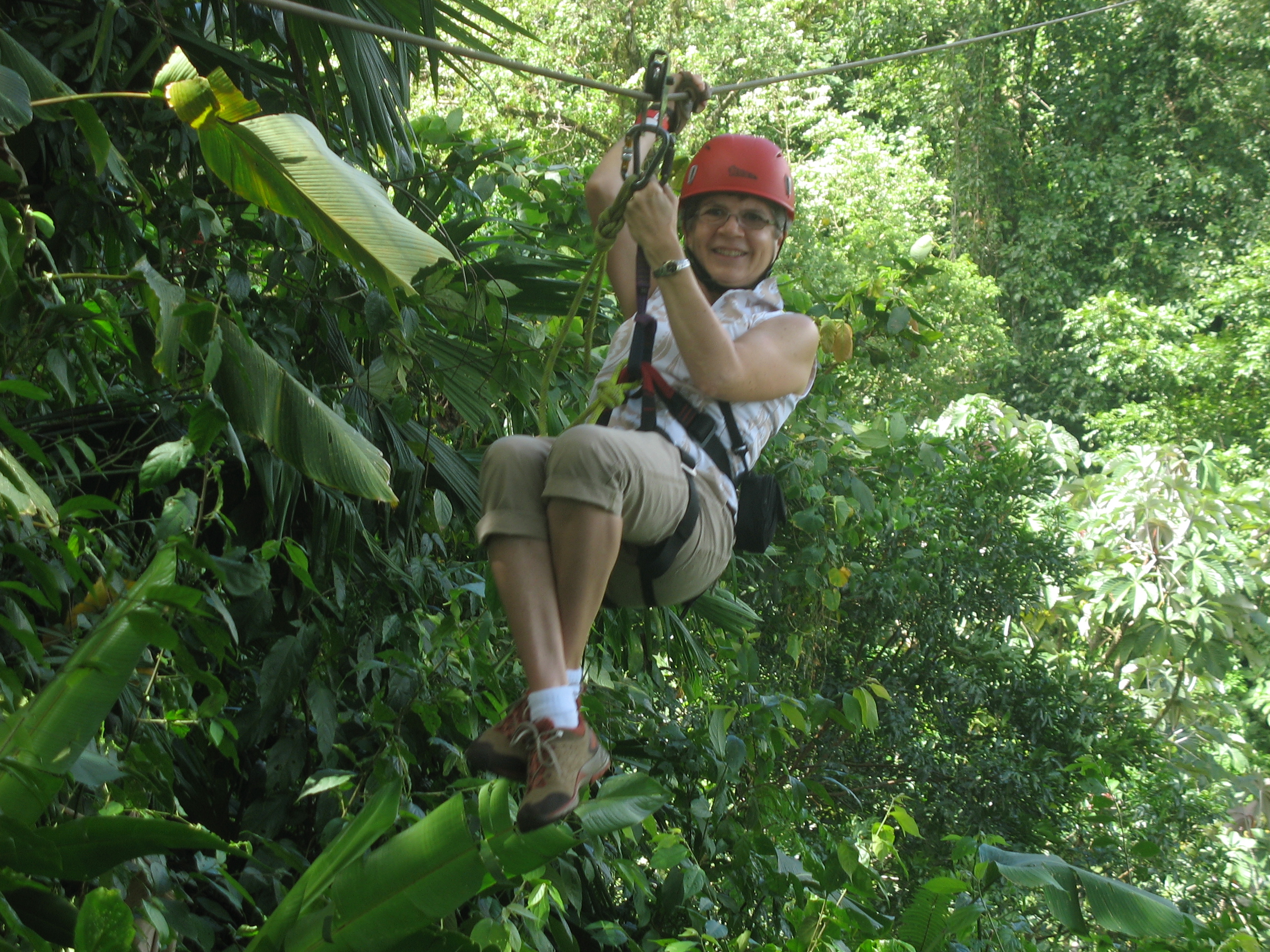
By far the most fun, however, was flying through the treetops on our zip-line canopy tour! I can now say with absolute certainty that I have overcome my fear of heights! It was an absolute blast and there wasn’t a moment of fear!  Securely fastened into our harnesses and attached to the cable by pulley, we wore thickly padded leather gloves on one hand to use as a brake as we approached each platform. Eleven cables ranging in length from 50 to 500 metres in length took us from platform to platform high in the treetops. Totally exhilarating! The only negative thing I can say is that it was over way too soon! If you haven’t tried zip-lining, I definitely suggest adding it to your bucket list! I’d do it again in a heartbeat!

We did our zip-lining at Hotel Los Lagos which was just down the road from where we were staying. Though the views from the cable were spectacular there really wasn’t time to pick out any wildlife hiding in the canopy. After the tour, however, we had full use of the Los Lagos grounds for the rest of the afternoon. That included soaking in their many hillside hotspring pools and exploring their gardens complete with a few rainforest animals. I wouldn’t have minded meeting this one in the wild

but I’m glad we didn’t come across this one on our next adventure!

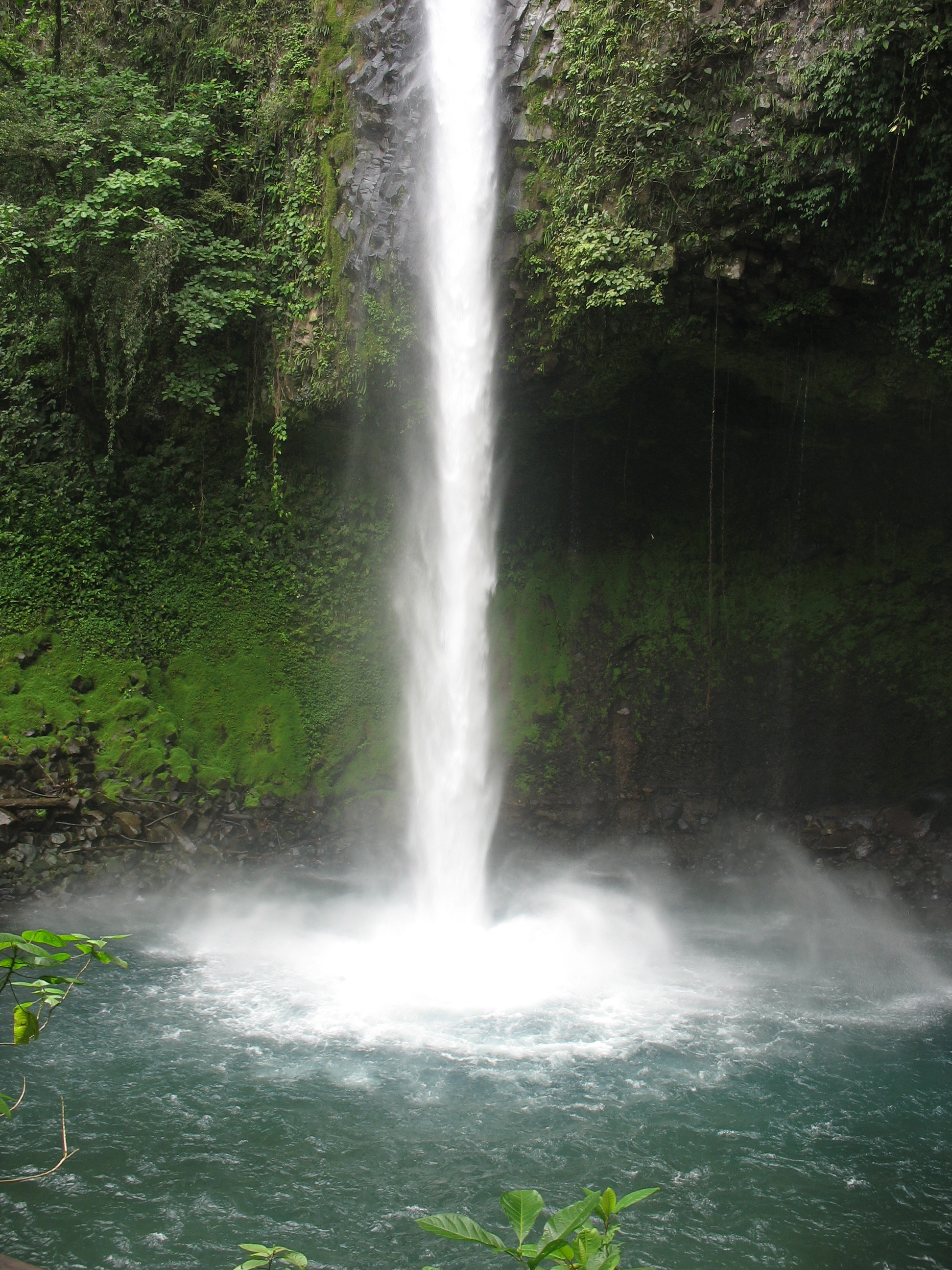
The hike to La Fortuna waterfall was an easy one, one that we could have done on our own with no difficulty but a guided hike was part of our package. It was supposed to be a group hike but as it turned out, Richard and I were the group! No one else had signed up for that particular excursion so we had David all to ourselves and what a delight that was! Not only was he a very pleasant hiking companion but he was incredibly knowledgeable about the flora and fauna of the rainforest as well as his country in general. With the aid of his sharp eye and ear, we saw all sorts of things that we might have walked right past without noticing… howler monkeys resting on a branch high above us, a mother sloth with her baby moving ever so slowly through the canopy, and a wide variety of birds including a brightly coloured toucan. All of these were too far away for me to capture them with my point and shoot camera but we enjoyed close-up views through David’s binoculars and though they’re not be recorded on film they’re definitely etched in memory.


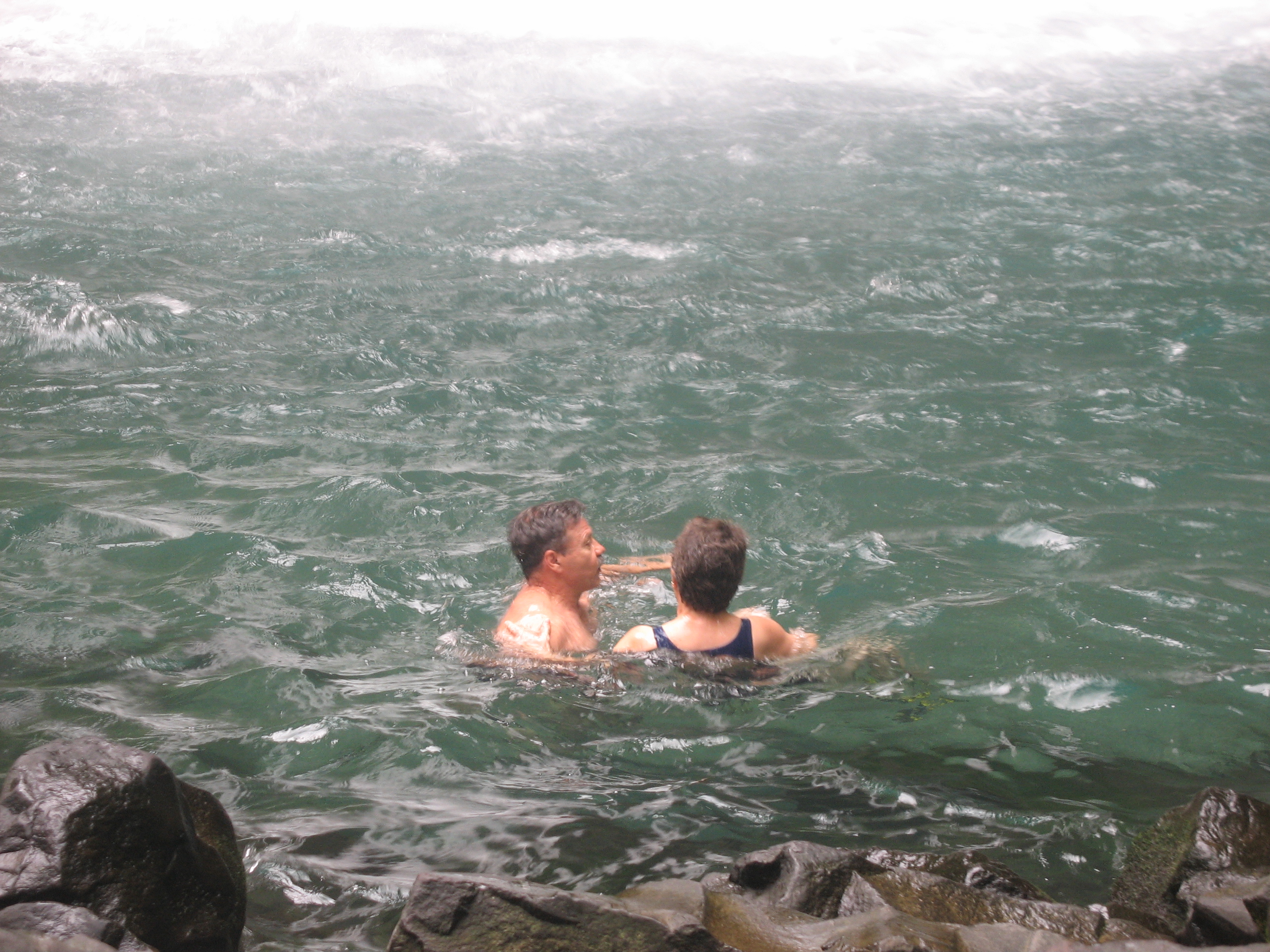
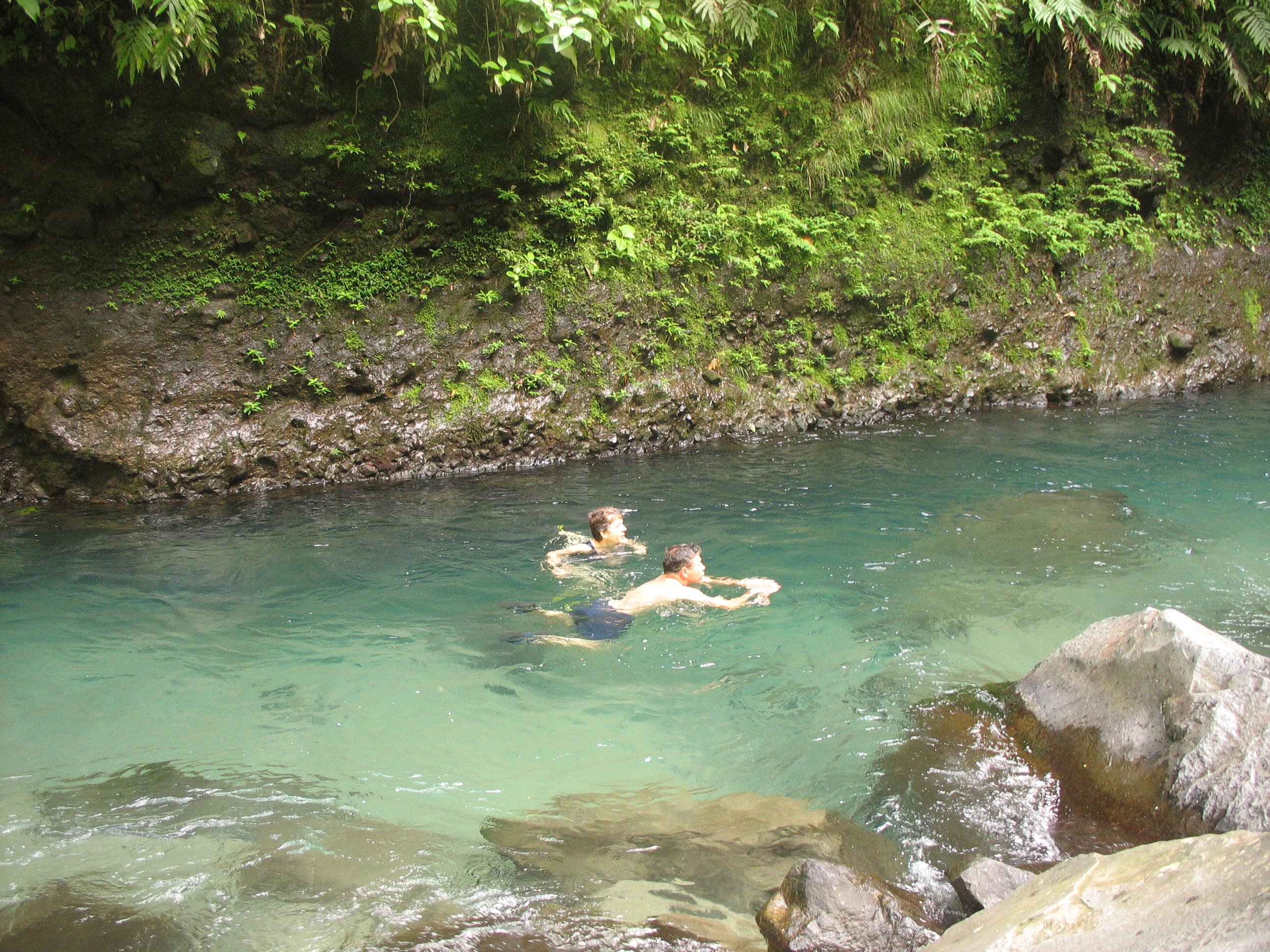
The waterfall itself is a 70 metre ribbon of water plunging into an emerald pool below. We expected the water to be icy cold and while it was a bit chilly getting in, it really wasn’t unpleasant at all. Many swimmers have lost their lives by venturing too close to the cascading water and being pulled under by its force. I can certainly see why. Once we were in the water, the sheer magnitude and power of the falling water seemed to beckon us to draw closer but we wisely chose not to! Instead, after a short swim below the falls, we moved downstream to a quieter pool for a more leisurely swim.

Finding beauty close to home

When we’re on vacation or far from home, we seek out interesting or unique places to visit and things to do but we sometimes miss out on the gems that are closest to home. Until today, we had never been to the Devonian Botanic Garden just two hours away.

After taking some friends to the Edmonton International Airport to catch a flight, we spent most of the afternoon exploring the nearby garden. I lost my pedometer before we got there 😦 so I have no idea how far we walked but my feet are telling me that they had a good workout! With 80 acres of display gardens and another 110 acres of natural areas and ecological preserves, there were lots of paths to follow and areas to explore!

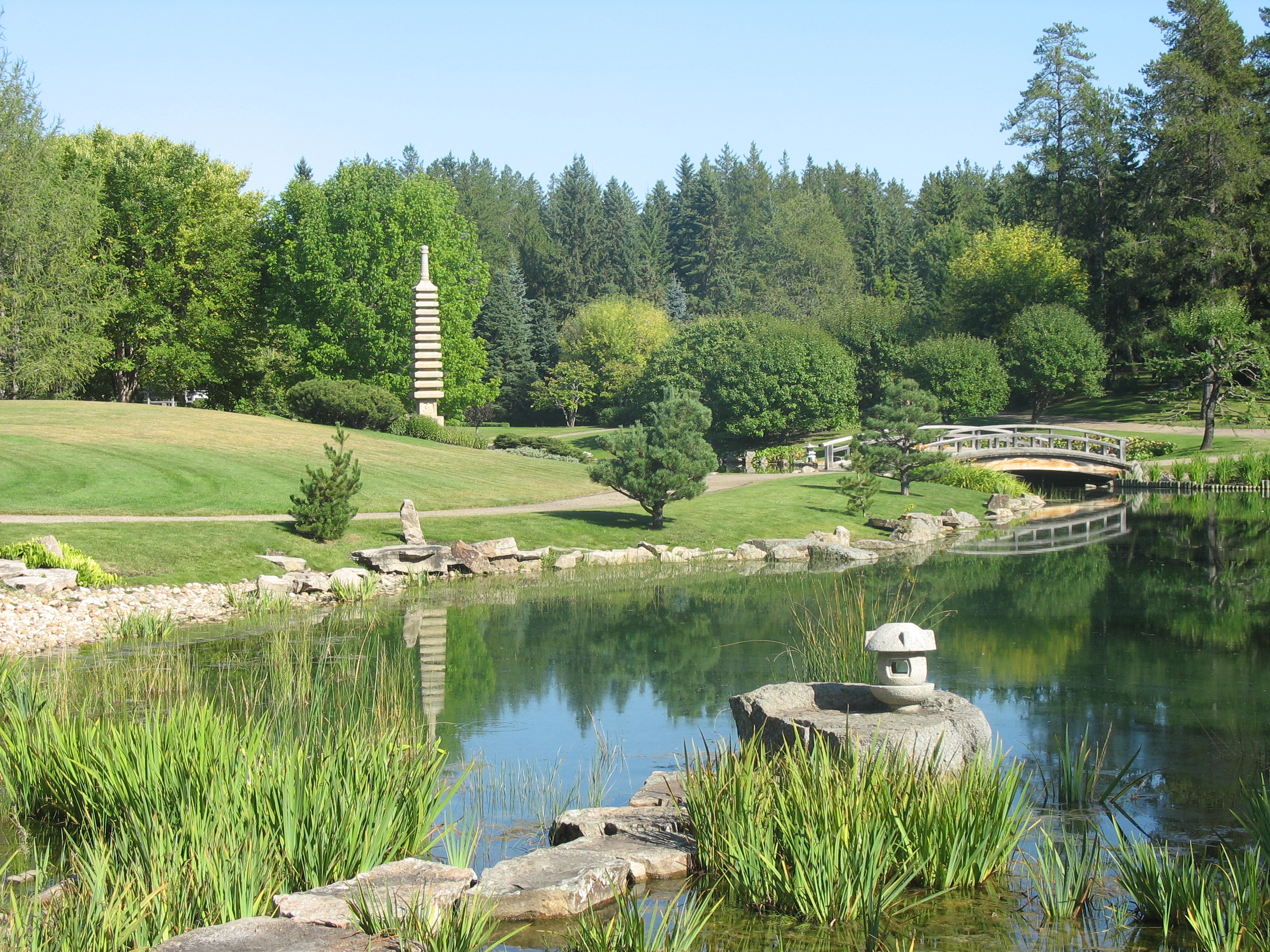
It was the Kurimoto Japanese Garden that I most wanted to see. During our year in Japan, I fell in love with its beautiful strolling gardens. In fact, I’ve often teased Richard, telling him that we should turn our backyard into a Japanese garden. He just laughs and I doubt that it will actually ever happen but I was curious to see how this style of garden could be replicated in our climate, so different from Japan’s. I wasn’t disappointed. With its meandering paths, reflecting pond, stone lanterns, pagoda and bridges it definitely captured the tranquility and the simple beauty of this unique garden style.

After exploring the Japanese garden, we moved on to the indoor displays. The tropical butterfly greenhouse was my favourite. It was fun picking out plants that we’d become familiar with during our recent stay on Saipan.

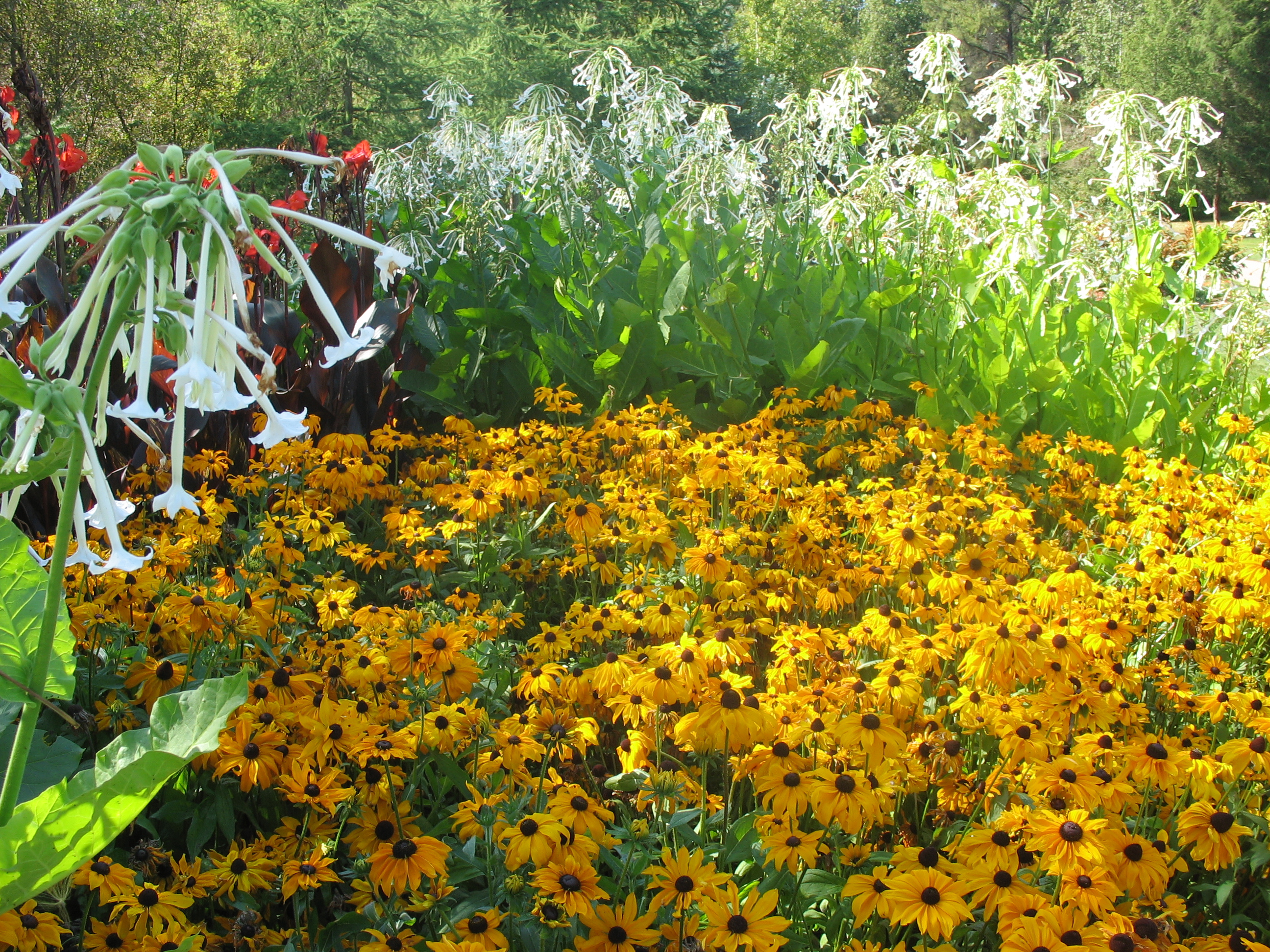
Moving back outdoors into the bright September sunshine, we set off to explore the rest of the outdoor displays. Though it’s late in the season and many plants are no longer in bloom, there were still lots of splashes of colour to enjoy.


After wandering through the various displays of annuals and perennials, the herb gardens, the native peoples’ garden, the alpine garden and many more, we returned for a final stroll around the Japanese garden before heading for home. After all, who knows how long it might be before I visit another one.


Bird Island hike

With this morning’s hike to Bird Island, we crossed the last item off our Saipan Bucket List today! Yes, we actually did write one! I wanted to make sure we didn’t miss anything.

Bird Island from the viewpoint

According to the atlas, we’d drive to the end of Bird Island Lane and then hike down to the water’s edge. It didn’t look very far.

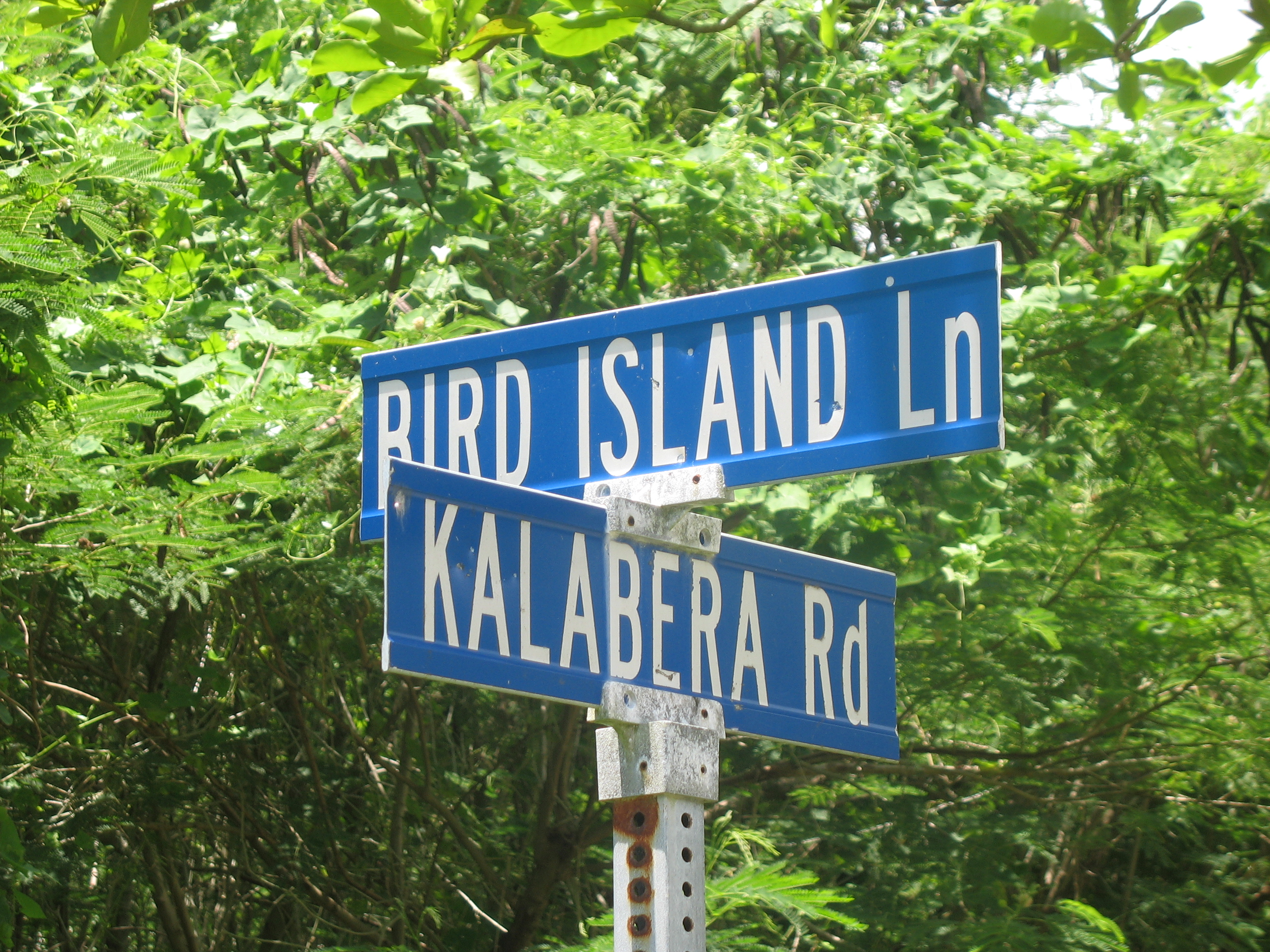
Isn’t this where you’d expect Bird Island Lane to begin? Me too. Pretty easy. No yellow shorts this time. The only problem was, there wasn’t a lane there. No road of any kind. There was the beginning of a trail though so we guessed we’d have to walk a little further than we’d anticipated and set off. It was an easy, well marked and mostly level path through the jungle. We knew we were going in the right direction because we could hear the ocean in the distance.

Suddenly, after walking for awhile, we came upon a road! Apparently, Bird Island Lane did exist, just not where the sign said it was! Weird! Sure enough, there was the actual trailhead too.  From that point on, it was a fairly steep descent but, like the trail to Old Man by the Sea, there were ropes to help us down the steep, slippery parts.

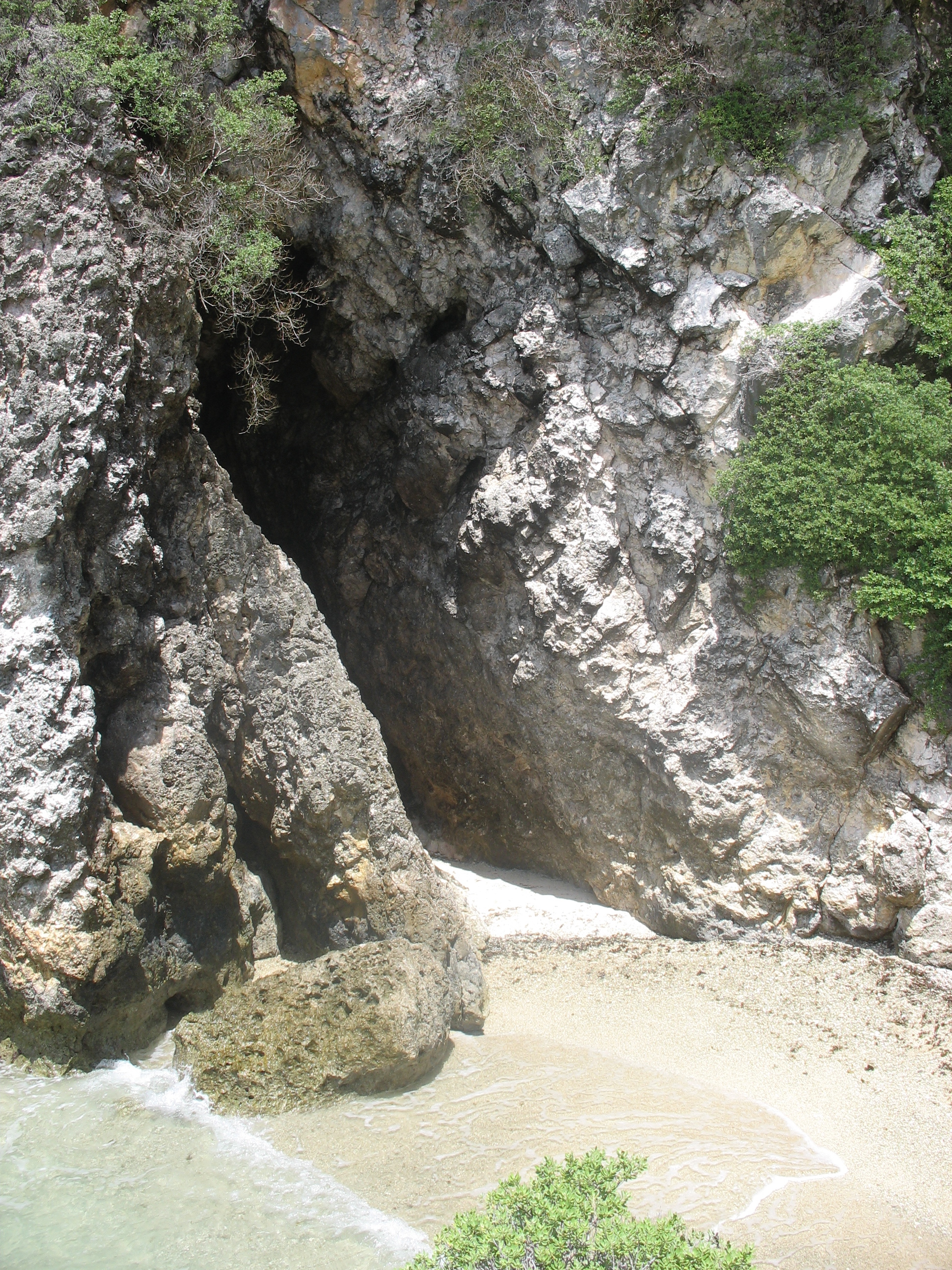
Soon, we emerged on the beach. The tide was high so we couldn’t get close to Bird Island itself but we walked the narrow sandy beach from one end to the other, explored a small cave at one end and climbed over rocks at the other. What a beautiful spot!


We’re close to the equator here and with the tropical sun beating down on us and it’s heat reflected back at us by the white coral sand, it was really hot on the beach! We cooled off with a dip in the Grotto on our way home. This time we had our masks and snorkels with us so we could actually see the fish and watch the scuba divers deep below. It amazes me that there are lots of people living on the island who have never swam in the Grotto and we’ve been there three times already!

Though this is a tiny island and we’ve explored it pretty extensively, I know that there are still more hikes that could be done and beaches that could be seen. With close to two weeks left, though, we’ve seen and done all the things we most wanted to do which is good because we’ll be busy with Vacation Bible School every day next week. Ministry is, after all, the main reason we’re here!