I ended yesterday’s post with a question. How can we, like Mary of Bethany, sit at the feet of Jesus and learn from Him? (Luke 10:38-42) Today, I will try to answer that question by sharing a slightly edited version of the remainder of the first talk that I gave at a ladies retreat on Saturday. Again, although I was speaking to women, what I’m sharing applies to both men and women.
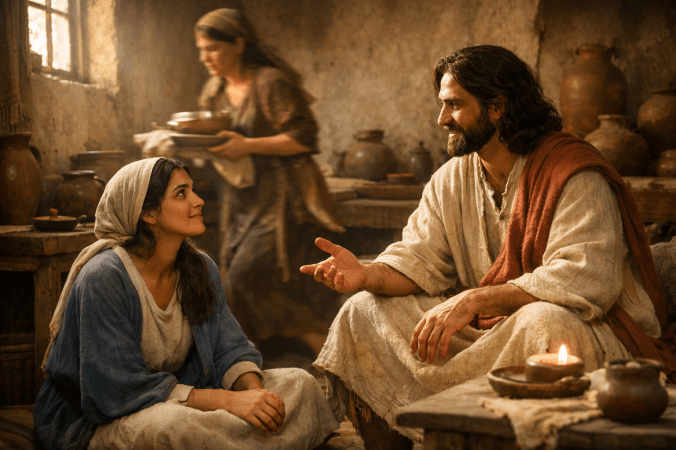
A.W. Tozer, a prominent 20th century pastor, author, and editor, said that “God can be known satisfactorily only as we devote time to Him” but how do we do that? I want to look at three answers to that question: Scripture, prayer, and community. There’s no one size fits all, perfect way to spend time with Jesus, but these three components are vital parts of a life with Him.
Let’s start with the Word of God. The Bible is so much more than just an ancient text. It’s filled with timeless truths and profoundly practical principles that are just as applicable today as they were when they were written thousands of years ago. The world in which we live has changed, but the principles are eternal.
There are many different ways to incorporate Scripture into our daily lives. Although there’s nothing inherently wrong with them, I’m not actually a big fan of read through the Bible in one year plans. You start off in Genesis with the stories of creation, Adam and Eve, Noah’s ark, Abraham, Isaac, Jacob, and Joseph. Exciting stories that keep you reading. Then you move into Exodus and read about God saving His people from slavery in Egypt, but after that comes Leviticus, a book about laws, rituals, sacrifices, and priestly duties. Perhaps you push through that only to find that Numbers is aptly named as the first few chapters detail a census counting the entire Israelite population by clan and family. By this point many people with great intentions get bogged down and give up. If that’s been you, you were probably left feeling frustrated and guilty, as if you’d failed at something important.
I really like something that our pastor said in his sermon several weeks ago. “The Bible isn’t a book to get through, it’s a book to get through to you.”
If you do decide to read through the entire Bible from start to finish, doing it in one year might not be a manageable goal for you. That requires reading more than three chapters a day. Instead, if that’s more than you can realistically see yourself doing, try taking smaller, more manageable bites and really focusing on what you read. So what if it takes three or four years or even longer to finish? It’s not a race!
An option that I prefer for reading from Genesis through to Revelation is a chronological Bible that rearranges the text into the order that the events occurred historically, rather than the traditional order that we’re used to. It makes so much more sense to me that way. Many of the most commonly used versions are available in this format, but regardless of how you decide to incorporate Scripture into your daily life, make sure you choose a translation that you find easy to understand.
Instead of reading through the entire Bible, there are many other ways to incorporate Scripture into your busy days. There are, of course, print and online devotionals that provide short, daily readings and small portions of Scripture. Listening to an audio Bible is another great option that can be done almost anywhere.
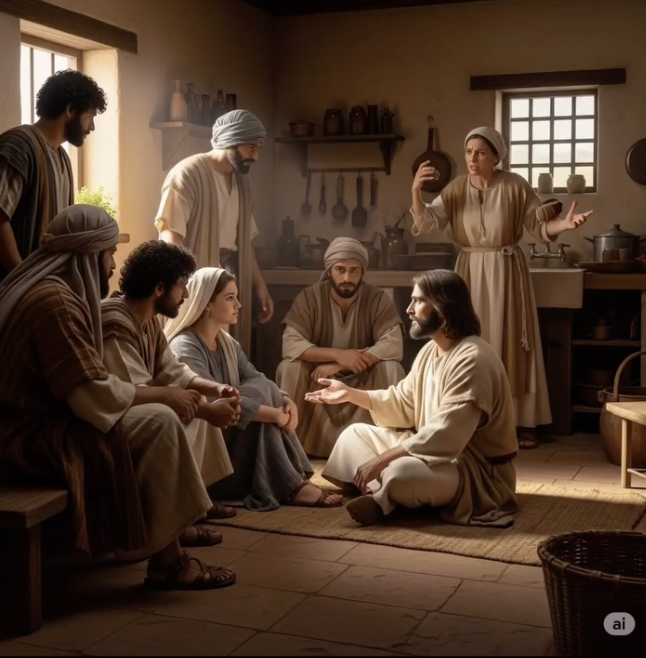
Psalm 119:11 says, “I have stored up your word in my heart.” Regardless of how we do that, our goal must be more than surface knowledge. Instead, we need to allow the truth of God’s Word to sink deep into our hearts and shape our lives. We need to be like Mary sitting at Jesus’ feet. I suspect that she hung on every word He said. I don’t think she was daydreaming. Her mind wasn’t wandering and she wasn’t dwelling on the next thing on her to-do list.
God knows what season of life each one of us is in. He knows that the amount of time that we’re able to carve out for Him will vary at different times in our lives. We just need to make sure that we’re giving Him quality time. Whether you read three chapters a day or just a few verses, It’s very easy to fall into the trap of simply performing another duty, something else to check off on your to-do list. Don’t just skim over what you read, take time to really think about what it’s saying to you.
While Scripture is God speaking to us, prayer is us in conversation with Him. It’s how we stay close to Him. Jesus often withdrew to desolate, quiet places to pray. If He, the Son of God, needed solitude with the Father, how much more do we?
While a place of solitude sounds great, that might not be realistic for you in the season of life that you’re in right now. I go into my den and close the door for a time of prayer every morning, but I realize that being retired, I’m speaking from a position of privilege. That hasn’t always been the case. My den used to be a child’s bedroom and in those days, mornings certainly didn’t look like they do now. They were a hectic rush of making sure that everyone was dressed, fed, and ready to leave for school on time. During the 18 years that I taught in the next little town down the highway, my prayer time was in the vehicle on the way to school and back. I also remember praying in the bath when that was my only alone time. The point isn’t isolation though, it’s presence. It’s sitting at the feet of Jesus whenever and wherever works best for you at this point in your life.
In 1 Thessalonians 5:17-18, Paul gives us a clear and challenging command, “Pray without ceasing, give thanks in all circumstances; for this is God’s will for you in Jesus Christ.” He doesn’t describe a prayer time, but a prayer life, an ongoing conversation with our Lord. Intentionally setting aside a specific time and place to pray each day is an important spiritual practice, but we can also pray anytime, anywhere. Praying isn’t just speaking though, it’s slowing down, listening, sitting with God, and letting Him speak into the never-ending noise. It’s a relationship, not a request line and it isn’t something to be squeezed into the edges of life.
Also, our love for God isn’t measured by how perfect our prayers sound. If Jesus is our friend, as Scripture tells us He is, and as He was to Mary and her sister, Martha, then we can talk to Him as we would to anyone else. We can tell Him anything. If it’s important to you, it’s important to God. Whether it’s praying for an open parking space or an end to the war in Ukraine, there’s nothing too big or too small to talk to Him about.
Although making Scripture and prayer part of our daily lives are usually solitary activities, God didn’t design us to live the Christian life alone. It’s a group project, not a solo event. We can’t be all that He designed us to be without community. We don’t have what it takes to thrive on our own. We need each other’s gifts and each other’s presence. When we walk with others whose lives are aligned with the Word of God, they challenge us, encourage us, and help us see what we can’t see on our own. We need people who will remind us of what’s true when we falter, who will pray when we can’t find the words, who will walk beside us when we feel like we can’t go on. That requires more than simply doing church together on Sunday mornings. It means getting to know one another on a deeper level. That’s one of the benefits of being part of a small group Bible study.
In John 15:4, Jesus said, “Abide in me, as I also abide in you.” He didn’t say visit occasionally or check in when it’s convenient. He didn’t say, see you next Sunday! He said abide, remain, sit at my feet.
I’m going to conclude with a slightly altered version of an illustration from the book, Living by the Word, by Seth M. Jones:
Abiding is like tending a fire in winter. You don’t just light it once and walk away expecting the warmth to last. You return to it. You feed it. You guard it from going out. Your presence is required. Prayer, scripture, and community are three of the logs we lay on that fire. Without them, our love for God cools into embers, but with them it burns bright, steady, and strong.
In my next post, I plan to share from the second talk that I gave on Saturday on the theme, Present Over Perfect.
 If you are one who usually reads my blog on Fridays, you will have noticed that there wasn’t a new post this week. We spent Good Friday with family and it was indeed a good day. In the morning, we attended a solemn service commemorating the final 24 hours leading up to our Lord’s crucifixion. I don’t think there’s any better way to explain the significance of Good Friday than by sharing the B.C. comic. It says it all. Jesus took my place. He took your place. And He did it willingly. Thankfully though, that wasn’t the end of the story.