Writing On Stone Provincial Park

Over the years that we’ve been together, hubby and I have visited 18 different countries and we’re about to add 2 more to the list, but there are still places closer to home that we haven’t explored. Until the past week, Writing On Stone Provincial Park was one of them.

Straddling the Milk River just north of the Alberta-Montana border, Writing On Stone or Áísínai’pi, which means “it is written” or “it is pictured” is geographically central to the vast area inhabited by the Niitsítapi (Blackfoot) people since time immemorial. For them, it is also a deeply sacred place, a place where they seek the guidance of spirit beings thought to dwell in the hoodoos and nearby hills. Áísínai’pi was declared a UNESCO World Heritage site in 2018 and in order to protect the ancient art on many of the rock faces from vandalism, part of the park is an archaeological preserve closed to the public except by guided tour.

It is impossible to adequately capture the sheer magnitude of the landscape in photos, but here are a few to give you a taste of what you would see if you were to visit.

Writing On Stone has the highest concentration of Indigenous rock art on the Great Plains of North America. We did a two hour Markings of Áísínai’pi tour to view many of these pictographs and petroglyphs. Pictographs are painted on the rock with red ochre, crushed iron ore mixed with animal fat or water. Time and weathering have all but erased these remnants of days gone by.

Although the Blackfoot elders want the rock art to age naturally and no attempt has been made to preserve them, petroglyphs, etched into the stone, have lasted much better. While there is no technique that can accurately date rock art sites, researchers estimate their age based on objects depicted in the artwork as well as by analyzing changes in rock art styles. The next photo shows part of one of the oldest panels in the park.

While the exact meaning of much of the artwork is unknown, much of it was probably ceremonial, created during different rituals like vision quests. 

We also hiked the 5 km out-and-back Matapiiksi (Hoodoo) Interpretive Trail and, on a different day, spent a couple of hours wandering our way through the Hoodoo Exploration Area on the hillside between the campground below and the very informative interpretive centre perched on valley’s edge above.

All I could say over and over again was “This is so amazing!”

Museum of Aboriginal Peoples’ Art & Artifacts

We spent a few days this week camping, hiking, and kayaking in Sir Winston Churchill Provincial Park near the small town of Lac la Biche, about two and a half hours northeast of Edmonton, Alberta. When I read that the Portage College campus in Lac la Biche is home to the Museum of Aboriginal Peoples’ Art & Artifacts, I knew that we had to go into town to see it. I recognized the names of well-known artists like Bill Reid, Alex Janvier, and Norval Morrisseau and was eager to see their work.

Arriving at the college, I expected to find a gallery showcasing the works of these and other Indigenous artists. Instead, the extensive collection of traditional and contemporary works lines the hallways of the school and we were free to wander and enjoy them. With only one class in session while we were there, it was as quiet and serene as any traditional gallery would have been.

IMG_5793

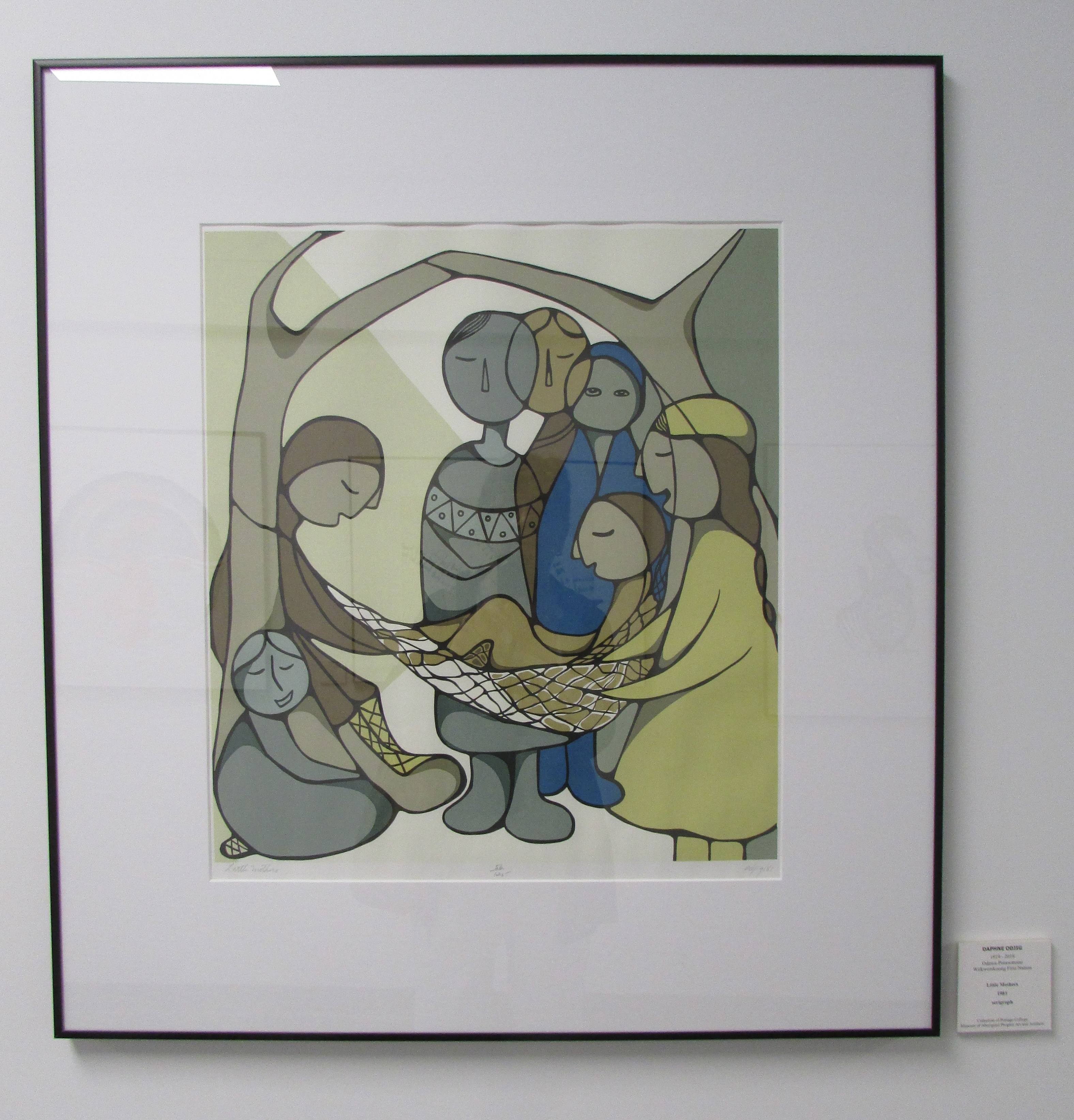
Little Mothers – Daphne Odjig

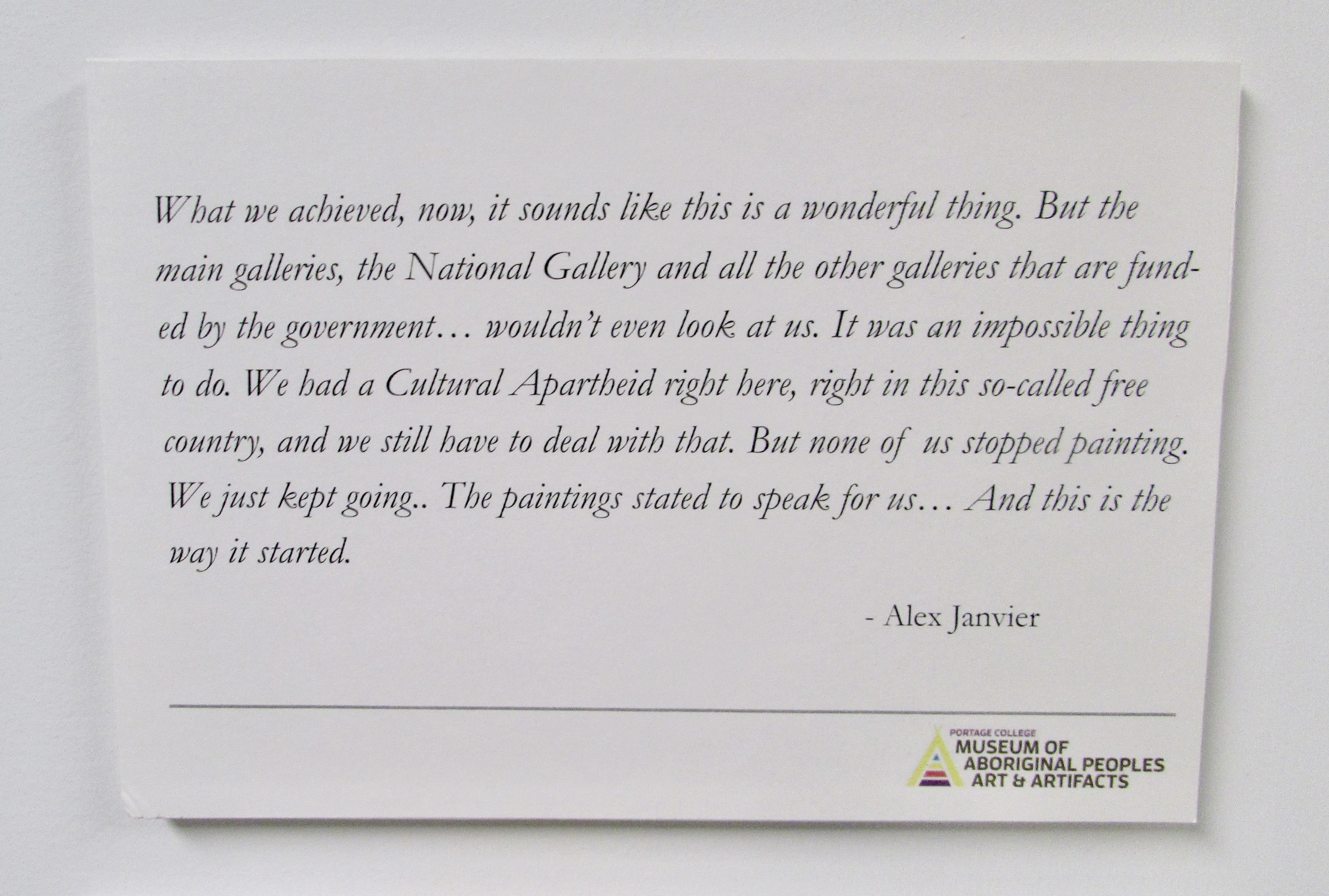
The Portage College museum features the world’s only permanent collection of works by the Professional Native Indian Artists Inc., also informally known as the Indian Group of Seven. The group was formed in 1972 after a series of gatherings in Daphne Odjig’s craft store and gallery in Manitoba and later incorporated as an attempt to be taken seriously as professional artists and to advocate for Indigenous art to viewed as fine art and to be included in galleries across the nation. The museum on the Portage College campus began in 1978 as a teaching collection for the college’s Native Arts and Culture programs and grew from there.

IMG_5783

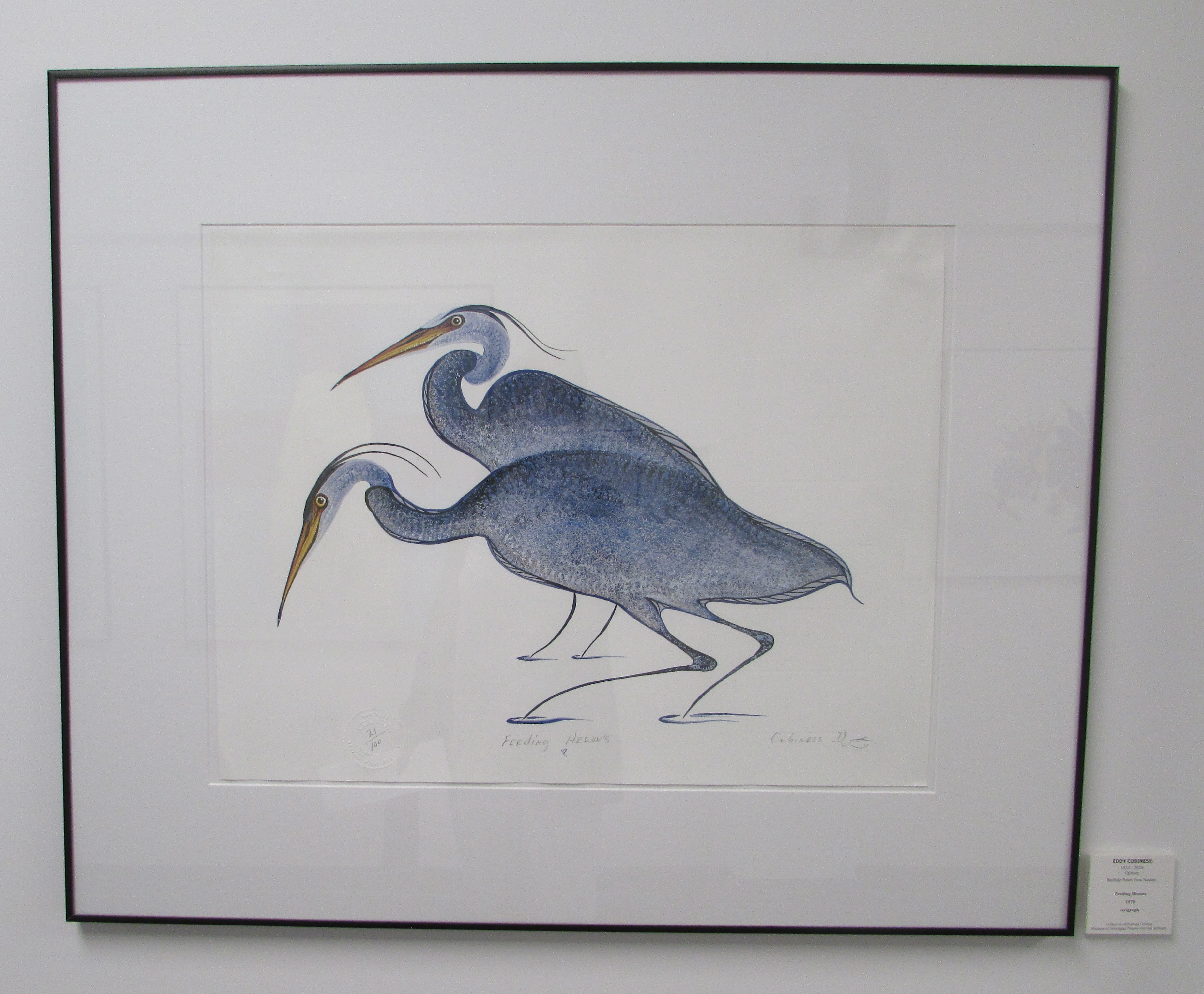
While I was impressed by most of what we saw, amongst the Group of Seven it was the work of Eddy Cobiness (1933-1996) that really stood out to me. Cobiness, of Ojibway descent, was born in Minnesota and raised on a reserve in Manitoba. Though I had not heard of him before, his art is held in many prominent private and public collections.

IMG_5777

Hoop Dancers – Eddy Cobiness

IMG_5805

Feeding Herons – Eddy Cobiness

IMG_5795

Mother Muskrat – Eddy Cobiness

IMG_5797

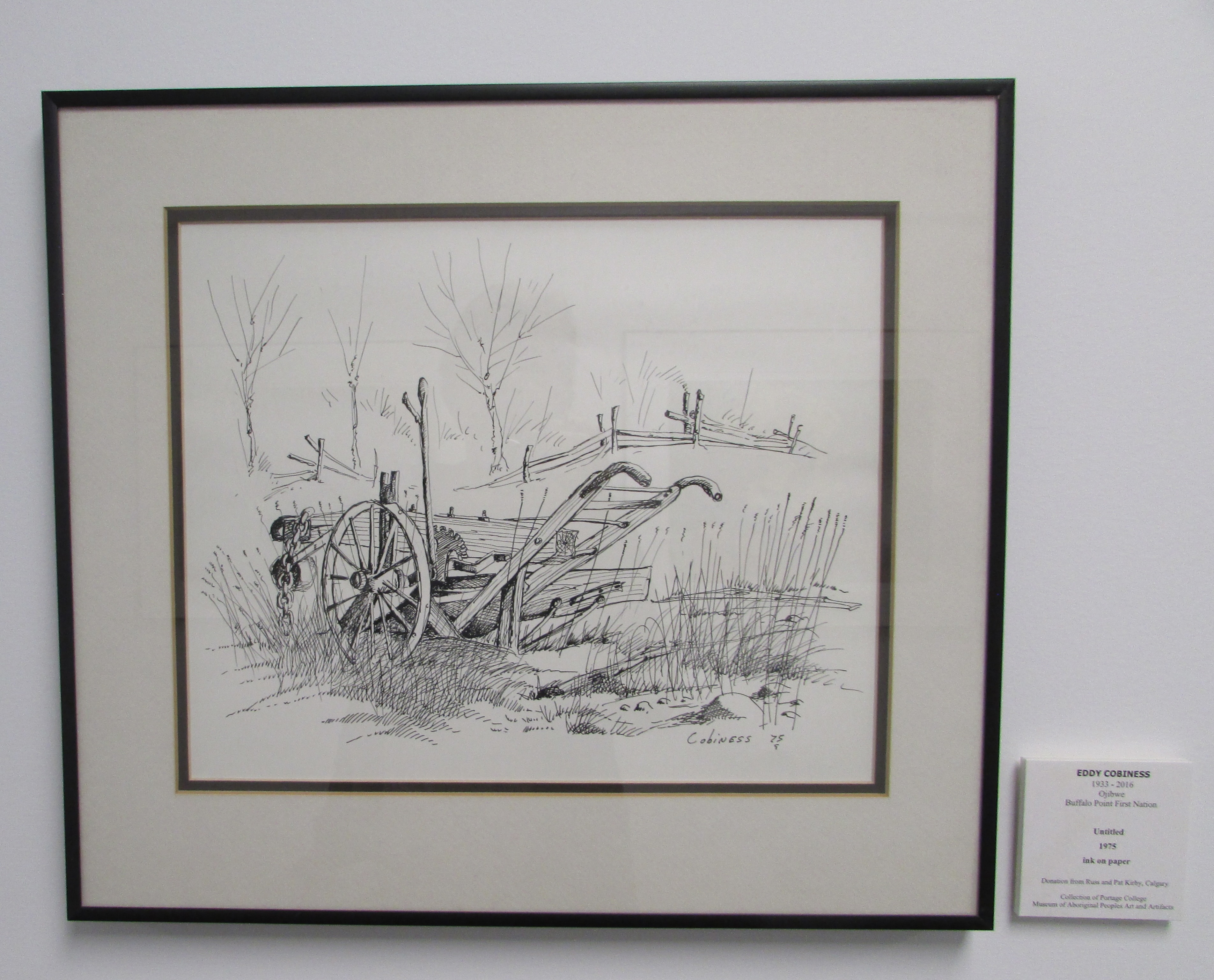
Untitled – Eddy Cobiness

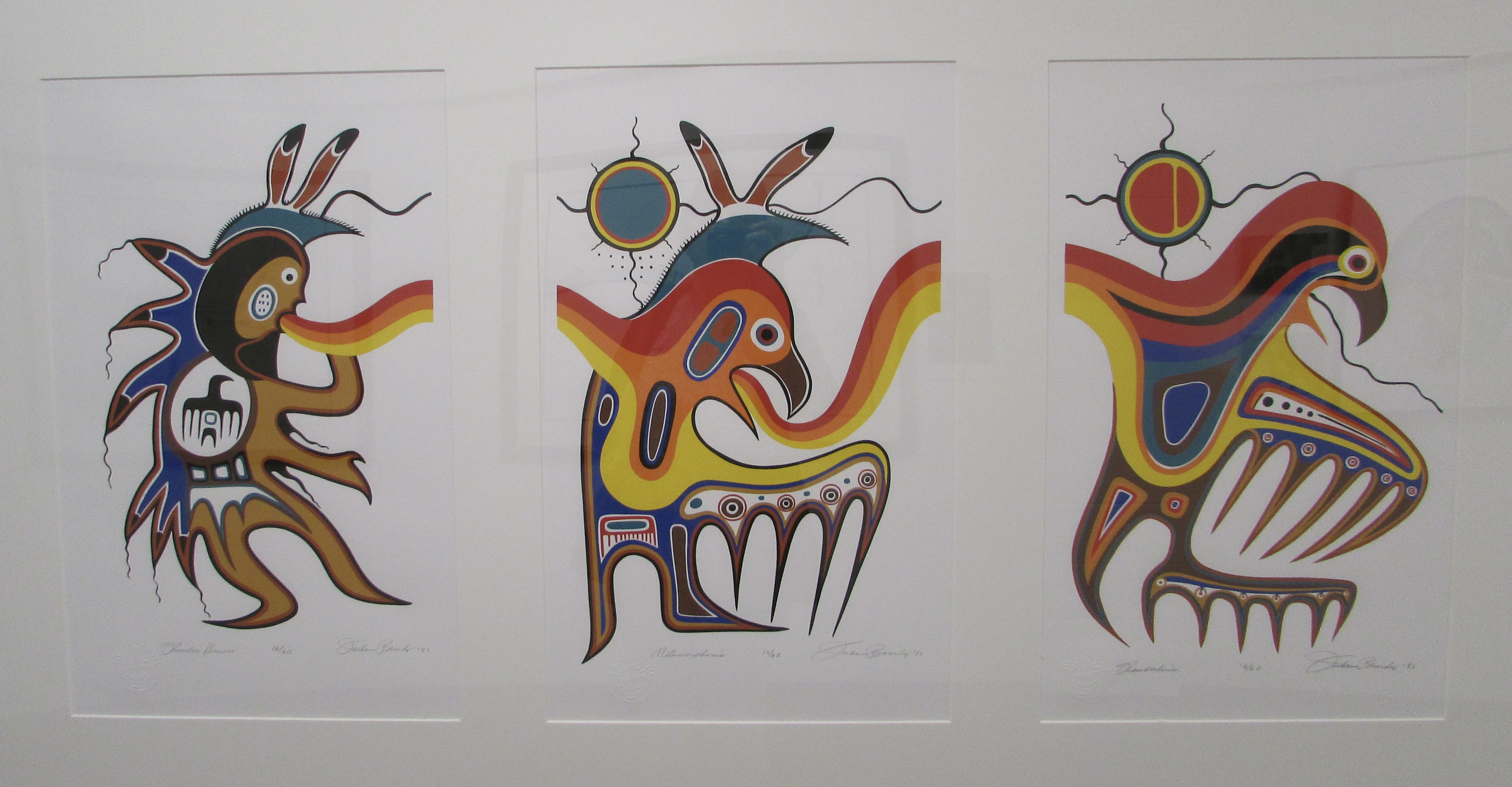
These three colourful designs by Jackson Beardy also caught my attention, probably because their style is somewhat similar to that of the Indigenous artists of the Northwest Coast that I love so much.

IMG_5788

Thunder Dancer / Metamorphosis / Thunderbird – Jackson Beardy

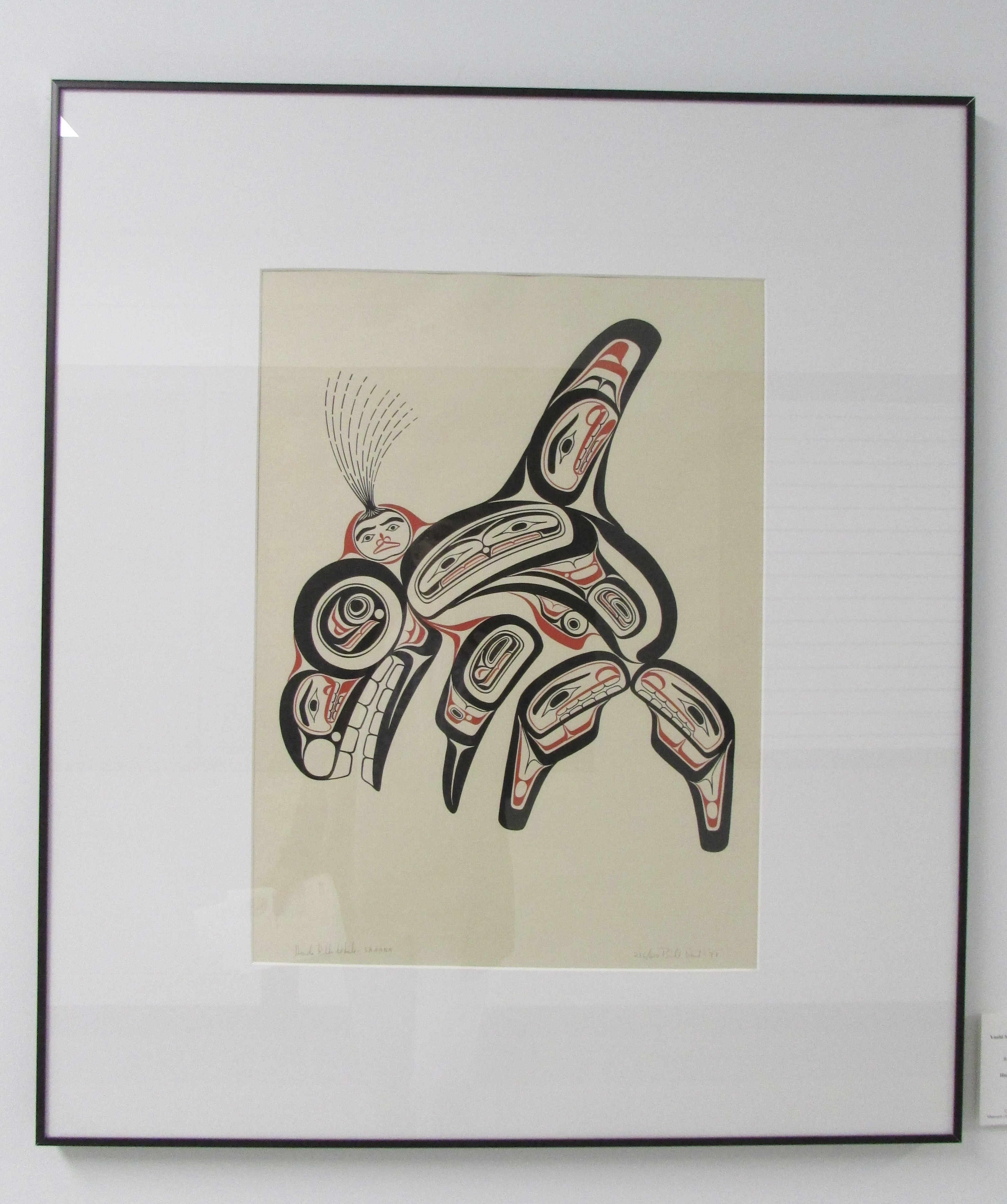
In addition to showcasing the work of the Professional Native Indian Artists Inc., the museum also features Northwest Coast and Inuit art. Bill Reid (1920-1998), was a prolific Haida artist, perhaps best known by many for his giant sculpture “Spirit of Haida Gwaii” on display in the international departures area of the Vancouver airport.

IMG_5821

Haida Killer Whale – Bill Reid

IMG_5819

Haida Bear – Bill Reid

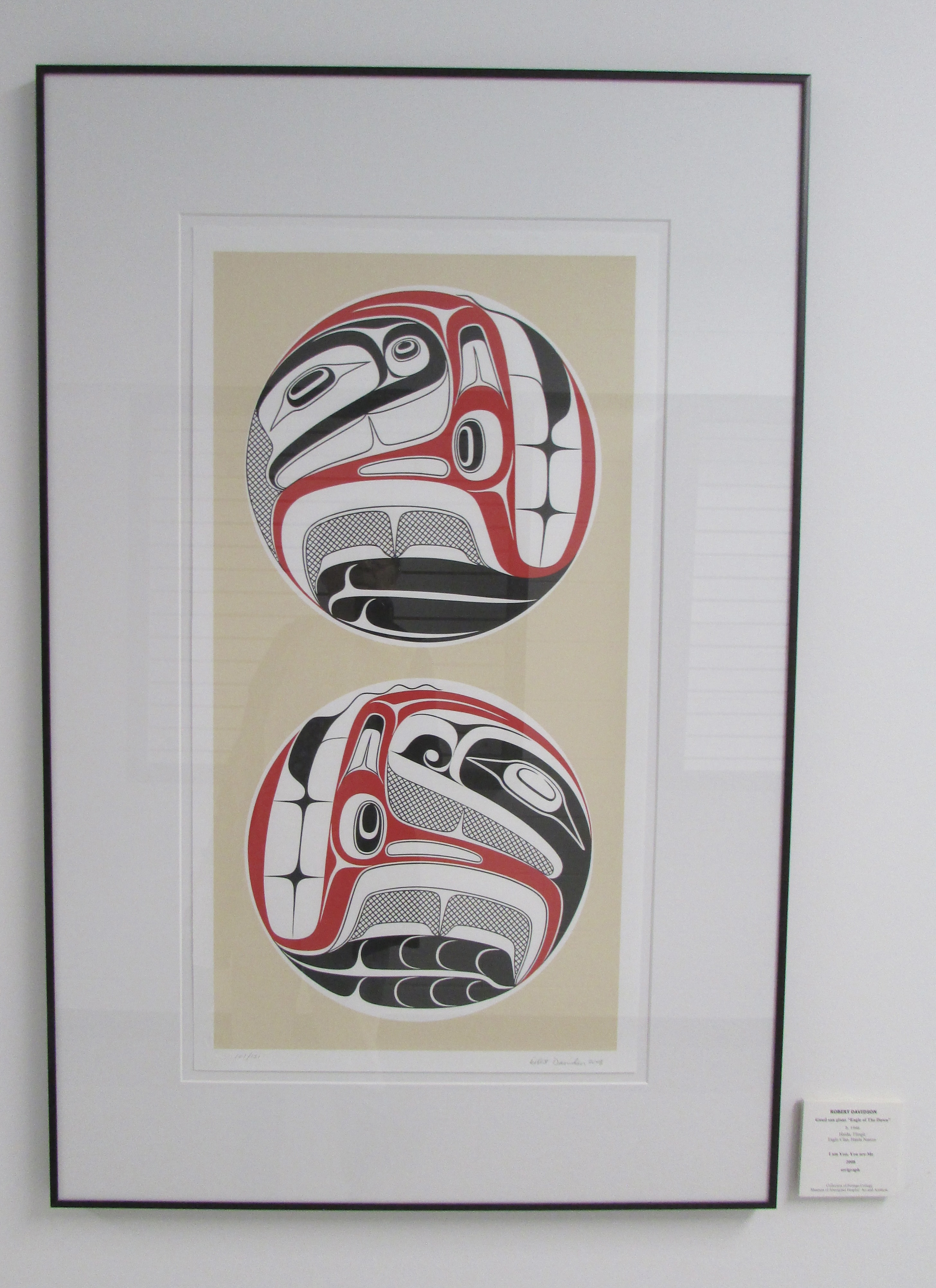
Other coastal artists whose work is on display in Lac la Biche include Tony Hunt Sr. (1942-2017) who was the hereditary chief of the Kwa-Gluth people and Robert Davidson who is of Haida and Tlingit descent.

IMG_5830

Southern Kwa-Gulth Moon – Tony Hunt Sr

IMG_5824

I am You, You are Me – Robert Davidson

I thought this piece by Richard Shorty of the Tuchone Kwanlin Dun First Nation in the Yukon was absolutely exquisite. According to Northwest Coast tradition, the hummingbird represents love and beauty.

IMG_5833

Lily of the Valley / Song of Solomon – Richard Shorty

In addition to the framed work lining the corridors of Portage College, there are numerous glass cases containing carvings, baskets, beadwork, ceremonial clothing, moccasins and mukluks, headdresses, masks and more. Due to the reflective quality of the glass, it was difficult to get good photos, but I did manage to get one of this perfectly preserved Mi’kmaq porcupine quilled basket from the late 1700s or early 1800s.

IMG_5813

While I was thrilled to be able to spend a couple of hours enjoying this amazing collection of Indigenous art and artifacts, it saddens me that it’s hidden away in a remote location where few Canadians or visitors to our country will ever have the opportunity to see it.