More of Lisbon

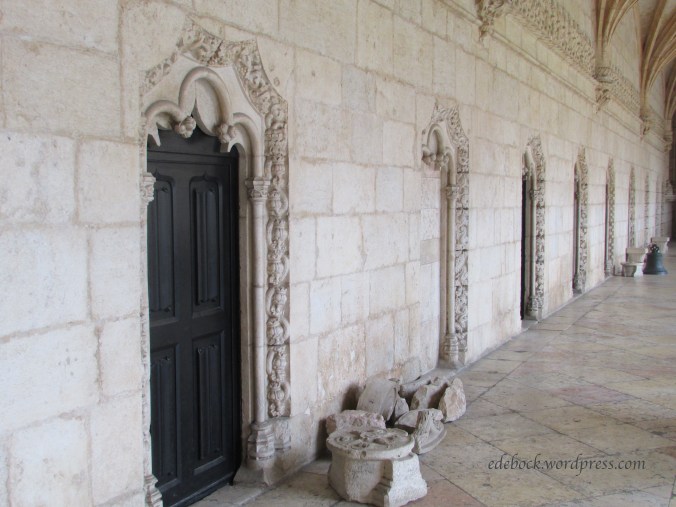
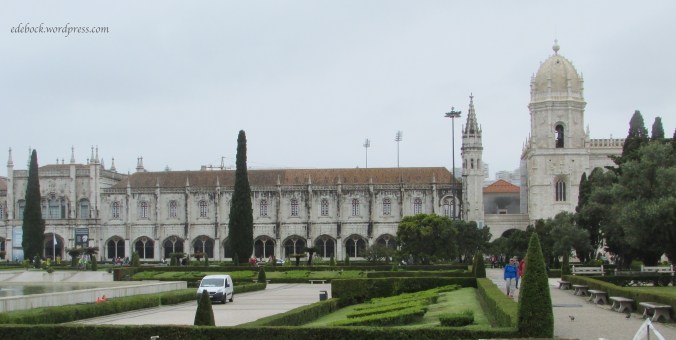
Yesterday morning we climbed onto a crowded city bus and set off to explore one of Lisbon’s most impressive landmarks, the Jerónimos Monastery.  Built of sandstone in 1502, the monastery overlooking the Tagus River was populated by 100 monks of the Order of Saint Jerome, whose spiritual job it was to give guidance to sailors and to pray for the king. Monks occupied the monastery until the dissolution of the monasteries in 1833 after which the building became state property. It was then used as an orphanage/school for the Casa Pia of Lisbon (a children’s charity) until around 1940 and is now a major tourist attraction.

IMG_7498 - Version 2

IMG_7445 - Version 2

IMG_7463

IMG_7475

After leaving the monastery, we walked about a block to the the famous Pastéis de Belém, an amazing bakery with 400 tables that appear to be constantly in use as locals and tourists alike sample the delightful pastries and treats. We were there for the egg tarts, the Pastéis de Belém that gave the bakery their name. We were first introduced to this Portuguese delicacy in Macau about 10 years ago. The Lisbon bakery began making the original Pastéis de Belém in 1837 following an ancient recipe from the Jerónimos Monastery.

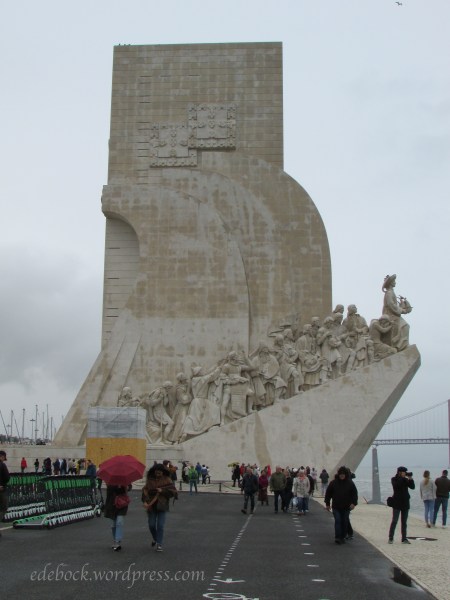
After indulging, we strolled along the riverfront first passing by the Monument of the Discoveries. Inaugurated in 1960, the 52 metre monument commemorates the Portuguese age of discovery and the five hundredth anniversary of the death of Henry the Navigator, who discovered the Azores, Madeira and Cape Verde.

IMG_7532

IMG_7504.jpg

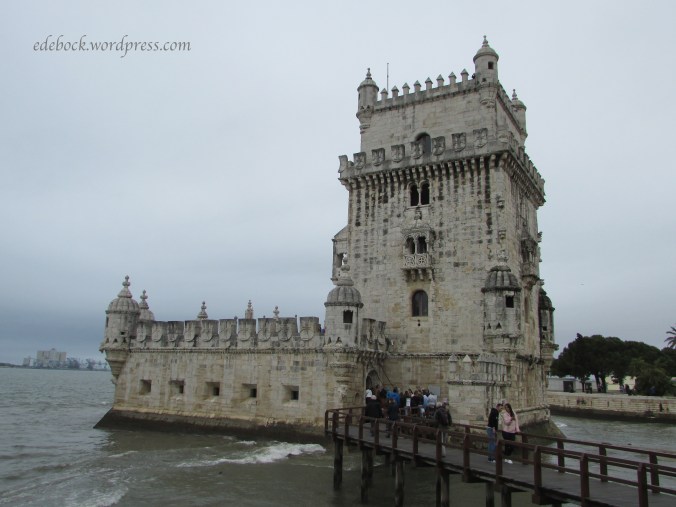
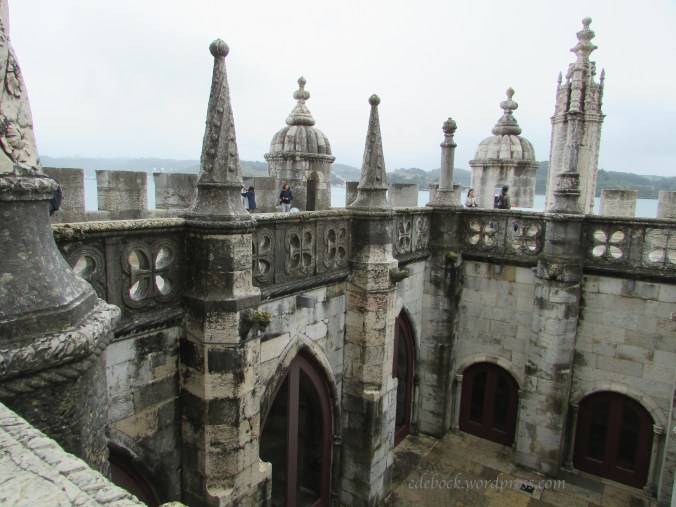
Just beyond the monument stands the Belem lighthouse and a little further on, the Belem Tower, another high place for us to climb. 93 winding stone stairs took us to the top! Originally built between 1514 and 1519 to defend the city, over the years it has been used as a prison, a customs post, a telegraph station, and a lighthouse.

IMG_7527

IMG_7515

IMG_7510

IMG_7518

That brings our quick visit to Lisbon to a close. Today we flew to Rome. More about that in future posts, but there is so much to see and do here that it may be a few days before I’m back at the keyboard to share our adventures with you!

High places

How can I possibly summarize the past 58 hours in Lisbon, Portugal in a single blog post? I could easily write several if I had time, but let me share at least some of the highlights.

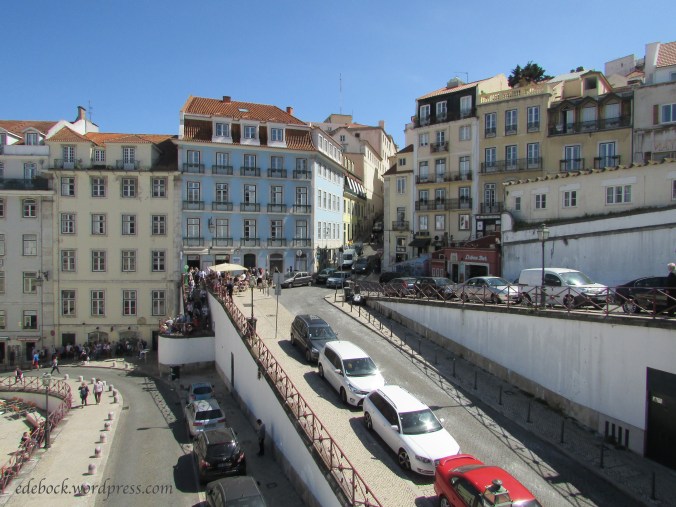
Our plane landed at noon on Monday. After finding our way via public transit to our cozy little attic apartment, we immediately headed out to explore Baixa, the historical and commercial heart of Lisbon. Stepping out of Rossio station, we were greeted by sights like these and I knew that my long held dream had finally come true. I was in Europe!

IMG_7343

IMG_7344

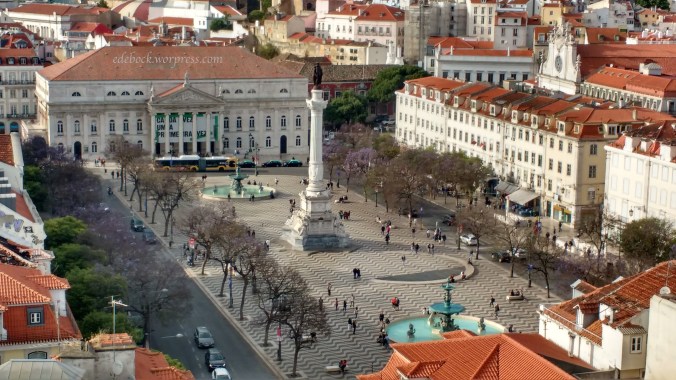
Rossio Square or more properly Praça de Dom Pedro IV, one of several squares in the downtown area, was a short walk away. With it’s beautiful fountains and the obelisk topped by King Pedro IV, who reigned from October 1822 to April 1831, the square was the perfect spot to soak up some sun!

IMG_7353

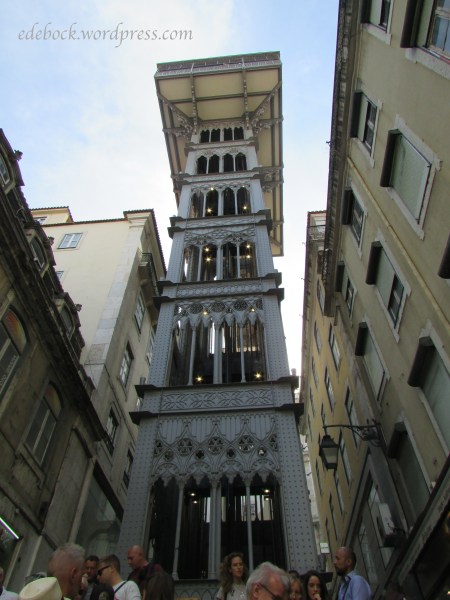
A little later in our walk, we came across the famous Santa Justa Lift. Had we realized when we joined the line that snaked its way up the hill at the base of the lift that the entire experience would take us over two hours (most of it standing in line), we probably wouldn’t have bothered going up. Once we finally made it to the top, however, the views were great and given the fact that Monday ended up being our only clear sunny day in Lisbon, I’m glad we took the time. Richard, however, calls it the stupidest thing we’ll do in Europe!

IMG_7369

IMG_20190506_182503411

IMG_20190506_182640434_HDR

There’s Rossio Square again!

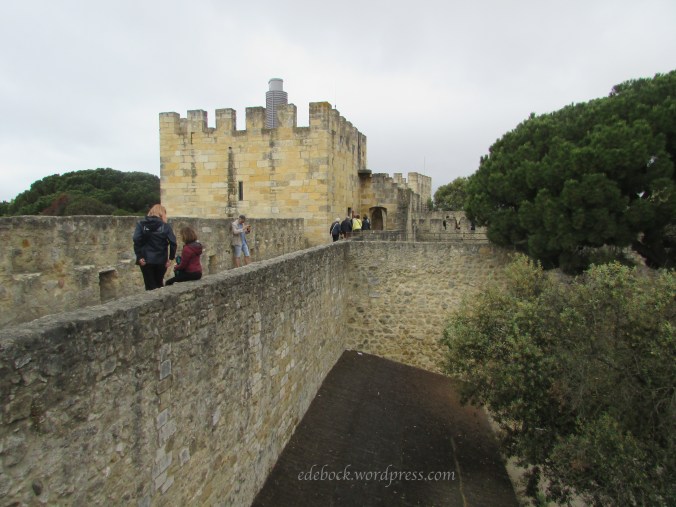
As it turns out, the Santa Justa Lift was far from the only high place we’ve visited in Lisbon! Yesterday morning, we took a bus up to São Jorge Castle, a medieval fortress perched high above the city. If you look closely, you can see it in the upper left quadrant of the first photo above.

IMG_7393 IMG_7403

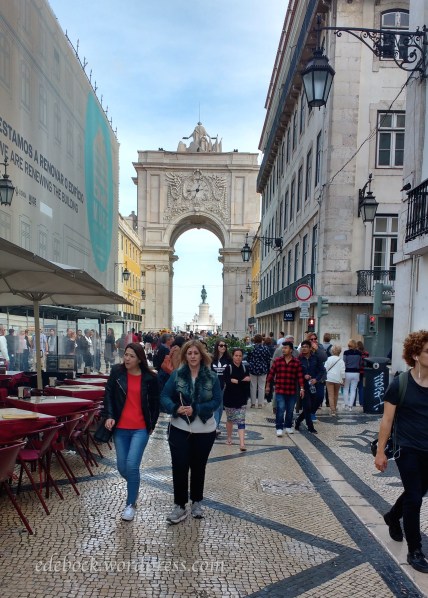
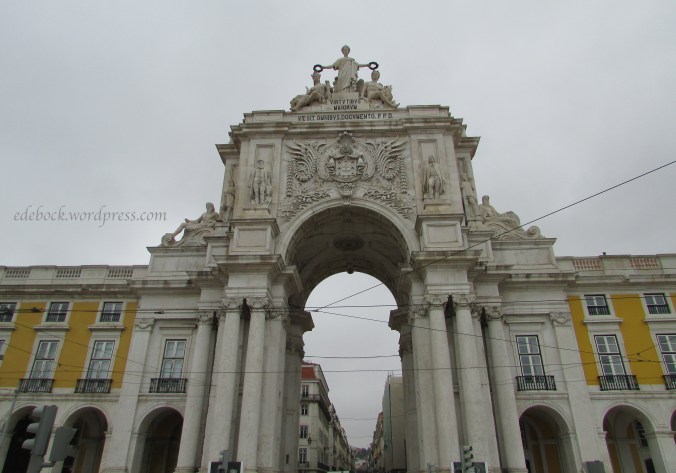
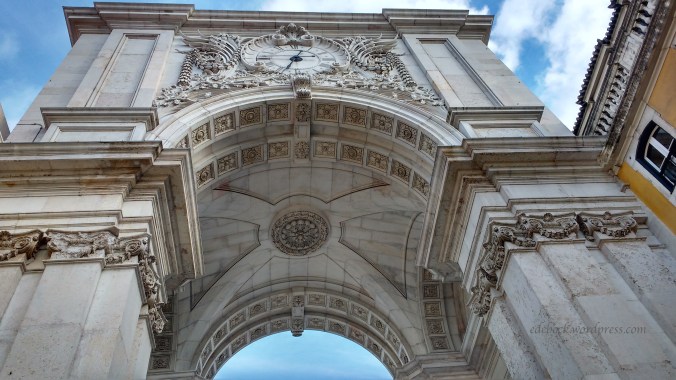
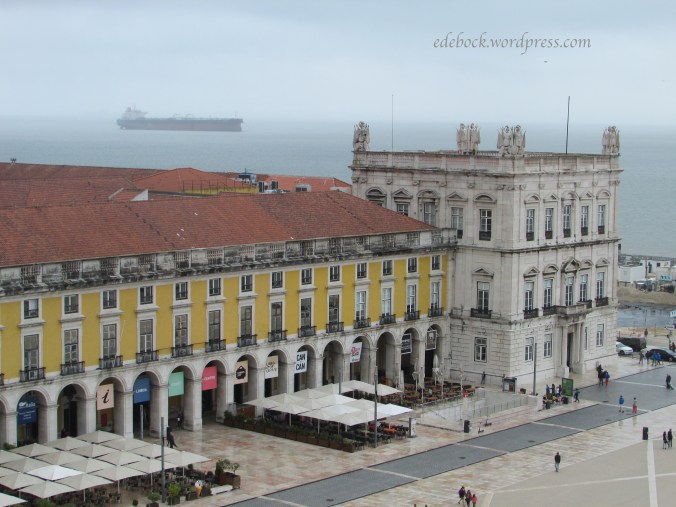
After descending the hill on foot, wandering our way through the narrow cobbled streets of the Alfalma district and stopping for lunch along the way, we found yet another high place to climb. The Rua Augusta Arch stands at the end of the elegant pedestrian street, Rua Augusta, overlooking Praça do Comércio, or Commerce Square, and the Tagus River.

IMG_20190506_185135254_HDR

IMG_7443

IMG_20190506_185336829_HDR

Again, the views from the top were great!

IMG_7430

IMG_7428

IMG_7434

This is just a glimpse of the high places and some of the highlights of our first day and a half in Lisbon. I haven’t even gotten to today yet, but it’s getting late and we have an early plane to catch tomorrow, so the rest of Lisbon will have to wait!


Onstage again!

Over my many years of involvement in community theatre one of the greatest joys for me has been sharing the stage with former students. Some of them even got their first taste of acting in my junior high drama classes. Never did I imagine, however, that I would someday act in a play written by one of them!

IMG_7316 - Version 3

❤  This photo absolutely warms my heart. On my right, is my former student Kelly Berg, author of Silent Jim, in his lead role of Marshall Henry Jackson. Standing on my left, in the role of Jesse Longstrand, the blacksmith, is a young man I’ve known since he was a preschooler. I taught him Sunday School back in those days!

Silent Jim is a western murder mystery with a mix of intensely serious moments and hilariously funny ones. Thursday evening was opening night. We performed again on Friday and have two more shows next weekend. Our cast of 23 ranges from preteen actors trying out the stage for the very first time to seasoned veterans like myself.

Cast photo

Cast photo: Brenda Grove

I have a very small onstage role this year. In fact, I only have nine lines to deliver! Silent Jim is set in the small fictional town of Buffalo Skull in the American west in the late 1870s. In the original version, my character was a judge but, like any western, the play has a lot of roles for male actors and far fewer for females. We had to do a bit of adjusting. There were no female judges in the US in the 1870s, but the first female lawyer, Arabella Mansfield, was called to the Iowa bar in 1869. We could change our judge’s role to that of a lawyer and remain authentic to the time we were portraying. Our lady lawyer needed a name, however, and that’s an interesting side story.

One of the aspects of theatre that I absolutely love is the costuming, especially when we’re doing a period play. What would a lady lawyer have worn in the 1870s, I wondered. I turned to the internet in search of photos and as so often happens when I’m online, I ended up going down a variety of interesting and unrelated rabbit trails. One of them led me to an amazing find; my grandmother’s 1909 graduation photo from Dalhousie University in Halifax, Nova Scotia! 

Gran - Eliza Clara Walker - BA Dalhousie University 1909

Though the photo is apparently signed “Lizzie Walker. Dal. 09.” I know that Gran’s full maiden name was Eliza Clara Walker and that later in life she chose to use her middle name. Though hers wasn’t a law degree, there weren’t a lot of university educated women in her day and I thought it would be a wonderful idea to honour her memory by naming my character after her. My fellow thespians agreed and so I became Clara Walker, Esquire!

IMG_7310 - Version 2

In addition to my small onstage role, I also act as prompter for the first three quarters of the play. I was surprised to discover that I really enjoy that position as I’m fully involved in every moment of the show.

curtain call.jpg clouded creations

Curtain call photo: Caity Moore, Clouded Creations


Tea, the universal drink

After water, do you know what the world’s most widely consumed beverage is? Would you say coffee? Beer? Wine? Coke? Wrong every time! It’s actually tea!

There was always tea available in our house when I was growing up in the 1950s and 1960s, but only plain black tea. We drank green tea on the rare occasions when we went to a Chinese restaurant. Now I drink two mugs of green tea every morning and the basket of other teas in my kitchen cabinet is overflowing.

In Canada, our increasingly multicultural society plays a large part in the growing popularity and availability of so many different teas. Over the years, the world has come to us and it has brought its teas with it.

Screen Shot 2019-02-25 at 9.03.21 PMDrinking tea is a tradition that is said to date back to 2737 BCE. According to legend, Chinese emperor Shen Nung was sitting under a tree while his servant boiled drinking water. When some dried leaves from the tree blew into the water, Shen Nung decided to try the infusion that was created and found it to his liking. Since then, tea drinking has spread around the world.

While black tea is more popular in Western countries, green tea is preferred in China and Japan where it is a common part of daily life. Green tea is unoxidized, giving it a lighter taste and aroma than black tea. The tea that is used in the traditional Japanese tea ceremony is matcha which is powdered and not infused. This means that the leaves themselves are consumed resulting in a much higher concentration of the antioxidants, minerals, and vitamins that make green tea healthy. For this reason, matcha has become quite trendy.

Taiwanese bubble tea is a modern innovation. This high calorie tea has as its base an iced tea (typically black, green, jasmine or oolong) with milk and a sugary syrup. The “bubbles” are actually tapioca pearls. As much as I like tea, this one has never appealed to me!

From Thailand comes the very popular Thai tea. Made from strong black tea, often spiced with ingredients such as star anise, crushed tamarind, and cardamom, it’s usually sweetened with sugar and condensed milk and served over ice.

India produces and consumes more tea that any other country in the world. It is best known for it’s chai blends that mix black tea leaves with spices like cinnamon, ginger, nutmeg, cloves, cardamom, and black pepper. Assam is another popular variety of black tea which is grown in the Assam region of India. It is used in many breakfast blends including English Breakfast and Irish Breakfast, but is also consumed on its own. It has a strong, malty flavour, a reddish colour, and is high in caffeine. Darjeeling is yet another tea that is grown in India, specifically the mountainous Darjeeling region in the northern part of the country.

In Morocco, drinking tea is more than simply a social custom, it’s also part of doing business. If you find yourself in a Moroccan market, you’ll likely be sat down and offered a glass of mint tea by a vendor wanting to sell you a beautiful carpet. This is touareg tea, a green tea prepared with spearmint leaves and sugar.

It was Portuguese and Dutch traders who first brought tea to Europe in the early 1600s. By the mid 18th century it had become Britain’s most popular beverage with the East India Company using fast ships called tea clippers to bring the leaves from India and China.

Then there are the herbal teas which aren’t considered “real” tea at all because, unlike black, white, and green teas, they aren’t made from the leaves of the tea bush (Camellia sinensis). Popular among the herbal teas is rooibos or bush tea from South Africa which is made from the leaves of the red bush, a broom-like member of the Fabaceae family.

One of my favourite teas is Earl Grey, a black tea flavoured with oil from the rind of the bergamot orange, a fruit grown mostly in Italy. It is thought to have been named for Charles Grey, 2nd Earl Grey, who was British Prime Minister from November 1830 to July 1834. In addition to regular Earl Grey, I have Vanilla Earl Grey, Lavender Earl Grey, and even Double Bergamot Earl Grey in my collection!

There are apparently all kinds of health benefits to drinking tea, especially green tea. The comparative lack of processing means that it has a higher level of antioxidants and polyphenols. Studies have shown that it may:

  1. lower cholesterol
  2. lower blood pressure
  3. reduce the risk of heart attack and stroke
  4. reduce the risk of neurological disorders like Alzheimer’s and Parkinson’s diseases
  5. lower blood sugar
  6. encourage weight loss
  7. aid digestion
  8. inhibit intestinal inflammation
  9. strengthen the immune system
  10. help fight infection
  11. help fight various cancers
  12. prevent bone loss
  13. reduce plaque buildup and tooth decay
  14. help cells regenerate and repair
  15. help slow down aging
  16. increase mental alertness
  17. lower stress hormone levels
  18. prevent arthritis

If nothing else, it’s a flavourful way to stay hydrated, it contains no calories, and it has less caffeine than coffee.

Tea, the healing beverage that knows no borders! 

IMG_7153

That’s 3 of my grandchildren on the cup!
Historic Mexico City

On Wednesday morning we took a taxi into Xalapa and then a bus back to Mexico City. Arriving at our hotel in the historic centre of the city a few minutes after 3 o’clock, we checked in, dropped our baggage in our room, and headed out to explore our surroundings. We had about four hours before dark to see as much as we possibly could!

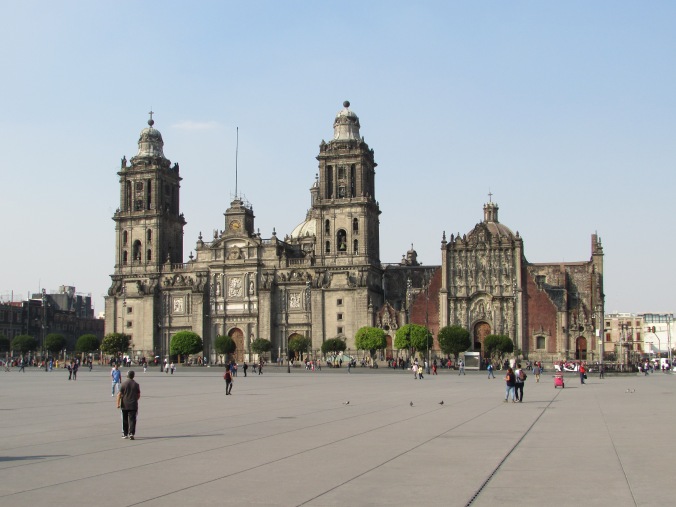
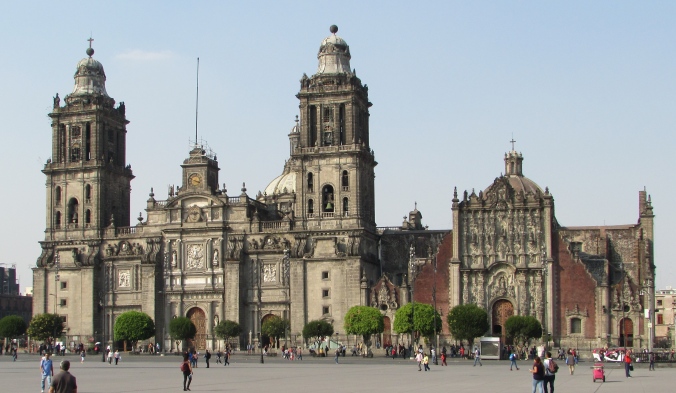
About six blocks north of our hotel, we came across the expansive Plaza de la Constitución. There was a protest of some sort happening just off the south side of the square, but it was the amazing Metropolitan Cathedral (or to give its full name, the Metropolitan Cathedral of the Assumption of the Most Blessed Virgin Mary into Heaven) on the north side of the plaza that completely captured our attention.

IMG_7059

Latin America’s largest and oldest cathedral, the imposing structure is the seat of the Roman Catholic Archdiocese of Mexico and one of the country’s most treasured architectural masterpieces. Built on the site of Templo Mayor, an ancient temple in what was the centre of the Aztec capital of Tenochtitlan, it includes much of the stone from that original structure. Construction of the cathedral, which incorporates several different architectural styles, spanned three centuries from 1573 to 1813! The bell towers house a total of 25 bells, the largest one weighing 13 000 kilograms!

IMG_7059 - Version 2

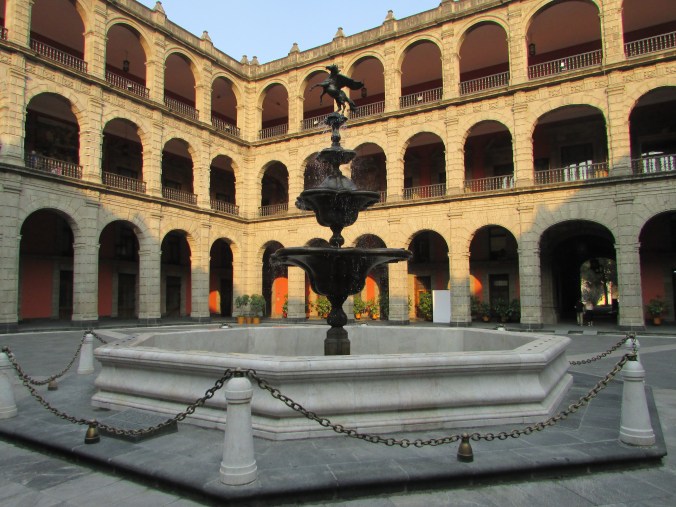
After a quick peek inside the Cathedral, we moved on. The Palacio Nacional, home to the offices of the president of Mexico as well as the federal treasury, is located on the east side of the Plaza de la Constitución. The palace’s main courtyard is surrounded by a three level arcade and has at its centre an enormous fountain topped by an elegant bronze statue of Pegasus, the winged stallion of Greek mythology.

IMG_7102

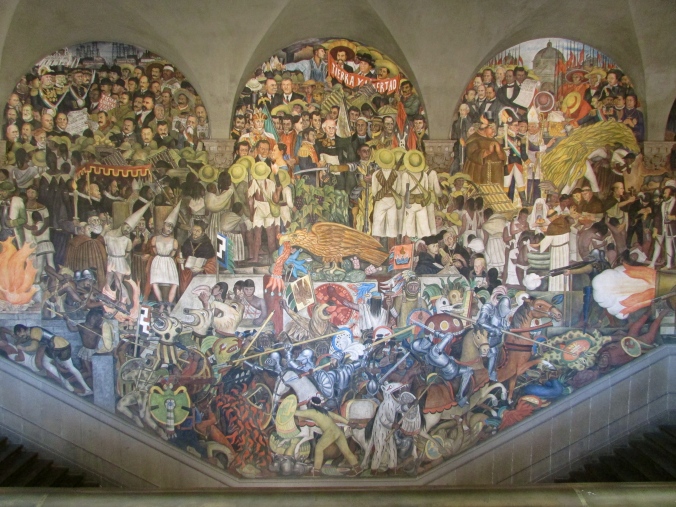
It was the Diego Rivera murals, painted between 1929 and 1951 and depicting the history of Mexico from the Aztec era to the early 20th century that drew us to the Palacio Nacional. The enormous staircase murals, located between the first and second floors, are sometimes compared to an epic poem including the legendary pre-Hispanic past, the Spanish conquest, and the more recent past. Tucked into the mural over the left staircase is an portrait of Rivera’s wife and fellow artist, Frida Kahlo (wearing a green dress and a star necklace).

IMG_7070 2

Nine more murals chronicling indigenous life before the Spanish conquest of Mexico cover the north and east walls of the second level. This series of panels was intended to go all the way around the second storey, but the project was incomplete when Rivera died in 1957.

IMG_7082

IMG_7081

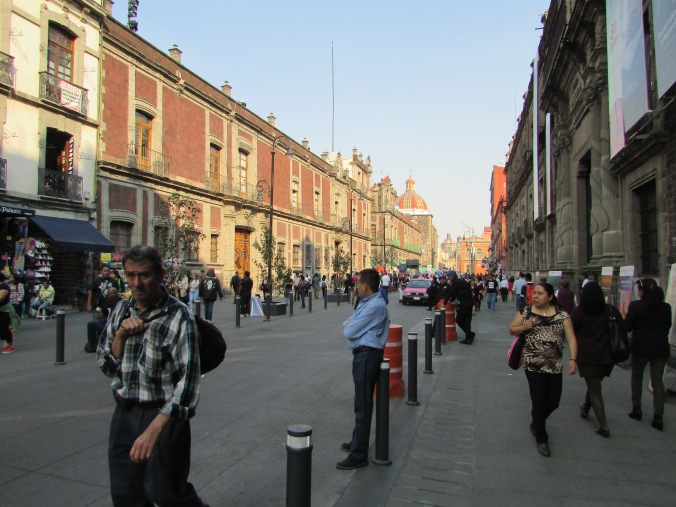
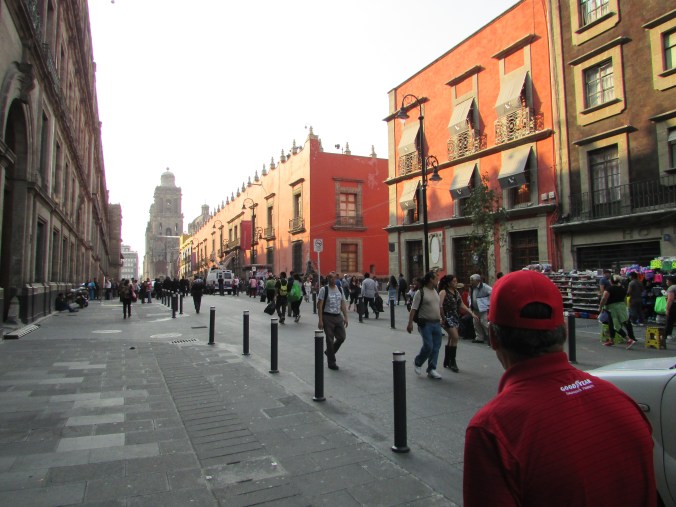
After leaving the Palacio Nacional, we wandered the nearby streets enjoying the sights and sounds of this small part of one of the world’s largest cities.

IMG_7066

IMG_7067

IMG_7112

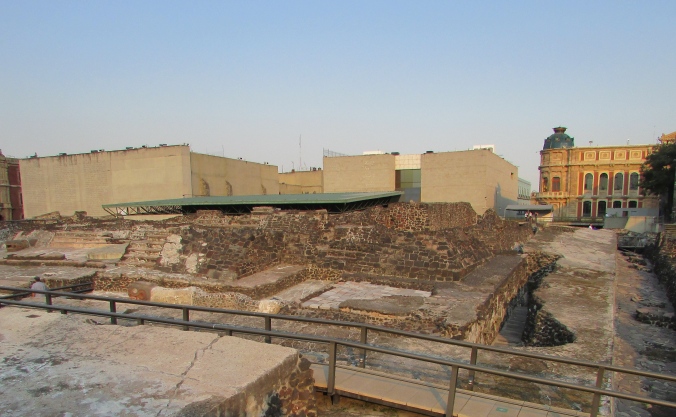
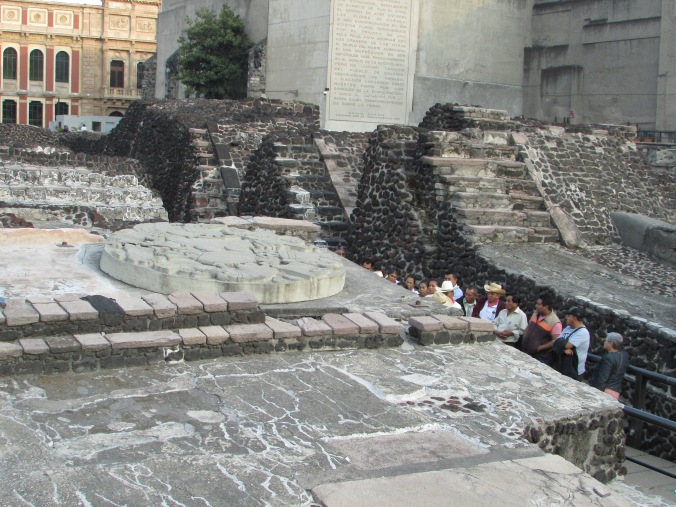
To the north and east of the central plaza, we discovered the remains of a portion of the Templo Mayor that was excavated between 1978 and 1982.

IMG_7106 - Version 2

IMG_7110

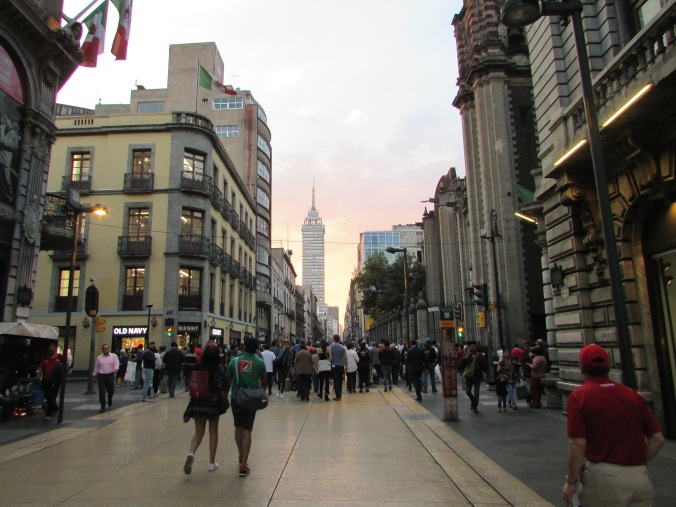
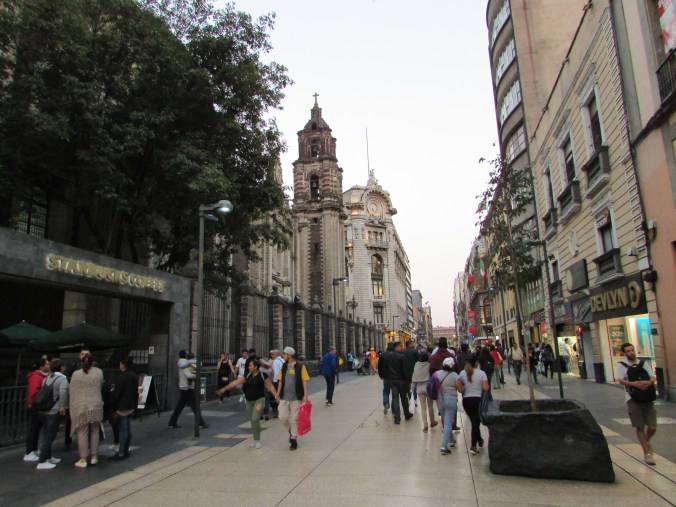
Continuing our walk, we eventually came across a long pedestrian street lined with shops and restaurants that included a number of American chains such as Old Navy, Starbucks, H&M, and Forever 21. Though it was a midweek day at suppertime, the street was full of people. Photos hardly do it justice as without sound they fail to fully capture the festive atmosphere. On one block a young boy played an accordion, on another a trio of men in traditional costume played lively music on stringed instruments, on yet another a boy played guitar and sang. In each case, of course, they had a hat or container out to catch the coins of passersby.

IMG_7116

IMG_7121

We stopped for a quick bite to eat in a tiny Mexican restaurant and dessert from Santa Clara, a Mexican ice cream shop chain. Then as the sun slipped below the tall buildings surrounding us, we headed back toward our hotel. We had to be up very early the following morning to catch our flight home.

And that’s a wrap folks! After a fantastic visit with our friends in Mexico, we’re back home on the frozen Canadian prairie revelling in the memories of another wonderful trip completed.

The classic trench coat

LogoSpring has finally arrived and with it comes the opportunity to put away my winter coats and start wearing the classic beige trench coat that I picked up for $4.00 at one of our local thrift stores a while back.

IMG_5759

The trench coat first appeared in the 1850s and by the turn of the 20th century, it had become an enduring fashion trend. During WWI, the coat shielded military officers from the unrelenting weather and the mud of the trenches; hence its name. Loved by the officers for its weatherproof qualities and its functional design which included large pockets that kept maps dry and strategically placed flaps that offered ventilation, the coat became popular with both male and female civilians after the war came to an end. Brigitte Bardot wore one, as did Marilyn Monroe, Jackie Onassis and Audrey Hepburn.

In Hollywood, the trench coat became associated with detectives. Humphrey Bogart wore one as detective, Sam Spade, in The Maltese Falcon in 1941 and later as private eye, Philip Marlowe, in The Big Sleep in 1946. Peter Sellers wore one as Inspector Clouseau in The Pink Panther in 1963, as did Gene Hackman as a private investigator in The Conversation in 1974. Even Inspector Gadget, a 1980s cartoon detective wore a trench coat!

A perfect go to for spring and fall, the trench coat is amazingly versatile. It can be styled with almost anything from blue jeans and sneakers to a dress and heels. Here I’m wearing a lightweight pair of dark wash jeans that have been part of my warm weather wardrobe for the past few years, my favourite Breton tee, and my new Sam Edelman sneakers that I’ve also been saving for spring. Though the photos make them look like they’re the same colour as the coat, they’re actually a lovely taupe rose.

There’s an unspoken fashion rule that says that even when the belt of a trench coat has a buckle, it should be tied, not buckled. In fact, the “buckle” on mine doesn’t actually  buckle at all. Google “how to tie a trench coat” and you’ll find numerous videos and tutorials showing a myriad ways to knot a trench coat belt. If you really want to use the buckle or you think it looks silly hanging there at the end of a tied belt, it is acceptable to buckle and tie as I’ve shown in the second photo above.

IMG_5755

Fashion is art

LogoIn a recent post, fellow fashion blogger, Pam Lutrell of Over 50 Feeling 40, wrote that “all fashion is art”. Her statement resonated with me because I also believe that fashion provides an opportunity for each of us to be creative and to express who we are through what we wear. 

My involvement in the arts is largely in the area of community theatre which actually intersects with my passion for fashion in an interesting way… costuming. I’m especially fond of period drama because it involves researching the fashions of a particular time in history and doing our best to recreate them onstage. As a small town theatre guild, we don’t have a large budget to work with. We have an incredibly talented costume mistress who can create amazing and elaborate costumes when they’re needed, but much of what we wear onstage comes from our own wardrobes or from the group’s substantial collection of clothing that has mostly been donated or purchased at thrift stores.

Our recent play was set between 1928 and 1946. I played the role of a household servant and was dressed accordingly. That’s me in front holding the serving tray.

Auntie Mame #2 - Marlaina Eldey copyphoto: Marlaina Eldey

For one very short scene, however, I wore a dressier outfit that included a little velvet jacket from our costume collection that I absolutely fell in love with. It’s always bittersweet when a production comes to an end. After entertaining four dinner theatre audiences and having so much fun doing it, the time came to strike the set and put the costumes and props away, but I couldn’t part with the little velvet jacket. In my mind, I could imagine myself dressing it down with a pair of jeans. I just had to give it a try, so with permission, of course, it came home with me. It will eventually go back and be hidden away in the giant bin labelled “jackets” until it’s needed onstage again, but for a little while I plan to have some fun with it.

IMG_5686

IMG_5692

First, I tried it with a simple black camisole and then over my white Indulgence Tank from cabi’s Spring 2017 collection. Since I’ve been told that a woman should be able to style every piece in her closet at least different three ways, I also tried the jacket over a column of colour, in this case my camel coloured cords and camisole. I loved all three of these looks!

IMG_5706

With the gold embroidery design on the jacket, I decided to keep the jewelry at my neck simple or nonexistent, but I did try it with my antique gold-finished Flapper Earrings from cabi’s Fall 2017 collection, reminiscent of the 1920s.

IMG_5687 - Version 2

Do you agree that fashion is art? Please tell me what you think in the comment section below.

Ten years of blogging!

Ten years ago today I published my very first blog post! It was also the shortest post I’ve ever written and the message was very simple:

Richard and I have just accepted positions teaching conversational English in Japan. This is a one year commitment and we’ll be leaving in mid March. The main purpose of this blog is to share our adventure with friends, family and anyone else who’s interested.

Little did I expect to still be blogging ten years later! I anticipated that Following Augustine would only exist for the year that we would be in Asia. In fact, that’s why I chose the title. Augustine BeArce, a Romany Gypsy, was the first of my ancestors to cross the Atlantic Ocean from Europe and make his home in North America. 370 years later when I crossed the Pacific Ocean and settled for a time on the far side of the sea, it only seemed right to give credit to Augustine and the Gypsy blood that I inherited from him!

I’ve always been passionate about writing though and by the time our year in Japan came to an end, I knew that blogging was something I would continue to do indefinitely. What I didn’t know was what it would look like once I was no longer living in a foreign land. For lack of a better definition, I now refer to Following Augustine as a lifestyle, travel, and fashion blog, but one of my readers once called it a great advertisement for retirement!

Over the past decade, life has taken many unusual turns, some delightful and others deeply distressing. Following Augustine has been there through all the ups and downs.

We love to travel and the blog has recorded trips across Canada, into the United States, and to numerous other countries. Never in my wildest dreams did I ever expect to live in the People’s Republic of China though, but our five months there gave me plenty to write about. China’s internet censorship made it a bit more challenging to post from there, but thankfully, with the help of WordPress, I discovered a way to successfully break through or over the “Great Firewall” and continue blogging.

Cancer was never part of my plan either, but when it struck, the blog became a good way to process what was happening and to share it with friends and family. I’ve also used it as a way to raise awareness of NETS (neuroendocrine tumours), the little-known and often misdiagnosed cancer that I continue to deal with. My life is not all about my health, however, so neither is the blog. It’s about living life to the fullest in spite of all its challenges.

A couple of years ago, I became interested in fashion blogging and so the weekly Fashion Friday feature was born, not as a “look what I’m wearing today” narcissistic sort of thing, but as a way to connect with other women and to explore how the ways in which we present ourselves affect our lives. It has had the added benefit of ensuring that I write something at least once a week.

I am a Christ follower and I have fairly strong and not always popular or politically correct opinions on certain issues. I haven’t shied away from sharing those on the blog, but I’m committed to doing so with as much wisdom as God allows me, with integrity and with respect for those whose opinions differ from mine.

When I published that first post ten years ago, our daughter was expecting our first grandchild, so over the years five little people have appeared on the blog from time to time. I’m off to visit three of them this weekend and the other two for Christmas, so it’s possible that they might show up again soon!

What does the future hold for Following Augustine? I have no idea, but I’ve now written 882 posts and I don’t see them coming to an end anytime soon!

3224919

Ahoy!

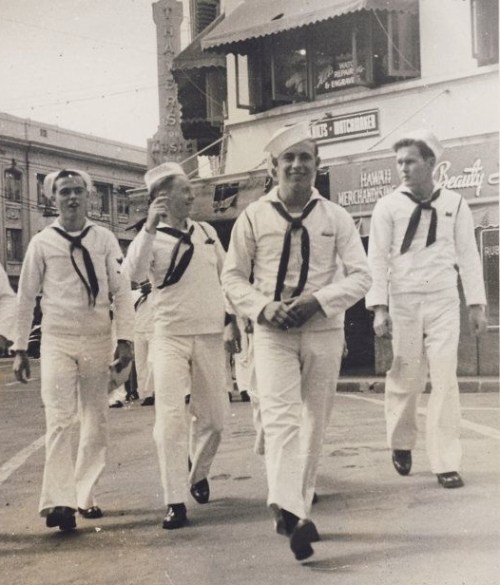
LogoFor as long as I can remember, I’ve been fond of nautically inspired clothing. It probably goes back to my very early childhood spent on the coast of British Columbia where it wasn’t at all unusual to see sailors walking the streets in uniform. On leave from ships from around the world, they always seemed to be having such a good time.

9145a17c36704056ac8ced9dc610b8b2--leave-in-honolulu-hawaii

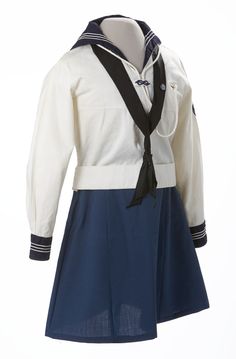
As a teenager, I was proud to wear my CGIT (Canadian Girls in Training) uniform which was clearly modelled after sailors’ attire. For those of you who aren’t familiar with CGIT, it’s a non-denominational Christian organization for girls in grades 7-12. Since 1915, it has provided girls with an opportunity to learn and practice leadership skills, self care, and social responsibility. As our purpose stated, it taught us to “cherish health, seek truth, know God, and serve others.” Perhaps this also influenced my fondness for the nautical look.

CGIT uniform

Even my children were subjected to my love of sailor suits! Here are my oldest two in matching outfits that I made for them a very long time ago.

IMG_0002_NEW

I suppose it’s no wonder, then, that one of my favourite items in cabi’s Fall 2017 Collection is the Regiment Pullover.

IMG_5189

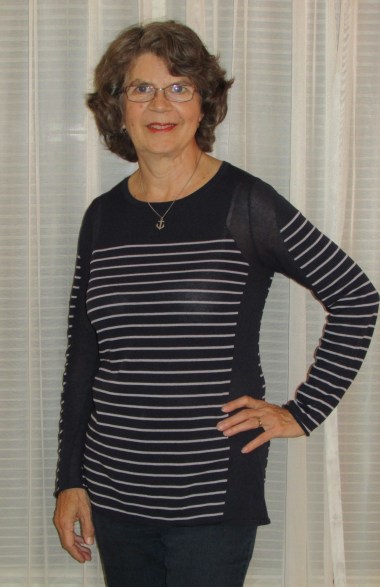
Reminiscent of the French sailors in their Breton stripes, the Regiment Pullover is a lightweight navy crewneck, featuring panels of sheer fabric down each side and under the arms. Thin horizontal stripes of light gray frame the side panels to create a flattering, slimming look. Here I’m wearing it with my anchor pendant from Nova Scotia’s Amos Pewter.

4441dff557b98938bcab52fbd58f82c9

Two great hikes in Jasper National Park

As part of Canada’s 150th anniversary celebration, the country offered free Parks Canada passes to every Canadian and every visitor from around the world who requested one, giving each of us free admission to national parks, national historic sites and national marine conservation areas across the country. We put our pass to good use when we spent a week camping in Jasper and Banff National Parks with our son Matt, daughter-in-law Robin, and grandsons Sam and Nate, who were enjoying their first family vacation in the Beatrice, a newly restored and much loved family heirloom.

Like most mountain parks, both Jasper and Banff abound with hiking trails of varying lengths and degrees of difficulty. While at Jasper, we took advantage of two of these.

Valley of the Five Lakes

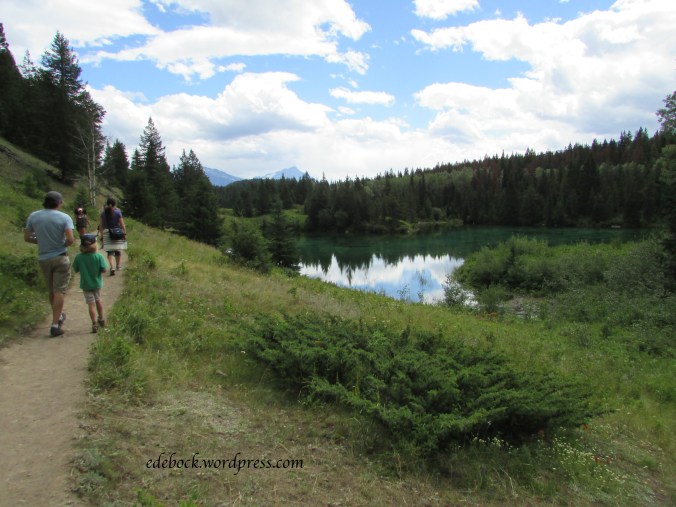
We chose this trail on the recommendation of my aunt who has lived in Jasper since 1953 and who continued to hike into her late 80s. The 4.5 km loop, located about 9 km south of Jasper, was an excellent choice. With only 66 m elevation change it was an easy hike for all of us.

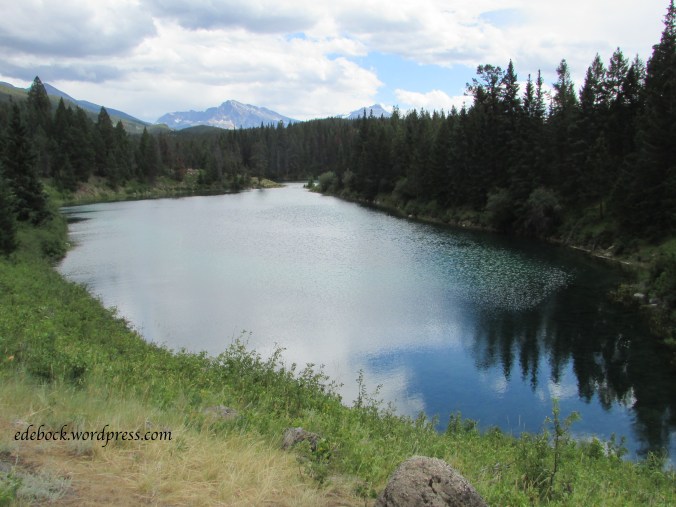
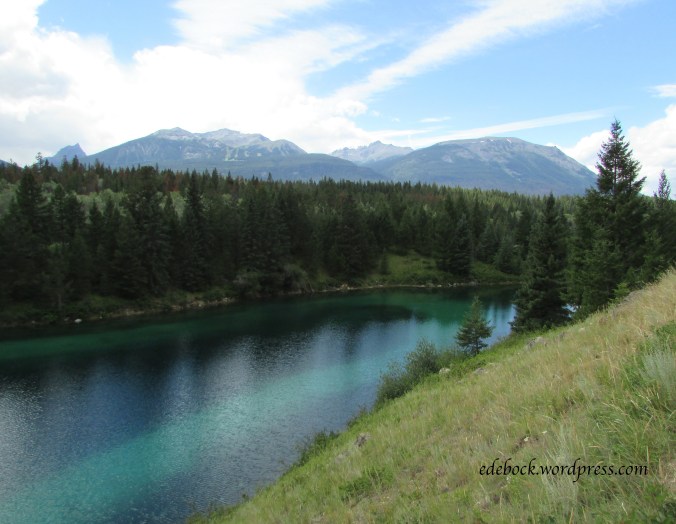
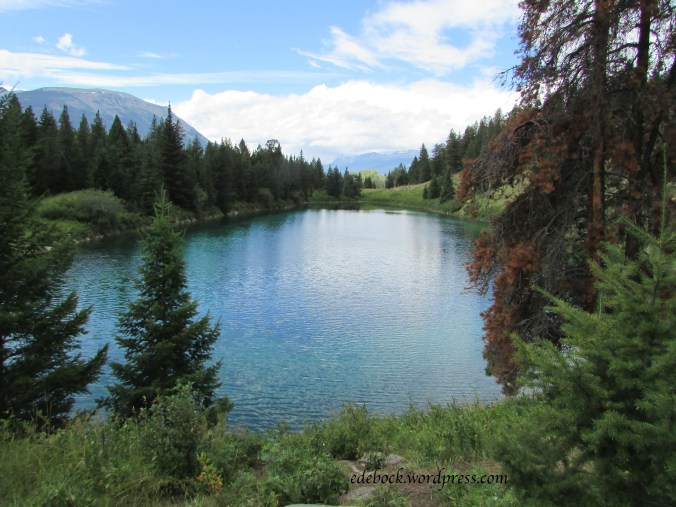
The loop takes in all five small lakes, each a different shade of blue or green, but all strikingly beautiful.

First Lake

First Lake

Second Lake

IMG_4812

Second Lake

Third Lake (and in my opinion, the most beautiful)

Third Lake

IMG_4830

IMG_4832

Isn’t that just stunning?

Fourth Lake

Fourth Lake

Fifth Lake

Fifth Lake

While bears are known to frequent the Five Lakes area, especially in berry season, we saw only this frisky little chipmunk who was happy to pose for a photo.

IMG_4828

Maligne Canyon

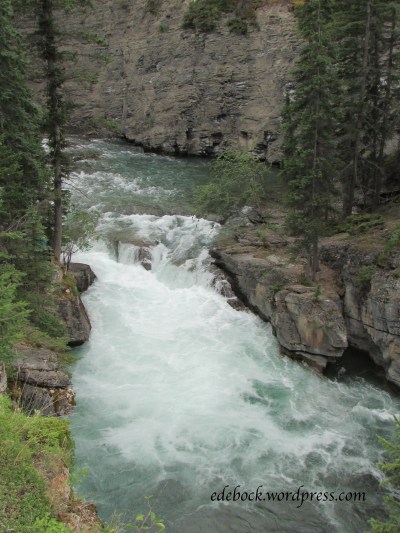
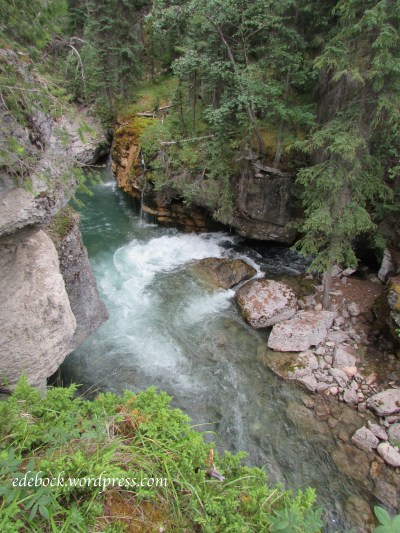
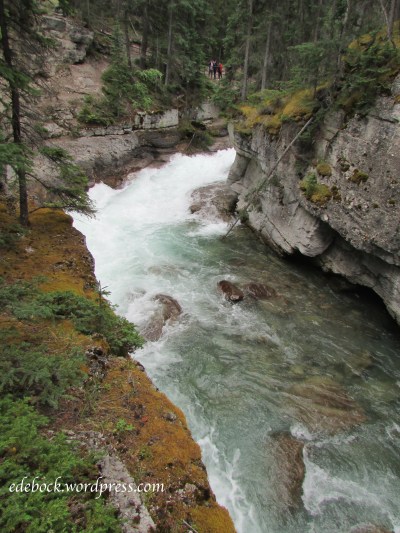
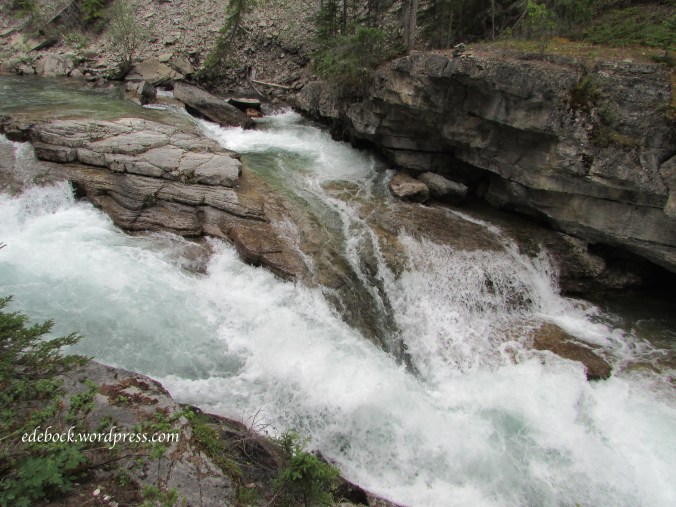
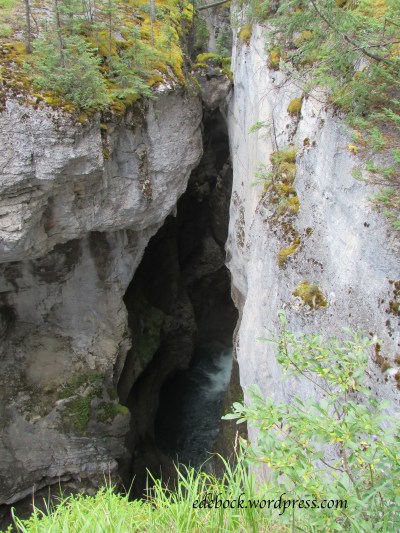
With a depth of more than 50 metres at some points, Maligne Canyon is one of the deepest in the Canadian Rockies and certainly one of the most spectacular. For our second hike in the Jasper area, we started at the 5th bridge and hiked up the canyon trail to the teahouse at the upper end.

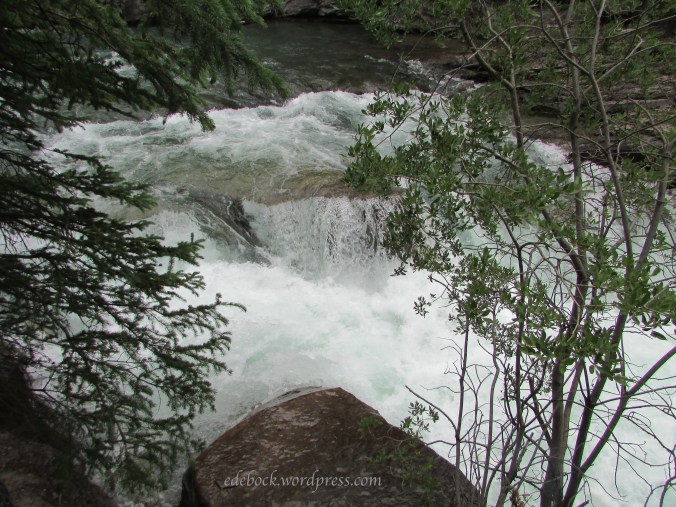
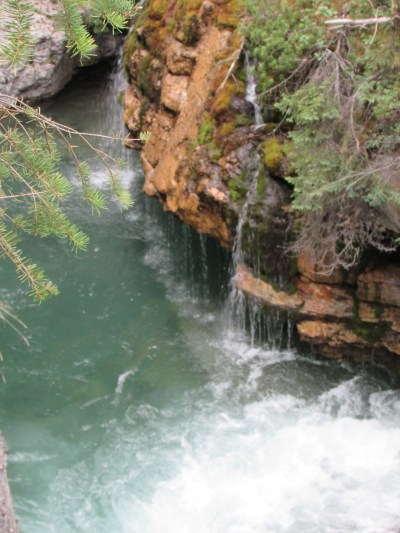
When I first looked at my photos, I was disappointed. Somehow they just didn’t capture the magnitude of what we’d seen. Then I realized that it was the thunderous sound of the water churning through the deep, rocky canyon that was missing! Use your imagination as you follow us up the trail and try to imagine what it sounded like as the canyon walls narrowed and the rushing water echoed below.

IMG_4860

IMG_4864

Where does all that water come from? Located in the Maligne valley, Medicine Lake is formed by the Maligne River. One of the interpretive signs along the hiking trail compares Medicine Lake to a “giant leaky bathtub.” Water from the lake drains into what is thought to be the largest inaccessible cave system in the world and resurfaces downstream through springs along the canyon walls.

IMG_4869

IMG_4874

IMG_4875

The power of the moving water becomes evident when you look at the shapes of the rocky canyon walls that have been whittled away over eons.

IMG_4871

IMG_4873

IMG_4876

In some places, rocks and sand swirling around in the turbulent water wear potholes in the canyon floor or walls. Over time, as the canyon wears deeper these potholes, or bowls as we called them, are left above the water level, reminders of a previous time. You can see a pothole still being formed near the centre of this picture.

IMG_4879

Another interesting feature is the chockstone. Chockstones are giant boulders that have become wedged across portions of the canyon which narrows to only two metres at the top in some places. Over time, erosion slowly reduces the size of the chockstones until they eventually tumble to the canyon floor. There is a chockstone with moss and trees growing on it near the top of this photo.

IMG_4882

The promise of dozens of fossils preserved in the rock beneath our feet was an incentive to keep our young grandsons going as we climbed the last portion of the trail which is a bit steep. They became very good at spotting these reminders that this was once a very different looking world and enjoyed making rubbings of several of them.

IMG_4888

IMG_4889

Though this hike isn’t a long one, if you go, allow yourself lots of time as there are so many interesting things to see and photos to take!

There are many trails in the canyon area and rather than retracing our steps the entire distance, we took a higher trail from the 4th bridge back to the 5th. Though we were above the canyon walls and further from the thundering water, the views were beautiful.

IMG_4892

IMG_4895

IMG_4896