Book of the month – May 2024

The Life I Stole

Nikola Scott

hbg-title-9781472260826-44Like many children in wartime Britain, 10-year-old Agnes Crawford was sent out of London to the safety of the countryside where she lived with the well-to-do McIntyre family. Tragically orphaned by the war, she stayed on afterward as their maid and close friend of their daughter, Isobel. When tragedy strikes again, Agnes adopts her deceased friend’s identity and with it the opportunity to become a medical student at a London university. 

The early 1950s were an exciting time for medicine in Britain as the National Health Service, in its infancy, began offering treatment to those who had previously been unable to obtain or afford it. It was also a challenging time for female medical students who faced discrimination in what was at that time a predominantly male environment. 

Agnes works hard to succeed all the while maintaining her secret, but discoveries about her family history, feelings of guilt, and a potential love interest make it increasingly difficult. Tension mounts as she tries to decide whether to continue the ruse or reveal her true identity and accept the consequences. I’m not going to tell you what she chooses to do. You’ll have to read the story yourself to find out!

I will tell you though that this novel brings post war London to life and explores issues of social class and women’s roles in a way that is both entertaining and informative. I found it hard to put down. 

Mixing old and new

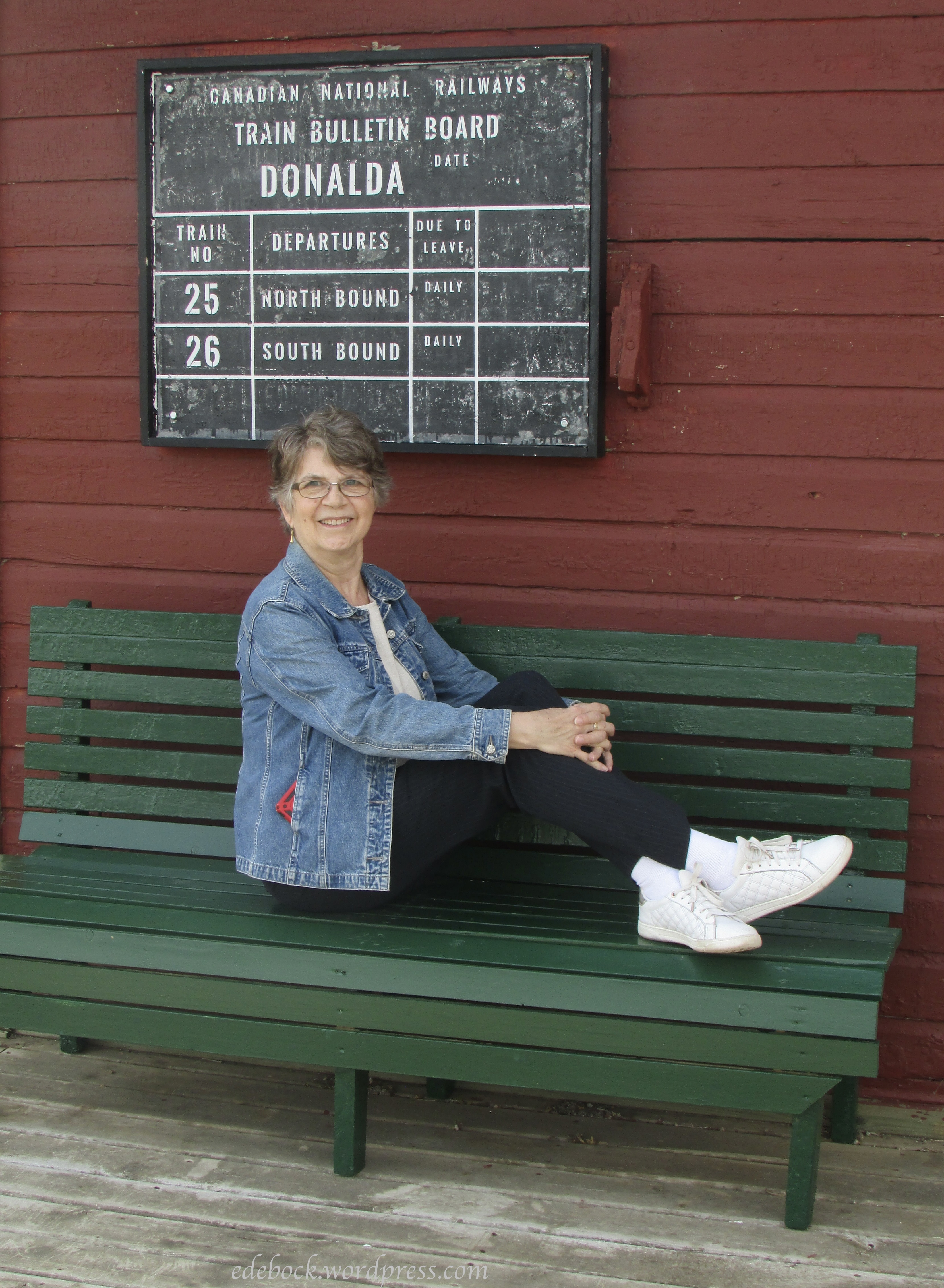
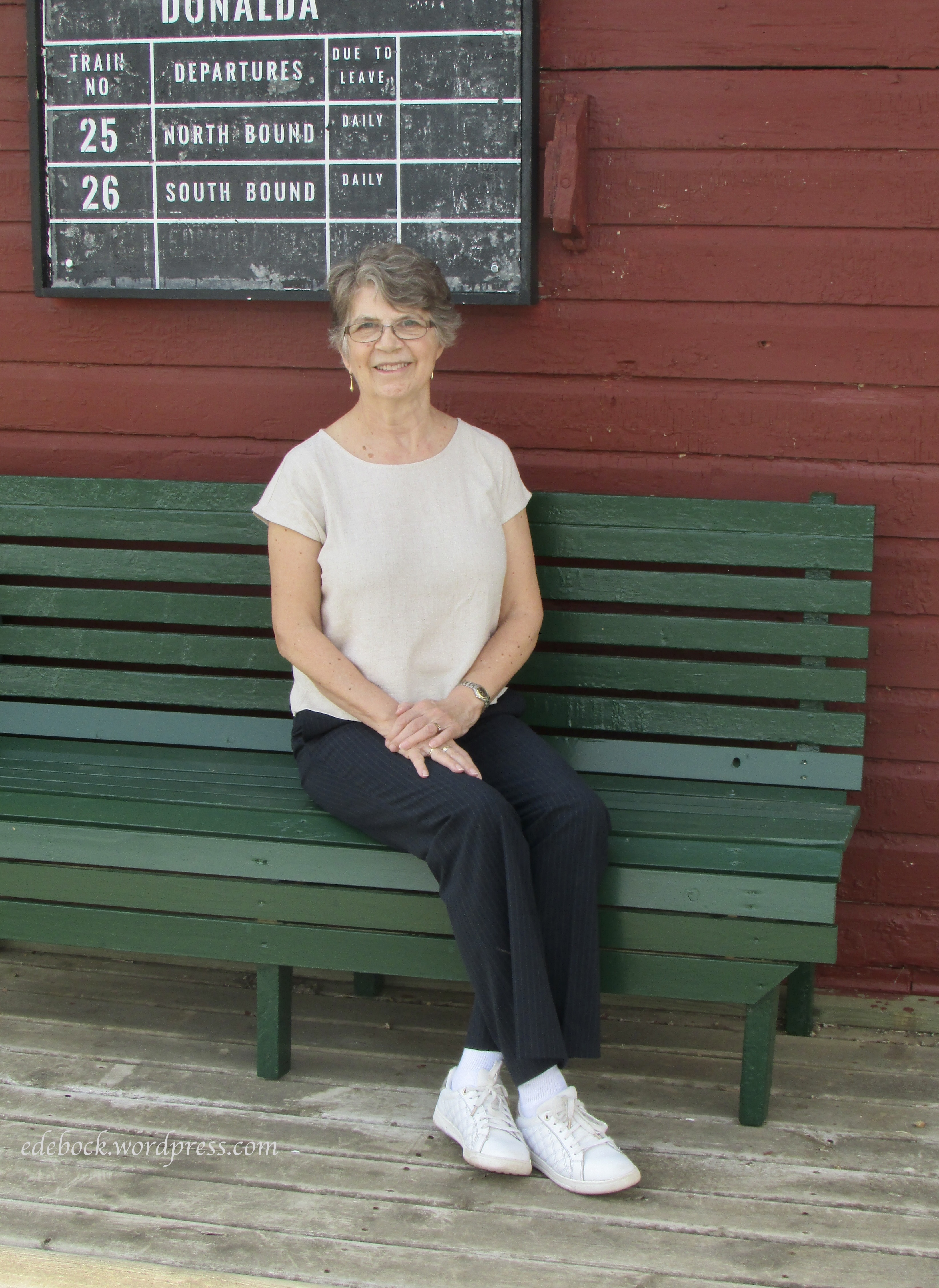
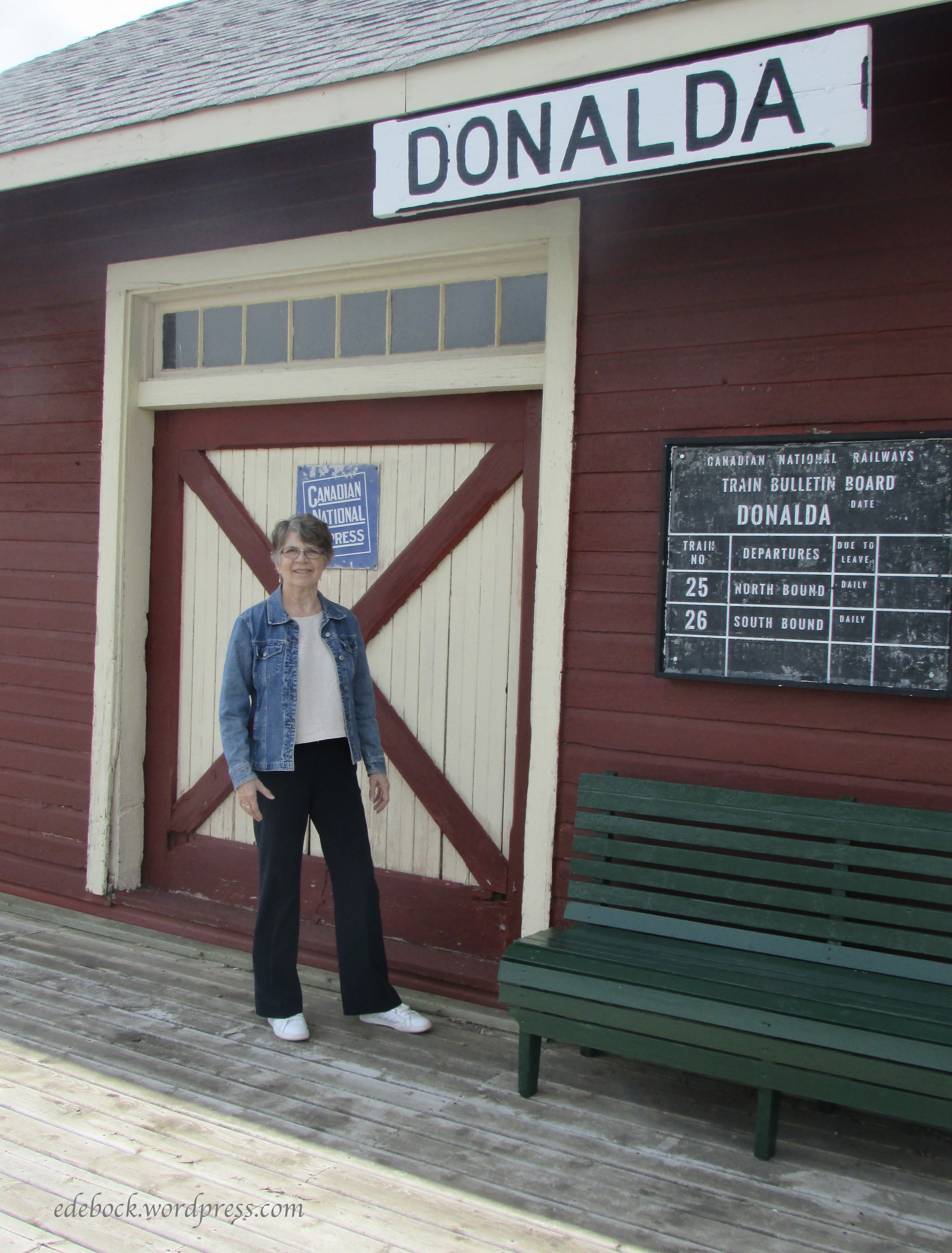
Logo by SamInstead of going home after church last Sunday, hubby and I set out for the little village of Donalda and the Willow Canyon trail, one of our favourite places to go hiking. Realizing that the restored train station near the trailhead would make a great backdrop for photos, I wore the outfit that I planned to share with you this week to church and changed into my hiking clothes after the photo shoot.

IMG_6895

IMG_6832

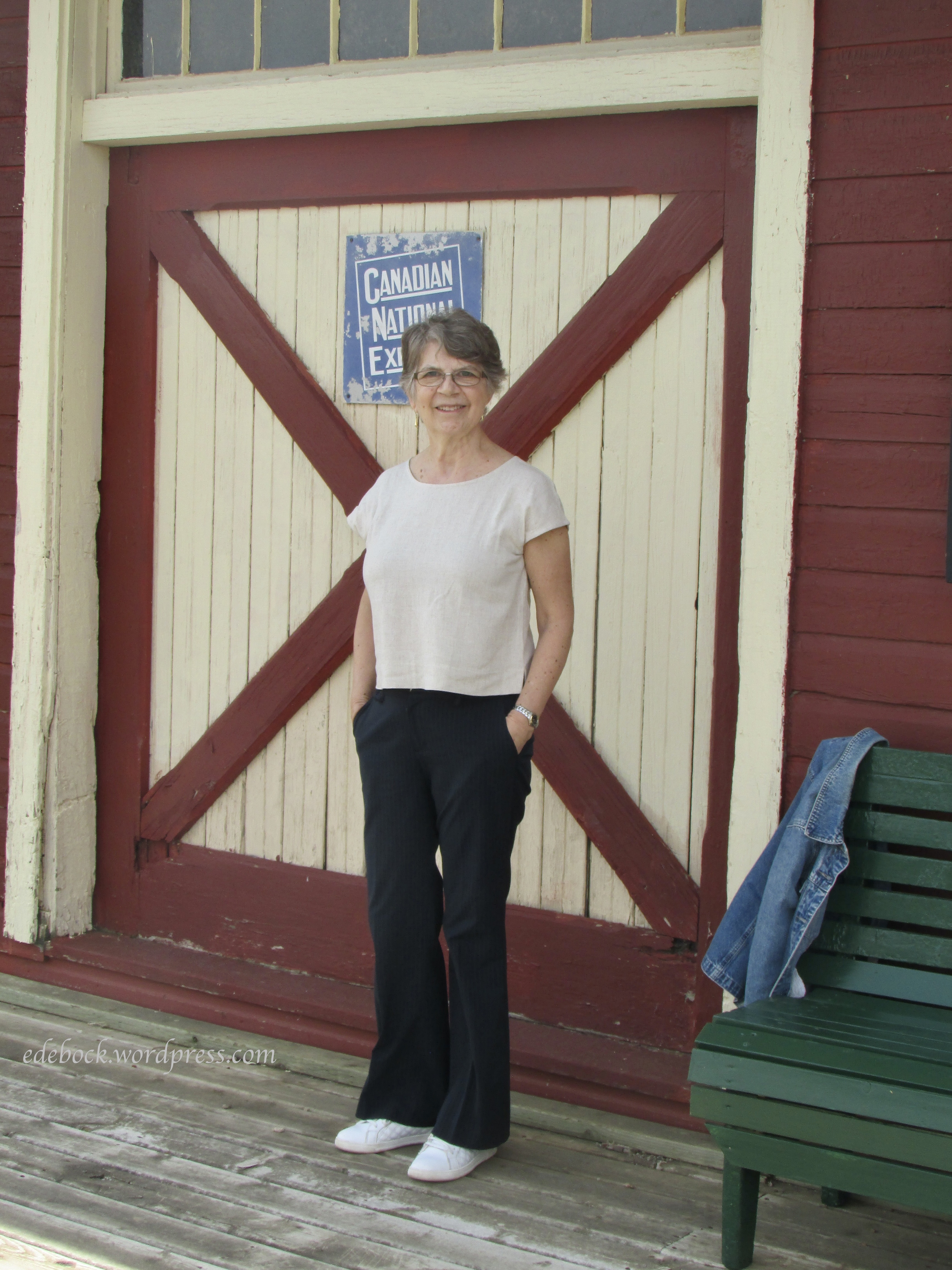
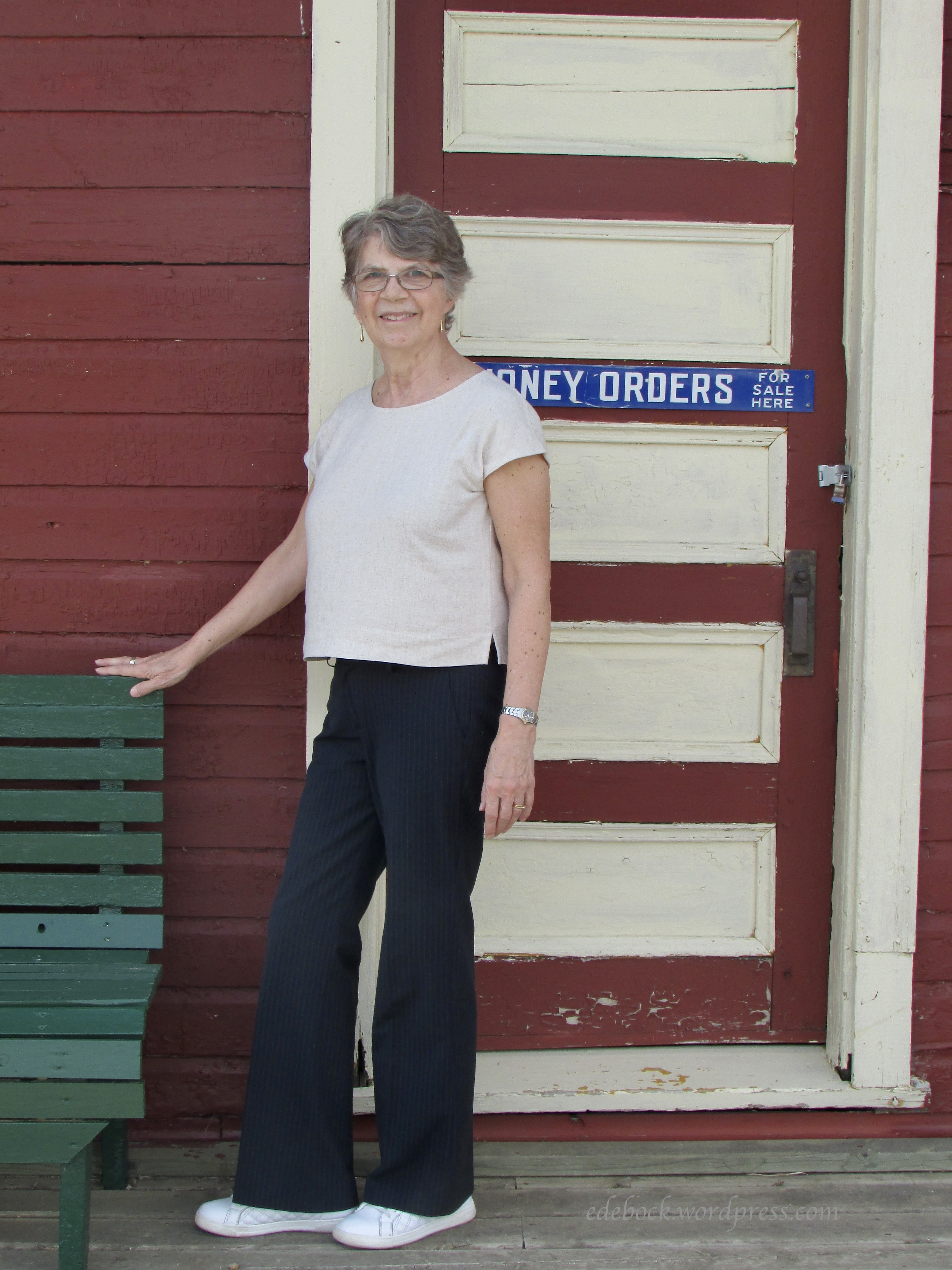
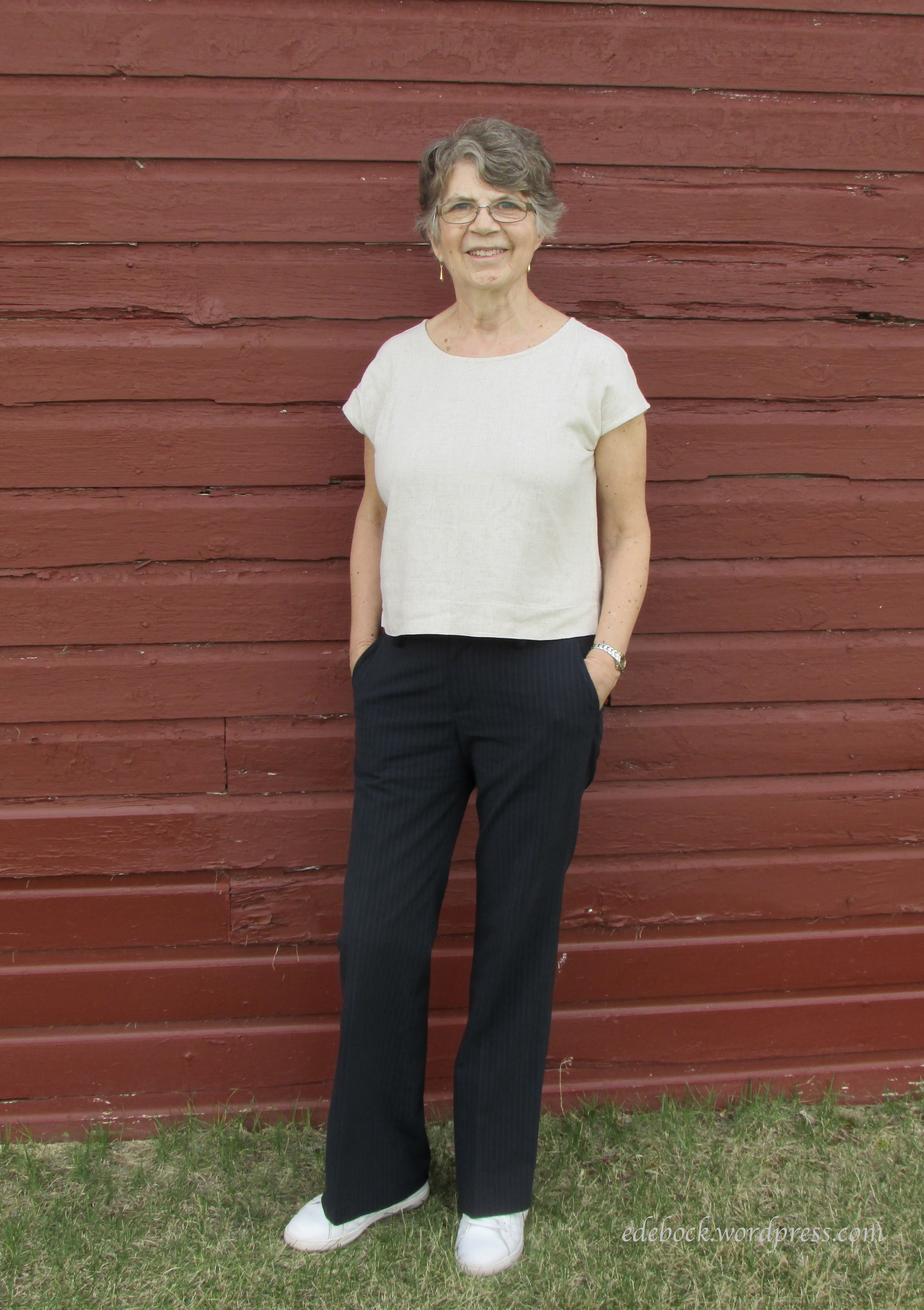
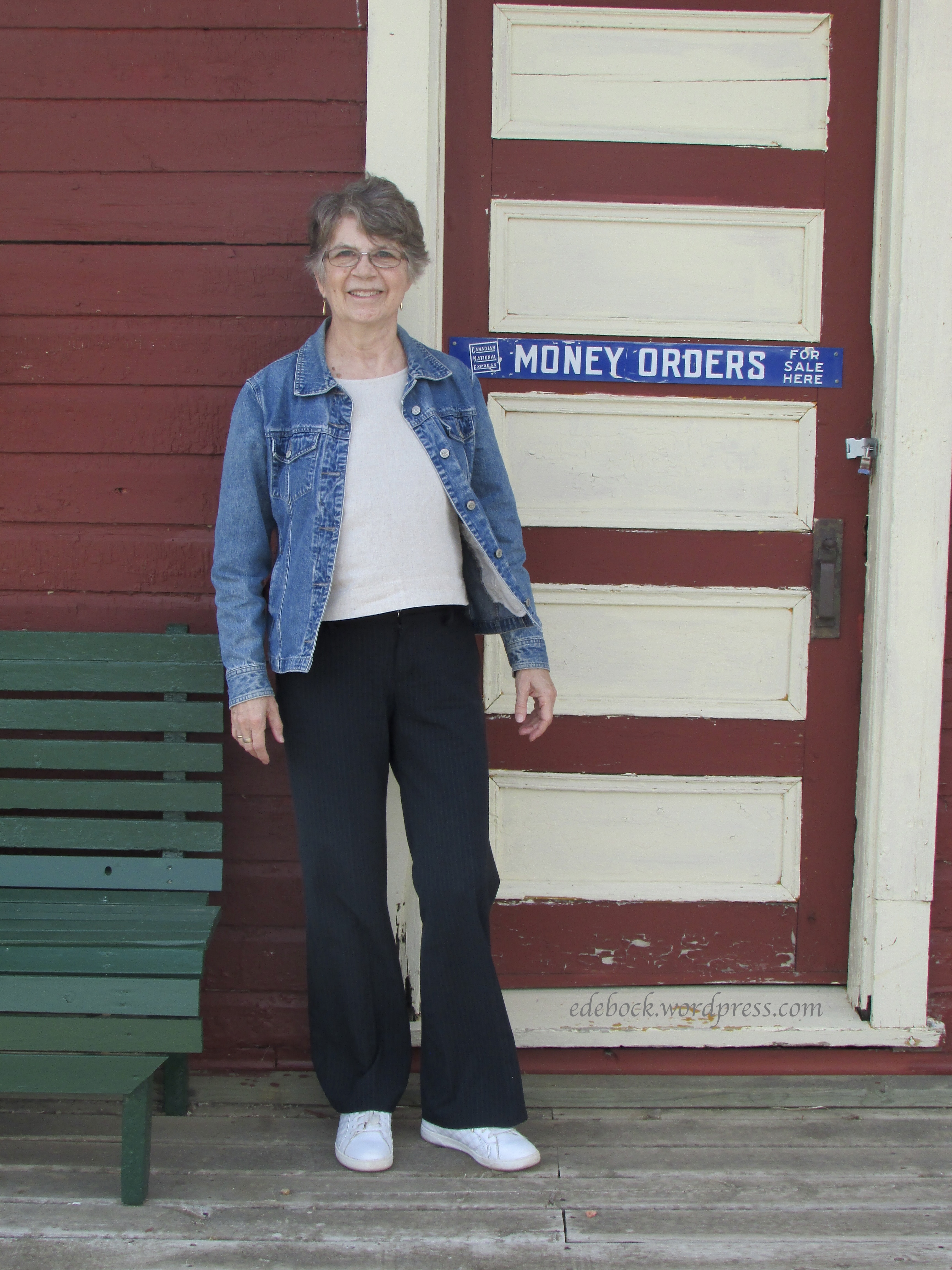
In addition to the jean jacket, thrifted several years ago, my outfit consists of one of the oldest items in my wardrobe as well as the newest. I distinctly remember buying the dark navy pinstriped pants at Uniqlo shortly after our arrival in Japan in 2008. They were a workhorse in my teaching wardrobe that year and again in 2013 when we taught in China, but after that they spent a lot of time hanging in storage. I kept them because they fit well and I really liked them and when wider legs came back in style, I started wearing them again. They’ve appeared on the blog several times in the past year or two. 

IMG_6841

Someone painted the bench in front of the station since the last time we were there, so of course I had to try it out. 

IMG_6850

The new item in this week’s outfit is the linen blend top purchased at Sweet Home on Main in Stetter on a recent retreat weekend with several ladies from our church. 

IMG_6854

It was obviously a popular item as two of us bought it and it’s presently out of stock. Simple and versatile, it can easily be dressed up or down and the soft ecru colour is more flattering to my complexion than white would be. I prefer a linen blend to pure linen as it has a similar feel and drapes just as well, but it doesn’t wrinkle as badly. 

IMG_6869

I usually wear longer tops, but I wanted to step outside my comfort zone and try this short boxy style. I just have to make sure that I wear it with high waisted pants and I won’t be raising my arms very high in the air when I’m wearing it. At 71, my midriff isn’t as attractive as it once was! 

IMG_6886 2

And finally, here I am just waiting for my train. Actually, I don’t think one has been by here in a very long time! 

IMG_6875 2


Book of the month – April 2024

The gift shop at the Cross Cancer Institute in Edmonton where I go for most of my cancer care sells gently-used books. From time to time, they hold a giant book sale in the main lobby where the books sell for $1 each. When we arrived for my last appointment with time to spare, such a sale was underway, and that’s where I found this month’s book.

Not Our Kind

Kitty Zeldis

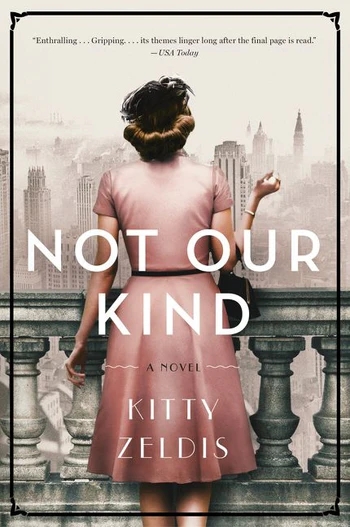
9780062844248_7102f355-50a2-4a5c-86b0-7389e84225aaNot Our Kind is the story of two very different women whose lives intersect on a rainy morning in June, two years after the end of World War II. A minor traffic accident in New York City brings together Eleanor Moskowitz, a bright young teacher on her way to a job interview, and Patricia Bellamy, a socialite whose difficult thirteen-year-old daughter, Margaux, recovering from polio, needs a private tutor. When Eleanor goes to work for the Bellamys, she forms an immediate bond with Margaux, but because they live in a restricted building, she has to conceal her Jewish identity.
Patricia’s boorish husband, her charming bohemian brother, the all-knowing housekeeper, and Eleanor’s hat maker mother round out a cast of interesting characters.

The story raises a number of issues including class distinctions, marital discord, sexual assault, and body image but deals with them somewhat superficially. We do get a sense of the anti-Semitism that pervaded post war America and I can’t help wondering how much that has really changed.

I would classify this novel as a light historical read with an added element of romance; not a deep read, but an enjoyable one.

Downtown Montreal

I’m back from a whirlwind trip to Montreal where I attended a three day Canadian Neuroendocrine Tumour Society (CNETS) conference. More about that in Friday’s post, but today I want to share a bit of that beautiful city with you. 

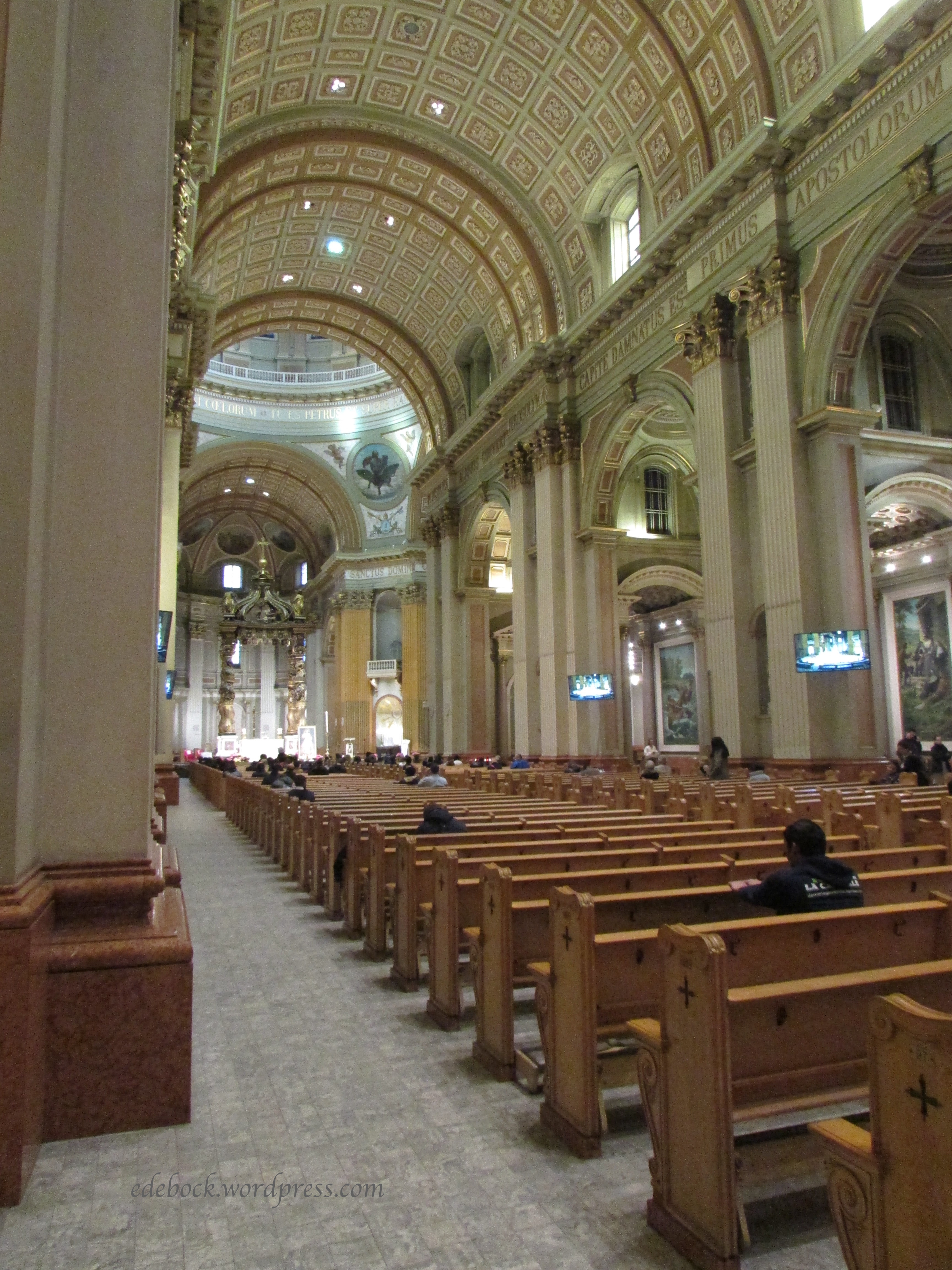
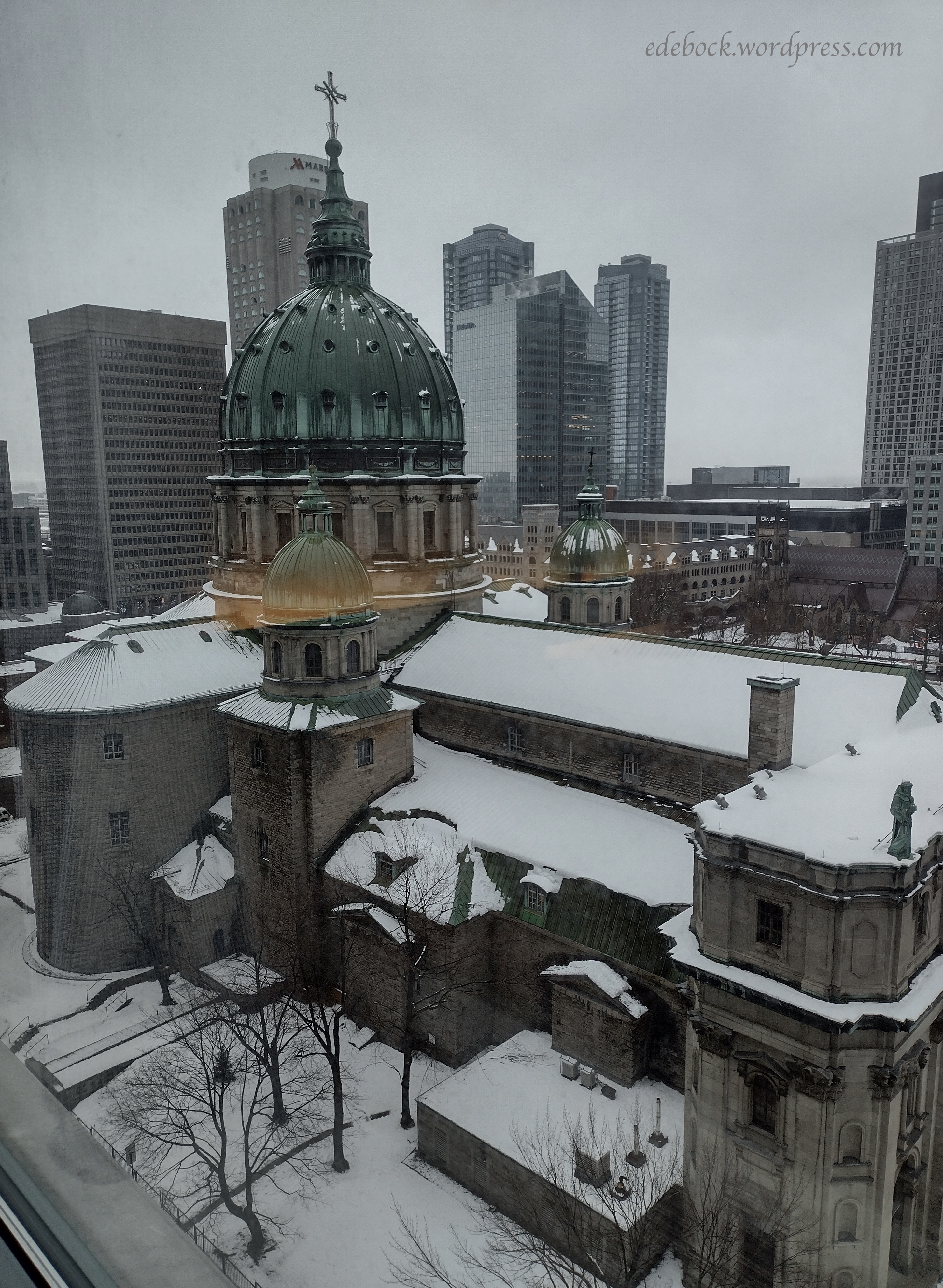
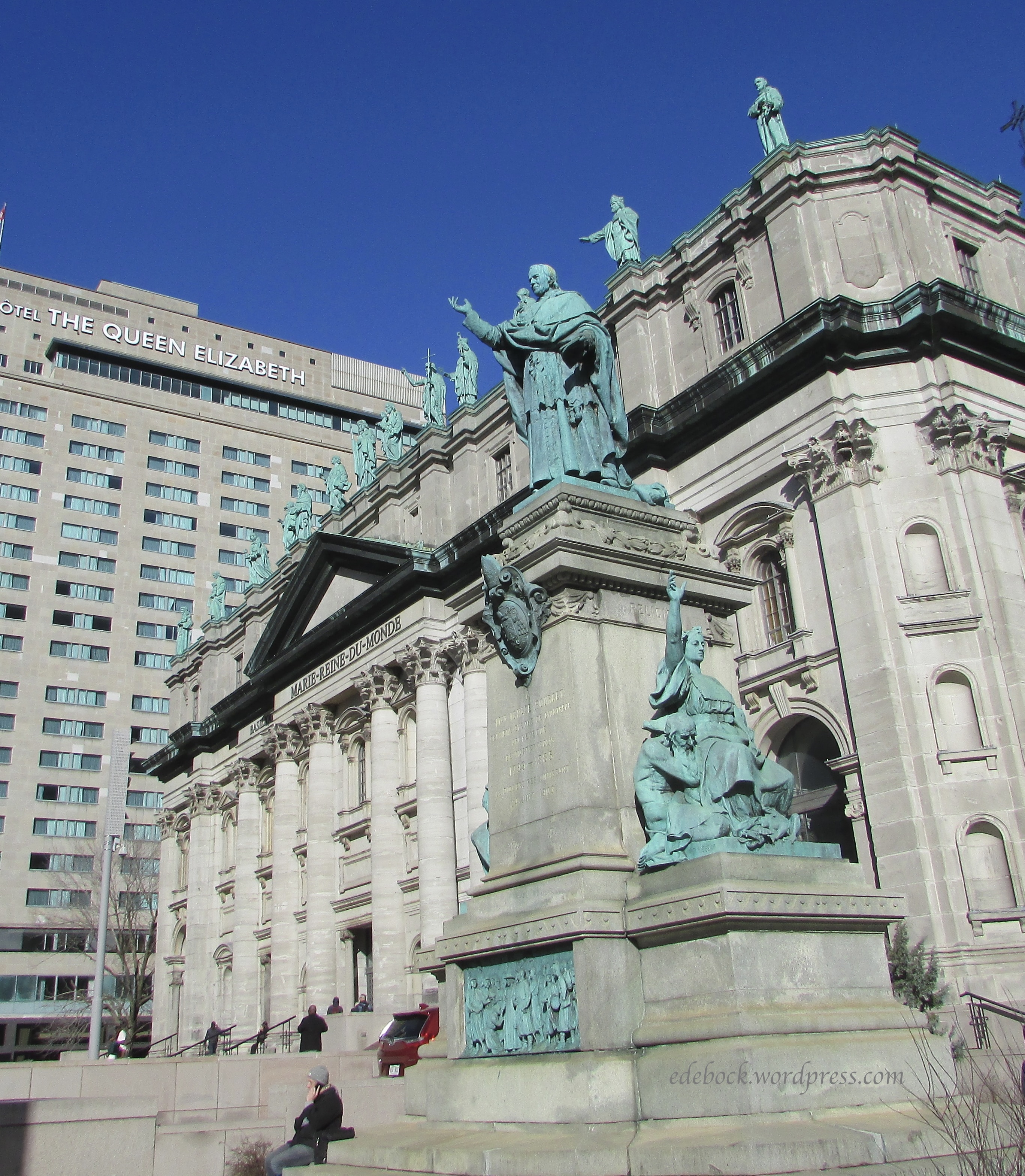
After my plane was delayed for four hours by a major snowstorm, I finally arrived late in the evening and checked into the downtown Fairmont Queen Elizabeth Hotel where the conference was being held. Entering my hotel room, I was awestruck by the view from my window overlooking the ornate Basilique Marie-Reine-du-Monde (Mary Queen of the World Basilica), a smaller replica of St. Peter’s Basilica in Vatican City. 

IMG_20240405_073719691_HDR

The following pictures of the basilica were taken on one of my walks after the weather cleared. 

IMG_6721 2

While the statues on the facade of St. Peter’s depict the twelve apostles, at Mary Queen of the World thirteen statues represent the patron saints of the parishes that form the diocese of Montreal.  Carved of wood and clad with copper, each statue is 9 feet tall. They were completed between October 1892 and October 1900 by Quebec native, Joseph Olindo-Gratton.

I was thankful to able to slip inside the basilica for a quick photo of the interior. 

IMG_6723

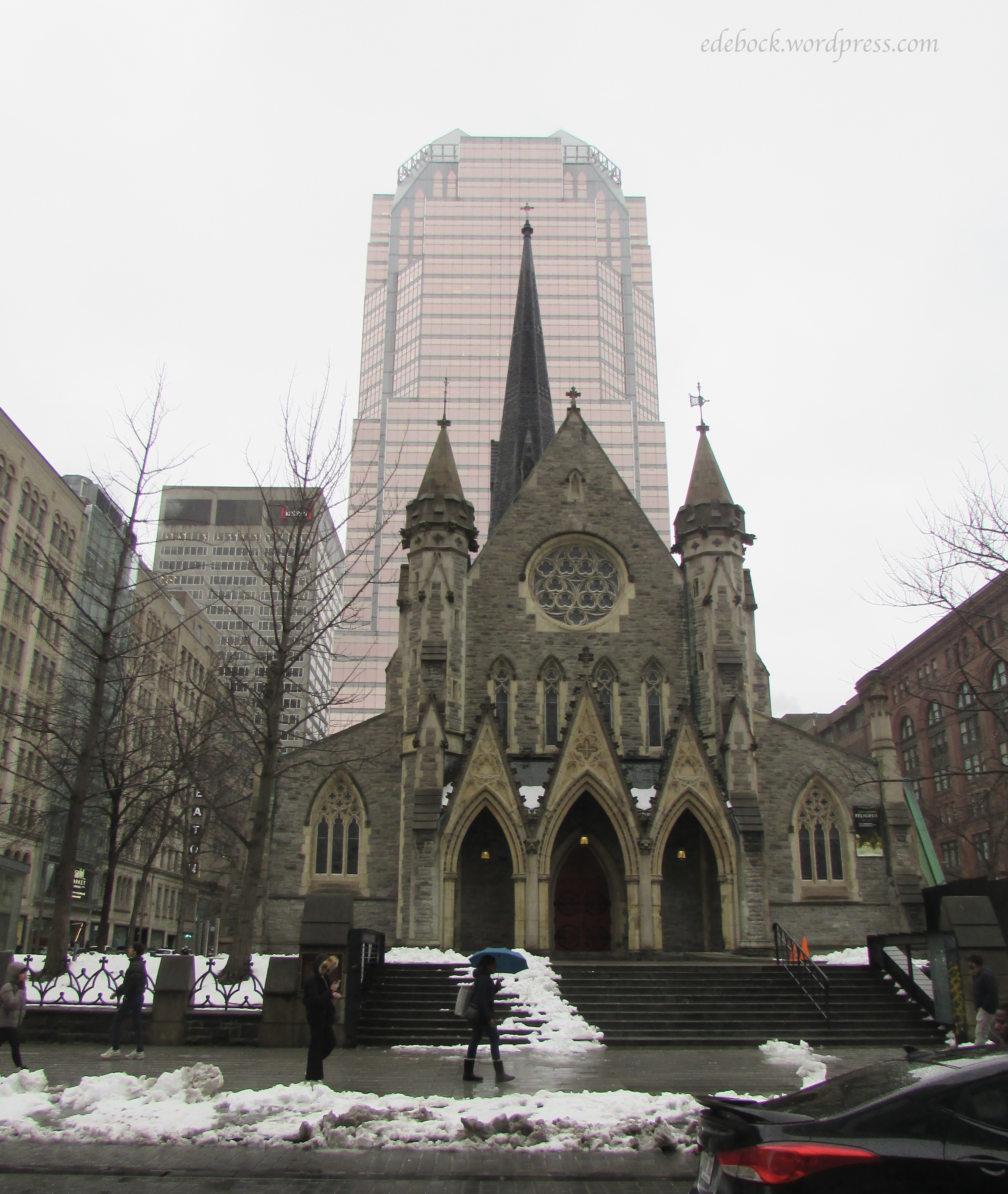
Downtown Montreal is home to many old stone churches. This one is Christ Church Cathedral and has been designated a National Historic Site of Canada.

IMG_6697

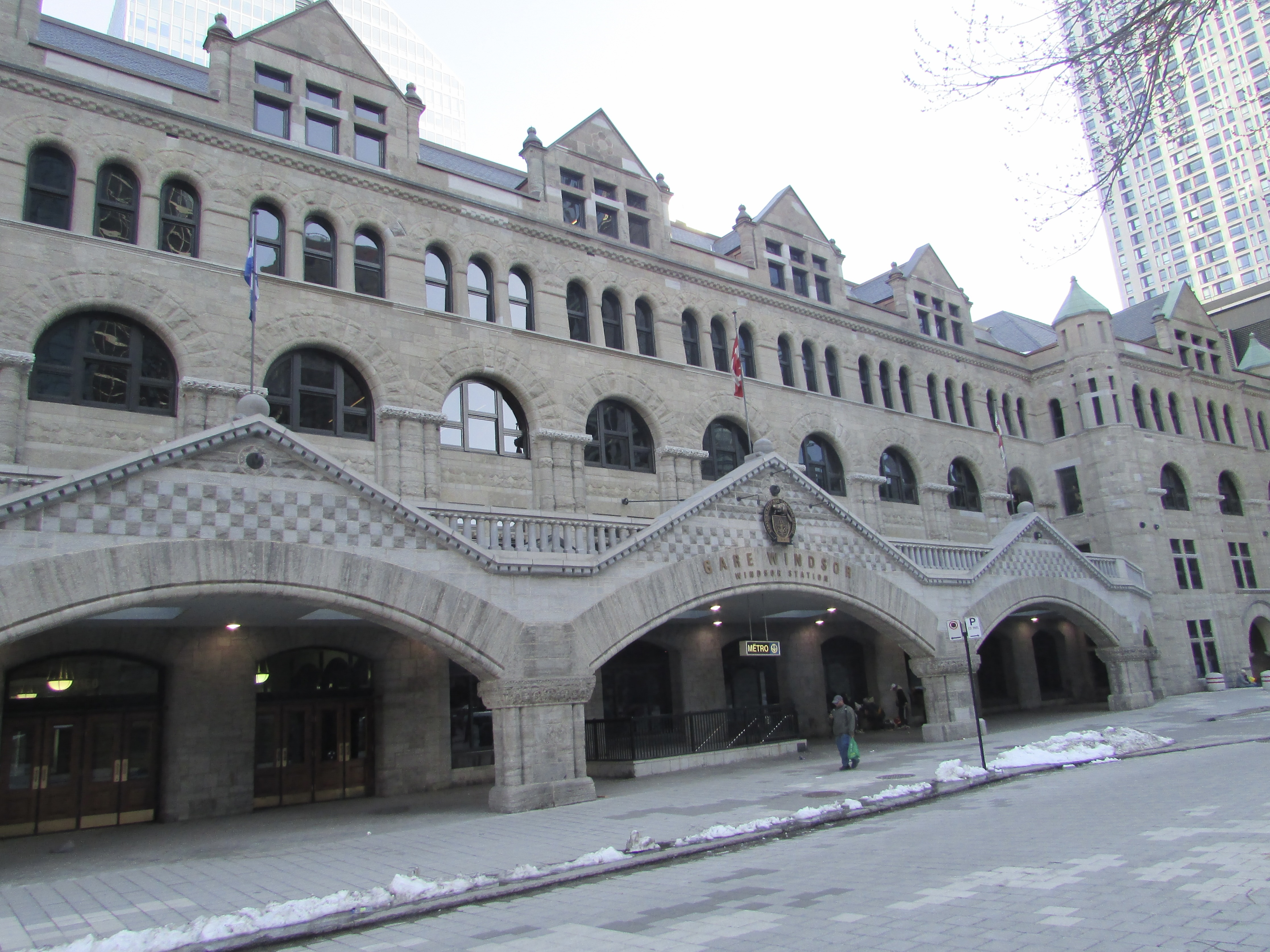
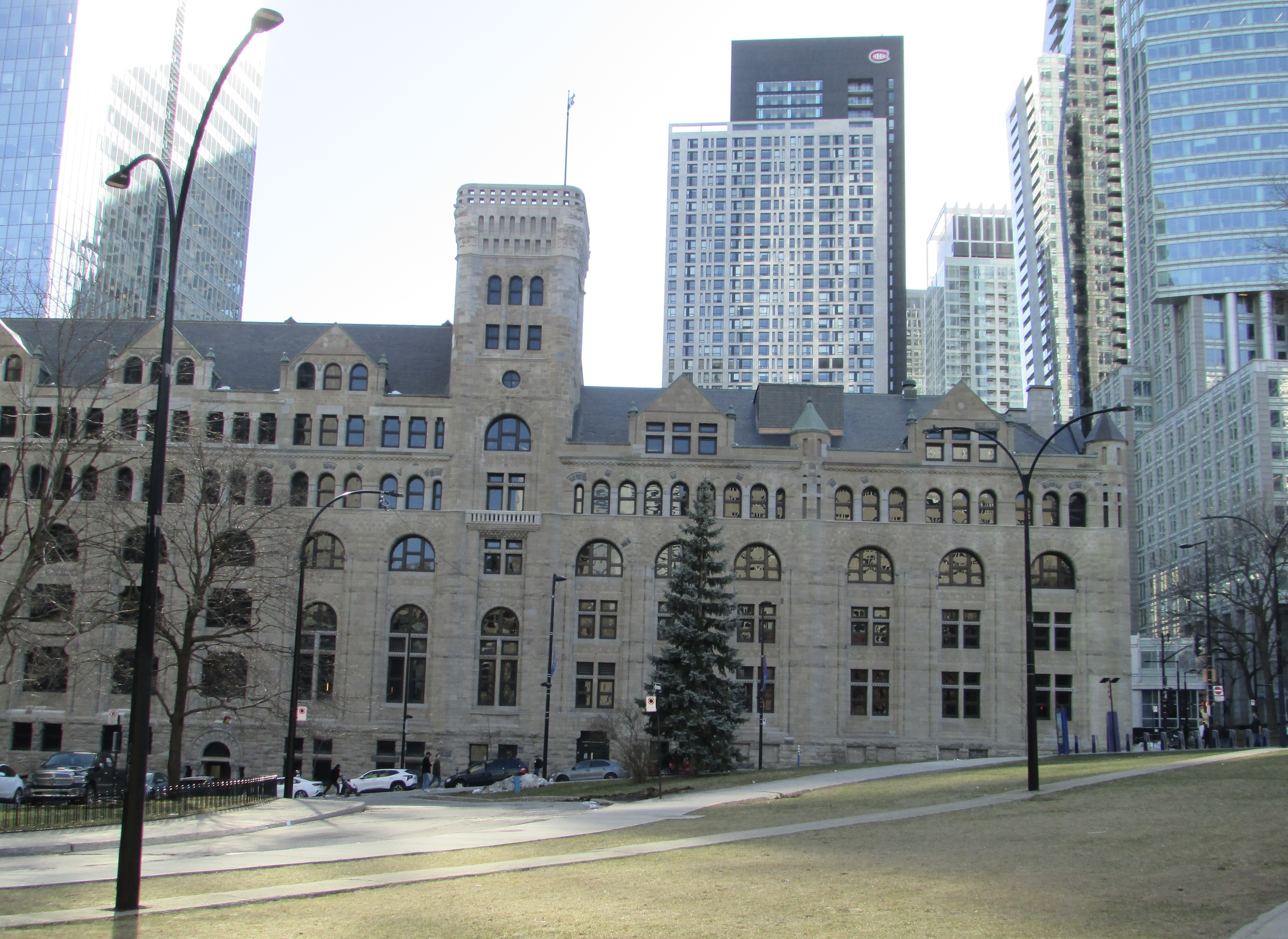
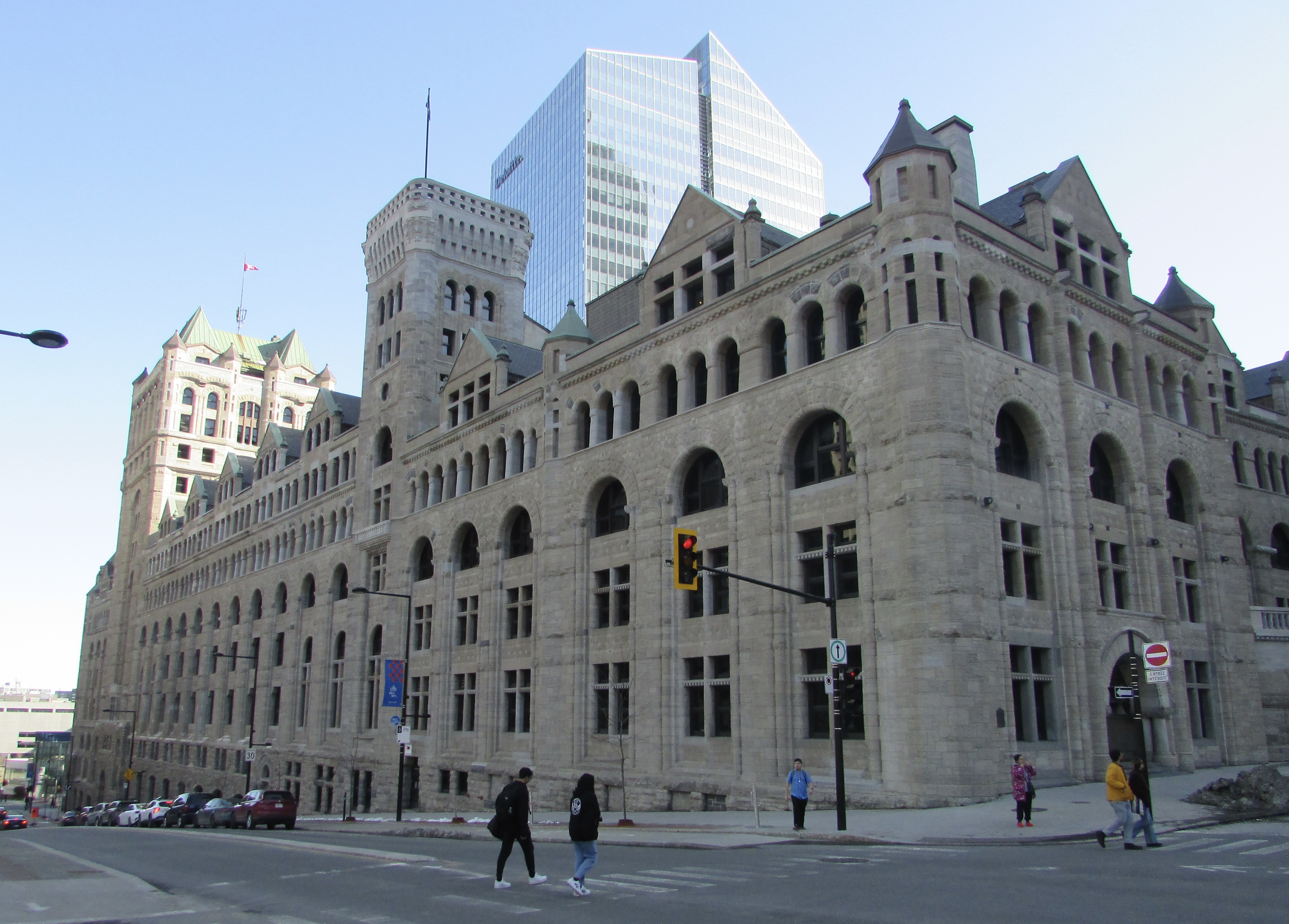
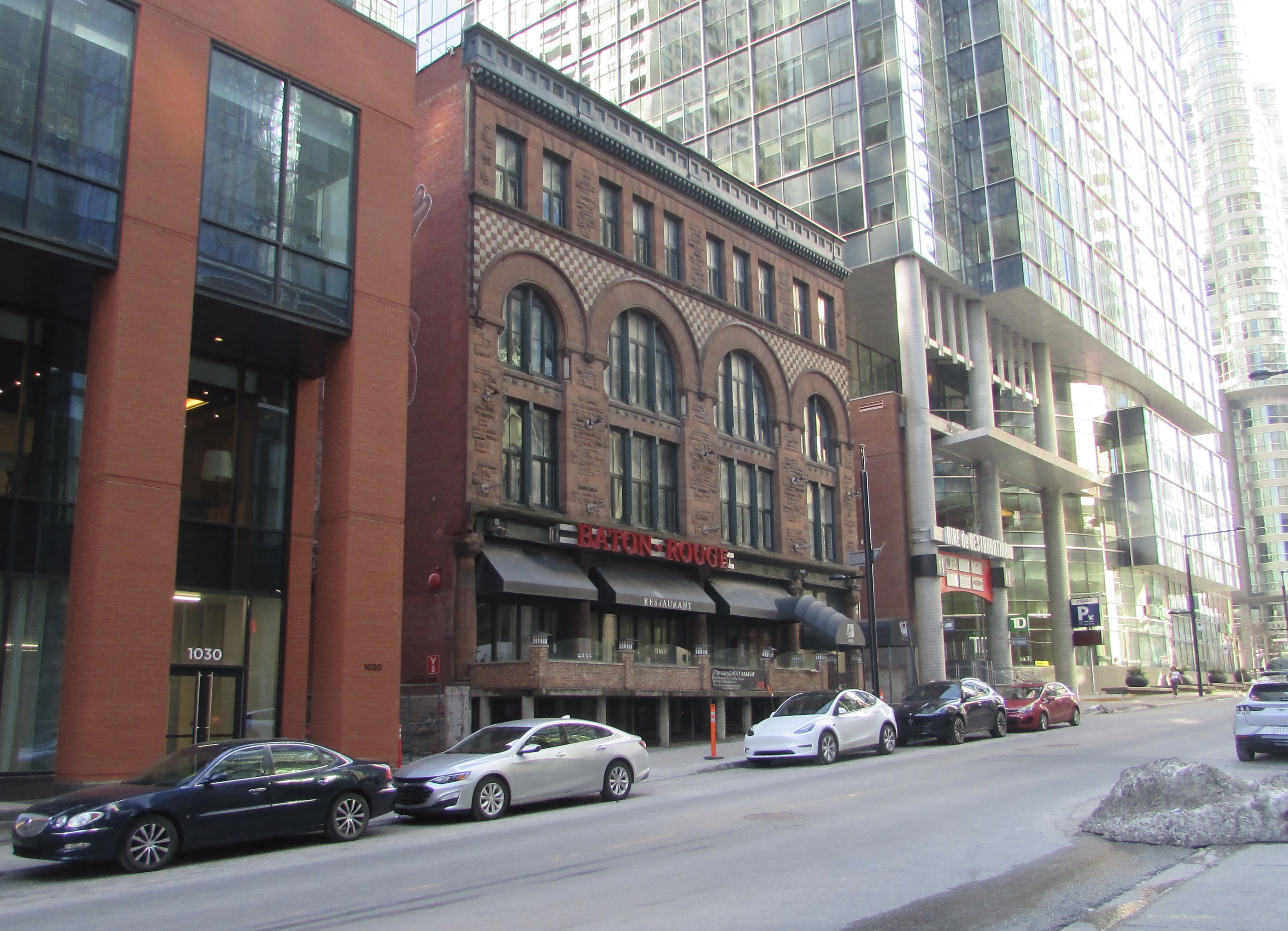
As always, I love the juxtaposition of old architecture and new. Here are a few other structures that caught my eye as I walked. The first is Windsor Station. Formerly the city’s Canadian Pacific Railway station and headquarters of the CPR from 1889 to 1996, it has been redeveloped into an office complex that also houses some restaurants and cafés. I can’t tell you anything about the others. 

IMG_6714

IMG_6708

IMG_6712

IMG_6716

IMG_6804

Though there is no end of old architecture to enjoy in Montreal’s downtown area, there’s also something new to see. Suspended between two buildings, 30 metres in diameter and weighing some 23,000 kilograms, The Ring hovers over the staircase of Place Ville Marie’s Esplanade directly across Rene Levesque Boulevard from the Queen Elizabeth Hotel. Installed in June 2022, The Ring serves as a window to more than 200 years of history, establishing a direct line of view from the hotel and Place Ville Marie to McGill University, the former Royal Victoria Hospital, and the illuminated cross on Mount Royal.

IMG_6744

IMG_20240406_195749629

Book of the month – February 2024

Many of the books that I’ve read over the past year or so have been historical novels set in the days leading up to and during World War II. Many, like the two that I featured last month, are based on the experiences of actual people who lived through those dark days. I’ve read stories of women working behind the scenes in the French resistance and children being sent overseas to temporary homes in North America where they would be safe from the bombings in London. Others have been stories of life and death in the concentration camps. Still others have told of people who risked their lives hiding Jews from the Nazis or smuggling food and medicine into the Jewish ghetto in Warsaw. My librarian friend tells me that these novels of wartime heroism are a very popular genre at the moment. I find that somewhat surprising during this time of heightened antisemitism when some might even think that the Holocaust didn’t go far enough in ridding the world of its Jewish population. But perhaps it’s also a hopeful sign. It was my librarian friend who suggested that I read this month’s selection.

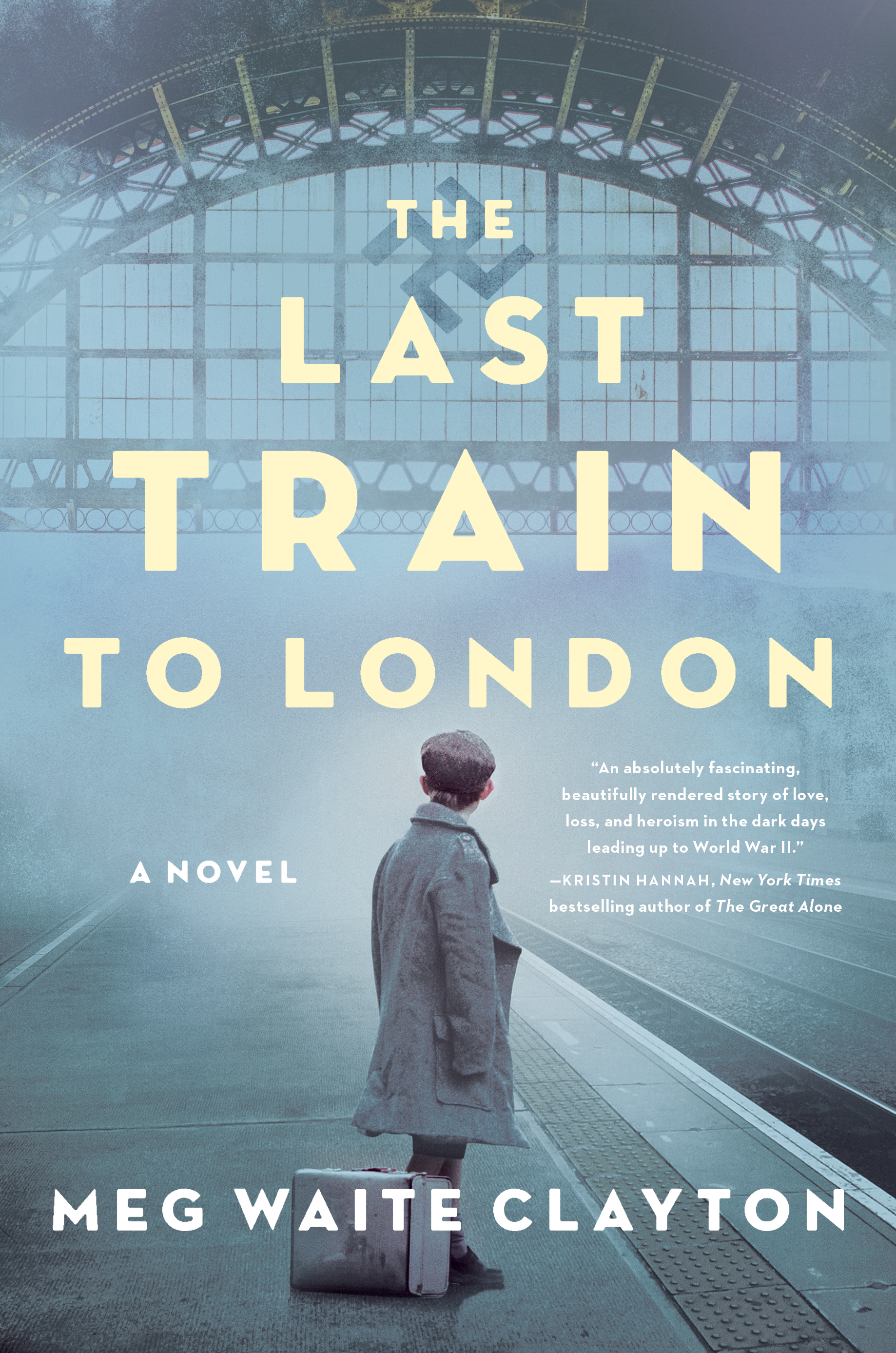
The Last Train to London

Meg Waite Clayton

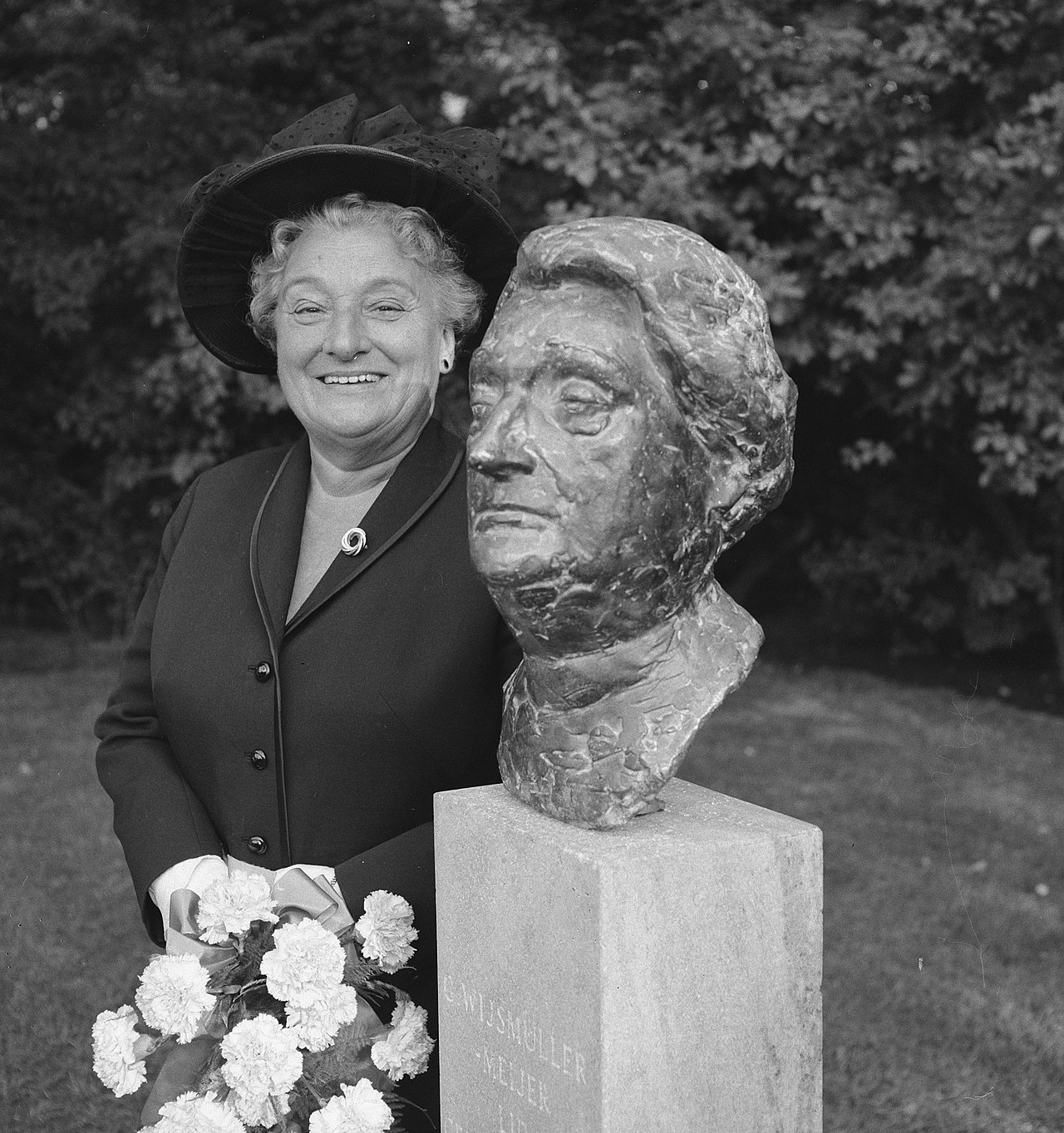
43386062Geertruida (Truus) Wijsmuller, a childless member of the Dutch resistance, risks her life smuggling Jewish children out of Nazi Germany to the nations that will take them. It is a mission that becomes even more dangerous after Hitler’s annexation of Austria when, across Europe, countries begin to close their borders to the growing number of refugees desperate to escape. After Britain passes a measure to take in at-risk child refugees from the German Reich, Tante Truus, as she is known by the children, dares to approach Adolf Eichmann, the man who would later help devise the “Final Solution to the Jewish Question” and is granted permission to escort a trainload of 600 children (not 599 or 601, but exactly 600) out of the country. In a race against time, 600 children between the ages of 4 and 17 are registered, photographed, checked by medical doctors and put on board the train to begin a perilous journey to an uncertain future abroad. Thus begins the famous Kindertransport system that went on to transport thousands of children out of various parts of Europe during the Nazi occupation of the region in the late 1930s, immediately prior to the official start of World War II.
The Last Train to London is also the story of three fictional children, Stephan Neuman, the teenage son of a wealthy and influential Jewish family who are stripped of everything when the Germans invade Austria, his younger brother, Walter, and Stephan’s best friend, Žofie-Helene, a brilliant Christian girl whose mother edits a progressive, anti-Nazi newspaper.

Although this book really came together at the end and was well worth reading, I do admit to finding it somewhat difficult to follow, especially in the first half, because of the short, choppy chapters that bounce from one character to another.

1280px-WijsmullerMeijer1965

Geertruida Wijsmuller in 1965

Book of the month – January 2024

With today’s post, this monthly feature enters its second year! While these book reviews haven’t generated as much interest as some of my other posts, I know that there are several of you who look forward to them.

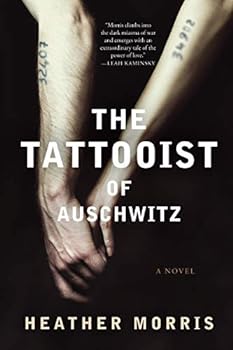
This month, I’m featuring two books by the same author, Heather Morris. If you haven’t read either of them yet, I would suggest starting with The Tattooist of Auschwitz, but that’s not essential. In fact, I read Cilka’s Journey first.

The Tattooist of Auschwitz

415TbkTEY4L._SL350_In 2003, Morris, was introduced to Lale Sokolov, an elderly gentleman who “might just have a story worth telling”. As their friendship grew, Lale entrusted her with the innermost details of his life during the Holocaust. She originally wrote his story as a screenplay before reshaping it into her debut novel, The Tattooist of Auschwitz.
In April 1942, Lale, a Slovakian Jew, is one of countless young men who are forcibly stuffed into railroad cars designed to carry livestock and taken to the concentration camps at Auschwitz-Birkenau. When his captors discover that he speaks several languages, he is put to work as a Tätowierer (the German word for tattooist) permanently marking his fellow prisoners.

Three months later, as he gently holds the arm of the young girl in front of him and etches a five digit number into her skin, he looks up into her eyes and thus begins a love story that lasts a lifetime. Her name is Gita and meeting her feeds Lale’s determination to survive the horrors of the camp. Imprisoned for more than two and a half years, he witnesses horrific atrocities, but also acts of bravery and compassion. Risking his own life, he uses his privileged position to exchange money and jewels from murdered Jews for food and medicine to help keep his fellow prisoners alive.

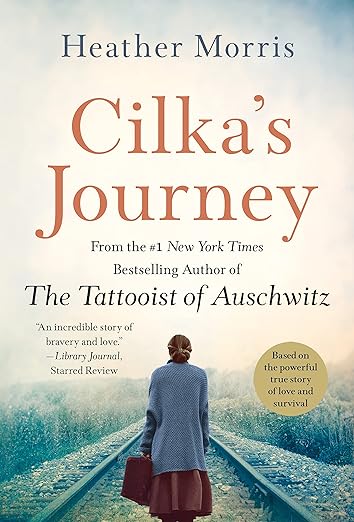
Cilka’s Journey

81sTaMNLkIL._SY522_In The Tattooist of Auschwitz, we are introduced to Cilka, a beautiful young prisoner who is forcibly separated from the other women by Johann Schwarzhuber, camp commandant, for his exclusive use. Quickly learning that her survival depends on it, she does what she has to do to stay alive. Although both books are historical novels, Cilka, like Lale, was a real person and at one point, he credits her with saving his life.
Cilka’s Journey picks up her story when the war ends and the surviving prisoners are liberated from Auschwitz-Birkenau. Charged as a collaborator for literally sleeping with the enemy, she is sentenced to another fifteen years in a Siberian prison camp. There she faces more challenges, some new and others horribly familiar, including the unwanted attention of the guards. When she meets a kind female doctor, she is taken under her wing and learns to care for the injured and ill in the camp. Working under brutal conditions, she discovers strength she never knew she had and finds that in spite of everything she’s been through, she’s still capable of falling in love.

While The Tattooist of Auschwitz and Cilka’s Journey are both vivid and harrowing stories of man’s inhumanity to man, they also testify to the resilience of humanity and love under the darkest possible conditions. They aren’t easy books to read because of their content, but I found that I couldn’t put them down.

Book of the month – October 2023

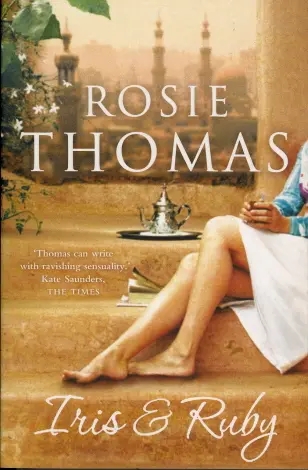
Iris & Ruby

Rosie Thomas

9780007173549-l19-year-old, Ruby, driven by her difficult relationship with her mother, runs away from her home in England and seeks refuge with the grandmother she hasn’t seen for many years. Her unexpected arrival on Dr. Iris Black’s doorstep in Cairo brings life and disorder into the elderly woman’s house.

After a lifetime of independent living, Iris recognizes in herself the early signs of dementia. Lovingly cared for by her servant, Mamdooh, and her cook, Aunty, she has become increasingly reclusive, but the arrival of her granddaughter changes that. An unlikely bond forms between the two as Ruby attempts to help her grandmother record her fading memories.

Iris & Ruby is a richly textured story of love, loss, and the power of family relationships.

Through Ruby’s experiences and Iris’ memories, the novel moves seamlessly between present day Cairo and the same city during World War II. Thomas’ writing is wonderfully descriptive drawing us into the glittering parties and the devastating wartime losses of the 1940s; the sights, sounds, and smells of the crowded marketplace of today; and the timeless and relentless desert that surrounds them both.

I was drawn to this novel by the fact that I would love to visit Egypt someday. While preparing to write this post, I discovered that Literary Tours in Egypt actually offers a Rosie Thomas’ Iris and Ruby 2-day tour of Cairo! What a cool idea!

The impact of the Barbie movie on fashion

Screenshot 2023-08-14 at 11.58.52 AMEver since the Barbie movie, featuring Margot Robbie and Ryan Gosling, was released last month, women and girls of every age (and men too) have been flocking to the theatres dressed in pink. Pink is definitely having a big moment in the fashion world!

Historically, pink was just another colour worn by men and women alike and, in many parts of the world, it still is. In North America, however, it’s been considered a feminine colour since the 1920s when US department stores arbitrarily made the decision that blue would be for boys and pink for girls. Later came an era when pink was thought to be too girly. Women who loved pink weren’t taken seriously and boys who wore pink were accused of being gay. All those stereotypes have been shattered by the Barbie movie phenomenon.

Living where I do, two hours from a major shopping mall, I haven’t been in a clothing store for quite awhile, but a quick look at a few of my favourite Canadian retailers online turned up an amazing array of pink; every shade of pink imaginable, but especially Barbie’s iconic hot pink.

There were casual clothes, of course, like this tank top and wide-legged linen cargo pants from Reitmans.

But also dressier pieces like this satin wrap skirt from Ricki’s.

Satin Wrap Skirt Ricki's

And even business appropriate suits and blazers like these from Cleo and Ricki’s.

Cropped Pant Suit Cleo

Single Breasted Blazer Ricki's

I can imagine Barbie wearing a bright pink trench coat, can’t you? This one’s from Reitmans.

reitmans_464574_669_1

The only pink in my wardrobe is a couple of golf shirts and special bright pink hoodie that I’ve had for many years, but if I was in the market for new walking shoes, I’d definitely consider these Asics from the Marks website!

asics-women-s-gel-braid-running-shoes-pink-eab59c40-67c4-4934-b581-d3cf91ed40d8.png

But, back to the Barbie movie. I haven’t seen it myself and I don’t know that I will, but I did see a trailer that looked like it might be fun. What is it though that is drawing huge crowds to a movie about a doll having an existential crisis and venturing into the real world? Certainly one of the things driving the phenomenon is nostalgia. Women who grew up playing with Barbie can relive a part of their childhood and in many cases, share the experience with their daughters and granddaughters.

I never had a Barbie doll. I was 6 when Mattel officially introduced her to the world on March 9, 1959. Perhaps my mother was a woman before her time, but from the beginning, she didn’t like the unrealistic beauty standards presented by the doll. About that time, she and my father made a trip to the States. There, she bought my little sister a Vogue Ginny doll and me a Jan. Compared to Barbie, with her ridiculously minuscule waist, Jan had some meat on her bones and was definitely more pleasing to my mother’s sensibilities. Somewhat later, my sister and I both received a Tammy doll for Christmas. Tammy was created by the Ideal Toy Company and made her debut in 1962. She was portrayed as an American teenager with a “girl next door” image. Although I didn’t have a Barbie, I did have her younger sister, Skipper, and she was probably my favourite of the three.

Perhaps for girls and women who did grow up with Barbie, her iconic pink evokes not only nostalgia, but a sense of fun and escape to a time when life was more carefree and joyful. That would certainly explain the crowds dressed in pink lining up at the box offices and the influx of pink in clothing stores this summer!

What about you? Did you play with Barbie? Have you seen the movie? If so, did you dress in pink? I’d love to know your thoughts on the movie, the hoopla surrounding it, or the colour pink in general.

Rowley, an Alberta ghost town

We spent several days camping this week and as a result, I don’t have a Fashion Friday post ready for you today. Instead, I’ll share one of the highlights of our short time away from home. After a horrendous storm Monday night, we woke to sunshine on Tuesday morning, but the wind was still much too strong to go golfing or kayaking and we’d already hiked the 6.5 km nature trail around a nearby lake. We didn’t want to spend the day sitting in the trailer though, so what should we do?

Hubby suggested a road trip to Rowley. In its heyday, Rowley, Alberta was an agricultural town of approximately 500 people, but at last count the population was 9. Yes, that’s right, 9 people and perhaps a few stray cats! Apparently, some of the residents don’t really like their hometown being referred to as a ghost town though that’s what it’s usually called. They take pride in the place and have worked hard to preserve the few remaining buildings and to turn it into a tourist destination. Once a month, the community association, made up of residents and people from the surrounding area, host a well-attended pizza and pub night to raise funds to help with the cost of maintenance.

As the ROWLEYWOOD sign at the turnoff on nearby Highway 56 suggests, the movies Legends of the Fall, The Magic of Ordinary Days, and Bye Bye Blues were filmed in the hamlet.

So, come walk with me and I’ll show you around Rowley, Alberta.

The Lion’s Oil Garage, complete with its old style gas pump, is a reconstruction of the building that originally stood on this site.

IMG_5901

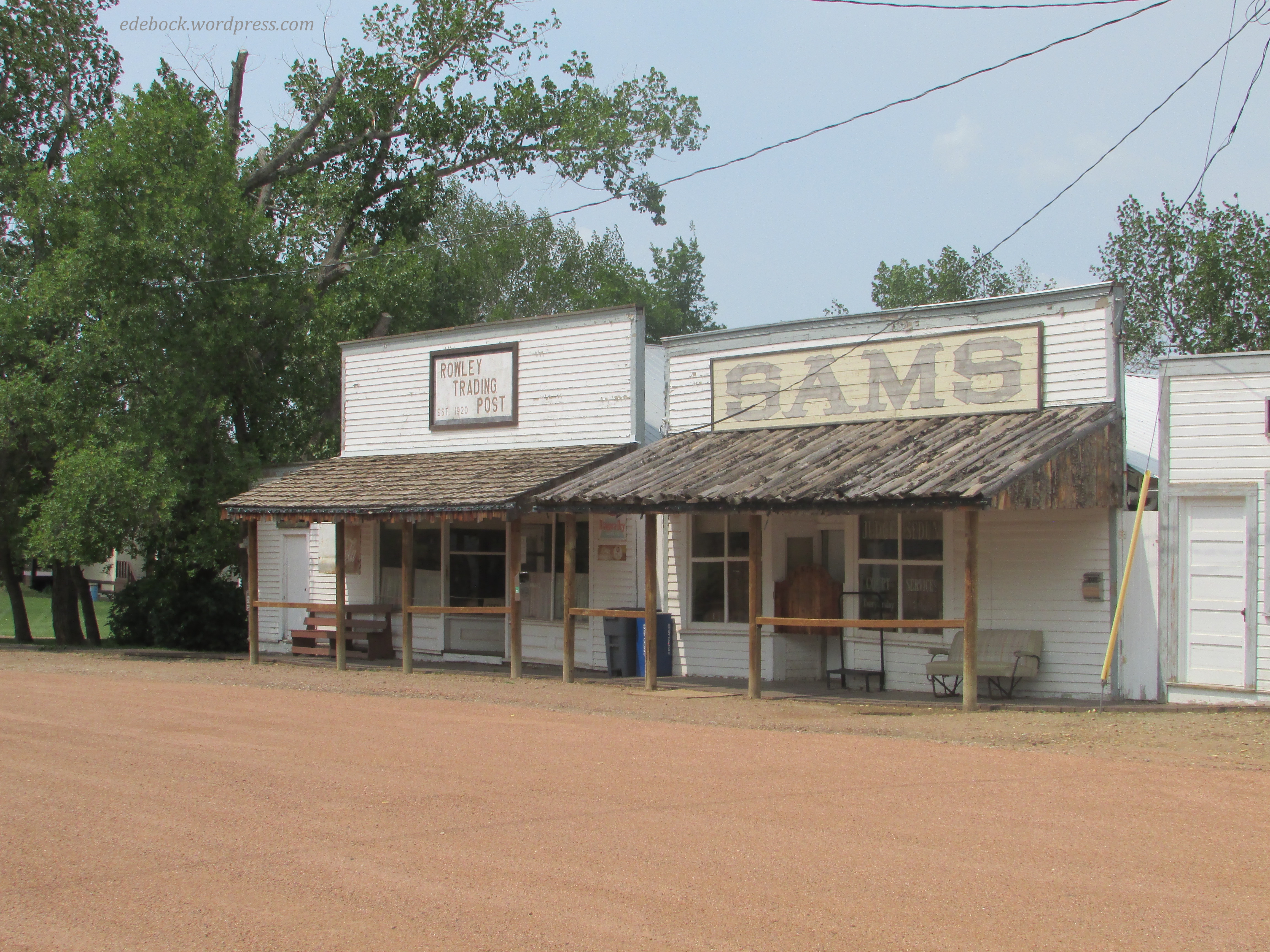
Walking down Main Street past Sams Saloon and the Rowley Trading Post, it’s easy to imagine ourselves transported back in time to the wild west. I could easily picture a couple of horses hitched to the rails and women strolling the boardwalk in old fashioned dresses. Built in 1920, the trading post was where Rowley residents purchased their dry goods and groceries until 1973 when it was the last business in town to close its doors.

IMG_5875

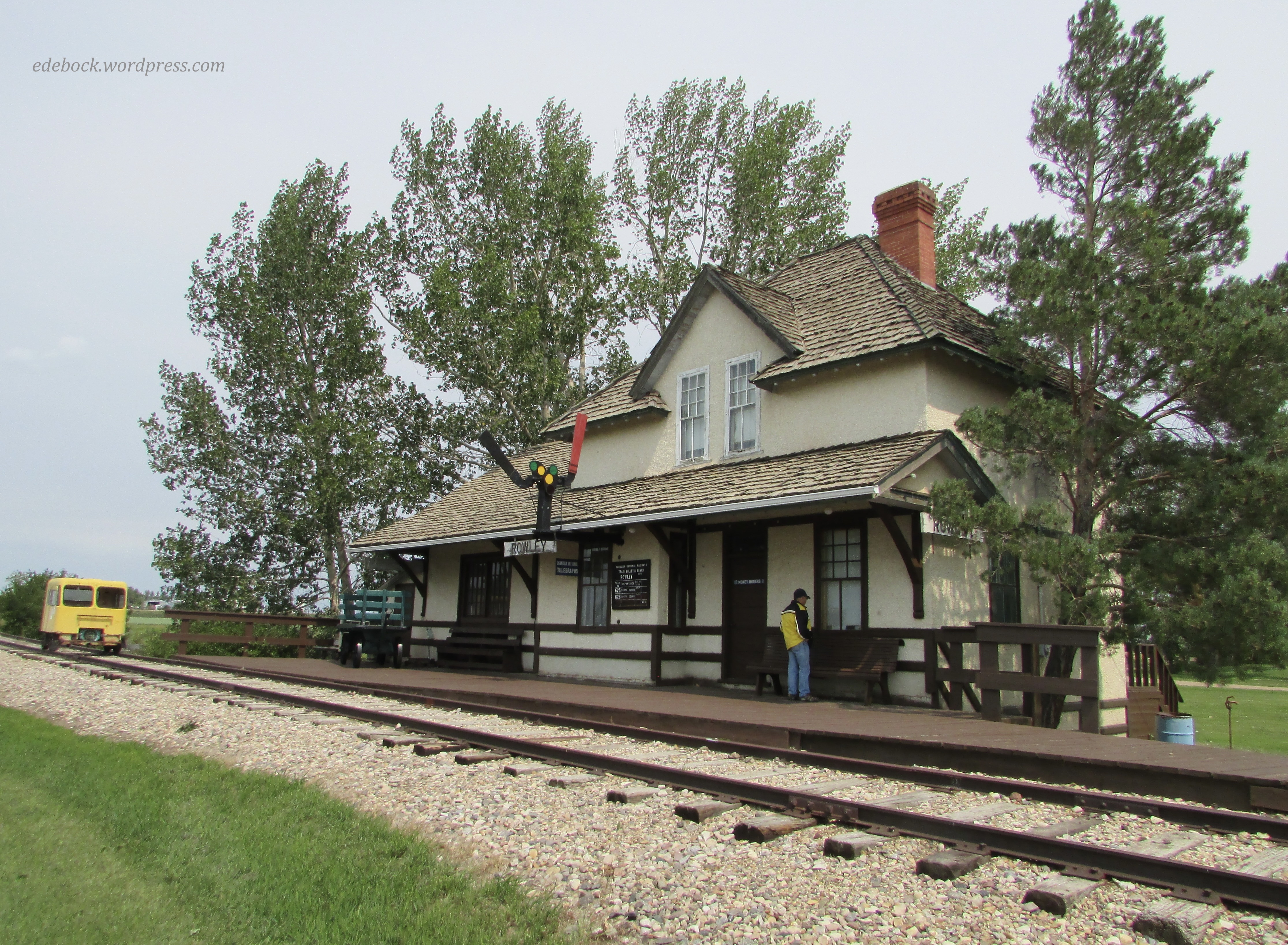
At the end of the street stands the beautifully preserved CNR train station. The station master and his family likely lived upstairs.

IMG_5878

At one time, every little town on the Canadian prairie had its wooden grain elevators, but very few of these stately sentinels remain today.

IMG_5885

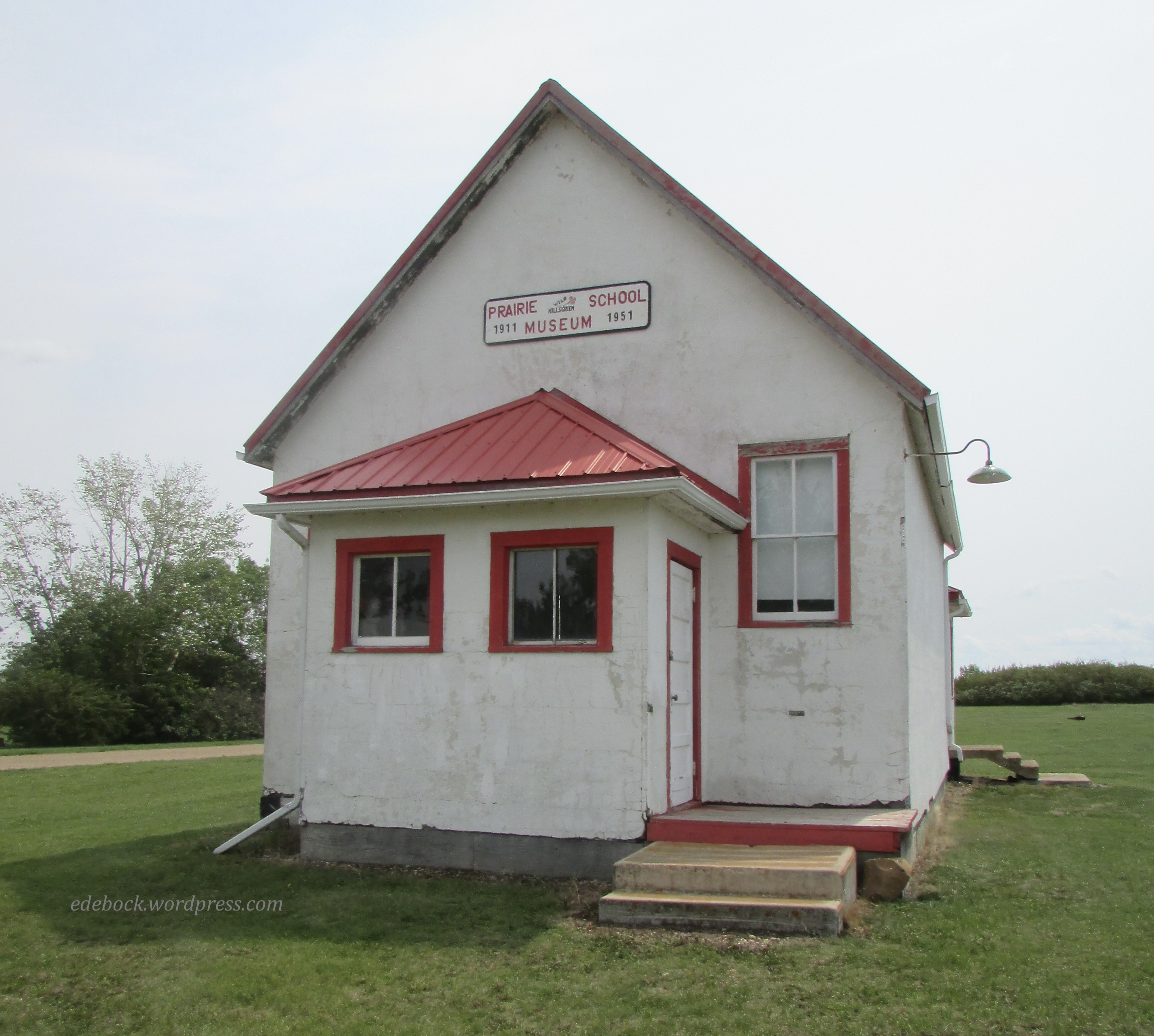
The Prairie School Museum is typical of the one room schoolhouses that dotted the prairie in days gone by. 

IMG_5891

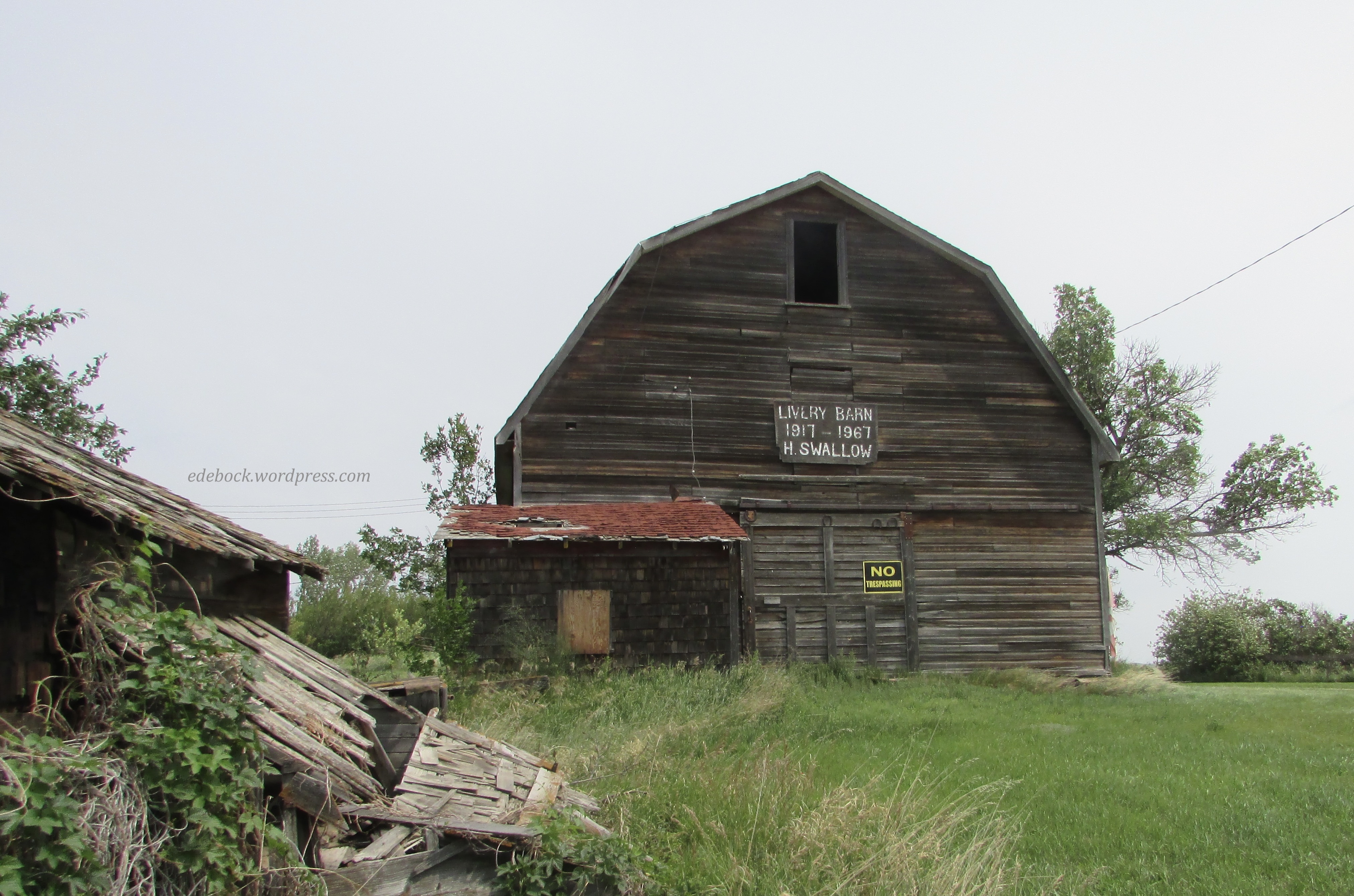
If you came to visit Rowley in the early days, you might have boarded your horse at H. Swallow’s livery barn. While some of the smaller structures around it are falling down, the barn still looks pretty sturdy.

IMG_5894

Circling back to the upper end of Main Street, we find this stately old house, weathered by time but still beautiful. Hubby and I thought that perhaps it had once been the town’s hotel, but after doing a bit of research I discovered that it was originally used as a hospital.

IMG_5897

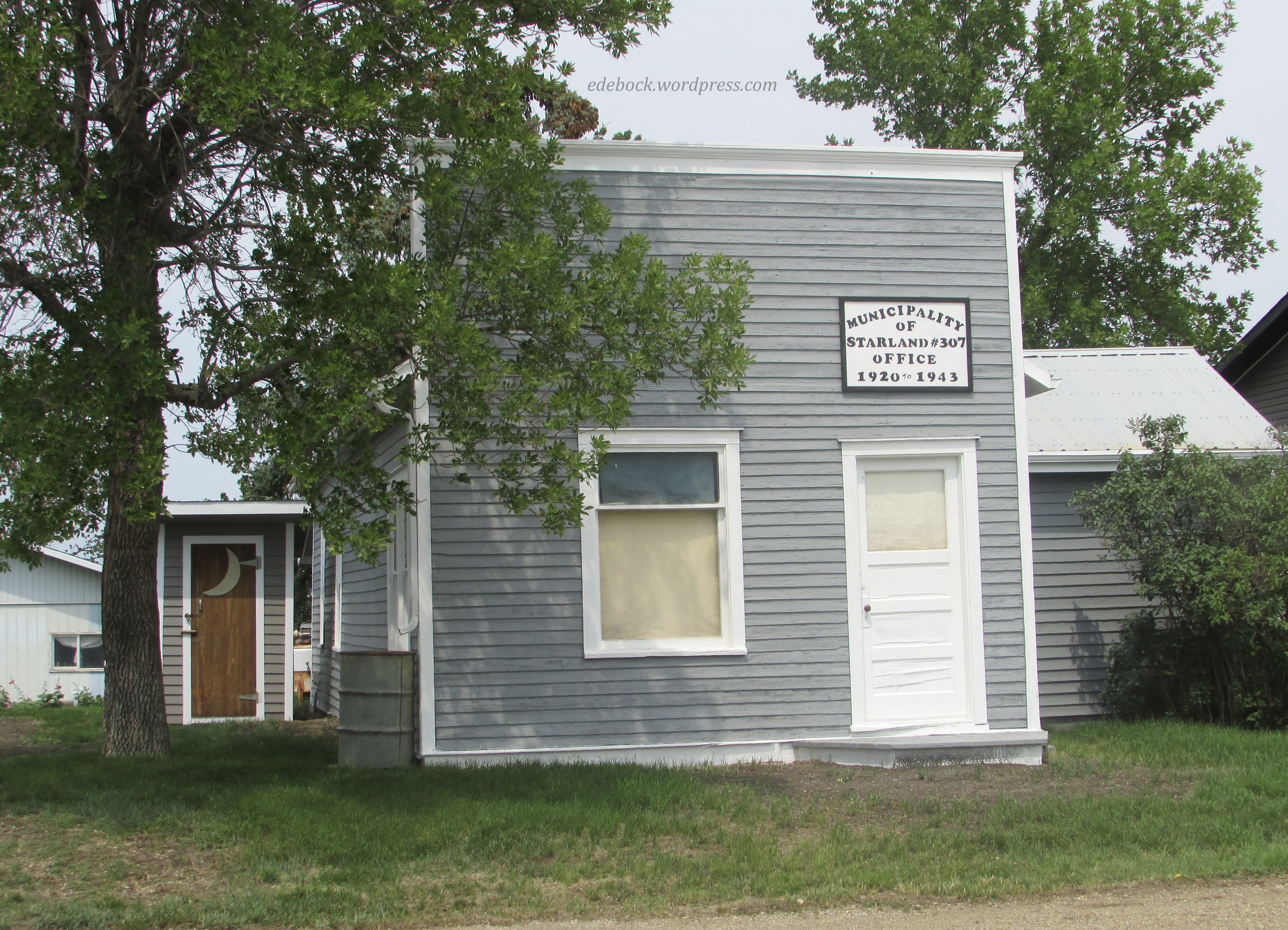
Across the street, the old municipal building has obviously undergone some fairly recent renovation. Though I’m happy to live in the day of indoor plumbing, we thought the backyard biffy was cute.

IMG_5898

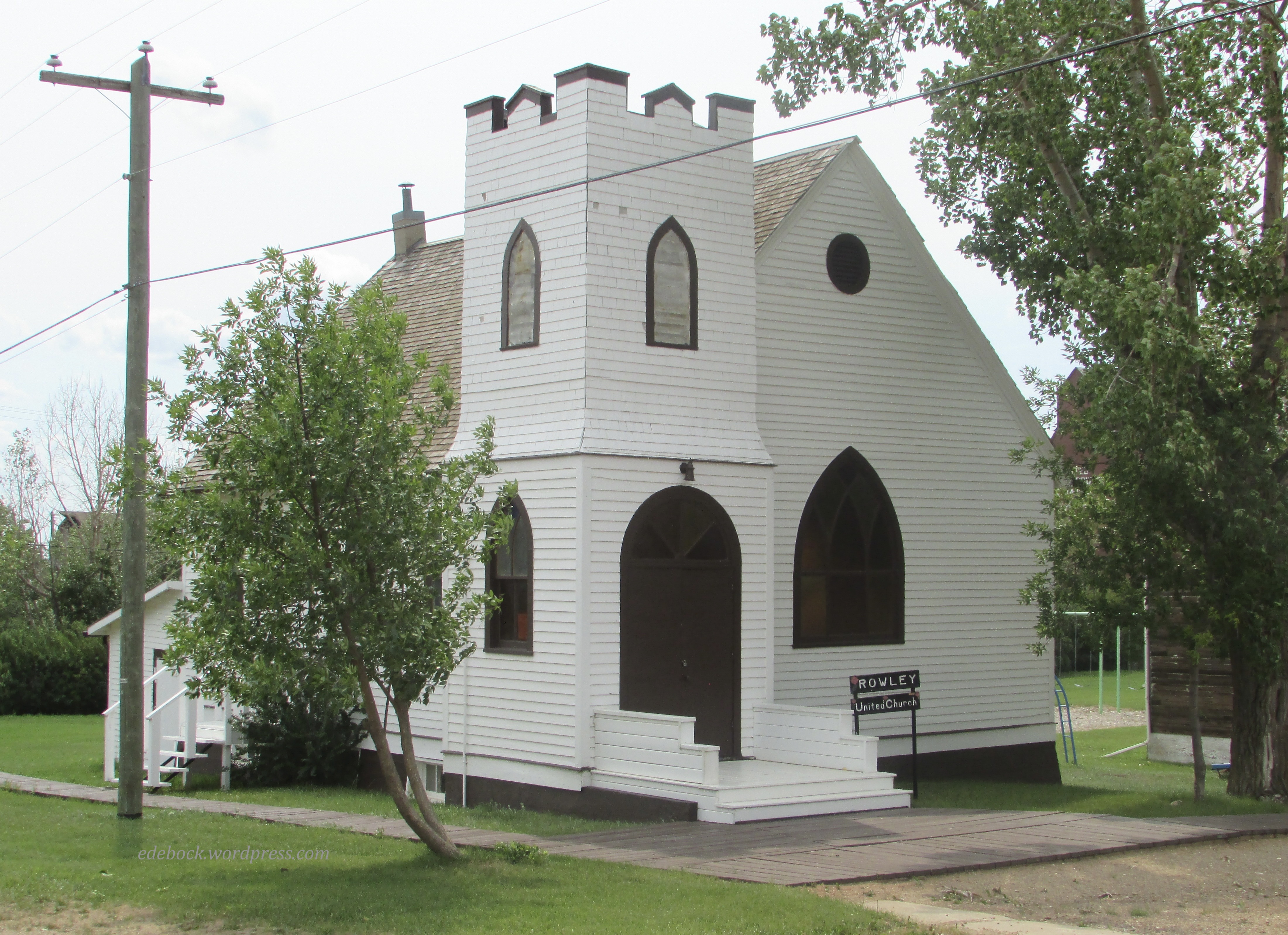
The Rowley United Church remained active until 1969 and continues to be used for the occasional wedding. 

IMG_5899

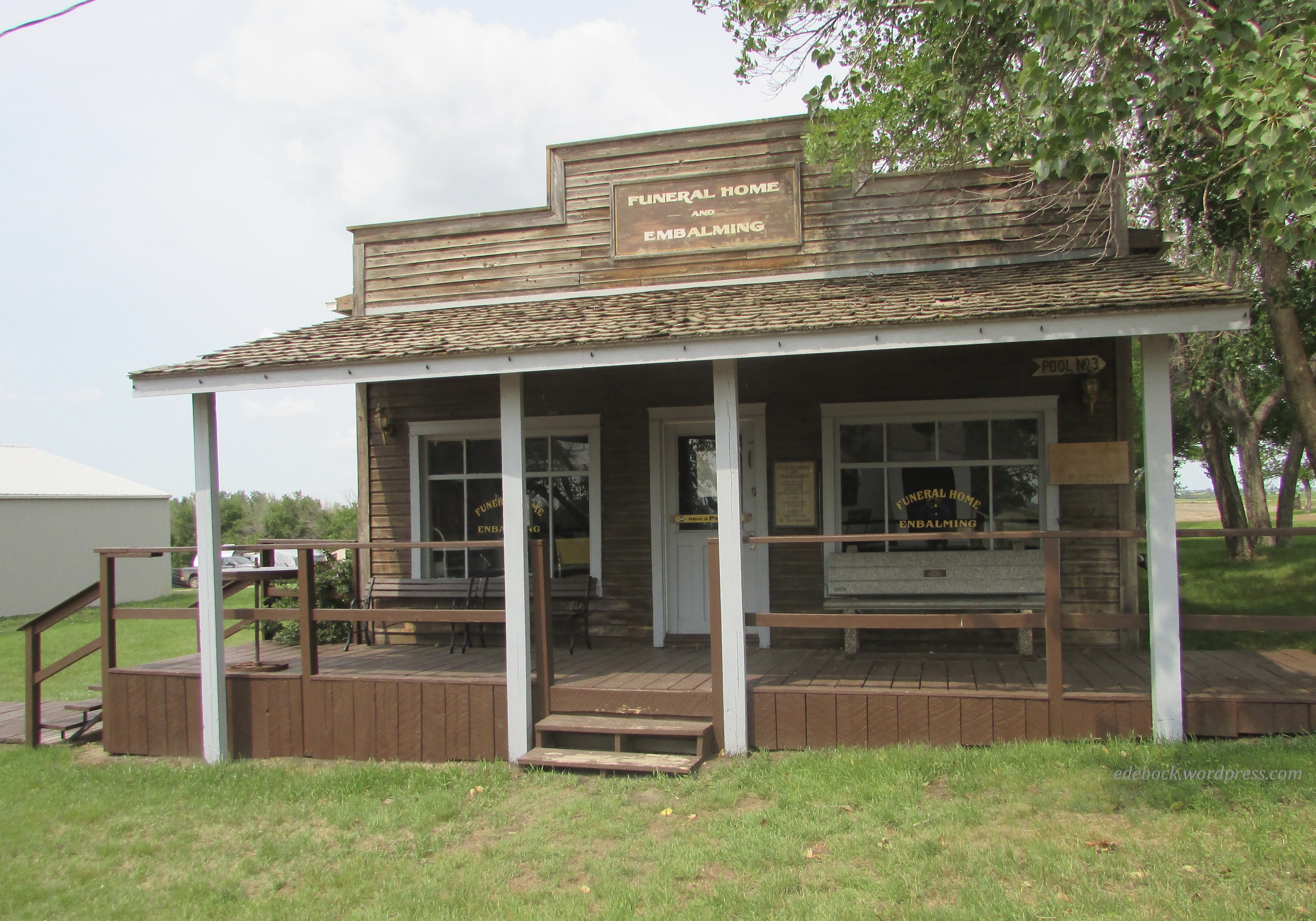
Like at least one other building in Rowley, not shown here, the funeral home across the street from the church was constructed specifically for the filming of the movie, Bye Bye Blues. Afterwards, the residents decided to turn it into a pool hall for their own enjoyment, but kept the front and signage intact. 

When we were there, we had Rowley almost entirely to ourselves and were content to peer through the windows at the artifacts housed inside the buildings, but should you wish to take a closer look, the Rowley community association hires local summer students to give free guided tours inside the buildings Thursday to Monday during July and August. 

Book of the month – May 2023

When it came time to write this month’s book post, I couldn’t decide which of two historical novels I wanted to feature, so I took the easy way out and wrote about them both!

The Letter Home

Rachael English

hbg-title-9781472264701-63.jpgRachael English is a novelist and a presenter on Ireland’s most popular radio programme, Morning Ireland. In her most recent novel, inspired by true events, the lives of three remarkable women are interwoven across time.

While back home in County Clare on Ireland’s west coast, Jessie Daly, whose life has recently fallen apart, agrees to help an old friend research what happened in that area during the terrible famine of the 1840s. Meanwhile in Boston, lawyer Kaitlin Wilson, after suffering a tragedy of her own, decides to research her family history. She knows only that her ancestors left Ireland for Boston in the 19th century. Separated by an ocean, and totally unknown to one another, the two women are drawn into the remarkable story of a brave young mother named Bridget Moloney and the terrible suffering that she and her little daughter, Norah, endured during the famine.

Even on a busy weekend celebrating the birthdays of two of my grandchildren, I had a hard time putting this book down! Perhaps I connected so strongly with the story because I’ve recently been sorting through a box of old family photos, inherited from my mother, and trying to correctly label them before the identities of the people in them are forever lost in the mists of time. Like Jessie and Kaitlin, I’ve taken to the internet to find out more about these ancestors of mine and their lives, but perhaps that should be a story for a different post!

If you enjoy historical fiction or genealogy is your thing, this is definitely a book for you. I enjoyed it so much that I’ve now loaded one of English’s earlier novels, The American Girl, onto my Kindle for future reading.

The Dictionary of Lost Words

Pip Williams9781984820747

Knowing that I’m a lover of words and a strong advocate of equal rights for women, my daughter recommended that I read this one. Australian novelist, Pip Williams, masterfully weaves a fictional story into and around the true historical events and people involved in compiling the first edition of the Oxford English Dictionary in the late 1800s and early 1900s.

The only child of a widowed father, Esme spends her early childhood in the Scriptorium, a converted garden shed in Oxford where her father and a team of dedicated lexicographers collect and compile words for the dictionary. From her place under the sorting table she collects stray word slips dropped or discarded by the men and hides them in a small trunk that she labels “The Dictionary of Lost Words”. As she grows up, she begins to realize that not all words are considered appropriate for inclusion in the dictionary, particularly words pertaining to the experiences of women and common folk; words that were considered coarse or vulgar, spoken but not usually written. And so she begins her own collection of words by seeking out the lower-class, less educated people and listening to their everyday speech.

A book about words might sound dreadfully boring to some, but The Book of Lost Words is much more than that. The years during which the Oxford English Dictionary was being compiled coincided with the women’s suffrage movement in England as well as World War I and both have a part to play in the story. More than just a book about words, it’s a book about love, loss, the roles of women, the meaning of service, and a book that asks the important question, whose words matter?