Shanghai, city of contrasts!

When we went to China, Shanghai wasn’t high on our list of places to visit. As you can probably guess by now, we’re fascinated by history and culture and I viewed Shanghai, with its population of 23.5 million people, as little more than a massive modern city. The only thing that actually drew us to Shanghai as a possible place to visit was the fact that we had friends living there. We got to know the Kawabatas when we attended the same church during our year in Japan and Itoshi was transferred to Shanghai not long after we left that country in 2009.

When we discovered that the tour that included everything we most wanted to see in China ended in Shanghai, we decided to go there after all. We timed it so that we’d finish our tour on a Friday afternoon and then spend the weekend with our friends before flying back to Canada from there.

As time went by, I became more excited about seeing Shanghai. I looked forward to seeing the contrast between the old and traditional in Beijing and the new and modern in Shanghai. Little did I know that I would see both in Shanghai. It is truly a city of contrasts!

Our Lonely Planet guidebook suggests that “Shanghai is best seen as an epilogue to your China experience” and I’m glad we saw it that way. It also refers to Shanghai as “the future that China has long been waiting for”.

Our tour began at the Shanghai Urban Planning Exhibition Hall which gave us a good overview of the city both past and present before we began to explore it. With its massive model of the city and its dizzying 3D wrap around virtual tour in which we seemed to float over the metropolis, we soon felt as if we were no longer strangers there. Historic photos, maps and dioramas gave us a picture of its colourful past. Our next stop was the 88 storey Jinmao Tower for an amazing bird’s eye view of the city.

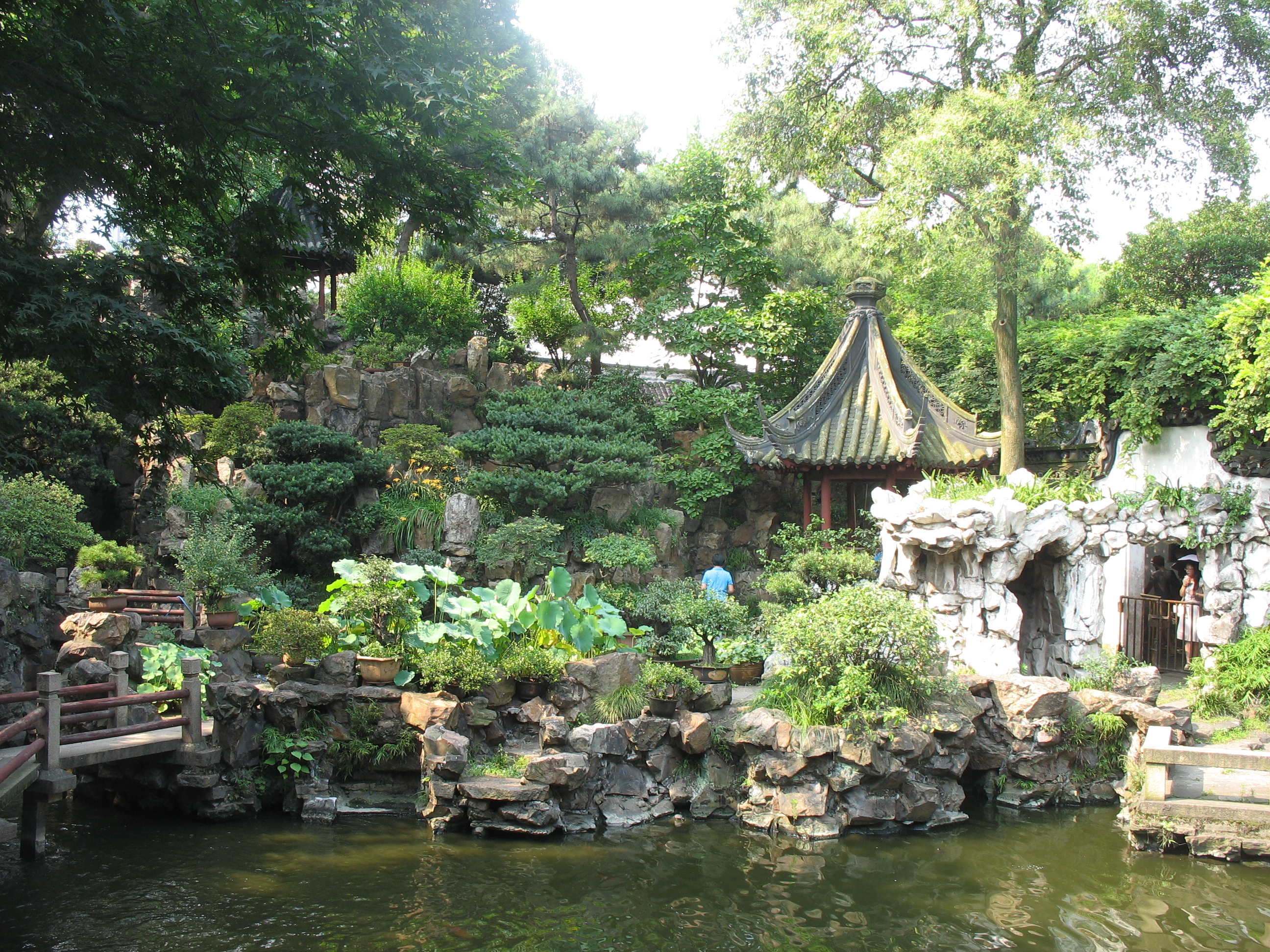
After lunch, we were off to the most traditionally Chinese part of Shanghai where we toured the classical Yu Garden, founded by the Pan family, rich Ming dynasty officials in the 1500s. Afterward, we relaxed over coffee at Starbucks in the middle of the adjacent and very crowded bazaar area with its many tacky tourist shops and outdoor vendors.

IMG_2932

IMG_2923

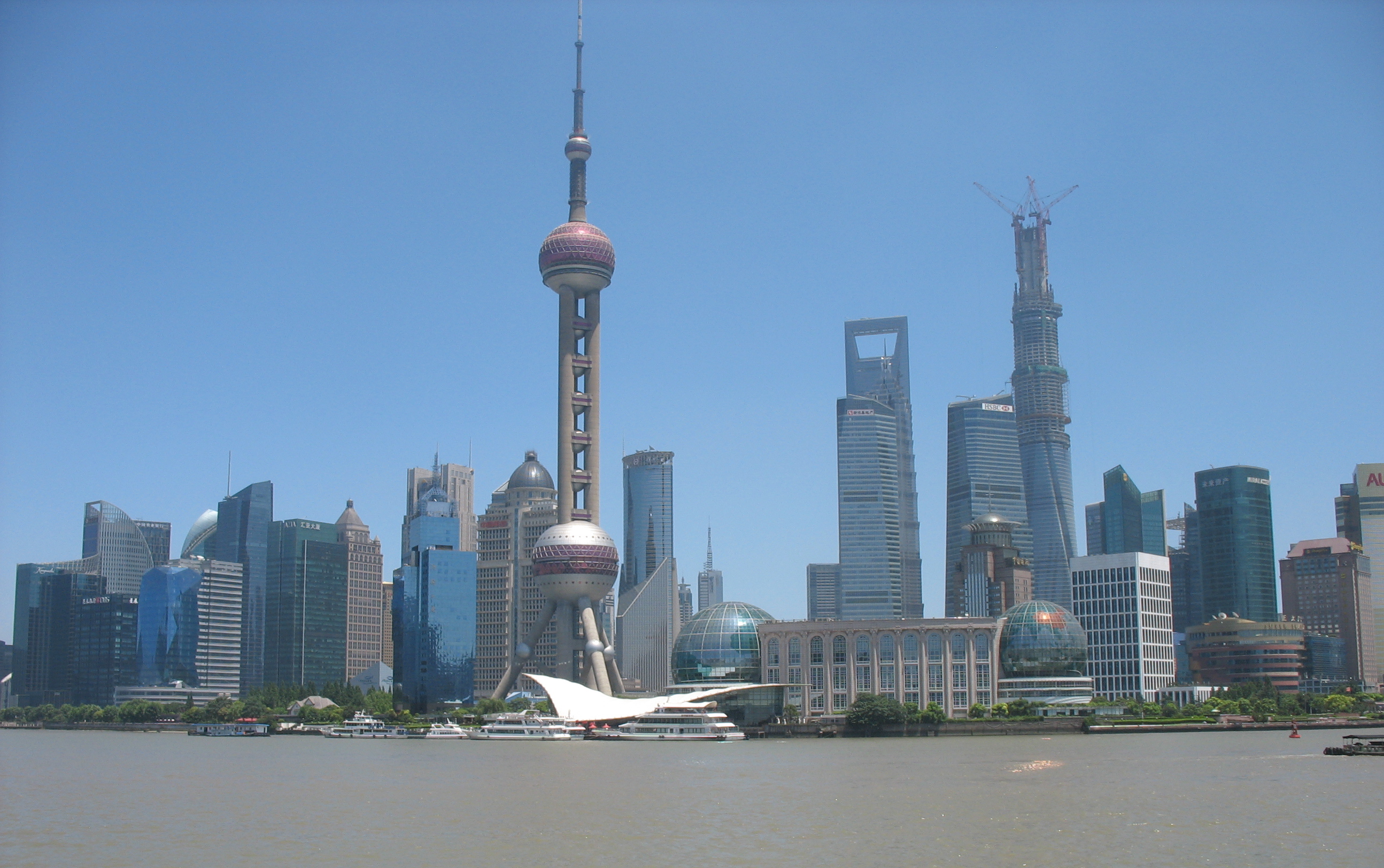
The building under construction in the background will be the world’s tallest when it’s finished.

IMG_2942

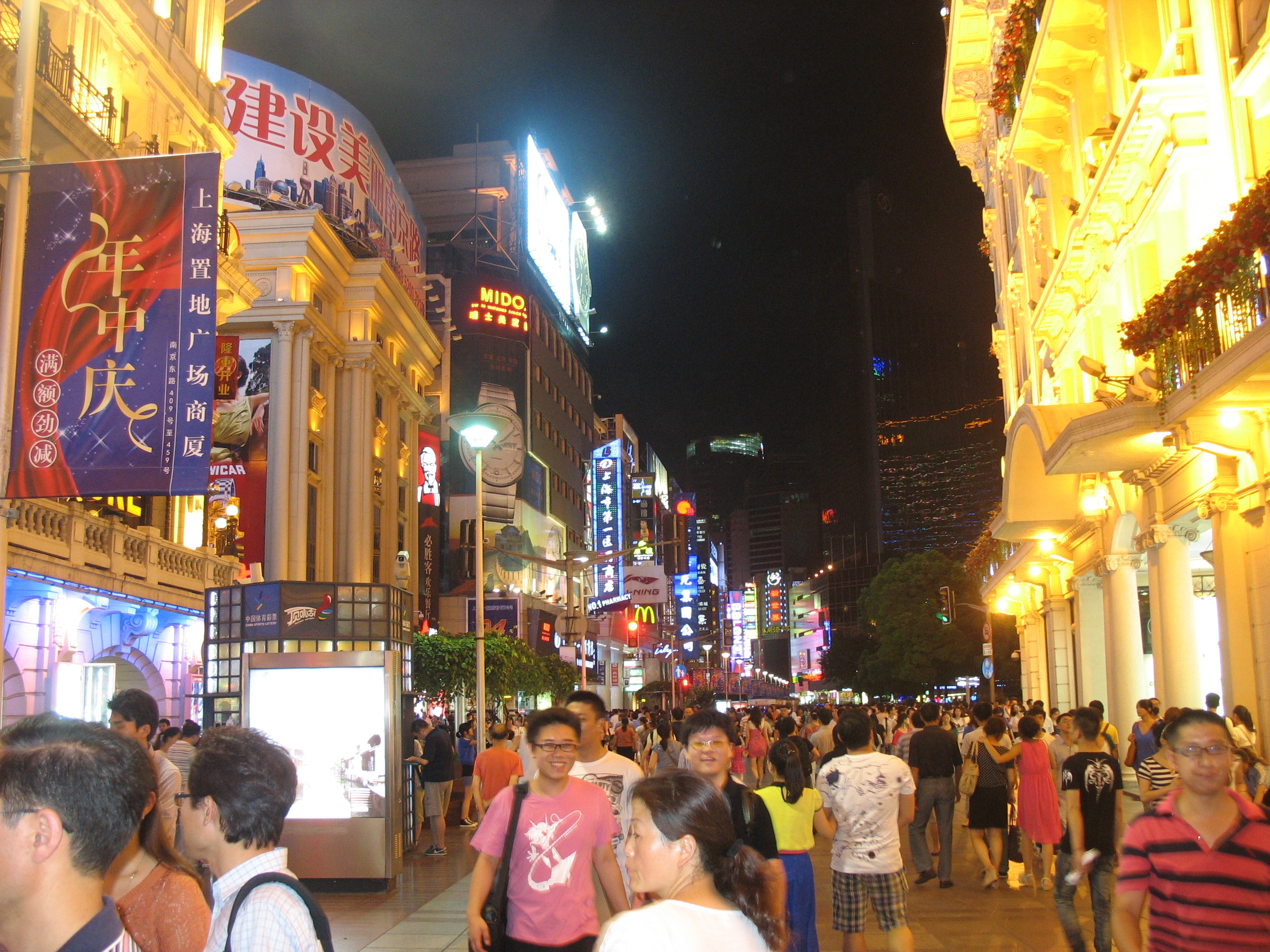
Our evening was free so we took the subway from our hotel to East Nanjing Road, one of the most famous and crowded shopping streets in China. The pedestrian street was a glowing forest of neon lights and crowded with people. It was a vibrant and noisy hub of activity with people strolling, singing, and dancing while others hawked their goods. We even joined one of the groups for an old time waltz!

IMG_2948

The next morning we were back on East Nanjing Road to see it in the daylight and do a bit of shopping. Look very closely and you’ll see the same KFC and McDonalds signs in both photos!

IMG_2950

From there, it was an easy walk to the Bund where we strolled along the riverfront in awe of the contrast between the two sides of the river. On our side stood stately very European looking buildings. Symbolic of the city’s colonial past, they once housed Shanghai’s most powerful banks and trading houses. Today, the Bund is a designer retail and dining area with some of the city’s most exclusive boutiques, restaurants and hotels. Across the river, is the futuristic skyline of the Pudong New Area looking like the set for a science fiction movie. Thirty years ago, that area was still farmland.

IMG_2958

IMG_2962

Perhaps the most amazing building we saw in Shanghai was the one where our friend, Itoshi, works where we were dropped off at the end of our tour of China!

IMG_2970

Terracotta warriors

When we left home in February, there were only three items on my unwritten bucket list for China:

  1. Climb the Great Wall
  2. See a giant panda
  3. See the army of terracotta warriors at Xi’an

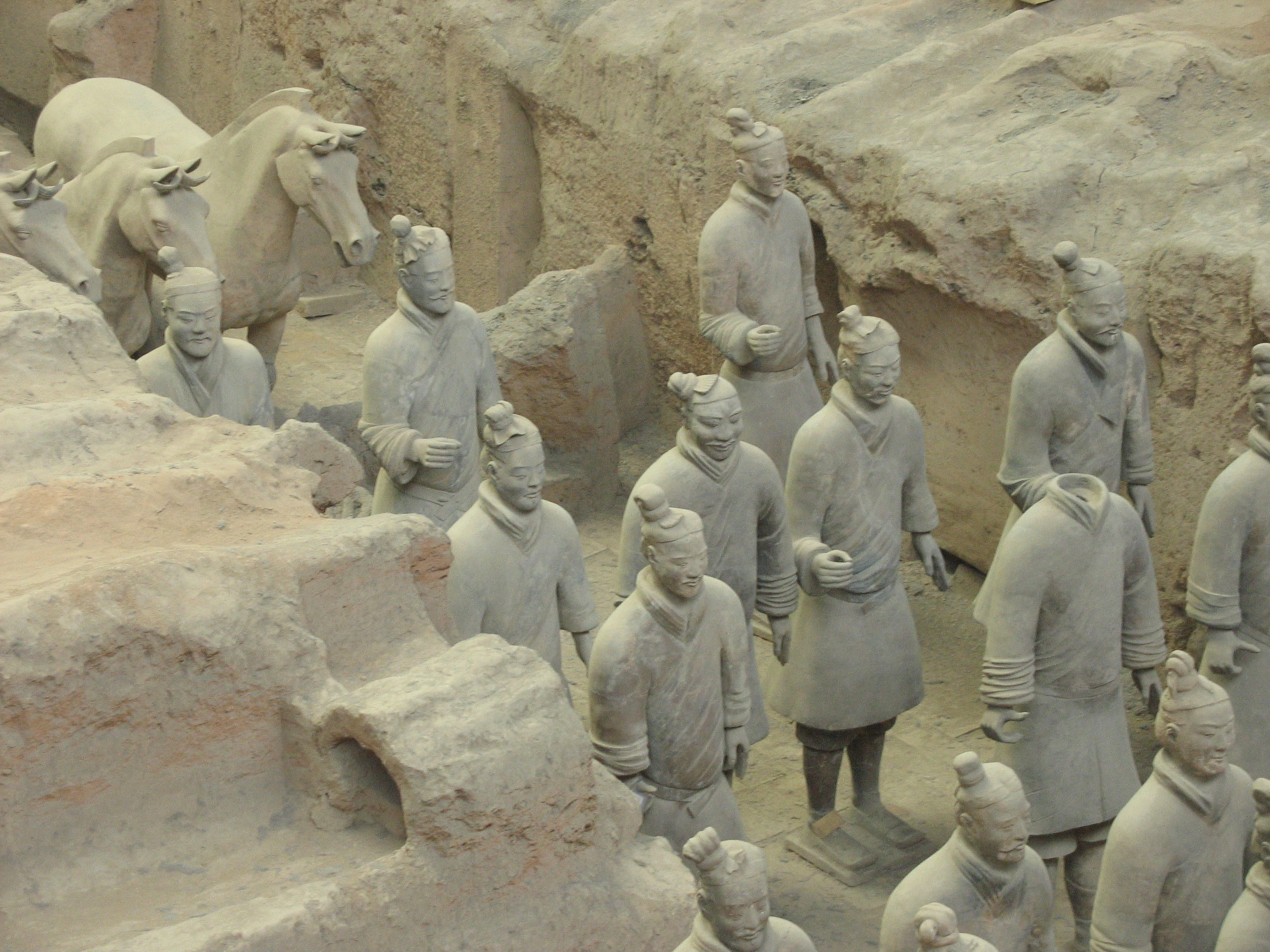
On March 29, 1974, a group of peasant farmers came upon something completely unexpected while digging a well about 1.6 km east of the burial mound containing the remains of China’s first emperor. What at first appeared to be an earthenware jar was actually the head of a life-sized terracotta warrior, one of thousands buried with Emperor Qin Shi Huang to protect him in the afterlife.

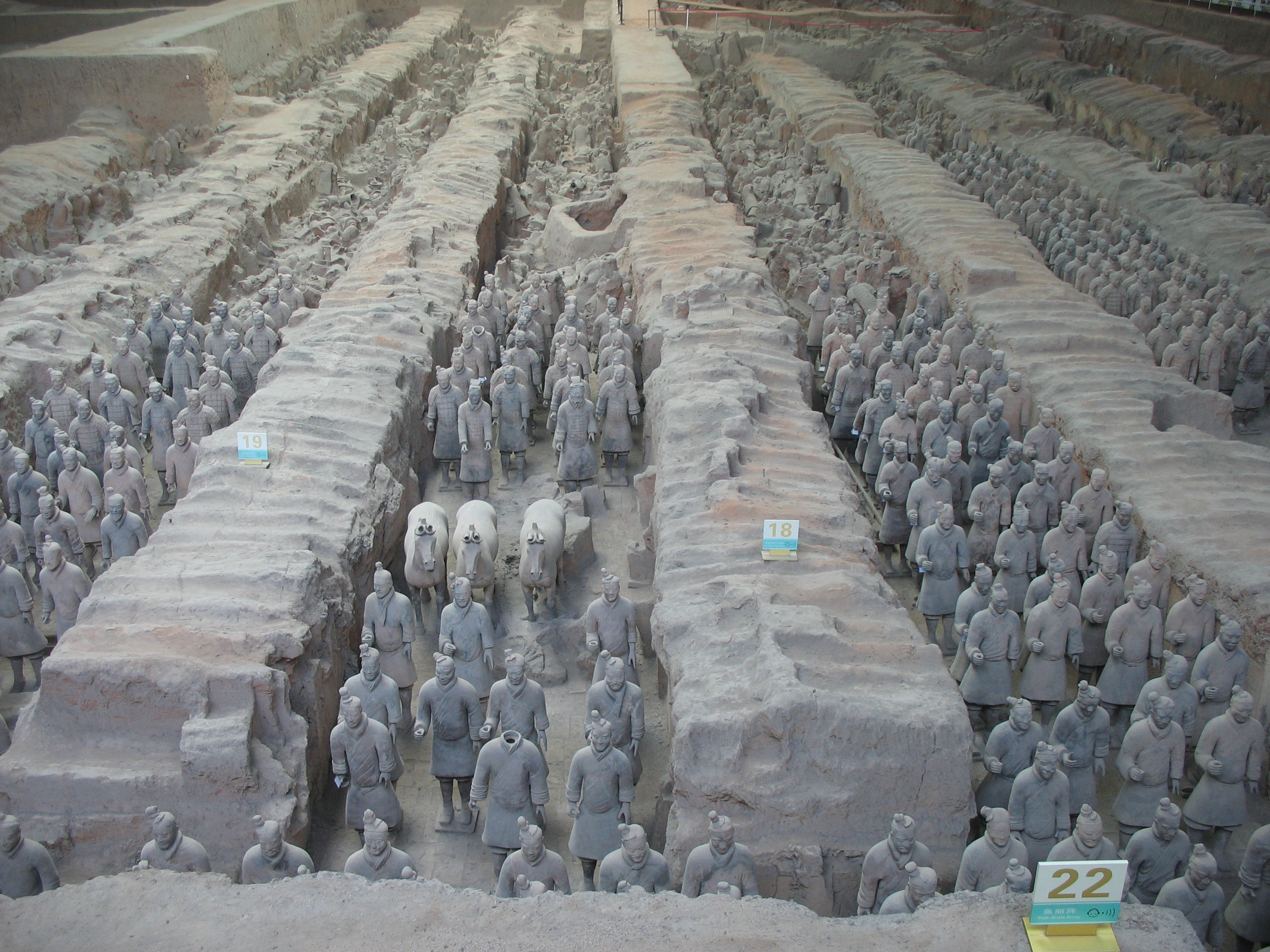
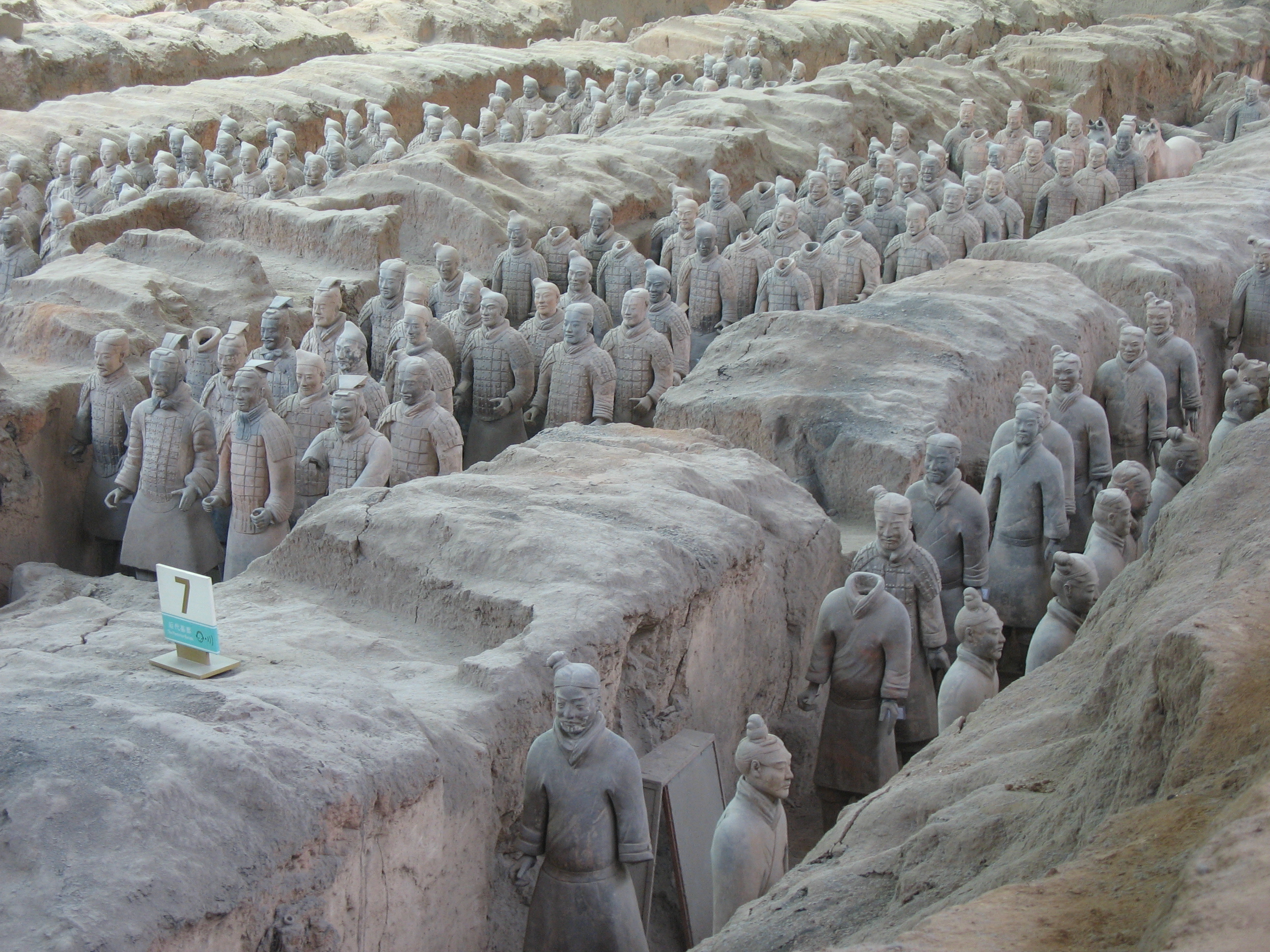
The discovery prompted Chinese archeologists to investigate and what they found was one of the greatest archeological discoveries of the 20th century shocking not only China but the entire world. The pits in which the army of an estimated 8000 soldiers, 130 chariots and 670 horses were buried more than 2000 years ago had been roofed with wood before being covered with a metre or more of earth. Over time, the wood decayed and collapsed leaving the underground army in pieces. Fragments of heads, torsos, legs and arms have been uncovered and entire statues meticulously restored, each one different from the others. Many remain beneath the ground.

I remember reading about this amazing discovery and thinking how great it would be to see it but I didn’t think that I ever would. As I approached the pit that houses the bulk of the terracotta army, I was overcome with emotion. It was hard to believe that I was really there!

As we gazed out over the vast army of statues we were amazed! Amazed at the incredible workmanship, amazed at the years of work and the number of craftsmen that must have been involved in creating such a vast array of statues, amazed that anyone would actually commission this work to be buried with him when he died! We also shared our tour guide’s concern about the future preservation of the statues. Though a building now protects them from wind and rain, there is no temperature or humidity control. The figures were originally painted and covered with a laquer finish but what remained quickly began to fade and flake off when they were exposed to the air and very little colour can now be seen.

IMG_2629

IMG_2597

IMG_2626

IMG_2602

I was also amazed at the size of the site, noting how much land that was once farmed is no longer. On the other hand, thousands of tourists visit every year significantly boosting the local economy. And what happened to the farmers who made the original discovery? Their land was confiscated by the Chinese government and one of them spends his days in the gift shop signing autographs and having his picture taken with tourists (for a fee, of course). It was a thrill to meet him but I wonder if he might have been happier living out his life on the farm.

IMG_2632

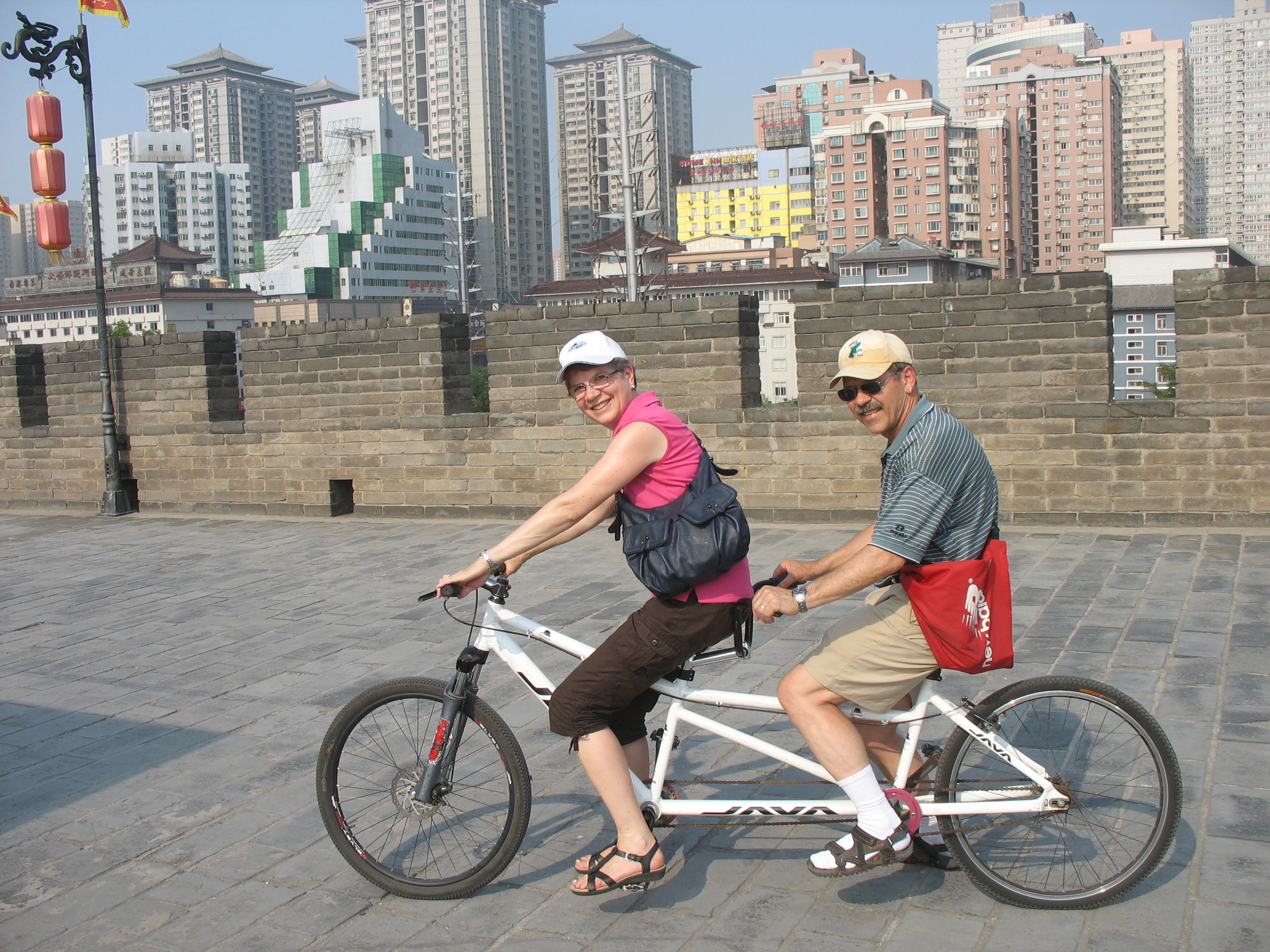
Before leaving Xi’an, we also crossed another item off my bucket list. I’ve always wanted to ride a bicycle built for two. One of my Chinese students recommended that we ride bicycles on the Xi’an city wall so we promised her we’d do that. When I saw that we had the option of renting a tanden bike instead of two individual ones, I thought there’d be no better place to fulfill that dream so this one’s for Grace!
IMG_2640

Hot nights in Xi’an

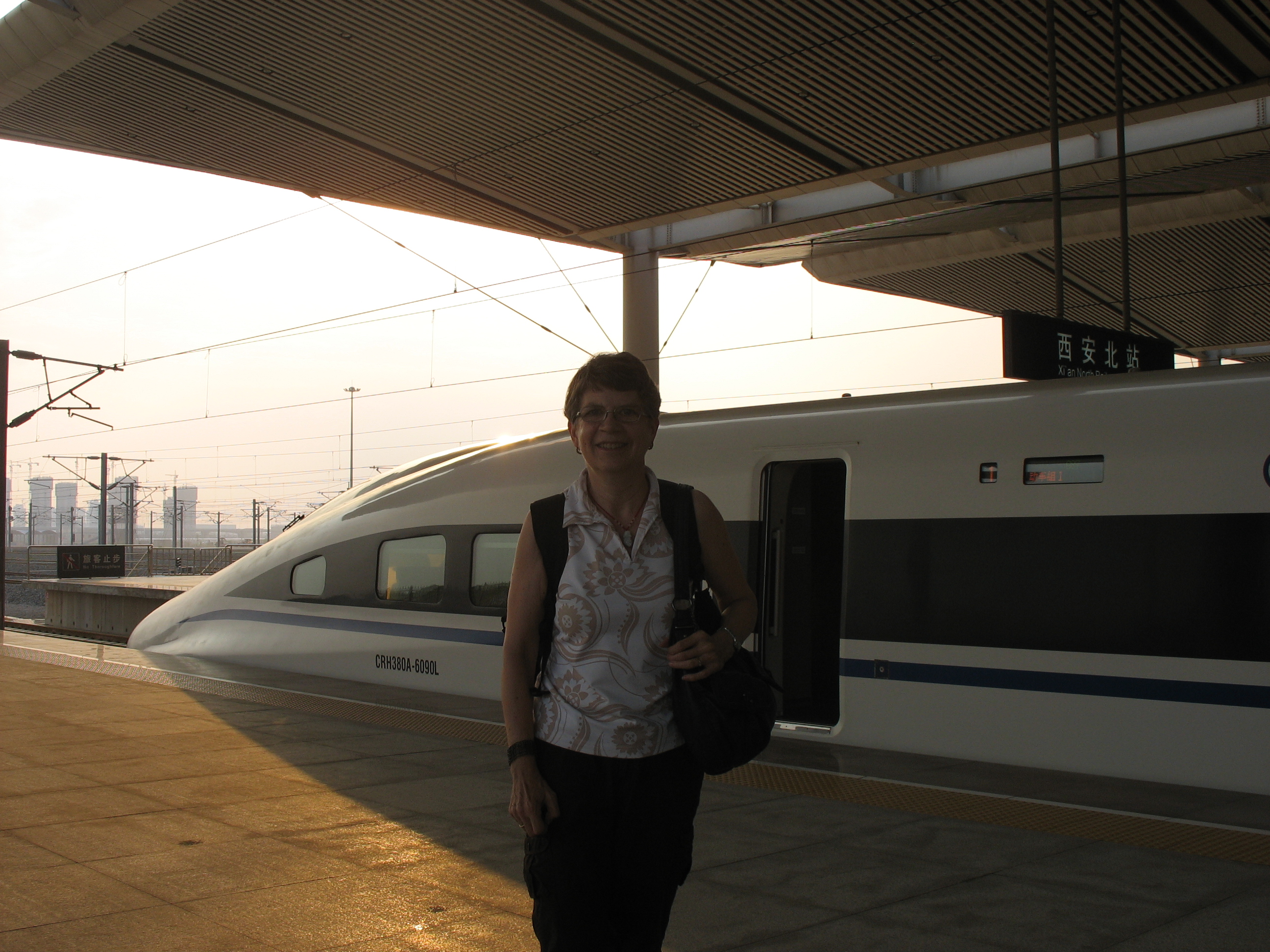
Leaving Beijing behind, we travelled southwest to Xi’an, once the eastern terminus of the Silk Road, the ancient trade route between China and the Mediterranean. We opted to travel this leg of our journey by high speed train in order to see more of the Chinese countryside. Cruising along at 300 km/hour, the ride was smooth and comfortable; like flying without ever leaving the ground.

IMG_2516

For the first part of the trip, flat farmland divided into a myriad of small fields stretched as far as we could see. At the speed we were travelling, it was difficult to identify the crops but we did see some rice and lots of corn. As we travelled further from Beijing, the flat plain gave way to more rugged terrain. The train passed through many tunnels and wherever possible, small fields were carved into the hillsides. Land that would be considered unusable here in Canada was being cultivated to help feed China’s more than 1.3 billion people.

IMG_2486

IMG_2509_2

When we reached our hotel inside the city wall in the heart of Xi’an, we were delighted to learn that we’d been upgraded to a larger room. We’re not sure if this was simply good luck or if the fact that I’d complained to our tour organizer about the Beijing guide and the unreasonable schedule that she’d planned for our first day there had something to do with us receiving special treatment. In any case, the “larger room” was actually a beautiful two room suite with a big bathroom that housed a deep soaker tub, the first bathtub I’d seen in China! As one who prefers baths to showers, I was in seventh heaven!

The hotel was within easy walking distance of both the Bell Tower and the Drum Tower which were spectacularly lit at night. As in other ancient towns across China, these structures served an important role in the days before people had clocks in their homes. The huge bell was rung at dawn while the drum marked nightfall.

Bell Tower

Bell Tower

IMG_2520

Drum Tower

It wasn’t until after we’d returned from exploring the area near our hotel and photographing the towers that we discovered that the air conditioning in our suite wasn’t working. Though someone from hotel maintenance worked on it twice and assured us both times that he’d fixed it, it never did work properly and we spent two very hot nights in Xi’an!

Hanging out in the hutongs

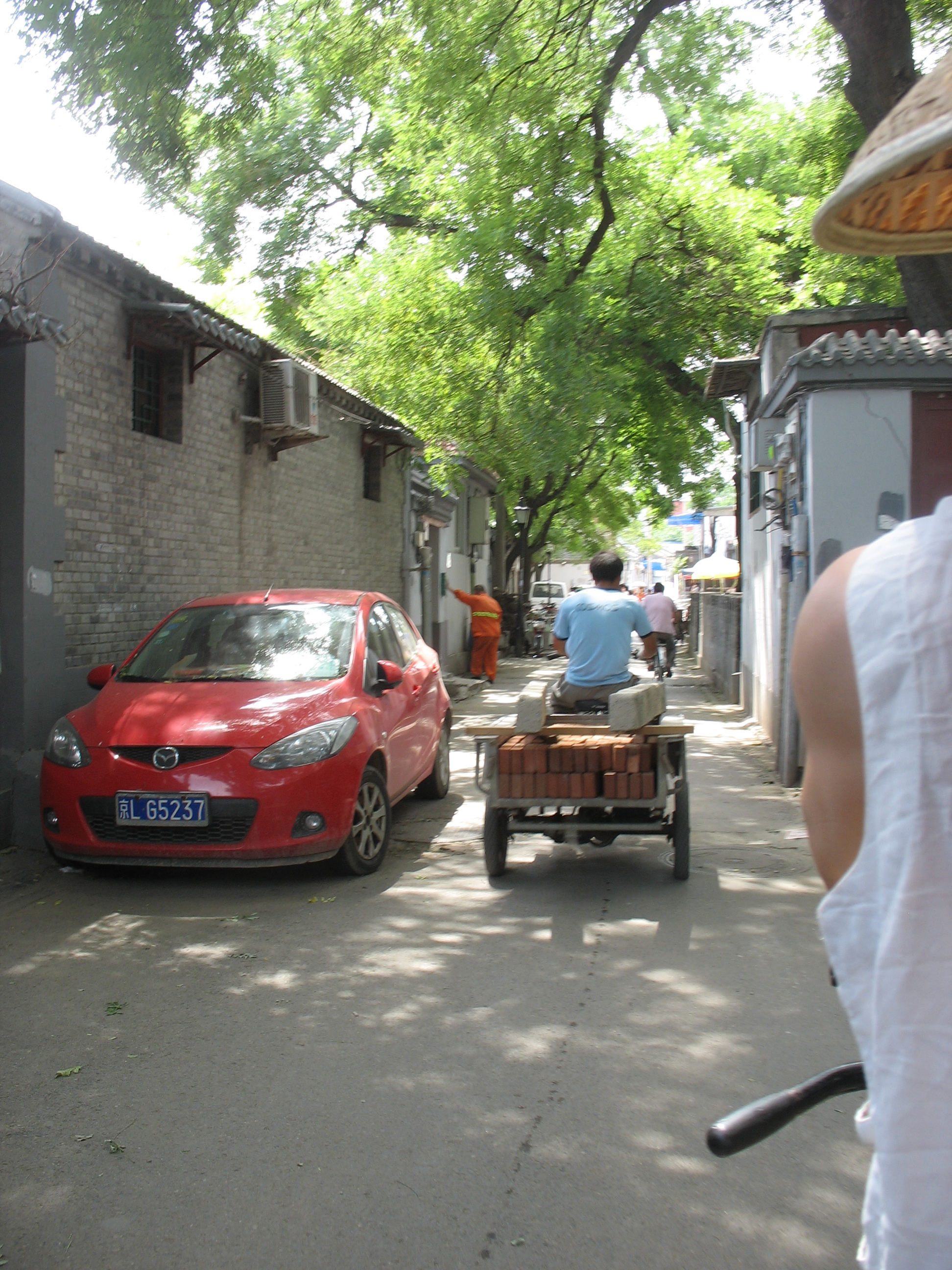
According to an old Chinese saying, “There are 3600 hutongs with names and as many without names as the hairs on an ox.” A visit to Beijing wouldn’t be complete without spending some time exploring these narrow alleyways. We spent our first evening in Beijing exploring the ones close to our hotel on foot but also enjoyed touring others by rickshaw, the most popular way for tourists to see these neighbourhoods.

IMG_2322

Some 600 years ago, while Emperor Zhu Di and his family lived in luxury within the walls of the Forbidden City, the common people of Beijing lived in the hutongs and many still do today. Hutongs are made up of rows of traditional residences, each built around a central courtyard. Joined one to another, these single storey homes form crowded but enchanting warrens where a warm sense of community abides. Though many of these residences have been modernized with the addition of electricity and plumbing, public bathrooms in each neighbourhood continue to serve the needs of those that haven’t been.

IMG_2325  IMG_2327

We had the opportunity to visit two courtyard homes, one a family dwelling and the other now a guest house. Built 300 years ago as the home of a government official, the guest house is larger than most hutong homes and its enterprising owners saw an opportunity to turn it into a thriving business when Beijing hosted the summer Olympics in 2008.

IMG_2460

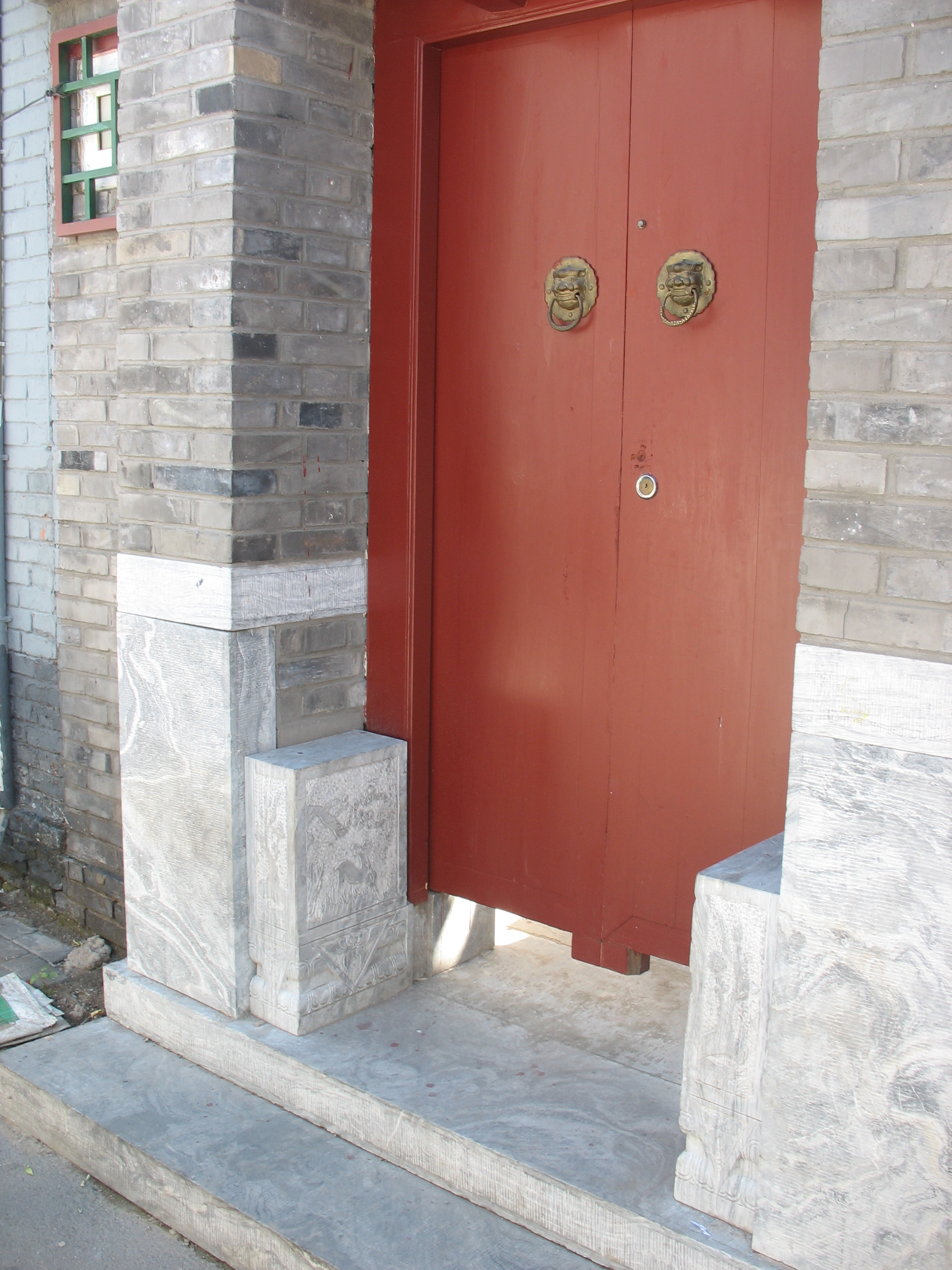
Some of the grander courtyard homes have stately looking red doors flanked by carved stones. Rectangular stones indicate that the house was originally owned by a government official while circular ones identify military homes.

IMG_2451  IMG_2466_2

Hundreds of hutongs survive but the number has dropped dramatically during recent years as Beijing rushes to become a modern city. Fortunately, some of the hutongs have been designated as protected areas by the government in an attempt to preserve this aspect of cultural history.

Burial places

The morning following our very busy day in Beijing, we drove about 50 kilometres northwest of the city to a secluded valley that protects the burial places of thirteen emperors of the Ming Dynasty (1368 to 1644). There we walked the peaceful Sacred Way leading toward the oldest and largest of the tombs, that of emperor, Zhu Di, builder of Beijing’s Forbidden City. Twelve sets of stone animals (including the anatomically incorrect elephant pictured below) lined the first part of the road followed by enormous stone guards and officials closer to the tomb. Unlike the crowds of the previous day, we were almost alone as the Chinese tend to visit these sites only on designated days such as Tomb Sweeping Day in the early spring.

IMG_2367

IMG_2371

The tomb itself consists of a main gate, a series of courtyards, and the Hall of Eminent Favours which now houses a historical display of pictures and artifacts related to the reign of Zhu Di. Beyond the hall, through more gates and archways stands the Soul Tower which houses the largest stele in China. Much like a gigantic headstone, a stele is an upright slab of stone bearing inscriptions and serving as a monument. A well treed hill behind the Soul Tower is the actual burial mound. There the bodies of the emperor, the empress who predeceased him by several years and 16 concubines are interred.  The concubines were sacrificed at the time of Zhu Di’s death so that they would accompany him into the afterlife. It’s hard for us to get our heads around a practice like that one!

IMG_2388

Later in the day, we continued on to Badaling, the most visited and most photographed section of China’s Great Wall which is also known as the world’s longest cemetery due to the number of lives lost during its construction. Many, many bodies are said to be buried within the wall.

After climbing a section of the wall near Dandong earlier in the year, we hadn’t planned on visiting it a second time but many of our students urged us to see the wall near Beijing as well telling us that it was much longer and much older than the portion we’d already visited. Though our climb to the eighth watchtower and highest point in the area in the hot afternoon sun lacked the Wow! factor of our first wall experience, it was definitely worth the visit if only for the fabulous views of the mountains with the wall snaking across it. Our tour package included hour long foot massages back in our hotel room when the day was over; definitely a good way to relax after the climb!

IMG_2444

IMG_2398

IMG_2426

Busy day in Beijing

I prefer to blog as I travel while the images and impressions are fresh in my mind but our whirlwind tour of China didn’t allow time for that. Now that we’re home and recuperating from jet lag, I’ll do my best to recap for you over the next few days.

As we walked toward Tiananmen Square on our first morning in Beijing, I felt completely overwhelmed. Many times during our months in China, we commented on how surreal it felt to actually be living there but in early June of 1989 when tanks rolled into that square and mowed down hundreds of protesting students I couldn’t possibly have imagined that I might someday stand on that very spot. The exact number who died that day has never been officially confirmed. The reality of being there brought a lump to my throat and tears to my eyes. When I mentioned my feelings to our tour guide, she quickly changed the subject pointing out the Great Hall of the People where the nation’s government meets, the China National Museum, the Monument to the People’s Heroes and the Mausoleum in the centre of the square where Chairman Mao’s embalmed body has lain in state since his death in 1976. I was later told that tour guides are not allowed discuss the Tiananmen massacre with foreigners.

Image

Tiananmen Square

Joining a throng of visitors, mostly Chinese, we passed beneath the gigantic portrait of Chairman Mao and through the Gate of Heavenly Peace into the Forbidden City. It was from high on this gate that Mao proclaimed the formation of the People’s Republic of China on October 1, 1949 and we truly felt that we were at the heart of the country.

Image

The Gate of Heavenly Peace

Our Beijing guide chose to pack too much into our first day there making our tour of the Forbidden City, so-called because it was off limits to the ordinary people for its first 500 years, a rushed one. Originally constructed over a 14 year period in the early 1400s when China’s third emperor, Zhu Di, moved his capital from Nanjing in the south to Beijing in the north, the Forbidden City is China’s largest and best-preserved complex of ancient buildings. We would have liked more time to explore it but fortunately, it is not unlike many other similar complexes that we’ve seen in Asia.

Image

in the Forbidden City

Image

Next on the day’s agenda was the Summer Palace, a huge park complete with gardens, pavilions, temples, bridges and man-made Kunming Lake. The soil that was excavated to form the lake was used to build Longevity Hill which overlooks it. The Summer Palace was vandalized during an Anglo-French invasion in 1860 but rebuilt in 1888 as a palatial summer resort for the Empress Dowager Cixi, also known as China’s Dragon Lady. She spared no expense even using money that was earmarked for a modern navy to build an enormous marble boat at the northern edge of the lake!

IMG_2281

Kunming Lake and Longevity Hill

Our third historical site for the day was the circular Temple of Heaven with its three levels representing God, the emperor and the people. Sally, who we dubbed the “reluctant tour guide”, dismissed it as unimportant because “we have no God anymore”. She told us that Mao gave the Chinese people “freedom from religion”. She didn’t appear to share the hunger for something to believe in that we sensed in many of the young Chinese that we were acquainted with.

Temple of Heaven

Temple of Heaven

Again, we would have liked to have had enough time to explore the peaceful park surrounding the temple but that was not to be. These are only a few of the highlights of a very busy day that ended with a Kung Fu show that was a fantastic combination of martial arts and dance.

In one way, we were very blessed while we were in Beijing. Did you notice the sky in the photos? Beijing is usually shrouded in heavy smog. It reaches such dangerously high levels that some people actually wear gas masks outdoors but just before we arrived, the air was cleansed by heavy rain and we enjoyed clear skies and unusually fresh air!

Dragon Boat Festival

Today was the first day of China’s three day Duanwu or Dragon Boat Festival holiday. The festival itself which falls on Wednesday, commemorates ancient China’s patriotic poet, Qu Yuan, who lived from 340 to 278 BC. Though stories vary somewhat, according to legend, Qu was accused of treason and banished from the ancient state of Chu for failing to support the king’s proposed alliance with the increasingly powerful state of Qin. During his years of exile, he wrote many enduring patriotic poems. When the state of Qin later captured the capital of Chu, Qu committed suicide by drowning himself in the Milou River. HIs death occurred on the 5th day of the 5th month of the Chinese lunar calendar which this year falls on June 12. Apparently the festival takes its name from the idea that people rowed their boats out into the river in an unsuccessful attempt to either save their beloved poet or retrieve his body.

At the beginning of the semester, when I saw the Dragon Boat Festival on our school calendar, I had visions of watching colourful boats filled with rowers racing on a local waterway. Sadly, that doesn’t happen in Dalian.

It would seem that the primary way that people here celebrate the festival is by eating zongzi, triangular packets of glutinous rice wrapped in bamboo leaves. The stores and markets have been filled with them for the past few days. It is said that this tradition originated when local people dropped sticky rice packets into the river to feed the fish and keep them from consuming Qu’s body!

We were given several homemade zongzi yesterday. Though the rice tasted okay, having taken on a mild grassy flavour from the bamboo leaves, we weren’t very impressed by its texture. For me, the word glutinous even sounds gluey and that’s exactly what it was!

A second tradition is the wearing of five-coloured silk cords around the wrists. These are being sold everywhere right now by women who have obviously been busy making them by hand. I bought mine for 1 yuan (about 17 cents) each and will wear them on Wednesday. Apparently, when the festival is over, they’re supposed to be cut off and thrown away to get rid of bad luck.

When we went down to the street market to pick up vegetables and meat this morning, we noticed lots of bundles of leaves being sold. We guessed that they too must have something to do with the festival. They didn’t look very edible and we had no idea what their purpose was until I read up on the celebration online and learned that they were mugwort leaves and calamus. Apparently, people put bundles of them over their doors to protect themselves against disease. I wonder if they have any effect on shingles? Perhaps I should have bought some! Actually, the stems and leaves of these plants are said to dispel an aroma that is thought to purify the air and discourage flies and mosquitoes so perhaps there’s something to the tradition.

Although this festival has long been part of Chinese culture, the government of the People’s Republic of China, established in 1949, refused to officially recognize it as a public holiday. It was only reinstated as a national holiday in 2008. Since it falls on a Wednesday this year, many people, including us, worked on Saturday and Sunday so that they could have today and tomorrow off and make it a three day vacation.

Since our tour of China is coming up soon, we decided not to go anywhere this holiday. Instead, we’re staying here in Dalian and being tourists in our own town but I’ll share more about that in future posts.

Second day in Qufu

If you had an entire day to do anything you wanted, what would you do? That’s the situation we found ourselves in this morning. We’d allowed ourselves two full days in Qufu thinking that one might not be enough to see all three Confucius sites that we visited yesterday.

Knowing that we had an entire day to fill, we were in no hurry to get up this morning. I haven’t been sleeping well lately largely due to the fact that I’m fighting a nasty cold so a bit of extra rest was very welcome.

Once we were up and had had a late breakfast, we went to visit another ancient temple, this one dedicated to the memory of Yan Hui, a favourite disciple of Confucius. If it were located anywhere other than almost next door to the much larger and more impressive Confucius Temple complex, it would likely draw many visitors but we were almost alone and it was very peaceful. We could actually hear the birds chirping!

The Yan Temple has been undergoing renovations over the past few years. Apparently the cost of this massive facelift prompted a hefty increase to the admission fee which, I’m assuming, resulted in even fewer visitors. We learned, however, that if we could produce our combination tickets from yesterday, we would be admitted free of charge.

In addition to enjoying the tranquility of the temple grounds, we found the renovation project quite fascinating. One of the outer buildings houses a display of photos chronicling the meticulous work that has been done. The buildings that have been completed have received much more than a new paint job. Much dismantling and rebuilding was required to replace wooden parts and roofing that had deteriorated. Many of the intricate panels were taken down, painted and put up again.

After leaving the temple, we headed over to the International Youth Hostel and rented bicycles. Leaving town, we rode out into the countryside to look at the farms where we saw corn, wheat and other crops that we couldn’t identify. Though they appear to have been seeded by machine, we saw many people, mostly women, out in the fields pulling weeds. Imagine doing that by hand on a Canadian farm! I have no idea how far we rode. I’m pretty sure my butt will be telling me about it tomorrow but it was well worth any discomfort I may have to put up with.

After an early supper, we were strolling back toward our hotel when we decided to rest for awhile on a stone bench near the main gate to the city wall, a great spot for people watching. Little did we know that we were in for an unexpected surprise. We were about to leave when someone began banging on the enormous drum atop the wall. It heralded the beginning of a gate closing ceremony complete with elaborately costumed guards, flag and lantern bearers, a herald and others we couldn’t identify. It was a perfect ending to our stay in historic Qufu!

A day with Confucius

Wheresoever you go, go with all your heart.
Confucius

We left Jinan yesterday morning and travelled south by bus to Qufu (pronounce Chu Fu). Small by Chinese standards, with a population of only about 86 000 people, Qufu is famous as the hometown of the great sage, Kong Fuzi, better known to us by the westernized version of his name, Confucius.

The old walled centre of Qufu is small and easy to get around on foot but the three principle sites; the Confucius Temple, the Kong family mansions and the Confucius Forest where the great teacher and his many descendants are buried, are absolutely enormous. We spent all day today exploring them.

When we stopped at the ticket office to purchase the combination tickets that would allow us to visit all three sites, we were also thinking about hiring an English guide but before we could, we were approached by a young college student who called himself Aku, an abbreviated version of his difficult to pronounce Chinese name, who offered to act as our guide for free if we would simply use his camera to take a few pictures of him throughout the day. We agreed and found him to be a delightful and knowledgeable companion.

We started our day at the Confucius Temple, China’s second largest imperial building complex after the Forbidden City in Beijing which we hope to visit in July. The temple started out as a simple memorial hall some 2500 years ago but over the ages, it mushroomed to today’s compound which covers 327.5 acres and is 1.3 km in length from north to south.

Though there is some debate about whether Confucianism should be considered a religion or simply a system of philosophy, the temple was once a site where sacrifices were offered to Confucius. He was a great thinker, a teacher, editor, politician and a philosopher whose teachings emphasized personal and governmental morality, correct social relationships, justice, loyalty and sincerity. He was a strong proponent of ancestor worship which is something we have a hard time getting our heads around but I can’t help wondering if he ever intended that nations of people should worship him. Whether it was his intent or not, many Asian cultures including Chinese, Korean, Japanese and Vietnamese have been strongly influenced by Confucianism.

After spending all morning touring the temple complex we stopped for lunch then moved on to the Confucius mansions, a maze of 450 halls, rooms, buildings and passages where his wealthy and powerful descendants lived like kings. Emperors were known to drop in for visits and a special ceremonial gate near the main entrance was opened only when this happened. The complex included administrative offices and meeting rooms, family residences, kitchens, guest rooms, studies, libraries and a treasury. A peaceful garden of flowers and greenery are found at the rear. Aku told us that his dream would be to build a home like this one in the Chinese countryside but I only coveted the garden and a few unique features like the round doorways! I could also imagine children having endless hours of fun playing hide-and-go-seek in the many passageways!

After relaxing over coffee, it was time for Aku to leave us as he had a bus to catch later in the day. We took a pedicab 2 km north to the Confucius Forest, the oldest and largest family cemetery in the world. There, Confucius and his descendants have been buried for more than 2000 years, a practice that continues up to the present time. The peaceful pine and cypress forest covers an area of more than 200 hectares. Burial mounds and memorial plaques are scattered haphazardly throughout the area. Confucius, himself, lies beneath a grassy mound enclosed by a low wall. Though most of the tourists crowded around the tomb were simply curious, there were those who knelt and others who made offerings of flowers.

After walking back to our tiny, family-run hotel where every room number begins and ends with 8, considered a lucky number by the Chinese, we’re spending a quiet evening resting our very weary feet. Our hosts don’t speak a word of English but they are clearly delighted to have us, their very first Canadian guests, staying with them.

To see what is right and not do it, is want of courage or of principle.
Confucius

Thank you, Dr. Bethune

Over the past few years we’ve stretched our comfort zones to such an extent that we don’t really know where the edges are anymore! I’m pretty sure we stepped outside them this morning, though, when we boarded a bus and headed out into the Chinese countryside with no definite idea how we’d get back to Jinan!

The bus dropped us off beside the highway and we walked two kilometres into the historic village of Zhujiayu. After the noise and pollution of city life in China, a walk in the country was literally a breath of fresh air! The crops on either side of the road were heading out already but it was a bit too soon to tell for sure if they were barley or bearded wheat.

Walking the narrow stone streets of Zhujiayu is a journey back in time. Protected by hills on three sides and dating back to at least the Ming and Qing dynasties, it’s easy to see why it’s been used as a set for a number of movies and television dramas. Though the central street was crowded with vendors selling snacks and tacky tourist souvenirs, we were delighted to see that effort has been made to restore parts of the crumbling village including the wall that enclosed its northern flank and to bring history to life for those who visit. We watched a donkey grinding grain into course flour that was then sifted by hand and used to make the chive stuffed tortillas that we ate for lunch. They were cooked outdoors on a small clay oven.

We found the construction of the now crumbling structures fascinating. Most were built of stone from the surrounding hillsides but others were made of brick covered with a layer of some kind of plaster, a building method still in use in this country today. Beneath the tiled roofs was a thick layer of thatch that would have acted as insulation.

After spending a few hours exploring almost every nook and cranny in the village, it was time to figure out how we’d get back to Jinan. According to our trusty Lonely Planet guidebook, there might be a bus that would take us to nearby Mingshui where we could catch another bus back to Jinan. If not, we could walk back to the highway and try flagging down any bus heading back toward Jinan.

As we exited the site, we stopped at the tourist services building to see if anyone there spoke enough English to advise us. Neither of the women on duty did but one of them hustled out to find someone who could. She soon returned with three smiling men. One of them spoke a few words of English but he phoned his wife who was somewhat more fluent and by passing the phone back and forth, we learned that her advice was that we walk back to the highway and flag down a bus. After the gentlemen produced their cameras and had their pictures taken with us, we headed off to do just that.

As we exited the gate, however, we were surrounded by taxi drivers offering to drive us into Mingshui or even the entire 80 km back to Jinan. Of course, they wanted an exorbitant amount in return for their services so we quickly said no and went on our way. I soon noticed that one of the men who’d crowded around us as we talked to the taxi drivers was following us on the opposite side of the road. When we got out of earshot of the others, he crossed the road and told us in broken English that if we would wait for ten minutes while he walked home and got his car, he would drive us to the bus station in Mingshui at no cost! We’ve found over and over again that the Chinese are more than willing to do things like this for us; in fact, they seem to consider it a privilege! As he drove, he explained that one of the reasons that the Chinese love Canadians is because more than fifty years ago, a Canadian doctor helped the Chinese people very much. He was, of course, speaking of Dr. Norman Bethune who died in China in 1939 while serving as a battlefield physician during the Japanese invasion of this country. He is considered a beloved hero to this day.

Though the bus from Mingshui delivered us to an unfamiliar bus station (Jinan has at least three of them) the taxi ride back to our hotel wasn’t much longer than it would have been from the main station where we caught our outgoing bus this morning. Another adventure was complete and our comfort zones, just a little bit bigger! Thank you, Dr. Bethune!