Miles Canyon

IMG_4536

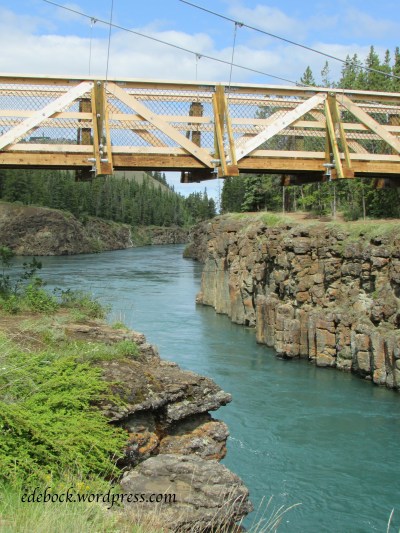
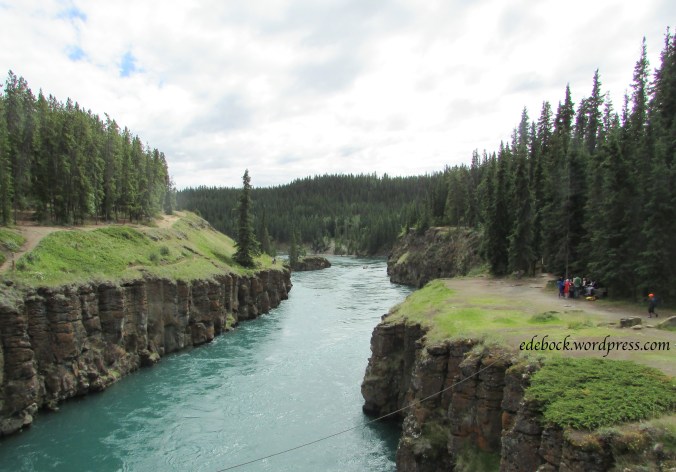
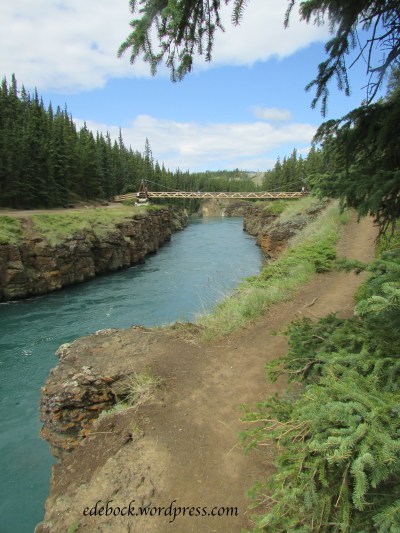
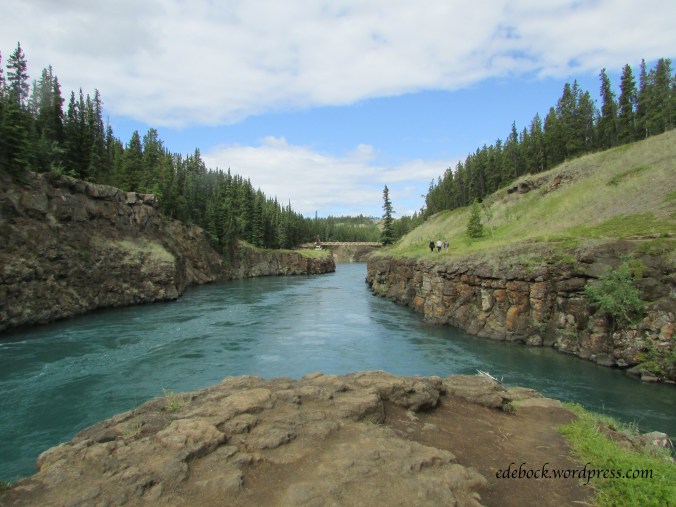
We didn’t spend much time at Whitehorse on our recent trip to the Yukon, but there was one site we’d been to on a previous trip that I wanted to revisit. Miles Canyon, where the Yukon River has cut its way through a flow of basaltic lava, is probably the most picturesque and dramatic natural feature close to Whitehorse. The narrow channel through the canyon was a serious challenge for miners and gold seekers on their way up the Yukon River to the Klondike gold fields. Hundreds of boats loaded with precious supplies as well as several lives were lost trying to navigate this treacherous stretch of river. Though the hydroelectric dam built in 1959 to supply Whitehorse with power somewhat tamed Miles Canyon, it is still a spectacular spot.

IMG_4538

IMG_4539

My main reason for wanting to revisit the canyon is the fact that since our previous visit in the early 1990s, I’ve conquered my fear of heights. This time I was able to cross the sturdy 85-foot-long suspension bridge over the gorge with confidence and I even managed to walk the narrow trail along the canyon’s rim. Of course, it probably helped that I didn’t have three young children in tow this time and didn’t have to worry about them plunging over the edge into the tumultuous water 50 feet below!

IMG_4553

IMG_4545


Don’t get eaten by a bear!

We have never seen as many bears in the wild as on this trip… 18 so far! We’ve even hesitated to go hiking in some areas due to the risk of meeting a bear on the trail. In spite of the sign, we did do the 9th Avenue Trail at Dawson City though.

IMG_4476

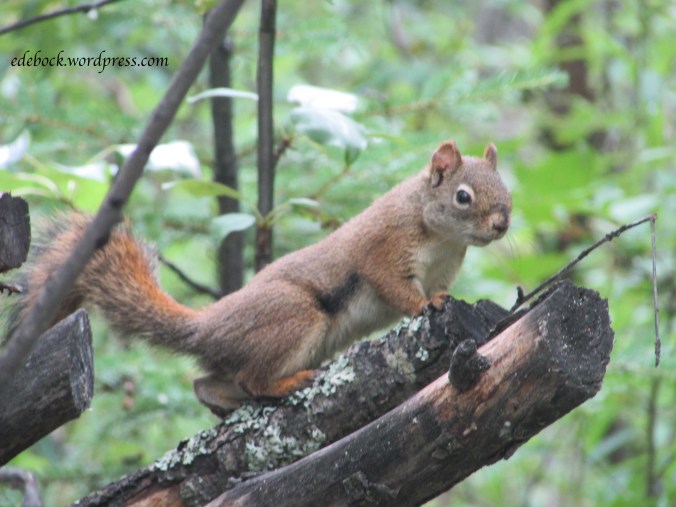
The only wildlife we saw was this curious fellow who stopped munching long enough to watch us go by.

IMG_4464

Well, that’s not entirely true. There were also mosquitoes! Lot’s of mosquitoes! We made two errors that a hiker should never make. First, I forgot my water bottle. I filled it and left it sitting on the counter in the trailer. Fortunately, I’d packed some pop for our lunch, so we were able to stay hydrated. Second, we forgot bug spray, a big mistake, especially in the north! The mosquitoes hadn’t been bad in town, so we didn’t didn’t even think about them until we were out in the bush getting bitten. Luckily, it was a cool day and we were wearing long pants and sleeves, so we didn’t get eaten alive.

Back to the bear sign though. Notice that it says, “BE ALERT MAKE NOISE”. I’ve been giving Richard a hard time lately over the fact that throughout our many years of marriage, he hasn’t been a very open communicator. I know that some of you who know him will find that difficult to believe, but it’s true. I also read that talking works better than carrying bear bells as a way to avoid an encounter with the furry beasts. When we read the sign, I told Richard, “Today you’d better talk to me or you might get eaten by a bear!” In fact, I think a new code phrase has been born. From now on, if I think he’s being particularly uncommunicative, all I’ll have to say is, “Don’t get eaten by a bear!” and he should know what I mean!

Anyway, I digress. Back to the hike…

Beginning in 1898 when the population of Dawson City swelled with thousands of people hungry for gold, tents and then log homes were built up the steep hillside behind the present day town. Today, the uppermost avenue is 8th, hence the name of the 9th Avenue Trail that follows the perimeter of the town, but further up the hill. As the gold rush came to an end and the population dwindled, the hillside homes were eventually abandoned, but there are glimpses all along the trail that there were once people living there. The homes were often built on flat platforms with stone retaining walls. Most of these wooden structures are long gone, but a few signs of them can still be seen.

IMG_4462

IMG_4466

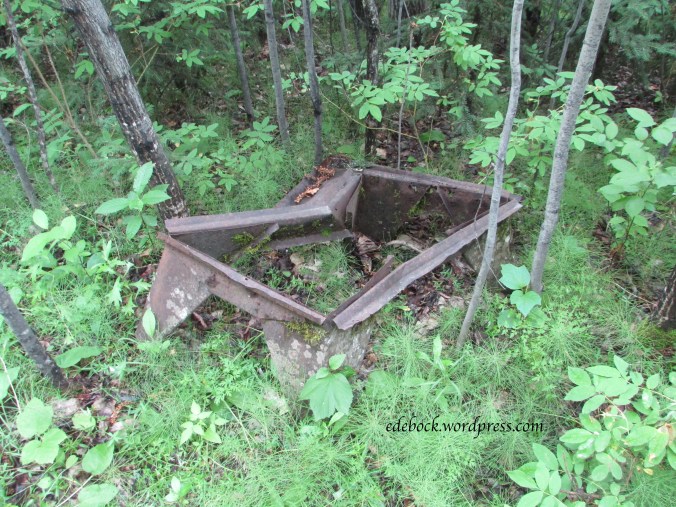
There was no garbage collection in Dawson’s early days. Broken and discarded items were often piled up outside the buildings. Rusty remnants can still be seen along the trail offering archaeologists plenty of information about life in early Dawson.

IMG_4478

I’m not even sure what that was, but the bed springs were obvious. I wonder who slept on them and what their story was?

IMG_4477

The hike was not a long or strenuous one. The 9th Avenue Trail itself is only about 2.5 km in length. We made it a little longer by adding the connecting Crocus Bluff Nature Trail which leads out to a viewing platform perched on a rocky bluff overlooking the highway entering Dawson and the confluence of the Klondike and Yukon Rivers.

IMG_4473

IMG_4470

Dawson City, heart of the Klondike

On August 16, 1896 gold was discovered on Rabbit Creek (later called Bonanza), a tributary of the Klondike River. When news of the strike reached the outside world the following summer, the Klondike gold rush was on! 100 000 people set off for the Klondike and approximately 30 000 of them made it. By the summer of 1898, Dawson City, at the confluence of the Klondike and Yukon Rivers, had become the biggest city north of Seattle and west of Winnipeg!

We thoroughly explored Dawson’s gold rush history on previous visits, but this time we were there for our nephew’s wedding. Richard and his five siblings were all together for the first time since 2012, so much of our time was spent visiting with family.

With a present population of less than 2000 people, however, the town is small and easy to see. Come take a look around with me.

Built by Arizona Charlie Meadows in 1899, in its heyday The Palace Grand Theatre saw everything from vaudeville to silent movies. Eventually, however, it fell into disrepair. In 1992, the then condemned structure was given to Parks Canada by the Klondike Visitors Association and underwent complete renovation. For many years, it was home to the Gaslight Follies, a high energy musical comedy that played nightly from May to September. Sadly, once more in need of refurbishing, the theatre is presently closed again. Plans to have it reopen in time for Canada’s 150th birthday and the 75 anniversary of the building of the Alaska Highway this summer fell through when asbestos was discovered and progress on the project slowed significantly.

IMG_4422

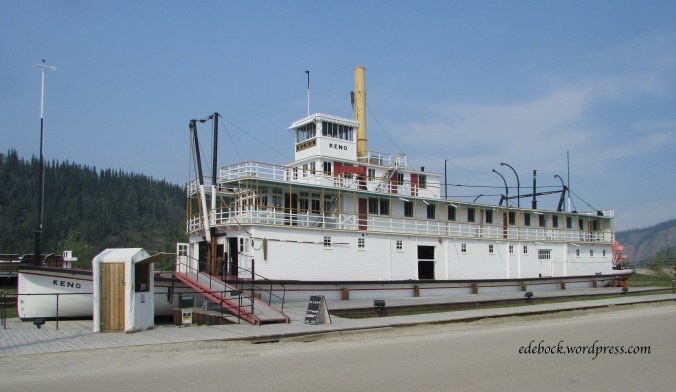
From 1896 to the mid 1950s, more than 250 sternwheelers plied the waters of the Yukon River. At one time, as many as 70 of these majestic riverboats carried passengers and supplies from Whitehorse to Dawson City. Now the stately SS Keno sits on Dawson’s riverbank welcoming visitors to come aboard for a step back in time.

IMG_4444

The streets of Dawson offer a mix of old and new, often side by side.

IMG_4427

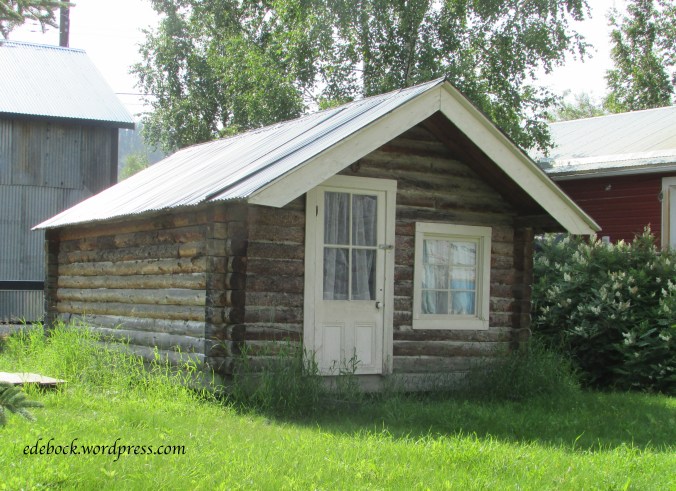
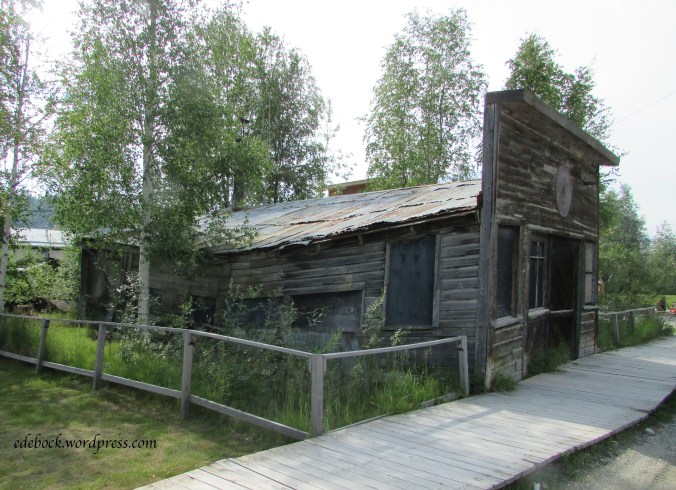
Many buildings remain from Dawson’s early days, some still in use and others reminders of days gone by.

IMG_4426

IMG_4428

IMG_4435

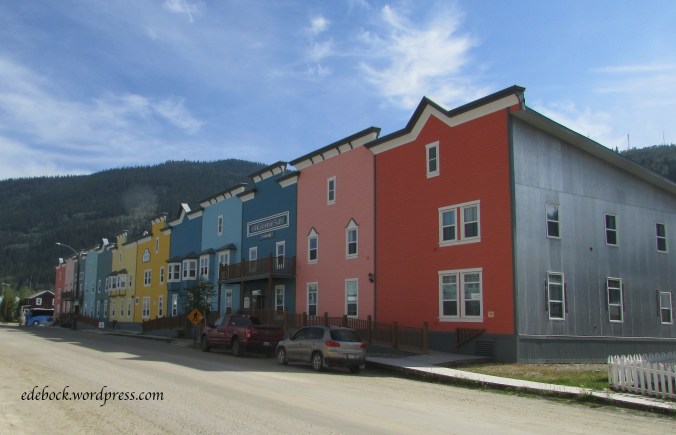
Even modern structures retain the look and character of historic Dawson.

IMG_4424

IMG_4431

Permafrost, a thick layer of permanently frozen soil below the surface of the ground, underlies this northern community and requires special building techniques to keep it from melting. Old buildings like these ones, hastily constructed during the gold rush, show what happens when the frozen sublayer softens.

IMG_4434

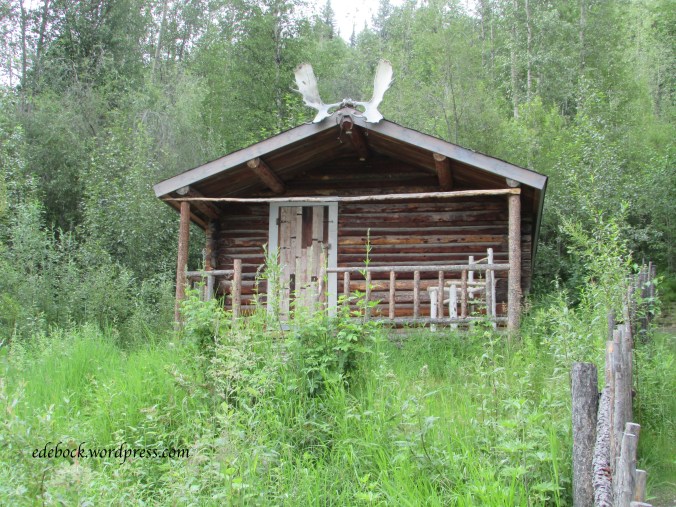
No visit to Dawson would be complete without at least strolling by Robert Service’s cabin. It was here that the poet who penned The Cremation of Sam McGee and numerous other northern tales lived from 1909 to 1912.  A costumed actor playing the role of Robert Service offers readings there every afternoon during the summer months.

IMG_4481

The Cremation of Sam McGee begins with the words “There are strange things done in the midnight sun by the men who moil for gold”. The midnight sun is one of the things that I love best about northern Canada in the summertime. Here’s a photo taken at 11:30 PM. As you can see, the sun has dipped behind the hill overlooking Dawson, but it never gets any darker than this!

IMG_4513

The final stop on our virtual tour of Dawson City, the Commissioner’s Residence, built 1901 as to house the government leader of the newly formed Yukon territory, now has a permanent place in our family history. It was on those steps that our nephew and his beautiful bride were married on Saturday, July 8th!

IMG_4438

Wearing the poppy

logo

Today is supposed to be Fashion Friday here on Following Augustine, but publishing a typical fashion post on Remembrance Day seems frivolous, almost disrespectful. Instead, let’s take a look at how and why we wear the iconic symbol of this sombre occasion, the little red poppy.

For some of my readers, a bit of explanation may be needed. Here in Canada, as well as in the UK and other Commonwealth countries, November 11 is known as Remembrance Day. It is a solemn day for remembering and honouring those who have given their lives in war, more like Memorial Day in the US than Veterans Day.

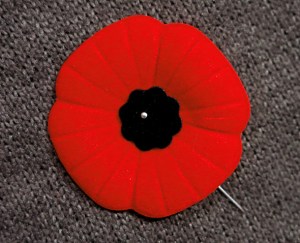
Inspired by the World War I poem “In Flanders Fields” written by Canadian physician, Lieutenant Colonel John McCrae, the Remembrance Day poppy is an artificial flower that has been worn since 1921. Though some say that its red colour represents blood shed in war, more truthfully, it is simply the colour of the common field poppies that were the first flowers to grow on the disturbed earth of the battlefields of northern France and Belgium and on the graves of countless soldiers.

remembrance-day-poppyIn Canada, millions of poppies are distributed freely in the days leading up to Remembrance Day. Donations received by the Canadian Legion Poppy Fund are used to support veterans and their families in need. Prior to 1996, our poppies were made by veterans with disabilities in workshops in Montreal and Toronto and served as a small source of income for them and their families. In 1996, the Legion awarded a contract to a Canadian company to produce the poppies but it maintains strict control over their production .

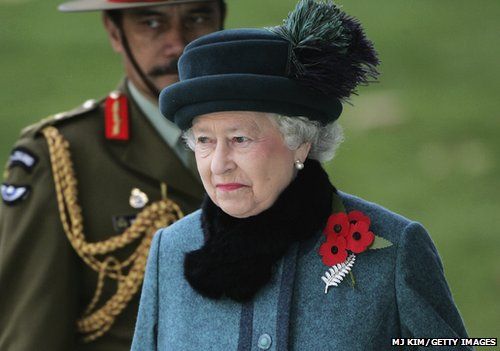
There are many questions about how the poppy should be worn. According to Canadian tradition, the poppy is worn on the left breast or lapel symbolizing that you keep those who died close to your heart, but in Britain many say that men should wear it on the left and women on the right. This year I’ve decided to wear mine on the right because, like most right-handed women, I carry my handbag over my left shoulder. It seems to me that knocking my poppy off and leaving it lying in the dirt or covering it with my purse strap would be much more disrespectful than wearing it on the wrong side. Queen Elizabeth II, who isn’t usually hindered by a purse, wears hers on the left. Unlike most of us who wear a single poppy, she also chooses to wear a cluster of them.

queen

The British poppy has a small green leaf that is often positioned at 11 o’clock representing the eleventh hour of the eleventh day of the eleventh month, the time that World War I formally ended. The leafless Scottish poppy, like our Canadian one, is more botanically accurate and also less expensive to produce.

In spite of the fact that I have tried to convince my husband that he shouldn’t replace the pin on his poppy with something else to make it more secure, he insists on using a tiny Canadian flag or maple leaf pin to hold his in place. The Canadian Legion’s position is that nothing should be substituted for the poppy’s original straight pin. Unfortunately, redesigning the poppy to better secure it to clothing would increase production costs. There are ways to prevent it from falling off, however. The tiny plastic sleeve that is often used as a pierced earring back works perfectly. If you don’t have such a thing available, a bit of clear tape also works well.

I like what the Royal British Legion says: “There is no right or wrong way to wear a poppy. It is a matter of personal choice whether an individual chooses to wear a poppy and also how they choose to wear it. The best way to wear a poppy is to wear it with pride.”

in-flanders-fields

Colourful Lunenburg

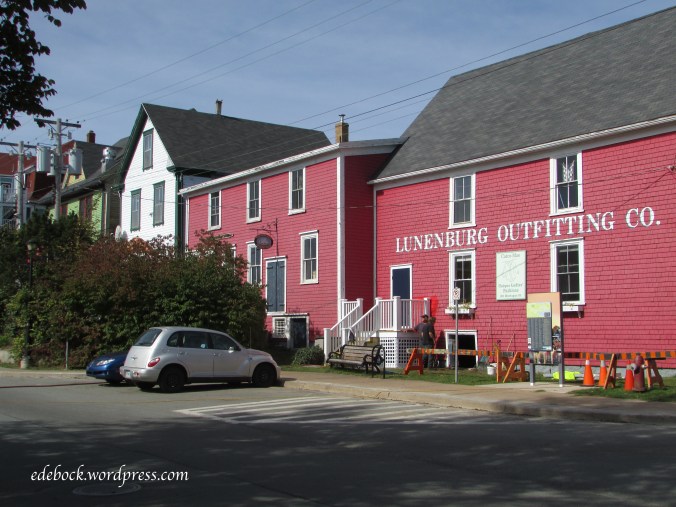
Old Town Lunenburg, Nova Scotia is one of only two urban communities in North America to have been designated a UNESCO World Heritage site. It’s also considered to be the best surviving planned British colonial town in North America. Its harbour-side streets are lined with well preserved and colourfully painted historic buildings.

This colourful section of King Street is known as the UNESCO Fresco!

img_2848

Canada’s Maritime provinces are dotted with old wooden churches, none more beautiful than St. John’s Anglican Church in Lunenburg.

img_2830

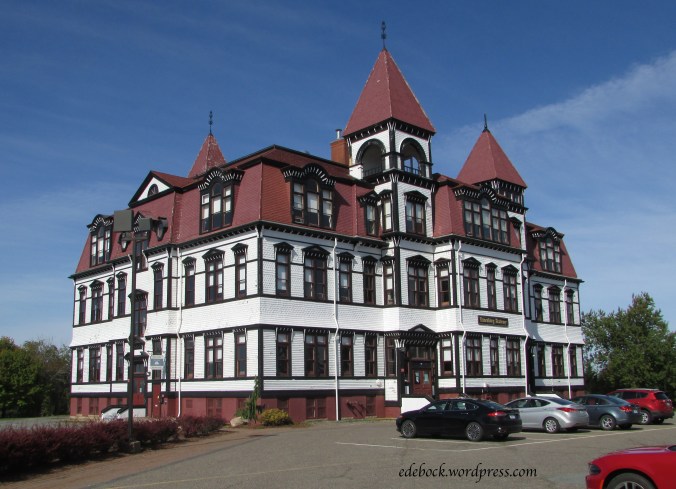
Visible for miles around, Lunenburg Academy, built in 1895, dominates the hilltop. Imagine going to school there!

img_2836

This stately giant stand nearby.

img_2834

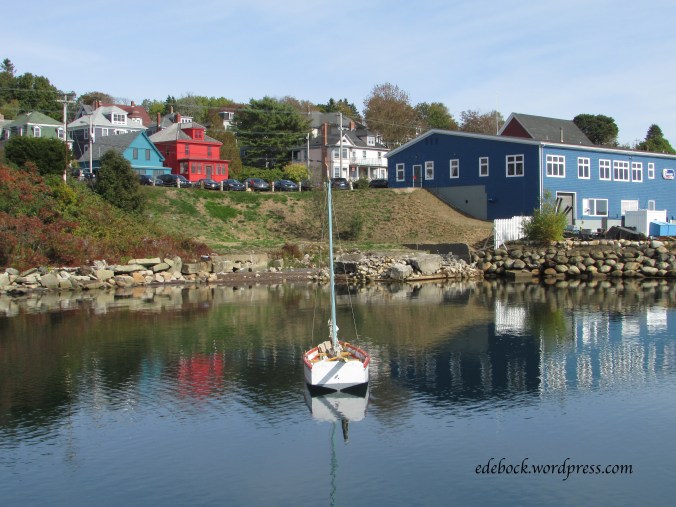
Though we’d visited before, we thoroughly enjoyed wandering the streets and busy harbour front again.

img_2847

img_2849

img_2856

img_2854

I loved the name on this fishing boat!

img_2857

img_2867

Searching for colour and finding history

img_2873-version-2

We knew from our previous visit with Ronnie and Myrna, the dear pen pal that I inherited from my mother-in-law, that they enjoy sightseeing drives through the lovely countryside around Mahone Bay. Like my own father, however, Ronnie has macular degeneration and is legally blind. He still has some sight, but not enough to drive. When we suggested taking them for a drive to look at the fall colours that Nova Scotia is famous for at this time of year, they jumped at the opportunity and off we went!

img_2788

With Richard behind the wheel and Myrna navigating, we headed inland toward New Ross. Sure enough, though many of the trees were still green, others were aflame. For those of you who are accustomed to the wide range of reds, oranges and golds of autumn, our delight might seem odd, but where we live in Alberta, we don’t experience the same array of colours in the fall. Most of our trees just turn shades of yellow.

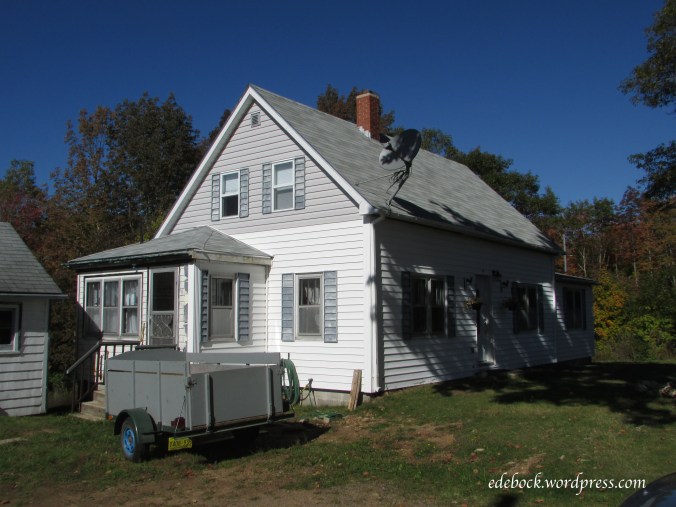
We saw much more than trees, however. Soon Myrna was pointing out the house where she grew up. It was here that she wrote the first letters to my mom-in-law over 75 years ago! Obviously well cared for, it has new shutters, windows and front door since the last time she saw it.

img_2791

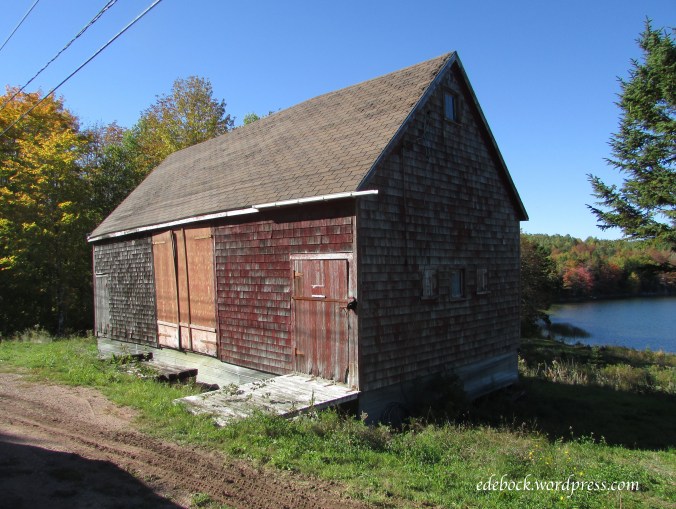
Along the same road, we saw her uncle’s old horse barn

img_2802

and the one room schoolhouse that she attended.

img_2805

At 16 years of age, with a grade 11 education, Myrna became a teacher in a similar school! She taught for five years before she and Ronnie married.

Nova Scotia has been changing before our very eyes with more colour every day. Here are just a few more sights from that day’s drive.

img_2792

Halifax Seaport

img_2611

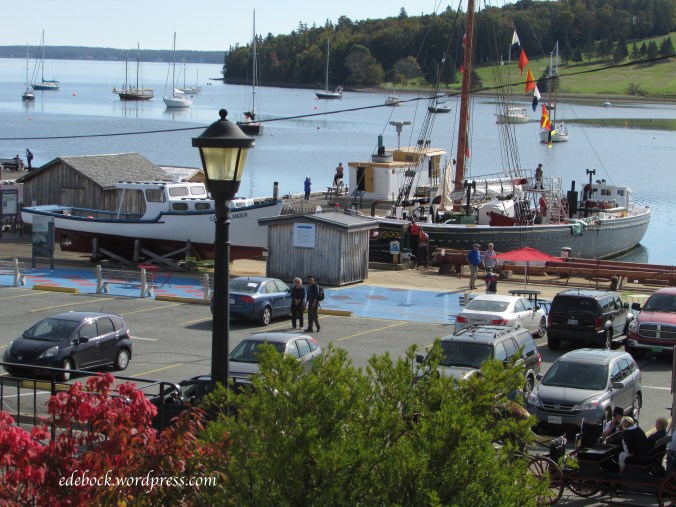
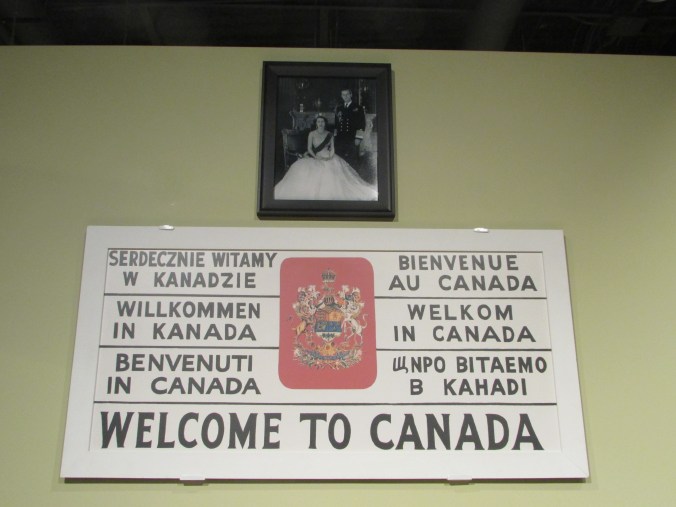
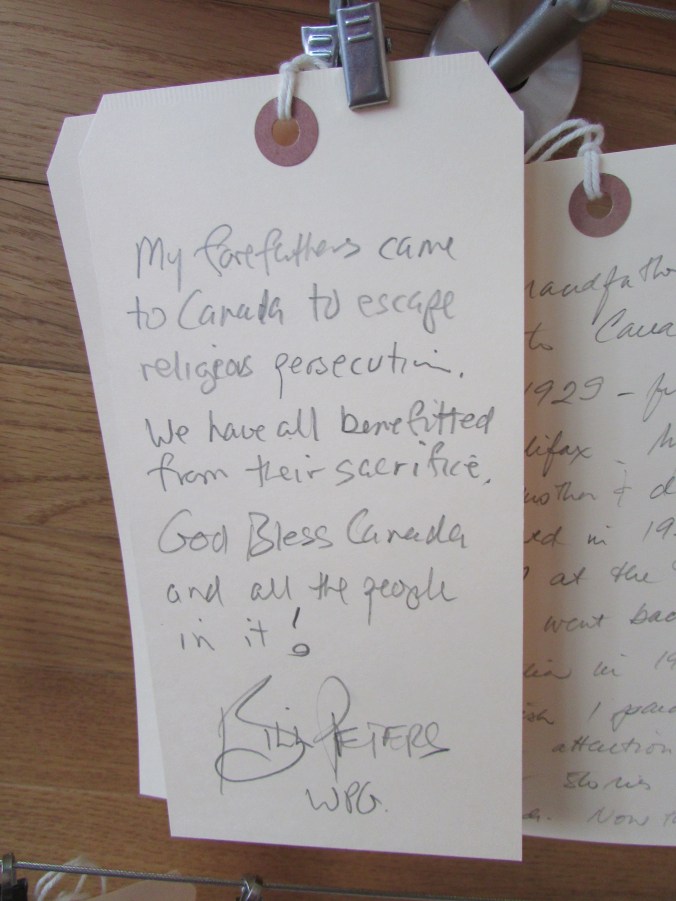
We spent most of our weekend in Halifax exploring the harbour area. Our first stop was the newly renovated Canadian Museum of Immigration at Pier 21, Canada’s last standing ocean immigration terminal. It was here that a great many of the immigrants who arrived in our country between 1928 and 1971 first stepped onto Canadian soil. As well as offering a fascinating step into the past to experience what it was like to immigrate through Pier 21, the museum showcases the vast contributions that newcomers have made to Canada’s culture, economy and way of life. I was particularly touched by the wall of testimonies written by previous visitors to the museum. Here are just a few of them.

img_2610


img_2607

img_2605

As we explored the Halifax Seaport, a vibrant waterfront area and a popular destination for both locals and tourists, we passed “The Emigrant”, a beautiful bronze and marble monument depicting an emigrant leaving his home country to start a new life in Canada. The piece was designed, sculpted and donated by artist, Armando Barbon, himself an immigrant who wanted to say thank you to his adopted country.

img_2615-version-2

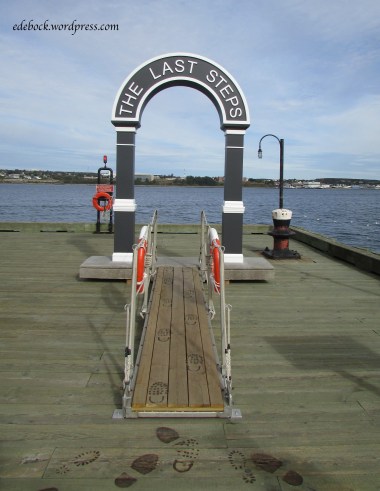
In addition to being the place where many new Canadians first stepped onto our shore, the Halifax harbour was also the location where thousands of First World War soldiers last stood on Canadian soil. A trail of footprints burned into the wooden boardwalk traces the path of the long-gone fighters to a memorial arch bearing the words “The Last Steps”.

img_2631

The Seaport is also home to the Maritime Museum of the Atlantic. There, I found the exhibit devoted to the 1917 Halifax Explosion most interesting. On that darkest day in Halifax’s history, at 9:06 a.m. on December 6,  a dreadful miscommunication between two ships in the harbour resulted in an explosion of cataclysmic proportions. 2,000 people were killed and 9,000 more injured. It was the largest man-made explosion in history prior to the first nuclear blast.

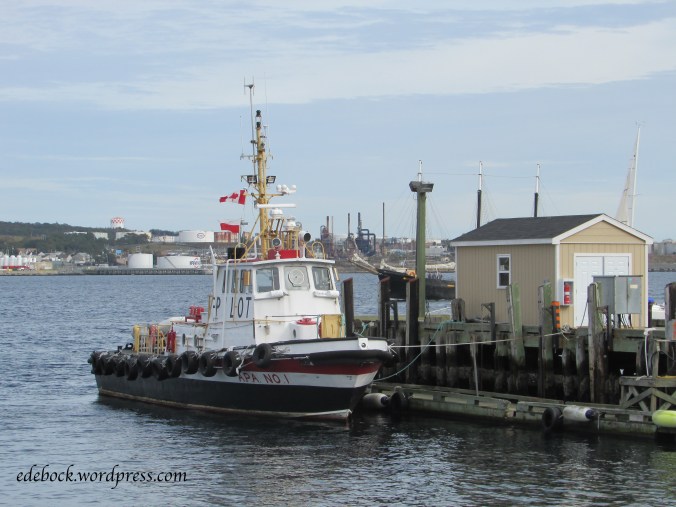
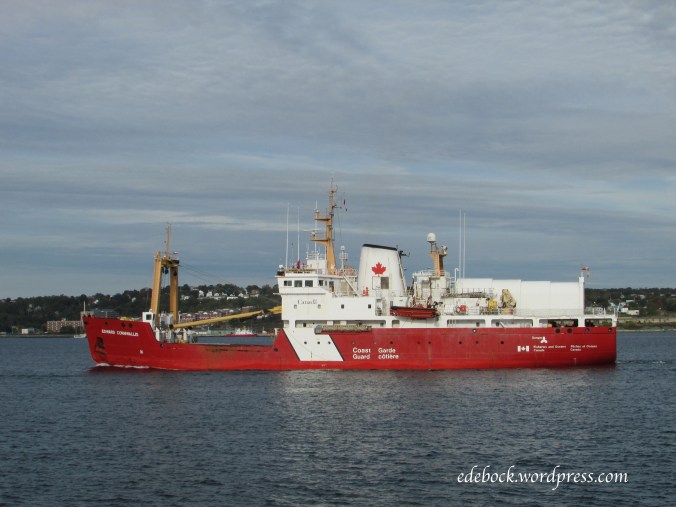
In addition to exploring local history, I loved just walking the boardwalk and enjoying the harbour sights.

img_2636

img_2626

img_2630

img_2635

img_2637

Fore!

Screen Shot 2016-03-18 at 11.07.24 PM 3 Today seems like a perfect time to write about what I wear to play my favourite sport. After all, I won the ladies side of the Viking Golf Club seniors tournament yesterday!

Let’s ignore the fact that there were only four ladies entered in the tournament, shall we?

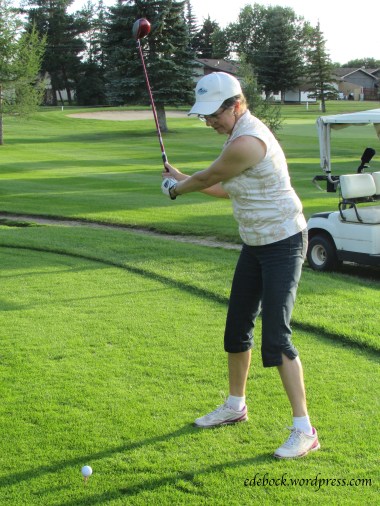
Weather permitting, my golf attire usually consists of a sleeveless, collared golf shirt worn with either capri pants or long shorts.

IMG_2134

Though my wardrobe is made up largely of neutrals, golfing is a fun time to add a splash of colour, so I have several bright shirts to choose from.

I always wear a ball cap when I’m golfing to shade my eyes and keep my often unruly hair under control. I have a variety of them in several different colours to coordinate with my shirts.


IMG_2147

Though I most often golf in a comfortable and supportive pair of golf shoes, I also have a pair of golf sandals that are especially nice on hot days.

Regardless of what I wear, I’ll never look as elegant on the golf course as my Mom did! Here she is back in the 1940s. I doubt if there’s a course anywhere in the world today that would let you on the greens in those shoes, but aren’t they adorable?

Scan

Modesty and cultural sensitivity

IMG_3548

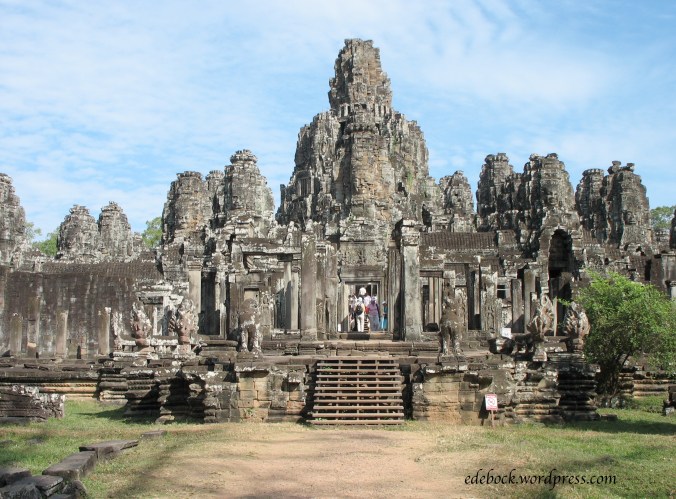
Screen Shot 2016-03-18 at 11.07.24 PM 3Visitors who dress immodestly will no longer be allowed to enter Cambodia’s famed Angkor Wat temple complex, the agency that oversees the site announced last week. Beginning August 4th, all tourists will be required to wear pants or skirts that fall below the knee and shirts that cover their shoulders.

When I read that, I immediately went back to our photos from Jan 4, 2009 to see what we were wearing the day we visited the UNESCO World Heritage Site that is also Cambodia’s biggest tourist attraction. Would we meet the new standard, I wondered.

We got up at 4:30 a.m. the day we toured Angkor Wat so that we could be there in time to watch the sun rise over it’s towers. It was still a bit chilly when we arrived and at that point, dressed in a warm fleece hoodie and capri pants, I would definitely have met the new dress code.

IMG_3507

Richard would not have, however, as he was wearing shorts and later, in the heat of the day, I wouldn’t have either.

I almost hate to post that picture because I look so frumpy, but please keep in mind that we were basically backpacking through southeast Asia. We had just traveled the length of Vietnam by night bus and we were staying in a $12/night guesthouse that wasn’t much more than a roof over our heads. I may not have looked great, but I was having the adventure of a lifetime and fashion was the farthest thing from my mind!

The question here, though, is what is modesty? My tank top may not be particularly attractive, but is it immodest?

In 1 Timothy 2:9, the apostle Paul advises women to “adorn themselves in modest apparel, with propriety and moderation” but he doesn’t give a lot of detail about what that looks like. He does go on to say, “not with braided hair or gold or pearls or costly clothing” but to understand what he was getting at, one needs to look at the culture and the context. In this passage, Paul was advising women on how to dress for church, telling them to adorn themselves in a manner that was considered appropriate for worship. In Ephesus, where his protégé, Timothy, was pastoring at the time, the elite of that culture were known for their gaudy and extravagant wardrobes, their elaborate hair styles, and their expensive clothing that communicated extraordinary wealth. Paul’s description of immodest dress conjured up a picture of someone preoccupied with appearance, fashion, luxury, and perhaps even sexual prowess. He was simply advising the Christian women of that time and place not to mimic that behaviour, but to dress in a way that showed that they desired attention to be on God, not on themselves.

Dictionary definitions of modesty include “behavior, manner, or appearance intended to avoid impropriety or indecency” and “the quality of behaving and especially dressing in ways that do not attract sexual attention.”

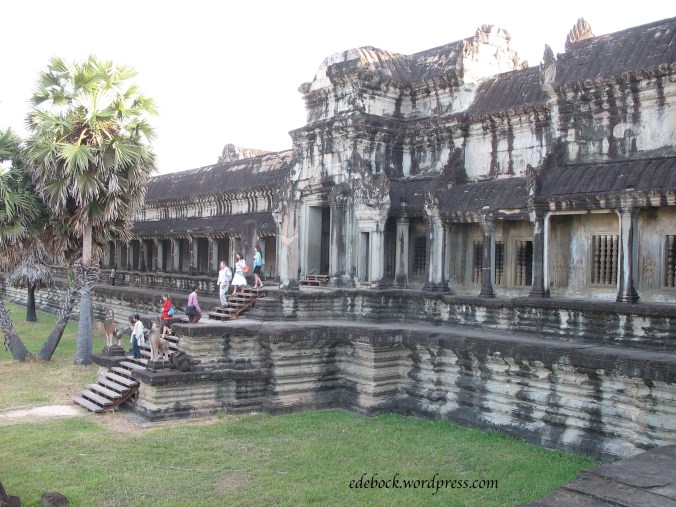
In discussing dress codes, it’s important to note that modesty must involve cultural sensitivity. We don’t find the wearing of shorts or sleeveless tops offensive here in North America,  but Cambodia is a completely different culture. Angkor Wat was the spiritual centre of the Khmer empire that dominated that region from the 9th to 15th centuries. It’s a symbol of great national pride and is depicted on the Cambodian flag. As such, it is worthy of utmost respect. If, to the Cambodian mind, that means a certain manner of dress, then visitors definitely need to honour that.

Though it’s unlikely that I will return to Angkor Wat (only because there’s so much world that I have yet to see), but if I do, I won’t be wearing a tank top. If you haven’t been yet, I would definitely suggest adding it to your bucket list, but make sure you pack accordingly. After August 4th, those who are not dressed appropriately will be turned away or required to change their clothes before being allowed to enter.

IMG_3496

IMG_3532

IMG_3530


Final day

Reflecting on and writing about our final day in Jerusalem seems like a perfect way to enter the Lenten season as we spent the day immersed in the final moments of Jesus’ life here on earth, visiting the sites surrounding his arrest, crucifixion, burial and resurrection!

Our morning started on the Mount of Olives overlooking the Kidron Valley. The sun gleamed off the golden Dome of the Rock, the Muslim mosque that now stands atop Mount Moriah where the Jewish temple once stood. Before us lay the route that He took on His triumphal entry into Jerusalem on the day that has become known as Palm Sunday. (Matthew 21:1-11)

IMG_1107 - Version 2

As we stood atop the Mount, we were reminded that, according to prophecy, that is where He will return someday! (Zechariah 14:4) Come, Lord Jesus!

Walking down the Mount, we came to the Garden of Gethsemane where Jesus spent the final moments before His arrest. Even with the sound of traffic in the background, the garden was a place of great peace. In our devotional time there, we were reminded so clearly of the great burden that our Lord bore that night as He prayed alone, feeling the weight of the sin of the entire world on His shoulders. Kirk, our devotional leader, compared it to the deepest of depressions. For me, our time of reflection in the garden was spiritually profound. As I thought about the extreme anguish that I once felt when I was betrayed by someone I loved and then tried to multiply that by the sin and betrayal of every person who has ever lived, it was beyond my ability to comprehend. Is it any wonder that He sweat drops of blood and prayed, “Father, if you are willing, take take this cup from me.” How thankful I am that He followed this up with “yet not my will, but yours be done.” (Luke 22:39-45) Without that willingness to carry the weight of our sins to the cross, we would be forever lost with no hope of salvation and eternal life.

We stopped for a quick look at the Gethsemane Basilica of Agony with it’s beautiful mosaics above the portico.

IMG_1189

Continuing down the hill and up the other side of the valley, we entered the walled city through the Lions’ Gate, which is also known as St. Stephen’s Gate or the Sheep Gate.

IMG_1200

IMG_1203 - Version 2

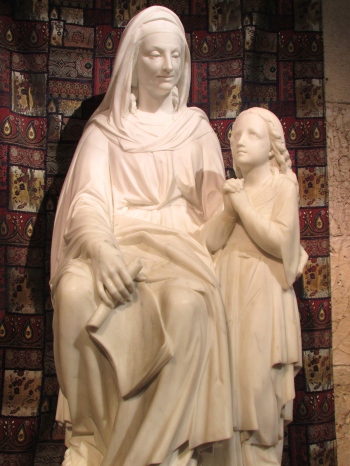
Inside the wall, we visited St. Anne’s Church where, when we sang Amazing Grace together, the acoustics were so amazing that each note hung in the air for a good four seconds! Though she isn’t mentioned in scripture, St. Anne was, according to tradition, the mother of Mary and the grandmother of Jesus. I was especially taken with the beautiful alabaster statue of a mother teaching her young daughter from scripture. The scroll in her hand has Deuteronomy 6:5 written on it in Hebrew. “Love the Lord your God with all your heart and with all your soul and with all your strength.” The delightful French Canadian priest told us that the church is often referred to as the “grandparents’ church” and reminded us of our Lord’s instruction to pass on His teachings to our children and grandchildren. (Deuteronomy 6:6-7)
IMG_1214

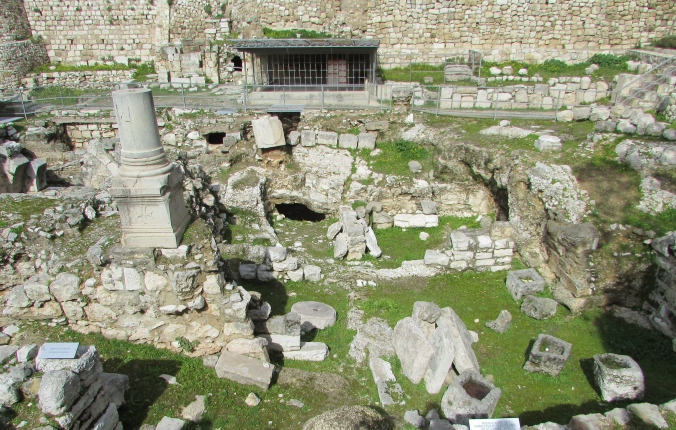
In the area, we also saw where the pools of Bethesda were once located. It was here that Jesus healed a man who had been crippled for 38 years. (John 5:1-15)
IMG_1218 - Version 2

A quick trip around the Temple Mount by bus took us to the Jaffa Gate where we entered Old Jerusalem and walked the narrow market streets to a tiny restaurant where we had lunch.

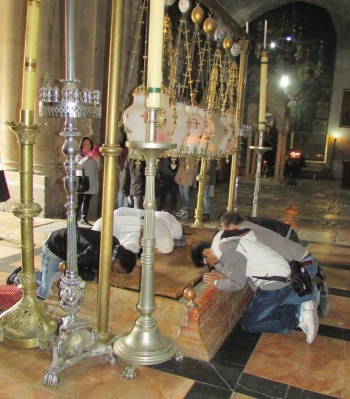
Our next stop was the Church of the Holy Sepulchre, a cavernous structure standing on the bedrock at a site said to encompass both Golgotha, or Calvary, the spot where Jesus was crucified, and the tomb (sepulchre) where His body lay. Filled with icons and incense, we could only think of what we saw as idolatry and, to me, it didn’t seem very different from what we’d seen in numerous Buddhist temples in Asia. Most disturbing to me was the Stone of Unction, or Stone of Anointing, a flat red stone some six metres in length and decorated with candlesticks and lamps that is located in the entrance of the church. It is purported to be the place where Jesus’ body was laid and prepared for burial after being taken down from the cross. It was surrounded by devoted pilgrims bowing before it, kissing it and rubbing their possessions on it in hope of receiving some sort of blessing. Personally, I was more than happy to leave. Apparently, people sometimes wait hours to enter the Edicule, an ornate cubicle that supposedly houses the empty tomb, but we had another tomb to visit!

IMG_1253 - Version 2

IMG_1255

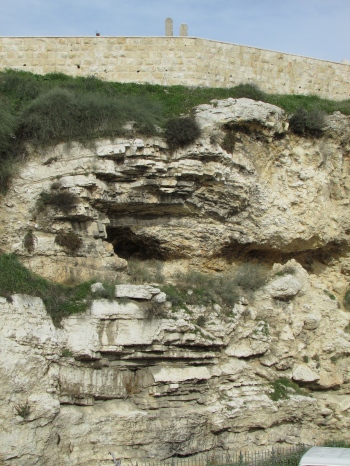
Some 2000 years after the fact, there is, of course, no way of knowing exactly where the cross of Christ stood or where the tomb that held his body was located, but the Garden Tomb seemed much more authentic to me. The guide who met us there, gave us many pieces of evidence pointing to the likelihood that this could be the place. If nothing else, there was a great sense of peace there that I didn’t feel in the Church. He first showed us the hillside that would appear to be Golgotha, meaning “the place of the skull”. Though the nose crumbled several years ago and a bus station has somewhat obliterated the lower portion, it’s easy to see a skull in the rocky hillside.
IMG_1272

Although I’ve always visualized the crosses standing at the top of a lonely barren hill, the guide explained that they were more likely positioned near the bottom beside a busy road and in the face of the throngs of passersby making their way into Jerusalem for Passover. That’s the way the Romans did things. He also pointed out the irony of thousands of lambs being brought into the city for the Passover sacrifices passing right by the true lamb of God hanging on the cross, but missed by the multitudes.

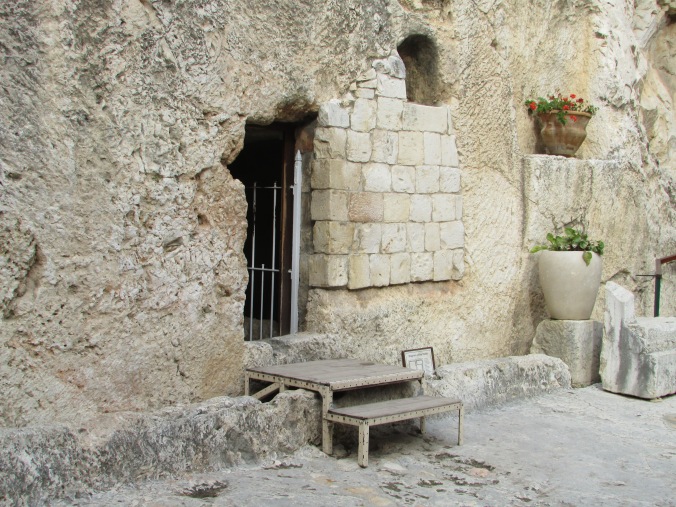
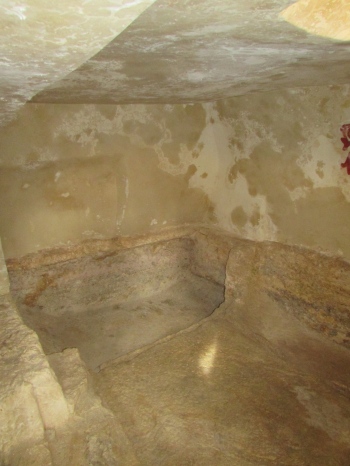
Next, he walked us through the garden to the empty tomb. Actually being able to enter and see the spot where Christ’s body may have lain was another very moving experience. The doorway has been enlarged and steps added to allow easier access.
IMG_1278

IMG_1284

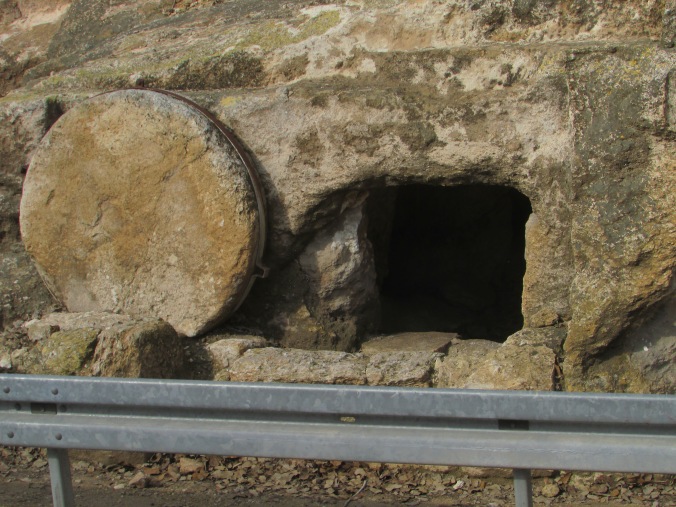
This is a similar tomb beside a road in Galilee that shows what the stone would have looked like.
IMG_0247

After we’d all had a chance to enter the tomb, we gathered in a tiny well-lit chapel in the garden for a service of communion. We drank our wine from tiny olive wood communion cups which we were then given to bring home with us. Celebrating our risen Lord with a group of people that we’d quickly grown close to and experienced so much with was very meaningful! Though that would have been a suitable finale to our pilgrimage, we made three more quick stops before our busy day was over!

On Mount Zion, we first visited the place that is traditionally held to be the location of the Upper Room where Jesus and His disciples shared their Last Supper. (Matthew 26:17-30) The building is actually a 12th century Crusader structure, but archaeological evidence of Roman construction on the lower level supports the possibility that this area was indeed the location where our Lord shared a final meal with his disciples. Like so many others, the building has changed hands many times throughout history.

On the lower level, we visited one of the most holy Jewish sites, the traditional location of the tomb of King David. The men were required to don yarmulke, the skullcap traditionally worn by Jewish males, and entered one room while we women went into a smaller adjoining room. In our room, a few women quietly read their Hebrew scriptures, but we could hear quite a din from the other side of the partition. Our men exited shaking their heads and describing a crowded room full of ultra-Orthodox men shouting, wailing and banging on a central table as they bowed and bobbed. There is obviously much that we don’t understand about their religious practices!

Our final stop was the house of Caiaphas, the high priest, where Jesus was taken after his arrest. There is clear evidence that this time we were, indeed, standing in an authentic spot. The stone stairs leading up to the house are the very ones that Jesus would have climbed on His way to trial.

IMG_1307

Inside the house, we went down into the dungeon where Jesus likely spent His final night on earth. It was nothing more a large hole dug into the rock beneath the house. Somewhat overcome by all that we had seen and experienced, we sang our final hymn together.