Essential or non-essential?

As the Covid-19 shutdown continues and spring finally comes to Alberta, I’m hearing more and more discussion about essential versus non-essential services particularly amongst my fellow golfers. I have a great deal of respect for Alberta’s Chief Medical Officer, Dr Deena Hinshaw, but there are many who are taking strong exception to her declaration that golf courses are non-essential and must remain closed. This has been made worse by the fact that courses in our neighbouring province of British Columbia are open.

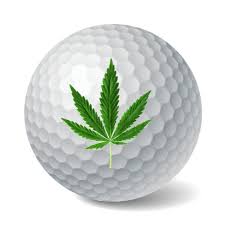
I love golfing and I eagerly await the opening of our local course each spring, but I would have a difficult time arguing that it’s an essential service. On the other hand, it definitely contributes to physical and mental well-being and it’s an activity that could quite easily be done while still maintaining appropriate social distancing. Adaptations could be put in place to ensure that golfers are not touching surfaces such as flag sticks.

One of the greatest sources of frustration for many people is the inconsistency in what is being deemed essential and what is not. For me, the most obvious example is cannabis shops. How is it that a substance that was illegal less than two years ago is now essential? Grocery stores, yes. Pharmacies, of course. But, cannabis stores? I don’t think so! In fact, I was even a bit surprised to see liquor stores remain open.

I realize that there are those who use cannabis medicinally, but like any other prescribed medication, they were able to access it legally long before it became available to the rest of us in October 2018. There’s no reason why it can’t still be accessible to patients who need it during the pandemic without the shops that cater to recreational use being open.

download

There would definitely be a lot less grumbling about following current public health orders if they were consistent. Golf or cannabis? Why one but not the other?

Fashion and cosmetic brands join the war against Covid-19

LogoFashion may seem frivolous, especially in times such as these, but many in the industry have shown their true colours and joined the fight against Covid-19 in some very practical ways.

Take fashion designer, Christian Siriano, for example. Siriano, who has dressed the likes of Michelle Obama, Taylor Swift and Whoopi Goldberg, initially closed his studio due to the pandemic. After receiving special permission from New York governor, Andrew Cuomo, to reopen as an “essential” business, however, he gathered his team together and set up an assembly line to produce surgical masks. Working six feet apart, of course, they turned out almost 2000 masks in the first week of production.

Balenciaga, Prada, Gucci, Yves Saint Laurent, Chanel, H&M, Zara, Hanes, and Uniqlo are amongst many other brands, both luxury and fast fashion, who have made the switch to producing masks. In addition, Prada has been financing the ICUs in three new hospitals in Milan and Gucci committed to producing 55 000 medical coveralls as well as more than one million masks. American department store chain, Nordstrom, has teamed up with Kaas Tailored to have their alterations teams in several US states sew more than 100 000 masks.

Joanna Griffiths, founder and CEO of Canadian intimate apparel brand, Knix, while exploring whether or not that company’s leakproof nursing bras could be transformed into masks, discovered that two of Knix’s main product vendors also own factories that produced PPE (Personal Protective Equipment such as masks and gowns). Deciding that the best way Knix could help would be to purchase finished PPE rather than reinventing their own product, Griffiths launched a GoFundMe campaign that surpassed its original goal of $50 000 in just 48 hours. Should you wish to contribute, the campaign continues and you can find it here.

Canadian winter coat manufacturer, Canada Goose, has pressed its factories in Winnipeg and Toronto into service producing patient gowns and scrubs for frontline healthcare workers. Jockey has been providing healthcare workers with Tier 3 isolation gowns and others using their resources to produce gowns, scrubs, and masks include Nieman Marcus working in conjunction with JOANN fabric and craft stores, and Gap Inc. which includes  the Gap, Old Navy, Athleta, Banana Republic, Intermix, Hill City, and Janie and Jack brands. Ralph Lauren is also producing masks and gowns  and the charitable arm of that company, the Ralph Lauren Corporate Foundation, is donating $10 million toward the global Covid-19 response.

You’ve probably heard about breweries producing antibacterial hand sanitizers, but they aren’t alone in that endeavour. Many cosmetic and fragrance brands have also turned their factories into production facilities for hand sanitizer. These include Estée Lauder, Guerlain, Parfums Christian Dior, LVMH, Givenchy, Coty, L’Oreal, and the Orly nail brand. Estée Lauder has also given a $2 million grant to Doctors Without Borders/Médecins Sans Frontières to support relief efforts in countries that lack the resources to combat the virus on their own.

Shoe companies are also getting involved. Crocs is donating a free pair of shoes (including shipping) to frontline health care workers. If you’re a healthcare professional, simply visit their website to request a pair. Allbirds began by donating $500 000 worth of shoes to healthcare workers and others on the frontlines. Now they’ve launched a “Buy a Pair, Give a Pair” campaign which allows customers who buy a pair of shoes for themselves to automatically provide a pair to a medical worker. If you aren’t interested in purchasing for yourself, you can simply donate a pair through the program. Find the information on this campaign here.

Numerous other fashion and cosmetic brands are finding unique ways to contribute to the worldwide fight against Covid-19. Fashion label, Michael Kors, pledged $1 million to New York based relief efforts with the designer himself personally pledging an additional $1 million. Saks Fifth Avenue is donating $600 000 to support patient care  and to address mental health needs in response to the pandemic. Kenneth Cole is donating 20% of sales to the World Health Organization’s Solidarity Response Fund. Body Shop is donating 30 000 units of cleansing products to shelters and senior centres across the United States and Canada. Finally, MAC Cosmetics is donating $10 million to 250 organizations worldwide that are committed to fighting Covid-19 as well as donating 100% of Viva Glam lipstick sales to vulnerable communities that have been impacted by the virus.

I’m certain that my research hasn’t turned up every fashion and cosmetic brand that is contributing in a meaningful way to the Covid-19 response. If you’re aware of others, please include them in the comment section and let’s all do our part by supporting these businesses both now and in the days to come!

Screen Shot 2020-03-21 at 7.17.10 PM


Coping with the new normal

I was supposed to be in the city this afternoon for an appointment with Dr W concerning cancer #3 which is located in my thyroid. Unfortunately, due to the ongoing Covid-19 pandemic, that didn’t happen. Clinic visits are being restricted to only the most urgent cases while people like myself are required to make do with a phone call from the doctor. Had I been in the office, Dr W would have done an ultrasound to determine whether or not there has been any change to my thyroid since I last saw him six months ago. We both agreed that that would have been the best scenario. If I was able to have an ultrasound done in the community where I live, we might have gone with that option, but the closest place that I could do that would be the hospital located an hour away. Since we both know that a hospital is a higher risk location than his clinic would be, we agreed that that wouldn’t be a good choice. Instead, we wait. We wait until the Covid-19 threat passes and I’m able to see him in his office again. He’s predicting June or July, but no one knows for sure. We wait and we pray that the cancer doesn’t grow or spread; that the additional two or three months doesn’t make a difference.

I was also planning to stop into the University Hospital dental clinic this afternoon to pick up a supply of the fluoride gel that I use once a day to protect my teeth from harmful effects of the radiation that I received after cancer #2 was surgically removed.  Thankfully, though, that can be sent to me by mail.

As we enter the fourth week since our province declared a state of emergency and services began to shut down, we’ve all experienced many changes. Most, like accessing my fluoride, have been fairly simple to deal with, while others, like not being able to see Dr W and have my scheduled ultrasound, are more challenging and may have serious long term effects.

Thankfully, for retirees like hubby and I, the impact of Covid-19 has thus far been easier to bear than it has been for many others. We don’t have a business to close, jobs to lose, or children to teach at home. Nevertheless, the novelty of staying home 24/7 wears pretty thin and many of the frustrations that go along with the current situation affect us all. In light of this, I thought I’d share a few things that are helping me deal with our new normal.

Routine.  I like routine at the best of times, but it’s even more important in times of uncertainty. This doesn’t mean that I can’t be flexible or spontaneous, but having some structure to my day really helps keep me on an even keel.

Adequate sleep.  I try to go to bed at night and get up in the morning at about the same time each day. That takes a bit of self-discipline. I tend to be a night owl and I could easily stay up way too late, but I know that I function best if I get about 8 hours of sleep a night. Thankfully, in spite of the fact that I’ve had a couple of nights where odd dreams that probably indicate an elevated stress level have kept me from sleeping well, most nights have not been like that and I feel well rested.

Exercise.  I’m very fortunate that, unlike many people who are finding it difficult to exercise because their gyms have closed, I have everything I need here at home. Monday to Friday my day begins with a 25 minute exercise routine that focuses on core strength, flexibility, and balance. Our basement gym consists of a treadmill, two weight benches, and a large assortment of free weights. Three afternoons a week find me down there lifting weights and on the alternate days, I either walk on the treadmill or outdoors. Sunday is usually a day of rest.

Healthy diet.  If anything, we’ve been eating better than ever since the beginning of this pandemic because I’ve been a little more intentional about meal planning. That started three weeks ago when we visited five grocery stores in one afternoon and found their meat departments almost empty! Thankfully, the shortage didn’t last and I’ve since been able to add enough to the freezer to last us quite awhile. We keep very little unhealthy snack food in the house, so even with many more hours at home, we haven’t been tempted to fill up on junk food.

Spiritual nourishment.  Prayer and Bible reading are regular parts of my daily routine that help keep me balanced. We’ve been missing the opportunity to meet in person on Sunday mornings, but we’ve been enjoying church online.

News, but not too much!  I don’t want to live with my head buried in the sand, but at the same time, I don’t want to become obsessed with every detail of what’s going on. I’ve continued my habit of reading the news after breakfast every morning. We subscribe to one newspaper online. I check the world, national, and local news each day, but I very seldom read editorials. For the past couple of weeks, I’ve been watching our provincial Chief Medical Officer of Health give her daily Covid-19 update each afternoon online, but I don’t watch TV news.

Connection.  Staying in touch with friends and family by phone and online has been a vital part of staying sane. I enjoyed a lovely visit with a group of girlfriends via Zoom one evening last week and we’ve also enjoyed chats with several of our grandchildren.

Purpose.  It think one of the key ingredients to coping throughout the ups and downs of life and perhaps more than ever right now is having a sense of purpose. In addition to the usual day to day activities like meal preparation and exercising, I’ve been cleaning and reorganizing the kitchen cabinets and I’ve been using Duolingo to learn Spanish! Of course, there’s also the blog! Writing it and connecting with all of you gives me so much pleasure!

The one thing that I’d like to be doing more of these days is getting outdoors, but we seem to trapped in a never ending winter. Our snow is usually gone by the end of March, but not so this year. There’s lots of sunshine in the forecast though and our daytime temperatures are beginning to inch up over 0ºC (32ºF), so perhaps this too shall pass just as we know the pandemic will.

IMG_0911

So, my friends, how are you coping? What are some things that are helping you get through these most unusual times?

 

What’s my risk factor?

Before I even begin this post, especially for those who haven’t been here before, let me emphasize that I have absolutely no medical training. I am simply a neuroendocrine cancer (NETS) patient seeking answers and doing the best I can to weather the very unusual days that we all find ourselves in.

Screen Shot 2020-03-21 at 7.17.10 PM

Does my cancer and the PRRT treatments that I’ve received mean that I’m at higher risk of contracting COVID-19 than the general population? Not as far as I know. The reality, as I understand it, is that no one has immunity to this virus. It’s a brand new disease that our bodies have never encountered before; never had an opportunity to develop antibodies to. That’s why I’m doing what I think everyone should be doing. I’m not hiding out in fear, but I’m hunkering down at home and only going out for necessities such as food and medications.

When we hear about those people who are most vulnerable to COVID-19, this refers to those who may be at higher risk for more serious complications IF they contract the disease. That’s why it’s so important for all of us to do our part in helping prevent these populations from getting the COVID-19 virus in the first place. Am I one of the vulnerable ones? Certainly, my age puts me at higher risk than those who are younger, but I haven’t been able to find any information regarding NETS and COVID-19. In reality, such information probably doesn’t exist. At least, not yet.

So, what are those risk factors? 

  • An older adult  –  Recent figures show that more than 50% of the patients who have been admitted to an ICU with the disease and 80% of those who have died were over the age of 65. At 67, I’m at the low end of that population, but still within the high risk category.
  • People who have serious underlying medical conditions such as:
    • Heart disease  –  Not me!
    • Diabetes  –  I have been diagnosed as pre diabetic, but maintaining a careful, well disciplined diet has kept my blood sugar well regulated, so I doubt that this would put me at high risk.
    • High blood pressure  –  Experts indicate that if a person’s blood pressure is under control and they don’t have other risk factors, they probably aren’t at any greater peril than the general population. I’ve been on hypertension medication for several years and it’s been keeping my blood pressure under control but, of course, I do have other risk factors.
    • Chronic respiratory diseases  –  No again!
    • Cancer  –  This one raises lots of questions for me. Cancer is such a broad category. The word actually refers to any of the 200 different diseases, affecting many parts of the body, that are characterized by the uncontrolled growth of cells that invade and damage the body’s normal tissues. Do all of them put a person at higher risk for COVID-19 complications? I doubt it, but what about the 3 completely unrelated cancers that I’ve been diagnosed with since August 2013? That’s right, 3! As I mentioned above, I haven’t been able to find any information about NETS and COVID-19, but what about my untreated thyroid cancer? At present, there has been no indication that thyroid conditions place a person at jeopardy.
  • People who have a compromised immune system from a medical condition or treatment (e.g. chemotherapy)  –  In spite of having or having had 3 different cancers over the past 6 1/2 years, I’ve never had chemotherapy, but I haven’t been able to find any information on how PRRT affects the immune system, so once again, I’m left with questions.

The immune system is the body’s natural defence system. Unfortunately, there isn’t a simple questionnaire that will tell you how strong yours is. There are, however, several signs that you might have a weakened immune system:

  • Stress  –  Stress decreases the body’s lymphocytes, the white blood cells that help fight off infection. Thankfully, my life is relatively free of stress these days. For the most part, I think I can say with the apostle Paul, “I have learned to be content whatever the circumstances.”  Philippians 4:11b
  • Frequent colds or infections  –  I’ve had two colds this winter; one mild and one nasty. That’s more than I usually get, but I recovered from both in a reasonable length of time and I don’t remember the last time I’ve needed an antibiotic for an infection.
  • Frequent diarrhea or constipation  –  Diarrhea was one of the most obvious symptoms of my NETS cancer before it was diagnosed. Now medications tend to cause the opposite problem, but I can’t blame that on my immune system.
  • Wounds are slow to heal  –  I don’t think so. I haven’t had any serious wounds in recent years, but minor ones heal just fine.
  • Fatigue  –  When your immune system struggles, so does your energy level, but for the most part mine is good. My father passed away in the wee hours of March 1. I got almost no sleep that night and I definitely discovered that pulling an all-nighter in my 60s isn’t as easy as it was in my 20s! The week that followed was pretty exhausting too, but three weeks later, I’ve bounced back and feel completely rested. That seems to speak well of my immune system.

I do know, however, from regular blood tests, that my hemoglobin tends to be slightly on the low side which would make me somewhat vulnerable to infection and disease. On the other hand, I do all the right things to keep my immune system as healthy as I can. I don’t smoke, I eat a healthy diet, I maintain a healthy weight, I exercise regularly, I drink alcohol only in moderation, I get adequate sleep, I try to minimize stress, and I even wash my hands frequently!

So, what is my risk factor? I can only give a somewhat educated guess. Since I live in a sparsely populated area and I’m staying home most of the time, I’d say that my risk of getting COVID-19 is quite low. On the other hand, IF I do get it, my risk of suffering complications is probably moderately high.

Am I worried? No, but I’m definitely taking all the recommended precautions. I hope you are too!

Living in unusual times

We are definitely living in unusual times. We’ve watched as COVID-19 swept across the globe and now it’s reached our shores. I’m tempted to sit at my laptop hour after hour watching and reading updates. Things are happening so fast! Late Sunday, it was announced that schools across our province were closing. Yesterday, the province declared a state of emergency and non essential services began to shut down. Recreational facilities, museums, libraries, art galleries, community centres, children’s play centres, casinos… all closed until further notice. Gatherings of more than 50 people are prohibited. Even churches are closing their doors. I’m sure it’s much the same where you are.

So what do we do in such unprecedented and uncertain times? How do we cope when the calendar is suddenly blank? Self-isolate and social distancing are new additions to most people’s vocabulary, but I have a little more experience than most with these concepts. Over the past six and a half years, I’ve had 14 PRRT treatments and I was required to self-isolate for one to two weeks after each one. The present COVID-19 crisis will likely last significantly longer than that, but this too shall pass and when it does, I don’t want to look back on this as time wasted.

We’ve just been handed a lot of extra uninterrupted time, something most of us never seem to have enough of. What will you do with yours?

Here are a few suggestions:

  • Declutter. Clean out a closet, a drawer, the kitchen cupboards. Start your spring cleaning early.
  • Try some new recipes. This one might become a necessity. We visited five grocery stores today only to find the meat departments almost empty. I’m definitely going to have to be somewhat creative with meal planning over the next while!
  • Prepare and freeze some meals for when life gets busy again.
  • If you’re able, get outside. Self-isolating doesn’t mean you have to stay inside. Go for a walk or, depending on where you live, do some yard work, ride a bike, go snowshoeing, paddle a canoe. Fresh air and exercise are essential to maintaining a positive outlook in trying times.
  • Check out Duolingo and start learning a new language.
  • Keep up social connections via phone or video chat.
  • Play board games.
  • Do jigsaw or crossword puzzles.
  • Finish the craft that you started some time ago and never completed.
  • Start a journal or a blog.
  • Read all those books that you never had time for.
  • Enjoy virtual tours of 12 famous museums from around the world.
  • Attend the opera online.

Whatever you do, don’t panic and don’t just sit around waiting for this to pass. Take wise precautions, be safe, but also seize the moment. Choose to do something worthwhile in the midst of these difficult and uncertain times. Make it a time worth remembering!

And one final bit of advice… assuming that you don’t live alone and that no one in your household is sick, remember that hugs are healthy! The thing that I missed most during my periods of post treatment isolation was the comfort of physical touch.

Would you wear them?

LogoWith a friend who just flew home from Europe self-isolating and our own travel plans nixed for the foreseeable future, we are as aware as anyone else of the seriousness of the rapidly spreading and sometimes deadly COVID-19 virus. The outbreak in a North Vancouver care centre is just 1 km (0.6 mile) from our oldest son’s home and there’s now a confirmed case in Vegreville, the town 106 km (66 miles) northwest of here where my sister lives. All around us, events are being cancelled to help prevent further spread of the disease.

Clearly, this pandemic is no laughing matter, but I can’t help shaking my head in bewilderment over people stockpiling toilet paper! Toilet paper, of all things! I can understand the wisdom in having a reasonable supply of essential items on hand in case of any emergency, including the need to self-isolate, but panic buying of case upon case of toilet paper is absolutely ludicrous!

So, what does all this have to do with fashion? Not very much, actually, but in light of the present situation I have to ask, would you wear this?

88965955_2795568973862330_5404922587727790080_n

T-shirt available here.

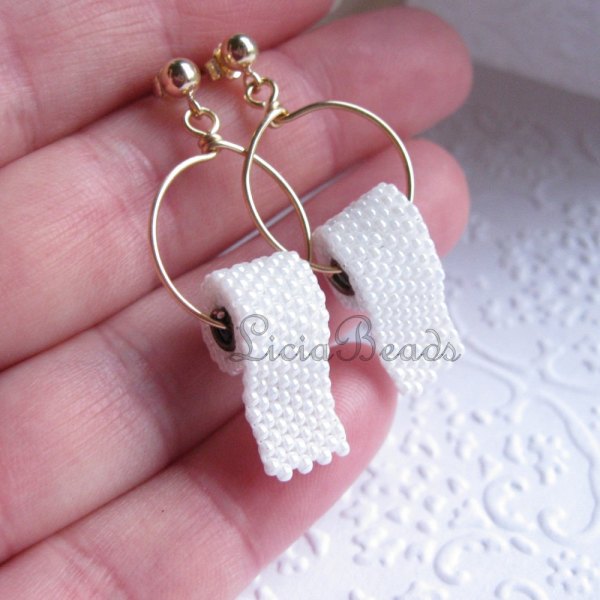
If not, perhaps you’d prefer something slightly more unobtrusive.

il_fullxfull.1113342784_ihwo

Earrings available here.

Would you wear them?

DIY winter moisturizing masks

LogoCold, dry winters here on the Canadian prairie are terribly harsh on skin. Awhile ago, my face was beginning to look and feel like parchment! My regular skin care routine simply wasn’t cutting it. I needed more moisture than my daytime lotion and night creme were providing. Being a frugal fashionista (and living where there isn’t a wide array of products to choose from) I looked no further than my kitchen for help!

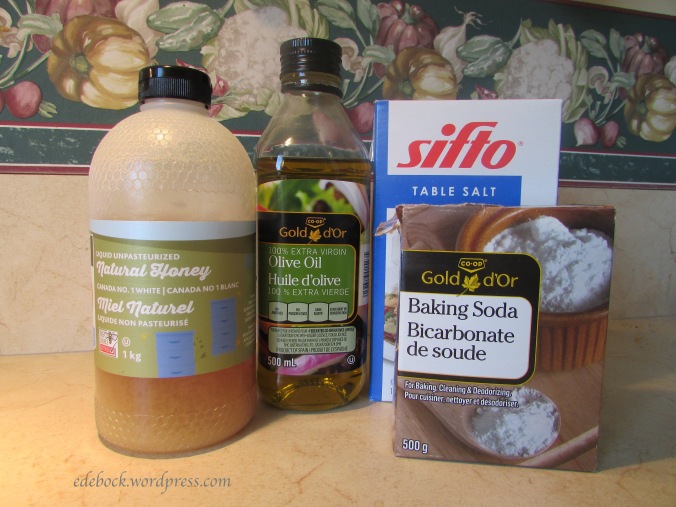
That’s right! All you need for a do-it-yourself winter moisturizing mask is probably right there in your pantry.

IMG_0812

Unpasteurized honey has been used as a beauty treatment since ancient times, but what makes it such a great skincare ingredient? First of all, honey is a humectant, which means that it attracts and retains moisture. It also contains a number of vitamins and minerals, it’s a potent source of antioxidants, and it’s anti-bacterial.

Mediterranean women have also used olive oil as a moisturizer for centuries. Like honey, it’s loaded with nutrients, is a natural humectant, and is rich in antioxidants.

Cleopatra was renowned throughout history for her radiant skin and stunning beauty. Early records show that she added honey to her milk baths to keep her skin smooth and firm. Olive oil and honey facials were also part of her beauty regime. If these things were good enough for Cleopatra, I thought they must be worth a try!

464192-cleopatra

While either unpasteurized honey or extra virgin olive oil can be used alone, why not try one of these simple recipes for smoother, softer, well hydrated skin?

Exfoliating Mask

When I used this one, my face looked like a glazed doughnut, but it felt wonderful!

  • 1 tablespoon honey
  • 1 teaspoon salt
  • a few drops of olive oil

Mix ingredients together and apply to clean, wet skin in a circular motion. Avoid eye area. Leave on for about 15 minutes. Rinse thoroughly with warm water and follow up with your favourite moisturizer.

Salt has been used as a healing agent for centuries. It tightens, preserves, and acts as an exfoliant, removing stubborn dead skin cells and allowing new and healthy skin to emerge, but be very gentle with this mask as it is quite abrasive.

Gentle Exfoliating Mask

  • 2 teaspoons honey
  • 1 teaspoon baking soda
  • a few drops of olive oil

Mix and use as above.

Moisturizing Mask

This one is my favourite! It’s so simple and soothing.

  • 1 to 1.5 teaspoons honey
  • 1 to 1.5 teaspoons olive oil

Mix ingredients. Apply to clean, damp skin. Leave on for 15 to 20 minutes then rinse thoroughly.

There are many more DIY recipes online that include other ingredients from your kitchen such as oatmeal, egg yolk, yogurt, and cinnamon but all you really need for an effective and inexpensive beauty treatment is olive oil and honey. You can use any of these masks weekly as needed. I used the Exfoliating Mask first and followed it with the Moisturizing Mask a week later. That was a couple of weeks ago and my skin is still thanking me!

Never forget to laugh!

Ideas for blog posts come from all sorts of places. Sometimes a word or a phrase catches my attention and suddenly, I feel a blog post coming on. Recently, my good friend, Richard M, responded to a comment from another of his friends on Facebook with an excellent bit of advice. “NEVER forget to laugh!” he wrote. That immediately sounded like a title to me!

We’ve all heard it said that laughter is the best medicine, but did you know that it’s actually good for your health? I have absolutely no medical background and I know better than to depend on Dr. Google for sound medical advice, but even trustworthy sites like the Mayo Clinic agree that laughter has many positive physical and mental benefits.

Physical benefits of laughter

  • Lowers stress by reducing the release of stress hormones like cortisol and adrenaline.
  • Boosts the immune system which is negatively affected by stress hormones.
  • Promotes heart health
  • Lowers blood pressure
  • Increases oxygen intake
  • Relieves pain by releasing endorphins which act as natural pain killers.
  • Boosts energy
  • Relaxes muscles
  • Burns calories. Though it won’t replace regular exercise, 15 minutes of laughter burns 10 to 40 calories!

Mental benefits of laughter

  • Builds rapport and strengthens relationships between people
  • Eases symptoms of depression as endorphins also act as natural antidepressants.
  • Reduces anxiety and other negative emotions
  • Improves mood
  • Promotes relaxation

Clearly Richard M is right. We should never forget to laugh. Laughter adds joy and zest to life, but we live in a world that seems to be in constant turmoil. Last month it was the fires in Australia and a plane shot down; now the news is dominated by the coronavirus. Our own personal lives are often a struggle. How, in the midst of all that, do we remember to laugh?

Here are a few suggestions

  • Spend time with people who make you laugh
  • Don’t take yourself too seriously
  • Look for the humour in everyday situations
  • Watch funny movies or TV comedies
  • Make time in your life for fun activities
  • Play with a pet
  • Hang out with a little kid and find your inner child

If you really can’t find any reason to laugh, you might even want to check out laughter yoga or laughter therapy. While the idea of sitting in a group or one on one with a therapist forcing myself to laugh definitely doesn’t appeal to me, I could probably use more laughter in my life. We probably all could.

I will add one caveat, however. Never laugh at someone else’s expense. Not everything that passes as humour is funny. Make sure you know the difference.

images

“The human race has only one really effective weapon and that is laughter.”   Mark Twain

Fashion or function?

I love a stylish pair of sneakers. You’ve seen some of my favourites here before.

img_6481-version-21

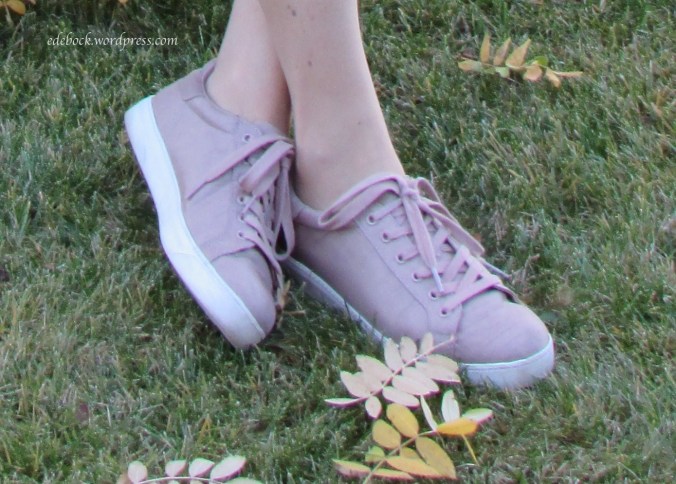
I also love the fact that sneakers are no longer only for wearing to the gym or for running. In fact, a pair like these from Circus by Sam Edelman wouldn’t even be suitable for those pursuits. I have, however, worn them with a dress.

img_6485

Then there’s this pair that I bought specifically for walking in Europe last spring.

img_7320

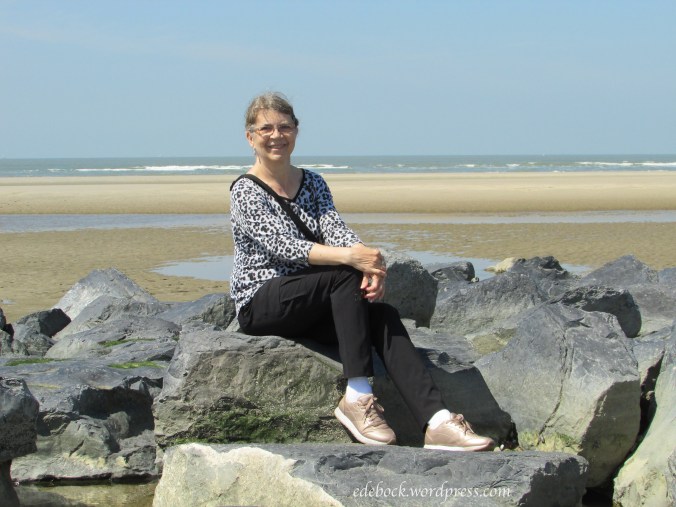
Here I’m wearing them overlooking a beautiful stretch of sandy beach in Belgium.

IMG_9237

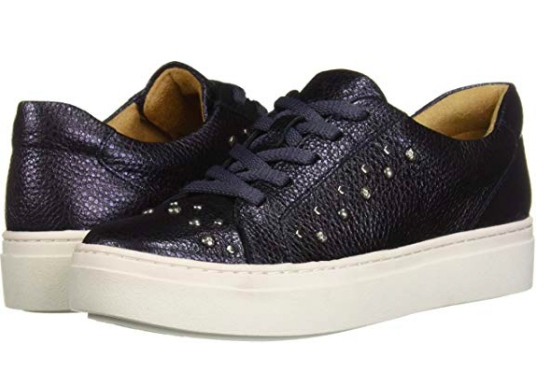
My husband gave me these metallic blue ones for Christmas just over a year ago. They look especially good with jeans.

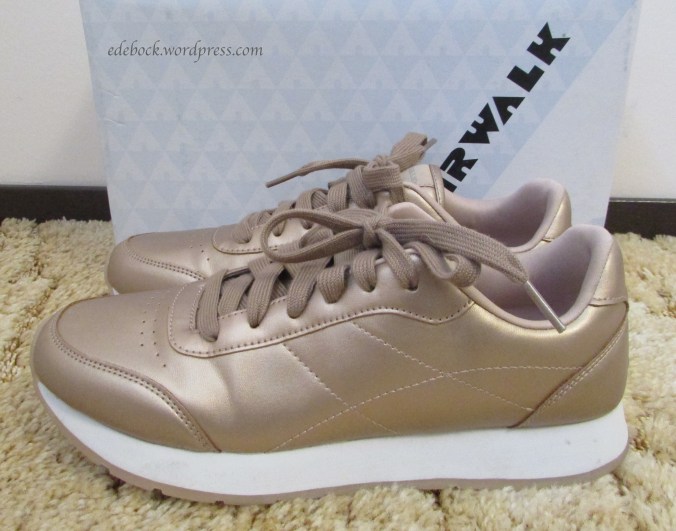
But sometimes what a shoe looks like isn’t the most important factor. One of my goals for the new year was to get back into the habit of walking on the treadmill at least three times a week (on the days that I don’t lift weights) and for that I needed a new pair of comfortable, supportive shoes. At the sporting goods store I was confronted with an entire wall of running shoes and trainers and I had no idea where to begin! Of course, my eye was drawn to the cutest and most colourful ones, but I had to remind myself that that wasn’t why I was there. Thankfully, a very knowledgeable sales clerk steered me in the right direction. If I was only going to use the shoes on the treadmill and not for other gym activities, she recommended running shoes as opposed to trainers. That narrowed the search to half the wall! Looking at my feet, she immediately realized that they’re narrow and suggested two brands that I should consider. These are the ones that I settled on.

I’ve only put about 8.5 kilometres (5.3 miles) on them so far, but I think they were a good choice. They’re lightweight but sturdy, and gel technology in the heel and the forefoot provides plenty of cushioning. The fact that I also like what they look like is simply a bonus! I’ve added them to my list of clothing purchases for 2020, but I really think of them as an investment in my health as opposed to a fashion item. Sometimes function takes precedence over fashion!

Logo

Fine, thanks!

It’s been quite awhile since I posted an update about my health. That’s because there really hasn’t been anything new to report. For someone with two kinds of cancer, that’s actually a very good thing, but I know that there are those of you who want to know what’s going on, so here’s the latest.

It’s already been over six months since I had my final PRRT treatment. Other than monthly injections of Sandostatin that are mainly meant to control symptoms, I’m not presently receiving any treatment for my neuroendocrine tumours (NETs). That’s a bit disconcerting, especially when more than one fellow zebra that I’ve come to recognize through a Facebook support group has succumbed to the disease in recent months. It’s really hard when one of those announcements shows up in my news feed.

On the other hand, I’m feeling 100% healthy, so most days it’s easy to ignore the fact that there are things lurking inside me that shouldn’t be there and that could begin to grow or spread at any time. I’m blessed to be able to live a full and productive life. I’m lifting weights again this winter and I’ve recently dusted off the treadmill and started using it again. If anything, I’m feeling better and stronger than I did six months ago.

A week before Christmas, I was in Edmonton for CT scans and blood work to find out if I’m really as healthy as I feel and yesterday we met with the doctor to get the results. Sometimes I suffer from a few days of scanxiety before an appointment like this one, but this time I felt completely at ease. I just kept reminding myself that God promised to take care of me over six years ago when I was first diagnosed and He has been faithfully doing that ever since. There’s no better place for me to be than in His hands.

When we sat down with the doctor yesterday all I really needed to hear was one word. Stable! Nothing has changed. No growth, no spread! Nothing to worry about. So, unless I begin to experience symptoms (which I haven’t since treatment began), we go through the same routine six months from now and hopefully receive the same good news again… and again… and again.

The CT scans reveal very little about my thyroid cancer which is entirely different and unrelated to my NETs. For news about that one I’ll have to wait until early April when I see that doctor again and he uses ultrasound to take a closer look and measure whether or not there’s been any change.

In the meantime, when you see me and ask, “How are you?” if I answer, “Fine, thanks!” that’s because I really am!

174103009.1