A new challenge

I’ve been feeling very sluggish lately. I still do my morning exercise routine most days, but I quit weight lifting earlier than usual this spring when I foolishly tried lifting something I shouldn’t have and hurt my back. It’s okay now, so I really have no excuse except laziness and lack of incentive. Today I decided to do something about that!

Remembering back to last year when I walked 179.5 km as part of the Hoofing It Across Canada fundraiser for NET cancer research, I recalled how good all that walking felt and how much it helped to have a specific goal. That’s what I needed; a new challenge!

walking-for-weight-loss-tips-1588694143 (1)

October 2, our 45th wedding anniversary, is 5 months or exactly 154 days from now. I have decided to walk (or hike) 300 km between now and then. That’s an average of 1.95 km a day. (For my American readers, that’s a total of approximately 186 miles or 1.2 miles a day.) I know that I’m capable of walking further, but I also know that I won’t walk every single day and I want to set a goal that’s realistic and achievable. I’m telling you about it so that you’ll help keep me accountable. In fact, I’m wondering if anyone wants to join me? If my goal isn’t right for you, set one of your own and tell us about it in the comment section below.

Why walk?

Walking has many benefits including:

  • It’s accessible, easy, and free.
  • It reduces stress and decreases symptoms of depression and anxiety which, for many, have been escalated by the current pandemic.
  • It improves heart health and reduces the risk of cardiovascular disease.
  • It increases blood flow and therefore improves energy levels.
  • It improves blood pressure and cholesterol levels.
  • It reduces the risk of some cancers.
  • It boosts the immune system.
  • It helps prevent the onset of Type 2 diabetes.
  • It reduces the risk of osteoporosis.
  • It burns calories.
  • It promotes more restful sleep.
  • It improves flexibility and helps ease chronic pain and stiffness.
  • It improves brain function.
  • It’s even been linked to longer life expectancy!

My current walking challenge is not a fundraiser, but I will be participating in a 5 km walk for Multiple Sclerosis research on May 30 in support of a close friend who battles this disease. If you would like to add your support, you can find my fundraising page here.

Why wear flats?

LogoWell known Christian speaker, author, and Bible teacher extraordinaire, Beth Moore, recently cut ties with the Southern Baptist Convention saying that she no longer feels at home in the denomination that once saved her life. Moore, who has long endured criticism in conservative evangelical circles because of their belief that only men should be allowed to preach, felt that she could no longer identify with or be part of what she saw as a toxic mix of misogyny, nationalism, and partisan politics in the denomination. That, however, is a topic for another day.
On the topic of fashion, I was absolutely incensed when I read that within the Southern Baptist Convention, Beth Moore was expected to show deference to male leaders by wearing flats instead of heels when she served alongside a man who was shorter than she was! What? What century are we living in? How insecure must a man be to feel that his manhood is threatened by a woman who is taller than he is?

At 5’8″, I’m more than two inches taller than my husband. When we lived in Japan, where I towered over most of the women and many of the men, we were introduced to nomi no fufu, a phrase used to describe a couple like us. Nomi no fufu literally means ‘flea couple’ and is used because of the scientific fact that female fleas are bigger than males!

My husband couldn’t care less if I wear heels. He’s not even slightly intimidated by my height, nor should he be. Why, then, do I choose to wear flats most of the time? Why were they already my shoe of choice long before I met my “little flea”? I can answer that in one simple word!

Comfort!

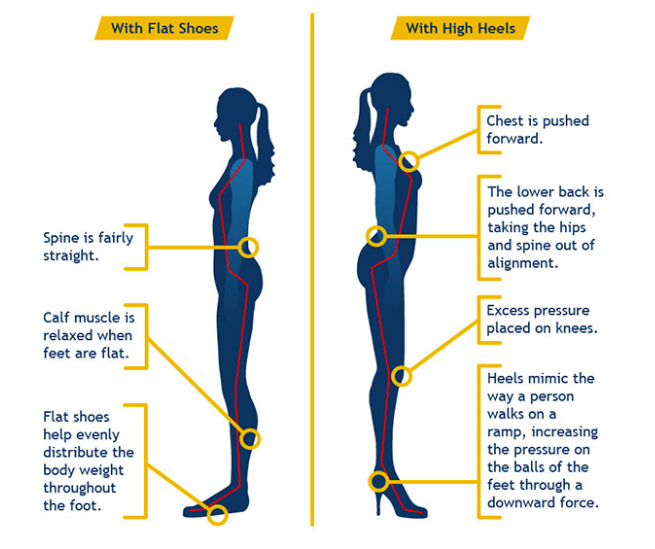
There are actually many good reasons to choose flats over heels. Studies have shown that by limiting the natural motion of the foot during walking, high heels can cause increased stress on the knees and may even contribute to osteoarthritis later in life. Similarly, if high heels are worn constantly, the spine’s ability to absorb shock can result in continued back pain. The vertebrae of the lower back may be compressed and back muscles over stressed. Wearing high heels too frequently can also cause the calf muscle to stiffen and the Achilles tendon to shorten which can actually make wearing flatter shoes uncomfortable. By putting a great deal of pressure on the ball of the foot and forcing the toes into a small toe box, high heels can cause or worsen many foot problems including corns, hammertoe, bunions, Morton’s neuroma and plantar fasciitis. This graphic from the Florida Hospital Medical Group Spine Health Institute helps explain. 

screen-shot-2018-12-05-at-9-15-41-pm

Does this mean that women should never wear high heels? Not at all! Worn in moderation, not everyday, they’re unlikely to cause any long-term physical health problems.

Now that spring seems to be here and the snow is almost entirely gone, I’m excited to be able to start wearing my sneakers and ballet flats again! That’s because they’re comfortable, not because I might intimidate some wussy man by standing next to him in heels!

My choice of shoes is most definitely not a religious or spiritual matter!

So much anger!

We’re living in a very angry world, or so it seems to me. Everywhere we look, whether in person or on social media, people seem to be protesting or venting their anger. First it was the shutdowns, then masks, and now the prospect of a vaccine that isn’t even available yet.

Calgary-COVID-protest-Nov-28-20204

Calgary, November 28, 2020 – Global

What is really behind all this anger? It’s clearly a response to what’s going on in the world around us, but why so much anger? Why are so many people lashing out at one another and at those in positions of authority? I think it’s much more than being asked to wear a little piece of fabric over their mouth and nose or the thought of having to have an injection.

There are many different emotions that might result in anger, but anxiety, sadness, fear, frustration, disappointment, and worry are some of the most common triggers and who amongst us hasn’t experienced some of those feelings in recent months? Add to that the fact that we feel like we’ve lost control of our lives. Things that we’ve always taken for granted, like spending time with family, have been taken away. For many, the things that they’ve trusted in, things that have given them a sense of security, have also been swept away. Some have lost jobs, others have had to close businesses. Some are still working, but feeling isolated at home. In addition to all of this, with the incredible amount of false information and fear mongering being spread by irresponsible “news” sources and keyboard warriors, it should be no surprise that undiscerning people are being sucked into the swirling maelstrom of fear and anger that surrounds us. The virus is everywhere. There isn’t even anywhere we can go to escape!

Unfortunately, anger is one of the most divisive and destructive forces on the planet. It’s a poison that spreads with astonishing speed; faster perhaps than Covid itself. It turns crowds into mobs, inflicts deep wounds, and crushes the human spirit. Plus, it does absolutely nothing to alleviate the crisis that we all find ourselves in.

Anger itself isn’t the problem; it’s what you do with it. First of all, let’s look at what NOT to do.

Don’t be a spreader! Don’t spread the virus, don’t spread misinformation, and don’t spread anger.

Don’t spread the virus. Whether or not you fully agree with the measures that have been recommended or mandated in your area, suck it up and cooperate. Wear the mask, stay 6 feet (2 metres) from other people, and whenever possible, stay home. We’re all in this together. The sooner we really start working together to limit its spread, the sooner we’ll have any hope of reclaiming some of the things that we’ve lost. 

Don’t spread false information. The internet is awash with misinformation, much of it deliberately intended to mislead and to stir up fear and anger. Don’t add to the noise! Check your facts before passing something on. Chances are that your neighbour down the street or your friend from high school doesn’t know as much about epidemiology as the experts do. The lack of respect and support for doctors, scientists, and other health professionals during this pandemic is nothing short of astonishing. There is plenty of evidence to show that masks do make a difference and no, they aren’t harmful to your health. There are very, very few people who have legitimate reasons for not being able to wear one and those people should be staying home because they clearly have other issues that put them at high risk. Yes, the vaccines have been fast tracked, but that doesn’t necessarily mean that they’re dangerous. They’ve been through the same rigorous testing as any other vaccines, but because of the urgency of the present situation, they weren’t allowed to bog down in bureaucratic red tape the way things usually do.  

Don’t spread your anger. Denying that you’re angry or keeping it bottled up inside isn’t healthy, but taking it out on an unsuspecting cashier who’s simply attempting to do her job in trying circumstances doesn’t make the situation better. Neither does waving a protest sign or ranting on social media. 

So what CAN we do with our anger? What SHOULD we do? 

  • Think before you speak, post or repost.
  • Find constructive ways to express your concerns clearly and directly to the right people without trying to hurt or control anyone. This might include asking questions in an attempt to seek out the truth and understand the reasons behind measures that are being recommended or mandated.
  • Take a break. That might mean taking a self-imposed time out from social media or getting outside for some fresh air and exercise.  
  • Practice relaxation. Listen to music, write in a journal, do a few yoga poses or some deep breathing exercises… whatever works for you.
  • Pray. Pray for wisdom, understanding, and grace. Pray for those in positions of authority who are daily faced with making incredibly difficult decisions. 
  • Do something positive for someone else. Instead of writing that Facebook rant, why not write a note of encouragement to someone? Instead of attending a protest rally, look for an opportunity to volunteer in your community. 
  • Know when to seek help. If your anger feels out of control, reach out to a mental health professional. 

I’m as eager as the next person to see this pandemic come to an end, but I’m equally anxious to see us pull together and rise above the overwhelming flood of anger that threatens to crush us all. 

Where do you find comfort?

If there was ever a time in most of our lives when we craved comfort, this is probably it. The combination of the upcoming holiday season + a worldwide pandemic is bound to be stressful. For many of us, the shorter, darker days of winter add to our feelings of disquiet. It’s a universal human trait to seek comfort when life becomes difficult, but where do we find that comfort? What do we turn to?

You’ve probably heard people refer to their “Quarantine 15”. In a poll of more than 1,000 WebMD readers, nearly half of the women and almost one-quarter of the men said that they had gained weight since March. This trend is no surprise. Food is one of the most common sources of comfort that people turn to in times of stress. There’s even a physiological reason for this. Chronic or ongoing stress causes the body to produce higher levels of the stress hormone, cortisol, which in turn triggers cravings for salty, sweet, or fried foods; foods that produce a burst of energy and pleasure.

Thankfully, this hasn’t been an issue for me. In fact, in times of distress I tend to lose my appetite. One of my main go tos for comfort is a cup of hot tea which is known to lower stress hormones. Since I drink my tea black, it has the added benefit of being calorie free.

tea-mugs-250x250

Soaking in a hot bath is another favourite source of comfort for me. There’s something about being surrounded by liquid warmth that soothes away anxiety and restores a sense of peace. Perhaps it’s reminiscent of returning to the womb! 

What are some other ways that you can comfort yourself, especially if you’re trying to avoid stress eating? Here are a few suggestions, but I’d love to hear your ideas in the comment section. 

  • Exercise. This one might be challenging if gyms and recreational facilities are closed in your area, but it goes hand in hand with the next suggestion. 
  • Spend time outdoors. 
  • Listen to music.
  • Do something creative… paint, sketch, knit, crochet, sew, embroider… the options are almost endless.
  • Keep a gratitude journal.
  • Practice mindfulness. Focus on whatever you’re doing at the moment. Notice the sights, sounds, and scents that surround you. 
  • Escape into fiction. Watch a movie or read a book. 
  • Work on a jigsaw, crossword, or sudoku puzzle.
  • Savour the routines in your life. If life seems chaotic, work on establishing some routines and focus on the comfort that you receive from that first cup of coffee in the morning, a regular devotional or prayer time, a few minutes of quiet reading or contemplation after work.  

We are living in tumultuous times and there seems to be no end in sight. We can’t see the big picture and have no idea how all this is going to work out for us individually or globally, but there is One who does know. Ultimately, true comfort is to be found in faith in God. Scripture is full of words of comfort. 

2 Corinthians 1-3-4

Who is the enemy?

One of the most valuable lessons I’ve learned about dealing with conflict in a relationship is the idea of standing shoulder to shoulder and attacking the problem together instead of face to face and attacking one another. If we all applied this principle to the fight against Covid-19, I think we’d have a much better chance of successfully containing the spread and minimizing the long term effects of this dreadful pandemic.

unnamed

The first step in fighting this battle together is identifying who or what is the enemy and perhaps even more important, who is NOT the enemy. The enemy is not the government, the public health authorities, or Bill Gates. The enemy is not 5G and it certainly isn’t your Facebook friend who thinks that Covid-19 is a hoax!

The enemy is a virus; a submicroscopic infectious agent that invades living cells and uses their chemical machinery to stay alive and to replicate itself. It doesn’t care whether or not we believe it’s real. It doesn’t care what our political views are, whether we’re young, old, or in-between, or if we’re good at math. It just needs an available host.

We can exhaust ourselves arguing about whether or not we should be wearing face masks and using hand sanitizer. We can wave protest signs and refuse to follow recommendations and requirements. We can spread rumours and accuse one another of all sorts of heinous things, but the virus doesn’t care! As long as we’re standing face to face and fighting with one another, it will simply continue its insidious attack. It will kill more of our elderly and vulnerable. Some of its victims will get off easy, but others will suffer long term physical and mental harm.

OR we can stop attacking one another and stand shoulder to shoulder against a common enemy. We can admit that we’re all in this together and that there are no quick fixes or easy answers. We can temporarily put aside our personal preferences and stop rebelling against every measure that is put in place to try to protect us.

header

NET Cancer Day 2020

net-cancer-awareness

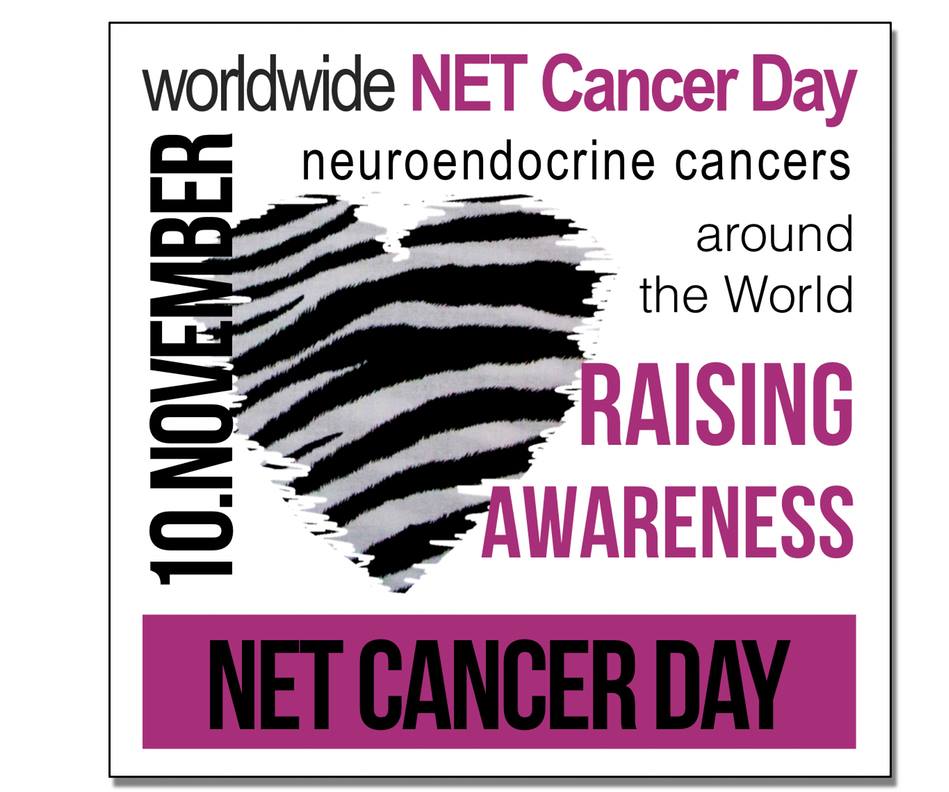
Once again, today is Worldwide NET Cancer Day, a day set aside to try to increase awareness of neuroendocrine (NET) cancers and to promote improved diagnostics, treatments, information, care and research. The focus of this year’s campaign is to highlight the challenges that patients and clinicians face around the early diagnosis of NETs.

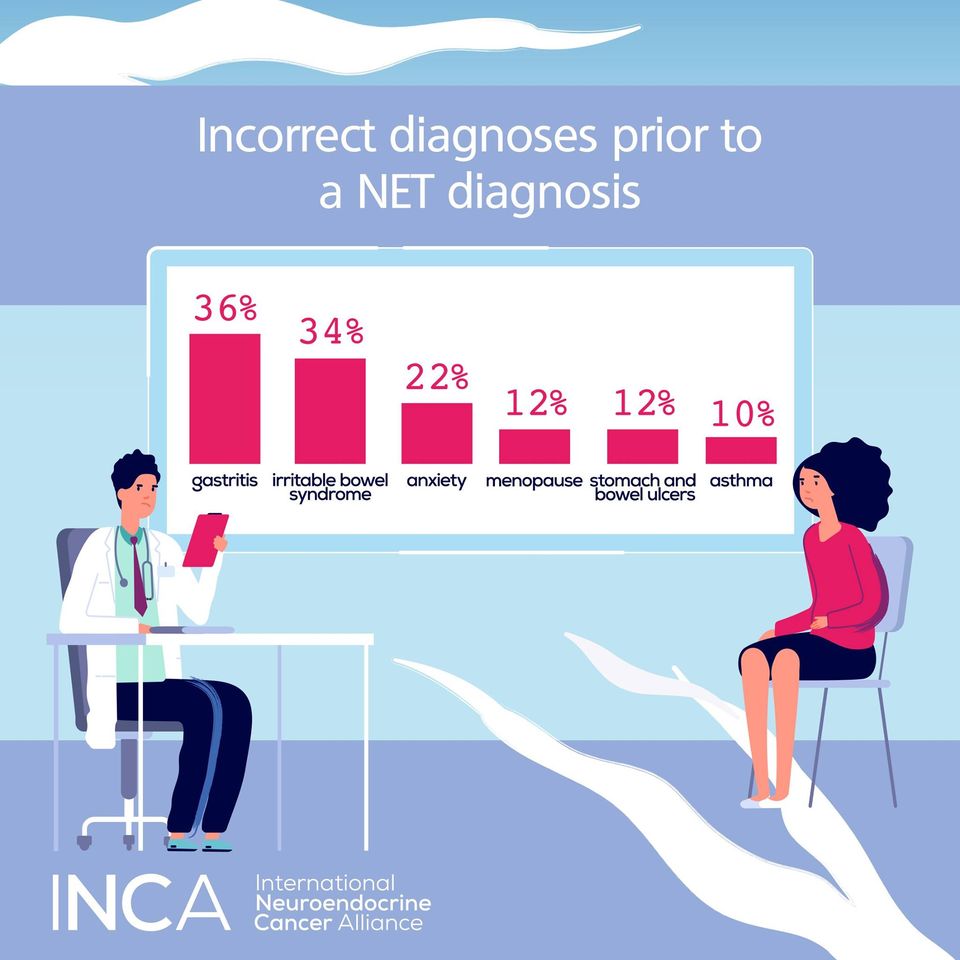
A recent worldwide survey of NET patients showed that only 27% of them received a correct diagnosis the first time around. 44% of us, myself included, were misdiagnosed for several years before the correct source of our symptoms was discovered, often by accident. Globally, it has been taking 5 years on average from initial symptoms to diagnosis; 6 years here in North America which was also my experience.

122537054_3583258601716994_7578317130403807428_o

I’m part of the 36% who were initially diagnosed with gastritis, inflammation of the stomach lining. It was a GP who made that diagnosis based only on my symptom, a gnawing abdominal ache. I don’t fault him for that as NET cancer usually presents symptoms that mimic much more common ailments. Had we done a colonoscopy, however, the tiny tumour growing in my cecum would likely have been found before the cancer spread. It was several years later, when unusual spots on my liver showed up on a completely unrelated ultrasound, that suspicions were raised and I eventually learned that I had Stage 4 cancer! By that time, my symptoms had grown to include chronic diarrhea as well as occasional flushing and episodes of tachycardia (extremely rapid heart rate), all common characteristics of NET cancer.

There are 3 As that would significantly improve the outcome for many NET patients:

  1.  Awareness of symptoms  –  We need health care professionals at every level to be aware of this complex disease and to be able to recognize its symptoms. My family physician had been practicing medicine for approximately 20 years when I was diagnosed, but I was his first NET patient and he knew very little about it. I’ll never forget the locum who argued with me that neuroendocrine tumours aren’t malignant (some aren’t) and that I didn’t actually have cancer at all! 
  2.  Availability of diagnostic tools  –  The most precise tool for detecting NET cancer is the Gallium 68 PET scan, but I have never had one. In fact, only 18% of the surveyed patients worldwide have. It isn’t available at many cancer treatment centres. For the past few years, there’s been talk of one coming to the Cross Cancer Institute where I receive all my care, but as far as I know it hasn’t happened yet. 
  3.  Access to NET specialists  –  In the survey mentioned above, 24% of the patients had not even heard of a NET cancer specialist and many others travel long distances to see one. 

So, every year on November 10, and whenever I have the opportunity in between, I’ll do my bit to raise awareness, never giving up hope that eventually better diagnostics and treatments will be available to all NET patients and that ultimately a cure will be found!

unnamed

Hiking in November!

We usually have snow to stay by the end of October, but as we all know by now, 2020 is a rule breaker! Though we had some unusually cold weather and a few flurries in the latter half of October, when we turned the calendar page to November, the weather took an amazing turn. The average daytime temperature at this time of year is barely above 0ºC (32ºF), so when the forecast said that today’s high would be 18ºC (64ºF), we decided to go hiking! Hiking in central Alberta in November? Unheard of!

This morning, we headed for the village of Donalda, about an hour from home. The last time we hiked in that area was over five years ago. It was already 18ºC when we arrived and we hadn’t been hiking long when we started peeling off layers!

IMG_1801

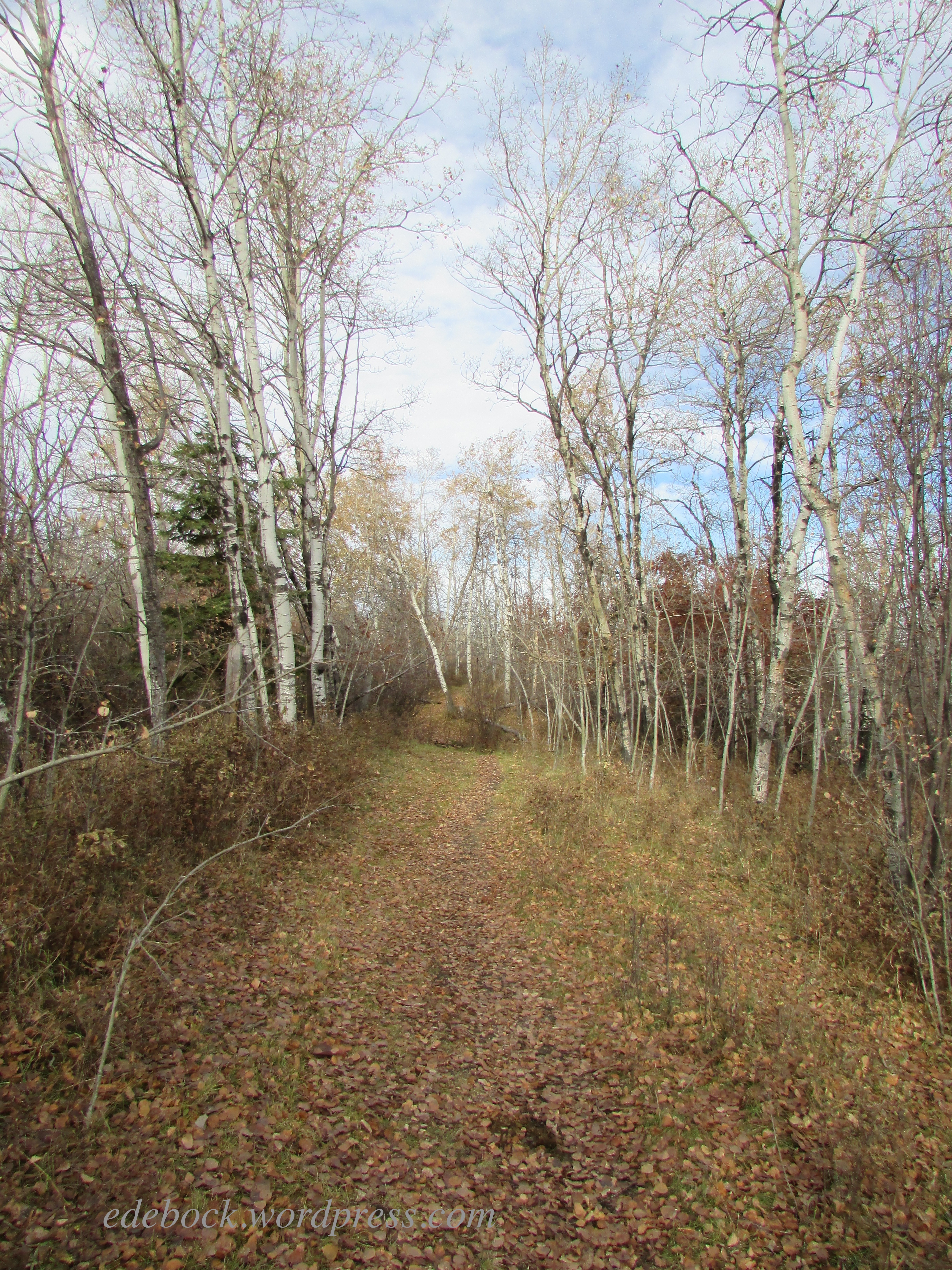
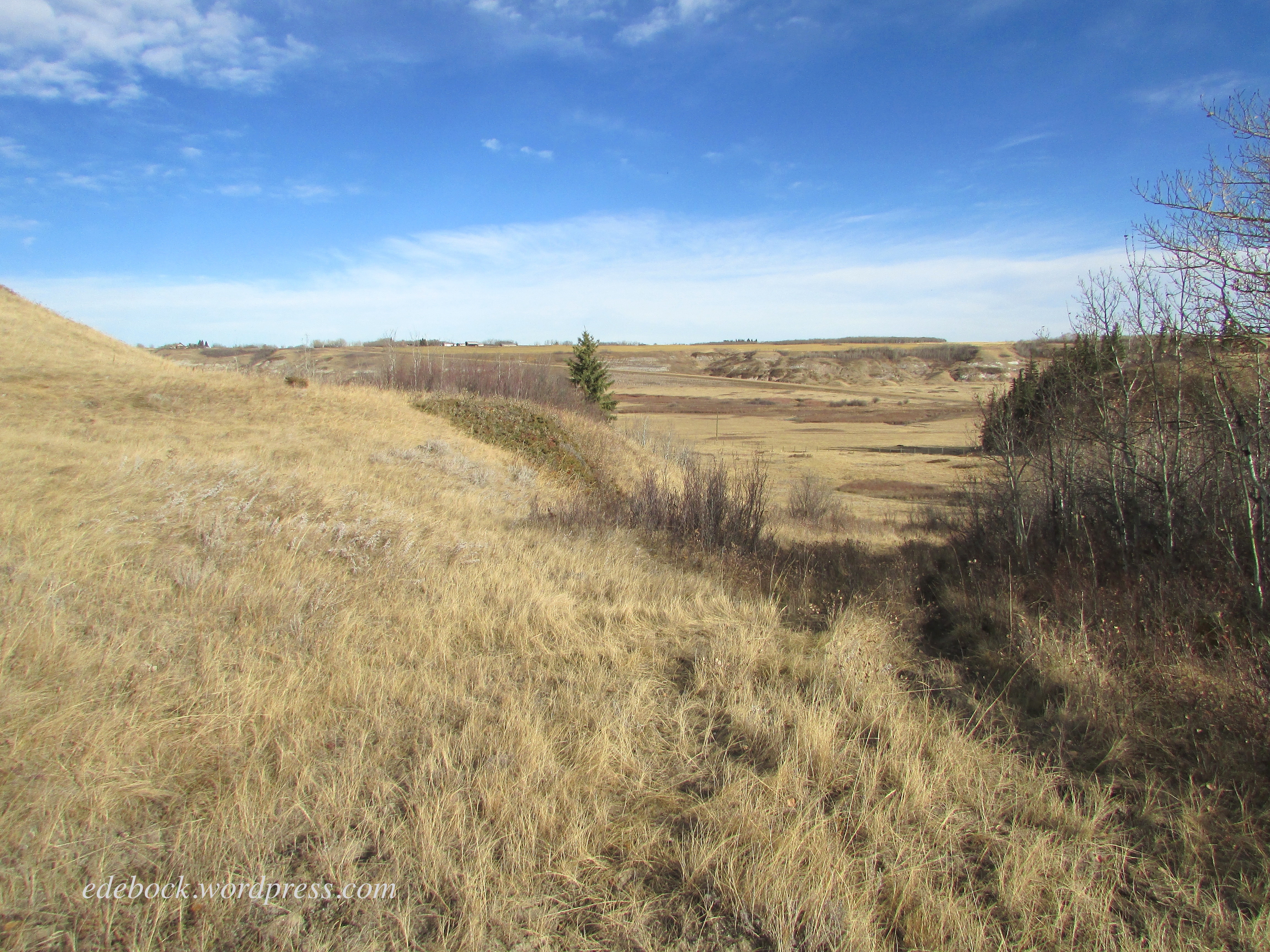
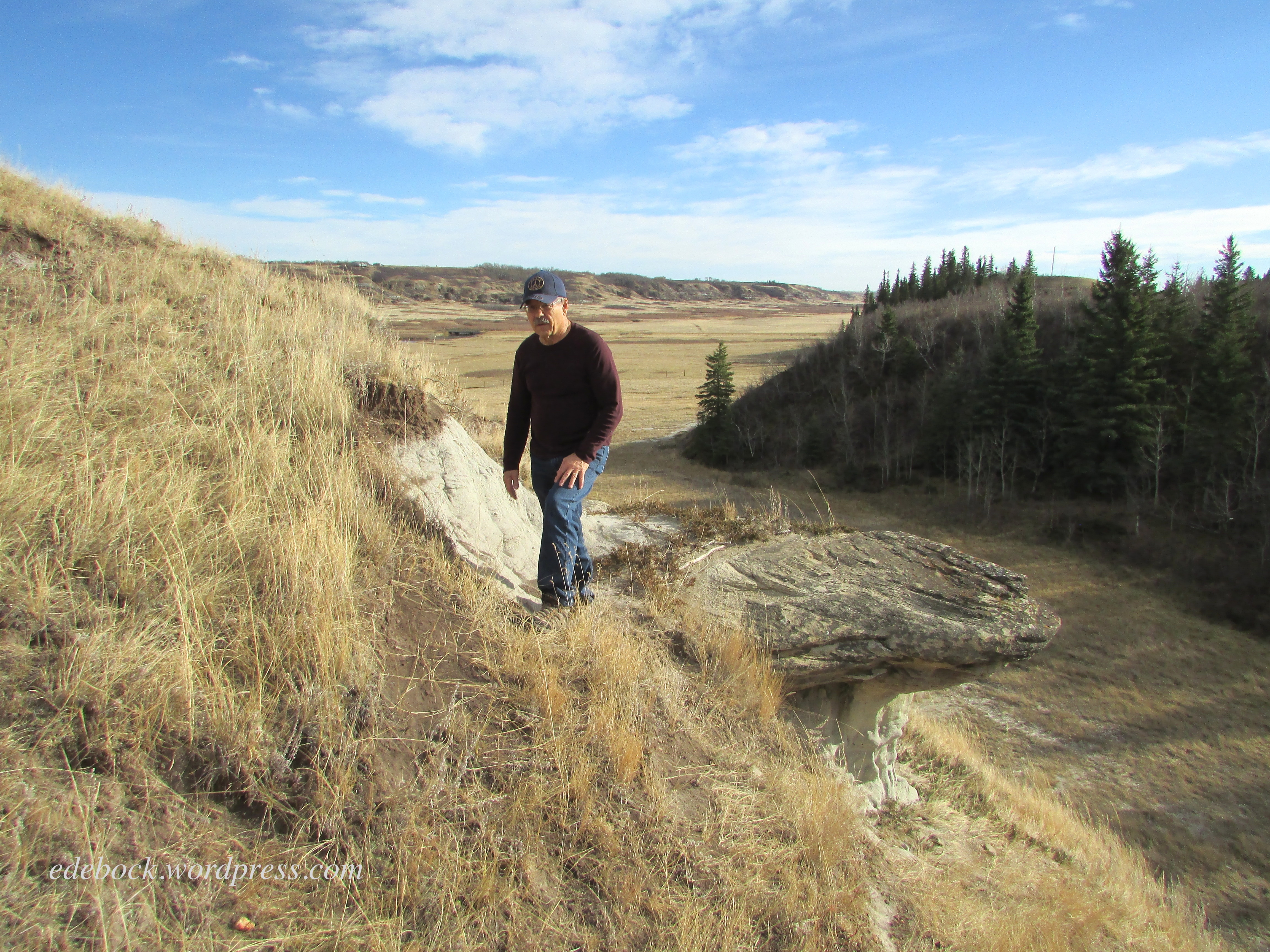
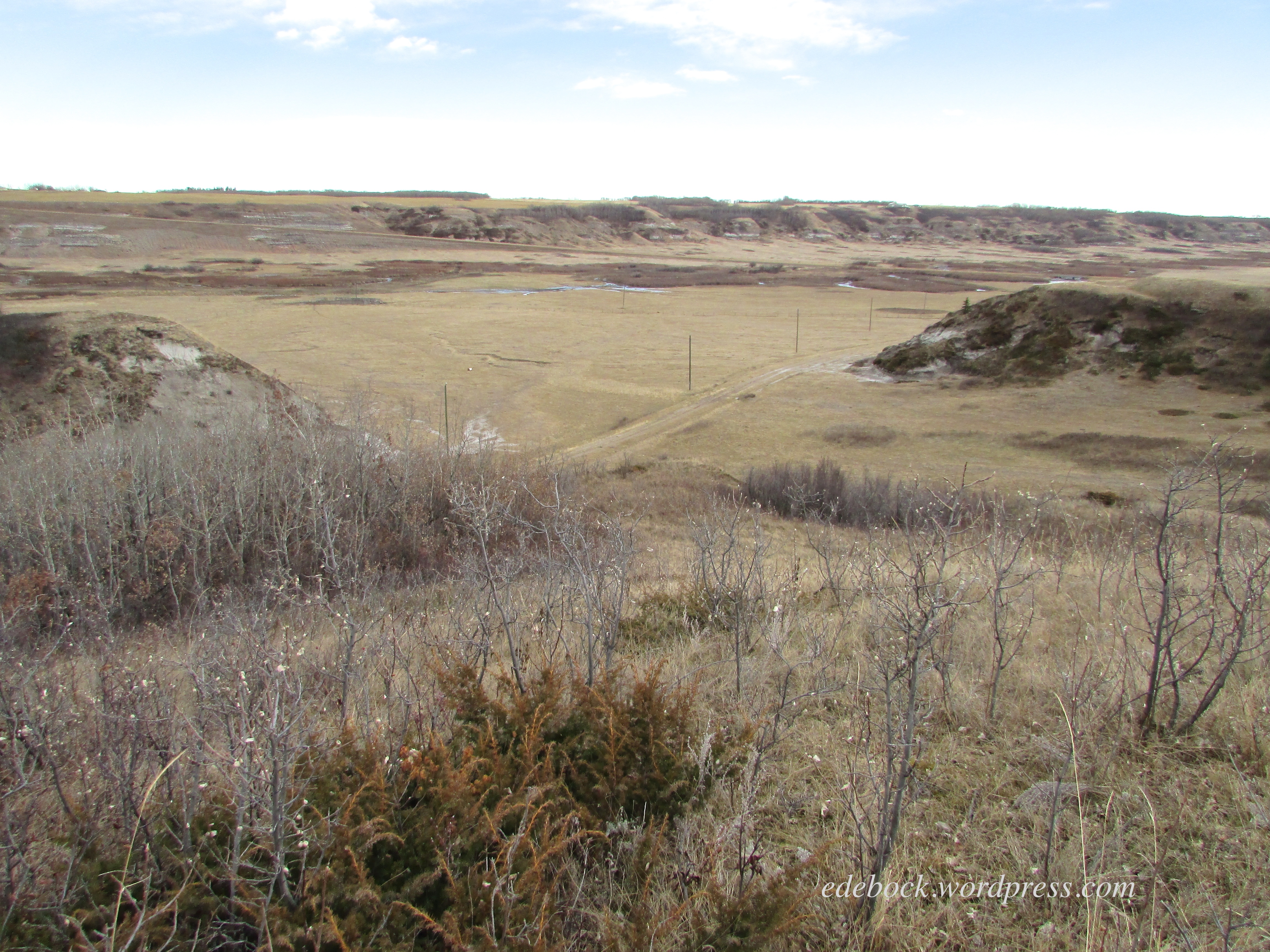
We started off following the woodland trail that leaves from one corner of the village. With all the leaves on the ground and the trees bare, there was a peaceful beauty about the place. Before long, we passed through a gate that took us onto 129 acres of private land that’s used for grazing cattle. Signs tell hikers that they’re welcome to explore anywhere within the area. We had the option of staying on the trail along the rim of the massive coulee, the northernmost part of the Canadian Badlands, but instead we turned toward the valley and wandered wherever our feet took us. Up, down, and around the bluffs we went seeking out interesting formations and views.

IMG_1806

Though there weren’t any cattle grazing in the area, we had to watch our step as there was plenty of evidence that they had been there! We did see some deer. 

IMG_1808

IMG_1811

The weather is so warm this week that the golf course, which has been closed since October 12, has reopened with golfers playing on temporary greens. Richard had Platelet Rich Plasma (PRP) injections in both his shoulders a week ago to promote healing of some old sports injuries, so he can’t do much with his arms right now. Golfing is out, but he certainly could hike!

IMG_1812

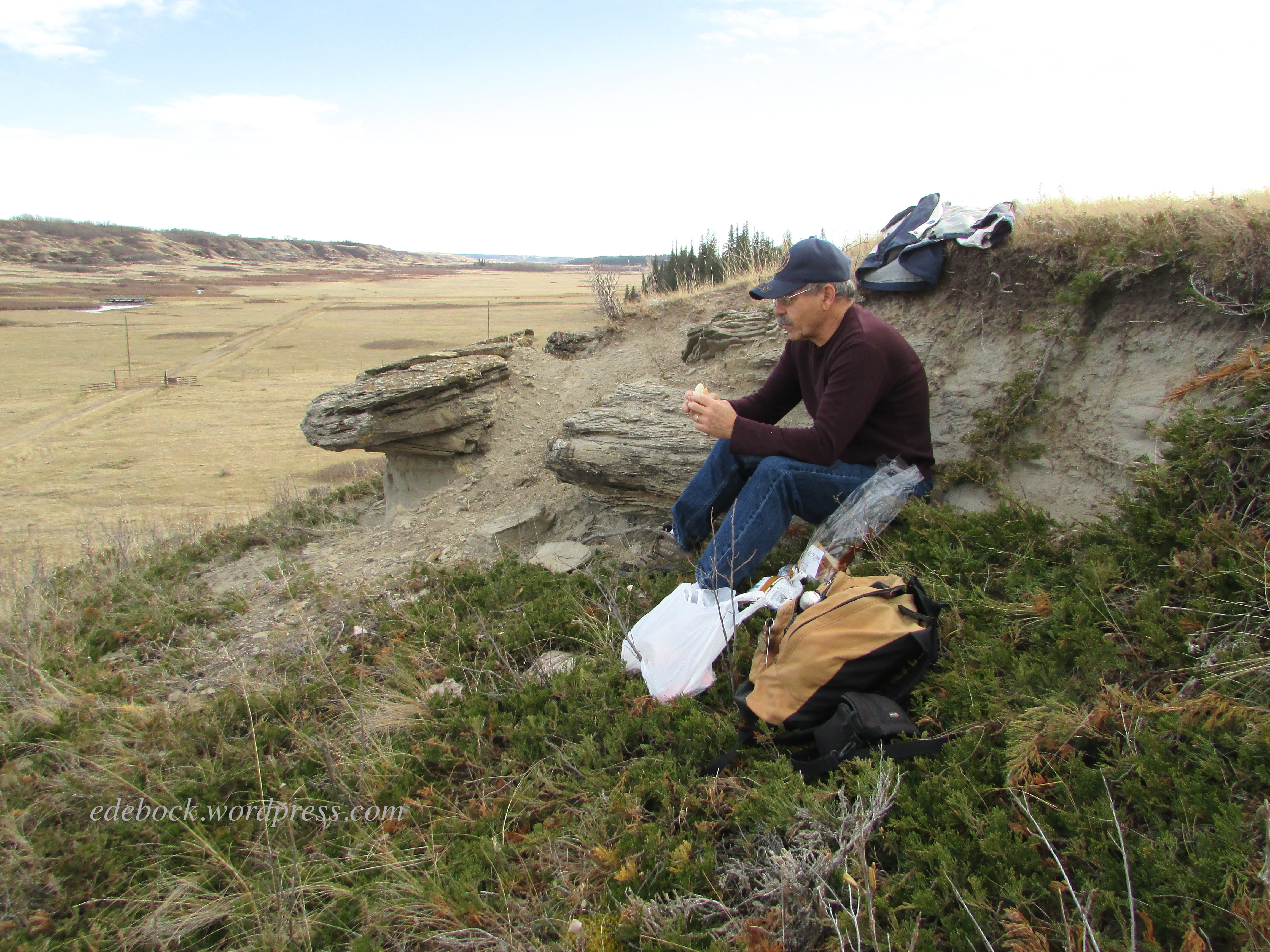
I have no idea how far we hiked, but we were out for about three hours. We enjoyed a picnic lunch overlooking the valley.  

IMG_1817

IMG_1818

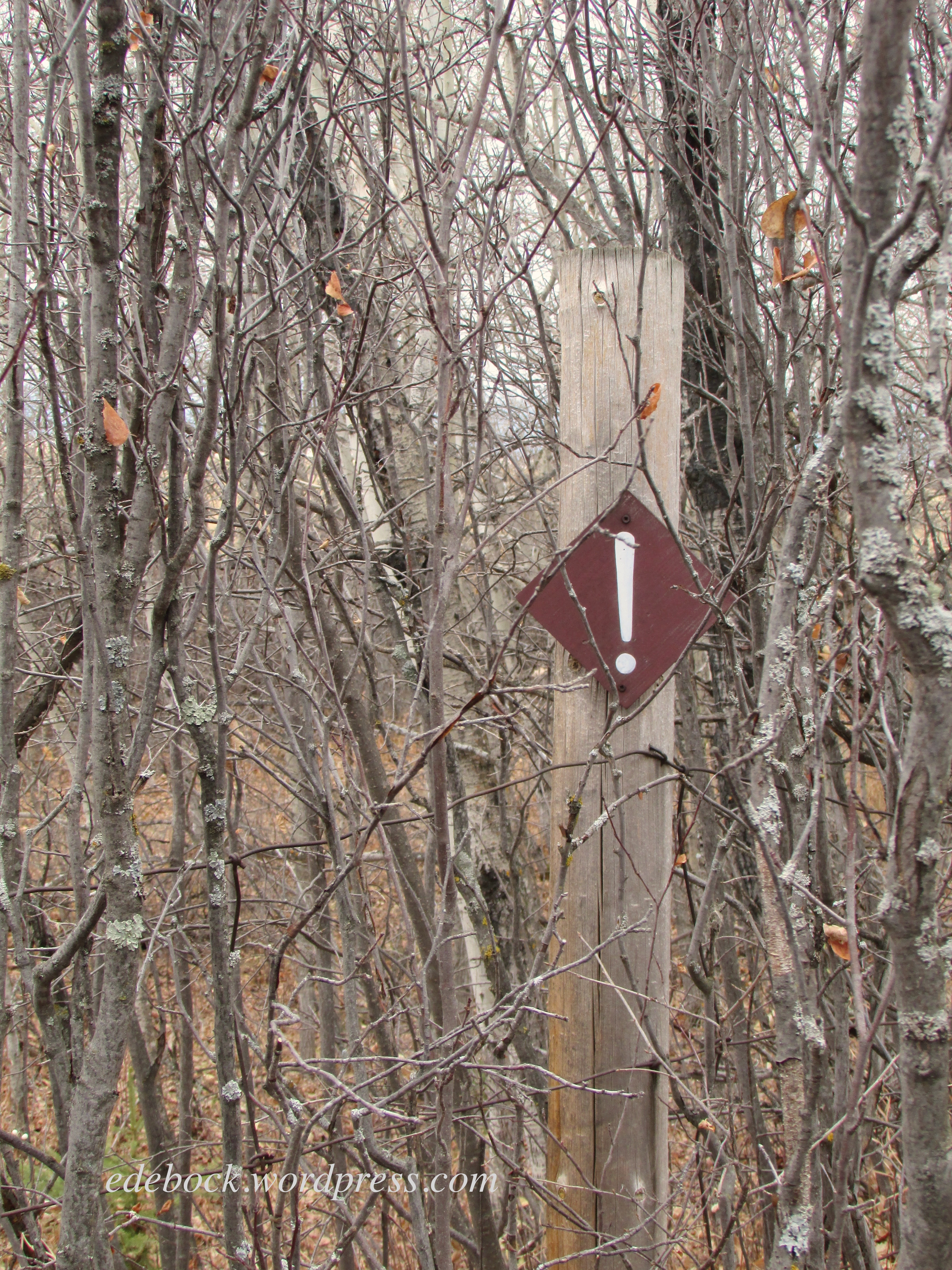
Eventually, we rejoined the woodland trail at it’s far end and made our way back to our starting point. Along the way, we passed this unusual sign on a fence post. We have no idea what it was trying to tell us, but it seemed very appropriate for this most unusual November day!

IMG_1821

Are you anti pantie?

I’ve started seeing more and more articles posted on social media with titles like this one. Medical Doctor Warns that “Bacterial Pneumonias Are on the Rise” from Mask Wearing. What these articles actually talk about is the danger of wearing contaminated face masks; either repeatedly wearing the same disposable mask or wearing a cloth mask without changing and washing it regularly.

Interestingly, I’ve never seen anyone post an article warning us to stop wearing underwear! What? What does that have to do with anything? Quite a lot, actually.

Davidson Hamer, infectious disease specialist and professor of global health and medicine at Boston University, says that while there have actually been no documented cases of masks leading to fungal or bacterial infections of the upper airway or the lower airway as in pneumonia, bacterial growth could possibly occur if someone wore a mask that was contaminated. “Theoretically, it could happen, but it’s highly unlikely with just typical mask use.” Anne Monroe, an internal medicine physician and epidemiologist at George Washington University’s Milken Institute School of Public Health agrees “In terms of mask use, it is important to follow general sanitation guidelines,” she says.

Exactly the same thing is true of underwear. For both men and women, failing to wear clean underwear every day can be problematic. For those of us with vaginas, moisture build up in the nether regions is normal. It’s common knowledge that lack of cleanliness in this area can lead to rashes and infection. While men may not be quite as susceptible, they too can get yeast and urinary tract infections.

So why are people advocating that we stop wearing facial masks, but not that we stop wearing underwear? The articles that I’ve seen are often posted by anti maskers, those who would have us stop wearing facial coverings altogether as opposed to simply following good hygiene. In other words, they’d have us throw the baby out with the bathwater! My question for them would be, are you also anti pantie?

Just treat your mask like your underwear. Wear a clean one every day!

Screen Shot 2020-10-27 at 3.52.49 PM

A Covid Thanksgiving

If you use social media at all, I’m sure you’ve seen a myriad of memes and posts bemoaning the somewhat bizarre year that 2020 has turned out to be.

halloween-meme-2020-jason-freddy-michael

2020

Then there are the “If 2020…” memes. At least some of them add a bit of humour to our current predicament. 

burn

wq46izkd1iq41

But has it really been that bad? I see posts from people claiming that 2020 has been the worst year of their life. If that’s the case, I’m thinking that perhaps they’re very young or maybe they’ve just lived a charmed life. I can think of at least three years in my life that have been worse than this one, but that’s not what I want to write about today.

Thanksgiving

Today is Canadian Thanksgiving, traditionally a time for families to gather and enjoy a festive meal together. For many of us, it’s a very different and much quieter celebration this year. Here in Canada, we’re experiencing a second wave and many of the new Covid-19 cases have been the result of large family gatherings. Though we live in a rural area where the numbers have remained relatively low, all of our children and grandchildren live in urban settings where that is not the case. As a result, we’ve chosen not to get together to celebrate Thanksgiving this year. In spite of the fact that hubby and I are alone this holiday weekend, I cooked a tiny (8.5 pound) turkey with all the trimmings yesterday. It may be far from an ordinary year, but that’s no reason to completely forgo those things that bring us joy!

Without the happy sounds of children and no one gathered around a board game on the kitchen table, the house is very quiet, but that doesn’t mean that I don’t have much to be thankful for. In the solitude of this unusual Thanksgiving weekend, I’ve had much opportunity to contemplate how very blessed we are. Even in the midst of a pandemic such as we’ve never experienced before, there is so much to give thanks for. I’m reminded of one of my favourite passages of scripture, Philippians 4:6-7.

“Do not be anxious about anything, but in every situation, by prayer and petition, with thanksgiving, present your requests to God. And the peace of God, which transcends all understanding, will guard your hearts and your minds in Christ Jesus.” (emphasis my own)

121074208_10158938499207387_5978601577989692251_n

Though the list of things that I’m thankful for is very long, this image pretty much sums it up for me. In spite of two cancers and several other diagnoses, I feel great and I’m able to live a full and active life. I have access to excellent, free health care. I have a comfortable home that’s in the process of undergoing a complete facelift. My family may be scattered today, but I’m so proud of the adults that my children have become and the spouses they’ve chosen. Of course, I’m also head over heels in love with the seven grandchildren that they’ve added to the clan. As sad as it was to lose my elderly father earlier this year, I’m grateful that he went before the pandemic struck, that we were able to be with him in his final hours, and that we could celebrate his life together with friends and family. And where would we be without friends? I’m so thankful for the ones that God has blessed me with, both far and near. Finally, there’s food. Along with safe, clean drinking water, food is something that we tend to take for granted, but I’m mindful of the fact that, while I can cook a whole turkey for two people, there are many in this world who don’t know where their next meal is coming from and who may be going to bed hungry tonight. No, for most of us, 2020 has not been that bad! 

If-2020-is-telling-us

Just wear the mask!

I’ve avoided wading into the wearing of masks fray because I know that it’s controversial and has the potential to erupt into another nasty conversation on Facebook similar to the one provoked by my “redneck thinking” post back in April, but I can’t stay silent any longer. I am absolutely mind boggled that this is even an area of debate! Are people so stressed and so unhappy these days that they will jump at any reason to protest?

In an attempt to understand this controversy, we need to back up several months. In the very early days of the Covid-19 pandemic, public health officials thought that the virus was primarily transmitted by people touching contaminated surfaces and then their faces. Frequent hand washing, the use of hand sanitizers, and refraining from touching your face were thought to be the best ways to prevent its spread. At first, both the World Health Organization (WHO) and the Centers for Disease Control and Prevention (CDC) said that wearing masks was unnecessary. As time progressed, however, and more was learned about this new virus, it became clear that this early thinking was inaccurate. Instead, researchers now realize that Covid-19 is primarily spread by inhaling virus-laden droplets expelled by an infected person. As time passed and studies were conducted, it also became clear that people can transmit the virus before they begin to experience symptoms and, in fact, that some people who remain asymptomatic are actually contagious. These factors explain the more recent recommendation that people wear masks in public, especially in situations where it’s difficult to maintain distance between one another. Perhaps changing advice midstream led to confusion and fuelled the anti mask movement, but I think that there are also other reasons why it’s become necessary for many businesses and municipalities to make wearing masks in public spaces mandatory.

Denial is clearly at the root of some people’s refusal. In spite of all the information to the contrary, there are still those who refuse to accept the severity of this worldwide plague. Conspiracy theories abound and negative voices question the research and the data that it presents.

At the individual level, some people protest that their personal rights and freedoms are being infringed upon when they’re told that they must cover their mouths and noses. They selfishly choose to put personal comfort above the welfare of others. We all know that wearing a mask isn’t particularly comfortable. If you’re a glasses wearer, as I am, there’s the added frustration of fogged up lenses, although I’ve discovered that folding a Kleenex (tissue) into a strip and placing it across the bridge of my nose under the top edge of the mask helps a lot. I don’t like wearing a mask any more than anyone else does, but I wear one because I don’t walk this planet alone and I don’t want to take a chance on unknowingly passing a deadly virus to someone else, particularly one of the more vulnerable amongst us. As my specialist put it so succinctly when we discussed the topic at my appointment yesterday, “In our culture, too many people think only about their rights and freedoms while forgetting that we also have responsibilities.” In Genesis 4:1-12 and elsewhere throughout scripture, God answers the question, “Am I my brother’s keeper?” with a resounding YES! Jesus said that the greatest commandment is to “Love the Lord your God with all your heart and with all your soul and with all your mind.” The second is to “Love your neighbour as yourself.” In the days of Covid-19, loving your neighbour often involves wearing a mask!

Some of the excuses that I’ve heard for not wearing masks are absolutely ludicrous.

  • Wearing masks causes oxygen deprivation or carbon dioxide poisoning or similarly, rebreathing dirty moist air will make me sick. In reality, the fibres that cloth and surgical type masks are made from aren’t dense enough to block the exchange of gases and air can also get in around the edges. The only time that this excuse might be considered legitimate would be during strenuous exercise. If this is a concern, exercise outdoors instead of in a gym and maintain distance from people who aren’t part of your household or “bubble”.
  • The mask prevents communication. Sound passes easily through masks! This is only a legitimate concern for those who are hearing impaired and who depend on lip reading. Masks with clear panels are available for those who interact regularly with someone for whom this is an actual problem.
  • Masks hide our beautiful smiles. The world will survive without your beautiful smile until this pandemic eventually comes to an end!

And then there’s the one that I’ve seen circulating around on Facebook since our province announced that masks will be required in schools for students from grade 4 to 12. Masks make children unidentifiable and assist in human trafficking! Now that’s really grasping at straws! There is absolutely no question that human trafficking is an incredibly heinous crime and far more prevalent that most people are aware of or willing to admit, but to make the wearing of masks about human trafficking is a ridiculous stretch and an insult to intelligence.

Perhaps living in Asian countries where wearing a mask when you have a simple sniffle has long been a common courtesy has influenced my thinking on this topic, but I’m truly astonished by the tempest that this has created here in North America. As more businesses and municipalities make masks mandatory, the furor increases, but there’s really one simple answer for those who don’t want to comply. If you choose not to wear a mask, stay home!

download