Finally!

Yesterday I FINALLY had the cancer treatment that my doctors wanted to give me a year ago! Thankfully, mine is a slow-growing, chronic cancer or I doubt I’d be here to tell the tale.

When my neuroendocrine tumours (NETS) were diagnosed last September, the doctors at the Cross Cancer Institute in Edmonton would have preferred to start me on a radioisotope therapy, known as Lutetium-Octreotate, that they had been using very effectively since 2010. Unfortunately, shortly before that time, the government had cut off funding for that treatment citing a need for more evidence of its safety and effectiveness. That necessitated the setting up of a clinical trial, a very time-consuming process.

Unlike many NETS patients, my tumours were equally receptive to a second, similar treatment, so rather than waiting for Lutetium to become available again, I received injections of mIBG in November and January. It wasn’t long after that that my second cancer was diagnosed and treating it became a higher priority. My NETS was put on the back burner while I underwent surgery and radiation to rid me of the acinic cell carcinoma in my salivary gland. In fact, my neuroendocrine tumours weren’t looked at again until a CT scan was done in late July. Dealing with a second cancer was bad enough but not knowing what was going on with the first one was equally disconcerting.

While all of that was happening, the Lutetium-Octreotate clinical trial was finally approved and as of yesterday, I’m finally a participant. So, what does that mean? I don’t feel like a guinea pig because the treatment isn’t a brand new, untried one. Having heard the success stories from Dr. MacEwan, chair of the Oncology Department at the University of Alberta and head of the Nuclear Medicine Therapy/Neuroendocrine Tumour Clinic at the Cross Cancer Institute, a man who I trust completely, I have no doubt that it is both safe and effective. Simply put, participating in the clinical trial is the only way that I can access the treatment that Dr. MacEwan feels is the best one for me so it’s clearly a no brainer. I will remain in the study for up to seven years and will be followed up for another year after that. Data that’s gathered along the way will be retained for 25 years and will hopefully be used to improve patient care over the long term.

For me, there are several advantages to taking Lutetium instead of mIBG. From Dr. MacEwan’s point of view, the fact that it will probably be less harmful to my bone marrow was the deciding point, but I’m happiest about the difference in the precautions that I have to take after each treatment. They’ll still leave me radioactive but the effect of that radioactivity isn’t as far reaching. I didn’t have to stay shut away in the lead lined room after yesterday’s injection and Richard was allowed to visit me. Instead of being in virtual seclusion for two weeks afterward, now it will only be one week and the restrictions within that week are much less limiting. Following an mIBG treatment, I had to stay at least 10 feet away from Richard for all but 3 hours a day. For those 3 hours we were allowed to be just 3 feet apart! I still have to have my own bedroom and my own bathroom for the next week but we can be 3 feet apart at any time which definitely makes life easier. I’m also more free to mix with other people as long as I keep a bit of distance between us and I’m careful to stay away from pregnant women and children under the age of 12. Though there’s still the need for several blood tests between treatments, there will also be periods of several weeks when I’m not required to have any blood work done. I definitely see a winter holiday in our future!

I was told that I’d be very tired for the first week after each treatment but I really haven’t felt tired today at all. I suspect that that might have something to do with the exciting news that we received following this morning’s post treatment scans. They confirmed what July’s CT scan appeared to show. In the 7 months since my last mIBG treatment, my neuroendocrine tumours have remained absolutely stable. There are no new growths and the existing ones have not grown! In addition to that news, the scans also showed very clearly that the cancer in my face is completely gone. We were already quite sure of that but seeing it on the screen was absolutely wonderful!

Now I think I can FINALLY breathe a sigh of relief and begin to live a somewhat more normal life again. I still have cancer. In fact, without a miracle, I always will have, but I also have high hopes that the year ahead won’t be quite as crazy as the one we’ve just come through!

One year later…

It’s hard to believe that a whole year has passed since I heard the fateful news. 365 days of living with cancer have gone by already!

The first days were the scariest when we didn’t yet know what kind of cancer it was and the process of finding out seemed ever so slow. Eventually, we learned that I have neuroendocrine tumours, a very slow growing chronic cancer that often responds well to treatment, and we breathed a small sigh of relief.

There have been dark and disappointing days, especially the day in late March when we learned that I had a second, completely unrelated cancer. That led to seven hours of surgery and six weeks of radiation. There’s still plenty of healing to be done and some long term repercussions but for the most part, I think we’ve put the second cancer behind us and I’ll soon resume treatment for the first one.

Though we’ve spent a lot of time away from home, our gypsy tendencies have been severely curtailed this year.  We’ve spent many days on the road driving back and forth to Edmonton for tests, scans, biopsies and treatments but we haven’t been outside Canada at all. We did renew our passports though and we opted for Canada’s new ten year ones in hopes that my wandering days aren’t over yet.

I often wonder if there will ever be a day when it doesn’t cross my mind that I have cancer. It would be so easy to feel sorry for myself and to focus on the negatives but I refuse to do that! Cancer has changed our lives significantly and we continue to live with lots of unknowns but life goes on and we have much to be thankful for.

I’m ever so thankful for my loving husband who has been by my side every step of the way patiently chauffeuring me to appointments, meeting with doctors and sharing the good days and the bad. We’ve also been absolutely overwhelmed by the prayerful support we’ve received from around the world. I know that that has sustained me through the ups and downs of the past year and that it will continue to do so in the days that lie ahead.

So now, as I move ahead into my second year of life with cancer, completely cognizant of the fact that many people don’t get that privilege, I’m determined to continue living life to the fullest!

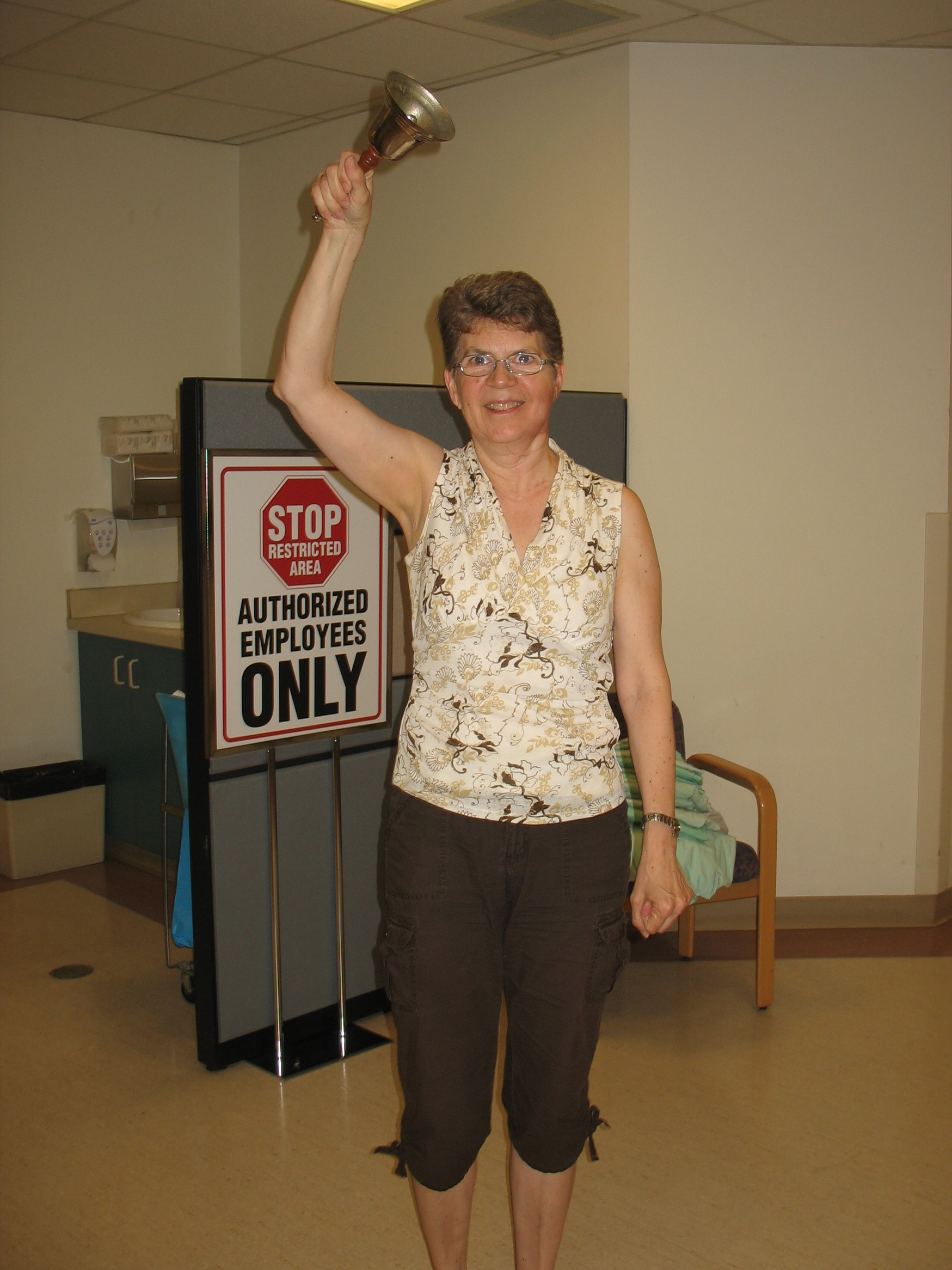
It’s bell ringing day!


IMG_3985

There’s a widespread tradition amongst cancer treatment centres including the Cross Cancer Institute in Edmonton where the following poem is posted on the wall of the waiting area outside each radiation treatment unit.


Ring Out

Ring this bell

Three times well

It’s toll to clearly say,


My treatment’s done

This course is run

And I am on my way!


Today, after 30 treatments over the past 6 weeks, it was finally my turn to ring the bell! I woke at 5:30 a.m. filled with anticipation and the morning crawled by as I waited for one o’clock to arrive. Now that it’s over, it’s hard to put how I feel into words! Perhaps it hasn’t really sunk in yet. Maybe it will seem more real when I board a plane for Vancouver tomorrow instead of heading back to the Cross!

I’ve been told not to expect the side effects to peak for another two weeks and there will be follow-up appointments in the future, of course, but this race has been run. Praise God!

Today was a bit anticlimactic in that, immediately after ringing the bell, I had to go upstairs for a CT scan to see what’s happened to my other cancer in the six months since it was last looked at but I’ve crossed one finish line. I’ve climbed that mountain and I’ve rung the bell! Now it’s time to move on!

IMG_3984

High Level Bridge Streetcar

Until I started looking into things to do while we’re in Edmonton for my radiation treatments, I’d never heard of the High Level Bridge Streetcar. Maintained and operated by the volunteer members of the Edmonton Radial Railway Society, there are actually four vintage streetcars that operate between Old Strathcona on the south side of the North Saskatchewan River and the Jasper Teminal on the north side, but only one is in operation at a time. Today, it was the Melbourne 930, built in Melbourne, Australia in 1947. In addition, the Society has five more double ended streetcars in operation at Fort Edmonton and several others that they hope to fully restore in the future.

IMG_3966

IMG_3964

Prior to September 1951, the Edmonton Radial Railway regularly carried passengers across the upper deck of the High Level Bridge. At 755m long and 49m high, the bridge was one of the world’s highest streetcar river crossings and afforded the passengers a spectacular and exhilarating view. To the delight of visitors to the city as well as locals, seasonal service was restored in August 1997.

IMG_3959

After finding a place to park near the Strathcona Terminal, we originally intended to stay on the streetcar for the 40 minute round trip, but due to the fact that I’d forgotten my water bottle, an absolute essential on a hot day especially since my saliva production has been greatly suppressed by surgery and radiation, we got off at the Jasper Terminal near the corner of 109th Street and Jasper Avenue. After finding our way to a nearby convenience store and securing a bottle of water as well as a couple of ice cream bars, we enjoying our snack in the shade of a tree at nearby Railway Park before catching the next car back to Old Strathcona.

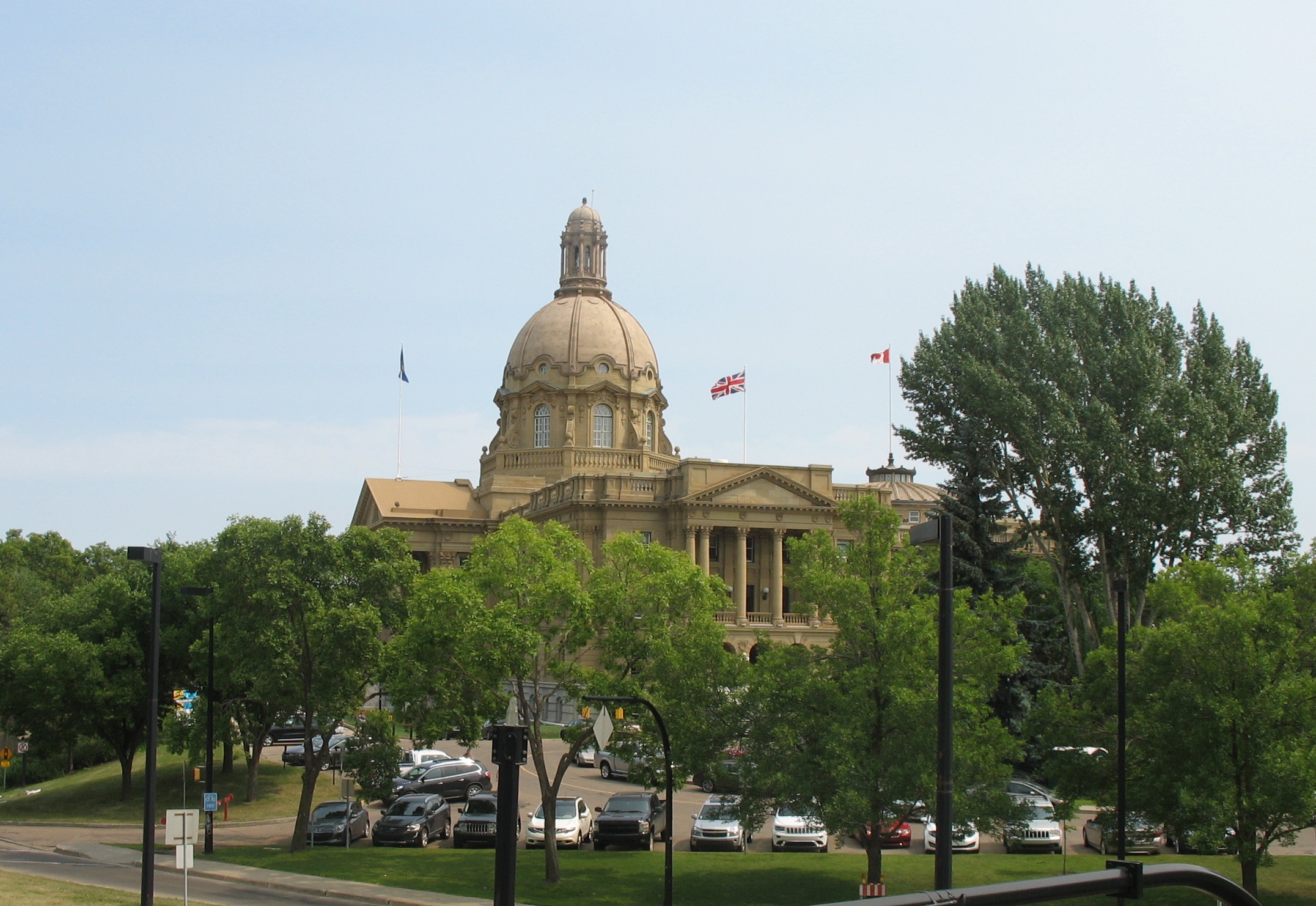
Alberta Legislature Building from the streetcar

Alberta Legislature Building from the streetcar

Fort Edmonton, a walk through time

Richard and I have been to Fort Edmonton numerous times in the past, but always with a class of students, usually 5th graders, in tow. Yesterday, we thoroughly enjoyed taking a more leisurely stroll through time without having to constantly count heads and make sure we hadn’t left anyone behind!

When we were teaching, a visit to Fort Edmonton fit perfectly with the grade 5 Social Studies curriculum which was largely a study of Canadian history. We liked to prepare our students for the field trip by reading Alberta author, Brenda Bellingham’s novel, Storm Child, to them. The story of Isobel, daughter of a Scottish fur trading father and a Peigan First Nations mother living in Fort Edmonton in the 1830s, the book never failed to capture their imaginations and bring the history alive for them.

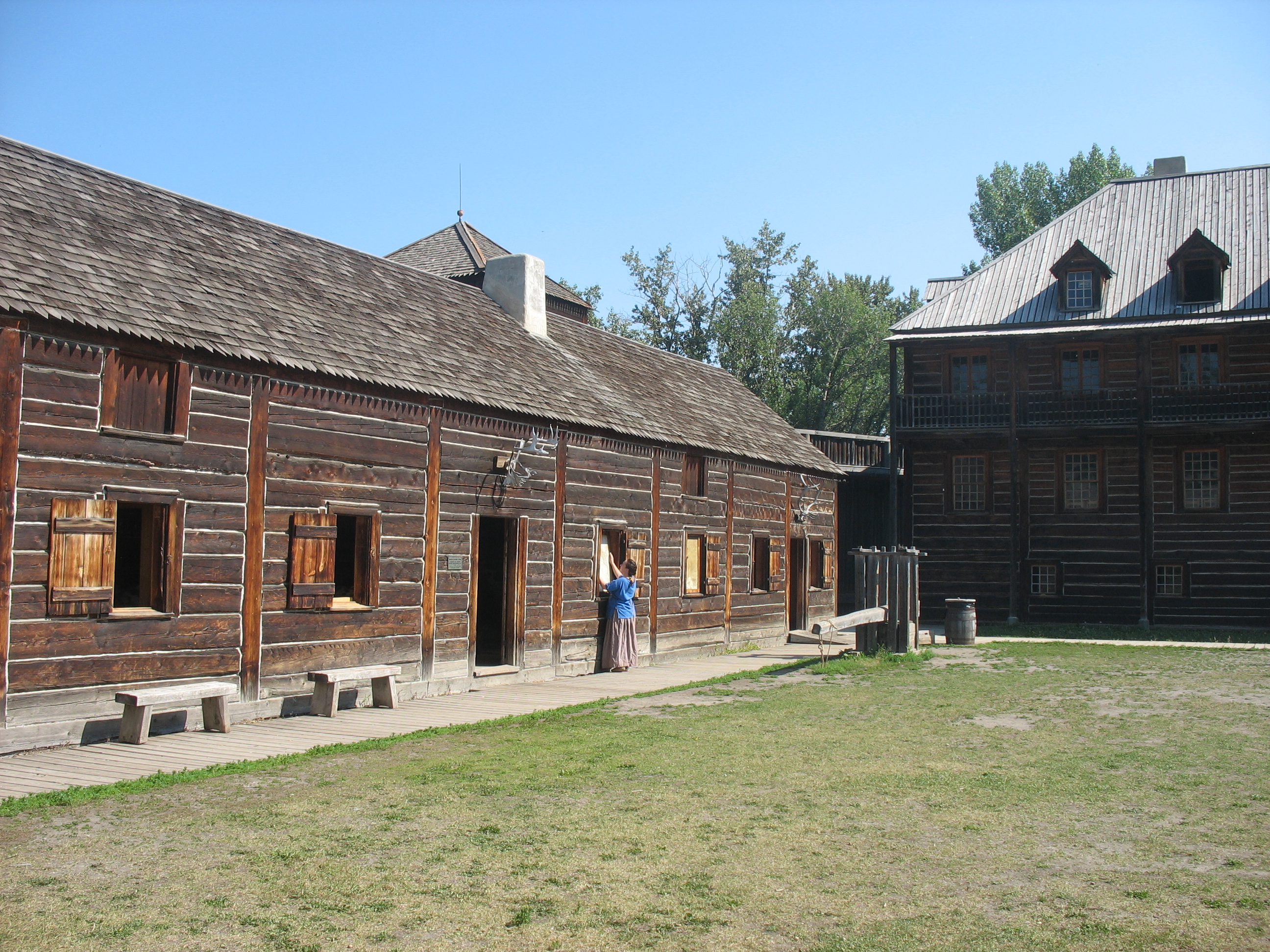
The best way to see Fort Edmonton, Canada’s largest living-history museum, is to begin your visit by climbing aboard the steam train and riding it back to 1846 and The Fort, an exact replica of the original fur trading fort which once stood on a bluff on the opposite side of the North Saskatchewan River close to where the Alberta Legislature Buildings stand today. The Hudson Bay Company fort, where natives brought their furs to trade for a wide variety of goods from Europe and other far away places, is presided over by enormous Rowand House. Built to house Chief Factor John Rowand, his wife and their seven children, it was often referred to as Rowand’s Folly due to it’s sheer size; a mansion in the middle of nowhere!

IMG_3875

IMG_3879

Rowand's Folly

Rowand’s Folly

IMG_3894_2

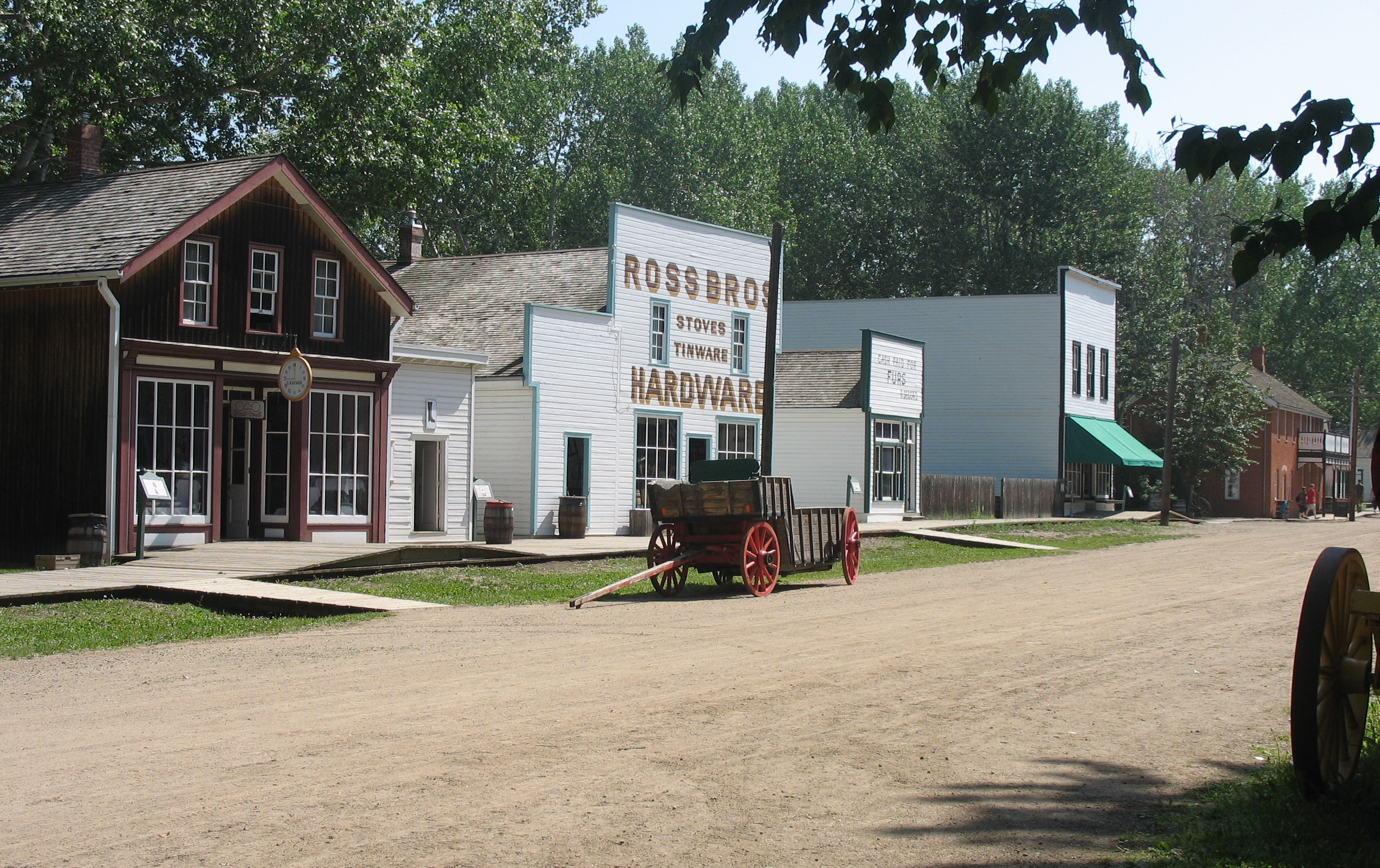
After touring the fort and the Cree encampment outside it’s walls, we left the fur trading era behind and wandered down 1885 street visiting homes, school, church and businesses of those hardy souls who made Edmonton home during it’s early settlement days.


IMG_3899

1885 Street

Rounding the corner onto 1905 Street, we stopped for lunch and dined on bison burgers in bannock, the traditional biscuit-like bread that sustained hungry voyageurs, settlers, and First Nations people in the early days of our country. Then it was time to take a jump forward in time and head for the Cross Cancer Institute for my radiation treatment. Our plan was to catch the streetcar in front of our eating establishment and ride it back to the park entrance but unbeknownst to us, the streetcar driver had also stopped for lunch! A brisk walk got us back to the vehicle just in time to make it to my appointment without a moment to spare!

1905 Street Where was that streetcar when we needed it?

1905 Street
Where was that streetcar when we needed it?

Within an hour, we were back at Fort Edmonton. This time, we caught the streetcar back to our stopping point and resumed our walk through time where costumed interpreters help bring history alive for visitors. We enjoyed sipping iced tea with Alexander Rutherford, Alberta’s first premier, on the front porch of his large and comfortable home that even boasted hot and cold running water! Not everyone lived in such comfort, however. In the early years of the twentieth century, Edmonton was growing at such a rapid pace that some families lived in tents for up to two years waiting for houses to be built. Not too bad in the summer perhaps, but much more challenging when the winter temperatures dipped to -40º!

No, I didn't apply for the job!

No, I didn’t apply for the job!

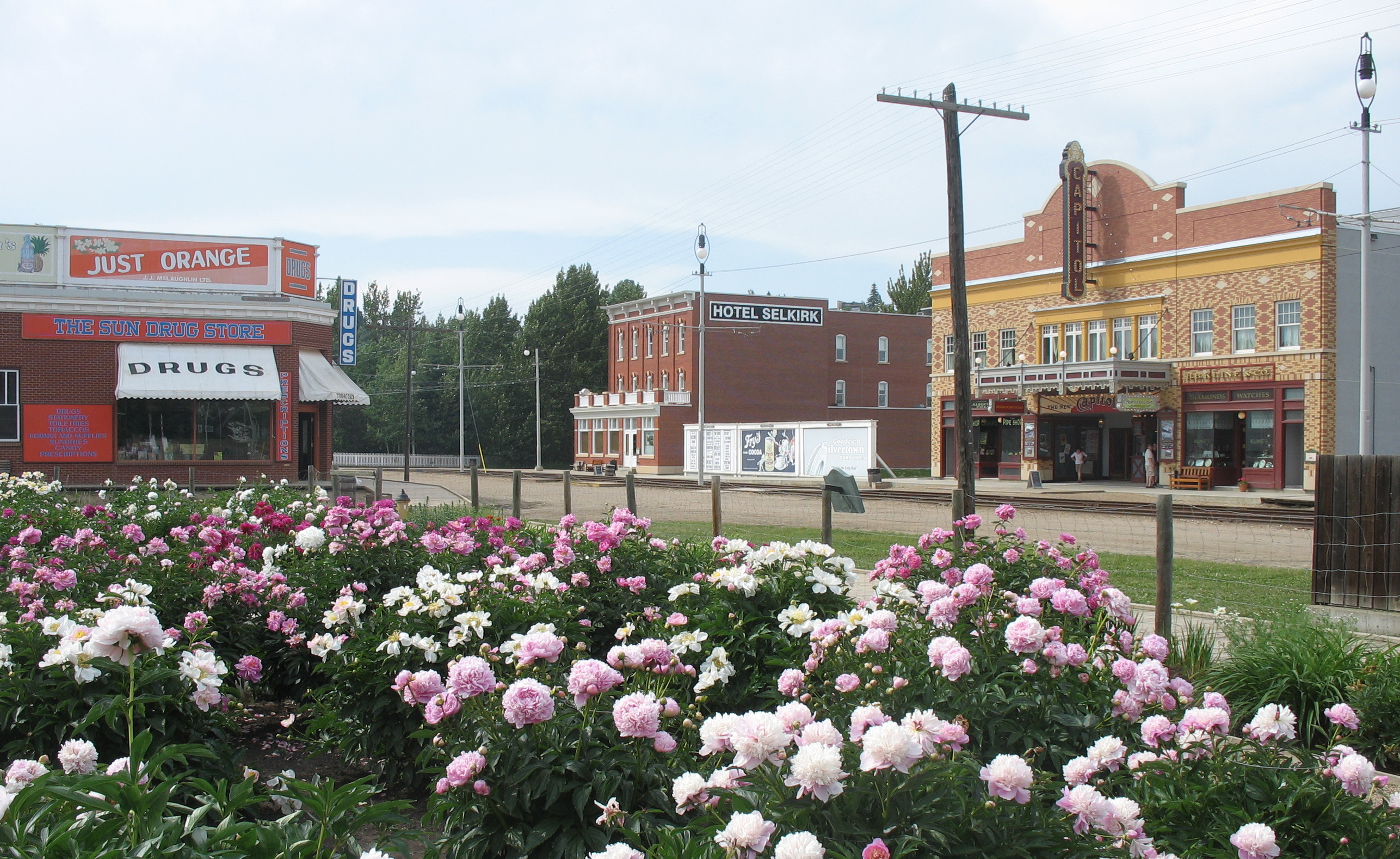
By the time we reached 1920 Street, we were ready to stop at Bill’s Confectionery for ice-cream cones. After all, it was the hottest day that Edmonton has seen so far this summer! Crossing the street to the Capitol Theatre, we took in an excellent 15 minute interactive movie about the early history of the area and the city. A walk through the beautiful peony garden, which is in full bloom at this time of year, and a visit to the Motordome, where we were able to indulge our love of antique cars, brought our day to a close.

1920 Street with the peony garden in the foreground

1920 Street with the peony garden in the foreground

The only part of the park that we didn’t take in was the 1920s Midway, a fairly recent addition with games and rides that would likely be a hit if you visited Fort Edmonton with some of the younger set.

I’ve been told that fatigue is one of the most common and expected side effects of radiation. After spending a total of six hours walking through time in the hot sun, I was tired but I saw a lot of others dragging their feet back to the parking lot looking no more done in than I was and after a good night’s sleep, I feel fine!

Exploring close to home

Though we’ve climbed Mt. Fuji and the Great Wall of China, cruised Vietnam’s spectacular Halong Bay and swum in the Grotto on the island of Saipan, there are plenty of things right here in Edmonton, the city closest to our home, that we haven’t done. When we come to the city, it’s usually a day trip filled with mundane activities like medical appointments and shopping, but this time is different.

This time we’re in Edmonton from Monday to Friday for six weeks in a row while I undergo radiation treatment. Most days, we’re in and out of the clinic in less than an hour. That leaves lots of time to do and see the things that we haven’t taken time for in the past. Essentially, we’re playing tourist close to home.

IMG_3821

The North Saskatchewan River, one of Canada’s most historic waterways, winds its way through Edmonton on its journey from the Columbia Icefield, high in the Rocky Mountains, to the Hudson Bay. Edmonton’s river valley comprises over 20 major parks and attractions and forms the largest expanse of urban parkland in North America. With over 150 km of well-maintained trails, the river valley provides a unique opportunity for city dwellers and visitors to escape the city without ever leaving it.

IMG_3823After today’s treatment, we spent about an hour walking in the river valley, something we had never done before. Though we started off near a high traffic area, the further we walked, the more the noise of the city faded into the background. It was soon replaced by birdsong and the chatter of squirrels likeIMG_3826 this little fellow who protested loudly when we came too close.

Further along the trail, we heard an unfamiliar sound; the huff and puff of Fort Edmonton’s steam train! Though we couldn’t see it through the trees, we were passing by Canada’s largest living history museum, just one of the many attractions found in the river valley.

The confluence of Whitemud Creek and the North Saskatchewan River

The confluence of Whitemud Creek and the North Saskatchewan River

I’ve always admired cities with well developed and accessible green spaces and I’m glad we finally took the time to explore a bit of Edmonton’s!

Somewhere between pushy and patient

Very early on in my battle with cancer a dear friend gave me some very wise advice. “Please don’t be afraid to advocate for yourself,” she told me. “You will have to wait at times but there is also a place for you to pick up the phone and ask for results, action, a timeline.”

It’s called being proactive.

proactive

Being proactive falls somewhere between pushy and patient. Pushy is defined as “excessively or unpleasantly self-assertive or ambitious.” Though waiting for appointments, waiting for test results, waiting to find out what’s going to happen next is is a huge part of this journey, I don’t want to be pushy. I don’t want to be excessively or unpleasantly assertive. I don’t want to phone too often and make a complete nuisance of myself but I’m not willing to be overly patient either. Patient means “able to accept or tolerate delays, problems or suffering without becoming annoyed or anxious.” No thanks!  I’m definitely not willing to accept or tolerate unnecessary delays and I do become anxious!

Being proactive is all about balance and it has been especially important since my second cancer was diagnosed. I’m not willing to simply sit back and assume that all the experts involved in caring for my two entirely different cancers are talking to one another and coordinating their efforts. I’m being proactive and advocating for myself. I can’t control the situation or cause things to happen but I can ask questions and I can ensure that everyone involved in one part of my care knows what’s going on in the other part.

Regardless of how proactive I am, waiting is still a big part of the process, but lately things seem to have sped up. Surgery was just three weeks ago. I’ve already been back to the city for two appointments since then and I have another one tomorrow. Due to the size of the tumour that was removed and the fact some cancer cells may have been left behind, the next step is 30 radiation treatments over a six week period. At tomorrow’s appointment, molds will be taken to make a mask that will ensure that my head remains in the correct position and the radiation targets exactly the right spot each time. Because radiation to the jaw can cause dental problems and I need to learn how to prevent that from happening, I also have a dental consultation booked for the end of next week. Radiation will begin soon after that.

In the meantime, treatment of my neuroendocrine tumours is on hold, but a CT scan on June 12 will tell us whether or not there has been any change and I will be proactively advocating for resumption of a regular treatment schedule as soon as radiation is finished.

Being proactive doesn’t come naturally to me, but it’s getting easier all the time and it gives me some sense of control in a situation that is largely out of my hands.

In what areas of life have you had to be proactive?

Mesothelioma Awareness – Speaking out against a dreadful wrong!

Picture 2This is the first time I’ve written a blog post on request. When Heather Von St. James contacted me and I looked into the reason behind her appeal, I knew it was something I had to do! With her shock of silver hair and vibrant smile, Heather looks like the picture of health, but that hasn’t always been the case. At 36 years of age, just 3 1/2 months after the birth of her only child, she was diagnosed with cancer and given 15 months to live. That was in November of 2005. Miraculously, over eight years later, she is alive and well and has dedicated herself to increasing awareness of mesothelioma, her particular kind of cancer.

I really don’t like the word cancer; not just because of the fear that is so closely associated with it, but because it is such vague and nebulous term. Cancer is not just one disease, but many. It is a term that is used to describe any disease in which abnormal cells divide without control and are able to invade other tissues. There are over 200 kinds of cancer!

Like my neuroendocrine tumours (NETS), mesothelioma is a rare cancer that is difficult to diagnose because, in the early stages, it can be easily mistaken for other illnesses. Symptoms are all too often ignored or dismissed by people who are inclined to attribute them to common every day ailments. That’s where the similarity ends, however. While NETS is a slow growing chronic cancer, mesothelioma is aggressive and deadly. The cause of neuroendocrine tumours is unknown but this is also not the case with mesothelioma. Not only is the cause known, it is preventable!

The only known cause of mesothelioma is exposure to asbestos. Heather never worked with asbestos, but her father did. Secondhand exposure as a child was enough to make her sick decades later. Because of the disease’s latency period of 30 to 50 years, it often doesn’t show up until long after exposure.

After reading Heather’s plea for help in spreading the word about mesothelioma and reading up on the disease, I wondered how the situation here in Canada compared to the U.S. where she resides. I was shocked to discover that, after climbing steadily over the past two decades, Canada’s mesothelioma rate is now one of the highest in the world!

Our country’s first asbestos mine opened in 1879. During the late 1800s and early 1900s, an increasing number of mines took advantage of the large asbestos deposits found in Quebec, Newfoundland, British Columbia and the Yukon. Manufacturers began to produce a variety of asbestos-containing products that would be used in Canada and worldwide. While the asbestos industry boomed and mine owners and company executives got rich, workers got sick, suffered from breathing difficulties, coughed up blood and died! Canadian mortality rates among miners were studied as early as the 1920s and evidence exists to show that asbestos company executives withheld negative reports from both their employees and the public. By the 1970s, doctors had declared Canada’s asbestos mining towns to be among the most dangerous places in the world to live, with rates of mesothelioma and other asbestos related diseases increasing. Asbestos opponents and those weary of seeing Canada’s mesothelioma rate rise celebrated in 2011 when  last two remaining mines closed but, because of the renovation and demolition of the country’s aging buildings that used asbestos as insulation, the mesothelioma rate has been rising among construction and maintenance workers. Canada has long resisted a universal ban of asbestos as proposed by the World Health Organization (WHO) and  continues to be a major exporter of asbestos to many countries who do not monitor asbestos exposure or regulate its use.

Is it any wonder that Heather asks us to join our voices with hers in speaking up against such an obvious wrong? For more information on mesothelioma and to read Heather’s story in her own words, visit the Mesothelioma Cancer Alliance.

Long distance hugs!

I love hugs and I’ve been receiving lots of them lately; tentative, gentle hugs from friends who are being ultra careful not to hurt me. One friend, a huge teddy bear kind of guy, tells me that he’s reserving one of his giant bear hugs for me and that I can have it as soon as I’m feeling a little less fragile!

I’ve also been receiving lots of long distance hugs in emails and messages from around the world. There are the traditional Xs and Os, representing kisses and hugs, at the end of some of the messages and the more modern brackets ( ) or (( )) in others. I appreciate every one of them.

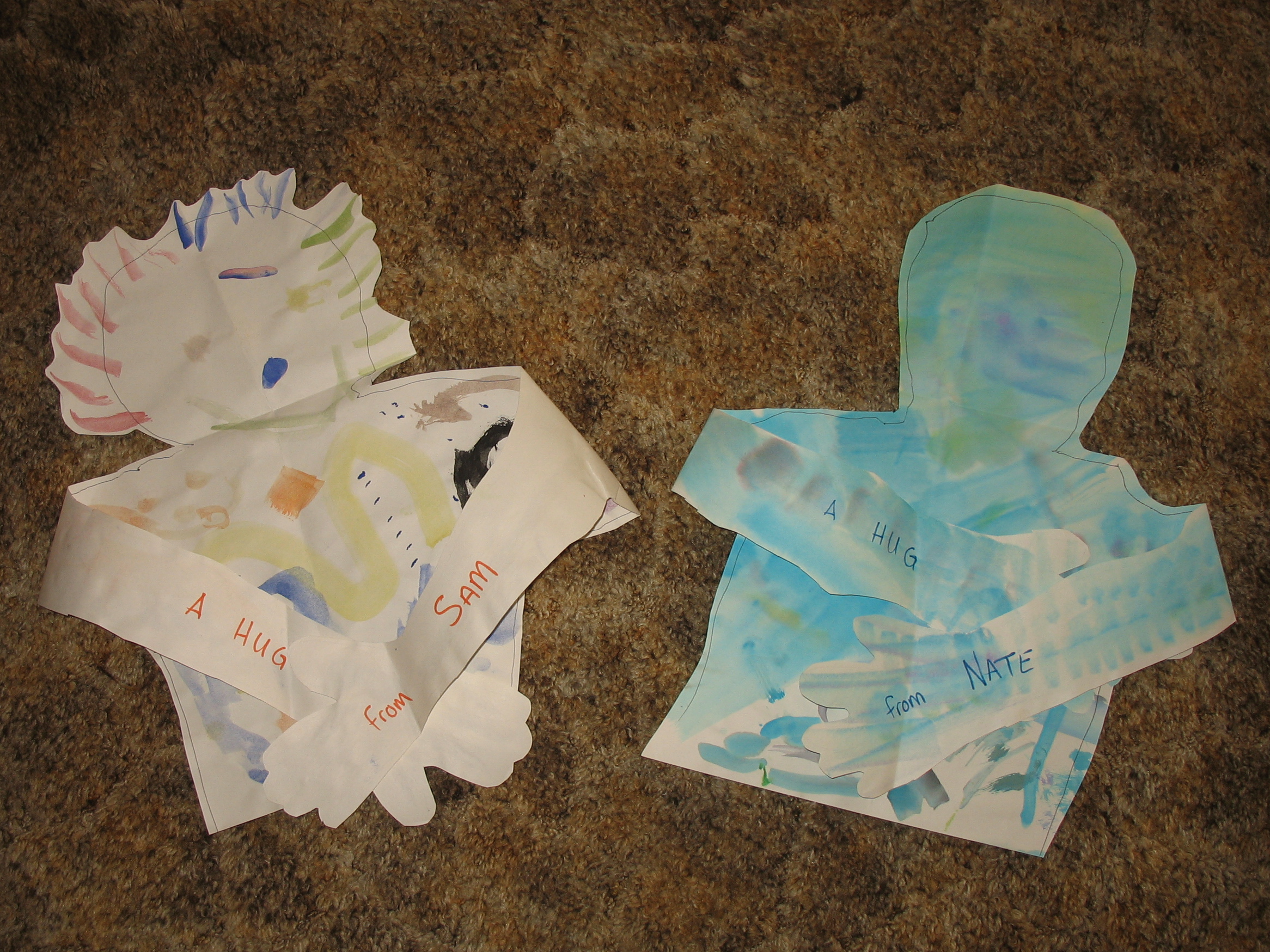
Today, I received the most unique and perhaps the most special long distance hugs ever. I had a long nap this morning and after lunch, Richard and I decided to try a walk to the post office. It was great to be out and about on a beautiful spring afternoon. There was a parcel card in our mailbox so we stopped into the office to see what had arrived. The post mistress handed me a large brown envelope with a paper heart glued to the front. It was addressed to Gram DeBock and the return address indicated that it was from our grandsons, Sam and Nate, in Vancouver.

“I knew this one was special,” she said. “So I didn’t want to bend it to fit it into your box!”

I can never wait until I get home to open exciting looking mail so we walked across the corner to our little Main Street Park and sat on a bench overlooking Sedgewick’s tiny downtown area while I opened my special envelope. Look what slipped out!

IMG_3758


In everything give thanks

I almost hesitate to post anything today because I’m feeling rather cranky! My surgery went well last Wednesday so what do I have to complain about? Just the fact that my head feels like it’s been used as a soccer ball and a sore throat/earache kept me awake most of the night.

Feeling the way I do this morning, it would be easy to give in to whining and feeling sorry for myself but this is one of those days when I need to remind myself that scripture says

images

The little word in  at the beginning of that verse is the reason that I can give thanks today. If it asked me to give thanks for everything, I’m quite certain I couldn’t do it. I certainly couldn’t give thanks for cancer and though I recognize how fortunate I am to live where universal and excellent health care is available, I’m not thankful that I had to have surgery at all, but even in  these circumstances, there is much to be thankful for.

I’m thankful for my hubby who patiently puts up with my restlessness at night and crankiness by day! In some ways, the surgery was harder on him than it was on me. I was out cold, totally unaware of what was going on, but as the hours ticked by, he was the one who was waiting for the surgeon’s call to tell him that things had gone well. I’m thankful for a surgeon who worked patiently and carefully for seven hours straight to remove all the cancer yet leave my facial nerves intact. Thanks to his meticulous effort, my left eye is fully functional and I’m left with nothing more than a crooked smile which will likely improve significantly once the massive swelling subsides and healing takes place. I’m also thankful for the wonderful friends and neighbours who have been showering us with meals; pots of homemade soup, fresh buns and other soft foods that I can handle. We are so blessed!

But do you know what else I’m thankful for today? I’m thankful for the guys who invented the drinking straw!  After seven hours with a breathing tube down my throat, it is SORE and it seems to be taking a long time to heal! Drinking lots of fluids helps but that’s hard to do when your bottom lip doesn’t work right!

Apparently, the first drinking straws were used more than 5000 years ago! The oldest one in existence, a gold tube inlaid with precious blue lapis lazuli, was found by archeologists exploring an ancient Sumerian tomb that was dated 3,000 B.C. On the other side of the globe, Argentinian natives long used similar wooden or metal devices, known as bombillas, to strain and drink their tea. Our humble paper and plastic straws had their beginnings in the U.S. In the 1880s, using rye grass as straws had become popular but their tendency to become mushy when wet and the grassy flavour that they added to beverages, made them somewhat unsatisfactory. It was Marvin C. Stone who came up with the idea of making one from paper. He started by winding paper around a pencil to make a thin tube, then slid the pencil out and applied glue to hold it together. He later built a machine that would coat the outside of the paper with wax. He patented his invention on January 3rd, 1888. In 1937, Joseph Friedman, created the first bendable straw, the type I’m using today.

Come to think of it, I’m even thankful for silly history lessons like this one that provide distraction from my present discomfort and crankiness!

What are you thankful for today?