The most important things

I had a different idea in mind for this week’s post, but then I read something that caused me to pause and think about the important things in life. The truly important things.

If I were to ask many people what’s most important in life, their answers would probably include things like family, good health, happiness, financial or job security, and a safe place to live. Depending on their circumstances, they might even say enough to eat or clean drinking water. These are, after all, very important. In fact, it was some of these things that first came to mind when I started asking myself what’s most important in life, but then I thought of something else.

When Jesus was asked which commandment was most important, He replied, “‘Love the Lord your God with all your heart and with all your soul and with all your mind.’ This is the first and greatest commandment. And the second is like it: ‘Love your neighbour as yourself.'” 

My faith, my personal relationship with God, is the most important thing in my life because it’s the only thing of eternal value, but it was actually Christ’s second statement that I was thinking about when I sat down to write this post. “Love your neighbour as yourself.” The Bible actually has a lot to say about how we treat one another. In fact, the “golden rule” that we were taught as children actually comes directly out of Scripture. Luke 6:31 says, “Do to others as you would have them do to you.”

So why have I been thinking about the importance of how we treat one another? In Canada and the US, at least, and perhaps other parts of the world as well, we have become very polarized people. We are sharply divided along political lines. No sooner had Canadians drawn together in response to threats from our southern neighbour than our own federal election tore us apart again. As I feared would happen, we went from “elbows up” unity to attacking one another for our political views. Nowhere was worse than on social media where people tend to say things they wouldn’t say in person.

Politics is important, but is it the most important thing? Is it worth losing friendships over? Surely each of us is entitled to have our own opinion and to express it without condemnation. Can’t we disagree, but still treat one another with respect or must we vilify those who don’t see eye to eye with us?  After all, while we might not agree on which party is the right one to govern or which leader is the most competent, we all want the same things. We all want what’s best for our country, our families, and ourselves.

Perhaps the most important things in life aren’t things at all. Perhaps our character, who we are and how we treat others, is much more important.

What elegance is not

LogoFor the past year and probably longer, my most read blog post has been one that I wrote in September 2020 entitled 50 characteristics of an elegant woman. Every time I look at my stats and see it at the top of the list, I can’t help wondering why. I know that if you google “characteristics of an elegant woman” it’s one of the first items that pops up, but why are so many people looking for information about elegance? Is it something that’s lacking in our world today?  

The dictionary defines elegance as the “quality of being graceful and attractive in appearance or manner”. Elegance is so much more than what we look like or how we dress. It’s the whole package, inside and out. 

438342-Yves-Saint-Laurent-Quote-Without-elegance-of-the-heart-there-is-no

Since this is a topic that is obviously of interest, I thought I’d dive into it a bit deeper today and look at what elegance is not. I love the quote above, but it was also Yves Saint Laurent who said, “We must never confuse elegance with snobbery.” Elegance can’t be bought. A mean-spirited woman in expensive clothes and impeccable makeup isn’t elegant. She’s simply a well-dressed nasty person.

While elegance might sound like an old-fashioned concept, it isn’t only for the elderly or a practice from a bygone era. It’s something that every woman of any age can aspire to.

Perhaps you were brought up with the myth that elegance means conforming and keeping quiet. Not so! As I said in my previous post, an elegant woman isn’t loud or obnoxious, but she graciously and calmly stands up for what she believes in. She isn’t contentious, but at the same time, she isn’t a doormat. Elegance is not weakness! 

While I was writing this, 1 Corinthians, the “love chapter” from the Bible that’s often read at weddings, kept coming to mind, particularly verses 4 and 5. 

“Love is patient, love is kind. It does not envy, it does not boast, it is not proud. It does not dishonour others, it is not self-seeking, it is not easily angered, it keeps no record of wrongs. 

Everything that is said about love could also be said about elegance! Elegance is patient, it doesn’t envy, it doesn’t boast, it isn’t proud, it doesn’t dishonour others, it’s not self-seeking, it’s not easily angered, and it doesn’t keep a record of wrongs. 

One of the areas where I see a distinct absence of elegance in today’s world is social media. An elegant woman puts her cell phone aside and gives her full attention to the people she’s with. When she’s alone, she doesn’t spend endless hours scrolling on Facebook and getting caught up in pointless debates. She’s careful about what she posts online and doesn’t use social media for self-promotion. 

Elegance isn’t about perfection. It’s about being comfortable with who you are, knowing your limitations, growing from past experiences, and not worrying about the things you can’t control. 

audrey-hepburn-quotes1


On being authentic

After publishing Friday’s fashion post, I started to think about what it means to be authentic. After all, it’s so much more than just a style adjective. Authentic can be defined as “true to one’s own personality, spirit, or character” as well as “real” or “genuine“. An authentic person then is someone who is comfortable in their own skin, someone who doesn’t need the approval of others, who isn’t afraid to stand up for their own beliefs and values.

ralph-waldo-emerson-beach-silhouette-woman-pxhere

An authentic person is first and foremost not a people pleaser. If you’ve ever spent your life trying to be something that you’re not in order to please someone else, you know how damaging that is and how it robs you of peace and contentment. Part of being authentic is learning to establish boundaries and being able to say no.

Screen Shot 2023-02-04 at 11.26.21 AM

Unlike those who hide behind perfect-looking Facebook or Instagram faces, an authentic person accepts who they are and has the courage and self-confidence to share that with the world. Being authentic isn’t about being perfect, it’s about acknowledging mistakes and learning from them. It’s about being honest with yourself and others. It means accepting and embracing your uniqueness.

So how do we learn to live authentically in a world where there will always be pressure to conform to other people’s expectations? Define your core values, then live in alignment with them. Identify your strengths, the things that you are good at and passionate about, then do those things. Determine your own goals, then work toward achieving them. Express your genuine thoughts and feelings (in kind and respectful ways). Make sure your actions match your words.

As a Christian, being authentic means living according to God’s design; living out my true identity as one created in His image. It means living my faith 24/7, not just on Sunday mornings and not just when I’m in the public eye. There should be no room in my life for hypocrisy, pretension, or deceit of any kind. In other words, I’m called to be genuine, honest, real.

“To be authentic, we must cultivate the courage to be imperfect – and vulnerable. We have to believe that we are fundamentally worthy of love and acceptance, just as we are. I’ve learned that there is no better way to invite more grace, gratitude and joy into our lives than by mindfully practicing authenticity.”  Brené Brown

Choosing a leader

I appreciate the many responses to my last post and particularly those who chose to share it on social media. It appears that I managed to put into words what many people have been feeling. The following post may also be considered a bit controversial and I hope it will be as well received.

I don’t consider myself to be a particularly political person, but with a federal election less than three weeks away here in Canada, I definitely take an interest and occasionally express an opinion on Facebook. In recent weeks, though I managed to avoid saying anything at all about the blackface incidents, I’ve been criticized more than once for posts alluding to what I consider to be flaws in our present Prime Minister’s character. Some people have referred to this as mudslinging or political bashing. “Let’s just focus on the issues,” they say. 

While I agree that it’s important to know what each party and its leader stand for, I don’t put a great deal of faith in campaign promises. Their purpose is to garner votes and at best I think we ought to call them proposals. A recent analysis of 353 pre-election promises made by the Liberals in 2015 indicates that by March of this year Trudeau’s government had entirely followed through on only about 50 per cent of its pledges.

We may not agree on all the issues or the directions that we’d like our leaders to take, but I hope that we can agree that it’s of utmost importance to have a man or woman of character at the helm. Unfortunately, as we look around the world at the corruption and scandals involving many of our political leaders, it would seem to me that voters haven’t been giving character enough consideration.

I like what American author, John C Maxwell, says about leadership, “A leader is one who knows the way, goes the way, and shows the way.”

With all this in mind, I googled “qualities of a good leader” and discovered dozens of lists. At the top of many of them was honesty and integrity and I would certainly put these two traits at the top of my list. Although they are very closely linked, there’s actually a distinction between the two. According to the dictionary, honesty means “truthfulness, sincerity, or frankness; freedom from deceit or fraud” while integrity is “adherence to moral and ethical principles; soundness of moral character.” Sadly, I think that there are a number of world leaders, including our own, who fail to measure up in the areas of truthfulness and moral character.

Another quality of a good leader that was high on many lists was good communicator. Though a few listed good listening skills separately, I would include that as part of being a good communicator. I would love to have a national leader who was capable of speaking publicly without scattering “um” and “uh” liberally (pun intended) throughout every speech, but even more important would be one who truly listened to the voices and hearts of the people.

Confidence and humility were also high on most lists. Unfortunately, far too often, confidence and arrogance seem to go hand in hand instead. That certainly seems to be the case with our present national leader as well as the one to the south.

Though there are many other character traits that make a good leader, the last one that I’ll mention here is accountability, the willingness to accept responsibility for or account for one’s actions. Oh my, wouldn’t it be nice to see that in our next political leader!

So, fellow Canadians, on October 21 get out and vote, but please look beyond the issues and the campaign promises to the character of the individual party leaders as well as the candidates running in your local constituencies.

Canadian-election-2019

Image: Chatelaine magazine


Clothing ourselves for Christmas and always

LogoFor me, fashion is a hobby, not a passion. I definitely want to look my best and I have fun putting together the outfits I wear, but I’m more concerned with who I am as a person than what I look like. The Bible speaks of this in Colossians 3:12 where it says “Therefore, as God’s chosen people, holy and dearly loved, clothe yourselves with compassion, kindness, humility, gentleness and patience.” Verse 14 of the same chapter says “And over all these virtues put on love, which binds them all together in perfect unity.”
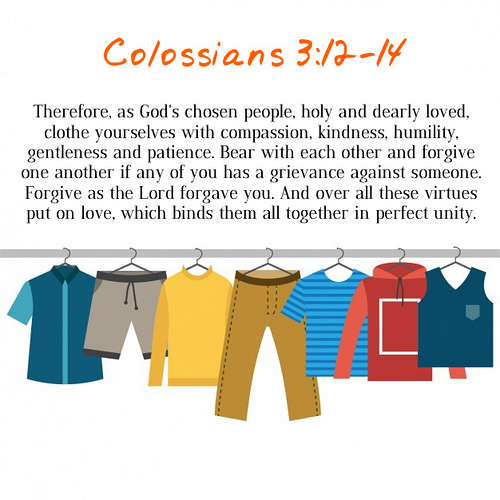
These thoughts seem particularly appropriate as we approach the busy Christmas season. There are lots of ways to show compassion and kindness at this time of year, whether it be making a donation to your local food bank or filling a shoebox for an underprivileged child, but what about patience? That can be a tough one, especially when you’re trying to navigate a busy shopping mall or you find yourself caught in the slowest line at Walmart while the harried cashier waits on a price check.

One of the ways that I try to deal with the busyness of the Christmas season without losing patience is to plan ahead. I’m almost completely finished my Christmas shopping and while I’m stuck at home over the next few days, I plan to decorate and do some Christmas baking. I’ve also made a list of the various Christmas events that we’ll be taking part in during December and I’ll be shopping my closet to put together outfits and accessories for each one. That way, when it comes time to dress for each event, I won’t have the stress of trying to figure out what to wear. Instead, I’ll be in the right frame of mind to put on the qualities of He whose birth we celebrate at Christmas!

Colossians 3;12-14


Sometimes it’s hard to be humble

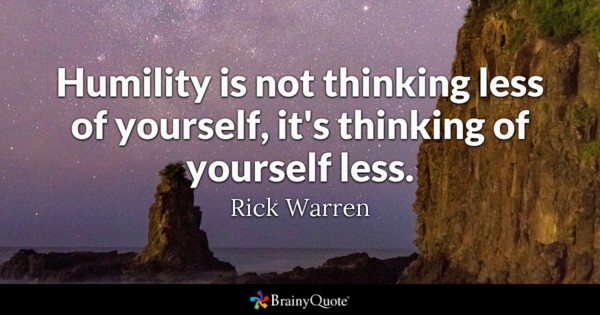
One of the characteristics of grace listed in yesterday’s post was “acts with humility, not pride.” As I pondered my One Word for 2018 and asked myself how I’m doing at becoming a woman of grace, I was also challenged to examine myself and wonder how I measure up in the area of humility.

The Bible has plenty to say about being humble. The book of Proverbs contains many warnings for those who refuse to put others before themselves and both the Old and New Testaments tell of blessings for those who do. Colossians 3:12 has become my life guide. “Therefore, as God’s chosen people, holy and dearly loved, clothe yourselves with compassion, kindness, humility, gentleness and patience.

There’s an old country and western song that says, “Oh Lord it’s hard to be humble when you’re perfect in every way!” I’ve also heard it said that if you think you’re humble, you probably aren’t. So how can we know if we’re humble or not?

After much reading and pondering, I came up with the following 20 characteristics of a humble person. I’m sure it’s not exhaustive, but I think it’s a reasonably good checklist.

A humble person…

  1. is not boastful
  2. is able to set aside personal preferences for the sake of others
  3. treats others with respect
  4. is not easily offended
  5. is grateful for what they have
  6. is able to rejoice with others
  7. is not wise in their own eyes
  8. is teachable
  9. is able to seek advice or ask for help
  10. willingly serves other people without drawing attention to themselves
  11. accepts their own limitations
  12. accepts correction without becoming defensive
  13. takes responsibility for their actions and apologizes when wrong
  14. is merciful, forgiving quickly and not holding grudges
  15. doesn’t get frustrated with the weaknesses of others
  16. is self-controlled
  17. listens to others and doesn’t feel the need to speak their mind in every situation
  18. is comfortable allowing others to have centre stage
  19. doesn’t always have to be right
  20. doesn’t insist on their own way

In a “me first” world, it isn’t always easy to be humble and there are many misconceptions about what it means. In the same way that being gracious is not the same as being wishy-washy or weak-kneed, humility is not a sign of weakness. Being humble is not belittling or undervaluing oneself, nor is it an indication of poor self-esteem. Like grace, humility is actually a strength.

Humility

Growing in grace

With a thick blanket of snow still on the ground, it’s hard to believe that it’s the middle of March already. We’re two and a half months into a new year and an incident this week reminded me of my One Word for 2018.

Grace.

How am I doing? My initial response indicated to me that I still have some growing to do in order to become the woman of grace that I would like to be.  It also prompted me to think about what that woman would look like. How would she respond in challenging situations where it’s sometimes difficult to show grace?

Almost three years ago, Christian author, speaker, and Bible teacher, Kathy Howard, penned this list of 15 characteristics of grace (compiled from passages in Ephesians and 1 Corinthians) on her blog.

A person of grace…

  1. Doesn’t insist on being right, but seeks to make things right
  2. Is willing to be inconvenienced
  3. Seeks the welfare of the other person
  4. Speaks words that build up, not tear down
  5. Doesn’t demand to be heard, but strives to listen
  6. Focuses on others needs instead of their own
  7. Acts with humility, not pride
  8. Doesn’t keep score
  9. Looks for ways to help and encourage others
  10. Freely forgives
  11. Seeks to understand
  12. Doesn’t expect a return
  13. Focuses on the important over the urgent
  14. Doesn’t pick and choose whom to show grace
  15. Doesn’t overlook sin, but encourages holiness

I would also add…

16. Doesn’t always have to have the last word

After this week’s incident, I think perhaps I need to focus on #4. I consider myself quite gifted with words, but it’s a gift that can be used positively or negatively. I can speak life or condemnation. It’s pretty easy for me to write a scathing response to something that irritates or upsets me, but as a person of grace I would choose to use gentler words.

Does this mean that a gracious person is wishy-washy? Absolutely not! It’s entirely possible to be strong, even assertive, and yet still be gracious. Jesus was a perfect example.

That thought brings me to #7, another area for self-examination. Humility. But that will be the topic of another post.

grace not perfection