Playing pretend – fantasy backyard book party

LogoAs a child, I loved playing pretend. You probably did too, but as we got older, real life pressed in and the world of make-believe was all but forgotten. Apparently, not so for retired high school English teacher, Sue Burpee, who has hosted two virtual parties for the readers of her blog, High Heels in the Wilderness, since the Covid-19 shutdown began.

In her blog, Sue writes about fashion, travel, books, and life in general. I’ve been following her for several years and had the privilege of “attending” both her parties. The first, in early April, was an afternoon tea at the historic Chateau Laurier in Ottawa and the second, this past Saturday, a book party at her home overlooking Ontario’s Rideau River. And what a party it was!

Since we came from across Canada and around the world, it was an overnight affair complete with an old-fashioned, down-east lobster and corn boil at supper time and houseboats on the river to accommodate us for the night! You can read all about it here.

The invitation told us to dress casual, cool, and comfortable and to be sure to bring a hat. After contemplating my closet and considering several different options, here’s what I chose.

IMG_1074

The white crop pants are a basic piece that have been in my wardrobe for several years and the light, airy Scallop Top from cabi’s Fall 2019 collection was perfect for the heat wave that the Ottawa area has been experiencing lately. My Summit Breeze crushable hat was easy to pack and provided great protection from the sun. Of course, I also wore lots of sunscreen! I knew I’d want to stroll around Sue’s lovely property, so I wore a comfortable pair of Naturalizer sandals that I’ve had for several years.

Since this was a book party, Sue also asked each of us to bring a book that had had a significant impact on us to share with the other guests. Again, how to choose? There have been so many! Probably the book that has had the most profound impact on me, other than the Bible, is Half the Sky: Turning Oppression into Opportunity for Women Worldwide by Nicholas D. Kristof and Sheryl WuDunn, but I don’t actually have a copy of it right now. Instead, I chose one of the memoirs that I’ve been reading during Covid-19. A Good Wife: Escaping the Life I Never Chose, by human rights activist Samra Zafar, is the inspiring story of a courageous and determined woman who walks away from a harrowing past and builds a new life for herself and her two daughters. An arranged marriage in her native Pakistan at age 17 and a subsequent move to Canada with her new husband promised to be the fulfillment of her dreams, but instead turned into an abusive nightmare. I was impressed by her grit and determination and reminded that many women, especially amongst our immigrant population, live lives shaped by cultures that we have little understanding of.

IMG_1079

Yes, a virtual party during these most unusual days was just what I needed! I feel like I’ve had the opportunity to connect with a whole group of like-minded women from around the world and I’ve added several new books to my ‘must read’ list.

Many thanks, Sue!

The Good Women of China

Do you ever finish reading a book and think that perhaps you should start over and read it again; that there was simply too much to absorb the first time through? The Good Women of China: Hidden Voices was such a book for me, not because it was enjoyable or entertaining, but because it was moving and at the same time very disturbing.

9781400030804

From 1989 to 1997, the author, Xinran, hosted a radio call-in show, “Words on the Night Breeze” during which she invited Chinese women to speak about their lives. Broadcast every evening, the show became famous throughout the country for its unflinching portrayal of what it meant to be a woman in China. From the hundreds of women who phoned in to share their stories of forced marriages, Communist Party indoctrination, persecution and imprisonment, extreme poverty, shocking cruelty, and incredible endurance, Xinran chose fifteen, including her own, to share in the book which was only written after she left China. “At that time in China, I might have gone to prison for writing a book like this.” she wrote in the closing paragraph.

When we lived in China for a short time a few years ago, I remember how shocked some of my college age students were to learn how old I was. They told me that Chinese women my age looked much older. Knowing that life in China had been hard, I wasn’t completely surprised, but I started looking at the elderly women on the street and in the market more closely. I wondered how much older than me they actually were and what their lives had been like. Until I read The Good Women of China, however, could not have imagined what many them probably endured.

Xinran is six years younger than I am. Many of the women she writes about are my contemporaries. Their stories are powerful, gripping, and anguished accounts of inhumane treatment, sexual exploitation, torture, rape, hunger, and death often at the hands of Chairman Mao’s Red Guards during the Cultural Revolution of 1966 to 1976. All the while, I was going to school, starting my career, getting married, and enjoying a life of freedom completely oblivious to what was going on half a world away.

Later, during the 1990s and early 2000s, I had the privilege of being ESL tutor to an elderly Chinese gentleman. Ling Cong Xin, better known as Sunny Ling to his Canadian friends, came to Canada with his wife in 1987 to live with their daughter and her family. After we had been meeting together for quite some time, I tried to convince him that he ought to record his memories and experiences. At first, he was very reluctant to do so, but eventually he asked if I would help and so began one of the most exciting projects that I have ever had the privilege to be involved in. I recall Sunny speaking with contempt about the soldiers of the Imperial Japanese Army forcing women and girls in occupied territories including China to be their sex slaves or “comfort women” before and during World War II, but he never spoke of Chinese girls being repeatedly raped by their own countrymen during the Cultural Revolution. Sunny was a highly educated man who had at one time been an official in the Nationalist government. During the Cultural Revolution, many of China’s intellectuals were imprisoned or, like Sunny, forced to leave the cities and take menial jobs in the countryside. When we reached this point in his story he began to claim that his memory was failing him and our project came to an end. I believe that reliving the memories simply became more than he could bear. Like Xinran, he also expressed a genuine fear that if some of the things he told me about were ever published, the Chinese government might make life difficult for his relatives who still lived in that country. After reading The Good Women of China, I can’t help wishing that Sunny’s wife had spoken English and that I’d also had the opportunity to hear her story.

“These are stories that must be read. The lives of these anonymous women are so moving that when I finished reading their stories I felt my soul had been altered.”    Amy Tan

“Mao said ‘Women hold up half of heaven.’ Sadly, this remarkable book demonstrates that he was wrong. Women in China actually hold up half of hell. Xinran has written the first realistic portrayal of women in China. Read it, and weep.”   Jan Wong

Blind date with a book

Screen Shot 2018-02-02 at 5.58.15 PM

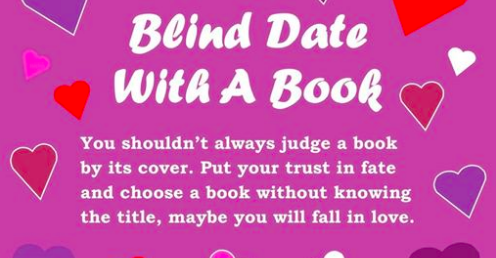
To celebrate Valentines Day, the Killam Municipal Library, just up the road from us, decided to play matchmaker. “Going out on a blind date is a lot like opening up a new book – you never know what kind of experience you are going to have!” announced the library website.

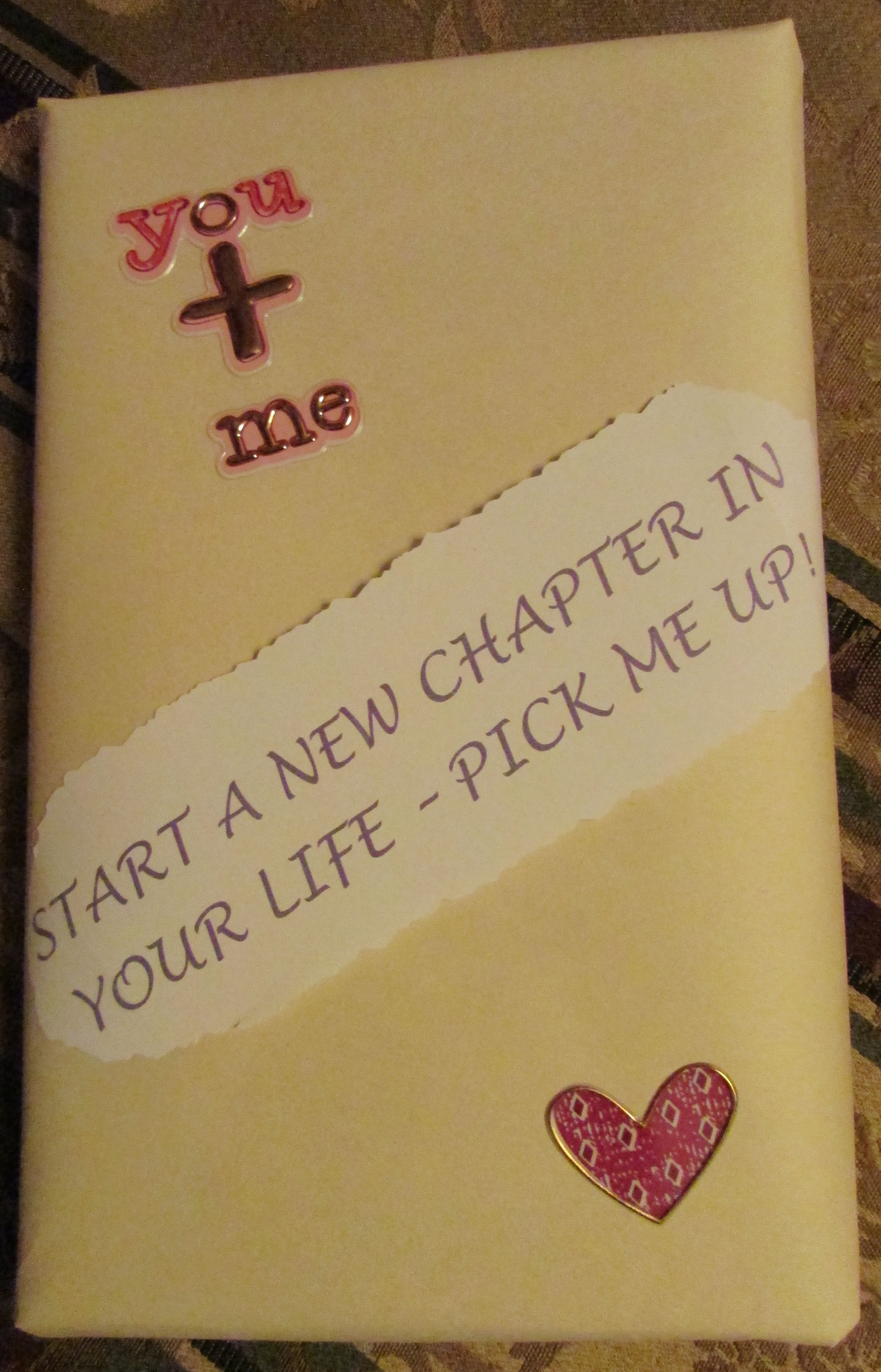
I’ve never been on a blind date, but I decided to give this one a try. After all, it fit rather well with my New Year’s resolution. I stopped by the library during the first week of February and chose this one from a selection of similarly wrapped packages.

IMG_5430

Filled with anticipation, I hastened home and I quickly unwrapped my “date”. It definitely wasn’t love at first sight! In fact, my initial response was disappointment. Kind of like imagining someone tall, dark and handsome, then opening the door to find a date who, at first glance, isn’t really attractive at all.

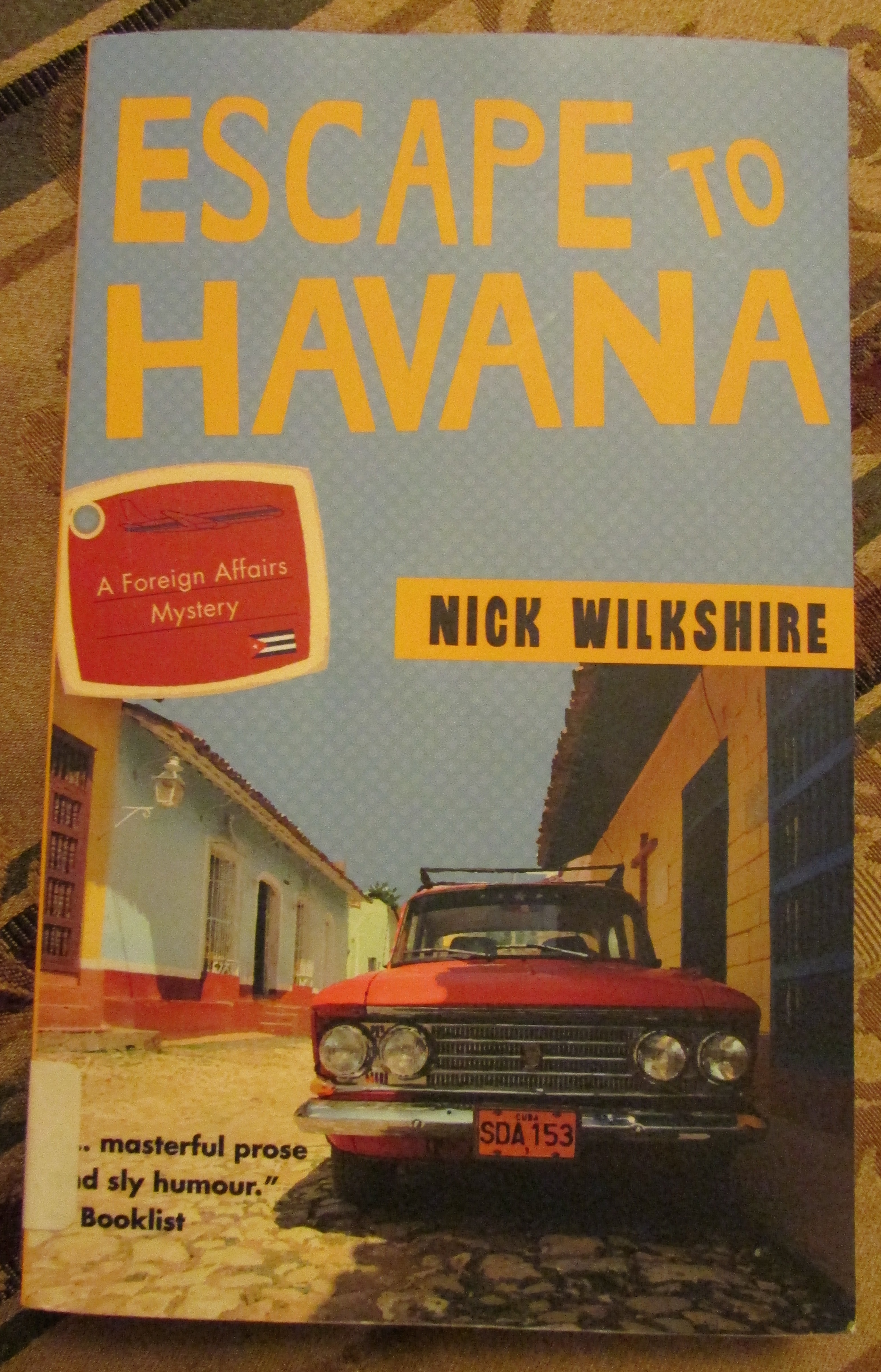
Escape to Havana, Nick Wilkshire

The idea of escaping to an exotic locale intrigued me, of course, but a quick look at the cover told me that the book was a mystery, not a genre that I’m particularly fond of. In fairness, though, I felt that I had to give my blind date a chance and so I began to read.

I didn’t realize it at the time, but the message on the outside of my package was a clue to what was inside. “Start a new chapter in your life,” it said. Main character, Charlie Hillier, is a Canadian bureaucrat whose marriage has just fallen apart in a very public way. When the chance to start over by accepting a posting to the Canadian embassy in Havana comes up, he jumps at the opportunity to escape the embarrassment and get as far away from his ex-wife and his dead end job at Foreign Affairs headquarters in Ottawa as he can.

Originally from St. John’s, Newfoundland, Nick Wilkshire is a lawyer living in Ottawa. Escape to Havana, published in 2016 is the first book in his Foreign Affairs Mystery series.

In spite of my initial apprehension, my date turned out to be fun. Escape to Havana is a light, but entertaining read. I’m not sure that an avid mystery fan would find it very satisfying, especially the rather far-fetched ending, but I enjoyed Wilkshire’s easy writing style and his sense of humour. He did a masterful job of bringing Havana to life. From the oppressive heat and humidity to the dilapidated buildings and ancient vehicles to the wonderful food, he gives his reader a real sense of modern day Cuba.

Would I go on another “blind date with a book”? As in real life, I would prefer to know who I’m going out with, but this was a fun experience, so yes, I probably would. For those who are really keen about the idea, there’s Blind Date with a Book.com. Subscribers receive a “blind date” once a month for six months based their favourite styles and genres. Me, I’ll just wait to see if the Killam Library does this again in the future.

Along with my “date”, there was a Rate Your Date form included in my packet. Everyone who returns the form with their book before February 28 will be entered in a draw. My “date” has gone back to the library and my fingers are crossed!


I resolved…

I quit making New Years resolutions many years ago because I found that by doing so I was simply setting myself up for failure. Last year, however, I resolved to read at least two books every month because I knew that I was wasting too much time online. I felt that reading, which I’ve always thoroughly enjoyed, would be a valuable and measurable alternative.

So, how did I do?

In order to monitor my success, I kept a month by month list of all the books I read in 2017. While I marginally exceeded my goal for the year by reading 26 books in all, there were some months when I read more than two and others where I finished none or only one.

More importantly, did reading cut down on my online time?  

I’m really not sure. I use the internet for a wide variety of purposes including reading the news, communicating with friends and family around the world, editing, and of course, writing my blog. I consider all of those to be valuable ways to use my time, but it’s the time that I was spending repeatedly checking my email accounts, Facebook and my blog stats that I wanted to cut down on. Unfortunately, that’s difficult to measure and I still find myself doing it more often than I feel I ought to.

What am I going to do about it?

Once again, I resolve to read a minimum of two books EVERY month in 2018. I’m also going to try some new authors and different genres. Any suggestions? What do you enjoy reading?

I read a good mix of novels, non-fiction, and autobiographical books in 2017 and I would like to do that again. Australian novelist, Kate Morton, is the only author that I read more than one book by (The Distant Hours, The Secret Keeper, and The Lake House). I’ve always enjoyed memoirs and autobiographies. Over the past year, I thoroughly enjoyed The Last Foundling by Tom H. Mackenzie and My Secret Sister by Helen Edwards and Jenny Lee Smith, but the one that surprised me most was Changing My Mind by Margaret Trudeau. I clearly remember the day in March 1971 when she surprised the world by marrying our popular prime minister, Pierre Ellliott Trudeau, who was 29 years her senior, and the years of turmoil that followed. The book is an honest and courageous telling of her lifelong battle with mental illness and gave me a greater understanding of bipolar disorder.

Have you read any good books lately?

I resolve…

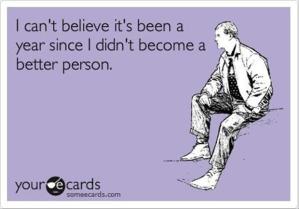
I don’t usually make New Year’s resolutions. Resolving to make dramatic changes with a flip of the calendar usually does nothing more than set people up for frustration and failure. It’s often said that it takes 21 days to make or break a habit, but that’s simply a common myth. According to a study published in the European Journal of Social Psychology it actually takes an average of 66 days before a new behavior becomes automatic. In other words, if you keep your New Year’s resolution until at least March 7, it has a good chance of sticking, but how many diets and exercise programs are abandoned long before that?

funny-new-years-resolutions-someecards

In spite of knowing this, I’ve decided to make one resolution this year. I’m not happy with the amount of time that I spend on the internet and I plan to do something about it. I often wonder what my retirement would have looked like if it had happened before the advent of the internet. Quite different, I’m sure. It’s not that the hours I spend online are all a waste of time. I use the internet for a wide variety of purposes including reading the news, communicating with friends and family around the world, editing, mentoring, and of course, writing my blog, but how many times a day do I really need to check emails, Facebook and my blog stats and what could I be doing instead?

I could simply resolve to spend less time on the net, but that’s a vague and unmeasurable goal. I don’t even know how much time I spend online now, so how would I know if I was being successful? And what do I want to do instead? Back in my teaching days, I learned all about SMART goals – Specific, Measurable, Achievable, Realistic and Time-based or Trackable. With that in mind, in 2017,     I resolve to read at least two books every month. 

I love reading. I always have, but that’s one thing that’s suffered as I’ve gradually started spending more and more time online. I’m sure that I could quite easily read more than two books a month, but I don’t want to set myself up for failure nor do I want this to be a gruelling exercise. I simply want to make better, more enjoyable use of some of my time. I’ve already picked out the first three books that I plan to read, two novels and one non-fiction. I also have a list of several other books to begin ordering in through our provincial interlibrary loan system.

Now, what about you? Do you make New Year’s resolutions? If so, why not share one or more of yours in the comments section.

images

The House at Riverton

If you, like me, are grieving the cancellation of TV’s popular drama series, Downton Abbey, then have I got a book for you!

Riverton

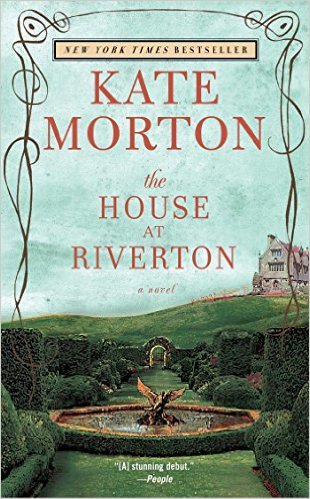
Originally released in her native Australia as The Shifting Fog, The House at Riverton was author, Kate Morton’s, debut novel. Described on the back cover as “the captivating story of an aristocratic family, a glorious English estate, a mysterious death and a way of life that vanished forever”, the story is set in England between the two great wars. Told in flashback by 98-year-old Grace, who was employed at Riverton, first as a housemaid and later as lady’s maid to the family’s eldest daughter, I found it a captivating read. The time period and master/servant relationships were so very reminiscent of Downton Abbey!

I’m not generally a fan of mysteries, but this one is more than a simple who-done-it and kept my attention to the end. In addition to providing a window into a fascinating time in history, The House at Riverton explores topics like memory and long held secrets, the devastation of war, and the end of an era.

Since The Shifting Fog was released in 2006, Kate Morton has published four more novels. I picked up The House at Riverton and two of the others, The Forgotten Garden and The Distant Hours, at a garage sale this spring thinking that they would make great summer reading. So  far, I haven’t been disappointed. We’ll be camping for the next couple of weeks and the other will be going with me.

What are you reading this summer? 

Five at a time!

I love books and I’m an avid reader but with the exception of my Bible, I rarely read more than one book at a time. Though it probably happened back in my university days when textbooks and research papers were the bane of my life, I don’t ever remember reading five at a time before or since! Such an occasion seemed worthy of a blog post especially since I’ve been thinking about following the lead of fellow blogger, Kari Ann, who posted “Five Things Friday” on her Outside Air blog last week.

So what am I reading and why so many books at once?

Bible

In addition to using a daily devotional booklet that takes me all over the Bible, I’m almost always somewhere in the middle of reading the scriptures from Genesis through to Revelation. For this purpose, I like to use a chronological Bible, one that puts the stories of scripture into the actual order that they happened. I find it so much easier to understand the big picture that way. I’ve read through my New International Version chronological text several times, but this time I chose the New King James Version Chronological Study Bible. I’m not a fan of daily reading plans that take you through the Bible in one year. To me, reading the Bible is not a ritual or a race. I like to immerse myself in the scriptures, seeking to understand what they’re saying to me about how I ought to live my life. I’ve read the entire Bible in less than a year, but most often it takes me considerably longer. With its illustrations, fascinating background and daily life notes, timelines, maps and charts to help bring the cultures and people of biblical times alive, this one could take me two years and that’s okay.

7 ways

I’m not going to air our dirty laundry here, but Richard and I have hit a rough patch in our marriage. To be entirely honest, it’s actually more like we’ve fallen into a sinkhole or gone careening off a cliff, but long term marriages are like that sometimes and we’re working on it. Since we’re both academically minded, we tend to turn to books for help at times like this. He went to a Promise Keepers conference last weekend and came home with this one, 7 Ways to Be Her Hero by Doug Fields. He read it in a couple of sittings so I thought it must be worth looking at. It’s written for men by a man, but Fields acknowledges that “some women will sneak around and read it (and will most definitely get something out of it).” The book, which he originally wanted to call How Not to Suck as a Husband, is written in colloquial man-speak that is fun and easy to read. It’s definitely not a textbook! I read eight of its ten chapters in one sitting last night and all I can say is that I’d like to give it back to my husband and tell him to read it again, memorize it and put it into practice. It’s that good!

Love & Respect

This is another one that I’m hoping might help us through the rough patch. Based on more than three decades of counselling, as well as scientific and biblical research, Love & Respect by Dr. Emerson Eggerich is based on the premise that a wife’s greatest need is to feel loved while a husband needs to feel respected. We’ve decided to go through this one together, reading and discussing one chapter a day. It definitely isn’t as fun and engaging as 7 Ways and we’ve only read the first two chapters so it’s a bit too early to pass judgment but I think it does make some good points and it’s already provided a good jumping off spot for discussion.

Outlaw

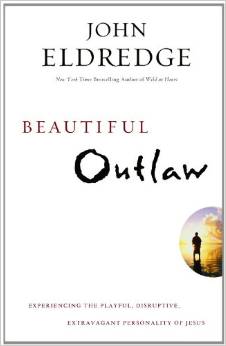
This is another one that we’re reading together along with two other couples that we meet with for a weekly time of prayer and Bible study. Sadly, it’s been a huge disappointment. John Eldredge is probably best known for his first book, Wild at Heart: Discovering the Secret of a Man’s Soul. I have to wonder if he wrote Beautiful Outlaw simply hoping to cash in on the success of the earlier book. He attempts to introduce the reader to the real Jesus by squashing typical stereotypes and focusing on what he calls Jesus’ playful, disruptive, and extravagant personality. He spends most of the first three chapters dwelling on Jesus’ playfulness. While I expect that our Lord did have a playful, exuberant side, I don’t think that a single one of the scriptures that Eldredge uses points to that. In addition, as one of our group so aptly put it, he could have said everything in the first three chapters in three sentences. As a group, we’ve decided to read and discuss two or three chapters a week instead of just one so that we can get through it sooner and move onto something else. My assessment of this one is that it’s just fluff!

Rainbow

And finally, book #5, the novel that I’m reading for sheer enjoyment. When our small town librarian saw me looking over the shelf of recently acquired books, she pointed to The Dark Side of the Rainbow by Caren Powell and told me to try that one. “I thought of you when I bar coded it,” she said. “It looked like an Elaine book.” She knows what I like to read and hasn’t steered me wrong yet. According to editor, Ann Westlake, “The Dark Side of the Rainbow tells of Nelson Mandela’s South Africa – a country struggling with racism, fear and determination.” She calls it “a wonderful, endearing blend of characters, scenery and history.” I’m still in the early pages so I’m just getting to know those characters but I can hardly wait to dig deeper. Caren Powell lived in South Africa for 38 years during the apartheid era and the changeover to democracy. She and her husband owned a farm there and much of the detail in the book was drawn from her personal experiences.

It’s unusual for me to have so many books on the go at once but tonight’s choice is easy. I’m going to read the last two chapters of 7 Ways and then escape to The Dark Side of the Rainbow!

What are you reading?

“The more that you read, the more things you will know. The more you learn, the more places you’ll go.”

Dr. Suess

I’ve been an avid reader for as long as I can remember. Bookstores and libraries are two of my favourite places but when I was recently asked who my favourite author is, I couldn’t answer. I had to be honest and say that I don’t have one. There are simply too many to choose from!

As I’ve mentioned in previous posts, my favourite novel is The Bridges of Madison County by Robert James Waller and the nonfiction book that has impacted me most is Half the Sky: Turning Oppression Into Opportunity For Women Worldwide by Nicholas D. Kristoff and Sheryl WuDunn.

As Dr. Suess so wisely mentions, books can take us places we might never go. I’m presently in the middle of reading Behind the Beautiful Forevers by Pulitzer Prize winning reporter, Katherine Boo, which has carried me into the slums of present day Mumbai, India. Next on my list is The Know-It-All: One Man’s Humble Quest to Become the Smartest Person in the World by A.J. Jacobs. Recommended by my blogging friend, Donloree, the book chronicles Jackson’s experience reading the Encyclopaedia Britannica from A to Z!

My taste in reading is somewhat eclectic and perhaps a bit academic. I don’t care for fantasy, mysteries or thrillers. I’m not averse to romance but I don’t like what I call “fluff” (syrupy, predictable, “happy ever after” stories) nor do I care for the highly erotic. Fifty Shades of Grey is not on my reading list. Though our bookshelves contain a very sizable collection of westerns, those are Richard’s and I’ve never had a desire to read them.

So what do I like to read? First on my list would probably be realistic fiction, true to life human interest stories like the book I’m presently reading. I also enjoy historical fiction, stories that take me back in time. Biographies, autobiographies and other non-fiction books that introduce me to the lives of interesting people in interesting places are also high on my list.

Though I’ll never read the entire Encyclopaedia Britannica, I have read the Bible from cover to cover several times. I consider it the essential guidebook for this journey called life and I read from it almost every day. For reading purposes, I much prefer a chronological Bible that puts the historical narrative in the order that it happened. The version that I’m currently reading is a New King James chronological study Bible that contains lots of notes, articles, timelines and other graphics that give insight into the life and customs of Bible times. They contain information on everything from agriculture to architecture, food and drink to government, and marriage and family to science and worship. I’m thinking that it’s going to take me a long time to get through this one but it’s definitely fascinating.

As a teenager, I went through a science fiction phase but that genre no longer captures my interest and as a long time teacher of upper elementary school, I’ve read a lot of juvenile fiction, some of it very good. Perhaps some of my most entertaining reading these days is sharing children’s books with my grandchildren!

I was disappointed to discover that though I had plenty of time to read while recovering from last month’s surgery, for the first couple of weeks I wasn’t able to focus well enough to escape into a good book! The after effects of seven hours of anesthetic plus the amount of pain medication that I was using left my poor head a bit addled! Fortunately, that has worn off and I’m reading again. We’re off to Edmonton to start my radiation treatments the day after tomorrow and I’ll be taking several books with me.

What do you like to read? Do you have a favourite author?


Small talk

After a two week hiatus, I’m finally back in the blogosphere! We spent part of that time enjoying Family Camp at Camp Harmattan, the Church of the Nazarene campsite  located between Olds and Sundre in southern Alberta. Down in the valley of the Little Red Deer River, we had no access to internet and I must admit that it was a nice break.

While telling his story, one of the speakers at camp made a statement that startled me. Dr. John Seaman and his wife, Linda, served on the mission field for 27 years. The last 17 of those years were spent in West Africa. John said that when he was elected to his present position of district superintendent of the Michigan District of the Church of the Nazarene, he felt completely overwhelmed. West Africa had become his comfort zone and Michigan was not!

That got me thinking. Over the past several years, we’ve stretched our comfort zones until, at times, it feels as if they have no boundaries. As I’ve thought about this over the past few days, however, I’ve come to the conclusion that my comfort zone has nothing to do with geography. I feel completely at home walking the streets of Asia but there are times right here at home when I struggle to step outside my comfort zone.

That’s where the book that I’m currently reading comes into play. I can stand in front of a class of any age in any part of the world and feel at home. I have no problem with public speaking as long as I’ve had time to prepare and I can put on a costume, even a very skimpy one, and act on stage before a full house but I dread social events where I’m required to mix and mingle. I’ve worked hard to overcome my incredibly shy nature but I still feel tongue tied and wish that I could disappear into thin air when I’m in a situation that requires conversation with people I don’t know well. I’m sure I often come across as a total snob! That’s why I’m hoping that The Fine Art of Small Talk by Debra Fine will help me stretch my comfort zone in a new direction.

booksFine begins her book with a “Winning at Small Talk” worksheet. If you find yourself responding no to more than a few of the questions, this book is for you, she says. I answered every question with a no!

“If you generally wait for someone else to take the initiative in a conversation, you have been self-centered,” she says in Chapter 2. Ouch! That would definitely be me.

The book is an easy read but putting it’s principles into practice will likely take a lot more effort. Fine suggests having a repertoire of icebreaking questions to use to engage someone else in conversation. I can’t actually see myself using many of the ones she suggests but maybe I should try “Have you ever read The Fine Art of Small Talk by Debra Fine?”

Do you have any favourite conversation starters?

Banned Books Week

It seems that there is a day, a week or a month for almost everything these days. October is Breast Cancer Awareness Month in Canada and the US. October 1 was International Day of Older Persons as well as World Vegetarian Day. Tomorrow is World Teachers’ Day. Though some of these are well publicized, most come and go unnoticed by the majority of us. I wouldn’t have known that this was Banned Books Week had my online friend, Sarah, who is both a librarian and originator of the Awesomeday movement, not mentioned it on Facebook today.

As an avid reader, that definitely caught my attention and I began to do a bit of digging. I was absolutely astonished at what I discovered! Though the practice of governments banning books in Canada and the United States is a thing of the past and there are no books currently banned by either country, specific titles are frequently challenged and sometimes banned by individual school jurisdictions and public libraries.

I was flabbergasted by the books that have been challenged and in some cases, banned. Here are just a few that are considered controversial and are often banned in American schools:

Pulitzer Prize winning To Kill a Mockingbird by Harper Lee which addresses issues of class,  courage, compassion and gender roles in the American South during the Great Depression has been challenged over the years for its use of profanity and racial slurs. Thankfully, not everyone agrees. In fact, in 2006, British librarians ranked the book ahead of the Bible as one “every adult should read before they die”.

Mark Twain’s Adventures of Huckleberry Finn, another American classic, is one of the most frequently banned books in American schools because Twain used the word “nigger” throughout. Surely teachers of American literature can be trusted to explain the reason behind the word; that Twain was trying to reveal the plight of the slave in America and that he was using the vernacular of the time.

Lord of the Flies by Nobel Prize winning author, William Golding, tells the story of a group of British schoolboys stranded on an uninhabited island who try to govern themselves with disastrous results. In 2005, the novel was chosen by Time magazine as one of the 100 best English language novels published between 1923 and 2005 but it is often criticized and in many cases banned from schools because of its use of profanity, sexuality, racial slurs and violence. It is perhaps the book I remember most vividly from high school English class more than 40 years ago. It’s not a pleasant read but do we learn and grow if we read nothing but entertaining fluff?

The Diary of a Young Girl by Anne Frank, the ever-hopeful true story of a young teenager who eventually died in the Holocaust has been banned for being “too depressing”. Unbelievable!

I was perhaps most shocked to find Katherine Paterson’s novel, Bridge to Terabithia, on several lists of most commonly challenged and banned books! As a teacher, I had absolutely no qualms about reading this beautiful book about two lonely children who create a magical forest kingdom to my upper elementary school students year after year. The inspiration for the book, in which one of the main characters dies, came from a tragic event in the author’s own experience when a close friend of her son’s was struck by lightning and died. Death is a reality, even for children, and this book handles it exquisitely.

I could go on and on about books that have been banned from schools but I literally had to laugh out loud over a few of the children’s books that have at one time or another been challenged or banned from public libraries. Librarians must roll their eyes at some of the criticisms parents bring forth!

Believe it or not, in at least one location, the first Where’s Waldo book was banned because in one of the drawings a beach is shown where a woman lying on the sand has part of a breast exposed! This in a nation where pornographic magazines are readily available on news stands! Imagine someone poring over the thousands and thousands of tiny characters featured in a Waldo book and singling out this one “offensive” character! I would have needed a magnifying glass to see her!

Then there’s I Have to Go! by beloved children’s writer, Robert Munsch. What parent hasn’t bundled a tiny tot into a snowsuit or a car seat with a five point harness only to have them announce almost immediately, “I have to go PEE!” If that’s offensive, we might as well ban Thomas’ Snowsuit too. After all, aren’t the teacher and the principal cross-dressers?

I can’t even begin to imagine why anyone would object to Al Perkin’s Hand, Hand, Fingers, Thumb! The story line is a little thin (okay, non-existent) but young children love the madcap band of dancing, prancing monkeys and the book’s rhythmic cadence. I think I might still have a copy of it in the bookshelf in the basement.

Certainly it is the responsibility of every parent to be aware of what their children are reading and in some cases, even to limit those choices. There are books that I’d rather not see on a library shelf and books that I choose not to read. There are books that probably aren’t worth the paper they’re printed on or the time and brain cells required to read them but, as honorary chairman of this year’s Banned Book Week, Bill Moyers, has been quoted as saying, “censorship is an enemy of the truth”. The more widely read we are, the better we will know and understand the world we live in and the people we share this planet with.