Book of the month – August 2025

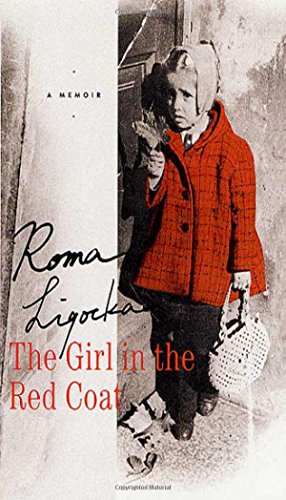
The Girl in the Red Coat: A Memoir

Roma Ligocka

The book opens with an elderly Jewish woman sitting in the elegant dining room of a posh hotel on the French Riviera. Suddenly and quite seamlessly it transitions to the dark Ghetto of Kraków, Poland during World War II and I was hooked!

Roma Ligocka was born to Jewish parents in Poland in November 1938, less than a year before the beginning of World War II. Told through the eyes of a child, the story of her early years living in the Jewish Ghetto of Kraków is a harrowing account of uniformed men in shiny black boots with snarling dogs, people being shot indiscriminately, her mother’s tears, and from her hiding place under a table, seeing her own grandmother seized by SS officers. After her father is arrested and taken to Auschwitz, Roma and her mother, with their hair dyed blonde and carrying falsified documents, escape the Ghetto and are taken in by a non-Jewish family who pass them off as visiting cousins. Sometime later, when her father escapes the concentration camp and is reunited with his family, she fails to recognize the haggard spectre that he has become.

Roma is just short of her seventh birthday when the war comes to an end, but her life continues to be marked by severe hardship. Within two years her father dies and the communists take control of Poland.

As her adult life unfolds, we see the results of the trauma that she endured as a child. Although she studied art and costume design at the prestigious Academy of the Arts and became a successful costume and set designer, she continued to confront her frightful memories and her adult life is characterized by anxiety, eating disorders, substance abuse and the inability to maintain lasting relationships.

Finally, at the age of 55, on March 2, 1994, Roma reluctantly attended the première of Steven Spielberg’s epic movie “Schindler’s List” in Kraków. The Academy Award-winning movie was shot entirely in black and white except for the image of a little girl in a red coat. Seeing something of herself in that little girl, Roma, who had had a bright red coat of her own as a wee child, finally felt inspired and strong enough to tell the story of her own experiences.

Interestingly, although I suspected it early on, until late in the book, Ligocka doesn’t reveal the fact that her cousin, Roman, with whom she had a close relationship, was none other than the famous director, producer, writer and actor, Roman Polanski.

Book of the month – July 2025

I haven’t been reading as much as usual this summer. In fact, I only completed one book in the entire month of June! That would help explain why I haven’t written a book of the month post for awhile, but it’s time for that to change. Maybe I need to add reading to my daily to-do list!

The Indigo Girl

Natasha Boyd

If I didn’t know that this novel was was a well-researched, but fictionalized retelling of a true story I would have thought it a bit far-fetched. A father giving his 16-year-old daughter control of three family plantations in South Carolina while he leaves the country to secure his political position on the Caribbean island of Antigua would be remarkable at any time, but this was 1738! At a time when the role of women was purely domestic, intelligent and headstrong Eliza Lucas was determined to find a cash crop to pull the plantations out of debt, pay for their upkeep, and support her family.

Upon learning how much the French were willing to pay for indigo dye, Eliza was convinced that it could be the key to resolving the family’s financial woes. Thwarted at every turn, even by her own mother, she refuses to give up. After three years of persistence and many failed attempts, she proves that indigo could indeed be successfully grown and processed in South Carolina.

A woman before her time, Eliza Lucas dares to choose her own path, to choose whether or not to marry, and to prove herself as competent as the men who try to intimidate her. Although she couldn’t have accomplished what she did without the help of the plantation slaves, she struggles with the concept of owning people and unlike many slave owners of her time, she seeks to treat her people well. She has improvements made to their living quarters and, with the help of a lawyer friend, cleverly circumvents the law forbidding masters to teach their slaves to write. She sets up a small school to teach the children to read and also teaches one of the men who has been with her family for many years.

This is a story of friendship, intrigue, ambition, sacrifice, betrayal, and for those who like romance, there’s some of that too. Excerpts of actual letters written by Eliza Lucas are interspersed throughout the book.

Book of the month – April 2025

I often pick up books to read at the local thrift stores, so they’re not always recent releases. The book I’ve chosen for this month’s review was published in 2015.

The Hummingbird

Stephen P. Kiernan

This book is really three stories in one, each distinct, but all connected. Deborah Birch is a seasoned hospice nurse assigned to care for an embittered and lonely history professor whose career ended in academic scandal. As his life slowly ebbs away, the professor, an expert in the Pacific Theater of World War II, begrudgingly puts his trust in Deborah and begins to share with her an unpublished book that he wrote. As she reads to him from his story about a Japanese fighter pilot who dropped bombs on the coastline of Oregon, he challenges her to decide if it is true or not.
The chapters that Deborah reads to the professor alternate with chapters of the primary story. At first I found that disconcerting. I even wondered if it would be okay to skip those, but I’m very thankful that I didn’t as they are an essential part of the story. Like Deborah, I was soon drawn into the substory and wanted to know if it was factual. I even found myself searching the internet to find out!

At home, Deborah’s husband, Michael, has recently returned from his third tour of duty in Iraq. Suffering from PTSD and haunted by the faces of those he had to kill, he is a changed man. While gently helping the old professor die, Deborah also struggles to help her husband heal and to restore the loving marriage that they once had. It is through the professor’s book that she begins to understand Michael and how to help him conquer his demons.

The author does a masterful job of intertwining the three stories and tying them together. The Hummingbird is a powerful, thought-provoking book that deals very sensitively with human frailty, dignity in dying, the effects of war, and the healing power of love. Ultimately, it is a deeply moving story of forgiveness and redemption.

Often, when I finish reading a second-hand book, I return it to the thrift store for someone else to buy, but this one’s definitely a keeper!

Book of the month – March 2025

I confess that I haven’t been very faithful about posting monthly book reviews lately, but I’m determined to change that.

The Book Thief

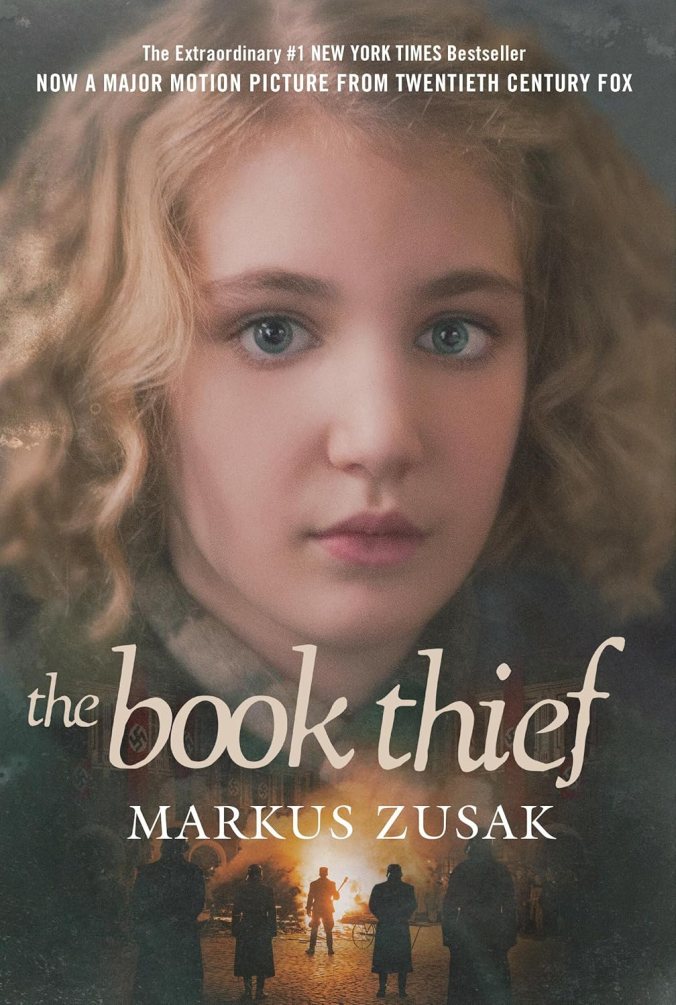
Markus Zusak

I’ve been avoiding books set during World War II lately. Over the past year or so I’d read so many of that popular genre that I was growing weary of them, but The Book Thief was different from most.

Nine-year-old Liesel Meminger is illiterate when she comes to live with foster parents Hans and Rosa Hubermann in the fictional town of Molching, Germany in 1939, but she brings with her a copy of The Grave Digger’s Handbook, found partially hidden in the snow beside her brother’s grave. With the help of her accordion-playing foster father, she learns to read and a love affair with books begins. She steals books from a Nazi book-burning, from the mayor’s wife’s library, and from anywhere else that books are found, but she isn’t a thief without a moral compass. She only steals a book when she has read the ones she already has, usually several times over. She reads with her neighbour, with a young Jewish man hidden in the Hubermann’s basement, with the mayor’s wife when she goes to pick up laundry, and in the neighbourhood shelter when bombs are falling.

In the author’s native Australia, The Book Thief is generally classified Adult Fiction, but it has often been marketed as a Young Adult novel in North America. It has, however, been challenged several times when included in school curriculums because of violence, course language, and disturbing scenes. While I wouldn’t consider it inappropriate for teenage readers, it certainly isn’t juvenile in writing style or theme. In fact, the style is so out of the ordinary that I actually found it difficult to get into at first, but I’m glad I persevered. Character development is one of the books greatest strengths and perhaps the most unusual thing about it is the use of Death as the narrator.

And now it’s your turn. If you’ve read The Book Thief, what did you think of it? Have you read any good books lately? What are you reading now?

Finding hope during challenging times

It’s Friday, so normally this would be a fashion post, but considering the state of the world today, writing about clothing seems frivolous and I just couldn’t get my mind (or my heart) around the idea. These days, I just want to wear my favourite jeans and coziest sweaters on repeat.

It’s also the end of the month, so I should be writing a book review, but that isn’t happening either. Oh, I’ve been reading. In fact, I’ve been reading quite a bit, but I’ve been escaping into frivolous, fluffy novels, not the sort of thing that I would bother to review or recommend. 

As I was leaving my doctor’s office yesterday (more about that in a future post), I decided to stop at a thrift store on my way home. I immediately spotted this and it ended up being my only purchase. I’m not sure where it will eventually end up in my newly renovated home, but for now it’s in a spot where I see it every time I enter the kitchen.

You might remember that, for the second year in a row, hope is my one word for the year and if there’s ever a time when we need hope I think it might be now. So how do we find hope and hang onto it amidst the barrage of negative occurrences in the world around us today? One way of doing this is to focus on what is good and right in our day to day experiences. This doesn’t mean living with our heads in the sand, but it might mean less time watching the news or scrolling the internet. 

According to Wikipedia, hope is “an optimistic state of mind”. It’s a glass half full attitude. It’s being able to imagine positive outcomes and when possible, acting to achieve them. That’s what I want the new sign in my kitchen to remind me of.

Like the puddles on the street and the water dribbling out of our downspouts remind me that the long cold winter is almost over and spring is coming, I want to be reminded that there are still more people in the world who want equity and justice than those who are fighting for the opposite. Believing that gives me hope.     

What gives you hope today? 

Book of the month – September 2024

Hope for the Best, Plan for the Rest

Dr. Sammy Winemaker and Dr. Hsien Seow

Screenshot 2024-09-09 at 11.49.03 AMBeing diagnosed with a life-changing illness can be completely overwhelming. In Hope for the Best, Plan for the Rest, Drs. Sammy Winemaker and Hsien Seow offer a valuable guide to help patients and families deal with their new reality. Combining their decades of palliative care research and experience caring for seriously ill patients and harnessing the advice of thousands of patients, they offer 7 keys for navigating a life-changing diagnosis. With real-life stories, tips, and exercises, these compassionate experts empower patients with practical tools to help them successfully navigate the health care system with knowledge and confidence.
The 7 Keys:

  1. Walk Two Roads. Hope for the best, and plan for the rest. Toggle between being realistic and being hopeful.
  2. Zoom Out. Understand the big picture of your illness and what might lie ahead.
  3. Know Your Style. Review your past patterns for insights into how you will journey through your illness. Identify your coping strategies and your ways of processing information.
  4. Customize Your Order. Communicate your wishes, values, and beliefs to help tailor your care plan to your preferences.
  5. Anticipate Ripple Effects. Recognize that those caring for you will also need to be supported.
  6. Connect the Dots. Play a central role in coordinating your care (or identify someone who can).
  7. Invite Yourself. Speak up. Initiate conversations about what to expect and advocate for yourself.

These 7 keys are not steps or stages to be followed in a particular order, but are meant to be blended together and used as needed. After devoting one chapter to each of the keys, the writers wrap up with a chapter entitled Putting It All Together and then two final chapters that deal in more detail with the late and end stages of disease and the actual process of dying. They caution their readers to read those two chapters only if they feel comfortable doing so. The book would be a complete and helpful tool without them, but personally I found both chapters informative and reassuring.

This book, published in 2023, wasn’t available ten years earlier when I received my first cancer diagnosis. Looking back, I think that over time I implemented most of the keys either intuitively or through bits and pieces of advice that I received along the way, but how much better it would have been to have a book like this one to guide my way. It’s a book about hope (my one word for 2024) in the face of uncertainty. It’s about living well, being fully informed, and getting the best care available. It’s about being a whole person and not just a patient. It’s a call for patient-led, patient-centred health care.

Book of the month – July 2024

Crossing Oceans

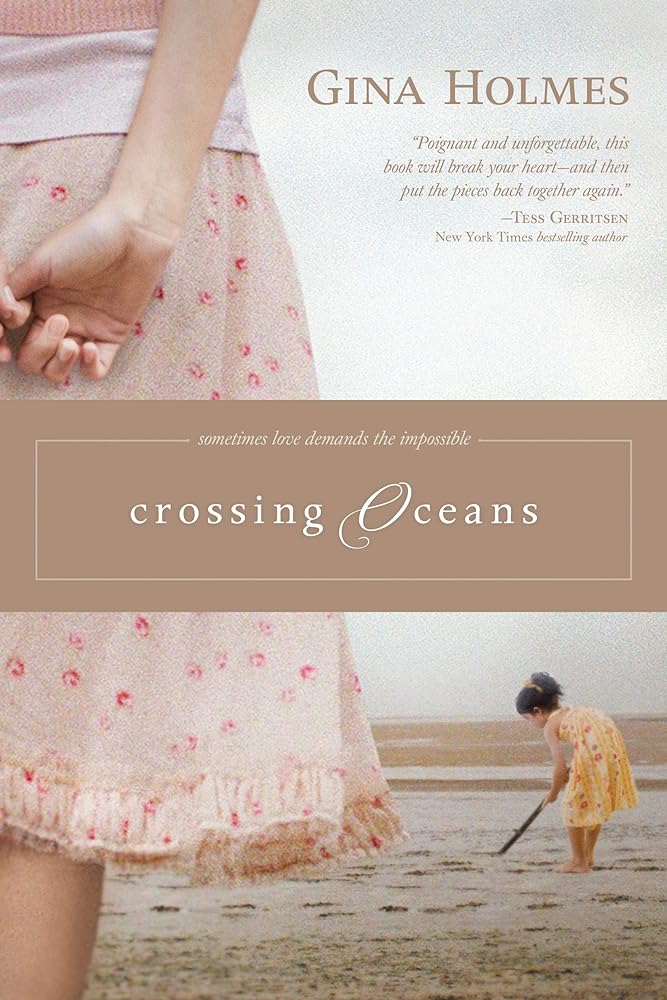
Gina Holmes

9781414333052At the outset, Gina Holmes’ Crossing Oceans reminded me of a sappy Christmas movie. You know the ones… after several years away, beautiful young woman returns to her quaint mid American hometown where she encounters sweet, kindhearted, and inexplicably single man from her past who sweeps her off her feet and solves all her problems.
I was okay with that. Having just finished reading the memoir of an esteemed Chinese professor who lived through the horrors of the Cultural Revolution, I was ready for some fluff; some light summer reading.  

Crossing Oceans surprised me. First of all, I didn’t realize that it was a Christian novel. Had I known that, I might not have picked it up. As strange as it might sound, considering the fact that I’m a committed follower of Christ, I read very few Christian novels. Although there are exceptions, too many of them are unrealistic, happy ever after romances somewhat on par with those mushy Christmas movies. While the main characters in Holmes’ novel are professing Christians, it isn’t preachy. They are far from perfect, and their problems aren’t swept away because they believe in God. 

When Jenny Lucas left home, single and pregnant, she promised herself that she’d never look back. Six years later, knowing that she’s dying of cancer, Jenny returns to the sleepy North Carolina town where she grew up to decide who will raise her little girl when she is gone. Will it be her father with whom she has had a difficult relationship since the death of her own mother when she was a teen? Or will she choose Isabella’s dad who doesn’t even know that he has a daughter? Animosity between the two families adds to her dilemma. Can they put aside their differences and help both Jenny and Isabella face what lies ahead? 

This is a sad story, but not a depressing one. It’s a poignant story of love and loss, but also forgiveness and healing. Jenny faces her situation with determination, courage, stoicism, and even a sense of humour. As I neared the end, I couldn’t help wondering how the story could possibly end in a satisfying manner, but without giving anything away, I’ll simply tell you that I wasn’t disappointed.

Book of the month – March 2024

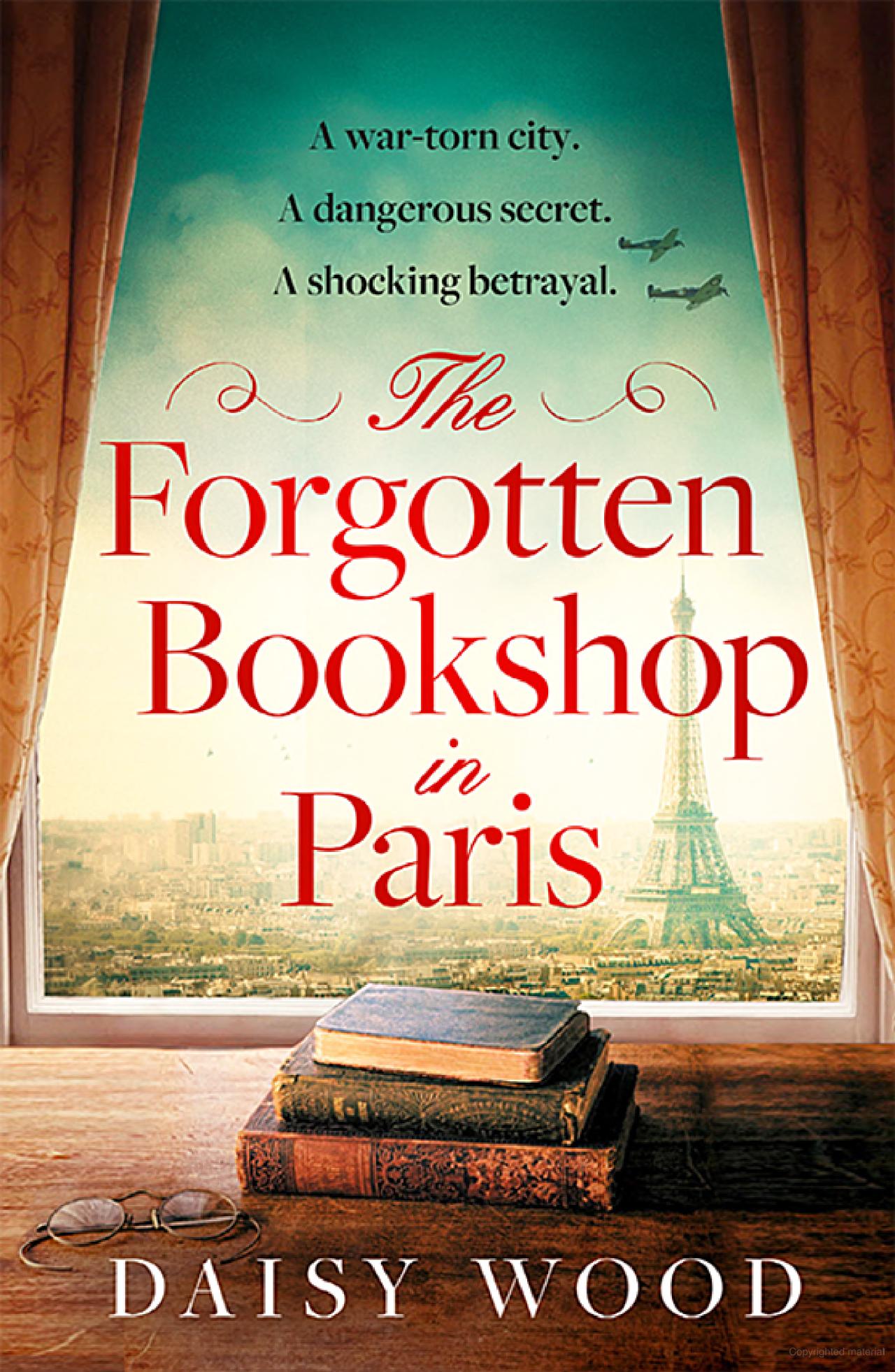
The Forgotten Bookshop in Paris

Daisy Wood

contentUntil the end, when the two finally come together, this is really two completely different storylines connected only by a specific location.
In 1940, war is closing in on the city of Paris. When the Germans take over the city, Jacques and Mathilde have only been married for a short time. Itching to resist in whatever way she can, Mathilde soon puts herself at risk and must flee to safety in the south of France while Jacques stays behind and continues to operate his beloved bookstore, La Page Cachée. Hiding first banned books, and then people seeking refuge and a way to escape the city, in a hidden storeroom in his shop, Jacques too becomes involved in the resistance.

In 2022, Juliette, whose deceased grandmother was born in Paris, and her husband, Kevin, take a long awaited trip to the city of love. Armed only with a photograph of a painting that used to hang in her grandmother’s house in America, Juliette searches for and locates the small city square depicted in the painting. Discovering that her husband has been having an affair, she decides to stay behind in Paris and forge a new life for herself. There she finds passion and purpose in purchasing a small abandoned bookstore on the square that appeared in her grandmother’s painting, renovating it, and opening The Forgotten Bookshop.

I loved this book! Partially, perhaps, because I’ve always thought that if I was ever to open a business, it would be a bookstore, but also because I became completely engrossed in both storylines. Each time the book switched from past to present or vice versa, I was almost disappointed because I was so captivated by whichever story I was reading at the moment! Both heartwarming and heartbreaking, the well-researched wartime story with its very believable characters could easily stand alone. The modern story was a little more cliched, but until the very end, it kept me wondering how the two storylines would come together.

Daisy Wood has written several works of historical fiction for children and this is her second adult novel. As soon as I finished it, I ordered her first, The Clockmaker’s Wife, from the library. While The Forgotten Bookshop in Paris is my favourite of the two, I enjoyed that one too.

Book of the month – February 2024

Many of the books that I’ve read over the past year or so have been historical novels set in the days leading up to and during World War II. Many, like the two that I featured last month, are based on the experiences of actual people who lived through those dark days. I’ve read stories of women working behind the scenes in the French resistance and children being sent overseas to temporary homes in North America where they would be safe from the bombings in London. Others have been stories of life and death in the concentration camps. Still others have told of people who risked their lives hiding Jews from the Nazis or smuggling food and medicine into the Jewish ghetto in Warsaw. My librarian friend tells me that these novels of wartime heroism are a very popular genre at the moment. I find that somewhat surprising during this time of heightened antisemitism when some might even think that the Holocaust didn’t go far enough in ridding the world of its Jewish population. But perhaps it’s also a hopeful sign. It was my librarian friend who suggested that I read this month’s selection.

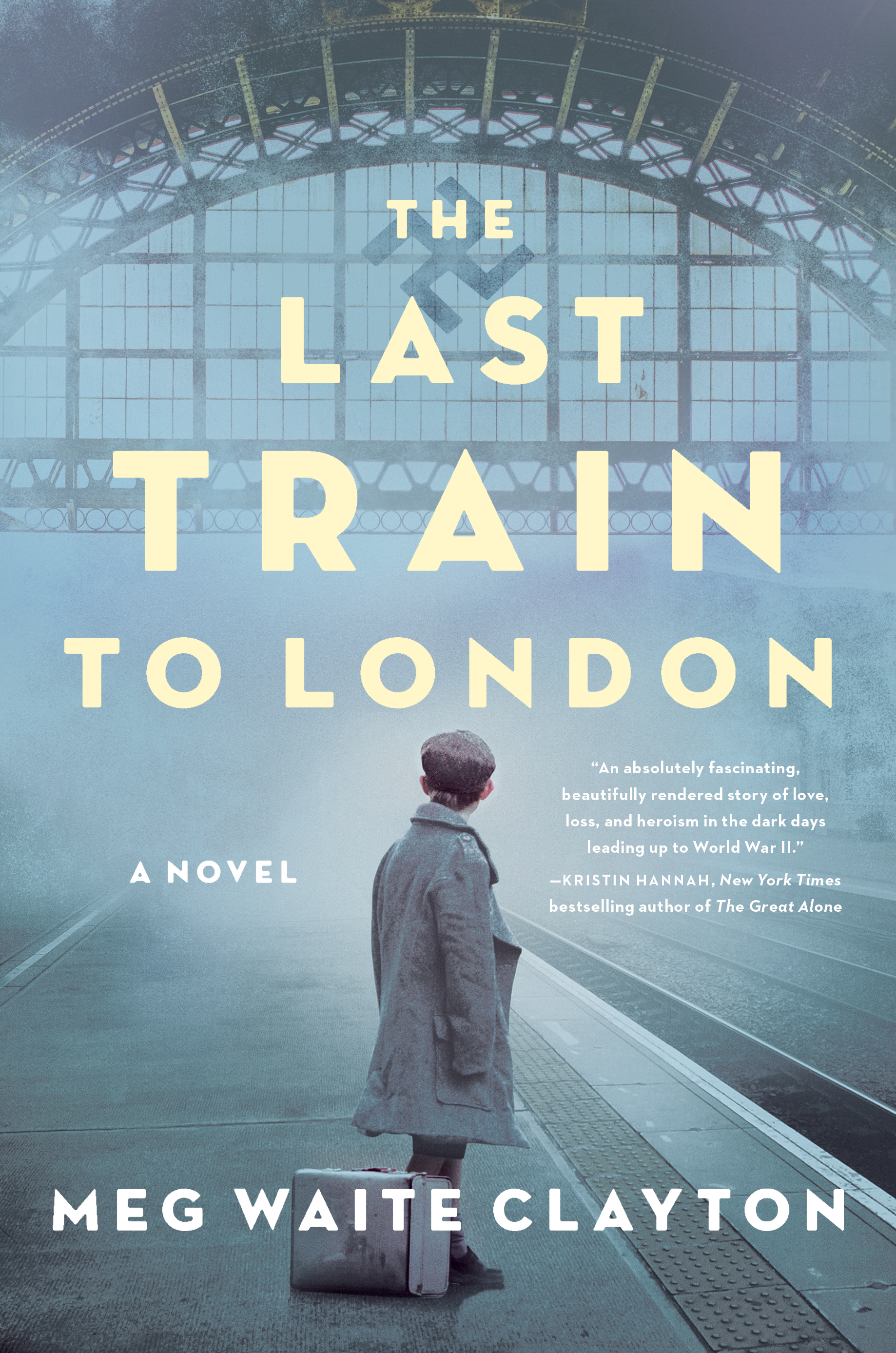
The Last Train to London

Meg Waite Clayton

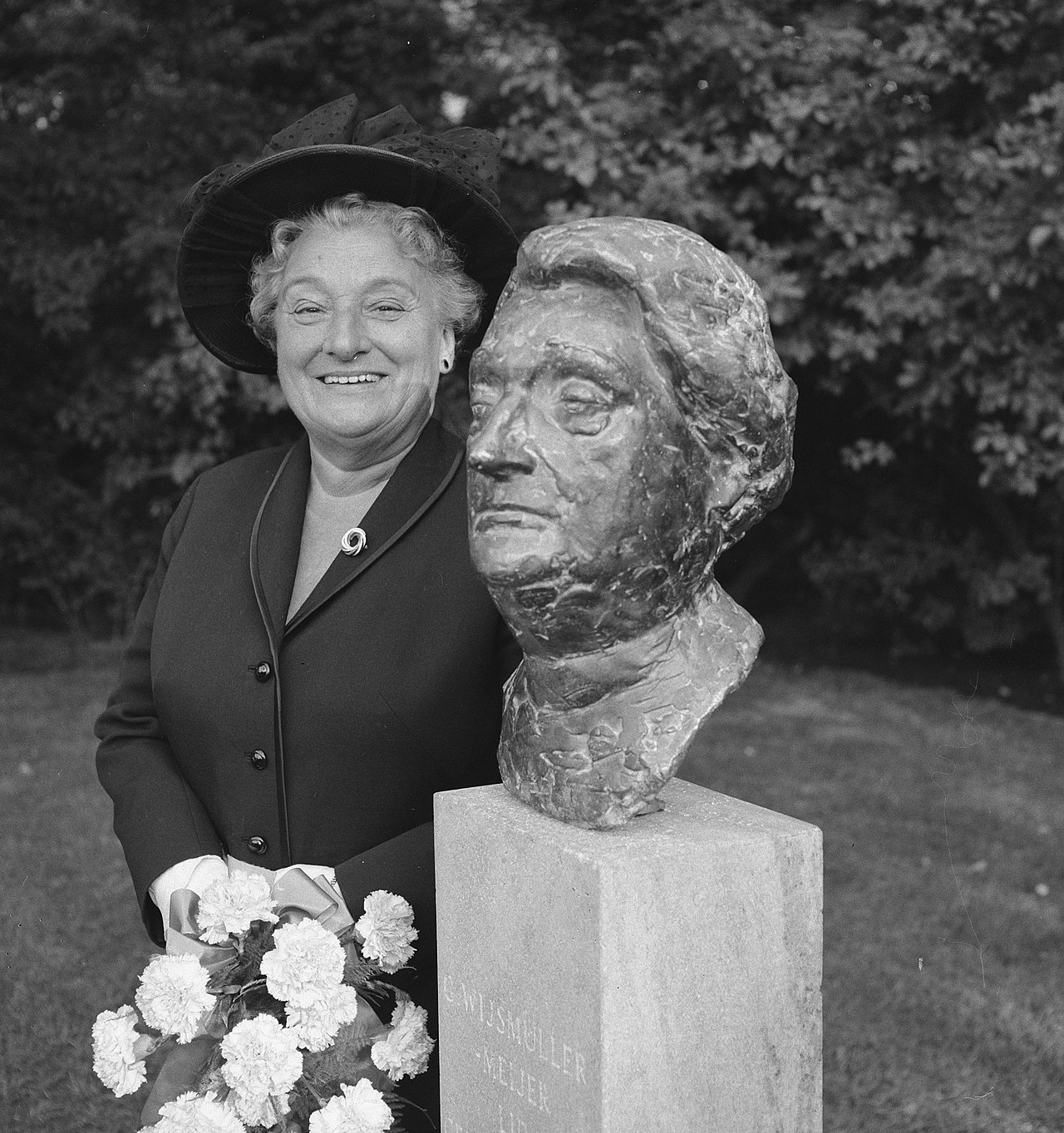
43386062Geertruida (Truus) Wijsmuller, a childless member of the Dutch resistance, risks her life smuggling Jewish children out of Nazi Germany to the nations that will take them. It is a mission that becomes even more dangerous after Hitler’s annexation of Austria when, across Europe, countries begin to close their borders to the growing number of refugees desperate to escape. After Britain passes a measure to take in at-risk child refugees from the German Reich, Tante Truus, as she is known by the children, dares to approach Adolf Eichmann, the man who would later help devise the “Final Solution to the Jewish Question” and is granted permission to escort a trainload of 600 children (not 599 or 601, but exactly 600) out of the country. In a race against time, 600 children between the ages of 4 and 17 are registered, photographed, checked by medical doctors and put on board the train to begin a perilous journey to an uncertain future abroad. Thus begins the famous Kindertransport system that went on to transport thousands of children out of various parts of Europe during the Nazi occupation of the region in the late 1930s, immediately prior to the official start of World War II.
The Last Train to London is also the story of three fictional children, Stephan Neuman, the teenage son of a wealthy and influential Jewish family who are stripped of everything when the Germans invade Austria, his younger brother, Walter, and Stephan’s best friend, Žofie-Helene, a brilliant Christian girl whose mother edits a progressive, anti-Nazi newspaper.

Although this book really came together at the end and was well worth reading, I do admit to finding it somewhat difficult to follow, especially in the first half, because of the short, choppy chapters that bounce from one character to another.

1280px-WijsmullerMeijer1965

Geertruida Wijsmuller in 1965

Book of the month – June 2023

346298825_796475711644640_3455810401975110479_n

A Life Without Water

Marci Bolden

51358755After reading Rohinton Mistry’s A Fine Balance, a 713 page novel about life in India in the 1970s and 80s, and then Timothy Keller’s The Reason for God: Belief in an Age of Skepticism, I was looking for something light to read! Something frivolous and entertaining.

While A Life Without Water was a quick, easy read it wasn’t quite what I expected. Instead, it dealt with a number of serious issues including divorce, alcoholism, loss of a child, and terminal illness. It’s also a book about forgiveness and about finding peace in the midst of heartbreak.

Carol Denman is a recent widow, still dealing with the loss of her second husband, when the ex-husband that she hasn’t seen in more than 20 years barges back into her life. John Bowman is very sick and while he can, he has some amends to make and promises to fulfill. In order to do so, he needs his ex-wife’s help. His presence turns her life upside down and forces her to confront long suppressed feelings of anger, resentment, and grief. The fact that she goes along with the request that he makes of her seems rather unrealistic to me, but it does make for a good story. If you’re given to tears, you might want to have a few tissues on hand!

While A Life Without Water can be read as a standalone, it is the first in a series of three. A Life Without Flowers and A Life Without Regret continue Carol’s story.