I prefer to blog as I travel while the images and impressions are fresh in my mind but our whirlwind tour of China didn’t allow time for that. Now that we’re home and recuperating from jet lag, I’ll do my best to recap for you over the next few days.
As we walked toward Tiananmen Square on our first morning in Beijing, I felt completely overwhelmed. Many times during our months in China, we commented on how surreal it felt to actually be living there but in early June of 1989 when tanks rolled into that square and mowed down hundreds of protesting students I couldn’t possibly have imagined that I might someday stand on that very spot. The exact number who died that day has never been officially confirmed. The reality of being there brought a lump to my throat and tears to my eyes. When I mentioned my feelings to our tour guide, she quickly changed the subject pointing out the Great Hall of the People where the nation’s government meets, the China National Museum, the Monument to the People’s Heroes and the Mausoleum in the centre of the square where Chairman Mao’s embalmed body has lain in state since his death in 1976. I was later told that tour guides are not allowed discuss the Tiananmen massacre with foreigners.
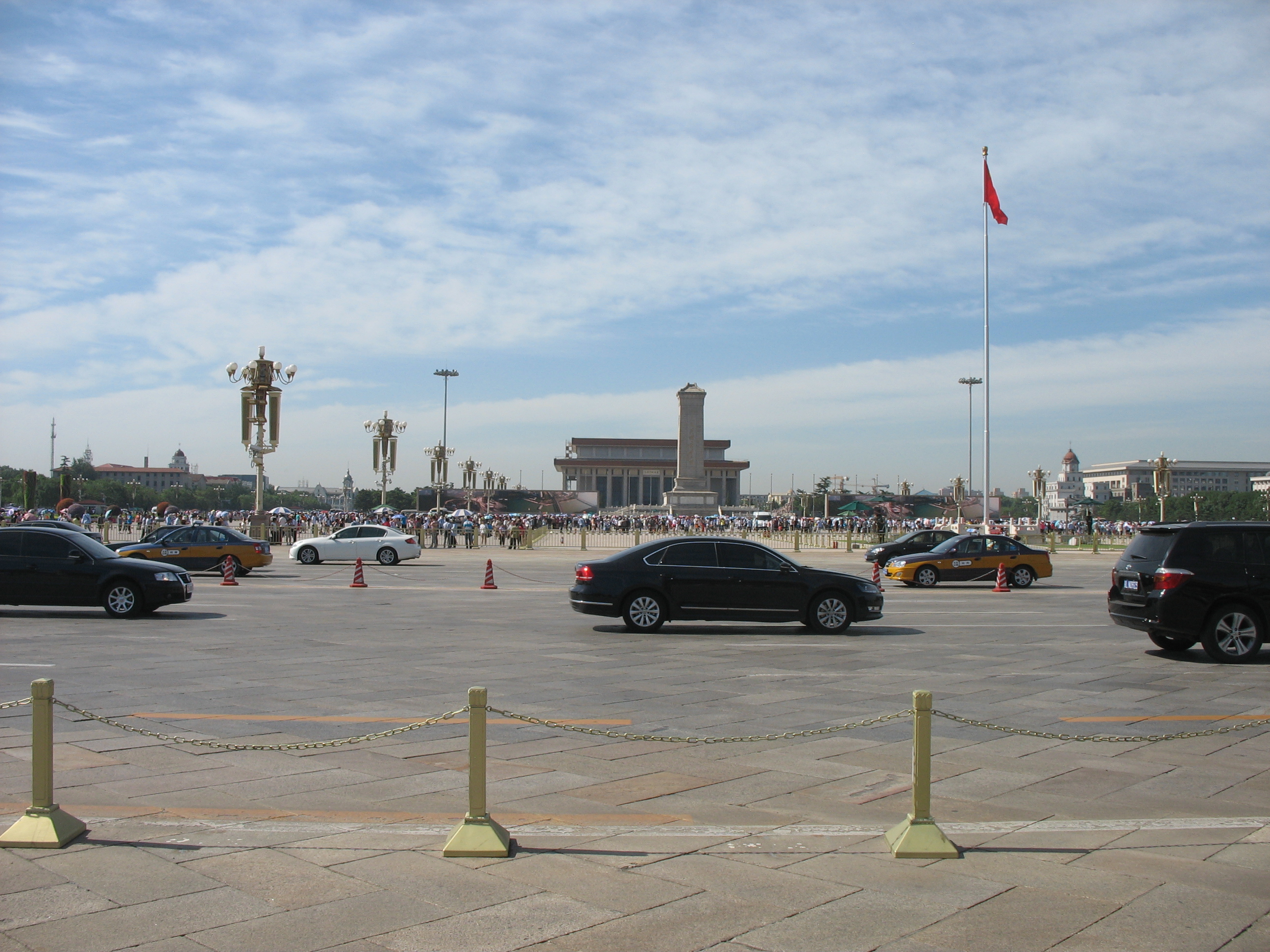
Tiananmen Square
Joining a throng of visitors, mostly Chinese, we passed beneath the gigantic portrait of Chairman Mao and through the Gate of Heavenly Peace into the Forbidden City. It was from high on this gate that Mao proclaimed the formation of the People’s Republic of China on October 1, 1949 and we truly felt that we were at the heart of the country.

The Gate of Heavenly Peace
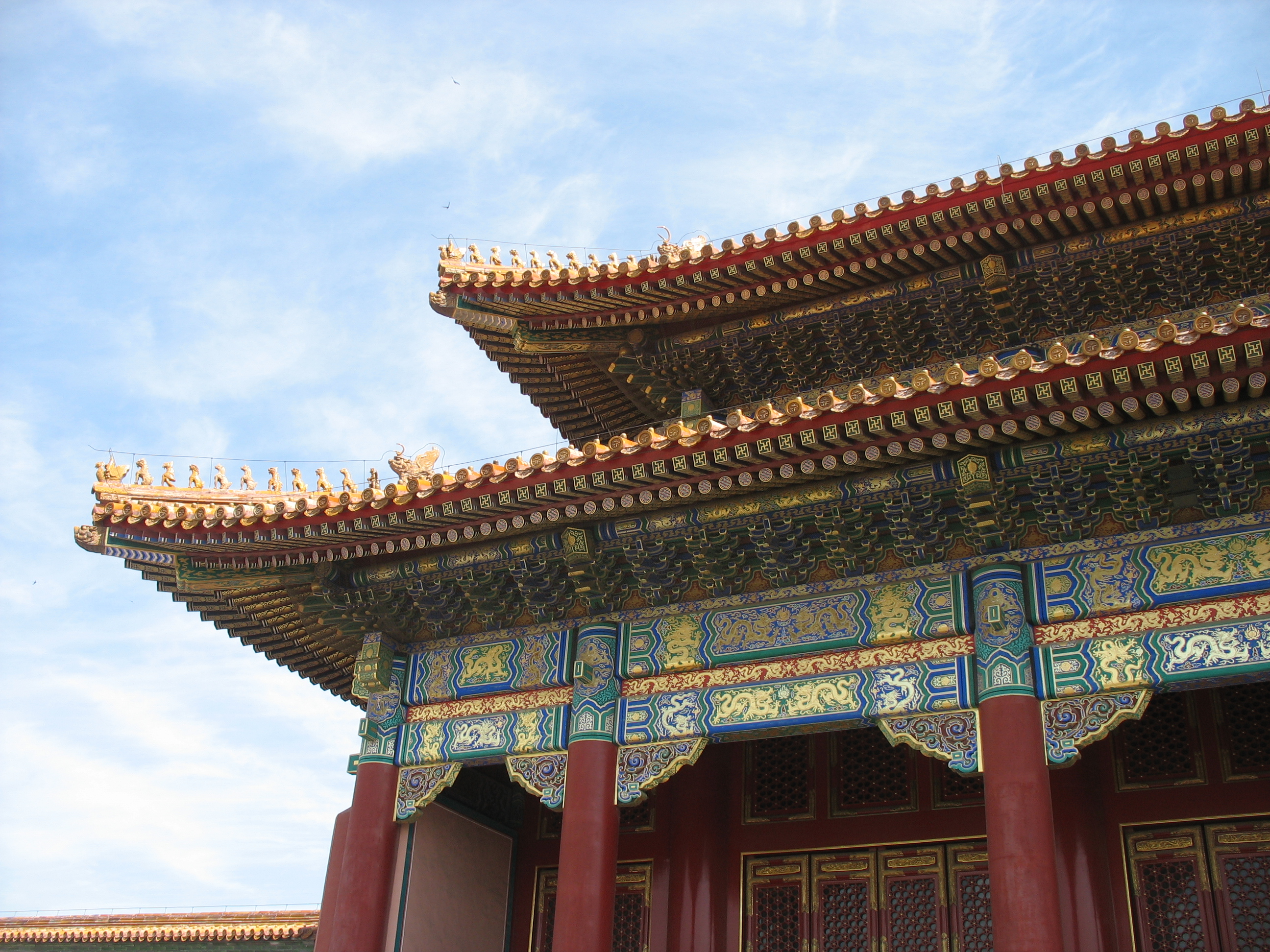
Our Beijing guide chose to pack too much into our first day there making our tour of the Forbidden City, so-called because it was off limits to the ordinary people for its first 500 years, a rushed one. Originally constructed over a 14 year period in the early 1400s when China’s third emperor, Zhu Di, moved his capital from Nanjing in the south to Beijing in the north, the Forbidden City is China’s largest and best-preserved complex of ancient buildings. We would have liked more time to explore it but fortunately, it is not unlike many other similar complexes that we’ve seen in Asia.

in the Forbidden City
Next on the day’s agenda was the Summer Palace, a huge park complete with gardens, pavilions, temples, bridges and man-made Kunming Lake. The soil that was excavated to form the lake was used to build Longevity Hill which overlooks it. The Summer Palace was vandalized during an Anglo-French invasion in 1860 but rebuilt in 1888 as a palatial summer resort for the Empress Dowager Cixi, also known as China’s Dragon Lady. She spared no expense even using money that was earmarked for a modern navy to build an enormous marble boat at the northern edge of the lake!

Kunming Lake and Longevity Hill
Our third historical site for the day was the circular Temple of Heaven with its three levels representing God, the emperor and the people. Sally, who we dubbed the “reluctant tour guide”, dismissed it as unimportant because “we have no God anymore”. She told us that Mao gave the Chinese people “freedom from religion”. She didn’t appear to share the hunger for something to believe in that we sensed in many of the young Chinese that we were acquainted with.
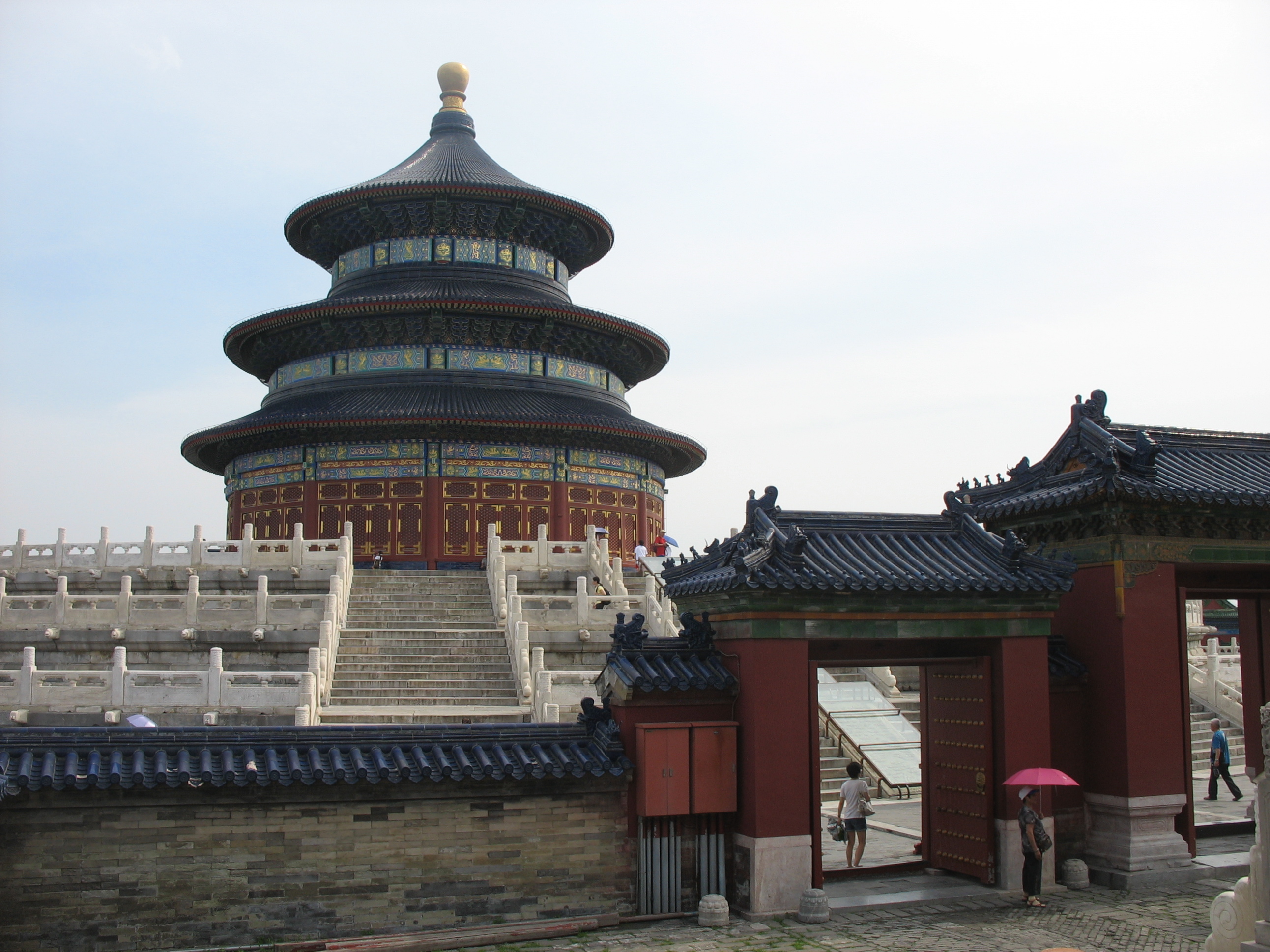
Temple of Heaven
Again, we would have liked to have had enough time to explore the peaceful park surrounding the temple but that was not to be. These are only a few of the highlights of a very busy day that ended with a Kung Fu show that was a fantastic combination of martial arts and dance.
In one way, we were very blessed while we were in Beijing. Did you notice the sky in the photos? Beijing is usually shrouded in heavy smog. It reaches such dangerously high levels that some people actually wear gas masks outdoors but just before we arrived, the air was cleansed by heavy rain and we enjoyed clear skies and unusually fresh air!