Who is the enemy?

One of the most valuable lessons I’ve learned about dealing with conflict in a relationship is the idea of standing shoulder to shoulder and attacking the problem together instead of face to face and attacking one another. If we all applied this principle to the fight against Covid-19, I think we’d have a much better chance of successfully containing the spread and minimizing the long term effects of this dreadful pandemic.

unnamed

The first step in fighting this battle together is identifying who or what is the enemy and perhaps even more important, who is NOT the enemy. The enemy is not the government, the public health authorities, or Bill Gates. The enemy is not 5G and it certainly isn’t your Facebook friend who thinks that Covid-19 is a hoax!

The enemy is a virus; a submicroscopic infectious agent that invades living cells and uses their chemical machinery to stay alive and to replicate itself. It doesn’t care whether or not we believe it’s real. It doesn’t care what our political views are, whether we’re young, old, or in-between, or if we’re good at math. It just needs an available host.

We can exhaust ourselves arguing about whether or not we should be wearing face masks and using hand sanitizer. We can wave protest signs and refuse to follow recommendations and requirements. We can spread rumours and accuse one another of all sorts of heinous things, but the virus doesn’t care! As long as we’re standing face to face and fighting with one another, it will simply continue its insidious attack. It will kill more of our elderly and vulnerable. Some of its victims will get off easy, but others will suffer long term physical and mental harm.

OR we can stop attacking one another and stand shoulder to shoulder against a common enemy. We can admit that we’re all in this together and that there are no quick fixes or easy answers. We can temporarily put aside our personal preferences and stop rebelling against every measure that is put in place to try to protect us.

header

How to care for your hands and nails during Covid

LogoThe cold, dry air of a Canadian prairie winter is always hard on exposed skin, but this year we have more than that to contend with. Constant hand washing and sanitizing might protect us from Covid, but it’s wreaking havoc on our poor hands!

I spent last weekend in the city on my annual Christmas shopping trip with three of my closest girlfriends. At the entrance to every store, we had to stop and use the hand sanitizer that was provided. On Monday, I was back in the city again as my hubby had a medical appointment. Before heading for home, we stopped to do a bit more shopping and, of course, more hand sanitizing. By Tuesday, four very brittle fingernails had broken and the skin on the back of my hands was stinging! It felt like I’d burned them! 

070716_handsanitizer_THUMB_LARGE

Alcohol-based hand sanitizers with a minimum of 60% alcohol are recommended for combatting viruses including Covid-19, but frequent use can lead to dryness, itching, cracking, and even eczema. Clearly, good hand and nail care is going to be more important than ever this winter.

Here are a few tips to help:

Wear gloves while doing anything that might irritate your skin such as washing dishes and cleaning house. 

Use hand sanitizer only when soap and water are not available. 

Stay well hydrated. In addition to other health benefits, drinking plenty of water helps prevent your skin and nails from drying out. 

Lock in the moisture. Keep your hands hydrated by gently drying them with a clean towel after washing and then, while they are still slightly damp, immediately apply a moisturizer. Work some of it into your nails to keep them from cracking, splitting, and breaking. If your hands are already irritated look for fragrance free products and ones that are formulated for sensitive skin. 

When you use hand sanitizer, apply a moisturizing cream or ointment immediately after the sanitizer dries. If you’re spending the day shopping, this may not be possible every time you enter a store, but carrying a travel sized lotion in your purse and applying it occasionally throughout the day will help prevent the distress that I suffered earlier this week. 

Rehydrate hands overnight. Apply a hand cream just before you go to bed at night and give very dry hands an overnight treatment by applying a heavy cream or petroleum jelly and wearing cotton gloves while you sleep. If you don’t have cotton gloves, a pair of socks will do. 

images

With Covid numbers steadily increasing, it looks like this is going to be a winter like none other, but hopefully with a bit of extra care, we can get through it with healthy, beautiful hands. 

4003270_f520


Digging deeper!

LogoNow that winter has arrived, challenging myself to wear skirts and dresses to church every Sunday has resulted in me digging much deeper into my closet. Last Sunday morning, the temperature was -10ºC (14F), a strong wind was blowing, and it was snowing. Clearly, dressing warm was a priority. 

IMG_1855

I started with a camel coloured pencil skirt that I bought in early 2013, just before we left for a teaching term in China. Named for it’s long, slim shape, a pencil skirt is a timeless garment that never goes out of fashion. It’s a basic wardrobe piece that many different outfits can be built around. In addition to this one, I have navy and grey pencil skirts that both date back to my teaching days. 

I wore the same tall brown boots and patterned top that were part of last week’s outfit. Though only barely visible in the photo, I wore a pair of dark brown leggings under the skirt, partly for warmth, but also because the skirt wasn’t quite long enough to cover the top of my boots and I didn’t want a sliver of bare skin breaking up the look. Next, I added my cozy Checkmate Jacket from cabi’s Fall 2019 collection which you’ve seen on the blog a couple of times before. 

IMG_1858

Costume jewelry can be a fun and inexpensive way to finish off an outfit. The name dates back to the early 20th century and simply reflects the use of the word “costume” to refer to what we now call an “outfit”. To complete Sunday’s “costume”, I chose a pair of dangly earrings and a simple bead necklace. The beads are made from coconut shell. We spent the summer of 2011 as short term missionaries on the Pacific island of Saipan and it was there that I purchased the necklace from a Chamorro woman who made them to sell to tourists. The Chamorro are the indigenous people of the Northern Mariana Islands. 

Now that winter has arrived, I’m not sure that I’ll continue wearing skirts and dresses to church every week, but it’s been fun digging deeper into my closet and coming up with new ways to style some of my older pieces. 


NET Cancer Day 2020

net-cancer-awareness

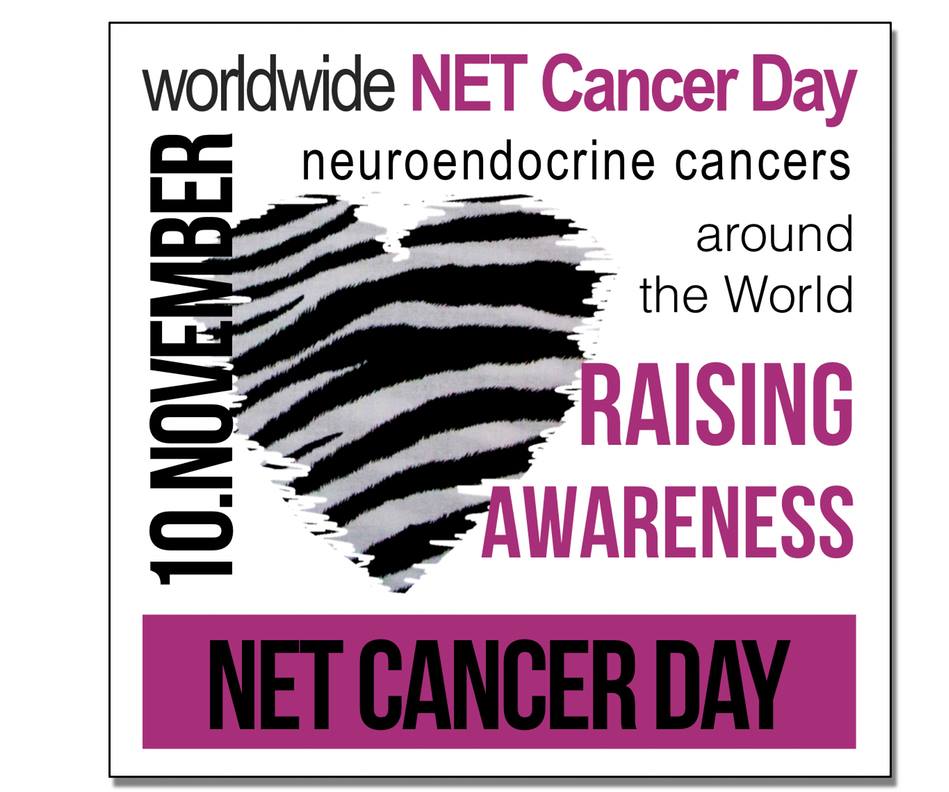
Once again, today is Worldwide NET Cancer Day, a day set aside to try to increase awareness of neuroendocrine (NET) cancers and to promote improved diagnostics, treatments, information, care and research. The focus of this year’s campaign is to highlight the challenges that patients and clinicians face around the early diagnosis of NETs.

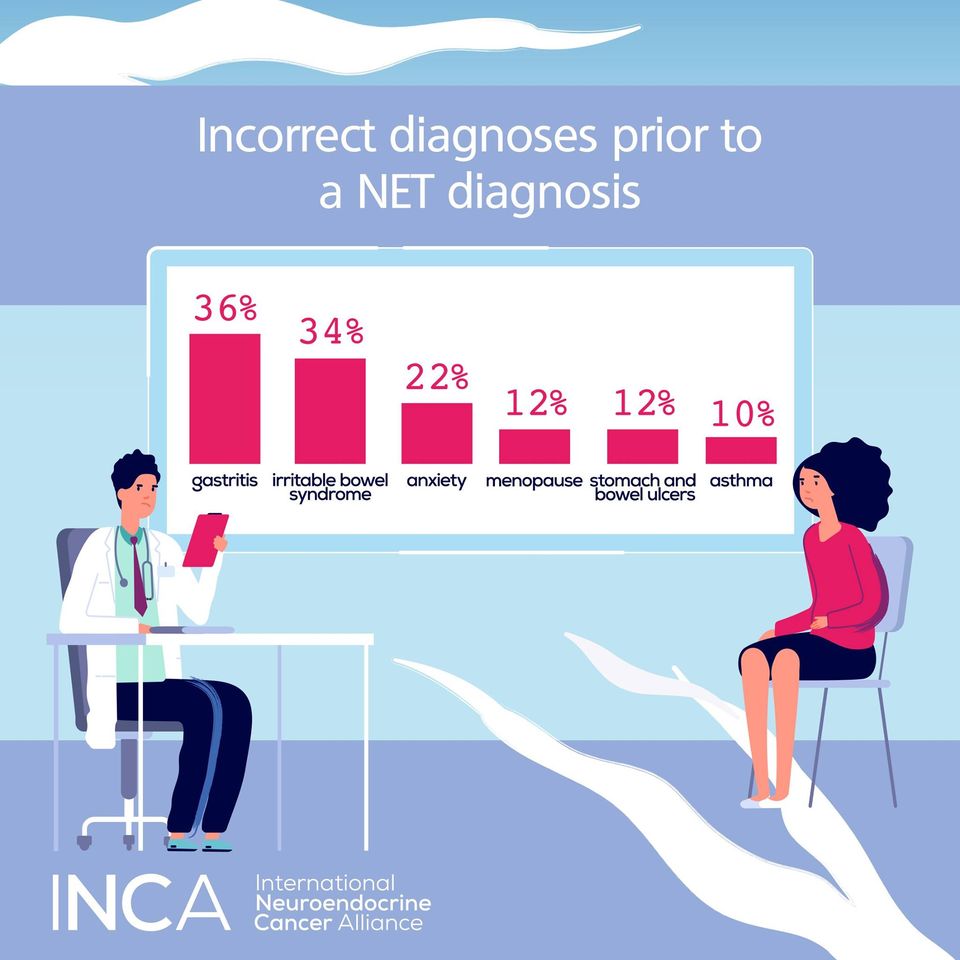
A recent worldwide survey of NET patients showed that only 27% of them received a correct diagnosis the first time around. 44% of us, myself included, were misdiagnosed for several years before the correct source of our symptoms was discovered, often by accident. Globally, it has been taking 5 years on average from initial symptoms to diagnosis; 6 years here in North America which was also my experience.

122537054_3583258601716994_7578317130403807428_o

I’m part of the 36% who were initially diagnosed with gastritis, inflammation of the stomach lining. It was a GP who made that diagnosis based only on my symptom, a gnawing abdominal ache. I don’t fault him for that as NET cancer usually presents symptoms that mimic much more common ailments. Had we done a colonoscopy, however, the tiny tumour growing in my cecum would likely have been found before the cancer spread. It was several years later, when unusual spots on my liver showed up on a completely unrelated ultrasound, that suspicions were raised and I eventually learned that I had Stage 4 cancer! By that time, my symptoms had grown to include chronic diarrhea as well as occasional flushing and episodes of tachycardia (extremely rapid heart rate), all common characteristics of NET cancer.

There are 3 As that would significantly improve the outcome for many NET patients:

  1.  Awareness of symptoms  –  We need health care professionals at every level to be aware of this complex disease and to be able to recognize its symptoms. My family physician had been practicing medicine for approximately 20 years when I was diagnosed, but I was his first NET patient and he knew very little about it. I’ll never forget the locum who argued with me that neuroendocrine tumours aren’t malignant (some aren’t) and that I didn’t actually have cancer at all! 
  2.  Availability of diagnostic tools  –  The most precise tool for detecting NET cancer is the Gallium 68 PET scan, but I have never had one. In fact, only 18% of the surveyed patients worldwide have. It isn’t available at many cancer treatment centres. For the past few years, there’s been talk of one coming to the Cross Cancer Institute where I receive all my care, but as far as I know it hasn’t happened yet. 
  3.  Access to NET specialists  –  In the survey mentioned above, 24% of the patients had not even heard of a NET cancer specialist and many others travel long distances to see one. 

So, every year on November 10, and whenever I have the opportunity in between, I’ll do my bit to raise awareness, never giving up hope that eventually better diagnostics and treatments will be available to all NET patients and that ultimately a cure will be found!

unnamed

What’s the story?

IMG_1788

This is what I wore to church last Sunday. Before the service began, a friend who reads my blog regularly told me that she liked my skirt and asked if there was a story behind it. That got me thinking and I quickly realized that my closet is full of stories. Today I’m going to tell you how I put this outfit together and the story behind each piece.

Since our church reopened in early July, I’ve made a point of wearing dresses and skirts on Sundays so this outfit started with the skirt which has been in my closet for more than thirteen years. I don’t remember exactly when I bought it, but that’s how long I’ve been retired and I know that it dates back to my teaching days. It’s funny the things that stand out in your memory, but I distinctly remember wearing it to a district wide teachers’ event when it was new. I don’t recall where I was prior to the event or what I was doing, but I do remember arriving at the venue with my outfit for the evening in a bag and slipping into the ladies room to change!

When I decided to wear the skirt to church, I knew that I’d be wearing it with my tall, dark brown boots. They were a lucky find at our local thrift store early last winter when the pair that I’d been wearing started to leak. The closest shoe store is an hour away, so I was very fortunate to find a suitable replacement in my size in our small store.

Next, I had to decide what to wear on my upper half. I decided that the sleeveless patterned top would add a bit of visual interest. It was purchased last November while I was on my annual Christmas shopping weekend in the city with several close girlfriends. In the 18 (soon to be 19) years that we’ve been making this trip, I’ve missed only two of them. In 2008 I was living in Japan and in 2013 I was isolated in a lead lined room at the Cross Cancer Institute.

It’s chilly in Alberta at this time of year, so I clearly wasn’t going anywhere in a sleeveless top without something over it. Would you believe that I tried on five different toppers before I finally settled on this one? It was given to me by my very generous sister-in-law several years ago and is one of those well loved pieces that remains in my closet even though I don’t wear it very often anymore.

Accessories put the finishing touches on any outfit and the necklace that I chose to wear with Sunday’s outfit has a very special story.

IMG_1835

I was a young teenager in the 1960s when my aunt visited a friend who was teaching in Japan and brought the necklace back for me. Over 50 years later, it’s now considered vintage. (Perhaps I am too!) The back of the pendant is stamped with the name, Amita, a Kyoto company that started selling damascene jewelry like this in 1932. Damascene is made by etching an intricate design into oxidized metal and then pressing gold and/or silver metal into the chiseled design. The images on Japanese damascene are usually either pagodas or floral designs like this one. I have worn mine over and over throughout the years and it still looks as good as it did the day I received it.

Are there any stories in your closet? Why not share one of them in the comment section below.

Logo

Hiking in November!

We usually have snow to stay by the end of October, but as we all know by now, 2020 is a rule breaker! Though we had some unusually cold weather and a few flurries in the latter half of October, when we turned the calendar page to November, the weather took an amazing turn. The average daytime temperature at this time of year is barely above 0ºC (32ºF), so when the forecast said that today’s high would be 18ºC (64ºF), we decided to go hiking! Hiking in central Alberta in November? Unheard of!

This morning, we headed for the village of Donalda, about an hour from home. The last time we hiked in that area was over five years ago. It was already 18ºC when we arrived and we hadn’t been hiking long when we started peeling off layers!

IMG_1801

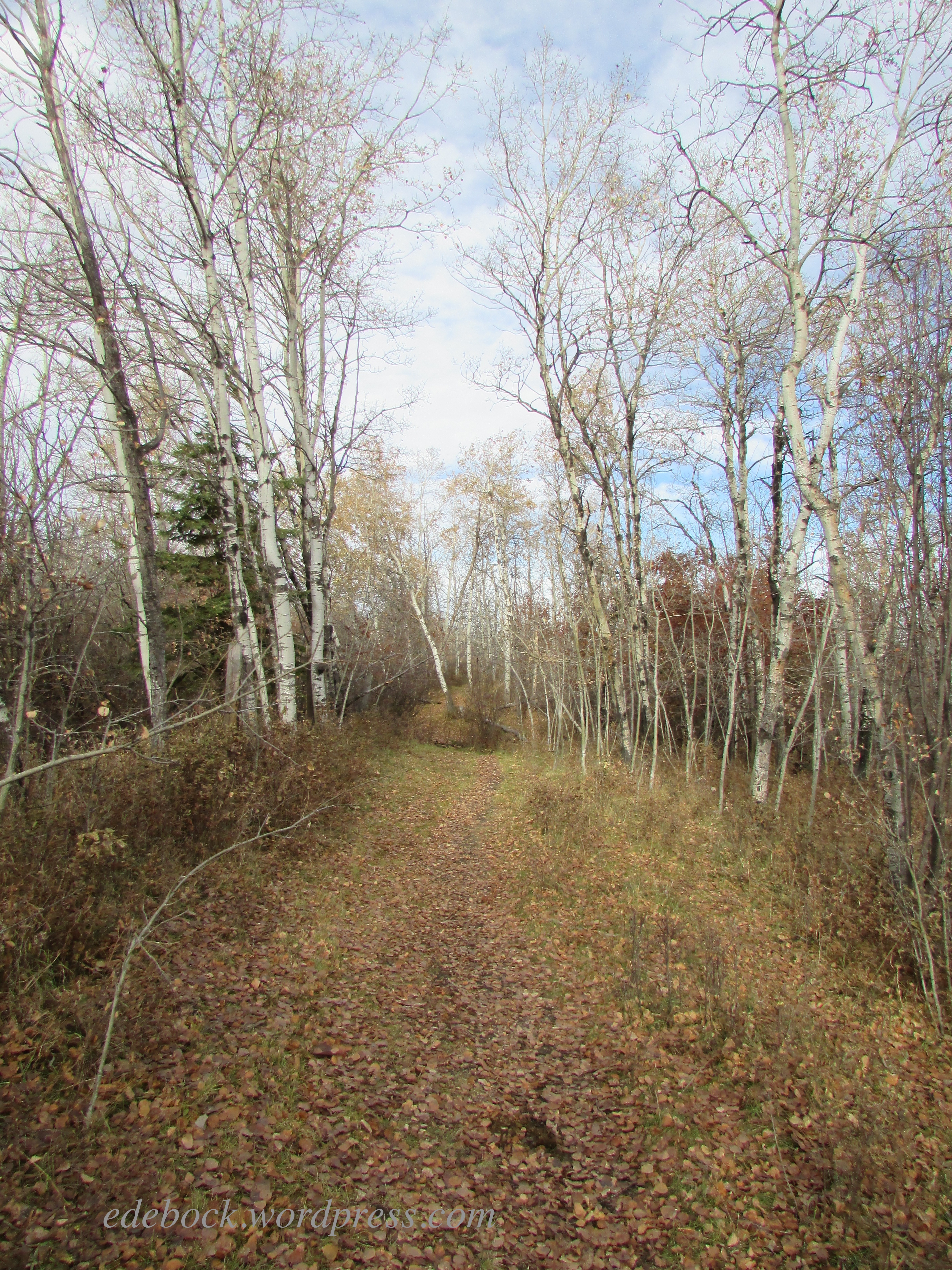
We started off following the woodland trail that leaves from one corner of the village. With all the leaves on the ground and the trees bare, there was a peaceful beauty about the place. Before long, we passed through a gate that took us onto 129 acres of private land that’s used for grazing cattle. Signs tell hikers that they’re welcome to explore anywhere within the area. We had the option of staying on the trail along the rim of the massive coulee, the northernmost part of the Canadian Badlands, but instead we turned toward the valley and wandered wherever our feet took us. Up, down, and around the bluffs we went seeking out interesting formations and views.

IMG_1806

Though there weren’t any cattle grazing in the area, we had to watch our step as there was plenty of evidence that they had been there! We did see some deer. 

IMG_1808

IMG_1811

The weather is so warm this week that the golf course, which has been closed since October 12, has reopened with golfers playing on temporary greens. Richard had Platelet Rich Plasma (PRP) injections in both his shoulders a week ago to promote healing of some old sports injuries, so he can’t do much with his arms right now. Golfing is out, but he certainly could hike!

IMG_1812

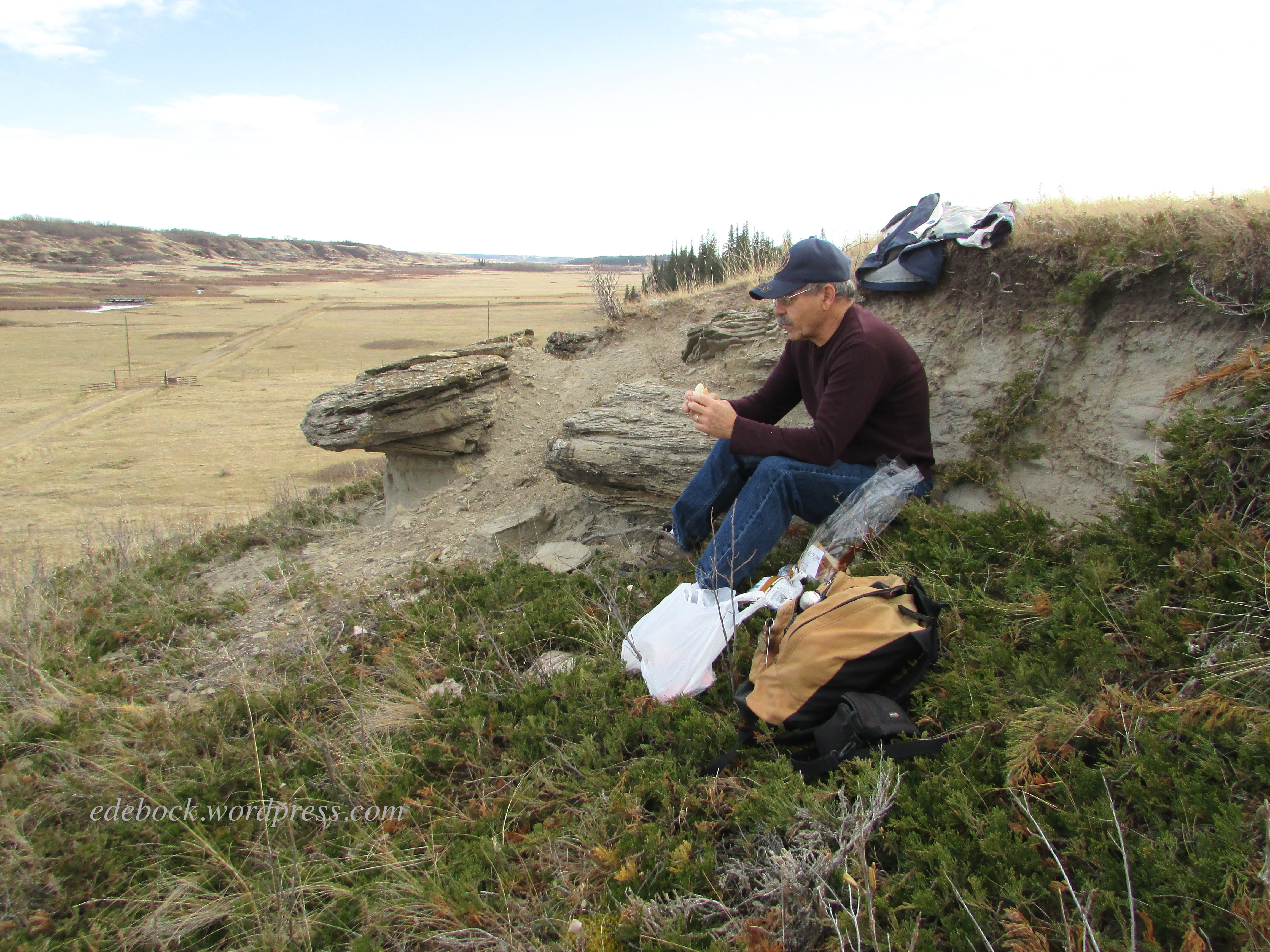
I have no idea how far we hiked, but we were out for about three hours. We enjoyed a picnic lunch overlooking the valley.  

IMG_1817

IMG_1818

Eventually, we rejoined the woodland trail at it’s far end and made our way back to our starting point. Along the way, we passed this unusual sign on a fence post. We have no idea what it was trying to tell us, but it seemed very appropriate for this most unusual November day!

IMG_1821

Shopping like a goddess

LogoIf you’ve been reading Following Augustine for long, you know that I love thrift store shopping. In fact, one of my most popular posts over the past year has been this one. I’m not crazy about big city stores like Value Village where there’s an overwhelming amount of merchandise to sift through. Instead, I prefer smaller not-for-profit stores like the two that I shop locally. 

Other than one pair of pyjamas that I picked up at Walmart, the only clothing that I’ve bought in the past four months has been second-hand. One of my most recent finds was the Goddess Blouse from cabi’s Fall 2018 Collection. Although it’s two years old, it’s like new and it fits into my wardrobe for several reasons. 

IMG_1745

Like many cabi pieces, it isn’t trendy. Its timeless quality means that it’s something that I’ll be happy to wear for a long time. The cream coloured background is flattering to my complexion and the abstract pattern, in colours that are part of my spring palette, doesn’t overwhelm me. The blouse also coordinates with lots of things in my present wardrobe including many other cabi pieces. That’s one of my favourite things about cabi; the fact that pieces from one season are intentionally designed to coordinate with those from several previous seasons so that you can build a cohesive wardrobe over a period of time. 

In the first photo, I’m wearing the Goddess Blouse with my grey skinny jeans, also from the Fall 2018 Collection. My necklace is another recent thrift store purchase.

I love the next look which is entirely cabi. I styled the blouse with my Brick Dust skinnies from Spring 2018, the Tudor Cross necklace from Fall 2019, and one of my oldest pieces of cabi, the Shirttail Cardigan from Fall 2016. It might be four years old, but it’s still going strong!

IMG_1756

Next, here I am wearing the blouse with a pair of dark wash jeans and yet another piece from cabi, the Checkmate Jacket from a year ago. 

IMG_1777

And finally, here’s my very good friend and cabi stylist, Deborah, wearing her Goddess Blouse with several items from this season’s cabi collection

Deb

By now, you might be wondering if this is a sponsored post. It’s not. I just have a lot of cabi in my closet and I’m delighted that I was able to add another piece for just $3.00 by shopping my local thrift store! 

Are you anti pantie?

I’ve started seeing more and more articles posted on social media with titles like this one. Medical Doctor Warns that “Bacterial Pneumonias Are on the Rise” from Mask Wearing. What these articles actually talk about is the danger of wearing contaminated face masks; either repeatedly wearing the same disposable mask or wearing a cloth mask without changing and washing it regularly.

Interestingly, I’ve never seen anyone post an article warning us to stop wearing underwear! What? What does that have to do with anything? Quite a lot, actually.

Davidson Hamer, infectious disease specialist and professor of global health and medicine at Boston University, says that while there have actually been no documented cases of masks leading to fungal or bacterial infections of the upper airway or the lower airway as in pneumonia, bacterial growth could possibly occur if someone wore a mask that was contaminated. “Theoretically, it could happen, but it’s highly unlikely with just typical mask use.” Anne Monroe, an internal medicine physician and epidemiologist at George Washington University’s Milken Institute School of Public Health agrees “In terms of mask use, it is important to follow general sanitation guidelines,” she says.

Exactly the same thing is true of underwear. For both men and women, failing to wear clean underwear every day can be problematic. For those of us with vaginas, moisture build up in the nether regions is normal. It’s common knowledge that lack of cleanliness in this area can lead to rashes and infection. While men may not be quite as susceptible, they too can get yeast and urinary tract infections.

So why are people advocating that we stop wearing facial masks, but not that we stop wearing underwear? The articles that I’ve seen are often posted by anti maskers, those who would have us stop wearing facial coverings altogether as opposed to simply following good hygiene. In other words, they’d have us throw the baby out with the bathwater! My question for them would be, are you also anti pantie?

Just treat your mask like your underwear. Wear a clean one every day!

Screen Shot 2020-10-27 at 3.52.49 PM

How to dress in layers

Those of us who live in cold climates know the importance of dressing in layers, but how do we do it without looking like the Michelin man?

images

Today I’m going to take a quick look at layering for winter sports and outdoor activities and then I’ll talk about fashion.

Layering for the great outdoors:

A three layer system is key to staying warm and comfortable while protecting yourself from wind, water, and moisture. 

  1. Base layer (underwear) – This is the layer that is in direct contact with your body and that wicks moisture away from your skin toward the outer layer where it can evaporate. Choose seamless or flat seamed garments that won’t chafe and aim for a snug fit, but one that isn’t too constricting.  
  2. Mid layer (insulation) – This layer retains body heat to keep you warm and continues moving moisture outward. Fleece or ultra light down work very well for this.  
  3. Outer layer (protective shell) – This layer shields you from wind and rain, but needs to be breathable so that moisture from the inner layers can escape. It should fit easily over the other layers and should allow you to move freely, but it shouldn’t be so loose that it allows body heat to escape. 

Layering for everyday fashion:

LogoUnless you’re spending all day at home (which many of us are these days) where you can change your clothes multiple times, layering provides versatility and allows you to deal with changing temperatures throughout your day. 

I started today’s post with layering for winter sports and outdoor activities because we can actually use a similar three layer approach to everyday wear. Rather than wearing a single bulky knit on a chilly day, being able to add or take off layers as needed adds adaptability and comfort. 

Again, our goal is layers without bulk. I’m assuming that we women are all starting with a good supportive bra. (Men, you can skip that layer!🤣) After that, your base layer can be a simple t-shirt or a dressier blouse. Since I get cold easily, I often start with a cotton or bamboo camisole under that. Sometimes a base layer and an outer layer might be all you need, but when the weather is especially cold or when you expect fluctuations in temperature, a mid layer might be a good idea. That could be a lightweight cardigan, a pullover, or even a blazer. If you’re going to be outdoors at all, a coat or jacket will likely be your outer layer. Add a scarf and you’re ready to go.   

You’ve probably noticed that I’ve only mentioned your top half. There’s not a lot of layering that you can do with the bottom half of an outfit other than wearing pants, a skirt, or a dress over leggings or tights. 

Before we look at an example of layering, here are a few tips to keep in mind:

  • lightweight knits add warmth without bulk
  • it’s okay to wear short layers over long or vice versa
  • necklines should compliment one another
  • remember that you might want to remove a layer, so make sure the outfit still works if you do
  • consider sleeves; bulky or embellished sleeves work best under a structured layer where they don’t create bulges
  • some textures and patterns mix better than others

Now let’s build a layered outfit using a few items that I’ve pulled from my closet. If you notice some white bits and streaks in the pictures, they aren’t flaws in the photos. I didn’t realize that it had started snowing until we stepped outside! 
IMG_1679

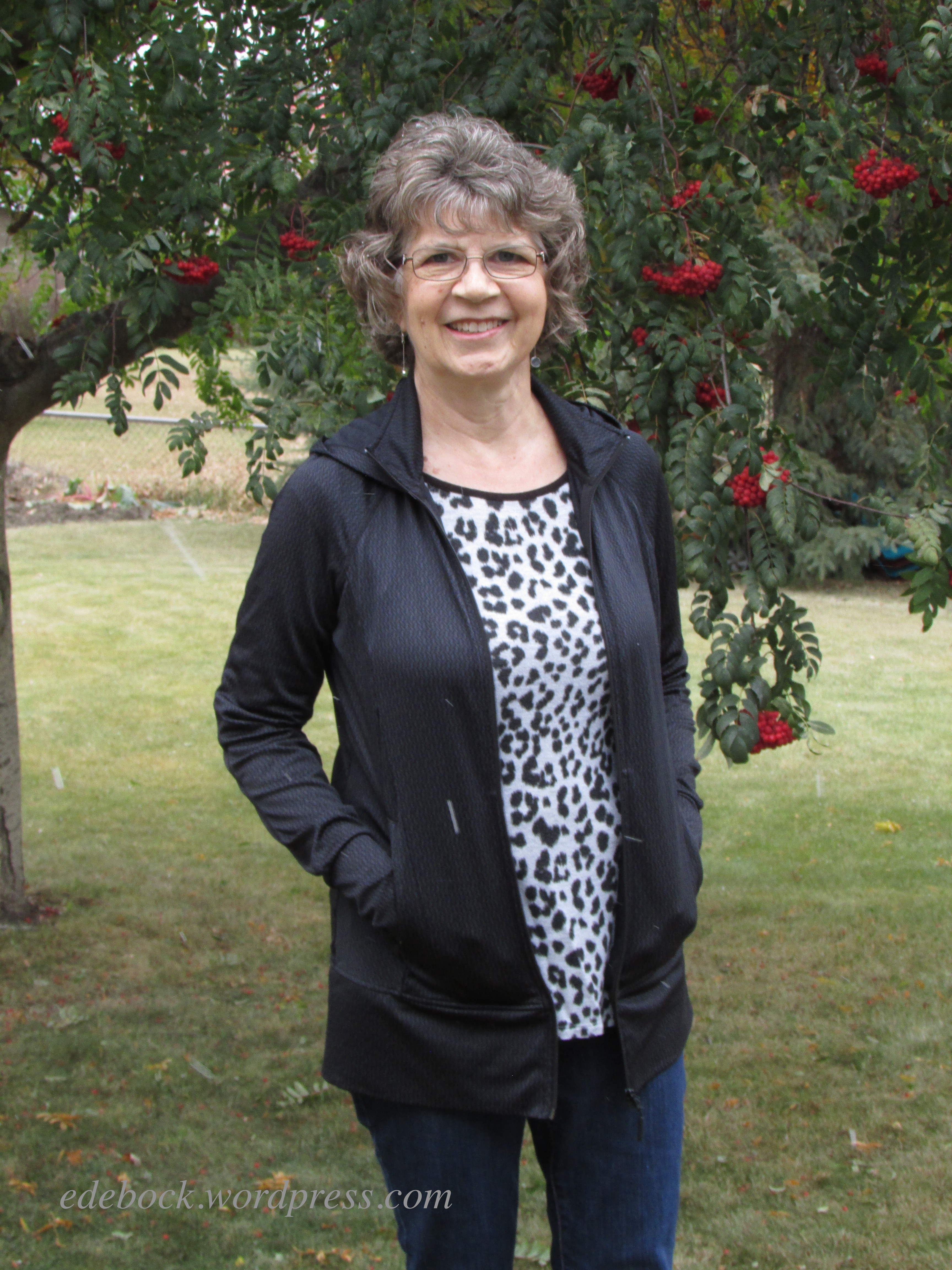
As the base layer, I used the animal print t-shirt that you last saw in my recent post about clothing that endures and added a lightweight hoodie as the mid layer. Purchased second-hand for $3.00 almost two years ago, the hoodie has been one of the most useful items in my wardrobe. It was -5ºC (23ºF) when we took these pictures though, so I definitely needed another layer! 

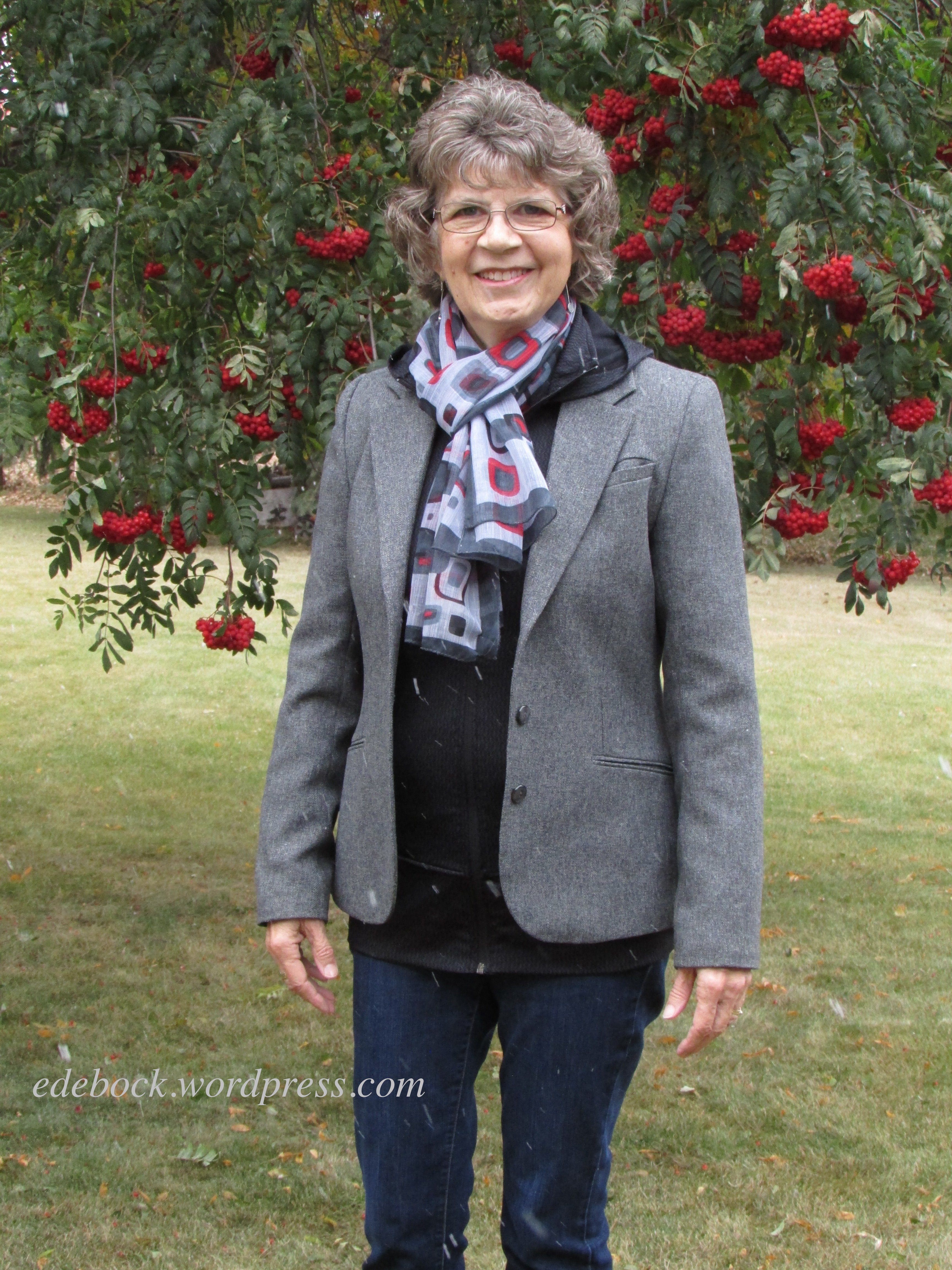
I added a grey blazer, one of the few classic pieces left over from my teaching days. This outfit fits my classy, casual style. If we were doing any shopping other than groceries, this is something I might wear to the mall. If I was going to spend more than a few minutes outdoors, I’d need to add an overcoat, but I like to leave that layer in the car when I’m in the mall. Even mid winter, these three layers would be enough for the quick dash from vehicle to mall entrance. If I wanted a bit more warmth, I’d add a scarf which could easily be tucked into my purse later on. 
IMG_1665

So there you have it, layers that will take me through a Canadian winter without looking like the Michelin man!

IMG_1662 2


Overcoat overload

LogoOur beautiful fall weather is rapidly disappearing and winter is on the horizon. It’s time to begin bringing out winter coats and boots. As I thought about doing that, I decided that this week would be a good time to purge my wardrobe of some of the jackets and coats that have been taking up closet space and not being worn. I decided to take a similar approach to my scarf edit of a few weeks ago.  

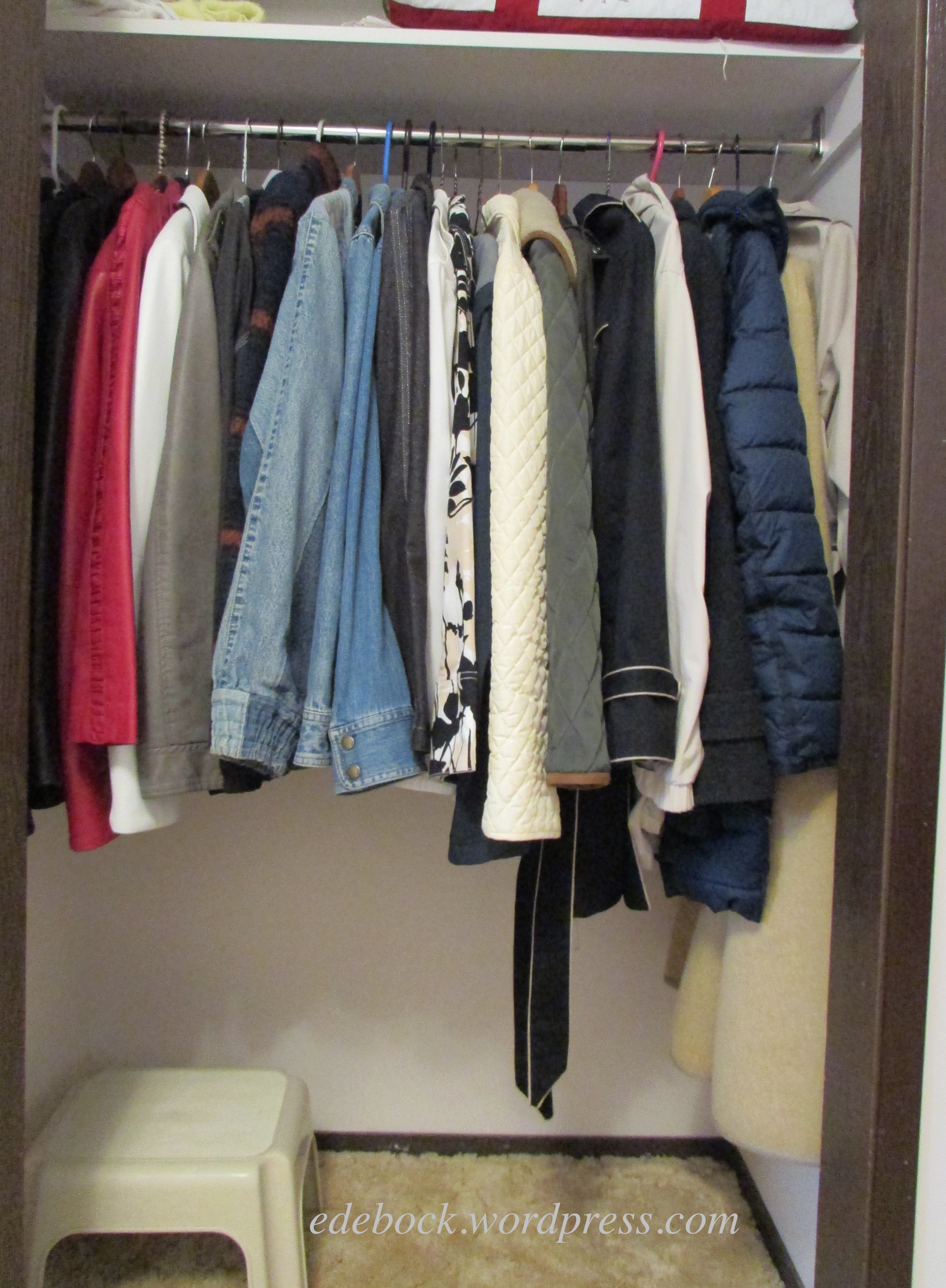
I started by rounding up all my coats and jackets from various closets around the house and hanging them in one place, the guest room closet. There were 25 of them. Yes, 25! Even with four distinct seasons, no woman needs 25 coats! 

IMG_1641

The next step was the easiest. Pulling out the coats and jackets that I wear regularly, I moved the fall and winter ones to the hall closet and those that I only use in the warmer seasons to the hanging rack in the basement storage room. I also pulled out the jean jackets that I wear from time to time throughout the year and moved them to a different closet.

Next came the much more difficult task of deciding what to do with the 13 items that remained. I’m not as disciplined as I’d like to be when it comes to getting rid of things which is why I ended up with 25 coats and jackets in the first place!

Two items were put aside to keep for sentimental reasons. The first, a vintage reversible wool cape, originally belonged to my mother. Forty-four years ago, on a blustery October day much like today, I wore it over my wedding dress. Thirty years later, my daughter wore it over hers on a stormy mid December day. Though I’ve only worn it a handful of times, it has become a family heirloom and I won’t be parting with it. Since capes are very much on trend this fall, I moved it to the front closet where I might remember to wear it this year.

Scan copy 11

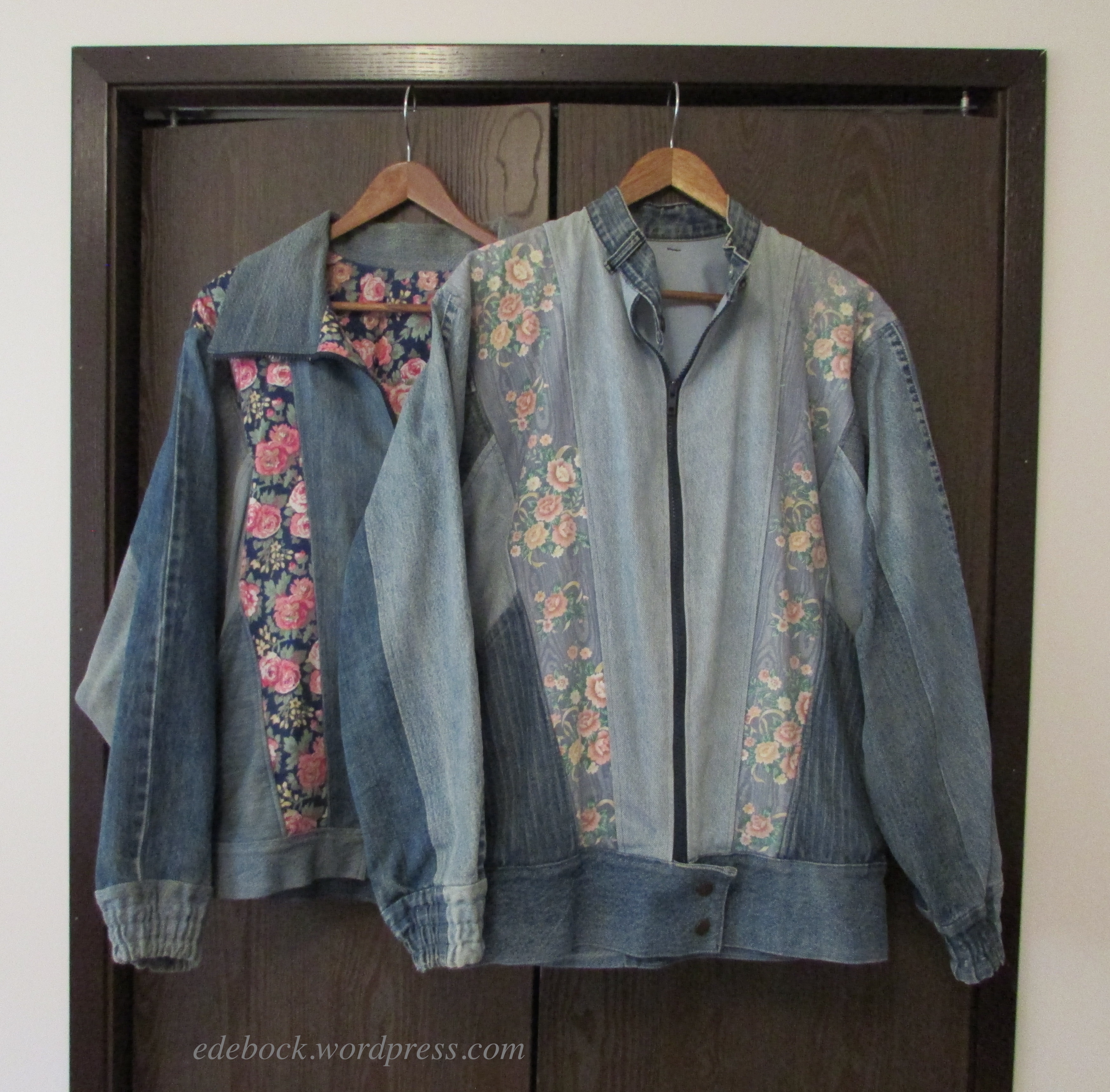
The second item that I’m keeping for strictly sentimental reasons is a patchwork jacket that I made for myself from recycled jeans a long time ago. I made a similar one for my very dear friend, Joan. When she lost her valiant battle with breast cancer in 2006, Joan’s husband returned it to me and the two jackets have been hanging side by side in our storage room ever since. Mine has been returned to that spot and they will stay there, a reminder of an enduring friendship that was cut short far too soon. 

IMG_1644

That left me with 11 coats and jackets to decide what to do with, but I hadn’t got rid of any yet! The next step was to try each one on, stand in front of the mirror, and ask myself, “Does this fit well?” “Is the colour right for me?” “Do I love it?” and probably most important, “How likely am I to ever wear this again?” At that point, the donate pile began to grow quickly!

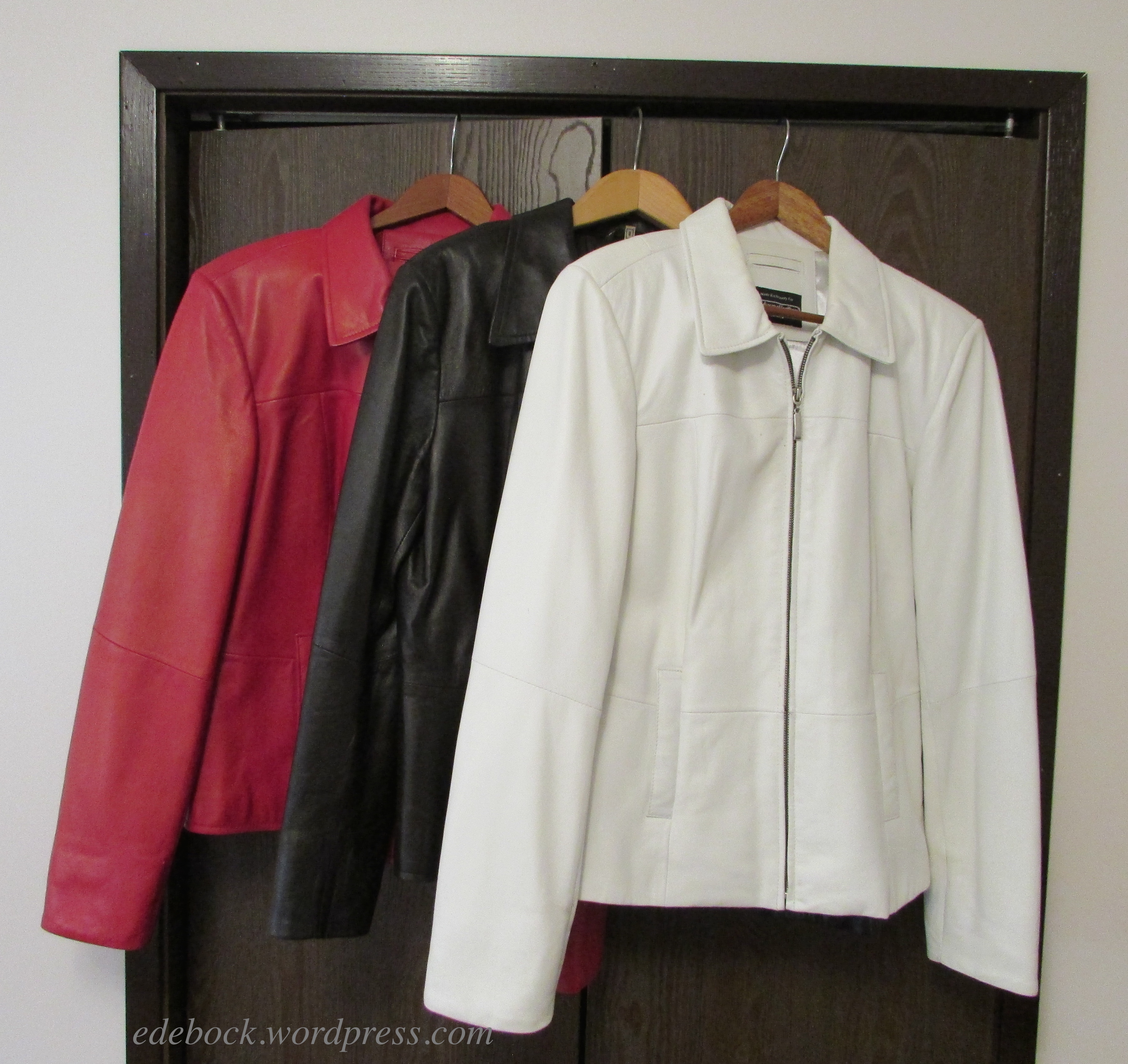
Soon I was down to just three jackets hanging in the closet; three beautiful leather jackets that originally belonged to my very generous sister-in-law, Sue. She often shares with me when she cleans out her own closets. I’ve had the jackets for quite awhile and don’t expect to wear them again, but I hesitate to drop them off at the thrift store with the rest of my donate items because I know that that they’ll be sold for far less than they’re worth. I thought about trying to sell them on one of the buy and sell sites that I belong to on Facebook, but I don’t really want to profit from them, especially when I didn’t buy them in the first place. Then I had an idea. After consulting with Sue, who gave her enthusiastic approval, I’ve decided to sell the jackets and donate the proceeds to neuroendocrine cancer (NETS) research. The recent CNETS HOOFING IT Across Canada fundraiser that I took part in fell a little short of our $100 000 goal, so every bit that we patients can add will help! 

IMG_1647