The Tea Girl of Hummingbird Lane
Lisa See
 I read mostly for enjoyment, but I love a book that transports me to another place or perhaps another time and a book that teaches me something. The Tea Girl of Hummingbird Lane was such a book. Before reading it, I knew absolutely nothing about the Akha people, a minority hill tribe who live in small villages in Thailand, Myanmar, Laos, and Yunnan province in China.
As the story opens in the late 1980s, the families of Spring Village are living a very traditional lifestyle without modern conveniences and with very little contact with the outside world. Traditional beliefs and rituals dominate their existence and their lives are aligned around the seasons and the growing of tea. When twins are born to a young village couple, the father is required to kill his babies and the couple is banished from the village.
That’s when I had to put the book aside to do a bit of research. Who were these Akha people? Did they really exist? Were they still living that way in the late 1900s? I learned that indeed they were. The Akha believed that only animals could give birth to more than one offspring, therefore until about 20 years ago, twins were considered an extremely ominous occurrence and were killed immediately, as were babies born out of wedlock.
Now, back to the story… Gradually, the outside world begins to encroach on Spring Village. Li-yan, daughter of the local midwife and one of the few educated girls on the mountain, slowly begins to reject the customs that shaped her early life. When she gives birth to a baby out of wedlock, she rejects tradition and travels with her newborn daughter to a nearby city. There she leaves the baby, wrapped in a blanket with a tea cake tucked in its folds, near an orphanage.
While Li-yan eventually leaves her village for further education, a job, and city life, her daughter, Haley, is raised in California by loving adoptive parents. Despite her privileged childhood, Haley wonders about her origins and across the ocean, Li-yan longs for her lost daughter. Over the years, each searches for meaning in the study of Pu’er, the tea that has shaped their family’s destiny for centuries.
Perhaps the well-researched story tells us more about the history and the production of tea than we really care to know, but it’s also an enthralling family saga; a captivating story of mothers and daughters, families, fate and love. A secondary narrative depicts what it might be like to be one of the many Chinese girl children adopted by American families.
My favourite quote? “Those who suffer have earned contentment.”

Fashion Friday will return next week.
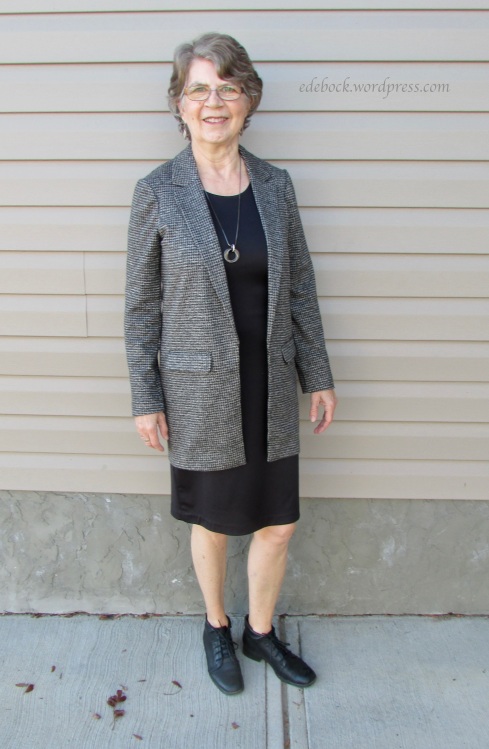
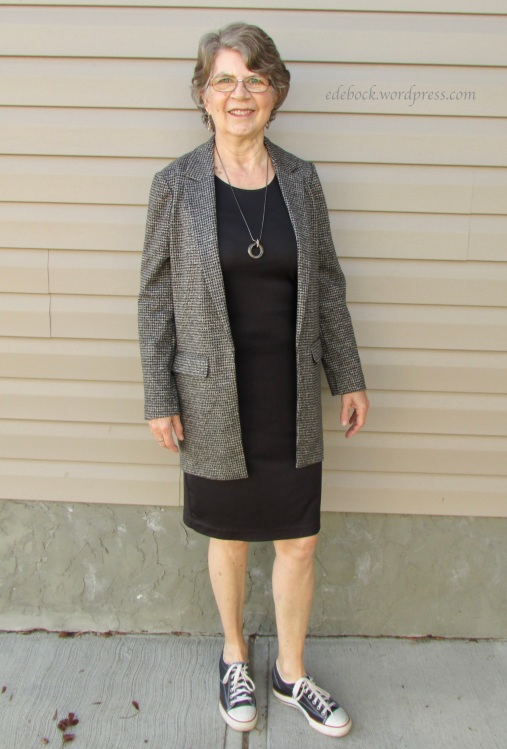
 Since well-known stylist and wardrobe consultant, Allison Bornstein, posted










 19-year-old, Ruby, driven by her difficult relationship with her mother, runs away from her home in England and seeks refuge with the grandmother she hasn’t seen for many years. Her unexpected arrival on Dr. Iris Black’s doorstep in Cairo brings life and disorder into the elderly woman’s house.
 This week I’m featuring a garment that has been in my wardrobe since my teaching days. Far from new when I retired in 2007, it’s over 20 years old and now qualifies as vintage in the fashion world. Although I don’t wear it very often, I keep it because I love it and on those occasions when I do pull it out, as I did for church last Sunday, it feels like I’m wearing something new.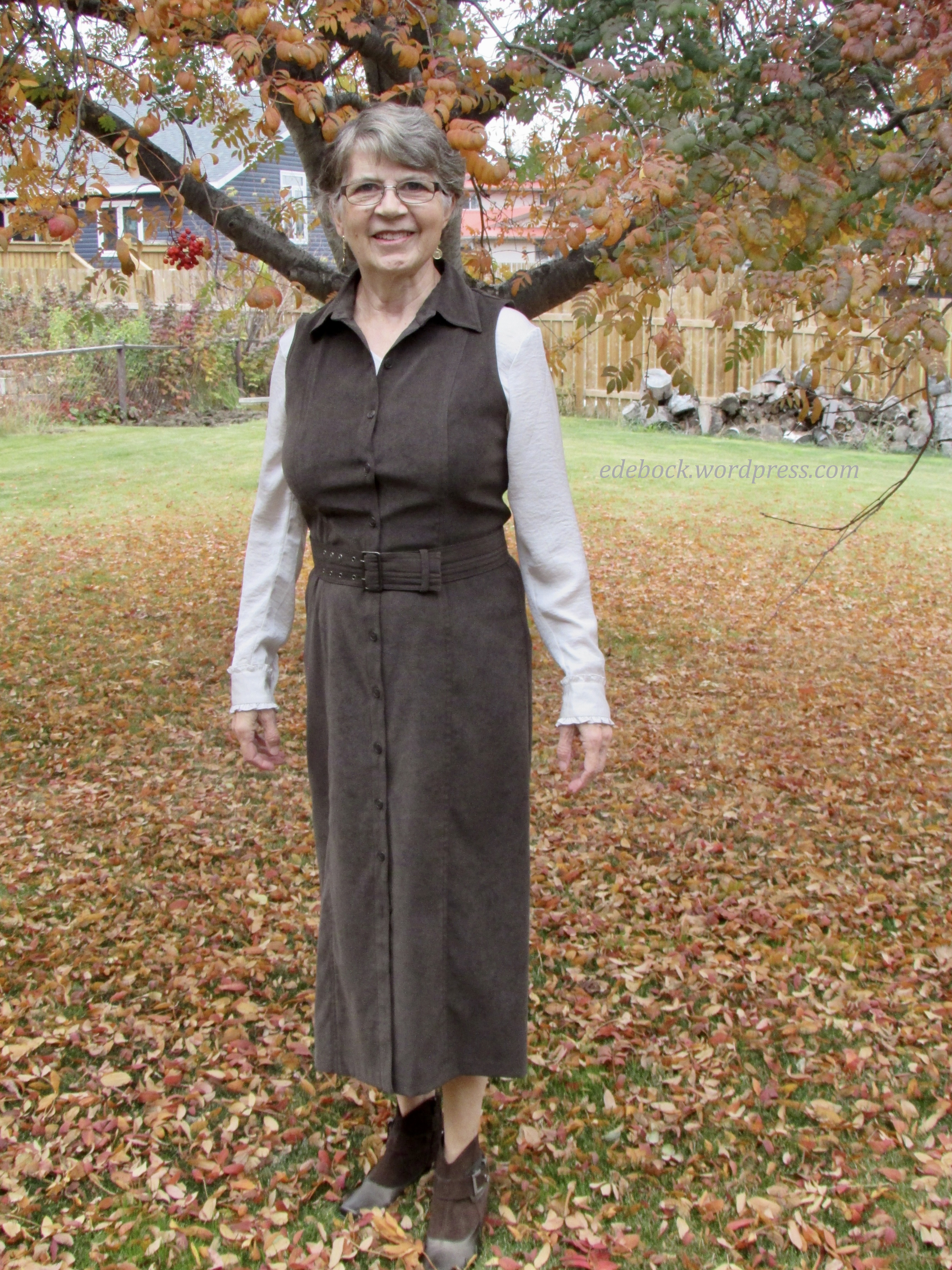










 Following Augustine