Supernaturals

Supernaturals_11

As many of you are probably aware, Canada has been reeling in recent weeks over the “discovery” of the buried remains of hundreds of children on the grounds of former Indian residential schools across the country. I use the word “discovery” loosely because our Indigenous people have been trying for years to tell us about the horrors that went on behind the walls of these government mandated, church run schools between 1828 and 1996. What shocks me is not the discovery of the bodies, but the fact that there was such widespread ignorance among the Canadian population about this sordid chapter of our history. I had to remind myself that this is something I learned about only through first hand contact with residential school survivors when I lived in the north and through university level studies. I have purposely avoided tackling this issue on the blog because it’s a very complicated one and I don’t want to add to the chatter unless I can do so in a meaningful and restorative way.

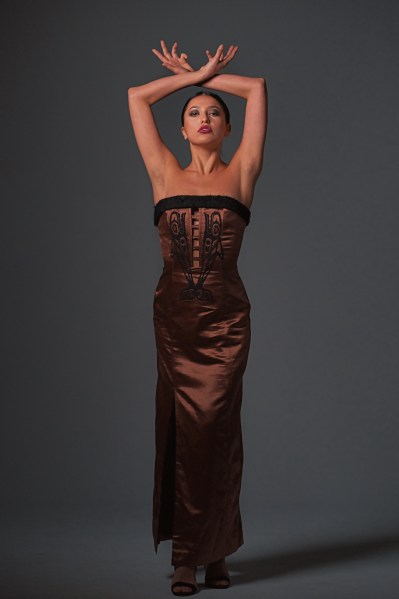
Instead, today, I want to introduce Supernaturals, a new culturally focused Indigenous modelling agency launched in Vancouver, B.C. this spring. “Our mission at Supernaturals is to celebrate and make visible Indigenous peoples at a high level in media arts, culture, community, land-based wisdom, and the global market,” says co-founder Joleen Mitton, herself a veteran Nehiyawak (Cree) model and the founder of Vancouver Indigenous Fashion Week.

“Indigenous people are in high demand right now, and we want to be at the forefront of this new wave of cultural awareness supporting our own people in an industry that has traditionally been very difficult to thrive in,” explains Mitton’s partner in the business, Patrick Shannon, a member of the Haida nation and the founder of InnoNative, an Indigenous B.C. based film production company.

Supernaturals’ goals extend beyond modelling. They aim to uplift communities and emerging Indigenous talent through skills development, employment, and healing as well as by addressing the issues of representation, mental health awareness, and poor cultural sensitivity in the modelling world. They provide clients the opportunity to be a part of healthy reconciliation within the media, fashion, and modelling industries.

Supernaturals_7

Supernaturals launched with a roster of 8 models and the group has quickly grown to include 7 more. Well on their way to success, the agency has already landed an interview with Vogue Magazine and a contract with Roots Canada!

Supernaturals_13

eye

Logo

Fashion Friday may be somewhat hit and miss over the next few weeks. After more than a year in virtual lockdown, we are committed to spending lots of time camping and with family this summer. At times, I won’t have access to the internet.

Inspiration for a hot day

LogoI often get outfit inspiration from other fashion bloggers. Back in April, when I saw this post from Jennifer Connolly, writer of A Well Styled Life, it sparked an idea for me.

stripe-tee-dress

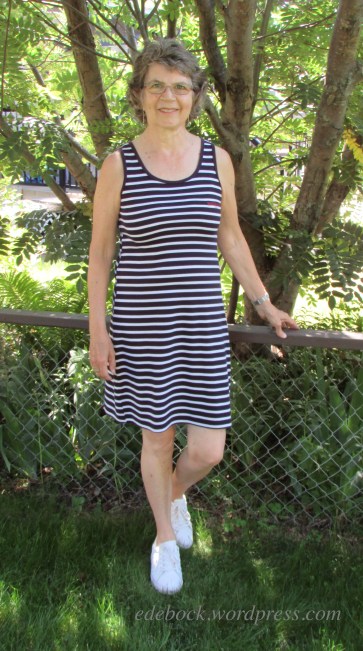
I bought a similar poly cotton dress at one of our local thrift stores several years ago, but until now I’d only used it as a cover up at the beach. I dug it out of the beach bag, washed it, hung it in my closet, and waited for the heat of summer to arrive here in Alberta. This week’s heat wave was the perfect time to try it out.

IMG_2559

As you can see, there are several differences between my dress and Jennifer’s, the most obvious being that mine is sleeveless and the stripes are much narrower. On closer inspection, you’ll see that the hemlines are also different. When we’re inspired by the way another woman dresses, the idea is not to copy her, but to take elements of what she’s wearing and make the look our own. I started by pairing the navy and white dress with a pair of black sandals, but I also tried it with my white leather sneakers. 

IMG_2566

If I was to step out of the shade where the photos were taken, I’d also want a hat to shield my face from the sun. 

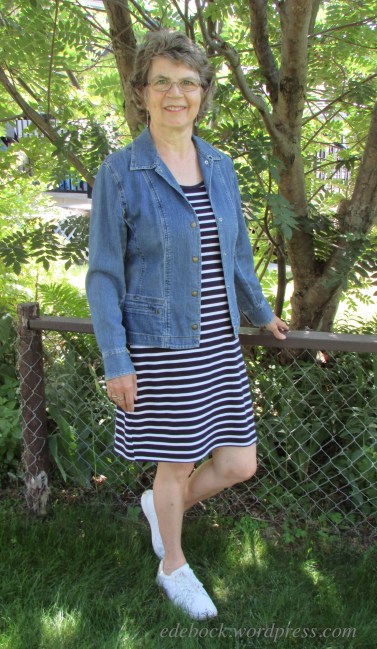
And though it was much too hot for a jacket when the photos were taken, I really like the way the dress looks with a jean jacket. 

IMG_2580

One thing I did learn from all of this was how comfortable a dress like this can be on a really hot day. We rarely get a week like this one with temperatures in the high 30s C (90s F) but from now on, I think I’ll make sure that there are at least one or two casual dresses in my summer wardrobe.

PS. Happy Independence Day to all my American readers! We celebrated Canada Day on the 1st. 


How did pink become a girls’ colour?

pink shoes

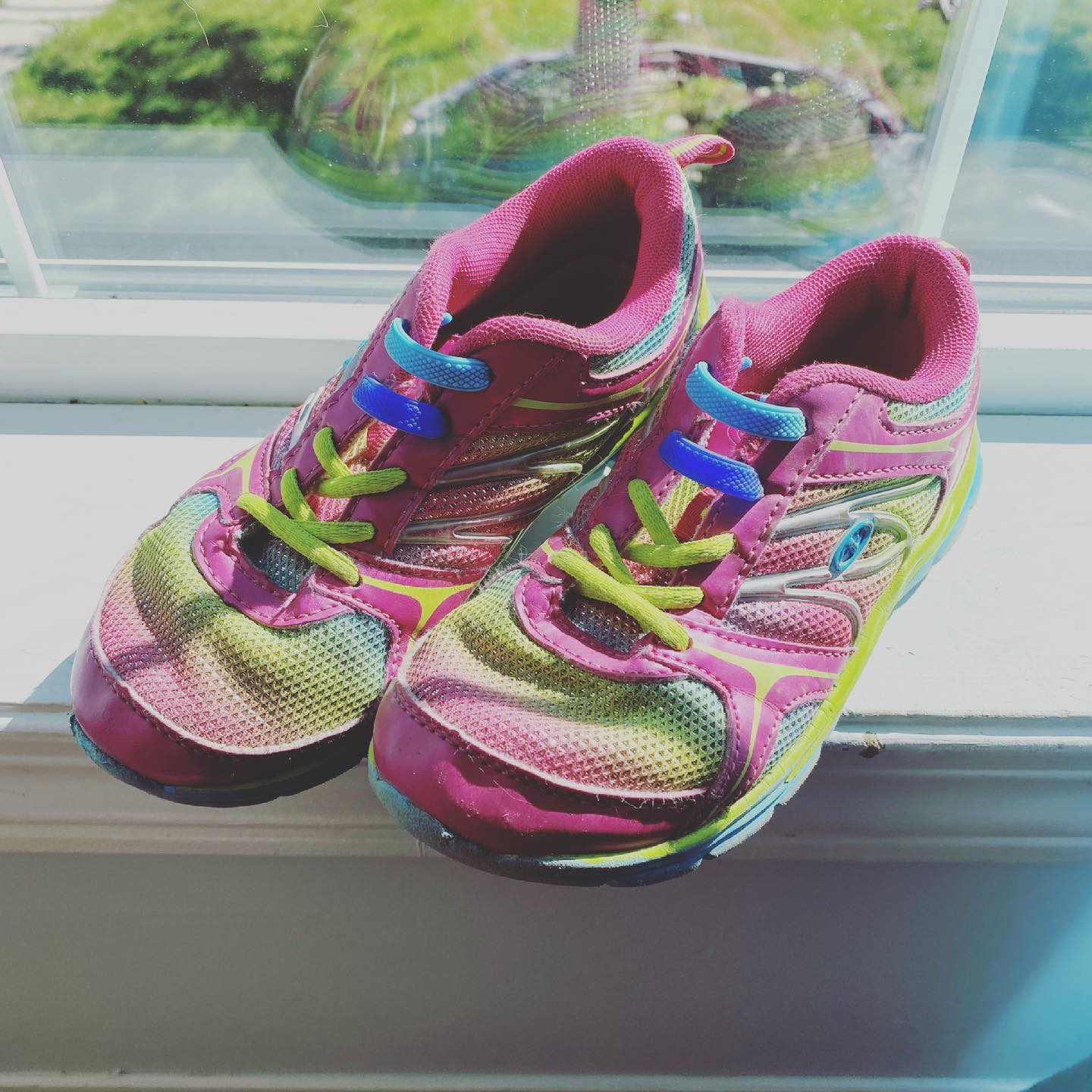
Our grandson, Simon, loves the colour pink. He always has. Last week he was so excited to have finally grown into this pair of his sister’s hand-me-down shoes. He proudly wore them to school, but only once. The next morning he sadly told his mother that he would never wear them to school again because he was picked on so badly for wearing “girl” shoes. He’s in grade one. In my opinion, there’s something seriously wrong with a world where a little boy is bullied for wearing his favourite colour to school.

So how did pink become a girls’ colour anyway? It hasn’t always been. Historically, pink was just another colour worn by men and women alike. In many parts of the world, it still is.

In the past, in both Europe and North America, most parents dressed their children, boys and girls, in white dresses until they were about six years old, which was also when they usually had their first haircut. The outfit was practical. White cotton could be bleached and dresses made diaper changes easy.

Franklin-Roosevelt

Franklin Delano Roosevelt, age 2 1/2, wearing a gender neutral outfit.

In the mid 19th century, pastels became popular for babies, but at first they weren’t gender-specific. It wasn’t until just before World War I that pink and blue emerged as indicators of gender, but you might be surprised to learn that, at that time, pink was considered a boys’ colour and blue, a girls’! An article in the June 1918 issue of the trade publication Earnshaw’s Infants’ Department said, “The generally accepted rule is pink for the boys, and blue for the girls. The reason is that pink, being a more decided and stronger color, is more suitable for the boy, while blue, which is more delicate and dainty, is prettier for the girl.”

Babies of the 1940s were the first to be dressed in the sex-specific clothing and colours that we’re familiar with today. The popularity of pink for girls and blue for boys actually waned in the 1960s and 70s during the height of the women’s liberation movement. Parents who felt that dressing their daughters in feminine or stereotypically “girly” clothes might limit their opportunities for success favoured dressing their children in neutral colours and fashions, but by the 1980s, gender oriented children’s clothing was back in style. 

It seems to me, however, that there’s a big discrepancy between what’s deemed acceptable for little boys and little girls. I suspect that many of the girls in Simon’s class wear blue to school. Are they bullied? No! Does anyone question their femininity? Of course not! Then why can’t a little boy wear pink shoes to school without being harassed?

Children aren’t born with prejudices about certain colours. That’s a learned behaviour. I lay the fault at the feet of fathers and grandfathers who were raised with the idea that pink is only for little girls and that a boy should never wear pink. Only when men become bold enough and secure enough in their own masculinity to take back the colour pink will it become just another colour again. Only then will Simon be able to wear his favourite colour without fear of being tormented.

Logo

Skinny jeans, yes or no?

LogoAccording to the Gen Z teens and twenty-somethings, who are young enough to be my grandchildren, skinny jeans are done, dead, over. Apparently they’ve reached their expiry date. This shouldn’t come as a big surprise. The younger generation needs to distinguish themselves from we oldies by rejecting what we wear and that’s okay. That’s the way it’s always been. If their mothers and grandmothers were wearing baggy jeans, they would choose skinny. The fashion industry also needs to keep changing styles or they wouldn’t sell enough product. That’s not new either. So, skinny jeans are out and baggy ones are in.

On the other hand, a lot of older fashionistas are are making it clear that they’re not ready to give up their skinnies and I’m definitely one of them. Though I’m not adverse to wearing looser jeans and often do, I still like my skinnies and I’ll continue wearing them, especially my favourite grey ones from cabi which you’ve seen on the blog several times in the past.

IMG_2496

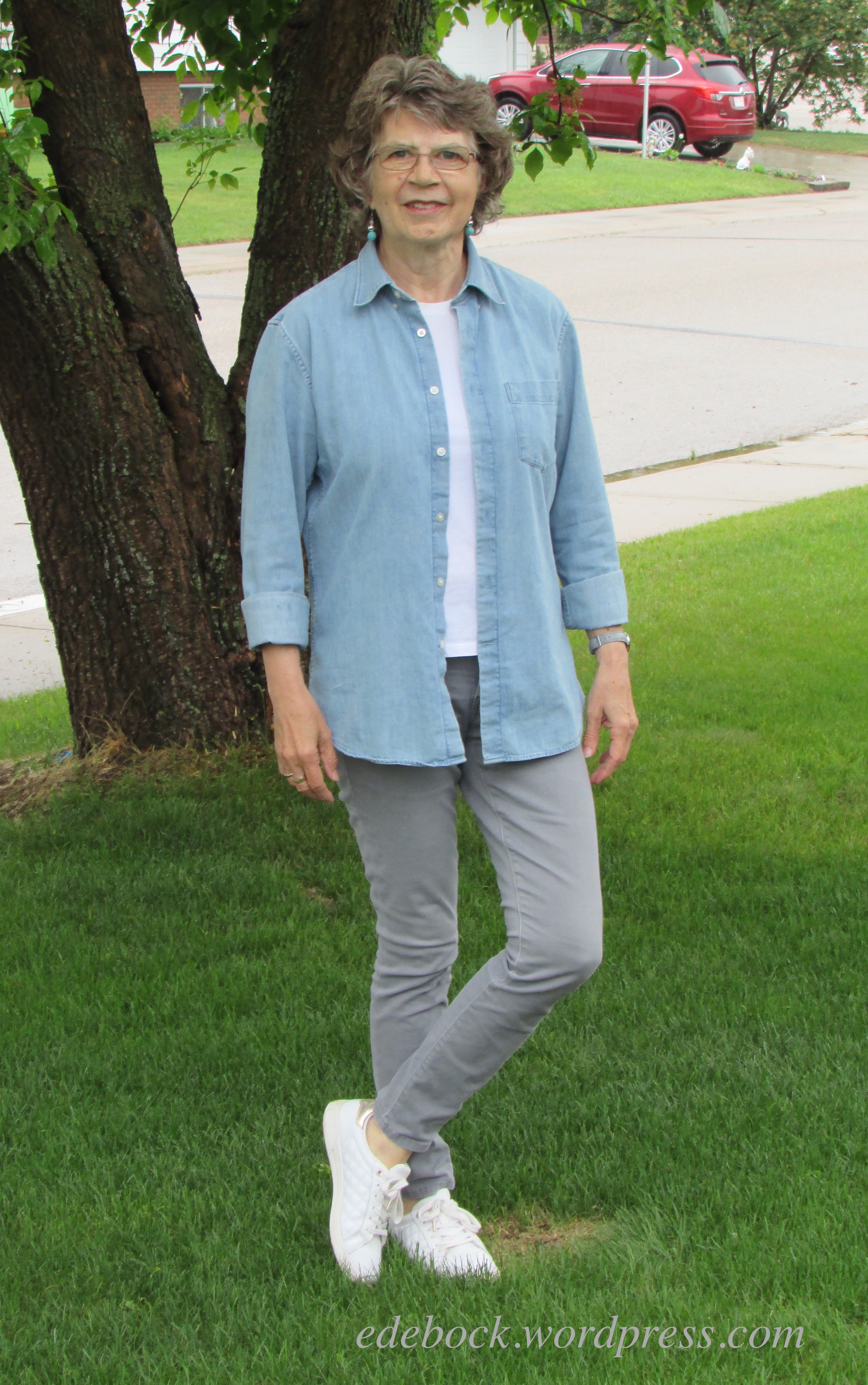
This is a super casual, comfortable, relaxing at home on a rainy day look. Hubby and I dashed outside during a lull in yesterday’s all day rain to snap a couple of photos for this post. I’m wearing the cabi jeans with the Uniqlo denim shirt that you first saw here, a plain white Uniqlo t-shirt, and the white leather sneakers that just had to be mine.

I wonder how much the changing trend from skinny to looser jeans has been influenced by what we’ve been wearing for the past year. I think, in many cases, jeans hung in closets while wearers, stuck at home, turned to the comfort of softer pants like leggings and sweats. I admit that squeezing back into skinnies, especially if you’ve put on a few pandemic pounds, might not be particularly comfortable at first and looser jeans would have a certain appeal.

I also wonder how the move toward baggy jeans will influence the footwear market. After all, what other jean style tucks so neatly into tall boots?

Personally, I would say that skinny jeans are not dead. They’re simply not a trend anymore. They’ve moved into the classic style category and will likely be around for a long time yet. If you like them, wear them. If you don’t, don’t. That really should be the one and only fashion rule, shouldn’t it?

IMG_2493

Lady in linen

LogoA couple of months ago, I wrote this post about the blue denim shirt that I had recently purchased at Uniqlo. I actually bought two blue shirts that day, but I’ve been waiting for warmer weather to start wearing the second one, Uniqlo’s Premium Linen Long Sleeve Shirt.

In the past, I avoided linen because it wrinkles so badly, but after reading so many positive reviews about this cool, comfortable, all-natural fabric, I decided to give it a try. I do admit that at first I was constantly tempted to take it off and iron it again, but I just kept reminding myself that linen is supposed to look wrinkled. It’s something you just have to embrace if you’re going to wear this light, breathable fabric, and it’s part of what gives it a casual, summery vibe. For a dressier look, I’d definitely suggest a linen blend. While not 100% wrinkle free, they do at least promise a slightly less crumpled look.

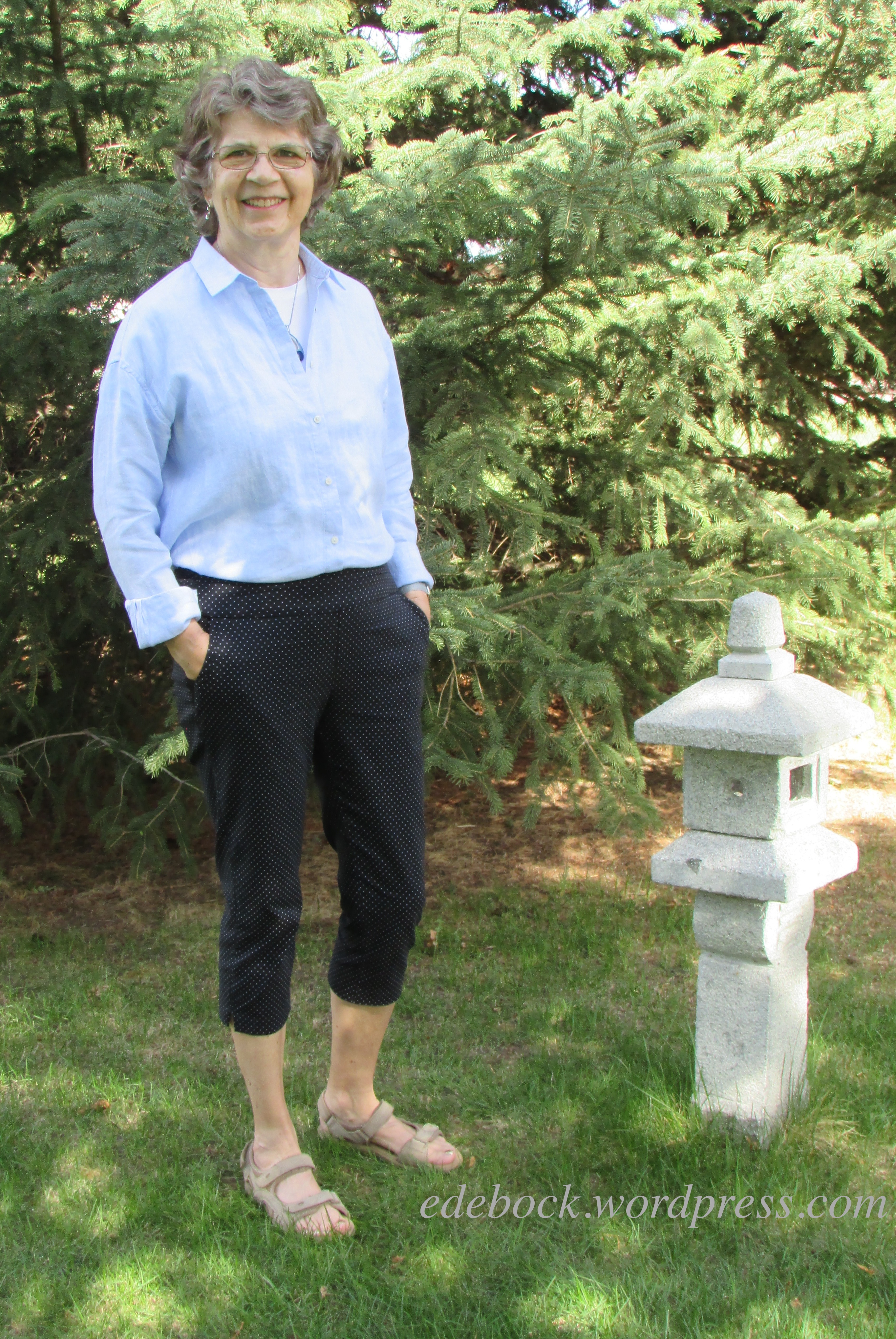
I’m wearing a size medium, my usual size in Uniqlo tops. I could probably wear a small, but I like the shirt’s comfy, casual, and slightly oversized look and feel. Here I’m wearing it over a column of navy made up of the sleeveless cabi Scallop Top from their Spring 2019 collection and a pair of capris that I picked up at our local thrift store last summer. The well-worn sandals are from SoftMoc.

IMG_2412

One of the things I like to ask myself when I’m considering adding something to my wardrobe is whether I can wear it at least three different ways with items that I already have in my closet. If so, it will probably be a good purchase. This won’t always work for something like a special occasion dress, but it’s a good rule of thumb for most other wardrobe purchases and it definitely works for this one.

IMG_2426

Here I switched the cabi top for a plain white crew neck t-shirt from Uniqlo. I don’t often tuck my tops in, but the linen is so lightweight that even though the shirt is quite voluminous, the fabric didn’t bunch up and add volume around my waist.

IMG_2432

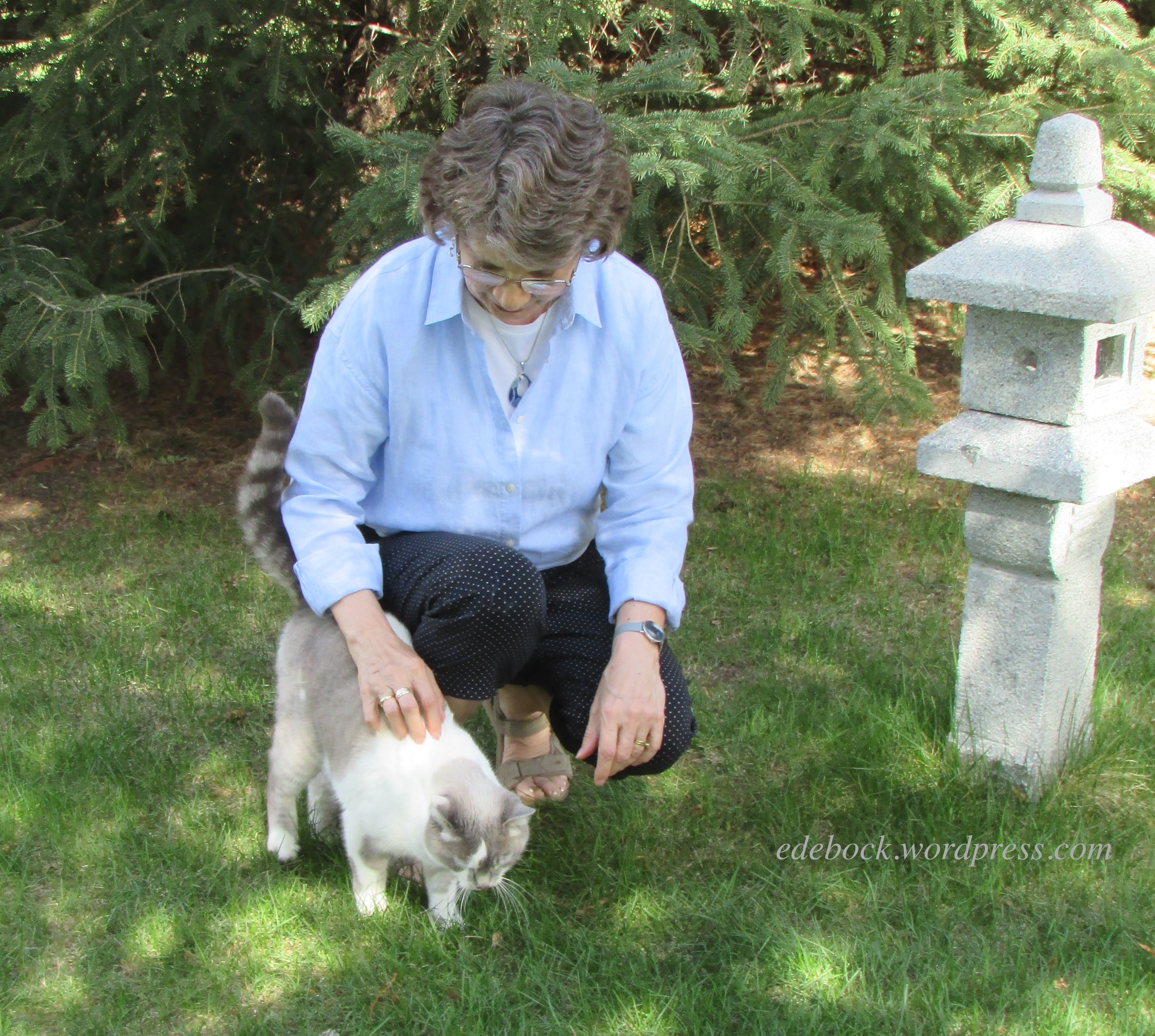
The beautiful feline is our next door neighbour, Sophie. She thinks that our yard is just an extension of hers and that we are some of her people and we’re just fine with that! ❤

IMG_2446

Clearly we should have taken the photos of this final look before I tucked the shirt in! You can definitely see what I mean about linen wrinkling.

Do you wear linen?

Wearing shorts after 50

LogoThere seems to be an unwritten fashion rule that says that women over a certain age shouldn’t wear shorts. This week, I’m going to join several other bloggers in attempting to debunk, or at least question, that concept.

On Monday of this week, three of the bloggers that I read regularly and another that I’ve only recently discovered teamed up to discuss the topic of wearing shorts after 50 or 60. I hope they don’t mind if I share a bit of what they had to say with you and add some thoughts of my own.

Susan Blakey of une femme d’un certain âge wrote that she hasn’t worn shorts, except for working out, for a decade or more. For the blogging exercise, however, she tried several different shorts outfits including this one.

fdaaab88355add57c5eeb12ea8706a87

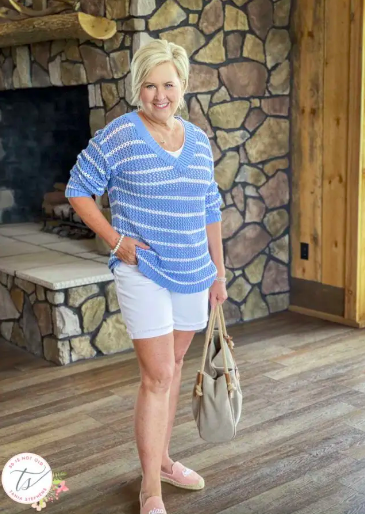
So why do women in their 50s, 60s, or beyond hesitate to wear shorts even on hot summer days? There are many different reasons, but the most common one is probably the fact that we’re self-conscious about how our legs look. They may not look as great as they did when we were in our twenties, but as Tania Stephens of 50 IS NOT OLD says, “I probably wouldn’t even look at your legs if we met on the street. I might notice your eyes, smile, hairstyle, and even clothes, shoes, jewelry, and handbag. BUT, unless your legs were colored bright orange, I probably wouldn’t give them another thought.” She certainly looked comfortable and confident in her white jean shorts and blue and white striped sweater.

Screen Shot 2021-05-25 at 8.06.46 PM

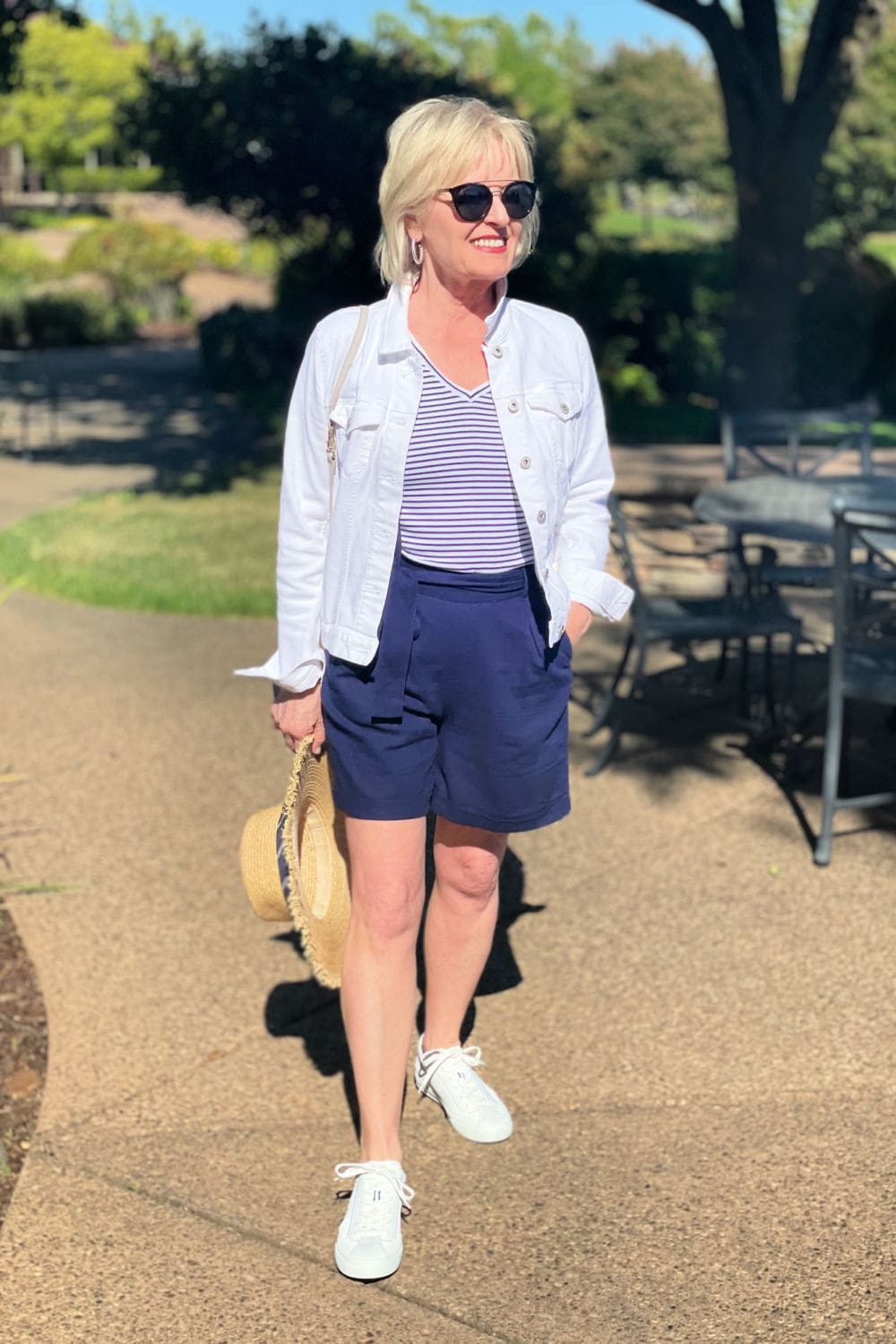
Choosing the right length and style of shorts for your body can be challenging, but a pair of shorts can be just as fashionable as any other item of clothing and they can be dressed up or down. Jennifer Connolly of A Well Styled Life didn’t want to look too sporty, so she chose a looser cuffed and pleated pair that doesn’t look like they’re meant for the gym.

navy-linen-blend-shorts

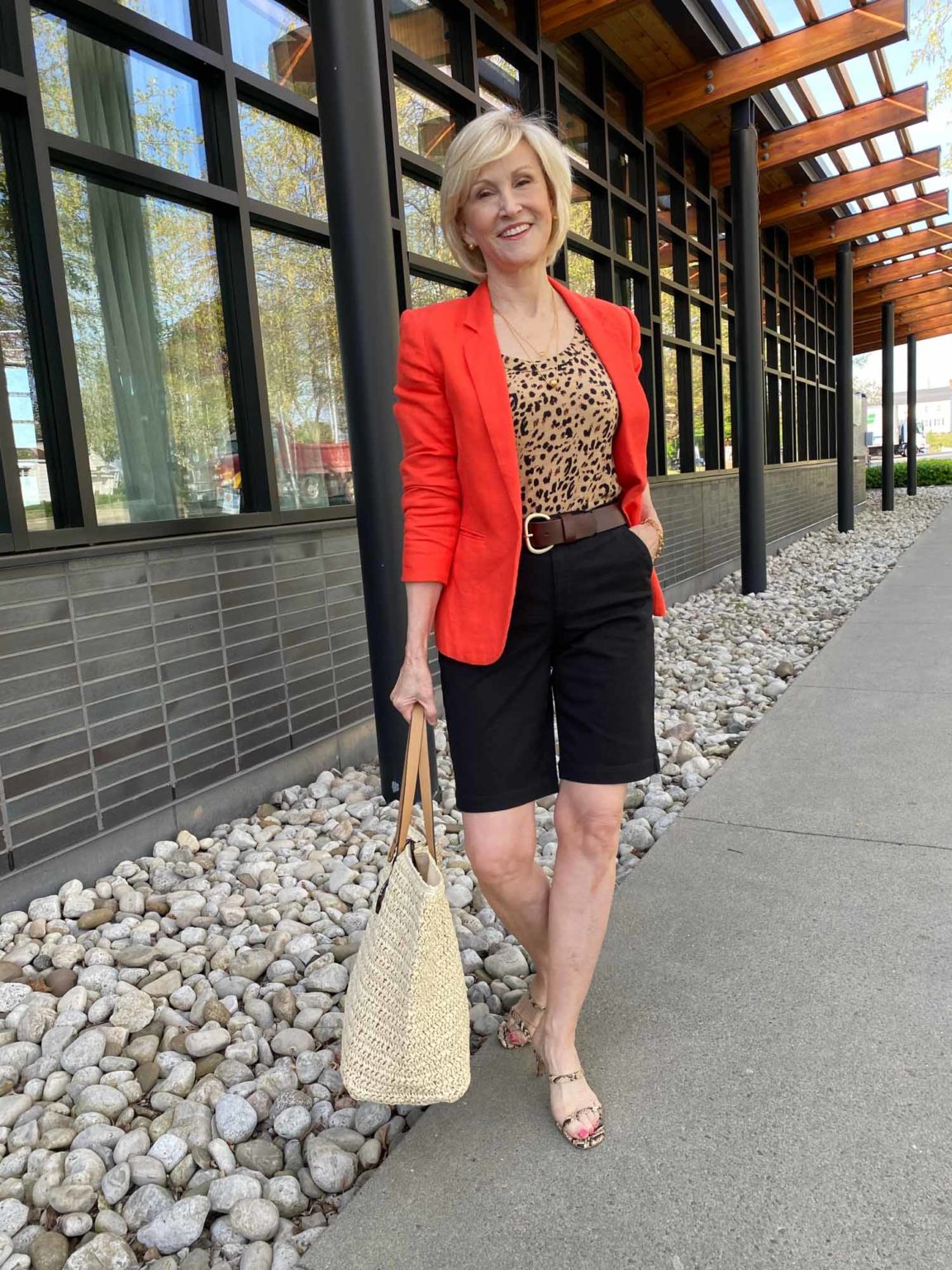
It was only through these three collaborating with Deborah Boland of Fabulous After 40 that I discovered her blog. She decided to go with an upscale look that proves without a doubt that wearing shorts after 50 doesn’t have to look frumpy. In fact, it can be sophisticated!

new-1-1152x1536

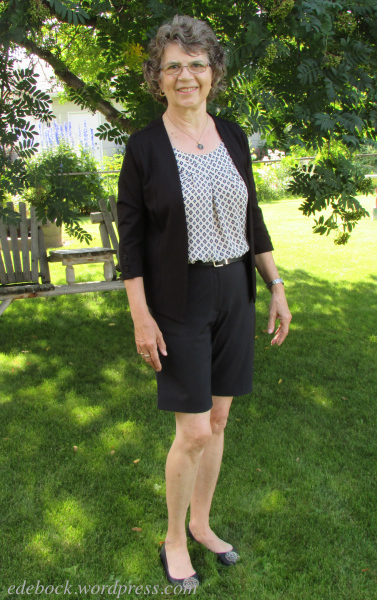
Deborah had the suits with shorts look that has been on trend since spring 2020 in mind when she put together this ensemble. I tried a similar look last summer.

img_1254

I liked the outfit, but my summers are usually pretty casual. When it finally warms up enough, I’m more likely to be seen wearing shorts on the golf course with a sleeveless golf shirt.

I’m not telling you that you should wear shorts if you’re over 50, or like me, over 60. I’m simply suggesting that you shouldn’t let someone else’s opinion or a so-called “fashion rule” dictate what you wear. If you’re truly uncomfortable with the idea of wearing shorts, if that’s really not your style, then by all means don’t wear them. If you’re unsure though, and want to give them a try, I’d suggest going with a longer pair that end just above the knee. They tend to look less boxy and you likely won’t feel as self-conscious as you might in a shorter pair. For more ideas and advice, click the links to the blogs I mentioned above.

Now it’s your turn. Do you wear shorts? Why or why not?

What are your style adjectives?

LogoWords are powerful. Words can build us up or knock us down. Words can also help us build a wardrobe and create outfits that say what we want to say about ourselves.

Several years ago, I chose three adjectives to describe my style… classy, confident, and comfortable. I’ve since added two more… casual and creative. The fact that they all start with the letter C makes them easy to remember, but that was simply a coincidence. Every time I get dressed, even if I’m not going anywhere that day, I stand in front of the mirror and run through those five adjectives in my mind. I’m happiest with my outfit if it ticks all five boxes. I’ve also used these words to help me weed garments out of my closet that probably didn’t belong there in the first place and to help me make wiser purchases.

Once in awhile, there are, of course, dressier events (or at least there were before Covid) when casual doesn’t work to describe the look I’m going for, but even on those occasions I use the other four adjectives to guide my outfit choices.

One of my fashion goals in the past couple of years has been to add more colour to my wardrobe, but since I still gravitate toward neutrals I’m not ready to make colourful one of my adjectives. Besides, you don’t want too many style adjectives. I would suggest three to five.

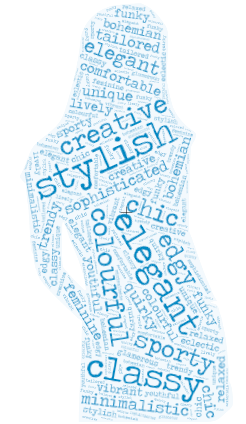
So, here’s an exercise for you. Below is a list of 48 adjectives. Look them over and choose three to five that describe what you would like your wardrobe to say about you. Then, share them in the comment section below. If the words you want aren’t on the list, feel free to choose different ones, but the English teacher in me says please don’t use boring words like nice or pretty. For this to be effective, you want your words to be more specific than those.

minimalistic             sophisticated            fun                      eclectic

bold                        sporty                   elegant                  edgy

trendy                   sexy                     classic                   tailored   

whimsical                glamorous                chic                     feminine 

artistic                 polished                 coordinated              cute

funky                    stylish                 dressy                   outdoorsy

relaxed                  graceful                 unique                   quirky

confident                preppy                   bohemian                 classy

colourful                approachable             lively                   creative

strong                  fierce                   youthful                 vibrant

casual                    current                  responsible              authentic   

cool                     happy                    modest                   soft     

Screen Shot 2021-05-19 at 8.46.05 PMEvery one of us is unique and I can’t wait to hear which adjectives you choose!
Has Covid changed how you dress?

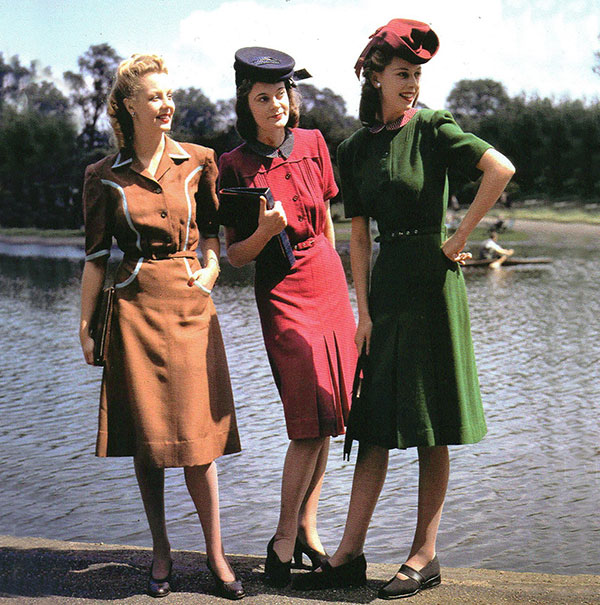
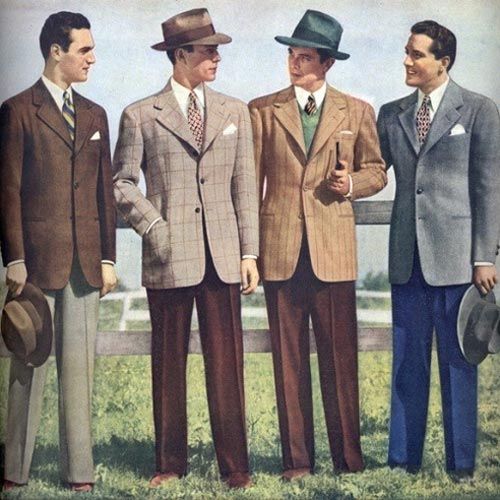
LogoMy mother was 17 when WWII broke out on September 1, 1939 and 23 when it ended six years later. I remember her telling me about how fashions changed during the war. Shortages and efforts to conserve precious materials for the war effort brought about shorter hemlines and more streamlined silhouettes in women’s suits and dresses. Decorative elements disappeared, resulting in a more classic style. For men, single-breasted suits replaced double-breasted, lapels narrowed, and trousers were no longer made with cuffs. There were even restrictions on the number of pockets a garment could have. 

WW2-Dresses-1943-Designer-Norman-Hartnell-Photo-James-Jarche

e198b87ca8295ac7b4d3b8cbb23f51c5

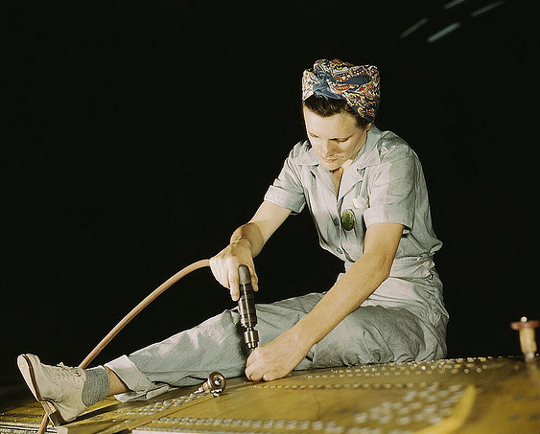
With many of the men away at war, women were called upon to replace them in the work force. My mother left school and went to work in a paper mill. Pants became a staple of women working in factories. Once they discovered the comfort and convenience of wearing pants, they were reluctant to give them up when the war ended. This resulted in a permanent change in fashion. I don’t remember my grandmother ever wearing pants, even to work in the garden, but pants were very definitely part of my Mom’s wardrobe for the rest of her life. 

1940s-pants-2 2

Scan

Mom dressed for the mill

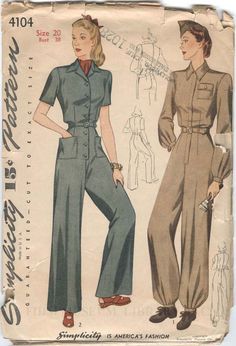
Until I started doing research for this post, I didn’t realize that jumpsuits (or boilersuits as they’re called in the UK) which seem to come and go as ladies fashion to this day, had their roots in a very practical item that originated during WWII. Known at that time as a “siren suit”, this one piece garment could be hastily pulled on over pyjamas or a nightgown when the siren blew and the wearer had to escape to an air raid shelter. 

sirn suit

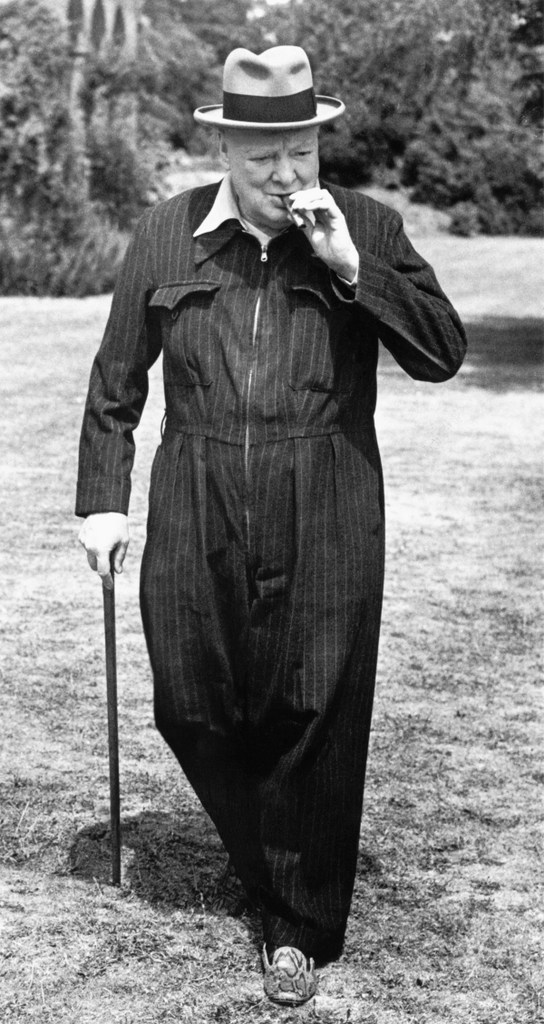
Even Winston Churchill had a siren suit!

Churchill_Romper_Suit_and_Siren_Suit_pinstripe

We aren’t living in wartime, nor do we face the deprivation that our parents and grandparents faced during those difficult days, but the past fourteen months have been a time of unprecedented upheaval and whether we like it or not, Covid will result in cultural change. Fashion is a potent reflection of a period in time and it’s interesting to think about how our current situation is changing how we dress. 

I have one friend who has already been informed that she will continue to work from home even after the pandemic is over and I know of several others who are expecting the same thing. Brands and retailers have seen a huge shift in the kind of clothing that people are purchasing. While many of us simply aren’t shopping at all except for essentials, sales of comfort-wear items, such as sweatpants and leggings, have increased. The question now is whether this turn toward casual, easy-to-wear clothing will persist once life returns to something closer to normal.

Has Covid changed the way you dress? If so, do you think this will be a permanent change? Is there something you look forward to buying and wearing once the pandemic is over? 

Fashion humour

LogoI’m quite surprised at how easy it’s been to keep Fashion Friday going for over five years without running out of new topics to write about, but lately the well of ideas seems to be running dry. I think it’s more than writer’s block though. I’m sure it’s partly due to the fact that I’m bored with the clothes in my closet and I’ve hardly bought any new ones in the past 14 months, but I think it also has a lot to do with the state of the world we’re living in. Writing about fashion seems pretty frivolous when you’re living in the province with the highest rate of active Covid cases in Canada and the United States and the situation is getting worse every day.

After wracking my brain for something meaningful to write about this week and coming up empty, I decided that maybe what we actually need is a bit of fashion humour to lighten the mood. We don’t have to look any further than the runway fashion shows where designers display their latest creations to find a few laughs and ask, “What were they thinking?”

Perhaps it would be best if designers didn’t let their creative juices flow when they’re hungry!

20(64)

I’ve always said that a mother should grow a new arm with each new child. Perhaps that’s what this designer had in mind, but that would be one big family!

d9a8f3d82289d3e8ec980866ff4d4de6

There’s a lot going on in this Easter bunny inspired outfit, but look at the sleeves. They’d be perfect for a mom whose arms are tired or perhaps for someone who’s broken both arms. The mask is also a nice touch during these pandemic days.

c424383e522778a604e4a8b70745e136

Then, of course, there are the styles with no arms at all!

Cozy is nice, but this is a bit much, don’t you think?

anemone

This one would certainly keep you warm on a cold winter day.

meme_1_line_700-5c3ca92ad1f7f__700

Layering for warmth is a better idea, but it would appear that this designer didn’t quite grasp that concept.

meme_2_lines_700-5c3c983c06e4a__700

Some outfits are creepy…

and others are just too weird for words!

28979d55453b16c01ed2d9b88ef75358

A few the outfits shown above are clearly unisex, but today I also have two special designs for any men in the audience who like to show off their underwear!

Though I can’t actually imagine anyone wearing any of these creations except on the runway, I do have to admit that some of them are walking works of art. In some cases, very weird art, but art nevertheless. In my opinion, this one from China is both artistic and quite beautiful.

a546322393a01a5f5b2ee0f4cb6a5296

Though I’m obvously struggling with it a bit at this point, I do want to keep Fashion Friday going, so if you have any suggestions for topics you’d like me to write about, I’d love to hear them! Please feel free to leave your ideas in the comment section.

Do-it-yourself pedicure

LogoDepending on where you live, it may be that time of year when winter feet begin to emerge from socks and shoes and you want them to look good in sandals. Covid restrictions may also make it difficult or impossible to go for a professional pedicure. Never fear! It’s really not that hard to do yourself and a bit of self-pampering might be just what you need right now.

Here’s an easy step-by-step guide:

Step 1:  Prep your nails

Remove any old polish with nail polish remover. If you’re like me, you can skip this step at this time of the year. The only time I apply polish to my toenails in the winter is when we take a vacation to somewhere warm and, for obvious reasons, that didn’t happen this year. Otherwise, my feet are hidden all winter long and I don’t see any point in polish that no one is going to see.

Step 2:  Soak your feet

This is the step that I like best! If you have a foot bath, now is the time to put it to use. Otherwise, a regular basin will do or you can put enough water in the bathtub to cover your feet and ankles and sit on the edge. I usually sit on the bathroom counter and soak my feet in the sink, but you might not find that very comfortable. Regardless of what you use, add some bath salts (or epsom salts) and perhaps a few drops of a favourite essential oil and submerge your feet. Let them soak for 5 to 10 minutes or longer if you wish. 

IMG_2354

Step 3:  Cuticle care

Do not trim your cuticles. Both the Mayo Clinic and the American Academy of Dermatology advise against this practice. Cuticles protect both your nails and the skin surrounding them from infection. Simply use an orange stick or a cuticle pusher to gently push them back. You may want to use a cuticle oil or cream first, but the foot soak should soften them enough to make this unnecessary. 

Step 4:  Exfoliate

Use a foot file or a pumice stone to remove dry, dead skin cells. Focus on the balls of your feet and your heels as well as any other rough or calloused spots. Be firm, but be careful not to overdo it. You may be able to skip this step if you do what I do which is apply moisturizer to your feet every night before bed. It doesn’t have to be a foot cream. Any body lotion will do. Keep it on your bedside table and apply it liberally just before you slide your feet under the covers. I’ve been doing this for years and at 68 years old, my feet are soft and callous free. 

Step 5:  Trim your nails

Cut straight across to avoid painful ingrown toenails. Be careful not to cut too short as this is also a common cause of ingrown nails. Use toenail clippers, which are wider than fingernail clippers, and don’t worry about getting a perfectly straight line because next you’ll use a nail file or an emery board to even out the edges and soften any sharp corners. If, like me, you’re prone to ingrown toenails, cut a tiny V in the centre of the nail. I learned this trick from a podiatrist over 50 years ago and I’ve been doing it ever since. Apparently, it encourages the nail to grow toward the centre. I only do this with the big toes as none of the others have ever ingrown. 

IMG_2360

Step 6:  Moisturize and massage

Massage a dollop of moisturizer into each foot. Before moving on to the next step, use a cotton pad to remove any oily residue from your nails. 

Step 7:  Polish

You may want to go the whole nine yards and use a base coat and a top coat, but for the past several years, I’ve been using Sally Hansen Insta-Dri polish which is a 3 in 1 formula. On my toes, two coats will last for several weeks. Be careful to let the polish dry completely between each coat. An orange stick or a Q-tip is a handy thing to have on hand for a quick clean up if you accidentally paint outside the lines. 

And there you have it, a complete and easy do-it-yourself pedicure that didn’t even cost a cent! 

img_1561

I can’t remember when the tradition started, but I’ve been painting my summertime toes with gold polish for many, many years. The colour I’m wearing here is called Go For Gold. Now, with my pedicure done and my trademark gold toes ready to shine, I’m ready for summer to finally get here!