More about the six

LogoFacebook comments in response to last week’s post about my self-imposed “six items or less” challenge ranged from “I could absolutely NOT do this!” to “I’ve been living in the same set of clothing since I retired.”

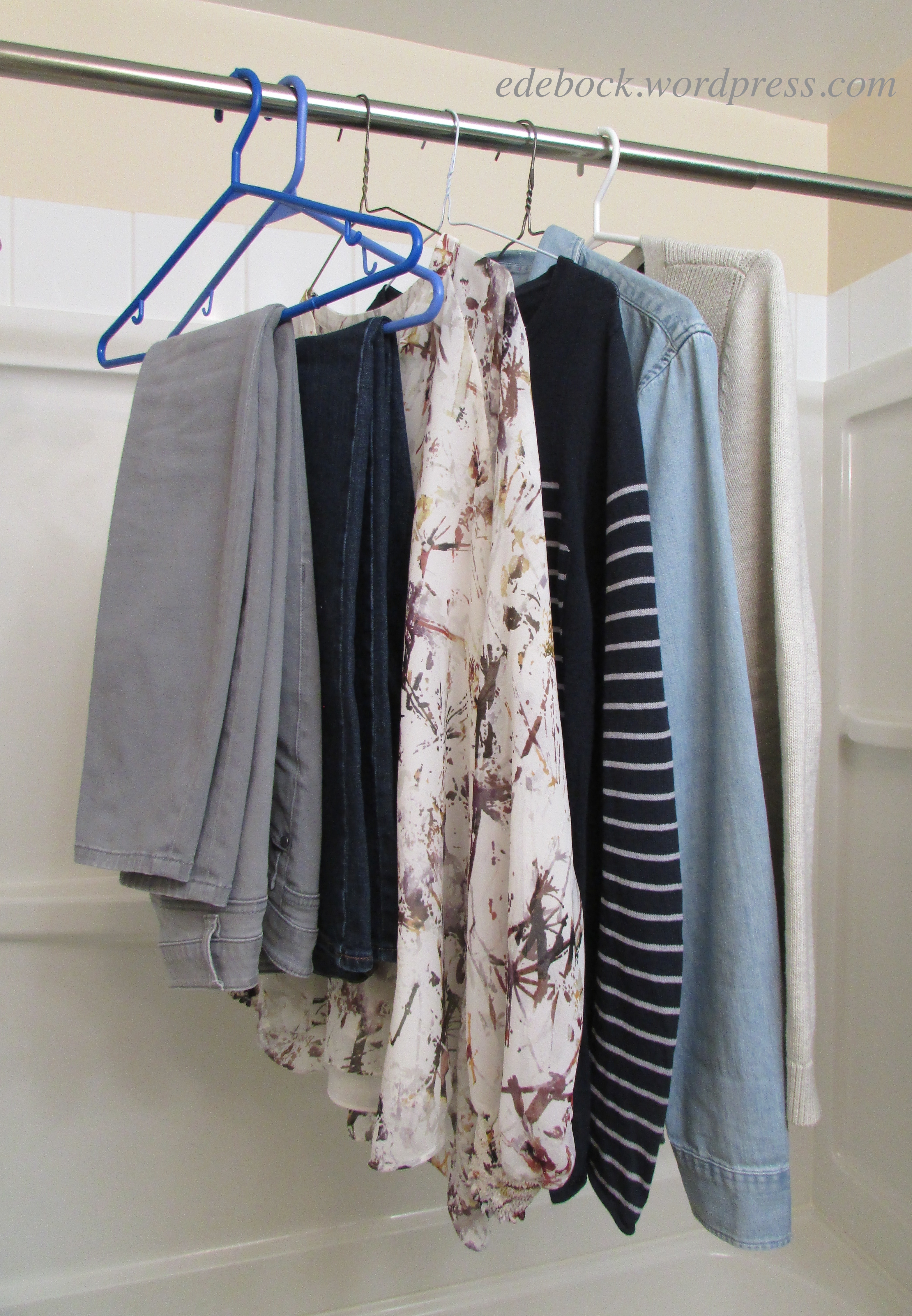
Today, after one full week, I thought I’d share a bit more about each of the six pieces that I’m wearing for the duration of the one month challenge. None are new and they’ve all appeared on the blog at one time or another in the past. First, let’s take another look at the photo…

IMG_3313

From left to right:

  1. Grey skinny jeans  –  cabi  –  purchased new in fall 2018  –  made in China
  2. Dark wash jeans  –  Old Navy  –  gifted in early 2018  –  made in China
  3. Patterned blouse  –  cabi  –  thrifted in fall 2020  –  made in China
  4. Navy striped pullover  –  cabi  –  purchased new in fall 2017  –  made in China
  5. Denim shirt  –  Uniqlo  –  purchased new in early 2021  –  made in Bangladesh
  6. Cardigan  –  cabi  –  purchased new in late 2016  –  made in China

It wasn’t until I’d carefully chosen all six pieces that I realized that four of them were cabi! In addition to the fact that I simply have a lot of cabi, I think that there are a couple of other good reasons for that. First of all, cabi intentionally produces clothing that coordinates well with previous and future seasons. This makes building a cohesive wardrobe very easy. Second, cabi clothing is good quality. It lasts! I suspect that many fast fashion pieces that are sold today wouldn’t hold up to a month of steady wear and washing. Instead, they fall apart after a few wearings and end up in the landfill.

As someone who is attempting to be an ethical shopper, I was also surprised and somewhat alarmed to see that five of the six items were made in China! While shopping in Superstore last week, I passed up a super cute pair of leopard print sneakers. The deciding factor, in addition to not really needing them, was the fact that they were made in China. Having lived in that country for several months, I’m conflicted about buying anything that is produced there. I know that the majority of the population is extremely poor and that garment factories provide much needed employment, but I also know that the conditions in many of them are abhorrent. Men and women work in unsafe surroundings 10 to 12 hours a day, 360+ days a year for a mere pittance. In addition, there are political reasons for boycotting Chinese products. I see China as a threat to Canadian security and although the two Michaels were released in September, it’s clear that they were held for almost three years on trumped up charges in retaliation for Canada’s arrest of Chinese high-tech executive Meng Wanzhou. That’s simply not a country I want to support with my fashion dollars!

My justification for having five made in China items on the list of six is threefold. First, two of them were thrifted or gifted. My intention is to try to avoid purchasing new items that are made in China. Second, the new items were purchased prior to 2019 when I made a commitment to begin shopping more ethically. And third, four of the five items are cabi. I’ve been assured by two independent cabi stylists that their products are made in socially and environmentally responsible factories. In spite of that, I was happy to see that my most recent cabi purchase, which you’ll see on the blog later this winter, was made in Vietnam. I suspect that this means that cabi, like many other companies, is moving their factories out of China, not for political reasons, but because the cost of production there has risen significantly and other locations in Asia are more cost efficient. In any case, I’ll feel better about buying cabi in the future if it’s made elsewhere.

And now, before I close, here are a couple of the outfits that I wore this week. On Tuesday, when I went to my weekly Bible study and ran some errands, I layered the denim shirt over the patterned blouse and paired them with the grey skinny jeans. I dressed the outfit up with my newest boots and a necklace, both thrifted.

IMG_3321

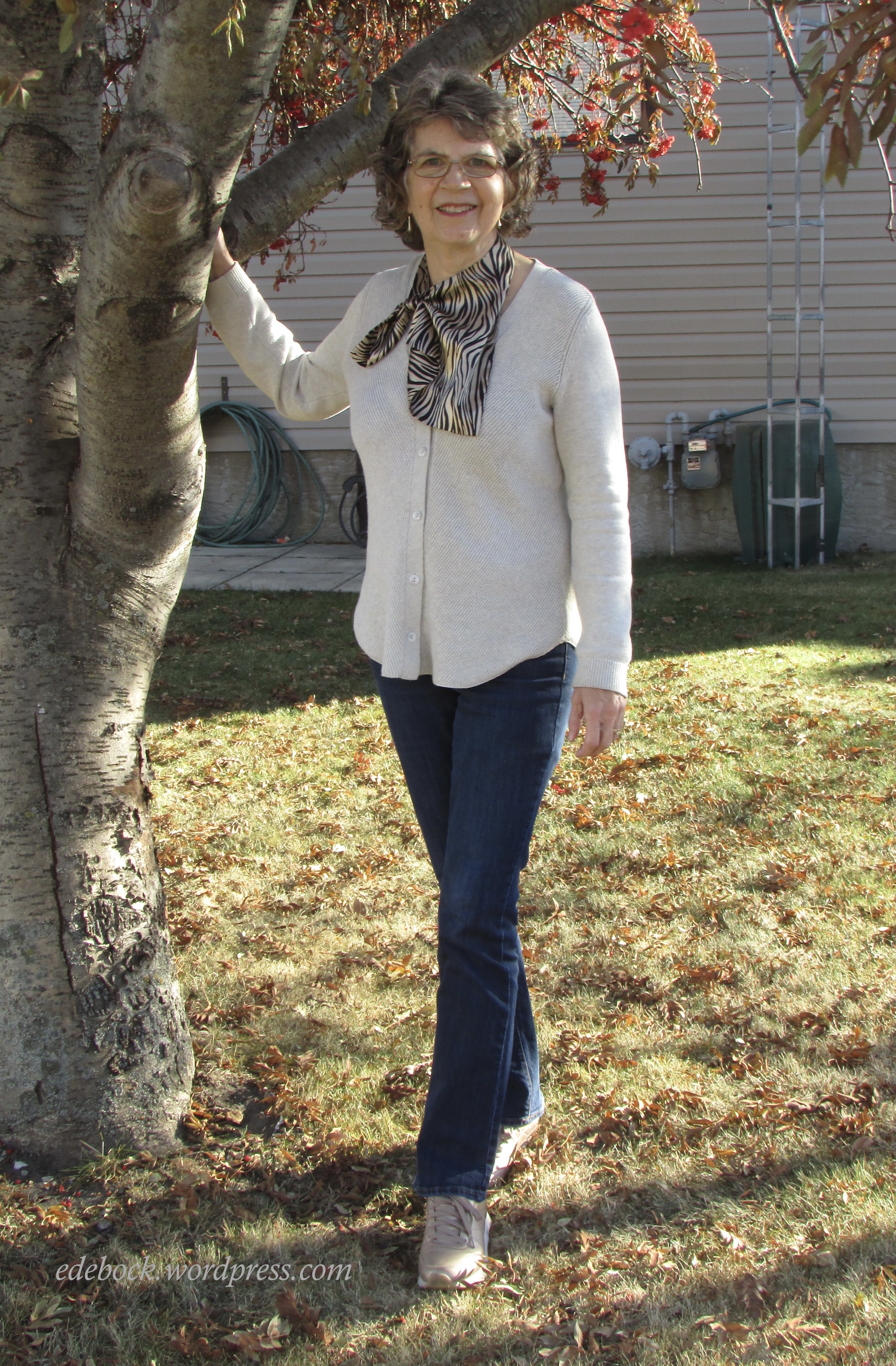
Though I’ve never worn the cardigan this way before, I knew when I decided to include it as one of the six that I would probably try buttoning it up and wearing it with a scarf. When you only have six items to work with, you have to be creative!

IMG_3337

I wore it this way on Wednesday. We bowled in the morning, so I needed something that was comfortable and easy to move in. This Wednesday was also NET Cancer Day and since the zebra is our symbol, I wanted to wear a touch of zebra stripes that day. Interestingly, I purchased the scarf in a shop on Russian Street in Dalian, China when we lived there, but it was actually made in Taiwan! According to the somewhat sketchy instructions that came with it, it can be worn ten different ways, but I’ve yet to figure out most of them.

I don’t know if you can tell, but I was freezing during the taking of these pictures! The temperature was barely above 0ºC (32ºF), but as you can see, we don’t have any snow yet, so we decided to take advantage of that and squeeze in a couple more outdoor shoots.

Six items or less

LogoFor me, today is Day 1 of a self-imposed fashion fast. For the next 30 days, I will wear only six items from my closet. That’s right! Just six! 

Why would I do such a crazy sounding thing, you ask. Well, first of all, because I love a challenge and secondly, because I hope to learn something from the exercise. 

The idea of a “six items or less” challenge is not a new one. In fact, they’ve been around for a decade or more. I’m not sure where the idea originated, but as early as 2015 and perhaps before that, a not-for-profit organization in the UK called Labour Behind the Label has been promoting an annual six items for six weeks fundraising challenge. Participants select six items of clothing from their wardrobes and pledge to wear only those pieces every day for six weeks while collectively raising funds to support Labour Behind the Label’s efforts to improve conditions and empower workers in the global garment industry. The annual challenge takes place during the season of Lent, a period of fasting and penance for many Catholics and other Christians. For many, that seemed a suitable time for a fashion fast. 

While there has been no single dictating thought or reason behind similar challenges, most of which are one month in duration, those who have participated have often done so to promote mindful consumption. In addition to the reasons that I gave above, I see value in seriously considering what we purchase and why as well as what effect those purchases have on the environment and the people who make them. Last time I walked through a mall, I had this challenge in mind and I was overwhelmed by the number of clothing stores, particularly for women. The options available to us are staggering! We have so much while so many in the world have so little. Perhaps this exercise will also be an opportunity for me to discover how little I really need and to see how creative I can be with what I have. 

The rules for all of these challenges have been essentially the same. Thankfully, underwear, socks, pyjamas, workout wear, coats, and footwear are not included in the six items and unlimited accessories are allowed. Though some challenges also include a rule forbidding participants from shopping for clothing for themselves during the challenge, I’m not sure if I’ll stick to that one. Living where I do, I don’t have many opportunities to shop and we do have some Christmas shopping left to do. If I happen across something that fits a gap in my wardrobe while we’re doing that, I might buy it, but I promise not to wear it until the challenge is over. 

So how did I select the six items that I will wear exclusively for the next 30 days? After much thought, this was my criteria:

  • must be able to mix and match to create many different looks 
  • requires a coordinated colour palette
  • must be pieces that I love wearing
  • must be able to layer
  • must be versatile, able to dress up or down
  • must be able to create at least one somewhat dressy outfit in case of a funeral or other unexpected event

 I decided to use a 3-2-1 formula: 3 tops, 2 pants, 1 cardigan. I realize that I have an advantage over many in that I’m retired and don’t have to think about a work wardrobe. My choices would have been somewhat different if I were still teaching. Also, since Covid is still raging around us, we aren’t going out a lot which will also make the challenge easier than it might otherwise have been. 

And now, for the big reveal, here is what I will be wearing for the next month. 

IMG_3313

I wonder how many people will even notice? 

My biggest concern going into the challenge is laundry. While all of these garments are machine washable (some on the hand wash cycle), the denim shirt is the only piece that I put in the dryer. The others are hung or laid flat to dry. To help with the laundry concern, some of these challenges do allow duplicates of the same item as long as they are exactly the same colour. I doubt that that comes into play very often though because most of us don’t have identical items hanging in our closets. I do, however, have a second pair of the dark wash jeans. If I find myself without pants to wear, I will put them into rotation, but it almost seems like cheating so I’ll try to avoid having to do that. 

Over the month, I plan to document my experience and share a bit more about the pieces that I chose, so stay tuned for more about “six items or less” in the coming weeks! 


A cozy shrug for winter

LogoWith winter just around the corner, it will soon be time to snuggle up in cozy, warm sweaters again and I have a brand new one that is very special!

My daughter is very creative. She didn’t learn to knit and crochet from me, but she can make almost anything from yarn. Last spring she posted photos of herself wearing a shrug/sweater that she’d just finished making for herself.

When I commented on how much I liked it, she asked me what colour I wanted mine to be! I suggested a dark blue and she chose a colour called Sapphire. I absolutely love it!

Though Melaina often knits and crochets items of her own creation, she used a pattern for this one. You can find it here. The ribbed cuffs are knitted and the remainder of the sweater is crocheted. It feels like I’m wearing a hug and I know that this is one item that will get lots of use as the days get shorter and colder!

To see more of Melaina’s creations, visit her Hooked on Crochet Facebook page.

Kids these days!

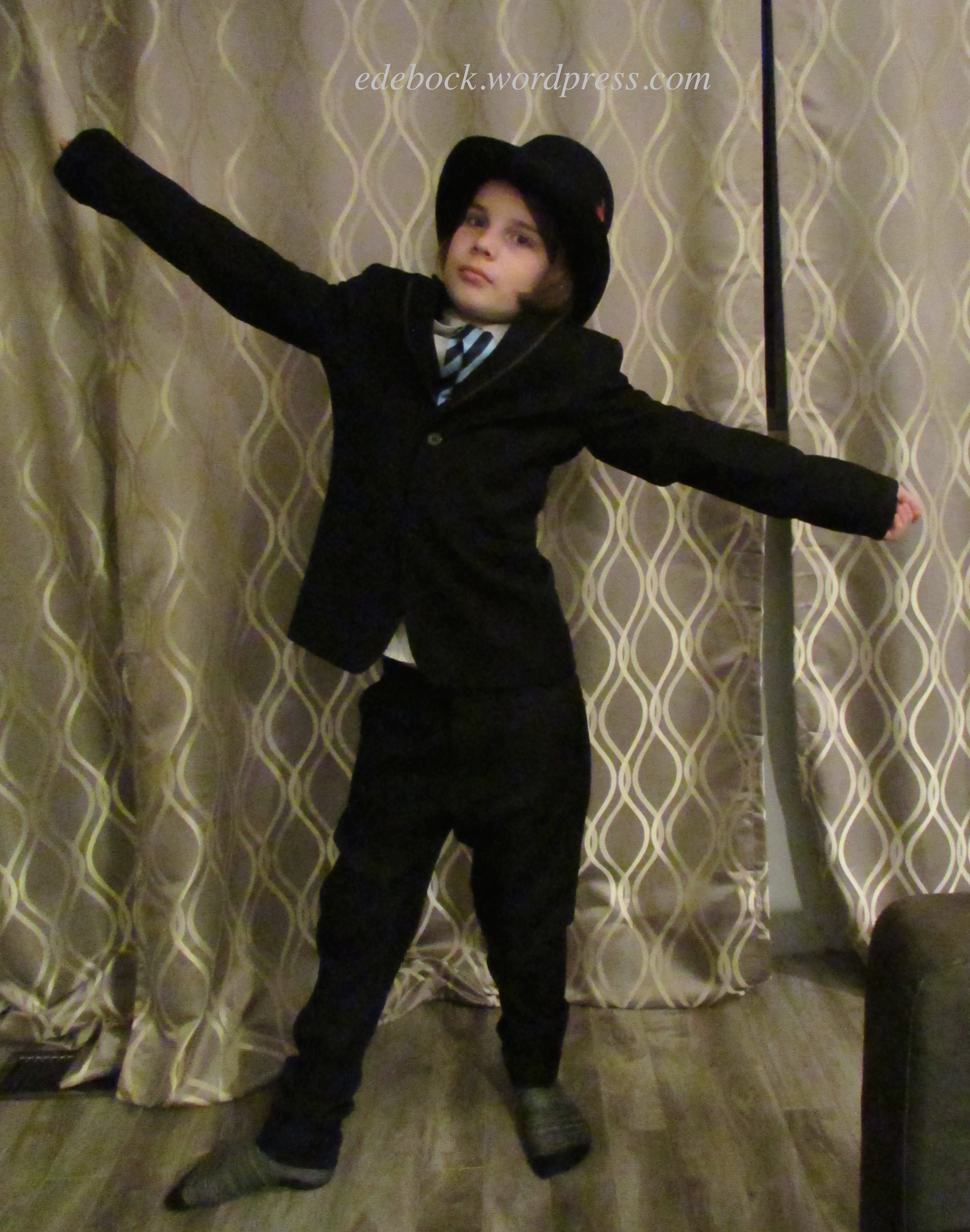
I wasn’t actually planning to write a Fashion Friday post today, but this young lad showed up at our dining table this evening and I was inspired!

IMG_3173

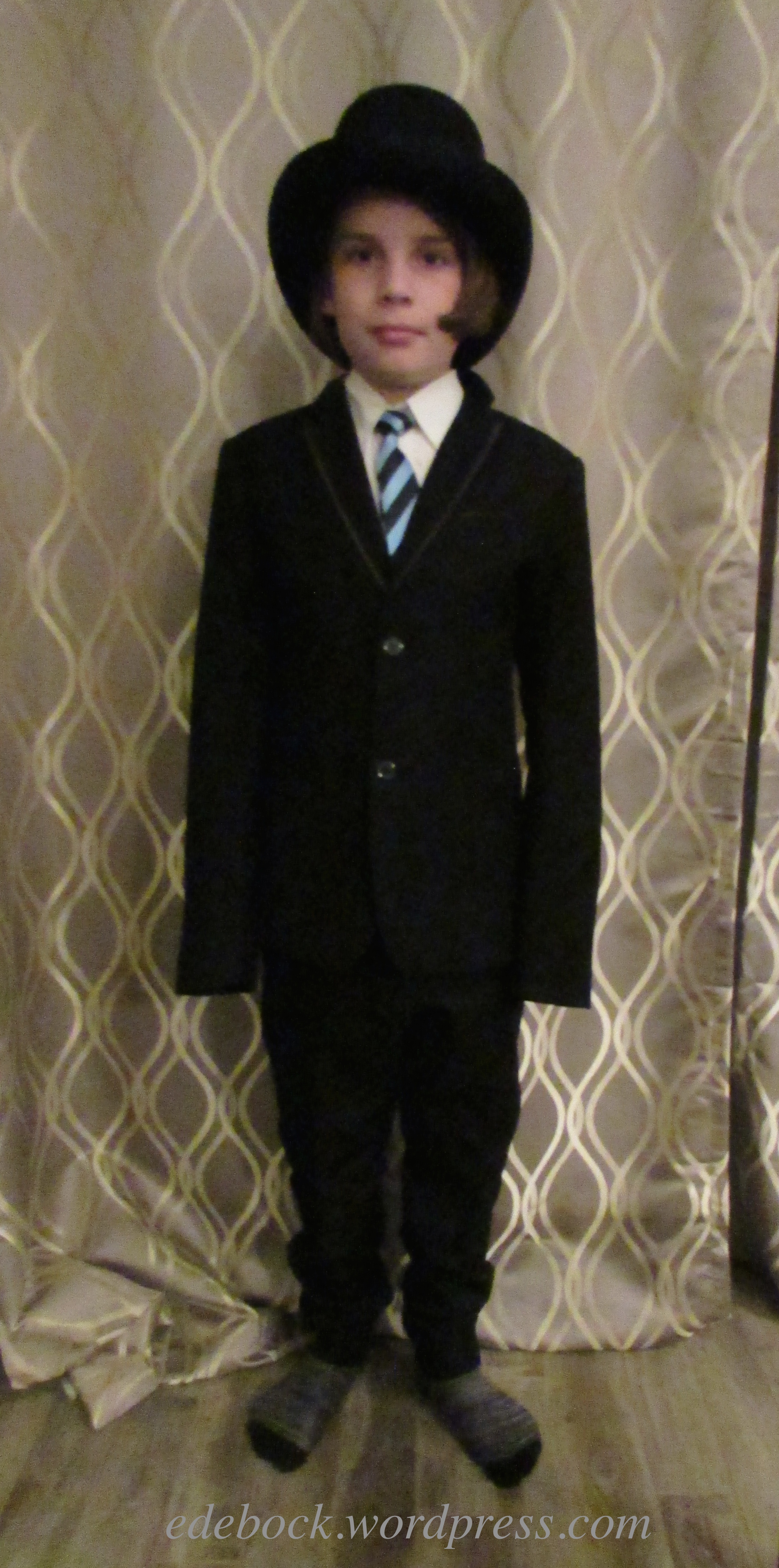
So, where does a ten year old boy acquire a suit like that? What do you think it cost? Well, perhaps you’re in for a surprise! This is my grandson, Nate, who like me, is a frugal fashionista!

IMG_3169

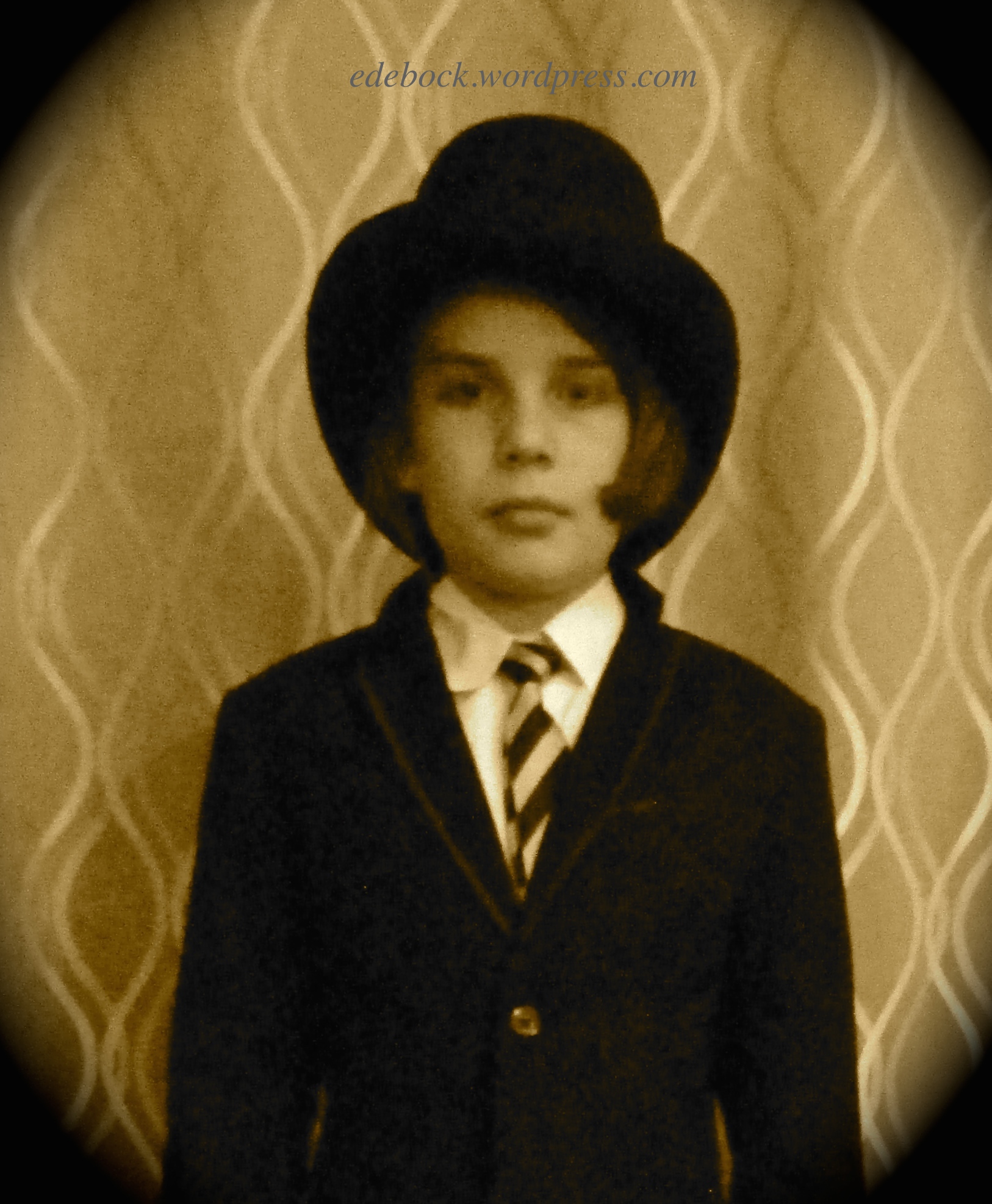
The suit didn’t cost him a cent! During the current pandemic, a number of Facebook Buy Nothing groups have sprung up, so when he decided that he wanted a suit, his mom posted an “ask” to her neighbourhood group. Within a couple of days, his wish was fulfilled! The top hat was his gift from Santa last Christmas and he’s had fun with it ever since.

IMG_3171 - Version 2

Not only did Nate inspire this short post, he and his brother, Sam, helped me write it! Thank you, gentlemen!

Logo

One woman’s cast-off is another woman’s treasure

LogoIf you’ve been reading my blog for very long, you’re already fully aware of the fact that I love thrift store shopping. Although I often come up empty-handed, every visit to one of our local second-hand stores is like a treasure hunt. 

After doing the seasonal wardrobe switch that I wrote about last week, there were things to drop off and as always, I also had to look around. I figure that as long as I come home with less than I take, I’m doing well! Sure enough, I found two items that I’m in love with!

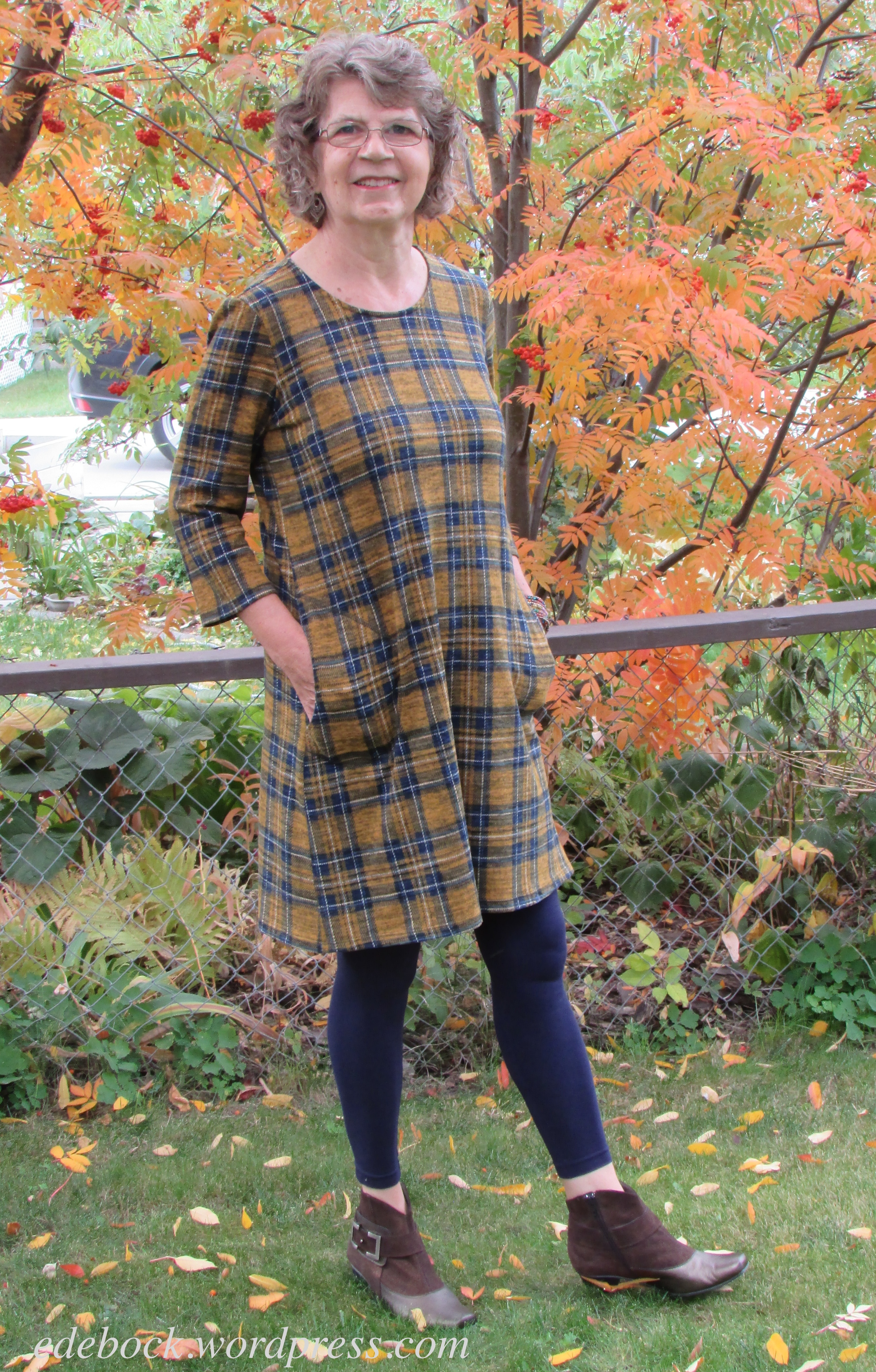
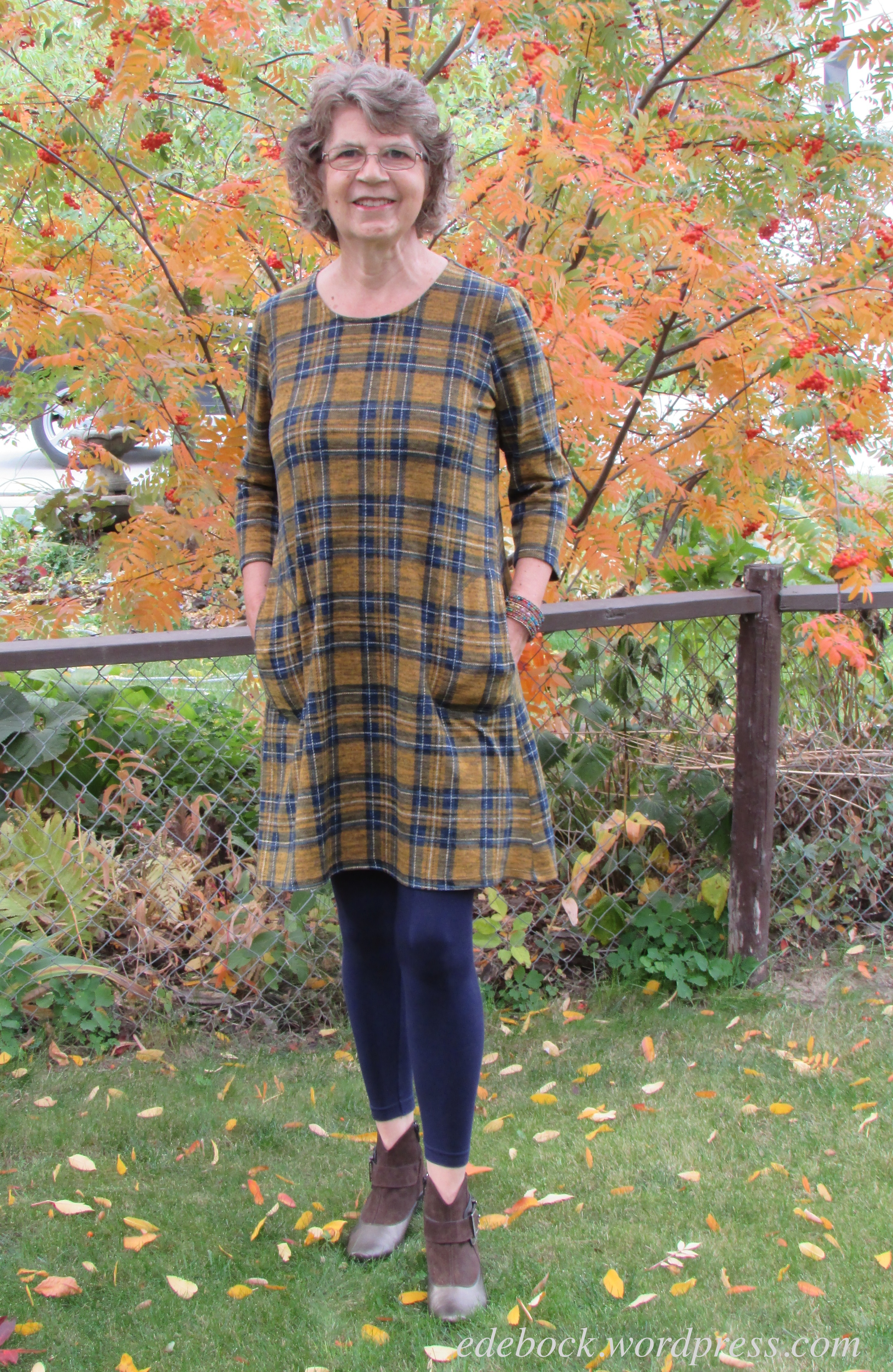
IMG_3082

The tunic/dress is soft and cozy with just the right amount of stretch. It’s perfect for relaxing at home on a cool autumn day, but dressy enough to go out for lunch, pick up groceries, or stop by the library. I love the pockets and the 3/4 length sleeves and it was even made in Canada!

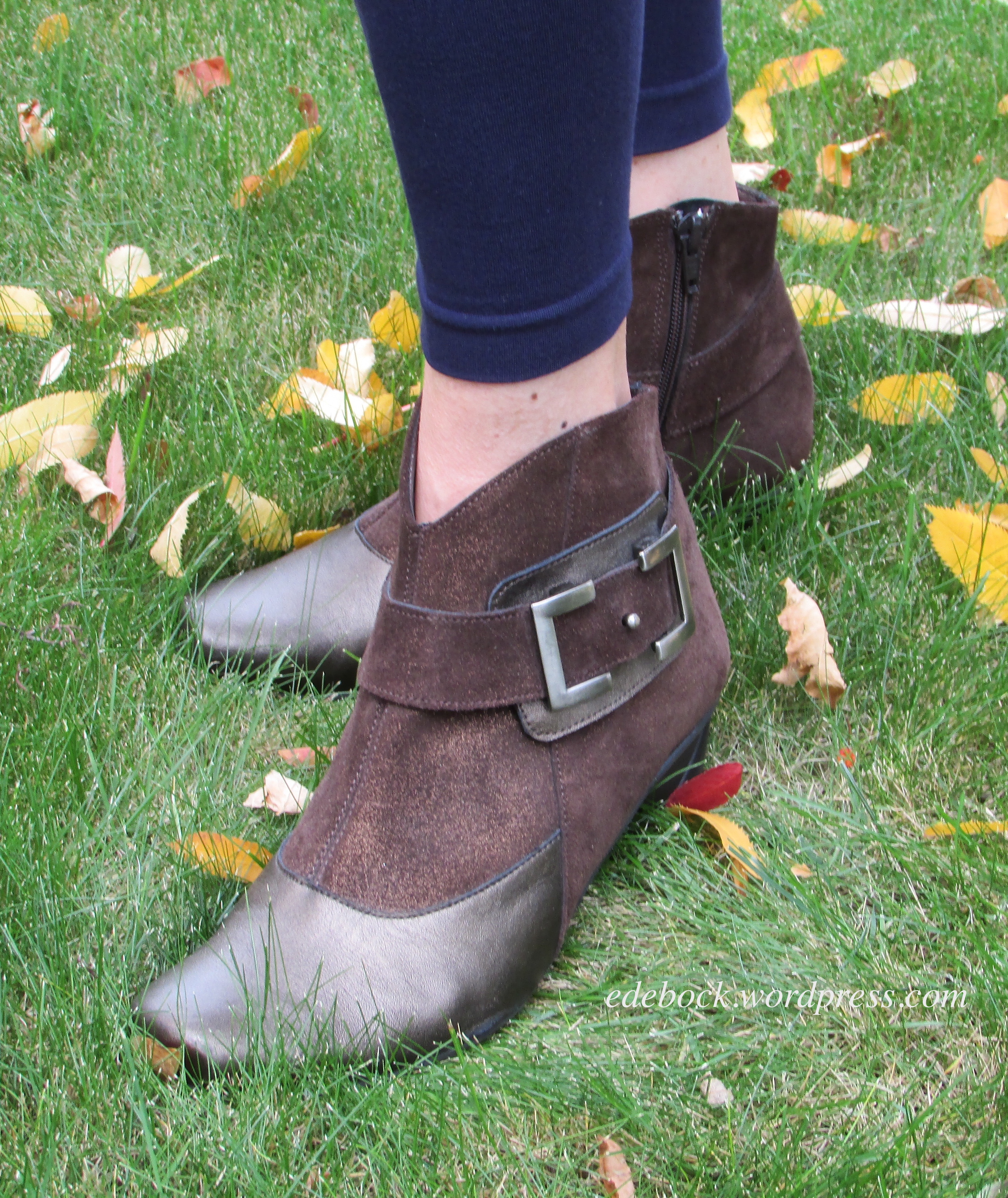
Then there are the booties! Here’s a closer look. 

IMG_3083

Aren’t they cute? They’re not something I’d walk a long way in, but they sure dress up an outfit. They were made in France and look almost new. The bare ankle with bootie look won’t work for very long in our climate. In mid winter it would mean almost instant frostbite, but it’s a fun look for fall. 

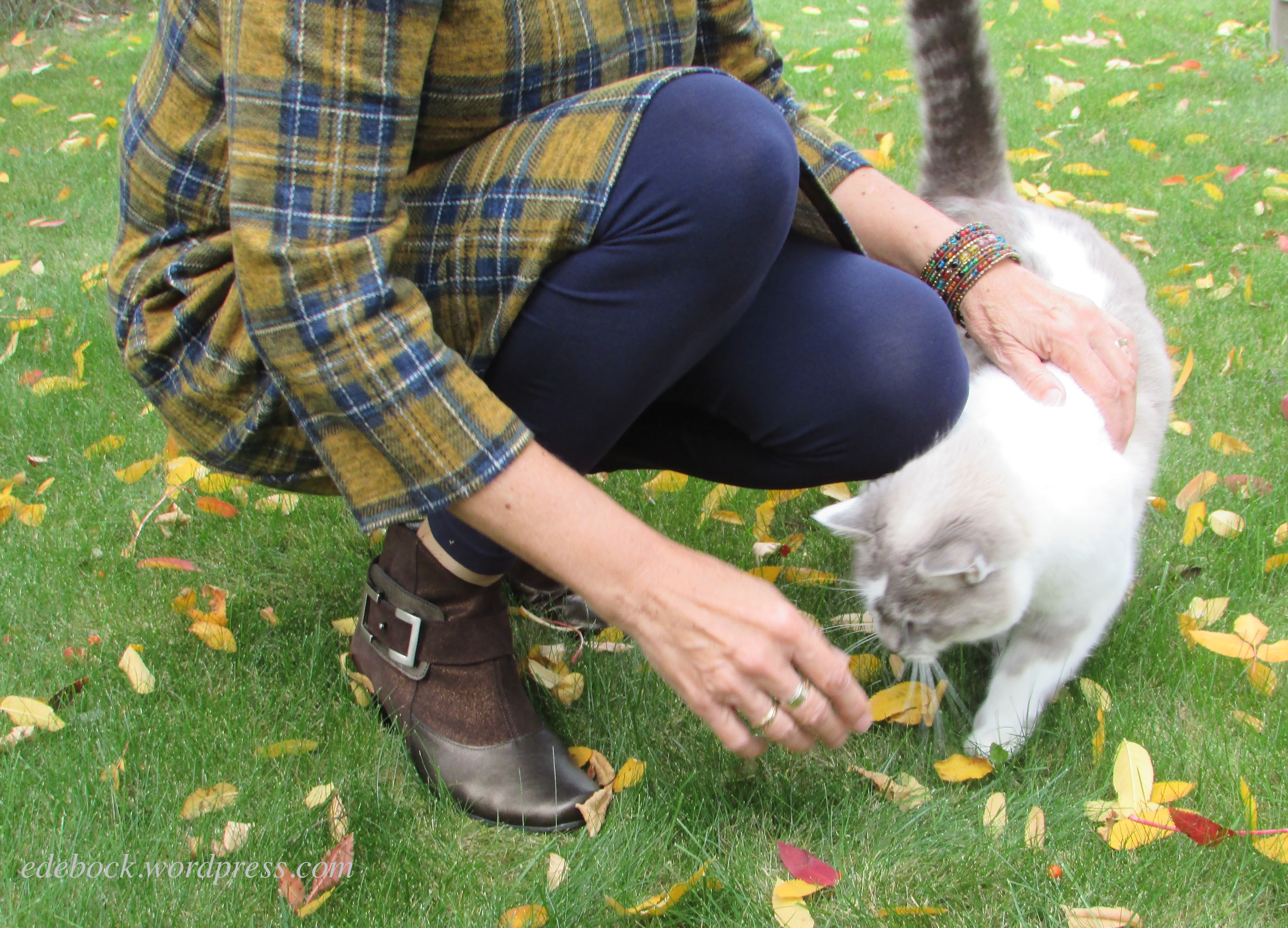
IMG_3089

While we were busy taking photos, our beautiful next door kitty came over to see what we were doing and had to get in on the action! Sophie considers us some of her people and is always curious about what we’re up to. The photo gives you another close-up of the booties as well as a look at the colourful beaded bracelet that I wore with the outfit. 

We live in a small rural community and often when I wear something from one of our local thrift stores, I wonder if the original owner will notice and what they’ll think of how I style their cast-off. Interestingly though, in spite of the number of things that I’ve donated over the years, I’ve never seen anyone wearing one of them. I hope whoever wears my cast-offs next are as happy with them as I am with my new treasures. 

IMG_3078

Transitioning to fall

LogoHow do you dress for this golden shoulder season known as autumn? I saw a headline this week that read, “It’s wear a sweater in the morning and regret it in the afternoon weather!” That pretty much sums up fall in my part of the world. When we get up in the morning, the temperature is generally hovering just above 0°C (32°F) and there might be frost on the ground, but by afternoon it has warmed up to anywhere between 18° and 25°C (64° and 77°F).

While running errands early one afternoon this week, I decided to take note of what other people were wearing. A man, sitting in front of the post office reading his mail, was wearing shorts, sandals, and a heavy fleece vest over his t-shirt! That kind of incongruous outfit isn’t as unusual as you might think. I also saw one woman wearing a quilted coat and a toque while another was working in her yard in shorts and a t-shirt!

In spite of this confusion, I decided that it was time to begin my seasonal wardrobe switch this week. Since I found myself reaching for the warmer items in my closet every morning and the true hot weather pieces were no longer seeing the light of day, I knew it was time to put most of those away and bring out my fall/winter pieces.

If you live where the weather is more uniform year round, you probably don’t have to go through this twice a year ritual, and I guess if I had a bigger closet I might not have to either. As it is, however, it’s much easier to have only one season’s clothes to choose from every morning and these seasonal switchovers are an excellent time to evaluate and decide what to keep and what to get rid of.

So, how do I go about doing that? Unlike some who advise getting rid of anything that hasn’t been worn during the current season or in the past year, I sometimes hang onto items that are excellent quality or that I love even if I haven’t worn them for quite awhile. Over the years, I’ve occasionally enjoyed resurrecting some of those items and have even shared a few of them here on the blog. This time, however, I knew that there were things in my summer closet that simply had to go. This required discipline because some were pieces that I really liked, but they were too worn out to keep or to pass on to anyone else. Others that don’t fit well or that I no longer enjoy wearing are destined for the second-hand store.

As I put the new season’s clothes into the closet, I turn all the hangers around. Then, when I wear an item, I turn it’s hanger back the right way. At the end of the season, if an item is still hanging backwards, it’s a clear signal that I need to consider whether or not to keep it.

There are, of course, some items that stay in my closet year round including sleeveless tops that can be worn alone in summer or under sweaters and jackets when the weather is cooler. This time, I also left a couple of pairs of favourite capri pants for those 25° afternoons. They won’t stay there all winter, but for now, we’re still transitioning!

Utility jacket for fall

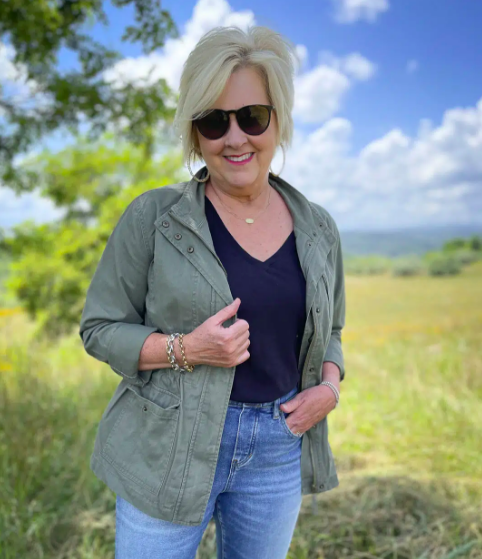
LogoWhen I saw this post from Tania Stephens on her blog, 50 is not Old, several weeks ago, I thought how easy it would be for me to replicate her look with the Cabela’s utility jacket that I picked up at a garage sale last spring! As always though, the idea is to take inspiration from how another woman dresses, not to copy her exactly.

Screen Shot 2021-09-24 at 11.37.55 AM

Tania Stephens

Now let’s take a look at my take on Tania’s outfit.

IMG_3053

Both our outfits involve three simple items; a black t-shirt, an olive utility jacket, and a pair of blue jeans. Shopping Tania’s look in my closet, however, I started by choosing a darker wash jean than she did. I like her V-neck t-shirt, but since the only black t-shirt in my closet happens to be a crew neck, that’s what I’m wearing. Our jackets, though similar, are also quite different.

So, before we go any further, what exactly is a utility jacket? In a nutshell, it’s a practical piece that is commonly made from denim or cotton twill. They’re usually fairly boxy, with a collar and a button down front. Mine also has a zipper. Four pockets are most common, but as you can see, Tania’s has only two which gives it a slightly dressier look. Though originally a workwear item worn mostly by factory workers and farmhands, the utility jacket has been adopted as an enduring fashion trend and can be found in a wide range of colours and styles.

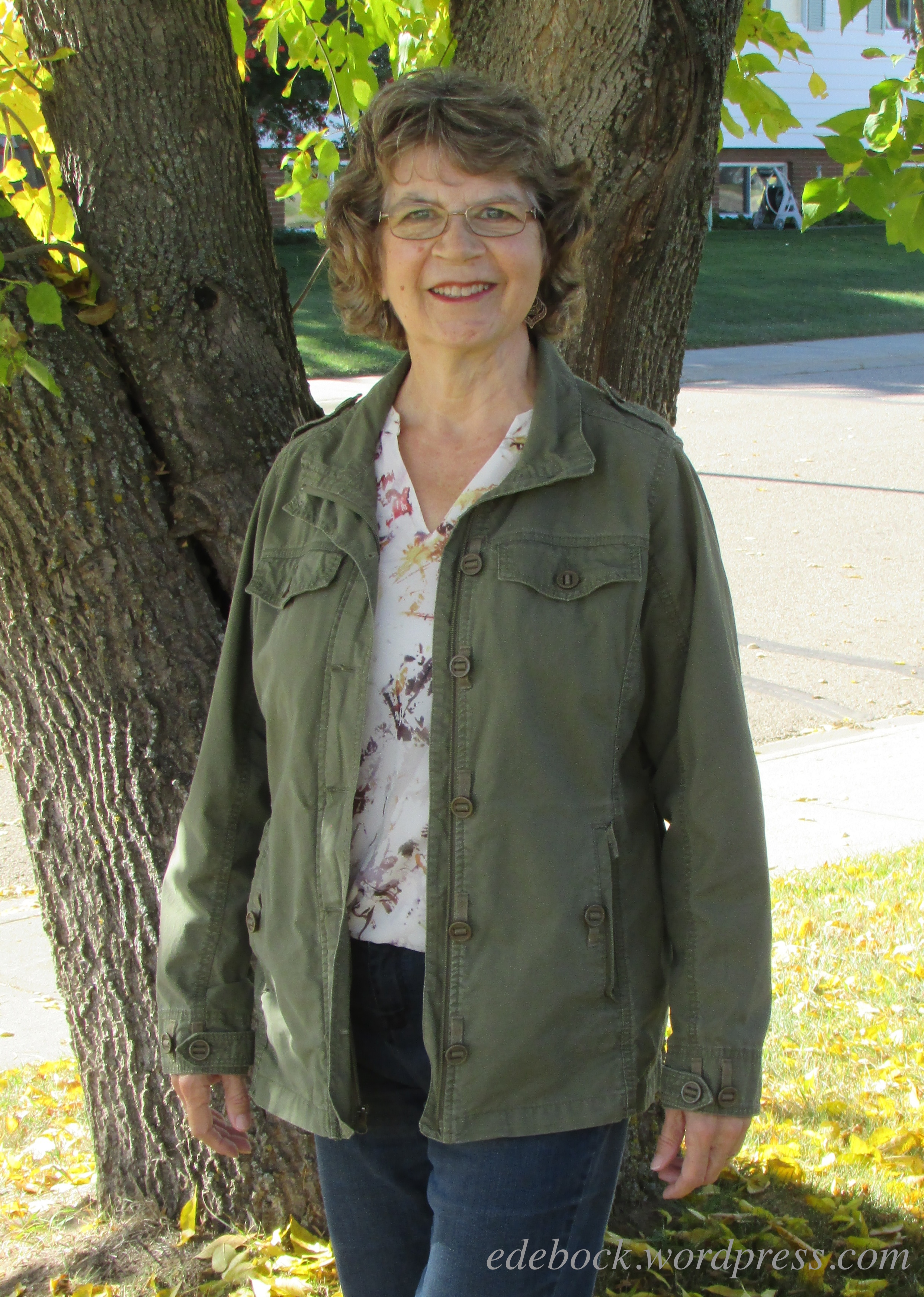
The main reason that I only own one black t-shirt is that black tends to wash me out, especially when I wear it close to my face. I can get away with it when I wear it under something like the olive jacket, but after creating my version of Tania’s look, I changed the t-shirt out for a cream coloured blouse with an abstract pattern of warm fall colours.

IMG_3059

Personally, I think that this is a better look on me.

I usually wear a medium, but my jacket is a large. After all, you don’t get a choice of sizes when you shop at a garage sale! It fits a bit loosely, but that’s actually one of the things that I liked about it. Layering is essential in our Canadian autumn. In fact, here I am wearing it over a lightweight hoodie and my ultra light down vest from Uniqlo on a chilly morning walk on our latest camping trip.

IMG_3037

When is an accessory not just an accessory?

LogoAccessories are the finishing touches that can take an outfit from drab to dramatic. They also add versatility to your wardrobe enabling you to create many different looks with the same basic outfit. Accessories are also an opportunity to express your personal style, taste, and preferences, but sometimes they are even more than that. Sometimes an accessory has special meaning or significance to the person who wears it. That’s definitely the case with my new hand-crafted zebra pendant!

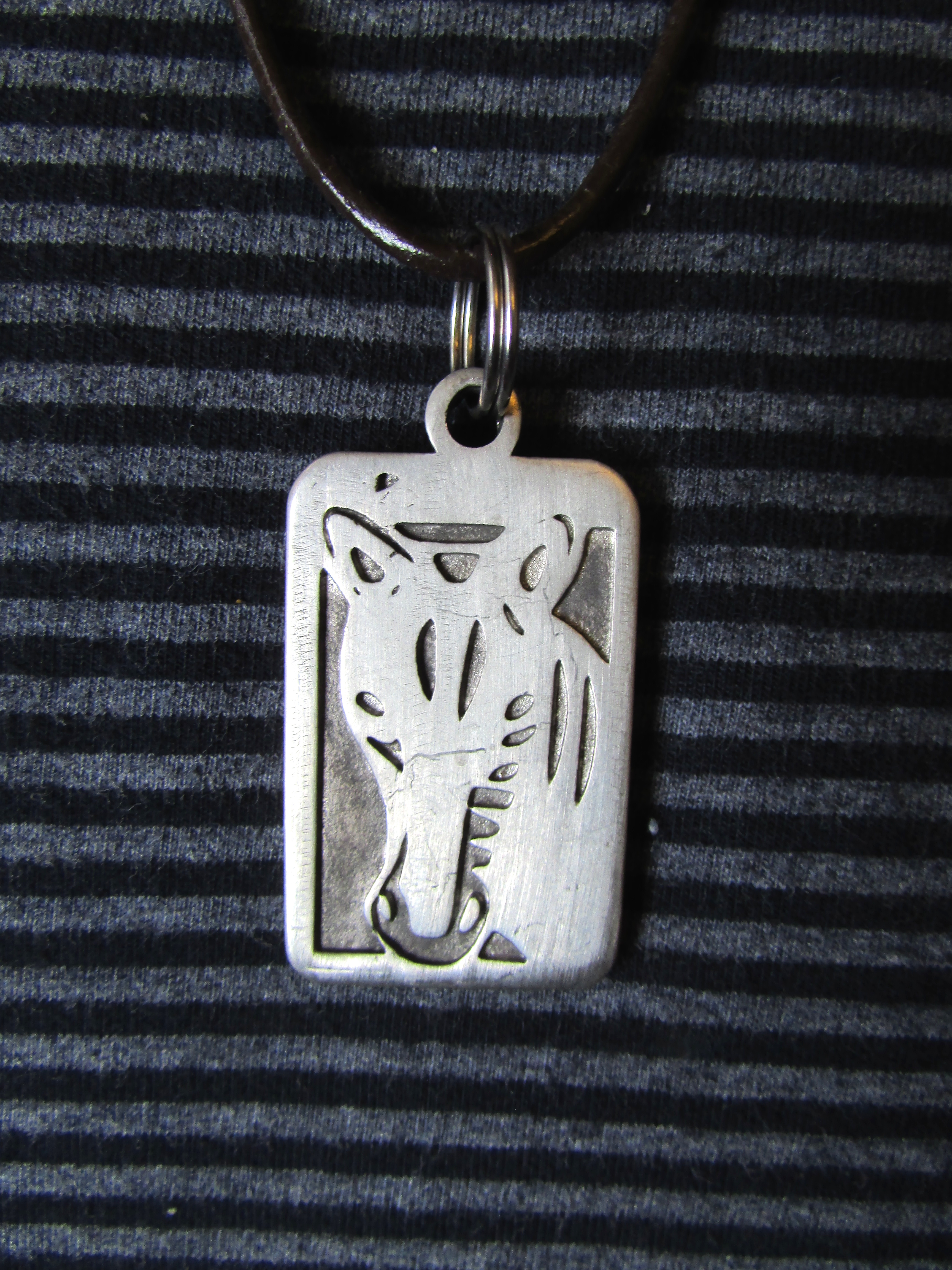
IMG_3007

As many of you are already aware, the zebra is a symbol of neuroendocrine cancer (NETS), the cancer that I’ve been living with for the past eight years. In medical school, doctors are taught “when you hear hoofbeats, think horses, not zebras”. NETS was previously considered rare and therefore, a zebra. However, with increasing awareness and quicker diagnosis, neuroendocrine cancers are proving not to be as rare as once thought. Another reason that the Canadian Neuroendocrine Tumour Society (CNETS) chose and continues to use the zebra as their mascot is the fact that every zebra has its own pattern of stripes. Just as each patient and their needs are unique, no two zebras are exactly alike.

Committed to improving the quality of life and the survival rate for NETS cancer patients across Canada, every year CNETS funds research initiatives that will have a direct and meaningful impact on their lives. As a little-known cancer, it falls upon patients to raise much of the money for this ongoing work.

Screen Shot 2021-09-15 at 2.45.32 PMAl Gillis is a neuroendocrine cancer patient who came up with a unique idea for both increasing awareness and raising funds; a beautiful one-of-a-kind pewter pendant/keyfob featuring the CNETS zebra logo. Made entirely of donated materials and using only volunteer labour, the first distribution sold out in less one day! I was fortunate to nab one of those. Now, a second batch is in stock and going fast. If you’re interested in purchasing one and supporting this important endeavour click here, but don’t hesitate too long or you’ll be waiting for Al and his crew to make more!

You might also be interested in watching this video in which Al demonstrates and explains how the pendants (which can also be used as keyfobs) are made. I found it quite fascinating.

Do you have any accessories that are especially meaningful to you? Please tell us about one or more of them in the comments section below. 


The ancient art of henna

LogoThough I have nothing against them, I’ve never had any desire to have a permanent tattoo. For quite some time, however, I’ve wanted to try the ancient art of henna and I finally had the opportunity when I came across Dinkal Patel‘s booth at a recent community event.

While the use of henna is most often associated with India and Pakistan, it’s origin is difficult to pinpoint. It’s earliest use appears to date back to the Pharaohs of ancient Egypt. Cleopatra, the last reigning queen of that early civilization, is said to have used it to adorn her body and beautify herself.

In modern times, until fairly recently, intricately designed henna tattoos, or mehndi, were predominantly used as part of traditional Indian wedding celebrations. Designs symbolizing good luck, wealth and health are applied to the hands and feet of the bride the night before her wedding. It is believed that the henna will cool the body’s nerve endings and help keep her calm throughout her big day. This custom holds great cultural significance in Hinduism and the symbols that are used are considered sacred.

These days, however, henna tattoos have found their way into western culture where they act as a form of body jewelry. Though Dinkal does do bridal henna, the designs that she offered at her booth were more generic. After looking at some of the examples on display, I chose to have a floral design applied to the back of my right hand. I was astonished at how quickly she applied the henna paste. Working completely freehand, she was done in no more than ten minutes and charged only $15!

with dried paste

Dinkal told me to leave the dried paste in place for 2 to 3 hours before removing it. I left it a little longer than that until it began to crumble and fall off. When I removed the remainder, because I didn’t know how henna dye worked, I was hugely disappointed. Most of the design was indistinct and looked like I’d simply spilled something orange on my hand or as hubby said, like I’d scraped my hand on the concrete!

Immediately after removing paste

Dinkal had also told me to try to keep the design dry until the next day, so even though it didn’t look like the henna was going to amount to much, I followed her instructions. That’s a little tricky to do when it’s on your right hand, but hubby took over supper making for the day and I kept it out of water. As the evening progressed, I thought perhaps it was beginning to darken, but I chalked that up to wishful thinking or an overactive imagination. Imagine my surprise and delight when I woke up the next morning and this is what I saw!

next morning

The design continued to darken until it looked like this at the end of the following day. I was delighted!

end of day 2

Over the next week or so, had numerous comments and compliments, even from total strangers! The most frequently asked questions were where I’d had it done and how long it would last. Though I’d read that henna tattoos can last from 1 to 4 weeks, Dinkal told me to expect about a week and a half and it appears that she was correct. Here’s how it looked at the end of day 8. Gradually disappearing, but not yet unattractive.

IMG_2994

By yesterday morning, almost two weeks after the henna was applied, only the darkest bits remained. There was no design left on the back of my hand, just a smattering of brown dots. I did some research into how to remove faded henna tattoos and found several different suggestions. The most common ones involved baking soda and lemon juice. Another suggestion that sounded like it would be kinder to my skin involved using either baby oil or coconut oil. I didn’t have either of those on hand, so I decided to try olive oil which, like henna, has been used on skin since ancient times. It’s loaded with nutrients, is a natural humectant, and is rich in antioxidants. I applied it to the back of my hand, left it for 10 minutes, then gently scrubbed it off using a facecloth and hand soap. It worked like a charm! The designs at the ends of my fingers, though faded, still looked okay, so I left them for now.

Next time… and yes, I’m pretty sure there will be a next time… I’d like to try a henna tattoo on my shoulder or forearm. Since my hands are in and out of water constantly, I thinking that perhaps it would last a little longer in one of those locations.

Happy 100th Birthday, Iris Apfel!

American fashion icon, Iris Apfel, famous for her colourful eclectic style and her oversized glasses, will celebrate her 100th birthday on Sunday!

CKBnLdGHL37RpPPoH6BZXm-768-80

On August 19th, her Instagram post read..

10 days left of 99… Then comes 100, it feels divine!!!

In 2005, the Metropolitan Museum of Art in New York City said this about Apfel and it still holds true today, “An American original in the truest sense, Iris Apfel is one of the most vivacious personalities in the worlds of fashion, textiles, and interior design, and over the past 40 years, she has cultivated a personal style that is both witty and exuberantly idiosyncratic. Her originality is typically revealed in her mixing of high and low fashions – Dior haute couture with flea market finds, 19th-century ecclesiastical vestments with Dolce & Gabbana lizard trousers.”

iris-apfel-albert-maysles-fanfair

On the eve of her 100th birthday, Apfel continues to work because she wants to. “I want to stay alive,” she said in a recent interview. “If I stopped working, I’d be gone.” This year alone, she curated a line of home products for Lowe’s (long before she became a fashion icon, she was an interior designer), teamed up with Etsy to offer “Iris Apfel’s Fashion Favorites” on the online marketplace, and is designing eyewear collections for Zenni Optical as part of a four-year-deal with the company.

While I don’t aspire to dress like Iris Apfel, I do like how she thinks. Here are a few of my favourite Iris quotes… 

“You have to look in the mirror and see yourself. If it feels good, then I know it’s for me. I don’t dress to be stared at, I dress for myself.”

“When you don’t dress like everybody else, you don’t have to think like everybody else.” 

“Fashion you can buy, but style you possess. The key to style is learning who you are, which takes years. There’s no how-to road map to style. It’s about self expression and, above all, attitude.”

I also like what she says about age…

f6f409a516ebcfe1e04c89feb16de4d3

Sunday is also my beautiful daughter’s birthday, so Happy Birthday, Iris Apfel and Happy Birthday, Melaina!

197873532_10158259835627205_3846742647420959713_n

Logo