I Am a Bacha Posh
Ukmina Manoori
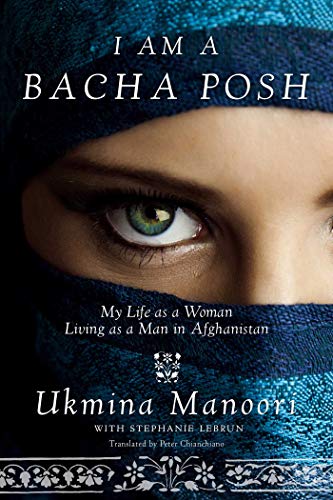 The subtitle of this short, but intriguing memoir, My Life as a Woman Living as a Man in Afghanistan, tells much about the content of the book, but it could also be misleading to those of us living in western cultures. This is not a book about living a trans experience.
“You will be a son, my daughter.” With these stunning words young Ukmina learned that she was to spend the remainder of her childhood as a boy. This had nothing to do with gender confusion on her part. In Afghanistan’s heavily patriarchal, male-dominated society, it is customary for some families, especially those without sons, to choose a daughter to live, dress and behave as a boy, even taking on a boy’s name. These children are known as bacha posh which means “dressed up as a boy” in the Persian dialect, Dari.
Families have various reasons for making this choice and there are no statistics on how many families have daughters living as bacha posh. In most cases, due to the somewhat secretive nature of the practice, only the family, close friends, and necessary health and education officials know the bacha posh’s biological sex.
As a bacha posh, a girl has all the freedoms denied to her as a member of the female sex. Instead of staying at home cooking and cleaning, she can move about freely in public, attending school, running errands, playing sports, and sometimes finding work to help the family make ends meet.
Once a bacha posh reaches puberty, however, she is expected to revert to traditional female roles putting on the veil, staying at home unless accompanied by a male, and preparing for an early marriage. What makes Ukmina’s story unique is that when that time came, she refused. Confronting societal and family pressure, she continued to live as a man, not because of gender dysphoria, but because she doesn’t want to give up the the rights and privileges of a male in Afghan society.
Ukmina’s choice paved the way for an extraordinary destiny. She acted as a scout for the resistance when the Soviet Union invaded Afghanistan and ultimately commanded the respect of everyone she encountered. There did come a period of time when she lived in isolation and fear of the Taliban and even of some of her fellow villagers who didn’t agree with her life choices. Eventually, however, she entered politics and as an elected member of her provincial council, fights tirelessly to improve women’s rights.
Rather than telling you any more of her story, I’m simply going to share three quotations that I think wrap up Ukmina’s thoughts about her experience and the life of women in Afghanistan.
“Living in men’s clothing has given me a certain freedom. A life as a woman in Afghanistan is a life of destruction.”
“I say to myself that I have sacrificed nothing. I have done what I had to do. I became what I was. I found my destiny. And there is nothing I lack.”
“I also told myself that women were beautiful creatures of God. Men were cruel. I often asked Allah: “Give me the power of men and the kindness of women.””
If a novel about bacha posh would be more to your liking, I would highly recommend The Pearl That Broke Its Shell by Nadia Hashimi.
 Like many children in wartime Britain, 10-year-old Agnes Crawford was sent out of London to the safety of the countryside where she lived with the well-to-do McIntyre family. Tragically orphaned by the war, she stayed on afterward as their maid and close friend of their daughter, Isobel. When tragedy strikes again, Agnes adopts her deceased friend’s identity and with it the opportunity to become a medical student at a London university.
 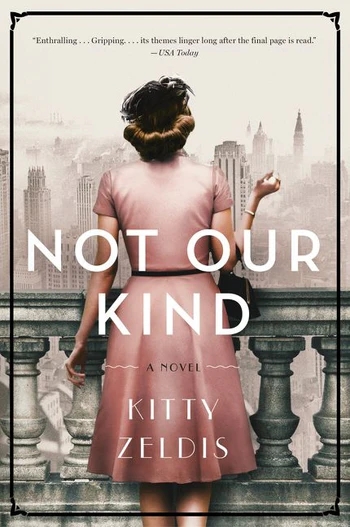 Not Our Kind is the story of two very different women whose lives intersect on a rainy morning in June, two years after the end of World War II. A minor traffic accident in New York City brings together Eleanor Moskowitz, a bright young teacher on her way to a job interview, and Patricia Bellamy, a socialite whose difficult thirteen-year-old daughter, Margaux, recovering from polio, needs a private tutor. When Eleanor goes to work for the Bellamys, she forms an immediate bond with Margaux, but because they live in a restricted building, she has to conceal her Jewish identity.
 Until the end, when the two finally come together, this is really two completely different storylines connected only by a specific location.
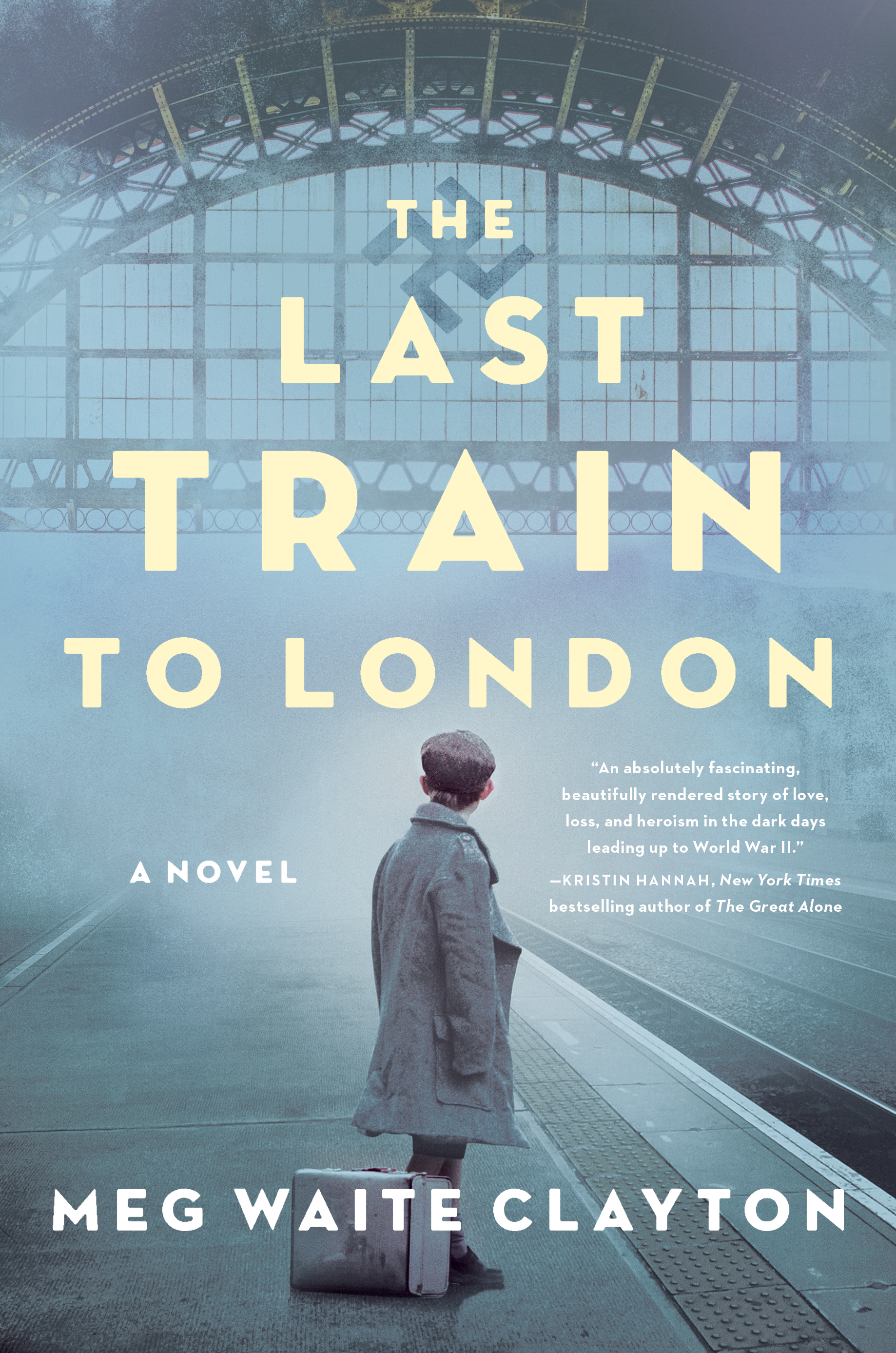 Geertruida (Truus) Wijsmuller, a childless member of the Dutch resistance, risks her life smuggling Jewish children out of Nazi Germany to the nations that will take them. It is a mission that becomes even more dangerous after Hitler’s annexation of Austria when, across Europe, countries begin to close their borders to the growing number of refugees desperate to escape. After Britain passes a measure to take in at-risk child refugees from the German Reich, Tante Truus, as she is known by the children, dares to approach Adolf Eichmann, the man who would later help devise the “Final Solution to the Jewish Question” and is granted permission to escort a trainload of 600 children (not 599 or 601, but exactly 600) out of the country. In a race against time, 600 children between the ages of 4 and 17 are registered, photographed, checked by medical doctors and put on board the train to begin a perilous journey to an uncertain future abroad. Thus begins the famous Kindertransport system that went on to transport thousands of children out of various parts of Europe during the Nazi occupation of the region in the late 1930s, immediately prior to the official start of World War II.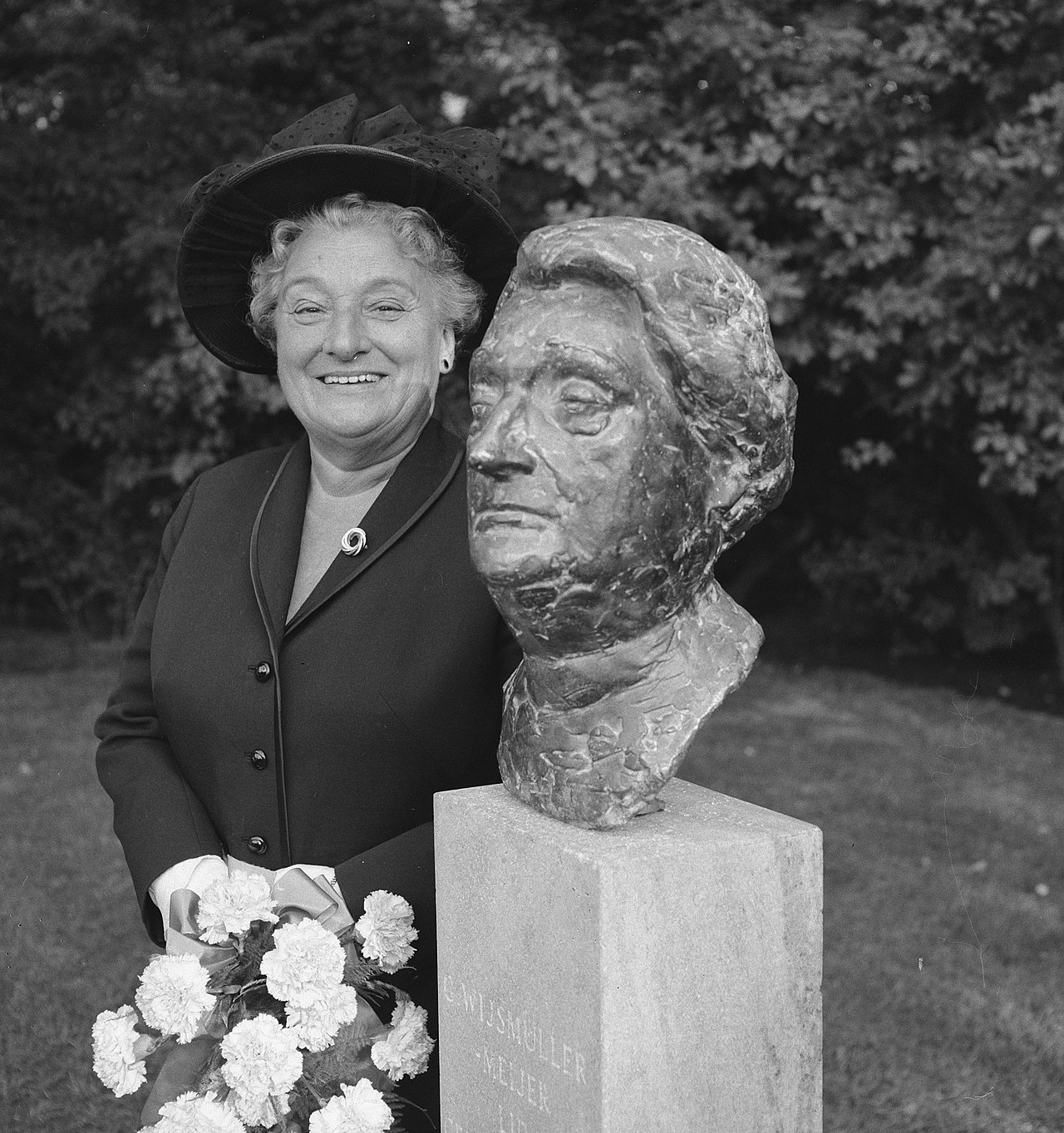
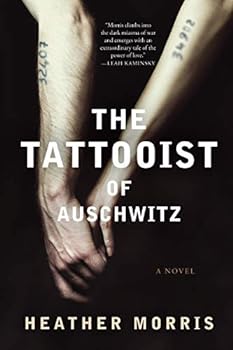 In 2003, Morris, was introduced to Lale Sokolov, an elderly gentleman who “might just have a story worth telling”. As their friendship grew, Lale entrusted her with the innermost details of his life during the Holocaust. She originally wrote his story as a screenplay before reshaping it into her debut novel, The Tattooist of Auschwitz.
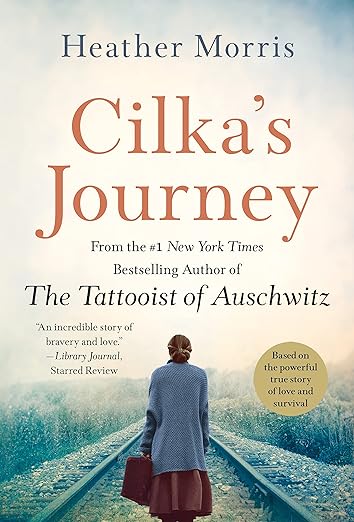 In The Tattooist of Auschwitz, we are introduced to Cilka, a beautiful young prisoner who is forcibly separated from the other women by Johann Schwarzhuber, camp commandant, for his exclusive use. Quickly learning that her survival depends on it, she does what she has to do to stay alive. Although both books are historical novels, Cilka, like Lale, was a real person and at one point, he credits her with saving his life.
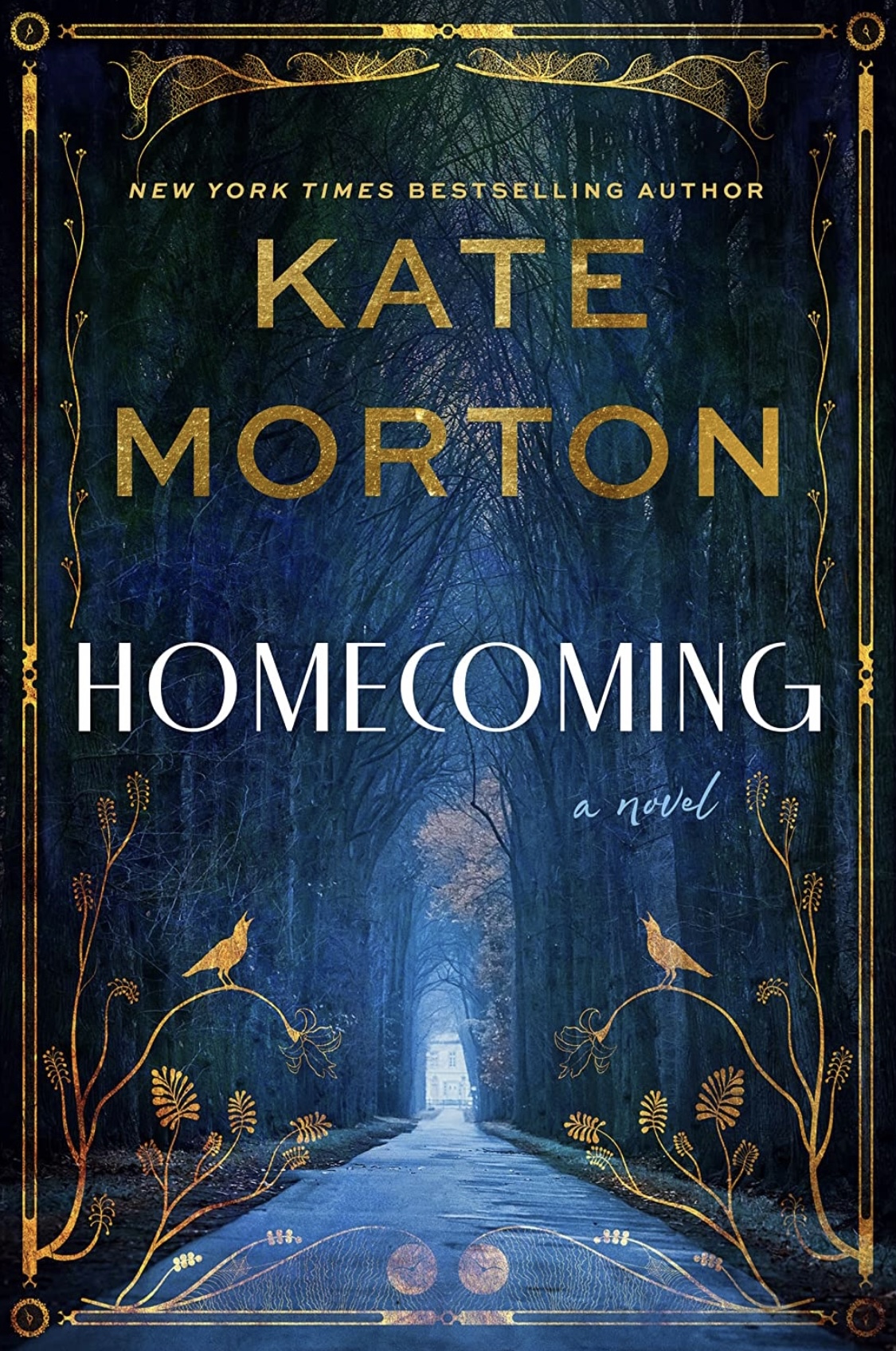 I first discovered Australian novelist, Kate Morton, when I found her first three novels in a garage sale several years ago. Since then, I’ve read every book she’s written. When I learned that she’d published a new novel in April of 2023, I immediately put my name on a waiting list with our regional library system. Obviously, Morton’s books are popular because the list was already long and I had to wait many months before Homecoming finally arrived.
 I read mostly for enjoyment, but I love a book that transports me to another place or perhaps another time and a book that teaches me something. The Tea Girl of Hummingbird Lane was such a book. Before reading it, I knew absolutely nothing about the Akha people, a minority hill tribe who live in small villages in Thailand, Myanmar, Laos, and Yunnan province in China.
 19-year-old, Ruby, driven by her difficult relationship with her mother, runs away from her home in England and seeks refuge with the grandmother she hasn’t seen for many years. Her unexpected arrival on Dr. Iris Black’s doorstep in Cairo brings life and disorder into the elderly woman’s house.
 I was absolutely captivated by this story! I could hardly put it down and when I had no choice, I couldn’t get it out of my mind. I didn’t want it to end and yet I had to keep reading to find out what happened. Clearly, nothing was going to get done around here until I finished it!
