The last camping trip

Every year, as summer winds down and the camping season comes to an end, I yearn for one more outing with the trailer. This year, that last camping trip took us just a little over an hour from home to Black Nugget Lake, so named because the park and the adjacent Coal Creek Golf Resort were built on the site of a former coal mine.

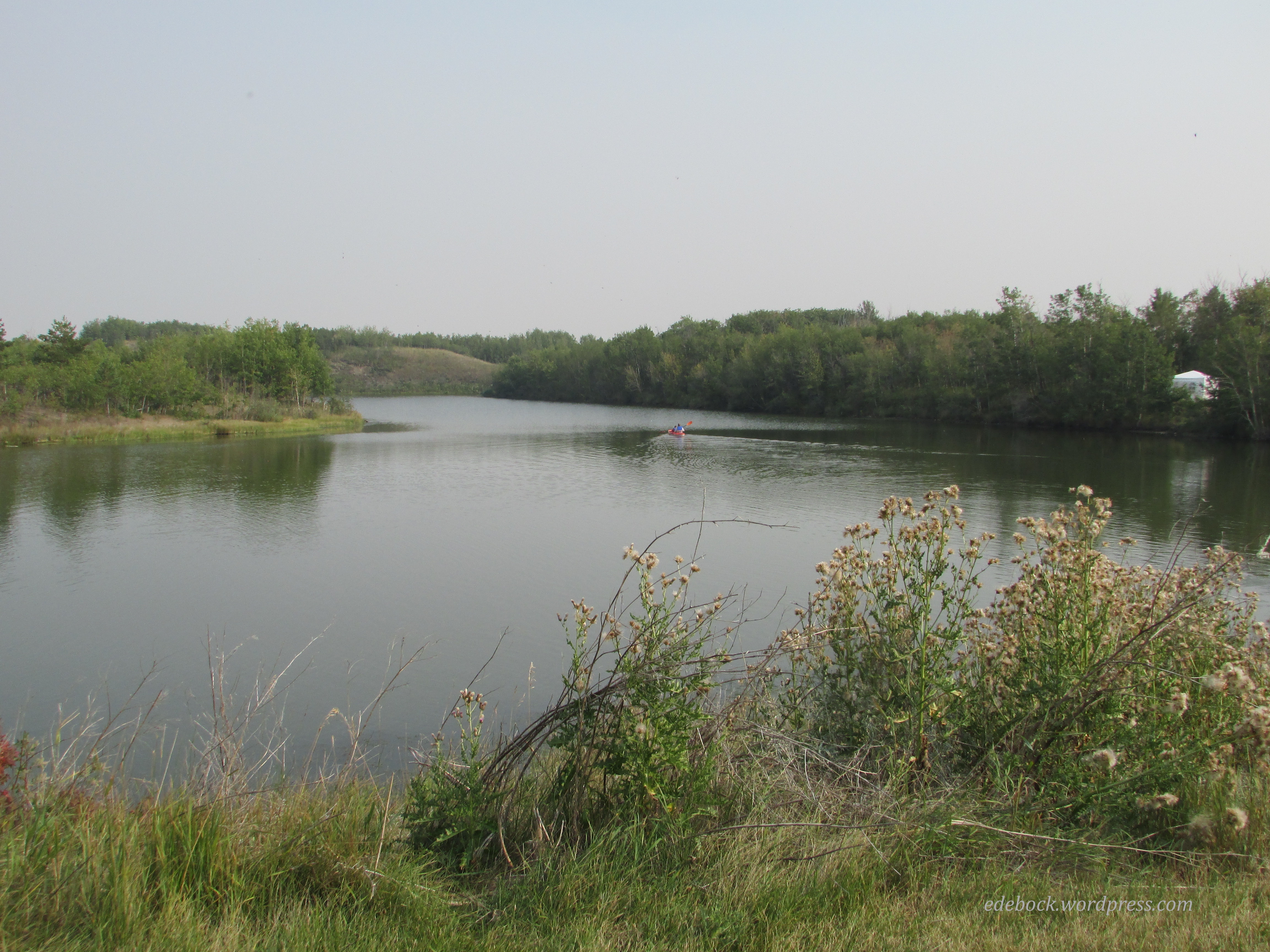
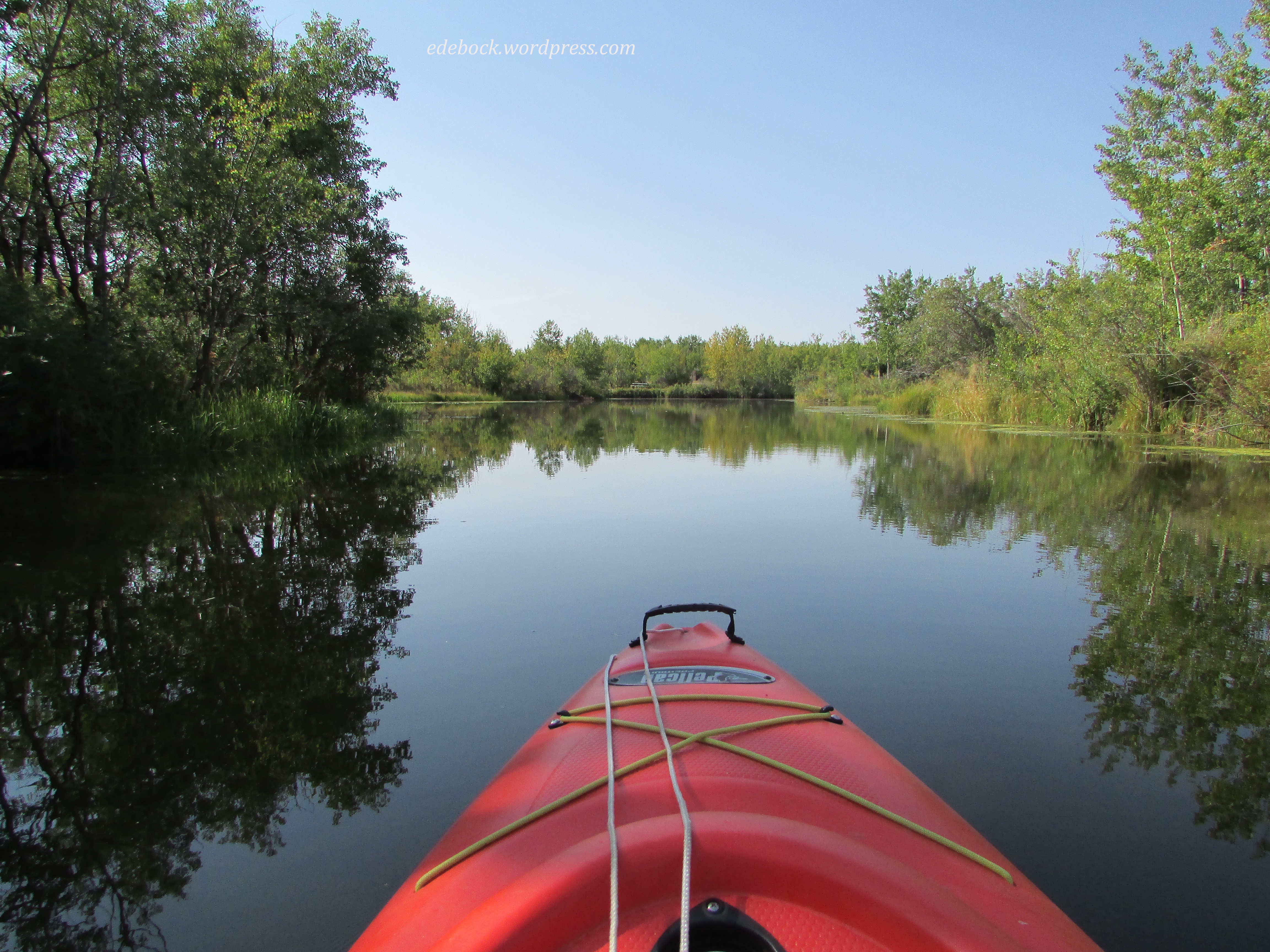
Our youngest son and his family joined us for the weekend and together we enjoyed games of ladder ball, bocce, and tether ball. Nate also got both of his older kids out on the lake in our kayak. If you look closely, you can see him and our grandson, Yari, in this photo.

IMG_4522

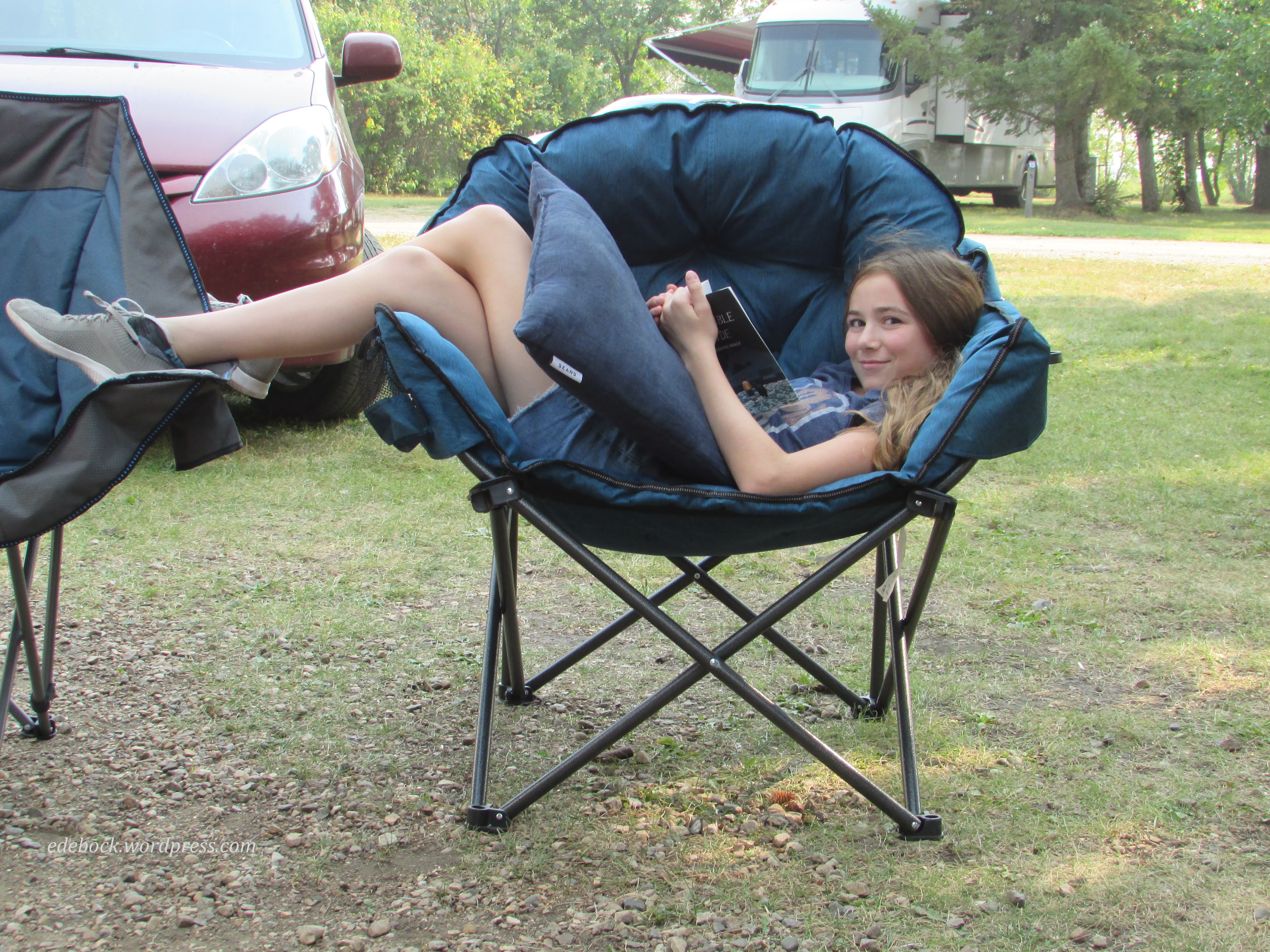
Lots of time was also spent relaxing as demonstrated so well by our granddaughter, Harlow!

IMG_4523

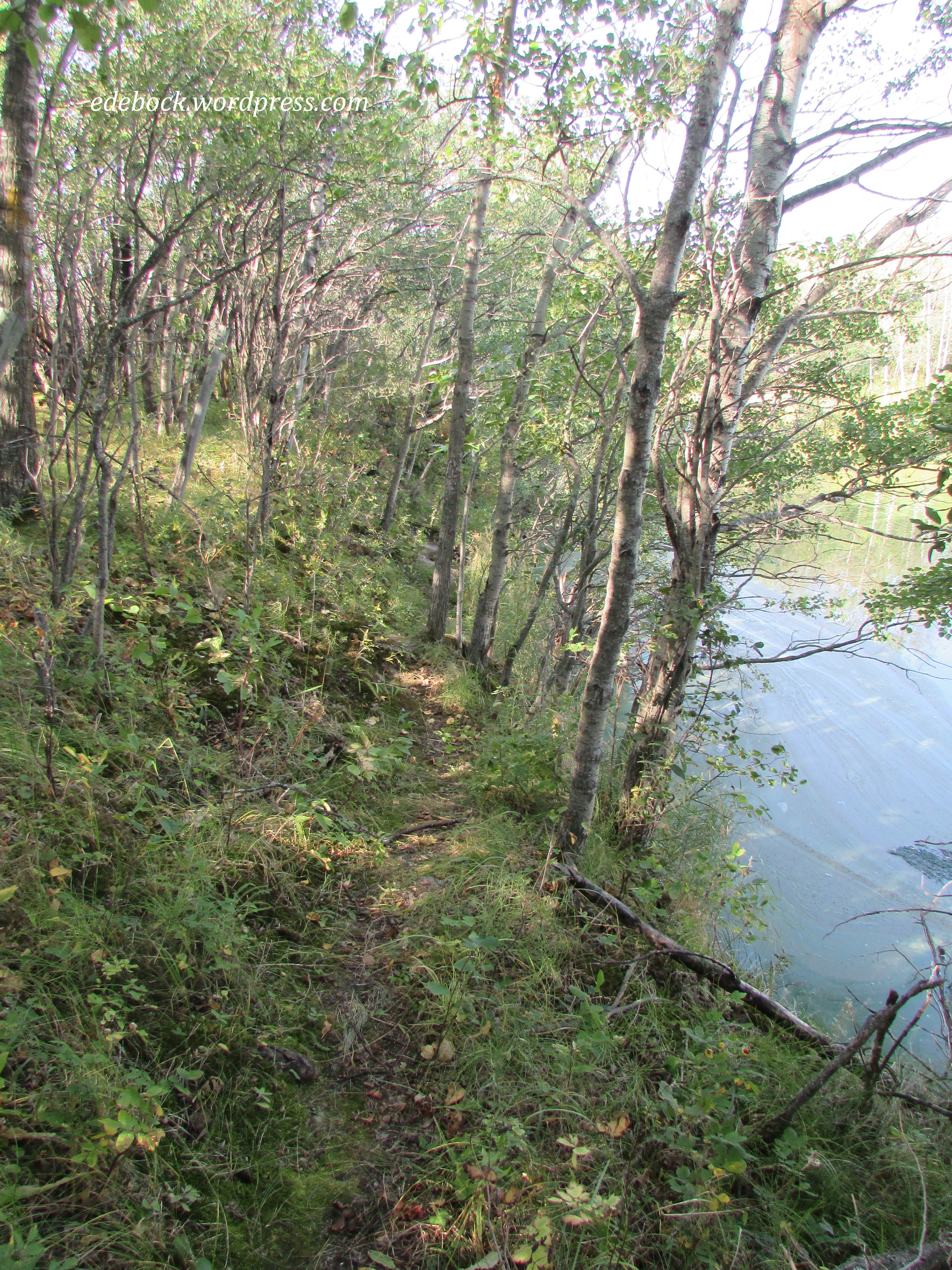
After the family left to return to the city for work and school, hubby and I stayed on for an extra day to do some hiking and kayaking. Unfortunately, the trails that were promised on the campground map were unmarked and badly overgrown. We followed one of them as best we could for about twenty minutes before it petered out entirely and we returned to camp.

IMG_4553

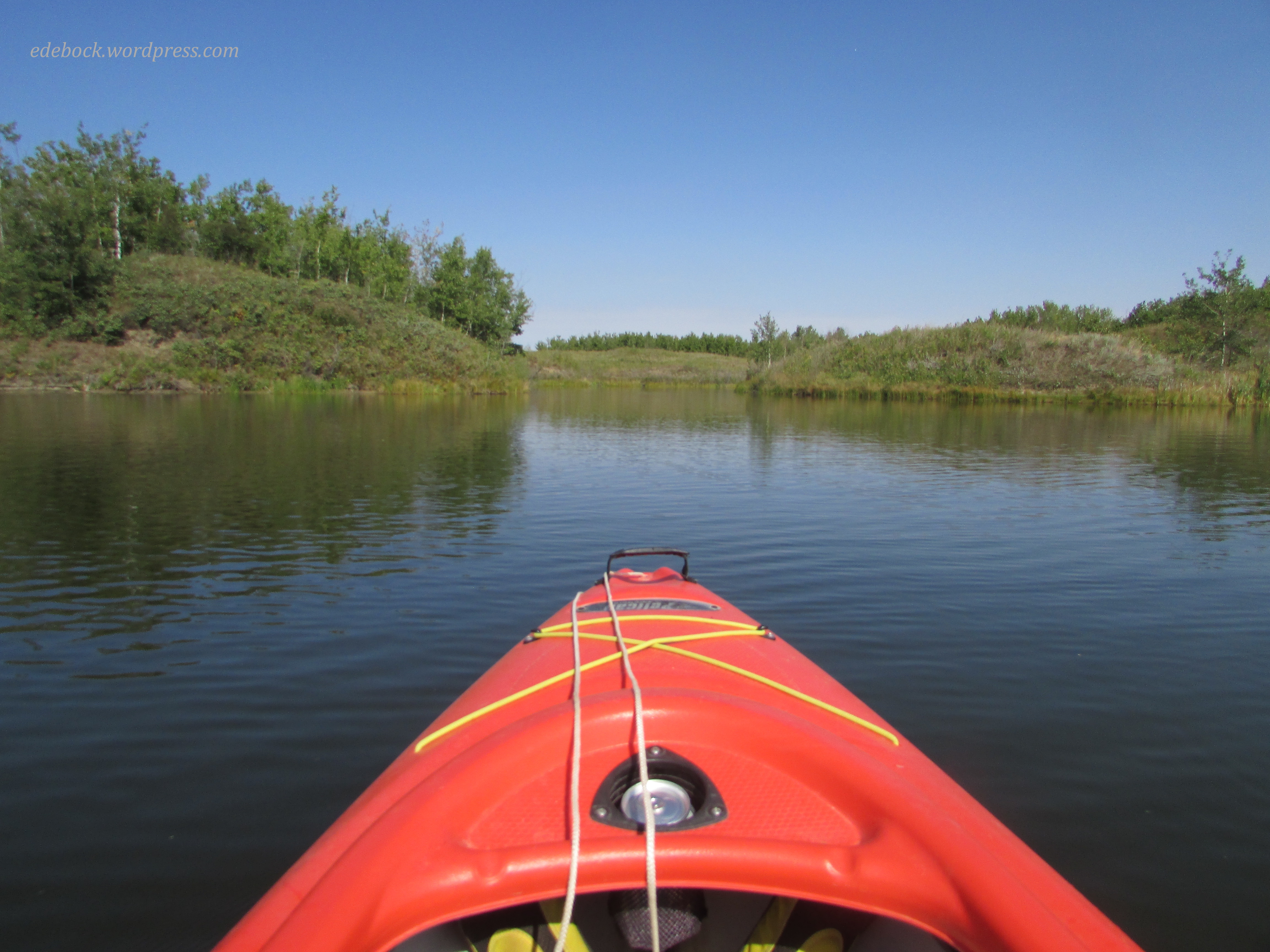
Kayaking was much more successful. The long winding lake, a haven for waterfowl, was fun to explore.

IMG_4558

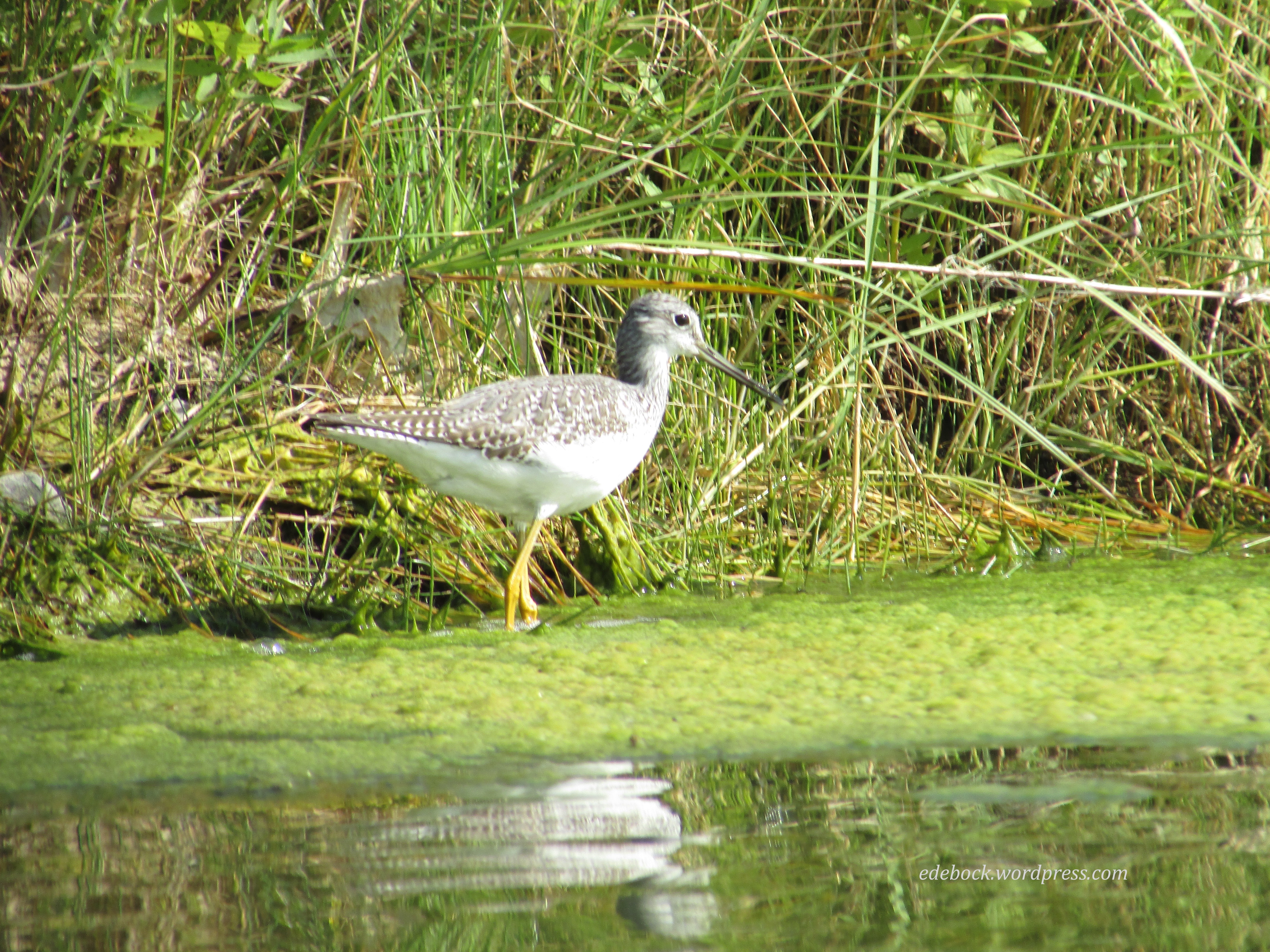
In addition to Canada geese and a variety of ducks, we saw numerous Greater Yellowlegs, a fairly large shorebird, as well as a stately Great Blue Heron. “Hank the Heron”, as Harlow dubbed him when she and Nate spotted him from the kayak, was standing guard on a tiny gravelly island when we first saw him. When we got too close for comfort, he flew off, but landed on the lakeshore where I was able to get close enough for a few more photos.

IMG_4555

Greater Yellowlegs

Great Blue Heron (with a Greater Yellowlegs in the foreground of the first photo) 

We managed to spend a total of thirty-five nights in the trailer since the first week of June this year. Although we don’t expect to take it out again this season, we do hope to do some day trips that will include more hiking and kayaking. Fall is definitely in the air and nights are getting chilly, but I’m hanging onto summer as long as I can!

IMG_4560

Fall camping second-hand style

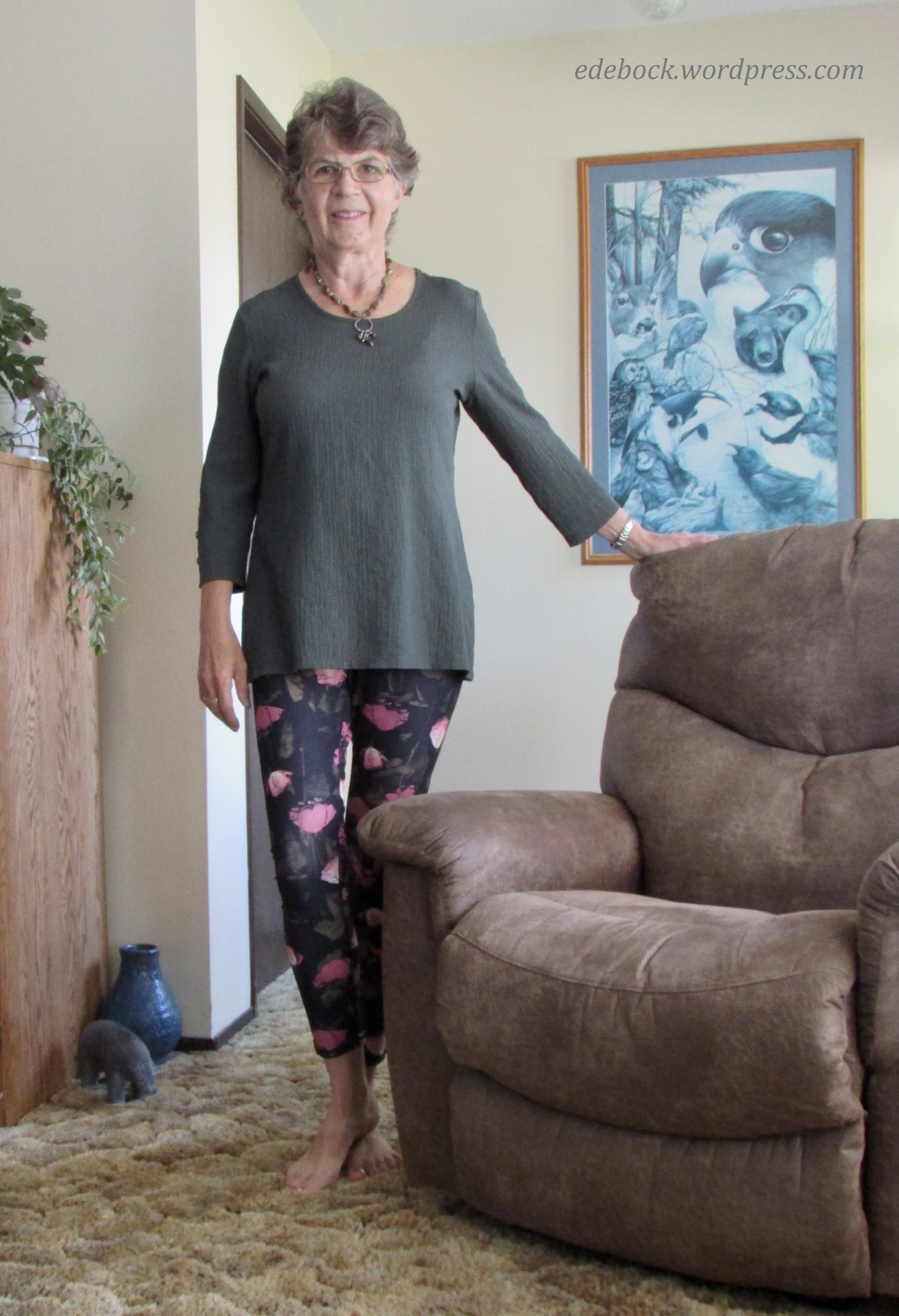
Logo by SamOver the past week, we spent four days camping and then company arrived shortly after we got home. That left very little time for writing a post for today, but since this is Second Hand September and I’m wearing only second-hand clothes this month, I thought I’d share a couple of the outfits that I wore while we were camping.

IMG_4499

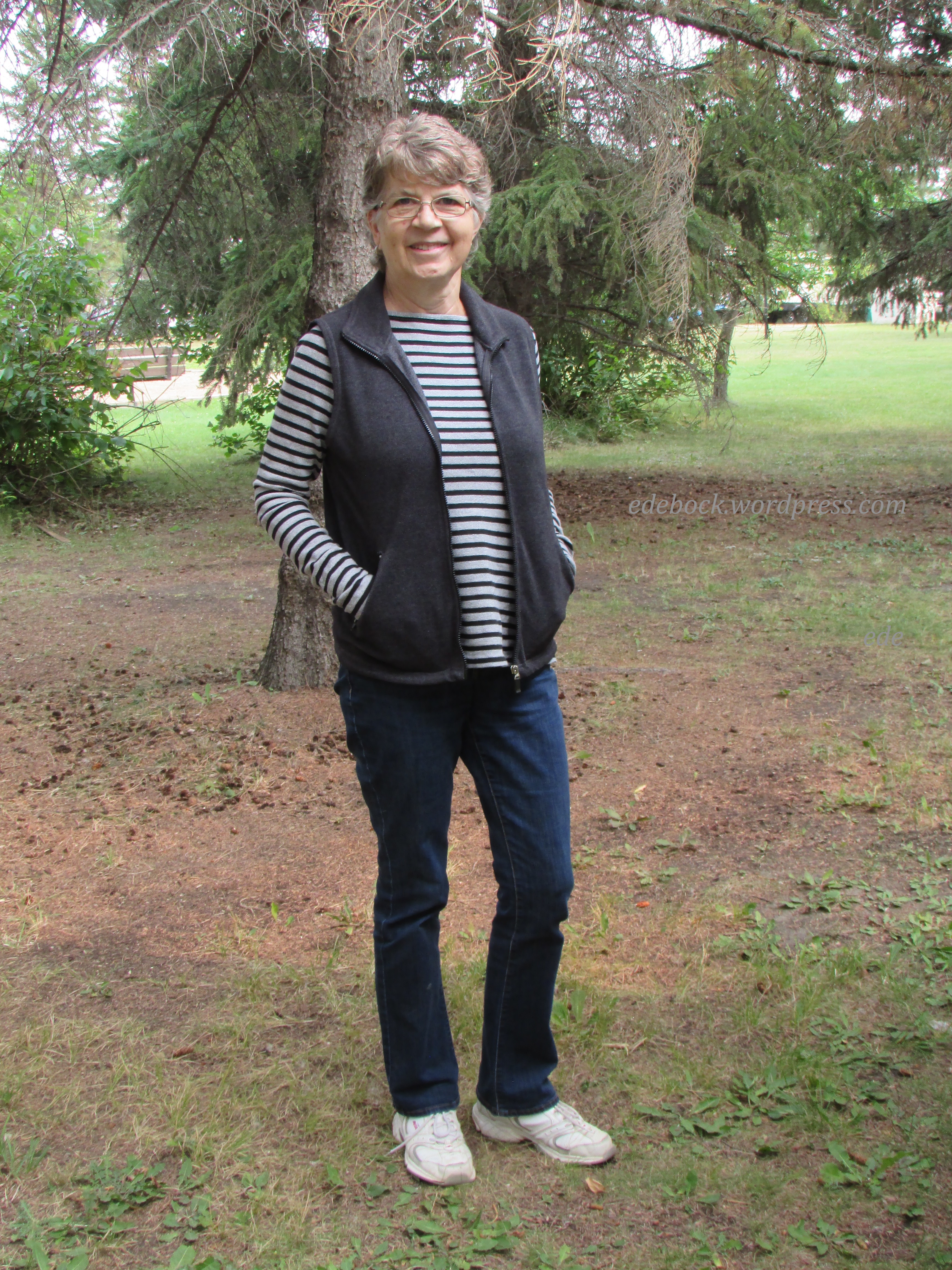
At $12, the striped boatneck sweater, purchased at Goodwill in Calgary last spring, is the most expensive thrifted item in my closet, but its light weight makes it a great layering piece on a chilly morning. It was about 10ºC (50ºF) when this photo was taken! I’ve had the fleece vest for many years and the jeans were hand-me-downs from my very generous sister-in-law. Almost new when she gave them to me because she found a pair that she liked better, they quickly became a staple in my fall/winter wardrobe.

When the temperature soared to about 25ºC (77ºF) in the afternoon, out came the summer clothes again!

IMG_4531

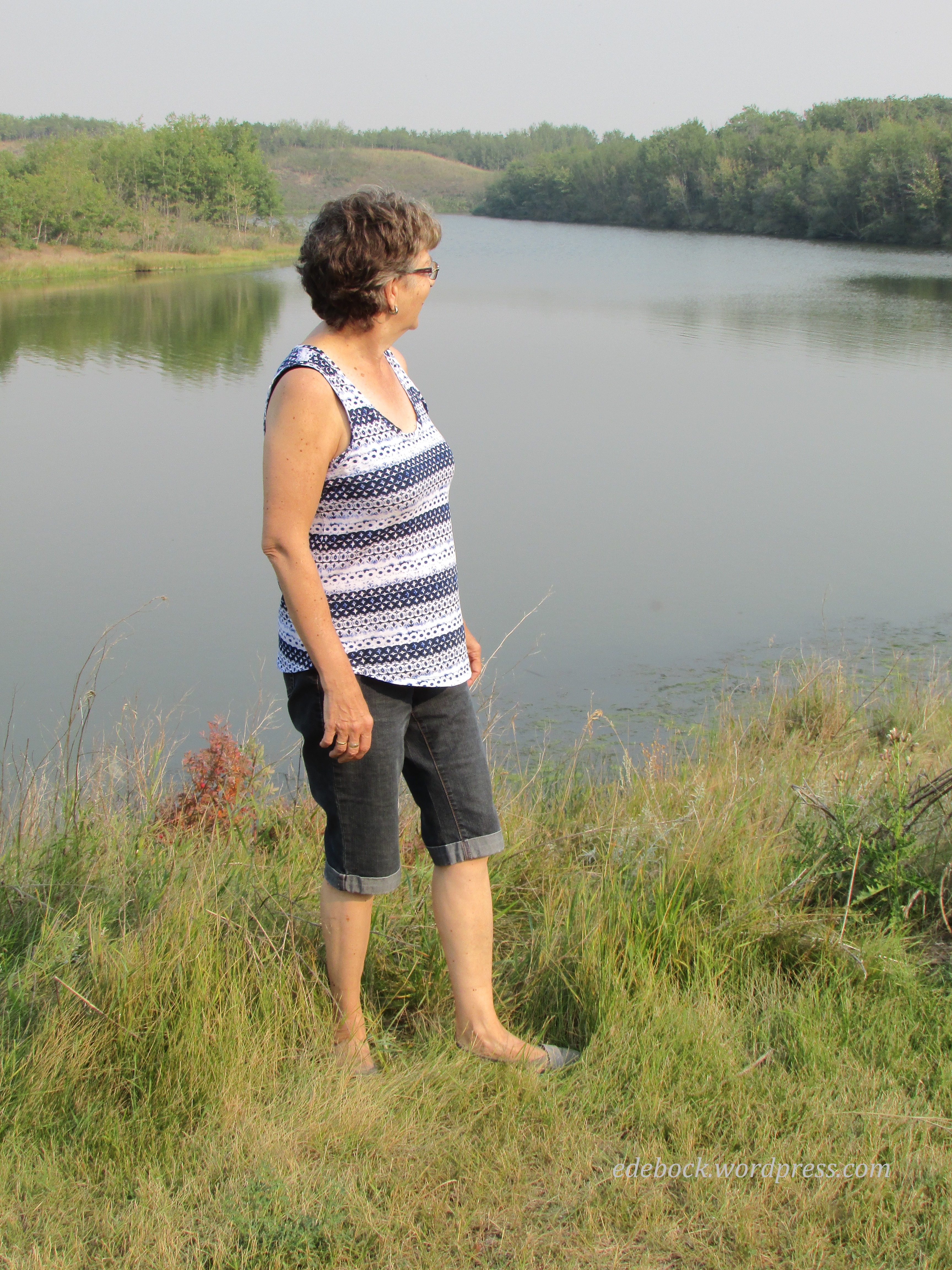
The patterned Denver Hayes tank top is a recent thrift store find, but I’ve had the pants for several years. Too long to be called shorts, they’re shorter than most of my capris. They’re actually a flattering length though because they cover my less than attractive knees and end at a narrow part of my leg. Fashion isn’t a high priority when I’m camping, but a girl always likes to look nice, doesn’t she?

6 myths about second-hand shopping busted!

Over a week into my Second Hand September challenge it’s going well. Today I thought I’d look at some of the most common myths or misconceptions about second-hand shopping.

1.  Thrift stores are only for poor people. 

In reality, most thrift stores exist to raise money for local charities and organizations, not to cater to a certain economic class. Many of us who buy second-hand can afford to buy new, but choose to reuse for a variety of reasons. Shopping second-hand is a sustainable practice that helps preserve resources and cuts waste by keeping usable clothing out of the landfill. It’s also fun; a bit like going on a treasure hunt!

Some argue that when those of us who can afford to buy new shop second-hand, we are taking from those in need. If you’ve ever had the opportunity to look behind the scenes at a thrift store, you know that that’s not true. There is definitely more than enough for everyone! Most thrift stores are only able to sell a small percentage of what is donated. The excess is often sent to women’s shelters, shipped abroad to be re-sold in third world countries (which is not necessarily a good thing… perhaps a topic for a future blog post), cut up and sold as industrial rags, or sent to textile recycling facilities where they are reprocessed into other useful products.

2.  Thrift stores are dirty. 

They may not be able to afford the nicest spaces with the best lighting and may not have fancy window displays, but well-run second-hand stores, like other businesses, try to keep their premises clean and their inventory presentable. Some people think that because the clothes are used, they must be dirty, but that’s generally a false assumption. Most clothing is washed before it’s donated and some second-hand stores have laundry facilities on-site to deal with those items haven’t been. Personally, however, I always wash second-hand items before I wear them because I don’t know where they’ve been and how they’ve been handled. Since I prefer unscented laundry detergent, I also like to remove any odours that might linger.

3.  Second-hand stores are disorganized. 

While some may be more difficult to navigate than others, most second-hand stores are organized in a similar manner to other shops with separate areas for men’s, women’s, and children’s clothing. Within each category, clothes are usually separated by type (tops, pants, dresses, etc) and further arranged according to size.

4.  Second-hand stores only sell cheap, low-end brands. 

If you take the time to hunt carefully, you can sometimes find name-brand, designer, or even luxury goods in thrift stores. One of my most recent finds was this animal print top from Calvin Klein.

IMG_4474

If high-end fashion is what you’re looking for though, you might want to check out consignment stores. Prices are generally higher and selection smaller, but they tend to be very selective in what they accept for sale.

5.  Clothes sold in second-hand stores are in bad shape. 

Clothes are sorted and inspected for quality before going onto the shelves. Those that are badly worn are disposed of, cut up and sold as rags, or recycled. Most of the clothing that reaches the sales floor has already stood the test of time. Any shrinkage or fading that might occur has already happened. Occasionally, however, brand new items are donated.

IMG_4492

The top I’m wearing in this picture still had the original tags on it when I bought it! It’s from Laura, one of my favourite Canadian women’s fashion brands. If memory serves me correctly, the original price was $69 and I bought it for less than $5!

6.  Clothes in second-hand stores are out of style. 

Thrift stores carry a mix of old and new and a wide variety of styles all in one place. You can easily go modern, retro, or vintage! They’re a great place to find pieces that fit your personal style rather than what the fashion industry dictates as on-trend for a particular season. They’re also a great source of timeless pieces that form the backbone of a good wardrobe.

Logo by Sam

So, if you’ve been averse to shopping for second-hand clothing for any of these reasons, perhaps it’s time to rethink that position and give it a try. Shopping second-hand helps support charitable causes, is good for the environment, and can save you a ton of money!

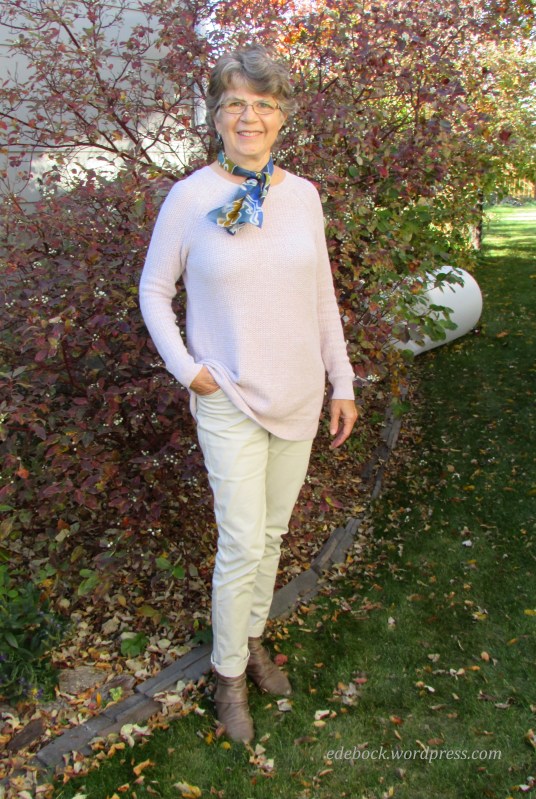
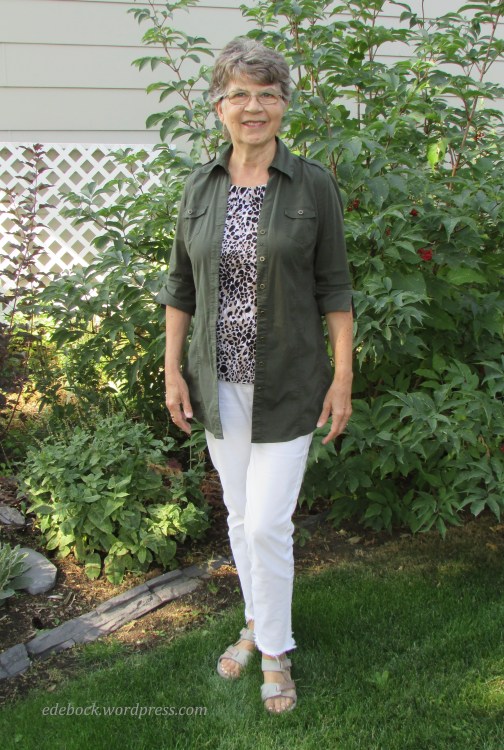
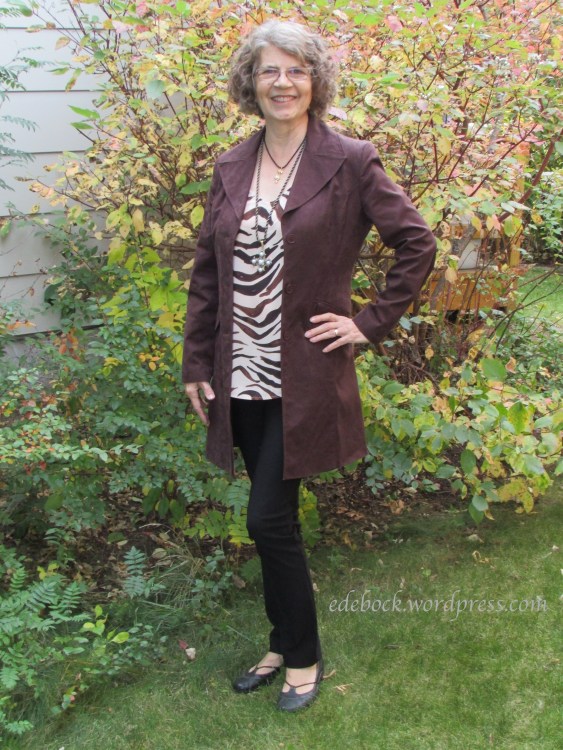
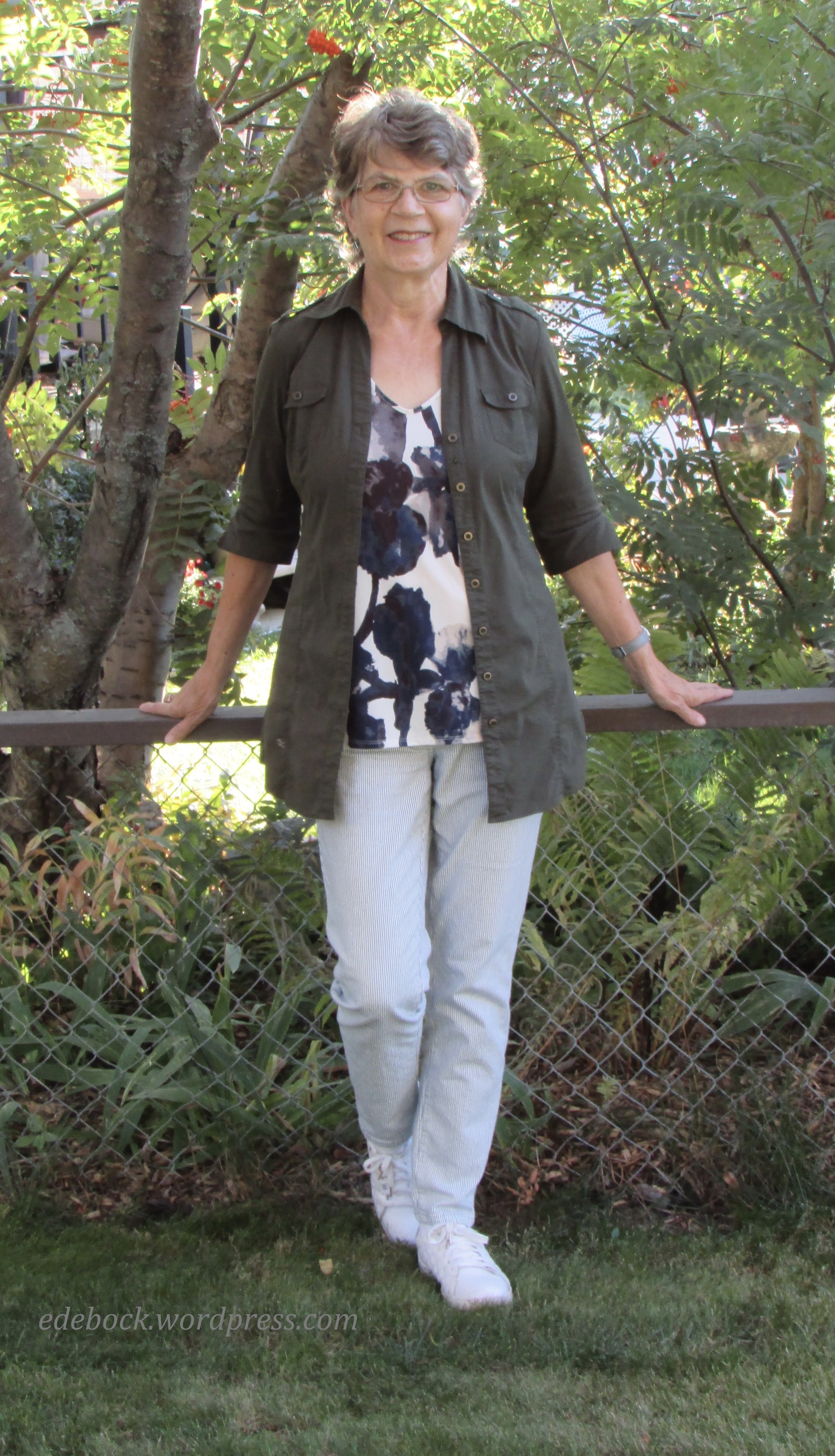
Here are two second-hand outfits that I wore this week that included the tops shown above. As you can see, the white jeans are getting lots of use this month, but it’s also been warm enough for shorts and capris. I’m hanging onto the last days of summer for as long as I can!

Second Hand September

Logo by SamThe fashion industry’s carbon footprint is enormous and has grown even more apparent with the rapid rise of fast fashion over the past few years. It now accounts for more carbon emissions globally than those emitted by all international flights and maritime shipping combined. In addition, approximately 10 million tons of clothes are sent to landfills every year. Second Hand September, a campaign introduced by Oxfam in 2019, has inspired thousands of people in the UK to begin thinking more sustainably by buying only second-hand clothes during the month of September. 

This year, I’ve decided to try taking Second Hand September one step further. I’m challenging myself to wear only second-hand clothing for the entire month! 

I’m going to follow the same rules as I did for last November’s “six Items or less challenge”. Underwear, socks, and pyjamas will not be included. I always purchase those items new. Outerwear, footwear, and accessories will also be exempt. Though I do have second-hand items in each of those categories and will try to make good use of them throughout the month, I won’t restrict myself only to those. 

Though my closet contains many more than six second-hand items, I suspect that this challenge might actually be the more difficult of the two. In selecting six items to wear for 30 days, I was able to be very intentional about choosing a colour palette that could easily be mixed and matched to create many different looks, pieces that could be dressed up or down, and pieces that worked well for layering. This time, I find myself working with a much more random mix of items. Most of those are quite casual and I have at least two events this month, including a concert tomorrow evening, that might require a bit of polish. I’ll also have church every Sunday. September is a shoulder season here in Canada and the weather throughout the month will likely range from hot and dry to chilly and wet. To make this work, I’ll likely be pulling second-hand pieces from both my summer and winter wardrobes.   

Have I bitten off more than I can chew? Only time will tell. Throughout the month, I’ll be sharing my experience and showing you some of the outfits that I create with my Second Hand September wardrobe, so stay tuned! 

To start things off, here’s what I wore yesterday for the first day of the challenge. I think it has a coastal grandmother feel to it. 

IMG_4440

I’ve had the white frayed hem jeans for three years. They first appeared on the blog here. Thankfully, the archaic “don’t wear white after Labour Day” rule has long been abandoned and while I don’t wear these jeans in the depth of our Canadian winter, I’ll certainly continue wearing them throughout September. The Clarks sandals were a lucky find earlier this summer and the loose and comfortable light grey animal print tee is a new-to-me acquisition. Thanks to regular sales at our local thrift stores, the entire outfit, cost me less than $10!

In closing, I would be remiss not to acknowledge those of you who responded to last week’s post asking for your input about what you’d like to see on the blog. I will be working at incorporating some of your ideas into future posts. 


What do you want to read?

Logo by SamA lot of the fashion blogs that I follow are writing about fall already and, of course, fall fashions have been in the stores for awhile, but I’m not quite ready for a change of seasons yet. Our summers are much too short and our winters too long. I always like to hang onto the last days of summer for as long as I can before I think about making that inevitable seasonal switch.

I am, of course, thinking ahead to topics for future blog posts though and today I thought I’d ask for your input. When I introduced Fashion Friday back in the spring of 2016, I wanted it to be more than just a “look at what I’m wearing today” feature. That seems terribly superficial and my closet wouldn’t sustain something like that for very long anyway. I wanted to present content with a little more substance than that. Many fashion blogs have become what might better be referred to as “shopping blogs”, but I have never been interested in encouraging that level of consumerism nor am I into blogging as a source of income. My intention was to be inspiring and to explore various aspects of personal appearance and how what we wear affects our daily lives. As time went by, I also became interested in topics related to ethics and sustainability in the fashion industry and have written a number of posts along those lines.

Those are some of my guiding ideas, but I’m also interested in knowing what you, my readers, would like to read. Do you want to know what’s on trend? Do you prefer instructional “how to” posts… how to put together outfits in new and interesting ways, how to dress different body types, how to dress on a budget? Are you interested in what’s going on in the fashion industry? Are there specific fashion related questions that you’d like me to try to answer. I have no formal fashion training, but I’ll do my best to search out answers. Where else do you look for fashion inspiration? Do you read other fashion blogs? If so, which ones are your favourites? Why? What do you like about them?

Of course, Following Augustine is more than just a fashion blog, so in addition to your thoughts and ideas about what I might write about on Fridays, I’m open to suggestions for the rest of the week as well. Whether you respond directly on the blog or prefer to comment on Facebook, whether you’ve ever left a comment before or not, please let me know your thoughts. A blog is nothing without its readers!

template, mockup, fall, blank, screen happy thanksgiving

Here we go again!

We were camping almost nine years ago when my doctor called to tell me that I had cancer. The news was completely unexpected and, in that moment, our lives changed forever. We were camping again this summer when hubby’s urologist called to tell him that he has two different kinds of prostate cancer, so here we go again!

A recent biopsy took 12 tissue samples from Richard’s prostate. Two of those, taken from one side of the heart shaped gland, showed a low-risk, non-aggressive cancer that is common in older men and usually requires nothing more than surveillance. Unfortunately, one sample from the other side proved to be a somewhat more aggressive form. According to the Gleason score, a scale used to evaluate the grade of prostate cancer cells, it’s a medium-grade cancer meaning that treatment ought to be considered.

There are several possible options. Surgical removal of the prostate, in spite of the fact that it has some negative effects, is thought to be the best choice for long-term survival, but the urologist warned us that the maximum age for a radical prostatectomy has always been a matter of debate and many specialists consider 70 to be the upper limit for performing this surgery. At 72, Richard is otherwise in excellent health and physical condition, so he has been referred to a specialist who does robotic prostate surgery, the most advanced treatment option available. We are praying that he’ll be approved and that the procedure will go ahead. If not, we’ll have to consider other options.

Over the past nine years, we have learned many things. The word cancer, itself, isn’t as scary as it once was. Though not to be taken lightly, it isn’t necessarily a death sentence either. We’ve learned to live life to the fullest and to consider every day a gift. We’ve learned the importance of living in and enjoying the moment. We’ve learned that a positive attitude makes the fight easier and adds to the quality of our days. We’ve learned not to worry about things that haven’t happened yet. As Matthew 34:6 says, “do not worry about tomorrow, for tomorrow will worry about itself. Each day has enough trouble of its own.” We’ve learned to focus on the things that are important in life and to let go of things that drain us for no good purpose. We’ve learned that there can be joy in the midst of challenging times. These are all lessons that we’ll take with us as we embark on this next journey.

Ultimately, we know that we have a God who walks this pathway with us and promises to take care of us. “Do not fear, for I am with you; do not be dismayed, for I am your God. I will strengthen you and help you; I will uphold you with my righteous right hand.” Isaiah 41:10

imagesAs always, the blog will be about more than cancer, but from time to time I will be using it to share progress reports. The only difference from the past will be that now I’ll be reporting on both of us!

Ukrainian Cultural Heritage Village

IMG_4420

Prior to the recent influx of refugees from Ukraine, Canada was already home to 1.4 million people of Ukrainian descent, the world’s second largest Ukrainian diaspora after Russia. The Ukrainian Cultural Heritage Village, an open-air museum located approximately 50 km east of Edmonton, Alberta uses costumed interpreters to recreate a pioneer settlement and commemorate the lives of Ukrainian Canadian settlers from the years 1899 to 1930.

Like everywhere else, it seems, the Village is short-staffed this summer, but there were still plenty of interactive activities for us to enjoy when we visited with two of our grandchildren earlier this week.

The one room schoolhouse was a favourite. The teacher gave sample lessons in arithmetic, spelling, and grammar. She also checked to make sure our fingernails were clean and suggested that some of us weren’t dressed appropriately for school!

Learning to do laundry the old-fashioned way was also fun for Harlow and Yari.

IMG_4399

At the Provincial Police Post, we put Yari in jail!

IMG_4403

IMG_4404

He also got to help the blacksmith.

IMG_4421

For lunch, we sampled a variety of authentic Ukrainian foods including pyrohy (perogies), holubtsi (cabbage rolls), sausage, borshch (beet soup), and somewhat less authentic, but absolutely delicious, pyrohy poutine!

It wasn’t until later when I looked at my pictures that I realized that I’d taken lots of photos of the kids and almost none of the village’s many buildings!

IMG_4425

In addition to houses, barns, schools, and various places of business that have been moved to the site from communities across central Alberta, there are three churches that are still active places of worship. As such, they aren’t open to the public.

IMG_4406

St. Nicholas Russo-Greek Orthodox Church was built in the rural community of Kiew, Alberta, by Ukrainian settlers from Galicia. The more elaborate St. Vladimir’s Ukrainian Greek Orthodox Church, shown in the first photo above, originally stood in Vegreville. Though we weren’t allowed to enter, we were able to view the very traditional interior, with it’s cross-shaped floor plan, from the open doorway. 

IMG_4423

Although the website suggests 2-3 hours to tour the village, we took significantly longer walking the dusty streets and pathways and exploring virtually every nook and cranny that was open to us. We finished our day with a ride around the village in a horse drawn wagon.

Made in Canada?

Logo by SamThose of us who live in small towns in particular are used to hearing the “shop local” mantra, but buying affordable domestically made clothing has never been more challenging. As of 2019, the majority of clothing purchased in Canada was imported from China, Bangladesh, Vietnam, and Cambodia, countries where workers’ rights are often limited or non-existent. Many proudly Canadian brands including Roots, Lululemon and Joe Fresh design their clothing in Canada, but the majority is actually produced elsewhere. The situation is similar for those of you who shop in the US.

As one who attempts to shop ethically, I was delighted to purchase three items recently that boast “Made in Canada” labels. Delighted, that is, until I discovered that even those labels can be deceptive. According to Canadian law, designers can legally use that term as long as the last substantial transformation of the garment occurs in Canada and a minimum of 51% of the cost of its creation is incurred in this country. Some items are partially assembled cheaply in Asian factories and then imported to Canada where finishing details and those all-important “Made in Canada” labels are added. Then, of course, there’s also the question of where the fabric and notions were produced, but that’s another rabbit trail that I haven’t managed to go down yet.

In spite of knowing that they may not have been 100% produced in Canada after all, I’m quite delighted with my recent purchases, two tops and a dress. One of the tops was thrifted which is, of course, an ethical way to shop regardless of where the item originated, but the other pieces were new.

IMG_4348 2

The dress was totally an impulse buy. It caught my eye as soon as I entered the store, but I didn’t really need another new summer dress. After all, I’d just bought this one a few weeks earlier and had only worn it a couple of times. I looked at everything else in the store, but my eye kept going back to the dress, so I finally decided that I had to try it on. I do my best to be a mindful shopper, but once in awhile an impulse buy just has to happen!

IMG_4359

The dress is as comfortable as a favourite t-shirt and as you can see, it’s easy to dress up or down. The lightweight polyester knit is machine washable and will hardly take up any space in a suitcase when we finally decide to fly again.

IMG_4366

The beautiful floral backdrop is our neighbour’s. She’s an amazing gardener and we thoroughly enjoy the results of her labour! Thank you, Connie!

A walk in God’s garden

Several of our planned hikes over the past two weeks were cut short or thwarted entirely by flooding due to unusually high water levels. In spite of that, we did manage to complete a few and one of them stands out as being the most amazing and unique.

An esker is a long, narrow ridge of winding hills composed of sand and gravel that was deposited thousands of years ago by a stream that ran underneath a glacier that once covered the land. One such ridge lies to the west of Laurier Lake and extends south into Borden Lake in Alberta’s Whitney Lakes Provincial Park. The 5.8-km out-and-back Borden Lake trail follows the top of the esker. 

IMG_4296

IMG_4299

IMG_4305

The trail is considered a moderately challenging one because the esker is far from flat. As we made our way up and down its rolling hills, we found ourselves surrounded by a myriad of wildflowers in bloom. I truly felt like I was walking in God’s garden! 

While I recognize some of the flowers like the wild rose, Alberta’s provincial flower, and the lone tiger lily, there were many others that I didn’t know by name.

We had the trail entirely to ourselves. There were no people for miles around. Thankfully, we didn’t see any bears either although there was some fairly fresh sign on the path and with bushes loaded with berries alongside the trail, they probably weren’t very far away. We kept our bear bell jingling and our bear spray close at hand just in case it was needed! We actually did see a young bear in the campground the following day, but thankfully, we were in the vehicle at the time and it was nowhere near our campsite. 

IMG_4312

As we continued hiking, Borden Lake soon came into view and if you look closely, you can see the esker jutting out into the water. The trail goes to the very end.

IMG_4318

IMG_4319

When we reached the end, hubby sat down to rest, but I took off my shoes and socks and waded right in! 

IMG_4322

The water was refreshing, but soon it was time to retrace our steps back through the garden and return to camp. 

The art of aging gracefully

Since I spent much of the past week camping and yesterday participating in a senior’s golf tournament, I don’t have a regular Fashion Friday post for today. Instead, I’m going to share some words of wisdom from Donna Ashworth’s book, To The Women: words to live by

Think about it, you have EARNED this face.
Every line, a laugh shared.
Every wrinkle, a year survived.
Every age spot, a day that the sun shone on you.
Some women believe that as they age, they LOSE their looks. Oh my friends how wrong this is.
A beautiful young women is a happy accident of nature but a beautiful older woman?
She is a work of art.
The Japanese have a practice whereby they fill any broken objects with gold, believing that something which is broken has earned its beauty and should be celebrated and decorated rather than discarded.
I feel this way about women.
It took a long time to find out who you really truly are. A long time. The acceptance that old age brings is freeing. It brings with it peace and happiness.
Everyone knows, happiness looks good on us all.
Your body has been changing since the day you were born and will continue till the day you depart. Ride with it, accept it, embrace it. Be amazed by it.
Allow your face to represent your life, your stories, your joys.
Why choose to be an older woman fervently chasing youth, when you could be that older women who knows what she is worth and has earned every minute of her hard-won self-acceptance.
The trick with ageing successfully my friend, is to pay as little attention to it as possible.

img_1445_3

I’ve shared this photo before, but it’s one of my favourites from our time in China. I thought she was beautiful when I first saw her and I still do. I wish I could have spoken to her but language was a barrier. I have no doubt, however, that the well-earned lines on her face tell a story… a story of hardship, a story of survival, but hopefully also a story with some happiness in it. As we age, may our faces also tell our stories with grace and self-acceptance.