Golden years?

Have you ever wondered why they call our retirement years, the years from 65 to 80 and beyond, the golden years? The phrase was actually coined in 1959 as part of an advertising campaign for Sun City, Arizona, the world’s first large-scale retirement community for active seniors. The goal, of course, was to portray retirement as a life of leisure; a time to travel, play golf, and pursue hobbies, but is it true?

For Christmas, I gave hubby a sweatshirt with one of his favourite sayings on the front. Retired: The ability to do what I want when I want. Lately whenever he wears it, he hastens to point out that it isn’t entirely true. These days, our lives seem to revolve around countless trips to the city for tests, scans, specialist appointments, and most recently, his prostate surgery. Maybe these should actually be called our rusty years because parts are continually breaking down and our bodies aren’t running as smoothly as they once did!

We certainly aren’t alone in this. At our recent senior bowling windup I looked around the table at our team and realized that all five of us either have or have had cancer. Many of our peers have had hip or knee replacements. Another has recently had a stroke and still others are waiting for biopsy results and/or surgery. No, retirement isn’t all traveling and playing!

I’m not really complaining… well, maybe just a little! I love the fact that we no longer have to rush off to work every day and that the government pays us for simply waking up every morning. I also realize that I’m fortunate to be alive. When I glance at the obituaries these days, many of the deceased are younger than me!

Some people claim that our true golden years are between 40 and 60 when we’re still physically and mentally fit and have probably reached some level of financial security. That led me to wonder, when were my golden years? When were yours? The first decade of my life, living in a waterfront house on the coast of British Columbia with the beach as my playground and the sound of the surf as my lullaby at night, was definitely golden. I look back on the years when my children were at home as golden. I loved that time of my life. There was a dark interval during the fourteen months that our oldest daughter fought her losing battle with leukemia, but even during that time, there were golden moments. When we were in our fifties, the year that we spent teaching English in Japan was golden.

640px-Kinkaku-ji_the_Golden_Temple_in_Kyoto_overlooking_the_lake_-_high_rez

2 Corinthians 4:16b says, “Though outwardly we are wasting away, yet inwardly we are being renewed day by day.” In spite of the limitations of physical aging, I have no intention of passively resigning myself to coasting along and waiting for my name to show up in the obituaries! It was Abraham Lincoln who said, “In the end, it’s not the years in your life that count. It’s the life in your years.” So what can we do to make these years count, whether they are golden or rusty?

We may not be able to travel as often or for as long as we once could, but I’ll cherish the relationships that we have with people both near and far and when I can’t be together with them in person, I’ll remind myself how fortunate we are to have the internet, something that we didn’t have in our younger years. When I can’t explore far away places, I’ll seek out and appreciate ones that are closer to home. I’ll continue to offer the best of myself through volunteer work. I’ll read and learn and stay as physically active as I can for as long as I can. Always, I’ll remember to be thankful!

And finally, a message for those of you who are younger, don’t waste what might be the best years of your life yearning for the golden years. After all, they might turn out to be a little bit rusty!

Another second-hand find

Logo by SamWhen our daughter and her three children were here for a visit last week, we did what we usually do when she’s here. We checked out the two local thrift stores. I don’t know who enjoys these outings more, Mom, Gram, or the almost 13-year-old granddaughter! She was very happy to find a colourful sweatshirt and a great pair of shoes.
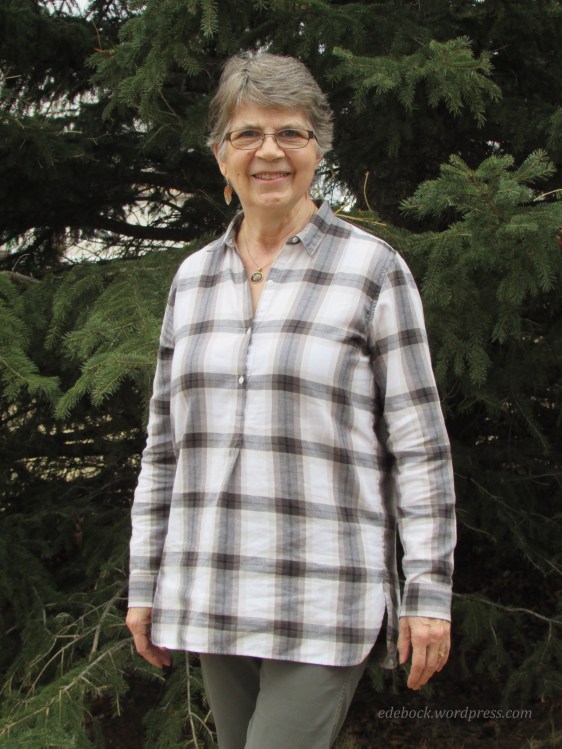
I came home with three tops including the one that I’m showing you today.

IMG_5491

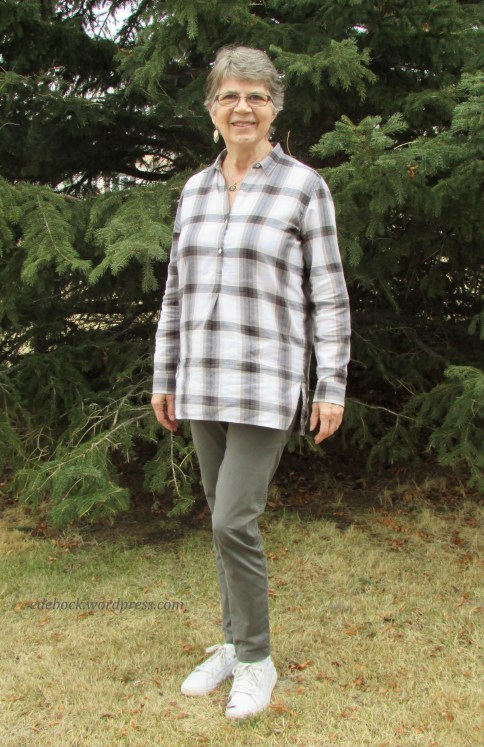
The comfortable cotton shirt from Gap is perfect for this shoulder season when winter finally seems to be on the way out, but days are still quite cool. I love the warm neutral colours and the slightly oversized fit. Though you probably can’t see it in the photos, tiny threads of metallic gold run through the darkest bands elevating the casual look without being overly fancy.

IMG_5490

Though the shirt would go just as well with jeans or leggings, I’m wearing it with a pair of dark olive chinos that have been in my spring/summer wardrobe for the past three years. I haven’t actually done my seasonal closet switch yet, but I did pull this pair out of storage as they’re a good transitional piece for this in-between time of year.

So why does our family enjoy second-hand shopping so much? For me, in addition to the fact that it’s a bit like going on a treasure hunt, there are three very distinct advantages.

  1.  Location. I live in a very small rural community. With the exception of the two thrift stores, the closest place to shop for clothing is an hour away. The thrift stores are local and support our small communities. Both are run by volunteers and the proceeds go to local churches and organizations.
  2. Price. Similar shirts to the one that I’m featuring today sell on the Gap website for about $85, but I paid $2! I can afford to pay full price and buy new, but why would I when I can find quality clothes for so much less?
  3. Sustainability. The environmental impact of the clothing industry is monumental. Fashion is responsible for approximately 10% of human-caused greenhouse gas emissions and 20% of global wastewater. It uses more energy than the aviation and shipping sectors combined. Shopping second-hand helps protect the environment and reduces the need to use natural resources to make new clothes. Again, what’s not to like about that?

IMG_5493

Vogue’s oldest cover model

Logo by SamVogue is arguably the most famous fashion magazine in the world. First published in 1892 as a weekly newspaper, it slowly evolved into the monthly publication that it is today. While print magazines might not be as popular as they once were, the US edition of Vogue had 11.1 million readers in the spring of 2021! There are also 26 other editions of the magazine internationally. Sometimes referred to as the bible of fashion, Vogue is an iconic trendsetter within the realms of fashion, lifestyle, and beauty, and increasingly deals with political, social and cultural topics as well. When Vogue says something is beautiful, most people would probably agree. 

Whang Od 106 Philippines

This month, Vogue Philippines says that 106-year-old Apo Whang-Od is beautiful and I couldn’t agree more! As Margareta Magnusson says in her small book, The Swedish Art of Aging Exuberantly, “a patina of warmth and a well-lived life shines visible in her face”.

Whang-Od is the Philippines’ oldest mambabatok or traditional Kalinga tattoo artist and has been performing the ancient art of hand-tapped tattoos since she was a teenager. Every year thousands of tourists flood to Buscalan, a remote mountain village about a 15 hour drive north of Manila, seeking her signature designs. Each symbol carries a special meaning. Some represent things of nature while others signify strength, beauty, bravery or fertility.

Whang Od uses an ancient technique; her only tools a bamboo stick, a thorn from a pomelo tree, water and coal. With intense concentration, she paints a design on the skin using the homemade coal-water ink then tap by tap, she uses the thorn and the stick to push the ink deep into the skin

According to tradition, a mambabatok is only allowed to pass their skill down through their own bloodline, so Whang-Od, who learned the art from her father, has been training her grandnieces in the ancient art. At 106, however, she has no plans to retire. She says that she will continue tattooing for as long as her eyesight allows!

“We believe that the concept of beauty needs to evolve, and include diverse and inclusive faces and forms. What we hope to speak about is the beauty of humanity,” said Vogue editor-in-chief, Bea Valdes. I think they also captured the beauty of age! Prior to this, the oldest Vogue cover model was Dame Judi Dench who appeared on the front of the British edition in 2020 at the age of 85.

When I saw the cover picture of Whang-Oh, I couldn’t help thinking of this photo, one of my favourites from our time in China. She may not be a cover model for Vogue, but she’s appeared on the blog more than once before and I wouldn’t be surprised if she did again! I don’t know her name and I have no idea how old she was, but I thought she was beautiful and I still do.

img_1445_3

Always try it on

Logo by SamAt this time of year, as we wait for spring to finally arrive here on the prairie, I grow very weary of my winter wardrobe. As a result, I recently picked up a couple of new-to-me tunics at our local thrift stores to add a bit of variety to my end of season closet. I shared one of them with you last week and today I’m featuring the other one.

IMG_5471

Two of the tips for successful thrift store shopping that I shared with you in this post are “try everything on” and “don’t limit your search to the size you usually wear.” Following my own advice definitely paid off this time. When I checked the label, I was surprised to see that the tunic was an extra large. It didn’t look that big, so knowing that size isn’t consistent from one brand to another, I decided to try it on anyway. I usually wear a medium, sometimes a large, but never XL. Never, until now, that is!

As I headed for the dressing room, I was skeptical about whether or not I’d be bringing this garment home with me, but I knew that at this time of year, I’d want to wear it over something with sleeves. I was pleased to find that, while it fit fairly loosely, it didn’t look too oversized.

IMG_5482

Here I’m wearing the tunic over a lightweight sweater, my dark brown button front skinnies from cabi’s Fall 2022 collection, and my tall brown boots, all pieces that have appeared on the blog before. The pants are the only item that I purchased brand new!

I recently read several comments on a British fashion blog from readers who absolutely hate the colour brown and would never wear it. They all agreed that their loathing of the colour originated in childhood when they had to wear drab brown school uniforms. Thankfully, I didn’t have that experience. In fact, my memory of brown is quite different. Although she often wore brighter colours, brown was my mother’s favourite colour. She would have loved today’s outfit! Isn’t it interesting how early associations affect our fashion choices later in life?

IMG_5476

I’m not sure if this tunic will stay in my wardrobe long term or not, but I’m glad I tried it on and brought it home. For a whopping $2.50, it’s added something new to my late winter/early spring wardrobe and the three large buttons on the cowl collar and the pockets are worth more than that!

Book of the month – March 2023

308788398_793743698620103_4237945045776654649_n


When the Moon is Low

Nadia Hashimi

9780062369611-lNadia Hashimi’s second adult novel is the gripping story of a mother and her children fleeing Afghanistan after the brutal murder of her husband by the Taliban. Their one hope is to find refuge with her sister’s family in London, England. It’s also the story of Fereiba’s teenage son, Saleem, who becomes separated from the family as they make their perilous journey into Iran, Turkey and across Europe. 

Released in 2015, this international bestseller is a riveting story of hardship, desperation, and harrowing escapes. It’s also coming-of-age story as Saleem learns to navigate the dark world of human trafficking and squalid refugee camps on his own while desperately trying to reunite with his family. I found it completely engrossing and hard to put down! 

Like her first novel, The Pearl That Broke Its Shell, and her more recent ones, A House Without Windows and Sparks Like Stars, When the Moon is Low is a work of fiction based on reality. Hashimi was born in New York to Afghani parents who emigrated in the early 1970s before the Soviet invasion and the rise of the Taliban, but she draws on the experiences of family members and others who shared the details of their sometimes heartbreaking journeys with her.

In addition to her four adult novels, Hashimi has written two novels for young readers, The Sky at Our Feet and One Half from the East, that also deal with life in modern-day Afghanistan and those who have had to flee. 

All of Hashimi’s novels give the reader a glimpse into the lives of Afghan girls and women, but When the Moon is Low also opens our eyes to the perilous journeys of the ever increasing number of refugees from a variety of backgrounds who have flooded Europe in recent years and their harrowing attempts to find asylum. It is a story of both the kindness of strangers and the harsh realities of persecution.

Nadia Hashimi is a pediatrician, the mother of four children, and a former Democratic congressional candidate for the United States House of Representatives. How she finds time in such a busy life to write, I have no idea, but I’m very glad that she does! 

Analyzing an outfit

Logo by Sam

Sometimes I like to analyze an outfit to figure out why it works, or in some cases, why it doesn’t. Let’s do that with this outfit today.

IMG_5452

The L.L.Bean tunic is new to me, purchased recently at one of our local thrift stores. There was a time in my younger (and perhaps more foolish) days when I might have worn this fingertip length garment as a dress, but not any longer! Instead, I could wear it with leggings, but here I’ve chosen to wear it over a pair of dark wash jeans. But what is it about this outfit that makes it work for me?

First, as with any outfit, I ask myself whether or not it fits my 5 style adjectives. Does it say classy, confident, comfortable, casual, and authentic? This is, of course, a personal judgement call, but I believe that it does.  

A garment that fits well can accentuate good features and disguise less desirable ones. I have a boyish figure; straight up and down with very little waist definition and narrow hips. The shape of this tunic gives me a more feminine profile by creating the illusion of girlish hips. It’s loose enough over my midsection not to reveal any bulges and the three-quarter length sleeves draw the eye away from my waist area. 

IMG_5455

If you’ve been reading Fashion Friday for long, you know that I really like horizontal stripes and contrary to what we were taught years ago, research has shown that they don’t make you look fatter. In fact, they might actually make you look thinner! And then there’s colour. Teal is known as a universal colour because it looks good on everyone; it flatters every skin tone. 

IMG_5459

Accessories add the finishing touch to any outfit and in this case, I chose to wear my Nordgreen watch with its navy leather strap, a wide bracelet made of multicoloured beads, and a pair of iridescent earrings that pick up the teal colour of the tunic. Try as I might, I couldn’t seem to get a decent picture of the earrings, but this one shows off the bracelet well. I like its boho vibe which adds a bit of creativity to my look without being too over the top. 

PS.  Did you notice a recent change to the blog? No more ads! After blogging free for over 15 years (except for a small fee to cover extra space so that I could include lots of pictures), I decided to bite the bullet and upgrade to a paid plan so that I could bring you a cleaner, ad free read. Until now, those ads have been paying my way, but I was finding them more and more intrusive and annoying. I suspect that you were too! 

Role reversal

It’s been quite awhile since my last health update on here, so for those of you who follow our cancer journeys, I thought it was about time for another one. I say journeys because you may remember that, in addition to my cancers, hubby was diagnosed with prostate cancer last summer. Fast forward eight and a half months and as of this week, he no longer has a prostate and as far as we know, he no longer has cancer!

Surgical removal of the prostate, in spite of the fact that it has some negative effects, is thought to be the best choice for long-term survival, but when we saw the urologist in August, he warned us that many specialists consider 70 to be the upper age for performing that surgery. At 73, Richard is otherwise in excellent health and physical condition, so he was referred to a specialist who does robotic prostate surgery, the most advanced treatment option available, with the hope that he would agree to do the procedure. Had he not, there were several other options that we would have had to consider.

On October 31, after the appointment was delayed by a few weeks due to us both having Covid, we finally met with the surgeon. He had clearly reviewed Richard’s case and had absolutely no qualms about performing the surgery on someone in his physical condition. As Dr D said, we could easily look around his waiting room and see men a decade younger than Richard who weren’t in the shape he was in and who would be much higher risk. We were told at that appointment that the wait time for surgery would be five to six months.

Almost five months later, we arrived at the hospital in Edmonton at 5:30 a.m. on Monday and by noon Richard was in the recovery room with no prostate and hopefully no cancer. After one night in hospital, he was released the following day and I suddenly went from patient to caregiver! Total role reversal!

Over the nine and a half years since my first cancer diagnosis, Richard has stood by me and provided excellent care when I’ve needed it. He’s accompanied me to countless specialist appointments and seen me through numerous scans, two major surgeries, 30 radiation treatments, and 14 PRRT treatments. Now it was my turn and I wondered how I would do! Thankfully, he’s been a model patient and things have been going well so far.

The biggest challenge facing us when we got home was the fact that he has a catheter which won’t come out until April 6. The first evening, as we figured out how to change from day bag to night bag (including cleaning the day bag and tubing for the next day’s use), we were both all thumbs. Once we figured everything out though, he’s been able to manage it with minimal assistance from me. A bigger challenge for me might come when our snow finally melts and I’m suddenly in charge of the early spring yard work that Richard usually takes care of! He has very clear instructions not to do any heavy lifting, snow shovelling, or lawn mowing for six weeks. At that point, we’ll also see the surgeon for a follow-up appointment. It’s then that we’ll receive the pathology report and know for sure that he’s cancer free.

And what about my cancer journey? Since early December, I’ve had a CT scan and three different PET scans. Two of those were part of a study. All four scans agreed… no change; no growth or spread. As far as we can tell, my neuroendocrine cancer (NETS) continues to be stable. We’re somewhat puzzled by the fact that a couple of markers in my blood and urine that are specific to NETS have been climbing, but since I’m having absolutely no symptoms, we’ll simply continue to monitor those with more frequent testing. Last week I had my annual check up with the wonderful surgeon who removed both of my other cancers and the good news is that there is no sign of recurrence of either one of those. This is as close as I’ll ever get to a clean bill of health, so I’m in good shape for my present role of caregiver instead of patient!

Stronger Together text with arrow. Corona virus - staying at home print.

7 years of Fashion Friday!

Logo by SamWhen I introduced this weekly feature to my blog seven years ago this week, I had no idea that it would last this long. I knew that I could keep it up for awhile, but I wondered how quickly I’d run out of ideas. More than 300 posts later, here we are! I have learned so much and I’ve connected with so many interesting women around the world. Sometimes I wonder what this 70-year-old woman with no formal fashion training has to offer, but your feedback definitely encourages me to keep going!

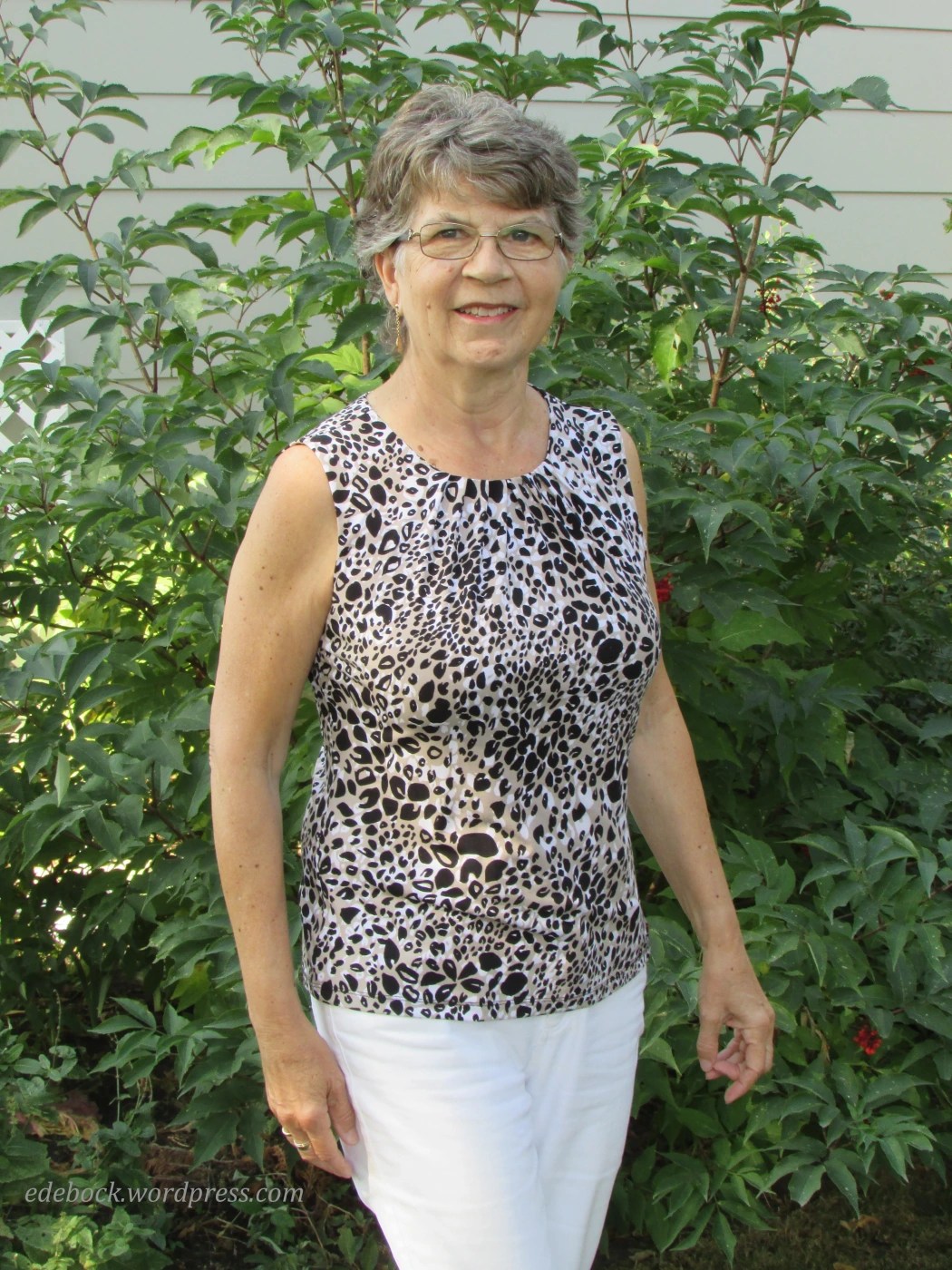
Today I thought it might be fun to look back at the very first photos of myself that I posted on Fashion Friday.

As I look at these photos, I notice several things:

  1. My style hasn’t changed much in seven years! Though I don’t have all of these pieces anymore, I’d still feel comfortable going out dressed like this because this outfit fits all five of my present style adjectives… classy, confident, comfortable, casual, and authentic.
  2. Seven years later, I still have the blazer and the shoes! The blazer is left over from my teaching days. Though I don’t wear it often anymore, it’s a classic piece that really doesn’t go out of style. The shoes are a comfy pair of flats that I last wore to the symphony in Xalapa, Mexico last month!
  3. My hair! After letting my thick, naturally curly hair grow out and wearing it considerably longer than this for the past several years, I had it cut short again a couple of weeks ago! It looks almost exactly like this except that it’s a bit greyer now!
  4. The lack of snow. If I was standing on the stairs that replaced those ones when we added a small deck to the front of our house and hubby was taking my picture today, he’d be up to his knees or more in snow! Though daytime temperatures are occasionally creeping up above the freezing point, it will likely be awhile before we see bare ground and start taking outdoor fashion photos again.

While preparing this post, I also decided to look at some stats and see which of my Fashion Friday posts have been the most popular. Far and away the winner, with over 12 000 views, is the post entitled How to shop like a celebrity published on August 2, 2019. It would appear that a lot of readers have found it on Pinterest. My second most popular Fashion Friday post, A model who embraced her age, announced the death of 67-year-old model, Cindy Joseph, in July 2018. That one has had more than 8000 hits. I guess it pays to mention celebrities!

And now, let’s see how many more fashion posts I can write before I run out of ideas!

Make your closet more eco-friendly

Tips for creating and maintaining a sustainable wardrobe

Logo by SamTo begin with, what is a sustainable wardrobe? In a nutshell, it’s one that reduces the impact that your clothes have on the planet. Adopting sustainable practices improves the quality of our lives, protects the environment, and preserves natural resources for future generations. So where do we start?

I’d recommend doing some research and trying to find sustainable and ethical clothing brands and purchasing only those, but I know how challenging it can be to find accurate information. Choosing sustainable fabrics is also easier said than done, so what’s an ordinary person to do? Here are some simple affordable steps that we can all take to dress more sustainably:

5303cf89c82d3a46d85205a6f0dc1c86

Buy less

The most sustainable anything is the one you already own. Instead of shopping, look for new ways to wear what’s already hanging in your closet. 

Quality over quantity

Instead of chasing trends and buying numerous pieces of poor quality clothing every season, avoid fast fashion altogether and invest in a few good quality pieces that will last. There’s no question that buying higher quality clothes will cost more initially, but they’ll outlast cheaper, less eco-friendly options, greatly reducing the cost per wear. 

The 30 wears test

I was shocked to read on the Wear Me 30 Times website that the average woman keeps a piece of clothing in her wardrobe for only 5 weeks! In my opinion, that’s inexcusable! Wear Me 30 Times is a slow-fashion initiative focused on supporting conscious consumption and increasing awareness of the problem of waste in the fashion industry. The principle is very simple. Before purchasing something, if you can honestly say that you’ll wear it a minimum 30 times (and hopefully more often), then go ahead and buy it. There are exceptions, of course. The dress you buy to wear to your son’s wedding or your 40th anniversary celebration might not pass the 30 wears test and that’s okay, but even on those occasions try to invest in something with longevity that you’ll be able to wear again. 

Shop second-hand

If you’ve been following my blog for very long, you know that I love thrift store shopping! Not only is it a great way to welcome sustainability into your wardrobe, but it’s fun. It’s like going on a treasure hunt, never knowing what you’ll find. If you’re new to this, you can find 18 tips for successful second-hand shopping here. 

Look for recycled fabric

Check labels. You may be surprised to find clothing or accessories made from plastic bottles or sweaters made of pre-used wool. Some brands are even making vegan leather out of pineapple rinds and apple peels!

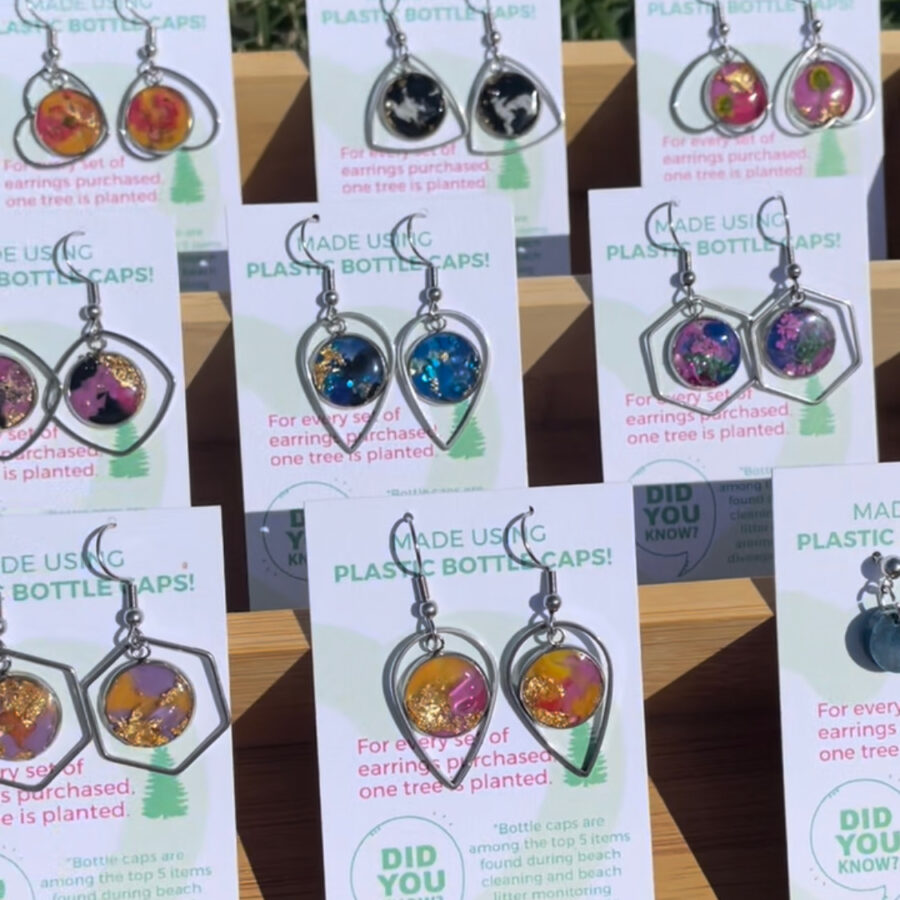
I have to give a shout-out here to Karyn, one of my former students and founder of Repurposed Plastic. Earrings from plastic bottle caps! Brilliant!

IMG_8665-900x900

Follow good laundry practices

First and foremost in this category, as mentioned in last week’s post, don’t wash clothes that aren’t dirty! With the exception of socks, underwear and workout wear, you should be able to wear an item at least three times before putting it in the laundry. Not only does washing less often save water and electricity, but it also helps your clothes last longer. Make your laundry routine even more sustainable by using eco-friendly laundry products. Wash in cold water, don’t overfill the machine, and when possible, air dry your clothes. 

Mend and repair

Prolong the life of your quality clothing by learning how to mend. It’s not as difficult as it might sound and there are lots of online articles and videos available to help. If the job is beyond your skill level, consider finding a tailor who can do it for you. Most dry cleaners also offer mending services. Taking shoes and boots to a repair shop for resoling is a cost-effective way to prolong their life while keeping perfectly good uppers out of the landfill.

Do you have any tips to add? Have you found any sustainable clothing brands that you can recommend? 

Happy Saint Patricks Day Background.

Thinking about laundry

Logo by SamOver 40 years ago, when we bought our house, one of the things I loved about it was its main floor laundry. The older I get, the more I appreciate not having to carry laundry up and down the stairs! Laundry has been part of history since humans started wearing clothes and it’s one of those household tasks that never seems to be finished! 

Here’s an interesting bit of laundry trivia… astronauts on the International Space Station wear their clothes until they can’t stand the stench then throw them in the trash. Along with other garbage, the discarded clothing is loaded onto cargo ships that generally burn up on reentry into the earth’s atmosphere. That might sound like a great solution to the never-ending laundry problem, but most of us actually want our clothes to last. Thankfully, how we do our laundry can ensure that our clothing lasts longer, help protect the environment, and even save us money!

Read the labels.

The first step in doing the laundry should happen in the clothing store. Read the labels and only buy if you’re prepared to follow the washing instructions. Personally, I very rarely buy anything that requires dry cleaning. I developed that habit in my early days of teaching school when chalk dust was the bane of every teacher’s existence. I also wanted to be able to teach a messy art class, kneel beside a student’s desk, or play with the children on the playground without having to send my clothes to the dry cleaners. With experience, however, you learn that in spite of what the labels say, some fabrics don’t actually require dry cleaning. For example, the label on this polyester top from Calvin Klein says that it should be dry cleaned, but synthetic fabrics like polyester actually wash very well. I simply launder the top using the hand wash cycle and hang it to dry to ensure that it keeps its shape.

img_4474

Treat stains.

The first rule in treating stains is to do it as quickly as possible. Stain removal pens are a great innovation. You might even want to  carry one in your purse or keep it in your desk drawer to deal with mishaps when they happen. Additional stain removal treatment might also be required before tossing the item into the laundry. This stain removal guide includes a comprehensive list of stain makers and how to deal with each of them. Once you’ve washed the item, recheck to ensure that the stain is gone. It will be much harder to remove once it’s gone through the dryer.

Wash less often.

No one wants to stink, but overwashing clothes wears them out and causes them to fade more quickly. It also wastes water and electricity. With the exception of socks, underwear and workout wear, you can likely wear an item at least 3 times before putting it in the laundry.

Don’t overload the washer.

Washing a full load rather than just a few items definitely helps conserve water, but cramming the washer full of clothes is actually detrimental. Not only do the clothes not get as clean as they ought to, but they rub together so much that it can actually be harmful to the fabric.

Turn the temperature down.

90% of the energy used to wash a load of clothes goes into heating the water! Not only does washing in cold water save electricity but it helps prevent the fibres from breaking down. It also prevents shrinkage or stretching and helps keep colours from running and fading. Don’t worry about your clothes not getting clean. Most modern detergents are designed to work well in cold water.

Extremely high dryer heat can also be damaging to clothes.

Skip the softener. 

Fabric conditioners add a lot of unnecessary chemicals and fragrances to your clothes and also coat the fibres with a waxy residue that can lead to fading and fibre breakdown. I haven’t used fabric softener or dryer sheets for years and my laundry hasn’t suffered for it.

Wash inside out.

Keep jeans and strong colours from fading and printed t-shirts from cracking by washing them inside out.

Hand wash delicate items.

Hand washing delicate garments helps them last longer. This is especially easy if your washer has a hand wash cycle! Simply place the items in mesh bags to keep them from rubbing against one another and being damaged, then let the machine do the work.

Air dry.

When we lived in Asia, we did as all our neighbours did and hung our laundry to dry. Here in Canada, I’m happy to have and use a dryer, but I still hang a lot of my clothes. Heat breaks down the elasticity in garments, causing unwanted stretching, and also contributes to shrinkage. Since pant length has always been an issue for me and I don’t want to lose even a cm, I hang all my pants to dry.

depositphotos_22198035-stock-photo-colorful-clothes-in-laundry-basket

Sustainable fashion addresses the entire process by which clothing is produced, consumed, cared for and disposed of. We can all do our part to reduce the impact of the clothing industry on the environment by not only purchasing sustainably produced clothing, but by following good laundry practices.

Do you have any tips to add to the ones given here?