For the most part, I try to avoid mentioning politics on the blog, but as a Canadian I can’t sit by and say nothing when our closest neighbour, ally, and trade partner decides to become a bully and starts threatening our sovereignty. There might not be a lot that I can do about the situation, but I can’t do nothing. There’s too much at stake!
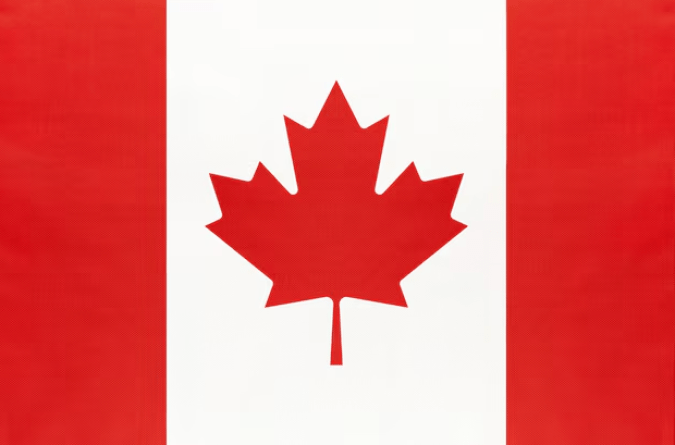
If there’s one thing that the present crisis has done, it has drawn Canadians together. We are seeing a kind of collective nationalism that goes far beyond cheering for the right hockey team. Canada is not for sale! We are not interested in becoming the 51st state and thousands of us are saying so with every grocery item we buy. Since money seems to be what the individuals behind the bullying understand best, I have joined an informal movement of fellow Canadians in boycotting products made in the United States. It’s first and foremost a shop Canadian movement, but beyond that, it’s about buying anything except American.
It’s not easy. Grocery shopping takes a lot longer these days as we squint at the small print on labels and try to figure out where the products we’re used to buying come from. Sometimes, as in the case of Campbell’s soups and some Kellogg’s cereals, the label reads “Product of USA” and we put the item back on the shelf, but it’s not always that straightforward. There’s “Made in Canada” which means that at least 51% of the total cost of the product’s creation had to have occurred in Canada. “Product of Canada” indicates that at least 98% of the total cost was incurred in Canada. But then there’s “Made in Canada with imported ingredients” or “Made in Canada from domestic and imported ingredients” with no indication where those imported ingredients came from. There’s also “Imported for _______” but again, nothing to say where the item is imported from.
I tried to do a bit of “investigative journalism” in preparation for writing this post and to help with my personal shopping decisions, but I wasn’t very successful. I already knew from reading the labels that Green Giant frozen vegetables are grown and packaged in Canada, but that the packaging is printed in the United States. When I emailed the company to ask why the printing wasn’t done in Canada, I received a very generic sounding response telling me that Green Giant is a brand that originated in the United States and that it has facilities in both Canada and the US, but that didn’t answer my question. Probing a bit further, I received a second reply assuring me that the company is proud to source their vegetables from farmers in Alberta, Ontario, and Quebec, but still no answer to my original question.
The label on my Kraft Peanut Butter jar says nothing about where it was made, but the KraftHeinz website told me that it was “proudly prepared in Canada”. While there’s a limited amount of peanut farming in southern Ontario, I know that it doesn’t produce enough to provide thousands of Canadian households with peanut butter. When I emailed KraftHeinz to ask where the peanuts are imported from, I was told all about how peanut butter is prepared and packaged and assured that “all ingredients used in Kraft products comply with our rigorous food safety standards” but after inquiring more than once, I still wasn’t told where the peanuts come from. I finally wrote, “I can only assume that your reluctance to give me this information is due to the fact that they are American grown and you realize that I, like many Canadians, am refusing to buy American products due to the fact that our closest neighbour and trade partner is now threatening our sovereignty. If I am wrong about this, please let me know.” I received no response to that, so Kraft Peanut Butter will no longer be on my grocery list. I had a very similar experience with Mondelēz International when I tried to find out where Triscuit crackers are imported from.
Finding fresh produce is especially problematic in a country with long winters and a very short growing season, but I’ve been able to buy Canadian grown potatoes and carrots as well as tomatoes, lettuce, cucumbers, peppers, and mushrooms. I’ve been enjoying bananas from Guatemala and blueberries from both Mexico and Peru, but the only nice looking oranges that I’ve been able to find were grown in California, so they stayed in the store.
Of course, boycotting American products goes far beyond the grocery store. My favourite toothpaste is made in Mexico, but it’s a product of Colgate-Palmolive, a huge U.S. corporation, so where do we draw the line? The flouride gel that I’ve had to use every day since I lost one of my parotid glands to cancer over ten years ago, is made in Canada, but my skin care products, shampoo, and conditioner are all imported from the States. Obviously, I’ll have to look for other brands to try. I’ve already found a replacement for the Tide laundry detergent that I’ve used for years. I’ll be trying Canadian-made Tru Earth laundry strips.
Shopping ethically is further complicated for me by the fact that I try to avoid buying products from China which is notorious for its human rights abuses. Given the present situation, however, if forced to choose, I would probably buy a Chinese product over an American one.
Before I close, I want to assure my American readers that I fully understand that many of you are as dismayed as I am about what is happening in your country and our hearts go out to you at this difficult time. We also know that the tariffs that your leader is threatening to impose will be as hard on you as consumers as they are on us.
 Following Augustine
Very good blog today Elaine. It is a very upsetting world we live in with the threat of tariffs hanging over our heads. Retaliation isn’t always the answer but what is? I have been very picky with what I have been buying lately too with everything since this has began. I also heard of an app O SCANada that I have put on my phone and will give a try today. It is suppose to tell me if it is truly a Canadian product or not. We will see.
That would be very helpful! Please let me know if it works, Verna.
Hi Elaine, American here. Not sure if it’s appropriate but I’d like to apologize for all the suffering and turmoil and harm our current president and his administration is creating. It seems that every day brings a new wave of ugliness. I’m full of despair and have really had to tune out most of the news these days. I support my Canadian neighbors and I am so impressed with the patriotism you have shown. Our country used to be like that but we are so divided now I’m not sure we’ll recover. Please keep us in your prayers.
I appreciate your comment, Beth. I know that you and many of your fellow Americans are as horrified as I am by the direction that the new administration is taking your country and the impact that it’s having on other parts of the world. I pray for both our countries every day and will continue to do so.