Book of the month – August 2025

The Girl in the Red Coat: A Memoir

Roma Ligocka
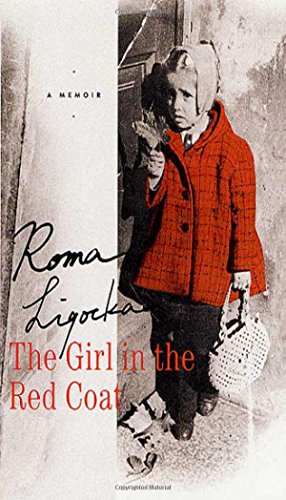
The book opens with an elderly Jewish woman sitting in the elegant dining room of a posh hotel on the French Riviera. Suddenly and quite seamlessly it transitions to the dark Ghetto of Kraków, Poland during World War II and I was hooked!

Roma Ligocka was born to Jewish parents in Poland in November 1938, less than a year before the beginning of World War II. Told through the eyes of a child, the story of her early years living in the Jewish Ghetto of Kraków is a harrowing account of uniformed men in shiny black boots with snarling dogs, people being shot indiscriminately, her mother’s tears, and from her hiding place under a table, seeing her own grandmother seized by SS officers. After her father is arrested and taken to Auschwitz, Roma and her mother, with their hair dyed blonde and carrying falsified documents, escape the Ghetto and are taken in by a non-Jewish family who pass them off as visiting cousins. Sometime later, when her father escapes the concentration camp and is reunited with his family, she fails to recognize the haggard spectre that he has become.

Roma is just short of her seventh birthday when the war comes to an end, but her life continues to be marked by severe hardship. Within two years her father dies and the communists take control of Poland.

As her adult life unfolds, we see the results of the trauma that she endured as a child. Although she studied art and costume design at the prestigious Academy of the Arts and became a successful costume and set designer, she continued to confront her frightful memories and her adult life is characterized by anxiety, eating disorders, substance abuse and the inability to maintain lasting relationships.

Finally, at the age of 55, on March 2, 1994, Roma reluctantly attended the première of Steven Spielberg’s epic movie “Schindler’s List” in Kraków. The Academy Award-winning movie was shot entirely in black and white except for the image of a little girl in a red coat. Seeing something of herself in that little girl, Roma, who had had a bright red coat of her own as a wee child, finally felt inspired and strong enough to tell the story of her own experiences.

Interestingly, although I suspected it early on, until late in the book, Ligocka doesn’t reveal the fact that her cousin, Roman, with whom she had a close relationship, was none other than the famous director, producer, writer and actor, Roman Polanski.
Book of the month – March 2025

I confess that I haven’t been very faithful about posting monthly book reviews lately, but I’m determined to change that.

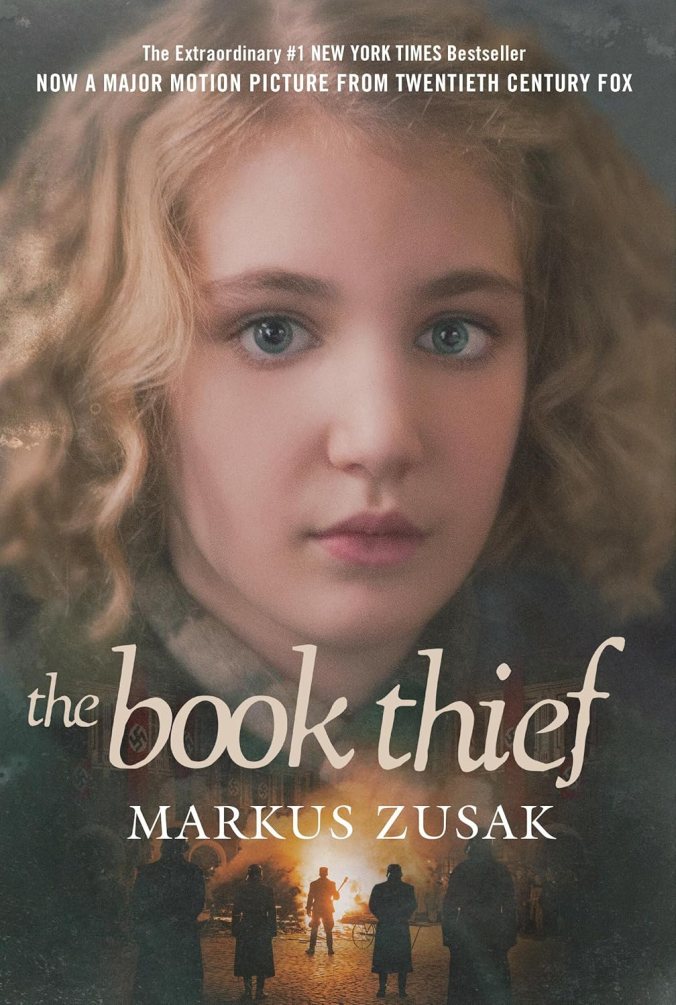
The Book Thief

Markus Zusak

I’ve been avoiding books set during World War II lately. Over the past year or so I’d read so many of that popular genre that I was growing weary of them, but The Book Thief was different from most.

Nine-year-old Liesel Meminger is illiterate when she comes to live with foster parents Hans and Rosa Hubermann in the fictional town of Molching, Germany in 1939, but she brings with her a copy of The Grave Digger’s Handbook, found partially hidden in the snow beside her brother’s grave. With the help of her accordion-playing foster father, she learns to read and a love affair with books begins. She steals books from a Nazi book-burning, from the mayor’s wife’s library, and from anywhere else that books are found, but she isn’t a thief without a moral compass. She only steals a book when she has read the ones she already has, usually several times over. She reads with her neighbour, with a young Jewish man hidden in the Hubermann’s basement, with the mayor’s wife when she goes to pick up laundry, and in the neighbourhood shelter when bombs are falling.

In the author’s native Australia, The Book Thief is generally classified Adult Fiction, but it has often been marketed as a Young Adult novel in North America. It has, however, been challenged several times when included in school curriculums because of violence, course language, and disturbing scenes. While I wouldn’t consider it inappropriate for teenage readers, it certainly isn’t juvenile in writing style or theme. In fact, the style is so out of the ordinary that I actually found it difficult to get into at first, but I’m glad I persevered. Character development is one of the books greatest strengths and perhaps the most unusual thing about it is the use of Death as the narrator.

And now it’s your turn. If you’ve read The Book Thief, what did you think of it? Have you read any good books lately? What are you reading now?

Book of the Month – August 2024

Forgiveness: A Gift from My Grandparents

Mark Sakamoto

Screenshot 2024-08-30 at 12.24.18 PMIn this compelling family memoir, Canadian lawyer Mark Sakamoto writes about his grandparents’ harrowing experiences during World War II. In so doing, he shares with us one of the ugliest and most shameful parts of our country’s history, the forced evacuation of Japanese Canadians from the coastal areas of British Columbia.
The author’s paternal grandparents, Hideo and Mitsue Sakamoto, both Canadian citizens born in Canada, were living and working in Vancouver when the war broke out. They were forced from their home and relocated to a sugar beet farm in southern Alberta where they lived in a crudely converted chicken coop and worked like slaves. They lost their possessions, their community, and their freedom and when the war was over, the government of Canada reimbursed them $25.65, less than 2% of the value of their lost possessions and wages. 

While the Sakamotos were eking out an existence in southern Alberta, the author’s maternal grandfather, Ralph MacLean, experienced a very different war. A young soldier from eastern Canada’s Magdalen Islands, he was shipped out to Hong Kong where he was captured by the Japanese army. Spending the remainder of the war in prisoner of war camps, he enduring illness, abuse, and degradation at the hands of his captors. Barely surviving, he was released at the end of the war and returned to Canada where he found work in Medicine Hat, Alberta.  

A generation later, Ralph and his wife come face to face with Hideo and Mitsue when their daughter falls in love with the Sakamoto’s son. It is a testament to both sides when they are able to put aside the past, choose to forgive, and become friends. 

In the final third of the book, the author focuses on his own life’s story, particularly the trauma that he experienced after his parents’ marriage ends, his mother remarries a violent man, and her life descends into the depths of alcohol and drug addiction. The theme of forgiveness ties the story together, however; forgiveness learned from his grandparents. 

I would caution those who are interested in historical accuracy that the book does contain a few errors related to geography and timing that should have been caught by the editor, but keep in mind that the writer was depending on his grandparents’ memories and telling their story rather than basing his book on historical research. 

Forgiveness: A Gift from My Grandparents won the Canada Reads 2018 award and a stage adaptation by Hiroko Kanagawa played in live theatres across Canada in 2022-2023. I vaguely remember hearing about it then and now I wish that I had purchased tickets and made the effort to travel to the city for a performance. 


Book of the month – March 2024

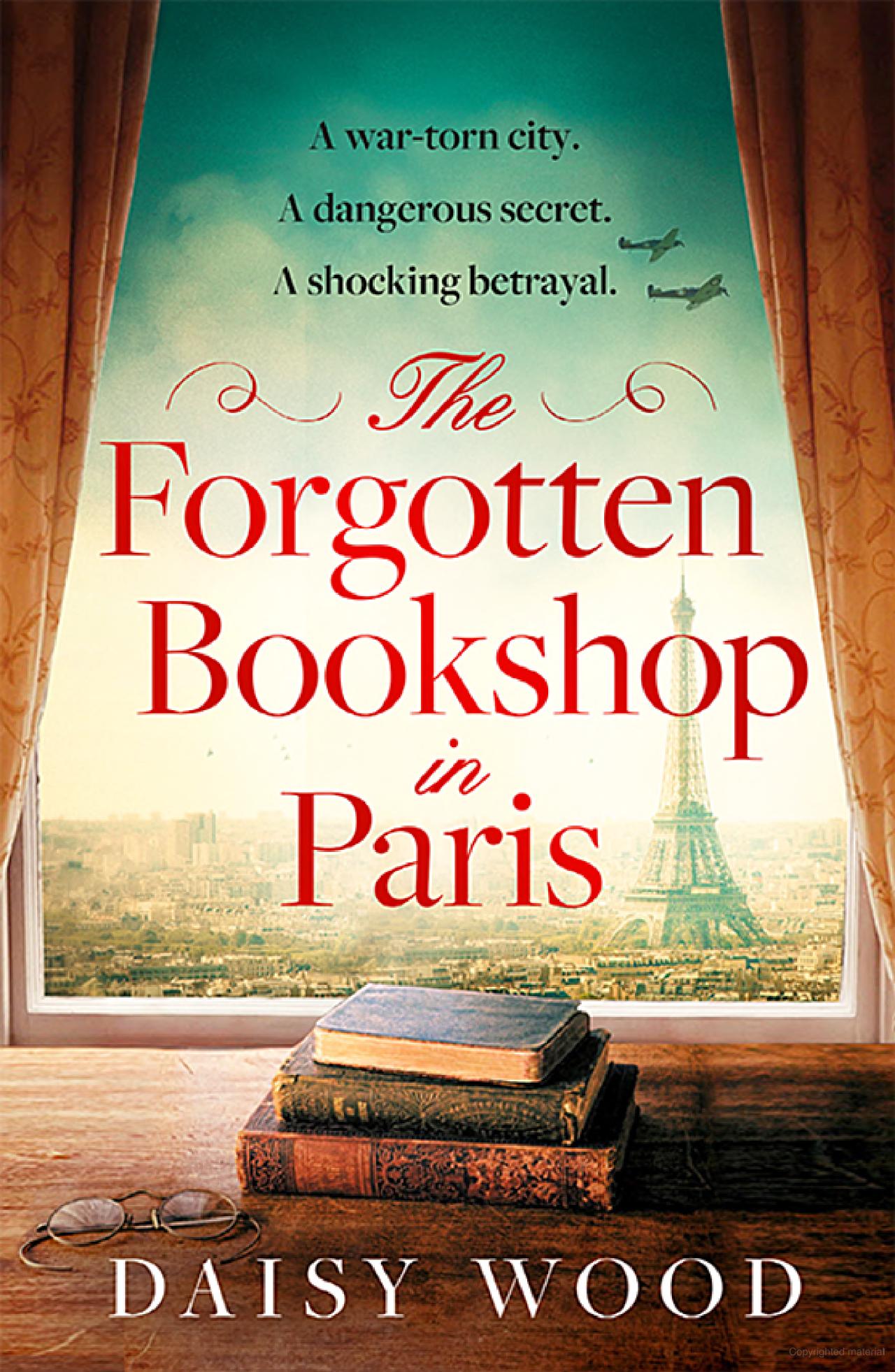
The Forgotten Bookshop in Paris

Daisy Wood

contentUntil the end, when the two finally come together, this is really two completely different storylines connected only by a specific location.
In 1940, war is closing in on the city of Paris. When the Germans take over the city, Jacques and Mathilde have only been married for a short time. Itching to resist in whatever way she can, Mathilde soon puts herself at risk and must flee to safety in the south of France while Jacques stays behind and continues to operate his beloved bookstore, La Page Cachée. Hiding first banned books, and then people seeking refuge and a way to escape the city, in a hidden storeroom in his shop, Jacques too becomes involved in the resistance.

In 2022, Juliette, whose deceased grandmother was born in Paris, and her husband, Kevin, take a long awaited trip to the city of love. Armed only with a photograph of a painting that used to hang in her grandmother’s house in America, Juliette searches for and locates the small city square depicted in the painting. Discovering that her husband has been having an affair, she decides to stay behind in Paris and forge a new life for herself. There she finds passion and purpose in purchasing a small abandoned bookstore on the square that appeared in her grandmother’s painting, renovating it, and opening The Forgotten Bookshop.

I loved this book! Partially, perhaps, because I’ve always thought that if I was ever to open a business, it would be a bookstore, but also because I became completely engrossed in both storylines. Each time the book switched from past to present or vice versa, I was almost disappointed because I was so captivated by whichever story I was reading at the moment! Both heartwarming and heartbreaking, the well-researched wartime story with its very believable characters could easily stand alone. The modern story was a little more cliched, but until the very end, it kept me wondering how the two storylines would come together.

Daisy Wood has written several works of historical fiction for children and this is her second adult novel. As soon as I finished it, I ordered her first, The Clockmaker’s Wife, from the library. While The Forgotten Bookshop in Paris is my favourite of the two, I enjoyed that one too.

Book of the month – February 2024

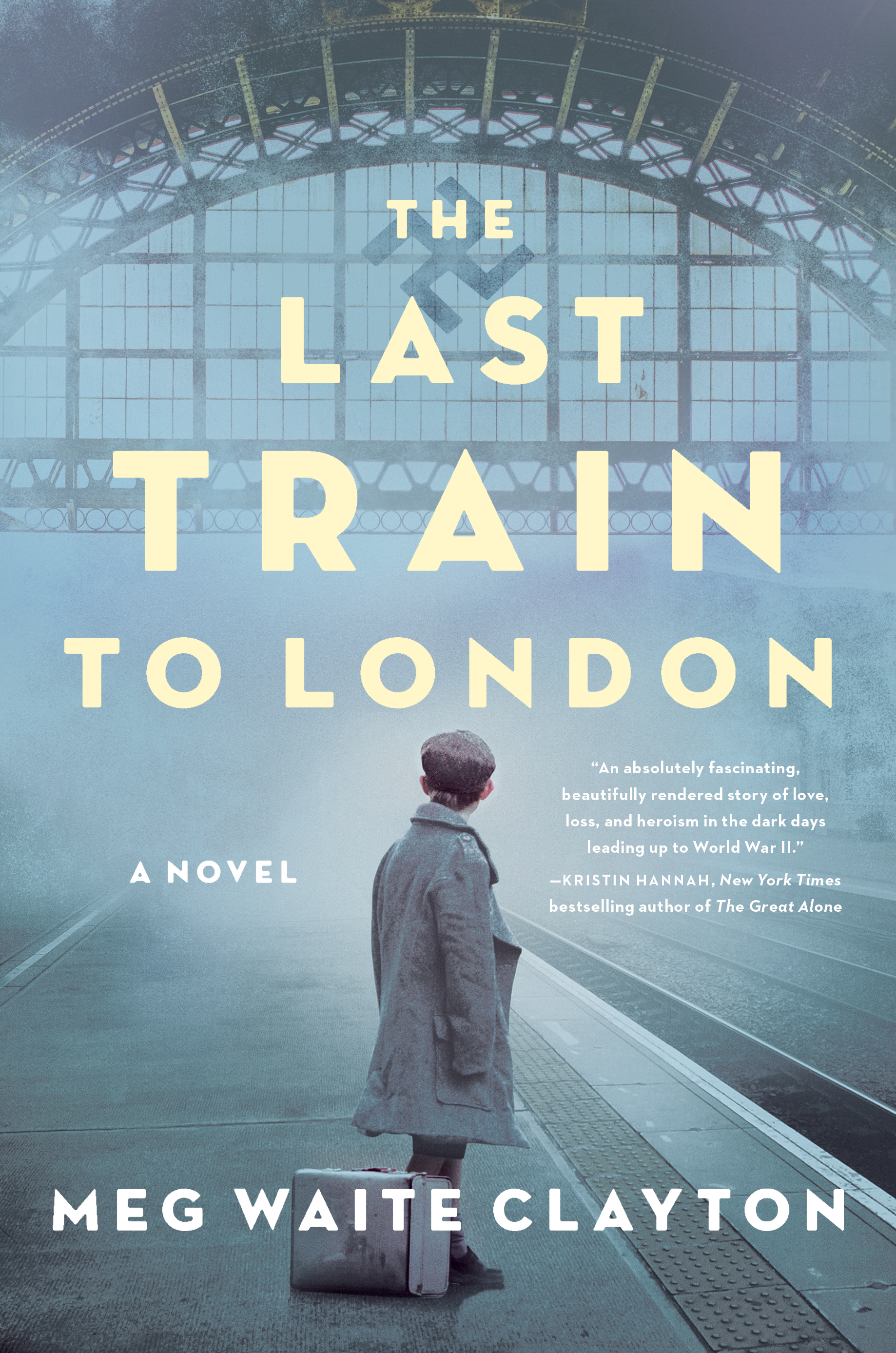
Many of the books that I’ve read over the past year or so have been historical novels set in the days leading up to and during World War II. Many, like the two that I featured last month, are based on the experiences of actual people who lived through those dark days. I’ve read stories of women working behind the scenes in the French resistance and children being sent overseas to temporary homes in North America where they would be safe from the bombings in London. Others have been stories of life and death in the concentration camps. Still others have told of people who risked their lives hiding Jews from the Nazis or smuggling food and medicine into the Jewish ghetto in Warsaw. My librarian friend tells me that these novels of wartime heroism are a very popular genre at the moment. I find that somewhat surprising during this time of heightened antisemitism when some might even think that the Holocaust didn’t go far enough in ridding the world of its Jewish population. But perhaps it’s also a hopeful sign. It was my librarian friend who suggested that I read this month’s selection.

The Last Train to London

Meg Waite Clayton

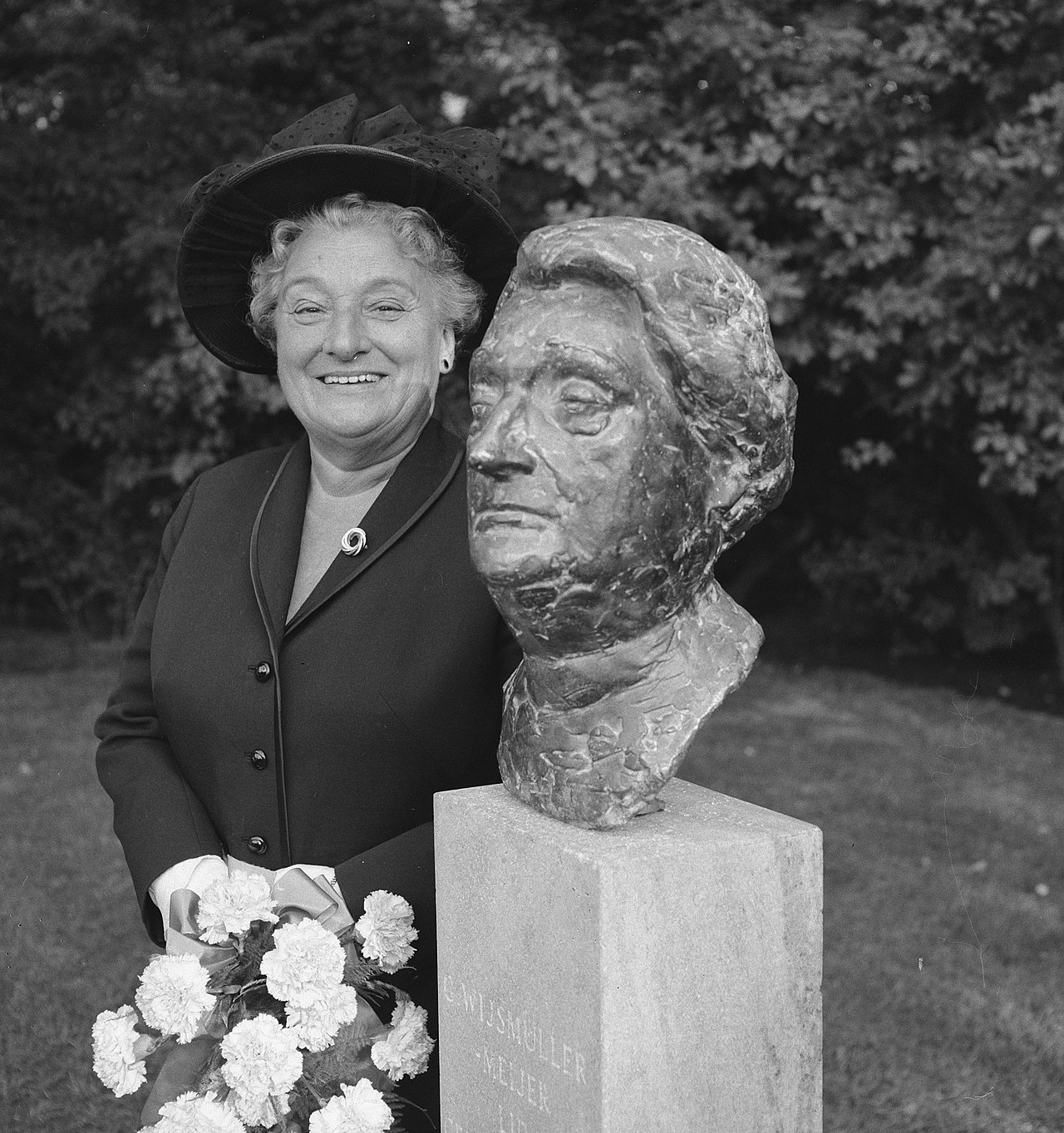
43386062Geertruida (Truus) Wijsmuller, a childless member of the Dutch resistance, risks her life smuggling Jewish children out of Nazi Germany to the nations that will take them. It is a mission that becomes even more dangerous after Hitler’s annexation of Austria when, across Europe, countries begin to close their borders to the growing number of refugees desperate to escape. After Britain passes a measure to take in at-risk child refugees from the German Reich, Tante Truus, as she is known by the children, dares to approach Adolf Eichmann, the man who would later help devise the “Final Solution to the Jewish Question” and is granted permission to escort a trainload of 600 children (not 599 or 601, but exactly 600) out of the country. In a race against time, 600 children between the ages of 4 and 17 are registered, photographed, checked by medical doctors and put on board the train to begin a perilous journey to an uncertain future abroad. Thus begins the famous Kindertransport system that went on to transport thousands of children out of various parts of Europe during the Nazi occupation of the region in the late 1930s, immediately prior to the official start of World War II.
The Last Train to London is also the story of three fictional children, Stephan Neuman, the teenage son of a wealthy and influential Jewish family who are stripped of everything when the Germans invade Austria, his younger brother, Walter, and Stephan’s best friend, Žofie-Helene, a brilliant Christian girl whose mother edits a progressive, anti-Nazi newspaper.

Although this book really came together at the end and was well worth reading, I do admit to finding it somewhat difficult to follow, especially in the first half, because of the short, choppy chapters that bounce from one character to another.

1280px-WijsmullerMeijer1965

Geertruida Wijsmuller in 1965

Book of the month – January 2024

With today’s post, this monthly feature enters its second year! While these book reviews haven’t generated as much interest as some of my other posts, I know that there are several of you who look forward to them.

This month, I’m featuring two books by the same author, Heather Morris. If you haven’t read either of them yet, I would suggest starting with The Tattooist of Auschwitz, but that’s not essential. In fact, I read Cilka’s Journey first.

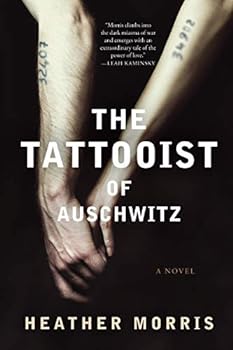
The Tattooist of Auschwitz

415TbkTEY4L._SL350_In 2003, Morris, was introduced to Lale Sokolov, an elderly gentleman who “might just have a story worth telling”. As their friendship grew, Lale entrusted her with the innermost details of his life during the Holocaust. She originally wrote his story as a screenplay before reshaping it into her debut novel, The Tattooist of Auschwitz.
In April 1942, Lale, a Slovakian Jew, is one of countless young men who are forcibly stuffed into railroad cars designed to carry livestock and taken to the concentration camps at Auschwitz-Birkenau. When his captors discover that he speaks several languages, he is put to work as a Tätowierer (the German word for tattooist) permanently marking his fellow prisoners.

Three months later, as he gently holds the arm of the young girl in front of him and etches a five digit number into her skin, he looks up into her eyes and thus begins a love story that lasts a lifetime. Her name is Gita and meeting her feeds Lale’s determination to survive the horrors of the camp. Imprisoned for more than two and a half years, he witnesses horrific atrocities, but also acts of bravery and compassion. Risking his own life, he uses his privileged position to exchange money and jewels from murdered Jews for food and medicine to help keep his fellow prisoners alive.

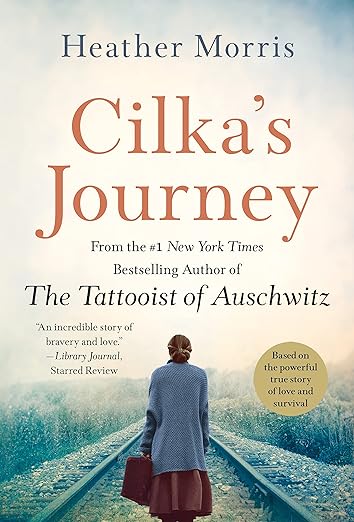
Cilka’s Journey

81sTaMNLkIL._SY522_In The Tattooist of Auschwitz, we are introduced to Cilka, a beautiful young prisoner who is forcibly separated from the other women by Johann Schwarzhuber, camp commandant, for his exclusive use. Quickly learning that her survival depends on it, she does what she has to do to stay alive. Although both books are historical novels, Cilka, like Lale, was a real person and at one point, he credits her with saving his life.

Cilka’s Journey picks up her story when the war ends and the surviving prisoners are liberated from Auschwitz-Birkenau. Charged as a collaborator for literally sleeping with the enemy, she is sentenced to another fifteen years in a Siberian prison camp. There she faces more challenges, some new and others horribly familiar, including the unwanted attention of the guards. When she meets a kind female doctor, she is taken under her wing and learns to care for the injured and ill in the camp. Working under brutal conditions, she discovers strength she never knew she had and finds that in spite of everything she’s been through, she’s still capable of falling in love.

While The Tattooist of Auschwitz and Cilka’s Journey are both vivid and harrowing stories of man’s inhumanity to man, they also testify to the resilience of humanity and love under the darkest possible conditions. They aren’t easy books to read because of their content, but I found that I couldn’t put them down.

Has Covid changed how you dress?

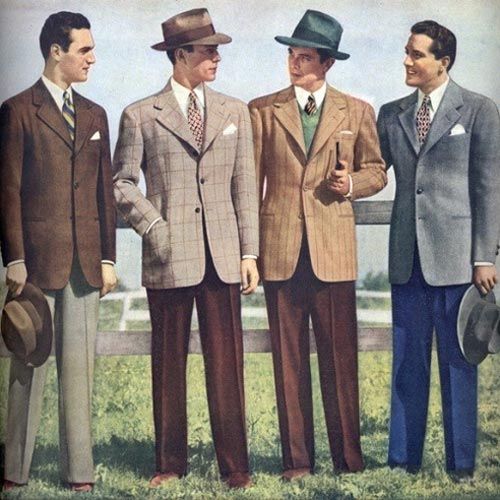
LogoMy mother was 17 when WWII broke out on September 1, 1939 and 23 when it ended six years later. I remember her telling me about how fashions changed during the war. Shortages and efforts to conserve precious materials for the war effort brought about shorter hemlines and more streamlined silhouettes in women’s suits and dresses. Decorative elements disappeared, resulting in a more classic style. For men, single-breasted suits replaced double-breasted, lapels narrowed, and trousers were no longer made with cuffs. There were even restrictions on the number of pockets a garment could have. 
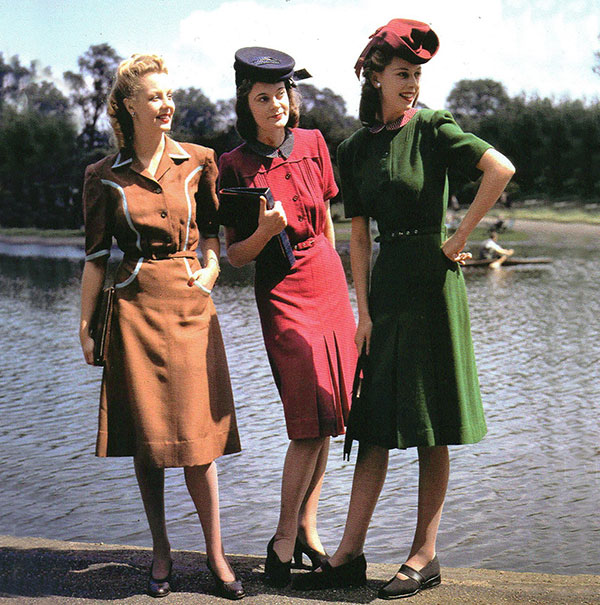
WW2-Dresses-1943-Designer-Norman-Hartnell-Photo-James-Jarche

e198b87ca8295ac7b4d3b8cbb23f51c5

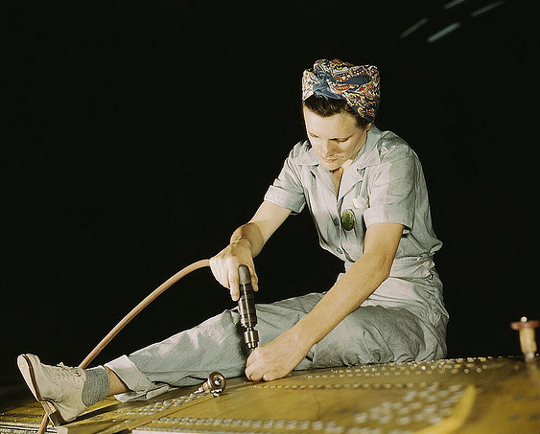
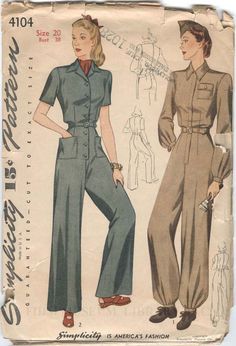
With many of the men away at war, women were called upon to replace them in the work force. My mother left school and went to work in a paper mill. Pants became a staple of women working in factories. Once they discovered the comfort and convenience of wearing pants, they were reluctant to give them up when the war ended. This resulted in a permanent change in fashion. I don’t remember my grandmother ever wearing pants, even to work in the garden, but pants were very definitely part of my Mom’s wardrobe for the rest of her life. 

1940s-pants-2 2

Scan

Mom dressed for the mill

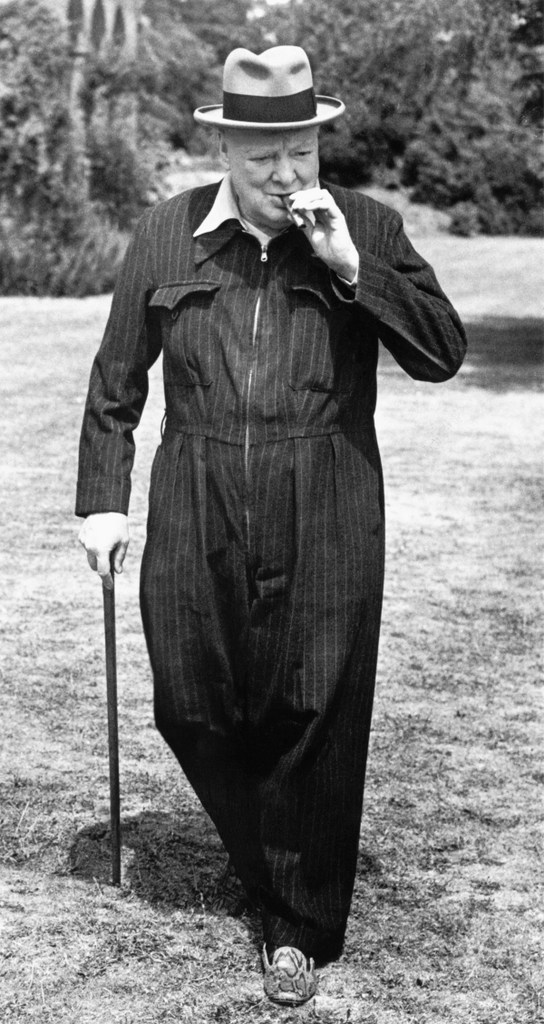
Until I started doing research for this post, I didn’t realize that jumpsuits (or boilersuits as they’re called in the UK) which seem to come and go as ladies fashion to this day, had their roots in a very practical item that originated during WWII. Known at that time as a “siren suit”, this one piece garment could be hastily pulled on over pyjamas or a nightgown when the siren blew and the wearer had to escape to an air raid shelter. 

sirn suit

Even Winston Churchill had a siren suit!

Churchill_Romper_Suit_and_Siren_Suit_pinstripe

We aren’t living in wartime, nor do we face the deprivation that our parents and grandparents faced during those difficult days, but the past fourteen months have been a time of unprecedented upheaval and whether we like it or not, Covid will result in cultural change. Fashion is a potent reflection of a period in time and it’s interesting to think about how our current situation is changing how we dress. 

I have one friend who has already been informed that she will continue to work from home even after the pandemic is over and I know of several others who are expecting the same thing. Brands and retailers have seen a huge shift in the kind of clothing that people are purchasing. While many of us simply aren’t shopping at all except for essentials, sales of comfort-wear items, such as sweatpants and leggings, have increased. The question now is whether this turn toward casual, easy-to-wear clothing will persist once life returns to something closer to normal.

Has Covid changed the way you dress? If so, do you think this will be a permanent change? Is there something you look forward to buying and wearing once the pandemic is over?