Freedom Sunday 2015

freedom_sunday2

image credit


As president of our church’s missions council, I share a short message about what the church is doing around the world during every Sunday morning service. This week’s Missions Moment required more research than most and had a profound impact on me so I’ve decided to expand on it here.

Would you believe me if I told you that there are over four and a half thousand slaves living in Canada today and approximately 60 000 in the US? If you think that slavery ended in 1865, think again! According to the 2014 Global Slavery Index, that is the number of people trapped in modern slavery in our two countries and that’s only the tip of the global iceberg. There are, in fact, more slaves in the world today than at any other time in history! Experts estimate that 30 million people are caught up in the global slave trade, an industry that generates $150 billion in profit each year.

Today is Freedom Sunday, a day that Christian churches around the world have set aside to increase awareness of the problem.

According to the Polaris Project, a national anti-human trafficking group, most of North America’s modern day slaves are foreign workers labouring in factories, farms, strip clubs, and begging and peddling rings or serving as domestic workers. They come seeking a better life, but instead, they find lives of servitude. Most are told upon arrival that they owe huge sums of money to the smugglers and traffickers who brought them here, debts that they have little hope of ever being able to pay. Many are physically abused. Employers often keep their passports and other documents “for safekeeping” making it impossible for them to escape. Threats of deportation or of harm befalling their families back home keep them from trying.

Human trafficking is defined as the illegal movement of people, typically for the purposes of forced labor or commercial sexual exploitation, a system in which both children and adults are bought and sold, held captive through force, coercion, threats, deception, or abduction. It is a global problem that affects people from many backgrounds or situations but people living in poverty are especially at risk because traffickers prey on those who are most vulnerable.

Ours is a worldwide denomination that has a presence in many countries where children and adults are vulnerable to trafficking. In those areas, it partners with local churches in anti-trafficking efforts that range from prevention and education to protection and rehabilitation. It’s strongest efforts toward ending human trafficking are through prevention and providing economic and educational opportunities to lower the risk of poverty-induced trafficking. Children living on the streets and in the slums of third world nations are particularly vulnerable to abuse and to “too good to be true” offers of a better life elsewhere. Child development centres and child sponsorship programs help children stay in school and teach them to see themselves as valuable and loved by God. Other programs focus on providing homes for orphaned and abandoned children to keep them off the streets.

Imagine the heartbreak of a parent so trapped in poverty that selling their own child seems to be the only way out; a parent who chooses to sell a son or daughter to a stranger rather than watching them starve. Church run self-help groups and skills training programs empower women to improve their household finances, thereby lessening their children’s risk of being trafficked. It’s a documented fact that money in the hands of men often goes to alcohol and prostitution but in the hands of women, it nurtures children, feeds families and promotes education.

Our denomination also partners with other ministries that help survivors of trafficking by offering rehabilitative services and skills development.

But what can we, as individuals do? What can you do?

First of all, you can do what I have done this week. You can educate yourself and then others. Take the time to be informed and to inform others. None of us can end the curse of human trafficking on our own but together, we can make a difference.

If you believe in the power of prayer, commit to praying regularly for the victims of human trafficking and for those governments that are striving to end it. James 5:16 tells us that the prayer of a righteous person is powerful and effective.

You can financially support an organization that is working to end human trafficking. Whether it be a church or a secular organization, there are many that need resources to carry on the battle. Do your homework, check the links in this post and choose an organization to support.

Combat the demand. I’m as guilty as the next person, but if we put our minds to it and took the time to do the research, most of us could do a better job of ensuring that we don’t purchase products that are produced by men, women and children trapped in slavery. Do you know how and where the clothes you’re wearing were produced? Click here for a 5 step guide to ethical fashion shopping. What about the coffee you’re sipping or your favourite chocolate? There are many resources on the internet to help you be a better global citizen through how you shop.

I know I might be treading on toes, but now that I’ve started, I’m going to get even more personal and specifically address the men who are reading. Guys, if you are in the habit of viewing pornography in any of it’s many forms, you are involved in the slave trade! You are contributing to human trafficking. I could write an entire blog post, or perhaps a series of them, on the connection between pornography and trafficking but suffice it to say that many of the girls and women who are used in its production are the victims of trafficking and are being held against their will. Think for a moment, what if that was your sister or your daughter?

Let’s all commit to doing something to help bring an end to the curse of human trafficking and modern day slavery. Let’s set the captives free!

International Literacy Day 2014

Right now, you are doing something that one in five people on the face of this planet cannot do!

As one who values my ability to read above most other skills, I find that an appalling statistic! According to the World Literacy Foundation, an estimated 67 million children around the world do not have access to primary school education! Equally disturbing is the fact that almost two-thirds of the world’s illiterate adults are women. Given that statistic, it’s hardly surprising to learn that the majority of the world’s poor are also female.

Today is International Literacy Day, a day for shedding light on the desperate need to ensure that all people have the opportunity to learn to read and write. Education is a basic human right, but one that many people are denied, particularly in parts of Asia and sub-Saharan Africa. The problem is not restricted to underdeveloped parts of the world, however. Literacy rates in Canada are high, around 97 per cent, but what does that really mean? While they may have basic decoding skills, the most recent literacy study by Statistics Canada shows that millions of Canadians do not have the literacy skills they need to keep pace with the escalating demands of our society and economy. A whopping 48% of Canadian adults over the age of 16, many of them new immigrants, have low literacy skills that do not adequately equip them for the workforce. The situation is similar in the US.

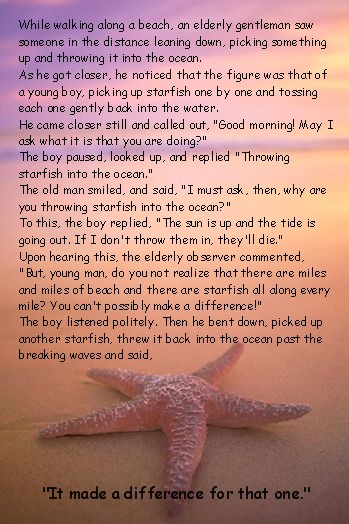
But what can we do? How can you and I overcome such an enormous global issue? That’s where the Starfish Story comes in (adapted from The Star Thrower by Loren Eiseley).

howtohelp_starfish_story

We cannot solve the world’s literacy problem, but we can make a difference for one or two.

Picture 2
This is Marie. My husband and I have been sponsoring her through New Missions, a small organization operating in Haiti and the Dominican Republic, since she was in primary school. She now attends high school and dreams of becoming a nurse. For approximately one dollar a day, we provide her with the opportunity to go to school in Haiti where only 2% of the children finish high school and about 40% of the adult population is illiterate. She also receives a hot meal at school each day as well as regular health check-ups and medical care when it’s needed. There are many similar organizations, including World Vision, that offer you the opportunity to provide a child with the chance to go to school. Perhaps that child could be your starfish!

I also choose to give Kiva loans to impoverished women in third world countries who are helping support their families and educate their children. By investing in women’s lives, society as a whole benefits because women typically reinvest 90% of their income back into their families. In so doing, they break the cycle of illiteracy and help lift their families out of poverty.

Closer to home, encouraging literacy is as simple as reading to a child! Fill your home with books and let the children in your life see you enjoying the gift of reading.

IMG_4301

Aging beauty

I had no intention of starting a series when I posted “What makes a woman beautiful?” a few days ago, but Michelle’s comment really spoke to me and I feel I must respond. She said

The most beautiful female face I’ve ever seen was the National Silver Cross mother about 25 years ago. It was before Afghanistan, and finding a mother of a person who had died in armed conflict was becoming difficult. I do not recall her name, but she had the most beautiful, kind eyes that sparkled. Even with tears in her eyes as she placed the wreath on the National Cenotaph, all her 95-year-old wrinkles made her look like she was still smiling. She was just stunning.

I had to ask myself why women in our society value youthful appearance so highly.

Reveal youthful-looking hair in 7 days with new Nexxus youth renewal. Combat 8 signs of aging hair.

Our advanced anti-aging multi-benefit makeup FIRMS. LIFTS. HYDRATES. COVERS.

Age youthfully. You can look as young as you feel.

Creating a refreshed and more youthful appearance has never been easier.

The ads that appear in the first few pages of my latest Chatelaine magazine scream the message loud and clear, but do young women really have a monopoly on physical beauty? Let’s use my Mom as an example. There’s no question that she was lovely in her younger days

young Mom

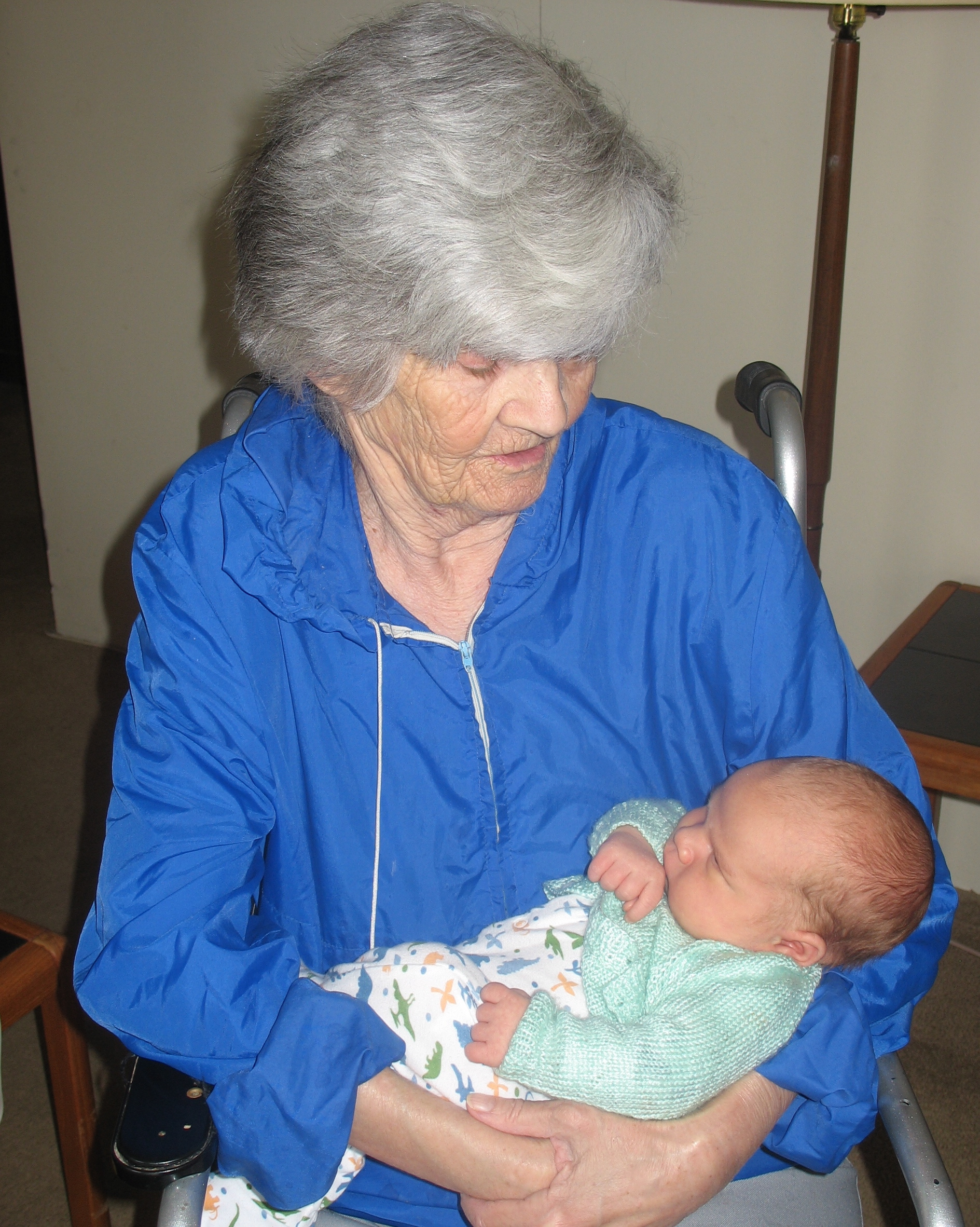
but is she really any less beautiful here at the age of 88 with her great grandson in her arms?

IMG_6792_2

Though I’m not crazy about my marionette lines and the little wrinkles appearing above my upper lip, I think that a young face, as pretty as it might be, is a bit like an empty canvas waiting for an artist’s brush. In my opinion, believing that beauty belongs only to the young is like thinking that a blank journal is more interesting to read than an autobiography!

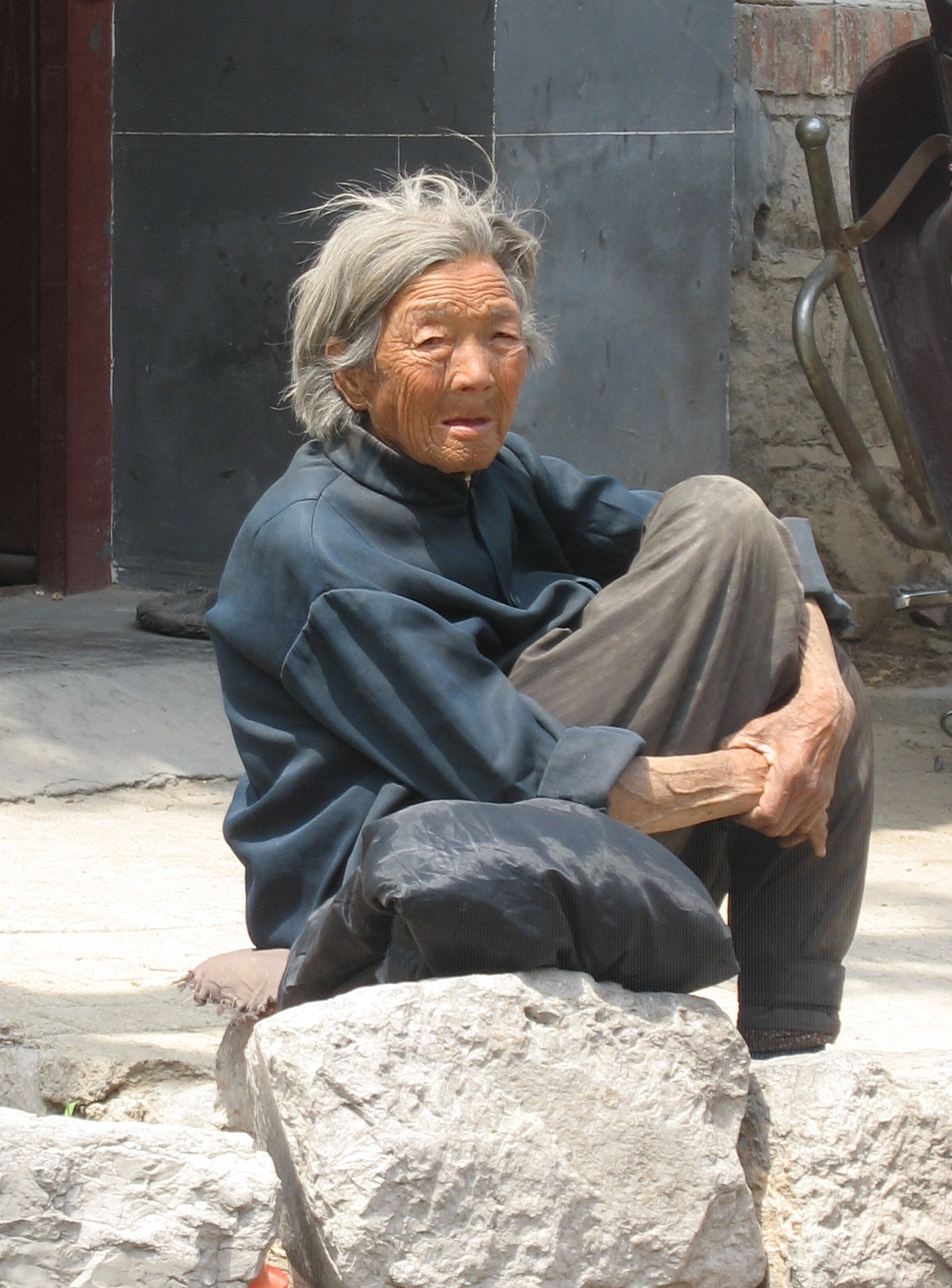
That brings me to one of my favourite photos from our time in China. I thought she was beautiful when I first saw her and I still do. I wish I could have spoken to her but language was a barrier. I have no doubt, however, that the lines on her face tell a story… a story of hardship, a story of survival, but hopefully also a story with some happiness in it.

IMG_1445_3

Do you think she’s beautiful?

What makes a woman beautiful?

I’ve been thinking a lot about appearance lately and questioning what it is that makes a woman beautiful. It began about a month ago when my Facebook news feed began to fill up with no make-up selfies, photos of fresh faced women without any make-up. Apparently, this was an offshoot of a campaign that originated in Britain in early March as a breast cancer awareness and fundraising endeavor. It quickly went viral. On this side of the pond, the breast cancer connection was lost and the movement became about women being comfortable in their own skin and embracing their natural beauty. Women were to post their no make-up photo then nominate other female friends to do the same. The response was interesting. Many posted their pictures proudly, others with disclaimers apologizing to those who had to see them, while still others refused to post at all.

I enjoyed the pictures but I was saddened by some of the responses. What is it about our culture that tells a woman that she needs to apologize for her natural appearance or worse yet, that she shouldn’t be seen publicly without being fully made up?

The answer is easy; the messages are all around us. Flip open any women’s magazine and you’re instantly inundated by air brushed images promising younger looking skin, flawless complexions, lusher lashes, smoother lips and glossy nails. How easy it is to forget that these are simply advertisements aimed at selling products. Instead, for many, they become the goal, the standard of beauty, and they go to great lengths to try to attain it.

The Bible has something very different to say about beauty.

Your beauty should not come from outward adornment, such as braided hair and the wearing of gold jewelry and fine clothes. Instead, it should be that of your inner self, the unfading beauty of a gentle and quiet spirit, which is of great worth in God’s sight.  1 Peter 3:3-4

Though this passage has often been misinterpreted, nowhere does the Bible say that a godly woman shouldn’t braid her hair, wear elaborate jewelry and fine clothes, or use make-up. It simply says that her true beauty shouldn’t depend on these things. It ought to come from inside.

That’s easy to say when you’re comfortable with what you see in the mirror, but what if you really aren’t? I’m waiting for surgery to remove a cancerous tumour from my parotid gland, the largest salivary gland on the left side of my face, and I have no idea what I’ll look like afterward. The best case scenario would leave me with nothing more than an S-shaped scar down the crease in front of my ear, under my ear lobe, and down onto the side of my neck. A change in hairstyle could easily camouflage that. The tumour is deep, however, and removal may require a much more complicated procedure. There’s no way of knowing this in advance, however, so I’ve already signed consent that would allow the surgeon to make a much larger incision and cut through and temporarily move my jawbone if necessary. This procedure would also require a temporary tracheotomy and, of course, the scarring would be much more extensive. In either case, this is very delicate surgery due to the close proximity to a major facial nerve. If possible, the nerve will be saved but there is no guarantee of that. If it cannot be, I will be left with significant drooping on that side of my face.

So, what will I look like when this is over? Will I be one of those people that little children stare at and whose embarrassed mothers hush when they innocently ask, “Why does that lady look so funny?” Will inner beauty shine through a lopsided face? Will I have the courage to wear my scars as a badge of survival?

Tomorrow, I’m going to be attending a Look Good, Feel Better workshop. The program, an initiative of the Canadian Cosmetic, Toiletry and Fragrance Association, is designed to boost the morale of women undergoing cancer treatment by empowering them to manage the effects that cancer and its treatment can have on their appearance. Perhaps I’ll learn something that will help me deal with my post surgery face, whatever it looks like.

Ultimately, however, make-up or not, scars and all, I just want the beauty of Christ to be seen in me.

face-in-the-cross


O Canada

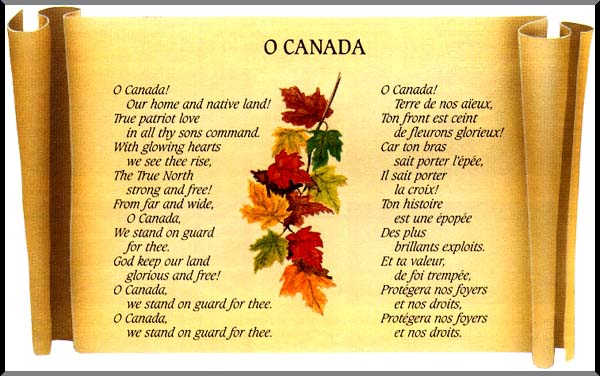
Prominent women in Canada are agitating to change the wording of our national anthem. Author, Margaret Atwood, and former prime minister, Kim Campbell, are amongst those who are lending their voices to the campaign to rid the song of what they consider sexist language. Apparently, they are offended by the line “in all thy sons command”.

Canada flagWe Canadians are constantly making changes to our national symbols. In fact, we seem to be a bit unsure of our real identity. The present flag isn’t the one that flew over my elementary school and this wouldn’t be the first time that our national anthem was altered. The offending line in the original anthem, written by Robert Stanley Weir in 1908, read “thou dost in us command” but in 1914, Weir himself changed it to its present wording. Considering that, at that time in our history, women were not yet legally considered persons, this could possibly be construed as a sexist sentiment, implying that only male loyalty was being invoked, but does anyone truly believe that it means that today?

Rather than reverting to the archaic language of the original line, “in all of us command” is being proposed as the new gender-neutral version. While I don’t really have a problem with this, I can’t help feeling that only a very insecure woman would actually feel excluded by the present wording. If women like Atwood and Campbell are truly concerned about the plight of women, I’d far rather see them take a global view and speak out against issues that really matter; issues like poverty, illiteracy, female genital mutilation, forced marriage and honour killing that continue to endanger the lives of girls and women in many parts of the world.

According to Atwood, “Restoring these lyrics to gender-neutral is not only an easy fix to make our anthem inclusive for all Canadians, but it’s also long overdue.” Really? That one little change would make it all-inclusive? What about the second line, “Our home and native land”? Does that include our 6.8 million foreign-born residents? More than 20% of our population is not native to Canada.

And then, I almost hate to mention “God keep our land” which was also not part of the original song. As a Christian, I certainly don’t want to see that part deleted but does it include the many Canadians who follow other gods or no god at all?

Regardless of how our national anthem is worded, I’m very thankful to be Canadian right now. In many countries, our life savings would be rapidly eaten up by the cost of my medical care and our retirement would be in jeopardy. Instead, when we meet with the doctors tomorrow to discuss treatment, we don’t have to worry about whether or not we can afford it. In Canada, we don’t pay a cent! Now, that’s really something to sing about!

ohcanadalyrics

He’s doing it in a dress!

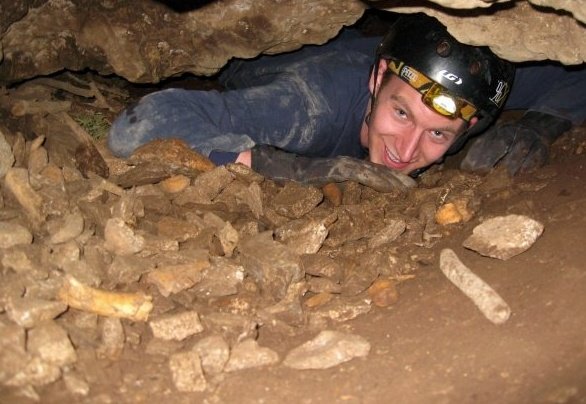
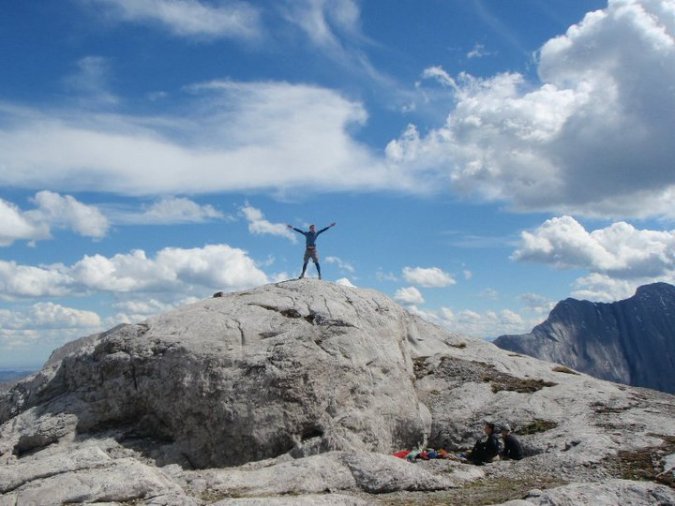
Our son, Nate, is a man’s man, never happier than when he’s exploring an underground cave or scaling a rugged mountain.

Nate in cave 2

Nate on mtn 2

In September, he attempted to climb Mount Robson, the highest peak in the Canadian Rockies. Nasty weather prevented his team from making it to the top so they summited a nearby peak instead and he’s already dreaming of challenging the big one again.

So why am I going to be spending time while we’re together this Christmas modifying a dress to fit him better? So that a little girl in Africa can go to school, that’s why! And you can be a part of it!

Do It In A Dress is an initiative of One Girl, a non-profit organization that gives women and girls living in Sierra Leone access to education. Believe it or not, a little girl born in Sierra Leone is more likely to be sexually assaulted than she is to attend high school!

Do It In A Dress asks participants to challenge themselves to do something… run a half marathon, bungee jump, sky dive, play a team sport, host a barbecue… almost anything, all the while wearing an African schoolgirl dress and raising funds so that a little girl in Sierra Leone can wear one too. $240 is all it takes to give a girl access to education. An educated girl becomes an educated woman – a woman who can change her world!

On February 9, 2013, Nate will be skiing the Canadian Birkebeiner, a 31 km cross country ski marathon, in a dress! The dress is a little tight. It needs some modification to to provide space for a warm layer underneath and to ensure that his arms can move freely while he skis. That’s where I come in.

What can you do to help? Click here to sponsor Nate. Tell your friends and suggest that they donate too. Nate will appreciate it and so will a little girl whose life will be forever changed.

Blessed to be 60!

Well, the big day came and went and I don’t feel any different! I’m learning to say “I’m 60” and, just one day into the year, I’m already liking it better than being 59. The whole time I was 59, I dreaded turning 60 but now I realize that it’s just another decade and another new beginning.

Besides, being 60 gives me something to joke about. As friends gathered last evening for what I dubbed my “coming of age girlfriend party” I told them that now that I’m a little old lady, they’d have to  humour me and humour me they did. When I invited them, I told them that if the weather cooperated we’d be celebrating around the fire pit in my back yard. Hearty Albertans that they are, even though the temperature was only 4°C (37°F), they all arrived bundled up and ready for an outdoor party!

Apparently, there are lots of benefits to being 60. I’ve already been able to take advantage of a few discounts available to the over 55 crowd but just think of all the senior discounts I’ll qualify for now!

One of the cards that I received last night says “What kind of gifts does God give for a 60th birthday?” and goes on to list them… Grace, purpose, generations, perspective, contentment, relationships, values, memories. To some, like grace and purpose, I say I hope so and to others, like generations and memories, I say AMEN!

One of the best things about being older is grandchildren and the wonderful memories we make together. I was delighted to receive video messages via email from both sets of grandchildren yesterday and I also enjoyed a wonderful Skype visit with two of our Japanese “grandchildren” and their parents. I am truly blessed!

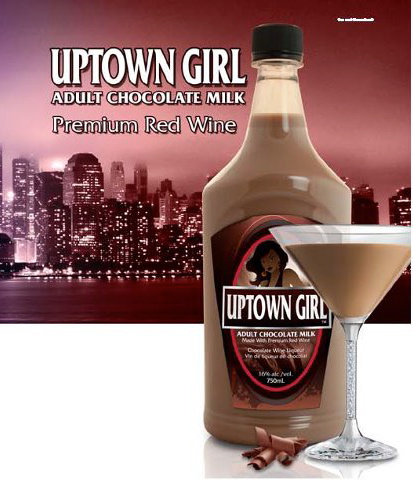
I also learned that 60 is definitely not too old to try something new. When I stopped by the liquor store a couple of days ago to pick up some wine for the party, I couldn’t resist this. Adult Chocolate Milk made with Premium Red Wine, boasts the label. Turning the bottle over, I read “This ultimate chocolate lover’s wine is a marriage of rich velvety chocolate, the freshest of milk, and premium red wine. This masterfully crafted artisanal concoction can be served on the rocks, like a traditional wine, or used as a mixer in many cocktails. Uptown Girl, a unique blend truly like no other.” It practically followed me home! Sipped on the rocks beside a roaring fire, it was definitely a winner.

My girlfriends obviously know me well. One wrote in her card “One thing I know for sure ~ you like tea ~ you love to read ~ and I’m positive… you love chocolate!” Though the invitation said no gifts, she brought me tea bags, a beautiful bookmark and chocolate covered almonds. Another friend brought me this, a chocolate bouquet made of 60 little chocolate treats! Did I mention how blessed I am?

Titus 2:3-5 says “Likewise, teach the older women to be reverent in the way they live, not to be slanderers or addicted to much wine, but to teach what is good. Then they can train the younger women to love their husbands and children, to be self-controlled and pure, to be busy at home, to be kind and to be subject to their husbands, so that no one will malign the word of God.” When I received my Bible as a Christmas gift in 1982, I was just 30 years old, a young wife and mother. I highlighted the latter portion of that passage. As years went by, however, the time came when I began to realize that it was the beginning portion that now applied to me. Eventually, I somewhat reluctantly highlighted that part of the passage with a different colour.

As we sat around the fire last night, I gave my girlfriends (all younger than I am) one piece of advice. Don’t do as I did and spend your 59th year worrying about turning 60, I told them. I am blessed to have the privilege and responsibility of going before them and I hope that I am setting a godly example but I also want to show them that aging isn’t such a bad thing.

Thinking about age all the time is the biggest prison women can make for themselves.”  Miuccia Prada

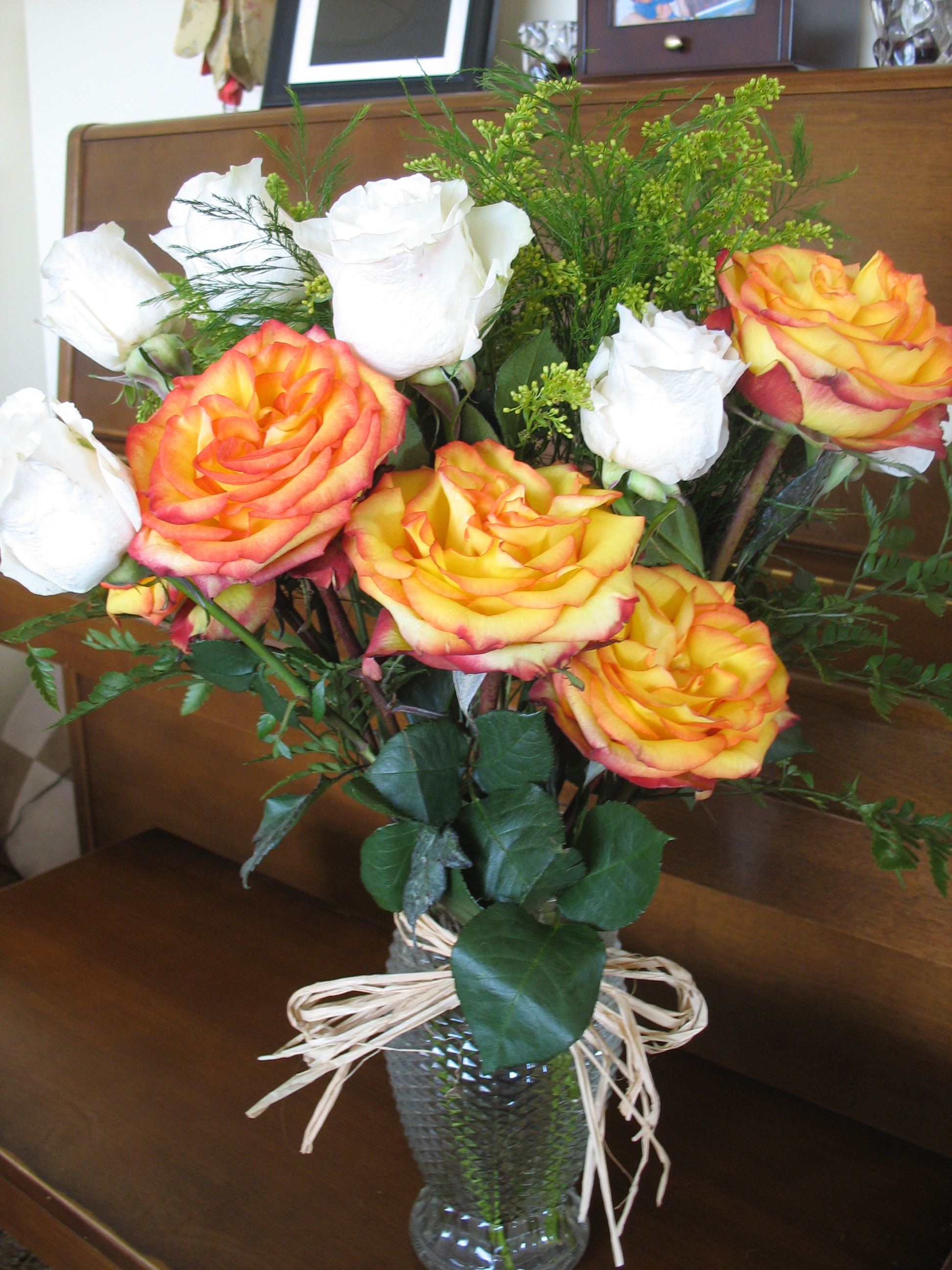
Birthday roses from my hubby!

Letters to the editor

I’ve been reminded of the power of words recently. I’m not one who usually sits around writing letters to the editor but I’ve written three of them in the last couple of weeks and have received interesting responses to each one.

The September issue of More, Canada’s magazine for women over 40, contained an article that drew the reader’s attention to Half the Sky: Turning Oppression into Opportunity for Women Worldwide, written by Nicholas Kristof and Sheryl WuDunn, a book that I think should be required reading for every citizen of the developed world. I wrote a letter (email) commending the editorial staff for this and received a reply from copy editor, Brenda Thompson, telling me that they may choose to reprint a portion of my letter in an upcoming issue! Words can be encouraging.

I read the Edmonton Journal online every morning. On August 29, I came across what I considered to be an example of blatantly irresponsible journalism. The first sentence of an article entitled “Man charged with shooting two Mounties south of Edmonton slated to appear in court” stated that Sawyer Robison was the subject of a manhunt “after wounding two Killam RCMP officers during a shooting.” As was pointed out later in the article, details of the shooting have never been publicly released. Though the shooting took place just a few miles from here, I do not know Sawyer Robison. I don’t know if he is innocent or guilty. I do know, however, that he has not yet had his day in court. He has not been found guilty of wounding the RCMP officers and I was appalled that the Edmonton Journal would print this for public consumption. I assumed that this was an extreme lapse in judgement and fired off an email to Editor-in-Chief, Lucinda Chodan. Her response was almost immediate. “You are completely right,” she said and thanked me for bringing this to her attention. “As soon as I received your email, I asked our staff to correct the article.” she went on to say and included a link to the revision. Words are powerful.

This morning I entered into a Facebook discussion, initiated by a friend of mine, about an editorial that appeared in a local weekly, The Edge, out of Wainwright, Alberta. It was written by reporter, Mickey Djuric, in response to the suggestion made recently by the niece of Toronto mayor, Rob Ford, that women can avoid sexual assault by “not dressing like a whore.” While her point that women should never be blamed for being assaulted or raped is well taken, I found her attitude and the way she expressed her opinion absolutely unacceptable. Her final paragraphs were particularly appalling.

We will not let anyone tell us how we should dress, or what garments are dubbed as appropriate for your eyes.
Sluts, whores, tarts (Whatever you want to label us). Show your cleavage, or legs, and tell everyone to go screw themselves while doing it.

I did mention that The Edge is a small town newspaper, didn’t I? They’re not known for quality journalism but this goes way beyond the norm. Even in this day and age, I was astonished that an editorial staff anywhere would find this suitable for printing and said so in my letter (email) to Editor-in-Chief, Kelly Clemmer. I asked him if this was really the message that we want to give teenage girls and young women and suggested that had Ms. Djuric shown up for her job interview dressed the way she suggests and speaking the way she does in the editorial, she probably wouldn’t have been hired. In the real world, employers do have the right to tell us how we should dress!

I also told him that, right or wrong, anyone who thinks that a girl who dresses provocatively doesn’t put herself at greater risk or make herself a more likely target for exploitation has their head in the sand! Though he defended the point that he felt his writer was trying to make, Mr. Clemmer did agree with some of my points and has promised to publish my letter in an upcoming Edge.

So, as we often tell little children, use your words! They are powerful. Use them to encourage, use them to correct, use them to admonish. We who are privileged to live where we have the freedom to speak our mind should do so!

Coming to terms with 60

I absolutely loved being 40. By then I’d lived through some of the best and the worst that life has to offer and figured that I’d learned a few things along the way. I had a past filled with memories and lifelong friends and I had a future to look forward to. 40 was a fabulous midway point!

50 was great too! By the time that birthday rolled around, I was looking forward to early retirement and all the adventures that would follow. My fifties have included everything from climbing Mount Fuji to travelling the length of Vietnam on overnight buses to flying over the jungle of Costa Rica on a zipline!

I really haven’t enjoyed being 59 though because 60 has been hanging over my head all year! I want to embrace the next decade with the same enthusiasm that I greeted my 40s and 50s with but it hasn’t come as easily. 60 is such a big number! No longer can I fool myself into thinking that I’m still young. In fact, middle aged is a stretch unless I truly expect to live to be 120!

You’d think that I would have adjusted to being 59 pretty quickly. Immediately after my birthday, we spent several days with my parents. My mother who suffers from Alzheimer’s disease is obsessed with people’s ages.

“How old are you?” she’d ask.
“Fifty-nine,” I’d reply.
“How old are you?” she’d ask again a few minutes later.
“Fifty-nine,” I’d say again.
Over and over and over again.
“I’m fifty-nine.” “I’m fifty-nine.” “I’m fifty-nine.”
It didn’t really help.

Now 60 is just over a month away and I’ve been thinking about ways to celebrate; ways that might make the transition easier. One of the things that I’m passionate about is making micro-finance loans through Kiva; loans that give a hand up to women who are less fortunate than I am. Last night I invested another $25 in Kiva and gave myself an early birthday present.

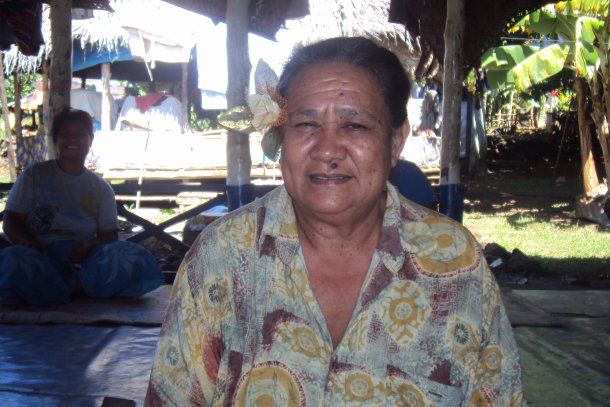
Most of the women that I’ve given loans to have been younger than I am because loaning to mothers with children in their care has been one of my priorities but this time I decided to look for a woman who was 60. Kiva doesn’t list borrowers according to age so finding her took awhile. I scanned the long list of women in need, looking at each thumbnail photo for one who looked like she might be 60. Sadly, I clicked on many well worn faces only to find that they were much younger. I was reminded again how fortunate I am to have had the life I’ve had. Finally, after searching through many profiles, there she was. Sofai!  My loan will enable her to purchase chemicals, sprayers, shovels and fertilizers for her small taro plantation on the Pacific island of Samoa.

Sofai

Over the next few weeks, I’m going to be looking for other ways to celebrate my “coming of age”. I’m not sure what they might be.

Any suggestions?

Who makes the rules?

Apparently when women reach the advanced age of 40 we must lose the ability to think rationally. The internet is full of lists of rules to help us avoid making complete fools of ourselves.

A good example is the list of “10 things a woman over 40 shouldn’t wear” that’s plastered all over the net. What things, you ask?

  • black leather pants or jackets
  • jackets that are mid-thigh length
  • pleated pants
  • fluorescent colours
  • capri pants
  • low rise jeans
  • plunging V necklines
  • mini skirts
  • bikinis
  • sleeveless clothes of any kind

Says who? And what was I supposed to wear on the zip line; a frumpy housedress? Oh right, zip lining is probably on someone’s list of things a woman my age shouldn’t do!

According to a slightly different list horizontal stripes and double breasted blazers are also out. Still others will tell you that women over 40 shouldn’t wear long hair and there are even those who say that jeans are out for those of us who’ve passed our 40th birthday! I guess I’m just a rule breaker! After all, I’m wearing horizontal stripes as I write this and I practically live in jeans all winter long! The right pair of jeans can be very flattering and they can be dressed up or down depending on the occasion. Why, I’ll probably be buried in my blue jeans! I’m just that kind of girl.

As far as I’m concerned, as long as something is comfortable, fits well, makes you feel confident and isn’t beyond the bounds of decency, I say wear it with pride regardless of what age you are! There are 20 somethings who look ghastly in mini skirts and older women who look downright classy in low rise jeans and black leather.

A much more useful list is More magazine’s “8 warning signs women over 40 shouldn’t ignore” which includes

  • flu-like feelings including fatigue, nausea, sweating and chills
  • not feeling rested regardless of how much sleep you get
  • pain and swelling in your calf
  • a new mole
  • trouble finding the right words
  • bloating and pelvic pain
  • burning, tingling or numbness in your feet
  • a persistent cough

After all, regardless of how we dress them up, our bodies are wearing out and if we want them to continue looking good into our 60s, 70s and 80s we need to take good care of them.

p.s. Thank you to Jeannie at gracefully50 for inspiring this post. If you enjoyed it, you might want to check out her post Am I wrong?