18 years of retirement!

With the school year coming to an end this week, hubby and I have been retired for 18 years. 18 years! How is that even possible? That’s the same length of time that I taught at Lougheed School, a small prairie school that closed a couple of years later due to declining enrolment. Perhaps it says something about our chosen career that 18 years of teaching seemed like a very long time while the past 18 have flown by!

When I reflect on all that we’ve experienced in the past 18 years, I realize how full and how rewarding they have been. Retirement has included fulfilling long held dreams like teaching English in Japan and later, China. One might argue that that wasn’t really retirement. After all, we were employed and we earned a paycheque, but it wasn’t really about the work or the money. Those were simply what allowed us to be there. It was all about adventure; about living shoulder to shoulder with the people of another land and learning about their culture. It was about traveling to other locations in Asia during our holiday breaks. We also spent one summer on the Pacific island of Saipan serving as short term missionaries.

Living with cancer for the past 12 years has curtailed our ability to spend extended periods of time outside the country and the pandemic kept us home for a couple of years, but tourist travel has also been a big part of our retirement years. We’ve visited Mexico six times, ziplined over the rainforest in Costa Rica, toured Israel, and visited several European countries as well as nine Canadian provinces, one territory, and numerous US states.

Speaking of retirement, my father always said that there were no end of things that one could do as long as they didn’t need to be paid to do them and we have certainly found that to be true. Volunteering in various capacities in our church, our community, online, and most recently in a far and distant land, has helped give meaning to our retirement years.

Retirement has brought some unexpected surprises. Learning to operate a tractor and a combine definitely wasn’t part of this city bred girl’s retirement plan, but several years of helping a friend at seeding time and harvest gave me more joy than I could ever have imagined.

Since we retired, our family has grown to include eight grandchildren who have made our lives so much richer. In fact, that’s why this post is a day later than I’d originally planned. We visited three of them earlier this week and now another three are visiting us. As much as I love to write, going on adventures and playing games with the grandkids and late night cuddles and chats with one who has trouble sleeping are far more important than anything I could ever post on here.

To say that our retirement years have been rich would be an understatement. I’m incredibly thankful that, in spite of our health challenges, we have been able to experience so much. As time flies by I sense an urgency to continue seeing and doing as much as we can while we’re still able, but I don’t see us slowing down anytime soon, so here’s to a few more years of purposeful and productive retirement!

Why volunteer?

April 14-20, 2024 is National Volunteer Week in Canada, a time to recognize and celebrate the impact of the country’s 24 million volunteers who share their time, skills, empathy, and creativity for the well-being of others.

But why volunteer? What are the benefits of giving of your time and energy for the sake of others?

One positive result of volunteering is an increased sense of purpose and satisfaction. Studies actually show that volunteering triggers the mesolimbic system, the portion of the brain responsible for feelings of reward. The brain releases feel-good chemicals like dopamine, spurring a person on to perform more acts of kindness. Psychologists call this “helper’s high.”

For those of us who are retired, this aspect of volunteering can be especially beneficial. “A strong sense of purpose is always in my top five secrets of healthy aging,” says Scott Kaiser, MD, a board-certified geriatrician and director of geriatric cognitive health for the Pacific Neuroscience Institute. “Having a reason to get up in the morning is extremely powerful.”

Research presented at last year’s Alzheimer’s Association International Conference also found that volunteering later in life may protect the brain against cognitive decline and dementia. Those who volunteered demonstrated better memory and executive function. Volunteering can also be a social activity; an opportunity to build connections with other people who have similar interests.

In his later years, my father always said that there are no end of things to do as long as you don’t have to be paid for doing them and I have found that to be very true. My only problem is ensuring that I don’t overextend myself and take on more than I can reasonably handle.

But what if you haven’t volunteered before? How do you get started? First, think about your skills, abilities, and passions. What are you good at? What excites you? Next, look for opportunities that align with these things. These might be found in your church, in community organizations, or ever further afield. Sometimes it’s just a matter of taking that first step!

For example, teaching and writing are my gifts. These are the things that energize me. In the past, children’s ministries were an obvious area where my abilities could be put to good use. I taught Sunday School, counselled at summer camps, and assisted with after school programs and Vacation Bible Schools. While I still love kids, I don’t have the energy level that I once had, so working with adults has become a better fit. I lead a ladies Bible and also volunteer as a tutor with a local literacy program. As I’ve mentioned on the blog before, I’m also a volunteer editor for Kiva, an online lending program that crowdfunds loans to borrowers around the world who don’t have access to traditional financing. This has the advantage of being done online and while I’m committed to editing a minimum of 40 loan descriptions a month, I can do it whenever I choose.

Still not sure? Don’t be afraid to step outside your comfort zone and try something new. Several months ago, I volunteered to be part of a CNETS (Canadian Neuroendocrine Tumours Society) Advocacy Advisory Board, hence my recent trip to Montreal. We’re still in the learning and planning stages, so I don’t know exactly how my skills will be put to use, but as a NETS patient this is something that I’m passionate about, so I took a leap.

As my father said, there are no end of opportunities. Hospitals need volunteers to assist patients, their families, and staff. Food banks need volunteers to prepare and distribute food hampers. Drivers are needed to deliver meals to shut ins. Schools often welcome volunteers to help in a variety of ways. A volunteer even gave me directions at the airport last week!

NVWDigital Banner

A new job!

My father, who died a year ago at almost 97 years old, always said of retirement that there is no end of things that you can do as long as you don’t need to be paid for them. I’m blessed to be able to follow in his footsteps. While we aren’t wealthy by any means, we are comfortable enough financially not to need to work. In the first few years of retirement, we did take paying jobs teaching English in Japan for a year and then China for several months. Since then, we’ve kept busy as volunteers in several capacities. In fact, at 68, I have just finished training for a brand new volunteer position that I’m very excited about!

I’ve often mentioned Kiva on the blog before. Kiva is a non-profit organization that allows a person to lend as little as $25 to a specific low-income entrepreneur in one of 77 countries around the world. When a loan is repaid, the money can be withdrawn or used to fund a new loan. Since making my first loan 11 years ago, I’ve been able to make 60 more by simply recycling the same money over and over again. When I learned that there was a need for volunteer editors, I realized that this might be an opportunity to put my skills into action and help in another way.

kivaloans-450x200

An average of about 16,000 loan profiles are posted on the Kiva website every month. Each one needs to be carefully edited to ensure that it complies with Kiva policies, that the borrower’s privacy is maintained, that details are consistent, and that the language is understandable to lenders while retaining, as much as possible, the voice of the original text. Kiva relies on over 400 volunteers, each editing approximately 40 loan descriptions a month, to complete this enormous task. That’s my new job! I’ve joined Kiva’s Review and Translation Program as a volunteer editor! 

It was back in July of last year that I first expressed an interest in volunteering. My name was added to a wait list and I was told that I would hear from Kiva staff when they were ready to bring on new volunteer editors, probably much later in the year. In late November, I was asked to submit my resumé and complete an official application that included a brief loan review exercise. In early December, I was invited to take an editing test. Kiva works with a barebones staff and, like everyone else, they’ve been somewhat hindered by Covid slowdowns, so the wheels ground slowly, but at the beginning of February I was notified that my application was approved. At the beginning of March I started training and now I’m finally an active Kiva editor! I edited my first loan yesterday. The borrower was a farmer in Uganda who requested a loan to buy more cattle to fatten and resell.

Volunteer editors are split into teams each led by a volunteer team leader. I was assigned to a group called The Write Stuff which I find very fitting as writing has always been my passion! Kiva asks for a commitment of a minimum of 2 hours a week for at least 6 months, but I foresee being able to do this for a much longer period.

If you’re interested in making a loan, just click on the banner to the right.

images

Living a life of significance

I think it’s safe to say that most people yearn for significance. Perhaps when we’re young, we’re too busy to think about what that means or to wonder if what we’re doing will have lasting significance, but those of us in the second half of life, especially those who have entered their retirement years, may struggle with finding purpose or significance in their daily lives.

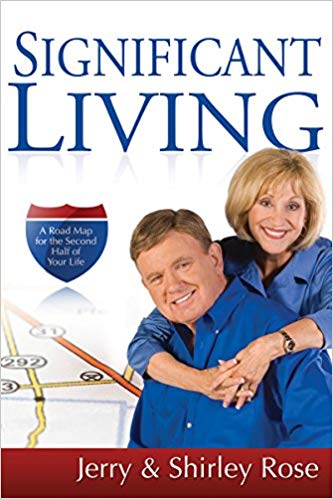
Significant Living - Jerry & Shirley RoseSo what does living a life of significance really mean? Significance can be defined as “being worthy of attention” or “meaningful”. It begins with the word “sign” for a reason. A thing’s significance is a sign of its importance.

I’ve just finished reading Significant Living: A Road Map for the Second Half of Your Life by Jerry and Shirley Rose. One of the things that the Roses point out is what significance is not

“Some people confuse significance with success” but they are not the same thing. Many so-called successful lives lack true significance.

It’s very easy in this day and age, when we’re exposed to the lives of the rich and famous through the media, to feel that we’ve somehow missed the boat if we haven’t done something truly big with our lives, but what does significance really look like? The answer will be different for each one of us, but again I quote the Roses, “For some, significance may come through mentoring or having a significant influence on the family. It may be starting a business or doing volunteer work. The important thing is not the size of what we do. Whether our pursuits are ‘big’ or ‘small’ the importance lies in filling a need in the lives of other people. Significance usually translates into getting involved with others.”

That definitely resonated with me. I do want to make it clear, however, that in our relationships, and particularly in marriage, we ought not to depend on another person to give our lives significance. Significance should come not from another person, but rather, from how your life affects the lives of others.

The simple key to living a life of significance is to share your time, talent, and treasure with others. Those of us who have reached retirement age usually have an abundance of time to give. Chances are, we have also developed skills and talents that can be used to better the lives of others. Regardless of where you are in life, you don’t have to be wealthy to give generously of what you do have to worthwhile causes, to family, or to friends in need.

For me, significance begins by knowing that God has a purpose for my life and that I am using the gifts He has given me to impact the lives of other people. I believe that the most significant thing I ever accomplished was raising my children to be the responsible young adults that they are today. I know that I also had a significant impact on at least some of the students that I taught during my career. Now that my children are grown and I’ve retired from teaching, it would be easy to feel that my significance had waned, but that is not the case. Even in our very small rural community there are many opportunities to volunteer time and talent. Over the past couple of years I’ve had the pleasure of teaching two young immigrant women who never had the opportunity to receive a formal education how to read. I’ve also done online editing and mentoring, again on a volunteer basis. If anything I’ve said on the blog has impacted another person in a positive way, that too has added significance to my life.

Do you feel that your life lacks significance? Consider your gifts and passions, then look for ways to use them to impact others. Are you living a life of significance? If so, please share what it is that makes your life meaningful. Perhaps it will help someone else!


Ten years!

retirement-party-ideas-1

image source

At the end of this week, it will be ten years since Richard and I walked out of our Alberta classrooms for the last time and entered a brand new phase called retirement! Where did the time go? It amazes me to think that we’ve been retired for an entire decade already! Over the past few days, I’ve been looking back and marvelling at all the things we’ve done during that time.

I often say once a teacher, always a teacher. We knew that even though we were retiring, our teaching days weren’t entirely behind us. We’d long had a dream of teaching English overseas after we retired and we accomplished that by spending one year in Japan and a semester at a university in China. Those were amazing experiences and we treasure the memories and the friendships that we made! I’ve also spent some time doing online mentoring and we both volunteer with our local literacy program. I meet once a week with two young women, both members of the Old Colony Mennonite community that moved into our area over the past few years. They are fluent in English, but neither of them ever had the opportunity to learn to read or write, even in their own language, so I’ve been teaching them. Richard tutors one of their husbands.

We’ve discovered that there are no end of things to do in retirement, even in a small community like ours. Richard has been serving as the Deputy Director of Emergency Management for our town for the past few years, a volunteer position that involved quite a bit of training. He also serves on our Community Hall board. Because we come and go a lot, we hesitate to commit to too many activities that require us to be present on a regular basis, but we give our local food bank a thorough cleaning once a month and occasionally work a shift at the thrift store that’s operated by three local churches. In addition, we hold positions in our own church and participate in many activities there. Lately I’ve even had to say no to some opportunities because I felt that I was becoming too busy!

Two of our grown children were already married when we retired, but our family has grown over the past decade to include another daughter-in-law and five grandchildren! Though none of them live very close to us, being grandparents is one of the best things about this stage of life and we spend as much time as we can manage with our little ones.

The past decade has brought some surprises, some good and some not so good. We certainly didn’t anticipate becoming seasonal farm labourers, but I believe in living life to the fullest and I’m always ready to try something new. As a result, this city bred girl learned to operate some pretty big machinery and loved it! For several years, I drove tractor in the spring and combine in the fall as we helped a farmer friend with seeding and harvest.

Travel was always part of our retirement plan. During the first few years, we visited nine Canadian provinces and fifteen American states plus Japan, South Korea, Vietnam, Cambodia, Hong Kong, Macau, Saipan and Costa Rica. In 2013, I was diagnosed with a little-known incurable cancer which slowed us down a bit and keeps us from being out of the country for extended periods of time, but since that time, we’ve managed to tour Israel and visit Mexico twice. I’ve also been on a girlfriend trip to Las Vegas and we travel to Vancouver regularly to spend time with family. Last fall, we spent two weeks in Nova Scotia and celebrated our 40th wedding anniversary while we were there.

We continue to stay physically active. Golfing is a summer passion for both of us. We also love to hike and we recently purchased a tandem kayak. During the winter we keep active lifting weights, bowling in the local seniors league, and going to dances.

Writing was always something I always knew I’d return to in retirement. Though I’ve had one magazine article published and I’ve done some freelance editing, it’s blogging that I’m most passionate about these days. I love the opportunity it gives me to interact with my readers. Even my blog has changed over the past decade though. I originally started it to share our Asian experiences with friends and family back home, but I loved writing it and I’ve kept it going ever since. Though I still share travel stories whenever I can, it has morphed into more of a lifestyle blog that includes a weekly fashion post reflecting another interest of mine that grew and developed in my retirement years.

Perhaps that’s been the key to a successful and happy retirement… we’re still learning, growing, and exploring new interests. I am extremely grateful that we were able to retire as early as we did. I’m just now approaching 65, traditionally thought of as retirement age, and Richard is 67, but we’ve already been blessed with ten wonderful years of retirement. We loved our teaching careers, but as we watch our younger colleagues wrap up another school year and see their weary, stress filled faces, we don’t for one moment regret retiring when we did!

What will the next ten years hold, I wonder? Much will depend on my health, but at this point, I’m doing well. With a few restrictions, I’m able to lead a normal and active life. I don’t think we’ll be leaning back in our rocking chairs and putting our feet up anytime soon! There’s still a lot of world to see and new adventures await us!

What does retirement look like?

What does retirement look like to you?

One of my favourite blogs is Over 50 Feeling 40 by San Antonio, Texas blogger, Pamela Lutrell. While essentially a fashion blog, it’s much more than that. In Pam’s own words, it’s “a style blog about strength, confidence and joy.” She encourages midlife women to not only look their best and feel their best, but to be the very best that they can be. The one topic that Pam and I seem to disagree on is retirement.

At 62, I have been retired for eight years. At 61, Pam doesn’t see retirement in her future. She recently left her position as a high school journalism teacher and is presently searching for a new career. Why? “Many think we are suppose to retire to the golf course and put hard work behind us. I ponder how long I will work hard a lot lately… I think it is healthy and want to continue doing it as long as possible,” she wrote in a recent post.

Though I may be putting words in her mouth, I get the impression that Pam sees retirement as similar to being put out to pasture; no longer being able to accomplish anything of value. Not me! That’s definitely not what my retirement looks like.

So what has it looked like so far?

Retirement has included fulfilling long held dreams like teaching English in Japan and later, China. One might argue that that wasn’t retirement. After all, we worked hard and we earned a paycheque. It wasn’t really about the work or the money, however. Those were simply what allowed us to be there. It was all about adventure; about living shoulder to shoulder with the people of another land and learning about their culture. It was about traveling to other locations in Asia during our holiday breaks. You can read about those and other retirement adventures by clicking on the appropriate country names in the sidebar.

Retirement brought some unexpected surprises. Learning to operate a tractor and a combine definitely wasn’t part of this city bred girl’s retirement plan, but several years of helping a friend at seeding time and harvest gave me more joy than I could ever have imagined and instilled within me a love for the land that I never thought possible.

Retirement has included volunteering; everything from driving elderly friends to medical appointments to spending a summer doing pastoral supply on the tiny Pacific island of Saipan. Over the past two years, my health has curtailed our ability to spend extended periods of time overseas, but how thankful I am that we retired early enough to do those things while we could! These days, volunteering includes online mentoring, helping younger women deal with some of the issues that made my life most difficult during my younger years.

We’ve always believed in lifelong learning, so retirement has also included further education. Thanks to the internet, over the past year, I was able to audit two university level courses through Southwestern Baptist Theological Seminary in Fort Worth, Texas from the comfort of my own living room.

Retirement has also given me more time to pursue my passion for writing, mostly through the blog, but I presently have another article awaiting publication as well. In addition to my own writing, I’ve edited university papers and a masters thesis for friends and family and I was even contacted by a university professor in Portugal who sometimes publishes research papers in English. He was looking for someone to do editorial work for him and found my name online. Every now and then, I receive an email from Jose with another research proposal or paper for me to edit.

Retirement has meant time on the golf course, but believe it or not, we’ve golfed much less since we retired than we did before! We simply haven’t had time. Life has been too full, too busy, too exciting.

My husband’s favourite definition of retirement is being able to do what you want to do when you want to do it. For me, that meant purposely lying awake for about a hour at 4:30 this morning listening to the music of the rain outside my window (we’ve been experiencing a severe drought here in central Alberta) and then sleeping in until 9:00. Other days, it means an alarm clock ringing early in the morning so we can set off on another adventure.

I realize that we were fortunate to be able to retire as early as we did and that not everyone has that luxury, but we lived carefully throughout our working years with that goal in mind. My pension doesn’t come close to being enough to live on, but fortunately, my husband’s is adequate to meet our needs.

Do we ever regret retiring as early as we did? Never! Would we do it again? In a heartbeat! We loved our careers, but they didn’t define us. Unlike Pam, I don’t need a job to go to to give my life a sense of purpose or to make me feel fulfilled.

What about you? Are you retired yet? Do you want to be? What do you think is the perfect age to retire?

What does retirement look like to you?