It happened!

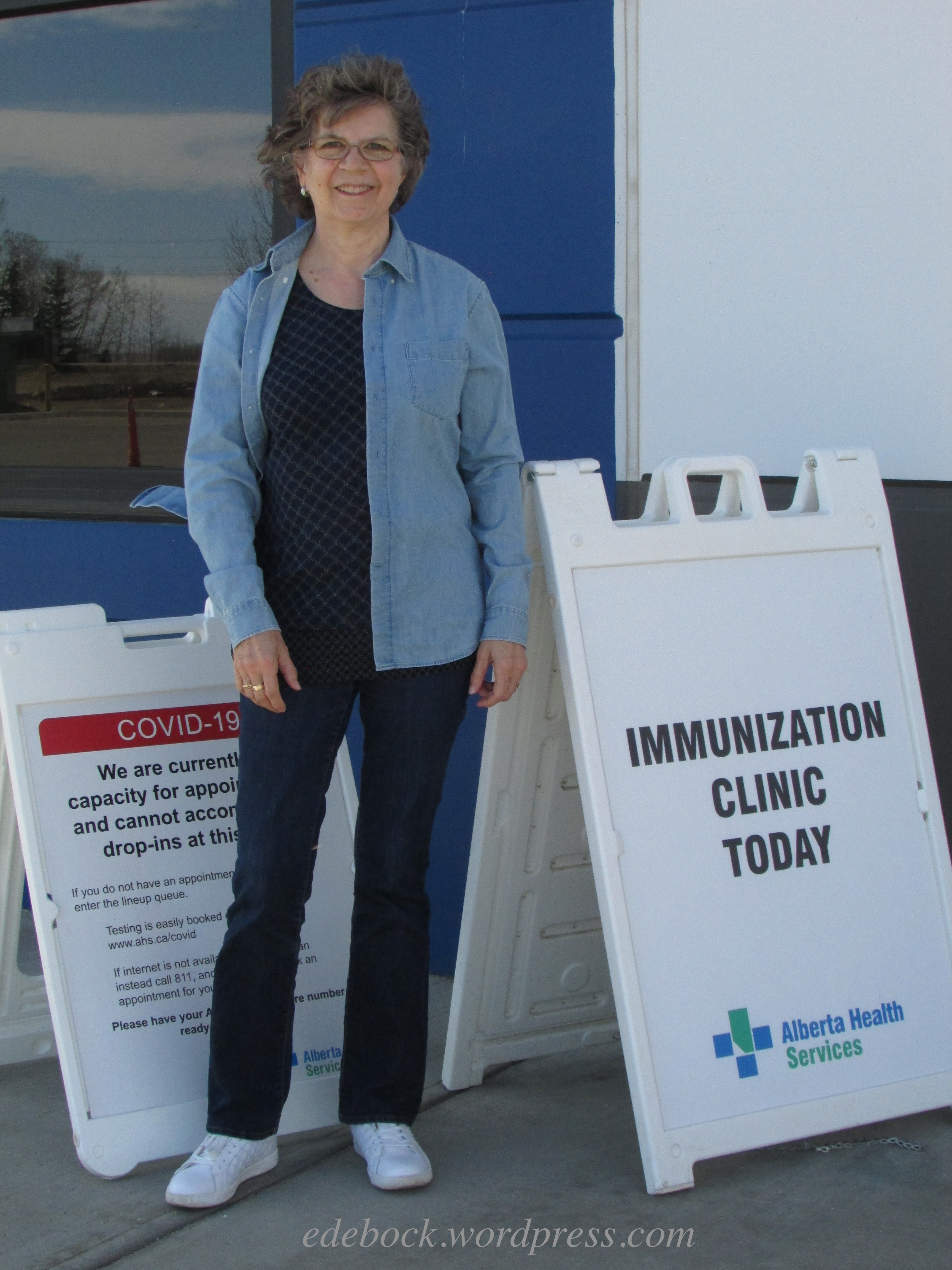
I had my second Covid-19 vaccine injection today! It was an uphill battle getting here, but it happened!
IMG_2362

Continuing from where I left off when I wrote the post Am I expendable? on April 18th, I called my MLA’s office and the Ministry of Health. By that time, the cry for cancer patients to receive their second vaccine within the recommended time frame had hit the media and was definitely on the government’s radar. Though I wasn’t given any details, I was told that a decision would be announced soon.

Finally, late on the afternoon of April 22, the Chief Medical Officer of Alberta announced that cancer patients and others who were severely immunocompromised could begin booking their second appointments by phone the following day. Actually getting the appointment was quite a gong show though. I started calling first thing the next morning, but the lines were clogged. I was absolutely elated when I got through later that morning and was able to book my appointment for the morning of April 30, just two days beyond the 21 day interval recommended for the Pfizer vaccine. My excitement was short-lived, however. Within a couple of hours, I received an email, with no explanation, telling me that my appointment had been cancelled!

I immediately phoned again and made a second appointment, only to have that one cancelled the following day! At that point, I started to think that somehow the information that I was a cancer patient must not be getting into the system. I admit to being pretty hot under the collar by the time I called a third time to make the same appointment! I mentioned my suspicion and the gal who did the booking agreed with me. She told me that there was a new button to click to indicate that a caller was part of the patient group who could now book their second injections. Apparently those who took my first two calls either didn’t know that or forgot. Fortunately, while all of this was going on, today didn’t completely fill up and I was still able to get in.  

I’m glad that no one checked my blood pressure during the two days that it took to finally get an appointment that stuck! The whole rigamarole certainly added to my stress level and I almost feared checking my email for the next few days in case I once again saw a “Covid-19 Immunization Cancellation” message waiting for me! After fighting so hard to see this happen, I didn’t feel 100% certain that it would until the needle was actually in my arm! 

The fight isn’t over yet though. The majority of cancer patients across Canada still don’t have access to their second vaccine within the timeline proven most effective by clinical trials. CONECTed, a national network of oncology groups supported by over 17 national patient organizations, has launched a campaign asking the federal government to revise the National Advisory Committee on Immunization (NACI) recommendation for cancer patients so that they would receive 2 doses of Covid vaccine within 21 to 28 days of each other. They are also asking provincial and territorial governments as well as local administrators to ensure that adequate directives and resources are provided to achieve this goal. 
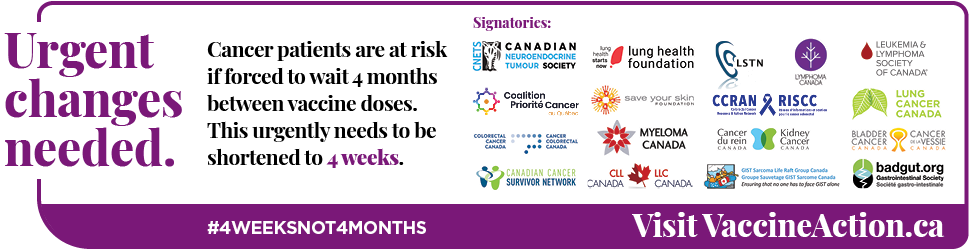
image002(1) (1)

Being fully vaccinated isn’t actually going to make any difference to how I live my life at least in the short term. It typically takes two weeks after a person is fully vaccinated for the body to produce enough antibodies to provide protection from the virus and even then, with the Covid-19 situation here in Alberta the worst it’s ever been, life won’t be getting back to “normal” anytime soon.  
Am I expendable?

Cancer has been trying to defeat me for almost 8 years. Now it looks like it’s trying to recruit Covid-19 to help it out. No, I don’t have Covid and I’m trying to do everything I can to keep from getting it, but I’ve run into a dangerous roadblock that is affecting cancer patients across our country. 

Vaccines have been touted as our way out of this pandemic and I believe that they probably are IF they’re given correctly. That’s where the problem lies. According to the product monographs and based on the trials that were performed before the vaccines were approved, the second Pfizer dose should be given 21 days after the first, Moderna 28 days, and AstraZeneca 4 to 12 weeks. Here in Canada, however, the National Advisory Committee on Immunization (NACI) has recommended that in order to maximize the number of individuals benefiting from the first dose of vaccine, the interval between doses be extended to four months or 16 weeks.

While there is no evidence to show that this is an effective way of administering these vaccines, the extended period between doses may not make a big difference to the general population, but that is not true for those of us with cancer. Research conducted in the UK has shown that while an antibody response was found in 97% of the healthy volunteers tested after their first injection, the response was less than 40% in patients with cancer. That number increased dramatically to 95% if they received their second shot at the recommended time, but only 43% if that time was extended. 

I had my first injection of the Pfizer vaccine on April 7. That means that I have 10 days until I should be getting the second one, but I feel like I’ve been beating my head against a wall trying to make that happen. I’ve called Alberta Health Services to no avail. The clinic where I received my cancer treatments was unable to help. I’ve attended a webinar with members of various patient advocacy groups across the country and I’ve contacted the media. A petition has collected more than 20,000 signatures over the past few days and news sources are coming onside, but will the government listen? Ontario and Manitoba are moving forward with the second dose for cancer patients, but here in Alberta not one word of hope has been heard from our government. It would seem that they have decided that those of us who are already fighting for our lives are expendable! 

photo-1618093877862-3630a08f737f

Photo: Spencer Davis

So much anger!

We’re living in a very angry world, or so it seems to me. Everywhere we look, whether in person or on social media, people seem to be protesting or venting their anger. First it was the shutdowns, then masks, and now the prospect of a vaccine that isn’t even available yet.

Calgary-COVID-protest-Nov-28-20204

Calgary, November 28, 2020 – Global

What is really behind all this anger? It’s clearly a response to what’s going on in the world around us, but why so much anger? Why are so many people lashing out at one another and at those in positions of authority? I think it’s much more than being asked to wear a little piece of fabric over their mouth and nose or the thought of having to have an injection.

There are many different emotions that might result in anger, but anxiety, sadness, fear, frustration, disappointment, and worry are some of the most common triggers and who amongst us hasn’t experienced some of those feelings in recent months? Add to that the fact that we feel like we’ve lost control of our lives. Things that we’ve always taken for granted, like spending time with family, have been taken away. For many, the things that they’ve trusted in, things that have given them a sense of security, have also been swept away. Some have lost jobs, others have had to close businesses. Some are still working, but feeling isolated at home. In addition to all of this, with the incredible amount of false information and fear mongering being spread by irresponsible “news” sources and keyboard warriors, it should be no surprise that undiscerning people are being sucked into the swirling maelstrom of fear and anger that surrounds us. The virus is everywhere. There isn’t even anywhere we can go to escape!

Unfortunately, anger is one of the most divisive and destructive forces on the planet. It’s a poison that spreads with astonishing speed; faster perhaps than Covid itself. It turns crowds into mobs, inflicts deep wounds, and crushes the human spirit. Plus, it does absolutely nothing to alleviate the crisis that we all find ourselves in.

Anger itself isn’t the problem; it’s what you do with it. First of all, let’s look at what NOT to do.

Don’t be a spreader! Don’t spread the virus, don’t spread misinformation, and don’t spread anger.

Don’t spread the virus. Whether or not you fully agree with the measures that have been recommended or mandated in your area, suck it up and cooperate. Wear the mask, stay 6 feet (2 metres) from other people, and whenever possible, stay home. We’re all in this together. The sooner we really start working together to limit its spread, the sooner we’ll have any hope of reclaiming some of the things that we’ve lost. 

Don’t spread false information. The internet is awash with misinformation, much of it deliberately intended to mislead and to stir up fear and anger. Don’t add to the noise! Check your facts before passing something on. Chances are that your neighbour down the street or your friend from high school doesn’t know as much about epidemiology as the experts do. The lack of respect and support for doctors, scientists, and other health professionals during this pandemic is nothing short of astonishing. There is plenty of evidence to show that masks do make a difference and no, they aren’t harmful to your health. There are very, very few people who have legitimate reasons for not being able to wear one and those people should be staying home because they clearly have other issues that put them at high risk. Yes, the vaccines have been fast tracked, but that doesn’t necessarily mean that they’re dangerous. They’ve been through the same rigorous testing as any other vaccines, but because of the urgency of the present situation, they weren’t allowed to bog down in bureaucratic red tape the way things usually do.  

Don’t spread your anger. Denying that you’re angry or keeping it bottled up inside isn’t healthy, but taking it out on an unsuspecting cashier who’s simply attempting to do her job in trying circumstances doesn’t make the situation better. Neither does waving a protest sign or ranting on social media. 

So what CAN we do with our anger? What SHOULD we do? 

  • Think before you speak, post or repost.
  • Find constructive ways to express your concerns clearly and directly to the right people without trying to hurt or control anyone. This might include asking questions in an attempt to seek out the truth and understand the reasons behind measures that are being recommended or mandated.
  • Take a break. That might mean taking a self-imposed time out from social media or getting outside for some fresh air and exercise.  
  • Practice relaxation. Listen to music, write in a journal, do a few yoga poses or some deep breathing exercises… whatever works for you.
  • Pray. Pray for wisdom, understanding, and grace. Pray for those in positions of authority who are daily faced with making incredibly difficult decisions. 
  • Do something positive for someone else. Instead of writing that Facebook rant, why not write a note of encouragement to someone? Instead of attending a protest rally, look for an opportunity to volunteer in your community. 
  • Know when to seek help. If your anger feels out of control, reach out to a mental health professional. 

I’m as eager as the next person to see this pandemic come to an end, but I’m equally anxious to see us pull together and rise above the overwhelming flood of anger that threatens to crush us all. 

Parents, please vaccinate your children!

When I learned that only slightly more than 80% of the children who attend the same school as two of my grandsons have been vaccinated, I was more than a little concerned! They live in Vancouver where there has been an outbreak of measles this month. Nine cases have been confirmed. The number grew from four to nine in less than 24 hours! At the centre of the outbreak is a family whose three children were not vaccinated due to concerns that the MMR (measles, mumps, rubella) vaccine might cause autism, a belief that has been scientifically debunked.

It may not be a popular opinion, but I don’t think that children should be allowed to attend public schools or any other kids’ programming if they haven’t been vaccinated (unless there’s a valid documented health reason why they shouldn’t be). Vaccines don’t just protect the people getting vaccinated; they protect everyone around them. The more people in a community who are vaccinated, the harder it is for a disease to spread. Having grown up with a dearly loved brother who was severely brain damaged by measles related encephalitis as an infant, I feel very strongly about this!

Some years ago, popular children’s author, Roald Dahl, who lost a daughter to measles encephalitis at the age of seven, had this to say:

Olivia, my eldest daughter, caught measles when she was seven years old. As the illness took its usual course I can remember reading to her often in bed and not feeling particularly alarmed about it. Then one morning, when she was well on the road to recovery, I was sitting on her bed showing her how to fashion little animals out of coloured pipe cleaners, and when it came to her turn to make one herself, I noticed that her fingers and her mind were not working together and she couldn’t do anything. 

“Are you feeling all right?” I asked her.

I feel all sleepy,” she said. 

In an hour, she was unconscious. In twelve hours she was dead.

The measles had turned into a terrible thing called measles encephalitis and there was nothing the doctors could do to save her. That was in 1962, but even now, if a child with measles happens to develop the same deadly reaction from measles as Olivia did, there would still be nothing the doctors could do to help her. 

On the other hand, there is today something that parents can do to make sure that this sort of tragedy does not happen to a child of theirs. They can insist that their child is immunized against measles. I was unable to do that for Olivia in 1962 because in those days a reliable measles vaccine had not been discovered. Today a good and safe vaccine is available to every family and all you have to do is ask your doctor to administer it. 

I couldn’t agree more! In my opinion, people who refuse to have their children vaccinated are putting their lives at risk. Roald Dahl went on to say:

So what about the risks that your children will run from being immunized? They are almost non-existent. In a district of around 300 000 people, there will be only one child every 250 years who will develop serious side effects from measles immunization! That is about a million to one chance. I would think there would be more chance of your child choking to death on a chocolate bar than of becoming seriously ill from a measles immunization. 

I can only assume that parents who have been blessed with perfectly healthy children and refuse to safeguard their health by immunizing them are completely oblivious to the risk they are running. As a parent who has lost a child and a grandparent who has watched a beloved grandchild fight for life; as a sister whose brother never had the opportunity to realize his potential and a daughter who saw her parents’ grief over that, that makes me livid!

Vaccines save lives! It’s as simple as that. There are no treatments or cures for diseases like measles, mumps and polio. The only proven way to protect your child is with vaccines. Parents, please just vaccinate your children!

36f282e21c56f3fe0a6e474cacb7de76

Dowboy

Scan 1

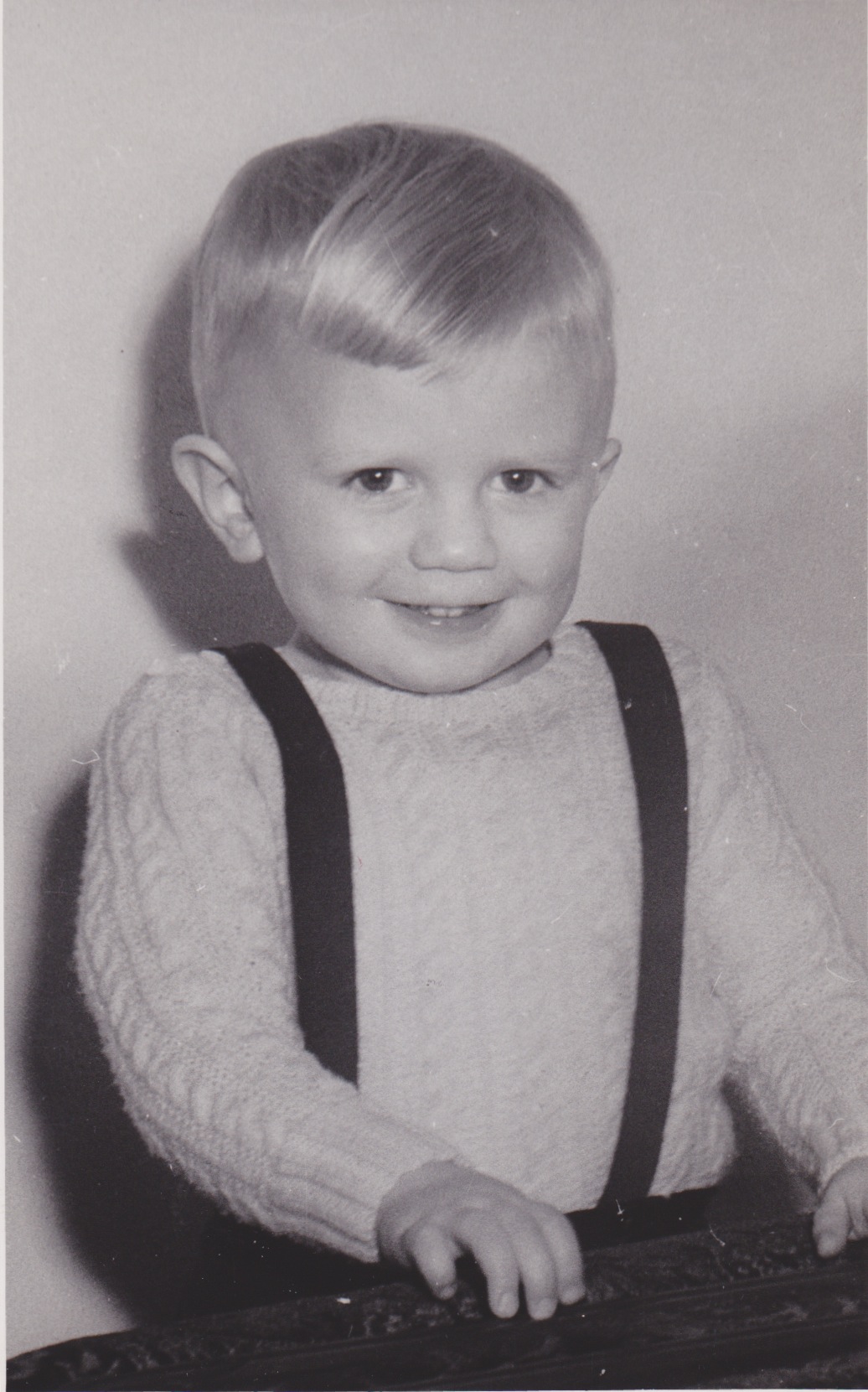
This is one of my favourite photographs, taken of my older brother, Donald, and I when I was about four months old. Isn’t he cute? He looks like a perfect child and in many ways he was, but what you can’t see is the damage that had already been done to his brain when he suffered from encephalitis as the result of having measles about 10 months before this photo was taken. No, this isn’t a rant about vaccination, but it definitely could be!

Scan

Encephalitis is acute inflammation of the brain caused by either a viral infection or the body’s own immune system mistakenly attacking brain tissue. The most common cause is a viral infection and it occurs in approximately 1 in every 1000 cases of measles. It develops rapidly and requires immediate care; care that was not available in the small, isolated town where we lived in 1952. In fact, it was not until a few months had passed and Donald began to lose his words and exhibit other signs of brain damage that our parents realized that something was seriously wrong.

As I grew up, I came to realize that my big brother was different from other children and I loved him with a fierce and protective love that endures to this day. Though his brain injury robbed him of the ability to speak, I knew he loved me too. In fact, I remember Mom telling me how difficult it had been to discipline me when I was little because if she spanked me, Donald cried too! She also told me that before I could say his name, I called him Dowboy.

Donald has always been a gentle soul and very easy to love, but I remember one occasion when some neighbourhood boys teased me about my brother, the “retard”, a word that I have always hated with a passion. Perhaps, it was then that I learned the power of using my words. I was a timid child, known amongst my peers as a goody two-shoes, but in that moment I must have become a wild and vicious creature! I don’t remember what I said, but I dressed those boys down to such an extent that word got back to my parents about how I’d stood up for my brother, and my father speaks of it admirably to this very day!

Though I do remember my grandmother telling me more than once that I would always have to watch out for Donald, I don’t recall my parents ever making me feel that I would have to carry the burden of caring for him. Regardless, I grew up with a tremendous sense of responsibility for Donald that has remained with me through the years even though he lives a long distance from me.

With two other handicapped men, Donald lives in a fully staffed house in North Vancouver that is operated by the Community Living Society. CLS provides residential and personalized community-based support to individuals throughout the Lower Mainland of Vancouver and the Upper Fraser Valley. As a family, we are so blessed to know that Donald receives excellent, compassionate care and lives a productive and meaningful life.

In his earlier retirement years, my father was actively involved as a CLS board member and served as president of that board for several years. Until recently, he has been the primary family contact for everything to do with Donald’s care, but Dad celebrated his 92nd birthday last week and over the past couple of years, I have been gradually taking over that role. CLS is committed to working with the families of supported individuals so meetings have been scheduled when I’m in Vancouver to visit, phone calls have been made, and when necessary, paperwork shuffled by email or snail mail.

Then came this week! On Wednesday morning, I was approaching the second last green on the local golf course when my cell phone rang. It was Trudy calling; manager of Donald’s house, and a dedicated caregiver who has been involved in his life and therefore, mine, for over 30 years. She was phoning from the emergency ward to let me know that he had fallen and they were waiting for x-rays to be taken. To make a long story short, Donald had a fractured hip and underwent surgery yesterday. It has been killing me not to be there. In my head, I know there’s nothing I could do that isn’t already being done, but my heart wants to be with my Dowboy! Fortunately, one of his caregivers has been with him throughout each day since he arrived at the hospital and they have been texting me regularly with updates. The orthopaedic surgeon and the anesthetist were both in touch with my sister (a medical doctor) by phone to discuss the medical details. Today, the physiotherapists began working with Donald and they already had him standing up. A lady from his church even visited and brought him cookies! Yes, he is in good hands and, though my heart wants to be there now, I will wait until early August when I’ll be in Vancouver to help him celebrate his 65th birthday!