Ryokuchi-koen

Joel and his parents left for a pastor’s conference yesterday morning and Kelly had a meeting to attend so we were on our own for awhile. With map in hand, we set off by bicycle to find Ryokuchi-koen. Koen is the Japanese word for park. Ryokuchi is huge and includes tennis courts, ball diamonds, playgrounds, flower gardens and many other attractions. Our main reason for going was the Open-air Museum of Old Japanese Farm Houses.

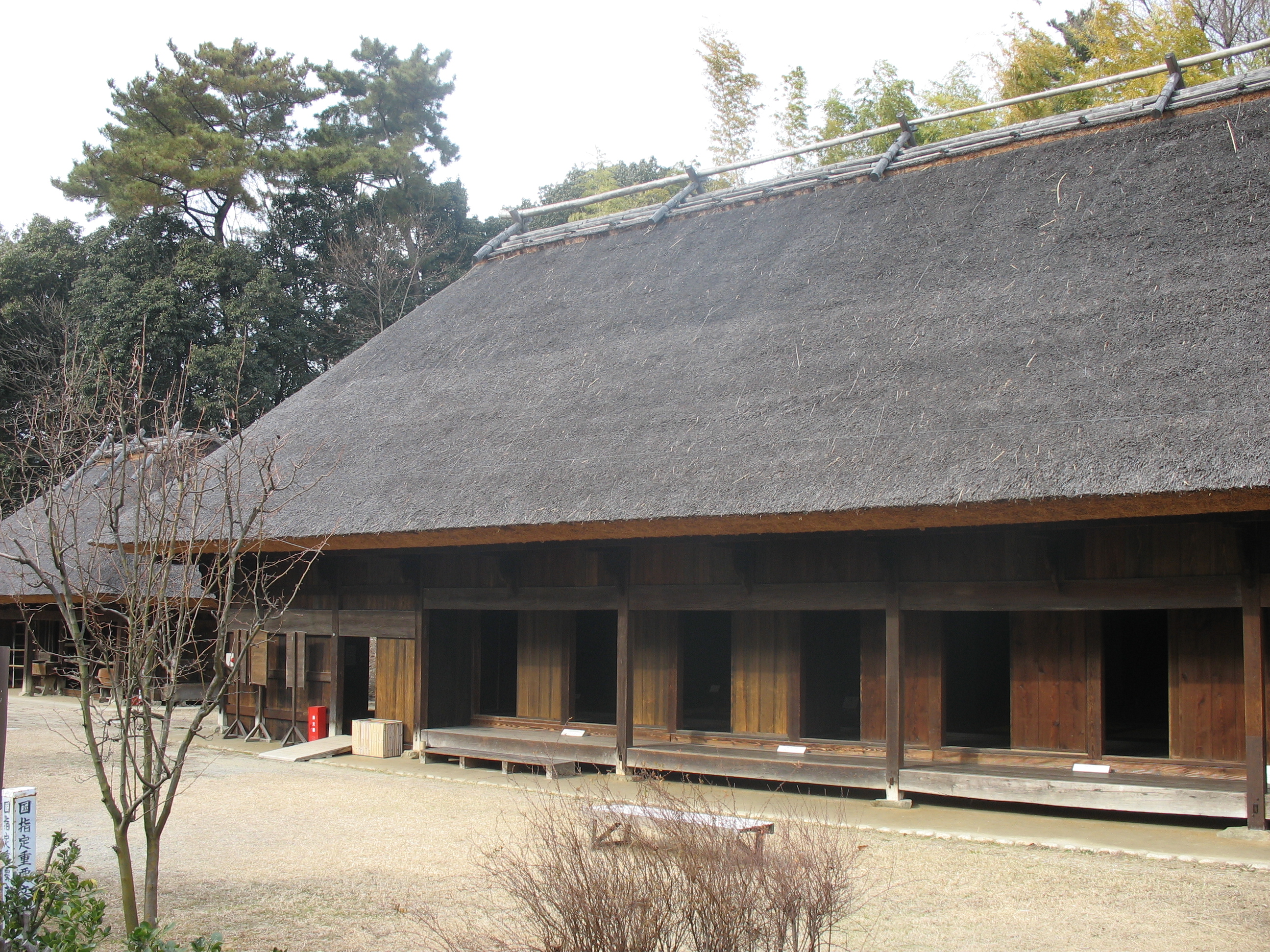
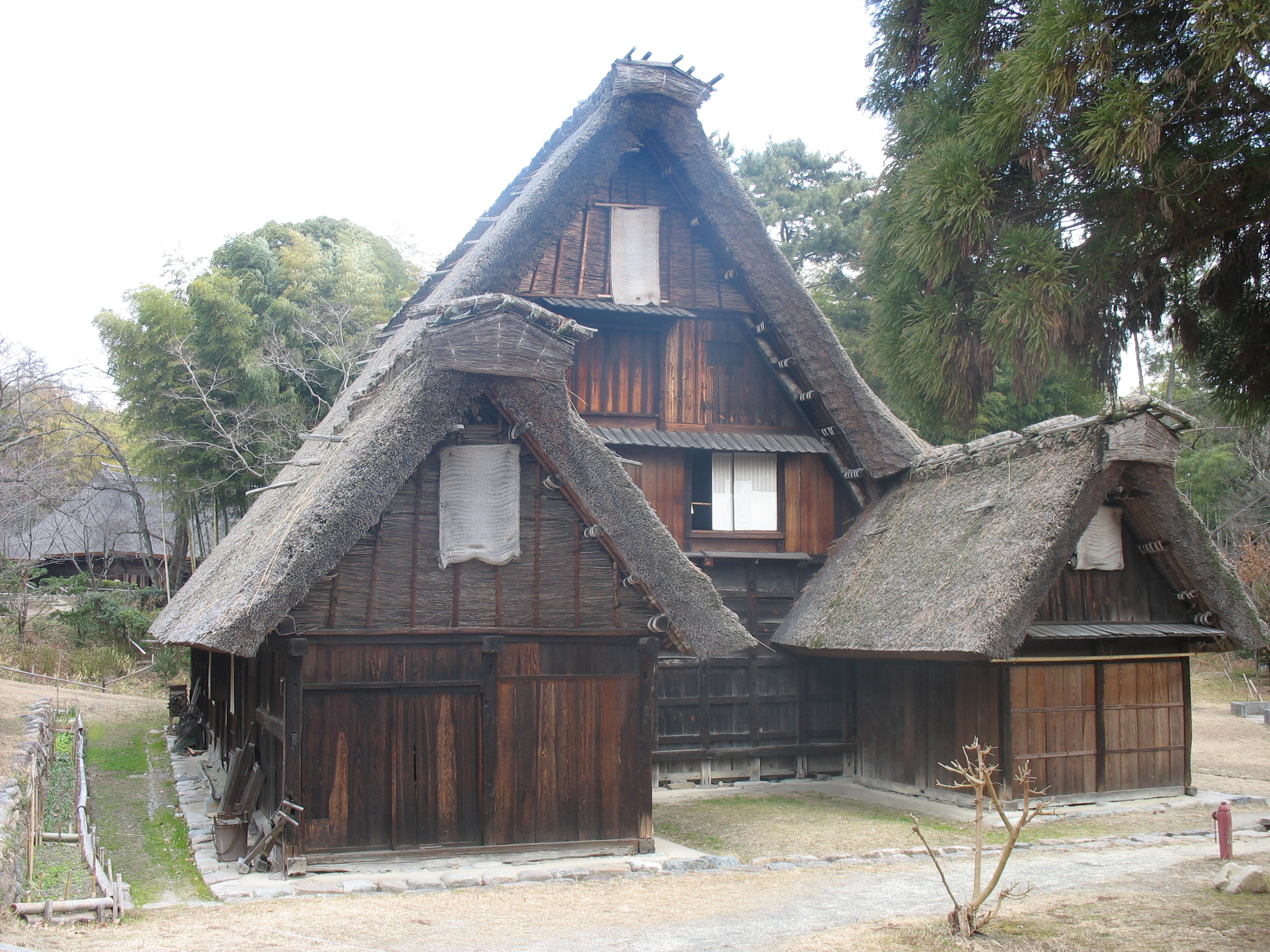
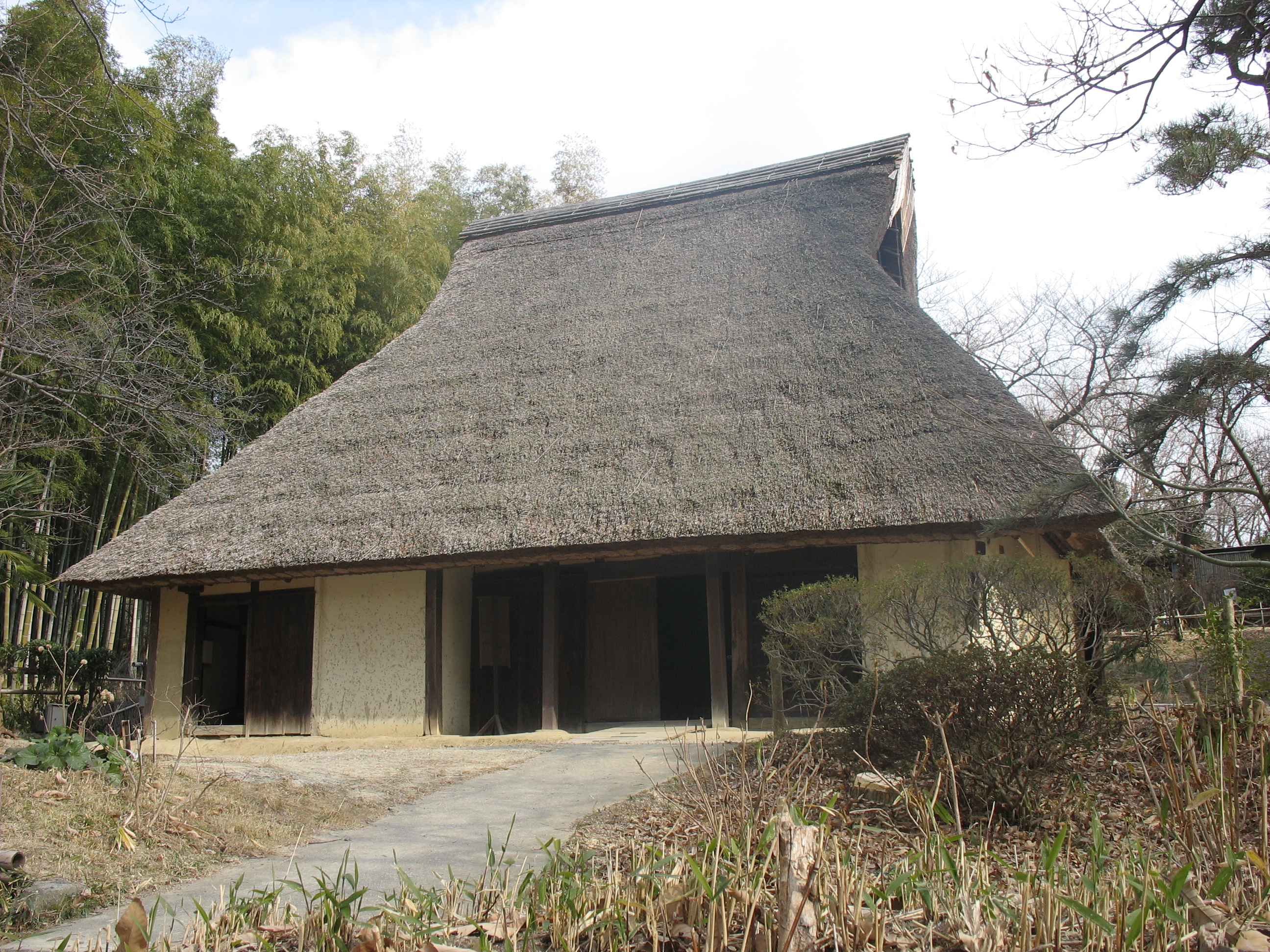
The museum features 11 traditional country homes and other structures that were brought here from all over Japan. All have been painstakingly reconstructed and filled with period era tools and other displays.

Perhaps the most fascinating of the buildings was the giant thatch roofed Gassho-zukuri from Shirakawa, Gifu Prefecture. Gassho refers to the steep roof which is said to look like two hands pressed together in prayer. An excellent volunteer interpreter who spoke reasonably good English spent considerable time showing us around and explaining not only the architectural details of the house but also the lifestyle of it’s occupants. The extended family of 20 to 40 individuals lived on the main floor while the two upper stories were devoted to the raising of silk worms. The occupants of the house included the parents, the oldest son, his wife and their children as well as the daughters of the family and their children. Their husbands didn’t live in the house with them. The communal bedroom shared by all the house’s occupants had a small door to the outside through which they would enter for night time visits with their wives!

Many of these houses are still in use in the Shirikawa region, predominantly in the small villages of Ogimachi and Ainokura which have both been declared Unesco World Heritage sites but I suspect that the lifestyle of their occupants has changed somewhat over time!

Gassho-zukuri from Shirikawa

A few of the other structures in the museum:

Return to Osaka

We first visited Osaka, the second largest city in Japan, in 2005 when our son and daughter-in-law lived here. Robin planned a busy and exciting itinerary for us. Looking back, it’s amazing how much we managed to fit into the nine days that we were here. In addition to seeing many of the sights of Osaka itself, we travelled to Kyoto, Nara, Kobe, Himeji, Hiroshima and Miyajima. We saw castles, temples, shrines and palaces. We tried all sorts of interesting foods and I fell in love with Japanese gardens.

This visit has been entirely different. While living in Funabashi and attending Hope Church, we met Joel and Kelly who were preparing to plant a church here in Osaka. We’ve been staying in their home for the past few days and yesterday we attended Life Church with them. What a joy to see what God has been doing here! In less than two years, the church has outgrown its first venue and, with an average attendance of approximately 50 people, the second is bursting at the seams!

Sharing our visit with Joel’s parents who are also here for a couple of days has been an unexpected pleasure. Leo and Phyllis Kaylor came to Japan as missionaries 60 years ago. Settling on the southern island of Kyushu, they have devoted their lives to God’s work in Japan. Three of their sons now pastor churches in this country.

We’ve been enjoying wonderful meals together, having fun times with the three Kaylor kids and engaging in many great discussions. Last night, we were introduced to yaki niku. Gathered around tabletop braziers in a tiny crowded restaurant, we cooked and ate a variety of meats and vegetables. I was amazed to discover that my favourite part of the meal was the paper thin slices of beef tongue! Right now, Richard is taking part in another Japanese tradition. He’s at the public bath with the men of the family.

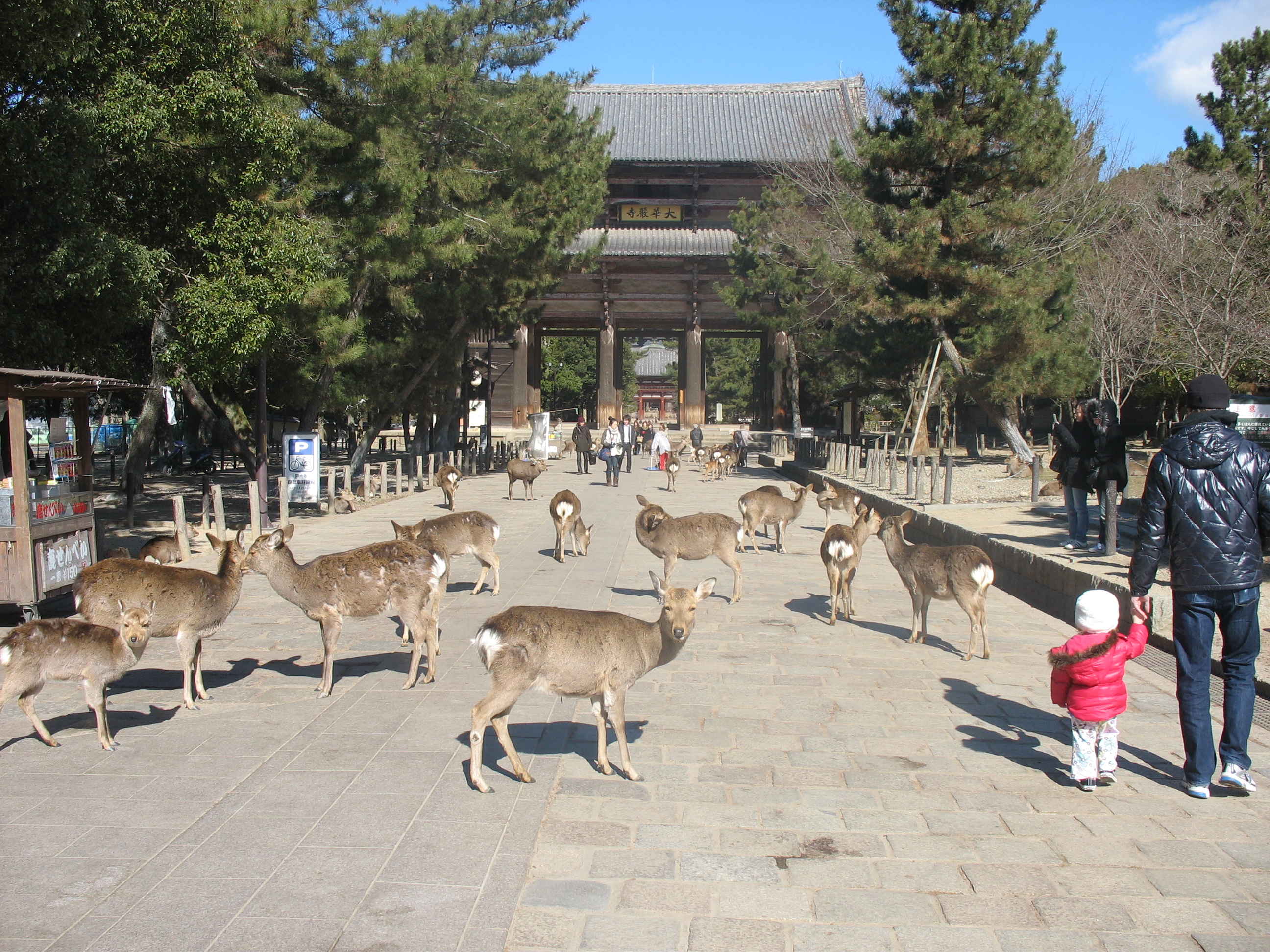
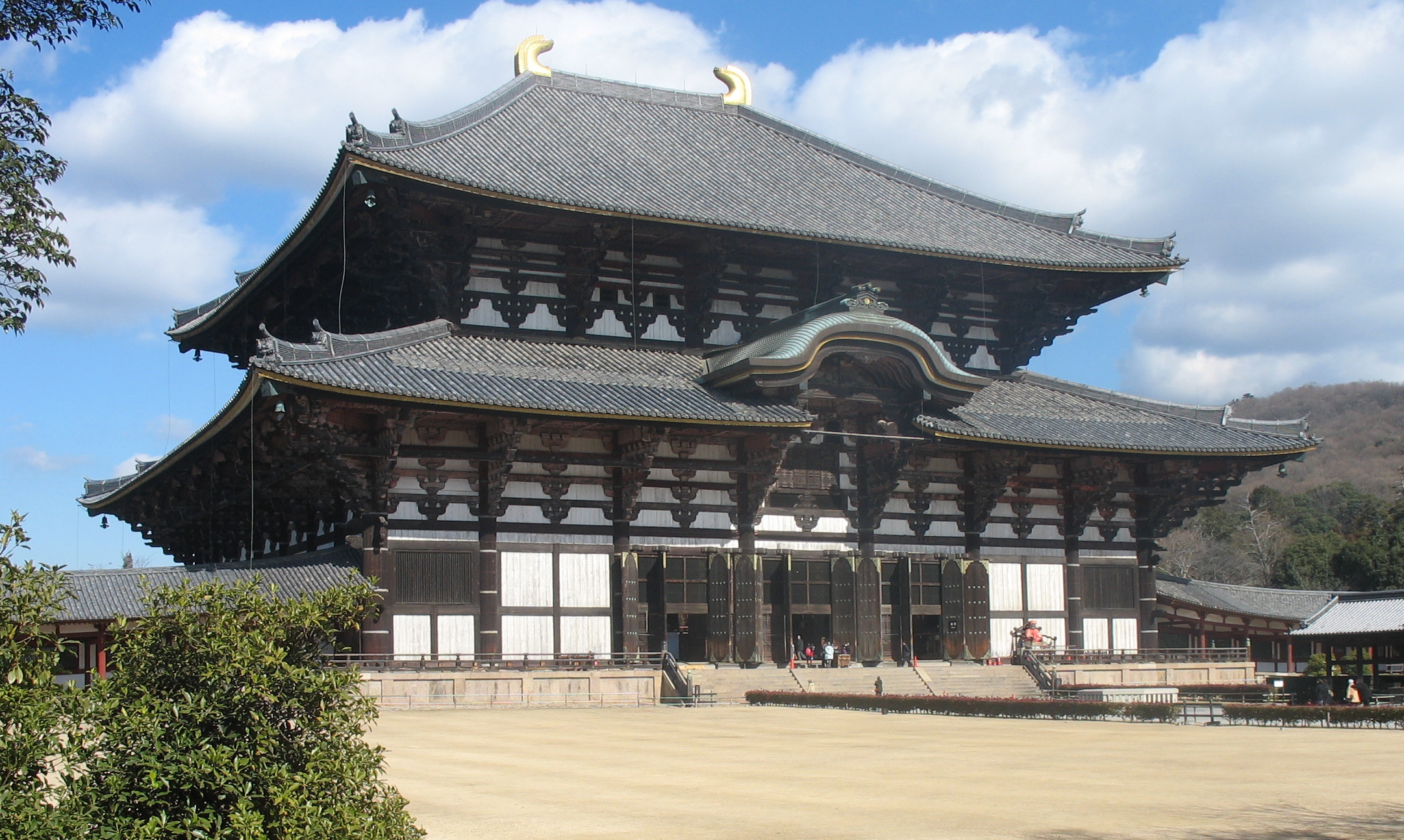
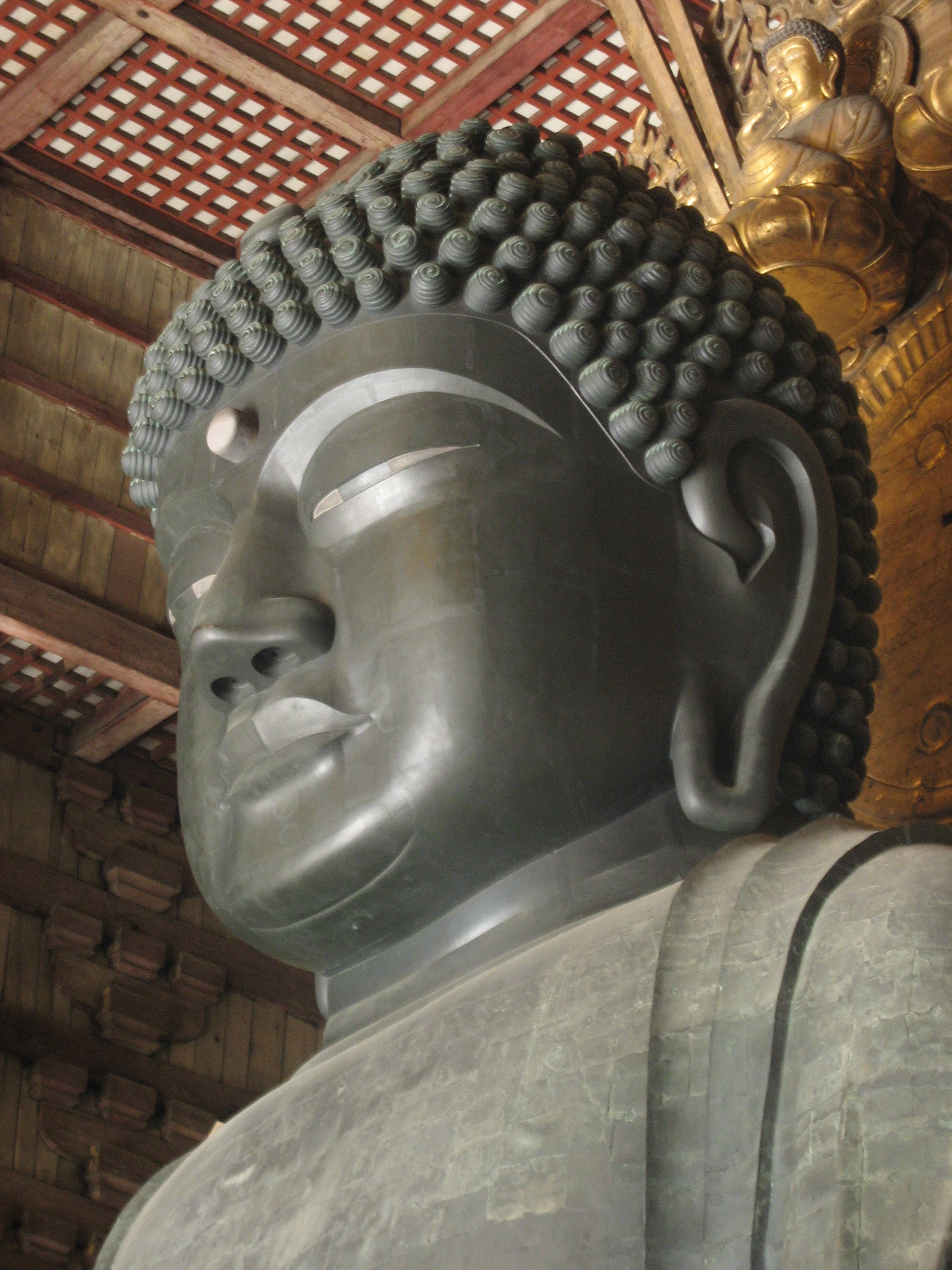
This afternoon, our return to Osaka overlapped with our previous visit for the first time when we went to Todai-Ji temple in Nara. After walking amongst some of the thousands of tame deer that inhabit the park surrounding the temple, we entered Daibutsu-den Hall, the largest wooden building in the world. The Daibutsu (Great Buddha) housed within is one of the largest bronze figures in the world, cast in 746 AD. Standing just over 16 m high, it’s made of 437 tonnes of bronze and 130 kg of gold. It’s impossible to really capture the size in a photo but to give you an idea, there’s a wooden pillar in the temple with a hole through it that is the same size as one of the Daibutsu’s nostrils. Today we watched a grown man squeeze through it!


Daibutsu-den Hall

Deja vu

We’re on our way to Japan again! Tonight we’re snuggled into the same hotel that we stayed in three years ago the night before our year long adventure began. This time, though, there’s wireless internet in our room so I don’t have to hang out in the lobby and wait for my turn to use the one public computer!

Tomorrow will be a very long day. We have a wake up call scheduled for 6:15 a.m. and the airport shuttle picks us up at 7:25. Chances are we’ll run into my sister and her oldest son at the airport. Believe it or not, they’re flying to Vancouver at exactly the same time as we are but on a different plane and different airline! When we reserved our flights, neither of us had any idea that the other was doing the same!

We have a 3 hour layover in Vancouver so our daughter-in-law, Robin, and grandson, Sam, are meeting us at the airport for lunch! Then it’s onto another plane for the ten and a half hour flight to Tokyo. By the time we touch down, we’ll have been awake for over 20 hours unless we manage to get some sleep on the plane which I don’t usually do. Unlike last time when we had to find our way by train, however, we’re being picked up at the airport this time. Thank you, Shelley! You’re such a blessing!

Our travels won’t be over when we arrive in Tokyo though. After spending the night with Pastors Steve and Shelley in the house that Richard helped build (more about that in a later post), we’ll head to the other Tokyo airport for the short domestic flight to Osaka where we’ll be spending a few days with Steve’s brother, Joel, and his family. They were part of Hope Church while we were there but shortly after we returned to Canada, they moved to Osaka to plant a church there.

Once again, I hope to use the blog to share our adventures with friends, family and anyone else who’s interested so I hope you’ll follow along! For now though, I’m tired just thinking about what tomorrow holds so I’d better get some shut eye!

Going back or going home?

When we went to Japan to teach English for a year, I didn’t give much thought to the fact that that would be long enough to establish some very meaningful relationships. At that point, even though we’d visited once before, to us Japan was still a mysterious country with a long history and a fascinating culture to be explored.

Now, as we prepare for a return visit, it’s all about the people! It’s about the friends that we made, the church family that we became  so much a part of and the two little boys who call us Grandma and Grandpa.

Sure there are places that we look forward to seeing again and some that we haven’t been to yet. Since we won’t be working this time, we’ll definitely have time to do some more exploring and to soak in a little more of the culture but those are no longer our main reasons for going.

Canada is still our home and probably always will be but as I look forward to going back, I’m surprised to find that it feels a lot like going home!

Bridges of Madison County

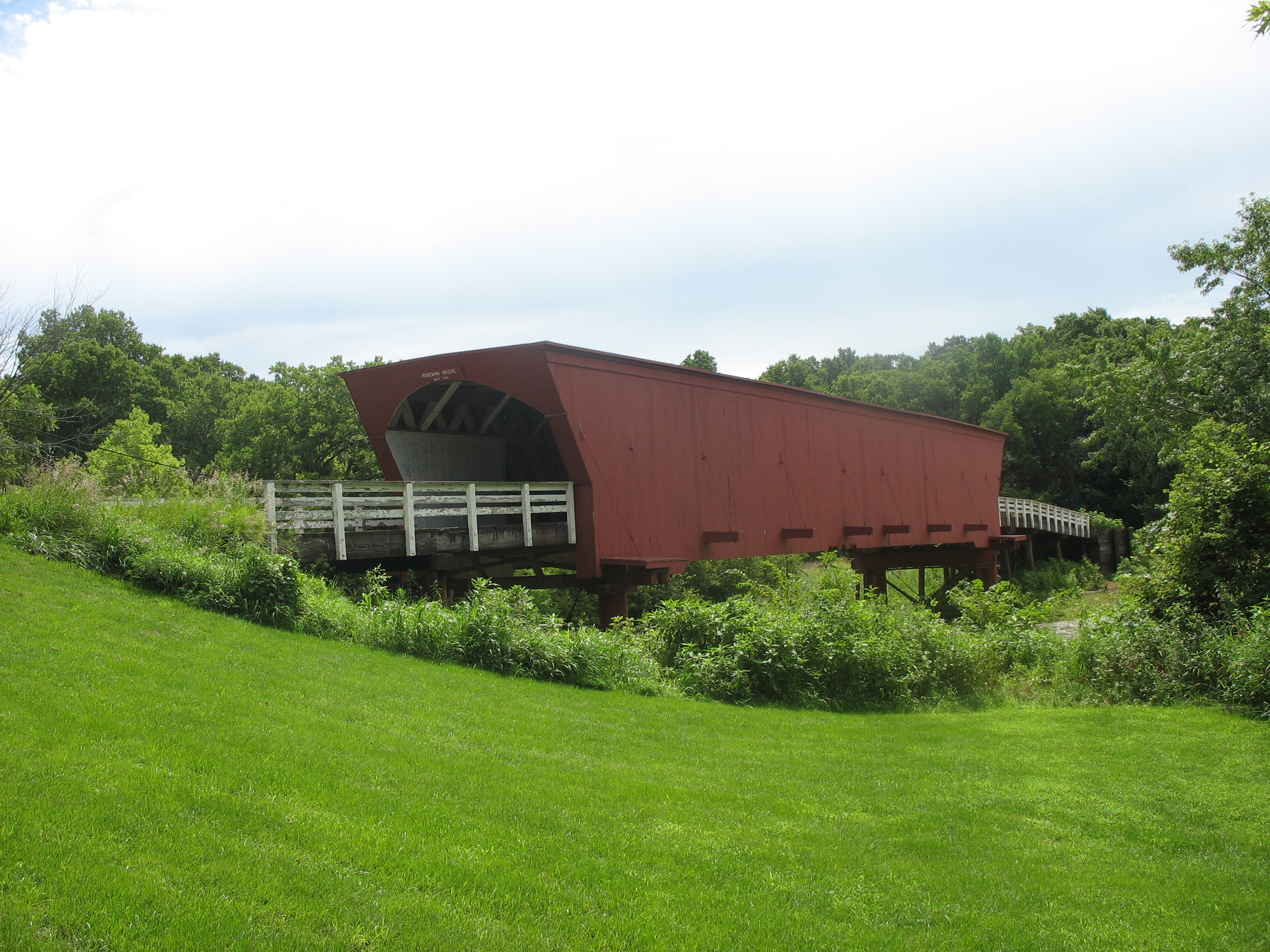
Roseman Bridge

One of my most read blog entries is the one I wrote on June 17, 2009 after visiting the covered bridges of King’s County, New Brunswick. In it I mentioned my favourite novel, The Bridges of Madison County. Hundreds of people have found that post using search terms like Robert Kincaid photographer or Robert Kincaid National Geographic. I know exactly what they’re looking for. The Bridges of Madison County is the story of photographer, Robert Kincaid, on assignment for National Geographic taking photos of the covered bridges of Madison County, Iowa and farm wife, Francesca, who meet when he stops to ask for directions. It is so beautiful and so believable that author Robert James Waller’s readers can’t help but wonder whether or not the characters are real and the story true.

Yesterday, I fulfilled a dream. We drove the back roads of Madison County, Iowa and visited the covered bridges made famous by the novel and the movie that followed. I stood on Roseman Bridge and touched the spot where Francesca (Meryl Streep) pinned the note inviting Robert (Clint Eastwood) to come for dinner “anytime the white moths fly”. Some people visit Winterset, Iowa because it was the birthplace of John Wayne but I was there to walk the streets that Francesca walked!

Meeting Myrna

We left Cape Breton yesterday morning and arrived in the Mahone Bay area by mid afternoon.  Myrna, the penpal that I inherited following the death of my mother-in-law almost 15 years ago, and her husband, Ronnie, met us in town. What a wonderful moment that was!  Before leading us to the campground, they took us to Tim Horton’s.  Myrna says she never goes into town without stopping for an ice capp and Ronnie loves coffee as much as Richard does.  On the way to Tim Horton’s, they had country music playing on the radio.  Richard mentioned that we enjoy listening to country and that led to an immediate invitation for an evening of entertainment!  They spend every Tuesday evening in a crowded little country hall listening to local musicians perform.  Last night was a lively evening with a 1950s theme.  Some of the performers were quite talented while others were just having a good time.  We enjoyed being introduced as Myrna’s “adopted” kids!

Our home for the next week is a lovely spot in a riverside campground a few miles from Ron and Myrna’s house.  We can listen to the water as we fall asleep! Unfortunately, the weather here isn’t much better than it was farther north. Everyone assures us that the rain and fog we’ve been experiencing so far is unusual for this time of year but the forecast for the next few days looks like more of the same.

We spent the morning catching up on laundry and made a quick trip to a local building supply store to pick up a length of one inch dowelling that makes a perfect support for the corner of the trailer and should help us make it home without having to stop for repairs.

Ronnie picked us up at 2 o’clock and we spent the remainder of the day in their home overlooking the bay at Indian Point.  We shared many memories and poured over family photos that we brought with us as well as ones that Myrna had been saving to show us.  She presented us with a lovely family photo of the two of them with their nine grown children.

Five of Ron and Myrna’s children live nearby and we had the privilege of meeting two of them this evening.  Son, Lindy, and his wife, Carol, who live just down the road, came over for dinner which began with a wonderful feed of steamed mussels.  There’s nothing quite like seafood fresh from the ocean!  From the window, we could see Lindy’s boat moored just offshore.  If the weather clears, he plans to take us out for a tour around the local islands.  Needless to say, I’m praying for a change in the weather! Daughter, Daphne, and her son, Joel, came over after dinner for a visit. We feel completely at home with these people and we all continue to marvel at a penpal relationship that has gone on for almost 70 years and has moved into a second generation!

Halong Bay

We awoke very early Christmas morning to the sound of roosters crowing. This might not have been unusual had we not been in the middle of Hanoi, a city of approximately 3.5 million people but we were quickly learning not to be surprised by anything!

After eating breakfast at our hotel, we were picked up by a 14 passenger van for our trip to beautiful Halong Bay. The trip took longer than we expected but it gave us an opportunity to see more of the countryside as well as many small img_3116towns along the way. We also stopped at a very large souvenir shop that sold local pottery and a wide variety of other handicrafts. At one end of the building, a workshop had been set up where embroidery pictures were being handmade. This was a work project for disadvantaged people, many of them quite young.
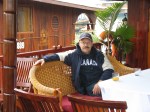
img_3125We arrived at the busy Halong Bay tourist wharf and boarded our junk around noon. As this was our Christmas gift to each other, we had booked the deluxe tour. After a welcome drink, we settled into our small but comfortable cabin then made our way to the dining room for the first of the four fabulous meals that we’d be served aboard. Though the food was incredible, some of us jumped up several times to rush out on deck and take photographs of the amazing sights that surrounded us.

img_3130 img_3141 img_3147

img_3151 img_3201

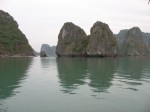
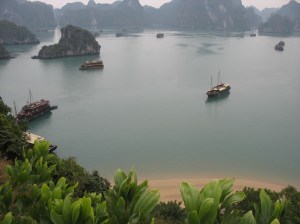
More than 3000 rocky islands rise from the waters of Halong Bay which is both a UNESCO world heritage site and one of Vietnam’s natural marvels. At about 3 o’clock, we docked at one of these unusually shaped limestone formations and climbed up well over 100 steps to the mouth of a massive and fascinating cave which is made up of three enormous caverns complete with stalagmites and stalactites. The cave has been well developed in recent years with lights and a pathway so that it can be safely enjoyed by the many tourists that pass through it. Apparently there are countless other caves throughout the bay area but entrance to most of them is forbidden in order to protect them from damage.

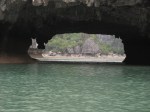
Sea kayaking was one of the options that was available to us when we booked our tour but Richard and I were the only passengers on board our junk who chose to take advantage of this. After exploring the cave, the other passengers boarded the junk again while we and our guide set off by kayak. We met up img_3159with them just outside a fabulous lagoon with just one entrance, a tunnel through the rock. As we kayaked through the tunnel, we sang Silent Night and listened to our voices echoing off the rock walls around us. We enjoyed a peaceful paddle around the lagoon while our fellow passengers boarded a small boat and came in for a quick look around then we all returned to the junk which was now anchored for the night. As the sun set over the bay, we relaxed on board until supper, another wonderful feast, was served by candlelight. The water was dead calm and the lights of several other junks reflected off it beautifully.
We shared the junk with fifteen other passengers, mainly French, including two families with children. Our Vietnamese guide, however, spoke fairly good English. He seemed to take quite a liking to us and as we visited that evening, he willingly shared his concerns about the corruption of the Vietnamese government and the plight of his people. We learned that in his youth he tried to escape Vietnam as one of the boat people but after reaching Hong Kong, was sent back and endured many years of regular interrogation by the police. He talked of how difficult it was to decide to bring children into such a world. He now has two, aged 8 and 10. What impressed us most was the fact that this young man constantly had a smile on his face and whistled and sang as he paddled his kayak. We saw this repeatedly throughout our trip; people who have so little and who truly don’t know what their future holds living for the moment and doing it joyfully.

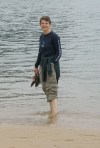
Following a good sleep and an early breakfast, we set off again by kayak rendezvousing with the junk and our fellow passengers at a sandy beach on one of the islands for a climb to the top where we were able to enjoy spectacular views of the bay. North Vietnam is a bit too chilly for swimming at this time of year but I did go wading before climbing back aboard the junk!
img_3171 img_3187_1

After an early lunch, we arrived back at the wharf, transferred to another van and headed back to Hanoi. That evening we attended a performance at the Water Puppetry Theatre. This unique art form originated in the rice paddies of North Vietnam more than 1000 years ago. The large wooden puppets are manipulated by puppeteers who are themselves standing in water but hidden from view behind a curtain. The performances are accompanied by music played on traditional instruments. After the performance, we stopped at a nearby KFC (the only North American fast food chain that we saw in Vietnam) for a snack then took a cyclo, a bicyle powered rickshaw, back to our hotel.
Re-entry permit

Today I went to the closest immigration office, which is located in the nearby city of Chiba, to apply for and receive a re-entry permit so that I can leave Japan on vacation. This is extremely important because if I left the country without one, my work visa would be automatically canceled and I’d be unable to return! Richard will be making a similar trek on one of his upcoming days off.

There are two types of re-entry permits – single or multiple. A single allows you to leave the country once and costs 3000 yen (approximately $30) while a multiple allows any number of trips and costs 6000 yen so anyone who is reasonably sure that they’ll leave at least twice during their stay is advised to apply for a multiple. It also saves making a second rather boring trip to the immigration office.

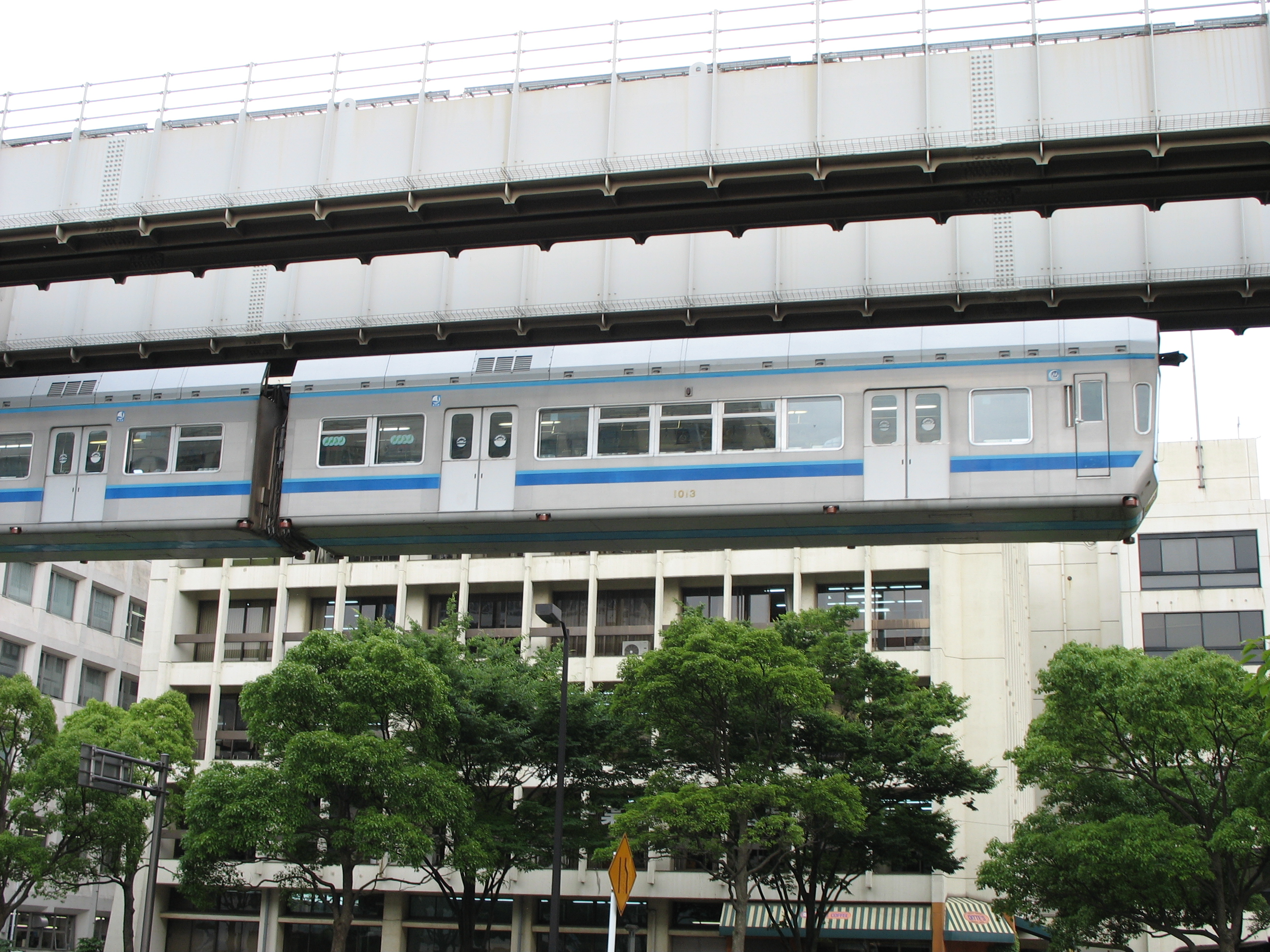
By far the most interesting part of the trip was a short ride on the Chiba city monorail. Suspended from an overhead track, it winds its way above the city traffic, in some places several stories from the ground.

The actual application procedure was relatively simple. First, I had to go to a post office and purchase a 6000 yen revenue stamp which looks like a postage stamp and is affixed to a payment form that accompanies the re-entry permit application. There’s a post office in the basement of the building where the immigration office is located. I decided to go there instead of our local one because I was pretty sure they’d be more accustomed to dealing with foreigners and would more easily understand what I was looking for. Once I had the revenue stamp and had filled out the application form, I simply had to take a number, wait my turn and present them along with my passport and my alien registration card. The waiting room was definitely a multicultural gathering place with some people looking quite stressed and others simply bored. Once I’d waited half an hour or so, processing the application and affixing the permit to my passport took only a few minutes.

So, why do we need the re-entry permits? We’re planning to spend our nine day summer vacation in South Korea. We fly to Seoul on August 9th. After three days and four nights there, we’ll travel by train to Busan and fly back to Japan from there on August 17th. We also plan to leave Japan a second time for our Christmas/winter vacation. Those plans are pretty sketchy at this point but we’re thinking about Cambodia, Thailand and possibly Vietnam.