Yad Veshem

I think a person could easily spend a whole day in Jerusalem’s Yad Veshem Holocaust History Museum, Israel’s national memorial to the victims and the heroes of that horrible time in history, and not have time to take in every detail. We had an hour and a half! While some of us would probably have liked longer, I don’t know how much more we could have handled. After awhile, I think the horror would have been too much.

From beginning to end, the museum tells the story of those terrible years from a uniquely Jewish perspective. As visitors move from one gallery to the next, the displays, filled with artifacts, documents, survivor testimonies, diaries, letters, personal possessions and works of art, emphasize the experiences of individual victims. Beginning with Nazi Germany and its anti-Jewish policies prior to the outbreak of World War II and carrying through to post-war days when survivors sought to return to some sort of normal life again, it is a dramatic reminder of man’s inhumanity to man.

The circular Hall of Names at Yad Vashem is the Jewish people’s memorial to each and every Jew who perished in the Holocaust, a place where they may be commemorated for generations to come. Shelves around the outer edge of the cavernous hall hold the Pages of Testimony containing short biographies of each Holocaust victim. Over two million Pages are stored in the repository and there is room for six million in all, the number of men, women and children who were murdered by the Nazis and their accomplices.

Photo taking is not allowed inside the galleries, but I will seek to share a few of my strongest impressions:

  • Reading some of the details and quotations expressing anti-Jewish sentiment from the years prior to the Holocaust was especially disturbing because they sounded so familiar, so reminiscent of anti-Muslim and anti-refugee sentiments that we’ve been hearing in recent days. Is our world not ripe for something this evil to happen again?
  • Learning that at least one ship full of Jewish refugees headed to Cuba was turned away angered me. Refused refuge by both Canada and the US, it was forced to return to Europe. While some passengers were allowed to stay in Britain, others were forced to return to the mainland. I’ve seldom felt ashamed to be Canadian, but in the moment when I read that, I did.
  • Being reminded that in a situation like the Holocaust, everyone is involved either as victim, perpetrator, hero or part of the apathetic masses who fail to get involved or who follow corrupt leaders out of fear, I had to ask myself, which category I would fall into. Would I have the courage to stand by my convictions against such forces of evil?
  • Watching numerous video clips of survivors bravely telling their stories had a powerful impact on me. How thankful I am that these recordings were made. As the number of victims rapidly dwindles due to the passage of time, their stories will continue to be heard.

Our guide, Shimon, didn’t go into the museum with us. We assumed that he had probably been many times before, but he told us afterward that he has never been inside. He doesn’t need a museum to remind him of the effects of the Holocaust. Leaving their families behind, his parents came to Israel from eastern Europe as teenagers prior to World War II. It wasn’t until after the war that they learned that their entire families had perished. Shimon grew up with no extended family; no grandparents, aunts, uncles or cousins. Apparently this wasn’t uncommon for his generation in Israel. He also told us the story of his father-in-law who lost his first wife and their two children in the Holocaust, a secret that he told no one until moments before his death.

Outside the museum is the Garden of the Righteous. Trees, a symbol of the renewal of life, were planted here in honour of those non-Jews who risked their lives to save Jews during the war.

Exploring ancient Jerusalem

Are you tired of reading about archaeological ruins yet? Israel is truly an archeologist’s dream and Jerusalem is no exception. I must admit that by the second last day of our tour, I was beginning to experience information overload. That, combined with the fact that we were hurrying to stay ahead of a huge group of Taiwanese tourists when we visited the City of David, meant that I probably missed a few things, but there are some that stand out vividly in my memory. Located beneath the Arab neighbourhood of Wadi Hilweh and below the southern walls of Old Jerusalem, the City of David is the archaeological site of ancient Jerusalem of the pre-Babylonian exile era.

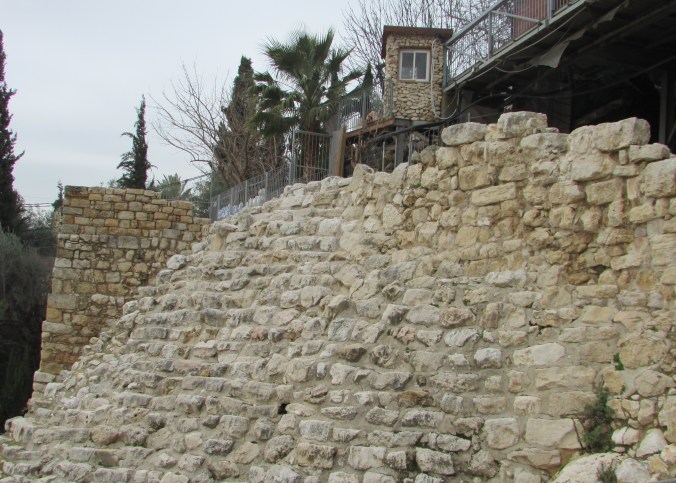
What stood out to me most was a section of wall from three different eras!

IMG_0989 - Version 2

Originally built by the Jebusites, a Canaanite tribe who built and inhabited Jerusalem prior to its conquest by King David, the tower to the left was added in David’s time. What interested me most was the upper right hand section of the wall where the stones are of slightly different size and colour. This is a section of the wall that was repaired under the direction of Nehemiah after the Jews returned from exile in Babylon. (Nehemiah 2-6)

Our local church here in Sedgewick is in the middle of a three year rebuilding project of our own. Over the years, we’d gradually let the church building and parsonage slip into disrepair. Our pastor used the story from Nehemiah to introduce the project and the accompanying need for extra funds to the congregation, so we chose to call it our Nehemiah Project. It gave me shivers to stand there and see with my own eyes a small portion of the original Nehemiah project!

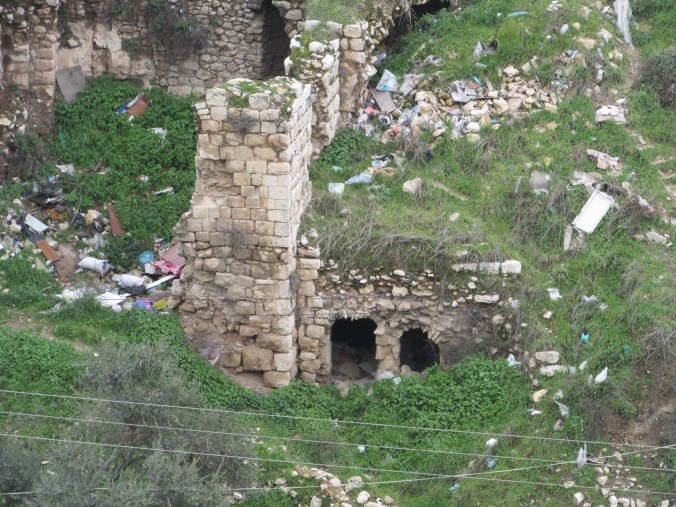
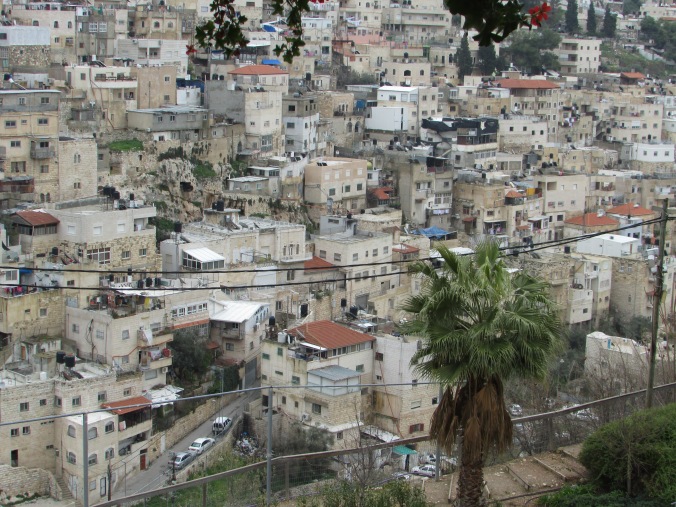
Looking across the valley to the bottom of the hill below the Arab village, we could see the entrances to ancient Jewish tombs with garbage scattered all around. It’s very easy to distinguish between Arab and Jewish communities in Israel. Jewish neighbourhoods and settlements are clean, orderly and prosperous looking while Arab ones are shabby and unkempt.

IMG_1000

Before leaving the City of David, we entered Warren’s Shaft which enabled the ancient Canaanite residents to draw fresh water from the Gihon Spring without leaving the city. Hezekiah’s Tunnel was later built under the direction of King Hezekiah to bring fresh water from the spring into Jerusalem. (2 Kings 20:20)

While we toured the City of David, we could hear the Arabs shouting at us, but since we couldn’t understand what they were saying, we paid them no mind. When we exited the water shaft, we had only a few hundred metres to go down a narrow street to what remains of the Pool of Siloam. Some tour groups were using shuttle vans for fear of being stoned, but we walked the distance briskly without any incident.

IMG_0986IMG_1024

It was at the Pool of Siloam that Jesus healed a blind man by putting mud on his eyes and telling him to wash in the pool. (John 9:1-12) Only a portion of it has been excavated. The remainder is under property owned by a Palestinian family who refuse to relinquish it.

IMG_1029

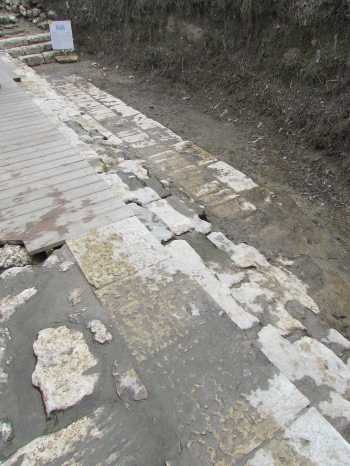
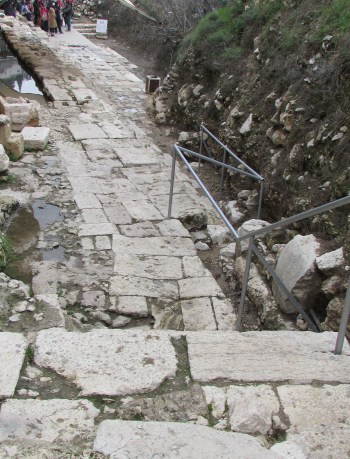
From the pool, we walked up another section of the Herodian road that we’d been on in the Western Wall tunnels the evening before, again walking on stones that our Lord undoubtably walked upon. This was the route used in His day to ascend from the Pool of Siloam to the Temple Mount.

IMG_1034 - Version 2

Next we made our way through the ancient city’s recently excavated central drainage tunnel which connects the west side of the Temple Mount to the Pool of Siloam area. Traversing the lengthy tunnel was definitely a “team building” experience as each of us called back to the ones behind us warning of slippery spots and low ceilings!

After further examining portions of the Western Wall, we had hoped to go to the southern steps, an enormous flight of stairs leading up to the Southern Wall, but the Muslim mosque above the area was in use and we couldn’t enter. Apparently, there have been incidents of people being stoned from above, so the area is closed when the mosque is in use!


The Western Wall

One of the questions that I’ve been asked most often since we returned from Israel is “Did you go to the Wailing Wall?” Yes, we did and it was quite an adventure, but before I tell that story, there are some misconceptions to clear up. First of all, while in Israel, we never heard it referred to as the “Wailing” Wall. That term isn’t used by the Jews. It is the Western Wall. Where the term, Wailing Wall, came from is uncertain, but it probably referred to the weeping of the Jews over the destruction of their temple.

I had always understood that the so-called Wailing Wall was the only remaining piece of the ancient temple and for that reason it had been set aside as a holy place of prayer. Not so! It is actually a relatively small segment of a much longer retaining wall that was originally built as part of the expansion of the second Jewish temple by Herod the Great. Although other parts of the retaining walls remain, this particular segment is closest to the location of the Holy of Holies, the inner sanctuary of the temple where God promised that His presence would reside. For that reason, it is considered by the Jews to be the holiest place to pray. (Leviticus 16:2)

While the visible portion of the Western Wall is approximately 60 metres in length, the majority of it has spent centuries hidden underground. It is only in recent years that excavation of the Western Wall Tunnels has allowed access to a further 485 metres extending beneath the Old City of Jerusalem. Entrance to the tunnels is limited to tour groups and must be booked months in advance.

This is where our story begins. Our group had a 5:45 pm appointment on January 28th. We left our hotel with plenty of time to spare, but as we neared our destination we found ourselves caught in traffic that was completely backed up along a narrow, crowded street. It wasn’t going anywhere! As minutes ticked by, it was obvious that we would miss our appointment if we didn’t do something, but what do you do with a tour bus caught in such a jam? Our trusty guide, Shimon, jumped off the bus and gave directions while Jimmy, our amazing driver, turned the bus around in a space that I probably couldn’t have turned our SUV! When we finally arrived by an alternate route, we discovered why the traffic was so heavy. The entrance plaza was filled with hundreds of people there for an Israeli Defense Forces swearing in ceremony during which new recruits receive their weapon and a Jewish Bible.

During our exploration of the tunnels we saw the biggest stone in the Western Wall. With a length of 13.6 metres, a height of 3 metres and an estimated width of between 3.5 and 4.5 metres, it is estimated to weigh approximately 570 to 600 tons! How it was moved into place without the use of modern machinery is a mystery. We also walked a section of the Herodian road which ran alongside the Temple Mount, stepping on worn stones that our Saviour undoubtably walked upon.

IMG_0942 - Version 2

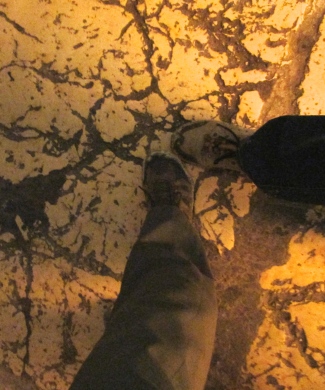
Our feet on the Herodian road

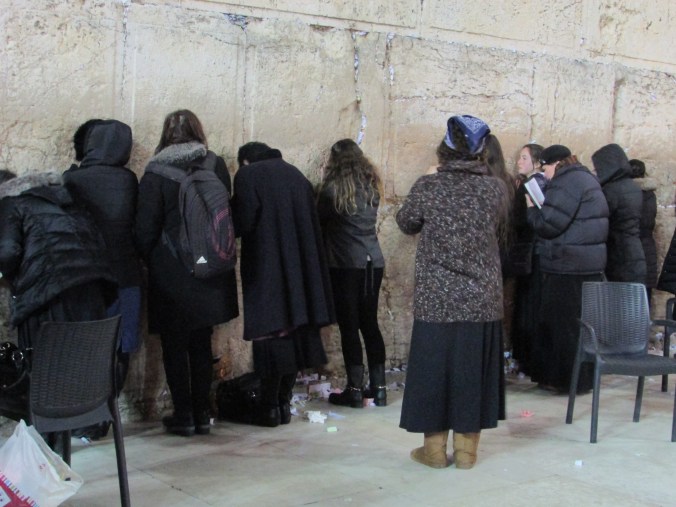
By the time we emerged from the tunnels, the swearing in ceremony was over and we wound our way through the jubilant crowd who were busy congratulating and taking pictures of their young soldiers. The segment of the wall designated for prayer is separated into a section for men and one for women. The seven women in our group formed a human chain as we made our way through the crowd so that we wouldn’t become separated from one another! We each spent a few minutes praying at the wall before rejoining the guys and heading back to our hotel.

IMG_0953

Women at the Western Wall

Some in our group said that they felt the presence of God in a special way at the wall. I don’t want to question anyone else’s experience, but personally, I didn’t feel any closer to Him there than I do in many other places. I am so thankful that we serve a God who is with us wherever we are and that we don’t need a temple to experience His presence!

Jesus said, “I tell you that one greater than the temple is here.”  Matthew 12:6

The mountain that moved

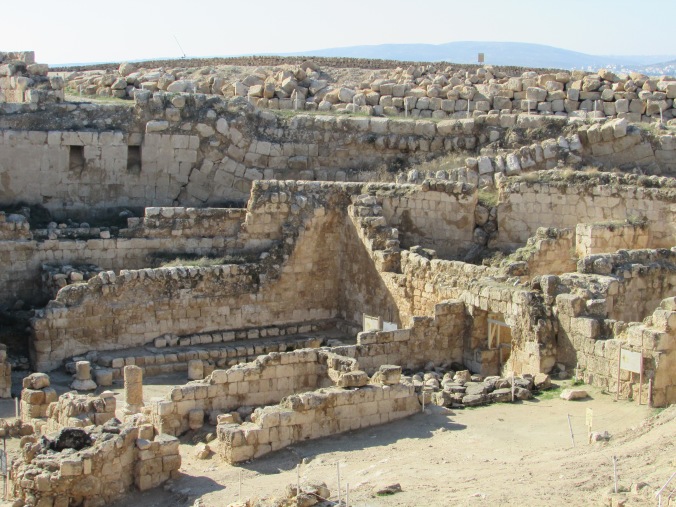
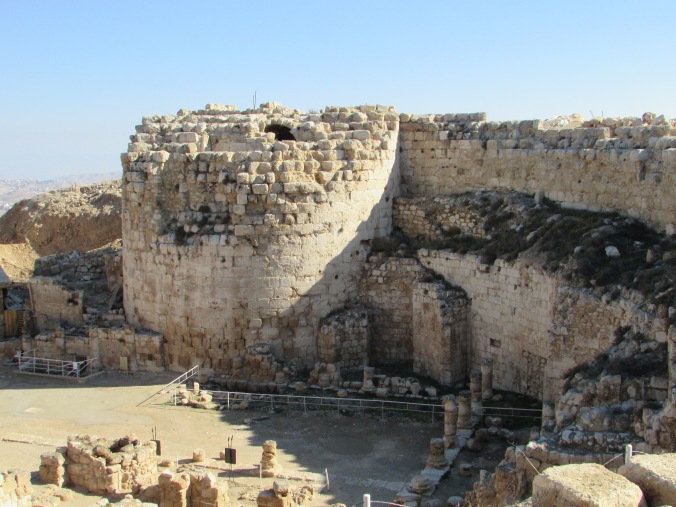
Our first morning in Jerusalem took us out of the city to the south to visit the site of yet another one of Herod the Great’s amazing construction projects. Like his seaport at Caesarea Martima where no natural port existed and his amazing mountaintop retreat at Masada, Herodium appeared to me to be a monument to the man’s ego! This was the same Herod who, frightened by the news of the birth of another king, ordered the massacre of every baby boy under the age of two in Bethlehem and its vicinity to protect his own throne. (Matthew 2:1-16)

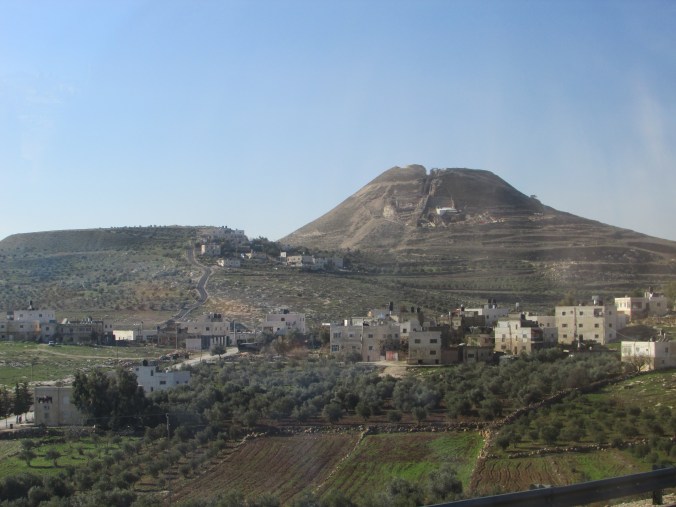
We tend to think of mountains as immovable, but not if you’re Herod the Great! He wanted a palace and fortress built on a hilltop with a view of Jerusalem. When he discovered that the city couldn’t be seen from the hill that he’d chosen, he simply had slave labour move it over!

IMG_0800

The mountain that moved!

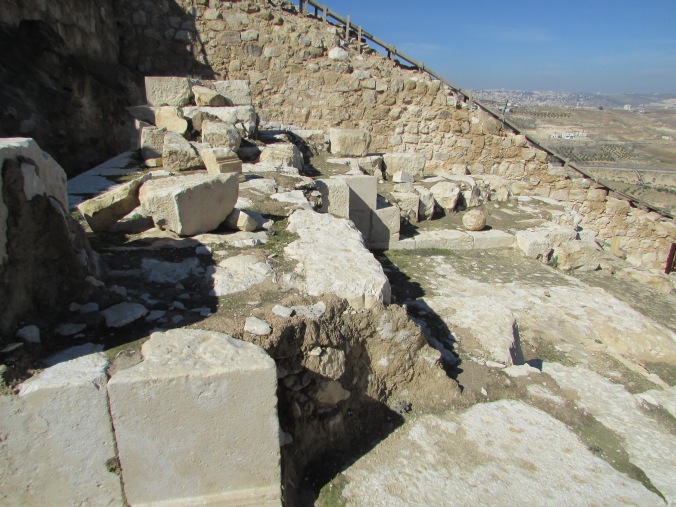
Herodium was thought to be one of Herod’s favourite palaces and it was here that he chose to be buried. Excavation of the site began in 1972 and has continued intermittently ever since. In 2007, lead archeologist, Ehud Netzer, found the remains of Herod’s tomb at a flattened site halfway up the hillside. Sadly, he fell to his death at the site in 2010.

IMG_0812

IMG_0824

IMG_0869

The site of Herod’s tomb

Herodium was conquered and destroyed by the Romans in 71 AD, but it was used as the headquarters of the Bar Kokhba revolt 60 years later. Inside the system that was originally built to collect and store water, supporting walls, additional passages and rooms were built to house the rebels.

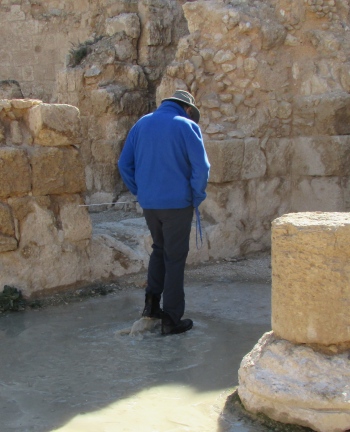
The hill was slick with gumbo mud that clung to our shoes like glue making them heavier with each step we took, but we climbed to the top, down into the underground chambers and around the hillside to the tomb location. It was a chilly morning and there was ice on the puddles. Perhaps the most fun of all was watching our guide, Shimon, who had never seen such a thing before, stomping around in them like a delighted child!

IMG_0833 - Version 2

Back in Jerusalem, we visited the Israel Museum to see an amazing scale model of the city and then the Shrine of Book Museum. In addition to actual fragments of the Dead Sea Scrolls that were discovered in caves along the northwest shore of the Dead Sea between 1947 and 1956, we also saw a replica of the Great Isaiah scroll. About 24 feet long and 11 inches high, it is the oldest complete copy of the Book of Isaiah that has ever been found. Being there brought back memories of one of my favourite professors at the University of Calgary in the early 1970s. Dr. Peter Craigie was a Dead Sea Scrolls scholar who authored 7 books and over 40 articles before his untimely death at the age of 47 as a result of a car accident in 1985. I never imagined that I would have the opportunity to lay my eyes on the scrolls that were his passion!

Bethlehem, birthplace of our King

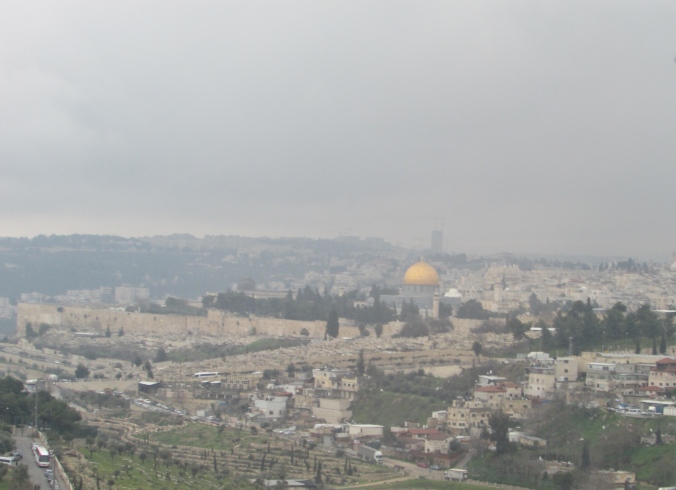
As the strains of John Starnes singing “Jerusalem: The Holy City” poured over the loudspeaker of our bus and the gleaming Dome of the Rock on the temple mount came into view, it was definitely a “Pinch me! Am I really in Jerusalem?” moment for most of us on our tour.

IMG_0719 - Version 2

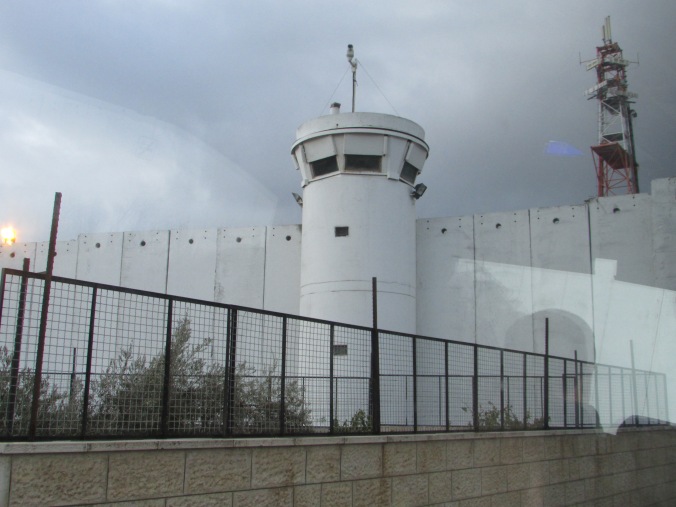
We didn’t stay long, however. At that point, we were actually just passing through the city on our way to Bethlehem, just 7 km away. Bethlehem is in Palestinian territory and Israelis are not usually allowed to pass through the checkpoint in the wall or “security barrier” that separates Jerusalem from the Palestinians. As a tour guide, however, Shimon has a special permit that allows him to take groups into Bethlehem. He accompanied us for lunch and then to a business run by a Christian family who make and sell beautiful olive wood carvings. There he stayed, however, passing us off to a delightful guide who resides in Bethlehem because he doesn’t feel comfortable or safe being out and about on the streets of that small city.

IMG_0794

The wall

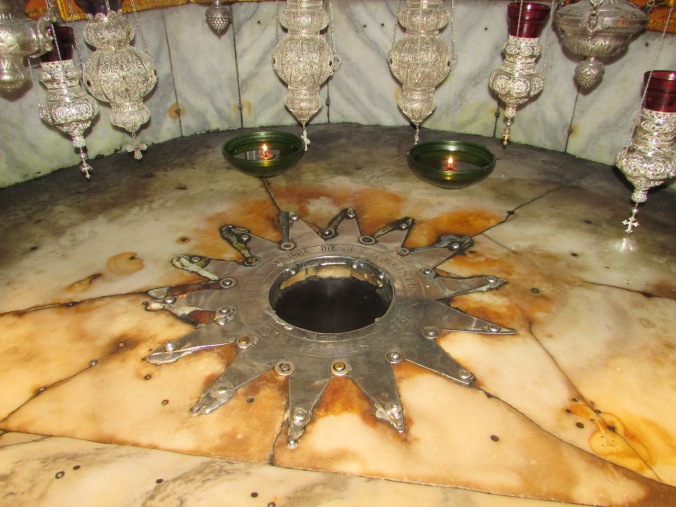
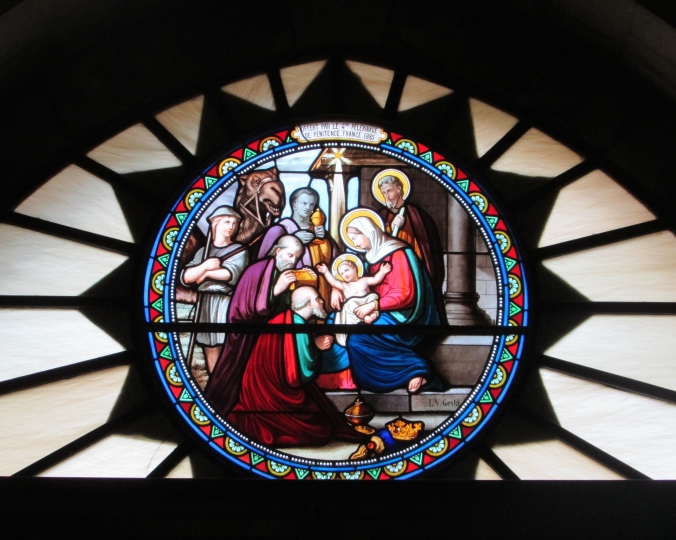
Our first stop was the Church of the Nativity, the supposed birthplace of Jesus. The church is administered jointly by the Greek Orthodox, Syriac Orthodox, Roman Catholic, and Armenian Apostolic churches. It consists of the main Basilica of the Nativity and the adjoining Church of St. Catharine. The Grotto of the Nativity, an underground cave located beneath the basilica, enshrines the site where Jesus is said to have been born. A large 14 pointed silver star set into the marble floor beneath an altar and surrounded by silver lamps and candles is said to mark the exact spot where Mary gave birth. A few feet away is the Grotto of the Manger, another shrine marking the spot where she apparently laid him in the manger.

IMG_0738

We went, we saw and we left. To be perfectly honest, it all seemed rather hokey to me and I found it somewhat disturbing to see other groups of pilgrims who appeared to be completely caught up in worshipping the place. I don’t mean to show disrespect for anyone else’s religious experience, but I do have to wonder how anyone can claim to know the “exact” spot where our Saviour was born in a humble animal shelter some 2000 years ago and, as I’ve said before, I don’t believe that there is any holy magic in the places where he was.

IMG_0758

From there, we descended to the Shepherd’s Fields, a park-like area commemorating the angel’s visit to the shepherds to announce the Messiah’s birth on that night so long ago as well as the fields of Boaz where Ruth the Moabitess gleaned. (Ruth 2:1-23) Notice that we descended to the shepherd’s fields. Again, the way I visualized things has been turned upside down! In my mind, I always pictured Bethlehem on lower ground and the shepherds tending their flocks on hillsides above town. In reality, communities throughout Israel are built on the tops of the hills. The shepherds and their sheep would actually have been on the hillsides below Bethlehem and they would have had to climb up to visit the newborn child. (Luke 2:8-17)

As we made our way back to Jerusalem to check into our hotel, I was reminded afresh how lucky we are to be Canadian. As we passed through the checkpoint, Shimon simply told the soldier on duty where we were from and we were sent on our way. Apparently, bus loads of Canadians and Americans pass through with ease while other nationalities are checked much more carefully. Vehicles driven by individuals are searched!

Masada

In North America, we talk about going up north and down south, but in Israel people go up to Jerusalem regardless of what direction they’re coming from. With an elevation change of almost 1200 metres between the Dead Sea and Jerusalem, we definitely went up to our final destination! On the way, we stopped at Masada, Herod the Great’s luxurious mountaintop palace and fortress which was declared a UNESCO World Heritage Site in 2001.

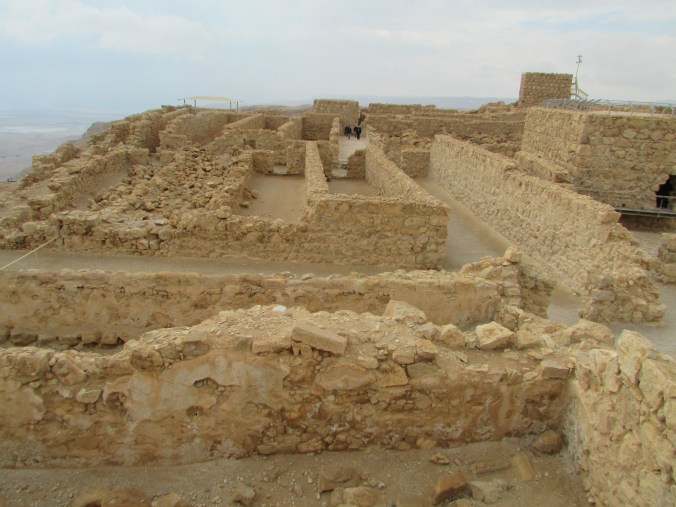
Stepping off the cable car that carried us to the top, I was amazed by the sheer magnitude of the place that overlooks the bleak Judean Desert. A sophisticated water system that collected and stored run-off water allowed this barren, isolated hilltop to be transformed into a lavish royal retreat.


IMG_0645

IMG_0694

IMG_0677

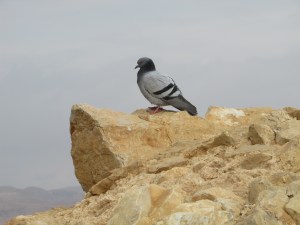
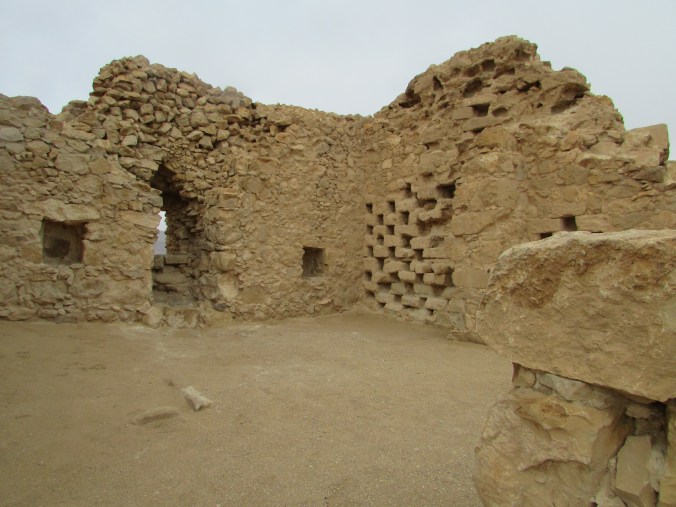
The niches in the wall in the following photo are part of the columbarium which housed hundreds of pigeons raised for their droppings which provided fertilizer for growing food.


IMG_0659

The synagogue on Masada is one of the oldest in Israel and is often used for Bar and Bat Mitzvah ceremonies today.

IMG_0673

Masada was also the location of the last stand of Jewish rebels against Rome in 73 AD. For three years following the destruction of the holy temple in Jerusalem in 70 AD, 960 men, women and children lived inside the walls and managed to keep the Romans off the mountain. Finally, however, the Romans decided to put an end to this last pocket of resistance. Fifteen long storerooms built by Herod were filled with food and other provisions, however, making it impossible to starve the rebels.

IMG_0680

When that didn’t work they built an enormous ramp and moved their war machines into place. Realizing that they could hold out no longer, the brave defenders chose death over capture and slavery. Under the leadership of Eleazar Ben-Yair, the men killed their wives and children. Lots were then drawn and ten men were chosen to execute the rest. At the end, one man killed the other nine and then took his own life. It is thought that this was probably Ben-Yair. This way, only one man was guilty of committing suicide which is forbidden by Jewish law. In a historic find during excavations on the mountain, potsherds were found bearing the names of the ten men.

IMG_0655

The siege ramp

The fortress affords spectacular views of the surrounding desert. In the following photo, notice to the left the outline of one of the eight Roman siege camps that surrounded Masada.

IMG_0654

The tragic story of Masada was the basis of an epic 1981 mini series. I’m glad that I didn’t see the Hollywood version before our visit to the site, but now I think I would like to.

The Dead Sea

When we were in Israel, the weather was very unusual! (I can hear those of you who were on the trip laughing and I’m sorry, Shimon, but I had to get that in there somewhere!) As we continued our journey toward the Dead Sea, the plan had been to travel straight south through the West Bank, but mudslides caused by recent rains had closed that highway. An optional route through the disputed Palestinian territory was considered, but it was deemed unsafe as tour buses like ours are often stoned along that road! Instead, we took a much longer route that skirted around the West Bank.

As we traveled south, we left the fertile valleys of northern Israel where we saw fruit orchards and green fields and entered the desert where very little grows. As we began our descent toward the Dead Sea, the lowest spot on the planet at 427 metres below sea level, it was reminiscent of driving down into the Drumheller Valley here in Alberta, but on a much grander scale. Completely barren except for the occasional acacia tree, it had a strange beauty of it’s own. Suddenly the fears and grumbling of the Israelites as they wandered for 40 years in the desert, took on a whole new meaning for me. Without God’s provision of water, quail and manna, survival would have been absolutely impossible! (Exodus 16:1-17:7)

As soon as we’d settled into our hotel, most of us headed down to the beach. There was no way that the 13ºC (55ºF) air temperature was going to keep us from floating in the Dead Sea! This was our once in a lifetime chance and nothing was going to stop us!

I knew that the Dead Sea was significantly saltier than the ocean, making it much easier to float in, but I had no idea that it was actually more than 8 times as salty! In fact, I think it would be impossible not to float in it! Or perhaps I should say, on it, as the buoyancy is so great that your body really does seem to lie on top of the water. All one has to do is lie back and your legs automatically rise to the surface. It actually takes effort to push them back down into the water to stand up! The high salinity makes the Dead Sea a harsh environment in which plants and animals cannot flourish, hence its name and the very bleak appearance of the seaside area.

Eventually the cold drove us back into the hotel where we spent well over an hour soaking in the heated indoor/outdoor pool that is filled with water from the sea. What a wonderful way to unwind after the intensity of the trip so far! Most of us stayed in the water until the salt began to make our skin tingle. Afterward, even the men commented on how awesome and smooth their skin felt!


Bet She’an and Harod’s Spring

After three nights at the Sea of Galilee, we bid it farewell and began our journey south toward the Dead Sea. Our first stop was Bet She’an, Israel’s largest archaeological dig. It was here that the bodies of King Saul and his sons were fastened to the wall after their deaths at the hands of the Philistines on nearby Mount Gilboa. (1 Samuel 31)

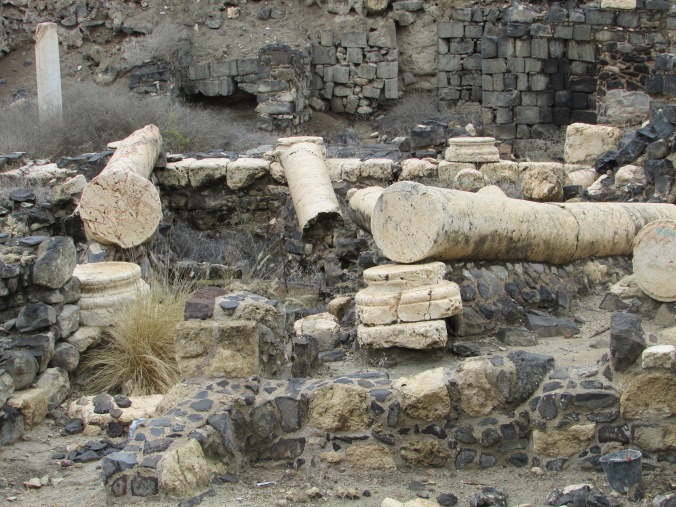
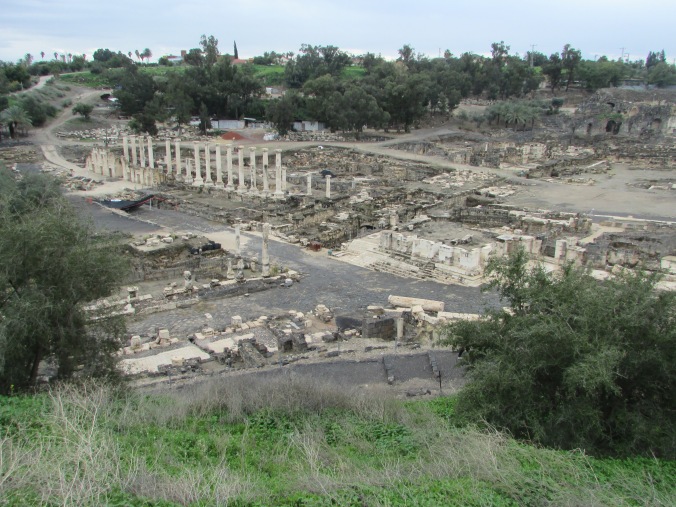
Archeologists are still excavating the ruins of the Roman era city of Jesus’ time that was destroyed by an earthquake in 740 AD. Strategically located at the junction of the Jordan River Valley and the Jezreel Valley, it was one of the ten cities of the Decapolis and would have been on the route that Jesus took whenever he travelled from Galilee to Jerusalem.

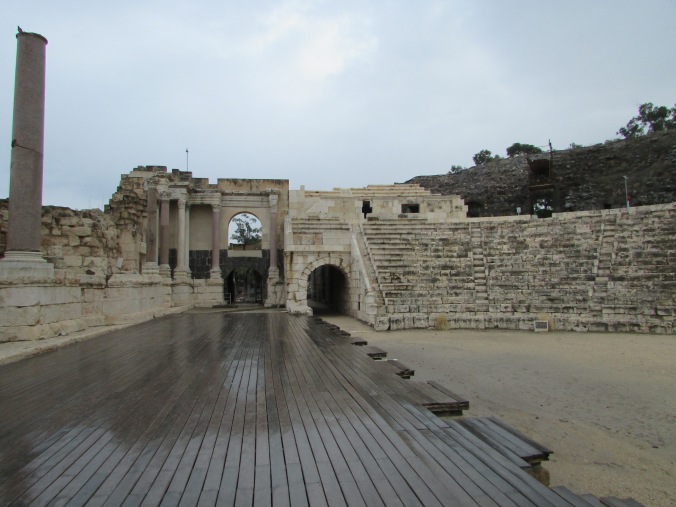
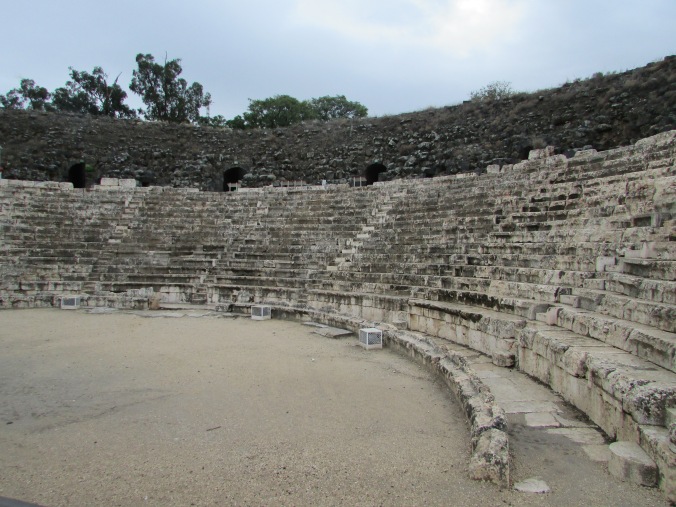
We started our tour at the impressive Roman theatre. The acoustics are so good that when one member of our group stood on stage and sang the rest of us could hear every word from far up in the bleachers.

IMG_0528

IMG_0529

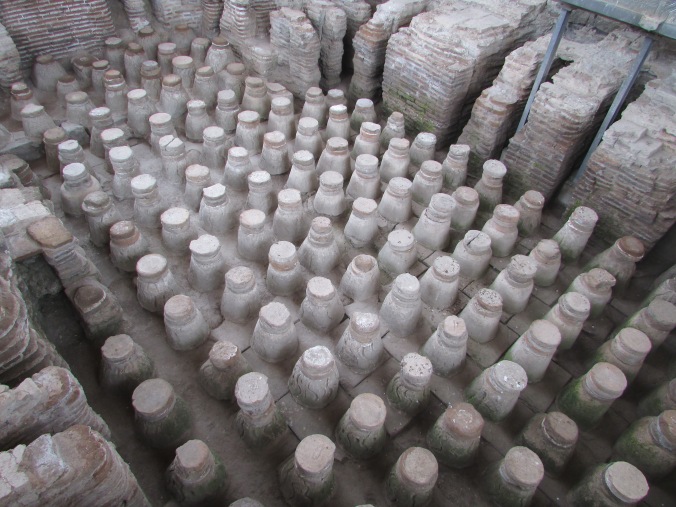
Next we moved on to the extensive bathhouse complex.

IMG_0541

The short pillars in the photo above held the floor of the bath. Hot air piped into the hollow space below the floor heated the water above. As our weather was damp and chilly, we all agreed that a soak in such a bath would have been welcome!

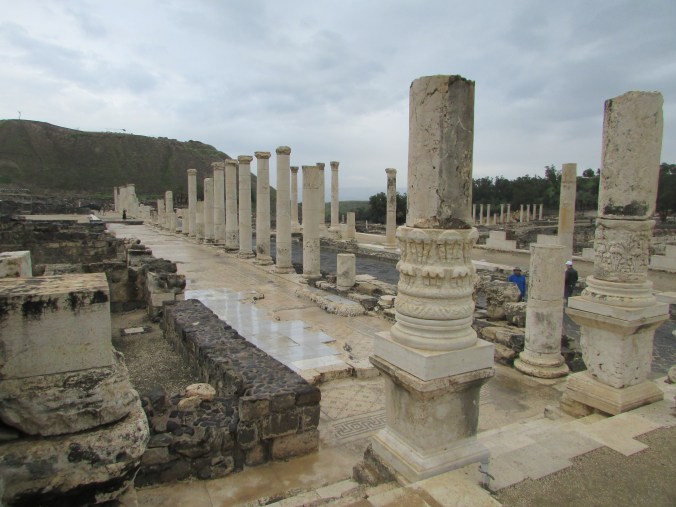
We continued our walk down the stone paved main street. In ancient days, its impressive pillars probably supported a covering over the road.

IMG_0542

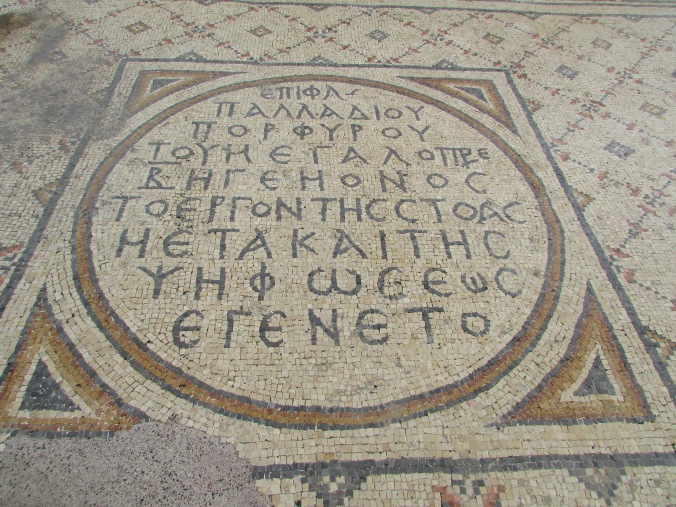
The mosaic pavement of the portico includes this Greek inscription which reads “In the time of Palladius, son of Porphyrus, the most magnificent governor, the work of the stoa together with the mosaic pavement was made.”

IMG_0547

IMG_0551

We appreciated the coolness of the day when we climbed the 163 steps to the top of the mound where we saw remains of the hilltop acropolis. From there, we had a spectacular view of the entire site. What was visible was only the downtown portion of the ancient city, however. Most of the residential areas are still under the ground.

IMG_0555

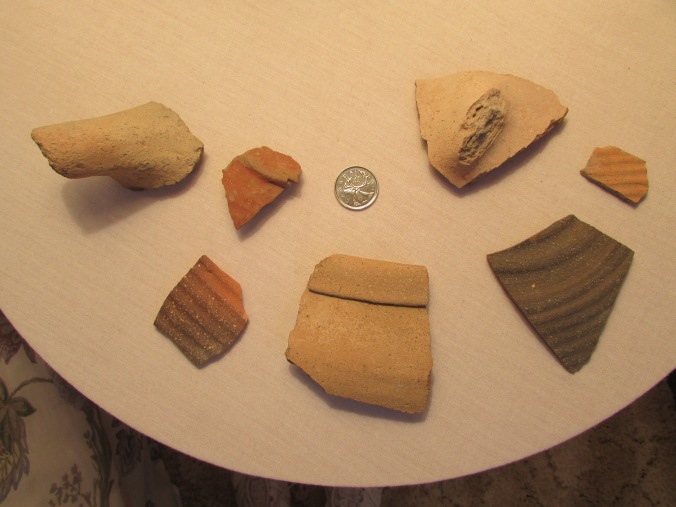
Everywhere we walked, the ground was strewn with tiny bits of pottery. On our way back down the hill, we discovered that recent rains had washed down hundreds of pieces. We immediately became amateur archeologists searching for treasure! Amazingly, we were allowed to take pieces home with us! There are simply so many of them that they are of little value or interest to those who seriously study the site.

IMG_1362

It still astonishes me that I can have in my possession a piece of someone’s kitchenware from a time when people still thought the world was flat! Who was that person? What did she carry in her container? Was she still alive when the earthquake destroyed her city?

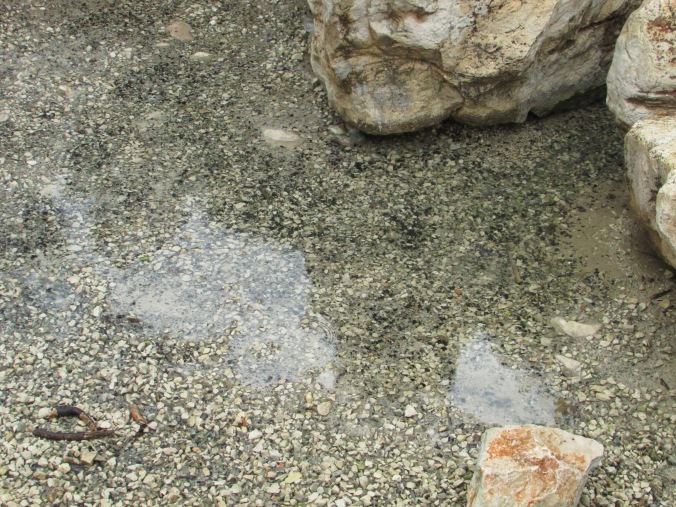
Leaving Bet She’an, we traveled next to Harod’s Spring where God instructed Gideon to reduce the size of his army from 32 000 to 300 and gave him victory over the Midianites. (Judges 7) When they were told to drink from the spring, 300 men lapped water with their hands to their mouths while the rest got down on their knees to drink. These were the ones that God told Gideon to take into battle with him. It was pointed out to us that those who used their hands to scoop up the water would have had their eyes forward, alert to their surroundings, while the others had their heads down. We, too, are admonished to be alert, on guard against Satan’s attacks. (1 Peter 5:8) In spite of recent rains, Harod’s Spring was almost dry, but with a bit of imagination, we could visualize what happened there.

IMG_0573


Tel Dan and Caesarea Philippi

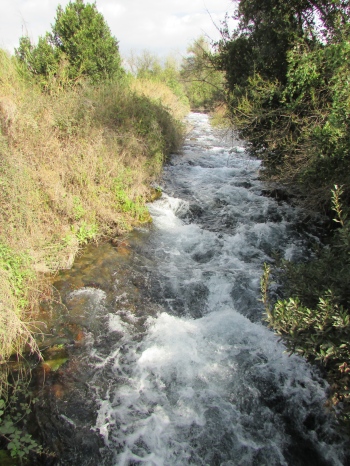
Tel Dan National Park in northern Israel is both a lush nature reserve and a fascinating archeological site. Unlike most of Israel, water is abundant there. It flows from underground springs with amazing force forming one of the main tributaries of the Jordan River.

IMG_0456

The area takes its name from the tribe of Dan who settled there during the 11th century BC after attacking the peaceful and unsuspecting people of the Canaanite city of Laish and burning it to the ground. (Judges 18) The Biblical history of this place goes all the way back to the book of Genesis! It was to here that Abraham and 318 trained men went in pursuit of those who had captured and carried off his nephew, Lot. (Genesis 14:11-16)

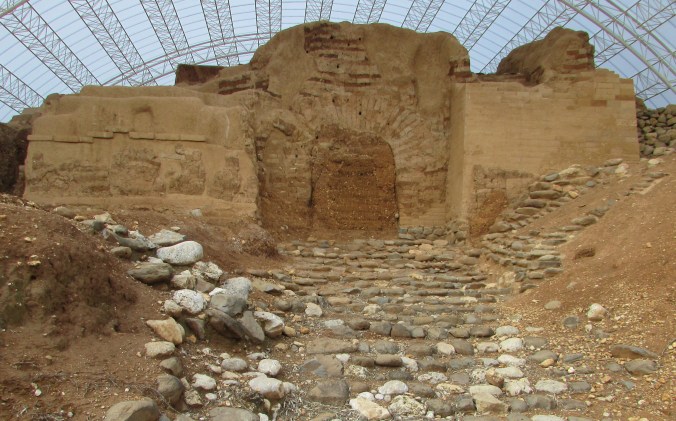
In 1979, the remains of a 7 metre tall gate constructed of sun-dried mud brick on a foundation of large basalt stones was unearthed. Now protected by an enormous canopy, it is the only one of its kind to have survived and is thought to date back to the days of Abraham, nearly 4000 years ago!

IMG_0492 - Version 2

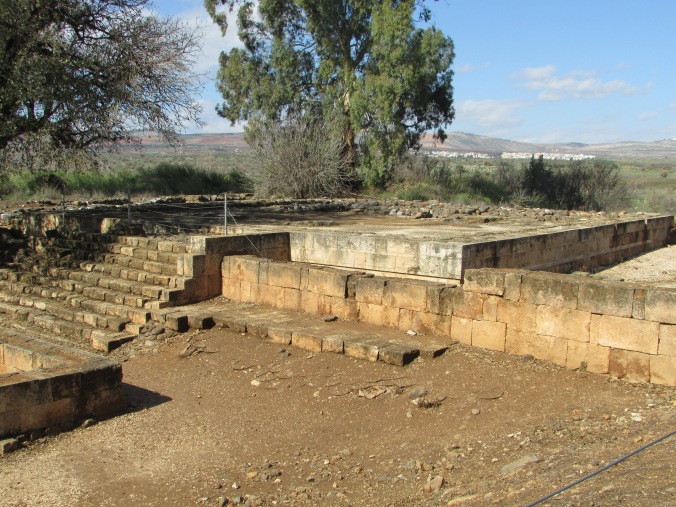
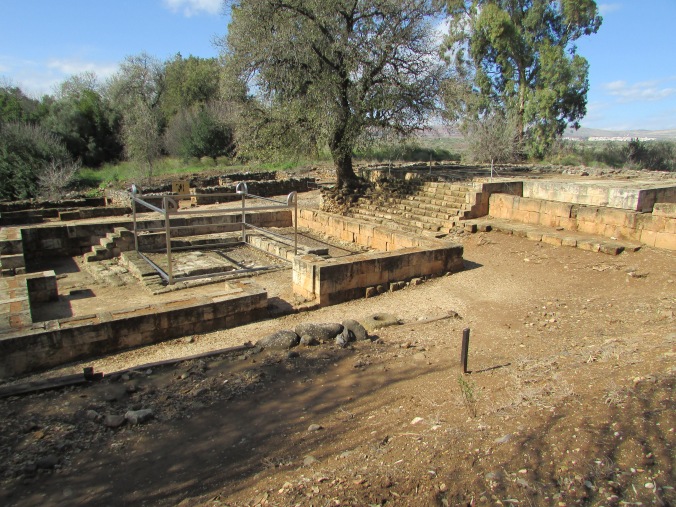
During several decades of excavation under the direction of Professor Avraham Biran of the Institute of Archaeology at Hebrew Union College in Jerusalem, many other significant remains dating back to kings Jeroboam, Ahab and Jeroboam II have been unearthed. Most impressive to me was the site constructed by Jeroboam to house one of the two golden calves that he set up as gods for his people as alternatives to going up to Jerusalem to worship. (1 Kings 12:26-30) I had often read of the “high places” where people of the Old Testament set up their idols, but I had always visualized them as hilltop shrines. In reality, Jeroboam’s high place was simply an elevated platform at the front of his place of worship. Archaeologists think that it was probably roofed.

IMG_0472

Jeroboam’s high place

IMG_0470

The metal frame in front of the high place indicates the size and shape of an altar that would have stood there.

IMG_0464

Probably used for the ritual cleansing of animals before they were sacrificed on the altar.

Another extremely significant find at Tel Dan was the David stone. Inscriptions on the broken slab provided the first historical evidence of the Bible’s King David, proving that he was a genuine historical figure.

From Tel Dan, we moved on to Caesarea Philippi, a historic site of New Testament significance. It was here that the apostle Peter first identified Jesus as Messiah and Christ declared, “On this rock, I will build my church and the gates of Hades will not overcome it.” (Matthew 16:18) It’s often thought that he was referring to Peter as the rock, especially since the name Peter means “rock”, but Peter’s given name was actually Simon meaning “He (God) has heard”. Once we saw the site, another interpretation made complete sense.

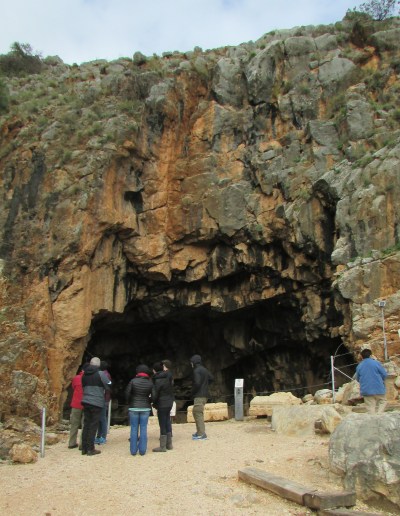
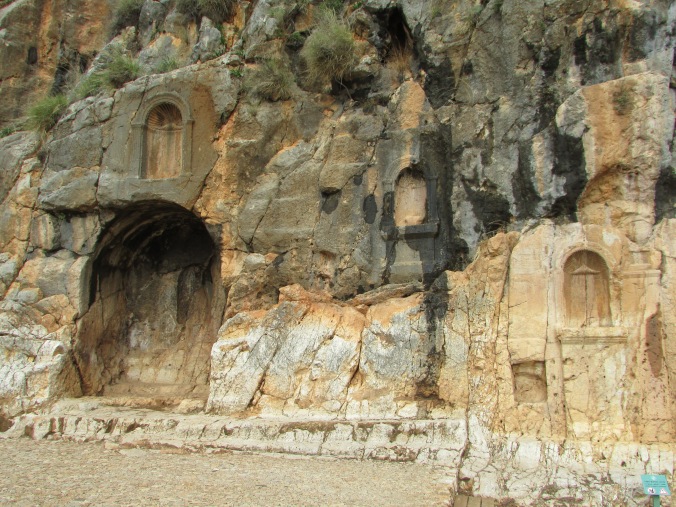
In Jesus’ time, Caesarea Philippi was dedicated to the worship of Pan; god of hunting, of shepherds and flocks, and of the mountain wilds. He was depicted as having the upper body of a man and the hindquarters, legs and horns of a goat. Being a rustic god, Pan was not worshipped in temples, but in natural settings, usually caves or grottoes. Caesarea Philippi was a place steeped in debauchery. Spirits were thought to come and go from the underworld through a giant cave known as “The Gate of Hades”. Adjacent to the cave is a rocky escarpment with a series of niches hewn into it. Statues of Pan were placed in these recesses. Human sacrifices were made by tossing the victims into a sinkhole at the back of the cave. It was in front of this rock that Jesus stood when he made his statement. I believe that it was his intention to establish his church in worldly places, places steeped in idolatry and sin, and even the hideous practices of a place like Caesarea Philippi would not stop him! We, too, are called to take the light of our faith into the dark places of the world.

IMG_0503 - Version 2

The Gate of Hades

IMG_0501

Israel, land of tension

It’s impossible to visit Israel and walk the paths that Jesus walked without also confronting the current issues there. In addition to bringing scripture to life for us, our recent journey will also give me a greater interest in and hopefully, a better understanding of the news from that part of the world.

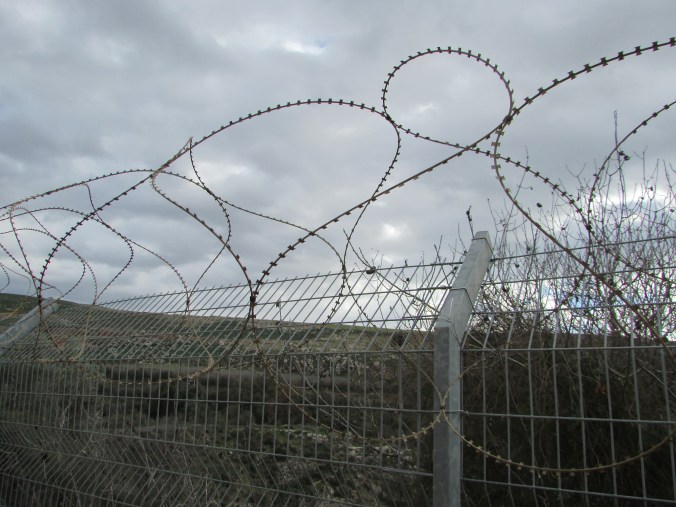
Early on the morning of Monday, January 25th, we set off for Metula, the northernmost town in Israel. This quiet agricultural community, set amongst orchards of apples, pears, peaches, nectarines, apricots, kiwifruit and lychees, sits just inside the border with Lebanon. Standing at a viewpoint on the edge of town, we peered through a razor wire fence and watched UN vehicles on patrol. Around the corner was a preschool with bullet holes in its windows from Lebanese snipers! All seems to be quiet at the moment, however, and tourism rivals agriculture as the community’s economic base.

IMG_0439

IMG_0446 - Version 2

Metula

Later in the day, after visiting two amazing Biblical sites that will be the focus of my next post, we climbed high into the Golan Heights, a rocky plateau seized from Syria in the final stages of the 1967 Six-Day War. It was here that we discovered that it does indeed snow in Israel! Apparently, it’s not unusual to see it on the upper slopes of Mount Hermon, but there was several inches on the ground in the Druze village where we stopped for lunch.

The Druze are an Arabic speaking ethnic and religious minority group found mostly in Lebanon, Syria and northern Israel.  With no country of their own, they form a close-knit, cohesive community but also integrate fully into their adopted homelands and are intensely loyal to them.

It was only when we exited the occupied territory again that we began to get a sense of what living in a land like Israel might do to one’s psyche. Though we felt no danger at all, our beloved guide, Shimon Zemer, told us that every time he crosses the border back into Israel proper, he breathes a sigh of relief and is able to relax again.

Before returning to Tiberias, we made one more stop, a visit to an Israeli Defense Forces base. Every Jew in Israel, over the age of 18, with the exception of those with a criminal record and the ultra-Orthodox Jews (as Shimon would say, “we shall talk about that later”) are required to serve in the army, males for three years and females for two.

The base that we visited is a supply centre where tanks, vehicles and supplies of all kinds are kept in readiness should war break out. We were shown one of 30 supply rooms filled with backpacks, each one already packed with clothing in the correct size for a specific soldier. The men in our group were especially fascinated with the tanks that we were shown, especially one, perhaps the most powerful in the world, that can travel 80 to 90 km/hour and while doing so, zero in on and launch a missile at a target 20 km away! We were allowed to take photographs, but only if we promised not to publish them on social media.